RSS
 

Posts Tagged ‘Create’

How to Create Portraits With Depth

28 Jan

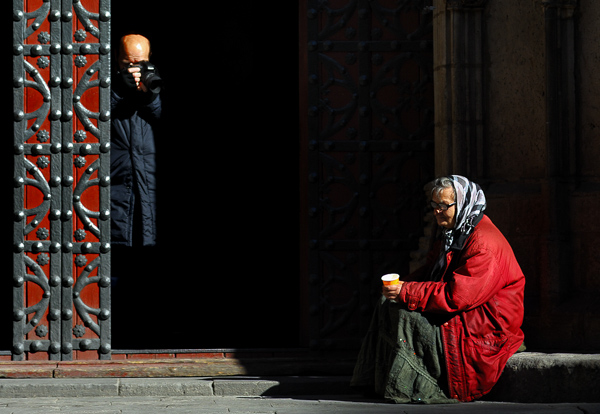
Ben Evans - Street Photography, Barcelona

Would you like to make portraits that show more about the person’s character than what they look like? In this article, you’ll learn some new ways to look at your subjects so you can better understand them; and therefore create portraits with depth and more interest.

A portrait is a picture of a person. So, what separates the pictures we make from those made by a photo-booth?

Leaving discussions about mind-body duality aside, it’s safe to say that we’re all flesh and blood. Our photographs, therefore, are of surface appearances. But beauty is more than skin deep.

What we call character, or soul, or ‘I’ is the driving force that makes, shapes, and motivates our bodies; and our inner thoughts and emotions are often written on our faces.

This is my personal approach to portraiture and particularly portrait photography, gleaned from countless hours of reading, and a degree in Literature, Philosophy and Psychology. It’s compressed a lot here, but should be useful if you explore each area independently.

Reading your subject’s character

Portrait photography aims to capture and communicate some aspect of a person’s character. I think this shows itself in a few ways

prince-charles-english-photographer

What are their habits?

What we do often changes us; makes us. Whether it’s Aristotle talking about excellence as a habit, or Warren Buffett urging graduates to develop the habits of success, habits are an important part of who you are. If you exercise regularly, you get fit. If you eat well, you’ll be healthy. Habits are hard to fake, because they have to be consistent in order to have much effect. Look at your subject; how have habits transformed them?

Ben Evans Barcelona Documentary photography

What decisions have they made?

Satre said that making no choice is still a choice. If I let my beard grow, it can either be a decision to do so, or an unconscious decision not to shave; so decisions can be active or passive. Do they have an afro, or dreadlocks? Both take commitment to grow and maintain so why did they bother? Ask them about the choices that they’ve made with their bodies; it says a lot about their character.

A tattoo is a good example of a decision to pay attention to when making a portrait. It might indicate teenage rebellion, artistic expression or even affiliation with the Japanese underworld. It’s a choice to permanently mark the body; so it’s likely that some thought has gone into it. Likewise with piercings. Is it a yearning to be different? Or to be the same?

This is also a space to think about what they spend most of their time doing; and that’s generally going to be their career. Are they following their passion, living their dream? Or are they worn down in a job they’d rather forget? Both tell stories. Uniforms may be one indicator; but it’s not too difficult to tell a rock star apart from a senior diplomat.

ben-evans-english-photographer-guardsman

How does the subject present themselves?

How are the subjects presenting themselves to the world? This can be intentional, like putting on a smart suit with finely polished shoes, or passive, when they are wearing clothes that were chosen ages ago. Chances are that they spent quite a bit of time choosing what they are wearing; at the shop, and on the day. Steve Jobs had his iconic turtleneck sweaters with jeans, and Doctor Who has his bow ties. Which identity have they bought (and bought into)?

Somebody might think of themselves as belonging to a certain nationality, a subgroup or clan; but photographs are silent, and you’ll want to look at the outward expressions of this in order to communicate this message. People often have ‘props’ that can say a lot about them. It might be an expensive watch; a necklace; a well-designed house; or if they’re young, a light sabre or cuddly rabbit. Assuming your subject isn’t naked, what have they brought with them? Ask them about what they’re wearing; you’ll likely be surprised by the answers you get.

portrait-photographer-barcelona-art

Facial expressions and body language

Make them laugh! I met the chap who photographed the Beatles back in the 60s and he talked about making people say ‘cheese’. I always thought this was just a quirky thing to say to break the tension, but the idea is that the mouth forms a smile when you say the word ‘cheese’. This works better than telling someone to smile; but not by much. Mainly because expression isn’t just in the mouth; it’s a product of a whole range of muscles in the face. Ask the robot designers in Japan who are trying to replicate human emotions on an android’s face!

So the best way is to actually elicit emotions to create the gestures that you’d like to photograph. There are lots of ways to achieve this, but most need to be taught in person. It is worth noting that people are never just the face they show you; there’s a whole host of different identities that make up their sense of who they are. It’s a matter of bringing them to the fore.

Body language is also an incredibly revealing aspect of non-verbal communication. Every portrait photographer should have an awareness of different postures, and how they can help in reading a person. And of course, it’s possible to pose a subject too. One part of Holistic Photography (which is the philosophy that photography needs both craft/technique and art/vision) is a study of micro-expressions and how to see, and photograph them. Our faces will register emotions before we have time to control them. So you can photograph someone’s ‘real character’ by eliciting these micro-expressions, and then capturing them in the photograph.

portrait-photography-YN560iii-flash

Physical attributes – what can you focus on?

One thing I didn’t mention, partly because it’s hard to avoid doing, is the ‘flesh and blood’. Some people just have fascinating faces, topographically. It might be that their eyes are bright green. This is a rare and beautiful eye colour, so chances are other’s reactions to it will have influenced their sense of self – rather like Kafka explores in The Metamorphosis. Likewise, my ginger cousins have developed an identity around their red hair. People, unconsciously or otherwise, live up to these imposed identities. I’m 6’2″. It’s a number; my height. But does it mean more than that? What about a ‘Perfect 10′? It’s just an arbitrary measurement; but numbers are intrinsically linked to our self-worth in our consumerist society. Look for physical features that stand out, that are striking. How is your subject restricted by their physical identity? How are they empowered by it?

Summary

Hopefully this gives you some different things to think about when you’re photographing people and want to make portraits with a bit of depth. Holistic Photography goes a lot deeper within each category but my writing isn’t good enough yet to properly communicate what’s pretty simple to demonstrate and explain in person. Therefore, have a look at portraits you admire, both photographic and painted, and look at each of the different categories to see what fits.

Then practice really going beyond the person-as-object photography by finding out more about your subject. Think like Sherlock Holmes. Push like Platon. Light like George Hurrell. And feel like Edith Piaf. Portraiture is like a game of chess; ‘you must think first, before you move’!

The post How to Create Portraits With Depth by Ben Evans appeared first on Digital Photography School.


Digital Photography School

 
Comments Off on How to Create Portraits With Depth

Posted in Photography


5 Ways to Create Detail Photos

06 Jan

Want more creative photography tips and insight? Download Dan’s entire photography ebook bundle and get four titles for only $ 29. Dan’s 3-eBook bundle: Going Fast With Light, How to Become a PRO, Making the Image is on sale now for only $ 29 at SnapnDeals!

Like any form of art, compelling photography is not simply about reproducing your subject, it’s about representing your subject with visual hints and clues that suggest the larger scene. Accuracy isn’t what’s going to excite your viewer and draw them into your image, it’s feel, style and message.

details-photography-01.jpgWhen composing your photos, you don’t just want to show your audience what they can already see when they look at things in real life. Instead, you want to give them an abbreviated version of the scene that will make them try to visualize what lies beyond the borders of your frame. Your goal is to make a creative depiction of the world that invokes the imagination and emotions of your viewer. If you can activate not just their eyes, but also their brains, you’ll go further towards holding their attention with your shot.

One way to shoot abbreviated scenes is to accentuate details that your viewers might not notice as they speed through life. These kinds of shots often make for powerful photographs because it’s an easy way to fire up your viewer’s imagination. Let’s explore a few different examples of how you might approach shooting these kinds of detail photos.

5 Ways to shoot detail photos

1. The single detail

Sometimes can show a single aspect of the scene without giving away any other information about the rest of the scene, other than what is clearly apparent in your image. Just about every type of subject lends itself to this type of photograph: architecture, travel, environmental features, landscapes and even action.

When shooting the single detail, make sure you focus on creating a simple yet powerful image. Since your subject matter will be limited, the strength of your image will depend on a good composition and the strong use of light, colour and form. (see photos above and below as example)

Details photography 02

2. Details that give a sense of place

Including more elements in your shot often hints about how the subject relates with its surroundings. This can really add depth to your shot, because it starts to imply reference and narrative, instead of just being about a single thing. You’ll want to include enough information in the image that suggests a greater story about the scene to your viewers, without giving away too much information or weighing down your photograph.

Details photography 03 Details photography 04

3. Larger details

Detail shots don’t always have to be photographs of smaller objects and they don’t always have to be taken up close. There is enough detail of different sizes in the world that you can focus on nearly anything, as long as you can accentuate that particular subject matter in a visually appealing way.

This is where long lenses really shine. I love shooting long, suggestive shots, of distant subjects with my telephoto zoom lens. The narrow angle of view lets me focus on just two or three elements, and the shallow depth of field creates a soft background that doesn’t distract from the main subjects.

Details photography 05

Details photography 06

4. Lines and textures

Sometimes your shot will be more about simple graphic form and texture, instead of a physical object. When done right, you can still tell a powerful visual story with limited subject matter. Experiment with lines, shapes, colours, patterns and other abstract subject matter that appeals to you. Shadows can be powerful compositional elements because they suggest how your subject relates with other tangible objects around them.

Details photography 07

Details photography 08

5. Human details

People often make for the most powerful subjects, because as humans, we all relate with and respond to each other on some level. There is an unending variety of details that you can capture when shooting humans and their actions. Try focusing on elements such as interaction, motion, emotion and their association with others and with the world in general.

Details photography 09

Details photography 10

Less is more

Remember, you don’t always have to show the whole thing. Sometimes even a single abbreviated detail can be a powerful image. Experiment with cropping and zooming in on your subjects, to show the minimum amount of visual information needed to make a good photograph. You might be surprised at how little you need to show in order to create a compelling image.

As I like to say, any time you can invoke your viewer’s imagination, you’ve gone a long way towards creating a successful image. Strive for simplicity with your photography and see how far you can take this concept to its fullest potential.

What is your message?

Accuracy isn’t what’s going to excite your viewer and draw them into your image, it’s feel, style and message.


Want more creative photography tips and insight? Download my entire photography ebook bundle and get four titles for only $ 29 right now at SnapnDeals.

The post 5 Ways to Create Detail Photos by Dan Bailey appeared first on Digital Photography School.


Digital Photography School

 
Comments Off on 5 Ways to Create Detail Photos

Posted in Photography


How to Create a Winter Wonderland Holiday Photo

22 Dec

There is so much to photograph during the holidays from religious symbols, to beautiful outdoor lighting displays, a well decorated tree, and the gathering of family and friends. You might already photograph and print your own holiday cards or a personal calendar, and each year you might be thinking of new and unique ideas for next year’s images.

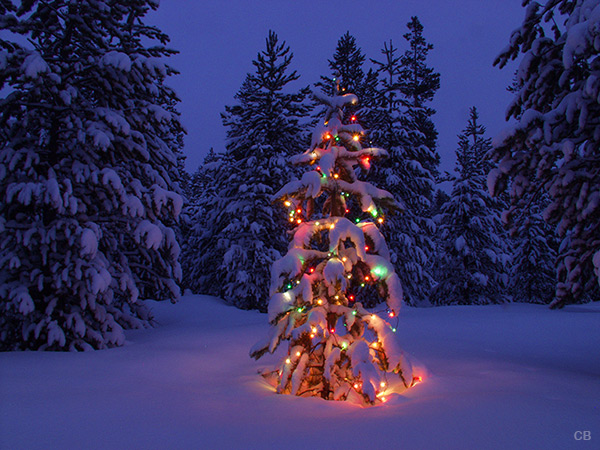
With the holidays soon over and all those displays being packed away until next year, many Christmas trees will soon be recycled. But before you recycle your tree, consider using it for a unique photography opportunity: an illuminated Christmas tree in an outdoor setting. It could be that new and unique photo for next year’s holiday card!

Winter wonderland holiday photo tree 14a

If you happen to reside in an area that enjoys wintery and snowy conditions, you have a setting ready to create an illuminated holiday tree similar to this one. But it is worth noting that even if you don’t live in a wintry or forested area you can still create a holiday light photo anywhere with a little imagination. A cactus in the desert, a shrub in your yard, a roadside mailbox, a rusty old car in a field, or anything you can attach lights to. You’re only limited by your imagination!

To create a winter wonderland holiday photo like the one above, here’s what’s needed:

Christmas lights for the tree

You can use regular tree lights that use AC power if you have a location to plug them into. I needed 3 long extension cords to reach my garage, for power to run these lights.

There are also battery power lights available that will work wonders if you prefer to photograph further out and away from power sources.

A tree

Ideally, it would be great to head into the forest and find the perfect tree sitting in the perfect spot. Just add the lights, and wait for snow. But finding the perfect tree, in the perfect place can be challenging. When you’re looking to create a well composed image, where the illuminated tree stands prominently in your composition, the search for that perfect tree can be elusive.

Instead, I have found it easier in most cases to bring my own tree and put it right where I want it, in front of a suitable background. Since we live on this property we often cut our own Christmas tree and once the holidays are over, I take the tree outside, still in its tree stand, and place it to fit my composition. I then adjust the lights and wait for snow, which is never long.

Exposure

Exposure for the scene can be a bit challenging because you are working with two constant light sources. It’s similar to photographing a city skyline where you have constant light that does not change, such as street lights and building windows, and you have constant light that does change: the setting sun and darkening ambient light.

For this winter tree photo you have the same: the tree lights, which remain constant in their brightness level, and the diminishing natural light. After the sun has set there is a ‘window of opportunity’ where these two light sources are closely matched for the perfect exposure: the darker background and the perfectly exposed tree lights.

I set f/16 as my aperture so the tree lights will have that ‘starburst’ or sparkle and then bracket my shutter speed throughout that ‘window of opportunity’ shooting period. I also drop my white balance down to 4000k (if your camera doesn’t offer White Balance adjustments by degrees Kelvin, choose Tungsten or Incandescent from the WB presets) to increase the blue tone of the overall picture, which enhances the feel of ‘cold and winter’. To ensure that I take advantage of that window of opportunity, I start photographing about 15 minutes after sunset and continually evaluate the exposure.

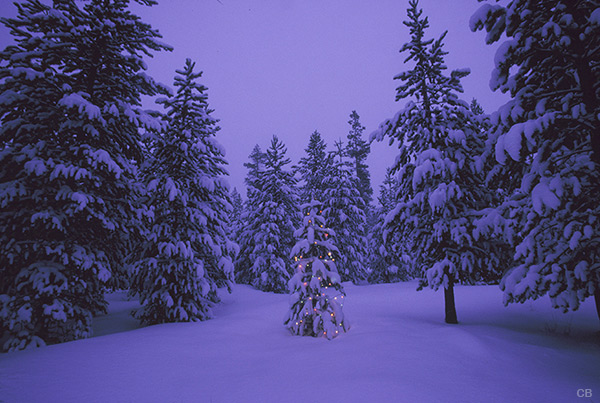
Winter wonderland holiday photo tree 20

If the ambient light brightness level has not darkened enough the tree lights will not stand out as the image above shows. The lights are not bright enough in relation to the background and surroundings, so the solution is to wait a little longer. To achieve that cold winter feel the snow cannot be exposed as white or even slightly grey, but rather closer to middle grey. I often start using Aperture Priority mode with a -1 exposure compensation setting, and continue to use auto bracketing (AEB). Once the ambient light brightness level is perfect, the tree lights will glow brightly and not blow out against the background.

winter-wonderland-holiday-photo-tree-14a.jpg

ISO 100, f/16, 12 second exposure

This was my final image choice because the lights glow nicely, even those under the snow, and are not blown out, while leaving some glow on the ground level snow at the base of the tree. The exposure of 12 seconds at f/16 maintained great detail in the background as well.

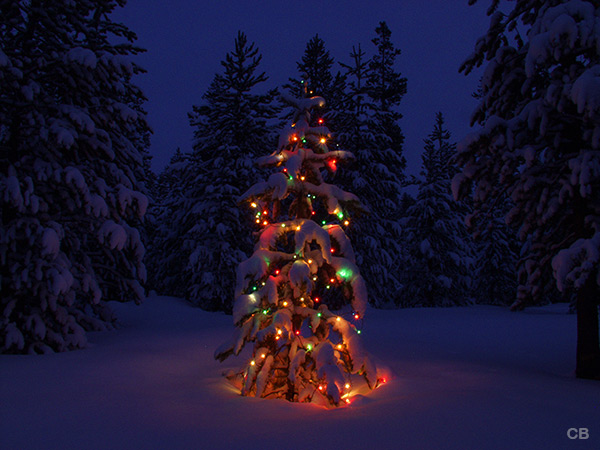
The time to stop shooting is when the background becomes too dark in relation to the tree lights exposure, which will start blowing out as the shutter speed gets longer.

Winter wonderland holiday photo tree 17

The image illustrates just that. The tree lights are still exposed properly but the surrounding ambient light is border line too dark, as details in the darker area of the trees are beginning to merge. Of course, it is a matter of taste but for me at this point it is time to pack up and head indoors and review the images.

Plan ahead by testing

As you prepare to venture out and create a Holiday lighting image, a few steps before you leave will guarantee better results:

  1. A day or two before you plan your photo venture, place your lights outside, even around your home, plug them in and wait for sunset
  2. Set your aperture to f/16, place your camera on the tripod, and attach your cable release
  3. 15 minutes after the sun has set take your first picture and bracket your shutter speeds: normal (0), -1, and +1
  4. Wait another 10 minutes and take another set of three pictures
  5. Continue testing until you find the ambient light is to low and you determine that by looking at your Normal test exposures in the series and an image showing the lights blowing out against a very dark background
  6. Download your images and select the image you feel has great background exposure and perfectly exposed lights
  7. Once you find that perfect exposure, review the metadata for the shutter speed used and the time of capture. Then if you plan to shoot in the next day or two you will have a guide for the best time of day, and the best shutter speed, so you can head outdoors with a great starting point for the best exposure.

There are so many subjects that would work well with Christmas lights outdoors and to create something unique it pays to develop an idea first. Then decide on a suitable location that supports the subject rather than detracts from it. If you plan to head out into cold winter conditions be sure and dress warm, protect your gear, and most importantly, have a great time!


Editor’s note: this article is just in time for the Weekly Photography Challenge this week which is WINTER!  If you need more inspiration check out these 30 images of winter photography.

The post How to Create a Winter Wonderland Holiday Photo by Charlie Borland appeared first on Digital Photography School.


Digital Photography School

 
Comments Off on How to Create a Winter Wonderland Holiday Photo

Posted in Photography


Using Sun Flares and Starbursts to Create Stunning Images

02 Dec

This is a guest post by Katie McEnaney

An Introduction to Sun Flares and Starbursts

A sun flare or starburst is an incredibly cool photographic technique and one that is easy to achieve without any special post-processing or editing tricks. You will be amazed at the effects you can create by learning a few simple settings and knowing the proper situations for taking beautiful sun flare and starburst photographs.

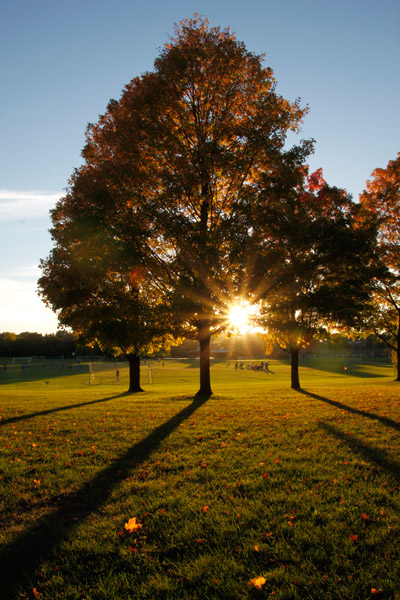
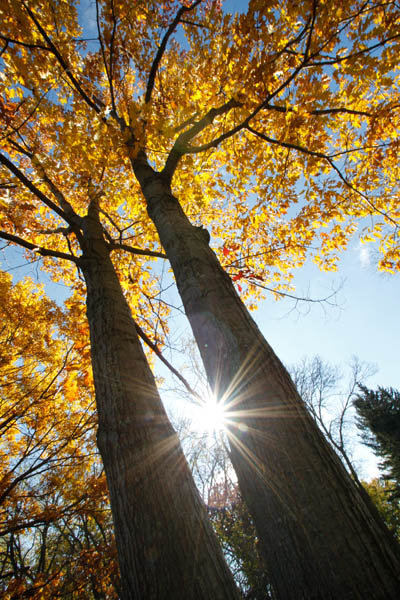
McEnaney sunflare vertical tree

How to Shoot Sun Flares and Starbursts

It is possible to obtain sun flare and starburst images with a point and shoot camera, but for more reliable results, you will want to use a DSLR or interchangeable lens camera with adjustable aperture. A UV filter on your lens is suggested to protect your camera’s sensor, as you will be shooting directly into the sun when capturing sun flares. Stability is critical for capturing starbursts, so a sturdy tripod and remote shutter release are recommended.

The technique for shooting successful sun flares and starbursts is to use a narrow aperture such as f/22 and a relatively wide focal length like 18 mm. With a narrow aperture, the blades inside your lens close down to create a very small opening for light to pass through. This narrow opening creates a slight diffraction or bending of the light, which causes a point source of light (described below) to become a starburst shape when it hits and is recorded by the camera’s sensor. Different lenses are built with different numbers of blades: the more blades, the greater the number of points on the flare or starburst. The wider the focal length also contributes to the size of the starburst shape, as a wider focal length can create a larger starburst.

For settings, you want to start by shooting in Aperture priority (Av for Canon or A for Nikon) mode and setting your aperture to f/22. You also want to shoot at a fairly low ISO, around 100-200, to avoid the increased noise of higher ISO values. The camera will then choose the shutter speed. If the final image turns out too dark or too light, you can switch to shooting in Manual mode, dial in the same settings, and then slightly increase the shutter speed for a lighter picture or decrease the shutter speed for a darker picture.

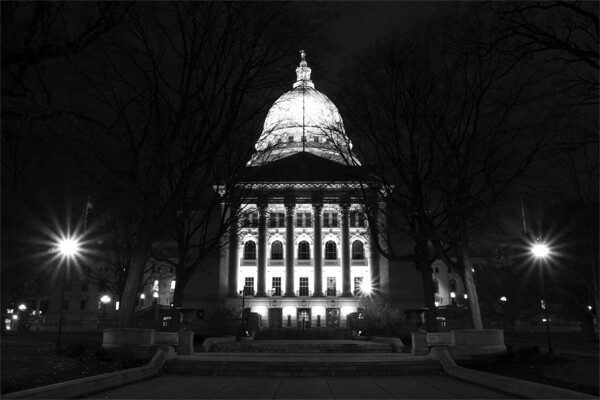
McEnaney Capitol night starbursts

In lower light situations, your shutter speed may become so slow that you need a tripod to ensure a steady shot. (The general rule of thumb is that you should be able to successfully hand-hold a shot at a shutter speed of 1 over the focal length of the lens. For example, you should be able to hand-hold a shot with an 18 mm lens at 1/18th of a second or faster or a 50 mm lens at 1/50th of a second or faster.) If you are photographing starbursts after dark, then your shutter speeds will generally be slow enough to require a tripod or other stable surface. The alternative option would be to start increasing your ISO, which will also increase the noise in the final image.

Along with the tripod, a remote shutter release (corded or wireless) is helpful to avoid shaking the camera when pressing the shutter button. If you do not have a remote, you can set the 2-second or 10-second timer on your camera instead. A remote shutter release also allows you to use the Bulb setting on your camera to get shutter speeds longer than 30 seconds.

Timing and Strategies for Sun Flares and Starbursts

Sunbursts and starbursts are created from small point sources of light, rather than larger dispersed or diffused light sources. A point source is one where light is emanating from a singular location: a bulb in a street lamp, a car headlight, a direct flashlight, even strings of holiday lights. A dispersed light source is one where light is emanating from a broader location: a frosted light bulb, an overhead florescent light panel, or the tubes of a neon sign. A diffused light source is one where the location of the light is very spread out or difficult to detect: the sun in an overcast sky, large studio lights with diffusers or softboxes, or light bounced off a large surface or reflector.

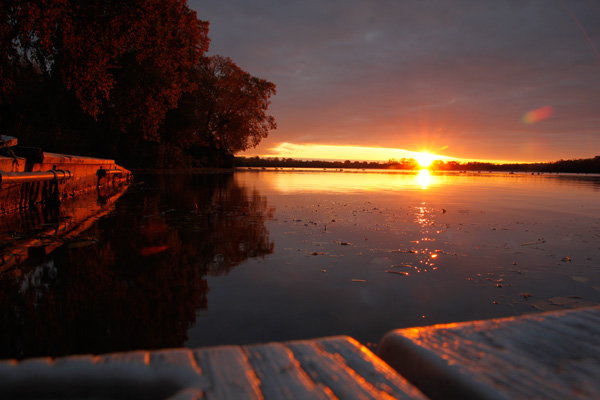
McEnaney sunrise sunflare

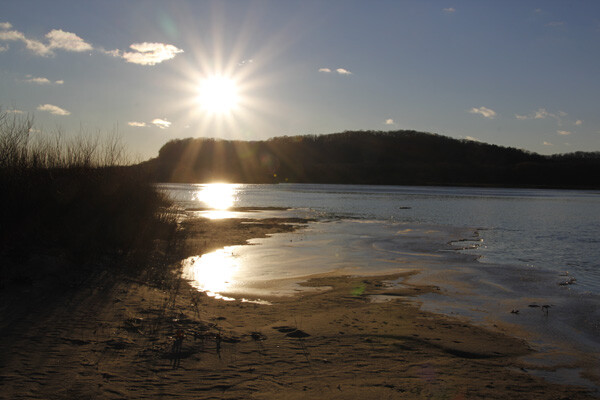
The sun is not generally a point source of light, as it is often too bright and overwhelming to create a sun flare. So, the best time to capture sun flares is when the sun is low in the sky, either in the early morning or late afternoon. The winter season is ideal for sun flares, as the sun is lower in the sky for longer periods of the day.

sun flare and starburst photo

Once you have the right time of day, the second step for creating a sun flare is to position the sun in your composition so that it is partially obscured behind another object, such as a tree or the edge of a building. Even at low angles, the sun can still be so bright that it will overwhelm your scene and create large bright patches rather than a starburst shape. Partially obscuring the sun also serves to amplify the effect of the narrow aperture. Position the camera so that the sun is directly behind the object and determine your final composition. Then, move the camera slightly until the sun is just beginning to peak out from behind the object and take the picture.

McEnaney sunflare two trees

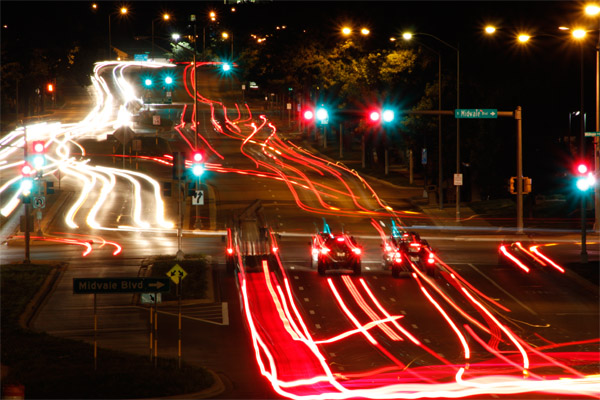
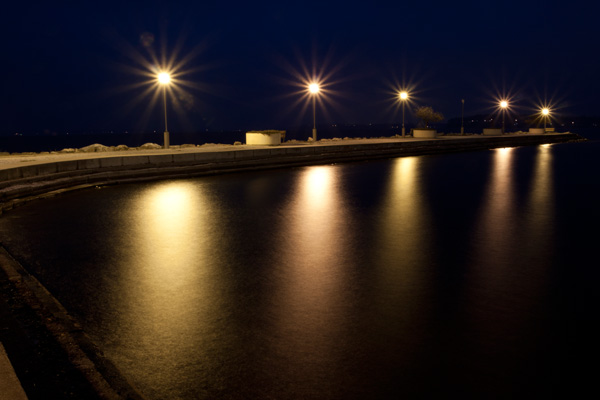
To create starbursts at night, you need to find suitable point sources of light. Street lamps and strings of lights work well. Because these sources are not as overpowering as the sun, you do not need to partially obscure them. This gives you a wider range of compositional choices. You can also combine multiple point sources of light to create an entire collection of starbursts in a single image. Moving lights will be rendered as blurs or light trails, while stationary lights will become starbursts.

McEnaney traffic trails

Composing with Sun Flares and Starbursts

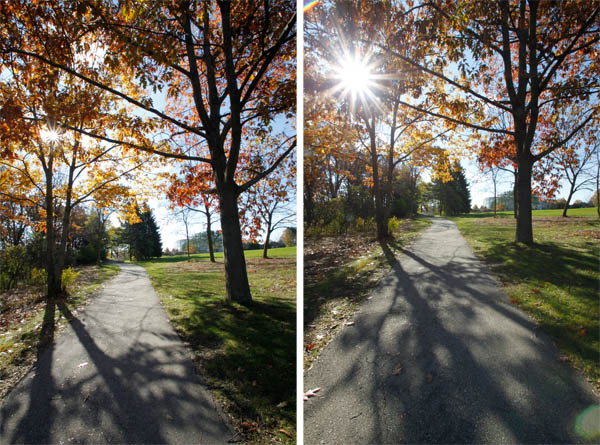
Be willing to be patient and experiment with your compositions and angles for sun flares. Slight differences in the angle of the sun and the amount of sunlight streaming in can make a big difference in your final image. The two images below were taken of the same tree, two minutes apart. The only compositional difference was backing up several feet for the second image, so that the sun was only barely obscured by leaves rather than partially blocked by the trunk.

McEnaney sunflare compare

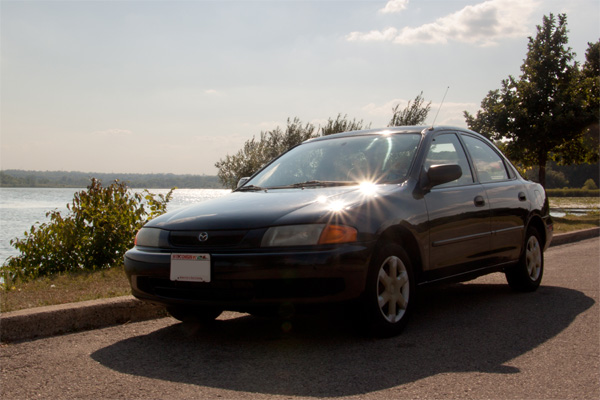
Once you have mastered the single flare, you can step up the challenge and capture multiple sun flares in a single image. An easy way to do this is to use reflected light. Light reflecting off several points or different surfaces can create multiple individual point sources. Look for situations where sunlight is bouncing off water, vehicles, or other reflective surfaces. In this goodbye photograph of my old car, the multiple flares were created by the sunlight bouncing off the dents and divots of the hail damage on the hood (bonnet) of the car.

McEnaney car sunflares

Starbursts are a great effect to use with holiday lights. Each individual light is a point source and can be rendered as its own starburst. The starburst look adds an extra sparkle to your holiday images, but you can use strings of white or colored lights to add starbursts to any kind of subject you choose.

McEnaney holiday starbursts

For cityscape starbursts, seek out locations with congregations of street lights or other point sources of light. The blue hour (the approximate hour before sunrise or after sunset) is an ideal time to photograph lights outside, as the deep blue colors in the sky set off the scene. Your camera will record these blue colors for a short time even after they are no longer visible to your eyes.

McEnaney starbursts water

Now that you know the basic idea behind sun flares and starbursts, you will start seeing opportunities everywhere. Get your f/22 aperture ready, and get out there!


Katie McEnaney is an educator and photographer from Madison, Wisconsin. Read more tips on her blog, Boost Your Photography, and connect with her on Google+, Twitter @archaeofrog, and Flickr. Her first eBook, Boost Your Photography: Learn Your DSLR, will be available soon on Amazon.

Post originally from: Digital Photography Tips.

Check out our more Photography Tips at Photography Tips for Beginners, Portrait Photography Tips and Wedding Photography Tips.

Using Sun Flares and Starbursts to Create Stunning Images

The post Using Sun Flares and Starbursts to Create Stunning Images by Guest Contributor appeared first on Digital Photography School.


Digital Photography School

 
Comments Off on Using Sun Flares and Starbursts to Create Stunning Images

Posted in Photography


How to Create Great Environmental Portraits

27 Oct

Interested in learning how to take better Environmental Portraits? If so, do yourself a favour and watch this video of a training session by photographer David Handschuh and what he has learned about the topic from the last 20 years of his doing environmental portraits.

Thanks to the team at BHPhoto for putting this video out there.

Further Reading on Environmental Portraits:

  • How to Create Portraits that Captivate and Intrigue
  • An Introduction to Environmental Portraits

Post originally from: Digital Photography Tips.

Check out our more Photography Tips at Photography Tips for Beginners, Portrait Photography Tips and Wedding Photography Tips.

How to Create Great Environmental Portraits

The post How to Create Great Environmental Portraits by Darren Rowse appeared first on Digital Photography School.


Digital Photography School

 
Comments Off on How to Create Great Environmental Portraits

Posted in Photography


Dubble app uses crowdsourcing to create double exposures

25 Oct

dubble.png

Dubble, a new community-based photography app takes the concept of double exposures — either a trick or a mistake in which photographers expose a roll of film twice, thereby layering two images in a single frame — and applies it to your smartphone, with a crowdsourcing twist. We take a closer look at Dubble on connect.dpreview.com.

News: Digital Photography Review (dpreview.com)

 
Comments Off on Dubble app uses crowdsourcing to create double exposures

Posted in Uncategorized


Ignore The Naysayers. Go Create Stunning Images

10 Sep

There has been a spat of posts and articles recently extolling the storyline that “Photography Is Dead!” or “Creativity Is Dead!” or both. And then some. The articles I have read rightly point out that more people have cameras and are sharing images on the likes of Instagram, Twitter and Facebook. And that most of those images are not some form of art (the food you ate, a self-portrait (or ‘selfie’ as they are colloquially know) or yet another sunset, etc…).

They also point to this deluge of images as something that is dragging down photography as a whole and beating the creativity out of the art form. They point to the overall averageness that this mass use of the medium has created.

But I think they are missing a point.

While there are exponentially more people taking photos these days thanks to phone cameras and cheaper, instant digital cameras in general, this is in no way killing creativity. If you’re reading this on DPS then you are someone who wants to learn and improve your photography skills. And that’s my point;

Even though the masses might be churning out average images that don’t inspire, and far more of them today than just 20 years ago, this in no way stops someone who sees photography as an art form from creating beautiful, inspiring art.

What this mass use of the medium has done is only highlight what was already there; That the masses, on average, are average at any given art form.

This is nothing new, but it is made far more obvious because of the ability to share any image with the online world as a whole at any point in time. For instance, most of us are average, or below average in my case, drawers or sketch artists. It’s only because drawings are not as easy to be shared over the internet as a photograph that this fact is not brought to our attention. If every pencil had built-in wifi and out sketches were posted online in real-time, we’d have sketch artists complaining about the “deluge of average” instead of photographers.

To use an analogy, it would be like saying that because cars are mass-produced and, to a certain degree, look the same, that there are no more extraordinary cars. No more creativity in the automobile industry. But that is blatantly false when a look is given to manufacturers like Ferrari, Bugotti, Tesla, Lambroghini and others. Not only that, right now, some place on this planet, there is a man or woman in their home garage who is crafting a custom car unlike any you have seen.

Or better yet, look at motorcycles. Not only can I not really tell one street rocket from another, or one Harley Davidson from another, there are major production TV shows dedicated to the art of building beautiful, creative street machines.

I see a lot of cars and motorcycles while driving the highways around LA. A lot. And I can’t tell you how many Toyota Camrys or Chevy Cruzes I have seen. But any time a custom motorcycle goes by or any time I spot a barely-legal, wedge shaped ‘super car’…those moments turn my head and drop my jaw.

And for you, the learning photographer (a group that will always include me as well), that is your lofty goal. Not to be mired in the hoopla that prices paid for images are dropping through the floor and creativity is therefor dead (the business side of photography in the digital age is another discussion altogether). Your goal is to create head turning art.

If you want to rise above the sheer volume of average photos and get your photography noticed (either for profit or vanity or just to show the world how beautiful or scary it is) you need to be creative and create something worth noticing.

In the end, realize those people telling you creativity is dead and that photography is dead are spending time, like me right now, at a keyboard NOT creating beautiful images that inspire and rise above the din of mediocrity. They are only extolling their opinion about their single-person viewpoint of a huge art form and that things aren’t the way they use to be or how the author wants them to be.

You need no one’s permission to be creative or to produce stunning art. Ignore opinions that tell you creativity in any art form is dead. They are just opinions.

Need some inspiration? Click here and here and here and here and here and here.

Grab your camera, any camera, and go create.

Post originally from: Digital Photography Tips.

Check out our more Photography Tips at Photography Tips for Beginners, Portrait Photography Tips and Wedding Photography Tips.

Ignore The Naysayers. Go Create Stunning Images


Digital Photography School

 
Comments Off on Ignore The Naysayers. Go Create Stunning Images

Posted in Photography


Olympus blends E-M5 and E-5 to create OM-D E-M1 flagship ILC

10 Sep

front_M1250_BLK.png

Olympus has announced the OM-D E-M1, now the flagship of its Micro Four Thirds lineup. Rather than calling it the follow-up to the E-M5, Olympus says that the E-M1 is actually the ‘successor’ to the E-5, the Four Thirds camera introduced back in 2010. The E-M1’s standout feature is its new 16.3MP Live MOS sensor with on-chip phase-detection autofocus, designed to work with legacy Four Thirds lenses. 

News: Digital Photography Review (dpreview.com)

 
Comments Off on Olympus blends E-M5 and E-5 to create OM-D E-M1 flagship ILC

Posted in Uncategorized


How to Create this “Fight Club” Inspired Portrait using One Light

05 Sep

By Gina Milicia – author of our brand new Portrait Lighting eBook.

Firass MAINWEB

Welcome to Fight Club. The first rule of Fight Club is: you do not talk about Fight Club.” -Chuck Palahniuk, Fight Club

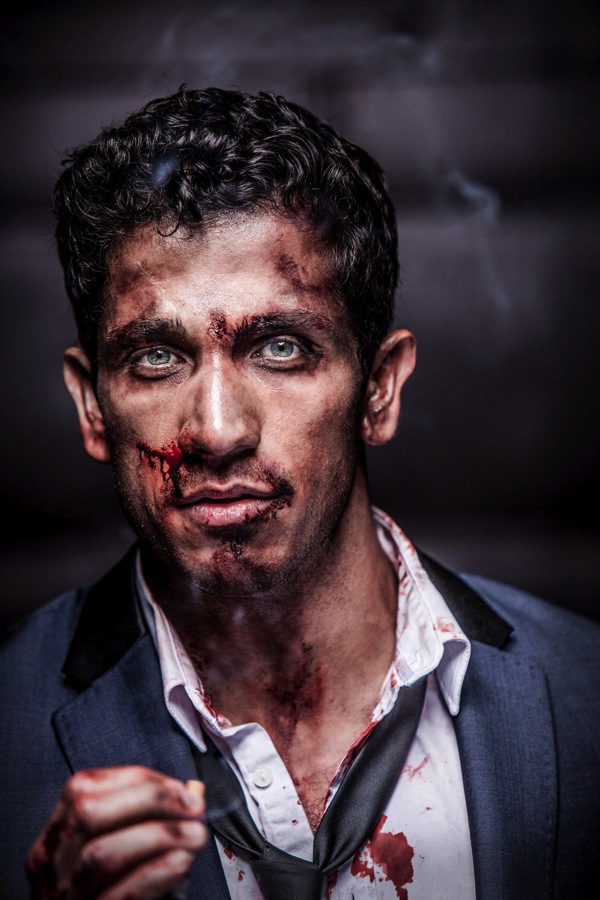
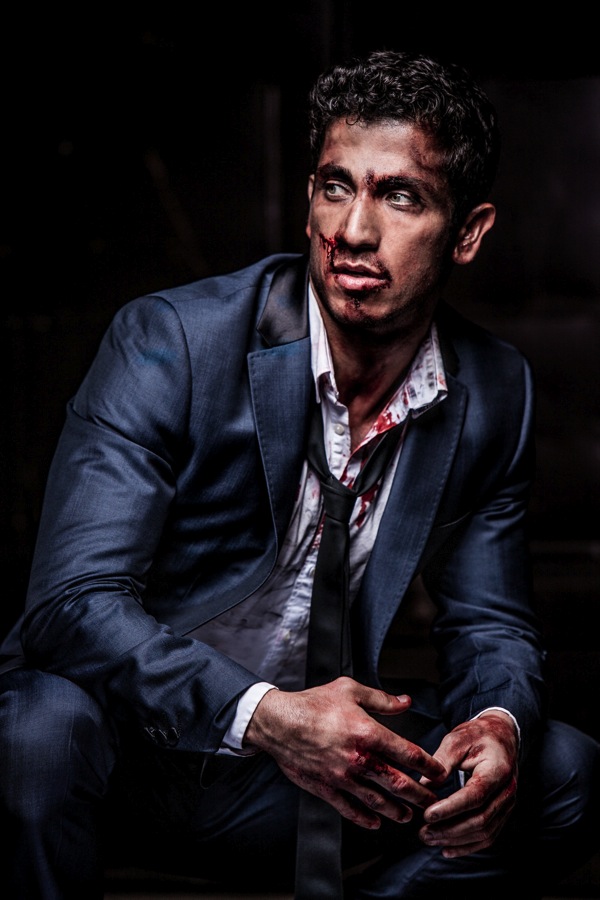
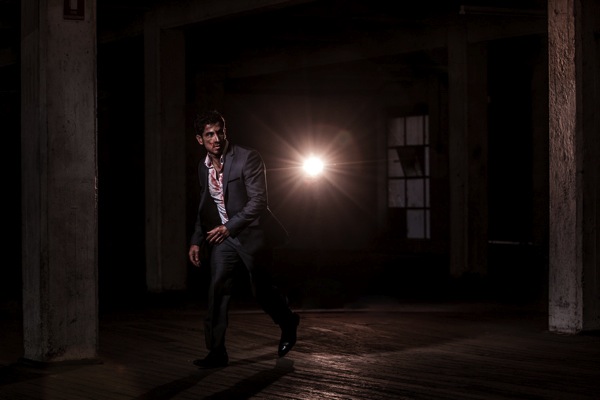
Australian actor Firass Dirani in my Fight Club inspired shoot @firassd (twitter) @firazzle (Instagram).

Australian actor Firass Dirani in my Fight Club inspired shoot @firassd (twitter) @firazzle (Instagram).

Most of my inspiration for photo shoots comes from Movies, art and popular culture.

Ever since I saw the movie Fight Club I’ve always wanted to do a fight Club inspired shoot.

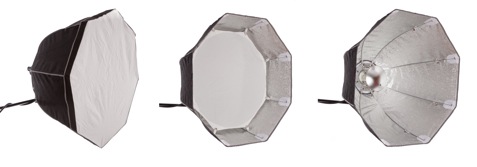
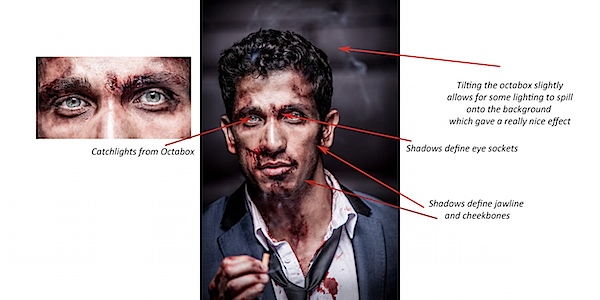
My aim was to create a really cool, gritty, edgy looking shot. I could have achieved this look using several different techniques but opted for my new Rotolux deep Octabox with my Elinchrom Ranger Quadra battery operated light system.

Firass 643web

For this shoot I worked with Melbourne make up artist Mia’Kate Russell an incredibly talented special effects make up artist. Her brief was to make Firass look like he’d just been in an old school fistfight – busted up but still looking incredibly cool.

If you are thinking of trying something like this then I suggest you check out your nearest school of hair and make up. Special effects make up like Mia used on Firass is taught at these schools and students are often looking for the opportunity to test out their skills.

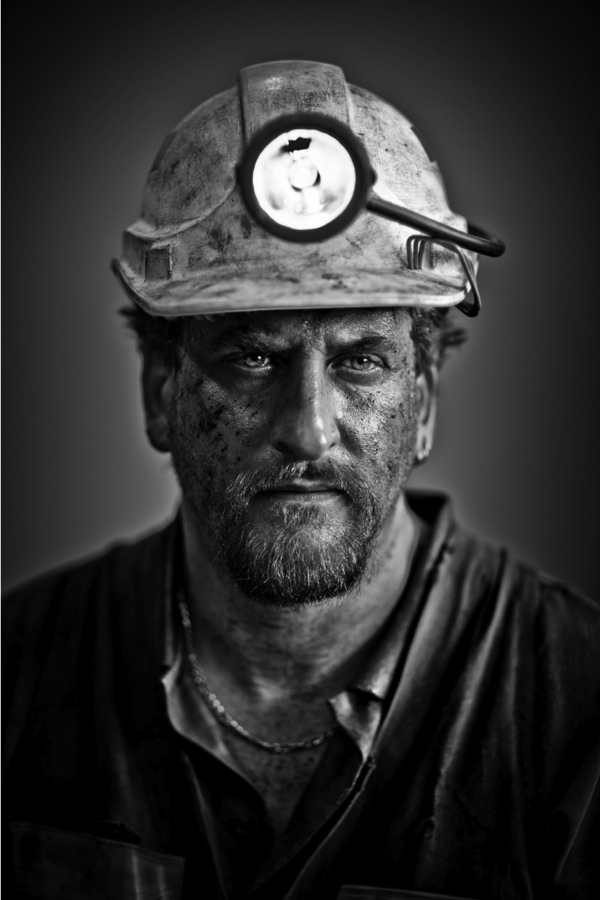
Another version you may like to try is to just scuff the face up using dirt to give that gritty look. That’s the technique I used for this shot of Lachy Hulme who was playing a trapped minor in the TV Movie Beaconsfield.

Portrait shoot

A good Make Up artist will take your portraits from OK to amazing. This is definitely a relationship you should invest in and nurture.

201309021410.jpg

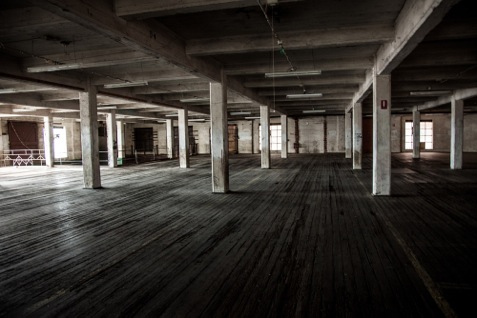
The location I chose was an old warehouse near my actual studio. I had gone out scouting a week earlier. It’s important that you always have your locations worked out ahead of time rather than hoping it will all fall into place on the day of the shoot.

Some places will incur a hire fee to work in others you may get permission by finding the owners and just asking (which is exactly what I did to get access to this amazing warehouse!)

201309021413.jpg

If a softbox and a beauty dish got married and had babies they would probably have little rotolux deep octaboxes. I love these light shapers because

They combine the softness and narrow spread of a soft box with the beautiful bone structure defining qualities of the beauty dish. It’s the best of both worlds.

For this image of Firass I converted my Octabox to a beauty dish by removing the outer diffuser and inner bevel and adding the beauty dish attachment.

I could have also just used a beauty dish but I prefer this softer style of lighting.

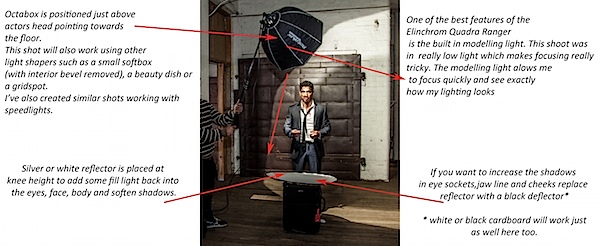
Here’s some visuals on how I took the shots (click to enlarge).

Firass_MAINWEBDIAGRAM.jpg

FirassBTSW.psd

For this shot I’m using my:

  • Canon 1DS MK111, with my 70-200mm f2.8L series Lens
  • 2x Pocket wizards
  • I used fill flash from my Elinchrom Quadra lights with a Rotolux Deep Octabox

My settings for this shot are:

  • ISO is set to 100
  • Lens focus length is 200mm
  • Aperture is F/ 4* @ 1/200th of a second**

* I selected a wide aperture of F4 on my long lens because I wanted my background to be out of focus. I could have shot wide open at f2.8 but decided to play it safe at f4 as I find it really difficult to get my models eyes sharp at f2.8 using a long lens and focusing in low light.

** I shot at a very fast shutter speed of 1/200th sec because I wanted to keep my background really dark and moody.

This shot would also work using a Speedlight + Softbox without internal bevel.

If you want to increase the amount of shadow in eye sockets, jawline and cheekbones remove the reflector or replace it with a black cutter.

And here’s one more shot from the shoot.

Firass walking

Get more portrait lighting tips from Gina’s new dPS eBook – Portraits: Lighting the Shot.

Lighting_468x190px

Post originally from: Digital Photography Tips.

Check out our more Photography Tips at Photography Tips for Beginners, Portrait Photography Tips and Wedding Photography Tips.

How to Create this “Fight Club” Inspired Portrait using One Light


Digital Photography School

 
Comments Off on How to Create this “Fight Club” Inspired Portrait using One Light

Posted in Photography


Street Origami: 30,000 Pieces Folded to Create Colorful Art

19 Aug

[ By WebUrbanist in Art & Street Art & Graffiti. ]

street art origami mural

An urban art play in multiple acts, this staged installation colorfully spans brick walls, stone steps and wood facades as part of an art festival in Angers, France.

street art origami steps

origami steps art detail 2

Mademoiselle Maurice is the French artist behind this series of works, but not the only person involved. Lots of local volunteers, from regional students to nearby residents, pooled their efforts to help build the thirty thousand pieces required to make it all work.

step art installation project

urban color wall installation

Made up of detailed parts, the works are designed to function at different scales, and spread out to also make for movement-centered experiences as one walks through or past the colored arrays.


street sidewalk paper art

street rainbow wall mural

street mural face detail

This set of interventions was built for the 2013 ARTAQ Festival, but in a similarly colorful style that is a long-standing signature style of its creator. From the artist: “We intervened in nearly twenty places, such as leisure centers, schools (from kindergarten to high school), but also within the prison.”

Share on Facebook


[ By WebUrbanist in Art & Street Art & Graffiti. ]

[ WebUrbanist | Archives | Galleries | Privacy | TOS ]


WebUrbanist

 
Comments Off on Street Origami: 30,000 Pieces Folded to Create Colorful Art

Posted in Creativity