RSS
 

Posts Tagged ‘Classic’

How to shoot classic beauty product photography on a budget

16 Aug

Dustin Dolby of Workphlo is back with another simple step-by-step tutorial that shows you how to create professional-looking magazine-quality product photography using affordable gear—in this case, he uses two speedlights inside strip boxes, and could have used just one.

For this shoot, Dolby is tackling beauty care products, which he decided to place on white plexiglass because of the subtle reflection this creates. From there, he brings out his trusty strip lights (two of them) and some diffusion material, and begins to “build” his composition. Over the course of five minutes he captures seven different lighting variants and a silhouette (which he uses as a mask):

$ (document).ready(function() { SampleGalleryV2({“containerId”:”embeddedSampleGallery_2912898008″,”galleryId”:”2912898008″,”isEmbeddedWidget”:true,”standalone”:false,”selectedImageIndex”:0,”startInCommentsView”:false,”isMobile”:false}) });

He then combines these images to taste in Photoshop, using the mask to cut out his products and picking a color from within the product itself to use as a solid background. The final image looks just like any other classic beauty care shot you might see in a popular magazine:

Check out the video at the top to walk through the tutorial step-by-step. And if you like Dolby’s style you can find more of his tutorials on his YouTube channel.

Articles: Digital Photography Review (dpreview.com)

 
Comments Off on How to shoot classic beauty product photography on a budget

Posted in Uncategorized


Updating a classic: Canon EF 16-35mm F2.8L III USM lens review

20 Dec

The Canon 16-35mm F2.8L II has been one of the most coveted lenses amongst landscape photographers for a fairly long time. The legendary sunstar was one of the major selling points of the lens and it was one of the major characteristics that really separated the Canon lens from the rest of the field.

When we first heard that Canon was going to release an updated version of the lens we were pretty darn excited. The Mark II was a fantastic piece of glass, but struggled in terms of corner sharpness and control of chromatic aberration along the edges and in the corners of the frame. The upgraded version of the Canon lens promised to correct a number of those issues while still holding onto some of the characteristics of the previous version that made it so appealing to landscape shooters around the world.

With that said, the real question is; how does the updated Canon lens compare to its predecessor? The previous iteration of this lens had a number of issues that we will discuss in this review while we compare and contrast the two versions. The fundamental questions that we will be addressing in this review is; if the upgrade warrants the price increase and if the performance from the new design is convincing enough to justify the upgrade.

APS-C

With an equivalent focal length of 25.6-56mm and an equivalent aperture of F4.5 there are better wide-angle APS-C options on the market such as the Tokina 11-16mm F2.8 AT-X116 Pro DX II Lens or the Sigma 18-35mm F1.8 Art DC HSM that can really take advantage of a fast aperture for a fraction of the price. For this reason we’re not going to consider this lens for use on the APS-C platform in this review.

Canon 16-35mm F2.8L III USM Headline Features

  • Fully weather-sealed construction
  • F2.8 maximum aperture
  • 16-35mm focal range
  • Sub-wavelength Coatings (SWC) and Air Sphere Coatings (ASC) to eliminate lens flare and ghosting
  • Two large-diameter double-surface GMo lenses plus a ground aspherical lens to help decrease distortion, curvature of field and astigmatism
  • Two UD lenses help to reduce chromatic aberration

Specifications Compared

  Canon 16-35mm F2.8L II USM Canon 16-35mm F.28L III USM
MSRP $ 1599.00 $ 2199.00
Lens Type Wide-Angle Zoom Wide-Angle Zoom
Focal Length  16-35mm 16-35mm

Filter Thread 

82.0mm 82.0mm
Image Stabilization  No No
Lens Mount Canon EF Canon EF
Aperture Ring No No
Maximum Aperture  F2.8 F2.8
Minimum Aperture F22 F22
Minimum Focus  0.28m (11.02″) 0.28m (11.02?)
Diaphragm Blades 7 (rounded)  9 (rounded)
Elements  16 16
Groups  12 11
Special Elements/Coatings 2-Ultra-low dispersion glass lenses, 3 high-precision aspherical lens elements; ground, replica and GMo, Super Spectra lens coatings 2 large-diameter double-surface GMo lenses and a ground aspherical lens, Sub-wavelength Coatings (SWC) and Air Sphere Coatings (ASC)
Autofocus  Yes Yes
Motor Type Ring-type Ultrasonic Ring-type Ultrasonic
Full Time Manual  Yes Yes
Focus Method Internal Internal
Distance Scale  Yes Yes 
DoF Scale No No
Full Weather Sealing Yes Yes
Zoom method  Rotary (internal) Rotary (internal)
Weight  635 g (1.4 lb) 790 g (1.74 lb)
Dimensions

111.6mm (4.39″) x 88.5mm (3.48″)

128 mm (5.02?) x 89 mm (3.48?)
Hood Included (EW-88D) Included (EW-88D)

Articles: Digital Photography Review (dpreview.com)

 
Comments Off on Updating a classic: Canon EF 16-35mm F2.8L III USM lens review

Posted in Uncategorized


Updating a classic: Canon 16-35mm F2.8 III lens review

20 Dec

The Canon 16-35mm F2.8L II has been one of the most coveted lenses amongst landscape photographers for a fairly long time. The infamous sunstar was one of the major selling points of the lens and it was one of the major characteristics that really separated the Canon lens from the rest of the field.

When we first heard that Canon was going to release an updated version of the lens we were pretty darn excited. The Mark II was a fantastic piece of glass, but struggled in terms of corner sharpness and control of chromatic aberration along the edges and in the corners of the frame. The upgraded version of the Canon lens promised to correct a number of those issues while still holding onto some of the characteristics of the previous version that made it so appealing to landscape shooters around the world.

With that said, the real question is; how does the updated Canon lens compare to its predecessor? The previous iteration of this lens had a number of issues that we will discuss in this review while we compare and contrast the two versions. The fundamental questions that we will be addressing in this review is; if the upgrade warrants the price increase and if the performance from the new design is convincing enough to justify the upgrade.

APS-C

With an equivalent focal length of 25.6-56mm and an equivalent aperture of F4.5 there are better wide-angle APS-C options on the market such as the Tokina 11-16mm F2.8 AT-X116 Pro DX II Lens or the Sigma 18-35mm F1.8 Art DC HSM that can really take advantage of a fast aperture for a fraction of the price. For this reason we’re not going to consider this lens for use on the APS-C platform in this review.

Canon 16-35mm F2.8L III USM Headline Features

  • Fully weather-sealed construction
  • F2.8 maximum aperture
  • 16-35mm focal range
  • Sub-wavelength Coatings (SWC) and Air Sphere Coatings (ASC) to eliminate lens flare and ghosting
  • Two large-diameter double-surface GMo lenses plus a ground aspherical lens to help decrease distortion, curvature of field and astigmatism
  • Two UD lenses help to reduce chromatic aberration

Specifications Compared

  Canon 16-35mm F2.8L II USM Canon 16-35mm F.28L III USM
MSRP $ 1599.00 $ 2199.00
Lens Type Wide-Angle Zoom Wide-Angle Zoom
Focal Length  16-35mm 16-35mm

Filter Thread 

82.0mm 82.0mm
Image Stabilization  No No
Lens Mount Canon EF Canon EF
Aperture Ring No No
Maximum Aperture  F2.8 F2.8
Minimum Aperture F22 F22
Minimum Focus  0.28m (11.02″) 0.28m (11.02?)
Diaphragm Blades 7 (rounded)  9 (rounded)
Elements  16 16
Groups  12 11
Special Elements/Coatings 2-Ultra-low dispersion glass lenses, 3 high-precision aspherical lens elements; ground, replica and GMo, Super Spectra lens coatings 2 large-diameter double-surface GMo lenses and a ground aspherical lens, Sub-wavelength Coatings (SWC) and Air Sphere Coatings (ASC)
Autofocus  Yes Yes
Motor Type Ring-type Ultrasonic Ring-type Ultrasonic
Full Time Manual  Yes Yes
Focus Method Internal Internal
Distance Scale  Yes Yes 
DoF Scale No No
Full Weather Sealing Yes Yes
Zoom method  Rotary (internal) Rotary (internal)
Weight  635 g (1.4 lb) 790 g (1.74 lb)
Dimensions

111.6mm (4.39″) x 88.5mm (3.48″)

128 mm (5.02?) x 89 mm (3.48?)
Hood Included (EW-88D) Included (EW-88D)

Articles: Digital Photography Review (dpreview.com)

 
Comments Off on Updating a classic: Canon 16-35mm F2.8 III lens review

Posted in Uncategorized


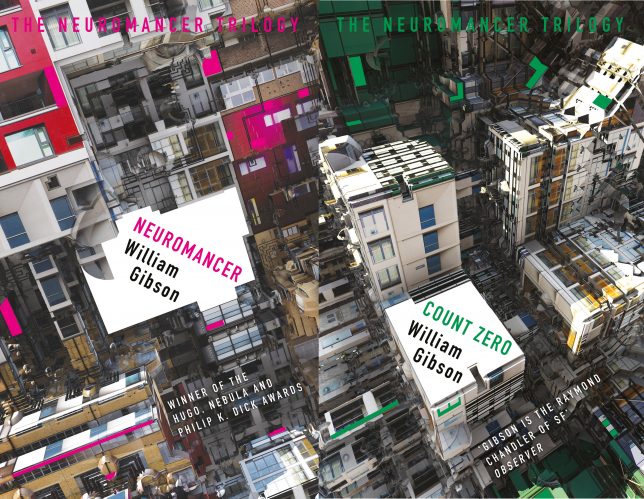
Sprawl Trilogy Redesign: Fractal City Covers for Classic Gibson Novels

04 Dec

[ By WebUrbanist in Art & Drawing & Digital. ]

fractal-cover-art

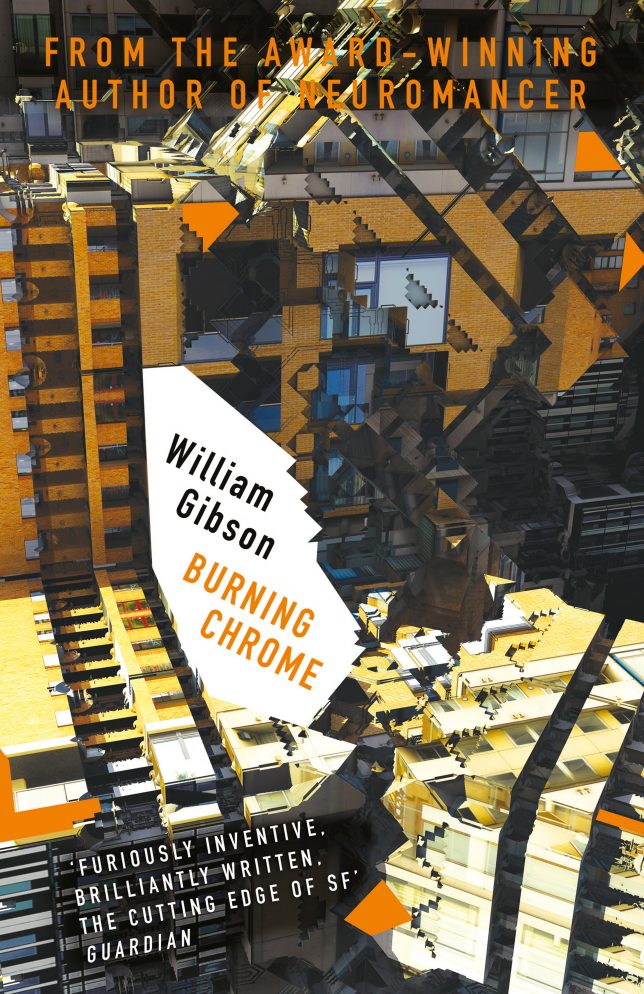
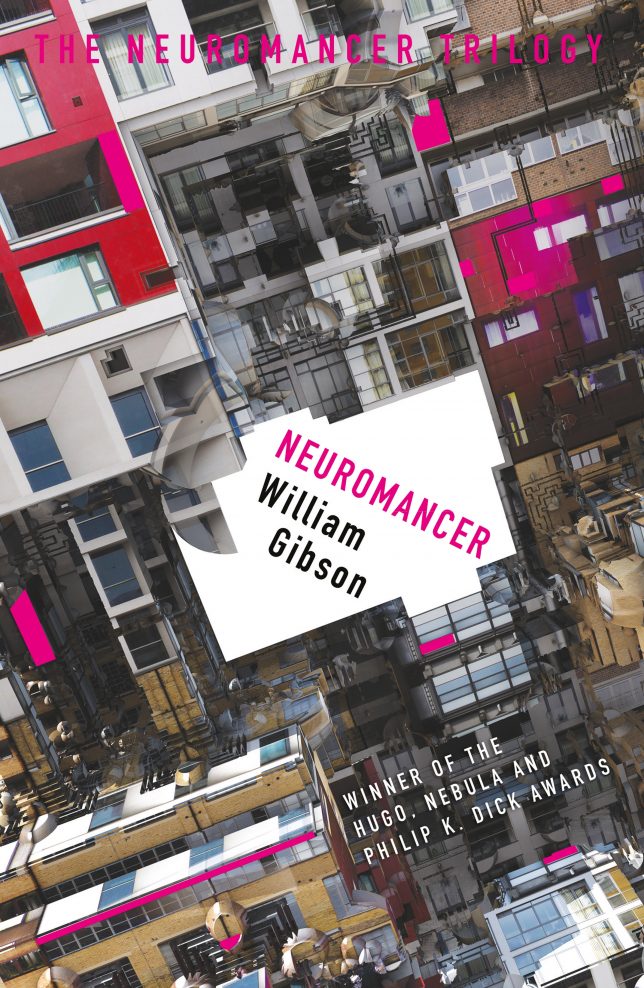
Three classic cyberbunk books and a short story collection, all by William Gibson, are getting an apt makeover in the form of architectural covers featuring beautifully abstracted (if dystopian) urban landscapes.

burning-chrome-cover

Anyone familiar with this master of science fiction will make the connection quickly — the strange and seemingly impossible shapes are exactly what come to mind when reading the Sprawl Trilogy (Neuromancer, Count Zero, Mona Lisa Overdrive) as well as shorts from Burning Chrome. In William Gibson’s fiction, the Sprawl is a colloquial name for the Boston-Atlanta Metropolitan Axis (BAMA), an urban sprawl environment on a massive scale, and a fictional extension of the real Northeast megalopolis.

neuromancer-cover

Developed by digital artist, designer and programmer Daniel Brown, the method of these remakes also fits the techno-futuristic narratives in question: fractal mathematics and computer software turned ordinary architectural photographs into these surreal built environments. The covers seem to flow into one another but are distinctly colored, forming unique art separately but a kind of fractal collage when seen together.

count-zero-cover

The images were generated by repeating one shot at different scales to create complex patterns, at once recognizable as architectural but hard to pin down, much like a memory or a visualization based on reading a book. Gibson approached Brown when Gollancz, an imprint of Orion, acquired rights to the publishing of these speculative fiction classics.

mona-lisa-overdrive-cover

The designer says he was personally approached by Gibson to create the cover designs for the books, which have been recently acquired by science-fiction publisher Gollancz, an imprint of Orion. Their meeting was fortuitous as Brown had been looking for a platform to execute his creative ideas.

new-gibson-cover-art

“I had been experimenting with generating architecture via computer code,” says Brown. “As a project it was still in its infancy and without real purpose. Then William Gibson contacted me, and stated it was exactly how he had envisaged The Sprawl. In an uncanny way the code found its own purpose.”

Share on Facebook


[ By WebUrbanist in Art & Drawing & Digital. ]

[ WebUrbanist | Archives | Galleries | Privacy | TOS ]


WebUrbanist

 
Comments Off on Sprawl Trilogy Redesign: Fractal City Covers for Classic Gibson Novels

Posted in Creativity


Cokin launches vintage-styled Riviera Classic tripod

29 Nov

$ (document).ready(function() { SampleGalleryV2({“containerId”:”embeddedSampleGallery_5732238301″,”galleryId”:”5732238301″,”isEmbeddedWidget”:true,”standalone”:false,”selectedImageIndex”:0,”startInCommentsView”:false,”isMobile”:false}) });

If putting your gorgeous retro-styled camera on an ugly, modern tripod just bums you out, filter maker Cokin has a solution. They’ve worked with Slik to produce the Riviera Classic, a tripod designed to match your rangefinder-esque mirrorless camera with vintage touches like a wooden tightening handle and faux-leather leg section covers. The whole thing comes with a handsome carrying pouch. No word yet on pricing or availability.

Press release

Cokin introduces RIVIERA Classic

Modern tripod for retro cameras. And vice versa.

PARIS—November 24, 2016—Cokin is proud to announce the first tripod to adopt the look of current retro cameras.

Inspired by old camera design, Riviera Classic is the only tripod to combine leather and wood elegancy with aluminum sturdiness in a timeless design.

Incredibly stable and extremely stylish, with metal tightening dials similar to those found on antique manual cameras, Riviera Classic is the tripod that was missing to affirm the neo retro look of current cameras. Although traditional in its approach, Riviera Classic provides nevertheless all the features of a modern tripod: telescopic sections, inversible central column, multi-actions head, ergonomic wooden tightening handle, unlockable angles etc.

Made of Iroko wood, known for its exceptional durability, and hand crafted by Atelier Farol at La Rochelle, France, the Riviera Classic handle has been designed to provide optimal control. Over time, and upon usage, the wood patina will make it even more unique.

Covered with a material similar to that found on premium camera bodies, the Riviera Classic leather-inspired sections are both elegant and delightful to handle. Once opened, they reveal the brilliance of brushed aluminum, contrasting with the tripod body. Each section ends with a high density nonslip rubber cap insuring the best support on all types of field.

Every details have been carefully thought, right down to the tightening dials of the Riviera Classic, inspired by the ones found on retro cameras. Made of knurled aluminum, they offer an excellent grasp in order to precisely adjust sections and central column.

We have brought the same care in the making of the soft pouch that comes with Riviera Classic, made of leather-inspired and hessian fabric. The cord is robust and comfortable, to carry it anywhere, with style.

It was very natural that Cokin collaborated with Slik to develop Riviera Classic. Founded in 1948, Slik is renowned for its unique know-how in long lasting tripods making.

Named after its founder Jean Coquin, a famous french photographer of the 70’s, Cokin is the inventor of the innovative Creative Filters System (adaptor ring + filter-holder + filters), the most popular filter system in the world.

Technical specifications:

  • Maximum operating height: 160 cm – 63 in
  • Folded tripod length: 60 cm – 23.6 in
  • Maximum center column extension: 29.7 cm – 11.7 in
  • Weight: 1.54 kg – 3.4 lbs
  • Maximum loading capacity: 5 kg – 11 lbs
  • Multi-action head with 360° plate
  • Carrying case included

Articles: Digital Photography Review (dpreview.com)

 
Comments Off on Cokin launches vintage-styled Riviera Classic tripod

Posted in Uncategorized


Nolli App of Rome: Use a Classic Map as a Modern Travel Guide

29 Jun

[ By WebUrbanist in Destinations & Sights & Travel. ]

nolli map complete panels

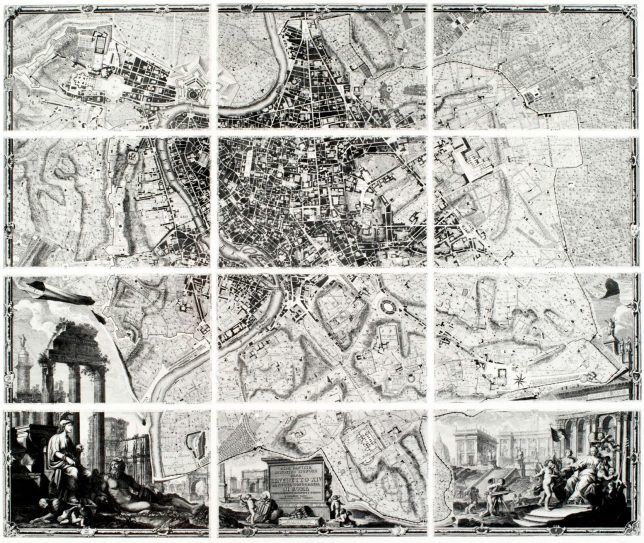
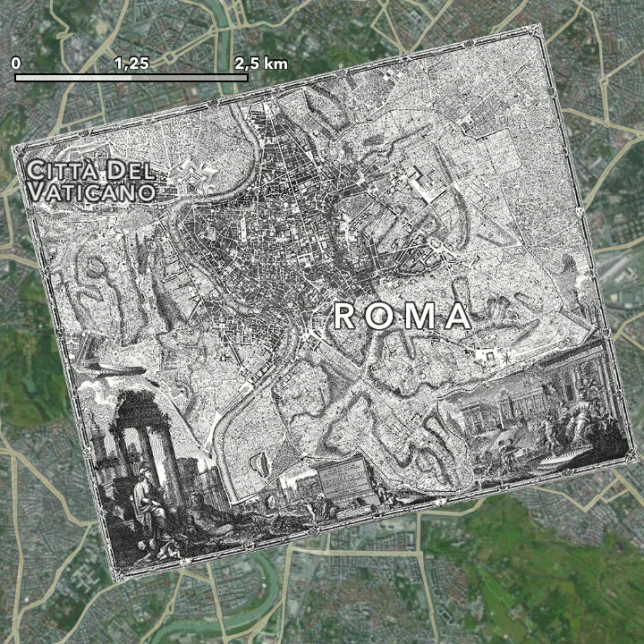
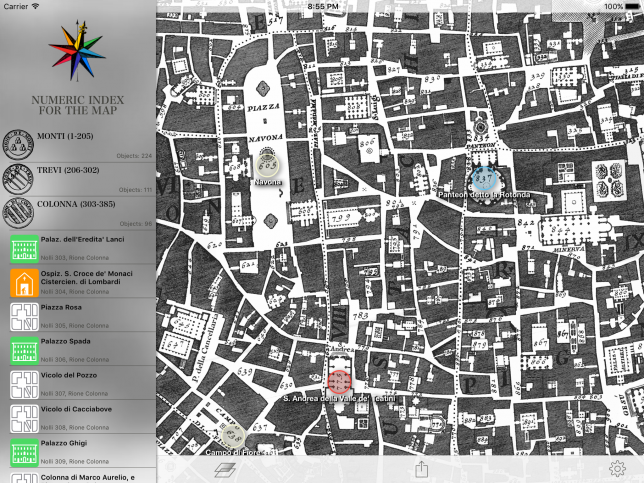
The Nolli Map of Rome is one of history’s most famous works of cartography, and now a new iPhone and iPad app lets you use it to navigate in realtime, helping you both lose and find yourself in one of Europe’s most marvelous ancient cities.

nolli app of rome

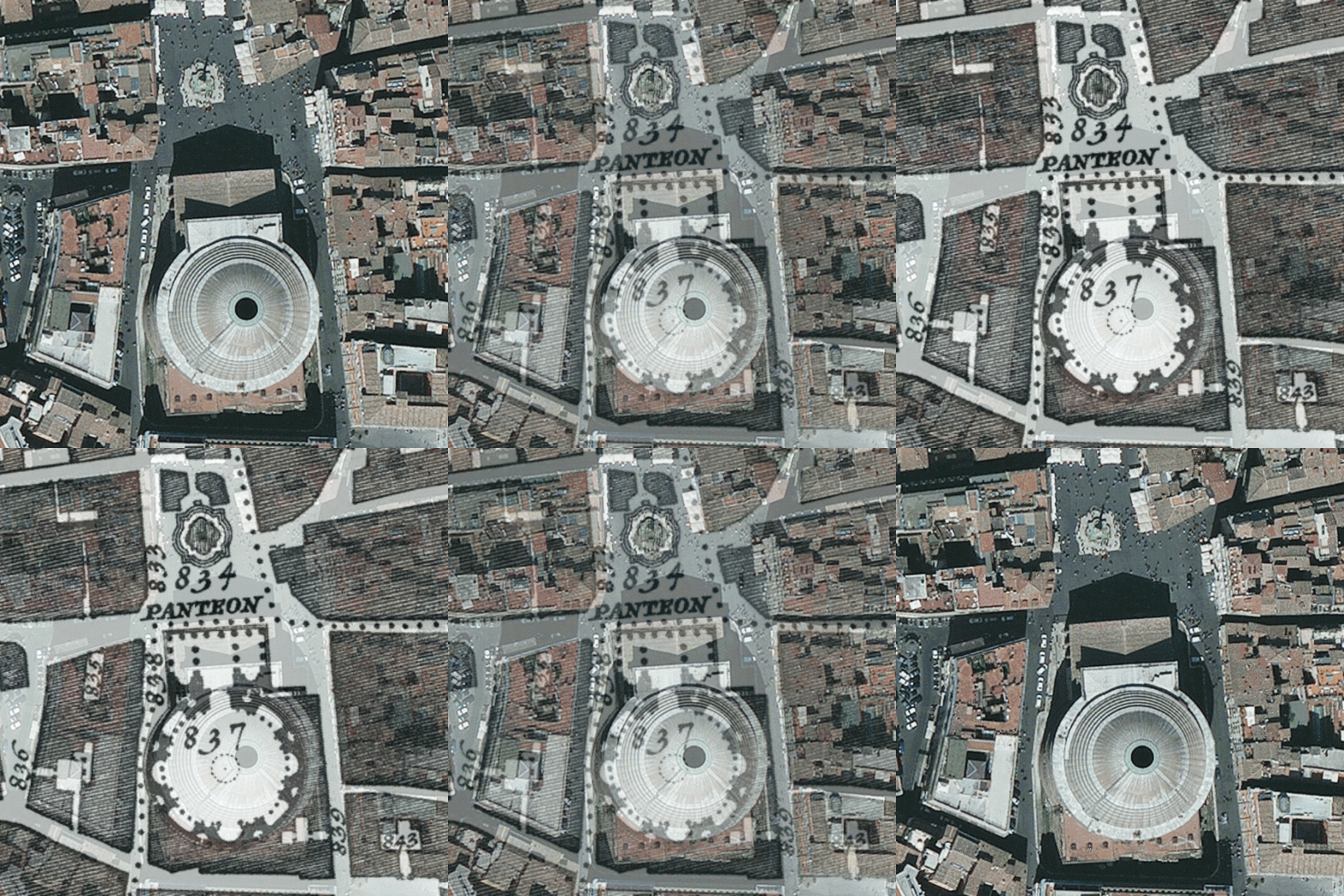
Finished in 1748 after 12 years of research  by Italian architect and surveyor Giambattista Nolli, this innovative map represented a novel approach to figure-ground representation. Streets and open public spaces were, for instance, predictably depicted as voids against a backdrop of solid hashes, but so to were enclosed civic spaces like the Pantheon.

nollithennow

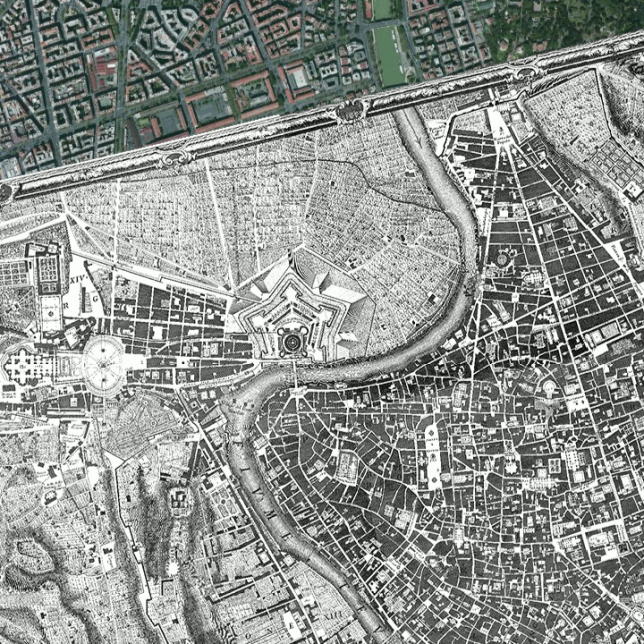
The original engraved city map consisted of 12 copper plates spanning 40 square feet, and, at the time, was the most accurate representation of the city to date. Honoring that tradition, this digital experience replicates many original features and details from the vintage original.

nolli versus modern rome

So why would you want to tour modern Rome with a centuries-old map? Its creator, Martin Koppenhöfer, explains that “despite its age, this map is still very valid for most parts of the Roman center.” He also notes that “it is quite entertaining to find your way with this app. Pedestrian navigation is very different … you don’t have to know every street or turn, just go into the right direction.”

index of rome

Think of it as part walking tour, part adventure and part historical education. Using an old map to navigate a city lets you find things that might have otherwise escaped your attention. It also allows you to distinguish between more permanent fixtures of the historic built environment and more contemporary changes and additions. If you lack a compatible device for the app, you can also check out an online interactive (but less mobile) version of this iconic map.

nolli zoomed overlay

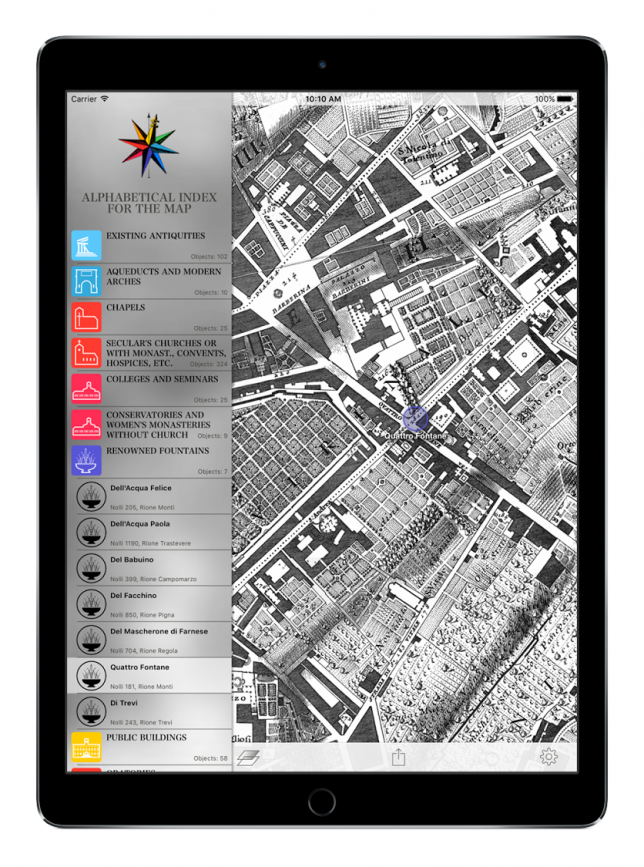
“In designing the present edition,” Koppenhöfer elaborated in and interview with WebUrbanist, “we have spent great care with the aim to be as close to the original as possible regarding the labeling and the structure of the directories. Therefore the app reproduces in the indices on the left side of the map exactly those types in the exact order and (to the contemporary reader occasionally appearing outmoded) notation as provided by Giambattista Nolli in his indices. By selecting an entry you will be led to the corresponding location on the map. You can also browse by tapping on one of the numbers on the map to see what it is about.”

nolli map historical view

nolli indexed mpa closeup

The original version is meticulously adhered to, providing an updated digital experience while maintaining original notes and styles. “The explanations of the signatures and line styles,” says Koppenhöfer, and “hatches and selected abbreviations are reproduced in their original form (see “Legend”). You can access Nolli’s original spelling of the indices, legend, and other signs at the bottom of the English version in Italian language.”

Share on Facebook


[ By WebUrbanist in Destinations & Sights & Travel. ]

[ WebUrbanist | Archives | Galleries | Privacy | TOS ]


WebUrbanist

 
Comments Off on Nolli App of Rome: Use a Classic Map as a Modern Travel Guide

Posted in Creativity


Pencil + Sharpener: Redesign Solves 3 Classic Drawing Tool Problems

27 Jun

[ By WebUrbanist in Design & Products & Packaging. ]

pencil plus sharpener

Pencils require sharpening, run out of eraser and turn into unusable stubs as they near the end of their lifespan, but this clever gadget aims to change all of that, solving all three issues at once.

demo

Even in today’s digital world, artists, designers, writers and musicians still fall back on this traditional tool. The Pencil+ helps on multiple fronts, but functions first as a pencil holder, enabling the user to tuck various lengths of pencil into a central void.

eraserhead

What keeps the pencil from slipping too far in? An adjustable eraser serves as a backstop, letting you move the pencil portion backward to fit and forward as the pencil gets shorter. Meanwhile, the back of the holder (normally where one would find an eraser) doubles as a sharpener, keeping it always on hand for reworking broken or worn tips.

remove and sharpen

“Worry no more because with pencil+,” say its creators, “you can now have a sharpener, extender, eraser holder and transporter for your favorite tool” which is available in Teak, Ebony, Wild Olive, African Padauk and Indonesian Redwood”

pencil sharpener combo

A few potential critiques come to mind: first, someone employing this device will have to deal with an additional step to access an eraser. Second, the holder is necessarily wider than a pencil, so it will require some getting used to in terms of grip and function. Third, the eraser length is a function of pencil length, so storing a lot of extra eraser could be an issue (though easily longer than a normal one). Still, one can be sure, at least, never to lose track of one’s sharpener, and also that a single pencil will last a lot longer.

Share on Facebook


[ By WebUrbanist in Design & Products & Packaging. ]

[ WebUrbanist | Archives | Galleries | Privacy | TOS ]


WebUrbanist

 
Comments Off on Pencil + Sharpener: Redesign Solves 3 Classic Drawing Tool Problems

Posted in Creativity


Mid-Century Modern America: 10 Classic Houses for the Ages

12 Apr

[ By Steph in Design & Products & Packaging. ]

midcentury modern stahl house 4

Icons of midcentury modern design by the likes of Ludwig Mies van der Rohe, Frank Lloyd Wright, Eero Saarinen and Marcel Breuer still stand across America, showing off the simplicity, clean lines and extensive use of glass the style is known for. Many are so perfectly preserved they’ve become actual museum exhibits, while others have been well-loved and lived in over the decades or restored after falling into ruin. These 10 examples represent some of the most famous midcentury modern homes in the country, as well as a few hidden gems.

Farnsworth House by Mies van der Rohe, Plano, Illinois (1951)
midcentury modern farnsworth house

midcentury modern farnsworth house 2

midcentury modern farnsworth house 3

midcentury modern farnsworth house 4
Renowned architect and designer Mies van der Rohe created the most beautiful example of a glass midcentury house for Dr. Edith Farnsworth as a place to play violin, translate poetry and enjoy the landscape on the edge of the Fox River. About 1500 square feet, the house features floor-to-ceiling glass with exposed steel structural members in white. Elevating it 5.3 feet above the flood plain didn’t prevent it from being inundated after Hurricane Ike in 2008, but most of the home’s original midcentury furniture was saved, and it re-opened to visitors by 2009.

Fallingwater by Frank Lloyd Wright, Mill Run, Pennsylvania (1935)
midcentury modern fallingwater 1

midcentury modern fallingwater 2

midcentury modern fallingwater 3

midcentury modern fallingwater 4

midcentury modern fallingwater 5

The most famous creation of America’s most well-known architect, Fallingwater (or the Kaufmann Residence) is also one of the nation’s most-visited homes. Fallingwater was built right on top of a series of cascading waterfalls on Bear Run in the Allegheny Mountains, which might be a beautiful choice stylistically, but led to a series of architectural challenges and some extensive mold problems. The fact that the location on the bank of the river was not large enough to support the foundation of a typical Wright house is what prompted the cantilevered design. The original owners used it as a weekend home until 1963, when it donated to the Western Pennsylvania Conservancy, and it’s been open to the public as a museum since 1964.

Eames House by Charles and Ray Eames, Los Angeles, California (1949)
midcentury modern eames house 1

midcentury modern eames house 2

midcentury modern eames house 3

midcentury modern eames house 4

midcentury modern eames house 6

One of about two dozen homes built as part of the Case Study House Program, an experimental architecture project sponsored by Arts & Architecture Magazine after World War II, the avant-garde Eames House resembles a Mondrian painting with its panels of white, blue and red separated by stark black beams. While many iconic midcentury modern houses have been preserved as they were originally decorated, the Eames House has a thoroughly lived-in feel because it has actually functioned as a comfortable and functional home for decades rather than a museum exhibit. It consists of a main residence and studio separated by a courtyard.

Hooper House II by Marcel Breuer, Baltimore, Maryland (1959)

midcentury modern hooper house 1

midcentury modern hooper house 2

midcentury modern hooper house 4

midcentury modern hooper house 3

midcentury modern hooper house 5

Known for beautiful streamlined furniture designs as well as some of America’s most amazing Brutalist structures, Marcel Breuer showed an unusual restraint in designing the simple Hooper House II for philanthropist Edith Hooper. Two separate wings of the home, one containing the common spaces and the other the bedrooms, are connected by a glazed passageway to form a U-shape. Large segments of glass offer views of the courtyard as well as Lake Roland to the east, broken up by long walls of Maryland fieldstone.

Stahl House, Los Angeles, California (1959)

midcentury modern stahl 1

midcentury modern stahl house 2

midcentury modern stahl house 4

midcentury modern stahl house 5

Is this the quintessential Los Angeles house? The Stahl Residence is certainly one of the city’s most iconic, cantilevering out of the Hollywood Hills to gaze upon the urban skyline, and it’s magnificent at night. The glass and steel volume projects the common areas outward while maintaining privacy for the bedrooms in a separate wing. The swimming pool serves as an interstitial space between the two. The house serves as one big lookout taking in panoramic views of Los Angeles.

Next Page – Click Below to Read More:
Mid Century Modern America 10 Classic Houses For The Ages

Share on Facebook


[ By Steph in Design & Products & Packaging. ]

[ WebUrbanist | Archives | Galleries | Privacy | TOS ]


WebUrbanist

 
Comments Off on Mid-Century Modern America: 10 Classic Houses for the Ages

Posted in Creativity


Masterpiece Mashups: Classic Art Gets the GIF Treatment

03 Mar

[ By Steph in Art & Drawing & Digital. ]

van gogh gif

Vincent Van Gogh is having a good pop culture week on the interwebs with multiple humorous GIF treatments and stunning animations of his works exposing classic art to new generations. In this series, artist Kajetan Obarski (known as Kiszkiloszki) mashes up masterpieces by the infamous Dutch painter and others with contemporary life, bringing them firmly into the computer age.

gif 3

gif 7

gif 8

gif 11

Leonardo da Vinci gleefully photoshopping a range of different animals into his ‘Lady with an Ermine,’ Michelangelo’s Sistine Chapel God plays pool, a 17th-century lady rocks out with a skeleton and Van Gogh himself receives a very insensitive gift. There’s chocolate flinging, baby throwing and sexting gone awry, not to mention the inevitable conclusion to Magritte’s men falling from the sky.

output_p1ZRb8

gif 2

gif 9

gif 10

gif 1

classic art memes

Classic art has gotten a big cultural boost lately thanks to projects that appeal to our sense of humor, like the excellent Classical Art Memes. While more conservative art historians may lament that the works aren’t being appreciated in their original context, as the artists meant for them to be, these projects have centuries-old paintings flying around the internet like cat videos, so it’s hard to complain.

Share on Facebook


[ By Steph in Art & Drawing & Digital. ]

[ WebUrbanist | Archives | Galleries | Privacy | TOS ]


WebUrbanist

 
Comments Off on Masterpiece Mashups: Classic Art Gets the GIF Treatment

Posted in Creativity


Upgrading a classic: Canon 100-400mm F4.5-5.6L IS USM Mark II review

02 Mar

Canon 100-400 F4.5-5.6L IS USM Mark II Review

The king is dead, long live the Mark II. After 15 long years, Canon finally upgraded one of the biggest-selling telezooms of all time – the 100-400mm F4.5-5.6L IS USM. The Mk II version has the same headline specifications but with enhanced features and improved performance all-round. While the new model is better for sure, when comparing the Mk I and Mk II side by side it quickly becomes clear just why it took Canon so long: the MkI version was, and still is, a decent lens. It’s always been very popular too, and known for holding its value well on the used market, so Canon was in no rush to change a winning formula.

The 100-400mm Mk II retains the same focal length and F4.5-5.6 overall maximum apertures as the original model. Both lenses change up to F5 at around the 125mm mark, and the Mk I then goes to F5.6 at 250mm while the Mk II holds on slightly longer, making the final switch at just over 300mm. Apart from a little extra weight, the physical dimensions are basically unchanged, but everything else is new and upgraded. There’s a totally new state-of-the-art optical design with more elements, a much-improved image stabilization system, a minimum focusing distance that’s been cut in half and faster autofocus drive. Build quality has been taken up a notch, now with a full set of weather seals, and the push-pull zoom control (unloved by some) is swapped for a more conventional twist-ring. It’s finished in Canon’s newer light gray L-color, as opposed to the old creamy-white. 

Headline features

  • Improved optical design with 21 elements in 16 groups (versus 17 in 14 for Mk I)
  • Upgraded image stabilization with 4-stops benefit (vs. 2-stops)
  • Twist-ring zoom control (vs. push-pull)
  • Extensive weather-resistant seals (vs. partly sealed)
  • Faster USM autofocus drive
  • Close focusing down to 98cm, 0.31x magnification at max focal length (vs. 180cm, 0.2x)
  • Same size as Mk I, though slightly heavier at 1570g (vs. 1380g)

Canon now offers the broadest selection of telezooms of any brand, at a variety of price points. In the premium sector, there are four 70-200mm L-grade zooms, with a choice of F2.8 or F4 maximum apertures, with and without image stabilization. The 70-200mm F2.8 L IS USM Mk II is relevant here as it works well with 1.4x or 2x extenders, as an alternative to something longer.

More recently, Canon added a third lens to its options in the versatile 70-300mm category, with the 70-300mm F4-5.6L IS USM being an excellent zoom that is essentially a scaled-down version of the 100-400mm Mk II (and considerably cheaper, too). There is also the Canon 200-400mm F4L IS USM with its unique built-in 1.4x extender, though the stratospheric price puts it in a rather different class, and Canon has a couple of excellent prime telephotos in this focal length range, too. The image-stabilized 300mm F4L IS USM and 400mm F5.6L USM both hail from the same era as the original 100-400mm Mk I, and have also stood the test of time well.

Looking at other brands, the Nikon AF-S 80-400mm F4.5-5.6G ED VR is a close rival to the Canon 100-400 II in terms of specification, design and high performance. Likewise, the Sony 70-400mm F4-5.6 G SSM II for A-mount is another proven performer. Both lenses feature a slightly wider angle of view at the short end, but have notably longer minimum focusing distances than the Canon 100-400 Mk II. Compare Nikon vs Sony performance data here.

Surprisingly, no third-party manufacturer currently offers anything similar, though anyone in the market for an extra-long lens should be sure to check out the trio of 150-600mm F5-6.3 superzooms from Sigma (which has two versions) and Tamron that have caused quite a stir, bringing new standards of performance to this market segment at an affordable cost. But while they might appear to cover much the same ground as the Canon 100-400mm Mk II on paper, they’re very different in the hand – much bigger, much heavier, and arguably, harder to get the most from. The new Nikon AF-S 200-500mm F5.6 E ED VR and as yet unproven Pentax D FA 150-450mm F4.5-5.6 ED DC AW also fall into the larger/heavier category, and with longer minimum focusing distances compared to the Canon Mk II.

Angle of View

100mm F4.5, full-frame (Canon 5DS R)

400mm F5.6, full-frame (Canon 5DS R)

Shire Hall, Cambridge, UK, is one of my favorite subjects for comparisons (also used for the Tamron 16-300mm VC review) though unfortunately it was partly obscured by scaffolding on this occasion.  Sharpness is very high, and unusually consistent – throughout the zoom range, at all apertures, and across the frame. It’s at larger apertures where the Mk II shows most sharpness improvement over the MkI. The images above are both at maximum aperture, F4.5 at 100mm and F5.6 at 400mm, using a Canon 5DS R (full-frame), and are shown without any software corrections applied for chromatic aberration, distortion or vignetting.

The 100-400mm zoom range, with a generous 4:1 ratio, provides a 24.4° to 6.2° angle of view on full-frame, measured across the diagonal from corner to corner. It’s very versatile and well suited to a wide range of popular subjects, including all kinds of field sports, and wildlife from safaris to zoos. At a motor race or air display, the spectator fences are often lined with Canon 100-400mm zooms. Compared to a fixed focal length lens, when photographing sports or anything where the shooting distance varies, you can zoom to pull in subjects from a distance, then zoom back when the action gets closer. Longer focal length settings are also perfect for sniping candid portraits, say at a wedding or other social occasion. At the shorter end, while it may not be the obvious choice for portraiture, at around 100-135mm it’s just about perfect on full-frame.

$ (document).ready(function() { SampleGalleryV2({“containerId”:”embeddedSampleGallery_7167562452″,”galleryId”:”7167562452″,”isEmbeddedWidget”:true,”standalone”:false,”selectedImageIndex”:0,”startInCommentsView”:false,”isMobile”:false}) });

ABOVE: With a broad 4:1 zoom range, unusually close focusing, and excellent image-stabilization, the Canon 100-400mm Mk II can turn its hand to more than just sports and wildlife. It’s sharp at all focal lengths and apertures. Check the fly on the flamingo’s beak – the fine veins on its wings are barely more than 1-pixel wide (Canon 5DS R, monopod, 400mm F5.6, 1/250 sec, ISO 400).

The Canon 100-400mm Mk II goes very well on APS-C cameras like the Canon 7D Mk II, with its excellent AF and fast frame rate. The 1.6x crop factor gives more effective reach and creates a megazoom 160-640mm equivalent angle-of-view. The Canon 100-400mm Mk II is also compatible with the Canon 1.4x extender, though it will only autofocus on higher-end Canon DSLRs that retain AF up to F8 (currently 7D Mk II, 5D Mk III, 5DS/R, 1DX/II). The 2x extender will physically fit, but all AF functions are disabled.

Articles: Digital Photography Review (dpreview.com)

 
Comments Off on Upgrading a classic: Canon 100-400mm F4.5-5.6L IS USM Mark II review

Posted in Uncategorized