RSS
 

Posts Tagged ‘Classic’

Fujifilm X-E2 firmware 4.00 brings Classic Chrome and other X-E2S features

09 Feb
It may be over two years old, but that doesn’t mean Fujifilm has given up on the X-E2.

Fujifilm has released its promised firmware update for its X-E2 mid-range mirrorless camera. The firmware update adds a host of feature and operational improvements, including the Classic Chrome film simulation and AF upgrades from the recent X-T models, as well as a revised user interface and multiple Auto ISO settings.

The firmware update for the over two-year-old model continues Fujifilm’s habit of supporting existing users and brings the camera into line with most of the latest X-series models.

The changes are so significant that, rather than publishing an addendum, Fujifilm has released a new version of the camera’s owner’s manual.


Press Release:

Substantial firmware updates for the X-E2, delivering a new AF system for better capture of moving subjects among other improvements and function enhancements

[ Improvements and function enhancements with this firmware update ]

  1. New AF System

    (1) New AF system with Zone and Wide/Tracking modes for effortless capture of moving subjects
    (2) Improvement of AF accuracy
    (3) Eye Detection AF
    (4) Auto Macro mode
    (5) AF improvement in the Movie mode

  2. Function enhancements

    (6) High-speed electronic shutter with a maximum speed of 1/32000sec.*
    (7) White Balance Bracketing
    (8) Enhanced ISO Auto Setting to AUTO1/AUTO2/AUTO3
    (9) Exposure Compensation control in Manual.
    (10) Natural Live View function is just like the naked eye.
    (11) Finer lines on the framing grid enhances visibility
    (12) New Video Frame rates (50P / 25P / 24P)
    (13) Manual Shooting in Video mode
    (14) Phase detection AF support for Instant AF
    (15) Expansion of shutter speed in Program Shift mode

  3. Operability improvements

    (16) The new user interface
    (17) Improved Shutter Speed Dial operation
    (18) Name of Silent mode changed to avoid confusion
    (19) Direct selection of AF area
    (20) Unlocked AE-L / AF-L Buttons
    (21) Variable Focus Area during MF
    (22) Q. Menu customization
    (23) Interlocking of Metering and Focus areas
    (24) Movie Recording

  4. Other changes with the update

    (25) Supports focus limiter function for XF100-400mmF4.5-5.6 R LM OIS WR
    (26) “BACKGROUND COLOR” menu
    (27) The maximum number of images taken in the continuous shooting mode

Articles: Digital Photography Review (dpreview.com)

 
Comments Off on Fujifilm X-E2 firmware 4.00 brings Classic Chrome and other X-E2S features

Posted in Uncategorized


A classic reinvented? Domke Chronicle Review

20 Jan

Domke Chronicle Ruggedwear Review
$ 349/£296 | www.tiffen.com | Buy Now

Domke has a long history of making bags that to serve the needs of working photographers. From day one, Domke bags have been designed for accessibility, durability and style that intentionally avoids attracting attention, and have enjoyed popularity with generations of pro photographers. A few years ago, after gathering input from professionals and longtime customers (myself included), Domke introduced the Next Generation line, bringing modern updates to its classic bag.

For a little background, I’ve used a Domke J-2 (a ballistic nylon version of the F-2) as my standard DSLR working bag for almost 15 years. I don’t use it to carry every little thing. I don’t use it when I want to travel light and fast. I don’t use it when I’m going to be hiking up a mountain. But I use it when I know I’m going to be in and out of my bag all day long. Weddings, kids’ birthdays, family reunions and the like all require quick and easy access to bodies, lenses and accessories. The J-2 has served me well for years and despite its age, still looks and functions well enough that I could take it to a wedding tomorrow. 

As a long time user I was interested to see what the Next Generation bags had to offer. Since the Chronicle is the Domke Next Generation bag closest in size to my old J-2, I figured that was a good place to start. Domke even calls the Chronicle ‘The grandchild of the F-2.’

Specifications

  • Exterior: 15.75″ (L) x 7″ (W) x 10″ (H) (40 cm x 17.8 cm x 25.4 cm)
  • Interior: 12.25″ (L) x 6.5″ (W) x 9.25″ (H) (31.1 cm x 16.5 cm x 23.5 cm)
  • Weight: 4.2 lbs. (1.9 kg)
  • Fabric/color choices: RuggedWear Black, RuggedWear Military, Canvas Khaki/Black and Cordura Black
  • Fits a medium DSLR and 2-3 lenses plus accessories

In Use

In many ways, the Chronicle, and much of Domke’s Next Generation lineup, is very similar in design to its classic bags. That being said, there are a number of upgrades, some minor and some more significant. In use, the Chronicle will feel familiar to anyone who has used a Domke bag in the past. The Gripper Strap on your shoulder, side pockets for accessories, metal snap hooks to close the main compartment’s flap, and a removable grab handle strap are all there and just as useful as ever.

The Next Generation bags bring a new fabric to the Domke lineup, Ruggedwear. Ruggedwear is a waxed-canvas fabric that Domke claims combines toughness, water resistance, and a retro ‘well-worn’ look. In my book, it’s pretty good looking and seems as tough as my other Domke bags. The top access zipper makes grabbing your camera or changing a lens significantly quicker. This is a feature I highly value on my shoulder bags and feel that it is exactly the kind of functionality that other Domke bag users will value.

The expandable side and front pockets reduce overall size of the bag while still giving you options for tucking in that one last piece of equipment. A redesigned top flap and side rain hoods offer more reliable protection from the elements. The velcro ‘silencers’, small flaps that cover the velcro closures and keep them from making noise, are a neat idea, but I have to admit that I have yet to use them. The antique stainless hardware is a nice upgrade. Sadly, the plastic clips that attach the grab strap are a significant downgrade. They feel flimsy enough to break in the very near future. I wish Domke had used their traditional metal clips.

New plastic clip on the left, classic metal clip on the right.

Moving away from Domke’s standard 1/2/4 section inserts, the Next Generation system offers an extensive system of internal divider options. There are dozens, if not hundreds, of different ways you can set up the Chronicle. It comes with three dividers, two full width and one half width (along with one movable ‘pocket’). The dividers have velcro edges and stick to the sides or to each other in just about any position you choose. If those provided do not give you enough options, Domke sells additional dividers along with pockets, pouches, and padding that will help you set up your bag in just about any configuration. The Chronicle only comes with three of these dividers, which I feel is too few considering its price tag. I would have liked to see 1-2 more dividers included.

Like my Domke J-2, the Chronicle has a well padded and removable baseplate. Unlike most older Domke bags, the Chronicle has four padded ‘walls’ around the sides. This has the advantage of giving your gear an additional measure of protection that it wouldn’t have in a softer-sided traditional Domke bag. It also has the effect of giving the bag more boxy structure than the older bags. The Chronicle doesn’t form to your hip or back when carrying it. Sure, you could remove the walls, but unlike the J-2 with its inner lining of velcro or the F-2 with its inserts, the Next Generation divider system has nowhere to attach without the ‘walls.’ 

The gear capacity of the Chronicle is really dependent on how you set up the dividers. My default for shoulder bags is to have a large space on one side for a body+lens and then the lens dividers over to the other side. For me, this is the best compromise between maximizing space and still being able to quickly grab my camera. This was how I set up my old J-2 for every wedding I shot and it is how I set up the Chronicle. With this layout, I was pretty easily able to carry my 6D+ 24-70/2.8, 16-35/2.8, 70-200/2.8 a speedlight and assorted other small accessories.

By setting up the dividers so that things are a little more tightly packed, you should be able to also fit in a spare body or a couple of prime lenses pretty easily. A mirrorless kit is almost swallowed by a bag this size and generally I would suggest something smaller (perhaps the Domke Next Generation Herald). But depending on the body you use and the number of lenses you carry, the Chronicle could easily haul a lot of mirrorless gear and keep it accessible.

New vs Old

Compared to the old J-/F-2 designs, I really appreciate some of the new features. The expandable side pockets, the quick access zipper, and divider system top that list. In addition, the Chronicle’s new top flap and side ‘ears’ do a better job of protecting gear from the elements than the smaller J-2 flap.

Historically, I have thought I preferred the less structured shape of the J-2. It hugs my side better and feels as if I can move through crowds more easily. But in recent years I have come to realize a few things about shoulder bags. Past a specific size, a big shoulder bag is just a big bag no matter what. While a bag like the J-2 might protrude slightly less than the Chronicle, they are still pretty big. Furthermore, a more structured bag is a lot easier to actually use while working. The added stiffness aids in getting gear in and out; you aren’t fighting with the bag to get a lens back into its divider.

“For as much as I’ve always respected the world-weary photojournalist look of the older Domke bags, I think the Chronicle is just a little more classy looking”

Finally, the more rigid design of the Chronicle makes it unlikely to tip over when set down on the ground. Overall, I could work with either of these bags. The J-2 (and the F-2 before it) has had years of hard use proving its worth. However, the Chronicle has enough important improvements that I would choose it if I had to pick just one. To be honest, for as much as I’ve always respected the world-weary photojournalist look of the older Domke bags, I think the Chronicle is just a little more classy looking, particularly in the Ruggedwear fabric. 

What’s the Bottom Line?

The Domke Chronicle Ruggedwear is a solid, well-designed bag that should stand up to the abuse that serious photography can dish out. And let’s be honest, updating a classic can be difficult. Look at the historical joke that ‘New Coke’ has become. Domke, however, has stayed true to its soul with the Next Generation line and most specifically, with the Chronicle. Most all of the updated features are solid improvements with very few misses.

Yes, this is a premium bag at a price that starts to edge close to the truly high-end offerings out there. But this is not simply a fashion accessory either. At the end of the day, just like the old F-2, this is a bag one can work out of. It is a bag that should be as at home coming out of a staff photographer’s trunk as it is at a wedding or portrait session. Most everything you truly need out of a shoulder bag is here, and there’s very little that you don’t.

What we like:

  • An update of a classic functional design
  • Overall construction quality
  • Made in the USA
  • Top zipper access
  • Expandable side pockets
  • Velcro silencers
  • Extensive divider system

What we don’t like:

  • Premium price tag
  • Plastic clips on grab handle
  • Too few dividers included
  • Boxy shape

Final Rating: 

Articles: Digital Photography Review (dpreview.com)

 
Comments Off on A classic reinvented? Domke Chronicle Review

Posted in Uncategorized


Classic Modern Mix: 13 Striking Additions to Historical Houses

15 Dec

[ By Steph in Architecture & Houses & Residential. ]

additions octopi

Stretching out of the original structures like alien growths, these modern additions don’t even bother trying to blend in with their traditional architectural settings – but somehow, it works. The mashup of old and new keeps the historic character of the original structures intact while updating them for use by 21st-century residents, expanding the available space in unexpected ways.

Sculptural Extension to 1930s Miami Bungalow
additions miami 1

additions miami house 2

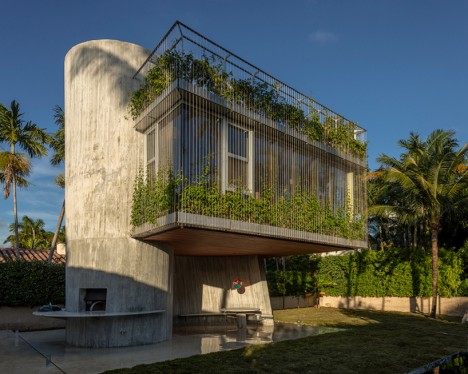
This three-story extension certainly isn’t trying to blend in with the modest 1930s Miami bungalow that can be seen peeking out from behind it. Sun Path House by Studio Christian Wassman sits upon a spiraling concrete structure containing a kitchen, which connects to the original house.

Greenery-Clad Vertical Extension
additions sandwich house 1

additions sandwich house 2

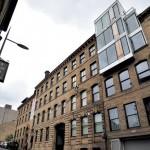
This concept by Zawelski Architecture Group literally raises the roof of an aging brick house with a sandwich of elements that hide a terrace inside the top story. The original structure houses the living spaces, the middle envelope contains private spaces like bedrooms and bathrooms, and a fence of ivy conceals a perfectly private backyard.

High Contrast at Bord-du-Lac
additions bord du lac 1

extensions bord du lac 2

A 200-year-old stone house in Canada gets a striking metal-clad addition in this project by Henri Cleinge. The stark transition between old and new is meant to express the passage of time, the new volume representing the modern-day family and the old representing their ancestors.

Hankai House: Modern Volume Protects 300-Year-Old Japanese Home
additions hankai

additions hankai 2

additions hankai 3

A new wooden building wraps protectively around a 300-year-old wooden gate house in Japan, extending its space while leaving the original structure virtually untouched other than sections that were beyond repair. The new structure provides extra earthquake resistance, and though it’s clearly contemporary, its burnt cedar walls pay tribute to the architectural vernacular of the town.

Cosgriff House: Sleek in the Suburbs
additions cosgriff 1

Christopher Polly Architect_Cosgriff House

Christopher Polly Architect_Cosgriff House

A striking new extension provides three new levels of living spaces without dwarfing the standard suburban Australian home it’s attached to. Architect Christopher Polly followed the form and contours of the house, inserting a large new living area beneath it.

Next Page – Click Below to Read More:
Classic Modern Mix 13 Striking Additions To Historical Houses

Share on Facebook


[ By Steph in Architecture & Houses & Residential. ]

[ WebUrbanist | Archives | Galleries | Privacy | TOS ]


WebUrbanist

 
Comments Off on Classic Modern Mix: 13 Striking Additions to Historical Houses

Posted in Creativity


Classic Art in a Modern World: 35 Masterpieces Reimagined

05 Nov

[ By Steph in Art & Photography & Video. ]

classic art mechanics 1

Masterpieces from Greek antiquity through the nineteenth century are literally seen through a modern lens, remade into action figures or inserted into contemporary settings, in this collection of remixed classic art.From auto mechanics styled and posed like Caravaggio subjects to storm troopers as Flemish upperclassmen, these projects bring centuries-old aesthetics into the 21st century.

Auto Mechanics in Renaissance-Style Portraits by Freddy Fabris
classic art mechanics 2

classic art mechanics 3

classic art mechanics 4
Inspiration struck when photographer Freddy Fabris accompanied a friend into a cluttered auto shop, the mechanics and their tools seeming like the perfect subjects for Rembrandt and Renaissance-style portraits. The award-winning series mimics such masterpieces as Leonardo da Vinci’s Last Supper and Michelangelo’s The Creation of Adam.

Classic Statue Action Figures
classica art action figures 1

classic art action figures 2

classic art action figures 3

David, The Thinker and Venus de Milo come to life in the form of posable action figures so you can see these classic statues like you’ve never seen them before. The pre-sale for most of these figures has already ended, but ‘David’ is still available for roughly $ 40.

Classic Art Figures in Contemporary Settings
classic art contemporary settings 1

classic art contemporary settings 2

classic art contemporary settings 3
Angels and other subjects from classic paintings hang out in dive bars, subways and alleys in Alexey Kondakov’s series ‘Art History in Contemporary Life,’ including Hans Holbein’s ‘The Ambassadors’ and the otherworldly female figures of Bougereau.

Lego Tribute to Classic Art
classic art lego 1

classic art lego 2

classic art lego 3
Iconic works by Magritte, Vermeer and Van Eyck get the Lego treatment in a fun photographic series by Marco Pece.

Next Page – Click Below to Read More:
Classic Art In A Modern World 35 Masterpieces Reimagined

Share on Facebook


[ By Steph in Art & Photography & Video. ]

[ WebUrbanist | Archives | Galleries | Privacy | TOS ]


WebUrbanist

 
Comments Off on Classic Art in a Modern World: 35 Masterpieces Reimagined

Posted in Creativity


6 Tips for Taking Better Natural Light Classic Portraits

10 Sep

On now until September 22nd (2015) over on Snapndeals – 20% OFF Wayne’s eBooK – Portrait Tips and Techniques: Natural Light Black & White Portraiture. Grab it before the deal expires.

DPS STUDY 1

RETHINKING NATURAL LIGHT

Many photographers choose to use natural light as their chosen style, almost as a badge of honour. Natural light is a wonderful source, providing ease of use and flattering light to your subjects, but you should be using it the same way as you would studio lights. You need to create light and shade that will add emotion or mood, not flat lighting that gives no shape, texture or mood. Hopefully these tips will help you on a path to refining your natural light classic portraits.

#1 – FINDING QUALITY LIGHT AND SHADOWS

First, find good quality light – preferably open shade, as this offers soft flattering light and is lower in contrast. Avoid the sun as your main light as it will cause harsh shadows and squinting, which is undesirable for quality portraits.

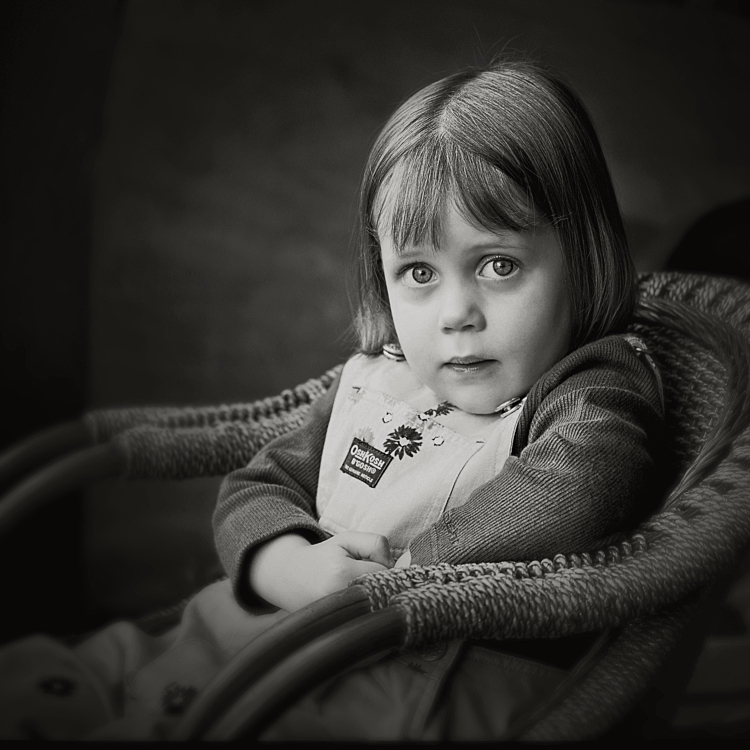
Open shade can be found under awnings, the edge of trees or buildings, and inside doorways or windows, for example. In these images the girls are positioned approximately 1.5 metres (5 feet) inside the doorway of an old timber shed.

Look for the shadows; they are equally important. Shadows subtract the light and create shape and mood.

After you have established your location, check the background. Even if you have found the perfect, open shaded location, make sure the background isn’t too contrasty with sunlit areas. These can be visually distracting, so try and select uncluttered backgrounds that are lower in contrast and darker than the subject’s face. This will allow the face to project forward by being the lightest tone against the background (all the images in this article demonstrate this).
DPS STUDY 2

#2 – FIND THE DIRECTION OF LIGHT

Once you have found good quality of light, check its direction. You want the light to come across your subject’s face at approximately 45 degrees to the nose, and from a higher angle. That height should also be at around 45 degrees, as a basic starting point.

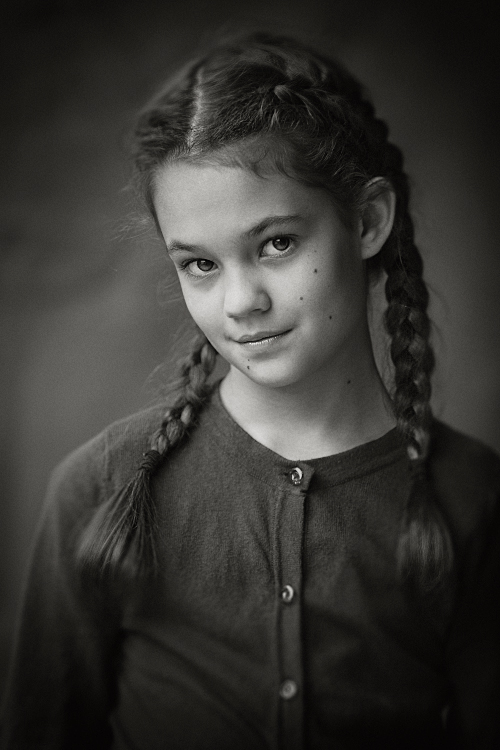
You can check the catchlight positioning by looking at the eyes; there should be one in both eyes at around 10-11 or 1-2 o’clock. (This depends on the side of the face that is being lit and the structure of the eye sockets). Deep-set eyes will need a slightly lower light source. You should also notice the nose shadow to be at around 45 degrees.

To lower the catchlights you need to change the angle of your subject’s head by tilting more or less. Even moving the subject further away from the edge of an overhang will lower the angle of the light. It’s the opposite of being in a studio where you can move the lights. Natural light is fixed and requires you to move the subject and/or camera to achieve good lighting.
DPS STUDY 3

#4 – EYES ARE WINDOWS TO THE SOUL

Catchlights are very important in portraiture. They not only guide you where the light is coming from, but also create a sense of depth. TIP: no catchlights = NO photo. When there are no catchlights, there will be minimal, if any, texture and colour in the eyes. Always study the eyes for guidance.

#5 – SIMPLE POSING

The portraits here are the basic classic style, looking into the camera. It’s usually more flattering to angle the shoulders away from the camera, again 45 degrees is a handy starting point. Leaning the bodies and heads toward each other gives an emotional connection. Upright or leaning away would show detachment from each other.

It’s also a good practice to have the noses turned slightly away from the camera, particularly with adults. Noses that point directly at the camera will look broader in many cases, particularly when combined with flat lighting. With kids, it’s not as critical and good lighting will create better shape.

Arms and hands need to be posed simply so as not to draw attention. In images #1 and #2 above (top of article), the lower arms are bent downwards and the hands clasped softly. Things you should avoid are open fingers, particularly draped over a shoulder, as this can make a portrait busy and untidy. Elbows bent at 90 degrees should also be avoided. Here’s a simple mantra to remember when it comes to posing people’s heads, arms, legs, hands, hips, shoulders, etc:

IF IT BENDS – BEND IT. IF IT CURVES – CURVE IT. IF IT TWISTS – TWIST IT.

Applying this will help you avoid static poses.

DPS STUDY 4

DPS STUDY 5

#6 – EXPRESSION

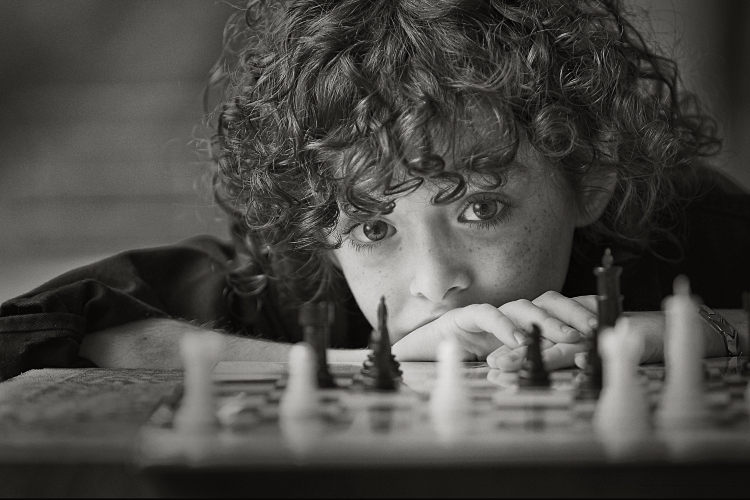
Above all else, expression is the most important element in a portrait. In most cases, a poorly lit and posed portrait with a beautiful expression will trump a technically perfect portrait with an average expression in most cases, but this is no reason to pursue a path of mediocrity.

Expression is a personal thing. A moody, soulful style is my preference, but your sessions should always include various expressions such as laughing, smiling, pensive, etc. To achieve this soulful style you can’t be jumping around in a hyperactive mood expecting soulful looks. The best approach is a more Zen-like style, quietly giving direction. These classic style portraits produce beautiful open eyes, relaxed facial muscles, and true shape to the lips. Truly timeless, heart and soul portraits, but it all takes PRACTICE.
DPS STUDY 6

SUMMARY

  • Treat natural light photography the same as studio lighting.
  • Find quality soft light.
  • Look for shadows to create shape and mood.
  • Place your subject at 45 degrees to the light as a starting point.
  • The light source is fixed, so move your subject and camera to reduce the height of the light in the eyes.
  • Check for catchlights in the eyes.
  • Simplify your posing.
  • Soft expressions work best for classic low-key portraits.

SPECIAL NOTES

With each of these images, other angles of the face (2/3 face and profile) can be achieved by simply moving the camera position. Although the pose and light would remain the same, you may have to adjust the head tilts slightly and check your backgrounds.

Clothing colours also play a big part with quality portraits. Darker clothing works best for low-key portraits. Your eyes should be drawn to the brightest tone in the portrait, therefore, light-coloured clothing would be visually distracting.

On now until September 22nd (2015) over on Snapndeals – 20% OFF Wayne’s eBooK – Portrait Tips and Techniques: Natural Light Black & White Portraiture. Grab it before the deal expires.


googletag.cmd.push(function() {
tablet_slots.push( googletag.defineSlot( “/1005424/_dPSv4_tab-all-article-bottom_(300×250)”, [300, 250], “pb-ad-78623” ).addService( googletag.pubads() ) ); } );

googletag.cmd.push(function() {
mobile_slots.push( googletag.defineSlot( “/1005424/_dPSv4_mob-all-article-bottom_(300×250)”, [300, 250], “pb-ad-78158” ).addService( googletag.pubads() ) ); } );

The post 6 Tips for Taking Better Natural Light Classic Portraits by Wayne Radford appeared first on Digital Photography School.


Digital Photography School

 
Comments Off on 6 Tips for Taking Better Natural Light Classic Portraits

Posted in Photography


Outings: Bring Classic Art to the Streets with Your Phone

08 Nov

[ By Steph in Drawing & Digital. ]

outings interactive street art 2

Anonymous subjects from under-appreciated paintings that hang forlorn in secondary museums, overlooked and nearly forgotten, come to life in the streets with an interactive art project called ‘Outings.’ Dreamed up by French artist Julien de Casabianca, the ongoing, international participative project invites you to snap photos of lesser-known portraits hanging in museums, print them out and paste them onto urban surfaces in cities like London, Paris and Madrid.

Outings interactive street art 1

outings interactive street art 3

outings interactive street art 9

Taking these characters out of their cultural and historical context, participants breathe new life into them, appointing them as watchers over a new and unfamiliar world, making their faces far more visible than they are when hanging in small frames beside more famous and notable works.

outings interactive street art 4

outings interactive street art 5

outings interactive street art 6

The process is simple: discreetly capture any images you like in a museum or gallery with your phone and follow the Outings Project instructions for importing and editing the image in Photoshop. Have it printed in a local shop, and then use wallpaper glue and a brush to adhere it to a wall – the grittier the better, for proper contrast. Get more info and apply for a grant for the price of printing at the Outings website.

Share on Facebook


[ By Steph in Drawing & Digital. ]

[ WebUrbanist | Archives | Galleries | Privacy | TOS ]


WebUrbanist

 
Comments Off on Outings: Bring Classic Art to the Streets with Your Phone

Posted in Creativity


Beyond Basic Bikes: 12 Twists on Classic Cycle Designs

06 Aug

[ By Steph in Design & Products & Packaging. ]

Bike Innovations Commuter

Plug-and-play accessories, bendable frames, built-in tents and totally unexpected redesigns transform the classic century-old bicycle design for the modern era. These 12 clever and sometimes weird cycling innovations  range from simple flat-pack construction that can be assembled with a single allen wrench to bikes that incorporate a range of the latest gadgetry.

EVO: Commuter Bike with Clip-On Components

Bike Innovations Commuter Clip On 2

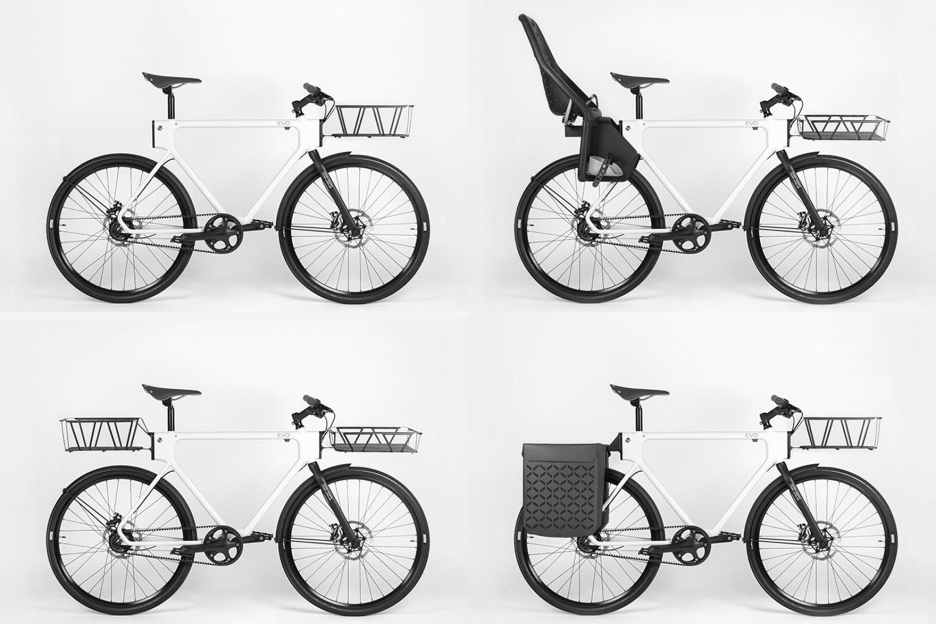
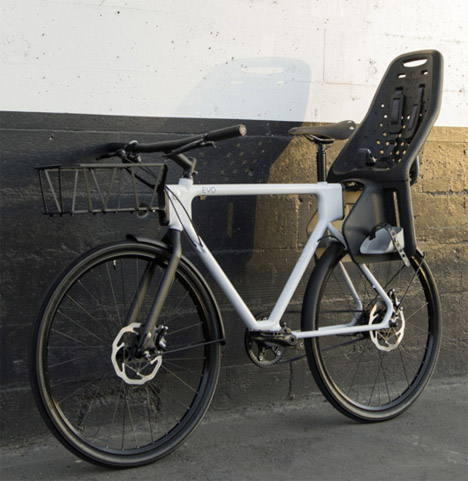
Billed ‘the ultimate urban utility bike,’ the EVO by HUGE Design features quick-connect mounts on both the front and back for attaching a range of accessories including child seats and a variety of racks. Inspired by San Francisco’s famous towers and bridges, the symmetrical frame was designed to support cargo loads on both ends.

nCycle Electric Bike with Integrated Lock

Bicycle Innovations nCycle 1

Bicycle Innovations nCycle 2

Bicycle Innovations nCycle 3

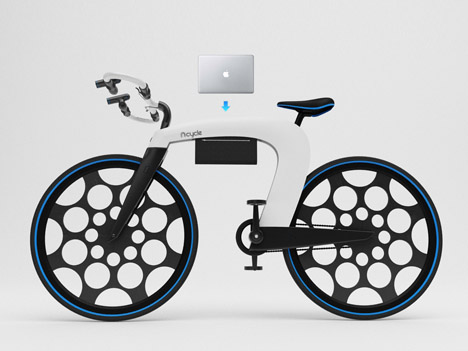
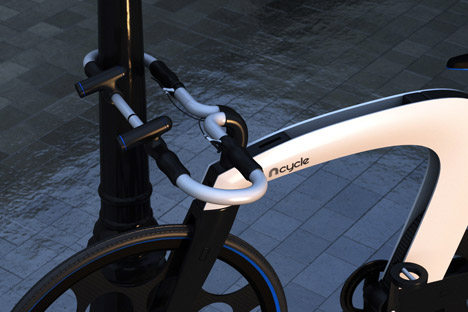
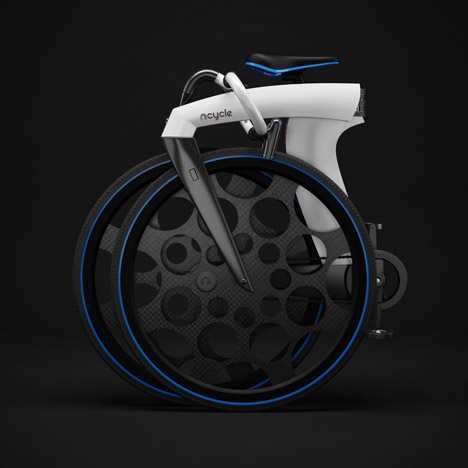
The designer of the nCycle questions whether it makes sense to simply add electrical components to a design that’s over a century old, choosing instead to completely re-invent the bike for this new purpose. Gone are the ‘odd mix of tubes and wires,’ replaced by a pair of side panels that conceal a battery, storage compartment and optional folding mechanism. It’s got a built-in lock, lights and a sound system, and a holographic display on the handlebars linked to a smartphone.

FLIZ Velocipede Requires You to Run

Bicycle Innovations FLIZ 1 Bicycle Innovations Fliz 2

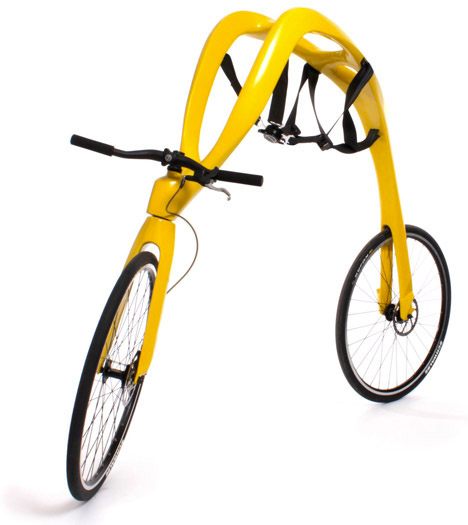
This isn’t exactly the sort of bike you can ride around on – the FLIZ is basically a means to propel yourself faster than you could ever run otherwise. The rider clips into a 5-point harness and gets a running start, the belt replacing the saddle.

Space Roam Fixed Gear Bike

Bicycle Innovations Space Roam 1

Bicycle Innovations Space Roam 2

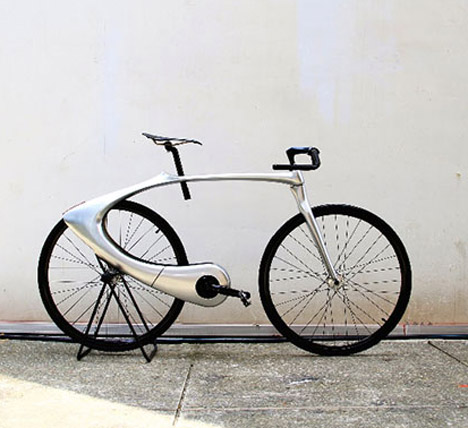
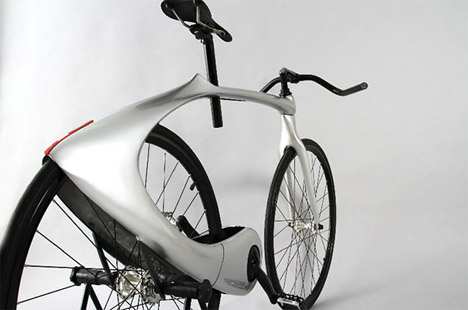
This fixed-gear bike design is anything but the same old conventional style, with an ultra-streamlined design inspired by liquid metal. It’s made of super lightweight materials to make it an extra-zippy ride.

Next Page – Click Below to Read More:
Beyond Basic Bikes 12 Twists On Classic Cycle Designs

Share on Facebook


[ By Steph in Design & Products & Packaging. ]

[ WebUrbanist | Archives | Galleries | Privacy | TOS ]


WebUrbanist

 
Comments Off on Beyond Basic Bikes: 12 Twists on Classic Cycle Designs

Posted in Creativity


Bricksy: 20 Classic Banksy Street Artworks Recreated in LEGO

15 Jun

[ By WebUrbanist in Art & Sculpture & Craft. ]

Banksy maid Lego Diorama

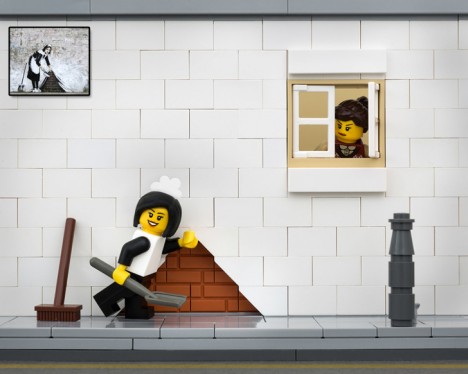
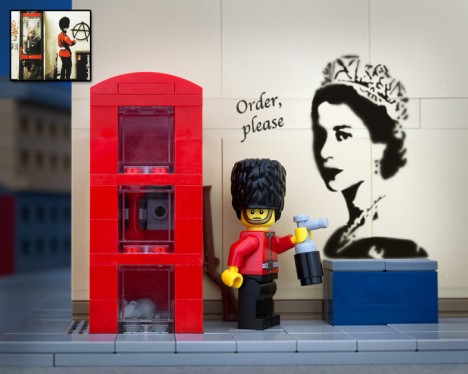
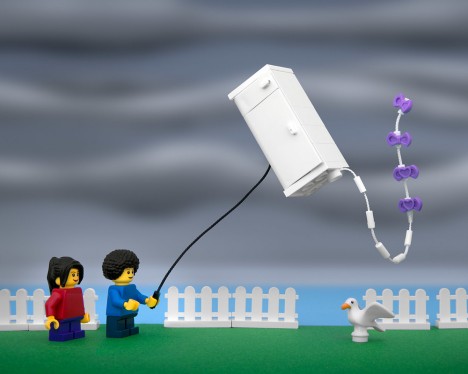
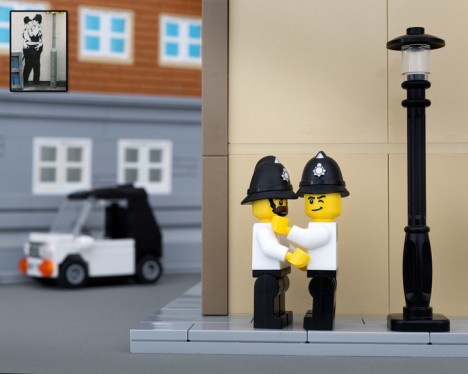
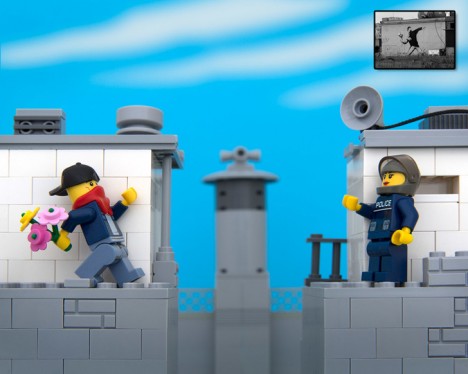
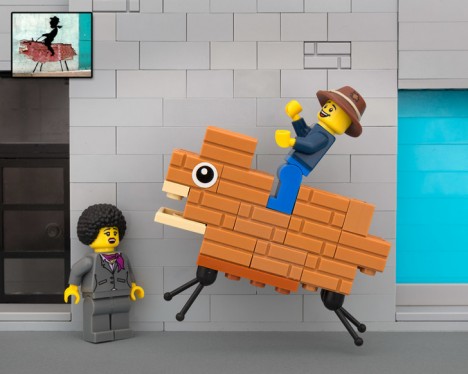
Selecting from Banksy favorites and classics, this series of brick-based fan art both replicates and expands on familiar two-dimensional works.

LEGO Banksy royal guard graffitti

Banksy Balloon Girl

Fridge Kite

Professional photographer Jeff Friesen is known for staging LEGO creations around Canadian provinces and American states, the latter having since been compiled into a book: 50 States of LEGO.

Lego Banksy "Kissing Coppers".

Lego Banksy bouquet thrower

The Bricksy series includes some degree of whimsical interpretation, often putting existing Banksy art into an expanded physical context. The photographer is selling prints of these pieces for $ 20 each.

Bricksy Lego diorama of Banksy's brick cowboy.

Banksy monkey: "Laugh Now But We're In Charge."

A bit more about the artist: “Jeff Friesen’s photography has gathered worldwide recognition for an uniquely diverse collection of work. His awards include the most prestigious in the photography world, including an Award Of Excellence from Communication Arts and a winning image in the PDN Photo Annual. In 2009 Jeff’s work was among the most repeatedly honored by the International Photography Awards”

Share on Facebook


[ By WebUrbanist in Art & Sculpture & Craft. ]

[ WebUrbanist | Archives | Galleries | Privacy | TOS ]


WebUrbanist

 
Comments Off on Bricksy: 20 Classic Banksy Street Artworks Recreated in LEGO

Posted in Creativity


A Tale of Two Londons: Classic Paintings x Modern Photos

27 Feb

[ By Steph in Art & Photography & Video. ]

Classic Paintings Modern London 1

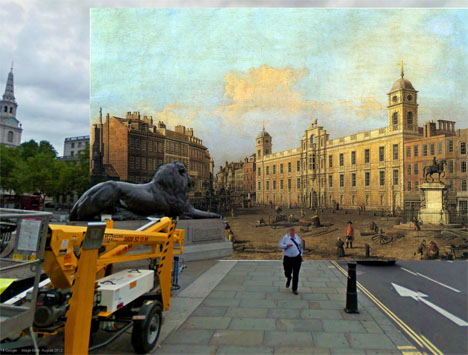
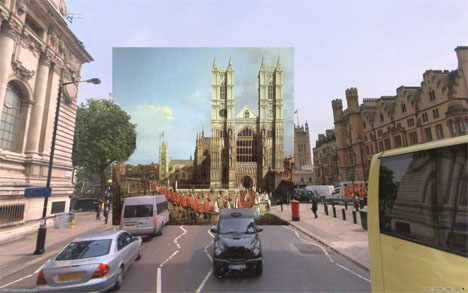
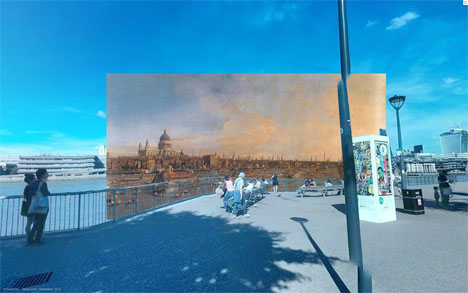
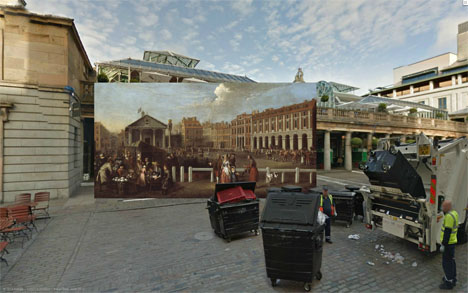
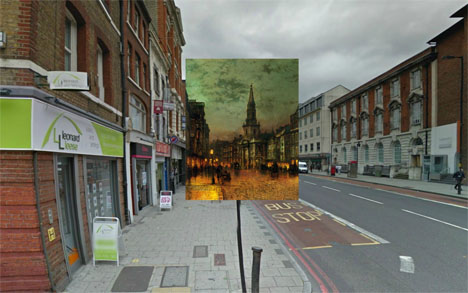
London may have changed just a tiny bit since the 17th century, but you’d hardly know it looking at some of these mash-ups of classic paintings superimposed against modern scenery snapped by Google. London-based Redditor ‘Shystone‘ created a series of images matching up famous paintings of locations around the city with Google Street View images, with various elements of the two occasionally blending together.

Classic Paintings Modern London 2

Classic Paintings Modern London 3

The paintings often appear to be actual three-dimensional objects in the photos – oversized canvases blocking the roads or propped against light poles. Vans seem to come precariously close to smashing through the canvas in some shots. Modern tourists look out onto the Thames River as it was in 1746.

Classic Paintings Modern London 4

In one case, a long-demolished building is temporarily resurrected; a three-story townhouse stood on the South end of Trafalgar Square from 1605 through 1874.

Classic Paintings Modern London 5

As a Londoner, Shystone offers up some interesting tidbits about the city’s history, including how the locations shown tie into classic literature like Vanity Fair or Charles Dickens’ Little Dorrit. Check out the full series.

Share on Facebook


[ By Steph in Art & Photography & Video. ]

[ WebUrbanist | Archives | Galleries | Privacy | TOS ]


WebUrbanist

 
Comments Off on A Tale of Two Londons: Classic Paintings x Modern Photos

Posted in Creativity


Pixelated Masterpieces: 3 Classic Paintings in LEGO Form

02 Jan

[ By Steph in Art & Sculpture & Craft. ]

Classic Paintings Legos 1

Chances are, you recognize these images, even though they’re simply arrangements of a few dozen colored LEGO bricks. Squint your eyes, and three of the world’s most famous masterpieces come into hazy pixelated focus, your memory filling in the details that can’t be rendered in this form.

Classic Paintings Legos 2

Italian designer Marco Soldano interpreted two works by Leonardo da Vinci and one by Johannes Vermeer using official LEGO blocks. “All the children are authentic artists with LEGO,” he says.

Classic Paintings Legos 3

The works, of course, are (from top to bottom) the Mona Lisa, The Girl with a Pearl Earring and Lady with an Ermine. Subtle variations in tone suggest the highlights and shadows, the folds of fabric, the mountain landscape, even the subtle twist of the third subject’s posture.

Classic Paintings Legos 4

LEGO bricks continue to be a favorite medium for designers, who have used them to recreate everything from a 500,000-piece working water-powered hot rod to the entire borough of Brooklyn. See 20 more works of LEGO art (including another LEGO Mona Lisa.)

Share on Facebook


[ By Steph in Art & Sculpture & Craft. ]

[ WebUrbanist | Archives | Galleries | Privacy | TOS ]


WebUrbanist

 
Comments Off on Pixelated Masterpieces: 3 Classic Paintings in LEGO Form

Posted in Creativity