RSS
 

Posts Tagged ‘City’

Tips for Doing City Photography from Above

30 Aug

Many cities have places with great panoramic views of the city vistas from above. For example, in the U.S., New York has the top of the Empire State Building or Rockefeller Center. Similarly, Chicago has observation decks in both the Willis Tower (formerly the Sears Tower) and the Hancock Building. In Europe, there are great views of Paris from Montparnasse Tower. You can capture London from the top of St. Paul’s Cathedral, or now the observation deck of the Shard (the new tallest building in London), and the list goes on.

Madrid, Spain, from the Circulo des Bellas Artes

The Gran Via in Madrid, Spain, from the Circulo des Bellas Artes

But these shots present certain challenges. Often tripods are not allowed. Sometimes you have to shoot through glass. And when should you go? What settings should you use? In this article, we’ll work through these issues so you can get great shots from these city overlooks.

What? I Can’t Use My Tripod?

Sometimes you are allowed to use a tripod, and sometimes not. Each building has its own rules. To make things even more interesting, some buildings seem to have different rules depending on when you visit (or perhaps the mood of the security guards). So you will need to be prepared to shoot without a tripod.

If you go up the building in the middle of the day, that might not matter very much. There will be enough light to support a fast shutter speed, and you can get away with hand holding. But if you are shooting in dim light or at night, you will want to use a longer shutter speed. That will require some sort of stabilization.

Paris from the Eiffel Tower

Paris from the Eiffel Tower

In almost every case, you will find something available at the top of the building to support your camera. Sometimes you have to resort to using the the floor (which can work if you press your lens up against the window), but often there is some sort of shelf to use. Many buildings have plexiglass panels at the top, with small gaps between them, and you can hold your camera against the sides of the panels to steady it.

Shooting Through Glass

Oftentimes, you are photographing from an enclosed structure surrounded by glass. That means reflections are going to be a problem. I wish there was a magic bullet to solve this problem, but there isn’t. I do have a few tips to help you minimize the reflections though.

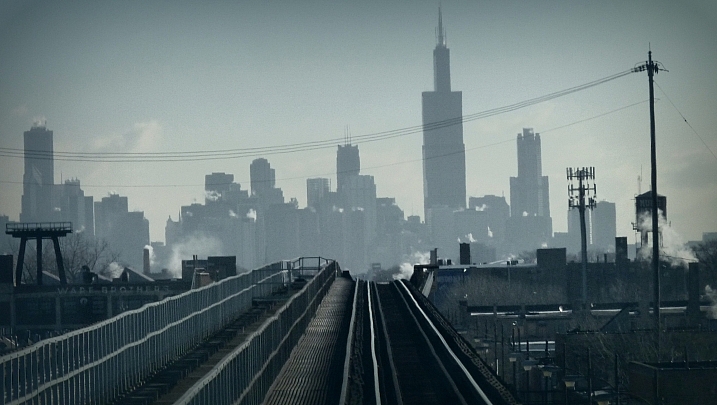
Chicago from the Willis Tower (formerly known as the Sears Tower)

Chicago from the Willis Tower (formerly known as the Sears Tower)

Before resorting to that, see if there is any way to shoot unobstructed. As mentioned above, some buildings have plexiglass panels on top. There are often carve-outs in the panels that you can shoot through, which you should definitely use. If not, check to see if you can shoot between the panels. That will avoid the whole issue with reflections.

If not, you are going to need to take steps to minimize reflections. Let’s start with one that should be obvious (but I always see people doing it). Do not use your camera’s flash. First of all, the flash is useless in this situation. Everything will be too far away for the flash to have any effect. More importantly, the flash will cause reflections and glare in the glass.

Next, hold your camera directly up against the glass. This will minimize reflections. In addition, make sure your point of focus is set far away from you and that your camera is not trying to focus on the reflections.

Panama City, Panama from the Intercontinental Hotel (shot through glass)

Panama City, Panama from the Intercontinental Hotel (shot through glass)


If you are on your own (like in a hotel room or somewhere you can set up), then make sure all the inside lights are off, and use the curtains to block any light coming from the room. Some photographers hold a black cloth against the window with a hole cut in the center to shoot through. If you have the opportunity and time to prepare, that is the best option.

Usually, you will find yourself in a public place where such steps are not possible. In that case, just use your body or hand to block any areas of glare or bright light.

After that, just take a few pictures and see if there are any reflections in the final result. Zoom in on your LCD to take a close look. If you find any reflections or glare, just adjust your position slightly to try to get it out and shoot again. You would also try a polarizing filter.

London from the top of St. Paul's Cathedral

London from the top of St. Paul’s Cathedral

What Camera Settings Should I Use?

Your exposure settings will depend on how much light is available at the time you are shooting. While I obviously cannot give you exact exposure settings, I can give you a few ideas to maximize your light and get the best exposure.

First and foremost, remember that you don’t need to use a small aperture for these shots because you do not need a deep depth of field. Your focus will be set at infinity. Nothing in your shot will be within 50 feet/15 meters of you. Too see this for yourself, take a look at the distance scale on the top of your lens (assuming it has one). It will show you that everything farther than about 30 feet/10 meters is set at infinity (in fact, the focus will be at infinity even sooner for wide angle lenses). There will not be a wide range of distances in your shot that require a deep depth of field. Therefore, if you find yourself in need of more light to create your exposure, widening the aperture is a good place to start.

Chicago from the Hancock Building

Chicago from the Hancock Building

Your other two exposure settings (shutter speed and ISO) will depend entirely on whether you can use a tripod. If you cannot use a tripod, raise the ISO until your shutter speed is fast enough to hand hold. Remember you can cheat a little bit and use a slower shutter speed than usual by propping your camera on something. But blur from movement during the exposure will ruin the picture. Remember that digital noise can be fixed in post-processing, but camera shake cannot. Raise the ISO as much as you need to get a supportable shutter speed.

If a tripod is allowed, things are much easier when it comes to exposure settings. You can use as slow a shutter speed as you want. That will also allow you to reduce the ISO, and use a smaller aperture as well. In fact, you may want to keep the the ISO low and the aperture small to force the camera to use a long shutter speed. That will capture traffic trails, create some movement in the clouds, and other effects.

New York, from Rockefeller Center (Top of the Rock)

New York, from Rockefeller Center (Top of the Rock)

Finally, consider bracketing your photos, especially if you are shooting at night. The scene before you will contain bright lights and dark portions. This will challenge your camera’s dynamic range. Even if you will never use any sort of blending or HDR, you might be pleasantly surprised by the overexposed or underexposed images.

Making a Composition from a Jumble of Buildings

When you are up high in a building overlooking the city, you will have a great view, but that doesn’t necessarily mean a great picture. The key to success is creating a composition out of what is before you, in other words to generally find a center of interest. That is, find something to key on that will anchor the picture. Sometimes it is obvious – like when you are staring at the Empire State Building or the Eiffel Tower – but other times it isn’t. You’ll just have to find something to center your picture on. It could be a building that stands out, perhaps a bridge, or even a leading line.

In doing so, don’t overlook the usual compositional rules. Start with the Rule of Thirds. Put your horizon line on either the top third or the bottom third. After that, you might consider placing an important, or prominent, feature on one of the vertical third lines.

Paris from the Montparnasse Tower

Paris from the Montparnasse Tower

Just these two concepts – ensuring you have a center of interest and following the Rule of Thirds – will go a long way to ensuring success. After that, you can find lines, shapes, and forms to work around. Experiment with different focal lengths and angles. Remember that nothing is moving so you can keep experimenting all you want.

When to Go

Deciding when to go capture you city view from above will have more to do with how the pictures turn out, than anything else you do. Avoid going in the middle of the day. Travel schedules don’t always allow that, but that is the worst time for these pictures.

If you are going to a public observation deck, when you can go will be limited by the opening hours of the building. They are generally not open early enough for sunrise, so that won’t be an option. Almost all locations are open for sunset and a few hours of darkness, so that is often an option.

London from the tower of Westminster Cathedral

London from the tower of Westminster Cathedral

The best time to go is just before sunset. You will have the best of all worlds with one ticket. You can capture the sunset and twilight. After that, just wait around for a little while for some night shots.

But in any case, go. It is an easy way to get great shots of whatever city you happen to be visiting. Get up high and capture the city from above.

googletag.cmd.push(function() {
tablet_slots.push( googletag.defineSlot( “/1005424/_dPSv4_tab-all-article-bottom_(300×250)”, [300, 250], “pb-ad-78623” ).addService( googletag.pubads() ) ); } );

googletag.cmd.push(function() {
mobile_slots.push( googletag.defineSlot( “/1005424/_dPSv4_mob-all-article-bottom_(300×250)”, [300, 250], “pb-ad-78158” ).addService( googletag.pubads() ) ); } );

The post Tips for Doing City Photography from Above by Jim Hamel appeared first on Digital Photography School.


Digital Photography School

 
Comments Off on Tips for Doing City Photography from Above

Posted in Photography


Art of Protest: Student-Built Scale Model of $20 Billion ‘Bailout City’

17 Aug

[ By WebUrbanist in Art & Sculpture & Craft. ]

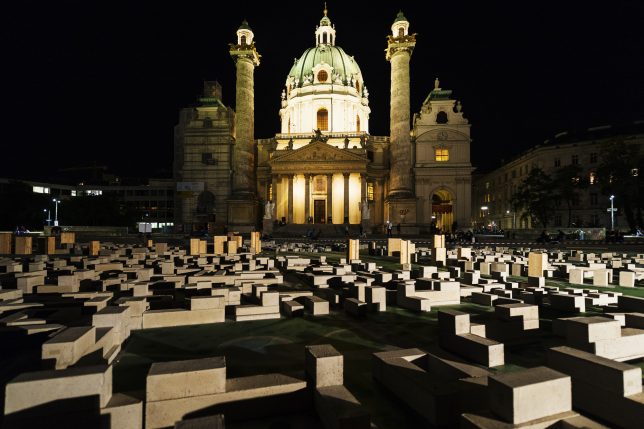
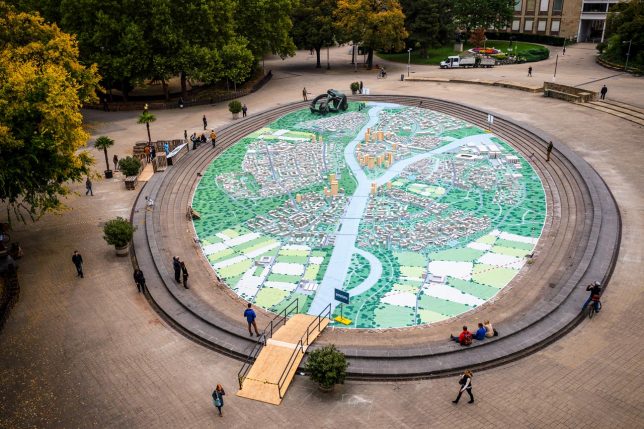
hypotopia city imag

After the Austrian government spent €19,000,000,000 to bail out a bank in 2014, a student group in Vienna created a giant urban model of a place Hypotopia in protest. This visionary city for 100,000 people represents a place that could have been built with the money used to rescue the Hypo Group Alpe Adria banking group.

hyptopia entry path

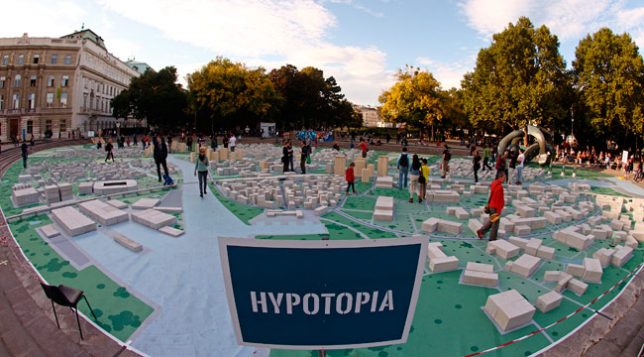
The city of Hypotopia is and will remain a Utopian fantasy, but represents a novel form of protest – a way for it to take physical form and convey a visceral sense of lost possibilities. This (quite literally) walkable city was opened to the public, allowing people to inspect it in full detail.

According to Lukas Zeilbauer, “while Utopia stands for an ideal fictitious world, ‘hypo’ is a Greek word meaning under, beneath or bellow – so a change coming from the bottom, from the folk.” While fictional architecture has been used by niche practitioners for polemical purposes throughout history, it is rare for such a large-scale, full-city effort to be driven by political motivations.

hypotopia view

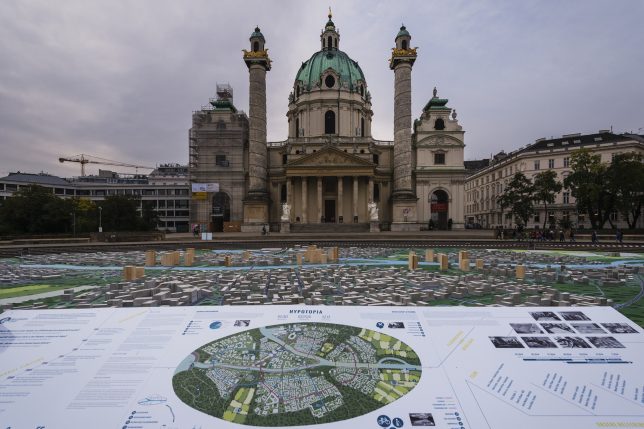
Students from the Technical University of Vienna designed and created the model city in Karlsplatz, a central city square, building it over the course of four months. Were it to be built, it would be the sixth largest city in Austria.

Construction of the model was aided by businesses who donated building materials, including wood and concrete blocks, carted in wheelbarrows to the site and assembled according to a predetermined computer model.

hypotopia at night

The public received the project with great enthusiasm, as the majority of citizens did not agree with using taxpayer money to bail out the bank in question.

Meanwhile, the makers of the model did more than just create a miniature mock-up: they actually ran the math and calculated the cost of construction, from architecture to infrastructure, making room and accounting for everything … except big banks, that is (images by Armin Walcher).

Share on Facebook


[ By WebUrbanist in Art & Sculpture & Craft. ]

[ WebUrbanist | Archives | Galleries | Privacy | TOS ]


WebUrbanist

 
Comments Off on Art of Protest: Student-Built Scale Model of $20 Billion ‘Bailout City’

Posted in Creativity


Vernacular Shantyscrapers: Reimagining Lagos as a Vertical City

08 Aug

[ By WebUrbanist in Architecture & Cities & Urbanism. ]

leads

Lagos is the largest city in Nigeria, a fast-growing metropolis that has already spilled over onto adjacent waters but needs to grow up as well as as out.

lagos reenvisioned

Artist and architect Olalekan Jeyifous works in Brooklyn but grew up in Lagos, a place where patchwork urbanism and ramshackle architecture evolve out of necessity, invention and available materials.

lagos futuristic

In this series of imaginative photo collages, Jeyifous combines original photographs and three-dimensional models, envisioning a vertical expression of the same approaches.

lagos new

In part, the imagery is a tribute to ground-up innovation and improvisation, which results in a vernacular often ignored by “serious” architects in favor of conventional design styles.

lagos shanty village

lagos futurology

“The project examines the ways in which the nature of impoverished spaces,” says Jeyifous, “which are not only highly self-organized but also deploy sustainability practices as a matter of necessity, can be applied to cities undergoing massive population growth.”

lagos shantyscrapers

lagos at night

Where some see horizontal slums currently (or vertical ones in this futuristic vision), others can find inspiration to create architecture that reflects all of the demographics and history of a given place.

Share on Facebook


[ By WebUrbanist in Architecture & Cities & Urbanism. ]

[ WebUrbanist | Archives | Galleries | Privacy | TOS ]


WebUrbanist

 
Comments Off on Vernacular Shantyscrapers: Reimagining Lagos as a Vertical City

Posted in Creativity


Unfold Your Getaway: Canoe for City Dwellers Packs Down to a Suitcase

30 Jul

[ By SA Rogers in Design & Products & Packaging. ]

onak fold up canoe 4

You can’t exactly fit a canoe through a narrow staircase in an apartment building, let alone take it on the metro, so for many sporty city dwellers, owning one may seem out of reach. Many canoes are so bulky, you can barely find enough space for them in a suburban garage. Playing with an origami canoe made of paper one day, Ghent-based designer Otto Van De Steene wondered whether a similar folding method translated to a sturdy, seaworthy material could help him get out onto the water more often. The result is ‘ONAK,’ a portable canoe that folds down to the size of a suitcase.

fold up canoe 1

Working at an outdoor recreation store, Van De Steene had seen plenty of other portable canoe designs that he found lacking. “You have the canoes that have really good performance on the water – they’re fast, but they’re quite heavy and take an hour to assemble. Nothing to do in an evening after work.”

onak fold up canoe 5

The Oru folding kayak had recently debuted, offering an intriguing possible solution, but Van De Steene thought its corrugated plastic construction could use an upgrade, and chose a custom-made polypropylene for his own design, explaining that it’s lighter and stiffer, improving the boat’s performance. About ten times as strong as standard polypropylene, the honeycomb-core composite material is also highly durable and fully recyclable.

onak fold up canoe 2

onak fold up canoe 3

“By making hundreds of paper models and fifteen real prototypes, we also refined the design of our patent pending hull. This was a huge challenge due to the limitations of origami. We opted for a narrow and fast canoe design that keeps its momentum very well, while still being delightfully easy and stable to maneuver for beginners.”

onak fold up canoe 6

The Onak may not fold down quite as small as Oru, but putting it on wheels makes it easier to haul around. From its compact 47”x15.7”x10” roller case, it expands to 183” long by 33.5” wide, and can carry about 440 pounds. There’s enough room inside for two adults, a child and gear. The process of assembling or packing up the portable canoe takes about ten minutes.

onak fold up canoe 8

With just a couple days left on its Kickstarter campaign, the Onak has met its goal, but you can still snag one for significantly less than retail cost if you back the project in time. It’ll sell for about $ 1450 with two paddles once it hits the market.

Share on Facebook


[ By SA Rogers in Design & Products & Packaging. ]

[ WebUrbanist | Archives | Galleries | Privacy | TOS ]


WebUrbanist

 
Comments Off on Unfold Your Getaway: Canoe for City Dwellers Packs Down to a Suitcase

Posted in Creativity


Calligraffiti: Fresh Artistic Perspective on Cairo’s ‘Garbage City’

01 Jul

[ By WebUrbanist in Art & Street Art & Graffiti. ]

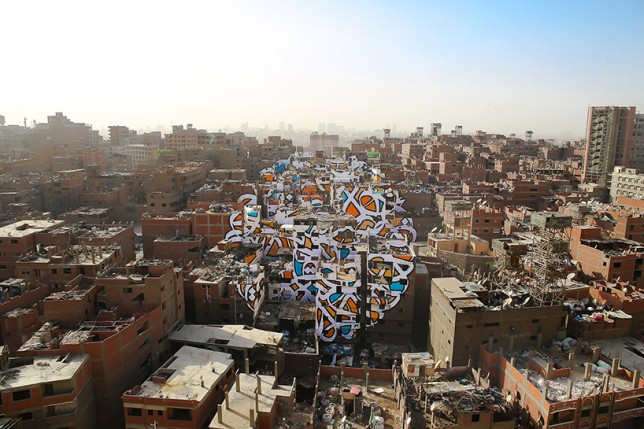
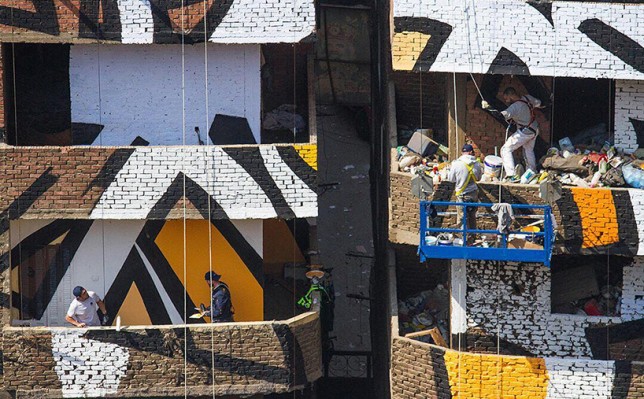
giant mural cairo

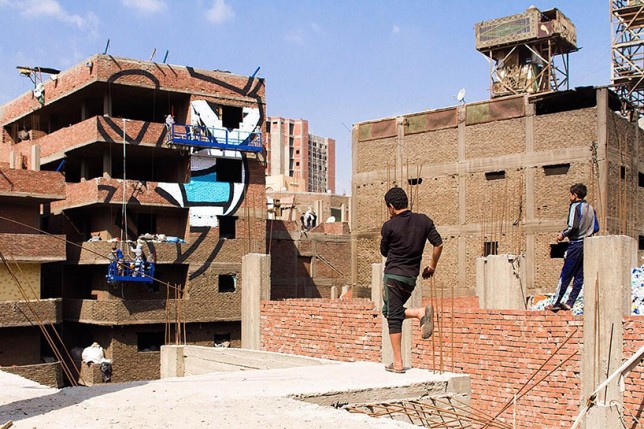
On the outskirts of Cairo, Egypt, lies the community of Manshiyat Naser, famous for providing informal trash and recycling services for the city, but also notorious for the mess and smell that go with that role.

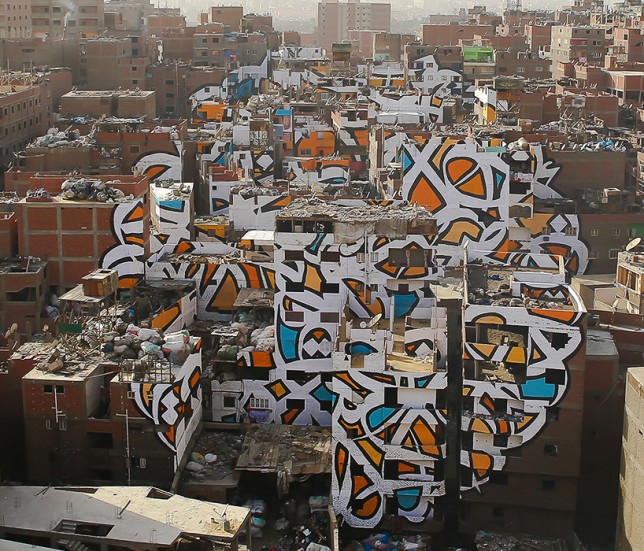
garbage city mural

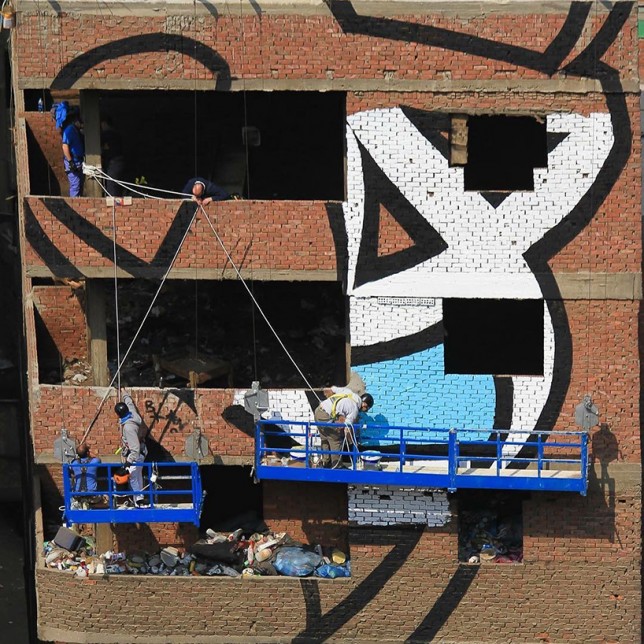
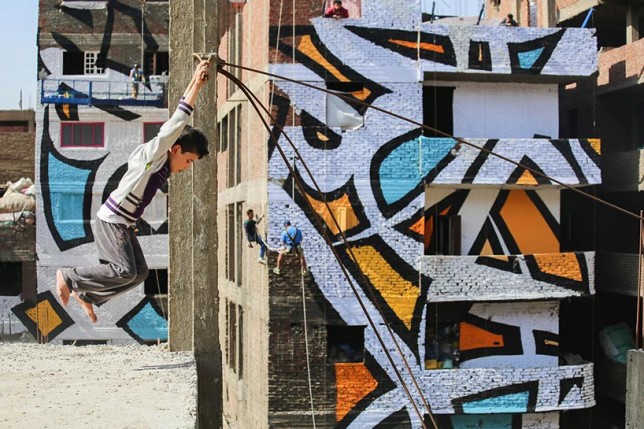
‘Calligraffiti’ artist el Seed worked with the ward to develop an incredible mural spanning 50 buildings, aiming to change perceptions and raise awareness about the community.

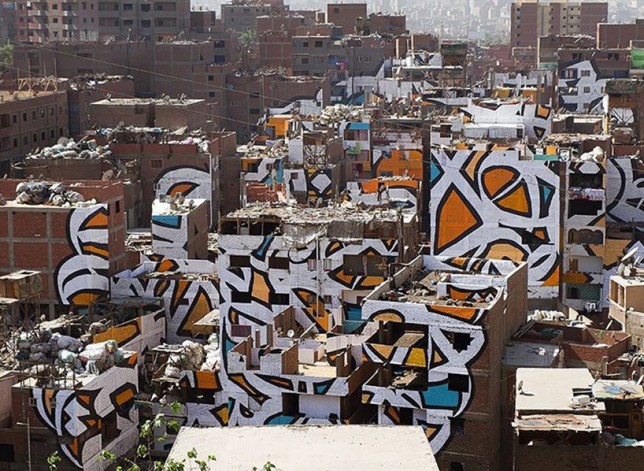
garbage city calligraffiti

Marginalized and belittled, the residents are incredibly industrious, sorting out garbage from recyclables by district within the community, literally turning Cairo’s trash into lucrative treasure.

graffiti on walls

hanging to paint

The mural blends aspects of Arabic calligraphy with contemporary graffiti, all while highlighting the architecture of the area. The entire work is only visible from the nearby Mokattam Mountain.

graffiti progress

The piece spells out the words of Saint Athanasius of Alexandria, a Coptic bishop from the 3rd Century, who said: “anyone who wants to see the sunlight clearly needs to wipe his eye first.”

graffit art close up

“The zaraeeb community welcomed my team and I as if we were family,” said the artist. “It was one of the most amazing human experiences I have ever had. they are generous, honest and strong people. They have been given the name of Zabaleen (the Garbage People), but this is not how they call themselves. They don’t live in the garbage but from the garbage; and not their garbage, but the garbage of the whole city. they are the ones who clean the city of Cairo.”

Share on Facebook


[ By WebUrbanist in Art & Street Art & Graffiti. ]

[ WebUrbanist | Archives | Galleries | Privacy | TOS ]


WebUrbanist

 
Comments Off on Calligraffiti: Fresh Artistic Perspective on Cairo’s ‘Garbage City’

Posted in Creativity


Urban Fairytales: Hyperrealistic Paintings of Kids Exploring the City

18 Jun

[ By SA Rogers in Art & Drawing & Digital. ]

urban fairytales main

Modern-day children move through a decidedly un-fairytale-like world with unlikely gangs of friendly wild animals to protect them in this series of paintings so realistic, it takes a moment to realize they’re not photographs. Artist Kevin Peterson creates these incredible scenes in oil paint on panel, highlighting the inner strength it can take to survive in places beset with violence and poverty.

urban fairytales 5

urban fairytales 2

urban fairytales 3

Princesses regally make their way through rubble in abandoned industrial districts with crowned polar bears at their heels, point the way for the fierce lions acting as their champions and saunter down sidewalks with raccoons and foxes. The contrast of wild creatures and worn, neglected urban environments is a startlingly effective one most often utilized for post-apocalyptic scenes, but the addition of the little girls suggests a hope of human resilience.

urban fairytales 6

urban fairytales 7

urban fairytales 9

“My work is about the varied journeys we take through life,” says Peterson in his artist statement. “It’s about growing up and living in a world that is broken. These paintings are about trauma, fear and loneliness and the strength that it takes to survive and thrive. They each contain the contrast of the untainted, young and innocent against a backdrop of a worn, ragged, and defiled world. Support versus restraint, bondage versus freedom, and tension versus slack are all themes that I often visit.”

urban fairytales 8

urban fairytales 10

urban fairytales 1

A look through Peterson’s history of work reveals an interesting progression from fairly straightforward (albeit stunningly realistic) portraits of women and little girls in urban environments to these fairytale scenes. Some of these paintings are also going large-scale as public murals. Check out details and stay on top of Peterson’s current work on Instagram.

Share on Facebook


[ By SA Rogers in Art & Drawing & Digital. ]

[ WebUrbanist | Archives | Galleries | Privacy | TOS ]


WebUrbanist

 
Comments Off on Urban Fairytales: Hyperrealistic Paintings of Kids Exploring the City

Posted in Creativity


How to Make a Unique Portrait in the City at Night

12 Jun

What makes a portrait into a portrait ?

Making a portrait is like baking a cake in a way, you need to mix the right ingredients, evenly set it in a tray and add some personal touches. Once the cake is in the oven there is no way back, a bit like pressing the shutter release, then the portrait is done.
ouria_tadmor_city_portrait003

Any portrait, will always include a person, a background, and a key light that will allow the subject’s face and soul to come through in the picture. The subject, background and light are the ingredients, and your frame is the baking tray. Let’s hit the streets and bake the perfect portrait cake!

The city, especially after sundown, has a vast variety of portrait ingredients to be found. Take your portrait subject with you, and go for a walk in the urban studio to look for frames, backgrounds, and light.

The key to success, as always, lies in your eyes, so start looking at the city through a portrait lens, and look for balanced compositions that will frame a good portrait. Try to use what can be found on the streets, but if that’s not possible, a simple off-camera flash with white umbrella can complete the setup for the urban studio.
We took a walk in the city and looked for portraits to be made. Here is what I and my model found.

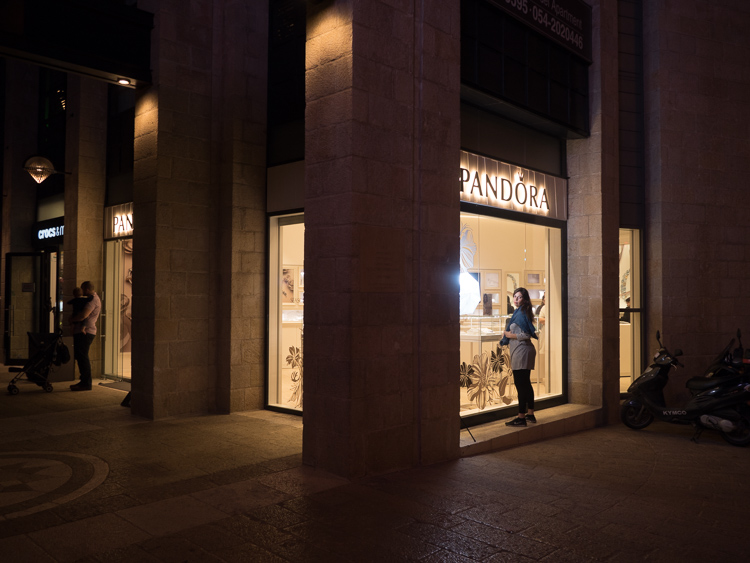
Bright store in a dark corner

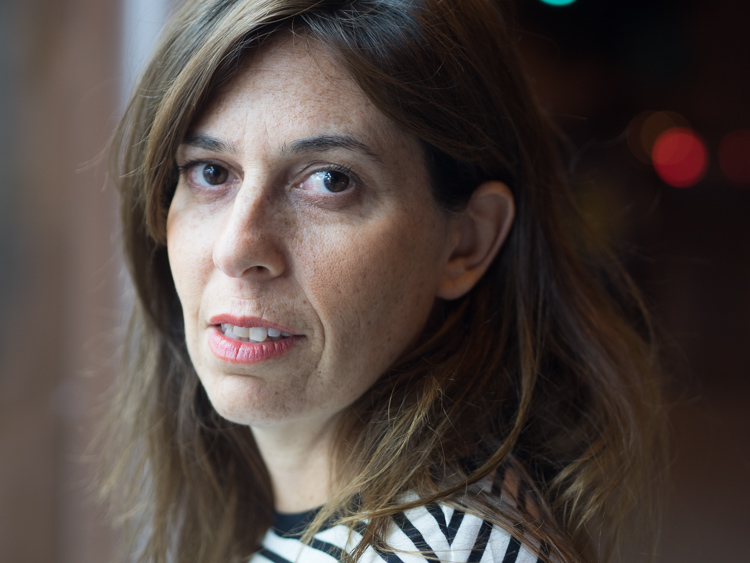
The dynamic composition shown here creates the needed interest that focuses viewer’s attention on the model’s facial features and eyes, therefore communicating the personality of the model. This is done by having soft gentle light coming from the left and adding a red bokeh circle in the background. An invisible triangle between the model’s lips, eyes, and the red circle is directing the energy back to her eyes.
ouria_tadmor_city_portrait011
As you can see here, the setup for this portrait wasn’t a big soft-box in the studio, but instead was a messy drug store at night, in a busy street corner in Jerusalem. The store’s fluorescent lights provided an even and soft light source, while the much needed red circle in the background came from the traffic light behind the model (shown in green in the photo below).
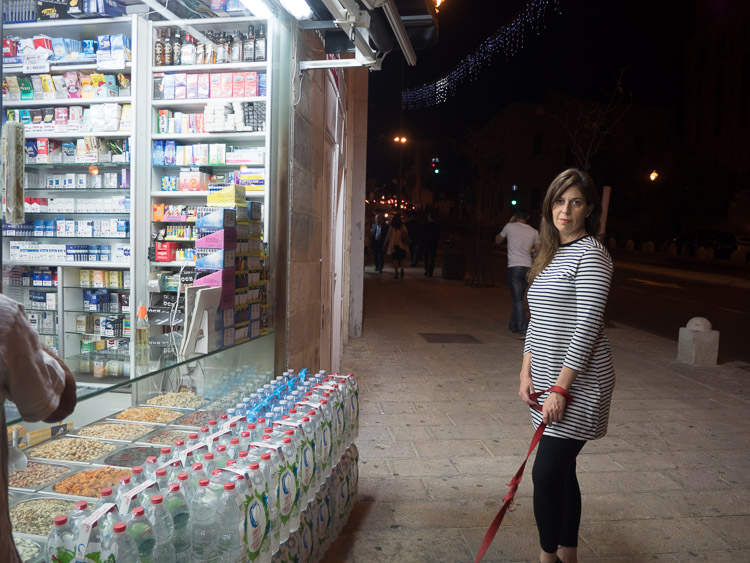
ouria_tadmor_city_portrait012

Hotel enigma

A classic hotel building, with some human presence, helped create an enigmatic atmosphere for this portrait, the background here being part of the story. The key light on the subject came from an off-camera flash positioned at 90 degrees. The dark frame for this composition was made by photographing through a metal railing between the camera and the subject, as you can see in the next photo. This setup helped create depth, that continues with the blurry figures on the street and inside the building.
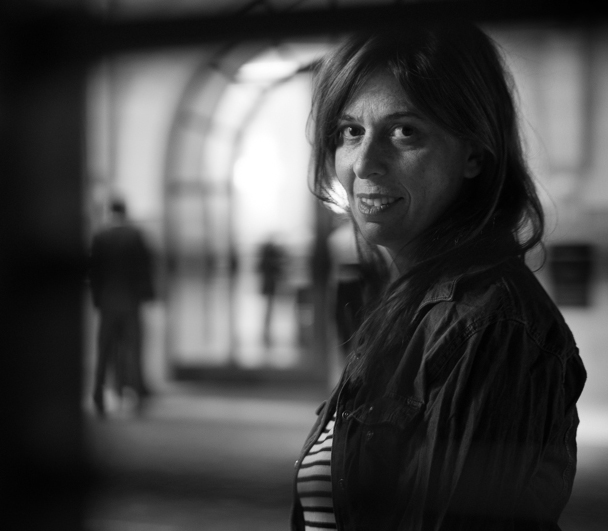
ouria_tadmor_city_portrait013

The whole setup can be seen below. The flash was positioned about four feet from the model, with the output set to manual at 1/32 power, in order to match the amount of light coming from the background.
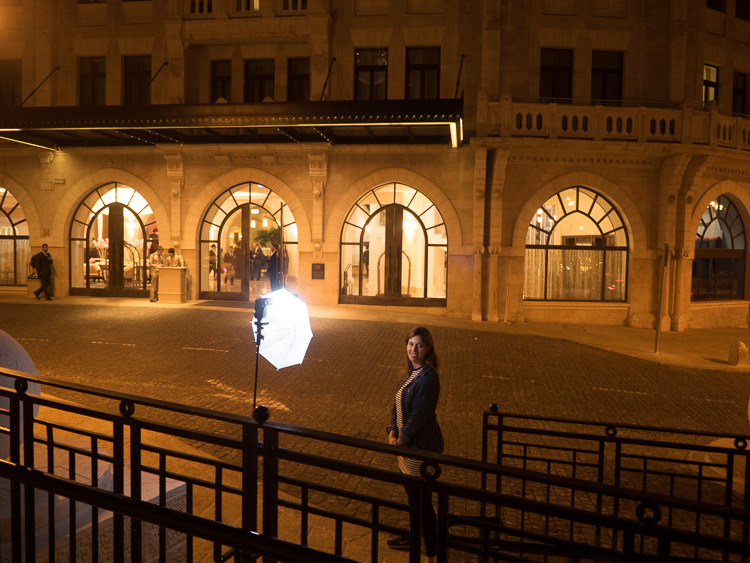
ouria_tadmor_city_portrait014

Layer store

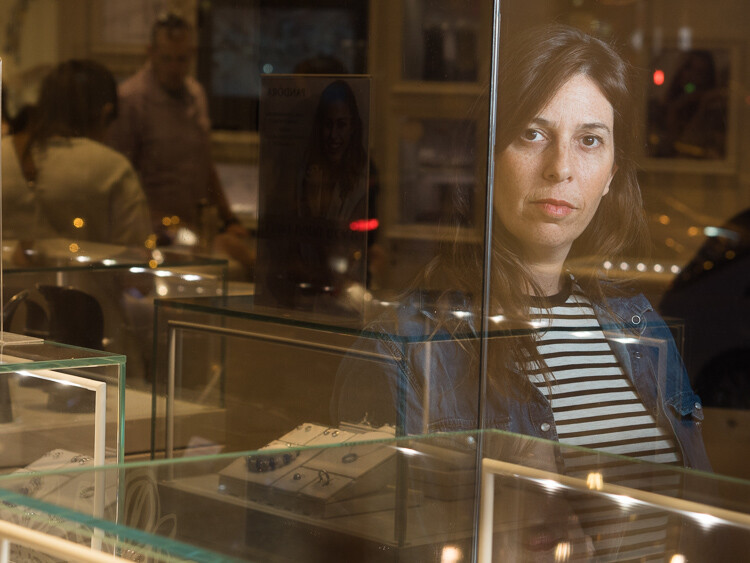
Layers are not only to be found in photo editing programs, they are everywhere, all over the city. A corner store with windows on both sides made it possible to compose a complicated composition, that gives the eye something to explore. When doing so, you need to make sure that the viewer’s eye ends up looking at the subject, so it can still be a portrait. Dividing the frame into three, using the vertical lines on the store’s window, and positioning the subject in the right third of the frame, kept the focus on the subject in this case.
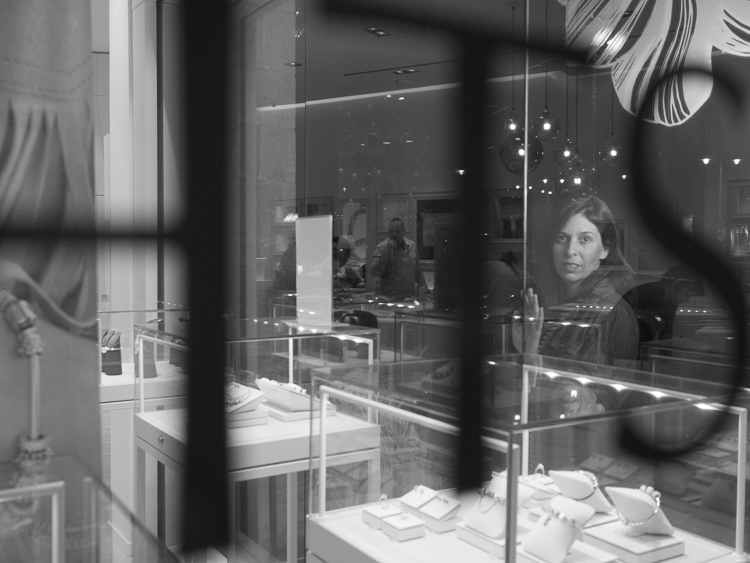
ouria_tadmor_city_portrait002

The main light here also came from the off-camera flash setup, as you can see in the next image. The photo was taken through the window on the left side of the store.
ouria_tadmor_city_portrait004

Equipment

Any camera with a decent portrait lens and manual exposure control can do the work, most of it is hidden in the lens.

A classic portrait lens is between the 85 mm and 105 mm focal lengths on a full frame camera, or their equivalents on any other sensor size. Those focal lengths will give you the perfect camera to subject distance of about six feet, and will produce a moderate compressed perspective, that is distortion free. Typical portrait lenses have a large aperture of f/2 or wider, which allows more light to go through, and therefore are perfect for working with what the city has to offer at night, and will deliver a shallow depth of field when needed.

Off-camera flash can be any speedlight with manual control and radio slave system. Here is the list of equipment I used for this session:

  • Panasonic GH4 camera
  • Olympus M.Zuiko 45mm f/1.8 lens
  • Metz 52 AF-1 flash
  • Two Cactus V5 radio slaves
  • ProVision 20″ White umbrella
  • ProVision M11 shoe mount umbrella adapter
  • Meking L-2000A Light Stand

So if you want to try something a little different get a willing subject (model), grab a flash, and head out into the city at night to make some unique portraits.

Please share your questions and results in the comments below.

googletag.cmd.push(function() {
tablet_slots.push( googletag.defineSlot( “/1005424/_dPSv4_tab-all-article-bottom_(300×250)”, [300, 250], “pb-ad-78623” ).addService( googletag.pubads() ) ); } );

googletag.cmd.push(function() {
mobile_slots.push( googletag.defineSlot( “/1005424/_dPSv4_mob-all-article-bottom_(300×250)”, [300, 250], “pb-ad-78158” ).addService( googletag.pubads() ) ); } );

The post How to Make a Unique Portrait in the City at Night by Ouria Tadmor appeared first on Digital Photography School.


Digital Photography School
 
Comments Off on How to Make a Unique Portrait in the City at Night

Posted in Photography


Depth-Defying Art: 3D Chalk Characters Blend into City Streets

26 Apr

[ By WebUrbanist in Art & Street Art & Graffiti. ]

chalk hidden mouse

Bringing a certain subtly and sense of humor back to three-dimensional chalk art, David Zenn creates highly-contextual scenes using an array of animal characters, all interacting with urban environments.

crack dog rescue

For decades, he has used chalk and charcoal to feature pieces that tie into their surroundings, relating to anything from fallen flowers to cracks in the sidewalk.

interactive chalk figures copy

Rats, bears, lizards, dogs and other less-identifiable animalian hybrids can be found lounging around, floating balloons or hiding in imagined holes, like refugees from a wild children’s book.

trapped cat

chalk mouse warrior

chalk mouse player

wall mice

reading light

Over time, a cast of regular characters has evolved, appearing in different places, telling a story through each sequential work of art. Some of his archival prints are for sale, as well as his book Temporary Preserves (via Colossal).

Share on Facebook


[ By WebUrbanist in Art & Street Art & Graffiti. ]

[ WebUrbanist | Archives | Galleries | Privacy | TOS ]


WebUrbanist

 
Comments Off on Depth-Defying Art: 3D Chalk Characters Blend into City Streets

Posted in Creativity


Weekly Photography Challenge – City Skyline

16 Apr

Whether you live in a big metropolis or a small town, your urban center will have a skyline of some kind. The outline of the buildings that make up the main part of town make up the skyline.

Barnyz

By barnyz

Rennett Stowe

By Rennett Stowe

Weekly Photography Challenge – City Skyline

You can see 25 more example of city skyline photos here.

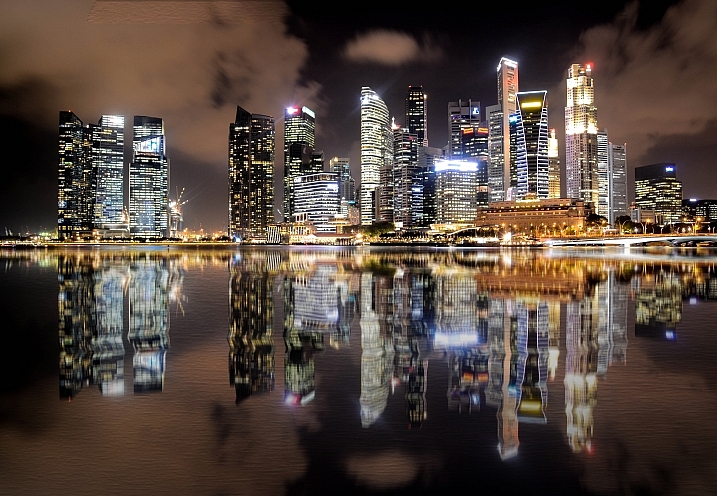
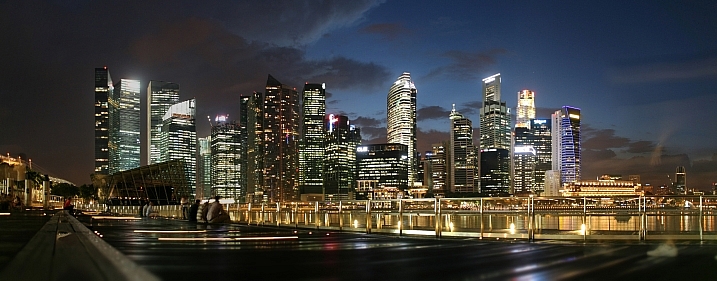
If you browse online for skyline photos you may notice a common thread among the images – many of them are shot at dusk, or at night. That’s because cities look great just as daylight is fading away and the lights of the city illuminate. It’s the magic of blue hour.

You get to decide how you want to tackle this week’s challenge and shoot your city’s skyline. Maybe go out a few different times during the day and see how the light changes.

Trevorklatko

By trevorklatko

Fèlix González

By Fèlix González

Sdh_zh

By sdh_zh

If it’s a city near a body of water, try and capture a reflection of the lights at night. Or make your own reflection by finding a large rain puddle and a low camera angle.

If you live in a city that’s been photographed a million times like NYC or San Francisco, try something different like:

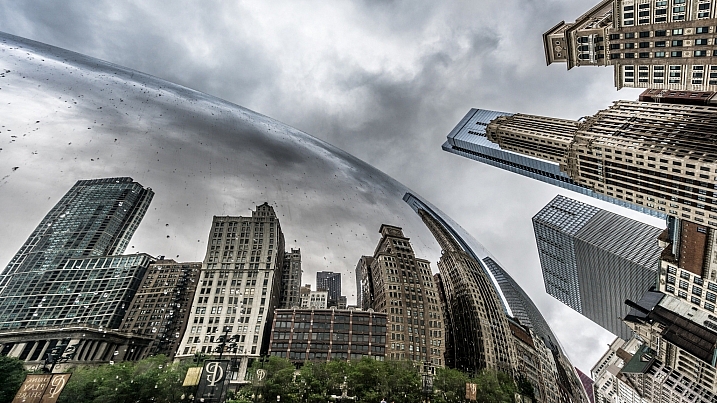
  • Shoot with a fish-eye lens
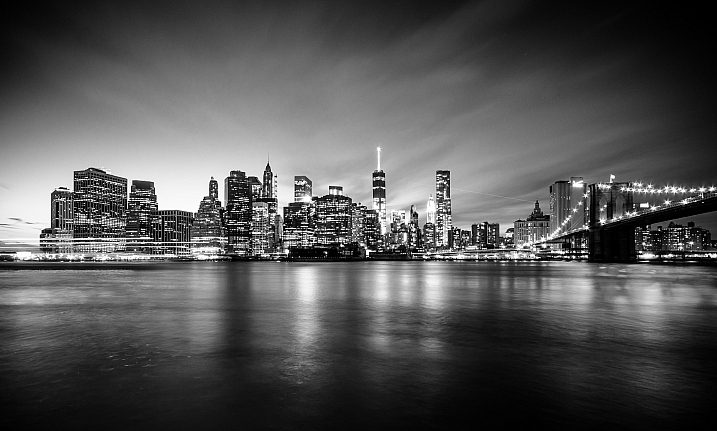
  • Convert to black and white
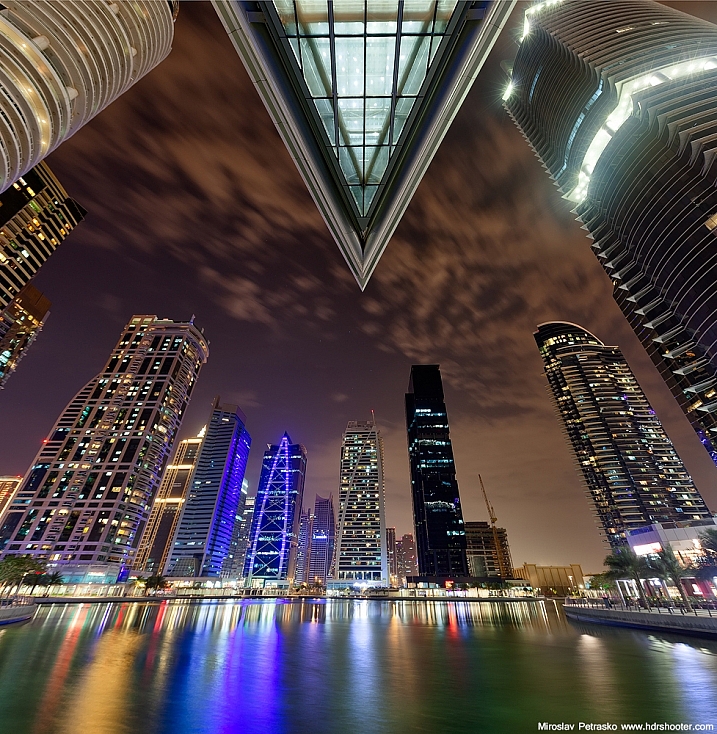
  • Shoot straight up and get just building tops
  • Put something in front to frame the city with
Louis Raphael

By Louis Raphael

David Yu

By David Yu

Maciek Lulko

By Maciek Lulko

Geoff Llerena

By Geoff Llerena

Rytc

By rytc

Ehpien

By ehpien

Share your images below:

Simply upload your shot into the comment field (look for the little camera icon in the Disqus comments section) and they’ll get embedded for us all to see or if you’d prefer upload them to your favourite photo sharing site and leave the link to them. Show me your best images in this week’s challenge. Sometimes it takes a while for an image to appear so be patient and try not to post the same image twice.

Michael Matti

By Michael Matti

Harshil Shah

By Harshil Shah

googletag.cmd.push(function() {
tablet_slots.push( googletag.defineSlot( “/1005424/_dPSv4_tab-all-article-bottom_(300×250)”, [300, 250], “pb-ad-78623” ).addService( googletag.pubads() ) ); } );

googletag.cmd.push(function() {
mobile_slots.push( googletag.defineSlot( “/1005424/_dPSv4_mob-all-article-bottom_(300×250)”, [300, 250], “pb-ad-78158” ).addService( googletag.pubads() ) ); } );

The post Weekly Photography Challenge – City Skyline by Darlene Hildebrandt appeared first on Digital Photography School.


Digital Photography School
 
Comments Off on Weekly Photography Challenge – City Skyline

Posted in Photography


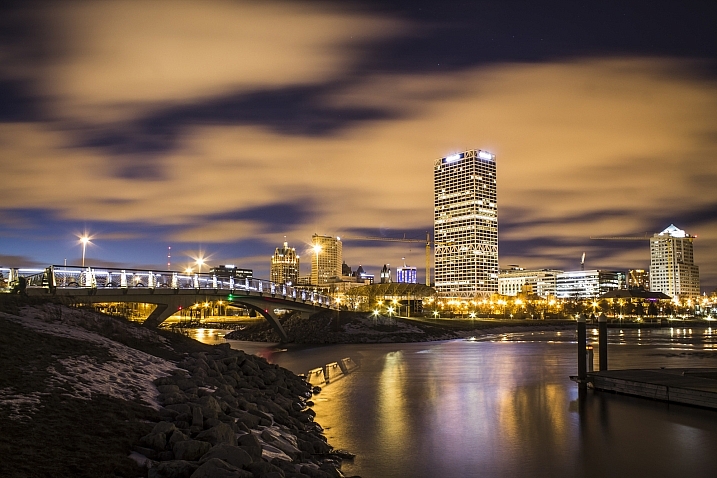
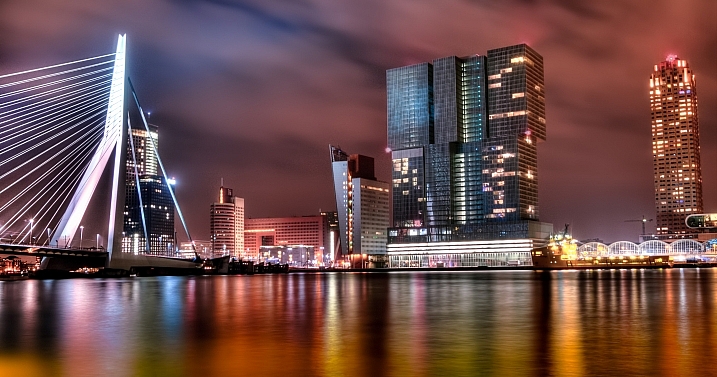
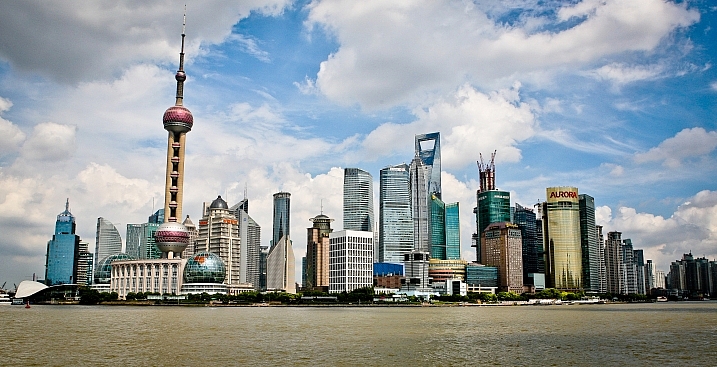
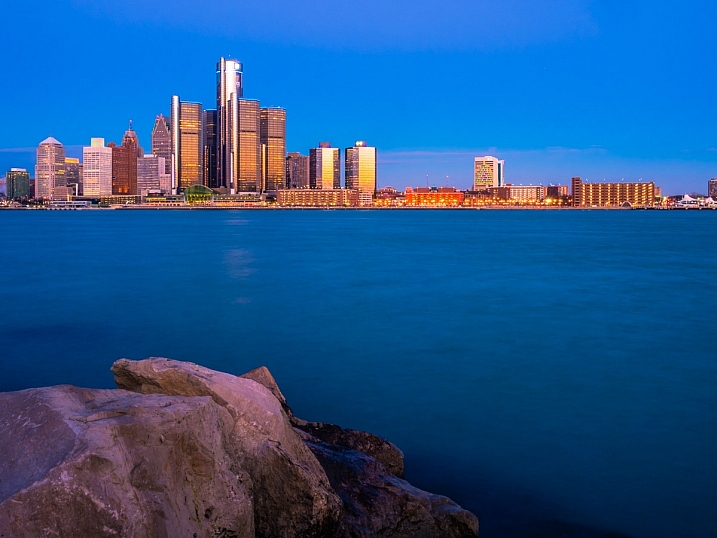
25 Stunning Photos of City Skylines

15 Apr

Urban landscape photography, pretty much involves city skyline images. Iconic shots of skylines and many cities of the world are instantly recognizable.

See if you find these images inspiring, and if you can name the cities:

Anh Dinh

By Anh Dinh

Olsonj

By olsonj

Viisoreanu Florin Gabriel

By Viisoreanu Florin Gabriel

Chris Toe Pher

By Chris Toe Pher

Matt Paish

By Matt Paish

Mike Boening Photography

By Mike Boening Photography

Michaela Loheit

By Michaela Loheit

Yooperann

By yooperann

Miroslav Petrasko

By Miroslav Petrasko

Maciek Lulko

By Maciek Lulko

Miroslav Petrasko

By Miroslav Petrasko

Whereisemil

By whereisemil

Herr Olsen

By Herr Olsen

Giuseppe Milo

By Giuseppe Milo

Aurimas

By Aurimas

Jamie McCaffrey

By Jamie McCaffrey

Ram Balmur

By Ram Balmur

RobinTphoto

By RobinTphoto

Peter Hubler

By Peter Hubler

Gordon

By Gordon

Dave Wilson

By Dave Wilson

Gord McKenna

By Gord McKenna

Hopeless128

By hopeless128

Loïc Lagarde

By Loïc Lagarde

Siyamalan

By Siyamalan

googletag.cmd.push(function() {
tablet_slots.push( googletag.defineSlot( “/1005424/_dPSv4_tab-all-article-bottom_(300×250)”, [300, 250], “pb-ad-78623” ).addService( googletag.pubads() ) ); } );

googletag.cmd.push(function() {
mobile_slots.push( googletag.defineSlot( “/1005424/_dPSv4_mob-all-article-bottom_(300×250)”, [300, 250], “pb-ad-78158” ).addService( googletag.pubads() ) ); } );

The post 25 Stunning Photos of City Skylines by Darlene Hildebrandt appeared first on Digital Photography School.


Digital Photography School
 
Comments Off on 25 Stunning Photos of City Skylines

Posted in Photography