RSS
 

Posts Tagged ‘City’

New York City: Straßenfotografie von Todd Gross

24 Apr

Den Namen Todd Gross lernte ich kennen, als ich ein Video-Interview mit Eric Kim zu sehen bekam. Ich mochte den Typen und seine Bilder sofort, verlor ihn jedoch aus den Augen. Kurze Zeit später wurden seine Bilder in der TIME Lightbox vorgestellt, ich schaute seine Bilder noch einmal etwas genauer an und bin seither restlos begeistert von ihnen.

Ein halbes Jahr später trafen wir uns persönlich. Und ich war aufgeregt. Doch Todd und ich, wir verstanden uns auf Anhieb und hatten einen ausführlichen Plausch über Leben, Jobs und natürlich die Straßenfotografie. Er erzählte mir, dass er seit den 90ern fotografiere und zeigte mir seine Kamera.

Ihr Anblick ließ mich zuerst die Augenbrauen hochziehen und dann die Kinnlade herunterfallen. Ich sah eine analoge Kamera, an nichts einzustellen war. Nichts. Auslöser, Sucherlöchlein und Blitz. Das war förmlich alles. Ich konnte es gar nicht glauben. Ich fragte Todd, ob das sein Ernst oder ein Witz sei. Es war sein Ernst.

Ich versuchte, in Gedanken seine grandiosen Bilder mit dem unscheinbaren Kästchen in Einklang zu bringen, das er sorgfältig betrachtend in Händen hielt.

Straßenfotografie von Todd Gross: Ein Mann in gelbem T-Shirt schaut in einen Dohlen. New York City.

Straßenfotografie von Todd Gross: Ein Mann mit Hut schaut in die Kamera – angeblitzt. New York City.

Straßenfotografie von Todd Gross: Eine bedrohlich schauende Frau, fotografiert in einem Zimmer. New York City.

Ein Mann sitzt am Boden und hat die Beine weit gespreizt. New York City.

Straßenfotografie von Todd Gross: ein ausgelaufener Becher unter Bänken in der Bahn. New York City.

Straßenfotografie von Todd Gross: Ein Mann hält sich an einem LKW fest und fliegt durch die Luft. New York City.

Straßenfotografie von Todd Gross: Eine Frau beißt in ihren Geburtstagskuchen. New York City.

Straßenfotografie von Todd Gross: an einer Scheibe steht "DESTINY" geschrieben und die Silhouette eines Mannes ist zu sehen. New York City.

Straßenfotografie: Ein Mann in rotem T-Shirt und mit roter Kappe läuft um eine Ecke, an der ein roter Pfeil auf den Mann zeigt. New York City.

Straßenfotografie von Todd Gross: Ein Mann sitzt neben einem Ghettoblaster am Strand. New York City.

Eine Straßenfotografie von Todd Gross: Ein Autofahrer schaut aus dem Fenster, hinter ihm ist eine Welle zu sehen. New York City.

Straßenfotografie von Todd Gross: Ein älterer Herr zeigt auf einen vorbeilaufenden Mann mit Hut und an der Wand hängt ein Poster, auf dem "What Is Sexy" steht. New York City.

Straßenfotografie von Todd Gross: Das Portrait eines Mannes, der auf einer roten Banke sitzt, durch ein Fenster fotografiert. New York City.

Was ich an Todds Bildern mag, ist diese kuriose Mischung aus schwarzem Humor und kongruierenden Farben.

Etliche Aufnahmen scheinen mir zu gut, um wahr zu sein. Beispielsweise das Foto mit dem roten Pfeil oder dem gelben Telefon. Ich erinnere mich noch gut, als ich meinen Bürokollegen breit grinsend das „WHAT IS SEXY“-Foto unter die Nase hielt und wir vor lachen fast zusammengebrochen wären.

Wenn ich diese Bilder sehe, weiß ich, dass Todd nicht nur Glück hatte, sondern unzählige Meilen aufmerksam gelaufen ist, um zu diesen Fotos zu kommen. Denn – und das vergisst man bei Todds Aufnahmen zu gern – originelle Straßenfotografie ist harte Arbeit. Als ich ihn irgendwann fragte, was ihn eigentlich motiviert, antwortete er:

Ich habe so viel Zeug in meinem Kopf. Um das loszuwerden, ist die Kameraarbeit auf der Straße für mich die beste Lösung. Ein Bild führt zum nächsten.

Und wie das nunmal so ist, wenn man jemanden persönlich kennt: Heute verbinde ich sehr viel mit den Bildern von Todd. Und deshalb folge ich ihm auf Twitter, Flickr und Tumblr.

Und das könnt Ihr natürlich auch. Sucht Euch etwas aus, sagt hallo und erfreut Euch an seinen Updates. Ihr werdet merken, dass er kein Freund vieler Worte ist, aber seine Bilder wären es wert, ihm zehn Mal zu folgen.


kwerfeldein – Fotografie Magazin | Fotocommunity

 
Comments Off on New York City: Straßenfotografie von Todd Gross

Posted in Equipment


New York City in den 80ern

30 Mar

Zwischen 1982 und ’86 fotografierte Frank Horvat auf den Straßen von New York. Seine Aufnahmen machen es dem Betrachter leicht, sich in diese Zeit (zurück) zu versetzen, denn es sind ganz alltägliche Aufnahmen, die den Flair der Stadt auf unscheinbare, unaufdringliche Weise präsentieren. Mit einer Prise Humor und dem Blick, Menschen in ihrer Geschäftigkeit einzufangen, dokumentierte der 1928 in Italien Geborene die Weltstadt.

Horvat nannte die Serie später „New York Up And Down“ und deutete damit die vielen Gegensätze dieser Stadt an. Up- und Downtown, der eisige Winter und der heiße Sommer. Erlebte Euphorie und Melancholie, die vielleicht auch mit folgendem Tatbestand zusammenhingen.

In seinen uns vorliegenden Tagebuch-Aufzeichnungen notierte er am 8. Februar 1983:

Frank Horvat fotografierte stets mit einer 85mm Festbrennweite, benutze nie Unschärfe im Vordergrund und suchte eine ganz bestimmte, vom Wetter abhängige Atmosphäre. Das sollten seine technischen Grenzen sein, die er sich selbst in New York City abgesteckt hatte. Außerdem – und das zeichnet sich in seinen Aufnahmen deutlich ab – war er sehr von Henri-Cartier Bresson inspiriert, obwohl er für das NYC-Projekt auf Farbfilm fotografierte.

New York City © Frank Horvat

New York City © Frank Horvat

New York City © Frank Horvat

New York City © Frank Horvat

New York City © Frank Horvat

New York City © Frank Horvat

New York City © Frank Horvat

New York City © Frank Horvat

New York City © Frank Horvat

New York City © Frank Horvat

New York City © Frank Horvat

New York City © Frank Horvat

New York City © Frank Horvat

New York City © Frank Horvat

New York City © Frank Horvat

New York City © Frank Horvat

New York City © Frank Horvat

New York City © Frank Horvat

New York City © Frank Horvat

New York City © Frank Horvat

Doch Horvat war nicht frei von Zweifeln. Am 16. Januar 1986, kurz vor Beendigung seines Projektes, schrieb er:

Heute Morgen um 7 war vor der Penn Station unter der „Brücke des Seufzens“ (wie ich sie nenne, weil sie mich an diese Brücke in Venedig erinnert) ein großes Aufkommen von Wasserdampf, wahrscheinlich von einer Röhre eines Gebäudes. Ich machte ein paar Fotos und ging dann runter in die Stationshalle, um die Nikon neu zu beladen (weil die Temperatur oben -10°C war). Als ich zurückkam, sah ich die aufgehende Sonne durch den Wasserdampf erglühen, als ob sie gerade ein gigantisches Feuer entzündet hätte. Habe ich das Bild gut komponiert, war die Belichtung korrekt?

Das war sie, wie wir hier sehen:

New York City © Frank Horvat

Ich persönlich bin sehr stolz darauf, dass wir von Frank Horvat die Erlaubnis bekommen haben, seine Bilder vorzustellen. Sie werden mich noch lange begleiten, da ich selbst von New York City sehr fasziniert bin und mich jetzt schon freue, bald wieder am Big Apple zu fotografieren.

Alle Fotos der Serie „New York City Up And Down“ können auf seiner Webseite angesehen werden.


kwerfeldein – Fotografie Magazin | Fotocommunity

 
Comments Off on New York City in den 80ern

Posted in Equipment


City vs. Suburb: Walking One Mile in Streets or Culs-de-sac

29 Mar

[ By WebUrbanist in Architecture & Cities & Urbanism. ]

walking

A tale of two neighborhoods, these graphics (and their hybrid) stunningly illustrate how much further you can get on foot when you take a walk through an urban grid versus the suburban sprawl just a few miles away.

walking 1 mile cities

Depicted here are Phinny Ridge in Seattle, Washington (mapped above) and a section of its sibling-city across the water: Bellevue (shown below). As these images from the Sightline Institute show, the grid of streets on the Seattle side puts parks, services and shops of various sizes all within a walker’s reach. On the Bellevue side, there are a few more micro-parks but very few shops, services or large green spaces to be found in a winding one-mile range.

walking 1 mile suburbs

Of course, other examples, including many European cities, show that there is more too the equation than grid layouts. Some urban centers work well with non-rectilinear layouts (circular, for instance), and in other cases sufficient density, public transit or arterial connections make up for twisting shapes of local streets.

walking one mile overlay

Still, these side-by-side (and overlaid) graphics tell a story of surprising contrast in terms efficiency and accessibility in relatively modern contexts. Larger structural differences are shaped and reinforced by building codes, zoning laws and other details that shift from one municipality to the next. These in turn dictate everything from large-scale pedestrian accommodations to road widths, building  setbacks and other details that conspire to form tight-knit cities or allow for sprawling suburbs at both macro- and micro-scales.

suburb versus city hybrid

From SightLine: “The walkability maps and information presented in Cascadia Scorecard 2006 were developed by University of British Columbia’s Dr. Lawrence Frank, and colleagues Dr. James Sallis of San Diego State University and Dr. Brian Saelens of Cincinnati Children’s Hospital, and were funded by King County, Washington, and the National Institutes for Health.”

Share on Facebook


[ By WebUrbanist in Architecture & Cities & Urbanism. ]

[ WebUrbanist | Archives | Galleries | Privacy | TOS ]


WebUrbanist

 
Comments Off on City vs. Suburb: Walking One Mile in Streets or Culs-de-sac

Posted in Creativity


Facing Destruction: Entire City to Be Relocated 2 Miles Away

21 Mar

[ By WebUrbanist in Architecture & Cities & Urbanism. ]

relocated mining city kiruna

No hoax, it is happening  – 20,000 occupants of Kiruna, Sweden, are being forced to pull up stakes and relocate their entire urban center to avoid having it fall off the face of the Earth.

relocated city aerial view

relocated city google maps

The existing settlement is situated alongside a vast mine that fuels the local economy, but which also responsible for the huge fissures snaking their way toward the heart of the city. As the miners dig deeper, an increasing area of ground is threatened with collapse – at least 3,000 buildings are not expected to survive. Starting immediately, a multi-year effort is underway to shift everything away from the danger zone.

relocating entire city sweden

relocated city mining town

Relocating a whole urban populace is no small feat. As reported by the BBC, “The number of people involved in a project of this scale exceeds the thousands and includes city planners, architects, landscape designers, biologists, urban designers, civil engineers, demolition and construction experts and builders, as well as social anthropologists.” In some cases, whole buildings (like a century-old church) will be deconstructed, moved and reassembled on new sites.

relocated town center deisgn

The pressure has been building for some time with citizens having to make difficult decisions about buying real estate and building businesses with this growing threat looming in the backs of their minds. In a way, the definitive decision to break ground on a new town center is a relief to the population, who can now plan their lives around a new known reality. In some ways, too, it is a chance to start over – to build a city from scratch with lessons learned from the existing layout.

relocated cities art rendering

relocated city night rendering

Still, there are many questions without clear answers, including: how does the city evaluate the parcels held by existing landowners who have to move, be they residents or business owners? “The Stockholm-based architects White Arkitekter AB, which won the contract to design the new Kiruna, envisages a denser city centre with a greater focus on sustainability, pedestrians and public transport than automobiles.” With a freshly-constructed center, one thing is certain: everything will change – the focal point for the entire built environment of the region is shifting and the future of the city remains uncertain.

Share on Facebook


[ By WebUrbanist in Architecture & Cities & Urbanism. ]

[ WebUrbanist | Archives | Galleries | Privacy | TOS ]


WebUrbanist

 
Comments Off on Facing Destruction: Entire City to Be Relocated 2 Miles Away

Posted in Creativity


Micropolitan: Mini Model City Cycles 100,000 Cars Per Hour

14 Mar

[ By WebUrbanist in Art & Installation & Sound. ]

dynamic kinetic car highway

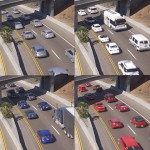
Even when you can observe it fly by from outside, seemingly above the fray, experiencing rush hour traffic may not be as stress-free as you might imagine it would. But you can see and hear for yourself, thanks to conceptual artist Chris Burden and his dynamic sculpture, featured in the nifty short film below (a Vimeo Staff Pick).

A multi-year staple that can be seen at the Los Angeles Museum of Art, Metropolis II is an intense kinetic sculpture, modeled after a fast paced, frenetic modern city. Steel beams form an eclectic grid interwoven with an elaborate system of 18 roadways, including one six lane freeway, and HO scale train tracks.”

dynamic micro car video

dynamic miniature rush hour

More from the LACMA: “Miniature cars speed through the city at 240 scale miles per hour; every hour, the equivalent of approximately 100,000 cars circulate through the dense network of buildings. According to Burden, ‘The noise, the continuous flow of the trains, and the speeding toy cars produce in the viewer the stress of living in a dynamic, active and bustling 21st century city.’”

dynamic micro city sculpture

dynamic museum roadway infrastructure

At the push of a button, a fleet of toy-sized cars (as well as trains) zip out of their hiding spots and quickly fill up the looping tracks, weaving between structures and speeding along side streets only to rejoin the main highways later in their never-ending little rat-sized race to nowhere.

Share on Facebook


[ By WebUrbanist in Art & Installation & Sound. ]

[ WebUrbanist | Archives | Galleries | Privacy | TOS ]


WebUrbanist

 
Comments Off on Micropolitan: Mini Model City Cycles 100,000 Cars Per Hour

Posted in Creativity


Hack Your City: 12 Creative DIY Urbanism Interventions

13 Mar

[ By Steph in Art & Installation & Sound. ]

DIY Urbanism Main

If city officials won’t do their part to make public spaces more fun, efficient, useful, comfortable and creative, citizens will take matters into their own hands. DIY urbanism, or ‘hacktivism,’ is the practice of altering urban environments in ways that aren’t officially sanctioned, whether by turning vacant lots into temporary playgrounds, adding swings to bridges, seed-bombing neglected city spaces or knitting giant hats for bus stop shelters.

City Swings

DIY Urbanism City Swings 2

DIY Urbanism City Swings

The spaces under piers, beside bridges and beneath industrial remains are transformed into instant playgrounds with surreptitiously installed swings funded by The Awesome Foundation for the Arts and Sciences. The Los Angeles chapter of the group awarded its $ 1,000 2011 grant to artist Jeff Waldman, who chose underutilized spots around the city to install temporary swings. A similar project hung spill swings from the handrails on San Francisco’s BART public transit system, while the more complex 21 Swings project in Montreal coordinated the urban swings with music for an interactive experiment.

DIY Urban Furniture

DIY Urbanism Furniture Stair Square

DIY Urbanism Furniture Sign Chair

DIY Urbanism Furniture City Living Room

If there aren’t comfortable places to sit and hang out in urban locales, perhaps the people should just create them, whether they turn scaffolding into instant hangouts with bracket-equipped furniture or bring specially made tables that fit perfectly onto public steps. Some temporary installations have gone so far as to create entire urban living rooms complete with couches, bookshelves and coffee tables that invite passersby to take a seat, relax, get to know each other better and enjoy impromptu musical performances. One particularly creative guerrilla seat design is simply a piece of plywood printed with an icon of a chair that attaches quickly and easily to street signs and can be folded up when not in use.

Vacant Lot Playgrounds & Hangouts

DIY Urbanism Vacant Lot Mini Golf

It’s incredibly frustrating when your neighborhood lacks a decent playground or public recreation space, yet multiple vacant lots surrounded by razor wire-topped fences waste away for years on end. Why should such spaces be closed off to the public when they’re not in use? Many DIY urbanism projects focus on reclaiming these spaces with non-permanent setups for community gardens, swing sets and even mini golf. Repurposing vacant lots maintains a sense of vitality and egalitarianism in the community, especially during times of economic sluggishness when planned construction projects are indefinitely delayed.

Yarn Bombing

DIY Urbanism Yarnbombing

Who wouldn’t smile at custom-crocheted sweaters for trees, phone booths and bicycles? Yarn bombing is the practice of adding knitted and crocheted additions to all sorts of public objects, just for the fun of it. Bus stops are given giant winter hats, bus seats get a lot cozier and stop signs suddenly become red flowers with the addition of green leaves and a ‘stem.’

Next Page – Click Below to Read More:
City Hacktivism 12 Fun Diy Urbanism Interventions

Share on Facebook


[ By Steph in Art & Installation & Sound. ]

[ WebUrbanist | Archives | Galleries | Privacy | TOS ]


WebUrbanist

 
Comments Off on Hack Your City: 12 Creative DIY Urbanism Interventions

Posted in Creativity


Archist City: Iconic Modern Art Reimagined as Architecture

11 Mar

[ By Steph in Art & Drawing & Digital. ]

Archist Art as Architecture 1

Works from 27 iconic modern artists are translated into architecture to make up one of the most colorful fictional cities every imagined. You can almost envision ‘Archist‘ coming to life in a real city like Amsterdam or Barcelona, with a collection of structures bringing the aesthetics of Mondrian, Andy Warhol, Salvador Dali and Ray Lichtenstein to their largest-ever scale.

Archist Art as Architecture 2

The illustration series by architect and artist Federico Babina produces surprisingly realistic yet, in many cases, instantly recognizable building designs representing each artist’s body of work.

Archist Art as Architecture 4

Archist Art as Architecture 3

Some of these artists already produce works that are architectural in nature, such as Anish Kapoor’s undulating sculptural installations and the massive crochet playscapes of Ernesto Neto. Others, like the geometric works of Anne Truitt and Frank Stella, easily translate to the three-dimensional, oversized medium of building materials.

Archist Art as Architecture 6

Archist Art as Architecture 7

But for the artists working in a more figurative style, Babina had to get a little more creative. The Lichtenstein is especially notable, looking almost like an appropriately Picasso-ized jumble of skin, hair, lips, teeth and clothing.

Share on Facebook


[ By Steph in Art & Drawing & Digital. ]

[ WebUrbanist | Archives | Galleries | Privacy | TOS ]


WebUrbanist

 
Comments Off on Archist City: Iconic Modern Art Reimagined as Architecture

Posted in Creativity


Crowdsourced City: 14 Citizen-Directed Urban Projects

06 Mar

[ By Steph in Architecture & Cities & Urbanism. ]

Crowdsourced City Main

When urban planners and developers want to know what businesses local residents would like in their neighborhoods, where to put new bike lanes, or specific areas in need of revitalization, who better to turn to than the citizens themselves? Crowdsourcing urban planning puts the future of cities into the hands of the people in all sorts of unexpected ways, from custom-designing new downtown districts to identifying problem areas for cyclists and pedestrians.

SpaceHive: Crowdsourcing Civic Projects

Crowdsourced City SpaceHive

SpaceHive is a website that crowdfunds civic projects in England, with proposals ranging from neighborhood festivals to new performance spaces in disused urban areas. It’s similar to Kickstarter, but focusing exclusively on community improvement. One recent project, the Porty Light Box, renovates decommissioned red phone booths into light boxes that display local artwork and images.

Guerilla Bke Lanes

Crowdsourced City Bike Lanes

Where do cities need new bike lanes? Officials certainly get a clue when citizens take matters into their own hands and create their own guerilla bike lanes, as they have in cities like New York and Baltimore. A group of Manhattan cycling activists called Right of Way have taken matters into their own hands, spray-painting lines and bicyclist icons just as the real thing would look (except some of the icons have wings.) In several cities, including Seattle, those DIY efforts have become permanent.

Crowdsourced Commuter Buses

Crowdsourced City Buses

While the Rinspeed microMAX is just a concept, it’s a thoroughly intriguing one: a silent minibus that relies on data points like current traffic conditions, known choke points and other info to generate a straight shot from your pick-up location to your destination. A companion app for microMAX users would enable you to find a bus in your area with a free seat, find out how long it would take to get you to your desired stop, and call for it to pick you up. Being connected to the ‘cloud’ creates an efficient, flexible and convenient transport system without wait times, prior planning or detours.

Bristol Rising: Crowdsourced City Design for Connecticut

Crowdsourced Cities Bristol Rising

How could the city of Bristol, Connecticut improve and grow to best suit its residents’ needs? Officials have gone straight to the source with ‘Bristol Rising,‘ an interactive initiative to turn the city’s flagging downtown back into a thriving destination with “a vibrant, walkable, contiguous experience.” Residents are invited to upload their own ideas and join in on discussions at the website so developers can gauge exactly what the community wants.

Change By Us: Crowdsourcing NYC

Crowdsourced City NYC

A similar project asks New Yorkers, “How can we make our city a better place to live?” The community is invited to submit ideas at the Change by Us NYC website, where a network of city leaders reads and considers each proposal. Successful 2013 projects include a new community garden and greenhouse. Ideas include cleaning and repairing existing bike lanes, new pedestrian bridges, composting locations and discounted Citi Bike memberships for low-income residents.

Next Page – Click Below to Read More:
Crowdsourced City 14 Citizen Directed Urban Projects

Share on Facebook


[ By Steph in Architecture & Cities & Urbanism. ]

[ WebUrbanist | Archives | Galleries | Privacy | TOS ]


WebUrbanist

 
Comments Off on Crowdsourced City: 14 Citizen-Directed Urban Projects

Posted in Creativity


Two photographers re-imagine city potholes

01 Mar

12.jpg

In the spirit of making lemonade out of lemons, two photographers have re-purposed city potholes and put them to clever new uses in a slightly surreal photo series aptly titled ‘Potholes.’ Davide Luciano and Claudia Ficca took to the streets of New York, Los Angeles, Montreal and Toronto, turning ordinary potholes into fishing ponds, diving pools, rabbit holes and more. All photos were staged without interrupting traffic, and all scenes were created with models and props – nothing has been added in Photoshop. Take a look at their photos – they bring a whole new meaning to street photography.

News: Digital Photography Review (dpreview.com)

 
Comments Off on Two photographers re-imagine city potholes

Posted in Uncategorized


Figure & Ground: Surreal Animated Walking City Shifts Shape

17 Feb

[ By WebUrbanist in Art & Photography & Video. ]

transforming-city-design-an

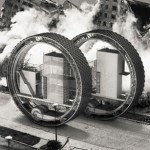
Mesmerizing as it morphs forms like some kind of architectural mutant, this latest take on the Walking City is a freshly-animated and anthropomorphic twist on a fifty-year-old concept.

walking city animation forms

The transforming shape at the center of this eight-minute short flexes between organic and artificial shapes and structures, shifting between forms that take the viewer through glimpses of Buckminster Fuller and Zaha Hadid, from Constructivism through Moderisnm and Postmodernism to Deconstructivism.

surreal walking city video

shape-shifting-walking-city

From its creators at Universal Everything: “Referencing the utopian visions of 1960’s architecture practice Archigram, Walking City is a slowly evolving video sculpture. The language of materials and patterns seen in radical architecture transform as the nomadic city walks endlessly, adapting to the environments she encounters.”

walking converting figure ground

The result is neither precisely a historical tour nor an entirely artistic abstraction, but something in between that hints at bits, pieces, strategies and forms found in built environments and design approaches past, present and possibly future.

Share on Facebook


[ By WebUrbanist in Art & Photography & Video. ]

[ WebUrbanist | Archives | Galleries | Privacy | TOS ]


WebUrbanist

 
Comments Off on Figure & Ground: Surreal Animated Walking City Shifts Shape

Posted in Creativity