RSS
 

Posts Tagged ‘City’

Subtractive Street Art: Sculptural Murals Cut into City Walls

14 Feb

[ By WebUrbanist in Art & Street Art & Graffiti. ]

cut face wall mural

Vhils is adept at carving, cutting and peeling to reveal art inside solid surfaces, but his artistic experiments also include carefully-calculated explosions to create pictures and phrases when the dust settles and debris clears.

mural multi level city

mural subtracted painted art

mural alley family portrait

While this Portuguese artist (real name: Alexandre Farto) has exhibited in galleries, his 3D building-side murals are somehow especially sublime, tied as they are to gritty urban contexts and turning crumbling paint, plaster and brick into physically and emotionally layered portraits.

mural experimental stencil explosion

mural explosive wall art

His work with explosives is also powerful, playing with both relentless reality of controlled demolition and the festivity of fireworks, with elements of unpredictable chaos thrown into the mix.

Next Page – Click Below to Read More:
Subtractive Street Art Sculptural Murals Cut Into City Walls

Share on Facebook


[ By WebUrbanist in Art & Street Art & Graffiti. ]

[ WebUrbanist | Archives | Galleries | Privacy | TOS ]


WebUrbanist

 
Comments Off on Subtractive Street Art: Sculptural Murals Cut into City Walls

Posted in Creativity


Car-Free City: Hamburg Announces Audacious 20-Year Plan

14 Jan

[ By WebUrbanist in Architecture & Cities & Urbanism. ]

car free green city

Germany may be known for its green political party and sustainable energy focus, but this daring plan to eliminate the need for automobiles entirely across the country’s second-largest metropolis is fresh and bold by any standard.

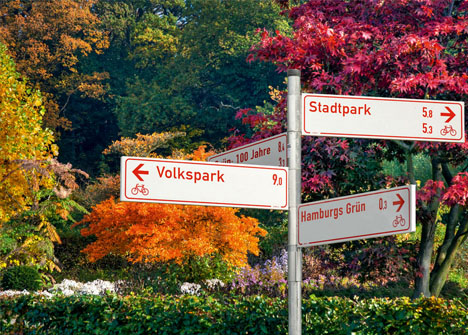
car free signs colors

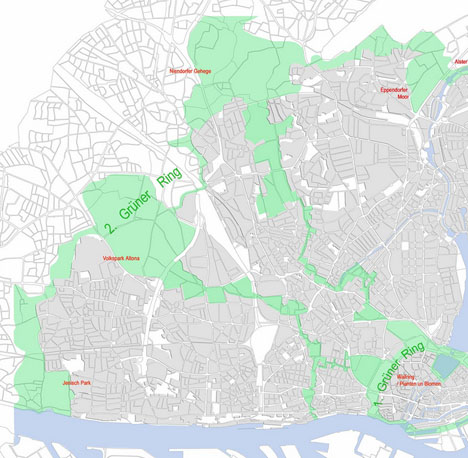
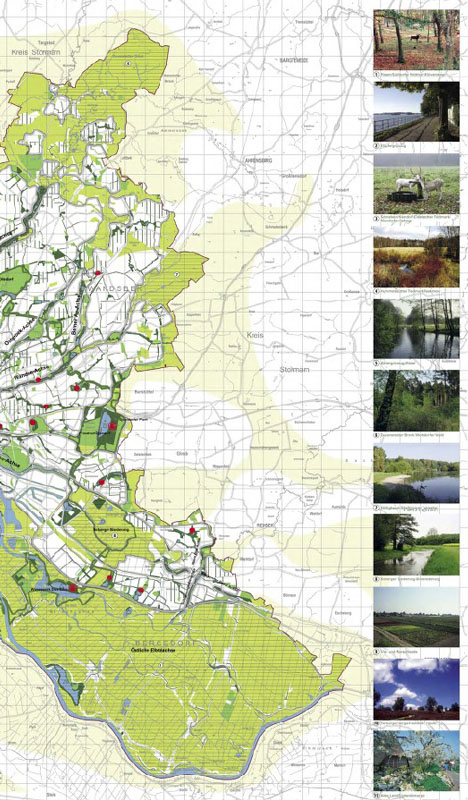
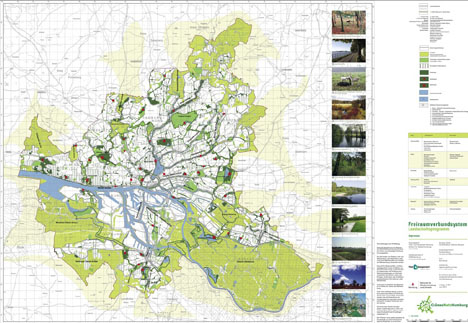
Hamburg’s Green Network Plan (Gruenes Netz) is a two-decade strategy to connect the whole urban center and its outskirts via bicycles and pedestrian routes, rendering vehicles redundant and bringing green space effectively right to the doorstep of every city dweller.

car free urban layout

Major parks, playgrounds, gardens already make up 40% of the city and many form contiguous axes accessible without motorized transit, so this direction is in many ways an extension of their existing approach. At the same time, this proposal goes beyond green rings or environmental zones toward a new type of environment-first urban planning.

car city context paths

Hamburg is well aware of the dangers of climate change, having experienced a nearly 10-degree Celsius rise in temperatures in just over half a century, as well as water levels that have gone up by close to 20 centimeters (expected to increase another 30 by 2100).

car free connections images

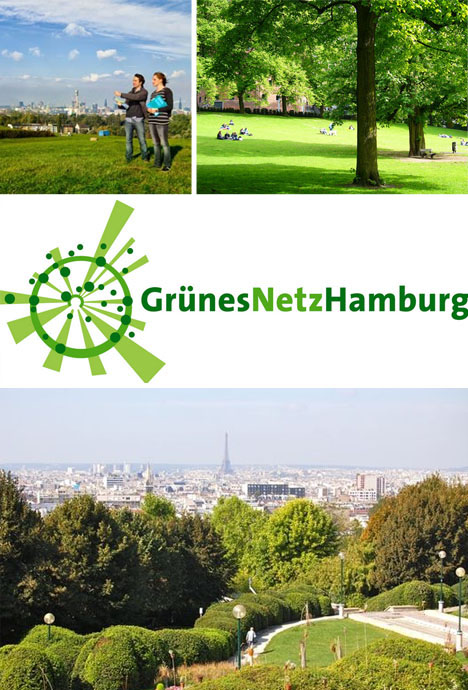
Beyond climate change-combating benefits, however, its architects note “It will offer people opportunities to hike, swim, do water sports, enjoy picnics and restaurants, experience calm and watch nature and wildlife right in the city, [reducing] the need to take the car for weekend outings outside the city.” Effectively, the vision is of a city that serves all needs and makes traveling to escape its cramped urban confines a problem of the past.

Share on Facebook


[ By WebUrbanist in Architecture & Cities & Urbanism. ]

[ WebUrbanist | Archives | Galleries | Privacy | TOS ]


WebUrbanist

 
Comments Off on Car-Free City: Hamburg Announces Audacious 20-Year Plan

Posted in Creativity


Car-Free City: Hamburg Announces Audacious 20-Year Plan

13 Jan

[ By WebUrbanist in Architecture & Cities & Urbanism. ]

car free green city

Germany may be known for its green political party and sustainable energy focus, but this daring plan to eliminate the need for automobiles entirely across the country’s second-largest metropolis is fresh and bold by any standard.

car free signs colors

Hamburg’s Green Network Plan (Gruenes Netz) is a two-decade strategy to connect the whole urban center and its outskirts via bicycles and pedestrian routes, rendering vehicles redundant and bringing green space effectively right to the doorstep of every city dweller.

car free urban layout

Major parks, playgrounds, gardens already make up 40% of the city and many form contiguous axes accessible without motorized transit, so this direction is in many ways an extension of their existing approach. At the same time, this proposal goes beyond green rings or environmental zones toward a new type of environment-first urban planning.

car city context paths

Hamburg is well aware of the dangers of climate change, having experienced a nearly 10-degree Celsius rise in temperatures in just over half a century, as well as water levels that have gone up by close to 20 centimeters (expected to increase another 30 by 2100).

car free connections images

Beyond climate change-combating benefits, however, its architects note “It will offer people opportunities to hike, swim, do water sports, enjoy picnics and restaurants, experience calm and watch nature and wildlife right in the city, [reducing] the need to take the car for weekend outings outside the city.” Effectively, the vision is of a city that serves all needs and makes traveling to escape its cramped urban confines a problem of the past.

Share on Facebook


[ By WebUrbanist in Architecture & Cities & Urbanism. ]

[ WebUrbanist | Archives | Galleries | Privacy | TOS ]


WebUrbanist

 
Comments Off on Car-Free City: Hamburg Announces Audacious 20-Year Plan

Posted in Creativity


Nomadic Urbanism: Futuristic Walking City Draws on History

08 Jan

[ By WebUrbanist in Architecture & Cities & Urbanism. ]

walking city rendering

The notion of a mobile city is not new, but in this case, the architect has gone to great lengths to construct a vision that could conceivably be built. So while it may look like fantasy at first glance, it is rigorously researched and has deep roots in built environments that have really been made to move.

walking city closeup angle

walking city route speculation

The design of this Very Large Structure by Manuel Dominguez proposes a plug-and-play platform set atop a series of treads that would house everything from housing and restaurants to hospitals, libraries, sports facilities and even universities. Their mobility would provide dynamic equilibrium of urban and rural populations, facilitated in part by energy self-sufficiency generated on board via renewable sources.

walking city axon diagram

walking city assembly inspiration

“Even though I am very attracted to science fiction and utopical and distopical architecture, I was more interested in investigating real life technology” its designer explains. “These included open-air mining machinery, shipyard installations, logistic and management in super-ports and super vessels, space technology and eco-villages.”

walking city mist

walking city comic strip

The idea of the Walking City has a rich history. In a 1960s Archigram article, Ron Herron proposed massive robotic mega-structures that would dynamically follow available natural resources and work, providing human resources and manufacturing capabilities on demand. Like some meta-robot out of a 1980s cartoon, these mobile platforms could join to form temporary metropolises as well.

Next Page – Click Below to Read More:
Nomadic Urbanism Futuristic Walking City Draws On History

Share on Facebook


[ By WebUrbanist in Architecture & Cities & Urbanism. ]

[ WebUrbanist | Archives | Galleries | Privacy | TOS ]


WebUrbanist

 
Comments Off on Nomadic Urbanism: Futuristic Walking City Draws on History

Posted in Creativity


Virtual & Reality: 15 New York City Data Visualizations

31 Dec

[ By Steph in Design & Graphics & Branding. ]

NYC Infographics Main

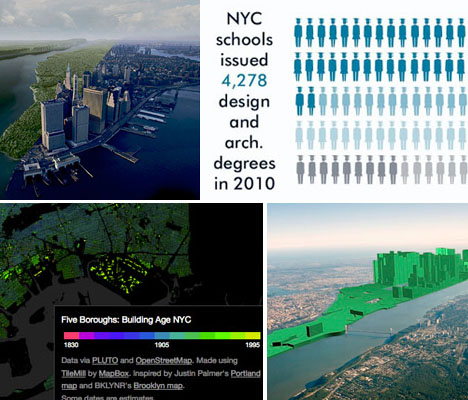
Data is much easier for most of us to process when it’s presented in visual form, and these 15 infographics and visualizations give us a (literal) picture of New York City that would be hard to come by otherwise. Exploring things like income inequality, building age, how the city has evolved and what its most popular hot spots are, these maps and charts illuminate the city in new ways.

Inequality and New York’s Subway

NYC Infographic Subway Inequality

New York City’s inequality problem is even clearer when viewed by subway line, as this interactive infographic from The New Yorker illustrates. Using data on median household income from the U.S. Census Bureau, it allows you to see the areas where earnings range from abject poverty to sky-high wealth.

Building Age, NYC

NYC Infographics Building Age

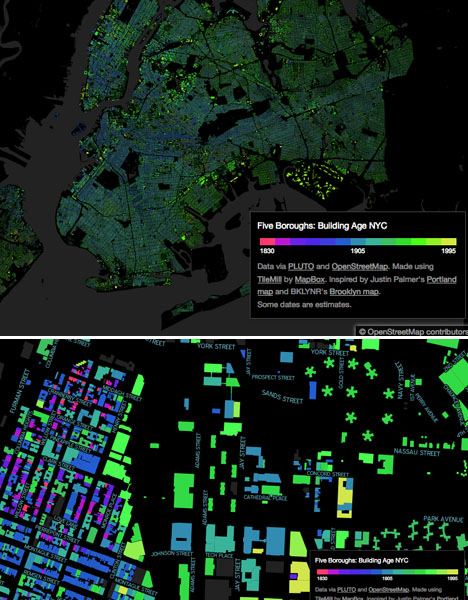
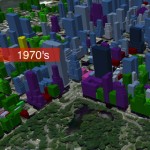
Where are the city’s oldest buildings? You could read a list of them, but seeing them laid out visually on a map makes them easier to spot. See the ages of one million New York buildings mapped in vivid colors, zooming in and exploring by neighborhood, at BDON.org.

10,000 NYC-Based Tweet Locations

NYC Infographics Tweet Locations

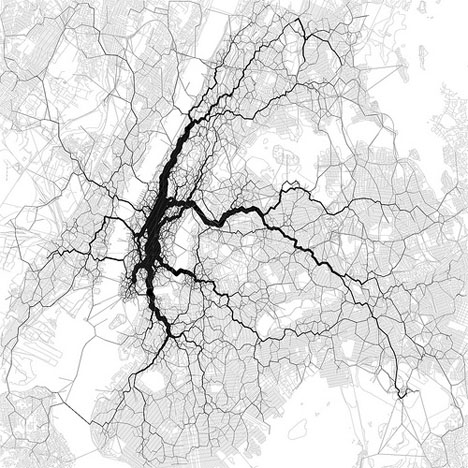
Ten thousand New York City-based tweets are laid out on top of a map in this interesting data visualization. The creator, Eric Fischer, asks “Is this the structure of New York City?” Perhaps it’s really just bored people in subways and cabs taking a moment to tell the world what they ate for lunch.

Growth of Manhattan Island, 1650-1980

NYC Infographic Growth of Manhattan

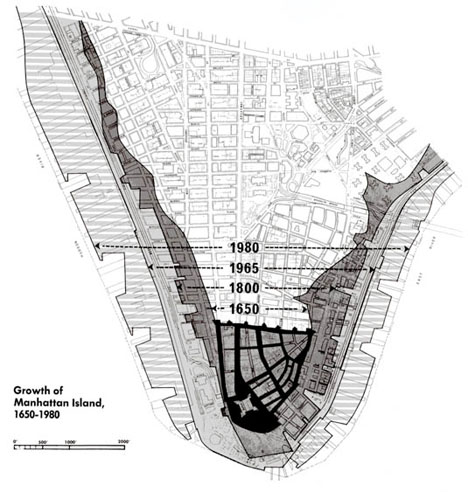
It’s easy to forget that  much of Manhattan Island (and the rest of New York City) used to be a marsh. The borders of the island were much further inland way back in 1650 when the first settlement was founded. By 1980, they had extended by a good 1,000 feet.

Manhattan Past, Present and Future

NYC Infographic Past Present

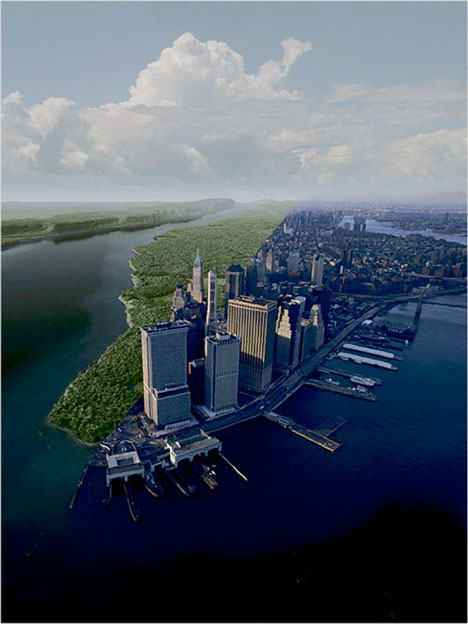
Here’s another visualization that shows the drastic changes in the island from the way it was when European settlers first arrived to how it looks today. The composite image shows the left side of the island as it was 400 years ago and the modern-day city on the right. How will it change in another 400 years?

Next Page – Click Below to Read More:
Virtual Reality 15 New York City Data Visualizations

Share on Facebook


[ By Steph in Design & Graphics & Branding. ]

[ WebUrbanist | Archives | Galleries | Privacy | TOS ]


WebUrbanist

 
Comments Off on Virtual & Reality: 15 New York City Data Visualizations

Posted in Creativity


Colorful Pop-Up: City Farm Storefront for Produce & Plants

27 Dec

[ By WebUrbanist in Architecture & Offices & Commercial. ]

pop up green shop

This competition-winning design uses upcycled materials to frame a street-facing  experience, in part through a fresh take on ‘window shopping’. Its aim: to create a unique and sustainable experience for Londoners looking to purchase fruit- or vegetable-producing plants.

pop up interior space

urban farm interior space

Sponsored by Hackney City Farm, the competition encouraged applicants to reuse materials and strive for sustainability, but this group set themselves apart by proposing something both contextual and eye-catching with a strong pedestrian-side presence.

pop up window facade

urban farm window detail

The team behind this colorfully-painted Sill-to-Sill solution drew inspiration, as well as many of their actual materials, “from the architecture of the local neighbourhood, defined by streets of Victorian terrace houses with their imposing brick facades and generous sash windows. In recent years these homes have been bought up in a wave of gentrification and as new owners move, builders get to work, improvements are made and old materials are discarded.”

pop up window shopping

pop up urban farming

Alongside recycled slats used for the walls, these found window elements were turned into benches, counters, shelves, notice boards and sources of natural light, most prominently used as a colorful display that draws people in from the sidewalk to see their wares. “‘Sill to Sill’ aims to encourage local people to take up urban agriculture by presenting plants in an immediately familiar setting: ‘buy from our window sill and grow on your window sill’.”

pop up construction steps

pop up panoramic

pop up plants london

Part of the approach also involved using strategies that would allow for easier construction despite apparent architectural complexity: “Though visually sophisticated, the design utilized basic timber construction techniques and simple materials in a manner that could easily be assembled by a team of unskilled volunteers. Community involvement at every stage of the project, from inception through construction and on to use, was at the core of the team’s proposal.”

Share on Facebook


[ By WebUrbanist in Architecture & Offices & Commercial. ]

[ WebUrbanist | Archives | Galleries | Privacy | TOS ]


WebUrbanist

 
Comments Off on Colorful Pop-Up: City Farm Storefront for Produce & Plants

Posted in Creativity


Dial it Down: Noise-Cancelling Device for City Street Sounds

25 Nov

[ By WebUrbanist in Conceptual & Futuristic & Technology. ]

sound control window knob

The background sounds of urban environments can be invigorating when you are out and about, but enervating when you are at home and want to tune them out. Now imagine a simple gadget you can stick to your window letting you do just that – a volume knob for everyday life.

sound cancelling window attachment

sound device prototype design

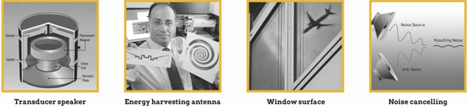
Sono is a remarkable working prototype, created and tested by industrial designer Rudolf Stefanich that “turns your window into an advanced noise cancelling system that allows you to eliminate and/or control the sounds that pass through.”

sound cancel city noise

sound cancelling wifi research

sound user interface selection

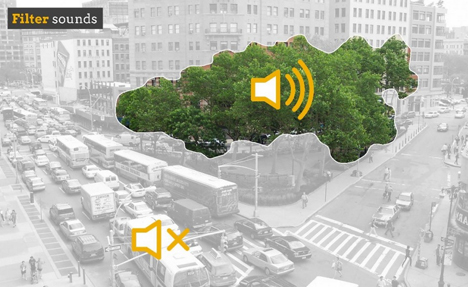
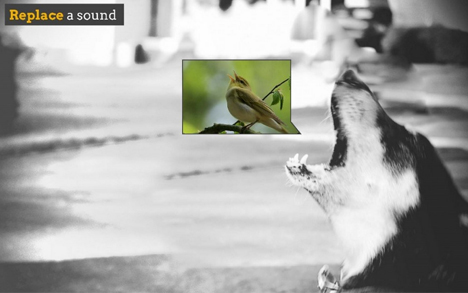
Cancellation of background noise is just the first step, however, with specific-sound filtering and replacement via a user-friendly touch interface as advanced options.

sound filtering city nature

sound replacement demo example

The gagdet will allow to you dial up or turn down the sounds of car sirens, traffic horns and other intrusive distractions, but it will also give you the power to select a preferred ambient audio experience instead. It effectively offers an adjustable soundtrack of your own choosing.

sound device demo

sound device tech

sound device specs

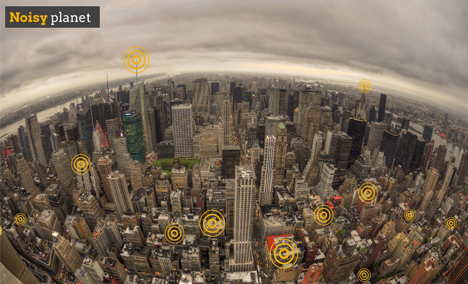
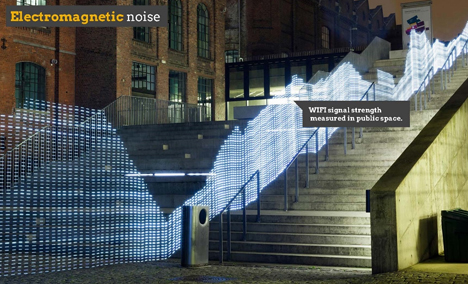
From its creator: “In our loud and busy world a moment of silence has become a scarce and almost luxurious experience. The pebble like device you can see here lets you reclaim that silence for your home. With its concentric broadband antenna rings, it harvests the energy of electromagnetic noise from Wi-Fi, and similar signals and this way also reduces the level of e-smog pollution in your environment.”

Share on Facebook


[ By WebUrbanist in Conceptual & Futuristic & Technology. ]

[ WebUrbanist | Archives | Galleries | Privacy | TOS ]


WebUrbanist

 
Comments Off on Dial it Down: Noise-Cancelling Device for City Street Sounds

Posted in Creativity


Sucking Smog: Electronic Vacuum Cleaner Clears City Skies

18 Nov

[ By WebUrbanist in Conceptual & Futuristic & Technology. ]

clean air smog vacuum

It sounds so preposterous and yet is sufficiently plausible that its designer is now talking to the mayor of Beijing about how to develop for urban use in this notoriously congested capital of China.

Daan Roosegaarde developed a system using buried coils of copper to create an ion electrostatic field that attracts smog particles, effectively magnetizing them and pulling them down. The result is sizable void of clean air above.

clean air beijing smog

While it cannot yet work on a city-wide basis, the idea is to begin by clearing hundreds of feet of air in key public spaces like parks, squares and other paths trafficked by pedestrians.

clean air beijing cctv

They have already prototyped a device that can suck a square meter of polluted air from a larger interior space, effectively punching a hole in a simulated cloud of smog and collecting the resulting particles safely below.

clean air city streets

The designer puts the problem and project in context: “We have created machines to enhance ourselves. We invented the wheel and cars to liberate ourselves and travel. But now these machines are striking back, making air polluted in high-density cities like Beijing.”

clean air process diagram

Their “young design firm based in the Netherlands and Shanghai, [which] has been working on intricate designs like a sustainable dance floor which generates electricity when you dance, and smart highways which produce their own light. Now [Daan Roosegaarde] and his team of engineers are creating a technology to clean the air of Asian cities.”

Share on Facebook


[ By WebUrbanist in Conceptual & Futuristic & Technology. ]

[ WebUrbanist | Archives | Galleries | Privacy | TOS ]


WebUrbanist

 
Comments Off on Sucking Smog: Electronic Vacuum Cleaner Clears City Skies

Posted in Creativity


Nightscapes: Photographing the City at Night

18 Nov

By Joseph Eckert

Eckert_NightScape_1.jpg

The idea of taking photographs at night can be counterintuitive to the novice photographer. After all, photography is an art, a craft, a technology that is wholly built on light. Film or digital, it doesn’t matter: we need light to make a photograph—it is as simple as that.

Night, of course, by very definition lacks the pervasive light of day, and therefore doesn’t seem like a good time for photography. In the broadest sense, this intuitive understanding of light and its importance to photography is absolutely correct. Night does represent a more challenging time to take pictures, because we lack all those wonderful photons barreling down from the sun and reflecting off everything interesting and into our waiting lenses.

However, note that I said “challenging” but not “impossible.” Indeed, nighttime photography is not only possible; it is wonderfully ripe for creative expression and can help you create genuinely unique looks in your work.

The Night in General
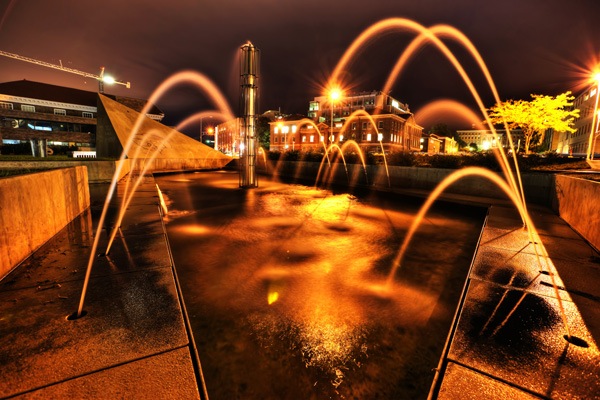
Eckert_NightScape_2.jpg

Take a moment, tonight, or whenever you have a chance, and go outside into the darkness long after the sun has gone down. Really open your eyes and observe, noting all the differences, all the unique things that set night apart from day. It is as simple as the lack of sunlight, but infinitely more complex than that breezy statement would suggest.

Pay attention to the way the shadows have deepened and pooled, how colors are muted or rendered differently by the artificial light of streetlamps or the exposed bulb on your backyard porch. Notice how things feel, how significant just changing the time of day can be. That old oak tree that seems so friendly and comforting in the day can turn into a gnarled, malevolent specter at night. Or a car that during the day is simple and boring might become a gleaming chariot in the darkness. The possibilities are endless.

The City at Night
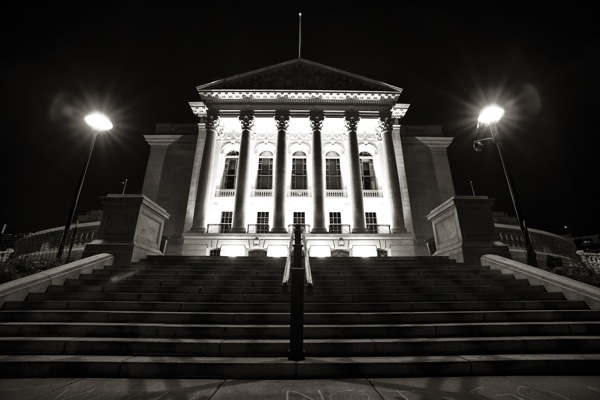
Eckert_NightScape_3.jpg

Cities are wonderful engines of creative possibility for the nighttime photographer. We lose the sunlight, but we gain thousands (or millions) of individual points of artificial light of every different color and tonal quality. We can (literally and figuratively) view our city in an entirely new light. The old and staid can become fascinating again as the changes in lighting shift the shadows and alter the textures and wring out, or completely change, the colors.

And all these bright points of artificial light give our cameras something to gather and turn into a photograph.

Great. So…What Do I Do?
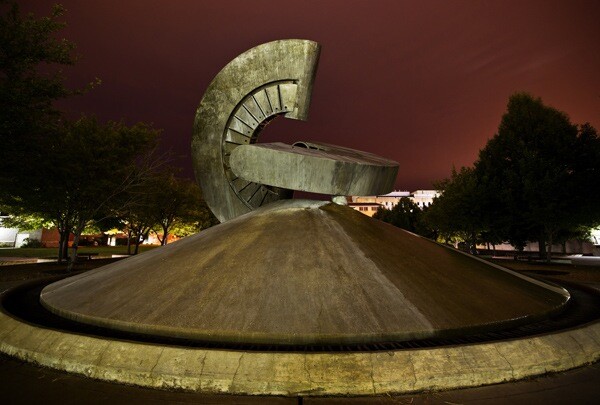
Eckert_NightScape_4.jpg

I’m going to try to distill my experiences from my nighttime cityscape photography outings into a series of recommendations, aimed at giving you the best possible chance to get that shot, the one you really want, full of color and deep shadows and crazy lighting that showcases your city in a whole new way.

Bring the Right Gear

I’m not going to categorically deny that you can take great nightscapes with a compact digital camera. I will say that using a point and shoot is going to make getting that fantastic image of your dreams a lot harder.

I recommend the following:

• Tripod, sturdy but lightweight enough for you to carry around easily
• DSLR
• Remote shutter release
• Relatively fast wide angle lens (the wide angle part is optional, but what I recommend to get the most dramatic shots of the architecture and streets of your city)
• Lens hood (to reduce lens flare from outside-the-frame light sources)

Note that I didn’t say “flashlight.” This article assumes you are in the city, which, barring unforeseen power outages, should have light enough for you to see by and make your way around. That may vary by city, however, so bring a flashlight if you feel you’ll need one, or if you plan on doing “light painting” with it.

Know the Gear You Brought

Things will be dark. It’s nighttime. So make sure you know how to operate your DSLR in minimum light and with little fuss. If your camera has the ability, make use of custom modes to have your settings in place and ready to go ahead of time. Also be able to fit your remote shutter cable onto your camera, and your camera onto your tripod, in the dark (and both of those back off again).

Going further, try to get to know your lens(es) and your camera with regard to how they behave in low light. Some DSLRs are better at autofocusing in dim light than others; you may need to manually focus for best results if the AF ends up endlessly searching (alternatively, point the camera the moon or some other distant light, let AF put the focus at infinity, recompose and shoot). DSLRs will also vary a great deal on how well they handle high ISO values and/or very long exposures (in terms of the level of noise in the resultant image). If you are looking to capture fast action in freeze-frame in a nighttime shot, you will inevitably need a high ISO level and probably a very wide aperture lens. Remember, a tripod can hold your camera solid and in place, but it has no effect on the movement of the subject matter.

This brings us to:

Know What You Want

Are you looking for a freeze-frame in the darkness? This is going to be tough – a technologically demanding task for your camera. You’ll have to set the ISO quite high and have a “fast” lens (one with a wide aperture, as noted above, like f/2.8 or f/1.7, etc). The result will necessarily have a very shallow depth of focus with potentially a lot of noise – things to keep in mind as you are shooting. You will also need a high ISO and fast aperture if you are trying to shoot handheld (without a tripod), something that is very possible, especially with newer, less noisy digital cameras, but be prepared to have do noise reduction in post!

If, instead, as is more commonly done, you want to create light trails from passing cars or use long exposures to really capture the fantastically different nighttime lighting, you can get away with using much lower ISO (e.g. 100) and a smaller aperture (f/8, for example) to enlarge your depth of field and minimize the ISO-induced noise. This will mean, commensurately, a longer exposure time: the shutter will remain open longer, letting those light trails form and also filling the frame with more detail as more photons are gathered by the imaging sensor. Bear in mind, however, that most DSLRs have an automatic shutter time cutoff of 30 seconds, so if you need longer to get a proper exposure you’ll need to know how to use the Bulb mode on your camera (where the shutter speed is determined by how long you hold down the shutter release button). In either case, you will need a tripod, because the exposure time will be much too long to keep still when hand-holding.

Also, keep in mind a fact of all digital sensors (so far): the longer the shutter is open, the more noise creeps up, regardless of ISO setting. To combat this you can set your camera to apply in-camera noise reduction. Many DSLRs do this automatically on longer exposures, and usually the time it takes to apply the NR is equivalent to however long the shutter was open. This is important to remember when you are out and about, because it means your camera is unusable for however long the NR is being applied.

Know Your City

Every city is different, in layout, points of interest, people and the overall character, and all of those elements (except the layout) change, sometimes drastically, when night falls.

You should be at least decently knowledgeable about the city you are attempting to shoot in before you make an excursion at night – or, at least, be with someone who does know. Big cities present nearly endless opportunities for architectural and artistic delights, delights that change and morph and become radically different when no longer lit by the sun, but by artificial lights. However, big cities can also be more dangerous, particularly at night, and especially for a photographer who is lugging around two to ten thousand dollars (or more) worth of equipment with them.

Therefore, for reasons of safety and for practicality, get to know your city before you tromp out with DSLRs hanging around your necks, tripods in hand and release shutter cables dangling. Go out in the day and get to know the streets and where the interesting buildings and parks and monuments and statues are; go out at night, without your camera, and see how all of those things look in the light of night.

Then, when you do take all your equipment out for the shoot, make sure to keep your eyes open. Be cognizant of your surroundings. Walk confidently, even assertively, so as not to be pegged as a tourist, mark or target for potential predators. Work in a group, or at least go with one other person who can watch your back, even if that other person is not a fellow photographer.

Or, do as I often do: go at times when most of the rest of the city is asleep. There are such times, even in those big cities that “never sleep.” When? I’ve found early—and I mean really early—Sunday mornings are the quietest possible times to tramp around the downtown. At 3:30 or 4:00 AM, after bar-close but well before sunrise (for most of the year), the night is just as dark and the light just as good—unless you are trying to shoot nightlife and people and cars, rather than architecture and light and shadow.

Shooting in the early morning also lets you capture a series that progresses from a pure black sky (or one with the moon and stars) to one of deepening purples and blues as the sun begins to rise, and finally gives you a chance to partake in the Magic Hour of sunrise itself. Yep, it means an early morning on a Sunday, but it’s the best time to go out if you want to encounter as few people as possible.

Know the Weather

Another important consideration in nightscape photography is the weather.

Cities at night can look absolutely amazing after a downpour has left the roads wet and gleaming with columns of reflected light. Snow can render a city almost post-apocalyptic at night, blanketing everything and colored by the lights of storefronts and parking lamps. But rain and snow, as they are coming down, are not great for cameras or lenses (or photographers, for that matter) if you aren’t probably prepared.

So be aware of what the skies are doing, and plan ahead. If it’s going to rain, bring waterproof clothing for you and protection for your camera. Watch the weather reports on the night you want to go out and see if you can time it so you hit the streets just after the rain has stopped, so you capture all the magical wetness without it fouling up your camera or lens. If it’s snowing, be prepared for the cold and, again, protect your gear.

Conclusion
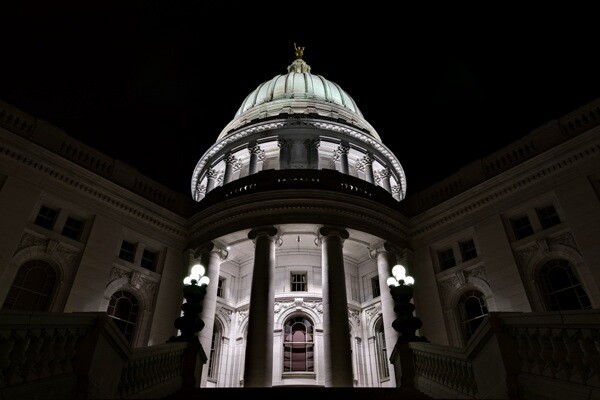
Eckert_NightScape_5.jpg

Nighttime cityscape photography can be a fantastic avenue for creative expression, and a way to make your images pop with unique feeling and life. The light and the shadow behave differently without the sun overhead, and the world, as a result, changes in tone and mood and expression. Streets turn black and shiny and are broken by orange circles of light from streetlamps. Shadows pool in alleys and the corners of buildings, and are stretched into new, looming figures and shapes by the bright light from a gas station or convenience store.

As a photographer, out at night in the city, the most important thing to remember is to stay safe. After that, keep your eyes open and your imagination working, and go after those amazing low-light shots. Try new things, bend and break the rules, have fun, and let the magic flow.

You might be surprised just how much you like what you come home with.See more of Joseph Eckert’s work his website.

Post originally from: Digital Photography Tips.

Check out our more Photography Tips at Photography Tips for Beginners, Portrait Photography Tips and Wedding Photography Tips.

Nightscapes: Photographing the City at Night

The post Nightscapes: Photographing the City at Night by Guest Contributor appeared first on Digital Photography School.


Digital Photography School
 
Comments Off on Nightscapes: Photographing the City at Night

Posted in Photography


Blanking Banksy: Artists & City Paint Over Pricey NYC Graffiti

11 Nov

[ By WebUrbanist in Art & Street Art & Graffiti. ]

banksy play and paint

Banksy is an artist with the rare power to make walls more valuable after he has vandalized them, which some then seek to alter or  destroy and others fight to protect and save. The highly-publicized and daily-updated images of his residency in New York largely tell the first part of the story, but there is another side to the tale as well about the aftermath, and that side has even more surprising and surreal plot twists.
banksy heart art wall

banksy graffiti covered heart

Some graffiti artists feel compelled to cover over his art, out of anger, jealousy or perhaps a mixture of the two. He has been broadly criticized by the tagging community for his lack of respect for rules (or at least conventions), and thus justify defacing his pieces. In many instances, multiple tags have appeared over and around in the days and weeks that follow.

banksy police heart photo

banksy art cancelled police

Meanwhile, NYC official policies regarding vandalism mean that municipal authorities are theoretically bound to paint over his work, even if it might be worth tens of thousands of dollars. Thus, the police hunt him and city workers are tasked to whitewash paintings from sight. Some still snap their own photos before taking on the job, and one has to wonder how they feel about their assignment.

banksy-time-lapse-city

banksy one week later

On the flip side, many other fans, pedestrians and building owners interact with or even fight to defend the pieces at almost any cost for personal or financial reasons. In one instance, some passers by intercepted and stopped someone who sought to add his own interpretation to a newly-posted work. Of course, without added measures, most of these efforts eventually fail.

banksy protected new york

banksy protected gate guard

In another case, a savvy building owner hired around-the-clock security to protect the work found on his walls and even installed a locked gate over it. Sooner or later, though, someone will no doubt find a way to alter or destroy the silhouetted figures. And regardless, they are rendered somewhat crass in their new industrial frame.

banksy colbert blank wall

banksy hanksy colbert art

Steven Colbert jokingly put a frame on the side of his studio, telling Banksy via his television show not to paint inside it and thus make him rich. Unsurprisingly, Banksy obliged and stayed away, but Hanksy took him up on his public and ironic non-offer, adding some fresh work outside of Colbert’s door. In his typical style, Hanksy spoofed the celebrity-in-question’s name with an intentionally poor animal pun.

banksy before vandals

banksy after vandals

Given his high profile, it is no surprise that Banksy’s installations and stencils attracts a wide mix of attention wherever he goes, from the police and other authorities, on the one hand, to local citizens and artists on the other. Still, whether they see him as famous or infamous, it is always fascinating to see just who reacts and how to the mixed reputation of this mysterious street artist.  One has to suspect, though, that he doesn’t really mind the attention either way (images via Banksy, AnimalNewYork, Gothamist and the New York Post).

Share on Facebook


[ By WebUrbanist in Art & Street Art & Graffiti. ]

[ WebUrbanist | Archives | Galleries | Privacy | TOS ]


WebUrbanist

 
Comments Off on Blanking Banksy: Artists & City Paint Over Pricey NYC Graffiti

Posted in Creativity