RSS
 

Posts Tagged ‘Camera’

Ten items you should have in your camera bag

04 Oct

Screen_Shot_2013-10-03_at_4.45.19_PM.png

What’s in your camera bag? A camera (hopefully) and maybe a lens or two, but that’s probably not everything that you need. In this article we’ll be looking at ten items that deserve a place in every photographer’s kit bag, whatever sort of photography you enjoy doing. Click through for the list.

News: Digital Photography Review (dpreview.com)

 
Comments Off on Ten items you should have in your camera bag

Posted in Uncategorized


3 October, 2013 – Black Magic Pocket Cinema Camera Review

03 Oct

Whereas the rate of change in the still camera industry seems to have reached something of a plateau, video is rife with developments. A small Australian company called Black Magic has just started shipping the Blackmagic Pocket Cinea Camera which is shaking up the video marketplace.

I have just spent the past week working in the field with it and my review is now online. Also published today is an article titled The Making of Algonquin Autumn, which describes the process of making a short film with the BMPCC over this past weekend.


"Having been to Antarctica with Michael and Kevin, I would say after having traveled the world and shot nearly my entire life as an exhibiting photographer,  it was one of my highlights in my life and I talk about it, all the time.  The images and experience of seeing something visionary and nearly extinct from the world, to see and experience the wildlife and scenery that does not fear humans is amazing.  The images I shot there won me two Smithsonian awards and nearly 18 other international awards". – Tim Wolcott

 Find Out More Now
These Expeditions Will Sell Out Quickly. They Always Do


The Luminous Landscape – What’s New

 
Comments Off on 3 October, 2013 – Black Magic Pocket Cinema Camera Review

Posted in News


How to Reduce Camera Shake – 6 Techniques

26 Sep

Pin It

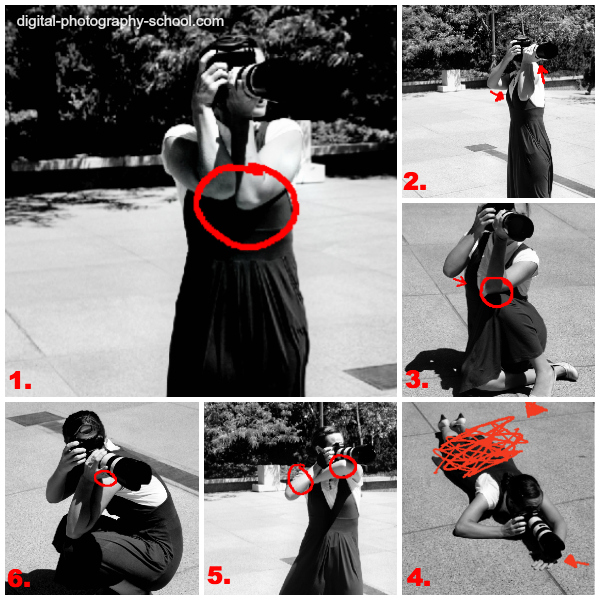
In this classic DPS post (now updated) photographer Natalie explores 6 ways you can hand hold lenses at low apertures and low shutter speeds and still avoid blurry images caused by camera shake.
avoid-camera-shake

I’m a mover and a shaker in general, and this is particularly true when I’m on a shoot. I’m twistin’ and turnin’, climbin’ and jumpin’ and to top it all off, I DO NOT have a steady hand, plain and simple.

As often as possible I opt for lenses with VR (Vibration Reduction) or IS (Image Stabilization). You pay a pretty penny for this feature. For me, it’s worth the extra cost, and for the point I’m at in my photography it’s a reasonable expense. But that wasn’t always the case, and what about uber slow shutter speeds with no tripod. No IS or VR can hold up under pressure like that. . .no matter how magical they may be. . . and magical they are, trust you me.

6 Techniques to Reduce Camera Shake

Here are 6 options for avoiding camera shake and achieving crisp, delicious images no matter the length of the lens, no matter the shutter speed.

Shooting wide open? NO PROBLEM; I’ve got your back!! Enjoy!

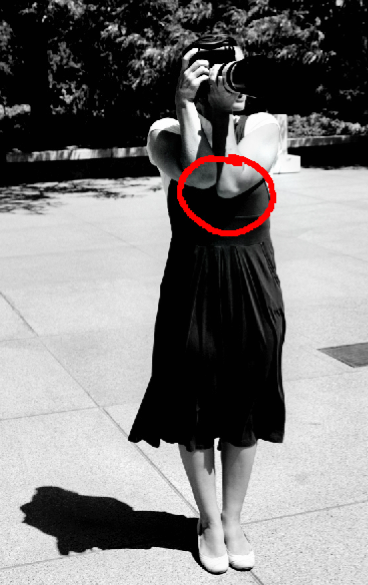
1. Elbows In

As often as possible pull your elbows in to your body and exhale completely before depressing the shutter. When you’re working with a wide aperture or low shutter speed (or both), even a breath can introduce shake. Pulling your elbows tight to your body can really help keep you steady. I also press my elbows firmly into my chest for even greater stability.
Avoiding-Camera-Shake-1

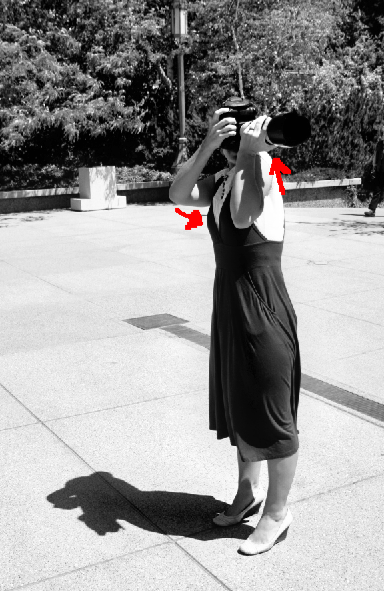
2. Raise Your Left Shoulder….

I am definitely a right eyed photographer, but this tip that I learned from “The Moment It Clicks” by Joe McNally, requires that I shift for a moment to my left eye. What I’m doing here is raising my left shoulder, and bracing my left elbow into my rib-cage (no arrow for this one). For further stability, you can pull your right elbow in to your chest. As always, exhale completely before depressing the shutter to avoid introducing shake.
Avoiding-Camera-Shake-2

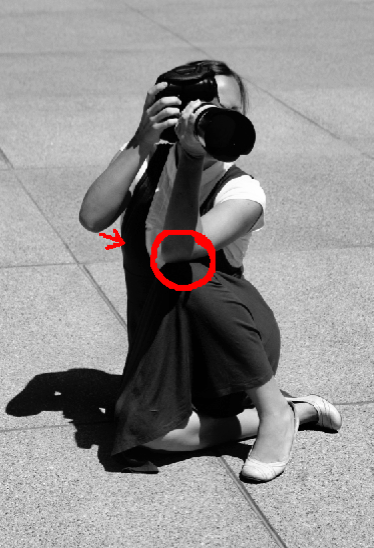
3. Create a Tripod With Your Knee

You can create your own tripod by resting your elbow on your knee while in a seated position. Again, bring that other elbow in for greater support.
Avoiding-Camera-Shake-3

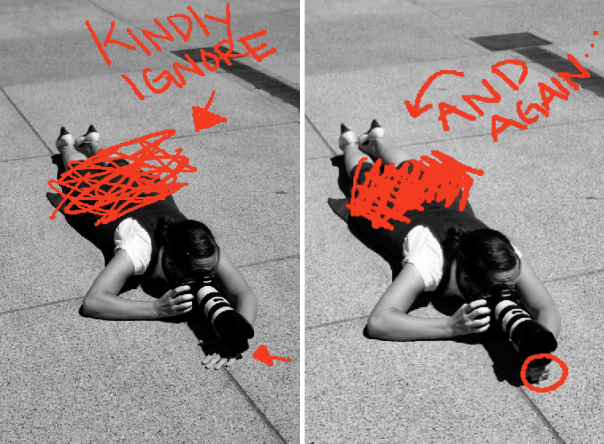
4. Lay Down

These two images illustrate perhaps the most obvious way to avoid shake without a tripod. Lie flat and let the lens sit directly on the ground. The problem with this is that you’re likely to have quite a downward tilt to the lens and unless you’re aiming to photograph the pavement, you probably won’t end up with the shot you’re hoping for. In the first image you’ll notice that I placed my hand flat against the cement and balanced the lens on top of it to give myself some height. In the second image you’ll see that I created a fist with my hand to give myself even greater height.
How To Avoid Camera Shake-1

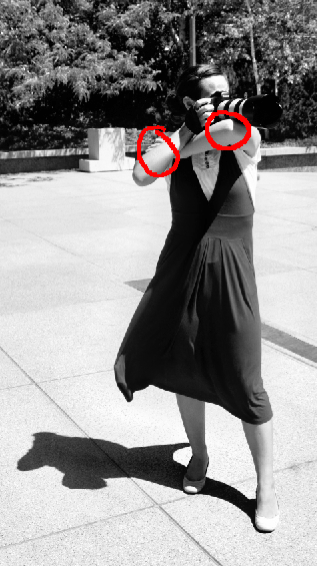
5. The Machine Gun Hold

This next technique is sometimes referred to as the machine gun hold. I rarely use this technique as I find it awkward and difficult to maintain for more than a second or two. Just because it doesn’t work for me, doesn’t mean it won’t for you. . . give it a try.
Avoiding-Camera-Shake-6

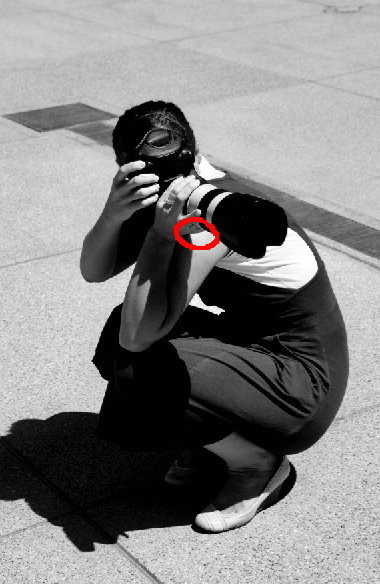
6. Cradle It

In this next image you’ll see that I created a sort of cradle for the lens between my shoulder and my wrist. I also stabilized the hold by balancing my elbow on my knee.
Avoiding-Camera-Shake-7

Well there you have it. That’s how I avoid “The Shake” (I’ve named him that because he’s like an evil monster who comes in and ruins my otherwise perfectly delicious images). Please share YOUR tricks and techniques in the comment section below, and as always. . .

Happy Shooting! – Get more daily tips like this one by subscribing to Digital Photography School

Further Reading on Camera Shake

  • How to Tell the Difference Between Camera Shake and Poor Focussing?
  • How to Hold a Digital Camera

Post originally from: Digital Photography Tips.

Check out our more Photography Tips at Photography Tips for Beginners, Portrait Photography Tips and Wedding Photography Tips.

How to Reduce Camera Shake – 6 Techniques


Digital Photography School

 
Comments Off on How to Reduce Camera Shake – 6 Techniques

Posted in Photography


Your smartphone camera: How many megapixels do you need?

20 Sep

megapixels.png

Megapixels. How did such a simple concept become so wrapped up in hyperbole, controversy and confusion? The current generation of premium smartphones includes a 4MP model from HTC, 8MP from both Apple and Google, 13MP from Samsung and LG, 20.7MP Sony and 41MP from Nokia. Surely they can’t all be right? We examine how many megapixels you really need on your phone, over on connect.dpreview.com.

News: Digital Photography Review (dpreview.com)

 
Comments Off on Your smartphone camera: How many megapixels do you need?

Posted in Uncategorized


Adobe releases Camera Raw 8.2 and Lightroom 5.2

17 Sep

shared:AdobeLogo.png

Adobe has released Camera Raw 8.2 and Lightroom 5.2, as final versions of updates that were originally posted as ‘release candidates’. ACR 8.2 is designed to work with Photoshop CC but, as promised, is also compatible with Photoshop CS6. It brings support for 16 additional cameras, including the Canon EOS 70D, Fujifilm X-M1, and Sony RX100 II, along with new lens profiles and big fixes. For users of older Photoshop versions, Adobe DNG Converter 8.2 is also now available. Click through for more details and how to download.

News: Digital Photography Review (dpreview.com)

 
Comments Off on Adobe releases Camera Raw 8.2 and Lightroom 5.2

Posted in Uncategorized


11 September, 2013 – Grading CinemaDNG in Lightroom, Camera Raw and Capture One

11 Sep

It hasn’t happened yet in still photography, but there is a growing movement to adopt a standardized raw format for video. It’s called CinemaDNG.

In my newest tutorial I show how these files can be processed in your favourite raw processing program; Lightroom, Camera Raw or Capture One. But – slowly.

Better alternatives are DaVinci Resolve (free up to 1920X1080), or better yet, the just announced update to Adobe’s Premier Pro CC, which will handle CinemaDNG files natively without the need for rendering or transcoding – coming October, 15.

Find out more about this is Grading CinemaDNG in Lightroom, Camera Raw and Capture One.

"Having been to Antarctica with Michael and Kevin, I would say after having traveled the world and shot nearly my entire life as an exhibiting photographer,  it was one of my highlights in my life and I talk about it, all the time.  The images and experience of seeing something visionary and nearly extinct from the world, to see and experience the wildlife and scenery that does not fear humans is amazing.  The images I shot there won me two Smithsonian awards and nearly 18 other international awards". – Tim Wolcott

 Find Out More Now
These Expeditions Will Sell Out Quickly. They Always Do


The Luminous Landscape – What’s New

 
Comments Off on 11 September, 2013 – Grading CinemaDNG in Lightroom, Camera Raw and Capture One

Posted in News


Rumors of inexpensive Fujifilm X-series camera hit the web

07 Sep

Fuji-X-A1-mirrorless-camera.png

Leaked details of a possible inexpensive Fujifilm X-series cameras have hit the web today. The camera pictured in the leaked images is apparently named the X-A1, and appears to be built around a 16MP APS-C CMOS sensor instead of X-Trans, but otherwise it looks pretty similar to the recently released X-M1. Other leaked details mention a 3-inch tilting LCD, Wi-Fi, and 5.6 fps burst mode. Click through to see what it (might) look like.

News: Digital Photography Review (dpreview.com)

 
Comments Off on Rumors of inexpensive Fujifilm X-series camera hit the web

Posted in Uncategorized


Ricoh unveils 360-degree, smartphone-controlled Theta camera

06 Sep

MAIN-CUT-THETA-front_back.jpg

Ricoh has unveiled their new Theta digital camera, which can take 360-degree panoramas with its two ultra-wide-angle lenses. The stylish and thin Theta can be controlled via your iOS device after you’ve downloaded the appropriate app. There’s no live preview of the photo you’re about to take, so you have to cross your fingers and hope for the best. If you’re using your smartphone to capture the image, the photo will be automatically downloaded to your mobile device. Click through for more details – and samples – on connect.dpreview.com.

News: Digital Photography Review (dpreview.com)

 
Comments Off on Ricoh unveils 360-degree, smartphone-controlled Theta camera

Posted in Uncategorized


6 September, 2013 – Blackmagic Cinema Camera First Impressions

06 Sep

Imagine if your DSLR, and indeed all affordable cameras had very small sensors, and could only shoot JPGs; highly compressed and in a limited colour space. Imagine if only very expensive medium format cameras could shoot raw with large sensors.

That’s been the case till recently in the world of video. Small sensors, no depth of field to speak of, restricted colour space, and baked JPG type images. Not a pretty picture – literally.

Now a small Australian company, Blackmagic, has a series of moderately priced cameras that can shoot raw video. We have been working with the Blackmagic Cinema Camera in MFT mount, and our First Impressions report is now online.

"Having been to Antarctica with Michael and Kevin, I would say after having traveled the world and shot nearly my entire life as an exhibiting photographer,  it was one of my highlights in my life and I talk about it, all the time.  The images and experience of seeing something visionary and nearly extinct from the world, to see and experience the wildlife and scenery that does not fear humans is amazing.  The images I shot there won me two Smithsonian awards and nearly 18 other international awards". – Tim Wolcott

 Find Out More Now
These Expeditions Will Sell Out Quickly. They Always Do


The Luminous Landscape – What’s New

 
Comments Off on 6 September, 2013 – Blackmagic Cinema Camera First Impressions

Posted in News


Sony reveals QX10 and QX100 camera modules for smartphones

04 Sep

QX100_Main1-1200.png

Sony has announced a pair of mobile photography camera/lens modules, the QX10 and QX100. Both units are essentially self-contained cameras that can be controlled by smartphones, using Wi-Fi. The QX10 features a standard compact-camera 1/2.3″ sensor and a 25-250mm equivalent zoom lens. The QX100 uses the 1″ sensor and 28-100mm equivalent zoom used in its high-end RX100 II compact. Both are NFC-compliant to make connection to some smartphones even easier. We’ve had both modules in the office and have had a close look – click through for more details.

News: Digital Photography Review (dpreview.com)

 
Comments Off on Sony reveals QX10 and QX100 camera modules for smartphones

Posted in Uncategorized