RSS
 

Posts Tagged ‘Camera’

Polaroid puts Snap Touch digital instant camera on display

20 Sep

Polaroid licensee C&A Marketing is showing an upgraded version of its original Polaroid Snap digital instant camera. The Polaroid Snap Touch adds a 3.5″ LCD touchscreen on the back of the camera for easier framing and control of the menus and settings. Images are captured on a new and improved 13 MP CMOS sensor and the new model is capable of recording 1080p Full-HD video. Images and video footage are saved on a microSD card up to 128GB in size. 

Remote connectivity through Bluetooth to the Polaroid Print app for iOS or Android allows for printing from other devices, such as smartphones or tablets, and the app also offers editing functions including a range of filters and digital stickers. 

As before, at the heart of the camera there is an integrated printer that uses using ZINK Zero Ink Printing Technology, allowing for 2×3” prints in under a minute. Up to ten images can be queued, so that you can keep shooting while printing is still in progress. Selfie shooters will appreciate the self-timer and a pop-up selfie mirror for easy framing.  The Polaroid Snap Touch is available in several colors and can now be preordered for $ 179.99. 

Articles: Digital Photography Review (dpreview.com)

 
Comments Off on Polaroid puts Snap Touch digital instant camera on display

Posted in Uncategorized


Fujifilm working on square format Instax camera and film

20 Sep

Fujifilm has announced that it’s developing a 1:1 format instant film and accompanying Instax camera for release in spring of 2017. The film itself will measure 85.6mm x 72mm, while the image itself will measure a square 62x62mm. That’s the extent of the information released at this point, though Fujifilm has created a teaser page for Instax Square.

Press release

New Square Format for instax Series
A new format that drastically enhances the potential of photographic expression of instax

PHOTOKINA 2016, COLOGNE, GERMANY, September 19, 2016—FUJIFILM Corporation (President: Kenji Sukeno) is pleased to announce that its next generation format “instax SQUARE format film” and “instax SQUARE camera” are currently under development.

With its 1:1 aspect ratio, square format photography is ideal for both portraits and landscapes, and has long been the format of choice for users enhancing their artistic expression. In recent times, the popularity of square format has increased to such an extent that it has become the de facto standard of smartphone cameras and timeline photos on social media platforms.

Fujifilm believes that the instax square format has the potential to drastically evolve the role and presence of instant photography. By adding this new format to the existing mini and wide, a new dimension will be added to the wealth of possibilities of instax photographic expression, users will have a wider choice, and instax cameras and films will be able to respond to a broader range of photographic subjects and situations than ever before.

In addition to the new square format film, a new camera which is able to fully express the attractions of square format photos is also under development. Further details are available at the below website.

instax SQUARE Special content (http://instax.com/square/)

Availability:
Spring 2017

Features:
“instax SQUARE format film”:
Image size: Height 62mm x Width 62mm
Photo size: Height 85.6mm x Width 72mm
“instax SQUARE format camera”: TBD

Articles: Digital Photography Review (dpreview.com)

 
Comments Off on Fujifilm working on square format Instax camera and film

Posted in Uncategorized


Opinion: The EOS M5 is Canon’s best ever mirrorless camera, and a big disappointment

18 Sep
Canon’s EOS M5 is a small, lightweight but powerful APS-C format mirrorless camera, which uses the same sensor and on-sensor phase-detection autofocus system as the EOS 80D.

By Barnaby Britton, Editor – DPReview.com

What a long, strange trip it’s been. Eight years have passed since Panasonic unveiled the Lumix DMC-G1, the world’s first DSLR-style mirrorless camera, and for much of the intervening time, Canon has appeared content to let its competitors lead the charge away from traditional DSLRs. In that time, mirrorless cameras have gotten faster, their sensors have gotten bigger and the introduction of 4K video has created a new class of genuine ‘hybrid’ products that have carved out a distinct technical niche compared to their DSLR forebears. 

Then-Chief Executive Masaya Maeda of Canon – pictured at the Photokina tradeshow in Germany, in September 2014. Mr Maeda has since been promoted to President and Chief Operating Officer at Canon Inc. 

In 2014, Canon’s then-Chief Executive Masaya Maeda promised us a serious mirrorless offering ‘in the very near future’, but until now, the closest Canon has come to delivering on this promise was the EOS M3. Canon has never seemed to know how to market the EOS M series*, and insisted at launch that the M3 would not be available in the USA even as Maeda claimed he was telling the his global divisions to “sell it!” Six months later, they finally decided that perhaps they should.

Now, a year after the EOS M3 belatedly entered the US market, we have the EOS M5 – the ‘4’ having being skipped over, possibly in deference to a rather inconsistently applied Japanese superstition. The EOS M5 is a fine product, and one that I think arguably represents Canon’s most sure-footed move in the non-professional space for years. But it is also a massive disappointment.

All Dual Pixel, all the time

Let’s start with the positives. The EOS M5 basically takes the still and video imaging pipeline from the EOS 80D, and puts all of that hardware into a smaller, lighter body with full-time live view. The 80D’s sensor is good – it’s not market leading, but it’s better in some respects than the sensors used in the 70D and 7D II – and despite the equal pixel count, better also than the 24MP sensor that found its way into the EOS M3.

I called out ‘full-time live view’ as a positive because perversely, one of the highlights of the EOS 80D’s handling experience is its behavior in live view mode, when on-sensor Dual Pixel autofocus comes into play. With the EOS M5, it’s all Dual Pixel, all the time, but without having to hold the camera out at arm’s length. All of this, plus the full-time touch-screen adds up to a really, really nice handling experience.

A schematic of Canon’s Dual Pixel CMOS AF sensor structure. The top layer illustrates the light-gathering micro-lenses and conventional Bayer-type color filter array. The lower layer shows how each pixel is split into two photo-diodes, left and right, which are colored blue and red respectively.

So why is the M5 such a letdown? Because this is the camera that Canon should have released at least two years ago, when Dual Pixel AF was first introduced in the EOS 7D II, and when the company still had a chance to really ring the changes in the mirrorless market.

We know that Dual Pixel autofocus is a serious differentiator, and if you’ve been paying attention to our coverage of Canon’s various high-end DSLRs for the past couple of years, you do too. And the M5’s touch interface is lovely. But unless they’ve held and used the EOS M5 (and with more chance of finding a Lapras** on the streets of your town than a dedicated brick and mortar camera store, a lot of people’s first experience of holding a new camera is taking it out of the box), DPAF isn’t the kind of function that’s necessarily going to grab the attention of a potential buyer. Like – say – 4K video might. Or a super high frame-rate mode, or slow-motion movie capture. 

This is the camera that Canon should have released two years ago

The EOS M5’s spec sheet suddenly becomes a lot more impressive if you comb through your memories of the APS-C market segment for the past couple of years, and mentally delete all of the entries under ‘Sony’***

Of course as we all know, specs aren’t the whole story. Luckily for Canon, handling and performance go a long way. The M5 probably shoots fast enough and well enough for most photographers, its 1080p video probably looks basically fine,**** and it’s very nice to use. Although recent Sony cameras have been loaded with an almost unbelievable amount of technology, shooting with one, whether it be an Alpha or a Cyber-shot can sometimes feel unpleasantly like playing chess against a supermarket self-checkout machine*****. Canon at least knows how to make cameras pleasant and uncomplicated to use, while many Sonys still feel like they were designed by the same user interface team responsible for this. If you don’t remember Sony’s late-to-market iPod competitor, don’t feel bad – nobody else does either.

In fact, despite its comparatively pedestrian feature set, given the choice, I’d take an EOS M5 out with me over a Sony Alpha any day of the week. But I really believe that this shouldn’t be an either / or thing.

I don’t think that photographers should be required to choose between a sensible, well-designed but feature-limited camera or a cutting edge, highly advanced but annoyingly fiddly one. For videographers who started out on EOS DSLRs this is a particularly irksome choice.

The Samsung NX1 was ahead of its time when it was released in late 2014, and even now, its spec sheet is remarkably competitive. One of our favorite cameras of the past decade, the NX1 was quietly killed off by Samsung, along with the rest of the NX lineup, late last year. 

Behind my nagging feeling of anticlimax with the M5 is a principle, which is this: Companies that take risks, and deliver new technology to as many people as possible should be given credit. And companies that do not should be held to account. Take the Samsung NX1 – an APS-C format camera so far ahead of its time that even now it has arguably yet to be bettered. In short, it was a vastly more capable camera than it probably needed to be. As such, the NX1 (which benefitted from an aggressive and effective series of firmware updates) encapsulated the best qualities of the company that made it, just as its premature discontinuation, along with the rest of the NX line, could be said to reflect the worst.

Companies that take risks, and deliver new technology to the market should be given credit

The EOS M5 is undoubtedly Canon’s best mirrorless camera yet, and at least in terms of core stills photography it should prove competitive against cameras like the Sony a6300. But as a former Canon user and a long-time Canon watcher, I can’t help feeling let down.

The Canon T90 from 1986 (left) and 1992’s EOS 5 (A2E in the USA). Both incredibly innovative, game-changing SLRs in different ways. And both released a very long time ago.

Canon, after all, is the company that first put a microprocessor into an SLR. It cemented autofocus as a professional feature, not a gimmick, and later created the first multi-point AF systems. Canon introduced optically stabilized SLR lenses, too. It was Canon that gave us the first large-format CMOS imaging sensor, the first sub-$ 1000 DSLR, and the first practical full-frame digital camera******. Hell, arguably the first practical digital cameraCanon is the company that created the still-gorgeous T90. And Eye-Control autofocus, for heavens’ sake, which – granted – didn’t always work, but still feels like science fiction******* even today.

How many of those innovations date from within the past ten years? Not one.

Before you jump to the comments section and start flaming me, I’m not saying that Canon has stopped doing cool things. That’s a common refrain of habitual Canon brand-bashers on DPReview, and one that I don’t agree with. Apart from anything else, it’s perfectly logical that in a maturing market, paradigm shifts will occur with less frequency. And let’s be fair here – Canon can, and does, innovate. If you take a look at Canon’s camera and lens lineup from PowerShot to Cinema EOS, it’s clear that the company is capable of formidable technical achievement.

For all that, many of Canon’s biggest contributions to the consumer digital imaging market in recent years have taken the form of iterative refinement, not wholesale reinvention. And in my personal opinion, this is a shame. Because reinvention used to be what Canon did better than anyone else.


* It’s a Pokemon thing. Ask your kids, assuming you can locate them. 

** Early press briefings on the EOS M were memorable for the unwavering insistence on the part of Canon’s PR team that the M was being marketed primarily to women and smartphone camera upgraders.

*** I write this in the full knowledge that there are some of you who do exactly that.

**** We shot an entire video with the EOS 80D earlier this year. It’s fine.

***** Try it. The machine will persist in maintaining that you didn’t make your last move, when you definitely did, and after going back and forth a few times making you pick up your piece and put it down again it summons a teenager to assist you. 

****** No, I’m not counting either the Kodak DCS-14n or Contax N Digital.

******* Eye Control AF was introduced in the EOS 5, in 1992, almost a quarter of a century ago. I like to think that if Canon had persisted with development we could be shooting with mind-controlled cameras by now. 

Articles: Digital Photography Review (dpreview.com)

 
Comments Off on Opinion: The EOS M5 is Canon’s best ever mirrorless camera, and a big disappointment

Posted in Uncategorized


How to Choose Your Camera Angle to Take Better Portraits

18 Sep

Taking portraits involves so many variables that it can feel overwhelming for a new photographer. What lenses do you use—zoom, prime, or a mix of both? Do you shoot full-frame or cropped sensor? Will you shoot indoors or outdoors. Even the subject matter can be tricky, with some portrait photographers working exclusively with families, others who only shoot high school seniors or newborn babies, and still more who do a mix of everything.

all-about-angle-husband-wife-outdoors

Nikon D750, 85mm, f/4, ISO 900, 1/250 second

While you are pondering all these variables it can be easy to lose sight of the forest for the trees and forget about a few key basics such as posing and lighting, and no matter what style of portraits you choose to pursue there is one thing that always comes into play which may not seem obvious: the camera angle from which you shoot. This can make all the difference between happy clients and complaining customers. Understanding how you can use camera angles and points of view can greatly enhance any portrait session.

Point of view – up high or down low

Understanding how your camera angle, or point of view, can affect your shots will go a long way towards improving not just your portraits, but your photography in general. How you position yourself in relation to your subjects can have a dramatic effect on the resulting pictures. As an illustration of how this works, here are two pictures of a family from a recent home-based session I did. Both show a very similar scene, and yet the different angles from which I shot them results in two vastly different images.

all-about-angle-family-indoors-low

Nikon D750, 35mm, f/4, ISO 5600, 1/90 second

As I shot the image above I was very low to the ground. Crouching down on my hands and knees, I got very close physically to the family while the mother and father watched the boys play with their sister. It feels like the viewer is part of the scene, right there with them as they all share a fun moment together. This is entirely due to the low angle from which the picture was shot. Now take a look at virtually the exact same scene but shot from high above.

all-about-angle-family-indoors-high

Nikon D750, 35mm, f/4, ISO 3600, 1/90 second

To get this picture I grabbed a dining room chair and stood on it to get a shot from a much higher angle. The result is a picture that feels quite different from the first one. It doesn’t seem like you are a part of the scene, but an outside observer looking at the family as they gather together.

While I like both images, each one creates a very different emotional response on the part of the viewer. Even though both were shot with the same camera and lens, at the same location, with the same subjects, the result is two pictures that are vastly different from one another all because of the angle from which they were taken.

Even subtle changes make a difference

You can see a similar, but more subtle, effect in this pair of portraits I took of a young girl near her birthday.

Shot with a Nikon D750 and 85mm lens.

Nikon D750, 85mm, f/4, ISO 800, 1/500 second

The angle here isn’t as low as the first one of the family, but it’s low enough to be on the girl’s eye level. To get this I had to kneel down and stand a few meters back as her mother talked with her from my right-hand side. It gives a similar sense of intimacy as the first picture of the family and feels as though the viewer is near the girl and part of the scene.

This changes a bit when the girl is shot from an adult’s eye level looking down (below).

all-about-angle-child-playing-high

Nikon D750, 85mm, f/4, ISO 560, 1/250 second

While the effect here is not as dramatic as the example with the family, you will still note a similar result in terms of emotion and tone. Instead of getting down on eye level I shot this while standing up about the same distance away. It doesn’t feel like you, the viewer, are a part of the scene and instead it seems like you are merely an observer. Notice how the sidewalks in the background cut across the frame at odd angles whereas in the first one the sidewalks neatly cross in horizontal lines, adding a subtle touch without being too obvious or gaudy.

Once again I don’t think either picture is necessarily better or worse, but both are quite different as a result of the camera angle.

Kids – break the rules

This is, incidentally, one of the most common issues I see with people who are taking casual snapshots of their kids, whether with a fancy DSLR or just their mobile phone. Taking a few seconds to crouch down and get on eye level with the children can make all the difference in the world between an intimate moment frozen in time, and a boring snapshot.

However, I don’t want to give the mistaken impression that shooting from a high angle is necessarily a bad thing. It can be a very good thing indeed, and quite effective when used intentionally, such as this image of a girl with her two-week-old baby brother (below).

Shot with a Nikon D750 and 50mm lens.

Nikon D750, 50mm, f/4, ISO 400, 1/125 second

This picture was a bit tricky, but the results were well worth it. I was doing this on location in the family’s home so I didn’t have a lot to work with, but I wanted to get something a bit unique. I put the two kids on a blanket on the floor, got a chair to stand on, and positioned myself directly above them while bouncing my flash off the ceiling.

It resulted in an image that feels more fun and playful as if the viewer is peeking in on a fun moment between the two siblings. The equipment here was nothing all that special (I could have just as easily used my old D7100 and 35mm lens to get the same shot) but paying attention to the angle made for a picture that stood out quite a bit from the rest of the image I shot that day.

Other camera angles to consider

Sometimes finding the right angle involves something as simple as choosing where to put yourself in relation to your subject, not necessarily whether to shoot from high above or down low. You can see this in the example below. After an hour of taking a variety of traditional portrait-style

After an hour of taking a variety of traditional portrait-style shots, I stood back while the family walked back to their car and took some pictures with the sunset casting a warm glow through the trees above.

Shot with a Nikon D750 and 85mm lens.

Nikon D750, 85mm, f/4, ISO 180, 1/400 second

There are some elements that I could do without, such as the tree branches coming from the left-hand side. But overall the picture feels warm, cozy, and conveys a sense of comfortable intimacy as if I have captured the family in a quiet and sincere moment. It puts you, the viewer, as an outside observer to the scene and almost feels like you are watching from afar as the family shares a special time together.

This is in stark contrast to the next picture, which despite being at a different location is composed in almost exactly the same manner except for one variable: the angle.

Shot with a Nikon D7100 and 85mm lens.

Nikon D7100, 85mm, f/2.8, 1/250 second, ISO 100

This picture feels like it’s full of energy, excitement, and enthusiasm as the family holds hands and walks towards me. I like both pictures quite well, but changing the angle resulted in two images that are vastly different from one another.

Summary

Hopefully, these examples give you an idea of how your camera angle and point of view can dramatically affect the types of portraits you take. If you are looking to try something new and kick your photography up a notch without spending any money on more gear, try doing something as simple as changing your angle and see what happens.

In fact, this now makes me wonder about your favorite tips and tricks for shooting portraits at different angles. Leave your thoughts in the comments below, and feel free to share pictures as well!

googletag.cmd.push(function() {
tablet_slots.push( googletag.defineSlot( “/1005424/_dPSv4_tab-all-article-bottom_(300×250)”, [300, 250], “pb-ad-78623” ).addService( googletag.pubads() ) ); } );

googletag.cmd.push(function() {
mobile_slots.push( googletag.defineSlot( “/1005424/_dPSv4_mob-all-article-bottom_(300×250)”, [300, 250], “pb-ad-78158” ).addService( googletag.pubads() ) ); } );

The post How to Choose Your Camera Angle to Take Better Portraits by Simon Ringsmuth appeared first on Digital Photography School.


Digital Photography School

 
Comments Off on How to Choose Your Camera Angle to Take Better Portraits

Posted in Photography


Leica Sofort instant camera officially announced ahead of Photokina debut

16 Sep

Following speculation that such an announcement was imminent, Leica has taken the wraps off its new Sofort instant camera, something photographers can use to ‘create small, haptic works of art and lasting memories,’ according to the company. The Leica Sofort features a fixed 60mm (34mm equivalent) lens with an F12.7 aperture, an integrated flash, eight operation modes, 1/8 to 1/400s mechanical shutter and a rear optical 0.37x viewfinder. In other words, it’s more than likely to be a re-badged Fujifilm Instax Mini 90.

The Sofort, which is set to make its first public debut at Photokina, will be available in mint, white, and orange colors. Users have eight operation modes to choose from: Automatic, Selfie, People & Party, Action & Sport, Bulb, Macro, Self-Timer, and Double Exposure. The integrated electronic flash includes the following four modes: Auto, Forced On, Forced Off, and Forced On w/Red-Eye Reduction.

The Sofort will launch this upcoming November alongside three different instant film pack options: a color film pack with 10 exposures, a color film double pack with 20 exposures, and a monochrome film pack with 10 exposures. The camera will also accept Fujifilm’s Instax mini film.

Several accessories will also be offered, including a range of carrying straps in black & white, mint, and orange colors; soft carrying cases in brown or black; the Sofort Photo Presenter for presenting photographs; Sofort Postcards 3-packs with support for attaching pictures; the Sofort Photo Album; and, finally, the Sofort Storage Boxes, which will be offered in sets of three with the following color combinations: white & black, orange & black, and mint & black.

Pricing information hasn’t yet been revealed.

Source: Leica

Articles: Digital Photography Review (dpreview.com)

 
Comments Off on Leica Sofort instant camera officially announced ahead of Photokina debut

Posted in Uncategorized


Leica-branded instant camera rumored to launch soon

15 Sep
via Leica Rumors

Leica might be set to announce its own version of one of Fuji’s instant print cameras in what looks like another re-badging exercise. The Leica Sofort (‘instant’ in German) camera was unofficially announced in the company’s Leica Fotografie International magazine, but isn’t due to be formally released until tomorrow – according to Leica Rumors. The camera appears to be a redesigned Fujifilm Instax mini 90 as it shares the same basic shape and lens, and it takes Fujifilm’s Instax mini film. Leica looks to have slightly altered the buttons and added some minor details, and has named the 34mm equivalent lens Automatik-Hektor 1:12.7/60mm.

via Leica Rumors

Leica will also reportedly introduce its own range of color and black and white films to go with the camera, which will almost certainly be repackaged Fujifilm materials. Fuji’s own film will also fit the Sofort.

Leica rumors expects the camera to cost €279 (approx. $ 310) with a choice of three colors. The Fuji Instax mini 90 costs €150/$ 150.

Articles: Digital Photography Review (dpreview.com)

 
Comments Off on Leica-branded instant camera rumored to launch soon

Posted in Uncategorized


This film camera is 100% 3D-printed, including the lens

13 Sep

3D modeler Amos Dudley has created a 35mm film camera using only 3D-printed parts, including a hand-and-machine polished resin lens. Called SLO, the finished camera is functional and can take photographs, albeit somewhat low in quality, demonstrating the successful construction of a fairly complex device using only 3D-printing technologies.

Dudley has detailed the creation process on his blog, explaining that SLO is made with some basic elements like a shutter, film cartridge, spool gears and an aperture plane among other pieces. In order to support future designs, Dudley made the lens and shutter as removable modules that can be swapped out for different ones. The camera supports 35mm film and uses a two-button shutter system that provides manual speed control based on how faster the user presses the button.

89590009

Once completed, the camera was used with Fujicolor Superia 400 film to take the photos above (click for the full set).


As expected, the lens was one of the harder elements to create, at first involving between 5 and 6 hours of hand polishing followed by polishing with a DIY motorized machine. Neither proved entirely sufficient, so Dudley dipped the resin lens in epoxy instead and cured it using UV lights.

Articles: Digital Photography Review (dpreview.com)

 
Comments Off on This film camera is 100% 3D-printed, including the lens

Posted in Uncategorized


Review: Inexpensive Time Lapse with the YI 4K Action Camera

12 Sep

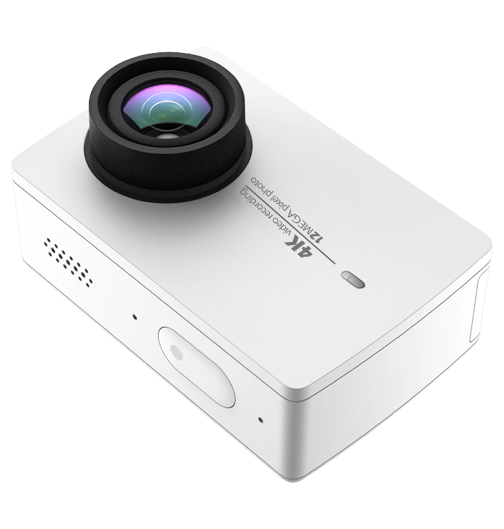
While this is essentially a review of a small action camera, that produces both stills and video, I’m going to focus on using the little YI 4K Action Camera, to kickstart your love of time lapse photography.

YI Technology – YI 4K Action Camera

Time lapse photography can produce stunning results that can inspire you to travel, to capture behind the scenes of your photographic projects, even as a great way to capture your holidays. Your week at the beach might only last a few minutes as a time lapse (as opposed to a couple of hours of video to make your friends sit through!) However you use it, there’s no denying it’s fun to use, and fun to try.

p15

Gear for time lapse photography

So, time lapse with amazing results requires a bit of gear, right? A camera that allows you to adjust your shutter and aperture. A trigger that allows you to set your camera to capture the time lapse, either indefinitely or for a certain period of time. If you want to take it further, you might look at something that allows you to have movement in your time lapse, rather than a static shot, just to add interest. (more on that, next article)

That being said, can you create a good enough looking time lapse, to start your journey into this fun and creative style of photography with an action camera? That’s the question I set out to find an answer to, with this latest hardware review.

I have a GoPro, it’s great! It’s the Hero4 Black, and it does time lapse, but it’s actually pretty expensive! Expensive enough, with some accessories and a spare battery, that you might actually consider just getting an entry level dSLR!

I also have a very brilliant Sony Action Cam 4K. Again, a spare battery and you’re up over half a grand. So, looking at options, I once again find myself wading into the “not really brand name” manufacturers of the lesser known! Enter YI Technology YI 4K Action Cam. There are a handful of reviews popping up online for this little camera, and most I’ve read or watched are positive. I’m not going to talk about the whole video side of the unit much, though it produces decent quality 4K footage for the price tag. This review is all about the camera’s time lapse ability.

p13

The specs in brief are as follows:

  • Main Processor – Ambarella A9SE chipset, includes a 800 MHz dual-core. Cortex-A9 ARM CPU and a high-performance digital signal processing (DSP) subsystem with a 32-Mpixel image sensor pipeline (ISP), and an advanced H.264 encoder capable of 4K resolution.
  • Image Sensor – SONY IMX377, 1/2.3″, 12 megapixels CMOS image sensor with Exmor R ability.
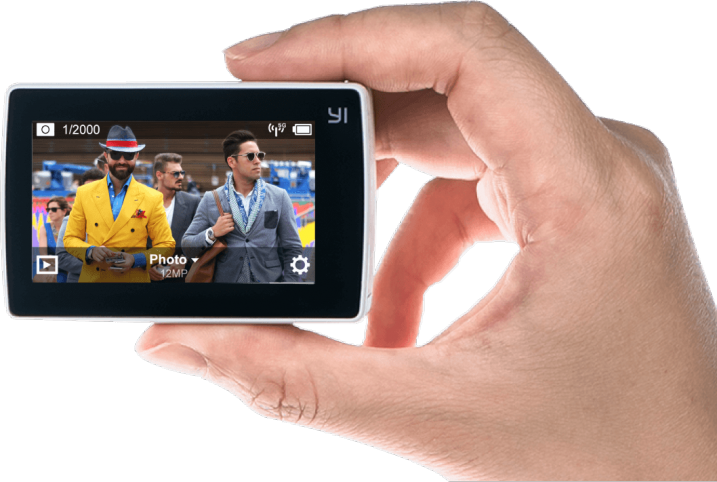
  • LCD Screen – 2.19″, 640×360 resolution touch screen, 330PPI, 250cd/m2 brightness, 30FPS, 160° FOV, 16:9.
  • Lens – Lens f/2.8 aperture / 155° wide-angle lens, 7G, f=2.68mm.
  • Wi-Fi – Broadcom BCM43340 Dual-band 5GHz /2.4GHz, built-in (802.11 abgn), offers 30Mbps download speed.
  • Weight – 3.4 ounces camera + battery (96.4 grams).
  • Size – 65 x 42 x 30 mm.

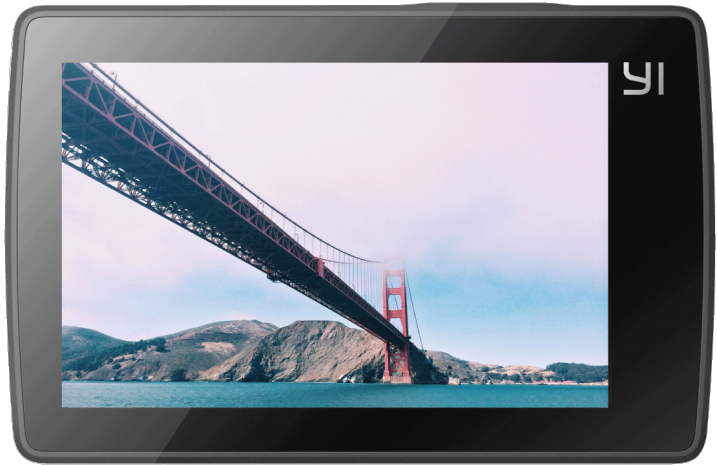
Said to have a Gorilla Glass rear touch screen, and I’ve got to say, that it’s actually useable! Responsive and clear, and also quite good at playing back your Time Lapse sequence on the camera.

Yi-4K-ActionCam-Review-Time-Lapse-Simon-Pollock-Gtvone

What’s it like to work on your time lapse creation with the YI 4K?

It’s actually very simple, there’s a touch screen rear display (as per above) and you simply tap it, select time lapse (either photo or video version of time lapse), dial in some adjustment, and press the go button! Now, the unit saves the time lapse in one of two formats, you may have noticed I said “Photo or Video time lapse” above, which is basically the output you get when you select either. In video time lapse mode, you get a single file at the end of your sequence, with photo time lapse you get the time lapse movie as the individual images.

There are benefits to both. With the video version of the sequence, you get a simple video at the end, that you can directly upload and share with your friends. The downside of this is that if you get a dodgy image (bird flies across, a drastic light change, etc.) in the middle of your time lapse, with the photo version you can simply delete the offending frame and you’re good to go. In video mode, you would need to edit that frame out with a video editor of sorts. Keeping in mind you may lose a little continuity in your time lapse if you delete more than a couple of frames, and you’ll see jumps.

I’ve made a quick example. At 1:03 in this video mode time lapse, someone over my back fence switched on their outside light and the white balance (auto, in video time lapse mode) jumped a gate and ran off into the hills! Take a look, you’ll see what I mean. It’s only 4 frames and I could edit it out, but left it in to show you what I mean. In photo time lapse mode, you can preselect the white balance and this wouldn’t have happened. My sweet darkening purples changed to blue.

Does the YI 4K work as an entry level time lapse camera? Absolutely it does, and with better specs than the current GoPro Hero 4 Black, it’s a decent little all-round package if you want something less expensive to document your photoshoots with too.

Conclusion?

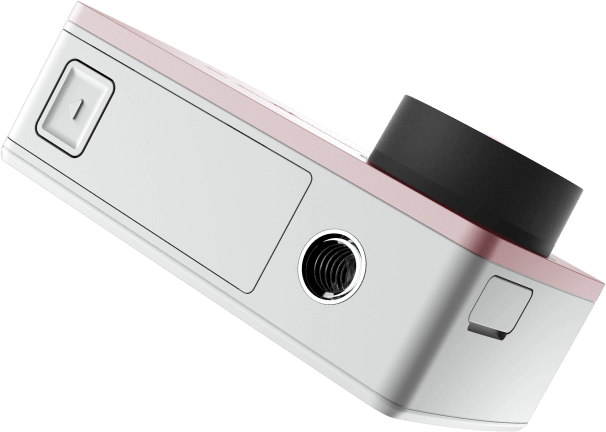
I really enjoyed using the YI 4K as I call it. It’s easy to use, produces a good result, and is very well priced for what you get. One other thing I really like is the inclusion of a 1/4 20″ metal tripod mount in the bottom of the camera. So, you can stick a tripod plate on it, or screw it straight onto a light stand for use on set, or just to get your YI4K up high for a time lapse.

I’m not about to bin my GoPro or Sony Action Cam, but there is rumoured to be a GoPro 5 dropping sometime very soon – we shall see how they stack up.

p6

What I like about the YI 4K Action Camera:

  • Simple iOS app to change all settings on the YI 4K.
  • Good quality images from an Action Cam.
  • Multiple options for time lapse (Video / Stills).
  • Fantastic touchscreen included in device by default.
  • Good battery life.
  • Tripod mount on the camera.

What I’d like to see improved:

  • More standard accessories

I’m not really thinking I should give this a star rating as I’ve really only used it for time lapse, but if I were to give it a rating, it’d have to be a 4.5 out of 5 I think! Good job, YI Technology.

googletag.cmd.push(function() {
tablet_slots.push( googletag.defineSlot( “/1005424/_dPSv4_tab-all-article-bottom_(300×250)”, [300, 250], “pb-ad-78623” ).addService( googletag.pubads() ) ); } );

googletag.cmd.push(function() {
mobile_slots.push( googletag.defineSlot( “/1005424/_dPSv4_mob-all-article-bottom_(300×250)”, [300, 250], “pb-ad-78158” ).addService( googletag.pubads() ) ); } );

The post Review: Inexpensive Time Lapse with the YI 4K Action Camera by Sime appeared first on Digital Photography School.


Digital Photography School

 
Comments Off on Review: Inexpensive Time Lapse with the YI 4K Action Camera

Posted in Photography


Tiny Atlas Solas ‘casual’ waxed cotton camera bag is lightweight and durable

10 Sep

Tiny Atlas Quarterly, a travel publication, has launched a new multipurpose camera bag, Solas, on Kickstarter. The Solas bag is made from waxed cotton canvas, making it both lightweight and durable, designed to be carried as an arm tote, a backpack or a shoulder bag. The Solas bag measures 17in / 43cm high and 11in / 28cm wide, while the accessories bag measures 8.7in / 22cm by 8.7 / 22cm and the lens pouch measures 6.7in / 17cm wide.

Solas is rain-resistant thanks to its waxed canvas exterior; it also features a pair of air-mesh organizer pockets and an internal key leash. The bag’s trim includes vegetable leather paired with metal buckles. An internal protective foam compartment is built-in for carrying cameras, while a padded sleeve can accommodate up to a 13-inch laptop. Additionally, Tiny Atlas says its bag features a cushioned internal frame for further gear protection.

The bag is offered in three color schemes: Natural + Yellow, ‘Color Block,’ and Black. Tiny Atlas has reached and exceeded its $ 14,000 funding goal on Kickstarter, where it offers backers an early bird bag for $ 175, among other pledge options.

Via: Kickstarter

Articles: Digital Photography Review (dpreview.com)

 
Comments Off on Tiny Atlas Solas ‘casual’ waxed cotton camera bag is lightweight and durable

Posted in Uncategorized


5 Critical Mistakes to Avoid When Buying New Camera Gear

05 Sep

The day you’re finally in the market for a new camera gear is certainly an exciting one when you’re a photographer. Visions dance in your head of all the killer shots you’ll be capturing with a sleek new set-up. You get excited about finally having gear that not only meets your current needs, but that you can grow with into the future as well.

However, it goes without saying, that the buying process can be daunting to say the least. There’s a lot to choose from out there! You want to make absolutely sure that what you buy is actually worth the investment you’re about to make.

Buying New Camera Gear mistakes

In this article I’ll go over some of the most important (and most common) mistakes to avoid when shopping for a new camera or any other piece of photography equipment.

Mistake #1. Taking advice from the wrong person

It’s normal, and wise, to ask for other people’s advice before you finalize a major buying decision. However, it’s important to get it from the right sources. It’s not enough for someone to simply sound like they know what they’re talking about.

Do they actually know what they’re talking about? Is this someone that really knows their way around a camera, and could be considered an expert when it comes to photography gear? Do they actually understand all of the features associated with the item you’re shopping for well enough to have an informed opinion? You should be able to say “yes” with assurance to all of these questions. You need to make sure the person actually understands your unique needs, and the many ways they might differ from theirs.

Buying New Camera Gear mistakes

I need this camera for the work I do, but you may not need one so large. Get what’s appropriate for your needs.

Avoid buying anything just because another photographer you know has one, or because all the online reviews say it’s the one to have. Definitely don’t buy on the say-so of one person, who may or may not really understand photography. Ask for advice from trusted experts and take it for what it’s worth – a great tool that can help you make a decision. Even the best advice isn’t a proper substitute for research and careful comparison shopping.

Mistake #2. Assuming quality is equal to price

Yes, good quality gear should be considered an investment. It’s most definitely a purchasing decision that should be made with care, especially if you’re a professional photographer or hope to become one. However, it’s important not to simply assume that a higher price tag automatically equals a better item.

Buying New Camera Gear mistakes

Do your research and due diligence.

Even if money isn’t personally an issue for you, paying more money doesn’t guarantee that your purchase will actually meet your needs. It doesn’t guarantee you the spectacular photos you’ve been dreaming about either. Even great photography equipment is only going to be as good as the person actually taking the photos.

Focus less on the price tag, and more on whether or not a given item is right for you, especially when buying a camera. Does it fit your current skill level? Are you familiar with all of the functions and tools it comes with? According to your research, is it a good fit for the type of photography you do? Lots of bells and whistles, and tons of different settings won’t do you any good if you either won’t use them, or don’t understand them.

Buying New Camera Gear mistakes

Mistake #3. Failing to budget properly

Proper planning is the key to success when it comes to many endeavours, and shopping for a new camera or photography gear is no different. A big part of that is budgeting, and there are a number of ways people can stumble in that arena.

Many drastically overestimate what they’re likely to get in exchange for their money. An outrageously expensive camera won’t magically allow a beginner to somehow start pulling off National Geographic quality images. Nor will world class photography skills make up for a cheap camera, that’s incapable of taking professional quality pictures.

Buying New Camera Gear mistakes

A lot of shoppers also fail to factor the full cost of all the accessories they’ll need into their budget. Okay, so you did your homework when it comes to the camera you’ll need in order to take your landscape photography to the next level. But, did you also remember to consider the lenses you’ll require? What about the batteries, tripods, memory cards, and everything else? It’s important to be thorough from the get-go.

Mistake #4. Becoming distracted by bargains and specials

So you’re finally ready to walk into the photography shop and make your purchases. You’ve done your homework. You’ve figured out which camera is right for your needs, both present and future. You’ve even picked out the accessories and other tools you’ll need to go with it. You’re sure you know exactly what you’re looking for.

Buying New Camera Gear mistakes

Then you get inside, and see all the signs advertising special deals on this, and bargain pricing on that. Do you lose your focus, or do you remind yourself that item isn’t really what you went there for? Hopefully it’s the latter.

Never buy any piece of photography gear just because it’s displayed under a flashy sign, or a salesman insists that it’s what you really want. If something sounds way too good to be true, it probably is. Keep your eye on the prize, and make sure you walk out of that shop with what you actually need.

Mistake #5. Not being realistic enough

Buying New Camera Gear mistakes

Most of us entertain really big dreams that we hope will come true someday, when it comes to our interest in photography. However, it’s important to ask yourself whether those dreams are realistic as far as the near future goes, before you actually sink your money into them.

Are you brand new to photography, but already picture yourself traveling the world, making big money as a travel photographer within a couple of months? Are you shopping based on a desire to jump straight into professional photography with a ton of new, expensive gear, even though you’ve never used anything more complicated than the Instagram app on your iPhone?

Buying New Camera Gear mistakes

Make sure you’re not getting ahead of yourself when it comes to what you think you’ll accomplish, by spending lots of money on new camera gear right now. Shop according to what your needs and skill level are currently, not what you’re hoping they’ll be “someday”. You’re that much more likely to be happy with your purchases not only now, but in the years to come as well.

If you have any other gear buying tips, please share in the comments below. What is your though process?

googletag.cmd.push(function() {
tablet_slots.push( googletag.defineSlot( “/1005424/_dPSv4_tab-all-article-bottom_(300×250)”, [300, 250], “pb-ad-78623” ).addService( googletag.pubads() ) ); } );

googletag.cmd.push(function() {
mobile_slots.push( googletag.defineSlot( “/1005424/_dPSv4_mob-all-article-bottom_(300×250)”, [300, 250], “pb-ad-78158” ).addService( googletag.pubads() ) ); } );

The post 5 Critical Mistakes to Avoid When Buying New Camera Gear by Destin Sparks appeared first on Digital Photography School.


Digital Photography School

 
Comments Off on 5 Critical Mistakes to Avoid When Buying New Camera Gear

Posted in Photography