Sony has announced that it will be branching off its audio and video departments into a separate subsidiary. Sony previously spun off its VAIO PC business one year ago, and the creation of new departments aims to make the company into a profitable entity. Read more
Tag: Business
-
3 Questions to Ask Yourself When Starting a Photography Business
I have met a lot of people who, upon getting their first DSLR, immediately want to start taking pics of their kids, their friends, some high school seniors, or maybe even a wedding. They want to dive headfirst into the deep end of the photography pool, even if they aren’t entirely sure what they are doing. For the record, I fully support this! Experience can be the best teacher of all, and even if the stakes are high like a wedding or graduation, I admire those who can throw caution to the wind and jump right in, even if they may be a bit unprepared.

That sense of excitement and wonder, as well as a willingness to try new things and experiment with your equipment, is something that tends to wane as the years go by and so many cameras start gathering dust on closet shelves. It’s this sense of newness and enthusiasm that, in my opinion, is missing from some of the more seasoned photographic veterans that I visit with from time to time.
However, if you are one of those individuals with a new camera who just can’t wait to start snapping photos of friends and family, and maybe even create a Facebook page for your new photography side project – I would advise you to pause and consider a few questions first. This will help ensure that you are getting your photography business started on the right foot and setting yourself up for long-term success, not just a few bucks on the side and some clicks to your website.
1. What does my client expect?
“Wait a second,” you might be saying to yourself right now. “These people are my friends and family…not my clients!” While this might be true, if you don’t start seeing the people you photograph as clients, you might find it hard to separate your personal relationships from your professional side as you get more established in your craft.

The first thing you need to square up are their expectations of what you will provide. Everyone you photograph, whether it’s people you have known your whole life or new clients who found your website or social media account, will have a unique set of expectations for what their photography session will involve. Aunt Ginny might think you will take some tasteful outdoor pics like the ones her sister posted on her Instagram. Your buddy George might want some indoor studio photos of his kids like the ones he saw at an art fair downtown last weekend. Someone named Rachel, who emailed you from your website, would like you take bridal photos like the ones she saw in a wedding magazine. Meanwhile, your own personal style is more suited to newborns and infants since you are not very comfortable directing people and telling them what to do during a photo session.
That’s just the beginning! If you don’t know what these people are expecting, they will likely walk away less than satisfied, even if you think your photos of them are beautiful.
Setting expectations for success
One of the best ways you can manage your clients’ expectations is to provide them with some existing images that showcase your overall style and approach. Plan on giving your clients some examples of the types of photographs you take so they know whether or not you will be a good fit for what they want. You can also visit with them over email, social media, phone, or in person to make sure you can provide the types of photos they are looking for.

If you do not already have a portfolio to show potential clients, you can enlist the help of some friends and family specifically for this purpose–but again, remember to manage expectations. If you take this approach, the goal is to get pictures that you want, not necessarily what your models want. Make sure the people you are photographing in these situations know that they are doing this to serve you and your needs, and if they do happen to like the pictures you take then you could reciprocate by doing a session for them in the future.
The flip side of knowing what your clients expect is making sure that you understand your expectations, which is just as important. Do you want to take photos that are posed or candid? Will you travel outside of your community, and if so, will you charge a fee? Do you plan to do extensive edits after the shoot, or are you the type of person who prefers to shoot in JPG and not alter things afterwards? Will you photograph major life milestones like weddings, if given the chance, or do you prefer more subdued scenarios like casual family photos?
Of course one of the best ways to mitigate any potential problems is to have a contract in place so you can make sure you and your clients are both on the same page. At this point you might be thinking “Why does it have to be so complicated? I just want to go out and shoot photos.” This might all seem like it’s a big hassle, but if you don’t spend some time considering your expectations as well as those of your clients, you are likely going to end up with far worse problems sooner than you think.

Being clear on exactly what this young man wanted, as well as what I would do, helped make this high school senior photo session go smoothly.
One of the most painful experiences you can have as a photographer is when your clients are unhappy with their photos. Usually, but not always, this is a result of mismanaged expectations. They were wanting one thing, and you delivered something else. By making sure you understand what your clients want, whether they are family, friends, or perfect strangers, you will make great strides in not only providing the best photos possible, but building long-term relationships that will keep them returning for pictures in years to come.
2. Can I make my camera do what I want it to do?
There is a strong temptation when you first upgrade to a DSLR to put it in Auto and expect your photos to be amazing. To some degree, that can certainly happen–the Auto mode on modern cameras does a good job of getting things like exposure and white balance right, but this is only a small part of the total photographic equation. As a photographer you need to spend time learning not only about the basics of exposure, but how to control your camera in such a way so as to make it do what you want.
Knowing how various f-stops affect the image is one thing, but knowing how to quickly change the aperture while in the middle of a photo shoot is another thing entirely. Less expensive cameras like the Nikon D3300, Canon Rebel T3i, and Sony a6000 are, in many aspects, just as capable as their more expensive counterparts. But many of them require you to use various menus and multi-purpose buttons to change settings instead of having dedicated buttons for things like ISO, White Balance, etc.
I know it sounds elementary, but reading the manual for your camera is a great way to familiarize yourself with its capabilities. Make sure to have your camera in your hands while doing this so you can start to learn not only what your camera can do, but how to make it happen. As the saying goes; practice, practice, practice. If you’re in the middle of a shoot and you need to quickly change from matrix to spot metering, or do some bracketing in order to get the proper exposure, you don’t want to waste time fiddling with buttons and menus while the moment passes before your eyes.

Popular entry-level cameras like the Nikon D3200 have many advanced functions, but their lack of dedicated buttons and dials requires you to use menus to access them. Make sure you know how to do this before doing a photo session.
As an example, I recently spent some time with my father who is an avid photographer, and throughout the course of our conversation we got to talking about off-camera flash techniques. He shoots with a Rebel T4i, and through some experimentation we discovered that it is capable of triggering an off-camera flash with the built-in pop-up flash. We both thought this feature was reserved for Canon’s more expensive cameras, and he was delighted to find out that he would not need to purchase wireless triggers for photo sessions that require off-camera lighting. The moral of the story is that your camera can probably do more than you think, but it requires some research, experimentation, and the courage to move away from the convenient Auto mode.
With a little practice, you will start to figure out the many capabilities your camera has, and how to use them on photo shoots. If you are trying to achieve a particular look or style when shooting photos for clients, you might not need to buy any new gear at all–you just need to make sure you know all the details of operating what you already own.
Of course it’s also entirely possible that your camera, lenses, or other gear can’t do what you want them to do. Your creative vision and goals for a photo session might be far beyond the reach of what your setup is capable of achieving, and you might discover that in order to fulfill your, or your client’s, wishes you will need to spend hundreds or even thousands of dollars on equipment. But remember the old adage; knowing is half the battle.
You might not need to get any new camera gear in order to pull off a particular photo shoot–you might, instead, have to simply adjust your expectations and make sure to communicate with your client about it as well. Even a DSLR with a basic kit lens can do many things, but there are some limits. Knowing them before you are on location or in a studio with a client will help ensure you can get the most out of what you do have.

Canon’s popular 70-200mm f/2.8 lens is an outstanding workhorse, but costs as much as several less-capable lenses. You might discover that you need to spend money on equipment like this, but it’s also possible that you can get by with what you already own.
3. Am I prepared for the long haul?
It’s such a thrill to start taking photos for other people, and in a way I envy all you new photographers who are reading this while pondering the incredible opportunities in front of you. But if this is you, I would advise you to take a step back and spend some time thinking about your long-term goals so you have a better understanding not only of what you want, but what you will be able to do for your clients.
As you take on more jobs and word begins to spread, you might find yourself becoming far too wrapped up in what was once just a fun hobby. Planning for sessions, re-shooting when things don’t work out, investing in new gear, and spending hours editing and fine-tuning in Lightroom or Photoshop are not the sorts of activities people usually have in mind when they start to get into photography as more than just a simple pastime. But all these elements (and many more) will ultimately become factors in how you approach your photography, so it’s important to think about them upfront.
Before you start spreading the word to your friends about your newfound photography venture, spend some time considering all the other elements besides just taking photos that will come into play as the months and years go by. It’s entirely possible that a month or two down the road you might find yourself dreading the editing process, but so many people like your photos that you are getting dozens of requests for photo sessions. This would put you in a bit of a bind, enough so that you might be tempted to toss your camera aside and wish you had never even started taking photos in the first place!
Considering right upfront whether you are prepared to do this over the long run will help you deal with these situations if and when they arise.

Photography can be a lot of work, but it can also be a ton of fun. And it’s such a good feeling knowing you can capture moments that people will have with them for the rest of their lives.
Of course the flip side of all this is that you might be positively giddy at the prospect of meeting with clients, taking photos, editing them, and all the other activities that are involved with photography. But, no one notices. Months go by without getting any clients or photo opportunities and you could find yourself wondering why you bothered to even do this in the first place. Again, you need to have a plan for how you will deal with these types of situations, and figure out if you really are in this for the long haul. The truth of the matter is everyone has their ups and downs, with periods of frantic activity followed by long stretches of finger-tapping. If you spend time thinking about how you will deal with both of these extremes and everything in between, it will help you set yourself up on the road to success from the very beginning.
Of course these are just three questions to consider, and I feel as though we have barely touched the surface. What about you? Are you a seasoned pro with some advice to people just starting out, or are you just beginning to think about doing more with your camera, but wondering what to do? Leave your thoughts in the comments below.
googletag.cmd.push(function() {
tablet_slots.push( googletag.defineSlot( “/1005424/_dPSv4_tab-all-article-bottom_(300×250)”, [300, 250], “pb-ad-78623” ).addService( googletag.pubads() ) ); } );googletag.cmd.push(function() {
mobile_slots.push( googletag.defineSlot( “/1005424/_dPSv4_mob-all-article-bottom_(300×250)”, [300, 250], “pb-ad-78158” ).addService( googletag.pubads() ) ); } );The post 3 Questions to Ask Yourself When Starting a Photography Business by Simon Ringsmuth appeared first on Digital Photography School.
-
How to Form a Band of Cheerleaders for Your Photography Business
Let’s take a walk down memory lane with the song “One” written by Harry Nilsson. It was made famous by Three Dog Night in the late 1960’s. The song is particularly renowned for it’s opening line :
“One is the loneliest number that you’ll ever do.
Two can be as bad as one.
It’s the loneliest number since the number one.”I believe there is a lot to be learned from this song. The core message being, don’t go through your life without any social interaction. I am not taking about your Facebook fans or your Instagram followers, but of the actual social connections you make among the people you interact with on a daily and weekly basis. As humans we all crave connections and contact with others. Sad as it may seem, we photographers, in general, are introverts. For the most part, we love to hide behind the camera – one eye looking through the viewfinder and the other closed to the outside world. It can certainly get very lonely and depressing.
We all know and understand the value of friends and co-workers. However, often times we tend to only gravitate towards like-minded people or those in the same profession. I am not undervaluing the importance of having friends in the industry. Personally, I have a select group of fellow photographers whose opinion I really value, appreciate, and am honored to call my friends. Some are local to me while others are through an online community – we not only talk shop but also talk about our families, our kids, and even send holiday cards to each other . But I find it mentally stimulating when I interact with people from many other professions – either related to my genre of photography (weddings and family portraits) or of a completely different field. Trust me, they all are invaluable in your growth as an artist and as a professional.
Here are some tips on how to form your own sphere of influencers and well-wishers for your own personal and professional growth. Some of these tips may seems very technical or business-school like, but are actually very simple to follow and implement for your photography business.
#1 Conduct a social network analysis
As per Wikipedia, Social Network Analysis is the study of network theory in a social analysis. Quite simply, network theory is the study of connectivity among different entities. In a social scenario, it is the mapping of “Who do you know?” also known as, “Who are your friends?” and “Who are your friends’ friends?”. Social media platforms like Facebook and LinkedIn actually have the underlining structure built already. When you friend someone, you can immediately see if you have any common friends or business acquaintances. Use your social media accounts as a starting point and map out who you know, and who those people know. Go as deep and wide as you can without getting confused or lost!

By Kenneth Freeman
#2 Narrow down your sphere of influencers
Once you have documented your social network analysis, narrowing your sphere of influencers is fairly easy to do. Look to your key friends, well-wishers and family as a starting point. Are there some people who are more invested in you than others? Distinguish those in some way. Are there people who are in the same field as you? What about completely different areas of expertise?
As a photographer, I love colors. A tip that works for me is to color coordinate the different groups. Warm colors like red/orange are people who are in my immediate circle (my core circle of trust). Cool colors like blue/green are people who are important but not as much as my sphere of direct influencers. Neutral colors like brown/peach are acquaintances. Also find a way to distinguish between local connections and online connections. Another tip is to keep your photography and business goals in mind while analyzing your network. This could help you focus on connections and contacts that could help you achieve your specific goals.
#3 Invest in meaningful engagement
Now that you have completed the technical part, take the time to engage on an emotional level. Connect with people with genuine intent. Take time to get to know the people you want to connect with. Find commonalities – either common interests, or common friends. Ask your friends to provide an introduction.
I cannot tell you the amount of times I have gotten a random friend request from someone – with or without mutual friends. If I don’t know you at all, chances are I am not going to respond. However if you send me an email, introduce yourself and let me know a bit about you and what exactly you want from the reach out, I am more likely to send a response back. Give me a reason to want to connect with you.

#4 Work out a mutually beneficial arrangement
Among the connections you make, some will be social, while others will be purely business and professional. That’s perfectly okay. You cannot be friends with the whole world, but you can certainly be cordial and pleasant with everyone you meet. When you are interacting with a vendor or a business peer, keep it professional and ensure that it is a mutually beneficial agreement. If you are reaching out to a small clothing boutique to do a styled shoot, ensure that you provide them with images from the shoot that they can use to promote their work. If you are asking acquaintances to model for you, provide them with images that they can use however they see fit. My personal rule is to provide watermark-free images, but to ask for image credit when they post the images online.

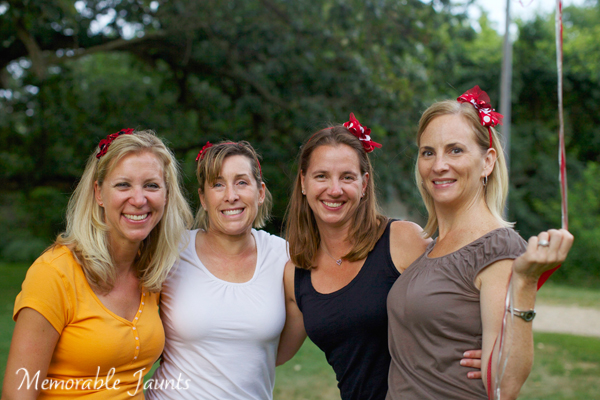
Invest in a core group of friends and wellwishers
#5 Give more than you receive
This one ties in with #4. Don’t forget to thank people for their time and effort – either for promoting you or for helping you in some way. Just because the job is done, does not mean you forget about them and move on. Keep in touch and keep the connection strong. You never know when you may need to reach out to them again. Make sure that your cheerleaders remain your advocates for a long time.
I know what you are thinking. Shouldn’t something like friendships and relationships come from the heart? Does it really need to be plotted and mapped like a cross-country road trip? There really are a lot of benefits to doing just that. We all know that time is limited, and often time is more valuable than money itself. So, why not use that time wisely? When you are strapped for time, engage in relationships that bring the most value. I am not equating value with money or business. Value is a very personal choice and decision, and can mean whatever you choose to matter most to you – true connections, selfless relationships and/or business transactions.
How do you build your team of cheerleaders? Please share in the comments below.
googletag.cmd.push(function() {
tablet_slots.push( googletag.defineSlot( “/1005424/_dPSv4_tab-all-article-bottom_(300×250)”, [300, 250], “pb-ad-78623” ).addService( googletag.pubads() ) ); } );googletag.cmd.push(function() {
mobile_slots.push( googletag.defineSlot( “/1005424/_dPSv4_mob-all-article-bottom_(300×250)”, [300, 250], “pb-ad-78158” ).addService( googletag.pubads() ) ); } );The post How to Form a Band of Cheerleaders for Your Photography Business by Karthika Gupta appeared first on Digital Photography School.
-
6 Steps to Growing Your Photography Business Using a Recommended Vendors List
In this article I talk about a technique used in all types of business, but of course will relate it to photography. To make it easy to understand, I am going to discuss the technique specifically for wedding photographers. But it is important to know that the technique you will learn in this article can work for any type of photography niche or genre.

Utilizing a business partner vendor list to grow your business
How so? By creating something of value to offer website visitors, which will in turn get them to give you their name and email address. When someone offers you contact information in exchange for something of value, they are now considered a lead. From there you have the potential to convert that lead into a paying customer.
Let’s break it down piece by piece. I’ll start with a list and then talk about each individually:
- Create a PDF document that is attractive to your potential customers. This PDF is intended to act as a conversion tool – a free offer.
- The offer utilizes a business partner vendor list by recommending preferred and partner vendors. This helps add more value to the download and also improves the relationship between you and the vendor.
- Create a way for site visitors to enter their contact information on a landing page, a magnetic spot like blog sidebars, or a pop-up box.
- Capture emails of website visitors, which then turn into quality leads (because they downloaded something specifically for their intention of hiring a photographer).
- The vendors included in the document are also likely to further promote the document.
- You now have huge potential of converting those leads into customers, via phone calls and email marketing.
Now let’s get into the nitty-gritty of each of those points. As mentioned earlier, this is geared to wedding photography. So if you are not a wedding photographer, take all I am saying and relate it to the type of photography you do.
Step one – create a PDF
The first step is to come up with a PDF document which you can offer for free on your website. Ideally it will contain everything that your potential customer would need to know about planning a wedding. It’s important that the document is branded to your business, and has an attractive design overall. You can use your letterhead (with logo of course), or a pre-made design for the task at hand (which I have made available) or templates from Keynote or PowerPoint. The important part is that your branding is in the design and that it won’t turn people away by looking unprofessional.

Step two – utilize your list
Inside the PDF categorize it for different types of vendors. You may have a page of florists, and another for wedding venues that you recommend. Ideally make each a two-page spread if possible. One page would provide the information on the vendors, and the other page would contain your photography examples related to the vendor. Think of it like a portfolio of your best work combined with your recommended vendor list.
The beauty of this is that you are getting your photographs in front of couples planning their wedding. Your brand is there as well vendors, which the couple might also hire.
Step three – create the opt-in
Next up is creating a way convert website visitors into leads. This is a bigger section due to the complexity. By this point you will have already created the PDF, which leads will download. But the process of gathering the email addresses confuses many people.
The first step is to use an email marketing service like Mailchimp or Aweber. Both are fantastic. I personally use Mailchimp for its ease of use and pricing.
Both services offer a feature, which can automatically send emails based on certain actions. In Mailchimp it is called Automation, in Aweber it’s called Follow Up Series. There you will set up an automated email, which will be sent to anyone who signs up for the “Free PDF” list that you will have created. Definitely name the list something you will recognize immediately when logging into your account.
These services allow you to attach a PDF to an email, which is what I recommend. But if you are using a service that does not allow attachments then create a Dropbox or Google Drive link and include that in the email.
This is where the fun part starts. There are many places where you can place what’s called an opt-in form. That means, a form which asks a website visitors for a name and email address, or any other information you want to request like a phone number.
Note that the less information you request the higher your conversion rate will be – meaning, the more people will fill it out. So I typically ask for email addresses only (you will see why later).The first place you want to place the opt-in form is on a landing page specific to the free PDF. The benefit of having a unique page for the document is connected to SEO (search engine optimization). A dedicated page can be filled with additional text and image content optimized to rank well on search engines. It can also increase the conversion rate (percentage of people who sign up compared to number of page visits) for the opt-in because there are no distractions from blog articles or other content available only your website. Services like Mailchimp and Aweber offer embed codes for your opt-in forms. You use it like you were copying and pasting HTML from YouTube, Vimeo or 500px.
The second place you can have the opt-in form is on your blog’s sidebar, or in a pop-up form. These are called magnetic areas because they draw the attention of a visitor’s eye directly to them. There are a few ways you can do the magnetic opt-ins. For sidebars you can use the standard embed code. Some services offer pop-up codes as well. For WordPress sites I recommend services like OptinMonster or Pippity, which come with many design options as well as timing and split testing so you can see what converts the best. I have helped a many photographers with this method.

Step four – leads versus quality leads
Now that you have the PDF done, and everything set up for visitors to convert into leads – it is important to note the difference between a lead and a quality lead.
A lead is anyone who contacts you about anything. An example of a standard lead is a couple who contacts you for a price list. They might be interested in your services, but there is no way of knowing how interested they really are, how far along they are in their wedding planning, or how serious they are about you.
A quality lead is someone who has taken specific actions to do research and wants valuable information. For example, a quality lead would be a couple downloading your free PDF because it contains information specific to their needs. They understand that it will contain every vendor they need to know about to plan their wedding.
Quality leads have a much higher chance of converting into paying customers over standard leads. That’s because a quality lead is already more interested in your services than a standard lead.
Step five – inform your vendors
If the couple books a venue listed on your PDF, then it is highly possible they will mention you as a referral. Your vendor partners will appreciate that. So, be sure to send a copy to your partners so they know what you are offering potential customers. Then they are also more likely to promote it, and promote you.
Your best sales people are your brand advocates. Those are your customers and your business partners.

Step six – converting to customers
You have your free PDF and are converting site visitors into leads. You are utilizing an email marketing service as recommended. Next is where it really comes into play.
I mentioned earlier that I typically only ask for email addresses. That is because with email marketing you can learn more about your leads, so names and phone numbers are NOT essential. In fact, you may find that through nurturing those leads via email marketing that you will have more people contacting you than you contacting them.
After doing some testing, I came to the conclusion that sending one email a week to my list is most effective. You may find yourself in a different situation. But having an email marketing service that tracks statistics will help you identify the optimal sending scenario – days and times.
One effective trick I find for converting leads into paying customers is to ask a question, which warrants a reply. Whatever the question might be, you will find people replying. That is where the conversation really takes off. Something like this perhaps:
As a wedding photographer I am always so curious what types of gowns brides pick. Please reply with the type of dress you will be wearing at your wedding. Or if you already picked it out, I’d love to see a photo!
What have you learned
To wrap-up this article, I want to restate what you learned here and what your first step should be.
Your business partner vendors are more important than ever to your business. You can foster those relationships online, and offline, by creating a free PDF as described here. That PDF will be used as leverage for converting website visitors into quality leads. Using email-marketing you can nurture those leads and convert them into paying customers. All with a little help from a simple PDF that includes super valuable information.

Once again, I used wedding photography as an example, so if you are not a wedding photographer then be sure to think hard about your vendor list and what your clients would need. Then start creating that document.
Hop to it!
Disclaimer: dPS does not agree or disagree with any recommendations made by the author. The author receives no extra compensation for these referrals and benefits in no way. He only recommends them because these are the services he uses – do your own due diligence when selecting any service for your business.
googletag.cmd.push(function() {
tablet_slots.push( googletag.defineSlot( “/1005424/_dPSv4_tab-all-article-bottom_(300×250)”, [300, 250], “pb-ad-78623” ).addService( googletag.pubads() ) ); } );googletag.cmd.push(function() {
mobile_slots.push( googletag.defineSlot( “/1005424/_dPSv4_mob-all-article-bottom_(300×250)”, [300, 250], “pb-ad-78158” ).addService( googletag.pubads() ) ); } );The post 6 Steps to Growing Your Photography Business Using a Recommended Vendors List by Scott Wyden Kivowitz appeared first on Digital Photography School.
-
Trina Turk On Growing A Fashion Business
Hi FashionPhotograhyBlog.com readers,
Vince Gonzales from Vinpix is back on FPBlog, after the interview he did with fashion photographer, Jonathan Skow detailing his workflow processes. Vince chats to the faces behind the popular Californian fashion design label, “Trina Turk”, to uncover how the dynamic duo built their fashion business and designer brand, and to find out if there are any future plans they have with their business. The stage is all yours Vince!

Vince Gonzales: Trina when you started you were primarily focused on women’s clothes?
Trina Turk: Yes, we started as a women’s contemporary collection… in 1995 out of our house in Los Villes… and (at) that time Jonathan was still a stylist. We started in a very small way with just a 15 piece collection and got into some great stores right off the bat and it’s just been this very sort of slow and steady growth since then. Now, we have eight of our own retail stores but we are still primarily wholesalers and have expanded into some (new) categories.
I think that the most interesting thing is the part of having your own stores, because you’re in touch with who your customer is and what they are actually saying about the product – what they like, what they don’t like and what they want so now; it’s become more of a mini lifestyle brand and I think, through (our) photos and everything we are doing, we are creating this lifestyle. We are always looking at everything – anything can be an inspiration; it could be an artist’s work or (something else) but of course it has to be interpreted and it has to be principle.

Now with digital printing you can pretty much print anything. We have a line of indoor/outdoor printed fabric, it’s called Trina Turk Indoor/Outdoor for Schumaker. Schumaker is a venerable, old interior design textile firm and we have a licence with them for brightly printed fabric for outdoor furniture, although a lot of people use it for indoors too. We (also) have a license for bedding, (the category is really going through some big growth right now) and decorative pillows (like embroidered needle point pillows) for your home. So there’s quite a few things going on.

Vince Gonzales: What about you, Jonathon, you got anything interesting (coming up)?
Jonathon Skow: Well, Mr Turk is becoming more a part of my day to day schedule which is kinda exciting. The more it grows the more time I have to spend on it, that’s (always) fun. The website has been big (on the list). It’s been more about videos, photos and stuff that’s there to bring people to the site, so we have been spending a lot of time creating it.
Vince Gonzales: Well, thanks guys. We’ll see you next time… I really appreciate it guys, that was fun!
Did you find Vince’s interview with Trina Turk and Jonathan Skow interesting? Please leave your comments below in the comment section. We would like to know what you thought about this post. If you enjoyed this post, stay tuned as Vince has another post coming up soon on FashionPhotograhyBlog.com. You can also read our article on how Jonathan Skow explains his workflow process here. You can also follow Trina, Jonathan and Vince on social media.
 Trina Turk: @ShopTrinaTurk
Jonathan Turk: @MrTurk
Vince Gonzales @vinpix
IMAGE SOURCE:
Feature image & images 1 & 3: courtesy of Jonathan Skow
Image 2 & 4: courtesy of Vinpix
-
10 Quick Photography Business Tips to Kickstart 2015
It’s that time of the year – everywhere you turn, people are talking about new year resolutions, goals and targets. Be it health related, relationship related or even business related. If you have a professional photography business or even if you are an serious enthusiast who has thought about becoming a professional photographer, here are some business tips to help kickstart 2015.

A new year is the perfect time to set up new goals for your business.
#1 Legitimize your business
This can mean different things in different parts of the world. But the end result is almost always the same. Take whatever steps needed to ensure you are following the law in setting up your business the right way legally. In most countries, that means registering your business name, getting a tax ID number, and filing the appropriate paperwork with the local government. When you are legitimate, clients will appreciate and respect you even more.

Becoming a legit photography business goes beyond business cards, gear and website.
#2 Create tangible, measurable and achievable goals
I cannot stress enough the importance of creating professional goals. They form the anchor for your business and help you navigate the waters when things are going great, and when the waters turn rough. When you have a clear vision of where you want to go, nothing can stand in your way. When you are having a bad photography day where everything seems to be going wrong, revisit your goals and they will help you correct your course.

Glitter glue and Shinny Stars are a must for any goal writing exercise – puts you in a good mood!
#3 Invest in education
The photography industry, like most industries, is constantly changing and evolving. As professionals we often forget to take the time to update our own skills and knowledge. Luckily there are many different avenues to get an update on what is the latest and greatest in the industry. There is no lack of online classes, articles, or even YouTube videos. Or if you are like me, sign up for a workshop or two – it is a great way to not only polish your skills, but also meet other photographers and make a connection or two.

#4 Showcase your brand
I really believe in the adage that there is only ‘One’ you. What makes your brand unique is you and your personality. There are millions of photographers out there, but there is only one you! Differentiate yourself by showcasing your unique personality in your brand. You can do that in many different ways in your business – through videos, your interactions with your clients, the content on your website, and your images. My love for nature and the outdoors is very apparent in my images and my website. Travel is my inspiration and has its own page on my website. I love clean and fresh images and my editing style is minimalist – that is who I am, and my clients appreciate that and have come to expect it.
#5 Streamline your workflow
This was a great eye opener for me. Recently I sat down and documented my workflow from start (initial client inquiry) to finish (delivering products and getting paid). There was such an imbalance of time spent across various activities. Documenting the process not only helped me understand where I was wasting precious time, but also where I was spending too little time. I was able to automate some processes and streamline my workflow.
Another personal tip – I turn off the internet and shut off my phone when I am editing a family session or a wedding. This really helps me focus and manage my workflow.

#6 Differentiate yourself from the crowd
Follow other photographers and gain inspiration from their work. But don’t imitate them – imitation stifles personal growth. Let your individuality shine through your own work. Not only will this help you stand out from the rest of the crowd, but it will also help you find your own voice and give you the confidence to take your art to the next level.

My favorite motivational quote sits on my desk reminding me everyday why I do what I do.
#7 Spruce up your blog
We all know that having a blog is like having a voice on the internet. A blog helps clients interact with you. Make a conscious decision to update your blog regularly. Most people believe that updating your blog three times a week is really beneficial for SEO. If that is something that you can commit to, more power to you. Keep content fresh and exciting – don’t just blog about your sessions and post a bunch of images about the session. I categorize my blogposts as ‘Weddings’, ‘Portraits’, ‘Inspiration’ and ‘Personal’. Use your blog to showcase other aspects of your business – products you provide, gear that you love and why, or even who are you as a person – the face behind the camera.
#8 Maintain your gear
Check your equipment. This includes your primary camera, backup camera, and flash. Get cameras and lenses cleaned and serviced so that they are in top working order when you need them. I use Canon Professional Services Membership, which is a great service that is quick and efficient. Don’t forget the accessories – check reflectors for tears, missing tripod attachment plates, old batteries, and faulty memory cards. Keep everything ready for your photography season.
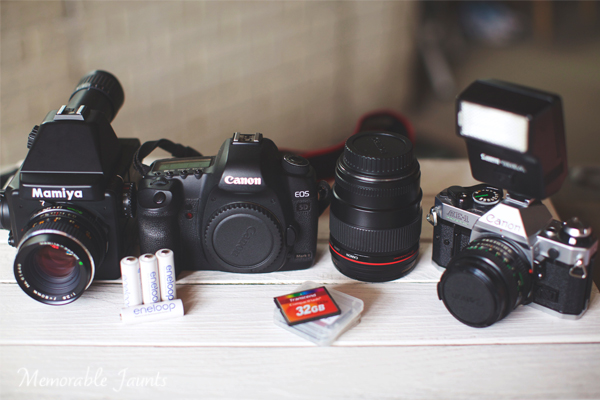
I use a myriad of digital and film cameras – all my gear gets the same care and maintenance.
#9 Update your website with your latest work
I will be the first to admit this is generally one of the things I put on the back burner many times. However this is a key piece of the puzzle to attracting new clients. Showcase your best work on your website, blog, and other social media channels. Let your pictures speak volumes and keep the content fresh. Often times you are so busy photographing and managing your current clients, you forget about the new potential clients out there. Give those clients something new to look at so they keep coming back for more.
#10 Maintain your health and general well being
Perhaps this should be the first tip on the list. This is one of the most important things you can do for yourself and your family. Managing a photography business is hard and exhausting – both mentally and physically. I love photographing weddings but after every wedding, I feel like I have been run over by a truck! Set aside time to exercise, eat healthy, and schedule ‘retreat time’. Time away from the computer and camera to enjoy the other finer things in life! After all what good is a great photographic career, numerous awards, and accolades if you are not able, mentally or physically, to enjoy the glory.
googletag.cmd.push(function() {
tablet_slots.push( googletag.defineSlot( “/1005424/_dPSv4_tab-all-article-bottom_(300×250)”, [300, 250], “pb-ad-78623” ).addService( googletag.pubads() ) ); } );googletag.cmd.push(function() {
mobile_slots.push( googletag.defineSlot( “/1005424/_dPSv4_mob-all-article-bottom_(300×250)”, [300, 250], “pb-ad-78158” ).addService( googletag.pubads() ) ); } );The post 10 Quick Photography Business Tips to Kickstart 2015 by Karthika Gupta appeared first on Digital Photography School.
-
How to Break Into the Photography Business with dPS Writer Gina Milicia
Our very own dPS writer Gina Milicia was recently interviewed and asked about her thoughts on how to break into the photography business.
She talks openly about how she got her break in the business and some of her struggles. I can totally relate to what she says about just wanting to do the thing you enjoy, no matter if you you get rich or make a living from it or not. Watch the video and see if you can relate to what she says too:
“Just keep showing up every day and do something.” – Gina Milicia
In this second video you can see the resulting images from some of the behind the scenes clips in the one above.
Do you have any additional tips for someone just starting in the photography business? Please tell us in the comments below.
Gina is the author of four dPS eBooks including:
- Portraits: Making the Shot
- Portraits: Striking the Pose
- Portraits: Lighting the Shot
- Portraits: After the Shot
You can buy one for $ 19.99 or grab the whole bundle for only $ 49.99 (save 38%) from any of the links above.
googletag.cmd.push(function() {
tablet_slots.push( googletag.defineSlot( “/1005424/_dPSv4_tab-all-article-bottom_(300×250)”, [300, 250], “pb-ad-78623” ).addService( googletag.pubads() ) ); } );googletag.cmd.push(function() {
mobile_slots.push( googletag.defineSlot( “/1005424/_dPSv4_mob-all-article-bottom_(300×250)”, [300, 250], “pb-ad-78158” ).addService( googletag.pubads() ) ); } );The post How to Break Into the Photography Business with dPS Writer Gina Milicia by Darlene Hildebrandt appeared first on Digital Photography School.
-
5 Tips for Goal Setting for You and Your Photography Business
Last December, no doubt thanks to data driven marketing, a little red ad with festive fireworks graphics kept popping up in my Facebook feed asking me: “WILL YOUR PHOTOGRAPHY BUSINESS SUCCEED OR FAIL IN 2014?” Over and over it found its way to my eyeballs and dared me to click, and apparently peek into my very own crystal ball, yet I couldn’t bring myself to do it. In all caps screaming at me, it seemed to suggest more seriousness than I can handle this time of year.
And the fireworks secretly conveyed what it really was saying: “WILL YOU BE CELEBRATING OR GOING DOWN IN A BURNING VORTEX OF SHAME AND REGRET?”. For all I know, it was a dead link. Or when I click on it, I end up on that site for an indoor cycling class that Facebook seems to think I will enjoy even though taking an indoor cycling class sounds slightly less interesting than performing my own root canal with pliers and whiskey on my kitchen floor.

I’m not one for New Year resolutions, and not just because they often involve exercise. I have found that they easily end up being nothing more than petty promises you make to yourself that turn into guilt once it becomes evident they were unrealistic and therefore, unachievable. What I do love though, is goal setting and fresh starts; a new year is perfect for both. Specific goal setting is a very personal thing – one that no one, or any “How To” article, can help you write. I can however offer you some tips for what the most successful goal setting includes.
Tips for goal setting for your business

1) Be realistic
I know – realistic is boring. Realistic lacks that exotic appeal, that wild and crazy offer. But setting yourself up for disappointment and ending up in that burning vortex of shame and regret scenario, isn’t appealing either. I’m not likely to photograph a cover for Time Magazine this year. I’m not even likely to have a photograph on the front page of my local newspaper. Partly because I don’t work for either publication. Last year I had photographs published in one international magazine, two US-based publications, and a few images featured in a large gallery show. Every single one of those was a surprise – random opportunities that fell in my lap which I couldn’t have set as a goal because I didn’t know they were possibilities.
Practical goal setting should be flexible enough to accommodate opportunities you couldn’t have imagined and able to adapt and change as your business and your style does. Goals do not need to be small to be realistic. Shoot for the moon, but keep in mind that the idea of building a space shuttle sounds like a lot more fun on January 1st than it will in mid-July.

2) Treat it like a business
This is a goal I have every year; to not let it get so personal. I want to be able to hear constructive feedback about my images without feeling personally attacked, to not allow negative energy to kill my buzz, to not give away the farm, to keep office hours, to not edit with one hand and make dinner for my kids with the other. It’s a struggle. Possibly my biggest. Partly because it is personal.
I don’t know a single professional photographer who became one because they needed a job and photography was there and was easy. We get into this business because we love taking pictures. What a dreamy situation – to take an art, a hobby, and turn it into your career. It’s easy to keep dodging and burning the midnight Photoshop oil when you are having success doing something you love. To avoid burn-out and keep your basic love of photography intact, work at maintaining a life/work balance. If taking pictures is how you make a living, do the tasks that aren’t as fun creating images, during actual normal working hours. Commit to not taking on too much, or doing jobs for free or cheap just to be nice. Build your portfolio with intention so you are not just shooting everything that comes your way for no personal purpose. Hire out the tasks that keep you from being able to focus on the parts of your business only you can do.

3) Clean up your work space
Several years ago I was in a terrible funk and I couldn’t figure out exactly why. I was telling a close friend that every time I came home, I felt defeated and just wanted to crawl into my bed and ignore the world. She walked into my laundry room – the room I usually use to enter my house connecting my garage to my kitchen and said, “Of course you do. I imagine this being the first thing you see when you get home is very, very depressing.” My laundry room was a sad beige disaster of papers and junk, not to mention laundry for days. If you managed to shove the door all the way open, you were rewarded by something falling on you or having to do a complicated dance routine to step over whatever was on the floor. It took a candid friend to see that being welcomed home by that was enough to make me want to run away. It was the push I needed to organized the junk, paint the walls a cheery yellow, put in happy lighting, and install a shiny new floor. This was life changing and made coming home something I looked forward to, instead of dreading.
 If I could, I would visit each of your work spaces and clean off your desk, dust your computer screen and throw away all of those scraps of paper you are saving in your top drawer that you just don’t need. I would make sure your chair was adjusted for optimal comfort and productivity, then place your favorite picture in a beautiful frame right next to you to make you smile and give you a little extra motivation when you need it most. I would untangle your electric cords and label your business folders and toss all of the nagging Post-It notes that remind you of what you haven’t done. I would go through your computer where I would first check out your music collection and judge you completely based on it and then send unneeded files, shortcuts, and applications to the trash bin. I would reformat all of your memory cards, charge all of your batteries, and carefully wipe down all of your lenses. I would send in the little elves to magically clean your camera sensor and careful wipe all of the grime and grunge off the viewfinder and buttons with the most gentle precision. I would even get you a big glass of ice water with a crazy straw and place it next to you so you could work productively for hours on end and never have to be thirsty.
Obviously, I can’t do any of these things for you – but you can. Give yourself the gift of working in a space that works for you. Whether it’s an office, a studio or tiny corner of a closet – take the time to make it a place where you actually want to spend time.
4) Focus on one topic at a time

There is so much information out there for photographers. Some of it good, some of it opinion, some of it completely unnecessary. As a person who gets overwhelmed easily, I have to remember to not overindulge in the information I allow my brain to soak up. I like to pick one topic or area that I want to learn more about or focus on at a time. This way I read anything I find interesting, but if it’s not something I need to look into and not about my dedicated topic, I can let it go. Last year I learned as much as I could about copyright. If an article popped up about copyright, I would read it immediately. I spent time researching and finding ways to change and better my photography practices based on copyright laws. This year, I want to work on indoor natural light photography. This keeps me from overindulging in tips and ideas that will only drown me with information I’m not likely to need or use right now.

5) Invest in your business, your brand, and yourself
Starting any business takes time and money. The first couple of years are often about keeping afloat, and it’s easy to see basic needs as expenses that can be saved for later. Looking back, I wish I would have built a few things stronger the first time.
I wish I would have purchased a better camera body right from the get-go instead of trying to skimp where I thought I could save some money, only to end up needing a new one much sooner. I wish I would have taken the time to have my computer professionally fixed to accommodate running a large program like Photoshop all of the time. Then my editing would have been faster and I would have wasted less time waiting for large images to load. I wish I would have done my portfolio building based on the pictures I wanted to take, not the ones that people seemed to demand.
The little things I could have invested in would have saved me a lot of trouble, time, and often cash, down the line. Having the tools you need, the resources to use, and the abilities and desire to put it all together and work hard, is the difference between flirting with photography and making it a business.

Every January I have no idea what the year will bring, and every December I find myself in a place I couldn’t have even predicted, but often in a place I had hoped for. Goal setting is the closest you can come to actually (please forgive the corniness) writing your own destiny. This year I want to work on my personal photography project, write more, update my websites and blogs, and never, ever find myself in an indoor cycling class.
What do you hope to achieve this year in your photography?
googletag.cmd.push(function() {
tablet_slots.push( googletag.defineSlot( “/1005424/_dPSv4_tab-all-article-bottom_(300×250)”, [300, 250], “pb-ad-78623” ).addService( googletag.pubads() ) ); } );googletag.cmd.push(function() {
mobile_slots.push( googletag.defineSlot( “/1005424/_dPSv4_mob-all-article-bottom_(300×250)”, [300, 250], “pb-ad-78158” ).addService( googletag.pubads() ) ); } );The post 5 Tips for Goal Setting for You and Your Photography Business by Lynsey Mattingly appeared first on Digital Photography School.
-
8 Tips to Push You and Your Photography Business out of a Rut
For many people, choosing to become a photographer is as easy as buying a good DSLR camera, taking pictures of their family and friends, creating a free website and/or social media accounts and announcing to the world that they are ready for business. There are some very interesting statistics from the US Department of Labor on the number of photographers in the US broken down on a state by state basis. Larger metro areas have more photographers than rural countryside communities. Keep in mind, this data is only for the US. There is similar statistics available for the photographic industry for most other countries as well.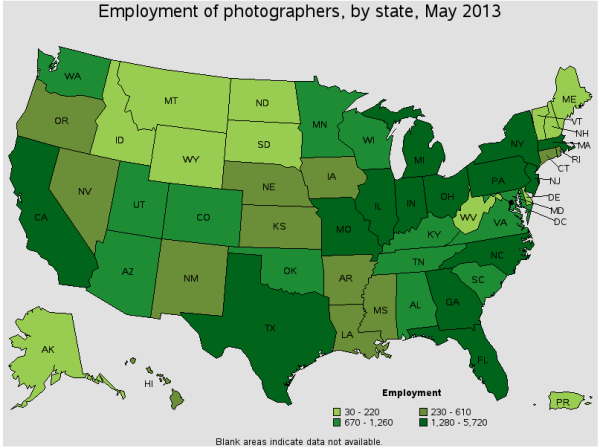
Per US Department of Labor Statistics, May 2013
The same report, US Department of Labor Statistics, May 2013, states that the mean hourly wage is $ 17.88 and mean annual salary in 2013 was $ 37,190 – a good chunk of change for the above average hobbyist as well.
Becoming a photographer has low cost of entry (entry level DSLRs with a kit lens are around $ 1000-$ 1500), low barriers to entry, (home studios or outdoor sessions) and in most cases an education or a photography related degree is not required. Often times, as with most other professions, it is not what you know but who you know. If you happen to have a huge social circle or attract clients who have huge social circles, word-of-mouth and viral social media posts makes you famous almost overnight.
Unfortunately, the same social media and online marketing can also have a detrimental effect on photographers. It is very easy for a new photographer, or even a seasoned one, to feel overwhelmed and demotivated. Feelings of jealously, lack of confidence or even self doubt are very common and occur often. However with a few simple but effective steps, you can get out of your photographic rut, end your pity party of one, and get back to the profession you fell in love with. These steps will help you invest time in yourself, invest time in your community, and invest time in your craft to differentiate yourself from your competition and get noticed by clients, both present and future ones.#1 Start personal projects
Personal projects are a great way to fall back in love with the art of photography. Personal projects can be something within your genre of photography, or completely different. It doesn’t really matter, as long as it is something that peeks your interest and keeps you motivated. Be realistic in the time and cost commitment required for your personal projects. You may decide that you want to keep this personal and not share it with your friends and clients. That’s perfectly fine. If you choose to keep it private, take notes and keep a log. It will help you stay on track. If you share it with your online audience, make it interactive, ask for advice or even suggestions of topics from your friends and fans. There is no right or wrong as long as you are committed.
One of my personal projects is photographing with film – medium format and 35mm from a recent photowalk in Downtown Chicago
#2 Re-examine your portfolio
Do a through examination of your portfolio and see what areas need attention. Make sure your portfolio and website reflect your best work. If you feel you are lacking in areas that you want to specialize in, take note. Make specific goals and work toward filling those gaps. You know the age old saying – by acknowledging your weaknesses, you are one step closer to fixing them.#3 Make friends in the industry
Reach out to other photographers in your area and invite them for a cup of coffee. Make friends. Remember to keep conversations light and general. Don’t be a ‘Debbie Downer‘ in the your very first meeting. Be genuine and show interest in their business as well. Be honest and ask them for advice on how they got over a photography rut. Organize photo walks or photo excursions with your new friends. Often times, just being able to talk shop with another person in the same industry is motivating enough to help you get out of your rut.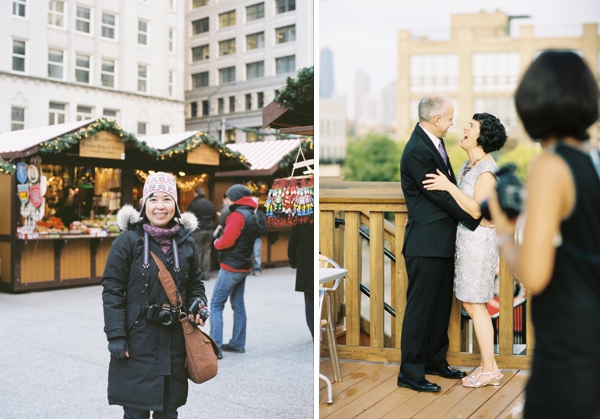
My talented friends – lifestyle film photographer Sachiko Eubanks Photography and wedding photographer Aparna of Photography by Aparna Paul Jain
#4 Rebuild your portfolio
Do you still have the contact information for those people who first helped launch your career. Reach out and ask them if they would be willing to help you update your portfolio. Chances are your style has evolved and changed. These friends and followers helped you before, perhaps they are willing to do it again. But definitely make it worth their time; either offer a free session or a discount – whatever makes more sense for your current situation.#5 Attend workshops, seminars, and online events
Like most other professions, the photography industry is continually evolving and changing. There are numerous workshops, seminars, and even free online events and tutorials to keep you busy during the slow season. Keeping abreast of the latest in any business is a good thing. It shows your clients, both present and future ones, that you value your business enough to invest in it.
Attending workshops provides a platform to learn new techniques, network with other photographers and updated photos for your portfolio
#6 Volunteer your services
There are many great organizations and services out there. Find a few that you are passionate about and reach out to see if they need a volunteer photographer. Remember to be honest about your time commitment. If you can only volunteer your services during the slow season, let them know so they can plan accordingly. Remember if you are genuine and true, your images will reflect that passion and people will respect you more for wanting to contribute to the community.

My time volunteering at the local humane society has been one of the most rewarding experiences to date – I would adopt all of them if I could!
#7 Join photography clubs and groups
There are many great online and local community resources for photographers. Meetup.com is one very popular site that has many different photography clubs. There are generally a wide range of photography enthusiasts in every club and it is likely that you will have a good time. Go with an open mind and not with the attitude of, “What’s in it for me?”.

Participating in photowalks and shoot outs with other photographers has given me the experience of photographing a variety of subjects like high school seniors
#8 Honesty really is the best policy
Don’t just give the elusion of staying busy – actually get busy. Be honest and upfront with your clients. It is perfectly okay to say you are experimenting with black and white, dabbling with newborn photography, or working on landscape photos. Prospective clients will research and find all everything they want to know about you via social media, so be truthful.
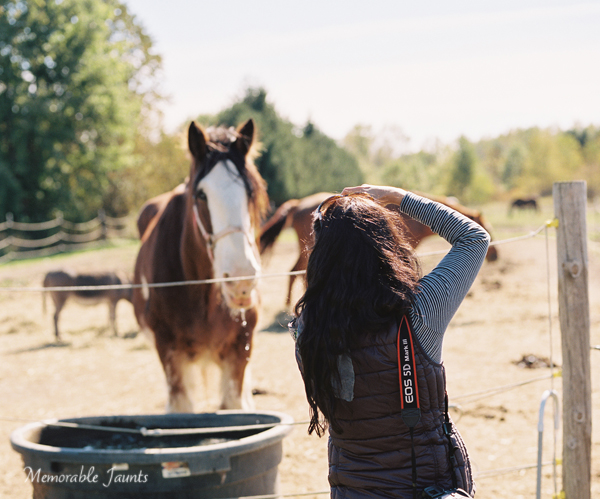
Equestrian photos on film – photo credit Sachiko Eubanks Photography during one of our photography excursions
Lastly, keep your chin up and roll with the punches. Everyone goes through tough times in their lives and businesses at some point or the other. The key is to recognize that this is just a phase and it too shall pass.
googletag.cmd.push(function() {
tablet_slots.push( googletag.defineSlot( “/1005424/_dPSv4_tab-all-article-bottom_(300×250)”, [300, 250], “pb-ad-78623” ).addService( googletag.pubads() ) ); } );googletag.cmd.push(function() {
mobile_slots.push( googletag.defineSlot( “/1005424/_dPSv4_mob-all-article-bottom_(300×250)”, [300, 250], “pb-ad-78158” ).addService( googletag.pubads() ) ); } );The post 8 Tips to Push You and Your Photography Business out of a Rut by Karthika Gupta appeared first on Digital Photography School.
-
How to Design A Photography Business Card In Photoshop (Tutorial)
Designing a business card doesn’t have to be difficult or time-consuming. Most business cards are simple enough: they contain, in readable type, a list of information about you, what you do, and how to get in touch. They stay in tune with your branding — the colors, fonts and general message you want to convey to people about your business Continue Reading
The post How to Design A Photography Business Card In Photoshop (Tutorial) appeared first on Photodoto.