RSS
 

Posts Tagged ‘Black’

3 October, 2013 – Black Magic Pocket Cinema Camera Review

03 Oct

Whereas the rate of change in the still camera industry seems to have reached something of a plateau, video is rife with developments. A small Australian company called Black Magic has just started shipping the Blackmagic Pocket Cinea Camera which is shaking up the video marketplace.

I have just spent the past week working in the field with it and my review is now online. Also published today is an article titled The Making of Algonquin Autumn, which describes the process of making a short film with the BMPCC over this past weekend.


"Having been to Antarctica with Michael and Kevin, I would say after having traveled the world and shot nearly my entire life as an exhibiting photographer,  it was one of my highlights in my life and I talk about it, all the time.  The images and experience of seeing something visionary and nearly extinct from the world, to see and experience the wildlife and scenery that does not fear humans is amazing.  The images I shot there won me two Smithsonian awards and nearly 18 other international awards". – Tim Wolcott

 Find Out More Now
These Expeditions Will Sell Out Quickly. They Always Do


The Luminous Landscape – What’s New

 
Comments Off on 3 October, 2013 – Black Magic Pocket Cinema Camera Review

Posted in News


Ilford opens US lab to meet demand for black and white film development

02 Sep

Ilford-Photo-Lab-BWsq.jpg

While digital has truly swamped film for most common purposes, demand for black and white film development and printing is sufficient that ILFORD has expanded its processing and printing service to include a mail-order lab in San Clemente, California. Unlike most local labs, ILFORD’s service offers black and white printing on silver gelatin photo paper.

News: Digital Photography Review (dpreview.com)

 
Comments Off on Ilford opens US lab to meet demand for black and white film development

Posted in Uncategorized


Sony launches Zeiss 16-70mm F4 OSS, 18-105mm F4 G, and black 50mm F1.8 E-mount lenses

27 Aug

SEL1670mm.png

Sony has announced three new E-mount lenses today for NEX system cameras: the Carl Zeiss Vario Tessar T* 16-70mm ZA F4, 18-105mm F4 G OSS power zoom, and a black version of its 50mm F1.8 OSS. All three feature Sony’s Optical SteadyShot image stabilization. According to Sony, the 50mm F1.8 and 16-70mm F4 zoom will be ready to ship to consumers in September, with the 18-105mm F4 power zoom following in December. Click through for more details.

News: Digital Photography Review (dpreview.com)

 
Comments Off on Sony launches Zeiss 16-70mm F4 OSS, 18-105mm F4 G, and black 50mm F1.8 E-mount lenses

Posted in Uncategorized


Black and White Landscapes: Weekly Photography Challenge

10 Aug

Over the last couple of weeks we’ve been running ‘Landscapes’ challenges to celebrate the launch of our new Landscape Photography eBook – this week we’re going to continue that by nominating ‘Black and White Landscapes’ as the theme for your challenge.

Black & White

Once again – there’s a section on black and white landscapes in the eBook (see the screen shot of the first page of the section below) but whether you’ve read it or not – we think it’s a fun challenge because many photographers don’t think to take landscapes with out colour – to their own detriment.

Screen Shot 2013 08 02 at 8 47 20 PM

Don’t believe us – check out these 27 great Black and White Landscapes for some inspiration.

So grab your camera and head out and shoot some landscapes in black and white. If you’re not able to get out – how about finding an older landscape to convert?

Once you’ve taken your ‘Black and White Landscape’ photos upload your best ones to your favourite photo sharing site either share a link to them even better – embed them in the comments using the our new tool to do so.

If you tag your photos on Flickr, Instagram, Twitter or other sites with Tagging tag them as #DPSBWLANDSCAPES to help others find them. Linking back to this page might also help others know what you’re doing so that they can share in the fun.

Also – don’t forget to check out some of the great shots posted in last weeks Leading Lines challenge – there were some great shots submitted.

Post originally from: Digital Photography Tips.

Check out our more Photography Tips at Photography Tips for Beginners, Portrait Photography Tips and Wedding Photography Tips.

Black and White Landscapes: Weekly Photography Challenge


Digital Photography School

 
Comments Off on Black and White Landscapes: Weekly Photography Challenge

Posted in Photography


Get an Invisible Black Background to Your Portraits – Shooting Anywhere [VIDEO]

14 Jun

In this video Glyn Dewis demonstrates how he gets his ‘Invisible Black Background’ effect when taking a portraits which will allow you to take a low key atmospheric portrait with a black background anywhere – even outdoors as he does in this video.

To get the shot Glyn just uses his DSLR, a single Speedlight Flash, a cheap umbrella and a PocketWizard to trigger the flash (although you can do this with any method of triggering a remote flash that you have).

Want to see some more examples of what can be done with this effect – check out Glyn’s blog posts on the topic here and here.

Post originally from: Digital Photography Tips.

Check out our more Photography Tips at Photography Tips for Beginners, Portrait Photography Tips and Wedding Photography Tips.

Get an Invisible Black Background to Your Portraits – Shooting Anywhere [VIDEO]


Digital Photography School

 
Comments Off on Get an Invisible Black Background to Your Portraits – Shooting Anywhere [VIDEO]

Posted in Photography


Black and White Conversions: An Introduction to Luminosity

06 Jun

A Guest Post by Nick Rains.
Black and white conversion luminosityWarningthe following is quite advanced (even geeky) and I must assume the reader has a working knowledge of channels, levels, curves, blending modes, tools etc as well as how the main color models work (RGB, Lab, HSB).

Much has been written about converting colour to Black and White: we all know that there are a great many different ways to do this, some more effective than others. Differences between the various methods are usually explained in terms of visual appeal or the ability to blend the various colour channels to emulate traditional B+W filters. What has not been mentioned is exactly why different greyscale conversions give different results, and more importantly, the fact that this principle can be used to make more accurate adjustments to colour images.

This last point seems quite contradictory; what has greyscale conversion got to do with colour adjustments? Well, quite a lot really when you remember that all RGB colour images are comprised of three different ‘channels’ of greyscale information, each of which represents the lightness values of each of the three colours and that it’s the relationship between them which give us the illusion of ‘colour’.

If you alter a colour image by, say, using the dodging or burning tools, you are actually altering 3 greyscale channels at the same time and unless the relationship between those 3 channels stays exactly the same, there will be a shift of hue or saturation which is of course not the aim of the adjustment. Many of Photoshop’s tools, used at face value, operate on a composite of all three channels – not an ideal situation.

How we see Luminosity

Photoshop very rarely uses the term Luminosity. It is not Brightness in the Hue, Saturation, Brightness (HSB) colour model. It is not the Lightness channel in Lab mode and it is not the K value when you use the colour picker in Greyscale mode.

Luminosity is the perceived brightness of a colour, not it’s numerical or measured value under the above colour models. Look at this image – 3 patches of full strength RGB. Each has a 100% Brightness and a 100% Saturation, all that differs between them is the Hue. However, I think all would agree that the green is perceptually lighter, or more luminous, than the red which is in turn lighter than the blue. So, whilst the numbers show a 100% Brightness, you see quite different tones.

ColourPatch

Here is the same image converted to B+W using Image > Adjust > Desaturate. All the colour contrast disappears because the Hue (colour) is removed and the new lightness of the greys in the top row is exactly 50% (127) because the Saturation and Brightness are both equal.

ColourPatchDeSat

Here is the image converted another simple way : Image > Mode > Greyscale. This is better because the conversion is a little more like our eye sees colour with an emphasis on the Green. In fact the colour weighting is very close to 60%G 30%R and 10%B where the Green lightness as double that of the Red, much like our eyes see and tipping a nod to the fact that there are double the number of Green sensels on a camera’s Bayer array as compared to Red and Blue. The conversion still looks a little lacking in contrast however, and good B+W images really need good impact or contrast to look their best.

ColourPatchGrayscale

Even the Lightness channel in Lab, shown below, does not really depict the relative tones of the colours as we experience them. It is actually a lot closer to the perceived luminance but is perceptually ‘lighter’ overall than the simple Mode > Greyscale conversion.

ColourPatchLab

The most accurate conversion is via the Channel Mixer using these values taken from the sRGB definitions developed by Hewlett Packard (http://www.w3.org/Graphics/Color/sRGB)

71%G 21%R and 8%B.

ColourPatchChMixAdvanced

This gives a slightly more punchy look and it is a good starting point for converting your images to B+W. The Red looks a little dark to my eye, and the Blue a bit dark, but since there is very little pure colour in nature, this combination works well in the real world.

So why the fuss? Why do we need to know all these different methods?

The point to understand is that when you are removing colour information and having your image rely only on greyscale tones you need to control how those tones relate to one another. Do you want the blue of the sky to become a darker greyscale tone than the green grass? Or vice versa.

As an example, for the Australian flag – which greyscale version looks better?

Australian flag

Australian flag desat

Australian flag ChMix

There is no definitively correct answer – it’s the one which looks best. Personally, I think the one with the darker blue looks best because it maintains the perceived brightness of the blue as well as keeping good contrast between the blue and the red.

You need to take control and make sure the colours in the original capture translate to good meaningful contrast in the B+W version. This is the secret of good B+W conversions – not the precise method, but being aware of the tonal distributions and which greyscale value a colour is converted to relative to the other colours’ subsequent greyscale values.

Just to leave you with an advanced ‘teaser’…

What if you duplicated a colour layer and added a monochrome channel mixer adjustment layer to that new layer? You could then change the new layer’s Blend Mode to Luminosity and use the Channel Mixer to adjust the Brightness and Saturation of the colours in the image without affecting the Hue in any way.

If you try doing this directly with Curves or Levels you’ll get a small Hue shift as you adjust the Brightness and Saturation. If you don’t believe me try setting the Info Tool to HSB instead of RGB and read off colours as you make a direct Curves adjustment. You’ll see all three numbers change, including the Hue.

I’ll discuss this further in a future article.
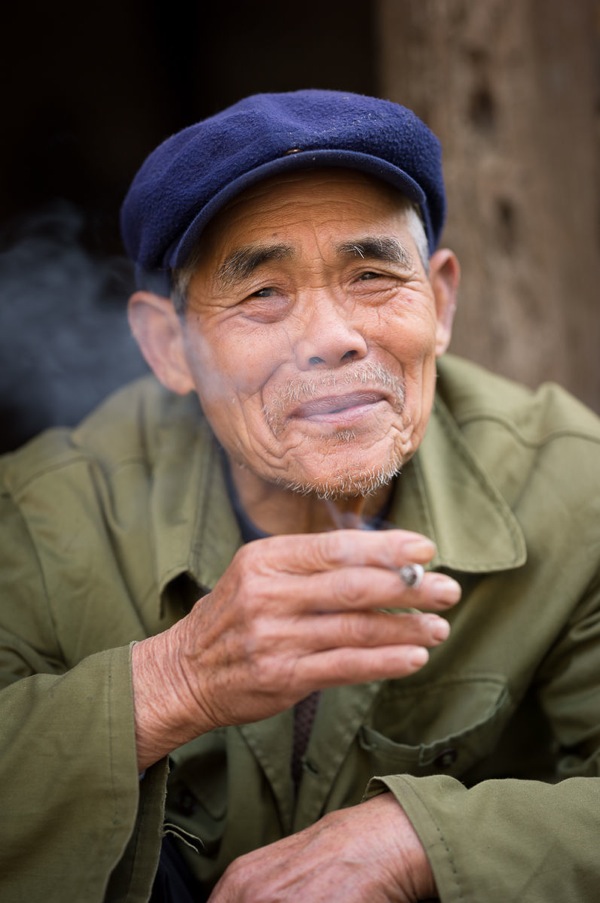
Portrait 1

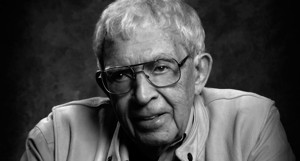
Portrait 2

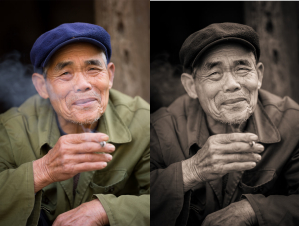
In converting to B+W the green of the jacket and the blue of the cap have darkened whilst the red skin tones have slightly lightened. The face and hands now stand out far better – a good example of a situation where the colours in the original were simply a distraction, adding nothing to the shot, and so were removed.

Nick Rains is a Queensland based photographer who has been shooting professionally since 1983 and has seen first hand many changes in the photographic industry, from manual to auto focus in the late 1980s through to the shift to digital in the past decade or so.

Nick currently shoots feature work for companies like Australian Geographic and Orion Expeditions as well as writing for magazines and blogs around the world. Nick is both a Canon training consultant and a Leica Ambassador, as well as a Master Photographer with the AIPP and a national judge. You can see more of his work at www.nickrains.com or add him to your circles on Google Plus.

For more in-depth photography writing, try Nick’s iPad app “Photique”. It’s a free download.

Post originally from: Digital Photography Tips.

Check out our more Photography Tips at Photography Tips for Beginners, Portrait Photography Tips and Wedding Photography Tips.

Black and White Conversions: An Introduction to Luminosity


Digital Photography School

 
Comments Off on Black and White Conversions: An Introduction to Luminosity

Posted in Photography


DISCUSS: When you Photograph People in Black and White, you Photograph their Souls

20 May

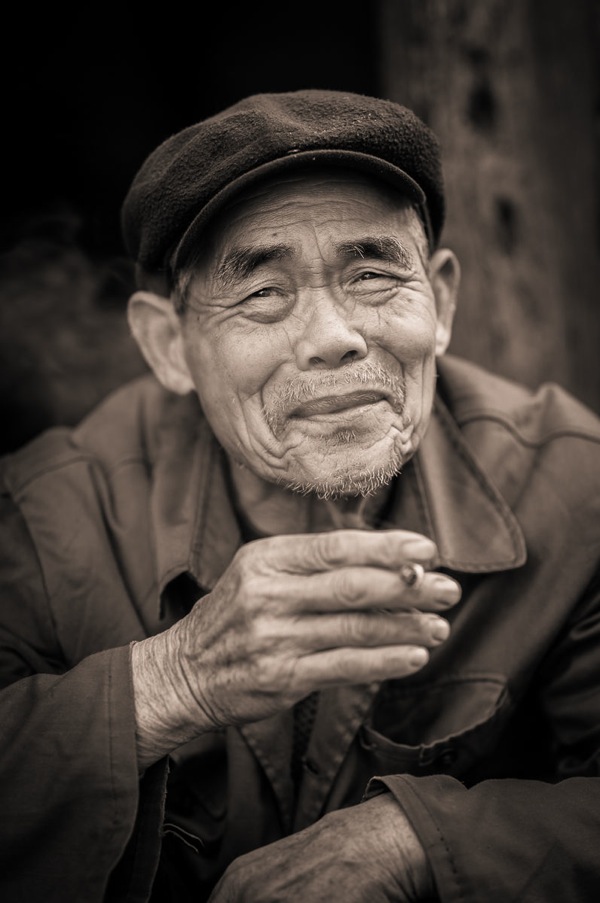
NewImageCanadian photojournalist – Ted Grant – is quoted as saying:
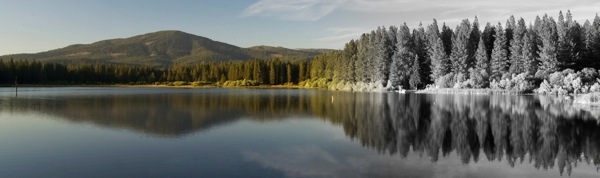
“When you photograph people in color, you photograph their clothes. But when you photograph people in Black and white, you photograph their souls!”

This quote often comes to mind when talking about portraiture and I thought it might make an interesting discussion starter.

Do Ted’s words resonate with you?

Post originally from: Digital Photography Tips.

Check out our more Photography Tips at Photography Tips for Beginners, Portrait Photography Tips and Wedding Photography Tips.

DISCUSS: When you Photograph People in Black and White, you Photograph their Souls


Digital Photography School

 
Comments Off on DISCUSS: When you Photograph People in Black and White, you Photograph their Souls

Posted in Photography


Converting Images to Black and White Properly

31 Mar

Header Image

by: David Wahlman of Wahlman Photography

Recently I was asked about the process of converting images to black & white; namely when to know the image would be good for it. So in this post I’m going to talk about when to convert an image to black & white and then how to do it in Photoshop without loosing quality.

When To Create A Black & White Image

There are about three ideas that come to my mind when I evaluate whether I should convert an image to black & white (here on referred  to as b&w).

  1. First of all, and somewhat obviously, what is your desired outcome? Is your client specifically asking for b&w images? Are you entering a b&w photo contest? Are you doing a gallery set of b&w (because, generally speaking it doesn’t look too good to have just one or two b&w mixed in with colors. You want a good balance.)? Like I said, it should be pretty obvious that your outcome needs to be considered, but it was worth saying.
  2. Second, you should consider the value range of the image. In photography the term “value” speaks of darks vs lights. So when I say to judge the image’s value range, I’m talking about if you have deep blacks and bright whites. What’s your dynamic range like? For the most part, ‘flat’ images don’t look very good in b&w. Traditional b&w have good contrast and well spread value all across the histogram. So, if your image has these elements, then it may be a good choice for converting into a b&w.
  3. I’ll be doing a post soon on color theory and color relationship, but if you have odd colors or colors that don’t work well together, then it may be a good candidate for being converted to b&w. Let’s just face it, some colors don’t really work well together. B&w may be a good way to avoid these colors but keep the great shot.
  4. Just a tip, if you squint your eyes while looking at an image, you will see less color and more of the total value. This can be good for getting an idea of if your image has good value range.

How To Convert A Color Image To Black & White

Alright, now lets talk about how to convert your image, because there is a right and wrong way. You may get the same result, but if you do it wrong you actually loose quality (to be technical, you sacrifice bytes of information). For this article I’m going to be talking about using Adobe Photoshop. There is conversion software that you can buy, but for all intensive purposes, why pay extra when you can do it in Photoshop really easily.

Step 1

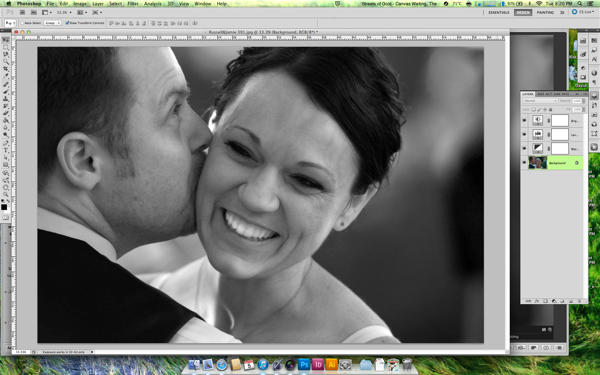
If you found an image that you want to convert, then step one would be opening the image in Photoshop. For my example, I’m using one of my wedding photographs that you may have seen on my website. It was shot during the first dance and I just really love this photo in b&w.

Screen Shot 2013 03 05 at 8 13 48 PM

Step 2

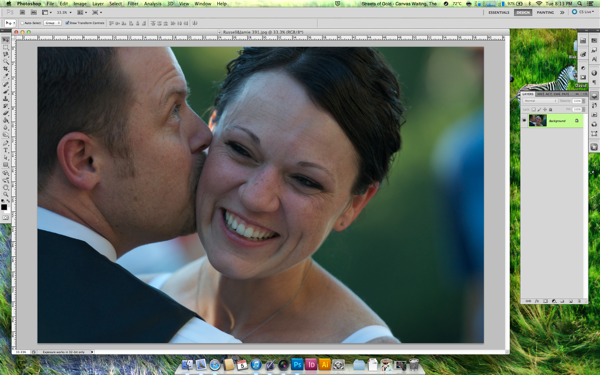
Screen Shot 2013 03 05 at 8 13 57 PMNext, most people would try to go to the top menu, go to Image>Mode and change the color profile to “Grayscale.”

Don’t do this!

Long story short, you’re actually changing the color profile, which means you will lose pixel information in your colors. You don’t want that; you want to retain as much information in your image as possible.

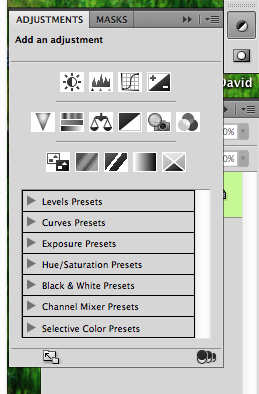
What you want to do is use the black & white adjustments. You can access this either by going to the top menu to Image>Adjustments>Black&White or in your side bar click on the adjustments button (as shown in picture) and then click on the b&w icon, which is the black and white box divided diagonally.

Step 3

Screen Shot 2013 03 05 at 8 14 10 PMOnce you’ve clicked this, you should see adjustments for the value of each color (see image). Notice that Photoshop has kept track of colors in the image. It’s just displaying them as b&w, but your keeping the information in tack.
This also gives you more control on editing your b&w cause you can adjust it by color section now. Be aware, that you don’t want to push the limits on these colors too much, you’ll start to see ‘clipping’ in gradient colors such as skies. You’ll see it in your preview as you do it, then you’ll know what I’m talking about.

Step 4

After this, you can use these other adjustments (which act as smart layers, if you know what that means. It’s a good thing) to adjust the image how ever you need; exposure, contrast, levels, curves, filters, etc.

Step 5

After you’ve done all the editing you feel you need to do you should hopefully have an image you’re pleased with as a final. From you there you can save it however you need and depending on your desired outcome. 

Screen Shot 2013 03 05 at 8 20 12 PM

If you found this article helpful or interesting, please share it with friends and family by using the media share buttons below. Thanks

David Wahlman is a wedding and portrait photographer from Redding, CA. He works all around California and is aiming to get into destination photography. You can see his best work at www.wahlmanphotography.com and follow his updates on his facebook page.

Post originally from: Digital Photography Tips.

Check out our more Photography Tips at Photography Tips for Beginners, Portrait Photography Tips and Wedding Photography Tips.

Converting Images to Black and White Properly


Digital Photography School

 
Comments Off on Converting Images to Black and White Properly

Posted in Photography


The Pro Photographers Guide to Black & White Vs Colour

21 Mar

Setting the tone of an image is arguable, the most important part of any photograph. As the photographer, this choice can help to define your overall style; making your work instantly recognisable purely by the tone of your chosen medium. You have to consider the composition, exposure and all those other technicalities. But it is how the subject is portrayed Continue Reading

The post The Pro Photographers Guide to Black & White Vs Colour appeared first on Photodoto.


Photodoto

 
Comments Off on The Pro Photographers Guide to Black & White Vs Colour

Posted in Photography


DEAL: 50% Off The Art of Black and White Photography Online Course

07 Mar

NewImageThis week’s deal over at our sister site – SnapnDeals – is one that I know will appeal to a lot of dPS readers.

It is 50% off The Art of Black and White Photography Online Course at Udemy.

Created by David J. Nightingale this course will help you to:

  • Master the techniques to create amazing black and white photographs.
  • Make more of your black and white portraits.
  • Learn from a world-renowned expert.

It contains over 19 lectures and 6.5 hours of content – all delivered online.

It is normally $ 79 but this week through SnapnDeals it is just $ 39.50 USD. Check it out at SnapnDeals.

Post originally from: Digital Photography Tips.

Check out our more Photography Tips at Photography Tips for Beginners, Portrait Photography Tips and Wedding Photography Tips.

DEAL: 50% Off The Art of Black and White Photography Online Course


Digital Photography School

 
Comments Off on DEAL: 50% Off The Art of Black and White Photography Online Course

Posted in Photography