RSS
 

Posts Tagged ‘Better’

How to use the Art of Self Reflection to Make Better Photos

06 Aug

Have you ever “hit the wall” with your photography? Do you sometimes get the feeling your images aren’t improving as much, or as fast as you’d like? Have you ever thought about what you must do to cross that chasm from being a pretty good photographer to being a WOW photographer?
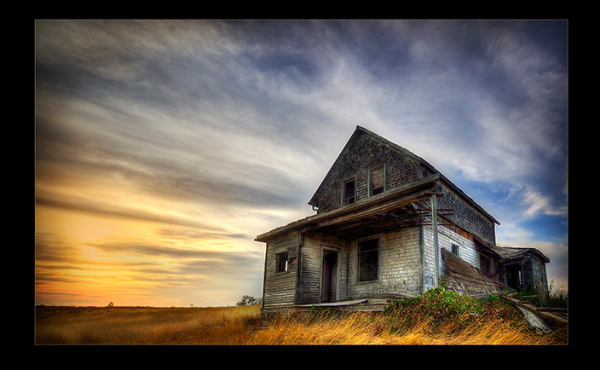
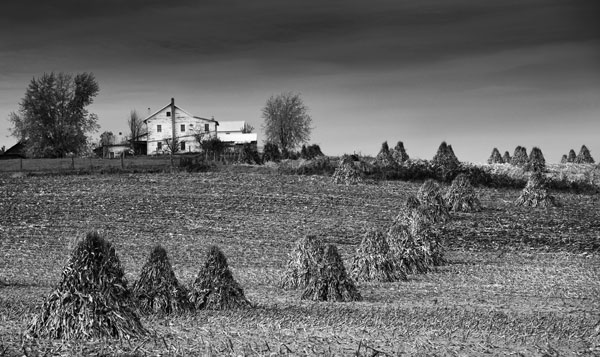
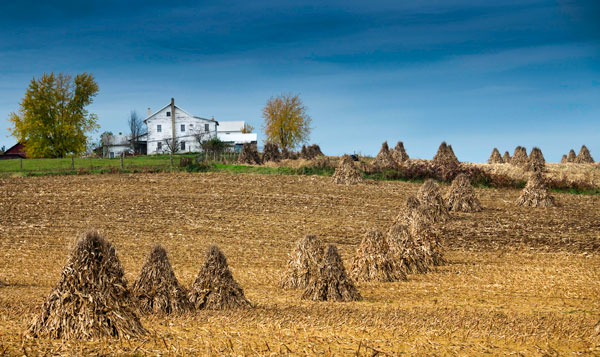
Is this a WOW shot? How do you know?

Is this a WOW shot or not? How do you know?

ONE SKILL FITS ALL

There’s really only one ability that you need to develop to help you advance your talents, and it will serve you well in any creative pursuit, not just your photography. This skill is reflection.

No, not THAT kind of reflection (although reflections in images can be captivating), I’m talking about introspective reflection, the thoughtful self-analysis of your work.

  • What worked well in the image?
  • What is not working?
  • Was your vision translated accurately into your photo, did you achieve your goals?
  • Is it a WOW shot?
  • How can you tell?
  • How can you be objective about your own photos?

Reflection is so important for improvement. Yet many aspiring and seasoned photographers alike, go out and shoot, come back to their computers and fire up Lightroom (or another image processor) and start editing. They edit until they have an image they like; save it, print it and share it. And that’s the end of the workflow. I’d like to encourage you to add reflection to your photographic post-processing methods.
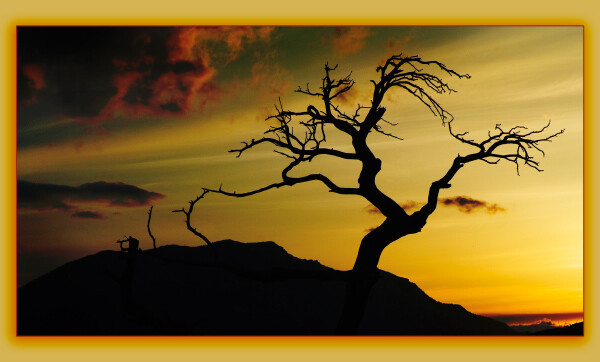
dinosuar_sunset

IT’S CRITICAL TO BE CRITICAL

It’s not easy to be critical about one’s own creative work. Our hearts and souls are embodied in every shot we take and it can be difficult, if not almost impossible to be objective. But I have a handy and easy checklist, to help you critique your images. It’s fast, almost painless, and it works. You can use this checklist as well if your friends or other photographers ask you to critique their images. You can be objective, you can back up your opinion using the checklists items, it  works for almost all genres of photography and it will help you fully absorb new information, and rapidly advance your photography skills.
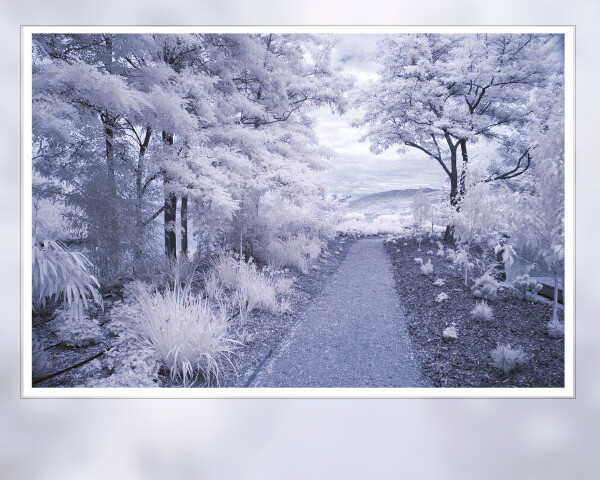
PPOCMB_comp1-copy

BEING OBJECTIVE – THE CHECKLIST*

This checklist will help you evaluate your images, and those of other photographers in an objective way. It’s the prefect way to reflect on your shots and absorb those things you did well. It also allows you to understand why an image isn’t working.

Ask yourself:

Does the image have:

1) Impact

This is the immediate feeling the viewer gets when they first see the image. Compelling images evoke laughter, sadness, anger, pride, wonder or another intense emotion.

Reality Check: When you show someone your image, what is their immediate reaction? Do they instinctively take a breath, or inhale quickly? This is a good sign your image has made an impact.

2) Storytelling

Storytelling refers to the ability of the image to evoke imagination. One beautiful thing about art is that each viewer might collect his own message or read her own story in an image.

Reality Check: WHAT is the story your image tells? This need not be complicated but perhaps as simple as one sentence. For the image Prairie Sundown, the old house above, is there a story in that photo for you?

3) Creativity

This is the original, fresh, and outward expression of the imagination of the maker by using the photographic techniques to convey an idea, message, or thought. Does your image display something in a very creative and original way?

Reality Check: Have you ever seen an image similar to yours? Why is yours different and better than the similar one?
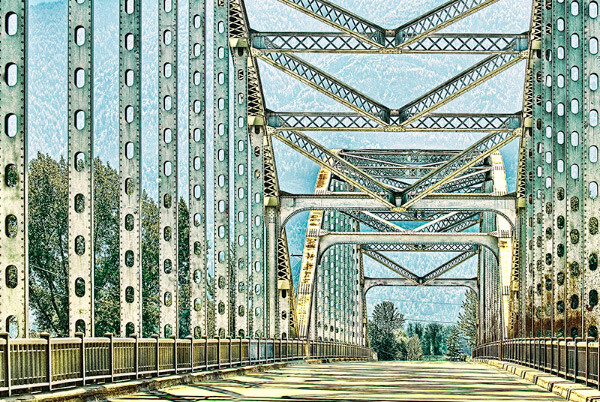
dps_DSC4830W

4) Style

Style is defined in a number of ways. It might be a specific genre or simply recognizable as the characteristics of how a specific artist applies light to a subject.  It can impact an image in a positive manner when the subject matter and the style are appropriate for each other, or it can have a negative effect when they are at odds.

Does your image show a sense of YOUR style? Describe your style? Look at the works of famous photographers and see if you can identify the elements that make up their style.

Reality Check: What have you done in taking this image, or in post-processing it, that makes it uniquely YOUR image? Do you use a certain angle a lot of the time so people start to recognize certain images as being yours? This uniqueness is your style.

5) Composition

Composition is important to the design of an image, bringing all of the visual elements together in concert to express the purpose of the image. Proper composition holds the viewer in the image and prompts the viewer to look where the creator intends. Effective composition can be pleasing or disturbing, depending on the intent of the image maker.

Does your image have leading lines that help the viewer come into your image? Is there enough contrast, pattern, white space, repetition, or tension to keep them looking once they are there?

Reality Check: Have you used any rules of composition in this image (Rule of Thirds, Golden Triangle, etc.). Which one and why did you use this particular one? Have you purposely broken any rules? Which ones and why did you break them?

6) Center of Interest

This is the point, or points, on the image where the photographer wants the viewer to stop as they view the image. There can be primary and secondary centers of interest. Occasionally there will be no specific center of interest and the entire scene collectively serves as the center of interest.

Reality Check: There is a clear and obvious centre of interest with no distracting elements; or the viewer can tell you in a second what is the point of interest. If they can’t then you must score yourself lower.

7) Lighting (the use and control of light)

Light is how dimension, shape and roundness are defined in an image. Whether the light applied to an image is man-made or natural, proper use of lighting should enhance an image.

Have you used unique, or unusual lighting angles? Is the image taken at a time when the sun is NOT directly overhead or using flat light?

Reality Check: The light is a key component of this image. If the light were different would the image be better or worse? If this image had been shot at sunset it would be a better image? If you could do better, score yourself lower for use of lighting.

8) Subject Matter

The subject is appropriate to the story being told in an image.

Reality Check: Is your subject realistic for the story it is telling? Is the symbolism evident? Is there continuity between the logic of the elements you’ve used in your image?
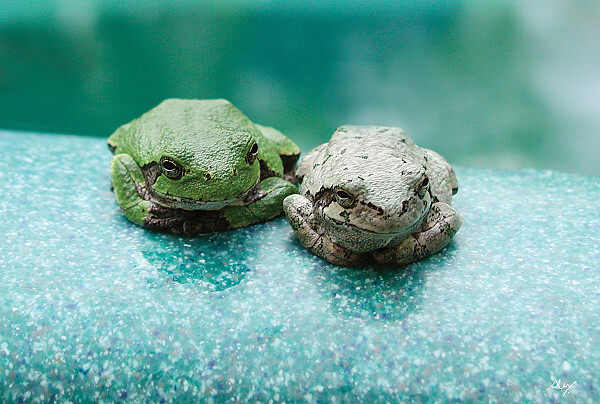
frogbuddiesW

9) Color Balance

Color balance supplies harmony to an image.  An image in which the tones work together effectively supporting the image, can enhance its emotional appeal. Color balance is not always harmonious and can be used to evoke diverse feelings for effect.

Reality Check: The tones and colors you have used in your image are coherent with the type of emotion you want to convey. Dark, shadowy, purples, blues, deep reds etc., evoke a different emotion than whites, pastels and semi-saturate tones. Is your use of color consistent with your story?

10) Technical Excellence

This is quality of the image itself as it is presented for viewing. Sharpness, noise, pixelation, exposure, printing, mounting, and correct color all speak to the qualities of the physical print.

Reality Check: The extreme reality check for this is viewing your image at 100% in Photoshop or other image editor. Is your subject sharp at 100%? If so then it’s sharp. Is there visible noise in the shadows? If yes your exposure is off. Are there “blown-out highlights”, if yes your exposure is off. Check your histogram for clipping. If your images are of people, are the skin tones pleasing and natural?

11) Technique

Technique is the approach used to create the image. Printing, lighting, posing, paper selection (if printed) and other elements are part of the technique applied to an image.

Reality Check: Is everything you have done to create and make this image technically good?

CRITIQUE ME

To help you get the hang of this, I would be delighted to accept your objective assessment of the images in this article, using the points from checklist of course.

Here are a couple more for for you to reflect on, and critique:
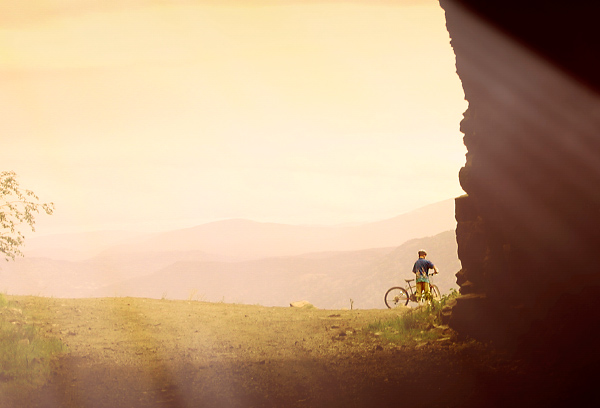
cave-Ver-3-small

What’s working in this image? What’s not?
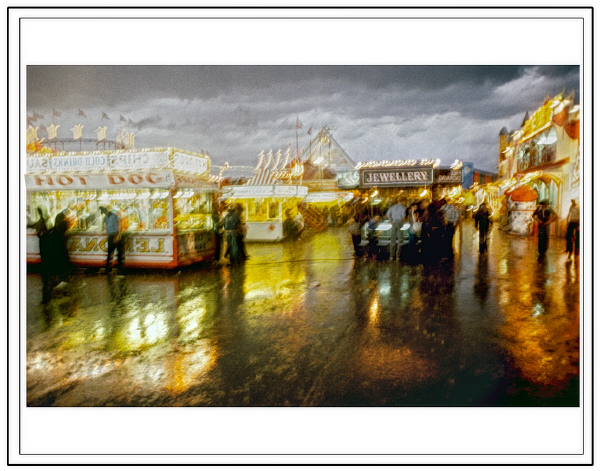
Does this image have impact, storytelling, anything else? WOW shot or not?

Does this image have impact, storytelling, anything else? WOW shot or not?

Once you have the “feel” for this, give the Reflection Checklist a try on some of your images, and feel free to share your self assessment with us here. You can post your checklist results and images in the comments section.

 You can even download a PDF of the Photographer’s Reflection Checklist with a scoring guide here.

* This checklist has been adapted from the PPA’s 12 Elements of  Merit Image and used with their permission.

The post How to use the Art of Self Reflection to Make Better Photos by Alex Morrison appeared first on Digital Photography School.
Digital Photography School

 
Comments Off on How to use the Art of Self Reflection to Make Better Photos

Posted in Photography


How to use Monochrome Preview to Compose Better Color Photos

04 Aug

You may have heard it said that when you change the way you see – the things you see begin to change. Legendary American documentary photographer and photojournalist, Dorothea Lange once said that “The camera is an instrument that teaches people how to see without a camera.” In this article we are going to use our camera to learn how to see.

Become color blind

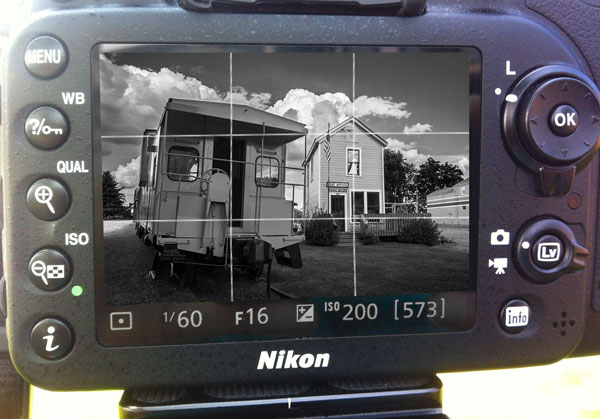
When it comes to photography, color can attract your eye so readily that it can often disguise poor composition. Black and white photography depends totally on composition, so in order to compose images more effectively you may need to become color blind. This article is going to explore how to view your images without color, learning to see the light and shapes in your subjects. Fortunately, these days most digital cameras have a black and white or monochrome shooting mode. In this mode the live preview (and replay) on your camera’s LCD will appear black and white, but your RAW file will still retain all color information. Using this method is meant to be used as an exercise to help you learn to see your compositions more clearly.

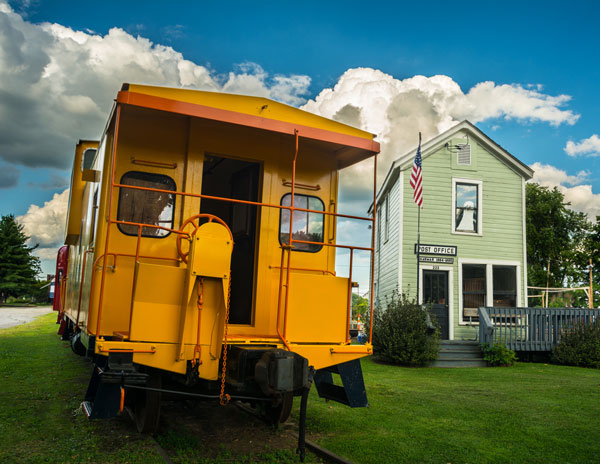
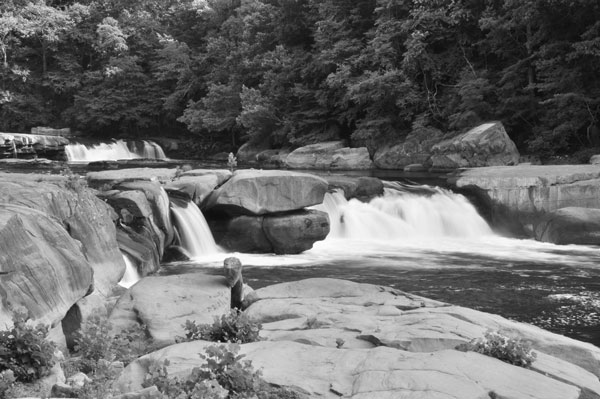
LCD preview of this colorful image is composed using rule of third grid in Black and White

LCD preview of this colorful image is composed using rule of third grid in black and white

DSC_7496-Edit

Camera settings:

  • Set your file type to RAW (This is a must!)
  • Set White Balance
  • Set your Picture Control (Nikon) or Picture Styles (Canon) to Monochrome
  • Set your exposure with whichever method you normally use
  • Turn on your Live View
  • Turn on rule of third grid lines on your preview
  • Use the black and white preview in Live View on your LCD to compose your image, paying special attention to the entire image for tones, shapes, lines and textures. Remember also to use all of the usual rules of composition, such as the rule of thirds, etc.
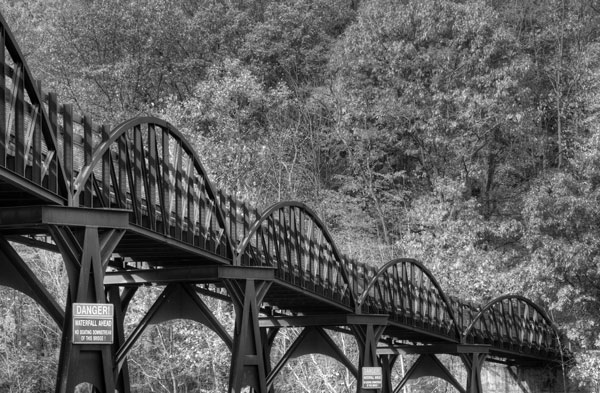
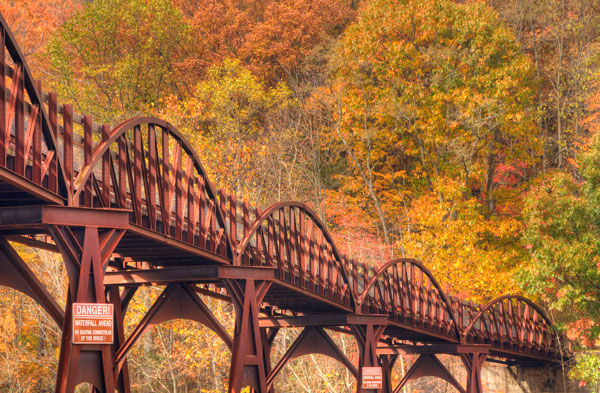
In Black and White it becomes easier to see how this bridge draws the views eye into the mage

In black and white it becomes easier to see how this bridge draws the views eye into the image.

8101686232_48c1bbc3da_o

Tripod use is not a requirement for this system, but is helpful for two reasons: first of all, it frees up your hands to experiment with your camera controls and secondly, (and most importantly) it slows you down to allow you to analyze every aspect of your image.

Removing color from your preview makes it easier to see the shapes, lines, textures and tones and allows you to concentrate on your composition.

Don’t expect to get everything perfect in camera. Post-production is your friend! Even the great Ansel Adams produced most of his magic in the darkroom. But of course you want to get it as close as you can in camera. Be especially sure you get the white balance set as accurately as possible, because when shooting in RAW, white balance and exposure are the only camera settings that are retained by your RAW file. However, the white balance can be corrected in your RAW processing.

It is recommended that since you will be viewing a monochrome image on your LCD that you check your histogram to ensure that your image is properly exposed.

DSC_0216-2bw

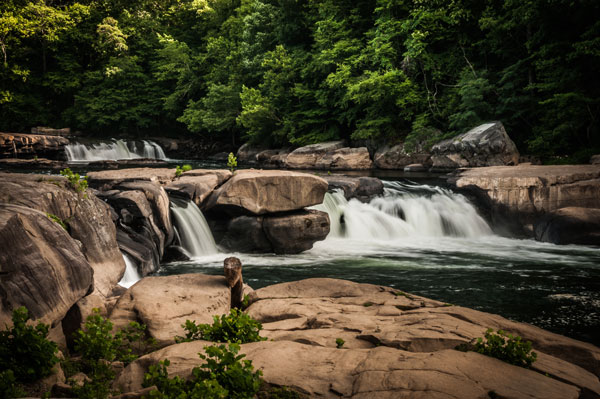
Here we can see how the rocks in the foreground lead the viewer’s eye to the waterfalls.

DSC_0216

As mentioned at the beginning of the article, your image will be previewed on your LCD in black and white, but your RAW file will record color. If you should choose to shoot in RAW + JPG mode your RAW file will be recorded in color but your JPG will record only black and white.

Don’t panic when you see a monochrome preview upon importing your RAW files into Lightroom (or whatever you use for post-processing). As soon as you click on the image you will get a color preview.

There are many methods of creating black and white images and most photographers will agree that it is best to start with a color file. Therefore, another use for this preview method comes into play if you are shooting an image that you know you will later be converting to black and white. You’ll get a good preview of how your image may appear later upon converting your RAW file to black and white, and will know right away whether your image will be effective in black and white.

One disadvantage with this method that is worth mentioning is that using the Live View mode will drain your batteries faster.

As you can see in this preview, that this image could also make a great black and white with lots of textures and a very interesting subject

This image could also make a great black and white with lots of textures and a very interesting subject

8146529877_619ce3dd53_o

This method is great for landscape, architectural, and abstract photography where it is so important to see tones, shapes and lines for composition. Yes, there are some obvious times when color may play an important part of your images such as in the fall where the colors may become your subject, but every method has its exceptions.

Try this experiment. First, shoot your scene as you would do normally with color preview. Then shoot it again with a black and white preview. You might be surprised with the difference in your results.

Give it a try, please share your results in the comments below.

The post How to use Monochrome Preview to Compose Better Color Photos by Bruce Wunderlich appeared first on Digital Photography School.

Digital Photography School

 
Comments Off on How to use Monochrome Preview to Compose Better Color Photos

Posted in Photography


Overcoming the Fear – Creating Better Travel Photography Portraits

22 Jul

Pick up Oded’s new Snapn Guide (a dPS sister company) Snapn Travel here for only $ 7. A lifetime of travel memories in a Snap.

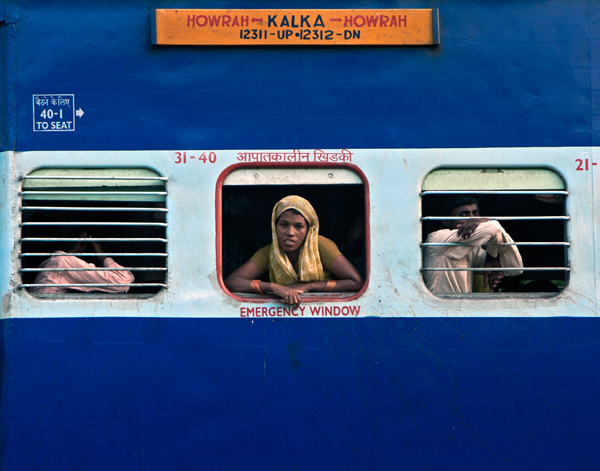
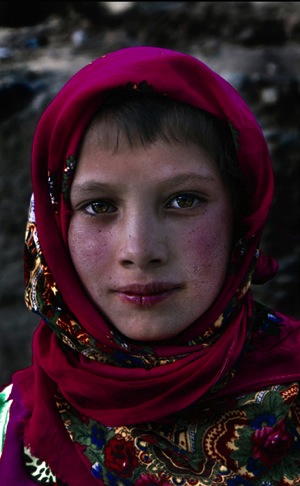
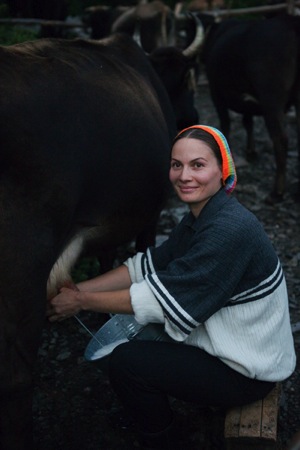
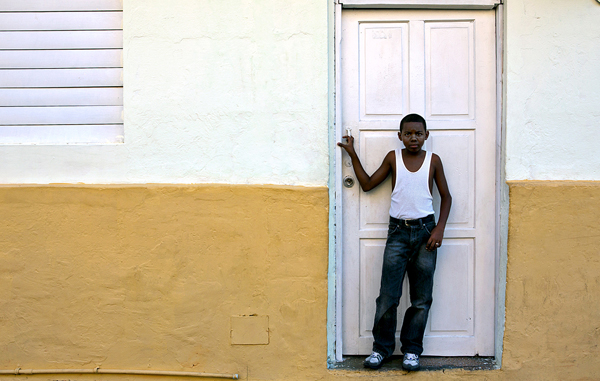
Traveling is fun and rewarding, but sharing memories of your journeys with friends, family and the world through your own beautiful images can be even better. Especially rewarding are images of the interesting people you meet along the way, because creating travel photography portraits can be an amazing addition to your portfolio.

But, if taking pictures of strangers while interacting with them makes you uneasy, maybe even feeling a bit of fear? GOOD! Then this article is for you.

F11A1011

The world of photography is divided between two groups of people: those who enjoy creating portrait photography and those who do not. Through discussion with my own students I have realized that only about ten percent of those who avoid portrait photography actually do not like it. The remaining ninety percent, so I discovered, are hiding, deep down inside, a photographer who really desires to shoot portraits, especially when he or she travels to interesting and distant places, meeting people from other cultures.

But it is not that easy. Let’s be honest, sometimes it’s super hard. So what we do is we wrap ourselves with excuses like: “I do not feel comfortable with this”,”I do not want to invade a person’s privacy” and as the “golden excuse” we used that one story of someone who shouted at us at some market in Morocco.

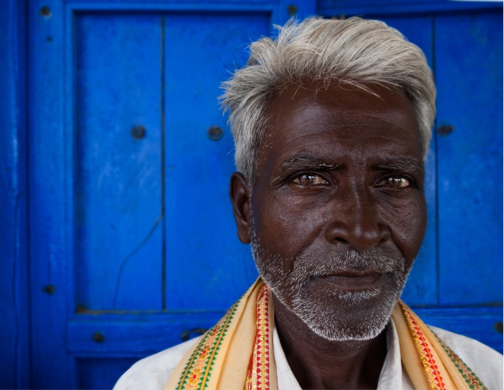
Blue guy

First, from my experience, getting yelled at (and all kinds of other problems) only starts when you take photos of someone from a distance and they catch you in the act.

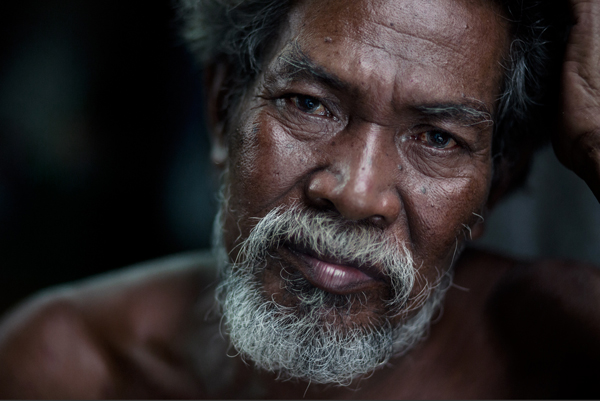
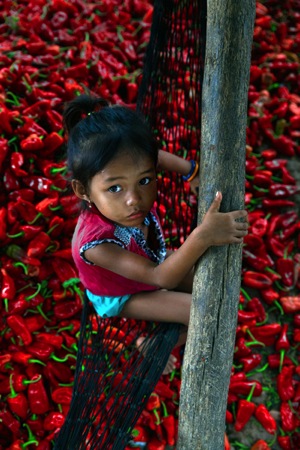
Paprlika princeBut here is another fact: there is nothing like photographing someone from a close distance. The eyes, the feelings and the huge visual story potential within. Besides, when we work from a close distance while interacting with the person, we gain control of our tools as photographers: composition, background, the “decisive moment” and we also have that amazing ability to tell the photographed person: “you know what, let’s take one more shot”.

In 99% of my travel photography work with magazines, I photograph portraits from a close distance, without hiding myself or hiding the fact I am taking a photo. Now, some will say that when a person sees a camera, it affects the authenticity of the moment. I will address this issue later.

First rule: tell, do not just show

This is the # 1 mistake of bad travel photography: trying to show a story, instead of telling it. Creating a diary instead of evoking feelings. Here is the unpleasant truth; apart from our family and close friends, no one cares where we travel and who we meet along the way. If you want to succeed in exciting your viewers, you need turn to a different approach.

10

Before the digital era, it was enough if you traveled to the other side of the world and came back with images of people from some exotic tribe. You know, those “colorful” images, of people with a bone stuck in their nose. Today, when almost every corner of our planet has been photographed, this is not enough anymore and we have to return to the basics; to that one element that hasn’t changed since the beginning of time – a story.

We are just obsessed with stories. A person is not only clothes, a Cuban cigar or colorful sari; a person is an entire story. A story is a complex thing to create, so for the first step I will ask that your images be able to answer this question: how does the person in the image feel? Is it a comedy or a tragedy? Has he just finished a day of hard work or is he enjoying a vacation? Look at the person’s body language and listen to his voice. Try to convey the type of feeling you had while meeting this person.

134.jpg

Choose the right equipment

Remember the following equation – if you have a telephoto lens, you will to use it, because that is the easiest way of shooting people, from a distance. Instead, go with a wide lens (up to 50 mm for full frame, 35mm for cropped sensor). Also, try to avoid complicated and sophisticated equipment like flash and tripods. This will attract unwanted attention in the streets and you will be busy handling the gear instead of focusing on the story in front of you.

73 08

Read about the culture

Yes, in India they wear sari and in Cuba they smoke cigars. To get a more in-depth story of the culture, you have to learn about it first. Prior to your trip, do a brief study of the place you are about to visit. View images, read material and mainly, answer important questions like:

  • How will people react to the camera?
  • Do I need to pay for taking a picture?
  • Are there things that I should not photograph?

In order to answer these questions you can ask someone who visited the destination or look for information on the web. If you do not know anything about the culture, you will fall into the cliché of photogenic tourist traps. But if you come with knowledge, it will affect your photography. My editor at the National Geographic Traveler magazine calls this “photographic intelligence”. Go the extra mile and read about the history of the place, the religious system, the food and the local music, which leads me to our next tip.

F11A7455

Use the local music to your advantage

Recently I photographed a story on the Dominican Republic. It was the first time I worked on this side of the world and suddenly I felt as if I almost forgot how to take pictures. I did not approach anyone and at first, my photography did not come out well at all. So, I just listened to some local music on my headphones. I do not recommend staying with headphones all the time, because it cuts you off from the environment. But for the first day, it’s a great tip; it puts you in the groove and makes you feel good. In conclusion, on the first day of your trip, do not trouble yourself with approaching strangers. Relax, listen to the local music, get into the groove and warm up with easier image making: buildings, landscape, food, etc.

71

Get outside when the lighting is right

The meaning of “Photography” is drawing with light. Even the most photogenic person will not look good in unsuitable light. There are no rules about lighting – no “good” or “bad”. There is appropriate and inappropriate lighting, because light has varying qualities: color, direction, strength, softness, etc. According to most photographers, the best light for most situations is within the “golden hours”: around sunrise and sunset. If this is your first time approaching people in order to photograph them, let the light be on your side. Try adjusting the correct time to go outside. If you cannot control the time (like when on an organized tour) try to photograph people in the shade.

34

Force yourself – get out of your comfort zone

After a day of listening to the local music, getting the groove and warming up with easy shots, it is time to start working. Do not delay it, even if it is very hard for you. Just fake it until you make it:

  1. 72Choose: choose a person you would like to photograph. Don’t use excuses like: “I can’t find anyone special”. Just make the shot, even if it’s only for practice. It is very important that you choose a person who is not on the move, because you need to get ready BEFORE approaching him, so it will be easier in a static situation (a seller in market stand, or someone relaxing at the park)
  2. Get ready: know your lens and exposure. Think about the composition and background.
  3. Approach: ask the person if you can take their photo. You can ask verbally or just by lifting the camera and smiling, waiting for a smile back.
  4. Explain: it doesn’t matter if you are in NYC or Tibet; people want to know why you are taking their photo. You can tell them how much you liked their shop, pet, hair, etc., or just mention that you like portrait photography and you would like to take their photo. Usually this kind of good feedback will be enough.

Now, you might get a NO for an answer. That’s okay! Say “thank you” and then just “get back on the horse”, move on to the next person. You might get a YES. That’s wonderful! Relax, think about the framing and make the image.

F11A9627

So what about the authenticity of the moment?

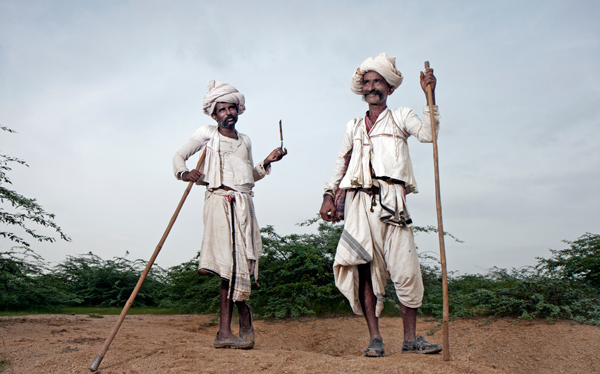
It’s True. Usually when a person is asked to be photographed, they will put on a “mask”. You can call it their pose. Sometimes this pose might be the thing you are looking for. When photographing two men for a story I did in India for the National Geographic Traveler magazine, that pose (image below), which is so typical for the Rabari tribe men, was perfect for the story I wanted to tell.

Page 29 b

If you don’t want the pose, my solution – give your subject time and space. Do not stop him or her from making that pose. Give them a positive feedback and show them how nice the first photo came out. From my experience, after a minute or two, the masks fall. That is because someone eventually will enter your subject’s shop, or they will receive a phone call or anything that might make your subject forget you are still there. This is the moment of magic. This is when the best pictures happen.


Pick up Oded’s new Snapn Guide (a dPS sister company) Snapn Travel here for only $ 7. A lifetime of travel memories in a Snap

  • Learn how to bring the emotion of your trip home with you, not just a memory card.
  • Become a travel photographer instead of a photographing traveller.


The post Overcoming the Fear – Creating Better Travel Photography Portraits by Oded Wagenstein appeared first on Digital Photography School.

Digital Photography School

 
Comments Off on Overcoming the Fear – Creating Better Travel Photography Portraits

Posted in Photography


5 Ways to Create Better Images Without Buying More Gear

17 Jul

You are a photographer. You love getting out there and doing your best to create great images. Photographers also love something else. Camera equipment. Sometimes you may find that you spend more time searching for a new lens, filter or accessory than actually photographing with it. When you meet other photographers you will hear them talking about the latest piece of equipment that has just launched.

Why is this? Why are some photographers obsessed with equipment. My personal opinion is that we fall into the marketing trap. Sometimes we really do think that a new lens, or new camera body, will improve our images simply because it is a better piece of equipment. That might be true, but it’s only half true. A new lens might make your images a little sharper or have better bokeh, but the best way to get better images is to improve your ability as a photographer. Here are some thoughts that may help you create better images.

The key ingredient in any image is light

The key ingredient in any image is light

1. Become a light snob

Light is the key to every image you make. If you want a good image, shoot in good light, if you want a dramatic image, shoot in dramatic light. There really is no such thing as bad light, there is simply better light for creating images.

Light is the all important component of great photography. You may feel that shooting in the middle of the day is best because it is bright, and all the light you need is in that shot. Yes, there may be lots of light, but there is also a lot of contrast (bright highlights and dark shadows). The resulting shot may be unappealing because the light is flat or uninteresting.

How do you overcome this tendency to photograph at any time? Become a light snob. What does that mean? I mean in a good way, try this next time you go out with your camera. Make a point of shooting in the golden hours. Think about the light you are shooting in, go out in the early morning or early evening. Choose your subject carefully, compose your scene purposefully and shoot it with intention. Don’t shoot the same scene twice, work with the light, make sure you think about the exposure, try your best to get the shot and walk away from the scene. Make sure you expose for the light the results will speak for themselves.

2. Become more flexible – in more ways than one

POV2

How often do you photograph from your standing height and mostly in landscape orientation? I know I do, it is natural to do that, we shoot they way we feel comfortable. Change this up a little. Look for unusual angles and vantage points. We have all seen the photographs of children looking up at the camera. Change that, kneel down or even lie down in front of a child you are photographing. Turn your camera to portrait orientation, that changes the scene immediately. If you are photographing a street scene, maybe get to a higher vantage point on a balcony. If you are in a city, shoot straight up! The key thing here is, change your viewing angle and you will change the view of your image. You will give your viewers a unique perspective on a familiar topic and that can make for some very dramatic images.

A unique point of view can make for dramatic images

A unique point of view can make for dramatic images

3. Time it right

You have probably heard this about many things, particularly sports:  “its all about the timing”. This is true in certain genres of photography too. In street photography, timing can be crucial to making or breaking the image. The famed street photographer Henri Cartier-Bresson spoke about “The Decisive Moment”. What he was saying was this, if you take the shot a moment too soon, the scene has not yet unfolded, if you are a moment too late, the scene has passed, you have to release the shutter at the precise moment.

This is not easy to get right. It requires lots of practice and the ability to sense or anticipate what will happen next. With practice you will get better and better, and in time, you will find that you will “time” the shot better. When is the right moment? It is different for every photographer and every photograph. It might be the moment before a smile, or the moment the first tear appears, the moment of surprise or elation. Each moment is different and each photographer will shoot it differently. You will know when you get that moment captured because the image will be memorable. The moment will come, but you have to be ready and you may have to be patient.

Photographing fireworks is often about timing.

Photographing fireworks is often about timing.

4. Get your exposure right

We all know this one, it’s an old one, but exposure is all important. How do you affect exposure? You take control of your aperture and your shutter speed. This alone is a topic for another article, but what is important is that you, as the photographer, need to take control of your image exposure and not let the camera do that. If you still shoot on Auto and hope for the best, now might be a good time to start venturing into the world of shooting on manual or even aperture priority. Learning how the aperture and shutter speed affect your images will help you make stronger images in just about any light. This is what makes the difference between a good image and a spectacular image, the exposure.

Mastering exposure will make a big difference in your images

Mastering exposure will make a big difference in your images

5. Use what you have

You have a great camera, seriously, you do! If your camera is less than five years old, it is perfect for taking astounding images. A new camera body will take pictures with more megapixels or better noise reduction, but I am pretty sure, in fact I am CERTAIN, that you can get some amazing images on your current camera. One key element in getting great images is choosing the right lens for the scene. The lens is the eye to the camera. If you are going to invest in any equipment, save up and buy good lenses. Buy some prime lenses and see the results.

First though, use the current lenses you have, make sure you know how each lens affects a scene. A wide angle lens has the effect of making everything in the scene seem far away and spread out, a telephoto lens (say a 200mm) has the effect of compressing everything in the scene (bringing the elements closer together). If you were to photograph a mountain scene with a wide angle lens and switch to a long (or telephoto) lens and shoot the same scene, the elements in that scene would look really different. The perspective and viewing angle changes on each lens, so make sure that you use your lenses and understand the effect that they have on your scene.

Exposure2

Putting it all together

By using these techniques with light, composition, timing, exposure and current equipment, your images will improve. You need to practice, constantly. Keep pushing the boundaries, do the weekly challenges that dPS puts out, try different techniques. Only buy new equipment if your current setup is limiting your photography. The best way to create better images is by practicing and spending hours and hours behind the camera.

I heard a story that a professional golfer who was one of the top three golfers in the world used a very unique way of practicing. Before playing a golf course in an upcoming tournament, he would book the whole course for a week. He would then take 300 golf balls and set up on the first tee. He would tee off from there, hitting each ball from that tee. He would then play each ball from where it landed. He did this on every hole of the golf course. By the end of the week he knew every inch of that course and he knew exactly which clubs he could use from where on the course. Try this in photography. Shoot 100 shots on aperture priority or shoot 100 shots with your 50mm only. Don’t change lenses until you have 100 shots with that lens. Then move to your next lens and do the same. Try each lens with different subject, use a 500mm and shoot some sports, landscapes and macro photos. Mix it up, but learn how that lens works and learn how your camera works and pretty soon, you will be making great images with all your equipment and that shiny new camera will not seem so tempting!

Look for the light, work with the scene and practice, practice, practice.

Look for the light, work with the scene and practice, practice, practice.

I will end off with a quote from the actor Will Smith, which sums it up in a good way:  “The separation of talent and skill is one of the greatest misunderstood concepts for people who are trying to excel, who have dreams, who want to do things. Talent you have naturally. Skill is only developed by hours and hours and hours of beating on your craft.” – True enough!

Have you put in the hours? Do you have any other additional tips? Please share in the comments section below.

The post 5 Ways to Create Better Images Without Buying More Gear by Barry J Brady appeared first on Digital Photography School.

Digital Photography School

 
Comments Off on 5 Ways to Create Better Images Without Buying More Gear

Posted in Photography


Create Better Black and White Photos Using Local Adjustments in Lightroom 5

08 Jul

Local adjustments in Lightroom

I showed you how to convert your photos to black and white in Lightroom in an earlier article. But, considering it dealt purely with global adjustments, the piece only gives you half the story. Global adjustments get you started, but in order to get the best black and white conversion possible you need to make local adjustments as well. This article will show you how to do this.

First, a couple of definitions:

Global adjustments: Any adjustments (to brightness, contrast etc.) that affect the entire image.

Local adjustments: Adjustments that affect only part of the photo.

Before I show you how to make local adjustments, let’s think about why you would do so. Certain things pull the eye more than others. For example, when you look at a photo with people in it, your eye will go straight to them, even if they are small in the frame. This is probably down to human curiosity more than anything, but it works.

Two other things that pull the eye are highlights and contrast. The idea behind making local adjustments is that you can alter the brightness or contrast of certain areas in the frame to influence where the eye goes. This creates a better, more beautiful photo.

Dodging and burning

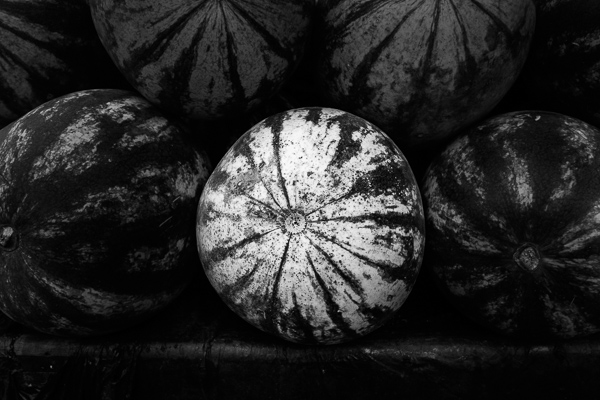
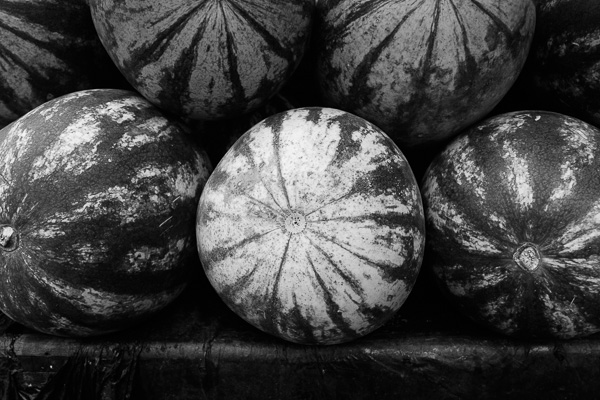
Here’s the photo we’re going to work with in today’s article. I’ve already converted it to black and white using global adjustments.

Local adjustments in Lightroom

As you can see, it lacks a focal point. It also contains lots of beautiful textures which will look great in black and white if we can bring them out.

In order to make effective local adjustments you need to decide what you want to achieve before you start. Here, I decided to make the central watermelon the focal point of the composition. Decision made, it’s just a question of how to achieve it.

Dodging and burning

Although Lightroom itself doesn’t use these terms, you will find them referred to time and again in post-processing. Dodging is the act of making part of the photo lighter, and burning is the act of making it darker. They originated in the chemical darkroom and are also done in photo editing programs like Photoshop.

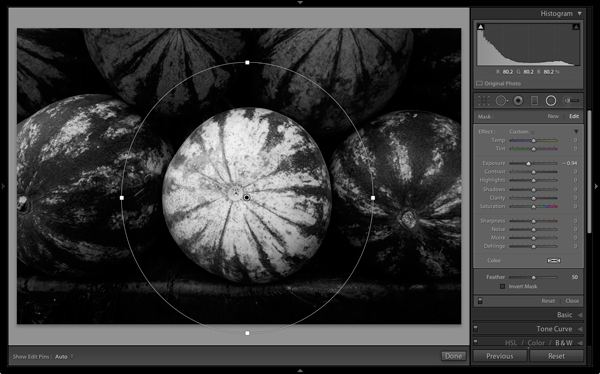
The first step to achieving my aim of making the central watermelon the focal point, is to make the rest of the photo darker. I did that by placing a Radial Filter over the central watermelon and moving the Exposure slider left.

Local adjustments in Lightroom

Note: The Radial Filter is new to Lightroom 5. If you have an earlier version of Lightroom, you can use either Post-crop Vignetting or the Adjustment Brush instead.

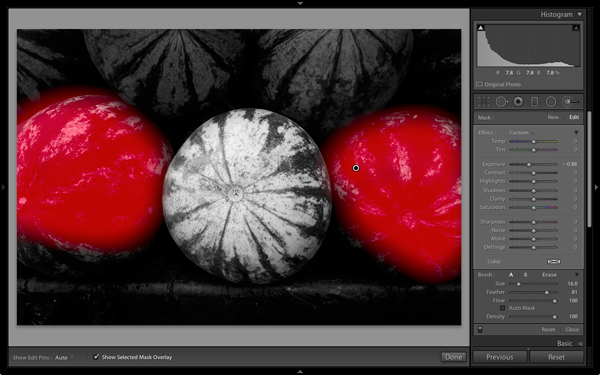
The two watermelons either side of the central one are a little too bright. So I used the Adjustment Brush to select (mask) them and moved the Exposure slider left to make them darker. The screenshot below shows the area covered by the mask. Note how I only painted the top parts of the watermelons as the bottom part was already dark.

Local adjustments in Lightroom

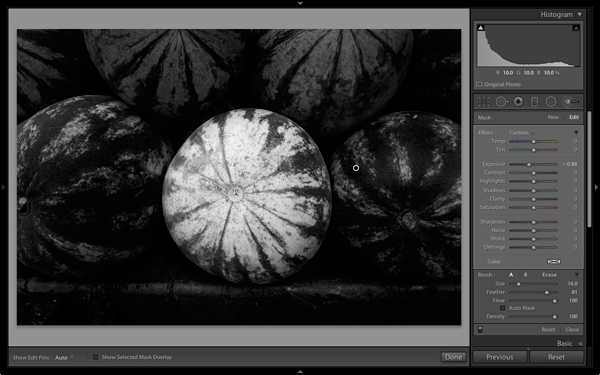
This is the result of the local adjustment.

Local adjustments in Lightroom

Contrast and Clarity

The next step is to improve the appearance of the central watermelon. I can do that by increasing contrast to bring out the beautiful textures of its skin.

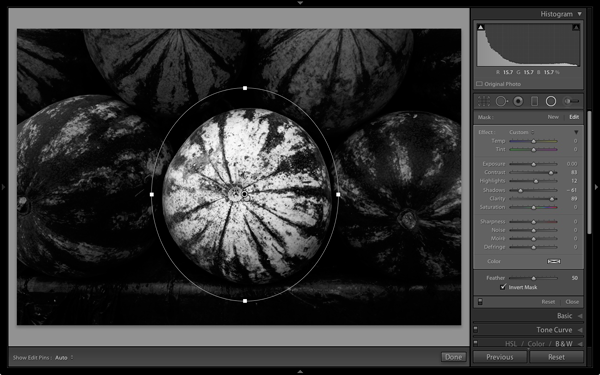
I placed another Radial Filter over the watermelon (you could also use the Adjustment Brush) and ticked the Invert Mask box so the adjustment was applied inside, rather than outside, the filter. Then I increased Contrast and Clarity, and moved the Highlights slider right and the Shadows slider left. The result is a big increase in contrast, bringing out the texture of the watermelon’s skin. Here’s the result.

Local adjustments in Lightroom

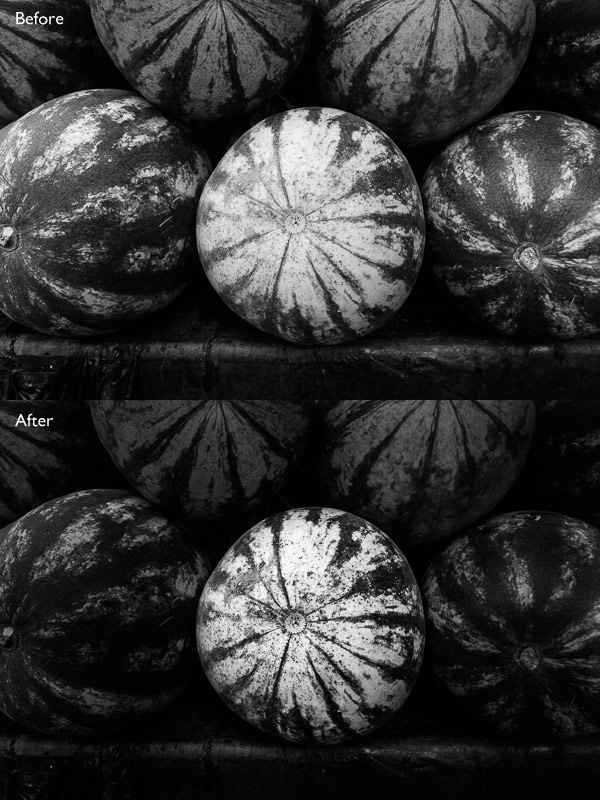
Here are the before and after views so you can see the difference, which is entirely down to the local adjustments.

Local adjustments in Lightroom

That completes my overview of using local adjustments in Lightroom. As you can see, the local adjustments turned an average photo into a much stronger one. There is nothing overly complicated about it, it’s more a matter of training your eye to see in black and white and then deciding how to use the tools that Lightroom gives you to realize your vision.

I’m curious to hear how you use local adjustment when you convert your photos to black and white. Please let us know in the comments.


Mastering Lightroom: Book Three – Black & White

Masterlng Lightroom: Book Three – Black & White by Andrew S GibsonMy ebook Mastering Lightroom: Book Three – Black & White goes into the topic of black and white in depth. It explains everything you need to know to make dramatic and beautiful monochrome conversions in Lightroom, including how to use the most popular black and white plug-ins. Click the link to visit my website and learn more.

The post Create Better Black and White Photos Using Local Adjustments in Lightroom 5 by Andrew S. Gibson appeared first on Digital Photography School.

Digital Photography School

 
Comments Off on Create Better Black and White Photos Using Local Adjustments in Lightroom 5

Posted in Photography


UPDATED: Sony’s curved sensors may allow for simpler lenses and better images

08 Jul

UPDATE: Sony has released an image taken with its curved sensor, and provided more details on what we might expect from its curved sensor technology. We’ve updated our previous story with this image and details. Read more

related news: Digital Photography Review (dpreview.com)

 
Comments Off on UPDATED: Sony’s curved sensors may allow for simpler lenses and better images

Posted in Uncategorized


Using Depth of Field and Perspective for Better Composition

01 Jul

We all know this problem. You take a picture of a beautiful scene but it just doesn’t turn out the way you want. Something is missing. It usually isn’t a matter of your camera or the settings you are applying. But what is it then? The question at hand is how do you get from a snapshot to an interesting, unique, and well composed photograph.

To answer this, we have to move away from the technical aspects and go more into the creative and artistic aspects of photography. You might say that this is a very subjective matter and that beauty is in the eye of the beholder, but there are a few building blocks that will help to improve your photography and also develop your own unique visual language.

Depth of field for a more three-dimensional Look

An important aspect of photography is that we want to capture a three-dimensional reality by taking a two-dimensional image. When we are out in the field, our eyes in collaboration with our brain create very complex images within split seconds. The most important factor in this context is that our eyes are constantly moving while focusing on different subjects. The focal plane is shifting with a subject in focus and everything in front or behind appearing to be blurred. This “Depth of Field” is one the most important techniques we can utilize to simulate depth and three-dimensionality.

Begginner photography tips 06

Utilizing depth of field to create a more three-dimensional look

In order to play with depth of field, we need a scene with a defined foreground and a background. Whereas the background is usually a given, a lot of images lack foreground which makes an image appear flat and boring. Choosing a defined foreground will enable us to actively compose an image and become creative.

Once you have chosen a background and a foreground you like (ideally both complementing each other), you have to find the right position for you and your camera in order to combine both for an appealing overall image. To find the right position, you should try different angles, move around, get low to the ground and don’t solely rely on your zoom. By using a large aperture (small f-stop number) and a selective focusing, we can isolate the foreground from the background by making the foreground objects sharp and the background blurry (or vice versa). This will convey a sense of depth and three-dimensionality.

Begginner photography tips 10

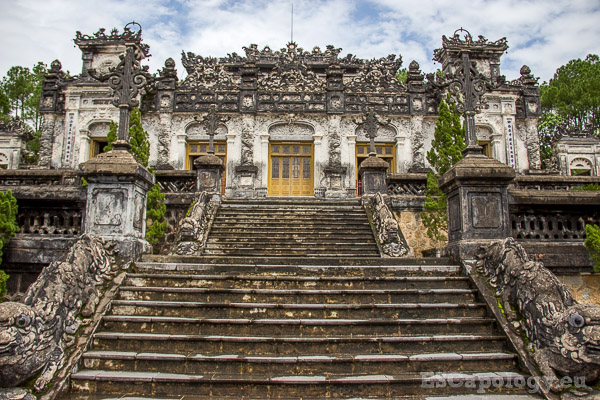
No foreground. Lack of depth and composition.

This image (above) of one of the ancient tombs around Hue, Vietnam looks flat. There is no depth, no three-dimensionality and it lacks a clear composition. Because a foreground is missing, the image is too busy and distracting.

Begginner photography tips 04

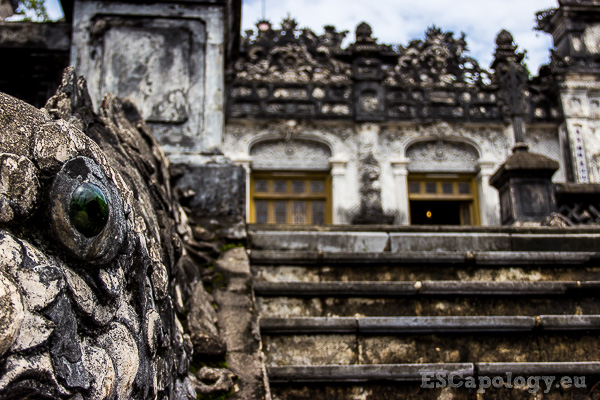
Foreground and background nicely isolated to create a sense of depth.

Above an image of the same subject but with a much better composition. The focus is on the eye of one of the dragons, making it our foreground. The rest of the tomb is our background, slightly blurred and nicely separated. It generates a sense of depth and also appears much calmer and structured than the first image. The viewer is being led into the picture. You can use this technique when photographing very popular places like for example the Eiffel Tower, Angkor Wat or other monuments. Instead of taking the same shot as every other tourist, experiment with different backgrounds and foregrounds, get creative, move, and I am sure you will end up with an original and authentic image.

Begginner photography tips 03

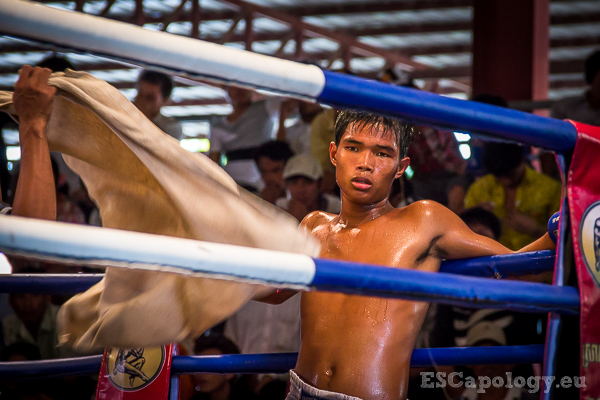
Cambodian Fighter. Focus on the subject, still including the environment.

You can also apply this technique to your people and portrait photography. It not only helps to really put emphasis on your subject, but also to incorporate some of the environment, which will help to tell a story. In the picture above, the focus is on the weary fighter, catching his breath during a fierce Khmer Boxing fight in Cambodia. We are at eye level with the fighter and again, the foreground is nicely separated from the rather blurry background. Yet, we can still see parts of the surrounding environment which is the ring and the crowd in the back. The focus however always remains on the main subject.

Leading lines for a sense of perspective

Of course depth of field is not the only means to create a sense of depth and three-dimensionality. The concept of leading lines is another one of those building blocks that you can apply. The viewer of a photograph usually associates diagonal lines which are leading into an image, to a vanishing point perspective. This means that objects which are farther away also appear smaller. This context automatically and unconsciously gives the viewer an impression of three-dimensionality.

Begginner photography tips 02

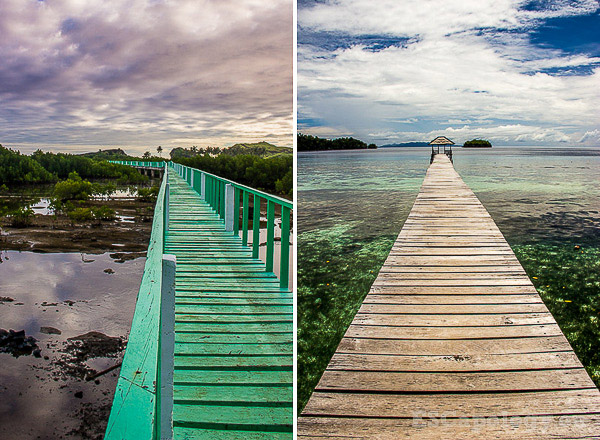
Two images with a clear vanishing point perspective.

As you can see in the images above, a shallow depth of field is not necessarily needed to convey that sense of depth we are looking to achieve. Here it’s all done by using a jetty as lines, which connect different layers of the picture – the image becomes much more plastic and complex.

Begginner photography tips 01

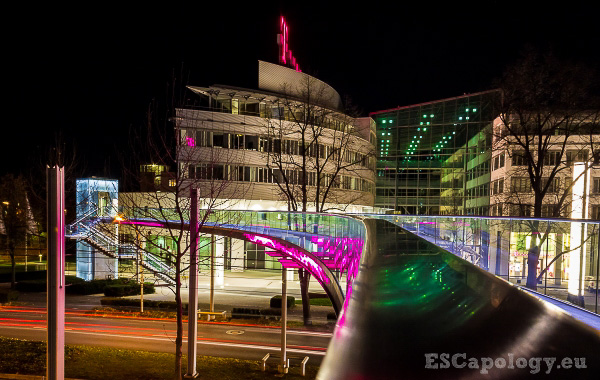
Night Scene: The bridge leading into the picture.

Similarly the image above becomes three-dimensional because the pedestrian bridge is leading into the image. It also appears to become smaller and smaller as it leads into the background. This way the image has that sense of depth even without applying a low depth of field. The bridge as a leading line is connecting our different layers, the foreground and the background.

Begginner photography tips 07

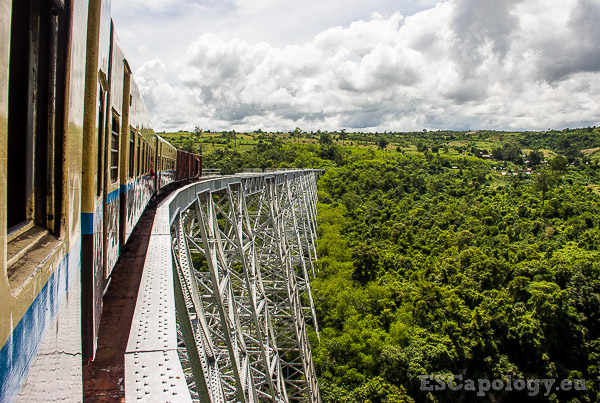
The bridge and the train convey a sense of depth.

Providing a relationship in size

When regarding a picture, the viewer often needs a reference point in order to correctly interpret the information our two-dimensional images provide. We can do this by establishing proportions and providing a relationship in size. Often this isn’t needed as we know a lot of the subjects we are capturing. In the image above we were dealing with familiar objects like a pedestrian bridge, a street and a commercial building. It was easy to put everything into context. But a lot of times, when we are confronted with unfamiliar things, this isn’t as easy.

Begginner photography tips 09

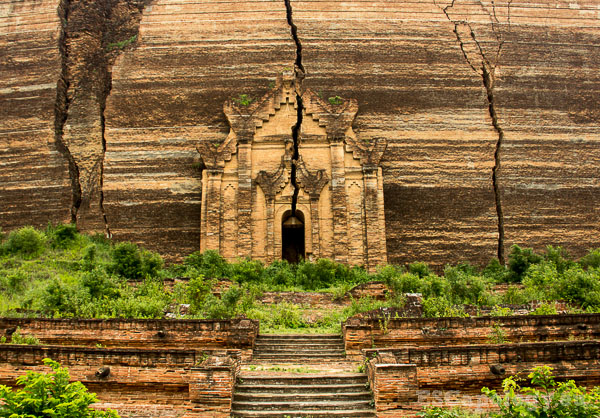
Mingun Pahtodawgyi in Mingun, Myanmar. Can you tell how big it actually is?

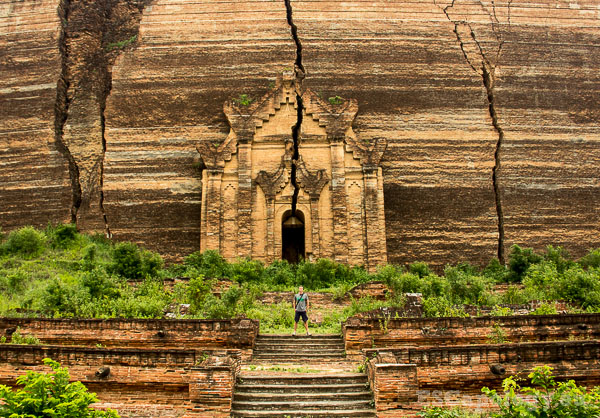
In the picture above is Mingun Pahtodawgyi, a temple in Mingun, Myanmar. Left unfinished, this huge construction was planned to become the world’s biggest stupa with a height of 150 meters. It is huge and impressive but the picture above somehow doesn’t manage to convey this. Just by looking at this image it is impossible to gauge the sheer size of the temple. A reference is missing.

Begginner photography tips 08

Mingun Pahtodawgyi. Are you getting a better sense of dimension?

Here I have added myself to the picture and despite my rather stupid pose, it instantly provides a point of reference. This relationship in size helps to categorize the stupa and establishes a sense of dimension. To achieve this effect and to provide a relationship in size, you can also use other elements which help the viewer to better comprehend an image.

Begginner photography tips 05

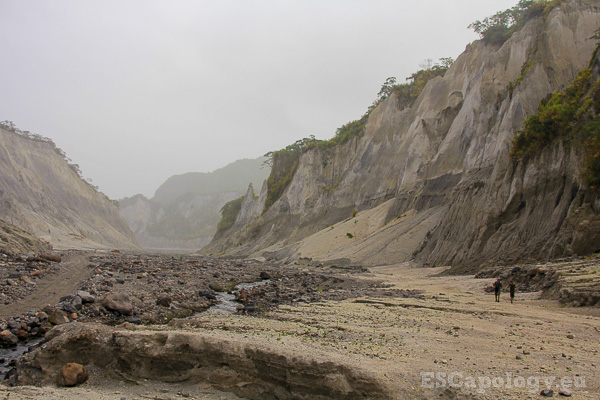
The hike up Mt. Minatubo, Philippines. Another example of relationship in size.

Try to practice, and utilize, these three building blocks to improve your photography. You can also try combining two of these techniques to generate an even greater sense of depth. Of course these concepts are by far not the only factors that make for a good and well composed image. There are many more things to take into account but for now, it should give you a good starting point.

Begginner photography tips 11

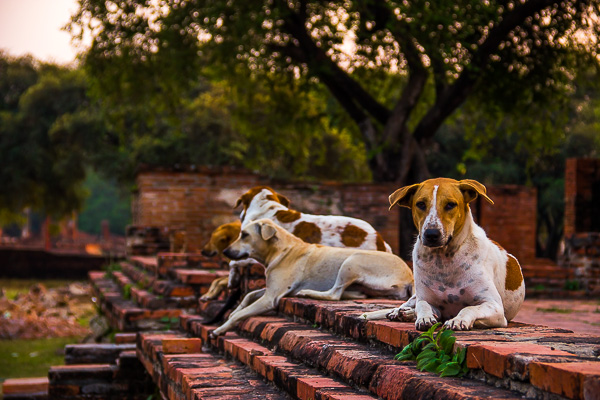
Temple dogs – a shallow depth of field and leading lines combined.

I hope you liked this article. Feel free to comment below and let us know what other techniques or concepts you found helpful on your quest of becoming a better photographer.

The post Using Depth of Field and Perspective for Better Composition by Philipp Dukatz appeared first on Digital Photography School.

Digital Photography School

 
Comments Off on Using Depth of Field and Perspective for Better Composition

Posted in Photography


A little bit better: Nikon D810 First Impressions Review

27 Jun

The Nikon D810 replaces both the D800 and D800E, and the changes that Nikon has made in the new DSLR are significant. There’s no OLPF to get in the way of resolution, and as well as a lower base and higher maximum ISO sensitivity the D810 is 25% faster than its forebears, offers a slightly improved AF system and boasts 1080/60p video with built-in stereo recording. We had a chance to get our hands on a pre-production D810 recently, and we’ve prepared a detailed look at its key features. Click through to read our First Impressions Review

related news: Digital Photography Review (dpreview.com)

 
Comments Off on A little bit better: Nikon D810 First Impressions Review

Posted in Uncategorized


7 Proven Ways to Come Home with Better Travel Photos

26 Jun

It s all about the light

Your next vacation or around-the-world escapade is the perfect time to brush up on your photography skills.

After all, taking a great photograph is never more important than when you’re seeing people and places you may never see again. Travel opens your eyes to other cultures, and if you prepare before you leave, it can also open the eye of your camera lens to infinite possibilities.

But first things first – let’s make sure you have a basic understanding of photography before you step onto the plane. Here’s a list of seven proven ways to come home with better travel photos.

#1 Take a good look at your gear

You don’t need to spend a million dollars on crazy-expensive gear. However, you do need a camera from this century. Better yet, a camera that was made in the last five years. Technology is changing so rapidly that you’re really going to notice a difference with newer cameras.

Also, don’t be afraid to check out the new lightweight DSLR cameras that are all the rage. You may feel cooler hauling around a huge Nikon D5300, but a more compact model can take great pictures too (plus compact is always better when you’re traveling).

#2 Get intimate with your settings

Get intimate with your settings

You haven’t just been leaving your camera in Auto mode, have you? What fun is that? Now I’m not saying you have to learn how to manually focus before you take-off for say, Fiji, but at least get familiar with these three need-to-know settings (the Exposure Triangle) on your DSLR camera.

#3 Do your research

Dive into Google Images, Flickr, or 500px to look for photos (and photographers) you love. Choose at least three travel photographers and follow their blogs.

Not only will get some great ideas for photographs, you’ll be able to find tips and techniques for getting specific effects you’ve seen in the photos you admire.

#4 Get to know your subject

Get to know your subject

Photographing people is one of the most exciting parts of travel photography. Imagine getting great shots of Buddhist monks in Laos, a tribesman in the African bush, or mountain people in the Himalayas. But you’re not just going to walk up to someone you’ve never spoken to and stick a camera in their face (promise me you won’t do that).

So how are you supposed to approach your subject? The #1 tip is to make friends first. That can be tough in and of itself when there is a language barrier, but it’s not impossible. Read: Practical tips to build your street photography confidence (which also applies when travelling).

#5 Get lost

Get Lost

You’re not going to get great travel photographs taking pictures of the monuments and sites that every other tourist on earth has already photographed. When you travel, get lost! Venture out into villages and unknown areas that no one else goes to. Don’t be afraid to get off the beaten path.

The most exciting photos you’ll take won’t be of the Empire State Building, they’ll be of the ancient bartender in that random dive bar in Astoria, Queens (the one you never would have found if you hadn’t gotten completely lost).

#6 Get close

Repeat after me: “I will not be a lazy photographer.”

Get close

Lazy photographers use lenses instead of legs. I want you to use those legs of yours to walk, run, jump, swim, crouch, bend, and move any way you can to get close to your subject. Why? Because the simple act of getting close to your subject will drastically improve your travel photographs.

Once you’ve followed step #4, don’t be afraid to put your camera as close as possible to your subject, sometimes right in their face even.

Disclaimer: this tip does NOT apply to house fires, political violence, or wildlife safaris.

#7 It’s all about the light

It s all about the light

The other day a student of mine showed me a photograph that was taken in the middle of the day, under the hot Hoi An sun. There were several problems with the shot, but the main reason it looked flat and lifeless was simply because of the time of day it was taken.

I told her what I tell everyone; don’t bother getting out your camera between the hours of 8 a.m. and 4 p.m. The light is too harsh. Get up before the sun and/or wait until the sun is about to set, and you’ll enjoy amazing light that will work wonders for your photographs.

That same student sent me a photo the following day, this time taken just before sunset. It was 10x better. Had she suddenly become a better photographer in less than 24 hours? Yes. But only because she learned to tell time.

Follow these seven tips and I have no doubt you’ll be taking amazing travel photographs on your next trip. Have any additional tips you’d like to share? Please do so in the comments below.

Safe travels!

The post 7 Proven Ways to Come Home with Better Travel Photos by Etienne Bossot appeared first on Digital Photography School.


Digital Photography School

 
Comments Off on 7 Proven Ways to Come Home with Better Travel Photos

Posted in Photography


A little bit better: Nikon D810 First Impressions Review

26 Jun

1stimpressions.jpg

The Nikon D810 replaces both the D800 and D800E, and the changes that Nikon has made in the new DSLR are significant. There’s no OLPF to get in the way of resolution, and as well as a lower base and higher maximum ISO sensitivity the D810 is 25% faster than its forebears, offers a slightly improved AF system and boasts 1080/60p video with built-in stereo recording. We had a chance to get our hands on a pre-production D810 recently, and we’ve prepared a detailed look at its key features. Click through to read our First Impressions Review

News: Digital Photography Review (dpreview.com)

 
Comments Off on A little bit better: Nikon D810 First Impressions Review

Posted in Uncategorized