RSS
 

Posts Tagged ‘Better’

30 Ways to Become a Better Photographer in 30 Days

23 Feb

So you want to be a better photographer, and fast, right? Here are thirty things that you can do in 30 days to make your work a LOT better. Remember that while there are rules, the most important thing is to experiment and see what looks great to you. Day 1. Read your camera’s manual. Test every single little button Continue Reading

The post 30 Ways to Become a Better Photographer in 30 Days appeared first on Photodoto.


Photodoto

 
Comments Off on 30 Ways to Become a Better Photographer in 30 Days

Posted in Photography


POLL: What do you wish you understood better when you started photography?

23 Feb

Let’s get a discussion going on what you wish you understood better when you first got in to photography. Please fill in the poll below, you can check off up to three choices, and add your comments below.

If it’s not listed check off “other” and add a comment.

What was your biggest obstacle? What did you struggle most to understand?

Note: There is a poll embedded within this post, please visit the site to participate in this post’s poll.

googletag.cmd.push(function() {
tablet_slots.push( googletag.defineSlot( “/1005424/_dPSv4_tab-all-article-bottom_(300×250)”, [300, 250], “pb-ad-78623” ).addService( googletag.pubads() ) ); } );

googletag.cmd.push(function() {
mobile_slots.push( googletag.defineSlot( “/1005424/_dPSv4_mob-all-article-bottom_(300×250)”, [300, 250], “pb-ad-78158” ).addService( googletag.pubads() ) ); } );

The post POLL: What do you wish you understood better when you started photography? by Darlene Hildebrandt appeared first on Digital Photography School.


Digital Photography School

 
Comments Off on POLL: What do you wish you understood better when you started photography?

Posted in Photography


How to Tell Better Visual Stories with Travel Photography

18 Feb

Take a look at your favorite travel magazine, and you will notice a pattern in the images.

Establishing 12

Understanding how to turn a bunch of images into a story – creating series is crucial to any travel photographer.
In this article, we will get familiar with two kinds of very important visual concepts in the travel photography world: the establishing shot (above) and the detail shot (below).

Detail 1

It doesn’t matter if you wish to do travel photography professionally, or if you just want to come back home with better pictures from your next trip. Understanding these visual concepts will help you.

Establishing shot

The establishing shot is arguably the most important shot in a travel photography series. In a print magazine, this image will usually cover the two first pages of the article (the spread). In a digital-based platform (your website or Facebook page), this will be the album’s opening image. However, you can find the establishing shot later in the series.

Establishing 10

The establishing shot’s purposes are to:

  • Give a general idea about the story and the “what” and “where” of this series.
  • Be visually interesting enough so that the viewer wants to read the article or go through the digital album.

Establishing 8

From the technical point of view:

There are no clear rules. But in most cases, the image is a horizontal one (sometimes you will see two vertical images side by side).

Most important:

This image is the grand entrance to your story. Make it impressive and epic. It is usually recommended to leave room for text on this image. So take it into account when you create your composition.

Establishing 9

The detail shot

While the establishing shot is all about being big and epic, the detail shot is about putting a spotlight on something small and making it the image’s hero.

The detail shot’s purposes are to:

  • Give attention to different aspects in your story that might get lost in the bigger picture.
  • The detail shot is like sorbet ice cream in a gourmet dinner — it gives balance to the other, bigger images.

Detail 4

From the technical point of view:

It is all about making small things bigger, so a macro lens is useful (but not obligatory) here.

Most important:

While in the field, be on the lookout for interesting details of things that relate to your story. If you are doing a series on a city a funny street sign, graffiti, or food in a local market can be your detail shot. If you are doing a story about a specific person, his hands or his work tools can be the hero of the shot.

Detail 3

Putting it all together

Of course, I’m not saying that there are certain rules that you must apply in order to create a well-built travel photography series. But by thinking in terms of visual concepts, such as the establishing and detail shots, it will help you be more focused in the field.

Examples include taking the extra effort to reach a high vantage point, or getting an “off limits to the general public” pass to an interesting location in order to get that jaw-dropping establishing shot. Or, taking an hour just to “hunt” for interesting subjects to snag the detail shot. From my experience, having a framework to work within allows you to know what you are looking for, and increases the chances you will find it!

Establishing 14

Want to get more tips and hints about travel photography in a snap? Check out Oded’s ebook, about travel photography, by dPS and our sister brand – Snapn Guides.

Note: the author would like to thank Nicholas Orloff for his help in writing this article.

googletag.cmd.push(function() {
tablet_slots.push( googletag.defineSlot( “/1005424/_dPSv4_tab-all-article-bottom_(300×250)”, [300, 250], “pb-ad-78623” ).addService( googletag.pubads() ) ); } );

googletag.cmd.push(function() {
mobile_slots.push( googletag.defineSlot( “/1005424/_dPSv4_mob-all-article-bottom_(300×250)”, [300, 250], “pb-ad-78158” ).addService( googletag.pubads() ) ); } );

The post How to Tell Better Visual Stories with Travel Photography by Oded Wagenstein appeared first on Digital Photography School.


Digital Photography School

 
Comments Off on How to Tell Better Visual Stories with Travel Photography

Posted in Photography


Photo Journaling Can Help you Become a Better Photographer

11 Feb

MonicaDayDPS-Journal-01

Let’s face it, photographers are artists. We love creating works of art in our photography. We love to express ourselves with our camera. We create photographs based on what our mind sees. You can take five different photographers with the same setting or model and get five completely different photographs. We are artists and photograph in our own unique ways. It’s important for us to continue to learn and grown and keeping a journal is an amazing way to do that. Your photo journal will serve two purposes. The first is to document your growth as a photographer. The second is to show where you were mentally when you took your photos. You’ll love being able to reference this information in the future.

Why Journal?

MonicaDayDPS-Journal-03

I learned photography by shooting with a 35 mm Pentax camera I picked up from a pawn shop. I didn’t have the luxury of looking at my screen (or chimping) after each shot. I had to shoot a roll of film, bracket, and then review the contact sheet to see what worked. I did this for months until I was able to predict what my settings needed to be in a variety of situations. I kept a journal of my photos and wrote down the settings that corresponded with each shot. I learned to do this while in art school. Nowadays, you don’t have to do this, but keeping a journal is still an amazing way to see your progress.

How Do You Journal?

MonicaDayDPS-Journal-02

There’s really no right or wrong way to do this, the key is to just do it. Basically, you’ll be writing consistently and adding your photos. When you have an awesome shoot – journal it. When you have a sucky shoot – journal it. Attach your photo and write about your feelings, the settings, the occasion, your equipment, anything new you tried, and anything else you might find relevant. The key is to write about anything that might give insight into how you created that photo. I’ll often add my inspiration sheets to the journal page. It’s just a nice way of referencing where you were pulling your inspiration at that time in your life. I encourage you to date your entries as well.

Just get started and you’ll develop a system that works for you. You can get as creative as you’d like. This is YOUR journal.

Creating Your Journal

MonicaDayDPS-Journal-05

The first thing you want to do when creating your photo journal is to find a book of some sort that you’ll be using. I like big sketch books. These give me plenty of room to attach my photos and to write about them. Next, get to snapping! That’s right. Take photos. Make it a habit to take photos weekly or even daily. You might not use all of these in your journal but you’ll have them to pull from. Take care that you are attaching your photos in a way that they won’t fall out. Double sided tape is excellent. You can even use photo corner adhesive pieces so that you can remove your photos if you ever need to later.

This journal is an expression of yourself, for yourself. You can get creative with it, or keep it simple. This is for your reference only.

MonicaDayDPS-Journal-04

Photo journaling is an excellent way for you to work on your photography and know where you need improvement. It’s a great way to express yourself and keep from being burned out. Photo journaling is a great way to get yourself shooting out of your norm, and even try new things. I encourage you to try this for a while and see how it changes your world. I’m sure you won’t be disappointed.

googletag.cmd.push(function() {
tablet_slots.push( googletag.defineSlot( “/1005424/_dPSv4_tab-all-article-bottom_(300×250)”, [300, 250], “pb-ad-78623” ).addService( googletag.pubads() ) ); } );

googletag.cmd.push(function() {
mobile_slots.push( googletag.defineSlot( “/1005424/_dPSv4_mob-all-article-bottom_(300×250)”, [300, 250], “pb-ad-78158” ).addService( googletag.pubads() ) ); } );

The post Photo Journaling Can Help you Become a Better Photographer by Monica Day appeared first on Digital Photography School.


Digital Photography School

 
Comments Off on Photo Journaling Can Help you Become a Better Photographer

Posted in Photography


3 Simple Ways to Take Better Photos on Your Next Trip

04 Feb

I love to travel. To me, nothing compares to living on the road and waking up to new places every day. All the different photographs I’ve made during my journeys are the most rewarding part of it all.

Making photos while traveling or on vacation has a special quality because you’re seeing your subjects often for the first time. Travel also presents unique challenges, though – unfamiliar landscape, climate, and culture can easily throw you off. However, it is those very things that can also make beautiful, one-of-a-kind photographs!

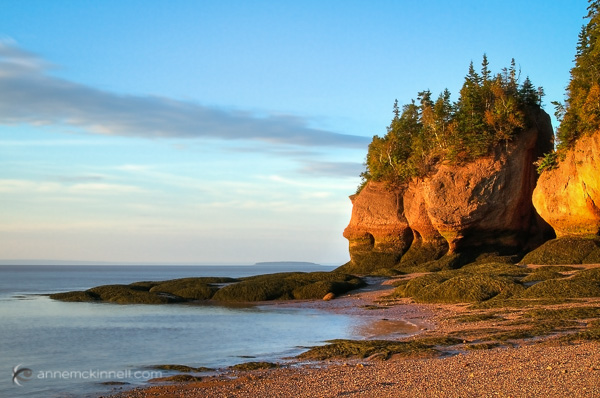
Bay of Fundy, New Brunswick

Bay of Fundy, New Brunswick

When travelling to new places, you want to create photos that express the way you feel about the place. You also want to make unique images that are unlike anyone else’s. The sense of wonder you feel when seeing beautiful places for the first time can easily translate into the images that you make with these three simple tips to help you take better photos.

1. Plan, plan, plan

Once you decide where you’re going, read up on the area and educate yourself about the place and what kind of conditions you can expect. What will the weather be like? Are there any special events taking place? Will the flowers be blooming? If you’re traveling internationally, is there a language barrier? If so, try to learn a few key words and carry a phrase book with you. No matter where in the world you go, locals are always more helpful when you make an effort to speak to them in their own language – even if it’s just a few words.

Find out what else is around that you might be able to see during your visit. If you’re photographing nature, you can find great locations by studying maps. Photography websites and forums are full of advice and examples of interesting places to shoot. Learning about the location’s history and culture will also help direct you to unique and interesting subjects.

Sanibel Island, Florida

Sanibel Island, Florida

Find out as much as you can about the places and subjects you’ll be photographing, so you can prepare for them. For instance, if you’re going to be shooting in the desert, near the ocean, or in very cold, wet, or humid environments, you’ll know to bring protective gear to shield your camera from damage caused by moisture, salt, and sand. If you expect temperatures lower than -10c or higher than 40c, extra batteries will be needed as they drain quickly at extreme temperatures. You might consider renting a particular type of lens that is perfect for your subject like a super-telephoto or a tilt-shift. You’ll also need to know what sort of clothes to wear for the weather.

Big Bend National Park, Texas

Big Bend National Park, Texas

2. Don’t let your gear drag you down

No matter where you’re headed, there are some things you’ll need no matter what. When packing your gear, make a checklist to ensure you don’t forget anything important. It should include:

  1. Your main camera
  2. A backup camera
  3. A normal focal length lens (around ~50mm)
  4. A long focal length lens (~100mm or more)
  5. A wide-angle lens (~35mm or less)
  6. Your favourite, most-used lens
  7. A polarizing filter
  8. A battery charger
  9. Spare batteries and memory cards, and a place to backup images (computer, external drive, the cloud)
  10. A lens cloth and/or air blower to keep your equipment clean
  11. A comfortable camera bag – preferably one that doesn’t stand out as a camera bag to avoid making yourself a target for thieves.
  12. A good, sturdy, but lightweight tripod. Many manufacturers such as Manfrotto, Giottos, and Benro (among others) make special travel tripods that are made of strong, light carbon fibre and fold up into a small carrying case.
Strathcona Provincial Park, British Columbia

Strathcona Provincial Park, British Columbia

Be selective with your packing. Don’t bring things you probably won’t use because camera bags can get very heavy, very fast. Use lightweight luggage and never check your camera bag, since checked luggage can be mishandled or lost. If you are flying, check the size and weight restrictions of carry-on luggage so you don’t get an unwelcome surprise at the airport. If you leave your home country, purchase travel insurance that will cover your precious equipment from loss, damage, or theft while abroad.

3. Seek the unique

When traveling, try to avoid the mass-marketed tours and biggest attractions. Not only are they full of people that get in the way of your shot, but they’re also full of people getting almost the exact same photos that you are. Instead, search for places that are beautiful but overlooked. You may be able to find this information online, but the best way is to be open and talk directly to the people who live there – start with your hotel staff, be friendly, and ask locals where the most beautiful places are that most people don’t see.

Goblin Valley State Park, Utah

Goblin Valley State Park, Utah

This can even start when booking your accommodations – instead of staying in a generic chain hotel, look for places with more character such as cabins, villas, or bed and breakfasts. Or, if you’re like me, you can find an RV site right in the midst of the beauty to call home base. This way, the place you spend the most time can present its own photographic opportunities.

Remember to give yourself time to experience the place before you start photographing. Give yourself a chance to find out what is special about the place first, and then try to convey that in your images. If you are photographing something common like a famous monument or national park, try to find a new perspective.

Joshua Tree National Park, California

Joshua Tree National Park, California

It’s easy to become overwhelmed by the exotic nature of new places. But always remember that good light is a photographer’s best friend. A new place may look fascinating to you in the middle of the day, but it will look magical during good light.

googletag.cmd.push(function() {
tablet_slots.push( googletag.defineSlot( “/1005424/_dPSv4_tab-all-article-bottom_(300×250)”, [300, 250], “pb-ad-78623” ).addService( googletag.pubads() ) ); } );

googletag.cmd.push(function() {
mobile_slots.push( googletag.defineSlot( “/1005424/_dPSv4_mob-all-article-bottom_(300×250)”, [300, 250], “pb-ad-78158” ).addService( googletag.pubads() ) ); } );

The post 3 Simple Ways to Take Better Photos on Your Next Trip by Anne McKinnell appeared first on Digital Photography School.


Digital Photography School

 
Comments Off on 3 Simple Ways to Take Better Photos on Your Next Trip

Posted in Photography


Tips for Better Composition of Seascape Photographs

23 Jan

I do not believe that in photography there are absolute rules of composition, but it is undeniable that certain compositions work better than others.

Why? Probably because our brain is the result of millions of years of evolution, and as in two dots and a line we recognize a face (you don’t believe me? Have a look here.), in the same way we recognize some images as more pleasant to look at than others.

So let’s look at a few tricks to keep in mind during your next visit to the seaside.

Start following rules

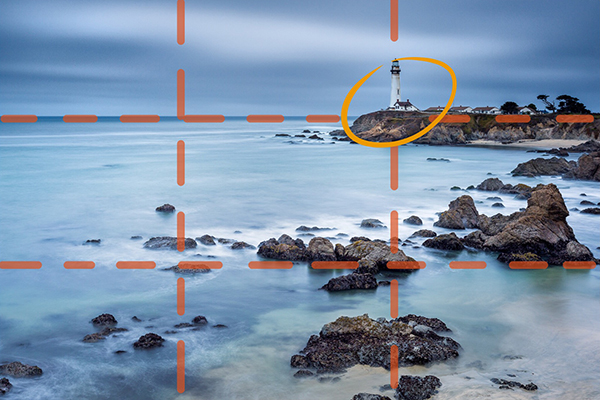
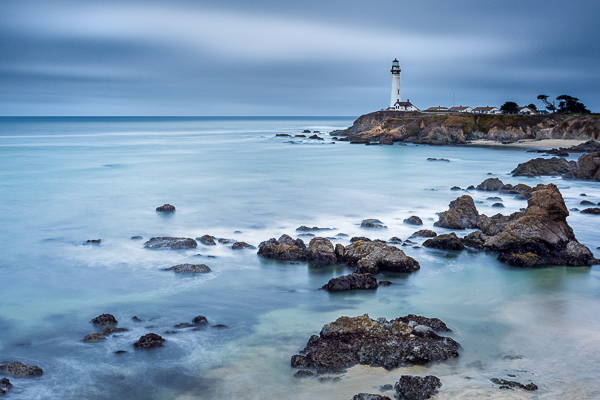
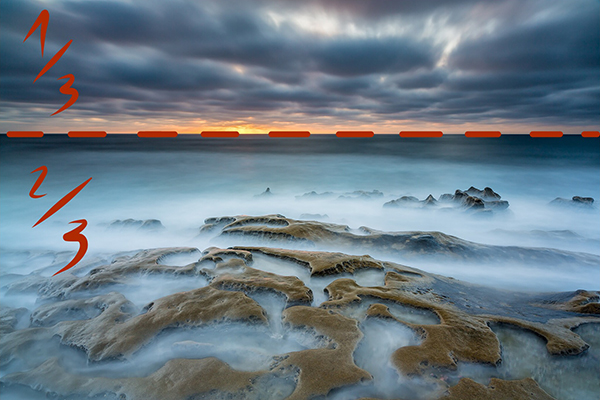
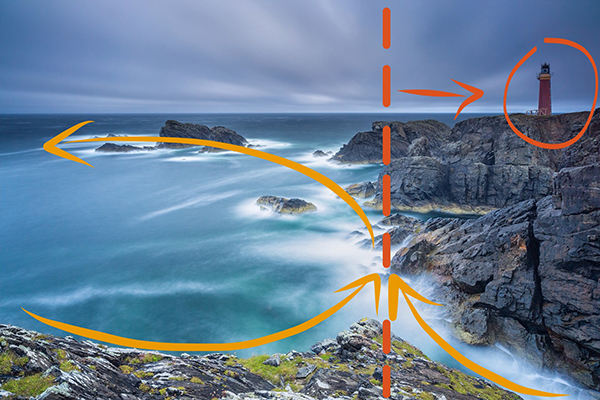
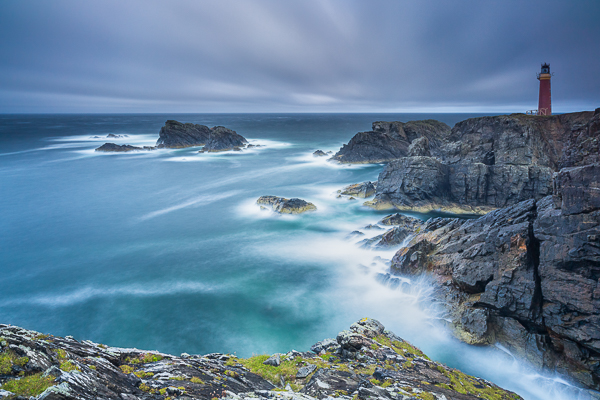
Before trying to break rules, try to follow them. Start with the Rule of Thirds: divide your image into nine equal parts by two equally spaced horizontal lines and two equally spaced vertical lines. Then place important compositional elements along these lines or their intersections. The result will be that your photo becomes more balanced. In a seascape shot, for example try to put a Lighthouse on one of the vertical lines and the horizon on one of the horizontal ones.

1 post

Important elements (the lighthouse and the horizon) are positioned along the lines and at the intersections

1 ante

Choose the leading actor

If you follow the Rule of Thirds, you’ll never again put the horizon in the middle of your image, and that’s a great thing unless you have a perfect symmetrical reflection.

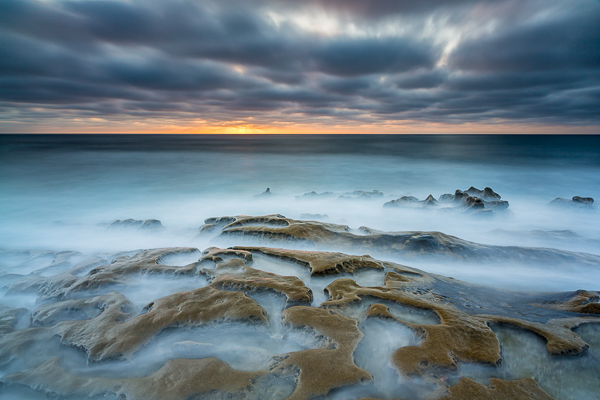
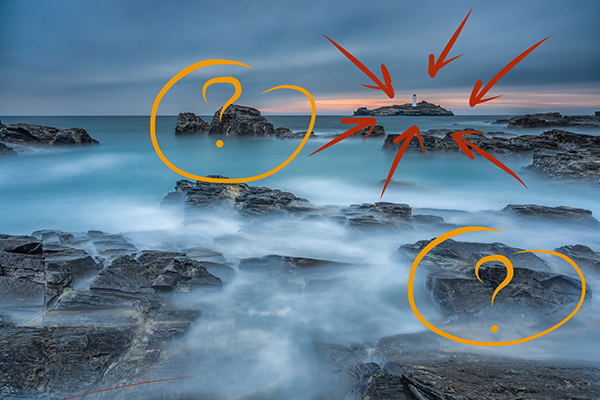
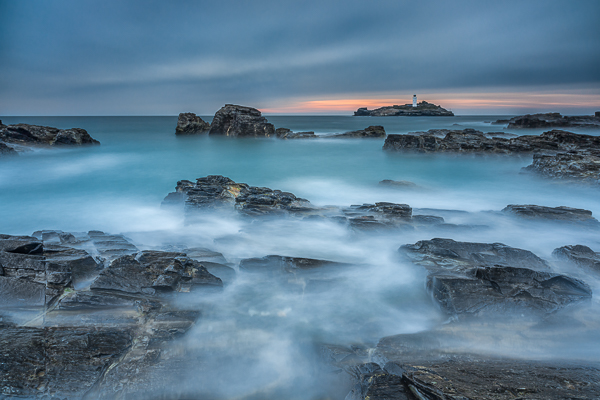
Decide next if the leading actor of your seascape is the sky or the sea, and place the horizon line accordingly. For example if the leading actor is the sea, the image portion under the horizon line will be 2/3 of the whole image.

2 post

The rock formation in the foreground is really interesting with this tide. I wanted to emphasize it and so I give ? o the image to the sea in this the image.

2 ante

Check the horizon

There is nothing more annoying than seeing a crooked horizon. Use the built-in level of your camera, or for few cents buy an external hot shoe level (the yellow one with an air bubble inside). Why? Because every time you fix the horizon in post-production you will lose a portion of the image. Finally, remember that if you publish an image with a crooked horizon, the horizon will be the leading actor of your image.

Choose your focal length wisely

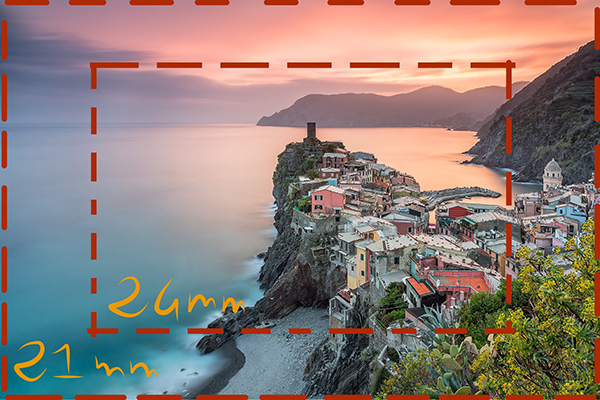
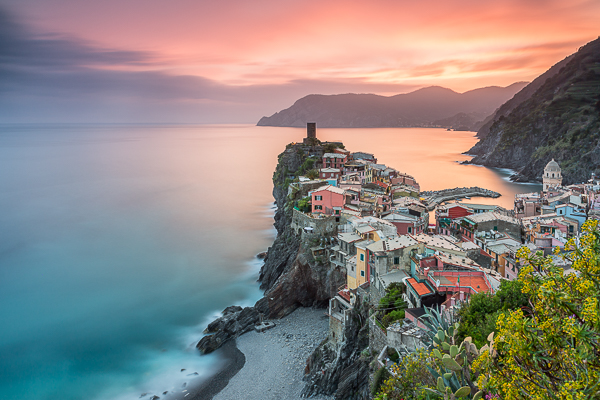
Sometimes you might believe that a certain focal length is perfect for the scene you have in front of your eyes. Think wider! If you’re using a 24mm lens, try with an 18mm or a 21mm lens – don’t be lazy. Remember that in post-production you can always crop your 21mm image to a 24mm image, but you’ll never be able to do the opposite.

3 post

A 21mm lens was perfect here as it let me put inside the frame the spring flowered plant on the bottom right.

3 ante

Use leading lines

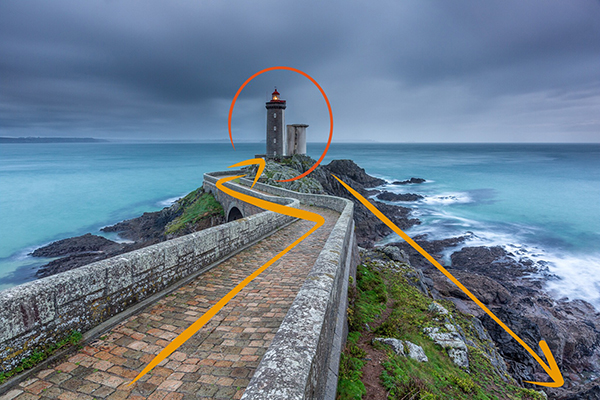
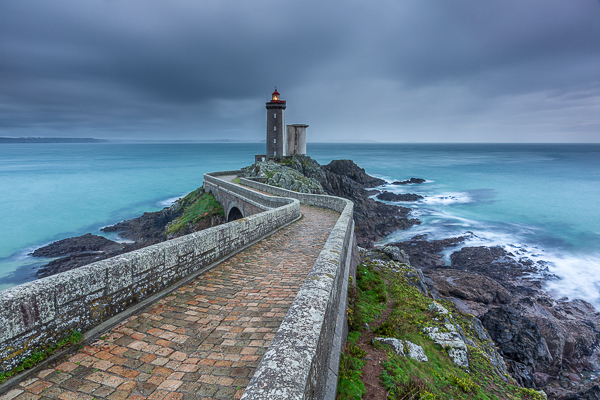
An image is like a book, and to really enjoy it you should be able to read it from the begin to the end. To do that, try to use lines and curves to guide the eyes through a path. You can use a road or the natural line of the coast for example. Keep in mind that you should avoid interrupting that path because it’s like skipping a line in a book; you lose the sense of the story that you’re telling. Also try to avoid lines that guide the eyes of the reader outside the image. You want attention given to what is inside the image, not to what is outside.

4 post

I used the road to drive the eye of the viewer from the margin of the image to the main character.

4 ante

Avoid straight objects in the margin

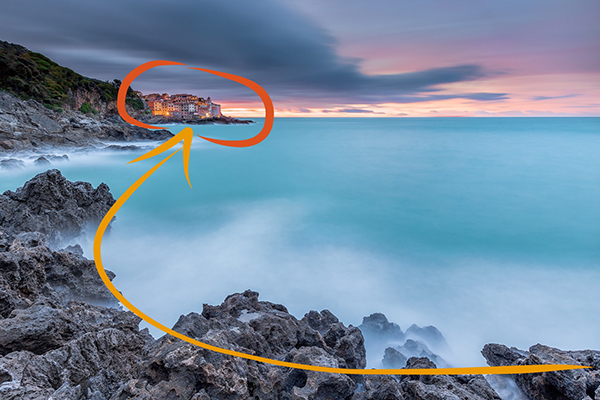
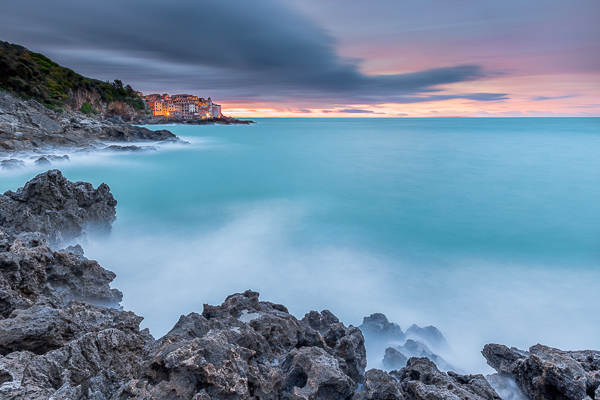
One common problem of wide angle lenses is the perspective distortion when the camera is not aligned perpendicularly to the subject. In other words buildings like lighthouses appear to be falling if you (correctly) place one according to the rule of thirds. Well, the bad news is that there is no an universal solution. The best one is obviously to buy a lens with excellent optical quality, but they are very expensive and in any case the perfect lens does not exist. So we need to correct the distortion in post-production. There are a thousand ways to do that, but most of them require an image crop. For that reason, if you have a straight object in your frame, don’t put it exactly on a vertical line of the Rule of Thirds, but slightly closer to the image center. In that way, after correcting the distortion, your lighthouse will be nearer the vertical line of the third.

5 post

If I had put the small village too close to the frame edge, it would be affected by perspective distortion and to correct it in post production probably I would have lost the nice leading line with a crop.

5 ante

Add dimension and scale

When I started taking seascape pictures, I was a purist: no humans or human artifacts were allowed inside my frame. If humans are still not allowed to join, sometimes I think it’s a good idea to put some artifacts in my composition. The main reason is that even if you exactly the dimensions of the rock formations in front of you, viewers of your image may have no idea if they have never visited that place. When you look at a image, your brain tries immediately to define the dimensions comparing the unknown to something known – help it and use something like a lighthouse, bridge, church to give an idea of scale. A reef is even more beautiful if it is perceived as high and massive.

6 New
The lighthouse give a dimension to the other rocks in the image (try to cover the lighthouse with your finger.)

6 ante

Use negative space

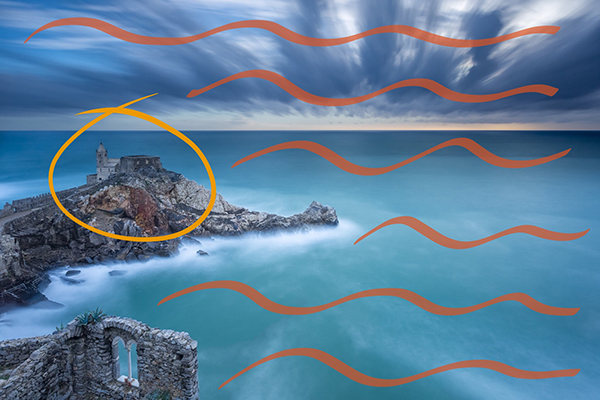
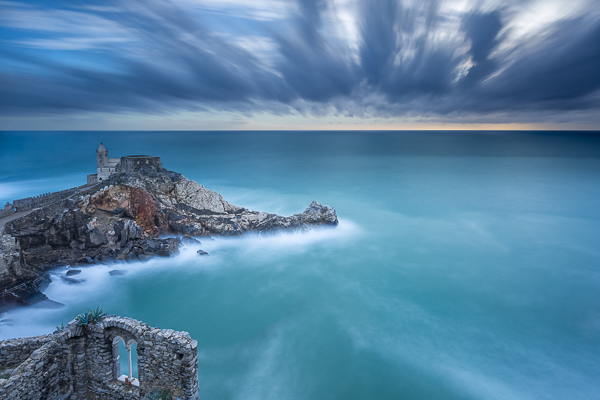
I’m a big fan of using negative space. But what exactly is that? Easy – it is nothing but the space around, and between, the subject of an image. Yes, basically they are “the” nothing. So, how can that be useful? Negative space is perfect to emphasize the subject. A lonely church on the top of a cliff is even more brave if it seems that it challenges the vastness of the sea.

7 post

This old church reminded me a solitary sentinel who scrutinizes the sea.

7 ante

Have fun

Finally, remember that every rule is made to be broken. If the horizon is not perfectly in one third because the sky lacks of clouds, put it above the upper horizontal line of rule of thirds. If you need to put a lighthouse near the margin of the frame to use leading lines, just do it.

The real goal of a picture is not to follow the rules, but to arouse emotions in the viewer. Keep this in mind and there is no composition that can overcome you.

8 post

The lighthouse is on the right vertical line of rule of thirds. Unfortunately I didn’t have a wider lens with me and I had to put it there in order to use leading lines in the foreground and not to cut the nice wave trails in the upper left side of the image.

8 ante

googletag.cmd.push(function() {
tablet_slots.push( googletag.defineSlot( “/1005424/_dPSv4_tab-all-article-bottom_(300×250)”, [300, 250], “pb-ad-78623” ).addService( googletag.pubads() ) ); } );

googletag.cmd.push(function() {
mobile_slots.push( googletag.defineSlot( “/1005424/_dPSv4_mob-all-article-bottom_(300×250)”, [300, 250], “pb-ad-78158” ).addService( googletag.pubads() ) ); } );

The post Tips for Better Composition of Seascape Photographs by Francesco Gola appeared first on Digital Photography School.


Digital Photography School

 
Comments Off on Tips for Better Composition of Seascape Photographs

Posted in Photography


6 Tips for Better Portraits on Location

20 Dec

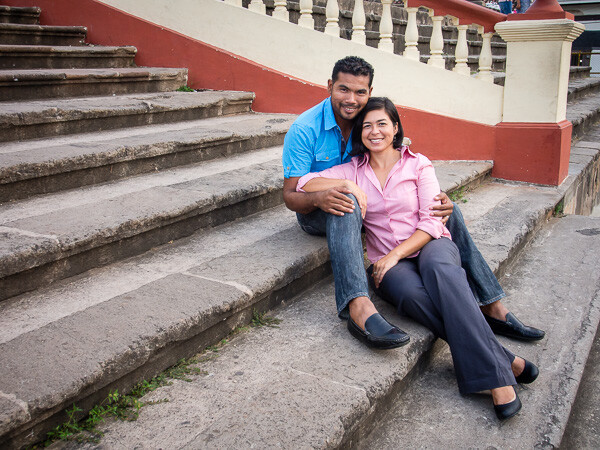
Whew it’s been a while since I actually wrote a tutorial here on dPS so I thought it was time. Some of my most popular articles are about portrait lighting patterns and other aspects of creating great portraits. In this article I want to give you a few tips to help you take better portraits on location, flatter your subjects and make sure you are all happy with the final results.

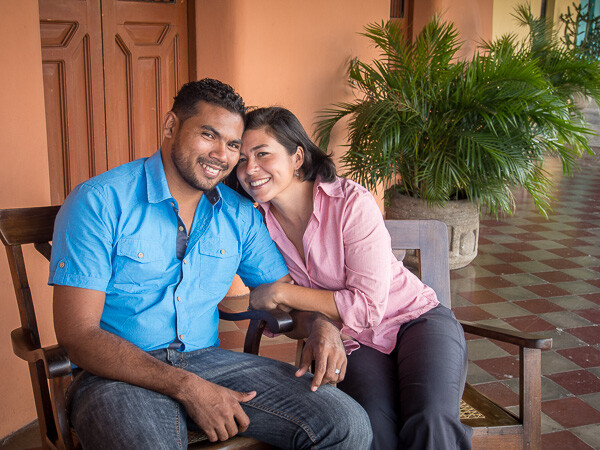
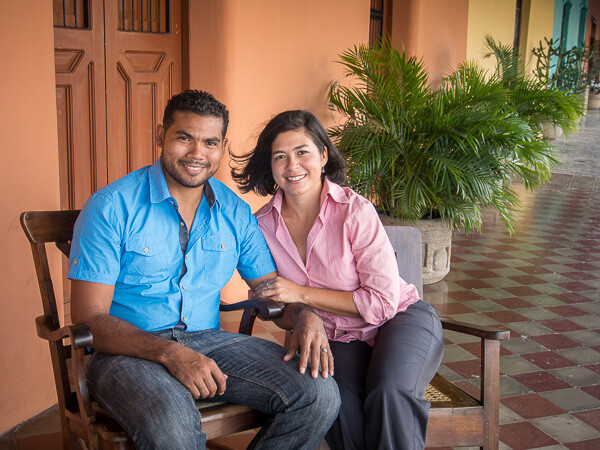
Mayorga Dec14 0018 600px

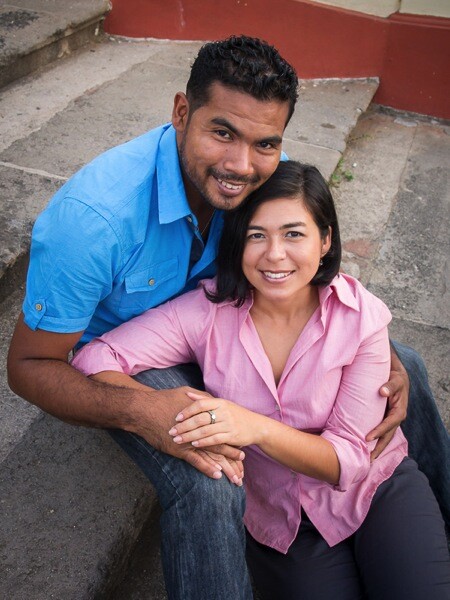
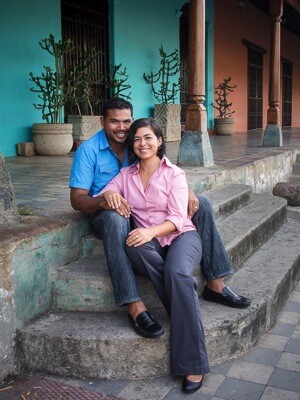
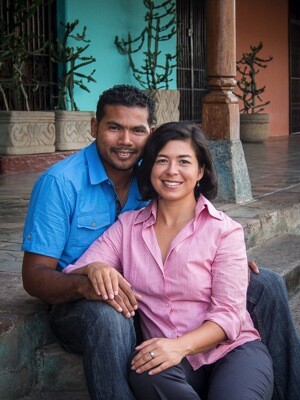
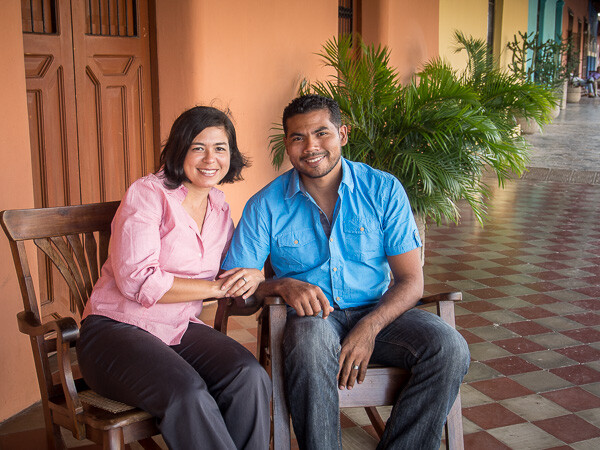
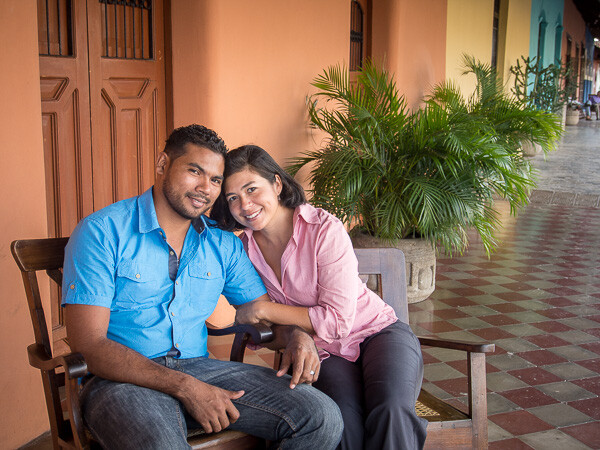
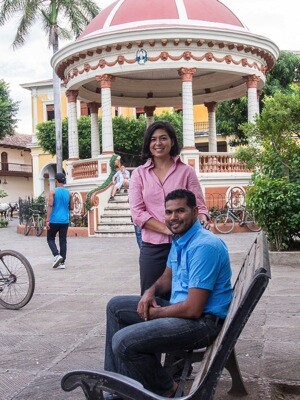
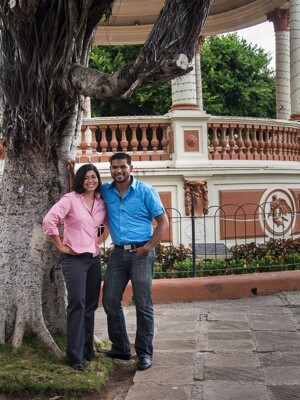
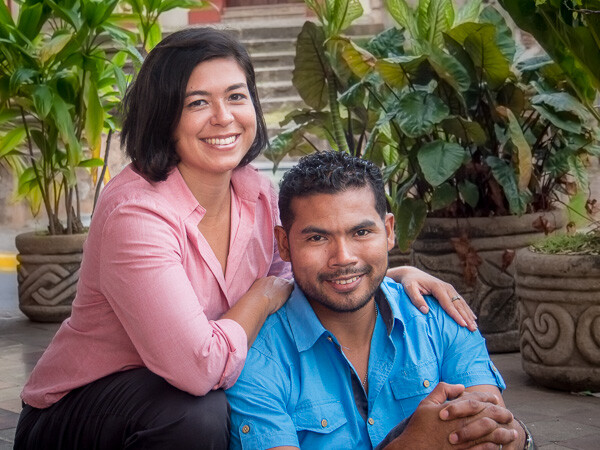
My models for this article are my Nicaraguan friend Luis and his fiancé Sonia. He’s been a great help to us on our tours here and has become a good friend so this was win/win for us as they get a nice portrait of themselves (they don’t have a professional one) and I am allowed to use their photos and their session for teaching purposes here.

Quick summary:

This is a quick list of the five tips, we’ll cover each in more detail and look at some examples.

  1. Ask your subject’s what they like and want
  2. Look for the light
  3. Find a good background
  4. Pose you subjects to flatter them
  5. Communicate with them
  6. Do something they want, even if it’s not art

First a note about gear

A lot of people get hung on up having the top of the line gear, pro lenses, the fancy bells and whistles, and all the extra gizmos. While it is nice to have the best gear, I want to show you it is possible to make great portraits with ANY gear. All the photos in this article were taken in Granada, Nicaragua (where I am currently living/working for 2.5 months) with an Olympus OM-D E-M5 mirrorless camera, and 12-50mm f3.5-6.3 lens (equivalent to a 24-100mm on a full frame camera). NO flash was used only a reflector in a couple situations.

Tip #1 talk to your subjects before the session

Knowing what people want for their portrait, and their expectations is essential to making a portrait they will like. Ask them what kind of clothes they’ll be wearing – formal or casual – that may make certain locations a better choice than others. Talk about feel or mood for the portrait. If it’s a couple are they touchy feely or not. You need to know these things going in, not later when they hate their photos or feel uncomfortable doing something that isn’t really “them”.

For my couple I found out that she liked certain churches here in town, gardens, and the volcano (keep reading to see how I worked some of that into the session). I scouted out a few locations ahead of time with a friend so I could check out the lighting. If you are going to do this, go at the same time of day you want to do the session. I like to work at golden hour with the sun is low and not overhead, which brings us to the next tip.

Tip #2 Look for the light

First and foremost photography is about light. If you have no light or bad light it’s really hard to make good photos. Back to golden hour – this is when the sun is low in the sky either right before sunset or after sunrise. Most portrait photographers choose this time of day as the optimal time to work instead of fighting with midday overhead lighting. Do yourself a favour and make your life easier – whenever possible schedule portraits at golden hour. Find out the sunset time for your area and start an hour or so before that.

Mayorga Dec14 0003 600px

In the first spot for our session we actually started on the porch of the house we’re renting here. Across the street is a big white church reflecting the light back under the porch. There’s an overhang covering the top so there is no direct overhead light. It is the perfect situation for great portrait light and one I seek out wherever I’m shooting. Just by turning the subject’s faces a little bit you can create different lighting on. Read more about that in my first ever dPS article: 6 Portrait Lighting Patterns Every Photographer Should Know.

In the image above you can see the direction of light is coming from camera right (their left). See how he is turned away from the light source slightly and has broad lighting, then watch how it is corrected in the next few images.

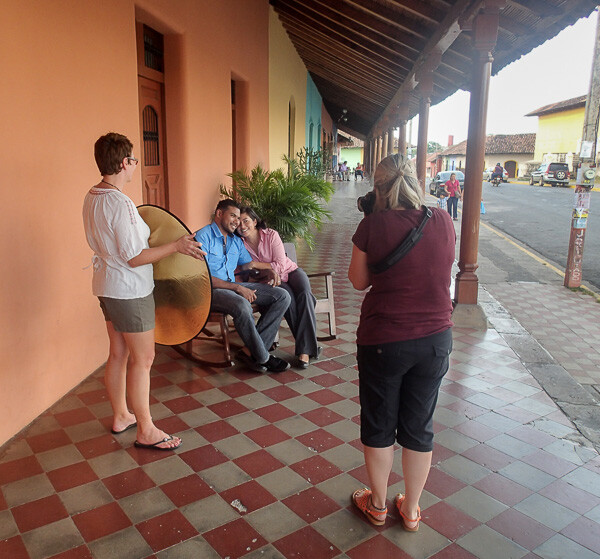
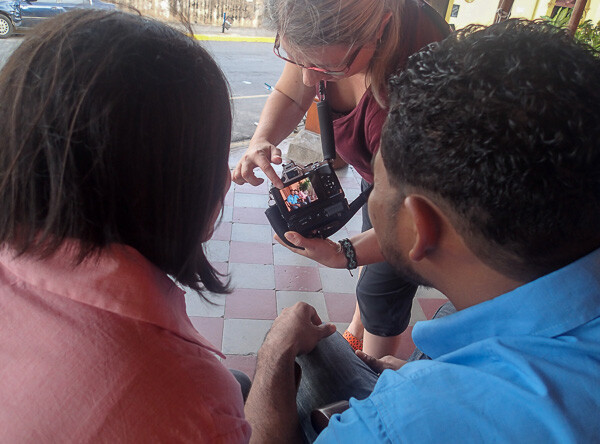
Mayorga BTS 0029 600px

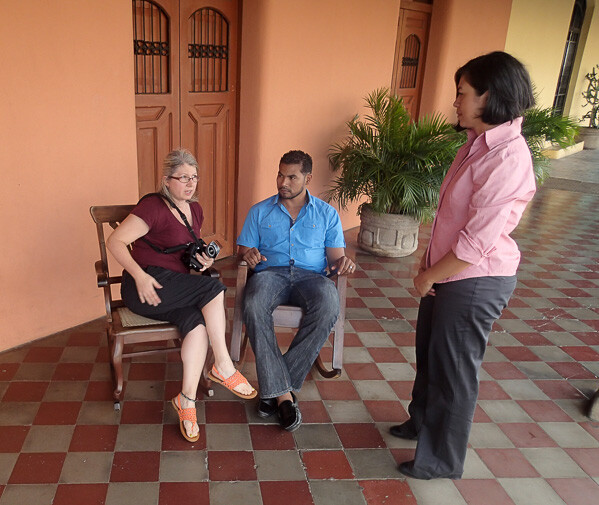
Behind the scenes shot

Mayorga BTS 0041 600px

Use an assistant and reflector when you have a chance. Here I had my assistant holding a white reflector to bounce a bit of light into their faces.

Tip #3 Find a good background

Everything in photography is subjective. So how do we define a good background from a bad one? Well there are a few things that can help:

  • Watch for bright spots (and areas of high contrast) in behind your subjects it will draw the viewers eye, usually as a distraction, which is not desired.
  • Avoid bright colours in the background for the same reason. You want the viewers eye to go direction to the people, not the stuff behind them. This is often a problem when your subjects request a garden or flowers in for their background. They do not know this stuff, so it is your job to educate them and make a portrait that is both pleasing to the eye, and to them!
  • Make it appropriate for the subject. Again the idea of a portrait is to portray the person, so sometimes you need to show more of the environment to do so. Just make sure it is fitting for them and helps either flatter them or tell their story.
  • Keep it simple and blur it when possible. A busy and sharp background will draw attention. Use the KISS principle and a large enough aperture to get that background out of focus. A longer lens also helps – something which was limited for me in this situation so do the best you can with what you have.

In the examples below see how I started with the full church in the background and made a few alterations to simplify and get the focus more on the people.

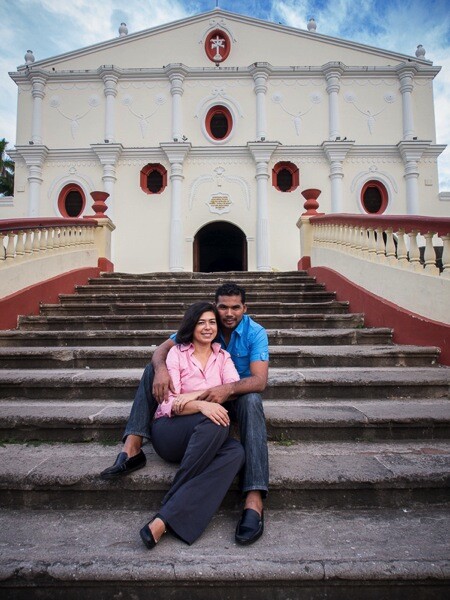
Mayorga Dec14 0041 600px

First shot at the church. Notice how the wide angle lens makes their lower bodies and feet look larger? This is also the same church that was bouncing the light in the first setup.

Mayorga Dec14 0049 600px

Much better! In this variation I moved back and zoomed in using a longer lens to get less of the background and crop out the lower bodies.

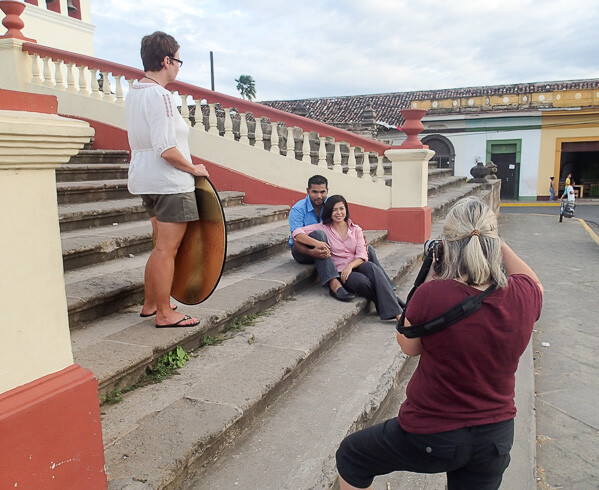
Mayorga Dec14 0030 600px

Next angle shooting from the side on the stairs using the nice leading lines. Again the wider lens makes feet or anything closer to the camera look bigger. Not so much desired, but not horrible in this instance.

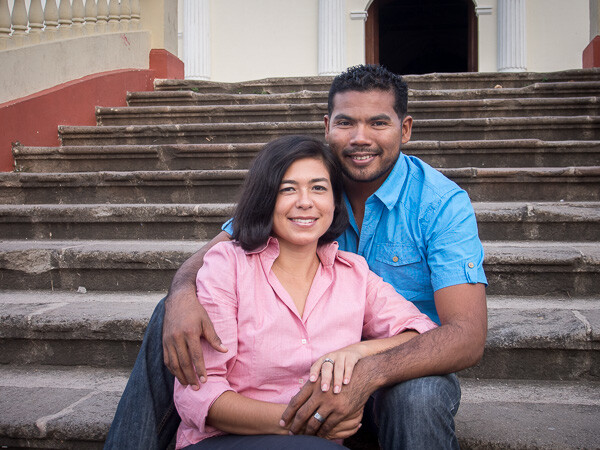
Mayorga Dec14 0031 600px

Once again zooming to focus more on their faces and in this case a slightly higher camera angle, is far more flattering to them.

Mayorga Dec14 0034 600px

Lastly try something different. A super high angle and them looking up has a completely different feeling.

Tip #4 Pose to flatter people

Posing people is one of the hardest things to learn but also one of the most important. People are nervous about having their photos taken, and that is often reflected in their body position. It is your job to get them to loosen up and to help them look their best.

The best way I know how to show people a pose is to do it for them, then get them to repeat it. So I’ll go stand in their spot, strike the pose I want them to do and then have them copy me. Or you can face them and have them mirror you.

Mayorga BTS 0009 600px

Here I am showing her how to sit and what not to do – stick your butt towards the camera.

Mayorga BTS 0117 600px

And how to position their feet – very important! How the feet are positioned makes a difference to how the body looks. Pay attention from head to toe, literally. If you want them to turn their body – tell them to turn their feet, the body will follow.

Mayorga Dec14 0051 600px Mayorga Dec14 0054 600px

Here are a few general tips for posing people:

  • If it bends bend it! Get them to shift their weight to one leg (ALWAYS the back one and hip away from the camera) and let one leg bend naturally. Stiff legged = boring = they look nervous and won’t like the photos.
  • Arms too: get them to put a hand in a pocket (but only the fingers not the thumb, that way they won’t shove it too far in there pulling their pant leg funny), hook a thumb in a belt loop, or if you’re working with a couple hold hands and touch. Remember you should already know if they are touchy feely or not (see tip #1 above) so you know what they’ll be comfortable with. Having people who are family, close friends, or couples touch in their portrait helps to add a feeling of connection and usually helps them relax too.
  • Observe their natural body positions and use them. If you see that she sits a certain way, or puts a hand on her hip – get her to do that. Often I’ll give more loose posing directions to start and see what they end up with on their own – then refine it a little if necessary. They’ll relate more to the portrait if it something they do naturally, and you may even get comments like “Oh that is SO me!”
  • Get ladies to cross legs at the ankles not knees. Crossing at the knee is how most of us sit normally but it makes the legs look unnecessarily bulky. Trust me on this – NO woman wants to look bulkier! Ankles crossed looks feminine and makes a nice line for the legs to follow.
  • Posing a couple: If you are dealing with a couple with a large height difference (as I was in this session) get the man to sit and have her drape her arms around him from the side. Or in a standing pose have him widen his stance more. Putting his feet farther apart will actually lower his total height – a neat little trick that really works.
  • Avoid cropping off people’s hands and feet, they end up looking amputated. If you’re going to crop in, come in closer to make it more obvious and crop to the knees (or higher) and elbows.

Mayorga Dec14 0006 600px
In this image (above) with her on the left, I felt it wasn’t as flattering when she leaned to the side (exposing more hip area. Remember in the standing pose – hip pushed away from the camera – same with sitting.

Mayorga Dec14 0015 600px

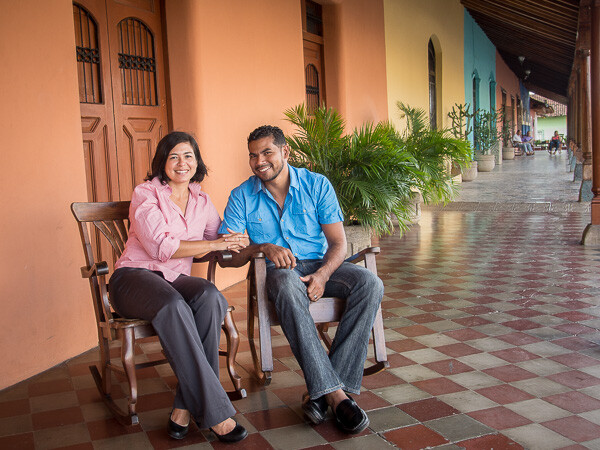
Pose better. He looks bigger, which he is, and her pose is more flattering. At top of the article when we talked about light he was turned away from the church (light source) and had broad lighting. Now that is reversed and he has short and she has broad lighting. I didn’t mind it so much and the pose and expressions were great so I went with it. But a slight head turn changes that:

Mayorga Dec14 0012 600px

Tip #5 Communicate with them

Let’s go back to people are nervous getting their portrait done. The best way to help them relax is to talk to them. It’s not rocket science just talk. Tell them what you’re doing, ask them how their day was, find some common ground to talk about while you fuss with your gear. Just talk!

Novice photographers also being nervous tend to clam up and go about their business setting up their camera, tripod, metering, testing, etc., and forget they have real people standing there waiting for direction. Silence is awkward, build a rapport with them and help them relax at the same time.

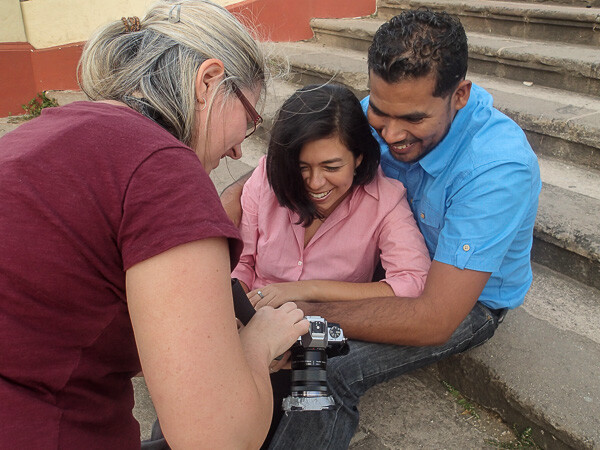
Also show them some of the photos now and then and tell them how great they’re doing and how fantastic they look. When you share with them you think the photo session is going great they almost instantly relax and get into it more. You may even find them wanting to participate more and come up with ideas for photos.

Mayorga BTS 0035 600px

Mayorga BTS 0063 600px

Tip #6 Do one of their ideas

Sometimes people will throw out ideas at the session or in your initial fact finding discussion. Don’t discount these right away. Often the suggestions will have some meaning to them or just simply show their tastes. Try to incorporate at least one or two of their ideas into the portrait session, even if you know it’s not going to be the best shot or come out as art. Do it to have some fun and let them know they are an important part of the process.

In this example remember she said she like a couple of the churches, to see the volcano, and gardens. Let’s see how that came out:

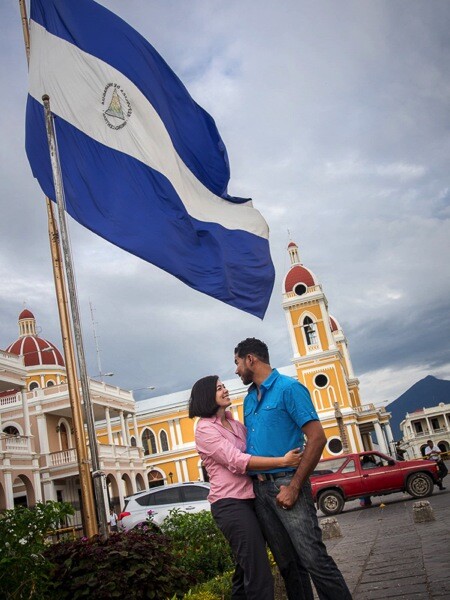
Mayorga Dec14 0075 600px

The white church was already used in some of the shots above. We worked the location near our house and then just went for a walk to see what else caught our eyes. The main square here has the big yellow cathedral, and giant Nicaraguan flag, and the volcano in the distance. So I tried to get all of those elements into one shot, and somehow manage to see the couple still. The image above is the result. It doesn’t completely suck but they are pretty small and I wasn’t crazy about the candy cane looking light post.

Once again I zoomed in to a longer focal length and got a bit closer to crop out their feet. Ignoring the annoying cars behind them, I think this is more effective and still shows all the elements. Waiting for the flag to blow was also important to be able to see it. Patience young grasshopper!

Mayorga Dec14 0090 600px

We were losing light fast (happens at sunset) but I wanted to get a few more in for them. Next up they liked the gazebo. I tried to get it in the background but there was a guy sitting there and was near impossible to get him out of the shot and too many people wandering through the background. That and the light just wasn’t working, their eyes and faces were way too dark (below left) and there was no light to get with the reflector (too cloudy).

Mayorga Dec14 0093 600px Mayorga Dec14 0096 600px

Moving them under an overhanging branch of a large tree (above right) helped block some of the overhead light of the cloudy sky and still allowed a portion of the gazebo to show in the image.

Finally walking back to our house we noticed a row of plants on the stoop. So I decided to make it work as a garden-like shot. It’s not my first choice for background but they liked it and that’s all that really matters.

Mayorga Dec14 0125 600px

Final tips

Being a portrait photographer is part lighting technician, part psychologist, and juggler. You have to take all the elements and make them work together including technical, aesthetic and work with real live people at the same time. Like I said – juggling!

If I can give you one tip to sum up doing portraits on location it would be this:

Don’t be afraid to admit it’s not working and try something else. There are lots of possibilities even in one location

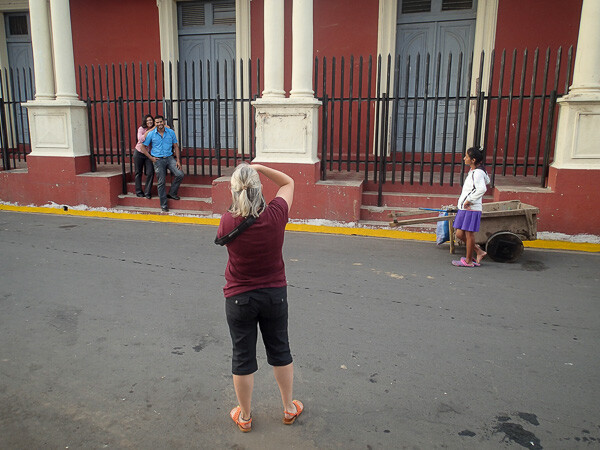
Mayorga BTS 0089 600px
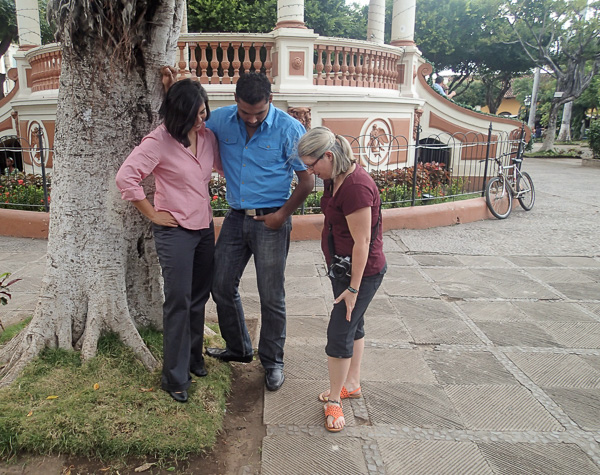
Another behind the scenes shot. I didn’t end up liking the result here but I thought you might like to see the street and a bit of the city of Granada.

googletag.cmd.push(function() {
tablet_slots.push( googletag.defineSlot( “/1005424/_dPSv4_tab-all-article-bottom_(300×250)”, [300, 250], “pb-ad-78623” ).addService( googletag.pubads() ) ); } );

googletag.cmd.push(function() {
mobile_slots.push( googletag.defineSlot( “/1005424/_dPSv4_mob-all-article-bottom_(300×250)”, [300, 250], “pb-ad-78158” ).addService( googletag.pubads() ) ); } );

The post 6 Tips for Better Portraits on Location by Darlene Hildebrandt appeared first on Digital Photography School.


Digital Photography School

 
Comments Off on 6 Tips for Better Portraits on Location

Posted in Photography


Why Manual Exposure is Better for Winter Wildlife Photography?

18 Dec

My winter wildlife photography tours and workshops put us in locations with lots of snow on the ground, which presents a new issue for most people – how to get good exposure without continuously messing around with exposure compensation.

You have to tell the camera to brighten your images by up to two stops of exposure to make whites white, because the meter in your camera wants everything to be a mid-tone gray.

MBP Cranes Exposure Example

For example, here is a photograph of one of our main subjects, the Japanese Red-Crowned Crane (above, left). It’s a predominantly white bird on a snowy white background. For a shot like this if I put the camera in Aperture Priority mode with the aperture set to f/8 for example, the camera would tell me that the shutter speed should be about 1/2000 of a second, which would result in a photo like the under-exposed dark version (above, right).

To avoid under-exposing images like this, one thing you can do is to dial-in +2 stops of exposure compensation in Aperture Priority mode. This would result in a new shutter speed of 1/500 of a second at the same aperture, and a beautifully white image.

There is one fundamental problem with this method though, and this is what most people fail to understand until they’ve missed enough shots for them to take my advice seriously. The moment your subject moves away from their white background, the exposure with +2 stops of exposure compensation is no longer valid.

To prove my point during a recent tour, I switched to Aperture Priority with auto-ISO and photographed this Whooper swan on the snow with +2 stops of exposure compensation dialed in. This gave me a perfectly white bird with perfectly white snow, as we’d expect.

MBP Hokkaido 20140221 0212

Then, just moments later, I photographed a flock of Whooper swans flying into the same location, this time with a darker background, which fooled the camera into increasing my exposure and the result was this totally over-exposed photograph.

MBP Hokkaido 20140221 0217

To avoid this, when photographing wildlife in the snow, the best course of action is to lock your exposure down (using Manual) so that when the opportunity to photograph something with a darker background arises, the exposure doesn’t shift, and the subject and the snow remains perfectly exposed, as in this example.

MBP Hokkaido 20140131 1261

The downside of this method is that you do have to continually check your exposure, especially on a day with patchy cloud for example. Because you’ve locked down your exposure totally, you are responsible for noticing when it gets a bit brighter or darker, and updating your camera settings.

In my experience though, although you sometimes have to tweak the exposure in post-processing, you still return home with many more usable shots, as opposed to the above example with the flock of supernova swans, which is a firm candidate for deletion.

Settings Your Exposure for White

To set my exposure I usually just fill the frame with snow, and adjust the settings in Manual mode, until I see the caret on the camera’s meter indicate that the exposure is now at +2 stops for overcast snow or +1 1/3 stops for brightly lit snow.

MBP Filling the Frame with Snow 640 f8 ISO1001

How you achieve your exposure depends on your subject. Personally, I usually start with the aperture, as that controls depth-of-field, and I want to select that based on how much of the subject or scene I want to be sharp, and how much of it I want to be nice blurry out of focus bokeh.

Then I select the shutter speed, based on my focal length and how much I expect my subject to move. The rule of thumb for the slowest shutter speed you can use without the risk of introducing camera shake, is to use the focal length as the denominator of the fraction in your shutter speed. For example if you are shooting with a 200mm lens, the slowest shutter speed you can safely shoot hand-held is 1/200 of a second.

Of course, image stabilization or vibration reduction in the lens can help you to go slower, but you also have to consider subject movement with wildlife. To freeze a large bird in flight you need at least 1/500 of a second, but ideally 1/1000 or higher if possible.

These are, of course, general guidelines. You may decide to slow down the shutter speed and pan with your subject to use the blur of the wing movement artistically as in this example, but that’s the subject for another article.

MBP Hokkaido 20130207 4320

Once I’ve decided the aperture and shutter speed based on the subject and any artistic decisions I might make, the last setting that I usually change as I lock in on my manual exposure is the ISO. Once the caret reaches +2 on the camera’s meter scale, I make a test shot, and check the histogram.

For a photograph of a field of snow, or a white bird on a white background, most of the data in the histogram should be almost touching the right shoulder of the histogram. This means the image data captured is almost pure white, as it should be. If the data is in the middle of the histogram, the whites will be gray. This is what the camera would do automatically without our help.

MBP White on White Histogram

Also remember to turn on your highlight alert or highlight warnings in your camera’s settings, commonly called “the blinkies”, as these will alert you to any areas of your image that you might be over-exposing. It’s okay to over-expose a few specular highlights, but try not to over-expose large areas of your image, especially on your main subject, or the detail in those areas will be lost, and cannot be recovered on a computer later.

One of the other nice things about photographing birds over snow is that the light from the snow reflects up onto the underside of the birds in flight, as in this example. This means that you really don’t have to worry about where the bird is once you have locked your exposure down in Manual mode.

MBP Hokkaido 20140221 6768

The subject can be on white background, a dark background, or a blue sky, and your exposure will be spot on, leaving you free to concentrate on focusing and composition, instead of frantically trying to adjust your exposure compensation as the action unfolds.

googletag.cmd.push(function() {
tablet_slots.push( googletag.defineSlot( “/1005424/_dPSv4_tab-all-article-bottom_(300×250)”, [300, 250], “pb-ad-78623” ).addService( googletag.pubads() ) ); } );

googletag.cmd.push(function() {
mobile_slots.push( googletag.defineSlot( “/1005424/_dPSv4_mob-all-article-bottom_(300×250)”, [300, 250], “pb-ad-78158” ).addService( googletag.pubads() ) ); } );

The post Why Manual Exposure is Better for Winter Wildlife Photography? by Martin Bailey appeared first on Digital Photography School.


Digital Photography School

 
Comments Off on Why Manual Exposure is Better for Winter Wildlife Photography?

Posted in Photography


Digital Photo Editing Workflow – Better Images From Capture to Output

06 Dec

Better images from capture to output

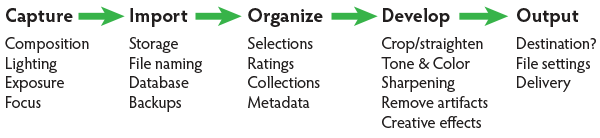
A comprehensive look at the essential steps and principles in an effective photo editing workflow with highlights of key tools.

Have you ever tried to find a digital photo you know you worked on, but couldn’t remember where you saved it, or even what it’s called? Do you find yourself re-editing photos you’re sure you finished before? Or are you stuck, staring at an image you know could be made better, but not sure which adjustments to make, or even where to start?

We’ve all been there: hundreds of images to sort through. Files scattered all around your hard drives; photos missing, others duplicated in unnecessary versions, who-knows-what lurking in mysterious places with confusing names. And prints coming back from the lab looking, well, crappy. All the while, knowing you have photographic gems just waiting to be discovered and brought to life.
Nat coalson digital photo editing workflow image 1 diagram H

If you’re feeling overwhelmed by digital photography, you’re not alone. Capturing digital images has become so easy in recent years that it’s easy to get stressed, if only because of the sheer volume of pictures you’re making.

For every serious photographer, capturing an image is only the beginning of a complex process with numerous pitfalls. So how can you streamline this tangled mess? The key to keeping your digital photography fun and productive is to adopt, and adapt, an effective, consistent workflow.

Why workflow matters

The concept is simple – your photography workflow is the sequence of steps and actions you take to edit your photos, work them up to a result you consider finished, and share them with the world. Editing photos can be like baking a cake or assembling flat pack furniture. You start with raw ingredients, or loose parts, and use an ordered sequence of steps to put the thing together. In a good photography workflow, the end result is a perfectly crafted image, securely stored for future use, all with the least possible effort.

Efficiency is important. Without a good workflow, at minimum you’re wasting time. Worse, you run the very real risk of losing your most precious photos. Forever. A couple of years ago I knew a wedding photographer, then aspiring to become professional, who lost an entire wedding shoot because of relatively simple errors in her workflow. (In short, the mistakes derived from a convoluted importing method and totally inadequate backups.)

Maybe you’re only taking pictures for fun? If you’re planning to continue with photography, you still need to use an effective workflow. If you don’t, your photo archive will become a beast, very difficult to tame. And your images won’t look as good as they could. No fun.

When you’re starting out in digital photography, you need to develop good habits early. Even if you’ve been shooting for years, it’s never too late to improve your process.
Nat Coalson Within the Great Cloister 600px

Now it’s personal

You can craft your digital photography workflow to suit your own situation and preferences. But every effective workflow shares common tasks, proven techniques and best practices. These established methods have evolved with real-world use across all genres of photography. They apply equally to beginning enthusiasts and seasoned pros.

I first began editing photos in the early 1990s, working in a magazine publishing environment. Under tight deadlines and managing many thousands of digital assets, a good workflow was crucial. As a working photographer, I’ve been refining my own workflow for over a decade and I still make little tweaks now and then.

Continually finding ways to tighten the screws helps eliminate the risk of disaster, while also making the practice of photography more fun and rewarding. You can master your own photography workflow, too. You first need to understand the most common problems and tasks you’re likely to encounter. Then learn the best tools and techniques for dealing with them. A good photo editing workflow:

  • Uses the fewest steps possible.
  • Is non-destructive and allows you to change your mind or redo steps without losing image quality< ./li>
  • Protects your images now and for the future.
  • Provides the best looking photos.

So let’s review the essential parts of a practical photo editing workflow.
Nat coalson digital photo editing workflow image 1 diagram V

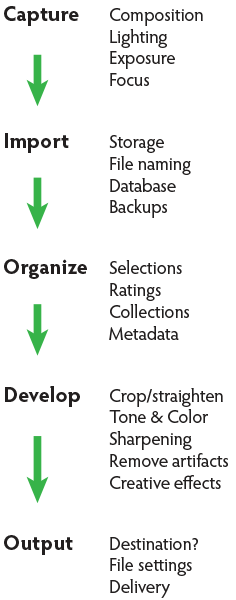
Stage 1. Capture

Whatever the end result you’re envisioning, great digital photographs begin with good data. You should always strive to make the best capture you can, and in most cases, try to finish the photo as much as possible in-camera. Work carefully to make the most accurate exposure with the ideal level of sharpness for the given scene or subject. Regardless of your capture format, you should always be working to master your camera techniques.

Stage 2. Import

Copying files from removable media onto more permanent storage is also variously called downloading, ingesting, transferring, etc., but the result is the same. Right after a shoot, copy all your images from the memory card into a new folder on at least one hard drive, then back up everything right away.

Backup. Backup. Back Up!

Every computer user knows the importance of backing up data. But too many people don’t do it, or don’t do it often enough. This isn’t a single step in the workflow; it’s something you should do frequently throughout the process. You should have your image files saved on at least three separate media sources:

  1. Your master working drive
  2. A current backup of the master drive
  3. A complete historical archive, preferably stored in a separate physical location from your master and working backups

(The topic of digital photo storage and backup is so important that we’ll revisit it repeatedly in the future!)

Stage 3. Organize

After your photos are copied onto your working storage media (and backed up!), sort through the pictures to separate your favorite images from the rest. The best way to do this is with ratings (e.g. stars) or other ranking methods (colors, flags, etc.).

Nat coalson digital photo editing workflow Image 2 selections

Whichever system you prefer, keep all the photos from a single shoot together in one folder and use the ratings attributes to annotate your selections. During this stage you should also apply and enhance the metadata associated with your files. Keywords, copyright notices and contact information are just a few of the many types of textual information you can embed within a digital image.

Escaping folder hell

In the early days of digital media, it was common practice to move files from one folder to another during the editing workflow. For example, all the original images, often scans from film, would first be put into one folder. As individual photos were selected, processed and output, the files would be copied again (or moved) into other folders representing the stage of the workflow it was in. DON’T DO THIS! It creates a very unwieldy hierarchy of files and folders and makes good organization all but impossible.

Modern imaging software, and more specifically, metadata—allows you to more effectively organize files using virtual methods (such as Lightroom’s Collections and virtual copies) without the need to ever copy or move your original images on the hard drive. In an efficient workflow, there is no need to use separate folders for different types of files.

Stage 4. Develop

This is where you apply digital processing to make each image look as good as it can to fulfill your creative vision for the picture. Like Import, this stage has different names depending on who you’re talking to. Developing is the term most often used by Lightroom users. Enhancing, adjusting, post-processing, and simply editing are other common terms to describe this stage, which itself is comprised of several distinct steps.

The ideal order of operations for developing a photo depends on the characteristics of the original capture; some images will need very different enhancements than others. Still, it’s possible to define a typical sequence of steps as below.

TIP: Work global to local

Make the biggest changes first, then work your way to smaller details. In photo editing, this means first making global adjustments (those that apply to the entire image) before working on the local adjustments. And, earlier in the workflow, apply any changes relevant for large batches of images before moving on to fine tune individual photos.

Develop steps

  1. Crop and straighten. Since it changes the composition, cropping can be the most significant change you can make to a photograph. It’s best to do it early in the process, but you need to use a method that allows you to go back and refine the crop later if you change your mind.
  2. Correct distortion. Most camera lenses introduce various amounts of distortion to a picture; some more than others. Fix distortion as one of your first, regular steps.
  3. Adjust exposure and tones. The tonal range of an image refers to the various levels of brightness of each pixel, from pure white to solid black. Tone is independent from color. Simply setting the white and black points can have a huge impact on the overall appearance of an image, so you should normally do this before moving on to color. Tonal contrast should also be handled during this step; the variation between light and dark tones determines how much impact (or punch) a picture has. Naturally, some pictures will look best as low contrast.
  4. Adjust white balance and color. White balance plays the biggest role in the color of a photo. If the photo has a strong color cast — for example, an indoor photo captured using outdoor white balance settings — you should fix it before addressing tone. But for images with white balance that seems fairly accurate, set the tone before refining the white balance. After setting white balance, consider making other color adjustments, most notably saturation and vibrance, which affect how pure and vivid the colors appear. Alternatively, convert to black-and-white or apply special color effects during this step.
  5. Apply local adjustments. These are edits you make only to small areas of the picture. Examples are dodging and burning (lightening and darkening, respectively) and selective color adjustments. In general, you should try to make local adjustments after you’ve finished the global adjustments.
  6. Apply noise reduction. Noise appears in digital images as soft colored blobs or grainy speckles. Most images can be improved with varying amounts of noise reduction. Photos captured at high ISO, made in the dark, or ones that are significantly underexposed, will need more aggressive noise reduction. You’ll normally want to deal with noise reduction after you set tone and color, because those global adjustments will affect the appearance of noise. Zoom in for larger previews when adjusting noise reduction and sharpening.
  7. Apply sharpening. Sharpening is all about contrast. The appearance of sharpness in a digital image is based on the relative lightness or darkness of neighboring pixels along the edges of lines within the picture. More contrast along the edges equals more sharpness. As such, you shouldn’t try to refine the sharpening levels until you’ve already set the global tone range, because the overall contrast of the image will have a major effect on the appearance of sharpness. Do your sharpening a bit further into the workflow.
  8. Perform retouching. Many pictures contain elements that you want to remove altogether. In some cases, these are artifacts — undesirable results of digital processing or camera characteristics including noise, chromatic aberration, fringing and sensor dust spots. Other times, there’s something ugly in the frame, like a telephone pole sticking out of your mother-in-law’s head. Retouch your photos using Lightroom’s Spot Removal tool or Photoshop’s Clone Stamp and Healing Brush.Other processing can reduce or eliminate the need for retouching, so it can be a waste of time and effort to retouch photos earlier in the workflow. For example, you could spend twenty minutes removing dust spots around the edges of a photo and then decide you want to crop the picture tighter anyway.Do your retouching toward the end of the workflow.
  9. Apply special effects. All the previous developing steps will apply to most of your photographs. After you’ve corrected the technical issues and processed the photo to an acceptable baseline quality, consider applying further stylistic adjustments and special effects.

Nat coalson digital photo editing workflow image 3 barcelona

Stage 5. Output

After you edit photos to a level of perfection you’re happy with, think about sharing and reproducing them. In the digital realm, output generally refers to the many ways you can bring your images into the real world. To do this, from your finished master image, export derivative files, specifically for each intended purpose.

Sharing online is a great start. Most web sites have some important parameters you need to know for your images to look their best (and all web site specs are not the same). Take the time to research the best file settings for your file uploads.

High quality printed reproductions — photo books, notecards, calendars, fine art prints, etc. – also require you to follow specific parameters for exporting image files from your editing software.

TIP: About resizing photos

When you’re editing photos, you should always process your master images at their native resolution. In other words, whatever the pixel dimensions of the image as it came off your camera, do all your editing at that size. Any resizing should be done at the very end of the workflow and only on copies of the master file, each exported to the specifications for the output destination. Don’t resize your master files! (Lightroom keeps this simple – since there are no controls for resizing during the editing process, you can only do it only during an export.)
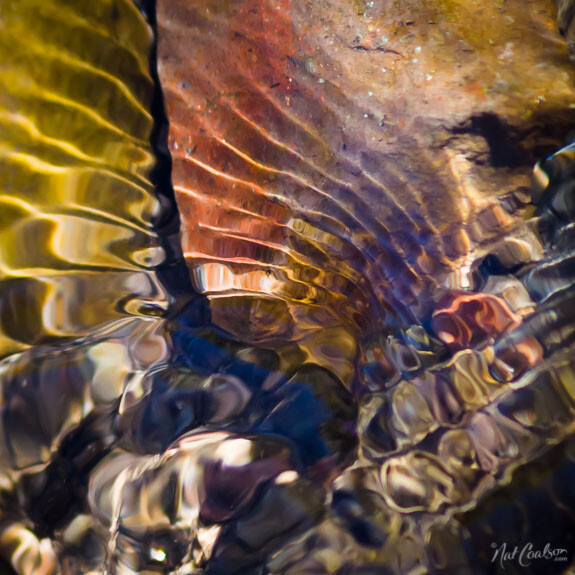
Nat Coalson Flow III 575px

Conquer your photo editing workflow

When you don’t follow a good system, digital photography can become stressful. Losing pictures, redoing steps, and not getting the quality you’re hoping for are all side effects of an ineffective workflow. Who wants any of that?

Remember that everybody who’s mastered their personal photography workflow had to start somewhere. You’ve likely mastered some parts of the process already. Now, identify specific bottlenecks and key areas for improvement in your own photo workflow. Pick one aspect of the workflow that seems unfamiliar or challenging, and start there.

Crafting your ideal workflow doesn’t happen all at once, nor is it a purely linear process. With so many steps and potential traps, you’ll need to study and practice each of the different stages independently, then tie them together into a cohesive sequence.

TIP: The main reason Adobe Photoshop Lightroom is widely considered the best photo editing software is that it provides most of the capabilities you need to handle the complete photo workflow as describe above.

When you follow an optimized process for working with your pictures and develop a clear understanding of the principles behind your decisions, you’ll have more fun working on the things you enjoy, rather than struggling with tedious tasks.

Practicing good workflow techniques helps you make great photos – easier!

googletag.cmd.push(function() {
mobile_slots.push( googletag.defineSlot( “/1005424/_dPSv4_mob-all-article-bottom_(300×250)”, [300, 250], “pb-ad-78158” ).addService( googletag.pubads() ) );
} );

The post Digital Photo Editing Workflow – Better Images From Capture to Output by Nat Coalson appeared first on Digital Photography School.


Digital Photography School
 
Comments Off on Digital Photo Editing Workflow – Better Images From Capture to Output

Posted in Photography


7 Tips for Better Beach Photography

01 Dec

The beach can be a great place for photography. You are in a scenic environment. You typically have friends or family members with you. You are usually there on nice days. All these can contribute to great photographs.

But the degree of photography problems you will face on the beach might surprise you. Exposure can be tricky given the bright environment. Often, there is nothing but sand, so the composition can be dull. And of course there are elements like sand and salt-water that do not mix well with electronics. So I want to give you some tips for beach photography, dealing with these potential problems and make it a great place for photography.

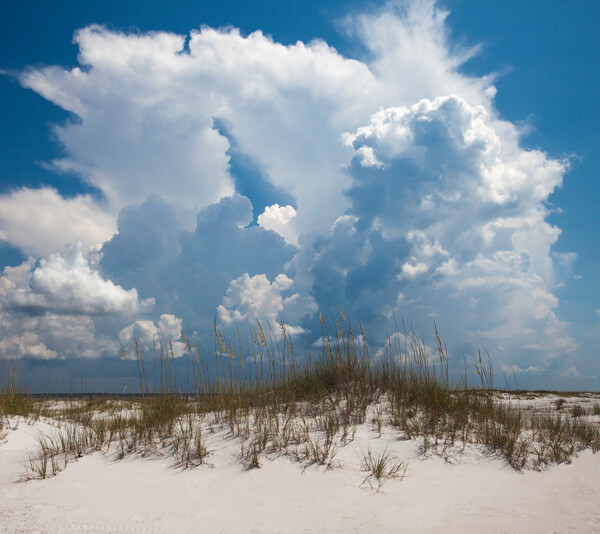
SantaRosa

1.  Control Your Exposure

If you are shooting in automatic mode, you might find that your pictures are darker and flatter than you anticipated. That is because your camera will try to reduce all things to a middle grey. Try shooting in Manual or Aperture Priority mode, which will give you additional control over your exposure. Use that control to slightly overexpose your picture. Set the exposure so that the meter in your camera is a little to the right of zero. If your camera uses numbers instead of a scale to show your exposure, start by setting it at +1. This will make your picture accurately capture the bright scene that you see in front of you.

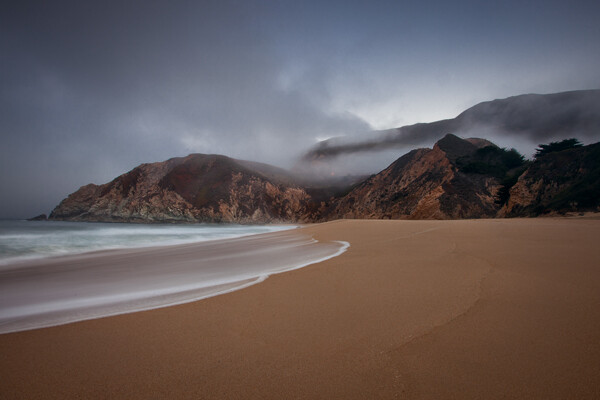
GreyWhaleCove

2.  Watch the Dynamic Range

At the beach, you will almost always be looking at a bright sky. Even though the foreground may be well lit, the sky will usually be much, much brighter. That can cause a dynamic range problem and, if you are not careful, your sky will be blown out or pure white.

To deal with this problem, break out a graduated neutral density filter. This is a square filter that fits on a holder in front of your lens. The top of the filter is be dark, while the bottom of the filter is clear glass. When you attach the filter to the front of your lens, it will darken the top portion of your picture while keeping the bottom portion at the same brightness level. This keeps everything within the dynamic range of your camera. The upshot for you is that it will darken your sky a bit to bring it in line with the foreground and keep the sky from blowing out. The beach is an ideal place to use these filters because the horizon is typically a straight line with nothing sticking up over it (such as trees or buildings).

If you do not have such a filter, try bracketing your exposures. You can then merge them later using Photoshop or an HDR software.

3.  Use Fill Flash

It might seem counter-intuitive to you, but the beach on a bright sunny day is a great place to break out your flash unit. You can expose your picture with an eye on the brightness level of the sky, and brighten up the person or thing in the foreground using the flash. Because the overall scene is so bright, the flash should not overpower it. I personally find that the beach on a sunny day is one of the best times to use a flash unit. Adding fill flash can dramatically improve your beach photos.

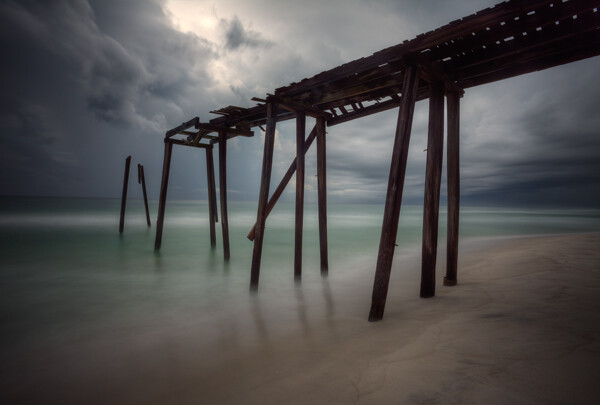
Pier

4.  Seek Out Subject Matter

I once complained to a friend that I was having difficulty taking good pictures at the beach. He responded, “Of course you are, there’s nothing but a bunch of sand.” Sometimes, that sentiment is right. So you will have to work on finding a good subject to add to your composition. If you do so, you can turn your beach photos something great.  Some ideas to look for are:

  • Piers
  • Rocks
  • Driftwood
  • Beach chairs
  • Beach umbrellas
  • Fences
  • Sea oats
  • Abandoned boats
  • And, of course, people

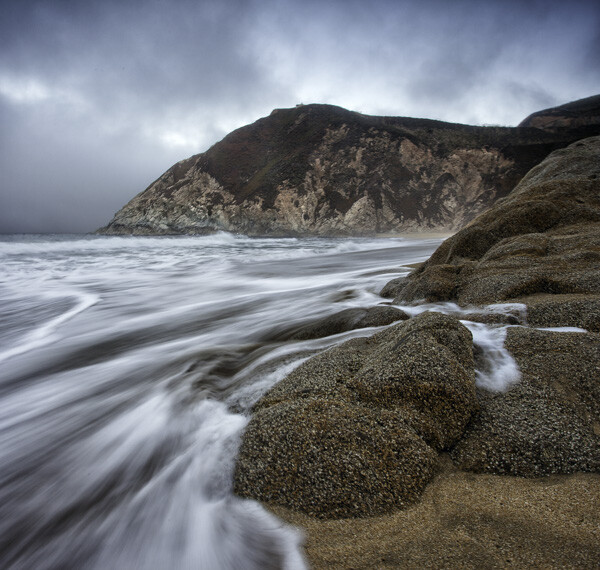
GreyWhale

5.  Work the Foreground

At the beach, you already have a ready-made background for your photos; that being the ocean and the sky. What will separate a great photo from a snapshot will frequently be the foreground. Focus nearly all your energy on making the foreground look as good and as interesting as you possibly can.

Using the subject matter set forth above can help you with your foreground. Having any of those elements in the frame will usually go a long way in making the foreground an interesting part of the photo. If none of those items are available, a lot of times interesting formations in the sand can also create a good foreground. Look for a pattern. They can be difficult to see though, sometimes you will need to have your eye to the viewfinder or be looking at the LCD to find them. Take a test shot if time permits.

Once you find your subject matter, consider your angle of view. Very often, we tend to shoot directly out towards the ocean. However, there are usually much more interesting views looking down the coast. Sometimes it is actually best to put your back to the ocean and get the sand and land formations in your frame. Just be sure you’ve considered all the angles.

PensacolaPanorama

6.  Get the Best Light

As with most other forms of outdoor photography, the best light is usually predawn, or just after sunset. Try to get up early or stay late. These are virtually always the best times for photography, and many serious shooters will not shoot at any other time of day.

Of course, getting up before dawn or staying after sunset is not always possible. Rather than just put the camera away, you might want to try some midday shots. If you do, there are a few ways you can make your photos look as good as possible. I already talked about using a fill flash, and that can be a great way of cutting down on the harsh shadows you might encounter. In addition, to make your sky look as good as possible, consider using a polarizing filter. This will make your sky appear a deeper, richer, blue. Polarizers actually work best near midday, so you will get the maximum benefit from it if you are shooting at that time.

One final tip if you are shooting at midday and dealing with harsh contrasts is to consider converting your photos to black and white; it loves contrast. The overly contrasty light of midday photography can go from a liability in a color photo to an asset in a black and white photo. Once you’re back in front of your computer, try converting a few photos to black and white and see how you like them.

DestinChairs

7.  Beware of the Elements

Sand and salt water do not mix well with expensive electronics. It is difficult to keep them away from your camera sometimes. Sand seems to get in everything.

Further, a crashing wave can send spray into the air and get into your camera. You will want to take a few precautions to avoid any such problems. You could actually buy a waterproof case for your camera, but these are amazingly expensive. The cases can cost more than the camera itself. They are often more than is necessary, particularly if you are making efforts to keep away from the water and sand. In normal situations, you can get a rain sleeve to cover your camera for just a few dollars. You might use one of these if there’s any chance that sand or spray get near your camera.

Another idea is to purchase a waterproof point-and-shoot camera. I normally recommend that you steer clear of point-and-shoots because of the inherent problems with them, largely stemming from the small sensor size. However, because you are typically shooting in bright light at the beach, a lot of the limitations of point-and-shoots are somewhat muted. Further, you can use the camera with confidence, even taking it into the water. They can be a lot of fun, and they are pretty cheap (relatively speaking).

Conclusion

These tips should make photographing the beach the fun occasion that you expect. If you know how to deal with the bright light, your pictures will look better. Finding good subject matter and using an interesting angle will make them interesting. And finally remember to keep your equipment safe from the elements to keep your day from being ruined.

The post 7 Tips for Better Beach Photography by Jim Hamel appeared first on Digital Photography School.


Digital Photography School
 
Comments Off on 7 Tips for Better Beach Photography

Posted in Photography