RSS
 

Posts Tagged ‘Best’

The Highline Ballhead Review: The Best Bargain Ballhead in 2019?

28 Aug

The post The Highline Ballhead Review: The Best Bargain Ballhead in 2019? appeared first on Digital Photography School. It was authored by Rick Ohnsman.

The Highline ballhead is billed by its creators, Colorado Tripod Company, as “ultralight,” with an “increased range of motion.”

But does the ballhead live up to the hype?

That’s what this Highline ballhead review is all about. I recently received a ballhead of my own, and I’ve been putting it through its paces.

In the next few sections, I’m going to take you through my experiences with the Highline ballhead. And I’ll let you know if it’s something you should consider purchasing.

(Spoiler alert: It’s a bargain worth checking out.)

Highline ballhead review

Two views of the Highline ballhead.

The Highline ballhead overview

First things first:

Where does this new ballhead come from?

The Highline ballhead is produced by the Colorado Tripod Company (CTC). The CTC caught the attention of photographers when they announced on Kickstarter they would be producing the “world’s first titanium tripod system.”

For the purposes of this article, I will focus on the aluminum version of the Highline Ballhead, as that is the product I received for review. However, a titanium version is available from CTC.

As for the specs:

The Highline ballhead is has a 70 lb (32 kg) load capacity, though the ballhead itself weighs just 16 oz (0.45 kg). The head is cut out of aluminum. The ball itself is 1.89 in (4.8 cm) in diameter.

My first impressions of the Highline ballhead

The Highline ballhead makes a great impression from the get-go.

Opening the box, I found a quality neoprene drawstring bag with the Colorado Tripod Company logo printed on it. Inside the bag was the ballhead, as well as a plastic zip bag containing two Allen wrenches for working with the hex-head screws on the head. The bag also contained an adapter so the head can be mounted on tripods with 1/4-20 screws (without the adapter, the head mounts on the larger 3/8-16 screw used by most tripods).

highline ballhead out of box

I was impressed with the quality right out of the box.

I was immediately struck by the appearance of the ballhead, both in the quality of the parts and the beautiful gunmetal-gray finish. The design is clean and uncluttered, the knobs well-placed and sized for easy operation. All the components are metal; you won’t find a plastic piece on the entire ballhead.

My first thought?

This is a well-designed and well-built piece of photo equipment.

The CTC describes the Highline as a traditional ballhead but with some special features. Striking is the large 48mm hollow ball and the ability of the locking mechanism to provide a 54-pound load capacity, much greater than most tripod heads of this size.

The CTC indicates the Highline head is made for photographers with large camera equipment. I mounted my Canon 6D and my Canon 70-200 lens, but the head had no problem at all holding it right where I wanted.

highline ballhead with camera and lens

With a DSLR (the Canon 6D here) and a large lens (the Canon 70-200), the Highline was more than up for the job.

Photographers want a tripod head that can lock in place with little droop or movement. The Highline satisfies this requirement, even with a full-sized DSLR and large lens.

This is how things look when the camera is mounted from the photographers POV:

highline ballhead review

Note the clamp-lock knob at the top left, main ball adjustment knob on the left side, and the pan-lock knob at the rear. The drag adjustment knob is at the front and is not seen in this shot.

Camera mounting, knob placement, and performance

CTC engineers designed the Highline so the camera can be held and controlled with your right hand and the tripod head knobs worked with your left hand.

The largest knob is used to release and tighten the ball. Its large size and knurled grip makes it easy to use, even with gloves.

On the rear of the head is the smaller pan-lock knob. This knob releases the head to be rotated around its vertical axis, such as when doing panorama shots. The base of the head is also marked out in degrees, which is helpful for pano shots.

On the opposite side of the head is the drag control. Adjusting this knob changes how freely the ball can be moved. This is a great aid in setting up the feel and control of motion while compensating for the size of the camera and lens used.

Once the camera is mounted and the drag knob is adjusted, you’re free to use the large knob for moving/locking the ball position.

At the top of the head is the clamp and camera mount plate. I was very pleased to see an Arca-Swiss type mount being used. This has become a standard mount in the photo world, so you don’t need to worry about mounting incompatibilities.

The mounting screw has a D-ring on it for tightening without tools. Open the clamp knob fully and tip the plate into the clamp, then tighten the knob most of the way. The camera can be moved forward and back, but will not fall out of the clamp. Balance the camera and then fully tighten the clamp knob.

d-ring for tightening

The monogramming was a nice touch. And note the D-ring for tightening the mounting screw when you don’t have tools.

What to like about the Highline ballhead

The Highline ballhead is a great piece of photo equipment, so there’s a lot to like.

As I’ve mentioned above, the Highline ballhead features excellent build quality, fit, and finish.

The control knobs perform smoothly, are easy to grasp and operate, and the mechanism allows the ball to move smoothly and lock exactly where you want it without any droop.

drop slot on head

Using the large drop slot, shooting straight up or straight down is very easy.

For a head its size, the Highline is also quite light. Even the aluminum version comes in at 18 oz (510 g). And the titanium version of the ballhead shaves 40% off that weight, coming in at just under 12 oz (340 g).

portrait orientation

The Highline had no problem locking and holding the camera just where I wanted in portrait orientation.

The head also performs beautifully even with a good-sized DSLR and big lens. My current tripod is an aluminum MeFoto Globetrotter Classic, but while the MeFoto stock head isn’t bad for the money, it feels a little wimpy. Switching out the MeFoto head for the Highline made a world of difference: The Highline head worked great with the same camera/lens combo and fit very well on the Globetrotter tripod.

In fact, I will be using this combination as my new everyday camera support system. (Or at least until I consider the CTC Centennial tripod!)

Finally, the price is the best part of the Highline ballhead.

Though I can’t say I’ve tried every comparable ballhead out there, I’ve never found a better ballhead at this price point. The aluminum version of the Highline sells for just $ 129.00 USD. I consider that a screaming deal for a product of this quality.

Note that the titanium version of the Highline ballhead is $ 499.00 USD. If shaving six ounces off the weight is important to you and the cost is no object, go for it.

As for me?

I’m gonna be quite happy with my aluminum Highline!

What’s not to like about the Highline ballhead?

The Highline ballhead is nearly perfect, but falls short in a couple of areas.

What don’t I like about it?

First, I prefer a lever lock to the Highline’s twist-knob lock. However, the twist-knob lock should be fairly easy to switch out. And I spoke with Eric Ellwanger of CTC; Eric said CTC is already working on their own lever-lock clamps and should offer them as an option for new ballhead buyers before long. If CTC makes one with the same quality shown in the Highline head and at a decent price, sign me up!

(For those who have already purchased a head, CTC will allow those users to send in their clamps for a rebate if they’d like to switch to the lever-lock style.)

Another small nit: CTC touts the large elongated slot on the right side of the Highline head as a great feature, because it allows the camera to be flipped over into portrait configuration and gives extended motion. But I, like many other photographers, have mounted an L-bracket to my camera to allow easy switching from landscape to portrait orientation. I like that the L-bracket allows me to keep the center mass of the camera over the center of the tripod regardless of orientation. It also better supports panorama work, keeping the nodal point of the camera more centered over the rotation axis.

ballhead in portrait orientation

I still prefer using an L-bracket, which keeps my camera centered over the center axis of the tripod. Because the Highline clamp is an Arca-Swiss type, my L-bracket mounts with no problem.

In other words, for photographers like myself, the elongated slot is a bit redundant. It’s not a big issue, but I thought I’d bring it up.

What is the availability of the Highline tripod head?

The Highline was originally a Kickstarter product. This means that the first orders go to Kickstarter backers, which potentially limits availability for consumers. However, CTC says they are about caught up with Kickstarter orders and are now taking orders on their website as well as Adorama Camera.

If you check the CTC website, you may see that the Highline heads are available to purchase. Alternatively, the heads may be on backorder. Regardless, CTC says their machines are running 24/7 now. So if you want a Highline ballhead, place your order on Adorama or on the company website, and you will be billed when it ships.

Highline ballhead review: conclusion

There’s nothing I like better than a quality product at a great price, and the Highline tripod ballhead absolutely delivers.

Also, note that CTC is working on two other versions of the Highline: a smaller version and a larger version. I can see a smaller version being more practical for smaller mirrorless or bridge cameras. As for a larger version, I have trouble imagining a camera that needs more stability than what the current Highline ballhead can provide!

So if you’re in the market for an excellent ballhead at a bargain price, go have a look at the Highline tripod head.

It may be the right product for your needs.

The post The Highline Ballhead Review: The Best Bargain Ballhead in 2019? appeared first on Digital Photography School. It was authored by Rick Ohnsman.


Digital Photography School

 
Comments Off on The Highline Ballhead Review: The Best Bargain Ballhead in 2019?

Posted in Photography


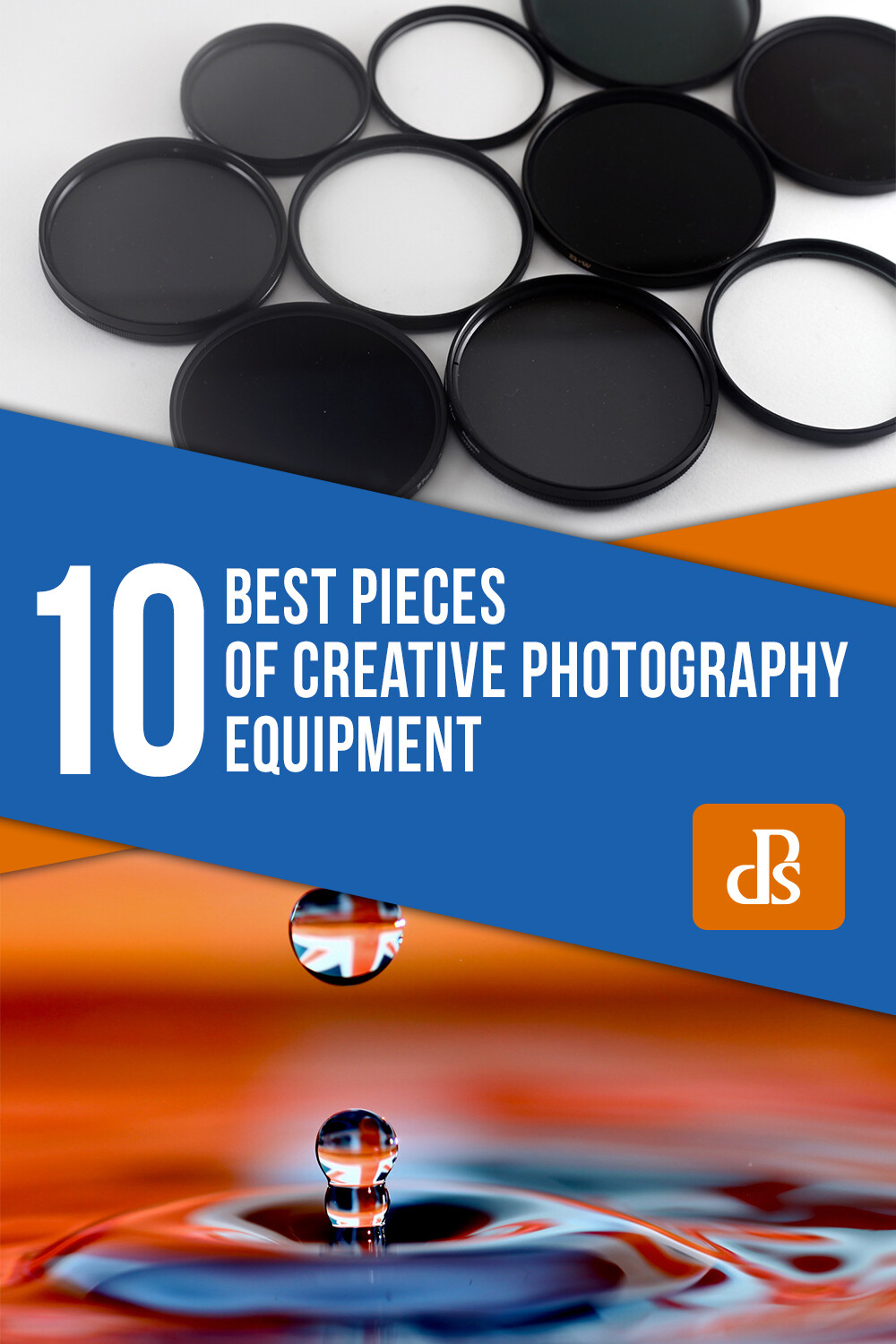
The 10 Best Pieces of Creative Photography Equipment

10 Jul

The post The 10 Best Pieces of Creative Photography Equipment appeared first on Digital Photography School. It was authored by Simon Bond.

Your dSLR is an incredibly creative tool, which when used correctly can give you dramatic results. A lot of techniques can be achieved with your camera body and a lens, such as panning, zoom bursts or bokeh. With some more equipment, you can really hit the ball out of the park. In this article, you’ll discover what that equipment is and some of the techniques that equipment will allow you to practice. So read on and discover the ten best pieces of creative photography equipment.

Digital blending is a powerful technique that can enhance sunset photos.

1. Tripod

This is almost always one of the first additional pieces of equipment a photographer will purchase, and with good reason.

A tripod allows for a lot of creativity, and you’ll want to get a good tripod. Avoid getting a cheap tripod that has unsteady legs, and instead, invest in a heavier sturdy tripod. If you’re traveling and need a lighter backpack you can compromise a little. You still want a strong tripod, and preferably a hook on the central tripod pole that allows you to add more weight to the tripod once it’s set up.

Now, let’s look at some of the techniques a tripod will allow you to try:

  • Digital blending – Digital blending requires a set of bracketed images for best results. While it’s possible to do this handheld, your results will be improved a lot by using a tripod.
  • Cloning – You can layer several photos together showing yourself or someone else.
  • Light painting – Use your own light sources, or external light sources such as car light trails to light paint across your photo.
  • Astrophotography – Even longer exposures will be needed for astrophotography, together with a lens that has a large aperture.
  • Long exposure – Long exposure also does interesting things during the day. Experiment with moving water, or perhaps on a windy day moving clouds.

A strobe is required to take this type of photo with a water drop.

2. Strobe

Strobes are a great piece of creative photography equipment. They are a little intimidating to learn, with many people preferring natural light. The advantage of learning to use them is great, so push yourself out of your comfort zone. The first step for many will be placing a strobe onto your camera, and bouncing light off a ceiling to produce a well-balanced exposure. Strobism requires more commitment than that though. Look to invest in radio triggers and receivers so you can practice off-camera flash with multiple strobes. Experiment with modifiers like snoots, umbrellas, softboxes and color gels.

The following are a couple of techniques you’ll need your strobe for:

  • Water droplets – Capture a water droplet mid-air by photographing it with a strobe. The idea is to bounce the light off a background behind the droplet, and the light will shine through the droplet.
  • Low-key – Use snoots and a darkened background to create low-key photos. This will often be portrait photos. The bright flash will light your main subject, allowing you to underexpose the background to be black.
  • Stroboscopic – Get repeated images in the same photo by using a high-speed pulse of multiple flashes. A tripod is also needed for this technique.

LED light sticks can be used to create light patterns, like the ones in this photo.

3. LED light stick

There are lots of ways you can create light paintings. The LED light stick is a game-changer for this genre. This is an immense piece of creative photography equipment. This is long exposure, so of course, a tripod will also be required. You can now use this gear to create more abstract light paintings, or use it for portrait work.

The great thing about these devices is they’re fully programmable. You can design the exact light you want to paint, how much color, stripes, pictures or patterns. At the moment the two main LED light sticks on the market are the pixelstick and the magilight.

Lensball photography is a lot of fun, this photo has used post processing to make the ball “float”.

4. Lensball

The lensball acts as an external lens optic, possibly one of the most creative lenses you’ll own. The price is right as well. How many lenses have you bought for less than $ 50? At first glance, this piece of creative photography equipment might not look that useful beyond a few landscape photos. How wrong you’d be, though. It’s like saying a 50mm lens can only ever be used for street photography. So look through your glass sphere, and try out a few of these photography styles with it.

  • Floating ball – Capture the ball in mid-air, this requires some photoshop work, and you’ll need to learn how to set up the three photos you’ll need to create this type of image.
  • Portrait – A little trickier to achieve. You’ll need to exploit techniques that avoid showing the background if you want to focus in on the ball, so the portrait appears within the ball. Alternatively, use the ball as more of a prop within a regular portrait photo.
  • Landscape – Use the lensballs’ fisheye like properties to capture a unique lensball landscape, and give locations that have been photographed many times before a creative twist.

Infra-red photography can create interesting scenes on a sunny day.

5. Filters

Is there a need for filters when post-processing is so powerful? The answer to that is certainly “yes” since the aim is to get as much of the photo you wish to achieve in-camera. You can add filters to the front of your camera that modifies the light coming into your camera, usually by reducing it, but there are other effects as well. Filters can be used for the following forms of creative photography.

  • Infra-red – Filter out all light except for infra-red. Doing so will likely mean you need to use a long exposure, and you’ll then need to post-process your results. The photo will appear red, so you’ll need to adjust the color channels so that the red areas of the photo become white.
  • Long exposure – The use of a strong neutral density filter will allow you to take daytime long exposures, with some very interesting effects.
  • Adding color – You can use filters to make your photo sepia or add more color to the sky during sunset. This is an area where post-processing offers an improved solution though.
  • Starburst – These filters make points of light into a starburst. The same effect can also be achieved by using a smaller aperture.
  • Softening – Portrait photos can be enhanced by using this type of filter, giving them a Hollywood glow. Alternatively, you could stretch a stocking over the front of your lens, and it will also soften the photo by diffusing the light.

Prisms will create double exposure-like images from a single photo.

6. Prism

Like the lensball, the prism alters the light coming into the camera through refraction. Other than holding this glass object in front of your camera lens that’s where the similarities end.

A prism is nevertheless an interesting object that can be used for creative results. You’ll be doing two things for your photographs with a prism. The first is redirecting the light to create interesting double exposure-like images with a single exposure. The second is projecting a rainbow spectrum of light onto a surface of some description, maybe even someone’s face.

Fractal filter

Fractal filters are to prism photography what LED light sticks are to light painting. They come as a set of three different filters, each offering slightly different results. So this is a handheld filter and one that works very well for portrait photos.

Wire wool is fun to use, but be careful with it.

7. Wire wool

Wire wool allows you to light paint with an urban industrial twist.

You’ll use the wool to create lots of flying metal sparks that light paint across your photo as they hurtle through the air. This is a really fun technique to try out, but the issue is safety. You’re creating 1000’s of red hot metal shards, and each of these has the potential to start a fire. You’ll need to exercise an abundance of caution when taking this type of photo. Avoid locations that could start a forest fire during the dry season.

The technique can also be used for portrait photography. Once again, ensure the safety of those involved in your photoshoot by making sure water is on hand just in case.

So how do you use wire wool to create these sparks? Check out this guide and learn how to do it.

8. Metal tube

Another piece of creative photography equipment you can hold in front of your camera lens is the metal tube! The diameter of the tube you’re holding will affect the result you get. The typical pipe to use is the copper pipe often used in household plumbing.

The idea is to photograph through this, and you’ll create a ring of fire within your photo. This ring of fire is in fact flare, and you’ll be able to use it to frame something or someone in your photo. The most obvious application of this photo is for portrait work.

This photo uses umbrellas to frame the subject.

9. Umbrella

This is a popular item for portrait photographers and can be used as a prop. There are several different ways you might use this with a model. If you’re photographing their whole body, the umbrella will take up a small part of the frame. Alternatively, you can use the umbrella as the entire background of your frame, with the model’s head and shoulders featuring in the photo. Not all umbrellas are designed the same.

The best options are the rainbow-colored umbrella, the traditional paper umbrellas, or the transparent umbrellas. The transparent umbrellas also offer the option of an object you can hold in front of the lens, with the spokes acting as a frame for your main subject.

Water droplets were added to the stem of this plant. The background was also added.

10. Water

Is water really creative photography equipment?

Taking water to the location you’re going to photograph makes it equipment. To do that, you’ll need to fill a bottle of water and take it with you to your location. Why might you decide to do this? The most obvious reason is to create reflections in your photo.

In order to do that, you’ll need to find somewhere that creates a natural puddle, and in a location that forms an interesting reflection. Not much water will be needed for this. A good wide-angle lens can make the most of a small reflection puddle.

Water has other uses as well, the following are some ideas you can try:

  • Splash – Use water to add dynamism to your portrait work by throwing it at your model, with their permission of course!
  • Droplets – In droplet form get your macro lens out, and see the little worlds within the droplet caused by refraction.
  • Ice – Take photos of object frozen in ice, to give your still life photos a different feel.


Which creative photography equipment will you use?

There are many items you can use to boost your creativity. Perhaps you use a magnifying glass or a mirror to add something to your images, or even an empty picture frame. There are lots of ways you can curate your photo by adding creative photography equipment to the scene. Have you tried any of the items listed in this article? What’s your favorite item to use, and are there items you use that are missing from this list? Please share your ideas and photos in the comments section of this article, so everyone in the digital photography community can enhance their photography.


10 Best Pieces of Creative Photography Equipment

The post The 10 Best Pieces of Creative Photography Equipment appeared first on Digital Photography School. It was authored by Simon Bond.


Digital Photography School

 
Comments Off on The 10 Best Pieces of Creative Photography Equipment

Posted in Photography


Generalist vs Specialist Photography – What Best Describes You?

08 Jul

The post Generalist vs Specialist Photography – What Best Describes You? appeared first on Digital Photography School. It was authored by Mat Coker.

Are you a photographer who drills deep and specializes in one area, or a generalist who casts a wide net and photographs everything?

From these two worlds come specialists such as Ansel Adams (black and white landscapes) and Yousuf Karsh (portraits), as well as generalists such as Joe McNally and Steve McCurry.

Types of photography

Sometimes specialists and generalists have a hard time understanding each other’s approach. To the generalist, you’re too narrow, and to the specialist, you need to settle down and find your niche.

There are arguments (many of them coming down to skill level or money) as to why you should be one or the other. But I think that being a generalist or a specialist is connected with your nature as a person. If you’re a generalist at heart, try as you may, you’ll likely never specialize. If you’re a specialist, you’ll never see the sense of photographing such a wide variety of subject matter. And that’s okay. You can love what you do either way, and you can make a living with it either way.

Let’s look at the nature of specialist and generalist photography and discover the value of each. Understanding what you were built for will give you the confidence to stop doubting your approach and move forward with purpose. You’ll also better appreciate what other photographers are up to, even if you feel like the opposite of them.

Specialists

A specialist digs deep into one area of photography and masters a constantly growing number of details. Things are often more predictable for the specialist, they know all the ins and outs of their branch and style of photography.

It may be the same subject matter over and over but the variety is in the details. This may sound rather monotonous to the generalists, but there is great joy in digging deep for the specialist.

As a result, specialists have a clear niche. It’s never in question, it’s never difficult to explain what they do.

Landscape photography

Waterscapes are not what I’m best at, but I pay attention to everything I’ve learned and those who specialize in waterscapes so that I’m able to take a nice photo when there is a chance.

Specialist photographers are organized and excellent at managing their shoots because they’ve done it the same way so many times. They notice the tiniest details that the generalist easily overlooks (and perhaps doesn’t see the importance of). There is often more concern about the details of this one branch of photography than the big picture of photography in general.

As a specialist, you may photograph the same thing for your whole life or career. It’s not that you never try anything new, it’s that you have drilled deeply into one thing and know it well. You are also well-known for it. As a specialist you can say, this is what I’m good at, this is what I do.

Among DPS writers, Darina Kopcok (food photography), and John McIntire (portraiture) are good examples of specialists. We might also think of:

  • Richard Avedon – fashion and portrait photography
  • Diane Arbus – B&W portraits of people on the fringes of society
  • Ansel Adams – B&W landscape photography

Generalist landscape photo

Generalists

Generalists work with many different types of photography. If you’re a generalist, you’re happy to learn from all the specialists, but can’t narrow it down to one thing yourself. You can’t help but photograph whatever ends up in front of your lens. Photography is unpredictable, and spontaneous for generalists. You never know what the day is going to look like. Newborns, landscapes or sports cars could be your next project!

Generalists love road trips and exploring new places. They take what they’ve learned from the specialists and explore the world with it.

There is a good chance that your specialist photographer friends will find your approach a little too chaotic or whimsical. On the other hand, they may envy you a bit as you seem so free to explore. Perhaps the same way you envy them for their deep technical skills in areas that you tend to skim over.

Generalists are a little more comfortable with the chaos and unpredictability of pursuing different types of photography. There is a great joy in the variety of discovery for the generalist.

Travel photography

Inspired by those who specialize in travel photography, I had in mind all those interesting situations and colors you see in travel photos. The colors pop against the neutral background and there is an awkward sense of balance (or is it imbalance?) to the photo.

As a generalist, you should certainly stick with one thing until you get good at it. But it definitely be will more about learning the principles of photography and then applying them broadly, rather than digging in as deep as you can. You’re more “big picture” than detail-oriented.

You’re often exploring, experimenting, and consolidating what you’ve learned, then repeating the process until a distinct body of work begins to appear over time.

You can’t stick to one thing because so many things excite you. But look for the common link in your work. For me, it’s awkward, candid, gritty, real human nature. Even a landscape has got to have character.

Color and shadow in photography

I couldn’t resist the reds and the shadow.

As a generalist, you will shoot your own style across many types of photography. You accept the joy and challenge of applying techniques to new unexpected situations. Even if you feel overwhelmed, leap in, and figure it out.

Among DPS writers, have a look at Andrew Gibson. Then lookup:

  • Steve McCurry
  • Joe McNally
  • Jay Maisel
Specialist street photography

As we walked down the street in a small town, I noticed this man repainting a house. I thought that’s the sort of thing a street photographer might photograph. So I did likewise.

Is one way the right way?

Sometimes generalists feel inferior because they don’t have an obvious specialty. They are often referred to as a “Jack of all trades, but master of none.”

The specialist can confidently say, “I shoot stylized, strobe-lit weddings.” While the generalist says, “I do weddings too… and newborns and sports cars and landscapes and, and, and.”

But here is what they have in common. They have both studied light, moment, color and gesture among other things. But one applies that knowledge deeply in one specific scenario, while the other applies it broadly in many scenarios.

So the generalist is not so much a “Jack of all trades” but someone who has ‘mastered’ light (as has the specialist) and applies the knowledge more broadly.

Reflection in water photograph

Whether you’re a generalist or specialist, there is always going to be more to see and more to learn. When I hit slumps in my photography, I stop and ask what I’m missing. What interesting things are right in front of me that I’m not noticing?

It’s not that either approach is right or wrong. They are different paths. They are different ways to explore, learn and apply.

Being a generalist doesn’t mean that people can’t point to anything specific about your work. And being a specialist doesn’t mean that you never try anything different. But you can find a home in either approach and visit the other every now and then.

So which are you; a generalist or a specialist?


specialist photography

The post Generalist vs Specialist Photography – What Best Describes You? appeared first on Digital Photography School. It was authored by Mat Coker.


Digital Photography School

 
Comments Off on Generalist vs Specialist Photography – What Best Describes You?

Posted in Photography


Best camera bargains buying guide updated

03 Jul

You don’t need to buy the latest and greatest camera to take amazing photos. Our newly updated ‘best camera bargains’ buying guide highlights some slightly older cameras that are still worth your consideration.

Articles: Digital Photography Review (dpreview.com)

 
Comments Off on Best camera bargains buying guide updated

Posted in Uncategorized


What are the Best Phones for Photographers?

02 Jul

Many photographers own two cameras – a DSLR plus lenses for ‘serious’ photography and a compact camera of sorts to carry around for unexpected photo opportunities. Or else they may opt for a so-called ‘bridge’ camera with a built-in zoom lens. Some of these are almost the size of a DSLR which may then lead to the need for a Continue Reading

The post What are the Best Phones for Photographers? appeared first on Photodoto.


Photodoto

 
Comments Off on What are the Best Phones for Photographers?

Posted in Photography


Top 5 Best Leica Digital Cameras

02 Jul

The digital era is here and photography has taken many strides into the future of artificial intelligence, thanks to camera lenses that beat human imagination. That is not all. There are many different brands to choose from such as Nikon, Canon, Sony, Olympus among others. But, does it mean everything you are going to buy should be automated and have Continue Reading

The post Top 5 Best Leica Digital Cameras appeared first on Photodoto.


Photodoto

 
Comments Off on Top 5 Best Leica Digital Cameras

Posted in Photography


The Best Photographers Make Time To Practice

24 Jun

The post The Best Photographers Make Time To Practice appeared first on Digital Photography School. It was authored by Charlie Moss.

The 10,000-hour rule is often quoted as the magic number of hours that you need to practice in order to master an activity. Now, I’m not saying that after 10,000 hours of practice you’ll definitely have mastered photography. But I do think it’s true that the more you practice, the better you will get!

The secret of practicing to improve your skills is to have a plan. You need to know what you’re practicing, you need to set goals, and you need to find a way to somehow measure your improvement.

Recently, I spent the day practicing with a new lens at Silverstone motor racing circuit. I just wanted to improve my panning to show speed and learn more about my equipment. I was reminded at the time that many photographers can find real joy in just practicing their craft and trying to improve. So with that in mind, here’s my guide on how to make a plan to make your practicing more productive!

Decide what to improve

It sounds obvious, but you need to start with something in mind that you’d like to improve. Wanting to improve your photography is too general. Try and narrow it down more. I wanted to improve my automotive photography and identified that shooting moving objects was a real weak spot in my technique.

Once you’ve narrowed it to something specific you can begin to research. Start here on Digital Photography School. There’s a handy search bar on every page to help you find articles that might be useful. Read those articles and make some notes on things to keep in mind when you’re next shooting. Start building your own instruction manual in your own words to take with you.

Plan your practice

When you’ve decided the things you want to improve, you need to start planning a subject, time, and a place to shoot. This could be as simple as photographing food in your kitchen, or as complicated as a week-long road trip. Put your plans in your diary and make a note of how long you’ve got to prepare. If you get organized, you’ll be far more likely to stick to your plan.

Make sure what you plan is something you find interesting too. Don’t plan for a day of photography (or even a few hours) that you’ll find boring and won’t enjoy. It’ll only put you off photography in the future.

Source the right equipment

If you need a piece of equipment that you don’t currently own, now is the time to decide how you’re going to get it. Hiring lenses can be a cheap way to try new options before buying (but borrowing from friends is even cheaper). Sometimes a piece of new equipment can be just what you need to kickstart your photography, but you need to practice and learn how to use it.

For some pieces of equipment, there are even DIY solutions. Don’t be afraid to experiment and try things out. It doesn’t matter if your shots aren’t perfect; this is an exercise in practicing, not perfection!

Take your notes with you

When you go out shooting to practice, make sure you take your notes with you. It doesn’t matter if they’re in a notebook or on your phone, but make sure you’ve got that research that you did while you were planning.

If you’re trying something new, then you may well have questions as you practice. Even if you’re an old hand at photography, it’s still good to refresh your knowledge before you start taking pictures.

Practice as much as you can, for as long as you can

The costs of film and developing don’t limit you in this digital age. This means you have the opportunity to shoot lots of images when you practice.

Digital storage is cheap, so take a couple of memory cards and keep shooting until you get it right.

Make the most of your time out practicing photography and shoot as much as you can. You never know which image you’ve taken will teach you something new. It could be the first, or it could be the last!

I like to make a day of it when I go out practicing, stubbornly shooting images long past everyone else has left, and my friends have got fed up. It feels like the more I practice, the more I learn, so I try to make the most of the opportunities I get to practice.

Don’t worry about perfection

The aim of practicing isn’t to get images for your portfolio or to take pictures to publish on social media or show your non-photographer friends. The aim is to improve your technique or your creativity.

Check your images as you shoot. The displays on the back of digital cameras are good enough to see if you’re on the right track.

You should be taking the opportunity to try new things and be experimental. Don’t just write off an idea that you’ve had because it won’t work – take the pictures and prove to yourself that it won’t work! You never know what you’ll learn from a failed experiment until you’ve got back home and reviewed the pictures.

Review your shots

Sometimes your practice will be over when you finish shooting. You’ll have learned enough about the technique that you don’t need to review the images.

However, while the experience is fresh in your mind, it’s worth sitting down at a piece of software such as Adobe Lightroom and reviewing the images in conjunction with the EXIF data to try and work out exactly what worked and why (and what didn’t work and why).

The Library module in Adobe Lightroom has the ability to view all the data from your images including shutter speed, ISO, aperture, and focal length. Start pulling up your images one by one, marking the ones that you like, and then reviewing the EXIF data for them.

Make some notes

Ideally, with the research notes that you made before you went shooting, make some notes on how your practice went. Look for patterns in the EXIF data to tell you what was successful and what wasn’t. Write down how you feel about the images, and perhaps make a note for other related techniques that you’d like to work on in the future.

Research how to correct your mistakes

If you consistently made the same mistake over and over while you were practicing, then you’ll want to work out how to fix that for next time.

Read some more articles or even try and find a mentor. Ask questions to your friends who seem to already have the technique nailed (or see if you can go shooting with them for some practice).

Make notes on how to improve for next time using everything you’ve learned so far. If you try and keep it all in your head, then I promise you’ll forget most of it before you get your camera out again!

Plan more practice

Practice makes perfect, after all. And you don’t learn everything on your first attempt.

Using the notes and research that you’ve gathered plan another time to practice. Perhaps this time you’ll work on something related that you’ve identified as a weak spot in your technique. Perhaps you could try the same technique but in a different setting (I’m planning a day out shooting moving wildlife next having now practiced on cars at a racing circuit).

Whatever you plan next, don’t stop practicing. Not even after you’ve reached over ten-thousand hours of practice because there’s always something new to learn.


The Best Photographers Make Time To Practice

The post The Best Photographers Make Time To Practice appeared first on Digital Photography School. It was authored by Charlie Moss.


Digital Photography School

 
Comments Off on The Best Photographers Make Time To Practice

Posted in Photography


When is the Best Time to Photograph the Moon?

10 Jun

The post When is the Best Time to Photograph the Moon? appeared first on Digital Photography School. It was authored by Peter West Carey.

Moon phases are a key to understanding when you should be out taking photos. These days it’s easy to predict where and when you will see the moon for the type of photos you want to produce.

First let’s start with some tools you might want to look into, then options for different moon phase photos.

Tools

Astronomers have known the secrets of the moon’s phases and timing for eons. Ancient civilizations built monuments and shrines in regard to locations of the sun, moon and stars long before computers were invented. Our modern tools are a little easier to access.

Newspapers and Websites

Not into learning full astronomy? My first suggestion is to Google the phase you’re looking for. It’s that simple. One of the top sites that will appear in the results is Time & Date. You can find all the phases of the moon, based on the location of your Internet connection, right here. If the location isn’t correct, simply search for your city and the site will give you all you need to get started.

Another great option (that also has an app, but it is so much better on a large computer screen) is The Photographer’s Ephemeris (TPE). I wrote about using TPE here on DPS and they have a Web App available for those who don’t use phones and their apps.

The US Navy has a simple site that allows you to print out a year’s worth of times for any location on the planet.

Don’t have an Internet connection while you travel? Newspapers still print the information for the moon and sun phases (as well as setting and rising times).

Apps

Everyone loves a good app, and there are three that I keep loaded on my phone for photography purposes. All of these apps will show you the angle of the moon at any time, its phase, and some even help you calculate the best time to photograph the moon.

Full moon over Washington’s Cascade Mountains

My choices are:

    • Photo Pills   (DPS astrophotography instructions)
    • LightTrac
    • Photographer’s Ephemeris   (DPS full moon instructions)

Catching the Full Moon

The best time to photograph the full moon is the day before or after a full moon. Why’s this?

A full moon is marked at the height of its path across the heavens and this is often after midnight. Let’s say the moon reaches the height of its fullness at 12:26 am on July 2nd. This means the full moon actually rises on the day BEFORE that which is marked on the calendar. Throw in use of Daylight Saving Time and the timing can be wonky.

Full moon rising above Washington’s Cascade Mountains and Puget Sound

Going out the day before the moon is actually marked as full means you’re catching the moon rising just about at the same time as the sun is setting. So the sun is lighting the moon and often the foreground of your scene. This gives a nice, even lighting to your scene.

The same can be said for shooting the full moon setting the day it is marked on the calendar.

Late at night, you can still capture great images of the moon. However, you have to understand that the contrast difference between the moon (a giant reflector in space) and the black sky will be immense. This means you will lose detail in the moon if you attempt to hold the shutter open long enough to exposure the foreground. Some creative light painting can come in handy in this case.

Full moon and chorten with the Himalayas in the background. Mong La, Nepal

Half/Quarter Moons – Daytime wonders

Some people call them half-moons because half of the moon is illuminated. Some call them quarter because they are at the quarter phase of a full cycle. Either way, they look the same.

Half-moons will rise or set in the middle of the day. It matters on whether the moon is waxing or waning, meaning if it is getting closer to full or further away in its cycle. This is a good time to use an app or Astro calendar to plan ahead.

You’ll be best served by catching a half moon when it is rising or setting, just like with a full moon. Having it closer to the foreground subjects will help it appear larger. Let me give you an example.

Here’s the half moon rising in Canmore, Alberta, Canada just behind the Rocky Mountains.

Half moon and the Canadian Rockies

Nice and large when using a long lens and the moon is close to the ground. It is fairly high in the sky here as I am looking way up at the mountain.

Now, here are two examples with a nearly half moon over Half Dome in Yosemite National Park, and another of it over Seattle, Washington.

See the issue? It’s still a half moon, but later in its cycle, when it is far from foreground objects, it is relatively small and loses some grandeur.

Slivers or Crescents

Slivers, or crescents, are visible just before and after a new moon. Look for them a couple of days before and after the new moon and, just like full and half, try to find a time when they are low on the horizon.

Crescent moon setting over the Himalayas

You will also notice the sliver will seemingly rotate as it crosses the heavens and this may affect your composition choices. As with the half moon, you will have even more trouble giving the moon prominence in a mid-day shoot when it is high in the sky.

Lunar Eclipses

Lunar eclipses are all the fashion these days with this or that news source touting, “This will be the last blah, blah, blah for decades!”  But don’t let them fool you; lunar eclipses happen often enough – about once a year. However, their location can be the biggest issue. Let’s go back to Time & Date’s site for more info on upcoming lunar eclipses for the next 10 years. You’ll need to click on the “Lunar” tab once on the page.

Not all of those eclipses will happen in your neck of the woods, so you’ll have to click through and see where they will happen. As with solar eclipses, when the sun is blotted out by the moon, people will often travel far and wide for lunar eclipse shots.

A full lunar eclipse, at its height, means the moon will be completely in the shadow of the Earth. Because of the distance between the Earth and moon, some light still slips past the Earth, which causes it to have all colors except red stripped away. This is why lunar eclipses are sometimes called blood moons.

Again, having a foreground subject helps because the eclipse often happens high in the sky. The whole sequence of the moon moving into and then fully out of the Earth’s shadow can take a little over an hour, and you should plan accordingly. The colorful and best ‘action’ of the eclipse will span maybe 5-10 minutes.

More tips on capturing lunar (and solar) eclipses are found in this DPS article.

New Moon or No Moon – Photograph the Stars

When the moon’s not out, it’s a great time to photograph the stars. And my, oh, my, do we have a batch of great articles to help you with that!

  • How To Plan Astrophotography With The Photopills App
  • Astrophotography Made Simple
  • How to Choose a Lens for Night Sky Photography
  • Reducing Digital Noise in Astrophotography Using Exposure Stacking
  • How to Add More Interest to Your Astrophotography With Light Painting

Conclusion

Moon photography is a fun and challenging subject because the moon is constantly changing phases and its location in the sky. Thankfully, we have plenty of tools at our disposal to track and plan for great moon photos. While full moons are alluring, try your hand at the other phases, too.

Feel free to share your photos of the moon with the dPS community in the comments below.

best time to photograph the moon


The post When is the Best Time to Photograph the Moon? appeared first on Digital Photography School. It was authored by Peter West Carey.


Digital Photography School

 
Comments Off on When is the Best Time to Photograph the Moon?

Posted in Photography


Best smartphone cameras of 2019

08 Jun

There are plenty of factors to consider when choosing your next smartphone, and it’s not a decision that should be made based solely on any individual feature. But we hear from a lot of folks that camera performance is right at the top of the list of considerations when it’s time to upgrade, and we’re often asked which smartphone camera is the best.

While we rank the Google Pixel 3 as the best all-around smartphone camera, it’s important to consider your unique photographic needs. Here are the smartphone cameras we think are worth consideration for a range of use-cases.


If you’re well-versed in smartphone imaging terminology, skip right ahead. But if you’d like a quick primer, here are some of the terms you’ll see referred to frequently in this guide:

Computational photography: Image capture and processing techniques that replace traditional optical processes with digital, or computational, ones.

Portrait mode: A photo mode that mimics the blurry-background effect known as bokeh. It’s used commonly for portraits, but isn’t necessarily limited to that use case.

Night Sight: Specifically, a proprietary Google camera mode that captures multiple frames and combines them to create a final image with more detail and less noise in dark situations. Other manufacturers offer their own, similar, modes but the Pixel 3’s is especially impressive, thanks to its use of super resolution that makes the mode useful even for daytime shooting.

Hybrid zoom: A method for zooming that combines traditional optical zoom with computational techniques, allowing for better detail rendering at intermediary focal lengths than digital zoom alone.

Best all-around: Google Pixel 3

It’s certainly not flawless, but if there’s one mobile device to recommend above all others for pure imaging prowess, it’s gotta be the Pixel. Sure, you’ll have just one main camera lens at your disposal, but Google’s clever multi-frame image processing brings capabilities to a single camera that are downright spooky.

Night Sight does an impressive job of rendering very dark scenes, and can even be used to bring out even more detail in well-lit scenes (provided your subject isn’t moving too much). It even uses machine learning to provide more pleasing colors. Portrait mode handles tricky subjects like hair convincingly, videos are well-stabilized, and it’s all integrated with Google’s powerful Photos app.

So who shouldn’t buy a Pixel 3? If any of the following use-cases are your primary goal for your smartphone photography, then you should consider our picks in those categories. And of course, if you’re deeply entrenched in iOS and/or you can’t stand Android, you’ll probably be happier with the iPhone XS.

Best for video: iPhone XS

The iPhone not only offers 4K/60p standard video recording (a notch above the Pixel’s 4K/30p) but it also offers HDR video capture at 4K/30p. This mode uses multiple frames for impressive dynamic range, and is simply some of the best footage we’ve seen from a smartphone.

The XS is a fantastic all-around camera in its own right, going so far as to even simulate optical properties of lenses like mechanical vignetting, so if you plan on consistently shooting a mix of stills and video it’s worth considering over the Pixel.

On the stills side, we’re particularly impressed by Apple’s decision to capture a wider (P3) color gamut and display high dynamic range photos in a manner that takes advantage of the HDR capabilities of the display – something no other phone (or camera) on the market does to-date. Not to mention that we’re partial to Apple’s color rendition over Google’s – the latter tends toward cooler white balance and less saturation.

We give the Pixel 3 an edge in our recommendations thanks to features like Night Sight and computational Raw (read up on all of that here) but the XS isn’t far behind.

Best portrait mode: Google Pixel 3

Oh, portrait mode: sometimes it’s pretty good, sometimes it’s okay, and sometimes it’s downright terrible. It’s a feature that’s very much a work-in-progress on every phone, but we think the best implementation currently is on the Pixel 3. Google uses its dual-pixel sensor as well as machine learning to identify subjects and backgrounds, giving a slightly more realistic, progressive blur. While others use similar approaches, Google’s additional use of machine learning to help the camera understand depth cues makes it stand out from the rest. It’s good enough for Instagram.

Best for zoom: Huawei P30 Pro

Huawei is the first manufacturer to bring folded optics to the smartphone market, packing a 5x telephoto lens into its P30 Pro alongside standard and wide-angle camera units. Other phones offer 5x digital zoom, but this tends to degrade image quality and the P30 Pro’s 5x optical zoom image quality is significantly better. Furthermore, it utilizes hybrid zoom to fill in the gaps between its standard and tele lenses for improved image quality compared to simple digital zoom.

Though it lacks the impressive optical telephoto reach, the Samsung Galaxy S10 and S10+ are also worth considering for more focal length flexibility. They each provide 2x telephoto and ultra-wide lenses in addition to a standard wide-angle unit. If the P30 Pro isn’t available in your area and you’re one of the Android faithful, the S10-series are also good all-rounders.

Best budget smartphone camera: Google Pixel 3a

Flagship phones have packed in more and more impressive features in recent years and likewise, MSRPs have ballooned right along with them – up to and beyond the $ 1000 mark. In this context, Google’s Pixel 3a is bargain for $ 400.

You can easily spend less on a phone by opting for a device that’s a generation or two old, but you’ll be missing out on the significant camera tech improvements available on current models. That’s why the Pixel 3a is sort of groundbreaking. By sacrificing a few features reserved for the flagship (the 3a lacks wireless charging, water resistance and uses a slower processor) and some nice-to-have imaging features (no wide-angle selfies) you’ll still get the latest camera tech and save a bunch of money.

Should I wait for the next round of flagship phones?

You don’t have to be James Holzhauer (YES RICHARD I KNOW THAT NOBODY OUTSIDE OF THE US WATCHES JEOPARDY JUST GIVE ME THIS ONE THING) to know that betting on new flagship smartphones debuting in the fall is a safe wager. Should you wait a few more months for the latest and greatest? That depends.

The next crop of phones will likely rely on machine learning for smarter algorithms to process images, isolate Portrait Mode subjects and offer more focal lengths and zoom ratios. Screens will get bigger and nicer, bezels will continue to shrink and the Battle of the Notch wages on.

With smartphone sales down there’s more motivation to make the next generation even more enticing

Things get interesting on the camera hardware side. Rumors point to Google adding another rear camera, and murmurings of a triple-camera iPhone are looking increasingly plausible. That’s good news for anyone with an eye on a budget model too: if the XS successor adds a wide-angle camera to the mix, then the XR successor may adopt the dual-lens module currently used by the flagship.

If nothing else, with smartphone sales down there’s more motivation to make the next generation even more enticing (and the ‘affordable’ versions more affordable). If you’re an early adopter or hoping for a few more features on a budget model, you might want to hold off. But if you’re upgrading from a phone that’s more than a generation old, you’ll probably be satisfied with the advancements present in the current crop of flagships for some time.

Articles: Digital Photography Review (dpreview.com)

 
Comments Off on Best smartphone cameras of 2019

Posted in Uncategorized


Best fixed prime lens buying guide updated with Ricoh GR III, Leica Q2 and Fujifilm XF10

06 Jun

We’ve updated our ‘best fixed prime lens camera’ buying guide, adding the Leica Q2, Fujifilm XF10 and Ricoh GR III. Despite some solid competition, the Fujifilm X100F remains as our top choices in this category.

Articles: Digital Photography Review (dpreview.com)

 
Comments Off on Best fixed prime lens buying guide updated with Ricoh GR III, Leica Q2 and Fujifilm XF10

Posted in Uncategorized