RSS
 

Posts Tagged ‘Back’

GoPro Karma drone goes back up for sale with battery latch fix

02 Feb

Back in early November, GoPro recalled its newly released Karma drone, citing an issue that caused the drone to potentially lose power while in operation. The company announced the relaunch on its blog today, saying the ‘new’ Karma drone is nearly identical to the original model, with only one exception: the battery latch has been redesigned, solving the power loss issue some owners experienced.

Karma features a top speed of 35mph / 56kph and a maximum operating distance of 9,840ft / 3,000m. The drone is compatible with the HERO5 Session and HERO4 Black and Silver cameras via a separately offered harness. Karma by itself is available for $ 799.99 USD, while the drone bundled with the HERO5 Black is $ 1,099.99 USD.

The drone is available now in the U.S., but won’t be arriving for sale in international markets until this upcoming Spring season.

Via: GoPro Blog

Articles: Digital Photography Review (dpreview.com)

 
Comments Off on GoPro Karma drone goes back up for sale with battery latch fix

Posted in Uncategorized


Get ’em while you can: Fujifilm GF670 medium-format film cameras back on sale

24 Jan

Update: An earlier version of this article incorrectly stated that the cameras were discovered at a B&H warehouse – they were found at a US Fujifilm warehouse by the manufacturer.

The public will soon be able to purchase new units of the discontinued Fujifilm GF670 film rangefinder folding camera thanks to a cache reportedly found in a Fujifilm warehouse. The information comes from The Phoblographer, which reports it was informed about the matter during a recent Fujifilm event in New York City.

B&H Photo’s website lists the GF670 as ‘back-ordered’ with an availability date of early February. The price is currently listed as $ 1799 and includes a one-year warranty.

Fujifilm introduced the GF670 in 2008; its was discontinued in 2014.

Via: The Phoblographer

Articles: Digital Photography Review (dpreview.com)

 
Comments Off on Get ’em while you can: Fujifilm GF670 medium-format film cameras back on sale

Posted in Uncategorized


10 Tips to Help Photographers Avoid Back Problems

21 Jan

Studies state that one time or another, about 80% of the world population experiences some kind of back problems or pain. This is either due to nerve and muscular problems, degenerative disc disease, arthritis or some kind of trauma. Age, poor physical fitness and being overweight may explain some causes of back pain, but the main reason responsible is for sure bad posture.

A lot of jobs require physical efforts like lifting, pushing, or pulling while twisting your spine, but sitting at a desk all day may be just as bad, as a static posture increases stress in the back.
Nick Haskins

By Nick Haskins

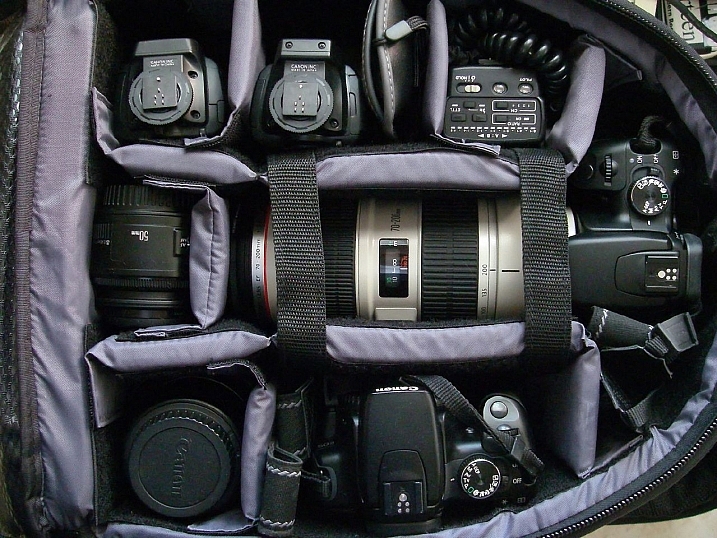
Photographers are for sure high-risk candidates to back pain, either for carrying heavy cameras or bags on their necks or shoulders or by spending a long time at their computers editing images. Every photographer I know always complains about how bad their back hurts after a long shooting session or many hours editing images.

For many years I was one of those photographers with constant back pain. I was always trying to relieve it with pain medication or visits to a chiropractor until the day I woke up with my left arm completely numb. The doctor told me I had two really bad herniated discs in my cervical and that I needed surgery to fix it.

It was not an easy surgery let me tell you; the recovery was long and painful and it all made me realize that I could have avoided reaching this point if I had paid more attention to my posture. So here are some tips I have learned along the way that can help you take better care of your back while doing your photography work, so you can avoid what I went through.

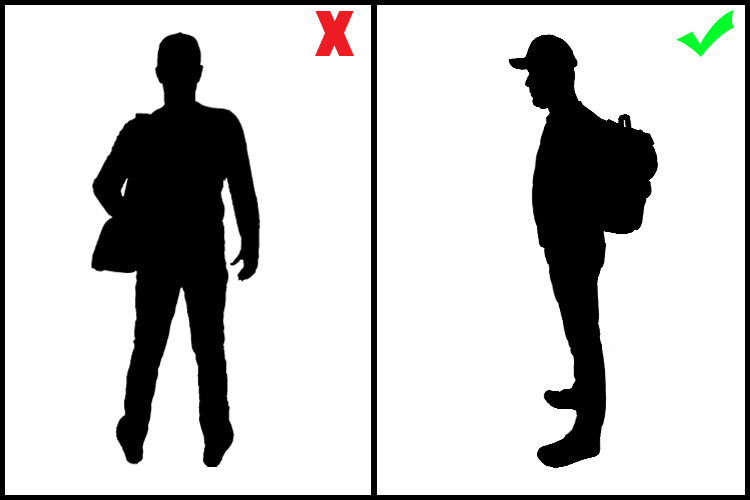
#1 – Trade your shoulder bag for a backpack
10 Tips to Help Photographers Avoid Back Problems

A shoulder bag is a signature style for most photojournalists, and it is indeed practical when you need to have easy access to your equipment while on the move. But it is also a big enemy of your posture, as it puts all the weight in one of your shoulders making your spine curved and unbalanced.

Backpacks distribute the weight equally on both shoulders, making it a much better solution for carrying your equipment. Rolling trolleys are an even better option, but they are not as practical if you need to move fast and don’t have smooth terrain.

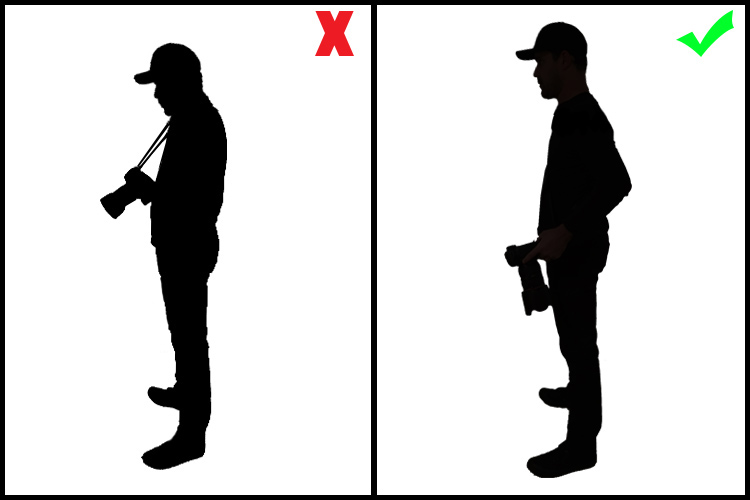
#2 – Trade the neck strap on your camera for a sling strap

Having a heavy camera and lens hanging from your neck by a strap is obviously a really bad idea. It causes a lot of stress on your neck, leading to issues with either the spinal discs or in the joints of the cervical spine. Sling straps minimize the impact of the camera’s weight, hanging it from the shoulder and across the torso. This makes it easier for you to move around and reach the camera, reducing the impact on your neck.
10 Tips to Help Photographers Avoid Back Problems

#3 – Get a good office chair

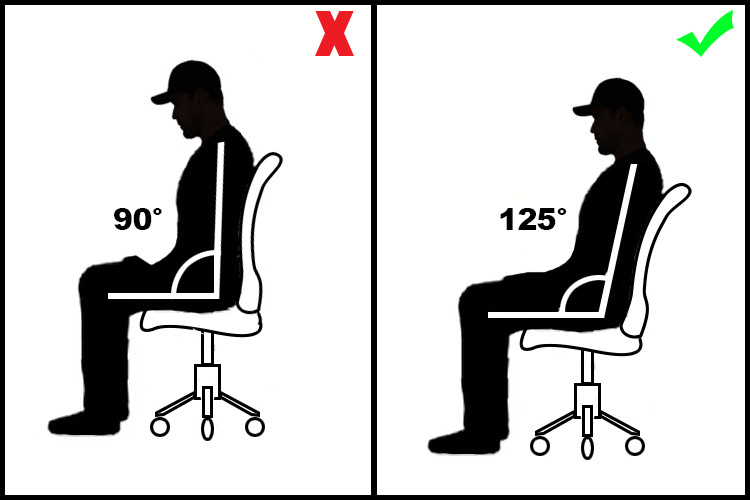
If you spend a long time working on your computer, then a good office chair is something you must invest in. It is really important that your chair is adjustable, and can be regulated to your size, and the position you adopt in relation to the table and the computer you are working on.

The optimal angle position between your legs and back is around 125 degrees.
10 Tips to Help Photographers Avoid Back Problems

Also avoid chairs with wheels that cannot be blocked, as they tend to move back and forward leading you to bad posture while seated. Also, avoid arm rests as they might cause pressure on the elbow tendons leading to tendinitis and ulnar nerve compression.

#4 – Adapt the computer position to your body

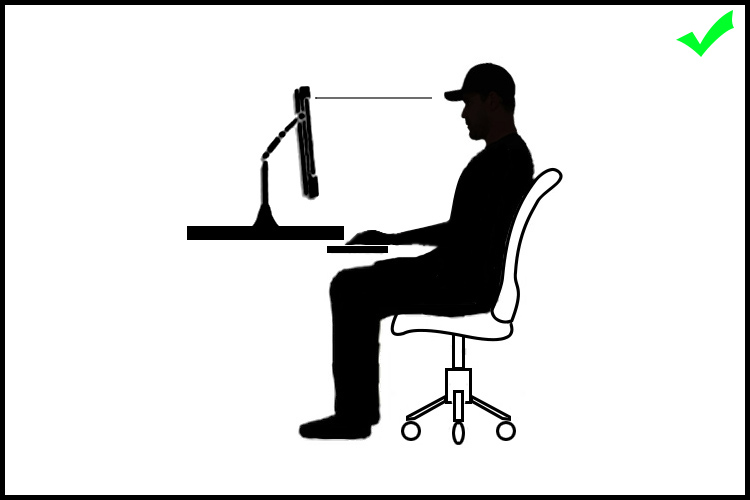
Almost everyone uses their computer in the worst possible position as they are most of the time located very low, especially if it is a laptop.

Hunching over and looking down for a long time causes really bad stress on the cervical spine and neck muscles, This can lead to a stiff neck, headaches, and in a long run degenerative spinal problems. The correct thing to do is to place your computer monitor in a position that you can look straight ahead without having to curve your neck.
10 Tips to Help Photographers Avoid Back Problems

#5 – Use a pen and tablet instead of a mouse

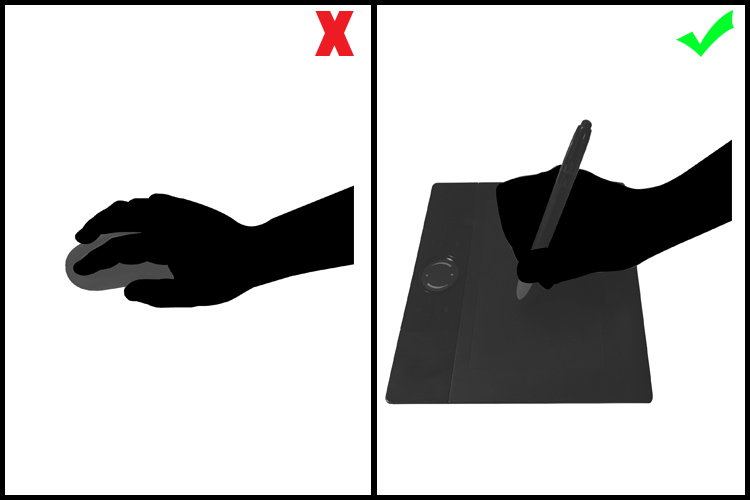
A mouse is a fundamental piece of hardware for most people’s computer work, but at the same time, it is a bad ergonomic tool. It forces your hand to stay in an unnatural position, leading in the long run, to hand, wrist, shoulder and arm problems like tendinitis and arthritis.

The use of a pen and tablet, besides giving you much better control of design functions in image editing software, allows a much more natural hand position, avoiding health problems.
10 Tips to Help Photographers Avoid Back Problems

#6 – Take regular breaks and stretch your body

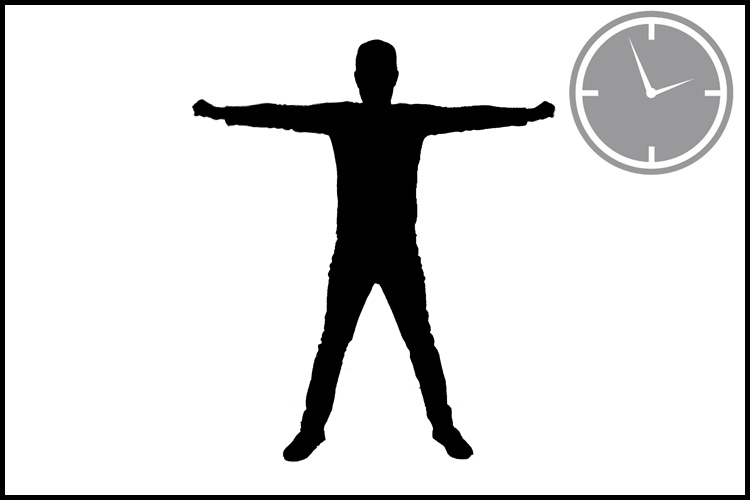
A common mistake we all make is to stand in the same position for long periods of time whether it is photographing, driving, standing at a desk, or simply just relaxing on the couch.

It is fundamental to take small breaks in your daily activities and simply just stretch, allowing the fibers in your muscles to move and avoid cramps and contracting.
10 Tips to Help Photographers Avoid Back Problems

#7 – Get your blood flowing

Poor circulation is the starting point to a lot of really serious health problems. Of course, we would all like to have a healthier life, eat better, and exercise more, but the truth is that it takes a lot of time and discipline.

A great way to overcome this is to turn your regular activities into small exercises.

Simple things like taking the stairs instead of the elevator, or turn a walk down the street to the coffee shop into a power walk, just by adding more movement to your arms while you walk, can make a big difference in your overall physical condition.
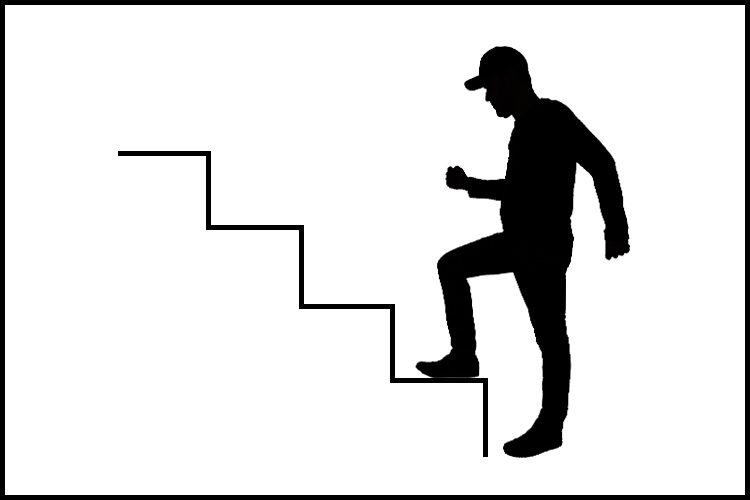
10 Tips to Help Photographers Avoid Back Problems

#8 – Always lift with your knees, not your back

Most severe back injuries come from trauma or heavy weight lifting. Trying to pick up something heavy from ground level, using just your back, is a true recipe for a disaster like a herniated disk.

The trick here is to always keep you back straight and use your knees as a lever to lift up the weight. Your legs muscles are much stronger than your back, trust me.
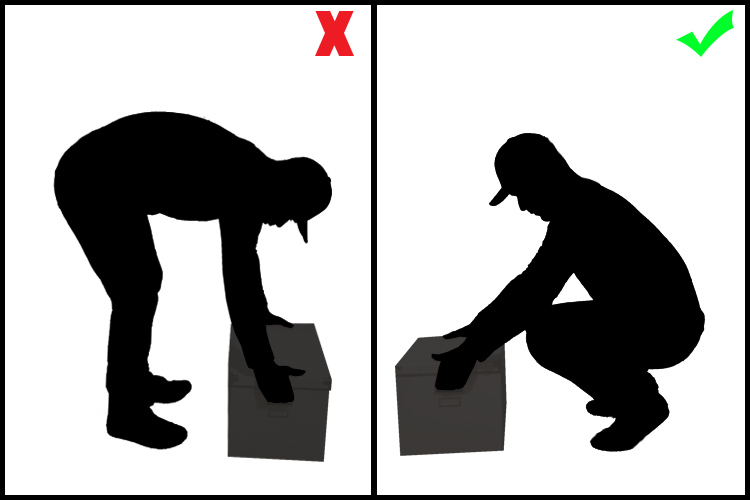
10 Tips to Help Photographers Avoid Back Problems

#9 – Adjust your sleeping position

We spend roughly one-third of our lives sleeping, so if we worry about our posture during the day, we should also worry about our posture while we sleep.

Most hard working people I know are so tired when they get to bed, that they just lay down, close their eyes and get to sleep right away. Most of the time that’s in really awkward positions and they spend most of the night wrestling with their pillow or sinking in really bad mattresses.

The best sleeping position is a really controversial discussion as it is a personal thing due to your body shape, weight, breathing difficulties, etc.

We move a lot in our sleep, but whether you sleep most of the time on your back, side or stomach, always try to have a mattress and pillow that keep your spine as straight as possible. You will rest a lot better and wake up a lot more fresh.
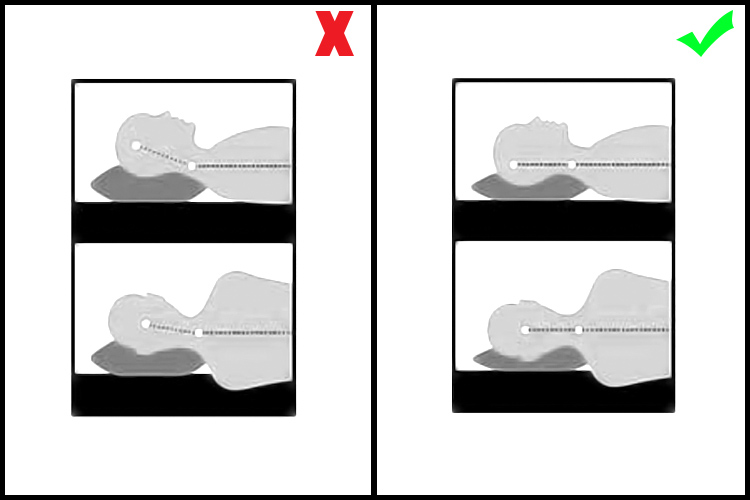
10 Tips to Help Photographers Avoid Back Problems

#10 – Hydrate yourself properly

Our body is 90% water, but yet we tend to forget how much we need to drink water just to be alive.

If you are a busy person, it’s not easy to reach the 2 liters per day of optimal water intake. But if you just make an effort and carry a water bottle around with you and drink regularly during the day you will see that your internal organs will function a lot better, your skin will look younger and your joints and bones will not get old so fast.

10 Tips to Help Photographers Avoid Back Problems

Conclusion – over to you

So there it is, a small list of simple tips that might make a significant change in your life.

They may seem obvious for most people, but the fact is that we are all so busy with our daily life and work routines, that we seem just to forget to take care of ourselves and only realize when it is just too late.

What about you, do you have some tips we could add to this list to help other photographers avoid back problems?

googletag.cmd.push(function() {
tablet_slots.push( googletag.defineSlot( “/1005424/_dPSv4_tab-all-article-bottom_(300×250)”, [300, 250], “pb-ad-78623” ).addService( googletag.pubads() ) ); } );

googletag.cmd.push(function() {
mobile_slots.push( googletag.defineSlot( “/1005424/_dPSv4_mob-all-article-bottom_(300×250)”, [300, 250], “pb-ad-78158” ).addService( googletag.pubads() ) ); } );

The post 10 Tips to Help Photographers Avoid Back Problems by Ivo Guimaraes appeared first on Digital Photography School.


Digital Photography School

 
Comments Off on 10 Tips to Help Photographers Avoid Back Problems

Posted in Photography


SLT strikes back: Sony a99 II real-world sample gallery

09 Jan

$ (document).ready(function() { SampleGalleryV2({“containerId”:”embeddedSampleGallery_7596962474″,”galleryId”:”7596962474″,”isEmbeddedWidget”:true,”standalone”:false,”selectedImageIndex”:0,”startInCommentsView”:false,”isMobile”:false}) });

A-mount has returned with the a99 II, this time armed with the 42MP BSI CMOS sensor from the a7r II, as well as some tricks of its own. We hit the streets to see how the added tech makes this SLT behave.

See our Sony a99 II
sample gallery

Articles: Digital Photography Review (dpreview.com)

 
Comments Off on SLT strikes back: Sony a99 II real-world sample gallery

Posted in Uncategorized


Analog revival? Increase in film sales spurs Kodak to bring back Ektachrome

06 Jan
A box of Ektachrome. Photo via Wikimedia commons

The list of discontinued film stocks is lengthy and after Kodak pulled the plug on our beloved Kodachrome, it seemed like any film could be next on the chopping block. But perhaps those dark days are behind us because today Kodak announced the company will be bringing back a different film stock: Ektachrome.

Discontinued in 2012, Kodak’s decision to raise it from the dead is directly related to a recent increase in demand for analog film. Yep, you read that right. So does this mean that film photography is about to start down a similar path of revival as we’ve seen from vinyl records, which are currently selling at a 25 year high? We sure wouldn’t mind.

From the Kodak announcement:

“Sales of professional photographic films have been steadily rising over the last few years, with professionals and enthusiasts rediscovering the artistic control offered by manual processes and the creative satisfaction of a physical end product. The reintroduction of one of the most iconic films is supported by the growing popularity of analog photography and a resurgence in shooting film. Resurgence in the popularity of analog photography has created demand for new and old film products alike.”

Ektachrome is a color reversal film and was first developed in the 1940’s. Used for decades by National Geographic photographers, it’s been long favored it due to its fine grain and excellent color reproduction.

So come the end of 2017, you’ll once again be able to pick up a 35mm roll of it. And you’ve likely got a bearded, glasses-wearing hipster with a turntable to thank for that.

What do you think of the prospect of an analog revival? Let us know in the comments.

Kodak Brings Back a Classic with EKTACHROME Film

Las Vegas, NV, Thursday, January 05, 2017 —

To the delight of film enthusiasts across the globe, Eastman Kodak Company today announced plans to bring back one of its most iconic film stocks. Over the next 12 months, Kodak will be working to reformulate and manufacture KODAK EKTACHROME Film for both motion picture and still photography applications. Initial availability is expected in the fourth quarter of 2017.

KODAK EKTACHROME Film has a distinctive look that was the choice for generations of cinematographers before it was discontinued in 2012. The film is known for its extremely fine grain, clean colors, great tones and contrasts.

“It is such a privilege to reintroduce KODAK EKTRACHROME Film to the cinematography community,” said Steven Overman, Kodak’s chief marketing officer and president of the Consumer and Film Division. “We are seeing a broad resurgence of excitement about capturing images on film. Kodak is committed to continuing to manufacture film as an irreplaceable medium for image creators to capture their artistic vision. We are proud to help bring back this classic.”

Kodak will produce EKTACHROME at its film factory in Rochester, N.Y., and will market and distribute the Super 8 motion picture film version of EKTACHROME Film directly.

Kodak Alaris, an independent company since 2013, also plans to offer a still format KODAK PROFESSIONAL EKTACHROME Film for photographers in 135-36x format. KODAK PROFESSIONAL EKTACHROME Film is a color positive film, also known as “reversal,” “slide,” or “transparency” film. Unlike all of the other KODAK PROFESSIONAL Films available today, which are color negative films, EKTACHROME generates a positive image that can be viewed or projected once it is exposed and processed. This makes it ideal for high-resolution projection or presentations. It is also well suited for scanning and printing onto a range of professional-grade photographic media. Availability is expected in the fourth quarter of 2017.

Articles: Digital Photography Review (dpreview.com)

 
Comments Off on Analog revival? Increase in film sales spurs Kodak to bring back Ektachrome

Posted in Uncategorized


Take an entertaining look back at the cameras that came before SD cards

13 Dec

Looks like we’re not alone in our love of cameras from the early days of digital photography: YouTuber The 8-Bit Guy has published a thoroughly entertaining look back at cameras that used floppy disks and other memory media that preceded the humble SD card. He revisits the Sony Mavica FD-7, Mavica FD-85, Panasonic SD4090 and the Mavica CD-350. Take a look at the video and see if it sparks any memories of cameras from your past, and then head over to our Throwback Thursday feature on the floppy-disk-using Mavica FD-91.

Articles: Digital Photography Review (dpreview.com)

 
Comments Off on Take an entertaining look back at the cameras that came before SD cards

Posted in Uncategorized


Cut Grass: Sutured Landscape Installation Stitches Open Lawn Back Together

27 Nov

[ By WebUrbanist in Art & Installation & Sound. ]

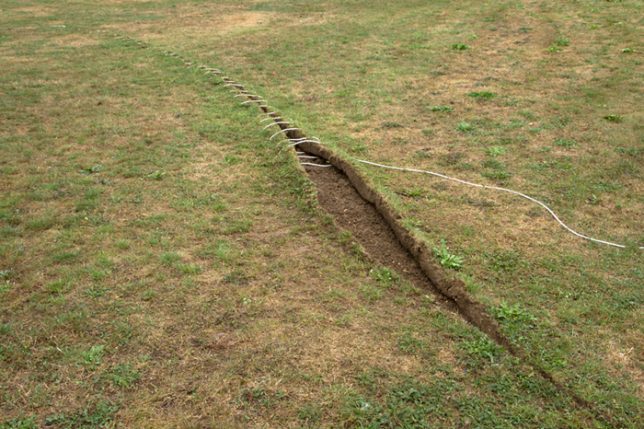
ground-stitching-art

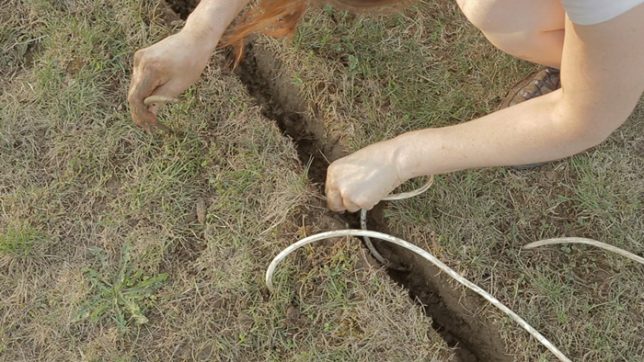
Ground Operation is a conceptually simple earthwork: an incision made in a grassy landscape is pealed back then stitched back together, much like an open wound after an injury or surgery.

earthwork-stitching-ground

French artist Estelle Chrétien sliced open the ground then wrapped electrical cables through it like shoelaces, either in the process of being tied or becoming undone (a mystery left for the observer to unravel, as it were). Her use of cabling is also very intentional, meant to raise questions about what we put into the Earth and how we use it — a surfacing of the secret infrastructure that lurks below.

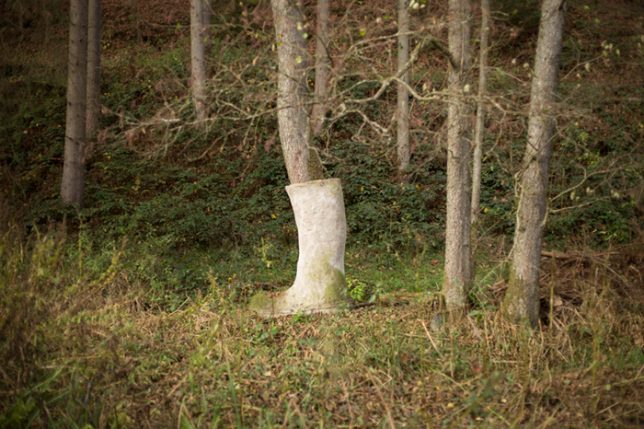
boot-on-tree

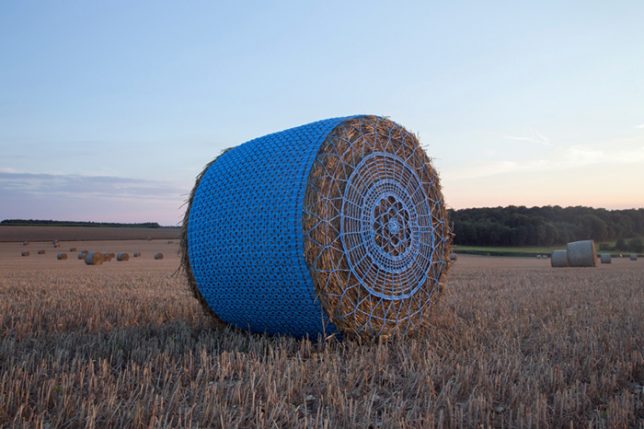
Similar techniques, themes and materials can be found in other works by the same artist, who has wrapped hay bales in crocheted covers and put boots on trees.

crocheted-hay-bale

“While in Portugal, I learned how to crochet, and I had this piece of blue agricultural baler twine in a box and the idea of [making a hay bale wrap] came to me,” she says. “When I went back to France, I made it and put it in a field just before farmers stored their bales. I liked working in the middle of a barley field, but most of the work was made at home, so I decided to work outside with my hands more often after that.”

Share on Facebook


[ By WebUrbanist in Art & Installation & Sound. ]

[ WebUrbanist | Archives | Galleries | Privacy | TOS ]


WebUrbanist

 
Comments Off on Cut Grass: Sutured Landscape Installation Stitches Open Lawn Back Together

Posted in Creativity


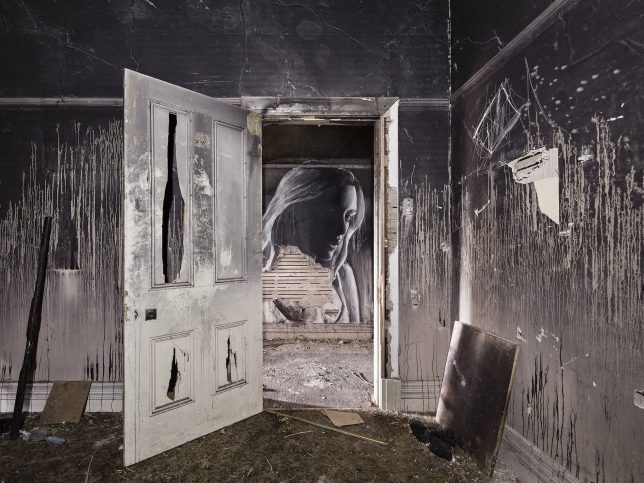
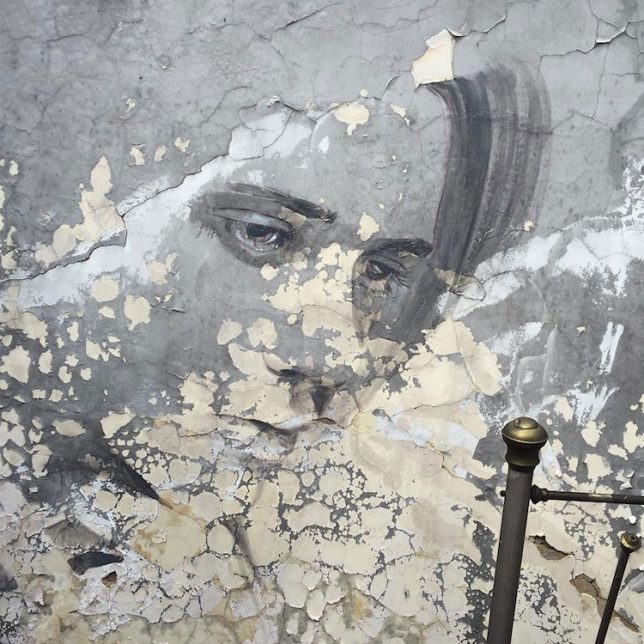
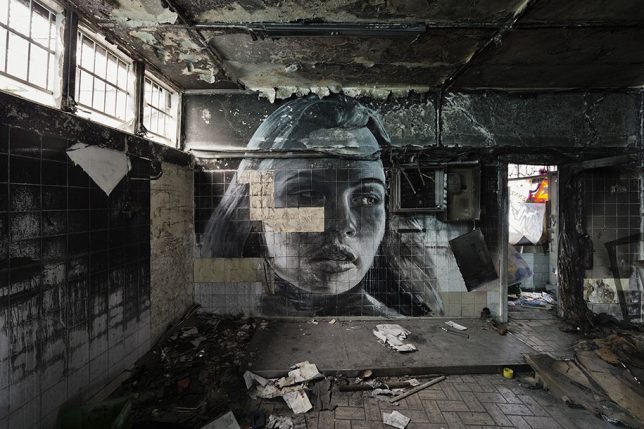
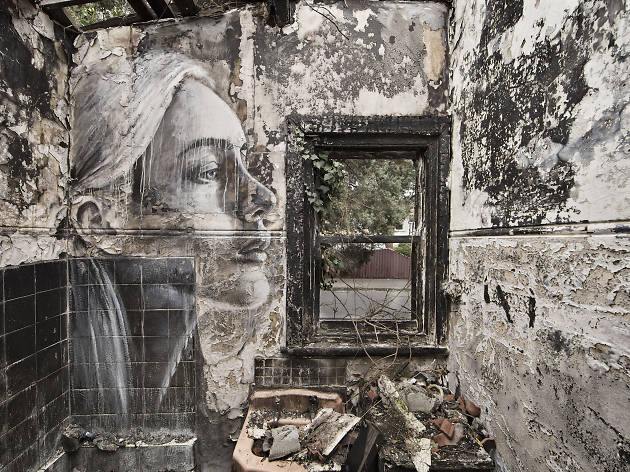
Beauty in Decay: Moody Murals Bring Human Faces Back to Abandoned Places

25 Oct

[ By SA Rogers in Art & Installation & Sound. ]

rone-murals-abandoned-places-1

Abandoned places are often steeped in a mixture of emotional impressions, commingling a sense of loss and a confrontation of our own mortality with slivers of hopefulness for a new future, as nature begins to take over what we’ve left behind. As we move through these deteriorating spaces, strewn with the belongings of former inhabitants who seem to have simply disappeared, we wonder who they were and why the spaces that once sheltered them as they went about their lives have come to this. It’s these emotional qualities that make a new series of murals by Australian street artist Rone all the more poignant and powerful.

rone-murals-abandoned-places-2

rone

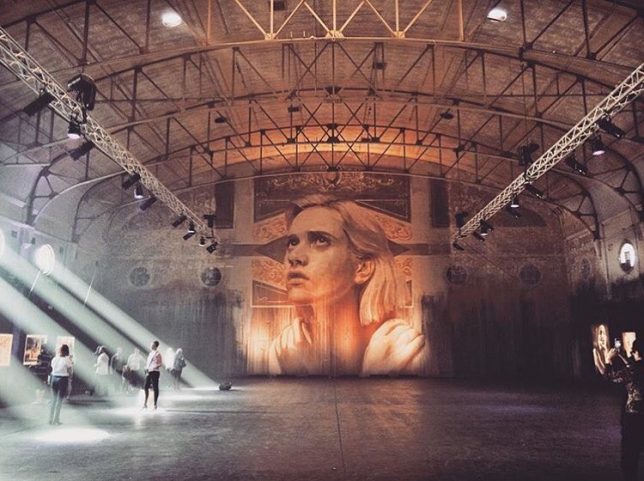
Entitled ‘Empty,’ the series places the artist’s signature portraits of women on the walls of abandoned interiors, deepening their emotional weight. Much of the subjects’ glamour is stripped away as their skin takes on the texture of peeling paint, the lines of their faces are interrupted by fallen tiles and their gazes are pointed down at the destruction of their environments.

rone-murals-abandoned-places-3

rone-murals-abandoned-places-4

For the Melbourne-based artist, this series represents a shift from the smooth, clean surfaces of his canvases and even the more clear-cut exterior walls upon which his murals are typically painted. But Rone has always found meaning in the temporary nature of these installations, as the artworks are gradually worn away by the elements or painted over by vandals and other artists.

rone-murals-abandoned-places-5

rone-murals-abandoned-places-6

rone-murals-abandoned-places-7

Rone exhibited ‘Empty’ at the soon-to-be-demolished Star Lyric Theatre building in Melbourne, presenting photographs of the murals in situ along with works on canvas and paper. The artist also painted a new mural directly onto the back wall of the theater, stretching nearly 33 feet from floor to ceiling. It’s a fitting way for the decaying Art Nouveau building to go out, with Rone’s canvases lining its blackened and stained surfaces. See more photos of the installation at Street Art News.

Share on Facebook


[ By SA Rogers in Art & Installation & Sound. ]

[ WebUrbanist | Archives | Galleries | Privacy | TOS ]


WebUrbanist

 
Comments Off on Beauty in Decay: Moody Murals Bring Human Faces Back to Abandoned Places

Posted in Creativity


Serious resolution: Phase One XF with IQ3 100MP back tested

03 Oct

Phase One XF with IQ3 100MP back tested

Phase One has enjoyed two significant updates since we last tested the company’s medium format offering: the 645DF+ body has been replaced by the more modern XF, and the IQ2 series of backs has been replaced by the updated IQ3 series. Added to that, Phase One has introduced a 100MP sensor to the IQ3 range. The new 100MP sensor is of the 54 x 40mm format, so somewhat larger than the previous 50MP 44 x33mm sensor. What is also significant is that it is a CMOS sensor and comes with all the flexibility that technology brings to these big and bulky cameras.

Phase One says that it has developed the sensor alongside Sony, and that a new design has introduced a range of benefits, including helping to increase the ISO range that can be offered, improving color accuracy and boosting dynamic range.

When I spoke to Lau Nørgaard, the head of R&D at Phase One, and asked him whether anyone needs 100MP he replied that the obvious customer base was anyone who needs to make big prints that will be inspected close-up.

Less obvious perhaps are the workflow advantages such resolution brings. He cited an example of someone photographing a car and then having to shoot all the details individually. With a 100MP back you shoot the whole car once and cut out all the detail shots from that image. Online clothing retailers like to provide roll-over enlargements of garments that show the texture of the fabric, and this back is ideal for that  – the weave of the finest fabric can be shown even from a full length shot that includes three or four models. The resolution also presents less of a risk of aliasing. Museums, galleries and aerial surveyors are obvious customers, as they need the detail, but Lau also explained that images of anything from this back will benefit from the pixel count even when downscaled – noise is reduced, and the superior color and tonal information is retained.

The new XF body

The Phase One XF is a 645-style medium format SLR body that’s designed to accept digital backs, with the company encouraging photographers to use its IQ1 and IQ3 series backs with resolutions of 40, 50, 60, 80 and 100 million pixels. Phase One has given its body a complete make-over and while it remains much the same basic form factor as the previous model, it is now much less mechanical and clunky, and features a number of dramatic improvements.

Key new features Phase One XF:

  • Shutter and mirror dampening
  • Electronic first curtain
  • Touch screen top plate display
  • Improved integration with the IQ3 backs
  • New handling layout
  • Metering in camera rather than in prism
  • Accepts waistlevel finder
  • Seismograph built-in
  • Separate battery from back – but can power share
  • Built-in wireless flash sync via Profoto Air Sync

There are so many really key improvements to this body that it is hard to know where to start. The experience of using the XF is dramatically different to using the 645DF+, which is why I think Phase One has given it a completely different name instead of making it a ‘Mark II’ or ‘X’.

Let’s start with the new shutter and mirror mechanism. The mirror action is still more violent than you’d encounter with a 35mm-style DSLR but the impact created when it flips up and down is a good deal reduced compared to the previous model. The shutter action is also much smoother, so when the shutter is tripped the whole operation is quieter. In the previous camera the mirror and the shutter were connected in the same mechanical set-up, but now the two operate as individual units – so in mirror-up mode the shutter can re-cock itself without the mirror having to flip back and forth.

Phase One has introduced a seismograph to the body that measures the amount the camera is vibrating, and displays the results as a moving graph on the top plate display. This helps to ensure the user trips the shutter when the camera is at its steadiest, and the incorporation of ‘vibration delay’ allows the camera to trip itself automatically when internal vibrations have died down. 

Further help towards reducing vibration comes in the form of an electronic first curtain mode that works when the mirror is already up – similar to that used in DSLRs like the Nikon D810. Phase One’s Lau Nørgaard told me that the company’s engineers studied the acceleration and rate of travel of the second curtain and mirrored that with the read-out progress of the electronic first curtain to ensure that the whole frame would be evenly exposed.

The new handling arrangements also make this a significantly easier camera to use, with a touch screen on the top plate that provides direct access to the shooting and exposure modes. Three dials controls shutter speed, aperture and ISO, while a mini-menu is controlled via a pair of Leica-style long silver buttons. In short, pretty much anything that you’ll need to access quickly and regularly has a short and direct path from the right-hand grip.

In the 645DF+ metering was handled through the prism of the camera, but in the XF it has moved to the body to allow exposure reading when using the new waist-level finder. There is an additional flash sync socket on the IQ3 backs for when the waist-level finder is in use, as the main one is on the prism head.

The XF body is light years ahead of the 645DF+, and a good deal more advanced than the Hasselblad H5D series cameras. It feels very modern for a medium format DSLR, and is so much easier to use and navigate as a consequence of the mass of new features.

Articles: Digital Photography Review (dpreview.com)

 
Comments Off on Serious resolution: Phase One XF with IQ3 100MP back tested

Posted in Uncategorized


Meyer Optik brings back the Primoplan 58 F1.9 on Kickstarter

10 Sep

Meyer Optik, a German lens manufacturer that has already brought some of its historic lens designs back to life via crowdfunding campaigns, has launched another Kickstarter project. This time the company is looking for funding to relaunch the Primoplan 58/F1.9 lens, designed 80 years ago by engineer Paul Schaefter.

The lens comprises five elements and offers different styles of bokeh, depending on subject distance and aperture. The 58/F1.9 uses some of the same components, including the housing, as the Trioplan 50. This means Meyer Optiks can generate economies of scale and offer the lens at a more affordable price than otherwise possible. 

The new Primoplan 58/F1.9 will be available worldwide and shipping is slated for February or March 2017. To minimize the cost of delivery the lens will be shipped, depending on the buyer’s location, from either the US or Germany. The campaign has already surpassed its funding goal but you can still secure a Primoplan 58/F1.9 by pledging $ 599. More information, sample images and a video are available on the project’s Kickstarter page. 

 Copyright: Firat Bagdu
 Copyright: Tamara Skudies
Copyright: Firat Bagdu

Articles: Digital Photography Review (dpreview.com)

 
Comments Off on Meyer Optik brings back the Primoplan 58 F1.9 on Kickstarter

Posted in Uncategorized