RSS
 

Posts Tagged ‘Back’

Light Capsules: Projections Bring Building-Side ‘Ghost Signs’ Back to Life

22 Aug

[ By WebUrbanist in Art & Drawing & Digital. ]

Exposed to the elements, hand-painted signs on building exteriors chip, crack and fade over time, but one artist is shining a spotlight on these historic illustrations, restoring them through animated and layered projections.

Craig Winslow is meticulous about his work on “Light Capsules,” digging through archived newspapers, magazines and photographs to find ads showing what these signs and their typogrophies originally looked like (in some cases over 100 years ago). The result of one such search recently helped him project over an ad in Winnipeg, Canada for Porter & Co., crockery, china, glassware, lamps, silverware, cutlery, which then switched to another projection for The Home of Milady Chocolates on the same spot.

And it isn’t just about recreation, but also spectacle and preservation. People passing by, used to ignoring faded signs, suddenly stop, look up and start thinking about them and the histories they represent as well as their historic value to a city.

In the last few years, Winslow has brought his projections to cities around the world including Detroit, London and Los Angeles. A lot of the advertisements he projects over provide insights into what was popular in the early 1900s when hand-painted signs were common.

His projections are often layered, cycling through to highlight different stages of ads (or overlapping ones) that have evolved and changed over the decades. Importing digital images, Winslow uses a suite of editing tools to fill in the gaps and create animations.

And while some argue for restoring them outright (using paint), that can be problematic — critics say repainting ruins the authenticity, plus new paints tend to be more vibrant and would be unlikely to represent the original. In a way, Winslow has found a middle ground — his method lets people get a sense of what they looked like without putting the originals at risk.

More from the artist’s website: “There’s an extra element of excitement in signs that are incredibly worn or have multiple layers—The best ghostsigns candidates to become Light Capsules have multiple layers, called palimpsests, providing a compelling canvas which digital recreations can bring a focus to specific layer in time. Projection is ephemeral, non-damaging, and non-invasive, providing a strong preservation solution that traditional mediums can’t provide. Using light as a medium, we can visually explore the stories of every layer, seeing how a building changed throughout the years.”

Share on Facebook


[ By WebUrbanist in Art & Drawing & Digital. ]

[ WebUrbanist | Archives | Galleries | Privacy | TOS ]


WebUrbanist

 
Comments Off on Light Capsules: Projections Bring Building-Side ‘Ghost Signs’ Back to Life

Posted in Creativity


Zenit is back in business, plans to release full-frame mirrorless camera in 2018

22 Aug

Russian publication RNS has revealed that camera maker Zenit has restarted camera production, and may in fact launch a full-frame mirrorless model on the international market as early as 2018. The initial announcement was reportedly made by Krasnogorsk Mechanical Plant’s Deputy Director General for Civilian Production and Consumer Goods, Igor Sergeyev, who revealed the plans via Moscow Region Radio 1.

The planned full-frame mirrorless camera will retain iconic, brand-recognizable elements, according to the announcement, including “characteristic contours, ergonomics, [and] camera lines.” However, the camera will be modernized for today’s market, featuring both light and dark color options as well as leather trim.

The price will exceed that of a “good smartphone,” according to Sergeyev, though specifics weren’t provided.

Zenit, though once popular, ceased production in 2005 following multiple failed attempts to revive its place in the market. According to Sergeyev, the latest production round will not attempt to compete with big-name camera manufacturers like Canon or Nikon. In fact, an unnamed “leading photographic equipment company” will produce some of the components for this camera.

Additional details on the camera or Zenit’s renaissance weren’t provided, but we’ll let you know just as soon as more is revealed.

Articles: Digital Photography Review (dpreview.com)

 
Comments Off on Zenit is back in business, plans to release full-frame mirrorless camera in 2018

Posted in Uncategorized


Inflatable Interventions: Soft Spikes Bring Roofless Ruins Back to Life

16 Aug

[ By WebUrbanist in Art & Installation & Sound. ]

A series of architectural installations in Scotland contrast sharply with the centuries-old stone architecture and natural landscapes, featuring spiky white inflatables filling in aged cracks and gaps.

Titled XXX, these designs by Steven Messam add movement to Mellerstain’s House and the surrounding gardens — they are the first part of a series of contemporary exhibitions planned for the Borders Sculpture Park on this historic estate. The white inflatables refer abstractly to old marble sculptures that were originally to adorn the grounds.

“Pointed” emerges from an old gatehouse; “Scattered” is spread across the lake, comprised of floating bubbles; and “Towered” pokes out of an aged laundry column. Each one invites interaction and exploration of the site.

“In the use of historical buildings and the designed landscape, XXX draws on the architectural significance” of the estate, says Messam. “As interventions, the sculptures speak the language of scale – all three are bigger than a house. As studies in scale and form, these artworks have to be directly experienced in the environment to be fully appreciated, so i hope they will encourage even more people to visit this wonderful architectural gem in the Scottish borders.”

Share on Facebook


[ By WebUrbanist in Art & Installation & Sound. ]

[ WebUrbanist | Archives | Galleries | Privacy | TOS ]


WebUrbanist

 
Comments Off on Inflatable Interventions: Soft Spikes Bring Roofless Ruins Back to Life

Posted in Creativity


Oru Origami-Inspired Folding Kayak is Back with an Updated Design

15 Aug

[ By SA Rogers in Design & Products & Packaging. ]

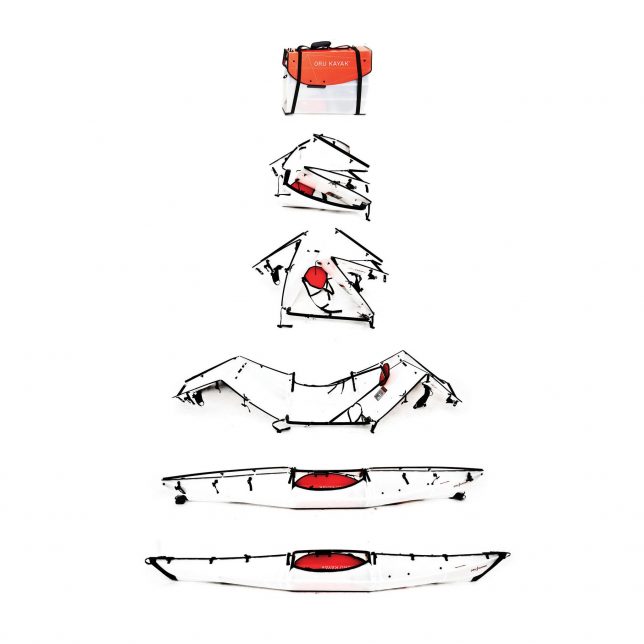
City dwellers with small apartments and limited storage can now own a kayak that folds up into a suitcase-sized package perfect for toting on your bike or public transit. The Oru Kayak originally debuted on Kickstarter in 2012, and every few years since then, they’ve released an updated model, with their lineup including the casual Beach LT for day trips, the Bay ST for longer days and the Coast XT for rugged conditions in surf and wind.

Earlier this year, they returned to Kickstarter to raise funds for a limited edition design in collaboration with 1% for the Planet with a custom green tree print, and now, they’re offering another limited edition: the United by Blue style.

The Oru Beach LT Kayak: United by Blue edition has all the same features as the standard Beach LT, but with the addition of a seamless graphic print in either orange or navy blue. The collaboration is a natural fit considering that United by Blue has spent the last few years organizing volunteer ocean and river cleanups using Oru kayaks, and lots of urban kayakers donate their time on the water in a similar manner.

The origami-inspired folding design of Oru’s Beach LT folds from flat and compact into a standard-sized kayak in under five minutes, while the more complex models take 10 or 15 minutes to assemble. As anyone who’s ever owned and transported a kayak can imagine, the ability to fold such an unwieldy object is a welcome innovation, especially if you don’t have a garage or basement to store it in, or a vehicle of your own. But the design isn’t just for newbies – it was made for everyone from the weekender to the fisherman in mind, for short trips or multi-day excursions.

Get your exclusive UBB x Our Kayak Undercurrent Pack at the United By Blue website, or check out the other offerings at OruKayak.com.

Share on Facebook


[ By SA Rogers in Design & Products & Packaging. ]

[ WebUrbanist | Archives | Galleries | Privacy | TOS ]


WebUrbanist

 
Comments Off on Oru Origami-Inspired Folding Kayak is Back with an Updated Design

Posted in Creativity


All Deals are Back – Photography eBooks, Presets and Courses at up to 88% Savings

08 Jul

It has been a big week with our dPS Mid Year Sale and we know thousands of our readers have picked up some great photography training at crazy low prices.

Today we have a special surprise for you – all our deals are back for one last time!

Dps mid year sale deals FB v1

Each of the deals this week have been enjoyed by many readers but whenever we do deals like these we get emails from people to miss out – particularly as we know many of you are celebrating holidays at this time of year.

So – we decided to bring ALL the deals back for a couple of days to give those who missed out the chance to enjoy one of these bargains.

A quick reminder of what’s on offer in our dPS resources store:

  • All of our eBooks are just $ 9 (normally $ 19-$ 49)
  • All of our Lightroom Presets are $ 19 (normally $ 49)
  • All of our Courses are $ 29 (normally $ 99)

And then there’s our 4 deals from our friends:

  • Mastering Shutter Speed Course (save 62%)
  • Phil Steele’s Photoshop Basics for Photographers (save 40%)
  • Cole Joseph’s Photo Collage Tool for Lightroom (save 88%)
  • Richard Scheider’s How to Photograph Fireworks eBook (save 55%)

All of our our dPS products and those from our partners come with no-risk money back satisfaction guarantees. Try them out and if you don’t love them simply let us know and we’ll arrange a full refund – no questions asked.

Whether you pick up just one or create a collection of training to last you the next 6 months – we hope you find something in what’s on offer this week that will help you take your photography to the next level.

But don’t wait too long – these deals will only last a couple more days and then they’ll be gone forever.

The post All Deals are Back – Photography eBooks, Presets and Courses at up to 88% Savings by Darren Rowse appeared first on Digital Photography School.


Digital Photography School

 
Comments Off on All Deals are Back – Photography eBooks, Presets and Courses at up to 88% Savings

Posted in Photography


Back to basics: A simple three-point lighting setup for headshots

16 May

Music photographer PJ Pantelis points out that three point lighting is nothing new, but it’s not something every self-taught photographer has learned. If that sounds like you and you’re looking to experiment with studio portraiture, his recent demo provides a great starting point. 

Articles: Digital Photography Review (dpreview.com)

 
Comments Off on Back to basics: A simple three-point lighting setup for headshots

Posted in Uncategorized


Canon 6D II rumors and a B&W medium format back: ‘Fro rounds up the week’s news

14 May

In this his most recent photo news ‘fix’, Jared Polin, AKA ‘Fro Knows Photo’ tackles rumors of a forthcoming replacement for the Canon EOS 6D, and the announcement of Phase One’s pricey new 100MP black and white back. What would you buy with $ 50,000? Fro wants to know.

Articles: Digital Photography Review (dpreview.com)

 
Comments Off on Canon 6D II rumors and a B&W medium format back: ‘Fro rounds up the week’s news

Posted in Uncategorized


Looking back: Canon’s eye-controlled focus

11 May
The Canon EOS 5 (known as the EOS A2/A2E in the Americas) was the world’s first SLR camera with eye-controlled focus.

Over the past few years, we’ve become spoiled by a lot of great autofocus technologies like face detection, tap-to-focus, and subject tracking. But before we had those things, we had Canon’s eye-controlled focus, a technology that made its appearance in film SLRs, but which never quite made the jump to digital cameras.

For those unfamiliar with eye-controlled focus, let me provide a quick primer. The system made its debut way back in 1992 on the EOS A2E, and remained part of the Canon system until the EOS Elan 7NE in 2004. It promised ‘focus where you look’ functionality, meaning you could activate your AF point of choice just by looking at it.

As I recall, there were generally two sets of users when it came to this technology: those for whom it worked, and those for whom it absolutely didn’t. There weren’t many in between.

Even today, whenever we review a Canon camera, someone will post a comment expressing a desire for Canon to bring back eye-controlled focus. And I have to admit, I’m right there with them. I have great memories of it.

The Canon EOS Elan IIE, introduced in 1995, had a 3-point autofocus system with eye-controlled focus.

I got my first taste of eye-controlled focus on the EOS Elan II E, and instantly fell in love with it. In fact, I liked using it so much that I switched from a Nikon to a Canon system. The ability to focus by eye was just too much to resist.

I later upgraded to the EOS 3 – still one of my favorite cameras of all time – which had a much more advanced 45-point AF system. Eye control on the EOS 3 was more sophisticated than on the Elan II E: it had a calibration procedure that involved looking at selected AF points in a prescribed manner, allowing the camera to tailor its response to your eye. Supposedly, if you repeated the calibration process under different conditions, performance would improve over time.

The EOS 3 also had the ability to store three registers of calibration data. This was especially useful for glasses wearers because you could use one register to calibrate for your naked eye, and another to calibrate while wearing glasses or contact lenses.

Did it work? It depends on who you ask. Even around the DPReview office, you’ll find opposing views. In my experience, the system didn’t always land on the exact AF point that I wanted to use, but it usually landed close enough that it wasn’t an issue. At least that’s the way I remember it.

But as we all know, memories can be selective. I sometimes wonder if eye-controlled focus was as good as I remember it being, or if those memories are just a result of nostalgia for a bygone technology. To find out, I pulled those old Canon cameras out of a closet and put them to the test.

The Canon EOS 3, introduced in 1998, had an advanced 45-point autofocus system with eye-controlled focus.

The Elan II E worked just as well as I remembered it, performing at about 90% accuracy in my hands. However, it’s worth noting that this camera had a fairly rudimentary 3-point AF system, with well-isolated AF points. Basically, the camera just had to figure out which third of the viewfinder you were looking at to pick the correct AF point.

The EOS 3 was a bit of a different story. Its 45 AF points were crowded close together, requiring a higher degree of precision when reacting to eye movement. I could reliably get it to focus on the general region of the viewfinder I was looking at, but not with the degree of accuracy I remember.

With a bit of practice, I’m sure I could improve my success rate a bit, which is probably why I remember the system working better than it does in my hands today. Alternatively, it’s nostalgia. To be honest, I’m not sure which it is.

Unlike the Elan IIE, whose autofocus points were very far apart, the EOS 3’s 45 autofocus points were packed very close together. This made it more difficult to activate a single, specific AF point by eye. (Diagram from the EOS 3 Instruction Manual.)

So, would I exchange today’s modern AF systems for eye-controlled focus? Not a chance. Features like face detection (and even eye detection) actually solve the ‘where to focus’ problem in many cases, and features like subject tracking would be hard to give up.

However, I still love the idea of eye-control focus and believe it would have a useful place on today’s cameras. There are times when I’m moving focus points around with a joystick or D-pad and find myself thinking ‘I wish I could just look at my subject and focus.’

Technology has advanced a lot in the past couple decades. When eye-controlled focus was introduced in 1992, Microsoft was just launching Windows 3.1, and CERN was still rolling out this new thing called ‘ The World Wide Web.’ In that context, I’m sure a modern eye-controlled focus system could be much more effective, and work for a higher percentage of users, than one introduced during the film era.

So here’s my plea to Canon: Please consider bringing back eye-controlled focus!

I suspect that many of you reading this used eye-controlled focus at some point. How did it work for you? Would you like to see it added to modern AF systems? Or, am I completely off my rocker, chasing down a useless technology that should never see the light of day again? Let me know in the comments.

Articles: Digital Photography Review (dpreview.com)

 
Comments Off on Looking back: Canon’s eye-controlled focus

Posted in Uncategorized


Opinion: Nikon’s ‘back to basics’ approach is a no-brainer

28 Feb
Well-rounded, polished and reliable: mid-to-high end DSLR cameras have been Nikon’s bread and butter for years.

In its first public statement since the DL series’ cancellation, Nikon has stated to the Japanese press (Google translated here) that it will be focusing chiefly on ‘mid-to-high end SLR cameras and lenses and mirrorless cameras that can make the most of their strengths.’

Good gravy, it’s about time.

A rough patch

Sure, 2016 was the year of the D5 and widely adored D500 DSLRs, but those two cameras stand against a pretty dismal backdrop.

That backdrop includes the continued release of low-end Coolpix cameras into a market segment that’s been obliterated by smartphones (though admittedly Nikon isn’t alone in this regard), the ailing Nikon 1 series which hasn’t seen a new camera body in almost two years or a new lens in almost three years, and the KeyMission series, which has had a tepid reception at best (and personally, I wish they’d taken whatever development costs the KeyMission ate up and poured those into the DL series instead).

Ah, the Coolpix A300. This 2016 release features a 1/2.3″ sensor, 720p video and a low-resolution 230k-dot rear screen. Please Nikon, why?

On most recent occasions when the company has stepped outside of its traditional DSLR realm, Nikon’s has stumbled somewhat. To illustrate, imagine for a minute that these various camera market segments are house parties (that’s a bit of a stretch these days, but bear with me here).

The Nikon 1 series got stuck in traffic on the way to the mirrorless party, and finally arrived only to realize it totally misread the dress code. As for the KeyMission series, it’s way past fashionably late to the action camera party, and brought a twelve-pack of what everyone’s already sick of drinking.

And the DL series, well, it seems to have just pre-funked too heavily and didn’t make it out at all.

There are several things that are disappointing about this. With the 1 series especially, Nikon has had years and years to flesh out a lens lineup to really make the most out of that small package and incredibly fast sensor (remember, they could shoot 60 fps Raw bursts years before the likes of the Olympus OM-D E-M1 Mark II, and had incredible on-sensor PDAF to boot). The company has simply let the whole line stagnate into obscurity. This stands in stark contrast to the company’s DSLR line, which has used the same basic lens mount for the last fifty-eight years. So it clearly shouldn’t have issues with commitment.

The KeyMission is also, in my opinion, an ill-conceived scheme – after all, they’ve come about just as GoPro’s stock and sales are tanking in the wake of competent and ever cheaper Chinese competitors. The KeyMission line is literally years too late, the rocky VR market in 2016 didn’t do the 360 model any favors. I can understand Nikon’s desire for some form of diversification given the state of the camera market as a whole, but this just wasn’t the right way to go.

Sure, the KeyMission 170 is ruggedized without a case, but it’s entering a very crowded and very competitive market.

Picking back up

But perhaps what’s most disappointing about all this is that, contrary to the views most keyboard warriors seem to espouse these days, Nikon is capable of true greatness, and even some spurts of innovation. It’s just that most of that is wrapped up in the DSLR world of the D5 and D500. 

Those two cameras remain in our possession, with Nikon’s permission, as the current autofocus tracking benchmarks against which most other cameras are measured; 3D Tracking was an incredible innovation with the D3 that has been steadily evolving ever since, and it changes the way you shoot for the better. The D5 / D500’s use of XQD slots combine with incredible overall responsiveness to ensure that you are never waiting for those cameras; they’ll only be waiting for you. They’re the first DSLRs with Automatic AF Fine Tune, bringing DSLR autofocus one step closer to the accuracy of on-sensor autofocus systems in mirrorless cameras. There’s also the AF-S 105mm F1.4G, a world’s-first lens for the company’s venerable DSLRs.

Now that’s a nice combo.

In short, if Nikon’s DSLRs are so competent already (QC issues such as the D600 fiasco notwithstanding), it’ll be interesting to see what the company can do with more focus and more resources available for their development. One thing’s for sure; we’re all hoping for some new ‘professional’ DX lenses to go with the ‘professional’ D500, but even taking this new statement into consideration, I’m not holding my breath.

The rest

The Nikon 1 V3, the latest ‘enthusiast’ offering in the 1-series lineup, was announced nearly three years ago.

Stepping aside from the world of DSLRs, Nikon’s statement foregoes any specific claims concerning the KeyMission series (hmmm…), and promises a renewed focus on ‘mirrorless cameras that can make the most of their strengths.’ What that really means is anyone’s guess, though the stagnation of the 1 series indicates Nikon will be heading a different direction than continued development of the ‘CX’ system.

The brief statement closes with the mention of a high-class compact in the future, but given the incident with the DL series, the company will ‘judge the next development carefully.’

Coolpix A Mark II, please. But maybe with a name other than ‘Coolpix.’

Articles: Digital Photography Review (dpreview.com)

 
Comments Off on Opinion: Nikon’s ‘back to basics’ approach is a no-brainer

Posted in Uncategorized


Ouroborus Buildings: Artist Loops Infinite Skyscrapers Back on Themselves

13 Feb

[ By WebUrbanist in Art & Drawing & Digital. ]

unfinished design

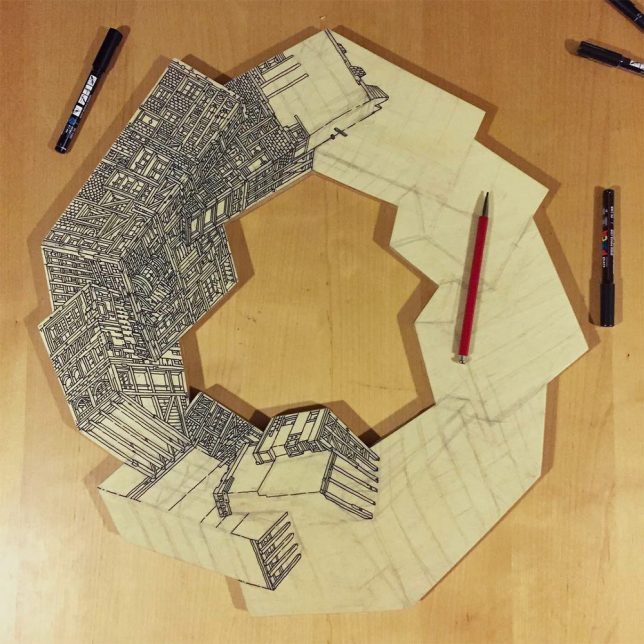
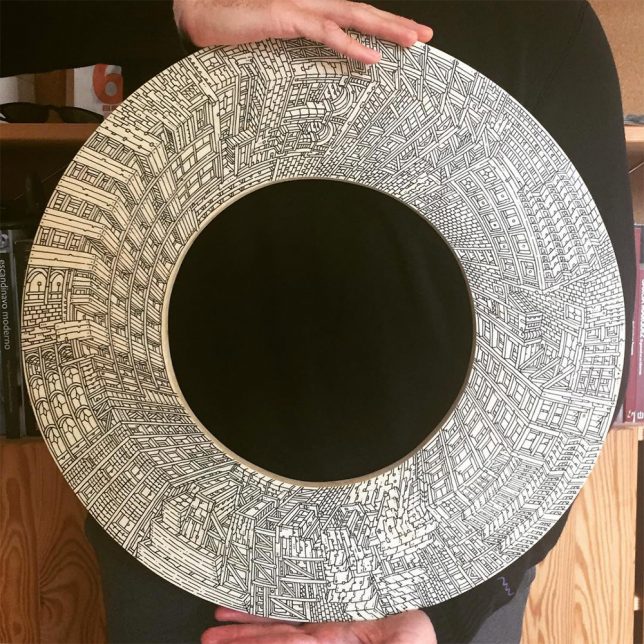
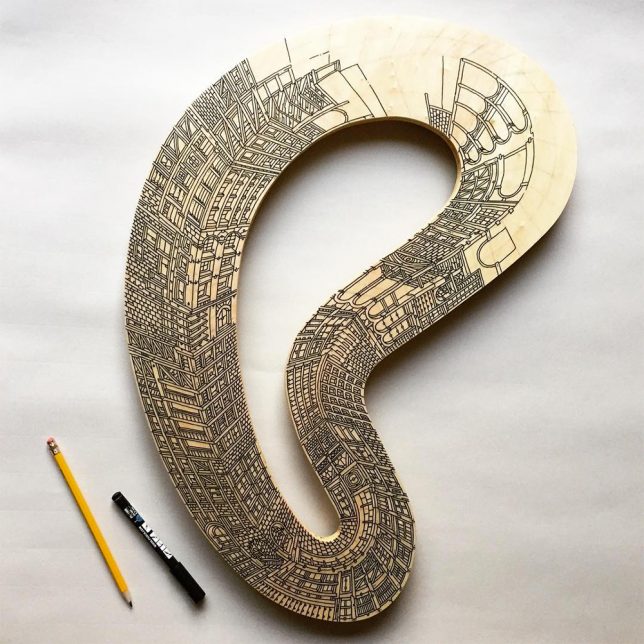
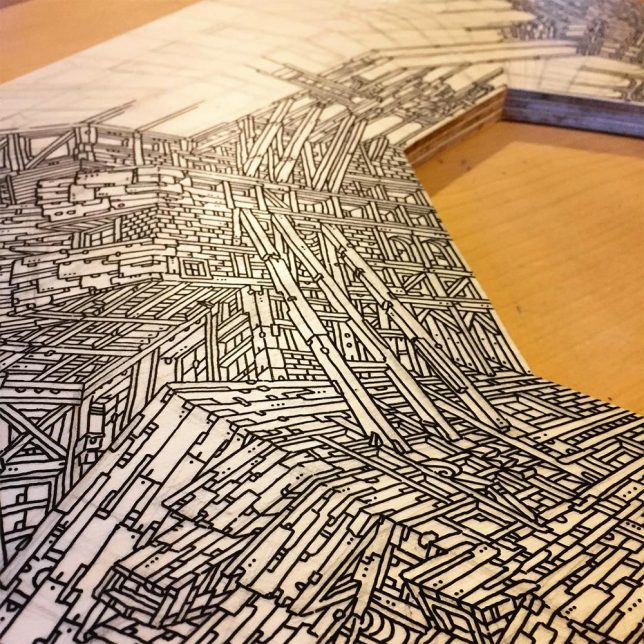
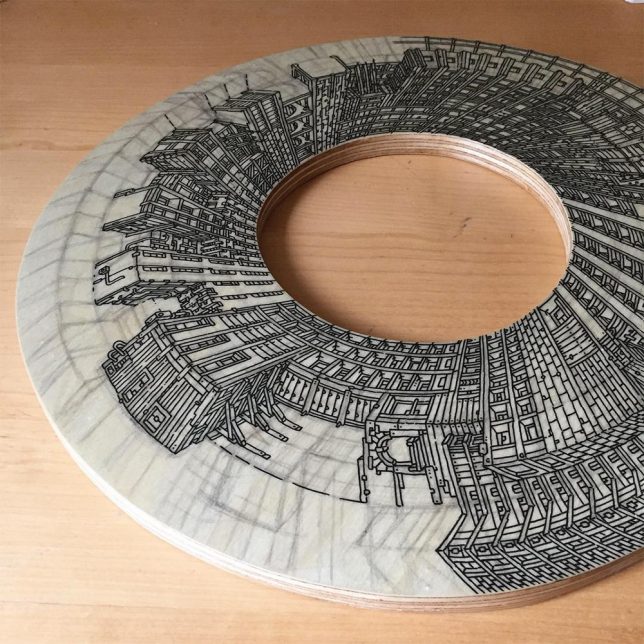
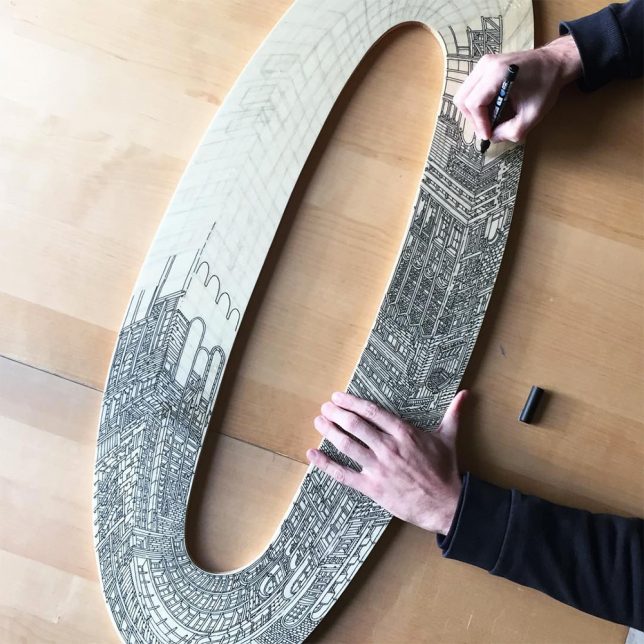
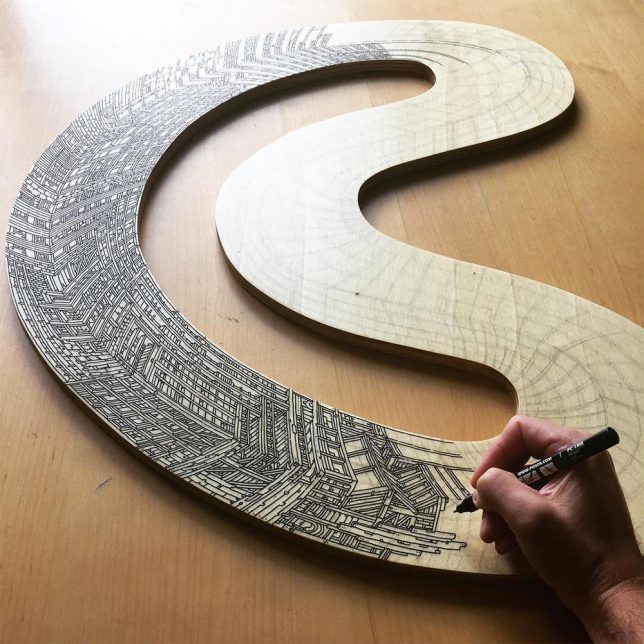
What would architecture look like if it had no beginning or end, no ground floor as starting point nor rooftop terminus? Artist Vasco Mourao explores exactly that question in his series Ouroboros, so named after the mythical dragon/serpent forever eating its own tail.

spiral skyscraper

plywood drawing

The Barcelona-based artist (an architect by training) illustrates his impossible-sounding seems on curved and angular cuts of plywood shaped into loops.
looped architecture

detail image

His work indirectly addresses a key transition point in the history of architecture as well — a time when concrete, steel and glass were first combined to make taller structure possible but before the Modernists rendered these buildings sleek and simple.

circular cut

unfinished design

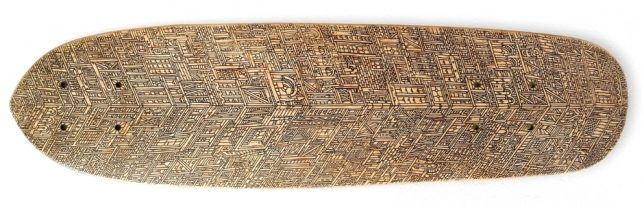
Like early skyscrapers (featuring stretched Gothic decor and wood-inspired details), his designs extrapolate conventional materials and decorative approaches skyward. Their aesthetic is also reminiscent of places like Kowloon Walled City, where densification drove particularly strange connections between different structures.

deep loop

work in progress

skateboard

Meanwhile, Mourao also draws other cityscapes on different surfaces as well, from large-scale surrealistic murals to the bottoms of skateboards, often reprising similar themes of infinity-evoking architecture.

Share on Facebook


[ By WebUrbanist in Art & Drawing & Digital. ]

[ WebUrbanist | Archives | Galleries | Privacy | TOS ]


WebUrbanist

 
Comments Off on Ouroborus Buildings: Artist Loops Infinite Skyscrapers Back on Themselves

Posted in Creativity