RSS
 

Posts Tagged ‘Announces’

TTArtisan announces limited-edition 35mm F1.4 M-mount lens wrapped in 24K gold

04 Aug

TTArtisan lenses tend to be more basic and budget-friendly than larger third-party or first-party lens manufacturers, but its latest lens eschews that mentality and puts an emphasis on luxury. The Chinese optics manufacturer has revealed a limited-edition version of its 35mm F1.4 lens for Leica M-mount cameras that’s covered in 24K gold.

Aside from the fancy exterior, the basic specs of the fully-manual lens remain the same as its less-flashy black and silver counterparts. It’s constructed of eight elements in seven groups, features an aperture range of F1.4 through F16, uses a 10-blade aperture diaphragm, has a 49mm front filter thread and offers a minimum focusing distance of 70cm.

TTArtisan doesn’t elaborate on whether the ‘Gold Skin’ lens constructed of gold-plated or gold-filled metal, but based on the price, it’s safe to assume the former. TTArtisan will also engrave a custom image onto the lens cap and lens barrel for buyers at no extra cost.

TTArtisan is making just 200 of these lenses. You can pre-order the lens now for $ 1,150, a $ 750 premium over the black and silver editions of the lens. The first units are expected to ship next week.

Articles: Digital Photography Review (dpreview.com)

 
Comments Off on TTArtisan announces limited-edition 35mm F1.4 M-mount lens wrapped in 24K gold

Posted in Uncategorized


Sony Announces the a7S III, With 4K/120p and a 9.44M-dot EVF

03 Aug

The post Sony Announces the a7S III, With 4K/120p and a 9.44M-dot EVF appeared first on Digital Photography School. It was authored by Jaymes Dempsey.
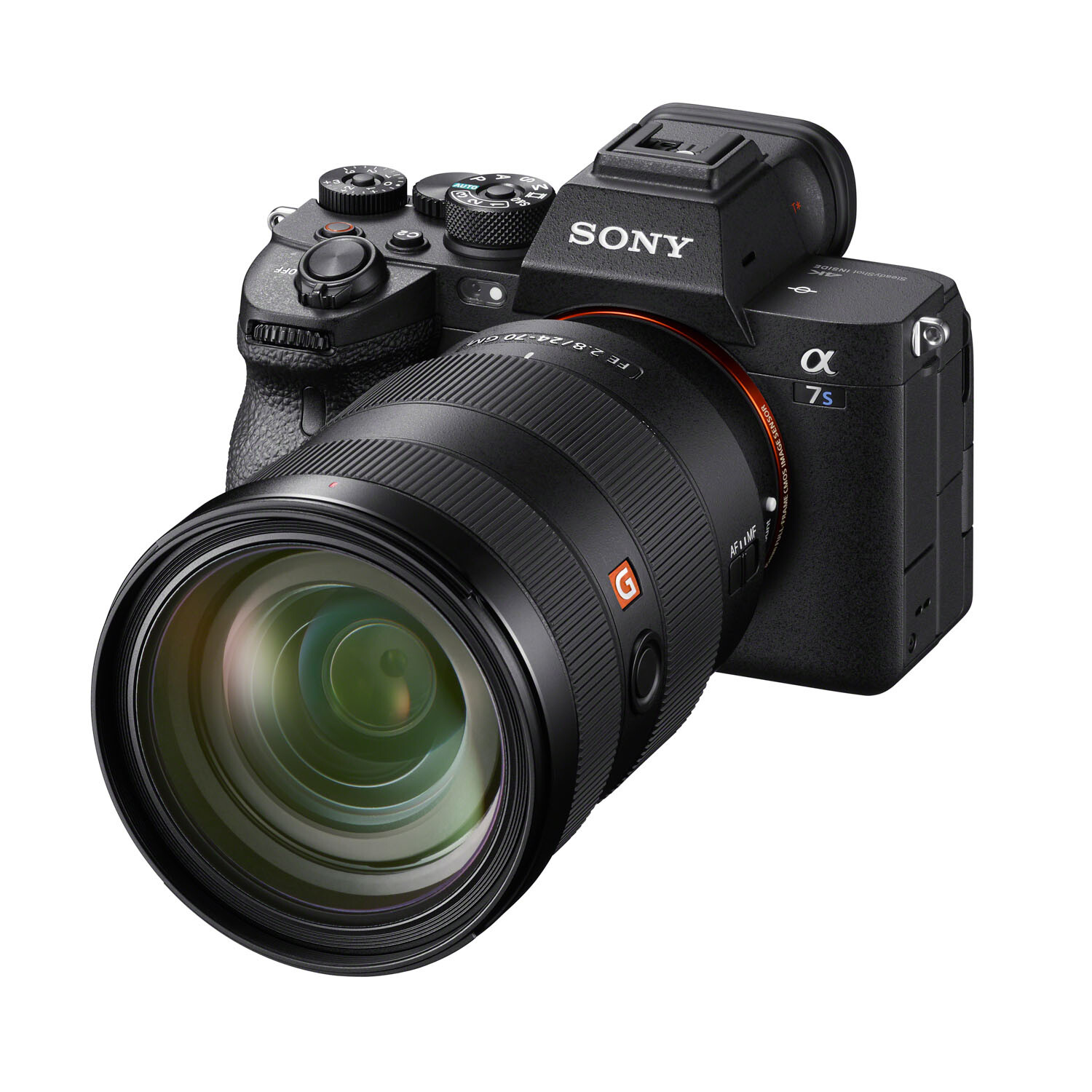
sony a7s iii announcement

After months of rumors, it’s finally official:

The Sony a7S III will hit the shelves in September, offering a whole host of brand new features, including a stellar autofocus system, a class-leading electronic viewfinder, pro-level video recording capabilities, and much more.

Let’s take a closer look.

What is the Sony a7S III?

The a7S III is Sony’s latest video/stills hybrid camera, which replaces the a7S II (a camera that debuted way back in 2015 and was long overdue for an upgrade).

The a7S III is a full-frame mirrorless model and technically designed to excel at both video and still shooting. But there’s a clear lean toward videographers, thanks to advanced recording capabilities such as:

  • 4K/120p video (with a 1.1x crop)
  • Internally recorded, uncropped 4K/60p video (with a recording limit of 1 hour)
  • Internally recorded, uncropped 4K/30p video (with no time limit)
  • 10 bit 4:2:2 recording
  • S-Log

As you can see, there’s quite a lot to satisfy serious videographers, such as the internal 4K/120p (for high-quality slow-motion footage), as well as unlimited 4K/30p shooting (for projects that require longer recording times).

You also get in-body image stabilization, as well as impressive high-ISO performance and at least 15 stops of dynamic range (according to Sony, anyway).

But while the a7S III is an impressive video contender, how does it look when arranged against more still-centric cameras? Can it hold its own?

Can the a7S III work for still photography?

At first glance, the a7S III is an extraordinarily capable camera for still photographers.

I mentioned the in-body image stabilization above, and that’s a boon for videographers and still photographers alike. You also get dual card slots, important for a select crowd of professional photographers, and a fully-articulating LCD for capturing images (or video) from awkward angles.

And the a7S III packs a 9.44M-dot electronic viewfinder, which is by far the highest resolution EVF currently available in a mirrorless camera (the former EVF champions sit at a still-respectable 5.76M-dot resolution). This should put to rest any claims by photographers that mirrorless EVFs just can’t compete with OVFs, because a near 10M-dot EVF is going to look insanely good.

The a7S III also features a new AF system, offering 759 phase-detection points, as well as 10 frames-per-second continuous shooting with a buffer of 1000+ RAW images.

All this seems extremely impressive, but for one major feature:

Resolution.

The a7S III only packs 12 MP, which is perfect for video but deeply disappointing for still photographers, especially in the current resolution-hungry market. These days, full-frame cameras offer a resolution of at least 20 MP, but often push higher, from 24 MP in the Sony a7 III to 61 MP in the Sony a7R IV.

Of course, there are photographers out there who aren’t caught up in the megapixel craze, and those folks might be willing to use the a7S III for still shooting, assuming they also have significant video needs. But megapixels aren’t just about marketing; a 12 MP camera does offer serious limitations in terms of high-resolution printing, as well as cropping in post-processing.

So while the a7S III is a truly impressive video camera, it (like its predecessors) sacrifices too much to be a serious still photography option for most shooters.

The a7S III will hit the shelves in September for an MSRP of $ 3500 USD, and is currently available for preorder here.

Now over to you:

What do you think about the a7S III? Are you pleased? Disappointed? And would you use it for still photography? Share your thoughts in the comments!

The post Sony Announces the a7S III, With 4K/120p and a 9.44M-dot EVF appeared first on Digital Photography School. It was authored by Jaymes Dempsey.


Digital Photography School

 
Comments Off on Sony Announces the a7S III, With 4K/120p and a 9.44M-dot EVF

Posted in Photography


Hasselblad updates firmware for X1D II 50C and 907X Special Edition, announces two new accessories

31 Jul

Hasselblad has announced a firmware update for its X1D II 50C and 907X Special Edition, as well as introduced two new accessories for its 907X Special Edition camera.

Firmware update 1.3.0 for the X1D II 50C and 907X Special Edition offers two main updates. First, it’s now possible to quickly set ISO and white balance by touch on the live view screen. Second, Hasselblad says it’s improved the charge time of its 3,400mAh batteries by 20% when using the supplied charger.

The update also adds support for the 907X Special Edition camera’s new accessories: a control grip and optical viewfinder. The 907X Special Edition Control Grip mounts to the underside of the camera. It offers a scrolling wheel, joystick, shutter button and four other customizable buttons for changing settings, capturing images and reviewing media without having to use the touchscreen.

Inspired by the Hasselblad SWC viewfinder, the new 907X Special Edition Optical Viewfinder (OVF) mounts to the camera via a cold shoe adapter and offers internal markings for composing images with Hasselblad’s XCD 21mm, 30mm and 45mm lenses. There’s also a center cross that can be used to simulate the location of an autofocus point.

You can download firmware update 1.3.0 for the X1D II 50C and 907X Special Edition on Hasselblad’s website. The 907X Special Edition Control Grip and Optical Viewfinder are available to pre-order on Hasselblad’s website for $ 969 and $ 629, respectively. The first units are expected to ship by the end of August.

Articles: Digital Photography Review (dpreview.com)

 
Comments Off on Hasselblad updates firmware for X1D II 50C and 907X Special Edition, announces two new accessories

Posted in Uncategorized


Sony announces world’s first CFExpress Type A cards and card reader

30 Jul

While the Sony a7S III rightly received most of the attention yesterday, Sony also announced it’s releasing the world’s first CFExpress Type A memory card and reader.

These new CFExpress Type A Tough cards offer max read and write speeds of 800MB/s and 700MB/s, respectively, and come in 80GB and 160GB capacities. While these cards will work in other cameras that offer CFExpress Type A slots, these are clearly designed to go hand-in-hand with Sony’s a7S III, which features dual hybrid card slots that can take UHS-II SD cards or CFExpress Type A cards.

New cards mean you’ll need a new way to get data off the cards, so Sony has also unveiled a USB 3.2 Gen 2 USB-C card reader that also accepts both SD cards and CFExpress Type A cards. The reader can transfer data at up to 10Gbps, which should leave more than enough overhead for even the fastest UHS-II SD cards as well as the new CFExpress Type A cards.

Both the CFExpress Type A Tough cards and SD/CFExpress Type A card reader are available to pre-order today. The 80GB (Adorama, B&H) and 160GB (Adorama, B&H) cards cost $ 200 and $ 400, respectively, while the card reader costs $ 120 (Adorama, B&H).

Articles: Digital Photography Review (dpreview.com)

 
Comments Off on Sony announces world’s first CFExpress Type A cards and card reader

Posted in Uncategorized


Fujifilm announces new EF-60 speedlight, EF-W1 wireless trigger for X, GFX System cameras

29 Jul

Fujifilm has announced a new speedlight and wireless trigger for its X Series and GFX System cameras.

The Fujifilm EF-60 is a compact radio-controlled speedlight with a hot-shoe mount. It features 60 guide number at 200mm, has a 24mm to 200mm zoom range and features a built-in LED modeling light.

The flash can be controlled in 1/3 stop increments and when paired with Fujifilm’s new wireless trigger, all of these settings can be changed from the trigger. The speedlight is also compatible with the Nissin Air System (NAS).

The partnering product is the EF-W1 Wireless Commander, which appears to be a Nissin Air10s Remote trigger with some Fujifilm branding on top. The 2.4GHz trigger offers TTL, manual and FP High-Speed Sync modes. It can control the EF-60 and other NAS strobes. The remote can handle up to three groups and eight channels.

Both the EF-30 and EF-W1 are compatible with the GFX100, GFX 50S, GFX 50R, X-H1, X-Pro2, X-Pro3, X-T1, X-T2, X-T3, X-T4, X-T20, X-T30, X- E3, X100F and X100V.

Both the EF-30 and EF-W1 are compatible with the GFX100, GFX 50S, GFX 50R, X-H1, X-Pro2, X-Pro3, X-T1, X-T2, X-T3, X-T4, X-T20, X-T30, X- E3, X100F and X100V.

The EF-60 speedlight (Adorama, B&H) and EF-W1 wireless commander (Adorama, B&H) are currently available to pre-order for $ 400 and $ 200, respectively. The first units should be available in ‘late August 2020.’

Articles: Digital Photography Review (dpreview.com)

 
Comments Off on Fujifilm announces new EF-60 speedlight, EF-W1 wireless trigger for X, GFX System cameras

Posted in Uncategorized


Nikon Announces the Full-Frame Z5 With a Sub-$1500 Price

27 Jul

The post Nikon Announces the Full-Frame Z5 With a Sub-$ 1500 Price appeared first on Digital Photography School. It was authored by Jaymes Dempsey.

Nikon Z5 announcement

Last week, Nikon officially unveiled the Z5, an addition to the full-frame Z-mount mirrorless lineup that had previously only included the Z6 and the Z7.

While the Z5 doesn’t offer any groundbreaking features on par with Canon’s EOS R5/R6 announcement, the camera offers plenty to love, and will likely fall into place as an affordable full-frame option for those looking to move up from Nikon APS-C bodies.

So what does the Z5 include?

First, a full-frame, 24.3 MP sensor. This resolution is standard for entry-level APS-C and full-frame cameras, but it’s more than enough for all but the most megapixel-hungry of photographers, and generally offers a nice balance between detailed images and low-light capabilities.

Nikon Z5

Nikon promises a spectacular high-ISO performance, claiming that the Z5 will “excel in low-light situations, making it ideal for shooting everything from low-light events to an all-nighter under the Milky Way.”

As with the Z6 and Z7, you’ll also get in-body image stabilization, which ensures the Z5 is handholdable even in more difficult low-light scenarios or when shooting video, and allows the camera to deliver high-quality landscapes and travel photos even when there’s no tripod at hand.

You also get a 3.6M-dot electronic viewfinder, which should be enough to impress even more demanding shooters, as well as a 3.2-inch rear-LCD with tilting and touchscreen capabilities. Interestingly (and perhaps in response to complaints from Z6/Z7 users), the Z5 will offer dual SD card slots, which provide a level of redundancy required by many professional shooters.

As for autofocus, Nikon promises 273 AF points, which “cover nearly the entire frame,” as well as human and animal eye-detection technology for easy tracking of pet, portrait, and wildlife subjects. This appears identical to the highly-regarded AF system on the Z6, and should provide Z5 shooters with fast focusing and tracking, even in trickier conditions.

Unfortunately, while the Z5 boasts a maximum shutter speed of 1/800s, a significant drawback is the continuous shooting speed, which tops out at 4.5 fps, and makes the Z5 immediately unsuitable for more serious sports and wildlife photographers.

And while the Z5 is compatible with a slew of excellent lenses via the FTZ adapter, the number of native Z lenses is still limited compared to mirrorless competitors such as Sony and Fujifilm.

Nikon Z5 announcement

On the other hand, the Z5 features a weather-sealed body, which is (surprisingly) on the same level as the Z6 and Z7. And regarding video: The Z5 does offer 4K/30p recording, but this comes with a pretty substantial (1.7x) crop, which will undoubtedly make the Z5 less compelling for more serious video shooters.

Bottom line:

The Z5 will be an appealing option for photographers looking to transition to mirrorless, especially given a relatively reasonable ($ 1400 USD) body-only price. But the slow continuous shooting speeds will force fast-paced photographers (e.g., wildlife, sports, and street) to look elsewhere, while the presence of the Z6 (at around $ 1800 USD) will be a compelling alternative for photographers desiring faster (12 fps) shooting speeds.

The Z5 will begin shipping in late August, and is currently available for pre-order here.

Now over to you:

What do you think of the Nikon Z5? What is your favorite and least favorite feature? And is it a model you’d be interested in purchasing? Share your thoughts in the comments!

The post Nikon Announces the Full-Frame Z5 With a Sub-$ 1500 Price appeared first on Digital Photography School. It was authored by Jaymes Dempsey.


Digital Photography School

 
Comments Off on Nikon Announces the Full-Frame Z5 With a Sub-$1500 Price

Posted in Photography


Panasonic announces minor firmware updates for 6 cameras, release of macOS streaming utility and more

14 Jul

Panasonic has announced minor firmware updates for half-a-dozen of its G Series mirrorless cameras and announced the upcoming release of new software for Windows and macOS computers that will give its mirrorless cameras the ability to be used as a webcam without the need for a capture card.

The firmware updates are for Panasonic’s GH5, GH5S, G9, G95, G85 and GX9 camera systems. The respective updates improve compatibility with Panasonic’s new Tripod Grip DMW-SHGR1 and add ‘operational stability’ with the LUMIX G VARIO 12–32mm / F3.5–5.6 lens. The new firmware updates will go live on Panasonic’s support page on July 21.

Panasonic has also announced the release of LUMIX Streaming (Beta) for macOS. Like the Windows version released back on June 9, the macOS version allows select Panasonic mirrorless cameras to be used as webcams through a derivative version of Panasonic’s LUMIX Tether utility that removes unnecessary interface elements to create a clean output for using as a webcam feed.

A screenshot of the Windows version of LUMIX Streaming (Beta).

At this time, the LUMIX Streaming (Beta) supports Panasonic’s S1H, S1R, S1, GH5S, GH5 and G9 mirrorless cameras. It requires at least macOS 10.11 (El Capitan), 2GB of RAM for 64-bit systems and 200MB of space. You can download the utility for free on Panasonic’s website.

Beyond the LUMIX Streaming (Beta) for macOS and Windows, Panasonic is also developing LUMIX Webcam Software. Unlike LUMIX Streaming (Beta), which is effectively a tweaked version of its tethering utility, LUMIX Webcam Software ‘[will make] it possible to use an applicable LUMIX camera as a webcam over a USB connection not only for live streaming, but also for video conferencing, etc.’ Panasonic says the software will be compatible with its S1H, S1R, S1, GH5S, GH5, and G9 camera systems, and is due for a September release on Windows and an October release for macOS.

Press release:

Panasonic Announces the Release of Firmware Update Programs for LUMIX G Series Cameras, “LUMIX Streaming (Beta)” for Mac and the Development of “LUMIX Webcam Software” for Windows/Mac

Newark, NJ (July 14, 2020) – Panasonic is pleased to announce the release of firmware update programs for the LUMIX G Series of Digital Single Lens Mirrorless Cameras and software programs “LUMIX Streaming (Beta)” for Mac and the development of “LUMIX Webcam Software” for Win/Mac.

The firmware update programs are for DC-GH5,GH5S, G9, G95, G85 and GX9 to improve compatibility with the new Tripod Grip DMW-SHGR1 and operational stability with LUMIX G VARIO 12-32mm / F3.5-5.6 ASPH. /MEGA O.I.S.(H-FS12032) lens. Meanwhile, “LUMIX Streaming (Beta)” and “LUMIX Webcam Software” enhance work-at-home activities using LUMIX cameras.

1. Firmware update programs for DC-GH5, GH5S, G9, G95, G85 and GX9

Model

Firmware Version

?Tripod grip DMW-SHGR1 can be used.

?Improved operational stability with the Panasonic LUMIX G VARIO 12-32mm / F3.5-5.6 ASPH. /MEGA O.I.S.(H-FS12032)

DC-GH5

Firmware Version 2.7

Yes

Yes

DC-GH5S

Firmware Version 1.6

Yes

DC-G9

Firmware Version 2.2

Yes

Yes

DC- G95

Firmware Version 1.2

Yes

Yes

DC- G85

Firmware Version 1.5

Yes

Yes

DC-GX9

Firmware Version 1.5

Yes

The firmware program will be available at LUMIX Global Customer Support website https://av.jpn.support.panasonic.com/support/global/cs/dsc/ on July 21, 2020.

2. LUMIX Streaming (Beta) for Mac

Followed by the release of “LUMIX Streaming (Beta)” for Windows, the “LUMIX Streaming (Beta)” for Mac has also been released. It is derived from conventional “LUMIX Tether (Ver.1.7)” with an additional display option for the cases where this software is used for live streaming purposes. It may help user convenience in the growing self-streaming opportunities.

As “LUMIX Tether” is a software program originally designed for tethered shooting, GUIs such as a focus area mark as well as control panels are displayed with live view images on the PC monitor during USB tethering. However, these graphic items become a hindrance when the software is used to capture camera view for live streaming. In response to the demands of customers to resolve this issue, LIVE VIEW mode has been added on “LUMIX Streaming (Beta)”. It enables displaying camera view only, making it easy for the separate streaming software to read it. Users can choose to show or hide these graphic items during USB tethering according to the usage purpose.

“LUMIX Streaming (Beta)” is provided as a pre-release version that is currently still under development. Please note that this software is not eligible for operation warranty and customer support.

Compatible models: DC-S1H, DC-S1R, DC-S1, DC-GH5S, DC-GH5, DC-G9

LUMIX Tether for Streaming (Beta) for Mac Operating Environment

OS

Mac OS X 10.11,

Mac macOS 10.12, macOS 10.13, macOS 10.14

*Operation with macOS 10.15 Catalina is under verification but some issues are reported. https://av.jpn.support.panasonic.com/support/global/cs/dsc/info/macos_tether.html

(When to officially support macOS 10.15 Catalina is yet to be fixed.)

CPU

Intel CPU of 1 GHz or higher

Display

1024 x 768 pixels or more

RAM

1GB or more (32bit),2GB or more (64bit)

HDD

Free space of 200 MB or more for installation

Interface

USB 3.0/3.1

LUMIX Tether for Streaming (Beta) web page with download link

https://www.panasonic.com/global/consumer/lumix/lumixtether.html

3. LUMIX Webcam Software

While the “LUMIX Streaming (Beta)” is basically a software for tethered shooting that can also be used to capture camera views for live streaming, the upcoming “LUMIX Webcam Software” makes it possible to use an applicable LUMIX camera as a webcam over a USB connection not only for live streaming, but also for video conferencing, etc.

Compatible models: DC-S1H, DC-S1R, DC-S1, DC-GH5S, DC-GH5, DC-G9, DC-G100 *

Release Date*: End of September (for Windows) / End of October (for Mac), 2020

*The release date of LUMIX Webcam Software for DC-G100 is yet to be decided.

Panasonic is committed to continuous improvement with its LUMIX product line, including the Full-Frame S Series and the Micro Four Thirds G Series, by providing customers with valuable products and services, a part of which are these firmware and software update programs.

Articles: Digital Photography Review (dpreview.com)

 
Comments Off on Panasonic announces minor firmware updates for 6 cameras, release of macOS streaming utility and more

Posted in Uncategorized


Sony Announces Brand-New, Ultra-Wide, 12-24mm f/2.8 Lens

14 Jul

The post Sony Announces Brand-New, Ultra-Wide, 12-24mm f/2.8 Lens appeared first on Digital Photography School. It was authored by Jaymes Dempsey.

dps news sony 12-24mm f/2.8 lens announcement

Sony has officially announced its FE 12-24mm f/2.8 GM lens, which is impressively wide, and offers a very fast aperture for such a wide-angle zoom.

While Sony did release a 12-24mm zoom back in 2017, it packed an f/4 maximum aperture, which just doesn’t offer the same low-light utility as a wide-angle f/2.8.

But now, with the new 12-24mm f/2.8, Sony shooters have the opportunity to work with an ultra-fast wide-angle lens, which is perfect for any sort of night photography, and astrophotography in particular.

Sony Announces Brand-New, Ultra-Wide, 12-24mm f/2.8 Lens

In terms of the lens’s specs:

A lens offering a maximum f/2.8 aperture is bound to be somewhat large, but Sony has kept both the size and the weight fairly reasonable:

5.5 in (137mm) long, 29.9 oz (847 g) heavy.

This means that landscape photographers and travel shooters won’t have too much trouble carrying the 12-24mm f/2.8 around in their bag.

The lens comes with a permanent hood, and the front element is unsurprisingly big, which means you won’t be able to use standard filters. However, Sony has designed the lens with a rear filter mount, which allows photographers to work with cut gel filters.

As for the optics:

Given that this is a GM lens, you can expect quite a lot, and early reviews seem to bear this out. The Sony 12-24mm f/2.8 is incredibly sharp, in the centers to the corners, both wide-open and stopped down.

Now, if you’re in need of a fast wide-angle zoom, you have two main options:

The new Sony 12-24mm f/2.8.

Or the Sony 16-35mm f/2.8 GM, which is a very impressive lens in its own right.

Ultimately, picking between these lenses will come down to personal choice, but the extra 2 mm on the wide end can be pretty significant, especially for landscape and astrophotographers.

That said, while the Sony 12-24mm f/2.8 is a truly excellent new piece of glass, the cost ensures that only the most serious of photographers will be able to add it to their bags.

It’ll ship in mid-August with a starting price of around $ 3000 USD.

Bottom line:

If you’re looking for a pro-level, fast, wide-angle lens for landscape photography, then this is going to be a good option, assuming you can afford the price.

The post Sony Announces Brand-New, Ultra-Wide, 12-24mm f/2.8 Lens appeared first on Digital Photography School. It was authored by Jaymes Dempsey.


Digital Photography School

 
Comments Off on Sony Announces Brand-New, Ultra-Wide, 12-24mm f/2.8 Lens

Posted in Photography


Canon Officially Announces Two DSLR-Crushing Options: The EOS R5 and EOS R6

13 Jul

The post Canon Officially Announces Two DSLR-Crushing Options: The EOS R5 and EOS R6 appeared first on Digital Photography School. It was authored by Jaymes Dempsey.

After months of waiting, it’s finally official:

dps-news-canon-eos-r5-and-eos-r6

Canon is releasing two new R-series mirrorless cameras, both of which will ship before the summer is out.

The Canon EOS R5

Canon EOS R5

The first of these is the highly-anticipated Canon EOS R5, a full-frame body that offers 8K video, 20 frames-per-second shooting via the electronic shutter (12 fps via the mechanical shutter), in-body image stabilization, and dual card slots (1 CF and 1 UHS-II SD).

But while we’ve reported on plenty of R5 details, it’s only now, thanks to Canon’s announcement, that we can fill in any knowledge gaps.

The Canon EOS R5 will pack a 45-megapixel sensor, which makes the R5 the highest-resolution camera in Canon’s mirrorless stable, and the second highest-resolution camera in Canon’s full-frame lineup (just after the 5DS/5DS R pair, both of which sport 50.6 megapixels). Combine this with the 20/12 fps shooting speeds, and you’ve got yourself some truly awesome capabilities, both for landscape and other high-resolution shooting, as well as for serious action photography.

Canon EOS R5

The EOS R5 is also equipped with top-notch autofocus features, including Canon’s Dual Pixel CMOS AF II technology, human and animal eye detection, and a whopping 1053 AF zones.

Much of the debate around mirrorless versus DSLRs has centered around electronic viewfinder capabilities, so we’re happy to reveal that the EOS R5 will offer a class-leading 5.76M-dot EVF, which is a significant step up from the (excellent) EVF on the EOS R, and puts the EOS R5 on par with the Sony a7R IV and the Panasonic S1R. This will ensure a better all-around shooting experience with an extremely life-like display and may satisfy even some of the more pro-OVF photographers.

Canon also notes that the EOS R5 will offer “weather, drip, and dust sealing on par with the EOS 5D series,” which suggests that the EOS R5 should be able to handle shooting in difficult weather, a requirement for landscape and wildlife photographers in particular.

Bottom line:

The EOS R5 is the best kind of generalist camera, one that suits nearly any genre of photography, from action to wildlife to landscape and more, and does it all at the highest level.

Of course, a camera this powerful doesn’t come without a significant price tag, but the EOS R5 will drop at a reasonable $ 3900 USD (body only).

The Canon EOS R6

As for the Canon EOS R6, you get a lot of the same features, but with a lower ($ 2500 USD) price tag.

Canon EOS R6

This includes in-body image stabilization, identical autofocus specs, and dual card slots (albeit 2 UHS-II SD compared to the 1 SD/1 CF design on the EOS R5).

As you might expect, Canon has made several cuts compared to the EOS R6, primarily in terms of resolution. The R6’s full-frame sensor includes just 20.1 megapixels, the EVF offers a (still-respectable) 3.69M-dot resolution, and video capabilities top out at 4K/60p.

Canon EOS R6

Canon also claims that weather sealing is “on par with the EOS 6D series,” which isn’t especially comforting for more serious shooters, but which is better than nothing and should be able to hold up in light rain or snow.

In many ways, the EOS R6 feels like the far more compelling option compared to the R5, at least for non-professional shooters. For nearly $ 1500 USD less, you get powerful IBIS, dual card slots, blazing-fast shooting speeds, impressive autofocus, and 4K/60p video (which is more than enough for even more serious videographers). You can also expect an excellent high-ISO performance from the EOS R6, as implied by its expansive native 100-102400 ISO range (compared to the 100-41200 ISO range on the EOS R5).

The main disappointment here is the 20 MP sensor, which feels low compared to the EOS R5, the EOS R, the EOS RP, and the 6D Mark II (all of which sit at 26 MP and above). But 20 MP is enough for most purposes, and the bigger pixels should guarantee top-notch low-light performance.

Canon 100-500mm

Lenses

Canon has also officially announced a Canon RF 100-500mm f/3.5-7.1L IS telephoto lens ($ 2699 USD), an RF 600mm f/11 IS STM ($ 700 USD), an RF 800mm f/11 IS STM ($ 899 USD), and an RF 85mm f/2 Macro IS STM ($ 600 USD).

Note that these cameras and lenses will begin shipping at various points over the next few months. You can expect the EOS R5 before July is out, however, and the EOS R6 toward the end of August.

Comparison video

So if any of these cameras or lenses interest you, go ahead and put in a preorder! You don’t want to miss out.

Now over to you:

What do you think about this announcement from Canon? Are you more interested in the EOS R5 or the EOS R6? And will you consider purchasing any of the lenses? Share your thoughts in the comments!

The post Canon Officially Announces Two DSLR-Crushing Options: The EOS R5 and EOS R6 appeared first on Digital Photography School. It was authored by Jaymes Dempsey.


Digital Photography School

 
Comments Off on Canon Officially Announces Two DSLR-Crushing Options: The EOS R5 and EOS R6

Posted in Photography


Sirui announces 35mm anamorphic lens is on the way

08 Jul

Sirui is teasing the launch of its next lens, which will be a 35mm 1.33x anamorphic with a maximum aperture of F1.8. Until recently, Surui was best known for making tripods, but it’s branched out into lenses, with this being the second released this year.

Like the 50mm 1.33x anamorphic that was launched in February, this new lens is designed for APS-C and MFT sensors. It will be only available in the MFT mount but there are adapters for Sony E, Canon EF-M and Nikon Z mount camera systems, according to a video placed on the company’s U.S. Facebook page. The lens will come with detachable geared rings for the focus and aperture rings, uses a 68mm front filter thread and has a minimum focus distance of 0.85m (2.8ft).

The lens is promoted as the wide-angle answer to the existing 50mm lens, and the company says it provides the viewing angle of a 26.3mm lens when used on an APS-C sensor. Sirui says that once de-squeezed, footage from a 16:9 area of the camera’s sensor will take on a 2.4:1 aspect ratio with characteristic oval bokeh and blue light streaks of flare.

The Sirui 35mm F1.8 1.33x anamorphic lens will be available for an early-bird price of $ 599 via an Indiegogo campaign page that goes live on August 3rd at 9am EST.
For more information on the company’s 50mm lens see the Sirui website.


Disclaimer: Remember to do your research with any crowdfunding project. DPReview does its best to share only the projects that look legitimate and come from reliable creators, but as with any crowdfunded campaign, there’s always the risk of the product or service never coming to fruition.

Articles: Digital Photography Review (dpreview.com)

 
Comments Off on Sirui announces 35mm anamorphic lens is on the way

Posted in Uncategorized