Canon made an announcement this week warning of counterfeit 600EX-RT flash units being sold as the real deal. Equally as disconcerting as the idea of being ripped off is that these counterfeits are also incredibly difficult to tell apart from the real thing. Read more
Tag: About
-
Editorial: Why I want a Leica Q (in which I mostly don’t talk about the Leica Q)
The Leica Q offers classic M-series styling in combination with a thoroughly modern feature set including a full-frame 24MP sensor and a 28mm F1.7 lens. After a bruising experience with previous digital Leicas, DPReview’s Editor Barnaby Britton has been very impressed by the Q. Click through to read why
-
The Cheap Camera Challenge – It’s Not All About the Camera
In my own classes, workshops and tours I tell my students that it is not the camera that makes good photos it’s the photographer. This video series by DigitalRev TV takes that statement to the next level with their Pro Photographer, Cheap Camera Challenge.
In this instalment street photographer Gary Tyson is given a cheap camera in a wristwatch. See how he uses it to make some pretty decent photos, interacts with people and uses it to his advantage rather than it being a disadvantage.
What can you learn from that video? What is the lesson there?
Sure maybe the photos are high resolution and won’t stand up to anything other than being on the internet. But take those same techniques and apply them using whatever camera you do have.
Are you up to taking the cheap camera challenge? I might give it a go myself!
googletag.cmd.push(function() {
tablet_slots.push( googletag.defineSlot( “/1005424/_dPSv4_tab-all-article-bottom_(300×250)”, [300, 250], “pb-ad-78623” ).addService( googletag.pubads() ) ); } );googletag.cmd.push(function() {
mobile_slots.push( googletag.defineSlot( “/1005424/_dPSv4_mob-all-article-bottom_(300×250)”, [300, 250], “pb-ad-78158” ).addService( googletag.pubads() ) ); } );The post The Cheap Camera Challenge – It’s Not All About the Camera by Darlene Hildebrandt appeared first on Digital Photography School.
-
Things to Know About Protecting Your Images Online
It is the digital age and therefore vitally important to have a presence on the internet. Photographers, both professional and novice, are using the internet more than ever to showcase their skill. This is imperative from a business and marketing standpoint, but with every great tool comes those who exploit it. Photographers are stuck between marketing themselves in the most Continue Reading
The post Things to Know About Protecting Your Images Online appeared first on Photodoto.
-
Get Excited About the New Adobe Lightroom CC
The day is upon us, my friends; Lightroom CC is here. The latest update to Adobe’s excellent photo management tool has arrived, and as cliche as it sounds, it really does offer something for everyone.
While the updates won’t necessarily satisfy hardcore Aperture users (who are still licking their proverbial wounds), Lightroom 4/5 users can easily justify this upgrade as a satisfying mix of under the hood, and hands-on improvements.
First and foremost, you’ll be ecstatic to learn that Adobe has released an independent version of the software in the form of Lightroom 6, available as a physical DVD or as a digital download. Subscribers of Adobe’s Creative Cloud service (that have Lightroom as part of their subscription plan) will automatically receive Lightroom CC, which is identical to Lightroom 6. We all let out a collective sigh when it was verified Adobe would not leave non-Creative Cloud users out in the cold.
The new and improved Lightroom sports several new features, and has included some improvements as well. Let’s go through a few of the highlights and see how they can make your photography workflow a more powerful and efficient process.
Improved Speed
While this is a behind-the-scenes improvement, it’s one of the biggest in this update. Instead of relying on the CPU (central processing unit) for all processing, as with Lightroom 5, Lightroom 6 has added the ability for some computations to be offloaded on the GPU (graphics processor) of your machine, specifically adjustments in the Develop module of the software.
This takes some of the load off of the central processor of your computer, and makes the entire program noticeably quicker. Efficiency through speed!
Photo Merge to Panorama
The new ability to create panoramic photos (multiple photos blended together to create a single super-wide image) directly within Lightroom will probably be one of the most talked about features of the update, along with HDR creation. In Lightroom 5, no “creation” of new pixels was allowed, meaning if you needed to create a panoramic image, you’d have to do it in Photoshop or a third-party piece of software.
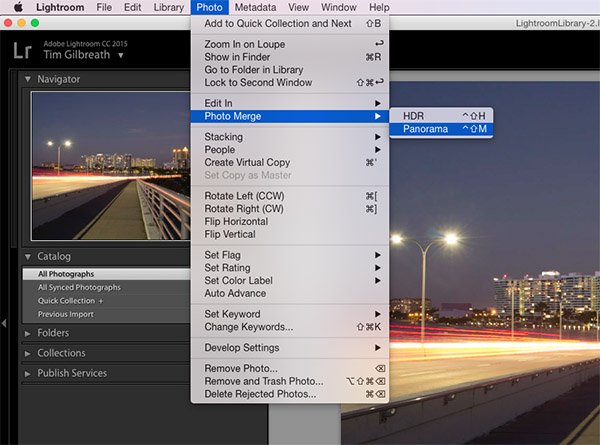
Now, Lightroom allows you to select a set of images, and it will stitch them together with a single click. The detailed controls for this process are sparse, but this is a good thing. You can even have the software automatically crop after the stitch is complete by ticking a checkbox in the creation dialog.
What do you get back after the build is complete? A 16-bit DNG (digital negative) file, a raw format that can be adjusted in the Develop module just like a RAW file. No compressed JPEG’s here.
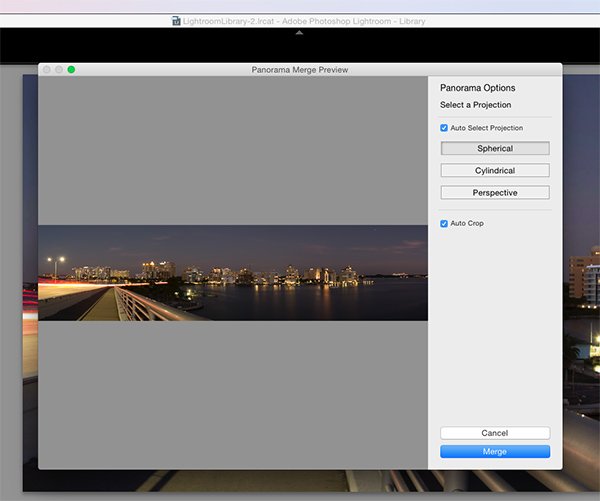
The beauty of this process is that unlike the full rendering done in Photoshop, you are giving a very quick low-resolution preview of the image, and it can then be sent to the background, while you work on a different image. The progress of the panorama’s build is viewable in the new Activity Center, which allows you to monitor and control ongoing background processes.
Photo Merge to HDR
The other high profile addition in Lightroom CC is undoubtedly the ability to create HDR (high dynamic range) files. HDR images are created by blending together several shots taken at various exposures, with the intention of pulling the optimal dynamic ranges from each of those images to create a photo that contains a larger dynamic range.
As with creating panoramas, HDR creation was not available in Lightroom 5, and was most often done via a third-party program such as Photomatix, or within Photoshop.
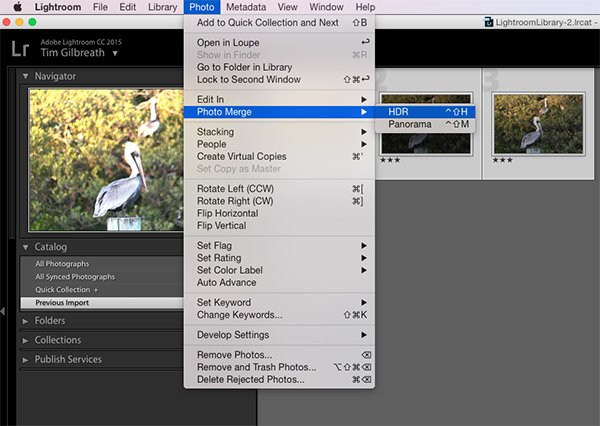
Just as with panoramic creation, Lightroom allows you to select several files within the software, and merges them together into a DNG file, with no compression. They may be modified with any of the sliders in the Develop module, just as you would do with any RAW file.
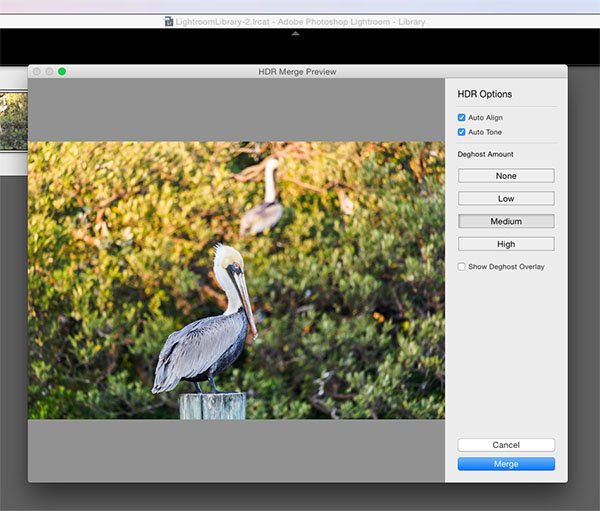
The obvious primary benefit for both the HDR and Panorama creation tools in Lightroom CC is the ability to perform these functions right there in Lightroom, without having to merge the files together in a separate program and then import them back into your Lightroom workflow.
More Precise Adjustment Filters
The graduated and radial filters available in Lightroom are some of its most-used features. They give you the ability to paint on a varying layer of adjustments including color, exposure, and many other options. A common example would be adding a graduated filter in a landscape shot to decrease exposure in a blown-out sky, while maintaining the proper exposure for the foreground.
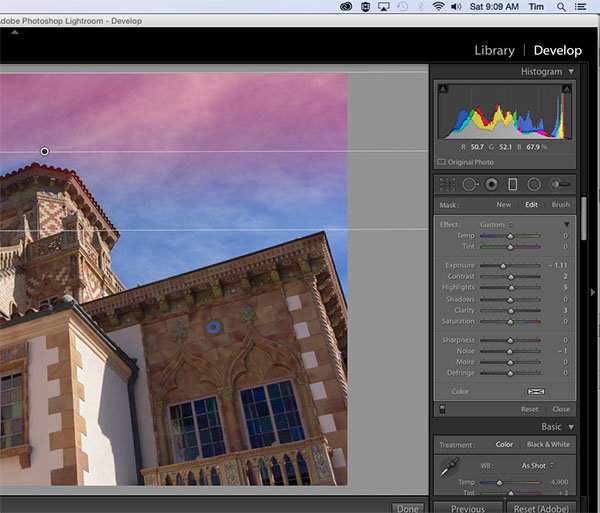
Note the red you see here is the new tool overlay which shows you where it is applying on your image. Just like the adjustment brush tool.
One caveat to using these filters before Lightroom CC was that they were all “what you see is what you get” implementations; if there was an object such as a tall building in your landscape image that extended to the top, a graduated filter to darken the sky would also darken the building.
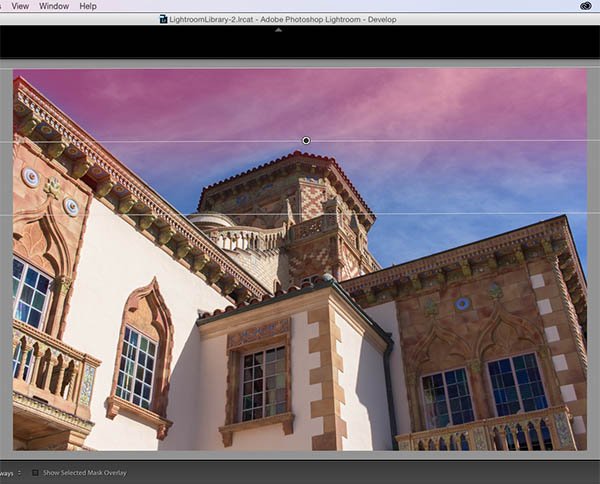
With Lightroom CC, this is no longer an issue. You can apply a graduated filter as usual, and then use a brush to mask the building so that the effect is only applied to the sky. This adds almost unlimited potential to the filters available in Lightroom.
Facial Recognition
A feature becoming more and more popular in our social-sharing world, facial recognition is well-known in apps such as Facebook, where identifying and tagging friends and family in shared photos is ideal. Lightroom throws its hat in the ring with a new Facial Recognition feature that will allow you to tag people in your photos in a similar manner.
The software will automatically attempt to identify human faces, and allow you to name them for future use. Over time, you’ll build up a database of faces, and Lightroom will begin identifying faces from that database in your newly imported photos.
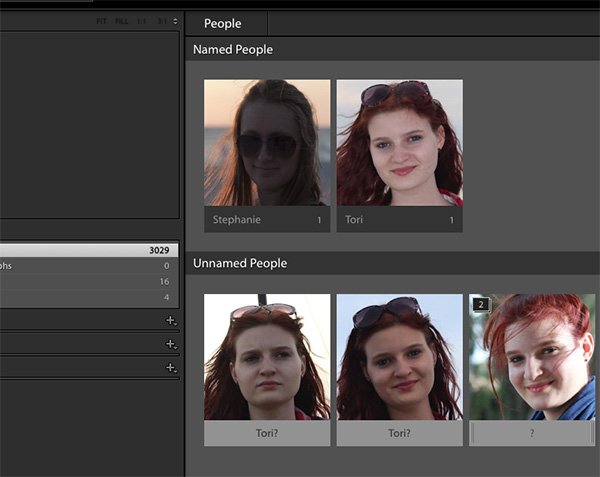
The tags that are created from this process can then be converted into searchable keywords in the metadata for the photo, and used as any other keyword could be.
What do you think?
There are several other smaller improvements and enhancements in Lightroom CC, including updates to the Slideshow module, pet eye removal, and tethered shooting, as well as an improved experience in Lightroom Mobile. Just as a reminder, to use Lightroom Mobile you’ll need to have an Adobe Creative Cloud plan that includes Lightroom.
We’ll likely have more in-depth analysis of Lightroom CC’s new features in the coming weeks, but early in the game, what do you think? Are you excited about the upgrade? Did it change your opinion of Adobe’s Creative Cloud direction of thinking? Thanks for reading, sound off in the comments below!
googletag.cmd.push(function() {
tablet_slots.push( googletag.defineSlot( “/1005424/_dPSv4_tab-all-article-bottom_(300×250)”, [300, 250], “pb-ad-78623” ).addService( googletag.pubads() ) ); } );googletag.cmd.push(function() {
mobile_slots.push( googletag.defineSlot( “/1005424/_dPSv4_mob-all-article-bottom_(300×250)”, [300, 250], “pb-ad-78158” ).addService( googletag.pubads() ) ); } );The post Get Excited About the New Adobe Lightroom CC by Tim Gilbreath appeared first on Digital Photography School.
-
New dPS Reader Survey – Tell Us More About You
At dPS we value you, our readers, above all else. We want to help you take better pictures.
By doing this survey you will be helping dPS serve you better. By knowing what kinds of things are you struggling with, and the types of articles you want to see we can work toward providing more of what you need to move your photography forward.
We value your time, and you, as our regular reader and always strive to improve – you will help us by completing this form, for which we will be especially grateful.
Click on this link, or the image below to start the survey.

Thank you for your continued support and being a dPS reader. We wish you all the success on your photography journey.
The dPS Management Team
googletag.cmd.push(function() {
tablet_slots.push( googletag.defineSlot( “/1005424/_dPSv4_tab-all-article-bottom_(300×250)”, [300, 250], “pb-ad-78623” ).addService( googletag.pubads() ) ); } );googletag.cmd.push(function() {
mobile_slots.push( googletag.defineSlot( “/1005424/_dPSv4_mob-all-article-bottom_(300×250)”, [300, 250], “pb-ad-78158” ).addService( googletag.pubads() ) ); } );The post New dPS Reader Survey – Tell Us More About You by Darlene Hildebrandt appeared first on Digital Photography School.
-
Adobe Announces New Lightroom CC – What Features are You Most Excited About?
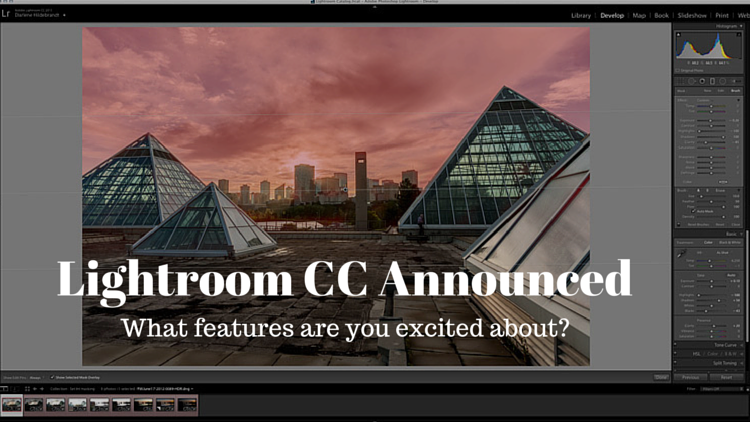
Well yesterday Adobe pulled the trigger on the much anticipated release of the new Lightroom 6, which is actually called Lightroom CC (part of the Creative Cloud). It will still be available as a stand alone product but many people, myself included were eagerly downloading the new version as soon as it was available.
We’ll have one of our writers doing a more involved look at the new features soon but I wanted to see what you are most interested in with this new version.
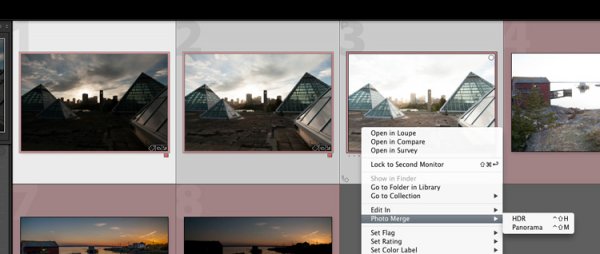
New Photo Merge feature in LR CC
What features were on your LR wish list?
So tell me in the comments below – what things were you hoping Adobe would build into this incarnation of Lightroom? Did you get all the features you wanted? What’s still missing in your opinion?
Was there anything you wanted removed?
What new features are you most fired up about?
In watching some of the live broadcast of the announcement I picked up on a few of the new features and was eager to try them out, most of all the Merge to HDR (Pano also available). It takes your bracketed shots which you previously had to take to either Photoshop or another plugin to work with – and now Lightroom merges them into a gorgeous 32-bit file which comes back in as a DNG no less! So you have all the editing power of a 32-bit file at your fingertips without every leaving Lightroom CC – I’m sold!
I ran a couple sets through the HDR to test it. Was pretty impressive and super easy. I’ll have to dig into it more later.
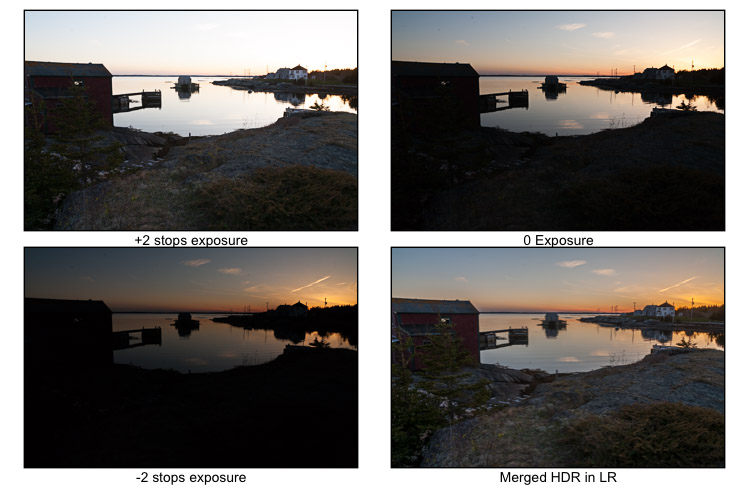
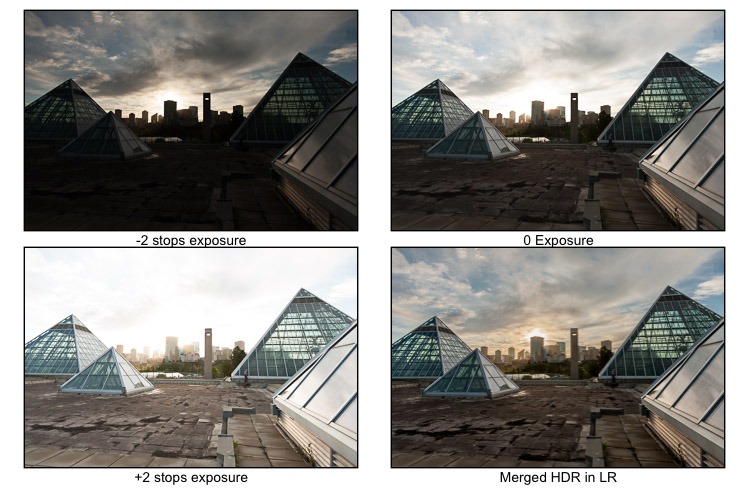
Previously on the set of images above I had to mask the sky back in – but using LR local adjustments and the new HDR Merge I was pretty happy with the result which took about three minutes.
Some of the new features I’m excited about and keen to try are:
- The Merge feature (to Pano and HDR – it even handles alignment, auto tone and deghosting)
- Add to Collection on import
- Filter in Collections (search)
- Enhanced video slideshows (I use it now for easy shows, this looks like it can make them look better now too)
- Auto-straighten on the crop tool
- New finer control using the graduated filter and radial filter. You can now brush out, or mask (hide) part of it to bring back buildings, trees and areas you do not want affected by the filter. Brilliant!
See a complete run down of all that’s new on the Adobe site.
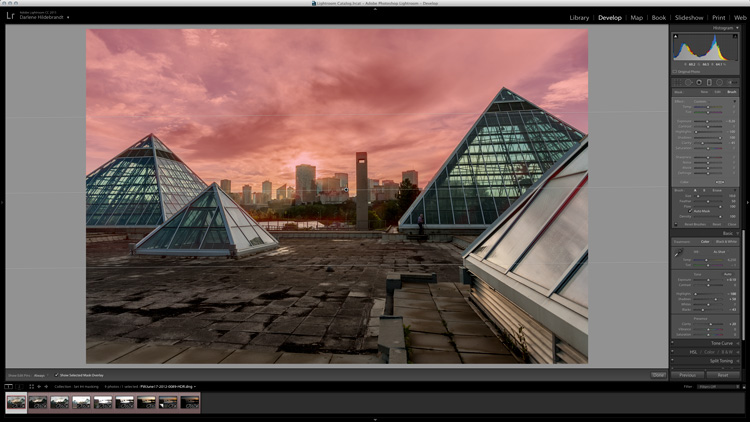
New brush option on graduated filters, very slick!
How about you?
We’ll have more on the new Lightroom in the coming weeks but for now tell us what you think in the comments below.
googletag.cmd.push(function() {
tablet_slots.push( googletag.defineSlot( “/1005424/_dPSv4_tab-all-article-bottom_(300×250)”, [300, 250], “pb-ad-78623” ).addService( googletag.pubads() ) ); } );googletag.cmd.push(function() {
mobile_slots.push( googletag.defineSlot( “/1005424/_dPSv4_mob-all-article-bottom_(300×250)”, [300, 250], “pb-ad-78158” ).addService( googletag.pubads() ) ); } );The post Adobe Announces New Lightroom CC – What Features are You Most Excited About? by Darlene Hildebrandt appeared first on Digital Photography School.
-
Video: A conversation with Olympus’ Richard Pelkowski about the OM-D E-M5 II
The Olympus OM-D E-M5 II has attracted a lot of attention, both for its technology and because it succeeds an already popular camera. We sat down with Product Manager Richard Pelkowski to find out more about the technology that went into the E-M5’s successor and what might be possible in the future. See video
-
5 Things You Should Know About Lightroom Before Starting
So you just installed Lightroom, now what?
You could spend some time just playing around and learning through doing, but if you’re looking for a nudge in the right direction here are a few simple concepts that I wish I’d thought about before starting my own Lightroom journey – hopefully it helps you! Five things you should know about Lightroom before you start:
#1 Your organizational strategy
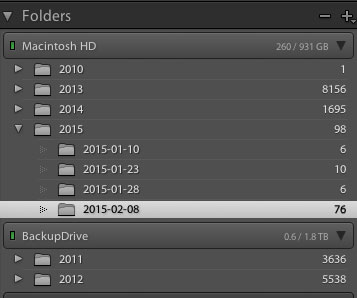 This might not seem important at first, but Lightroom is an amazing organizer of your photographs if you choose to use it as one. So before you start haphazardly uploading photographs into your Lightroom catalog try to come up with some sort of basic organizational strategy first.
Some ideas for organization include:
Organizing by date, by location of shoot, or by specific events. Think about your style of photography and the subject matter you plan on shooting. For example a wedding photographer would probably want to organize by date/bride-groom name, where as a wildlife photographer may organize by location/animal.
Lightroom has many different tools for organizing your photographs from colors, star rating and flags. You could for example use flags as a simple yes/no option to quickly cull images, while colors could be for various states of post production workflow (i.e. blue is for images that need to be processed and green is for images that are finalized and shouldn’t be touched).
This might sound overwhelming at first, but if you get into this habit early on, it will simply become a part of your Lightroom workflow, and trust me an organized Lightroom library makes things a lot easier when you’re dealing with thousands of photographs.
#2 How you want to import photos
This is a simple question, but one that you should know the answer to before you get started with Lightroom. When you first open up the import dialog box you’ll be asked whether you want to Copy as DNG, Copy, Move, or Add. Knowing the difference between these four options will help you make the best choice for your workflow. So here’s the Cliff’s notes version:
- Copy as DNG – Converts the file type to Adobe’s .DNG format. Read all about Adobe’s DNG format here.
- Copy – Retains the original file type of your image (on your computer or memory card) and copies it to a new location on your computer or hard drive.
- Move – Moves the image from one place to another on your computer (or from the memory card).
- Add – Adds the image to a Lightroom catalog without moving its physical location on your computer or copying it.
For a more detailed look at importing photographs in Lightroom check out: Quick Tip: Importing to Lightroom Made Easier
#3 How to use the Lightroom Develop Module
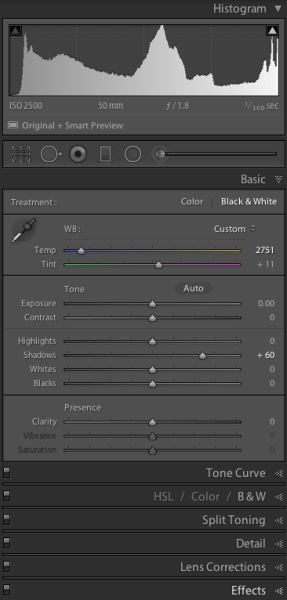 Now that you’ve got your organizational strategy situated you’re starting to get into the fun stuff, before you go all hack and slash post-production on your first photograph it does help to learn some basic fundamentals. Here’s three quick points to get you started.
- Learn what the basic tab does – The basic tab is the workhorse of Lightroom it is what will bring your image to life. At a minimum master these five Lightroom sliders and you’ll be on the road to successful image processing.
- Learn the art of local adjustments – Once you’re comfortable with Lightroom’s basic tab you’ll probably want to move onto learning things like how to apply adjustment brushes, graduated filters and radial filters to your images. These tools function in much the same way as the sliders within the basic tab, however, they allow you to have more isolated and local control over your images.
- Learn the finishing touches – Finally within the develop module you’ll want to learn a bit about the finishing touches that Lightroom is capable of providing. Things like the clone/heal tool, sharpening, and noise reduction are a good place to start. You may also want to learn about how to remove chromatic aberrations and correct for lens distortion as well. These types of tools are subtle, but powerful, and really will bring the entire image together as a final printable work.
#4 What are presets and how you should use them
While you may be tempted to start with presets it’s better that you learn your basic tab and various other tools first – why? Simply because all presets are created from these settings so once you learn those settings not only will you know a lot about the presets you’re choosing, but you’ll also be able to create your own.
When it comes to presets think of them as a starting point, not a finished product. Learn how to use them to speed up your workflow by creating your favorite looks within a preset, then applying what you know about the various sliders in the basic tab to fine tune the results.
For more info on Lightroom presets: A Concise Guide to Lightroom Develop Presets
#5 What your export settings should be
Here you are, ready to export your first photograph from Lightroom, and just when you thought you had everything figured out, this screen pops up. What do you do now?
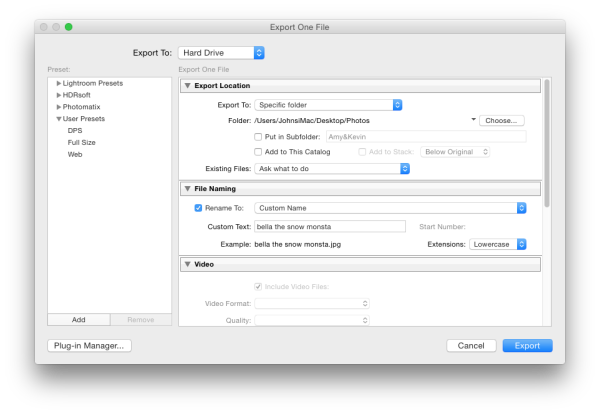
First you’ll want to remember that Lightroom doesn’t save your processed images, only the instructions of how to process them, that’s why you need to export (export = “save as”) a file out of Lightroom. This image is separate from the original camera RAW file, and as a result will need its own name, and place of organization.
You’ll want to determine what file type and size you’re going to export, and whether or not you want Lightroom to automatically add a watermark to your photographs. These things are all going to be preferences for your own work and there’s no right or wrong way to go about doing it, but you should learn about the implications of each before you start exporting hundreds of photographs.
What Else?
What else would you tell someone who’s just getting their feet wet with Lightroom? Leave us a comment below and let us know!
googletag.cmd.push(function() {
tablet_slots.push( googletag.defineSlot( “/1005424/_dPSv4_tab-all-article-bottom_(300×250)”, [300, 250], “pb-ad-78623” ).addService( googletag.pubads() ) ); } );googletag.cmd.push(function() {
mobile_slots.push( googletag.defineSlot( “/1005424/_dPSv4_mob-all-article-bottom_(300×250)”, [300, 250], “pb-ad-78158” ).addService( googletag.pubads() ) ); } );The post 5 Things You Should Know About Lightroom Before Starting by John Davenport appeared first on Digital Photography School.
-
What TechCrunch Gets Wrong About Ello…

Photograph of the hippest hipster cat around, Mr. Mingus, by hipster Daniel KriegerWriting for TechCrunch, Josh Constine penned a hit piece yesterday announcing the end of Ello. I was disappointed to see TechCrunch, a publication that I long viewed as being supportive of the start up community, using their pulpit to tear one down. Not only do I think Josh got a lot of the story on Ello wrong, but the dramatic tone of his article was unnecessarily disparaging and that is disappointing.
I’m not sure how much Josh uses Ello, but I use it every day and it’s currently my favorite social network.
I thought I’d take a few minutes to address some of the things that Josh said about Ello and add my own commentary.
1. Josh says: “Here in September gone in September, Ello hoped to dethrone Facebook by … not having ads.”
I’m curious about Josh’s comments saying Ello hoped to “dethrone” Facebook. Nowhere have I ever seen the founders of Ello saying that they hope to “dethrone” Facebook. In fact, the founders have gone out of their way to say that Ello and Facebook are two entirely different things. Ello is a social network and Facebook is an advertising network.
If you pull up Ello’s mission statement, does it say that their goal in life is to “dethrone” Facebook?
On the “What is Ello” page, Ello states:
“Ello is a simple, beautiful, and ad-free social network created by a small group of artists and designers. We originally built Ello as a private social network. Over time, so many people wanted to join Ello that we built a public version of Ello for everyone to use.”
Huh? So why the wild hyperbole from TechCrunch stating that Ello hoped to dethrone Facebook? If Ello got even 1/10th of 1% of the users that Facebook has it would be an absolute home run. Facebook is a multi billion dollar advertising network. Ello is a fun place to hang out and share things in an ad free environment with interesting people.
2. Josh says: “But while hipsters had fun hating on Zuck’s creation for a few days, they all went back to it and promptly ditched Ello.”
What’s with the dig about “hipsters?”
Maybe I’m a hipster, maybe I’m not a hipster?
I’m just a photographer looking to share my photos on a cool platform and I’m still using Ello everyday, just like I did when I joined it.
Is Brian Nelson a “hipster” (they won’t let him share his fine art nude photographs on Facebook by the way, warning NSFW)? Is my photographer friend David Seibold a hipster? Is JC Little a hipster? Is foalsi a hipster? Is Greg Poulos a hipster? Is Japanese photographer ruylopez a hipster? Is Jessica Greene a hipster? Is Toby Harriman a hipster? Is dutch a hipster? Is my Italian friend Nicola Cocco a hipster? Is writer, journalist and photographer Marcus Hammerschmitt a hipster? Is Ugo Cei a hipster? Is Brad Sloan a hipster? Is Portuguese street photographer Ricardo Porto a hipster?
I know my friend Daniel Krieger is *definitely* a hipster — he shoots for the NY Times, lives in Brooklyn, used to have a moustache, drinks fine bourbon and has the coolest cat named Mr. Mingus. The thing is though, all of these people are still on Ello and still posting every day. Josh on the other hand made two posts on the site and then bolted. One of his two posts is of this hipster looking avatar with a moustache, beard and long hair that I guess is supposed to be him?
Is the hipster criticism just because a few of the Ello founders have beards? Whatever case, the “hipsters” haven’t “promptly ditched Ello.” I could easily come up with a few hundred more interesting talented people I follow on Ello that pretty much post every day.
3. Josh says: “Beating Facebook at its own game is like punching a wall 1.35 billion bricks thick. ”
Huh, who said anything about “beating Facebook at its own game?” Lots of people who use Ello also use Facebook. I know I do. Why does everything have to be about “beating” Facebook. Is that just for the clicks? Ello isn’t even playing Facebook’s game. How can they “beat” them in an advertising game that they are not even playing in?
4. Josh says: “So as soon as people realized they could either post to their few smug friends who joined Ello, or everyone they know on Facebook, they dropped Ello on its face.”
Why would Josh think that people who use Ello are “smug?” I’ve met some really cool and interesting people on Ello. I’ve made some great new friends and reconnected with some old ones. The mixture of people is like a really nice bar where people generally speaking are nice and thoughtful and creative and intelligent and interesting. Maybe Josh needs to spend more time actually researching Ello before labeling the community there as “smug” and saying that they “dropped Ello on it’s Face.”
I mean, I hate to say it, but I think Josh’s hipster TechCrunch article on Ello is actually way, way, way, way more “smug” than the people who are actually using Ello as a fun community every single day.
5. Josh says: “No one I follow has posted in three months, so I doubt they’re checking the site either. ”
So wait, because Josh’s 22 hipster friends on Ello aren’t using it nobody else could possibly be? Maybe he should do a little more research because many of the 778 friends I’m following on there are using it every single day.
I thought Josh’s take on Ello was pretty myopic and one sided.
Look, here’s the thing about Ello. Ello is not trying to be Facebook. Ello is not trying to beat Facebook. Ello is not trying to play a game of horse basketball with Facebook on the Facebook basketball courts. Ello is Ello. Ello doesn’t need billions of users. Ello doesn’t need creepy ads that follow you around the internet. Ello doesn’t need you to pay them to have your “sponsored” posts shown to your friends.
Ello just is a cool place where interesting, intelligent, creative people are hanging out and being all friendly like. Photography there looks better than on any other network on the web. The interface is easy and clean. The folks running the show actually give a damn and care about the place and participate and are transparent about where they are headed with the network. If you haven’t tried Ello yet, check it out. You might find it the friendly sort of place you might like to hang out. You can find me on Ello here.
Some good comments about this article here.