RSS
 

Archive for March, 2019

How to Photograph Frozen Bubbles in the Cold

12 Mar

The post How to Photograph Frozen Bubbles in the Cold appeared first on Digital Photography School. It was authored by Mark C Hughes.

Bubbles in the Air

I live somewhere that gets pretty cold in the winter, and occasionally it gets super-cold. Alright, discussing cold is always a relative measure depending upon where you live, but I may be understating a bit to say it gets pretty cold, when actually, it gets freezing by pretty much anyone’s measure. Fortunately for my family and me, it only gets challenging for about a week or two in the depths of winter.

In the hardest times, temperatures reach around -30C (-22F). At these temperatures, there is very little moisture in the air, and it is just plain cold. Extra layers only help a little bit. Frostbite is a very significant risk for any exposed skin, particularly if there is any wind (times to freeze exposed skin are less than a couple of minutes).  Many people here wear the temperatures they endure almost as a badge of honor.

So cold we can freeze bubbles before they pop

It gets really cold here

At these temperatures, everything freezes here – even things you probably didn’t think could freeze. The large river that goes through my city freezes for the entire winter. Starting sometime in November until breakup in April, eyelashes and beards freeze, camera lenses freeze (aperture blades and shutters won’t move) and cars require block heaters to keep the oil in the crankcase warm enough so that you can start the engines.

There are colder places on earth, but not that many.  During our recent cold snap from the polar vortex (very cool name but I’m not sure its a real thing), people compared it to temperatures in Antarctica (it was slightly colder here than there).

It gets pretty cold here

So what, who cares?

Realistically, apart from complaining about the weather (a common national pastime for Canadians… look it up) you don’t want to spend much time outside at these freezing temperatures. So why tell you about crazy frigid temperatures? Because there is something that you can do at these temperatures that you can’t really do if it isn’t cold enough. You can blow bubbles and take pictures of them freezing before your eyes. The effect is remarkable, and it happens very fast. Frozen bubbles! If you can blow bubbles, you can watch them freeze before your eyes.

The process is pretty quick. The ideal temperature to do this is when temperatures dip below about -20C or -4F. At temperatures higher than that, the bubbles don’t freeze the same way. Blowing bubbles at these subzero temperatures can be challenging, but if you take the time, you can get some amazing results.

Bubbles on a bubble wand

The science of bubbles

Bubbles are common phenomena that kids love playing with. They seem very simple, but the science behind them is quite complicated. Bubbles are made up of two soap films – inside layer and outside layer – holding and trapping a layer of water between them to form the bubble. When you blow the bubbles through a wand or a straw, the air you introduce expands the inner film layer to create the bubble. As the water evaporates, the bubble eventually bursts. The bubbles stay together based upon the surface tension (the tendency to stick together) of the soap film, but the film is, in general, very thin.

In warm weather, soap and water are all you require for making lots of bubbles, but at colder temperatures, the soap film needs to be stronger. By adding glycerine or corn syrup, you make the bubbles stronger. By adding a small number of sugar crystals, the bubbles will show crystal patterns in the bubble walls as they freeze. The main ingredients you need access to are water, dish soap, glycerine, and some sugar.

Ingredients to make frozen bubble images

The 3 W’s and 1 H

In preparation for shooting bubbles, the key questions before you start are WHERE, WHAT, HOW and WHEN. Because the temperatures are so cold, you need to plan everything in advance because you can’t spend that much time in these temperatures trying to guess what you are going to do next. You need to pick a spot to set your bubble down (this is not a floating bubble exercise). This is the WHERE. Preferably it is someplace convenient, at a reasonable height and near a source of warmth (like somewhere near a door or running car to get you inside).

You then need to decide on the WHAT, is there a particular look you are going for? Is there an effect you are trying to achieve? (Night shot? Candles?)

Next, you need to think about HOW. How are you going to compose the shot? How are you going to blow the bubbles? What is the background like (this is a key aspect)? How are you going to manage both focusing, bubble making and shot taking? Are you going to need a tripod?

Finally, the WHEN is the last part to consider. You need to pick a time of day on a day that is cold enough to create the effect, that has great light and when there is little to no wind (this disrupts the bubbles). Wind will quickly destroy any efforts to blow bubbles in the cold.

Bubble frozen solid with corn syrup

The WHERE

So let’s consider the WHERE.

It will be cold, so you will need to scout a location that is easy to get to, at a reasonable height to photograph preferably from a tripod (to free up your hands) and is relatively near warmth.

These are normally close-up images, so it presents some similar challenges as macro photography. You really can be just about anywhere as long as you don’t have distracting shapes, colors or patterns in the background. Ideally, if you choose a reasonable aperture, the bokeh will have the background blurred but significant shapes, colors or patterns will be apparent.

I used the snowy railing on my back deck as a place I would set up for my shots because it was close to my house, at waist height and I can control the background.

Frozen bubble with a dark background

The WHAT

Regular bubbles don’t really work in super cold temperatures. The bubble mixtures that work in the summer struggle in super-cold temperatures and tend to just burst before freezing. In cold temperatures, bubbles can be more difficult to generate. Even if you do, they often just fall to the ground.

If you search the internet, you will get lots of clear advice but little in the way of explanation. I found and tried multiple recipes for bubbles and discovered that some of the recipes don’t work all that great. All generate bubbles, but some work better than others.

The general objective is to get bubbles with thicker films that tend to stay together. Also, by adding some sugar, you can get cool crystalline patterns as the bubbles freeze.

The recipe I settled on (as it worked fairly reliably) was 1 cup of water, 4 tablespoons of dish soap (not dishwasher soap), 3 tablespoons of glycerine and 2 tablespoons of sugar. I saw many recipes that used corn syrup, but they didn’t seem to work as well as the glycerine and made for sticky bubbles. However, corn syrup does work – just not as well. The glycerine strengthens the bubble, and the sugar helps with the crystalline patterns in the freezing bubbles.

To blow the bubbles, you will need a straw and some patience. Preferably you use a reusable straw (which I have a bunch of).

Regular Bubble solutions don’t really work for freezing bubbles

The HOW

Once you have figured out your location, you need to compose your shot. Plan on a bubble being about 3 inches in diameter (could be bigger but probably won’t be smaller). Set your camera on a tripod, pick the spot where you are placing the bubble and set your focus manually.

You can set the bubble on snow, or if you use the bottom of a cup or glass, a small amount of solution on the base helps place the bubble easier and without it popping. It is also useful to have your camera set up to take multiple shots (slow burst) without recomposing or refocusing.

Bubble with focus on the back wall rather than front wall

Once set, use a straw in the solution and slowly blow the bubbles. You will need to keep the bubble on the straw, place the bubble and slowly extract the straw from the top of the bubble. This technique worked best for me. Remember it is cold, and blowing bubbles is not that easy when it very cold.

The WHEN

Okay, you are all set…but is it cold enough? You need -20C (-4F) or the bubbles don’t freeze properly. Ideally, you want it sunny as the light hitting the bubbles really makes them pop. The good news is that generally when it is really cold, there is so little moisture in the air that it is often sunny.

Finally, you want there to be as little wind as possible. The wind will cause the bubbles to move unpredictably and cause them to burst. Try to find a location sheltered from the wind.

Using a candle to illuminate a bubble at night

The Shoot

Once all the preparation is complete, and you are ready to go, you may realize that it is difficult to blow bubbles, wear gloves, stay warm and shoot at the same time. Once the bubbles start to freeze, they freeze fast. You will want to place the bubble and then watch for it to begin to freeze and then take multiple images in a short burst.

If you can have someone blow bubbles for you, this helps because getting the bubbles to form, place them and then hope they stay together long enough for the images to turn out can be a bit of a challenge. It is a little finicky to get the bubbles to stay where you want them but if all the stars align the results are great and fun.

Mostly frozen bubble

The Results

If you get everything working, you can get pretty amazing results.  Whether for still images or video, bubbles freezing are really interesting to see and photograph. If you plan out the images, you can get great results.

Not quite frozen bubble


The post How to Photograph Frozen Bubbles in the Cold appeared first on Digital Photography School. It was authored by Mark C Hughes.


Digital Photography School

 
Comments Off on How to Photograph Frozen Bubbles in the Cold

Posted in Photography


Meyer Optik Görlitz confirms rumor that Nocturnus was a rebranded Chinese lens

12 Mar

Meyer Optik Görlitz, the German brand that offered lenses through Kickstarter before its parent company filed for insolvency last year, has confirmed speculation that the Nocturnus lenses were slightly modified versions of a Chinese lens, and the Somnium lenses were modified versions of a Russian lens.

The brand’s new owner OPC Optics revealed its finding in a press release, stating that it had spent time analyzing the Meyer Optik products and planning how it would move forward with the brand. According to OPC Optics Managing Director Timo Heinze, ‘It’s fair to say that the previous organization and processes shocked us on occasions.’

Among other things, the company said it discovered that past speculation about the Somnium and Nocturnus lenses proved true, and as such it will discontinue both ranges ‘for the time being.’ The company didn’t say which lenses were used, but online speculation over the years had pegged the $ 3,000 Nocturnus as a modified $ 849 Mitakon Zhongyi Speedmaster 50mm F0.95 lens.

Heinze explained, ‘That is an absolute no go. As a German manufacturer using the ‘Made in Germany’ quality seal, this is a shameful indictment. These lenses may be perfectly good in their own right, but their production methods and marketing goes against all our principles.’

Heinze acknowledged that Meyer Optik may relaunch lenses ‘with similar characteristics’ under its ownership in the future, but they would not be rebranded, modified Russian and Chinese lenses. The potential future lenses ‘would, of course, be our own designs
and produced by us, in order to genuinely earn the ‘Made in Germany’ label,’ according to Heinze.

Via: PetaPixel

Articles: Digital Photography Review (dpreview.com)

 
Comments Off on Meyer Optik Görlitz confirms rumor that Nocturnus was a rebranded Chinese lens

Posted in Uncategorized


Essential Photography Equipment For Beginners

11 Mar

Every photographer is unique in their own photography style and gear preference. To get you started on your photography journey, this article will help you choose the very essential photography equipment for beginners. You will also find specific brands and explanations for why they were chosen. This photography basics bundle has everything you need to get started! I will start Continue Reading

The post Essential Photography Equipment For Beginners appeared first on Photodoto.


Photodoto

 
Comments Off on Essential Photography Equipment For Beginners

Posted in Photography


10 Common Photography Mistakes Every Beginner Should Avoid

11 Mar

The post 10 Common Photography Mistakes Every Beginner Should Avoid appeared first on Digital Photography School. It was authored by Jaymes Dempsey.

You can capture incredible photos.

But there are a few common photography mistakes (often made by beginners).

1 - Common Photography Mistakes Every Beginner Should Avoid - Jaymes Dempsey

And these mistakes might be holding you back.

Fortunately, they’re easy to fix.

And guess what?

Once you’ve fixed these mistakes, your photography will be better than ever.

2 - Common Photography Mistakes Every Beginner Should Avoid - Jaymes Dempsey

So read on to discover the 10 common photography mistakes every beginner should avoid.

Starting with:

1. You’re not resetting your camera dials at the end of each shoot

Tell me if this sounds familiar:

You’re doing an end-of-day photo shoot.

You crank your ISO up to 1600 (to deal with the low light).

Your shoot ends. You go to put away your camera.

And…

…In all the excitement, you forget to drop your ISO back to 100.

This is such an easy mistake to make. Especially since it’s something you must remember at the end of each photo shoot –when you’re exhausted.

3 - Common Photography Mistakes Every Beginner Should Avoid - Jaymes Dempsey

But…

It’s something you can’t forget.

Why?

If you do, you’re jeopardizing your next photo shoot.

Because then you’re bound to shoot with your 1600 ISO.

And then you’ll get frustratingly grainy shots.

Which is exactly what you don’t want.

4 - Common Photography Mistakes Every Beginner Should Avoid - Jaymes Dempsey

So here’s what you do:

At the end of each shoot, shift all settings back to a standard value. The particular number depends on your camera and your style of photography. But make sure you choose a median value – one that will serve you in a variety of situations.

5 - Common Photography Mistakes Every Beginner Should Avoid - Jaymes Dempsey

Here’s what I do:

I dial my ISO down to 100.

I dial the aperture to f/5.6.

I dial the shutter speed to 1/500.

Doing this has saved me countless times.

It’ll save you, too.

2. You’re shooting JPEG photos (instead of RAW)

This mistake is a frustrating one.

Because there’s literally nothing you can do to fix it – after the fact.

6 - Common Photography Mistakes Every Beginner Should Avoid - Jaymes Dempsey

Here’s the mistake:

You’re shooting JPEGs.

But you should be shooting in RAW.

Let me explain:

Cameras can shoot images using several file formats.

JPEG is a common file format and it’s the default format on a lot of cameras.

7 - Common Photography Mistakes Every Beginner Should Avoid - Jaymes Dempsey

But here’s the issue with JPEGs:

They’re compressed files. That means that they lose information.

And a loss of information? That makes for lower-quality photos.

Not to mention another issue:

Each time you edit and resave a JPEG, you’re reducing the image quality.

Fortunately, you have another option:

You can shoot in RAW.

RAW is another file format – and it’s offered by most modern cameras.

8 - Common Photography Mistakes Every Beginner Should Avoid - Jaymes Dempsey

It’s a lossless file format, which means that you can edit RAW files repeatedly without reducing the image quality.

And here’s a RAW bonus:

RAW files allow for you to do more substantial editing. Because the RAW format saves more information, you’re able to recover highlights, boost shadows, and alter colors – far more than what you can do with a JPEG file.

9 - Common Photography Mistakes Every Beginner Should Avoid - Jaymes Dempsey

Bottom line?

Switch to RAW.

You’ll be thankful that you did.

3. You’re shooting during the harsh midday hours

One of the things that separates great photos from mediocre photos…

…is the quality of the light.

Good light can take a photo to the next level.

10 - Common Photography Mistakes Every Beginner Should Avoid - Jaymes Dempsey

Bad light can hold back an otherwise strong image.

Which brings me to mistake number three:

Shooting during the harsh midday hours.

Around midday, the sun is harsh. It causes contrasty shadows.

It’s just all-around bad for photography.

Instead of shooting during midday, try shooting during the early morning or evening hours.

11 - Common Photography Mistakes Every Beginner Should Avoid - Jaymes Dempsey

That’s when the light is soft and golden.

(In fact, these times are known as the golden hours.)

Shooting during the golden hours will give your subjects a wonderful glow.

It’ll give them some soft illumination.

12 - Common Photography Mistakes Every Beginner Should Avoid - Jaymes Dempsey

And it’ll give your photos a huge boost.

4. You’re using Auto mode all the time

When you first start shooting, it can be tempting to put your camera in Auto mode.

But here’s the problem:

When you shoot in Auto mode, the camera chooses all the settings for you.

And the camera does a good job 80 percent of the time.

13 - Common Photography Mistakes Every Beginner Should Avoid - Jaymes Dempsey

But the other 20 percent?

That’s when your camera will mess up.

And you’ve got to be able to correct it.

Otherwise, your images will suffer.

14 - Common Photography Mistakes Every Beginner Should Avoid - Jaymes Dempsey

So here’s what I’d suggest:

Start by learning the ins and outs of Aperture Priority mode.

(That’s the mode where you select the aperture and your camera will select the shutter speed.)

Then, when you’re in a non-stressful shooting situation, switch it on.

Try to use it more and more.

15 - Common Photography Mistakes Every Beginner Should Avoid - Jaymes Dempsey

Eventually, you’ll be shooting in Aperture Priority all the time. You’ll love the control it gives you.

And then?

If you want even more control over your camera, you can transition to Manual mode. But this isn’t a requirement – you can do a great job with just Aperture Priority.

16 - Common Photography Mistakes Every Beginner Should Avoid - Jaymes Dempsey

So that’s your call.

Just make sure you move away from Auto mode.

5. You’re forgetting about the direction of the light

You already know about the importance of good-quality lighting.

But did you know that the direction of the light matters, too?

17 - Common Photography Mistakes Every Beginner Should Avoid - Jaymes Dempsey

Depending on the direction of the light, your photos can be soft, dramatic, or striking. And it’s important that you carefully choose the direction of the light.

(Because different types of light suite different subjects and styles.)

18 - Common Photography Mistakes Every Beginner Should Avoid - Jaymes Dempsey

Here’s a quick guide to light:

If the light comes from in front of your subject (i.e., frontlight), you’ll get an evenly illuminated photo.

If the light comes from behind your subject (i.e., backlight), you’ll get a striking photo. The light will create a golden halo around your subject.

And if the light comes from beside your subject (i.e., sidelight), you’ll get a dramatic photo. The subject will be only partially illuminated – and partially shrouded in shadow.

19 - Common Photography Mistakes Every Beginner Should Avoid - Jaymes Dempsey

Now, all these types of light have a time and place.

But frontlight is generally a very safe option.

(When in doubt, use frontlight.)

20 - Common Photography Mistakes Every Beginner Should Avoid - Jaymes Dempsey

Here’s the important thing:

Each time you go out to shoot…

…look for the light.

Taken note of the light.

And position yourself so that you get the shot that you want.

6. You’re not composing deliberately

If light is the number one most important part of photography…

…then composition is number two.

21 - Common Photography Mistakes Every Beginner Should Avoid - Jaymes Dempsey

Because in order to capture great shots, you’ve got to create great compositions.

That is, you’ve got to arrange the elements of your photo in a pleasing way.

It’s so easy to forget about this.

But you should deliberately compose every photo you take.

22 - Common Photography Mistakes Every Beginner Should Avoid - Jaymes Dempsey

Now, composing deliberately doesn’t have to be an ordeal.

Not every photo has to be a masterpiece.

Just think about each photo you take, if only for a second.

Here’s a tip:

Try positioning your main subject in a way that emphasizes its beauty.

You could put it a third of the way into the frame…

23 - Common Photography Mistakes Every Beginner Should Avoid - Jaymes Dempsey

(Following the rule of thirds.)

Over time, your composition skills will improve. You just have to practice!

7. You’re not considering the background

When you’re doing photography, it’s easy to think about your subject.

But you’ve got to think about the background, too!

24 - Common Photography Mistakes Every Beginner Should Avoid - Jaymes Dempsey

The background is what frames the subject.

It’s what makes the subject stand out.

Here’s a bit tip for a stunning background:

Simplify, simplify, simplify.

25 - Common Photography Mistakes Every Beginner Should Avoid - Jaymes Dempsey

The simpler the background, the better.

Try finding a uniform background. A bright sky is a great choice. So is a dark wall.

(A uniform background really does make for a gorgeous photo.)

26 - Common Photography Mistakes Every Beginner Should Avoid - Jaymes Dempsey

It’s okay to settle for a less-than-uniform backdrop.

But make sure that it enhances the subject. Make sure it doesn’t detract from the overall image.

8. You’re not practicing very often

Photography is a skill.

And to improve a skill, you’ve got to practice.

Which means that you should get out and shoot as often as you can.

27 - Common Photography Mistakes Every Beginner Should Avoid - Jaymes Dempsey

I know that it’s hard.

But if you shoot for fifteen minutes every day, your photography will grow by leaps and bounds.

And if you shoot for an hour a day?

You’ll be astonished by how quickly you improve.

28 - Common Photography Mistakes Every Beginner Should Avoid - Jaymes Dempsey

It’s important to note:

Practicing photography isn’t just about taking photos.

You should also make sure to review your images. Consider what you like about them. Consider what you can improve.

And apply these findings the next time you go out.

29 - Common Photography Mistakes Every Beginner Should Avoid - Jaymes Dempsey

If you’re really serious about photography, you should also try reviewing other people’s images.

There are tons of great photography sites out there (including this one!). Try perusing them for fifteen minutes every day.

30 - Common Photography Mistakes Every Beginner Should Avoid - Jaymes Dempsey

You’ll soon develop an enhanced sense of composition and color. And this, in turn, will enhance your photography.

9. You’re shooting from standing height

When you’re doing photography, do you shoot from a standing height?

That is, do you generally take the standard shot?

Or do you move around and look for a unique perspective?

31 - Common Photography Mistakes Every Beginner Should Avoid - Jaymes Dempsey

The thing is, it’s easy to just shoot from a standing height.

But if you do this, your images will never be unique.

And they won’t be very original.

32 - Common Photography Mistakes Every Beginner Should Avoid - Jaymes Dempsey

You want to show the viewer something they’ve never seen before. That’s how you’ll create a stunning photo.

So what do you do?

Instead of shooting from standing height…

Change your angle.

33 - Common Photography Mistakes Every Beginner Should Avoid - Jaymes Dempsey

Start by getting down low. Crouch on your knees. Get your pants dirty.

Then try moving to the side. Get a shot that nobody would ever think to take.

Next, find a nice vantage point – one that lets you capture your subject from above. Take a few shots from that angle.

34 - Common Photography Mistakes Every Beginner Should Avoid - Jaymes Dempsey

Do you see what I mean?

By changing up your position, you’ll capture unexpected, original, and compelling photos.

And that’s exactly what you want.

35 - Common Photography Mistakes Every Beginner Should Avoid - Jaymes Dempsey

10. You’re not processing your photos

Let’s talk about one last common photography mistake:

Taking photos.

But not processing them.

36 - Common Photography Mistakes Every Beginner Should Avoid - Jaymes Dempsey

Processing is a hugely important part of photography.

Why?

Because modern cameras account for processing.

37 - Common Photography Mistakes Every Beginner Should Avoid - Jaymes Dempsey

In other words, if you’re shooting in RAW, it’s expected that you’ll process your photos.

So the camera gives you unprocessed photos – photos that need processing to look good.

The photos are under-sharpened.

The photos are undersaturated.

They’re just all-around in need of some editing.

Which is what you must do.

38 - Common Photography Mistakes Every Beginner Should Avoid - Jaymes Dempsey

If you’re not a fan of post-processing, that’s okay. You can take a minimalist approach to your processing.

But you should process your photos, if only a little bit.

Because processing will give them that final touch…

…that will make the viewer say “Wow.”

Common photography mistakes: What do you do now?

Now you know 10 common photography mistakes.

And if you’re making any of these mistakes, you might feel discouraged.

Don’t be.

39 - Common Photography Mistakes Every Beginner Should Avoid - Jaymes Dempsey

Everyone is going to make mistakes. Especially when starting out.

The real question is…

40 - Common Photography Mistakes Every Beginner Should Avoid - Jaymes Dempsey

What are you going to do about it?

If you follow the advice I’ve given you, you’re going to be in great shape.

41 - Common Photography Mistakes Every Beginner Should Avoid - Jaymes Dempsey

You’ll improve at lightning speed.

And you’ll be so proud of the photos you take.

Have any other common photography mistakes that I didn’t cover? Let me know in the comments!

42 - Common Photography Mistakes Every Beginner Should Avoid - Jaymes Dempsey

You may also find the following articles helpful:

12 Common Newbie Photography Mistakes to Avoid

Common Photography Mistakes Newbies Make and How to Avoid Them

10 Common Photography Mistakes and How to Overcome Them


The post 10 Common Photography Mistakes Every Beginner Should Avoid appeared first on Digital Photography School. It was authored by Jaymes Dempsey.


Digital Photography School

 
Comments Off on 10 Common Photography Mistakes Every Beginner Should Avoid

Posted in Photography


Manfrotto adds four new carry-on trolley bags to its Pro Light Reloader collection

11 Mar

Manfrotto has introduced four new carry-on trolleys to its Pro Light Reloader collection: the Pro Light Reloader Air-55, Air-50, Pro Light Reloader Switch-55 and Pro Light Reloader Spin-55. The Air-55 and Air-50 are fairly straightforward trolley cases, but both the Switch and Spin have a little more to offer, albeit with a higher price tag.

Pro Light Reloader Air-55

The Pro Light Reloader Air-55 can fit up to two pro-style DSLR, five lenses and a 17″ laptop. It features various zippered pockets on the front and side of the bags, as well as a handful of internal pockets for storing accessories. Gear organization is done with the help of large supportive dividers and 19 additional shock-absorbing dividers that can be maneuvered around to fit your needs.

The side of the bag has a dedicated strap system for holding tripods and there’s an integrated TSA combination zipper lock. Manfrotto notes the ripstop nylon fabric is water-repellent, but the bag also comes with a rain protector.

The Pro Light Reloader Air-55 is currently available at B&H for $ 379.99.

Pro Light Reloader Air-50

The Pro Light Reloader Air-50 is identical in design to its Air-55 contemporary, but slightly smaller with fewer zippered pockets and internal dividers. It can hold up to two pro-style DSLRs, four lenses and a 15″ laptop.

It too features various zippered pockets inside and out for organizing accessories and comes with two supportive dividers and 12 additional shock-absorbing dividers for making the most of the internal storage space. Manfrotto also includes the integrated TSA lock and accompanying rain protector with the Air-50.

The Pro Light Reloader Air-55 is currently available at B&H for $ 329.99.

Pro Light Reloader Switch-55

The Pro Light Reloader Switch-55 is similar to the Air-55, but has a little trick up its sleeve. In addition to working as a rolling carry-on case, it can also be turned into a backpack by taking a set of integrated shoulder straps out of its front pocket.

Like the Air-55, the Switch-55 can fit up to two pro-style DSLR, five lenses and a 17″ laptop. There are multiple internal and external zippered pockets as well as a side strap for attaching a tripod.

The Switch 55 comes with large supportive dividers and 14 additional shock-absorbing dividers for securing and structuring gear inside the bag. Manfrotto has included the TSA compliant three-digit lock and an accompanying rain cover.

The Pro Light Reloader Switch-55 is currently available at B&H for $ 389.99.

Pro Light Reloader Spin-55

Last up is the Pro Light Reloader Spin-55. As the name suggests, the Spin-55 features four wheels — instead of the two on the other Pro Light Reloader cases — that give it the ability to spin freely on the ground, whether you’re running through the airport or on-location at a shot.

The bag features a polycarbonate shell and a nylon insert that can be removed if needed. It features a front access compartment on the outside of the bag as well as multiple internal zippered pockets for additional accessories.

The Pro Light Reloader Spin-55 can hold two pro-style DSLRs, five lenses and a 15″ laptop. It features side and top handles as well as an attachment point for a tripod. An integrated TSA-approved lock is included as is a rain protector for those times when the weather gets a little rough.

The Pro Light Reloader Spin-55 is currently available at B&H for $ 399.99.

Articles: Digital Photography Review (dpreview.com)

 
Comments Off on Manfrotto adds four new carry-on trolley bags to its Pro Light Reloader collection

Posted in Uncategorized


Your Guide to the Best Poses for Engagement Photos

11 Mar

The post Your Guide to the Best Poses for Engagement Photos appeared first on Digital Photography School. It was authored by Jackie Lamas.

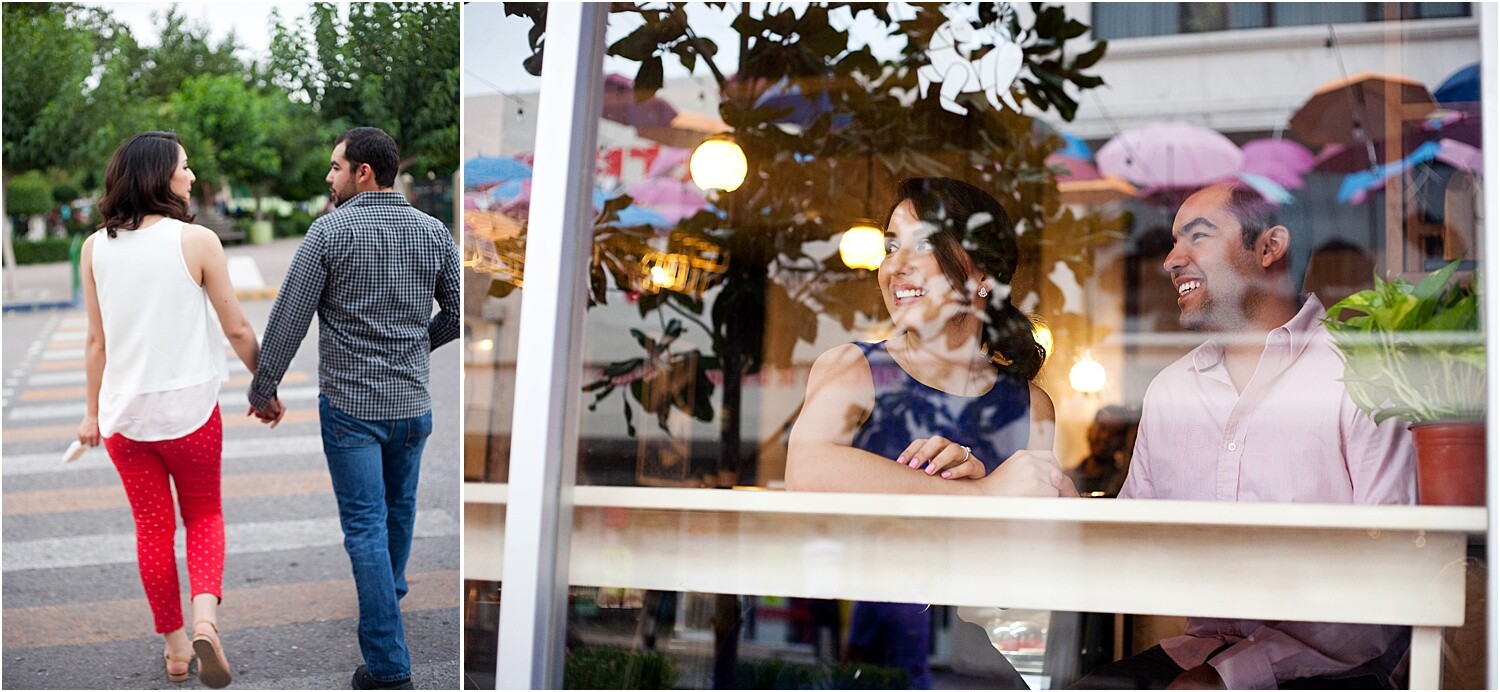
Engagement sessions can be really fun, but it can get a little repetitive posing the couple together again and again throughout the session. Here are great poses that work for all couples during an engagement photo session.

1 - Guide to the Best Poses for Engagement Photos

Begin with foundation poses

A foundation pose is a pose where you set the couple in the exact spot facing a specific direction. Foundation poses are great to lead into different variations as you begin to build upon the poses. For example, you start with both people facing the camera. From this foundation pose, you can build so that the couple holds hands, look at each other, and in the end, you can capture them walking toward each other slowly.

2 - Guide to the Best Poses for Engagement Photos

From each foundation pose, you can get at least five different variations without having to move the couple all that much! This is helpful especially when you find yourself in tight spaces or pressed for time.

However, you don’t always have to stay in one spot. Depending on the location, feel free to move around and use all of the interesting nooks at the location of the session.

3 - Guide to the Best Poses for Engagement Photos

Posing facing each other

This is probably the most comfortable pose for all couples because it’s the most natural. Have the couple face each other, and with their arms furthest from the camera, have them wrap them around each other. This leaves the pose open from the front so that you can capture them looking at each other.

From here, have them hold hands loosely or play with their hands up with interlocking fingers. You can also have one person play with the other person’s hair while you get creative angles on the pose.

4 - Guide to the Best Poses for Engagement Photos

Have them give each other a good squeeze to help loosen nerves and get the most natural laughs and expressions out of the couple. Have them kiss if they’re comfortable with that.

You can also give them a little space so that they are directly facing each other. Here the couple can stand with their hands at their side and then hold hands. Have them lean in to kiss each other and let them move in closer if they need to.

5 - Guide to the Best Poses for Engagement Photos

From this pose, you can also ask that they get really close together – tummy to tummy – and have one person lay their heads on the other person’s shoulder/chest. This pose is romantic and sweet.

The “T” pose

The “T” pose is a variation on the prom pose and gives a more romantic feel to the photo. Have the taller person stand facing 45-degrees from the camera. Ask the other person to stand with their shoulder’s perpendicular to the other person. Have them get close and wrap their arms around each other.

This pose is great for all couples because it keeps the faces at an angle where the couple can look at one another, hug, kiss, and enjoy each other at close proximity.

6 - Guide to the Best Poses for Engagement Photos

Try photographing this pose with a wide-angle lens, like a 35mm, and place the couple in the center. This technique makes the pose much more interesting! Especially if you’re at a breathtaking or unique location.

When your clients are in this T pose, you can ask one person to look at the camera while the other closes their eyes or looks off into the distance. Get in close to take a beautiful portrait of the person looking at the camera.

7 - Guide to the Best Poses for Engagement Photos

This is also a perfect pose to get a nice ring shot while the couple’s arms are wrapped around each other. Try getting more of the couple’s bodies in the frame with the rings in focus and the rest out of focus.

Prom pose with variations

While the prom pose isn’t all that popular these days, you can still use the foundation pose to build on and get great photos of the couple. One variation is to get the shorter person to stand behind the taller. Here, they can hold onto the taller person’s arm and look at the photographer.

You can also have them loosely hold hands in this position and look off into the distance. The person in the front can look back or down while the person in the back can look at the camera. This is a romantic and sweet pose that can be taken full length or from a closer angle. Take both focal lengths to get more variety from the pose.

8 - Guide to the Best Poses for Engagement Photos

This pose can also stay in its original form where the shorter person stands in front and arms are wrapped around the waist. However, it’s best if you change it up a bit and have the hands of the person in front caress the face of the person behind. Here the pose becomes more romantic and has more connection rather than staying in its original form.

Ask the person in the back to wrap their arms up high around their beloved. Make sure that in this pose, the heads are not directly above one another. Move the front person to either side of the neck to avoid having the pose look stiff and disconnected.

9 - Guide to the Best Poses for Engagement Photos

From here, move around the couple and get different angles. Have the couple look off into the distance and enjoy the moment. Perhaps tell a joke to get them to laugh a bit.

To create a little bit more movement, from this pose, ask the couple to hold hands while the person in front moves towards the camera creating some distance from the other person. It will appear like they’re walking while holding hands. It’s a more creative take on the pose and adds beautiful movement.

10 - Guide to the Best Poses for Engagement Photos

Action poses

Action poses are fun and a great way to loosen nerves and get the couple more comfortable with being in front of the camera. These can include the couple walking, either holding hands or at a distance, climbing, dancing, or just talking with one another.

11 - Guide to the Best Poses for Engagement Photos

Starting with action poses can be more comfortable for a couple that is not necessarily big on kissing or being affectionate. If you’re in a location where there are activities, like an amusement park or coffee shop, have the couple do what they usually would if you weren’t around. This could be playing games, getting a coffee, enjoying some music together, walking, dancing, and talking.

12 - Guide to the Best Poses for Engagement Photos

You can also have the couple walk toward the camera while you’re out photographing the engagement session. Have them walk two or three times as you get different focal lengths and angles. Ask the couple to talk with each other or smile at one another because this looks more natural as they are walking.

Facing away from the camera

Having the couple face away from the camera can create more interesting photographs and keep the mood more romantic resulting in less posed and more natural looking photographs.

13 - Guide to the Best Poses for Engagement Photos

For one pose, have the couple stand at a distance facing away from the camera. Have the couple take one step forward and hold it as if they were walking. Have one person look back toward the camera and the other person looking down or to the side. You could have them do this as the couple is walking away from the camera. Just make sure that there is nothing in the way that could provoke a fall.

14 - Guide to the Best Poses for Engagement Photos

Another pose is having the couple face away from the camera but gets in close to each other. Here they can look at one another, hold hands, or kiss the forehead all while you are photographing from behind. Try getting the couple from a high angle, so it looks like you’re looking down at them.

Allow poses to develop naturally

While you set foundation poses and build different variations, allow the poses to develop into their own naturally. What I mean by this is that let the couple take charge in some of the poses with the kissing and getting close. Allowing for the couple to feel like they can move around within a pose can create more authentic and romantic expressions.

15 - Guide to the Best Poses for Engagement Photos

Couples feel most uncomfortable when they can’t be themselves, so during the session let them know that they are free to move and enjoy the moment. You are there to capture their love and excitement for their wedding day.

Once they have this liberty to move about in a pose, you’ll get real emotions and might even progress naturally through poses you may have thought of doing anyway!

16 - Guide to the Best Poses for Engagement Photos

Make sure to go with the vibe of the couple

Some couples aren’t romantic types and feel silly or uncomfortable doing lots of kissy or huggy shots. Try and get a feel for how the couple is. Are they playful? Active? Romantic? If after a few silly poses, you find that the couple is more on the romantic side, go for those types of poses.

17 - Guide to the Best Poses for Engagement Photos

Here are some ideas for each type of couple:

Romantic: Go with poses where the couple is close to each other. Either facing each other or hugging. Lots of closed eyes and enjoying the quiet moments of love between them. Try and photograph with a longer lens to give them space to be intimate with one another. Have them say something they love about one another while you photograph their reactions.

Fun/silly: Here you can get the couple talking and being overall silly. Try and get them to dance, tell jokes or play around at the location of the session. For example, having the couple make silly faces at one another or have one person tell a joke and get the reaction of the other person. Pose them with a little distance while holding hands to create a connection but not too close to where they feel uncomfortable having their photo taken so intimately.

Active: This couple will appreciate a good walk or even run! Have them jump, dance, climb, or even have one person piggy-back on the other! This couple is fun and needs to move around to keep them active by having them move around.

Not all of the poses have to be active if the couple is active, or romantic if the couple is the romantic type. Usually, after the first half hour, the couple has lost their nervousness and are more open to other poses. Just make sure that you keep an eye out for their natural personalities and go along with that vibe.

18 - Guide to the Best Poses for Engagement Photos

Being a little intuitive to the personality of the couple helps you create more authentic photos that they will love. An important note to remember is that some couples will be easy to pose, and others will need more direction.

In any case, let the couples know that they can move around and to not worry about holding poses for too long. Remind them to enjoy the moments and do what feels natural to them as a couple. This helps to calm nerves, and you’ll get much more real expressions than forced ones.

19 - Guide to the Best Poses for Engagement Photos

In conclusion

The best poses for engagement sessions are where you set a foundation pose and then build upon that depending on the vibe of your clients. Aim to give them a real and fun experience and document their personalities during the session. Pose them but let them feel free to move around and be themselves. They will have a great time and love their photos after!

The post Your Guide to the Best Poses for Engagement Photos appeared first on Digital Photography School. It was authored by Jackie Lamas.


Digital Photography School

 
Comments Off on Your Guide to the Best Poses for Engagement Photos

Posted in Photography


Are Canon and Nikon the New Kodak?

10 Mar

The post Are Canon and Nikon the New Kodak? appeared first on Digital Photography School. It was authored by Carl Spring.

Canon Z6 and Eos R

Selling? Yes. Boring? Also yes.

Kodak. Remember them? Back in the film days, never did we think they would be an afterthought in the photography industry. But a complete mishandling of the move to digital became their downfall. At one time a top five most valuable brand in the world, now reduced to a footnote in the photography world we live in today. But are Canon and Nikon beginning to edge the same way? Are they the lumbering giants, slow to move with the times? Or, are they playing the game to perfection?

The recent announcements from Canon and Nikon about profit from their camera divisions are not exactly encouraging, but are they still the brands to beat?

Financials

I’m sure you’ve heard the news. Canon and Nikon did not meet their revenue targets for 2018 and both are rapidly revising their numbers for 2019. Predictions are that interchangeable lens camera sales will continue to fall year on year. There was even a rumour from an internal document from a camera company predicting Canon and Nikon will lose 50% of market share in the next three years. This is serious!

But why? Well there are several factors here. Firstly, there is the rise of Sony, Fuji and others in the mirrorless market. Sony have been producing amazing cameras (although not [yet] sold in the same number as Canon and Nikon), which have carved a nice piece of the pie for themselves very quickly. Add in Fuji, Panasonic, Olympus et al and you have an ever increasing number of cameras to choose from – all with amazing features and image quality

However, the more major factor for the whole industry is the ever-increasing quality of the smart phone. Whilst those of us who read Digital Photography School are generally concerned with DSLR and Mirrorless cameras, many just want a decent photo with minimum fuss, and the phone camera does this amazingly well. For all camera companies, the development of amazing quality phone cameras mean the market for those wanting to get great a “proper” camera is shrinking all the time. The latest series of phone cameras are more than good enough for most people.

The big three

According to the latest data for the year of 2018, Canon continues to dominate the world of interchangeable lens cameras with a 49.1% market share (a growth of 3.9%). Nikon stay second with 24.9% (a decline of 0.6%) and Sony are in third with 13.3% (a growth of 2.9%). All other brands made up the remainder. 

Canon’s market share in photography has sat steady at around 40-50% for around the last ten years. The EOS R quickly became the best selling mirrorless camera in Japan on launch. Nikon’s Z series also stole a decent share of the market that has been dominated by Sony of late. The question is, are the people buying these existing Sony and Nikon cameras, heavily invested in a system? The answer for a large portion will no doubt be yes. It just makes financial sense.

As the market shifts and more people move to other systems such as Sony, Fuji and the L-Mount Alliance, will this continue? Existing customers are a large market, but people buying their first “Pro” camera have a choice that is now much wider than merely Canon or Nikon. You only need to look to YouTube for the number of people singing the praises of brands that are not Canon and Nikon to be able to see the beginnings of this shift.

The L-Mount Alliance is the newest kid on the block. How big will its impact be?

Canon’s video problems

I am a Canon shooter. I have been since my first SLR (I know, I’m old). But, their current business model sucks! In an age where the average photographer uses both stills and video, Canon have fallen behind in DSLRs for video. Evidence includes some questionable codecs (motion JPEG anyone?) and cropped 4K. Compared to Sony, it’s not even the same league. What happened Canon? You are the same Canon that released the classic 5D2! Remember that? A game changer that was so good that episodes of your favorite TV shows were filmed on it and Canon were hailed as heroes. Well, they dropped the ball.

Skip to 2019 and Canon release the EOS RP. A great price point of only £1300 (US$ 1299) and a decent sensor (basically taken from the 6D2). A great camera at a great price. Yes, you can argue the dynamic range of the sensor is not perfect, but it seemed like a great camera release by Canon. Then the news came that the camera was unable to shoot in 24fps in HD. Wait…what? Yep, the standard video frame rate for movies, the same one that was in the 5DMk2 over ten years ago is now absent.

I know what some of you are thinking. It’s the entry-level model; you can’t expect everything. Most people won’t care. However, to omit such a basic video feature is a sign of Canon seemingly making terrible decisions in their digital camera lineup.

Why are they doing this though? The answer seems to be in Canon’s product lines. Canon’s pro video line has a similar starting price to the EOS R. If they put full-frame 4K video, 120 frames per second at 1080P and more into their DSLR range, they would be basically killing off some of their pro video line customers in the process.

You have to question this as a business decision. Put simply, Canon’s current cameras are lagging behind Sony and Panasonic when it comes to video. Rather than move to their C-line of cameras for video though, most people are moving to Sony and the A7 III.

This move seems to be incredibly short-sighted by Canon. When I look to upgrade my trusty 5DMk4, I’m not sure Canon will be the top of my list. The video features on Sony are just too tempting. Sure, I don’t currently do much video work, but I can see my customers wanting more, and Sony cameras have better video features right now.

EOS RP camera with 24-105

Canon brought DSLR video to the masses with the 5D2. A decade later and they don’t even include 24fps.


Two cards are better than one

Shouted about all over the internet, why oh why did Canon and Nikon choose to launch their first cameras in their brand new system with one card slot? This feature alone means that a large amount of working professional users will not purchase a camera with one card slot. There is no way I would risk shooting a wedding with one memory card in the camera. It is just not worth the risk.

Nikon has taken this one step further and only have on XQD card. A more expensive format right now and also a format that most existing camera owners will not own in any great amount.

If photography is a hobby rather than a way to earn your living, then it may not be so much of an issue. However, again, it just seems a little short-sighted.

Shooting without a backup is always fine until a card fails.

Where’s the excitement?

Who was honestly excited by the EOS RP? Or the EOS R for that matter? Who thought that Nikon Z6 & Z7 were ushering in a new dawn of quality? Pretty much nobody. They just seemed to be mirrorless hack jobs of the 5DMk4 and D850 respectively, albeit with limitations.

The recent products from Canon and Nikon seem boring. No style and no killer features. Just OK. Just safe. The initial move into mirrorless feels like products designed and launched quickly to try and compete with Sony. Look at the amazing video features of the Sony A7 III when compared with Canon and their disappearing histogram. Compare the autofocus on the Sony A6400 or Fuji X-T3 with the Nikon Z6. There is no contest (the Nikon may improve dramatically with the eye AF update). The question is, why are they not competing with the best in class at launch?

Are Canon and Nikon’s cameras good? Yes. Are they class leading or exciting camera releases? No.  

Fuji’s retro styling, mixed with cutting edge features make for a very exciting camera system.

The Cameras do not match the glass

Leading with your best glass is an obvious decision. Both Canon and Nikon’s glass for their new mirrorless systems looks great. But it makes Canon’s decision to release the EOS RP all the more strange. Simply put, there is no budget glass for their budget full-frame camera.

There is no glass that really matches the system. The lens offered as a kit lens for this system costs over £1000. A quick Google shows the price of the EOS RP body at £1399 ($ US$ 1299), but the cheapest option with a lens (the 24-105 f4) is a staggering £2329 (US$ 2199). This is crazy! Especially when you can pick up a Sony A7 III with a 28-70mm  f/3.5-5.6 for £1999 (US$ 2298). The Nikon Z6 with 24-70mm is even more expensive still at £2514 (US$ 2596). Yes, you can use an adapter if you have other branded glass, but if you buy a new system, with a new mount, you surely want a native mount lens to play with.

I know the lens is not as good, but the Canon EOS RP is not in the same ballpark feature-wise as the Sony A7 III and you can have a camera and native lens for over £300 cheaper. There is no way I would spend extra to get a lesser camera. The fact that Canon has yet to release a cheaper lens seems crazy given they’re releasing more budget-friendly cameras. Maybe Nikon will launch a similar lens with the rumored upcoming EOS RP competitor?

Sony camera and lens lineup.

Sony now have a great range of lenses built up. Canon and Nikon are, for the first time, playing catch up.

Where’s the flagship camera?

So why not a pro body to rival the Sony A9? With the Tokyo Olympics in 2020, my guess is that Canon and Nikon are working feverishly behind the scenes to get their new flagship cameras out for the opening ceremony. I’m sure Sony is doing the same.

Rumors are surfacing that Canon has begun testing the 1DX Mark III with a very limited number of photographers, so this prediction does seem likely.  Canon is a big Olympic sponsor, and it is also a home Olympics for them. It really does make sense for big product launches on the eve of the event. Whether the new flagships will be a DSLR or mirrorless is going to be interesting to see.

But what about the meantime? What’s next up for Canon or Nikon? The EOS RP was underwhelming for many, and the next in line from Nikon is meant to be a direct competitor to the EOS RP. I feel this camera will also be met with the collective sigh the EOS RP received.

What does the future hold?

In the end, it boils down to this; mirrorless is the future of photography. It took a while to get here, but the benefits are now easy to see. Canon and Nikon were late to the party, but they are working hard to claw back ground they have lost. They seem to have learned from Kodak and their lack of acknowledgment for the digital camera.

The fact that both Canon and Nikon have fully entered the market late is currently having an impact on the quality and excitement that greets their new products. So far they appear to be playing it safe with mirrorless, which might not be enough to keep them on top moving forward.

What would be in your dream camera? As a Canon shooter (and daydreamer), I have thought long and hard while writing this article. For me, it would be a mirrorless update to the Canon 5DMk4. A new sensor. Autofocus to rival that on the Sony A9 (or even 6400) and non-crippled video. Full sensor 4K and 120 frames-per-second at 1080P in C-Log and preferably without a histogram that disappears when you press record, or at least zebra stripes. Maybe IBIS would be nice too. Oh, and two card slots. Is that too much to ask? I also would like it under £3000.

Or maybe, I’m getting tempted to move. The Sony A7III keeps tempting me to rent it. The A9 with that new autofocus update is a beast of a camera for a shade over £3000. I also want to see how Panasonic’s latest offerings play out.

I’m heading to The Photography Show in Birmingham, UK in March for an annual look at what is out there. On top of my list of stands to visit are Sony, Panasonic, and Fuji. The fact the Canon and Nikon are not even on my radar says a lot about their current appeal.

What are you looking for from Canon or Nikon? Or, have you moved to another brand and never looked back? Let me know in the comments.

The post Are Canon and Nikon the New Kodak? appeared first on Digital Photography School. It was authored by Carl Spring.


Digital Photography School

 
Comments Off on Are Canon and Nikon the New Kodak?

Posted in Photography


PSA: Don’t film laser tattoo removals unless you too want to fry a $2,200 camera

10 Mar

Laser systems used at concerts and even self-driving cars are known for damaging camera sensors, but now there’s one more thing to add to the list — tattoo laser removal lasers, even when the laser isn’t being pointed directly at the camera.

As unfortunately demonstrated in the 37-second video above, Andy Boyd destroyed the sensors inside his $ 2,200 Sony a7S II when he was filming a laser tattoo removal.

In the video description, he writes:

‘Hot tip: Don’t record laser tattoo removal on…anything. You can see with each pulse the sensor shows new damage. The repair cost was about as much as a new camera so try to avoid this. Club lasers can do this too but we’d never seen the reflection of a laser beam do damage, only when the beam itself hits the sensor.’

Hopefully you’re never in a situation where you’re asked to film a tattoo removal — especially one that reads ‘I am juicy’ with a strawberry next to it — but in the event you are, either use a camera you don’t mind destroying or pass up the opportunity as a whole.

Articles: Digital Photography Review (dpreview.com)

 
Comments Off on PSA: Don’t film laser tattoo removals unless you too want to fry a $2,200 camera

Posted in Uncategorized


Canon EOS RP vs EOS 6D Mark II: Which is right for you?

10 Mar

Introduction

Years back, Canon released the EOS 6D as its basic, ‘entry-level’ full frame DSLR to sit below the pro-oriented 5D-series. Not surprisingly, that was a recipe for success, with the 6D and follow-up 6D Mark II proving to be quite popular with all kinds of photographers.

But now we have the EOS RP, a new entry-level offering that is even more affordable and portable than the 6D’s that came before it. So how do they compare for various kinds of shooting? Here’s what we’ll be covering – click the link to hop straight to the section of your choice.

  • Travel
  • Video
  • Family and moments
  • Landscape
  • Candid and street
  • Sports

Travel

Canon EOS RP with EF 24mm F2.8 IS USM | ISO 100 |1/500sec | F7.1

Both cameras offer Wi-Fi and good JPEG image quality with pleasing color rendition right out of the box, a great combination for someone looking to share images on the fly. In-camera Raw processing is also offered by both cameras, making it easy to share photos from the road – no laptop required. GPS is offered in some form by both cameras (though we prefer the 6D II’s in-camera implementation over the RP’s use of smartphone location data) and selfie-takers can safely choose either camera as they both offer a screen that flips forward.

However, where battery life is concerned, the 6D II looks like the stronger option. There’s no getting around it – the RP is a mirrorless camera that draws a lot of power for constant Live View use, so its 250 shot CIPA rating is dwarfed by the 6D II’s rating of 1200 shots per charge. On the other hand, it’s not much of a burden to carry a couple of spare batteries for the RP as they’re smaller and lighter, and the camera supports USB charging where the 6D II doesn’t. Tack on the fact that the 6D II is weather-sealed whereas the RP offers no official claim of weather resistance and the 6D II keeps looking better and better.

Things swing back in the RP’s favor when you consider its incredibly compact size, even compared to the relatively light weight 6D II. But that advantage is somewhat reduced when you consider the RP’s native lens selection – right now the RF 35mm F1.8 is the best native option to keep size down. Adding an adapter and a smaller lens like the 50mm F1.8 STM or 24mm F2.8 IS doesn’t tack on too much extra bulk, but it’s not nothing. The RP still wins on compactness, but unless you’re happy shooting at 35mm until some more RF lenses come out, the camera’s small size isn’t as much of an advantage as it seems.

Video

See our full Canon EOS 6D Mark II sample reel

As far as headline video specifications go, the EOS RP stands ahead of the 6D II with 4K video recording (the 6D II tops out at 1080/60p). To be sure the RP’s 4K is heavily cropped, but it is 4K. The mirrorless camera also comes up with a headphone jack as well as a mic jack – the 6D II only offers a mic jack. It also comes with the inherent mirrorless advantage of offering video recording while using the EVF, which can be handy in bright light or for a little extra stabilization in a pinch. The RP’s 4K mode is also the only place you’ll find “cinematic” 24p recording between the two cameras.

Using a stabilized lens with either camera will yield the best results, as neither offers in-body stabilization. While digital IS creates smooth footage, it also sacrifices some detail. The 6D II and EOS RP also both provide fully articulated screens with face detection autofocus, a benefit for vloggers.

The 6D II does provide the advantage of more control over autofocus while recording video, offering adjustments to Movie Servo AF speed and tracking sensitivity – both missing from the RP.

Family and moments

Canon EOS RP with RF 35mm F1.8 IS STM | ISO 1000 | 1/80sec | F1.8

The EOS RP introduces a new feature for Canon that will be particularly handy for photographers looking to capture candid moments: Pupil Detection in Servo AF. In our experience so far it’s not quite as impressive as Sony’s freaky-good Eye AF, but will do a good job of identifying and focusing on an eye without intervention from the user.

The RP’s compact size could be another benefit to family photographers who tend to chuck their camera into a packed bag or purse. As we saw when looking at using these cameras for travel, the size advantage of the RP is compromised once you attach an adapter and any sort of zoom lens to the camera. The RF 35mm F1.8 does keep things more compact, but you’ve really got to like 35mm if that’s the deciding factor for you.

Canon’s great JPEG image quality and color is a real bonus

The RP’s much lower battery life is another significant drawback here, since you’ll be more likely to run out of juice at an inconvenient time. But the good news is that its USB charging means you can re-charge it in the car, or top up the battery with the same kind of portable battery you may already carry for your phone.

Both cameras provide handy ‘tap to track’ functionality in live view, making it easier to focus on what you want. And we’ll say it again – Canon’s great JPEG image quality and color is a real bonus if you don’t want to fuss with photos too much before sending them out to the world.

Landscapes

Canon EOS RP with EF 24mm F2.8 IS USM | ISO 100 | 1/400sec | F7.1

We can’t say that the either the 6D II or the RP would be among our top recommendations for landscape shooters. Other options with more resolution and dynamic range will likely suit serious landscape photographers better. If that’s not your sole priority, both of these cameras would serve the casual landscape shooter just fine on travels or hikes, and their image quality will be roughly the same.

The 6D II’s robust battery life is a big plus in this category if you plan to spend a good deal of time away from a power source and don’t fancy carrying extra batteries. Another point in favor of the DSLR: weather-sealing. The 6D II is designed to handle the elements better than the RP, and that can make a big difference when you’re halfway into a hike and the weather rolls in.

Both cameras offer fully articulated screens to facilitate composing shots from low angles or working on a tripod

For obvious reasons, size and weight are real concerns for photographers who will carry gear along on hikes or all-day excursions. Again, the RP would seem to have an advantage here but current native RF lenses are quite large and few in number. Adding an adapter to the kit isn’t a huge amount of extra weight or bulk, but if every bit of space in your bag counts, it’s something to consider.

Both cameras offer fully articulated screens to facilitate composing shots from low angles or working on a tripod. Both cameras also provide a means of recording your location via GPS – the 6D II offers it in camera while the RP requires use of Canon’s smartphone app.

Overall, both cameras supply features that will certainly be appreciated by photographers who shoot landscapes among other things, but we’d hesitate to recommend either just for that purpose.

Candid and street

Canon EOS 6D Mark II with EF 24-105mm F4L IS II USM | ISO 1000 | 1/500sec | F8

Both the RP and 6D II offer a number of features that would appeal to a street photographer looking to keep a low profile and capture the decisive moment. Both offer great-looking JPEGs and a flip-out screen to aid shooting from the hip (paired with Canon’s excellent Dual Pixel AF). Unfortunately, neither camera truly offers silent shooting – it’s not available on the 6D II and the RP offers it as a scene mode without exposure controls.

There’s not much between the two cameras in terms of size either, once you account for the adapter you’ll almost certainly need (for now) on the RP. Both of these options also offer wireless connectivity for easy image sharing.

As we cautioned landscape-oriented folks, the limited dynamic range that the RP and 6D II offer may be of concern to some street photographers. If you’d like some flexibility in pushing shadows then you may want to look elsewhere, but between the two cameras neither presents a significantly better feature set for street photographers.

Sports and action

Canon EOS 6D II and 70-200mm F4L @ 200mm | ISO 1250 | 1/1250 sec | F4

For sports and other fast-moving subjects, the 6D II and EOS RP trade punches back and forth. Generally speaking, mid-to-low-end EOS cameras with Dual Pixel autofocus haven’t handled fast-moving distant subjects very well. The 6D II offers an advantage here with its optical viewfinder and traditional AF system, which does a better job on distant subjects if you choose your own AF point, and you may find it easier to follow your subjects with the optical viewfinder than the EVF on the RP.

On the other hand, the RP offers the better subject tracking experience with viewfinder shooting, considering that it can use Dual Pixel with the EVF. Canon’s optical viewfinder tracking AF experience leaves something to be desired. On the other other hand, you get faster viewfinder burst rates with the 6D II (though you get faster Live View burst speeds on the RP). To the RP’s credit, it has a bigger buffer and offers CRaw to save you some storage space if you’re shooting Raw in burst mode.

One important point that you won’t find any spec sheet is how comfortable the camera will be in the hand for long periods of time. In our opinion, the 6D II is way ahead of the RP in this department. The DSLR will be better balanced with heavier lenses and offers a bigger, more comfortable grip. An add-on grip can be purchased for the RP to help things somewhat, but for our money, the 6D II is the one we’d rather hold on to for hours at a time.

Which one is right for you?

The Canon EOS RP and 6D Mark II share much of the same DNA when it comes to image quality, but their feature sets and implementations are still quite different. The 6D II provides the familiar comforts of a DSLR: robust battery life, a comfortable grip and plentiful lens options.

The RP brings many of the trappings of a modern mirrorless camera, including (decent) 4K video and use of Canon’s very good Dual Pixel AF system with the built-in viewfinder. But as it often does, the choice may come down to the lenses. It’s very early days for the RF mount, and the first lenses available for it are some real stunners, but they don’t seem particularly well matched the RP’s price point and target audience unless you really love shooting 35mm.

But even given the lack of native lenses, we tend to recommend the EOS RP over the 6D II for most use-cases. Experienced photographers may scoff, but for amateurs and even enthusiasts, the ability to see your exposure, white balance and get a better idea of critical focus with the RP’s full-time Live View on the rear screen or EVF will help you get more keepers more often. Plus, the RP’s full-time touchscreen controls are among the best in the business, and make up somewhat for the lesser amount of buttons compared to the 6D II.

Only you can choose what is best for you; the 6D II is the undisputed winner regarding its build quality, battery life and beefy grip. But for most people, we think the RP will be a better – and, dare we say, more ‘fun’ – photographic companion.

Articles: Digital Photography Review (dpreview.com)

 
Comments Off on Canon EOS RP vs EOS 6D Mark II: Which is right for you?

Posted in Uncategorized


Flickr says it will spare all Creative Commons photos, announces ‘in memoriam’ accounts

10 Mar

Last November, SmugMug announced a number of changes the photo-sharing site would be undergoing in the coming months as part of a clean-up operation of sorts to help streamline Flickr assets and unused accounts. One of those changes was the news that free accounts would be limited to 1,000 images and any images over that limit would be deleted.

Almost immediately, Flickr caught flack for the decision, especially surrounding the vast amounts of Creative Commons images hosted on the photo sharing site. Within a week, Flickr announced it was sparing Creative Commons and public domain images and also sparing non-profits from the 1,000 photo cap.

Now, Flickr is going a step further. In a blog post, Flickr says it will not be deleting any public, freely licensed images from its platform, regardless of who’s operating the account.

In this spirit, today we’re going further and now protecting all public, freely licensed images on Flickr, regardless of the date they were uploaded,’ reads the blog post. ‘We want to make sure we preserve these works and further the value of the licenses for our community and for anyone who might benefit from them.

Flickr isn’t just rolling over though. To combat accounts from simply switching all their photos to Creative Commons without understanding what all it entails in hopes of still hosting their photos on the site, Flickr has disabled the bulk license change tools in the Settings menu.

‘We’ve done this to prevent community members from flipping all their images to a new license without first understanding the significant implications of the various free licenses we support. Any member (Free or Pro) can still change the license of any of their photos on the photo page.’

Additionally, Flickr is introducing ‘in memoriam’ accounts. These accounts come after concern from users about what happens to their images after they pass away (or late photographers who still have images on Flickr).

Flickr says ‘in memoriam’ accounts ‘will preserve all public content in a deceased member’s account, even if their Pro subscription lapses […] The account’s username will be updated to reflect the “in memoriam” status and login for the account be locked, preventing anyone from signing in.

Flickr has created this dedicated form to help identify accounts in need of ‘in memoriam’ status.

To help preserve the accounts of members who have already passed away, Flickr is asking for help to identify existing accounts that are deserving of ‘in memoriam’ status. A dedicated article has been added on Flickr’s Help Center to help explain the process.

Articles: Digital Photography Review (dpreview.com)

 
Comments Off on Flickr says it will spare all Creative Commons photos, announces ‘in memoriam’ accounts

Posted in Uncategorized