RSS
 

Archive for July, 2018

Godox announces AD400Pro strobe, due out in August

10 Jul

Godox Photo Equipment has announced a new addition to its growing lineup of wireless strobes, the Godox AD400Pro.

As its name suggests, the AD400Pro is a 400WS wireless strobe with a maximum high speed sync speed of 1/8000th of a second. It uses Godox’s 2.4GHz Wireless X System that’s compatible with Canon E-TTL II, Nikon i-TTL autoflash, Sony, Fujifilm, Olympus, and Panasonic TTL systems.

AD400 strobes fill the gap between the current AD200 and AD600Pro strobes, in terms of both size and power. A single AD400Pro weighs just 2.1kg/4.63lbs and measures in at 220x102x128mm/8.66×4.02×5.04in. It can be powered by an AC power source or an included 21.6 volt, 2600mAh battery capable of firing off 390 full-power flashes before needing a charge.

The AD400Pro comes with the new Godox adapter ring for mounting its lineup of accessories, as well as a Bowens adapter to install Bowens lighting accessories. Godox says other, third-party adapters will let you mount accessories from companies such as Broncolor, Prophoto, Elinchrom and others.

The AD400Pro can be updated with new firmware via the onboard USB Type-C port. It also features an onboard 3.5mm sync port for alternative triggering methods.

Included in the box will be one flash, one flash tube, a lithium battery back, a battery charger, a power cord, a reflector, a Bowens-mount adapter, a wrench, and an instruction manual.

A full list of the AD400Pro’s specs, provided by Godox.

In a comment on its Facebook post, GOdox says the AD400Pro will be available starting in August 2018 at an a price that ‘will be announced as soon as possible.’

Articles: Digital Photography Review (dpreview.com)

 
Comments Off on Godox announces AD400Pro strobe, due out in August

Posted in Uncategorized


Nikon Coolpix P1000 shoots for the moon with 3000mm equiv. zoom

10 Jul

$ (document).ready(function() { SampleGalleryV2({“containerId”:”embeddedSampleGallery_4033712040″,”galleryId”:”4033712040″,”isEmbeddedWidget”:true,”selectedImageIndex”:0,”isMobile”:false}) });

If the 24-2000mm equivalent lens on the Nikon Coolpix P900 wasn’t enough for you, then we bring good news: Nikon has announced its Coolpix P1000, which brings the telephoto end up to a once unthinkable 3000mm equiv. The lens has a maximum aperture of F2.8-8, compared to F2.8-6.5 on the P900, and has both ED and Super ED elements. This monster of a lens accepts 77mm filters and has two zoom speeds.

The P1000 has dedicated moon and bird positions on the mode dial

If you use Nikon’s ‘Dynamic Fine Zoom’ feature, the equivalent focal length rises to 6000mm (with some loss in image quality). Still not enough? If, for some reason, you need 12000mm of reach and don’t mind a substantial loss in image quality, you can use the camera’s 4X digital zoom. If you’re wondering just how large this camera is, it’s roughly 360mm / 14″ long with the lens extended and weighs in at a whopping 1.4kg / 3.1lbs.

As with its predecessor, the P1000 has a 16MP, 1/2.3″ sensor that offers an ISO range of 100-6400, along with Raw support, which wasn’t found on the P900 and represents a welcome addition. It can shoot continuously at 7 fps, but only for 7 shots. In a nod to its potential use cases, the P1000 has dedicated moon and bird positions on the mode dial. Photos and movies can be compared on a fully articulating LCD (which is not touch-enabled) or an 2.36M-dot OLED viewfinder.

The P1000 can also capture 4K/UHD video at 30p or 25p as well as 1080p from 60 fps down to 25 fps. The camera has a external mic input and offers manual exposure controls and clean HDMI output.

Wireless features include Wi-Fi and Bluetooth, and the camera can be controlled via your smartphone, the new ML-L7 Bluetooth remote or the MC-DC2 wired shutter release. Battery life is rated at 250 shots per charge.

The Nikon Coolpix P1000 will be available in September for $ 999.

Official samples

$ (document).ready(function() { SampleGalleryV2({“containerId”:”embeddedSampleGallery_7298024543″,”galleryId”:”7298024543″,”isEmbeddedWidget”:true,”selectedImageIndex”:0,”isMobile”:false}) });

Press Release

THE SUPERZOOM COOLPIX P1000 OFFERS AN ASTOUNDING 125X ZOOM TO CAPTURE YOUR WORLD AND BEYOND

With its Impressive NIKKOR 24-3000mm Equivalent Optical Zoom Lens and Advanced Shooting Controls, the New COOLPIX P1000 Brings Creative Possibilities Closer Than Ever

MELVILLE, NY (JULY 10, 2018 AT 12:01 A.M. EDT) – Today, Nikon Inc. announced the COOLPIX P1000, the new undisputed powerhouse of superzooms. With an incredible 125X optical zoom (24-3000mm equivalent) powered by high performance NIKKOR optics; the P1000 is the ideal companion camera for birding, sports, wildlife and celestial-photographers seeking superior performance from extreme distances. Beyond its incredible zoom range, the versatile 16-megapixel COOLPIX P1000 captures 4K UHD video and offers a myriad of manual controls, as well as user-friendly functions including built-in Wi-Fi1 and Bluetooth2 connectivity, letting photographers of all levels explore and share their creativity.

“The COOLPIX P1000 is the first of its kind for a compact digital camera,” said Jay Vannatter, Executive Vice President, Nikon Inc. “It raises the bar for superzoom cameras and is a testament to our commitment to delivering innovative tools that offer creative freedom to capture and allow users to share their unique visions of the world.”

Powerful Optics go the Distance

The COOLPIX P1000 incorporates state-of-the-art NIKKOR technology, designed with ED and Super ED lens elements, boasts the world’s most powerful3 125X optical zoom lens (24-3000mm f/2.8-8) and 250X Dynamic Fine Zoom4, equivalent to a staggering 6000mm from macro to extreme distances. This powerful zoom range gives the P1000 the versatility to chronicle an adventure filled vacation, capture a favorite ballplayer from the top tier of a stadium or fill the frame with celestial objects like the moon, that normally only a telescope could reach.

To handle such extreme distances, the camera is equipped with the latest Nikon EXPEED image processing system and Dual Detect Optical VR technology for 5-stops5 of camera shake compensation that help capture sharp images and reduce blur. Featuring a 16-megapixel back-side illuminated (BSI) CMOS sensor and expanded ISO range up to 6400, the P1000 affords users the versatility to capture superior image quality even under challenging lighting conditions. The COOLPIX P1000 also boasts a variety of high-speed features including a quick start-up and fast Autofocus (AF) system, making it an ideal choice for capturing action from the sidelines of your kid’s soccer game or from an adventure-packed safari. Additionally, whether capturing a ballplayer sliding into home plate or photographing a bird in flight from afar, users will feel confident finding, tracking and capturing these far-away subjects using the camera’s snap-back zoom feature which temporarily expands the field of view for super-telephoto shots.

Versatility Ignites Creativity

The COOLPIX P1000 makes it easier than ever for photographers to express their personal creativity. Through its host of manual functions and RAW (NRW) image output, the P1000 is great for advanced users seeking precise control from point of capture to post-production. The COOLPIX P1000 offers an innovative control layout complete with a function button, command dial and mode dial to bring frequently used functions to a photographer’s fingertips.

Additionally, the camera includes a focus mode selector that can be used to change the focus mode and a control ring that allows for the adjustment of settings such as the white balance and manual focus. Photographers will find the camera’s built-in 2.3-million dot OLED electronic viewfinder (EVF) helpful when composing their shot, while the Vari-Angle 3.2-inch 921K-dot TFT LCD display is ideal for capturing challenging angles like framing a performer on a concert stage.

The COOLPIX P1000 offers numerous picture controls, creative modes and filter effects to help photographers bring their creative vision to life. Whether capturing the night sky or a bird perched on a tree branch, users can take advantage of the camera’s designated scene modes, such as Moon Mode and Bird Watching Mode, to automatically adjust settings to deliver brilliant results in a variety of environments. While amazing for extreme zoom, the COOLPIX P1000 also supports versatile shooting scenarios like capturing macro images from as close as 1 cm away. Beyond mastering still photography from both near and far, the P1000 is also capable of incredible 4K UHD video with stereo audio recording and time-lapse effects to further expand artistic expression. Lastly, with built-in Wi-Fi and Bluetooth connectivity, images will transfer automatically to a photographer’s compatible mobile device so family and friends can view stunning vacation moments or epic shots of the night sky in real time.

New Accessory: Bluetooth Connected Remote

The new COOLPIX P1000 is equipped with an accessory terminal and an accessory shoe that supports a wide variety of compatible devices, including external Nikon Speedlights. To bring more capabilities and creative control to photographers, Nikon also announced the new ML-L7 Bluetooth connected remote as another optional accessory available for the COOLPIX P1000. The ML-L7 Bluetooth connected remote control expands the shooting possibilities of the P1000 by enabling users to trigger various camera functions, including video start and smooth zoom control, remotely.

Price and Availability

The COOLPIX P1000 will have a suggested retail price (SRP) of $ 999.95* and will be available in September 2018. The new ML-L7 Bluetooth connected remote control will also be available in September 2018 for a SRP of $ 49.95*. For more information on COOLPIX P1000 and other Nikon products, please visit www.nikonusa.com.

1. This camera’s built-in Wi-Fi® capability can only be used with a compatible iPhone®, iPad®, and/or iPod touch® or smart devices running on the Android™ operating system. The Nikon SnapBridge application must be installed on the device before it can be used with this camera.

2. The camera’s built-in Bluetooth® capability can only be used to connect the camera to a compatible smart device running the SnapBridge app, and to take advantage of SnapBridge features. The Nikon SnapBridge application must be installed on the device before it can be used with this camera.

Using the SnapBridge App System Requirements:

  • Android 5.0 or later or 6.0.1 or later
  • A device with Bluetooth 4.0 or later (i.e., a device that supports Bluetooth Smart Ready/Low Energy) is required.
  • The SnapBridge app is available for compatible iPhone®, iPad® and/or iPod touch®, and for smart devices running the AndroidTM operating system. The app can be downloaded free of charge from Apple’s App Store® and GooglePlayTM. Nikon SnapBridge can be used only with compatible cameras.

3. Among compact digital cameras available as of July 10, 2018. Statement based on Nikon research.

4. At the maximum image size. The maximum zoom ratio varies by image size. The zoom ratio indicated for Dynamic Fine Zoom is the combined ratio of optical zoom from the maximum wide-angle position and digital zoom.

5. Measured in accordance with CIPA standards at approx. 350mm (equivalent focal length in 35mm [135] format).

*SRP (Suggested Retail Price) listed only as a suggestion. Actual prices are set by dealers and are subject to change at any time.

**Specifications, equipment and release dates are subject to change without any notice or obligation on the part of the manufacturer.

Nikon Coolpix P1000 specifications

Price
MSRP $ 999
Body type
Body type SLR-like (bridge)
Sensor
Max resolution 4608 x 3456
Image ratio w:h 4:3
Effective pixels 16 megapixels
Sensor photo detectors 17 megapixels
Sensor size 1/2.3" (6.17 x 4.55 mm)
Sensor type BSI-CMOS
Processor Nikon Expeed
Color space sRGB
Color filter array Primary color filter
Image
ISO Auto, 100-6400
White balance presets 5
Custom white balance Yes
Image stabilization Optical
CIPA image stabilization rating 5 stop(s)
Uncompressed format RAW
File format
  • JPEG (Exif v2.31)
  • Raw (NRW)
Optics & Focus
Focal length (equiv.) 24–3000 mm
Optical zoom 125×
Maximum aperture F2.8–8
Autofocus
  • Contrast Detect (sensor)
  • Multi-area
  • Center
  • Selective single-point
  • Tracking
  • Single
  • Continuous
  • Face Detection
  • Live View
Autofocus assist lamp Yes
Digital zoom Yes (4X)
Manual focus Yes
Normal focus range 30 cm (11.81)
Macro focus range 1 cm (0.39)
Screen / viewfinder
Articulated LCD Fully articulated
Screen size 3.2
Screen dots 921,000
Touch screen No
Screen type TFT LCD
Live view Yes
Viewfinder type Electronic
Viewfinder coverage 99%
Viewfinder resolution 2,359,000
Photography features
Minimum shutter speed 60 sec
Maximum shutter speed 1/4000 sec
Exposure modes
  • Program
  • Aperture priority
  • Shutter priority
  • Manual
Scene modes
  • Backlighting
  • Beach
  • Close-up
  • Dusk/Dawn
  • Easy Panorama
  • Fireworks Show
  • Food
  • Landscape
  • Multiple Exposure Lighten
  • Night Landscape
  • Night Portrait
  • Party/Indoor
  • Pet Portrait
  • Portrait
  • Scene Auto Selector
  • Selective Color
  • Snow
  • Soft
  • Sports
  • Sunset
  • Superlapse Movie
  • Time-lapse Movie
Built-in flash Yes
Flash range 12.00 m (at Auto ISO)
External flash Yes (via hot shoe)
Drive modes
  • Single shot
  • Continuous H
  • Continuous H 60
  • Continuous H 120
  • Continuous L
  • Interval timer
  • Pre-shooting cache
  • Bulb/time
Continuous drive 7.0 fps
Self-timer Yes (2 or 10 secs)
Metering modes
  • Multi
  • Center-weighted
  • Spot
Exposure compensation ±2 (at 1/3 EV steps)
AE Bracketing ±2 (3 frames at 1/3 EV steps)
WB Bracketing No
Videography features
Format MPEG-4, H.264
Modes
  • 3840 x 2160 @ 30p, MP4, H.264, AAC
  • 3840 x 2160 @ 25p, MP4, H.264, AAC
  • 1920 x 1080 @ 60p, MP4, H.264, AAC
  • 1920 x 1080 @ 50p, MP4, H.264, AAC
  • 1920 x 1080 @ 30p, MP4, H.264, AAC
  • 1920 x 1080 @ 25p, MP4, H.264, AAC
Microphone Stereo
Speaker Mono
Storage
Storage types SD/SDHC/SDXC (UHS-I support)
Connectivity
USB USB 2.0 (480 Mbit/sec)
USB charging Yes
HDMI Yes (micro HDMI)
Microphone port Yes
Headphone port No
Wireless Built-In
Wireless notes 802.11b/g/n + Bluetooth 4.1 LE
Remote control Yes (via smartphone, Bluetooth remote, wired remote)
Physical
Battery Battery Pack
Battery description EN-EL20a lithium-ion battery and charger
Battery Life (CIPA) 250
Weight (inc. batteries) 1415 g (3.12 lb / 49.91 oz)
Dimensions 146 x 119 x 181 mm (5.75 x 4.69 x 7.13)
Other features
Orientation sensor Yes
Timelapse recording Yes
GPS None

Articles: Digital Photography Review (dpreview.com)

 
Comments Off on Nikon Coolpix P1000 shoots for the moon with 3000mm equiv. zoom

Posted in Uncategorized


Capture One Latitude style packs bring warm and cold color presets

10 Jul

Phase One has launched its new Latitude style series, the latest addition to the company’s Capture One Style Packs product launched last year. The Latitude presets are offered in two different packs: Latitude | Deep Forest and Latitude | Sunbound. The new series was inspired by “some of the world’s greatest destinations,” Phase One said in its announcement.

Both Latitude style packs contain eight presets, each with original, bright, and dark variations, for a total of 24 styles per pack. The “Sunbound” pack focuses on adding warmth to images, and the “Deep Forest” pack focuses on cold colors.

“The Styles are built to enhance curves, saturation and tonal adjustments,” says Phase One Software VP Jan Hyldebrandt-Larsen,”without affecting key capture parameters such as exposure and white balance.”

Each Latitude pack is priced at $ 39 USD, but a limited-time discount offers both together for $ 59 USD until July 27. Buyers must run Capture One version 10.1.2 or newer to install the style packs. The latest version of the software, Capture One 11, is offered through Phase One’s online store for $ 180 USD (single-user license).

Via: Phase One

Articles: Digital Photography Review (dpreview.com)

 
Comments Off on Capture One Latitude style packs bring warm and cold color presets

Posted in Uncategorized


Video: Pro lighting at hardware store prices

10 Jul

Everyone knows that good lighting is important when shooting video, but professional video lights can be prohibitively expensive. In this video, our friends over at ShareGrid demonstrate how to get professional looking results using inexpensive equipment available at any hardware store, including work lights, poster board and even a shower curtain.

Want some tips on getting pro quality sound as well? Our recent DPReview TV episode covers the basics of getting high quality, low cost sound.

Articles: Digital Photography Review (dpreview.com)

 
Comments Off on Video: Pro lighting at hardware store prices

Posted in Uncategorized


Cactus releases firmware to add TTL control for Canon flashes

10 Jul

Chinese flash system manufacturer Cactus has released new firmware for its V6 II Transceiver that will allow it to wirelessly communicate TTL information between a Canon or Cactus flash and a Canon camera. The X-TTL update makes it possible to trigger Canon flashes and retain full TTL control with that flash either on or off camera.

Canon flashes can be used on their own or in groups of Cactus models, while HSS and remote power controls are also possible. The same V6 II transceiver can be used with Nikon, Pentax, Panasonic, Olympus, Sony, Sigma and Fujifilm systems, but with Canon systems only manual power and zoom controls are possible.

The firmware is free to download and can be accessed on the Cactus website. A special X-TTL microsite has more details.

Press release

Cactus X-TTL for Canon is available now

X-TTL on Cactus V6 II is NOW complete

The last remaining X-TTL firmware version for Canon is NOW available!

Besides retaining the revolutionary cross-brand abilities of remote power control and wireless HSS of Canon, Fujifilm, Nikon, Olympus, Panasonic, Pentax and Sigma flashes simultaneously, the new system-specific X-TTL firmware for Canon adds TTL on-camera and wireless TTL in off-camera setup for Canon flashes.

Wireless E-TTL
The Canon system is unique where only Canon system flashes, Cactus RF60 and RF60X flash can be triggered by a Canon camera for wireless TTL.
Features at a glance

1. Cross-brand wireless manual power and zoom control with HSS/FP support of Canon, Fujifilm, Nikon, Olympus, Panasonic, Pentax and Sigma flashes;

2. Wireless E-TTL of Canon and Cactus wireless flashes;

3. Two Exposure Locks offer consistency with the convenience of wireless TTL;

4. Works seamlessly with Cactus RF60X and RF60 to support remote HSS, TTL, as well as power and zoom control.

New Protocol and Upcoming Firmware Releases
Since the release of Pentax X-TTL firmware, a new wireless protocol has been adopted.3 To work seamlessly with a Cactus RF60 and RF60X, be sure to also update to the latest firmware.

This Canon version is the last leg of X-TTL firmware on the Cactus V6 II. Together with recent released X-TTL firmware for Fujifilm, Sigma and Sony, now are X-TTL firmware versions are running on the new wireless protocol. Next on the list for update is the original V6 (current firmware 2.1.001) and Multi-brand HSS firmware on the V6 II (current firmware 1.1.013) where they will be made to operate on the new protocol in the near future.

To download the latest firmware versions for each of the Cactus devices, get the latest Cactus Firmware Updater and you will be able to select the latest firmware versions.

Price and Availability
System-specific X-TTL firmware versions are FREE of charge. Download the Cactus Firmware Updater and select the corresponding system firmware to install the Canon X-TTL firmware on the Cactus V6 II.

Articles: Digital Photography Review (dpreview.com)

 
Comments Off on Cactus releases firmware to add TTL control for Canon flashes

Posted in Uncategorized


How Aesthetic Differs from Style and Why it Matters

10 Jul

A question often seen in photography groups and forums is, “How do I develop a photographic style?” or, “How do I know what my style is?”

What they are really asking about is more to do with the aesthetic look of their images. How can they create images that look uniquely theirs and are identifiable as such? How do they get consistency in the way their images look?

How Aesthetic Differs From Style And Why it Matters - photo of a cat

Style and aesthetics are two sides of the same coin, similar but different.

Photographic style relates to the way you physically create your images – the mechanics behind how you shoot and the way you physically set up to shoot.

  • The camera, lens, and focal choices you make.
  • Camera settings used to create your images.
  • What you choose to shoot and some of the ways the images are composed.

Aesthetics encompasses the way your images look and how they make the viewer feel.

  • Your choice of color – tones, colors, contrast.
  • Subject choice – do you always shoot the same kind of subject?
  • Subject placement and composition – is the subject often posed or placed in a certain way in the overall composition?
  • Editing choices – what choices do you make when editing that affects the image outcome?
  • Creative decisions – what creative choices do you incorporate when crafting and editing your images?

How Aesthetic Differs From Photographic Style And Why it Matters - lighthouse image

What are aesthetics?

According to Britannica, aesthetics is the philosophical study of beauty and taste. It is closely related to the philosophy of art, which is concerned with the nature of art and the concepts in terms of which individual works of art are interpreted and evaluated.

Why Does it Matter?

This matters to us as photographers because we want our images to be judged as visually appealing. We want them to be seen as beautiful. How that expresses itself in our digital world is usually in likes, and sometimes comments.

But most of all, in a world that is saturated with millions of images posted every day (Instagram alone has over 95 million images uploaded daily) it can be a struggle to even get your image seen, let alone commented on.

How Aesthetic Differs From Photographic Style And Why it Matters- photo of a lizard

It almost becomes a competition, the most extreme location, the most stunning sunrise, the most colorful sunset, the most adorable kids, the cutest puppy or kitten, the most romantic wedding shot. Fads come and go as a particular image or look becomes popular, people rush to emulate it.

Yet the question then becomes – do you want your images to look like yours? Or do you only want the attention that comes from copying a style or look that is momentarily popular?

Developing a Style

There are many articles on this subject you can read, many are full of vague advice, some are more specific and more helpful – and of course, different people learn in different ways. It’s my opinion that you can have a style but not necessarily an aesthetic, and quite possibly the reverse as well.

How Aesthetic Differs From Photographic Style And Why it Matters - macro shot dandelion

What do I mean by having a style and not an aesthetic?

Say you are a landscape photographer – you have loads of landscapes shots – often shoot wide-angle, and get low to the ground to add some intimate foreground interest. Lots of mountains, lakes with pretty rocks, sunrise and sunsets, the occasional selfie in your tramping gear for a change. Yet how do they all look?

If you line up all your favorite or best shots do they all look similar? Are they composed consistently? Is the lighting tone and angle usually the same? Are the colors of similar saturation or vibrancy?

Of course, as you proceed along your own personal photography journey you will learn new things and incorporate them into your techniques. Accounting for that growth, are they a group of images that look and feel like they were created by the same person?

How Aesthetic Differs From Photographic Style And Why it Matters - raspberries in a pitcher

Perhaps the physical elements of the image and the way they were composed and shot are consistent. A tendency to set up your tripod in a certain way, a specific lens choice, a commonly used focal length, a preference to shoot at a certain time of day or in defined lighting conditions – that is your style.

The way that they look in relation to color, light, tone, intensity, clarity, subject, etc. How the view is made to feel when they look at your image – that is your aesthetic.

How do you shoot?

When you shoot, what is your approach? Do you have an idea how you will compose the image in your head already? Is there a certain kind of light you want? Are you traveling on a limited timeline and can only snap and go?

If you have time, depending on what you shoot, is there a concept already in mind? Do you know what you want to shoot, how you might shoot it, and what the final image should look like?

When you have that final image in your mind, do you then set out to shoot to achieve it specifically? Or perhaps you aim for it but come away with something different, which is okay because it is still a good image.

Do you compose your images consistently? Are you thinking about how elements in the image interact with each other, what the light is like and how it will affect your image? If the situation isn’t perfect can you adapt or will you shoot regardless?

Is your voice present in your images?

When you copy a style from someone else, or if your editing consists solely of adding a filter and posting online – how are you making the image yours? Where is your voice visible in the image? What about the image ties it to other images you have created?

How Aesthetic Differs From Photographic Style And Why it Matters - spider in a web close up

When people see your work, does it remind them of other images of yours, or of someone else’s?

How comfortable are you trying to create an image using someone else’s style or method? Does it have the soul and the spark that you want it to?

When you start out on your photography journey it’s common to try shooting images similar to those that inspire you. It gives you an objective, an obvious goal to aim for. As your skills develop, and you start to produce work consistently, you will then have the knowledge and ability to be more creative.

One thing I’m pretty certain of is that you cannot produce amazing images unless you are truly connecting with your subject (if it’s landscape, travel or street photography this may encompass the greater environment). You can be technically very competent with a camera, but unless your image has true soul embedded within it, people will struggle to connect to it, as a result.

How Aesthetic Differs From Photographic Style And Why it Matters - black and white dramatic old tree photo

Putting that soul into your images requires you to create with your voice, your vision, your unique view on whatever that image is about. The more you tune into that creative voice in your head, the closer you will come to your personal style and aesthetic.

Identifying your aesthetic

Are there images that you’ve seen online that particularly appeal to you with regards to how they look? Do they resonate with you and inspire you to create your own variation? Put together a collection of those images and analyze them for both style and aesthetic.

What specifically about their look appeals to you?

  • The way light is used in the image.
  • How colors are managed – are they vibrant and intense or muted and subtle?
  • Contrast – do they have high dynamic contrast or is it softer?
  • Color or black and white?
  • Strong and bold or soft and gentle?
  • Sharp or softly focused?
  • Appealing subjects or abstract?

How Aesthetic Differs From Photographic Style And Why it Matters - landscape scene

What visually pleases you in an image? What do you find beautiful? How do you express that in your own work?

Then take a look at your own body of work

Pick out some particular favorites of yours, then compare them to other images of yours that people like. Something I find frustrating is the images I like the most are not the ones other people like. It’s possible we get too emotionally attached to some images for external reasons.

When you do the comparison and look at what you like and what other people like in your work – is there a pattern? Can you see visually what works and what doesn’t? Is there variation across your different styles?

Honing your aesthetic

If you have undertaken the exercise above, the next stage is to assess your images for their aesthetic look. Are you happy with it? Do they have the feeling that you want them to have? If now, what is missing?

When you compare your images to that of some you admire, are you happy with the comparison? Is what you see a representative of your creative choices?

It can be difficult to see our own work objectively, so maybe find a friend and ask for their opinion. I find the viewpoints from non-photographers as powerful as they see the world very differently than I do. It’s a great learning opportunity.

Changing or tweaking your aesthetic might be as simple as changing your editing process. You may opt for a very different look for a certain group of images as an experiment. What you shoot and the way you shoot it in your style may not vary at all, and it all changes in editing.

Or you may decide to have some goals to shoot more consistently, perhaps the quality and tone of light, your subject matter, and the way you frame it.

Some examples from my personal experiments

How Aesthetic Differs From Photographic Style And Why it Matters - raspberries in a spoon

There are a lot of dark moody food photography images that I love and I’ve spent around a year trying to figure out how to shoot in that style. The way I would set up and stage a shot isn’t any different from a standard or a high key image, it’s the same studio, camera, tripod, lens, aperture, and focal length combination. So my style is pretty consistent.

Where it differs relates to the way the image is lit and exposed and how I edit it. It’s deliberately done for a dark intense mood with rich colors and lots of shadows. My aesthetic in lighting and editing these images is very different as I want a specific style, and I can replicate it consistently too.

Doing some fine art self-portraits, inspired by Brooke Shaden, has been a great learning experience as everything about them entirely relates to the aesthetic. Using color, light, and shadows deliberately to create a specific feeling or emotion in an image is challenging.

How Aesthetic Differs From Photographic Style And Why it Matters - shoes

Eventually, I found that the aesthetic that worked best for me is a very high-key bright white image that still has enough contrast and detail to have depth and interest. A particular aesthetic choice is to use mainly black and white tones with subtle splashes of another color, usually red. But the way I shoot these images is no different from a properly exposed image. The way I compose them, and set up the camera to shoot is the same.

Conclusion

Figuring out the difference between how you shoot something and the way you make it look is a pretty subtle difference (I expect many comments telling me there is no difference at all). However, given that I have shot landscapes, birds, wildlife, macro, still life, food, and fine art self-portraits, you can look at my catalog and identify the style elements pretty clearly. As my skill and experience grew and began to try different things and be more creative, it becomes easy to identify my specific aesthetic choices too.

Yet if you combine a bunch of different images together, there are still the common style threads linking them visually. They feel like a group of shots from the same person, with the same eye. It’s taken me about 10 years, and it feels like my style is finally beginning to be its own thing.

How Aesthetic Differs From Photographic Style And Why it Matters - red mushroom

Many photographers shoot lots of different subjects. A landscape photographer might also do macro shots of flowers, with the occasional bird and wildlife images captured while on location. A wedding photographer has all the people shots as well as churches, gardens, interior event shots, and close-up details. Sometimes different subjects require you to shoot technically in different or certain ways.

Despite the differences required, if your aesthetic is actively engaged, the images will still be uniquely and identifiably yours.

In the rush to make everything the same as what is popular, don’t forget that unique has its own appeal as well. That there are many millions of people viewing your photos and the way you specifically create your images is special for some of them.

How Aesthetic Differs From Photographic Style And Why it Matters - abstract brown image

Maybe for commercial reasons you can’t always go in a particular direction for everything. But try and make time to explore a project and try that thing you have had tucked away in the back of your mind for ages (as I know you do!).

Embrace your vision, your voice, and your unique way of seeing the world, whatever that looks like. Stylistically and aesthetically.

The post How Aesthetic Differs from Style and Why it Matters appeared first on Digital Photography School.


Digital Photography School

 
Comments Off on How Aesthetic Differs from Style and Why it Matters

Posted in Photography


Buying Guide: The best instant cameras

09 Jul

The instant camera market has taken off in recent years and there are a lot of great options ranging from around $ 60 all the way up to several hundred dollars. Over the course of many fun weekends, we’ve shot with virtually all all of them, to find out which is the best. Below is a breakdown of the 4 instant formats:

Instant format Manufacturer Image size Shot per pack
Instax Mini Fujfilm 46 × 62 mm
1.8 × 2.4 “
10
Instax Square Fujfilm 62 x 62 mm
2.4 x 2.4 “
10
Instax Wide Fujfilm 99 x 62 mm
3.9 x 2.4 “
10
I-type Polaroid Originals 79 x 79 mm
3.1 x 3.1 “
8

Ultimately, this rebirth of the Instant camera market can be attributed to one word: Fun! There’s something about about having a tangible object to share that makes these cameras hugely enjoyable. They also make great gifts. Here are our recommendations:

Our pick: Fujifilm Instax Mini 70

The Fujifilm Instax Mini 70 strikes the perfect balance of price to features to make it our top overall pick – plus it makes use of the most affordable instant format. Available in six colors, the Mini 70 is among the most compact and lightweight instant cameras on the market, and also among the prettiest (in our opinion). The CR2 batteries it uses can be a little annoying to find, but battery life overall is great. And unlike rechargeable instants, the Mini 70 should still have some juice in it even if left on a shelf for several months.

But most importantly, it’s really easy to use. Users simply select their shooting mode – normal, macro, selfie, landscape, self timer or high key – and the camera does the rest. And unlike some of its competitors, focus is motor-driven (three positions) and set by the camera when your mode is selected. Exposure is fully automatic, though there is a +2/3rd EV option (that’s the high key mode). Overall, the Mini 70 does a good job balancing flash with ambient light thanks to a variable shutter.

Of course, for a little more cash, you can drive away in the Instax Mini 90, which adds negative exposure compensation, the ability to disengage the flash in normal mode and a bunch of creative modes. However its higher price and its more complex operation has us feeling you’d be better off spending that extra money on more film for your Mini 70.

Also recommended: Fujifilm Instax Wide 300

We prefer the quality and tonality of Instax film to I-type and if you are going to shoot Instax, why not shoot the largest format possible? If you follow that logic, than the Wide 300 is the instant camera for you.

The most affordable Instax Wide camera available, we’re big fans of its comfortable grip, automatic operation (with positive and negative exposure compensation modes), motor-driven focus (2 positions) and straightforward operation. Yes, it is enormous, but that’s par for the course with this format.


  • Our pick: Fujifilm Instax Mini 70
  • Also consider: Fujifilm Instax Wide 300

Instax Mini cameras

  • Fujifilm Instax Mini 9
  • Fujifilm Instax Mini 25/26
  • Fujifilm Instax Mini 90
  • Leica Sofort
  • Lomography Lomo’Instant
  • Lomography Lomo’Instant Automat
  • Lomography Lomo’Automat Glass
  • MiNT InstantFlex TL70 2.0
  • Polaroid Pic-300

Instax Square cameras

Fujifilm Instax SQ6 (SQ10)
Lomo Instant Square

Instax Wide cameras

Lomography Lomo’Instant Wide
MiNT Instantkon RF70 (just announced)

Polaroid I-type

Polaroid Orignal OneStep2

Articles: Digital Photography Review (dpreview.com)

 
Comments Off on Buying Guide: The best instant cameras

Posted in Uncategorized


Tips for Great Lighting for Pet Photography

09 Jul

Pet photography is both challenging and extremely rewarding. You may really enjoy taking pictures of your own pets but if you apply some of the general rules that apply to all pet photography with studio lighting, you can really help you up your game.

The key to all pet photography is to get what appears to be an emotional connection with the animal being photographed. If you don’t do that, all the photographs will look more like snapshots and less like portraits.

Tips for Great Lighting for Pet Photography

Upping your game.

The Setup

You do not need to be huge space but you do need some room to work. Ideally, a studio setup includes:

  • Lighting
  • A backdrop
  • Flooring
  • Elevated furniture or a platform
  • Remote triggers

You will need enough space to get in front of the dog or cat such that the backdrop fills the background. You also need to consider that animals move and will not stay still in a very small confined area. Ideally, you need at least about 10 feet wide by about 25 feet depth. You will also need some space between your subject and the backdrop.

This arrangement will accommodate most pets except larger dogs. Large dogs need a lot more space. The larger they are, the more space you need. You also need to think about what they will be stepping on and if their paws are clean. Seamless paper is a great backdrop but is it not a great material for animals to step on as they leave footprints.

Tips for Great Lighting for Pet Photography

Setups for pet photography can be just this simple.

Be Prepared for Accidents

With any pet photography, you have to anticipate accidents. Appropriate cleaning supplies are a must. Be prepared for both #1 (urine) and #2 (feces) accidents. Dogs are much worse than cats. Older dogs tend to have fewer accidents than younger dogs, while puppies frequently have accidents.

If you are dealing with multiple animals (at different times), you need to also consider cross-contamination control measures. Good antiseptic cleaners with some bleach will work well. You will need cleaners with enzymes to break down pet urine for the occasional territory markers. Harder surfaces are easier to clean than soft surfaces.

Backdrops

Backdrops are useful and you can get creative with what you use. Seamless paper is a great option but you will go through it relatively fast and animals that walk on seamless paper will often scare themselves with the noise from the paper moving.

You also need to consider what the animals will stand or sit on. Melamine surfaces are great for flooring options but some animals don’t like being on melamine and the seams may need to be edited out in post-production if they are too visible.

Toys and treats for cats and dogs.

Equip your space with lots of animal-specific toys and treats available and ready to reach. Cats and dogs are not interested in the same types of toys or treats. Always ask if an animal has allergies before giving them any treats or better yet, ask the owner to bring some treats that their pet likes.

Camera Equipment

Most modern digital camera equipment will work for pet photography but you need to think about a few things.

Ideally, your camera needs to focus fast, preferably with a reliable continuous autofocus ability. If you are using strobes, you will be focusing under lower lighting conditions than the eventual shot. Slow focusing or inability to shoot quickly will mean you miss the shot or have lots of images out of focus.

You have limited time, so you need to be cognizant of your animal. In general, you will need a wider lens (you should probably start with a fast zoom lens), particularly if you are using a smaller space but wider lenses can mean your image is wider than your backdrop. Long lenses will compress features but unless you have an assistant to help wrangle the animal, you will likely need to be close enough to reach the animal to do it yourself.

gear for pet photography - Tips for Great Lighting for Pet Photography

Basic camera gear for pet photography – camera, flash, and triggers.

Lighting is key and unless you are looking at using continuous (LED) lighting, you will also need a reliable way to trigger your lights. In your space, you should be able to control your lighting to get the desired effect. If you are using strobes or speedlights, you need a way to trigger the flashes.

Radio controls (most expensive option) are significantly easier to use than either optical slaves (speedlights) or cables (tripping hazard). Make sure you are familiar with your equipment before the animal to be photographed shows up.

Basic Rules for All Pet Photography

There are a few basic rules for pet photography that apply to all types not just in the studio, but become more important when you have pets in your space. You generally have more control over your environment in the studio. Because you are in your own space, you can plan to address each item for the animal before they arrive and adapt your environment for the particular requirements of each animal.

Be Calm

white dog - Tips for Great Lighting for Pet Photography

Calm person = calm dog.

Relax, pets feel your energy. If you are nervous or talk too much, they will feel it and become nervous as well. If you are calm, they will be calmer (NOTE: I did not say they would be calm).

Never assume a dog or cat will be calm, but you don’t want to make it more difficult for you for the pet. They can often be scared or anxious about new surroundings or that machine you keep putting up to your face between you and the animal.

Whatever you do, don’t yell or strike at the animals. They don’t speak languages you easily understand. Make sure you understand the warning signs from animals when they are nervous. With dogs, yawning is often a sign of anxiety and can be a warning just as it is with low growling. With cats, ears back is usually a sign of a cat feeling quite threatened.

dog with red bandana - Tips for Great Lighting for Pet Photography

Older animals tend to be calmer.

Get to Their Level

It is really important for all pets, no matter what size and shape, that you get down to their level. You can take a few different approaches to this but in the end, you need to find a way to be at the eye level (not below) of the pet you are photographing.

Many beginning photographers take pictures of their pets from a standing position and after looking at their results, they can’t figure out why they are unsatisfied with their images. Getting to eye level is a relatively universal requirement for all animal photographs, not just for pets.

grey cat - Tips for Great Lighting for Pet Photography

Get down to their level.

Getting to their level can either mean you go down to their eye height or they get up higher, closer to your height. The best thing to do is to get down and dirty at their level, particularly with larger animals.

But with smaller animals, you can also bring them up to a higher level with ottomans, tables, and chairs. With higher surfaces, you then need to worry about wrangling the animal so they don’t fall or jump off the table or chair. Puppies and kittens will often fall off tables.

Get Their Attention and Their Eyes

In order to connect with an animal, you need to be able to see their eyes and in particular the catchlights in their eyes. No eye contact means no connection, but you don’t only need the animal staring at you.

Animal eyes are shaped differently than human eyes so the catchlights will have a slightly different appearance than those in people’s eyes. There are two schools of thought regarding pet eye catchlights (i.e. one versus two catchlights). In human portraiture, typically it is taboo to have two catchlights in the eyes, but some pet photography works well with two catchlights because of the different eyeball shape.

Tips for Great Lighting for Pet Photography - black and white kitten

Having two catchlights in some pets eyes, like this little kitty, is okay.

Some pets may watch you when you photograph them but most don’t. Eye contact can be aggressive to them. In addition, as soon as you put the machine (camera) up to your face, you will no longer be visible to them. As soon as your face disappears, usually so does the animal’s attention. Getting an animal’s attention is usually a function of the type of animal.

For cats, laser pointers, toys, and strings can help focus their attention, treats less so. Some cats also will be focused on treats but this usually shouldn’t be your first choice. For dogs, squeakers, toys, and treats are always a good approach, so is making strange noises. But don’t give them the toy unless you want it in every shot. Again use treats as the last resort but they work well with many, but not all, dogs.

Different animals are motivated by different attention-getting devices. Treats will get them to move and often makes for interesting action shots, although I find treats work better for dogs than for cats. Remember to check for allergies before giving treats. Always use very small sized treats otherwise the animal will fill up on your treats and you will lose their attention.

Editor’s note: An even better idea is to get the owner to bring some treats that their pet likes, and which they approve of giving to their animal.

Tips for Great Lighting for Pet Photography

Move Quickly

All pets have a limited attention span, typically 15 minutes is the maximum time you’ll get from start to finish. It is best to move quickly and try to get your best photographs early in the shoot because as time passes, the attention-getting-object, toy, or treat will wear thin and they will become disinterested.

Planning is the best way to set up and get the shot the way you want. So plan your shoots and think about how to best highlight the animal. Props sometimes work, like baskets for cats (above) or feather boas for dogs (below).

Tips for Great Lighting for Pet Photography

Keep the Speed Up

You need to set your shutter speed to something relatively quick. If you are using strobes or speedlights, you will need to use the best speed that works with your equipment.

With speedlights, you won’t be able to shoot in bursts because of the recharge or recycle time. Even with strobes, you need to ensure your strobes can take multiple shots in quick succession. Typically for studio work and strobes, a shutter speed of 1/160th or slightly faster is the limit of your camera (flash sync speeds vary, check your camera user manual).

Even if you are using continuous lighting you will need to get your shutter speed up just to freeze the image because animals can move quickly.

grey and white cat - Tips for Great Lighting for Pet Photography

A fast shutter speed will freeze movement of the animal.

Use Continuous Tracking Focus

Pets move quickly, so focusing is tough, really tough. Single shot focusing regardless of how quick your camera focuses will likely mean that most of your shots will miss. Often after getting a focus lock, pets will move away from your focused location by the time you take the image.

Many modern cameras are now capable of tracking objects and focusing on moving targets. Continuous tracking allows for adjustments as the pets move. If your camera has continuous tracking focus you need to use it. Otherwise, most of your images will be out of focus.

Shoot in Short Quick Bursts


Spray and pray is generally a terrible way to take photographs. It usually implies a photographer didn’t take the time to set up a shot, but in the case of pet photography, it is usually the opposite.

dog in a basket - Tips for Great Lighting for Pet Photography

As you are watching for the decisive moment, you take a short burst of images (provided your lighting can keep up) because you will likely have several images in a sequence that are good. However, with pet photography, judicious use of rapid-fire bursts can lead to stunning images. The secret is to anticipate the moment and get a good focus lock. I personally use back button focus specifically to hold the continuous focus independent from the image taking.

Tips and Tails

With pets, if you are taking an image of the entire body, you need to include the tips and tails of that animal. You want the entire animal within the frame. You can intentionally crop for a close up of their face, but you lose something if you are missing the tips of their ears or the end of their tail.

Missing body parts make for incomplete looking images. The best way to approach the images is to remember the catchphrase, “Tips and Tails”. Always try to get the tips of their ears and the end of their tail within the frame. In addition, the same basic rules for human portraiture also apply to pets, specifically for tighter shots where you should never crop an image on the subject’s joints.

German Shepard puppy - Tips for Great Lighting for Pet Photography

Tips and Tails – I just got the end of this puppy’s tail in the shot. Cropping off part of it gives the tail an amputated look you want to avoid.

Also, unlike humans, most pets have longer noses, so it is generally better if you get their entire face in focus. Wider apertures will end up with the nose out of focus which is much more noticeable with pet photography as opposed to human portraits.

Get the whole face sharp. This image doesn’t work because of the cropped of paw and out of focus nose. 

Studio Lighting

Lighting in a studio means controlled lighting. Before you start using strobes, you will need to find out if the animal is sensitive to flashes. While strobes are the brightest lights available, that brightness can be a problem if the animals are sensitive and hate them or get easily startled.

The easiest way to see if they react negatively to the strobes is to manually fire the strobe while setting up before the animal is in place. It will be really obvious if the animal reacts to it. You’ll need a backup plan if they are scared of the flash.

Tips for Great Lighting for Pet Photography - grey kitty

Strobes are best.

Shooting in the studio allows you to control the light but you need to assess the best kind of lighting for your needs. There are generally three options, speedlights (the portable ones that go on the hot shoe on your camera), strobes (dedicate studio flashes that usually plug into an outlet), or continuous lights.

Strobes provide the most powerful lighting for the lowest cost but some animals are really sensitive to the flashes from strobes or speedlights. Continuous lighting has been really advancing lately but in order to be able to use them for pets, you need a fair bit of light to keep the shutter speed up. Continuous lights that are really bright are very expensive.

Lighting Setup

Lighting a pet in the studio is different than lighting people. Often you can light a person and get a decent image with only one light. You can create drama with shadows using long and short lighting techniques.

With pets, you are better off lighting them with a key and fill light in reasonably even proportions to one another with a much smaller difference in the intensity of the two lights (light ratio). Pet photography benefits from the super sharpness of being able to see all the details in a pet’s fur. Deep shadows tend to hide those details. Portraiture techniques such as butterfly lighting and Rembrandt lighting just don’t really work for pets.

Tips for Great Lighting for Pet Photography

Basic pet lighting setup.

A great lighting setup uses three medium softboxes: a key light and main light at 45-degrees on either side of the pet, and a hair light coming from above and behind the animal (see lighting diagram above).

Why? This set up works well because you can light the animal relatively evenly. Remember you are lighting an animal that is much shorter than you. Using this setup gives you room to get between the key and the fill light that are quite low to the ground. Generally the key and fill lights are centered about 4-5 feet off the ground.

The hair light provides some separation from the background and is generally not set at a high power. Separation is important, particularly if the animal has a dark coat and you have a dark background. I often use the key light at about 25% more light than the fill light, but the setup works even if the lights are close to the same power.

Using Strobes Usually Means Manual Mode


While there are TTL strobes available, they are quite pricey. Manually triggered strobes are readily available and can often be purchased used for very reasonable costs. In general, for pet photography, you can shoot entirely in manual mode with manually triggered strobes and get great results.

Because pet photography tends to use a simpler lighting setup, by using manually triggered strobes, once your lighting is set up you can simply focus on wrangling the animal and getting the best shots. The rule of flash or strobe photography is that shutter speed controls the background exposure and aperture controls the flash. In manual mode, you can set the power of the strobes and shoot.

Color cast

When you are shooting with strobes, depending upon how expensive your strobes are, there can be a fair bit of range for color temperature from your lights. You want to ensure the only source of light is your strobes because other lights, including tungsten and fluorescent lights, will create a color cast and your image that is difficult to remove.

It is best to set up and do a gray card test before you start shooting to get your white balance right. You can either use a customized white balance for your camera or if you are shooting in RAW, you can manually adjust the images later in your RAW processing software.

Often letting your camera choose by using Automatic White Balance, with strobes means that the color will vary from image to image. Setting it ahead of time with a custom white balance or a gray card calibration means that you can focus on the image rather than changing white balance in your images. It means less processing work to do later as well.

Tips for Great Lighting for Pet Photography - black dog with a red collar

Be aware of color casts.

Background Color Versus Animal Color

When you take pictures of animals it is always good to consider the dominant color of the animal’s coat relative to the background. It is best not to have the same color for both, although it can work out.

What this means is don’t use seamless white paper as a background for a white dog or a black background for a black cat. You need to be able to adapt on the fly and sometimes you can’t avoid it with animals that are mixed in the color of their coat (e.g. a black and white cat).

It is also good to ensure the color of the material that the animal is sitting on during the session works with the color of their coat and that of the background.

Tips for Great Lighting for Pet Photography

Make sure you have contrast between the color of the animal and that of the background.

Furniture

The last tip is a simple one but one that isn’t too obvious. When animals are stressed out they tend to shed. Animals get stressed when you photograph them. This means that there will be fur coming off them, sometimes in large amounts.

If you are using furniture to elevate an animal, just expect that their fur will get everywhere. Try to keep the furniture clean before you start and you may even want to touch it up as you go because removing the contrasting hairs from the furniture can be a tedious process in post-processing.

Conclusion

Studio shots of pet look awesome. With a bit of preparation, you can get high-quality images that show great drama and connection with the animal. The approach is the same as with any other animal photography but in the studio, you can control the light and the background much more allowing for better results.

If you have any questions for comments, feel free to drop me a comment below. Happy shooting!

The post Tips for Great Lighting for Pet Photography appeared first on Digital Photography School.


Digital Photography School

 
Comments Off on Tips for Great Lighting for Pet Photography

Posted in Photography


REVIEW: LaCie DJI Copilot BOSS External Hard Drive

09 Jul

The LaCie DJI CoPilot BOSS is a portable hard drive with an internal battery and added interfaces. The interfaces include an SD card slot, USB-C and USB-A connectors, and a custom cable for connecting the device to a phone or tablet.

There is an app available for both Apple and Android devices which gives you the ability to perform simple procedures on stored photos.

REVIEW: LaCie DJI Copilot BOSS External Hard Drive

The device is meant to be simple and easy to use while providing long battery life for extended periods away from a computer or outlet. The idea is to remove the need to take a bulky or brittle laptop into the wilds while shooting. But still, allow for backing up of critical images while on location.

Who is the LaCie DJI Copilot BOSS for?

While the drive is marketed by DJI, a leading drone manufacturer, the drive can be used by any photographer. With its ruggedized covering, it’s meant to travel far and wide. Its interfaces make it device agnostic. If you have an SD card (or micro-SD with the included adapter) or a USB connection, this device will work for you.

It is meant to be easy and straightforward without the extra cost that comes with all kinds of unused bells and whistles.

Some stats

REVIEW: LaCie DJI Copilot BOSS External Hard Drive

What’s in the box of the LaCie DJI Copilot BOSS External Hard Drive. (Photo courtesy of LaCie/DJI)

  • 2 terabyte (TB) capacity
  • 5.3″ x 4.3″ x 1.4″ (136mm x 111mm x 36mm)
  • 1.2lbs / .53kg
  • Compatible with Window 10 or higher and Mac OS X 10.10 or higher via USB-C 3.1, Thunderbolt, 3, USB  2 or 3
  • Mobile phones/tablets running iOS 10.3 or higher or Android 4.4 or higher
  • Connects to mobile devices via included Lightning, micro USB or USB-C
  • Comes with a wall charger with multi-country adapters as well as a micro USB adapter
  • For reference sake, the 2TB drive can download 31 x 64GB cards. That’s about 70,000 20MP images (at roughly 28MB each) and hours of 4K video. Storage capacity varies depending on your camera settings.
  • Suggested retail price is $ 349USD

REVIEW: LaCie DJI Copilot BOSS External Hard Drive

The unit can be charged with the included AC adapter (more on that in a minute) or through the USB-C connection, but only when connected to a computer or power pack, not through a wall charger.

The unit does have the ability to charge via its USB-C connection but only when connected to a laptop/desktop or portable external battery. When I asked, LeCie stated a wall charger would not work with the USB-C connection and it was also slower than the AC adapter (taking 12 hours to charge from 0-100% vs. 3 hours with the AC adapter).

How it works

Operation of the CoPilot is pretty simple. There’s only one button and you press it once to get system status (battery level and storage space remaining) or hold it down for three seconds to turn the unit on.

REVIEW: LaCie DJI Copilot BOSS External Hard Drive

The on/off button.

Next, insert a memory card, USB drive, USB connection for a phone or USB connection to your camera or drone. The screen will ask you, “Copy?” (see image below) and indicate one press of the button for yes or hold down the button for no. Pretty easy!

REVIEW: LaCie DJI Copilot BOSS External Hard Drive

REVIEW: LaCie DJI Copilot BOSS External Hard Drive

The unit will scan the drive and start copying, updating status as it runs. It gives updates with a progress bar and the remaining battery level of the unit.

If you press the button, it will also show the number of files copied alongside the total number of photos to be copied. The next screen shows that previous amount as a percentage complete and then is a screen displaying the rate at which your card is being backed up.

REVIEW: LaCie DJI Copilot BOSS External Hard Drive

Some nice features

The unit also has the ability to queue up different backups, such as plugging in both an SD card and a USB drive for total unattended backup of your devices.

When the copy process is complete, the unit will display “Done” and it will remain on that screen until OK is pressed. I love this feature. In the past, I have used units that never gave a copy confirmation and I’m not one to stare at a device for 5-30 minutes depending on how many photos are being backed up. I never knew if a backup failed or completed.

The CoPilot will tell you if the copy competed or if there was an error, before letting you move on to another card. Very handy. Also, there is a ring around the outside of the display showing, as a percentage, how much space has been used on the CoPilot.

Copy procedures can be stopped at any time by simply holding down the button for three seconds and then pressing once more to confirm cancelation.

REVIEW: LaCie DJI Copilot BOSS External Hard Drive

The CoPilot App

The CoPilot App runs on Apple or Android devices. I will be sharing screenshots from an Apple iPad in this article. The unit comes with three cords for connection; Apple Lightning, micro-USB, and USB-C. The cord for connection wraps nicely around the unit, a thoughtful touch.

REVIEW: LaCie DJI Copilot BOSS External Hard Drive

After the initial setup of the app and device (those instructions are included with the device), it’s pretty easy to browse photos stored on the CoPilot or even on inserted SD cards or connected USB devices. This is helpful as it can turn your phone/tablet into a card reader for other purposes.

REVIEW: LaCie DJI Copilot BOSS External Hard Drive

On the left side of the screen are the available devices, with the first item being the CoPilot, followed by the device you are using (my iPad is named Spiff, as in Spaceman Spiff) and then the other ports on the CoPilot.

The main screen shows folders on the CoPilot when it is selected. The Backups folder is where everything resides and tapping it brings up a folder for each backup run.

REVIEW: LaCie DJI Copilot BOSS External Hard Drive

The folders are named by date, the time the backup was started and a unique identifier for each card or device. The date is below each folder if that makes reading easier.

Using the app

Tapping a folder will let you drill down through the typical card structure (depending on your camera manufacturer’s specifications) until you arrive at your photos.

REVIEW: LaCie DJI Copilot BOSS External Hard Drive

At this point, the image grid can be made fullscreen to cover more real estate if you like.

REVIEW: LaCie DJI Copilot BOSS External Hard Drive

The LaCie DJI Copilot BOSS External Hard Drive can handle all the major Raw and JPEG file types as well as PDFs and a few others.

One more tap brings up a single image to fill your screen. It’s a 100% version, so you can zoom in just as you would on your desktop. There is not a zoom indicator anywhere, though.

REVIEW: LaCie DJI Copilot BOSS External Hard Drive

REVIEW: LaCie DJI Copilot BOSS External Hard Drive

There are a few things you can do with the photo at this point. The Move and Copy options are both straightforward. Images can be copied either to another place on the CoPilot or to an attached USB or SD card. Rename might be helpful to some users as well.

REVIEW: LaCie DJI Copilot BOSS External Hard Drive

Full EXIF information is also available although DJI/LaCie need to clean up how it is presented.

REVIEW: LaCie DJI Copilot BOSS External Hard Drive

Exif information display for this image.

I can see why a programmer made it display this way, but it’s not too user-friendly. An exposure time of 0.00200o seconds?

A little handier is the ability to share out the image with normal platform-specific applications. Here you see the standard Apple lineup and I enjoy that “Save Image” is there, making it easy to drop the file onto my iPad for use in a blog post or the like.

REVIEW: LaCie DJI Copilot BOSS External Hard Drive

Share options.

If installed, the image can be handed off to the likes of Adobe Lightroom or Photoshop Express or Dropbox or any of a number of other apps. Note that these are the RAW (.CR2 in the case of Canon) files, not JPEGs if you are shooting RAW.

REVIEW: LaCie DJI Copilot BOSS External Hard Drive

The image opened in Photoshop Express.

Previews in the app

One small annoyance with the app is the chronological preview creation. In this case, I had over 800 images in the folder on the CoPilot so it starts at the top creating previews. Before that they all look like this:

REVIEW: LaCie DJI Copilot BOSS External Hard Drive

And if you want to work with an image shot just moments ago, it’s going to be at the bottom of the folder and you have to wait for the preview to resolve. Not a big thing, but something to note if you have thousands of images in one folder.

Otherwise, the app is pretty slim in features. You can rename folders and delete them if you like, which is handy. I wish I could drag images from the main part of the screen to my iPad folder on the left, but that’s not the case. I’d also like the ability to star or pick my photos as I do in Lightroom. That would make the app a lot more useful.

In the real world

At times I thought I should be able to just plug a card in (without powering on the unit) and start copying. Once I got over that mentality and was patient enough to wait for it to power on, I found the CoPilot easy to use.

I really enjoyed that it could back up all my media, including my phone photos (but not a true backup of my phone as I do on my desktop). With a cable, I can also download directly from my drone, but I often found it easier to use the micro-SD card adapter. After all, that’s what I do now when downloading drone footage.

The unit is a little hefty and all the rubberizing makes it a little bulky. It’s certainly not as small as my Western Digital Passports but also not as large as a standard external drive. I do feel pretty confident with that mass of rubber coating all around the shell and the toughness of a non-touchscreen.

REVIEW: LaCie DJI Copilot BOSS External Hard Drive

Minor issues

This will seem like a minor gripe and I guess it is, but not owning a newer Android phone, I also do not own a USB-C to USB-A cable. The unit comes with a USB-C to USB-C cable for connecting to your desktop or laptop for final download and workflow, but not the cable I needed. Not a big deal, but it’s one more cable.

My bigger complaint is with the interface cover. It’s not tethered to the unit and I easily see myself losing it within a month of owning a CoPilot. It’s great that there is a cutout on the inside of the cover allowing you to keep SD cards (or the Micro-SD adapter) inserted with the cover on. But when hooked to USB, that cover can go missing.

For portability, I’m not happy that I can only use the somewhat bulky AC adapter that comes with the unit to charge the hard drive. When I am out of the country for 2-3 weeks leading one of my tours, I can’t trust that I’ll have enough battery power. So yet another power adapter has to be packed and accounted for.

It would be great if I could charge the unit with USB power (and that would take away my complaint above). However, if I was only going to be gone 1-2 weeks and thought I would shoot maybe only 4000-6000 images, I think it would be okay. This aspect needs more real-world battery drain testing.

Backing up your files

Unfortunately, there is no ability to perform incremental backups. The good news is you can use the app from your phone or tablet to simply delete the previous, redundant backup.

Such as, if you shoot 400 photos and back those up, then keep using the card for another 600 images. Your second backup will contain all 1000 images and with the app, you can delete the first backup of 400, if you want. It’s also handy that Lightroom and other desktop apps will recognize the duplicates and only import one copy, so you don’t have to delete the redundant backup copies if you don’t want to.

Backup speeds will depend on the type of card you are using. It is handy that the unit will tell you the exact throughput (in MBs) while it is downloading so you can estimate time remaining. In my experience, 40GB of backup from an SD card to the unit used about 6-8% of battery. I would estimate 12-14 32GB cards could be downloaded with each charge.

Dirt issues

Lastly, this is a minor thing, but the rubberized coating of the CoPilot attracts dirt and lint. I placed the unit in a planter for the introductory photo of this post and it came away with dirt stuck fairly well to the housing. It’s meant to take a beating, but my unit was not sparkling new for long.

See all the dust and stuff stuck to it?

(Photo courtesy of LaCie/DJI)

Downloading from the CoPilot

When matched with the likes of Lightroom and its ability to ignore duplicates, the CoPilot is a breeze when it’s time to download images at home or the office. Plug into the USB-C connector and start your import. No need to browse folder to folder.

Yet, if you only want to download a particular day’s worth of images, the CoPilot’s structure of naming folders first by the date shot is a big help in finding just the right images. The USB-C is fast at a rate of about 5Gbps.

Otherwise, the drive works like any other external hard drive and can be read directly. It can also be used as a card reader while plugged in.

(Photo courtesy of LaCie/DJI)

Is it worth it?

The LaCie 2TB DJI Copilot BOSS External Hard Drive lists for $ 349. That’s a hefty price and not a cheap purchase. If you travel occasionally, this might not be the right device for you, given that price point. But if you find yourself lugging your laptop around only to be used as a conduit for backing up photos, the CoPilot will pay for itself soon enough.

Personally, when I lead photo tours I carry enough gear for the group that I don’t want to bring a laptop. I intend to purchase a CoPilot BOSS before my next trip abroad in order to lighten my load while ensuring I all my precious photos return with me.

The post REVIEW: LaCie DJI Copilot BOSS External Hard Drive appeared first on Digital Photography School.


Digital Photography School

 
Comments Off on REVIEW: LaCie DJI Copilot BOSS External Hard Drive

Posted in Photography


Guide to Choosing Subjects and Compositions for Flower Photography

09 Jul

How does the budding flower photographer go about selecting subjects and choosing compositions? In this article, I will give a detailed answer to this question. First, I will discuss the different types of flower photography subjects. Then I will give guidelines for creating stunning compositions.

All throughout this article, I will emphasize producing clean, dynamic images.

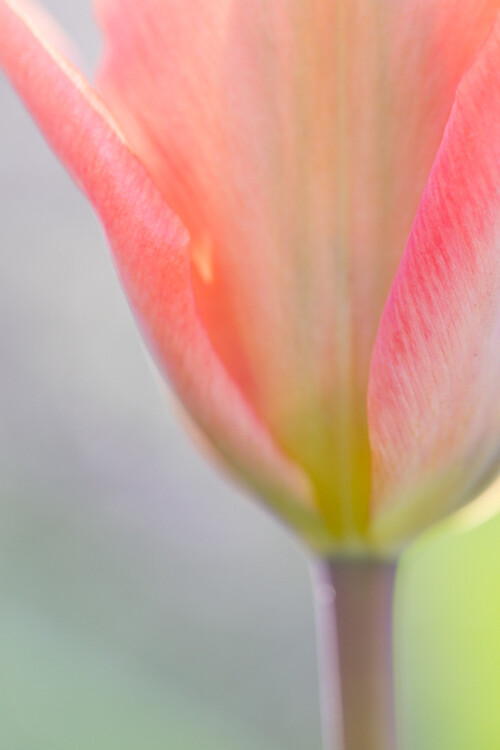
flower photography macro tulip

Subjects

Choosing a subject in flower photography may seem easy – flower photographers shoot flowers, right?

While this is true, it’s important to consider several factors about any particular flower. Among these is the color of the flower, the condition of the flower (is it dying and/or dirty?), and the shape of the flower.

flower photography macro yellow orange abstract

Color

Considering color is simple. The more colorful the flower, the more interesting the image is going to be (generally speaking, of course). I like to use bright colors, placed before a brightly colored background.

flower photography macro tulip abstract

It can also be useful to think in terms of complementary colors. These are the red/green, blue/orange, and yellow/purple combinations. When they are placed together in the same frame, the results can be powerful.

Condition

Another important consideration is the condition of the flower. Before taking your photograph, you should inspect your potential subject carefully.

flower photography macro backlit

Ideal flowers are at peak bloom: petals spread wide, edges crisp and unblemished. I try to avoid photographing flowers that are on their way out because more often than not I’m disappointed with the resulting images.

The best flowers are also free of dirt. I often wipe dirt off carefully with my finger. If there are insects, I gently blow them away from the flower center. Another tactic is to obscure the blemishes or dirt by shooting soft-focus images or silhouettes.

flower photography macro silhouette

This flower wasn’t in peak condition, so I chose to shoot a silhouette, emphasizing the shape over the condition.

Shape

This final aspect of flower photography is more difficult to explain, but it is important, so I’m going to give it a shot. Certain flower shapes are better than others for flower photography.

More specifically, the flowers that will get you the most pleasing images are often those with clear patterns and bold, dynamic shapes.

Consider the rose. It is one of my favorite flowers to photograph. Why? The petals are dynamic, flowing and changing. They also have a clear pattern, and therefore imbue your images with a sense of organization.

flower photography macro rose

Another flower that I love to photograph is the tulip. Its structure is simple but bold, and it has large petals that curve slightly. It isn’t chaotic or messy. The viewer’s eye can easily trace its shape without getting lost.

flower photography macro tulip

The rose and tulip sit in contrast to flowers such as zinnias, which are rather chaotic and therefore difficult to pin down in an image. Which is not to say that a good zinnia image is impossible; it’s just a lot more difficult.

Compositions

When composing flower photographs, it is a good idea to keep a checklist in the back of your mind. In every flower photography image, try to incorporate at least a few of the guidelines provided below.

Simplify

My first tip is the most important – simplify!

Figure out what it is about the flower that you like, and focus on that, removing any extraneous elements, be they extra flowers, stems, petals, etc. Make sure that any distracting elements are not present.

flower photography macro pattern abstract

Use Symmetry

While you shouldn’t always strive to use symmetry in your flower images, it can be a good starting point. Flower centers are often symmetrical or nearly symmetrical. This is something that you can use, composing with the flower smack-dab in the center of your image, anchored by its center point.

flower photography macro symmetry

I used this flower’s symmetrical center to create a bold composition.

Have a Clear Point of Focus

Without a clear point of focus in your images, the viewer will be lost. Their eyes will wander from place to place without really being drawn into the image.

How do you create a point of focus? You ensure that at least one part of your image is sharper than the rest. You also compose with this point of focus in mind, making sure that the rest of your image merely complements this point of focus (rather than dominating it or detracting from it).

flower photography macro abstract

Here, the eye is drawn straight to the in-focus petals of this flower.

Use a Clean, Pleasing Background

Above, I discussed the importance of colorful subjects. But the subject isn’t the only thing that should be colorful. It’s also important to have a colorful background, or at least a pleasing one.

This can be a bit of a balancing act because you don’t want the background to overpower the subject. White and black backgrounds can work well, as can backgrounds that are a colorful but uniform wash.

macro photography flower trout lily

I aimed for a uniform, calming background when taking this trout lily photograph.

Tilt the Camera

One last tip for creating dynamic compositions is to try tilting the camera.

Rather than having the flower sitting statically within the frame, by tilting the camera, you communicate a sense of movement. The flower seems to be emerging from the frame in a very pleasing way.

flower photography macro black-eyed susan

Notice how tilting the camera to shoot this Black-Eyed Susan resulted in a more energetic image.

Conclusion

When doing flower photography, it is important to carefully consider both the subject and your composition. By keeping your subjects colorful and clean, and by aiming for simple, clean compositions, your flower photography will instantly improve.

The post Guide to Choosing Subjects and Compositions for Flower Photography appeared first on Digital Photography School.


Digital Photography School

 
Comments Off on Guide to Choosing Subjects and Compositions for Flower Photography

Posted in Photography