RSS
 

Archive for July, 2017

New product overview videos now available: Fujifilm GF

03 Jul

We’re constantly adding to our collection of product overview content, and we just added videos covering Fujifilm’s new GFX 50S medium-format camera and three GF lenses. Check out the new videos from the links below, and be sure to bookmark our YouTube channel to stay up to date with new videos when they’re published.

Fujifilm GFX 50S Product Overview

Fujifilm GF 120mm F4 Macro Product Overview

Fujifilm GF 63mm F2.8 Product Overview

Fujifilm GF 32-64mm F4 Product Overview


This is sponsored content, created with the support of Amazon and Fujifilm. What does this mean?

Articles: Digital Photography Review (dpreview.com)

 
Comments Off on New product overview videos now available: Fujifilm GF

Posted in Uncategorized


DEAL: Save 62% on Our Lightroom Presets Today

03 Jul

$  19 Presets

This week as part of our Mid Year Sale we’re excited to offer you any of our Lightroom Preset packs at a massive 62% discount.

Yesterdays deal on our eBook range had an overwhelming response (we were a little worried our servers wouldn’t cope for a while there) but today we’re taking things up a notch with an offer that those of you who use Lightroom will love.

For the next 30 hours you can pick up any one of our 101 Presets collections for just $ 19 USD.

They normally retail for $ 49 so this deal is a steal – grab yours here.

These beautiful presets have been created by some of our favourite photographers, so that you can convert your photos from average to amazing with just one click, saving you a whole lot of processing time.

Here are the 3 presets packs you can choose from:

  • 101 Lightroom Presets by Cole Joseph (a great all round pack for all kinds of photography)
  • 101 Landscape Lightroom Presets by Todd and Sarah Sisson
  • 101 Lightroom Portrait Presets by Rachel Devine

Each pack contains 101 presets that we guarantee to make your pictures pop and save you enormous amounts of time post processing your images.

But don’t wait too long to get your presets – this deal ends in just on 30 hours from now!

Note: You’ll need a copy of Adobe Lightroom to be able to use these presets, and as always, we offer a 60 day satisfaction guarantee on these presets.

The post DEAL: Save 62% on Our Lightroom Presets Today by Darren Rowse appeared first on Digital Photography School.


Digital Photography School

 
Comments Off on DEAL: Save 62% on Our Lightroom Presets Today

Posted in Photography


Think Tank teams up with SKB for hard cases, launches MindShift ‘PhotoCross’ sling bags

03 Jul

MindShift Gear has announced ‘PhotoCross,’ a new lineup of sling bags designed for adventure photographers. Coming alongside this announcement is one from sister company Think Tank Photo, which has teamed up with SKB to offer the latter company’s hard cases fitted with soft inner dividers and organizers from Think Tank. The SKB/Think Tank hard case lineup currently includes 10 models.

The new hard case lineup comprises ‘SKB designed by Think Tank’ models featuring SKB’s own waterproof and durable iSeries hardshell exteriors. Think Tank has fitted its own internal modular organizers and protective padding into the cases, including movable dividers and lid organizers. The hard case lineup ranges in price from $ 109.99 to $ 329.99.

Joining those hard cases is MindShift Gear’s PhotoCross 10 and PhotoCross 13 bags for photographers in the field. Both bags feature space for photographic gear and either a 10-inch tablet (the PhotoCross 10) or up to a 13-inch laptop (the PhotoCross 13). The bags’ designs include T-pulls, carrying handles on both the side and top, a 320G breathable air-mesh back panel, a pocket that can accommodate most 1-liter water bottles and a 3-point harness.

The PhotoCross 10 bag can accommodate either a mirrorless camera body and up to five lenses or an ungripped DSLR and up to two lenses plus a tablet. The larger PhotoCross 13 can accommodate up to an ungripped DSLR alongside up to four lenses – including a 70–200mm F2.8 lens, MindShift explains – plus ‘some’ 13-inch laptops. The PhotoCross 13 will cost $ 129.99; PhotoCross 10 will cost $ 114.99.

Via: Think Tank Photo

Articles: Digital Photography Review (dpreview.com)

 
Comments Off on Think Tank teams up with SKB for hard cases, launches MindShift ‘PhotoCross’ sling bags

Posted in Uncategorized


How to Select a Subject for Long Exposure Photography

03 Jul

Get 53% OFF Kevin’s Long Exposure Photography eBook on sale now at SnapnDeals until July 11th.

First of all, I want to clarify for you what type of long exposure photography this article discusses.

You won’t be learning any techniques regarding the creation of photographs at night, or in the low light levels that you might experience with architectural interiors, (even though those examples do require longer exposures).

No, the type long exposure photography that this article refers to most often occurs in bright daylight.

How to Select a Subject for Long Exposure Photography

Perhaps, you’ve already studied up a bit on this genre of photography? Maybe you’re familiar with the streaking clouds and creamy waves of water, which are often depicted in long exposure photographs.

The reason that the long exposure technique is so awesome, is that it creates an illusion of motion in a still image. That look of motion creates a visual presence that is virtually impossible to mimic using post-processing software.

You may have even purchased gear for long exposure photography such as; neutral density filters, graduated neutral density filters, a camera release, and a good sturdy tripod. Once you know how to assemble all of that gear, it seems like the photo creation process should be pretty straightforward. Right?

Well, it’s not. And, you likely realize this if you’ve been disappointed in some of your results.

A photographic fail that often occurs in long exposure photography is because of the subject selection, and that’s what you will be learning about in this article. You’re going to get some important tips on how to evaluate and choose, a subject for the best long exposure photography.

How to Select a Subject for Long Exposure Photography

Selecting a subject for long exposure photography

Subject selection is extremely important to successful long exposure photography. In fact, the subject selection process is so important that it can radically alter the technical steps in your creation of the image.

First, and foremost, in the subject selection process is that something needs to be moving. It’s the motion that creates the tension in the composition. You probably already realize that there needs to be motion.

The second, and perhaps less obvious component is that some element of the photograph should be rock steady. This isn’t an absolute, and sometimes if everything is moving it can lead to some pretty cool results. However, in general, you will want some aspect of your photograph to be rock steady and sharp.

How to Select a Subject for Long Exposure Photography

The image above is an example of a long exposure photograph where everything is moving. It’s a pretty cool result. However, if you’re not interested in an abstract look something needs to be still and sharp in your image. Otherwise, your photograph will simply look out of focus.

How to Select a Subject for Long Exposure Photography

Look for contrast

The next important factor is to search for contrast.

With long exposure photography, you will often be pointing your lens at clouds, water, or moving crowds of people. The movement of these subjects, as they blend through the image (as a result of their motion), tends to fall into the highlight end of the histogram scale (very light tones to absolute white).

Look at the image above. You’ll notice that most of the movement is captured in the bright highlight to the upper mid-tone scale of the histogram.

If you don’t want your photograph to look flat you need some tones on the far shadow end of the histogram. Some good solid shadows, or dark objects, are needed to balance off the highlights. If you don’t include something on the dark end of the scale, your image may look lackluster.

How do you accomplish that? Primarily, through your choice of the angle between the camera point-of-view, the subject, and the light source. A proper angle creates shadowing.

How to Select a Subject for Long Exposure Photography

In lieu of that, you can also manipulate tones in post-production to create a full range of tonality.

The main point

If you’re looking at your scene, and you hold your arms out straight to the left and right, the light source should be coming from somewhere in front of your arms. If the light source is behind your arms, it will likely not provide you with the contrast that you’re looking for through shadowing.

There is one exception.

If the scene contains objects that are dark or very black, then the angle of the light becomes less important- as those photographic elements will provide the necessary contrast.

How to Select a Subject for Long Exposure Photography

In this image, there was almost no directional light for this long exposure shot. This resulted in very low contrast.

Although the image above could have been made using much shorter exposure time, it was important to give the water enough time to create the long sleek ribbons of highlights. This image was exposed for 30 seconds.

The original camera raw file was completely flat in contrast. There were plenty of highlights to work with (as a result of the long exposure technique), however, there were no contrasting shadows, and they had to be created in post-production.

Angle of view

Your next concern in subject selection is the angle of view from the camera to the source of the movement.

If you look at the left image below, the red arrows point toward the photographic elements that were intended to highlight the long exposure effect. Yet, you can barely see the effect.

How to Select a Subject for Long Exposure Photography

There are two factors that will control how well you will see the effect in your long exposure efforts.

The first issue is the length of time for the exposure. You may think to yourself, “If a 4-second exposure looks good then a 30-second exposure will look amazing!” This isn’t necessarily the case. An extended long exposure can actually wipe out the effect if it’s too long. Much depends on the overall scene.

The second issue is the one that’s depicted above, and that is the angle of view; from the camera point of view to the elements creating the motion. If the motion is lying in a plane that is too parallel to the camera point of view, then the motion becomes minimized.

Look at the image on the right above. In that example, the camera is looking down onto the movement. The angle between the plane of movement and the camera point of view has been increased resulting in a more dramatic capture of the motion.

When choosing your subject, keep in mind the angle of view between the camera and the motion.

Could the left image above been better? It could have worked out more successfully if the camera had been moved closer to the cliff.

Could a change in the lens focal length, say to a longer telephoto, have helped? That wouldn’t have helped much as the angle of view would still be too low.

How to Select a Subject for Long Exposure Photography

This leads to your final decision in the subject selection process for long exposure photography.

Lens selection

What focal length are you going to need for your shot?

Long exposure photography works best when using a focal length that falls somewhere between an ultra wide-angle to a very moderate telephoto lens.

Longer telephoto lenses don’t lend themselves well to long exposure photography because they accentuate camera movement. This is true, even if you’re using a sturdy tripod and a camera release. It doesn’t take much movement to soften an exposure of 20-seconds or longer. You may not even perceive the movement.

Vibration from the wind, or even the vibration of the ground beneath you, can ruin your images. For example, if you’re set up on a bridge deck, you may not even feel the very slight motion of the bridge in a wind or when cars pass. However, enough consistent movement of the camera will ruin a long exposure.

Working with lenses in the 14-85mm focal length range will help you get sharp pictures. Keep this in mind as well, it’s helpful to look for a windbreak if there are any near your intended camera angle.

Once, you’ve chosen a subject, using even slight variations on the focal length of your lens, or camera position can lead to some exciting and varied results.

How to Select a Subject for Long Exposure Photography

In the image above, an 18mm lens was used to capture an expansive looking landscape. The long exposure technique highlighted the waterfall, which becomes a major element of the composition, even though it is fairly small in the frame.

How to Select a Subject for Long Exposure Photography

After experimenting with several longer focal length lenses, and not being happy with the results, a simple camera move of about 100 meters resulted in a much different photograph while still using the same 18mm lens.

To summarize the key considerations for subject selection in long exposure photography:

  1. Something in the scene needs to be moving (most often clouds, water, or crowds).
  2. Unless attempting an abstract, something in the scene needs to be steady and completely in focus.
  3. Look for subjects that have natural contrast, or visualize how you will create the contrast in post-production.
  4. Select a subject, or subject angle, where the light source is not behind the camera to achieve good shadowing for contrast.
  5. Choose a subject, or camera to subject angle, that isn’t parallel to the camera point of view. You want the camera pointing downward or upward toward the subject.
  6. Choose a subject, or a camera to subject position, that allows you to use a focal length lens that falls between 14mm and 85mm. Be mindful that if you use a lens that is too wide, the effect might be pushed back and not very visible. On the other hand, if you use a lens that is too long, you may have issues with camera motion. Be experimental. Check your results right there on the camera LCD screen for sharpness and the motion effect.
  7. The Wind is always a concern in long exposure photography. When choosing your subject, look for a windbreak that you can use at the camera position.

Get 53% OFF Kevin’s Long Exposure Photography eBook on sale now at SnapnDeals until July 11th.


The post How to Select a Subject for Long Exposure Photography by Kent DuFault appeared first on Digital Photography School.


Digital Photography School

 
Comments Off on How to Select a Subject for Long Exposure Photography

Posted in Photography


The iPhone turns 10 years old today: What has it meant to you?

03 Jul
10 years later, photography is a much bigger part of the iPhone’s DNA than anyone could have predicted.

Ten years ago today, Steve Jobs stood up on stage and delivered what might be the most consequential keynote of his career: he introduced the world to the iPhone. Today, we want you to tell us how it has revolutionized, reorganized, and restructured the world of digital photography.

As Jobs put it on stage, repeating the line over and over again to a crowd of excitable tech journalists, the iPhone was three things: “an iPod, a phone, and an internet communicator.” But if Jobs could somehow come back to life and re-do that moment today, he would probably add ‘camera’ to that list.

Sure, that original 1st generation iPhone only boasted a measly 2MP camera that was laughable even by 2007 standards. But the impact that this camera—and the one after that… and the one after that… and the 6 after that—had on our industry is hard to fathom.

The point and shoot camera has all but gone extinct, camera giants are struggling to appeal to a new crop of ‘photographers’ who value convenience and connectivity above all else, and each day the line between ‘professional photography’ and ‘smartphone photography’ gets a bit blurrier—if it hasn’t already disappeared entirely.

The 1st generation iPhone looked a lot different than today’s iPhone 7

But we’re not interested in the big picture stuff—there are tens, hundreds, maybe thousands of articles about how the iPhone changed photography for better and for worse. We want a more personal perspective. We want to hear from you.

From a photography perspective, how has the iPhone impacted your life? Do you use your main camera less often, or not at all? Is the ability to connect your camera to your phone and post pictures instantly a must-have? Do you even remember the last point-and-shoot camera you owned, and when you last turned it on?

On a day marked by hundreds of tech op-eds, quirky origin stories, and enough ‘looking back’ videos to keep you busy for days, we want to compile a more personal picture of the iPhone and how it has impacted the world of digital photography. Share your story with the community in the comments, or drop us a line directly at dpreview.com/feedback.

And in the meantime, we’ll content ourselves with wishing the iPhone a happy 10th birthday… and we’re only being, like, 21% passive aggressive when we say that.

Articles: Digital Photography Review (dpreview.com)

 
Comments Off on The iPhone turns 10 years old today: What has it meant to you?

Posted in Uncategorized


Tips for Doing a Successful Picture-a-Day Photography Project

03 Jul

Sometimes, fitting quality photography time into an already busy schedule is a challenge in itself. Even over weekends, pressing matters mean that photography is often left by the wayside. I know I’m guilty of relying on a camera phone to capture images – compromising image quality and control. One way to get back on the proverbial creative saddle is to embark on a photography project. And although starting a photo-a day project may seem a little daunting at first, committing even a minute each day to composing a photograph with a dedicated camera can go a long way.

Tips for Doing a Successful Picture-a-Day Photography Project

The results of my own 30-day photography project challenge!

Make a game plan for your photography project

There are no hard and fast rules for photo-a-day projects or challenges. You might even want to take a photo weekly or monthly instead. It’s the regularity and the plan that forms the basis of the challenge. Any other rules are those you set for yourself.

How often do you plan to take a photograph, daily, or weekly? Will you need to stock up on film or memory cards? Is there a certain time of day or location you want to capture images? Do you need a new camera bag? Setting out a clear plan before embarking on your challenge will help you keep motivated and shape the outcome of your final body of work.

Tips for Doing a Successful Picture-a-Day Photography Project

Daily or regular photography projects can reveal many creative opportunities.

Set a goal for your project

Before starting out on your quest, consider what it is that you want to get from the photography project. Having a clear idea of your motivations will help guide you through your challenge more smoothly. Are you looking to expand on your technical skills? Or would you like to get to know your camera a little better? I find that writing down the desired outcome of a project is helpful. Plus, if your series does change course, it’s interesting to be able to look back at your notes and see how your project has grown.

Choose a theme

Choosing a theme for your photo-a-day project can help create a cohesive series overall. If you are keen to hone your technical skills, try a theme that utilizes new photographic techniques. Or take on a subject which is different than what you usually shoot. If you want to make more time for photography, you’ll be surprised at what a few minutes a day can achieve. If you aren’t sure where to start, there are an abundance of websites that supply free-printable lists of plans, themes and tasks for each day, week, month, or year.

However, if you feel constrained by the idea of a hard-and-fast theme, remember that choosing not to have a clear theme is a choice in itself! Relying on subjects that catch your eye will expand your ability to decipher creativity and meaning in any given environment.

Tips for Doing a Successful Picture-a-Day Photography Project

An abstract pattern I stumbled upon while walking home.

Set a time frame

Next, consider a time frame for your  project. Daily photographic challenges can last weeks, or even years. The time of day is a factor too – would you like to shoot your series during the day or the night? Maybe even both.

The time frame of the project relies on your goals and chosen theme. It also dictates the kind of equipment you’ll need. For example, documenting a landscape over the seasons requires a longer time frame than a series of self-contained photographs. Additionally, a project spanning over a longer time frame may only require a single photograph each week or per month, depending on the level of detail you prefer. If you want a consistent outcome from your series, consider using a tripod and a dedicated vantage point.

Tips for Doing a Successful Picture-a-Day Photography Project

Equipment

Selecting photographic equipment for the project will shape the aesthetic of the series and relate back to your initial goals and themes for the project. The beauty of daily or regular photography challenges is the opportunity to become more familiar with your photographic tools. It’s a perfect way to invest in developing your DSLR skills, or trying out a new lens. You may even want to use an analogue camera. Why not experiment with a different camera setting each day? Or focus on photography fundamentals such as shutter speed and aperture over the course of each week?

One of the requirements of taking on a photo-a-day challenge is keeping a camera on hand. This can be an issue in terms of additional carrying weight. Rather than resorting to the portability of a camera phone, pack your wallet, keys and phone into a camera bag instead. Your DPI will thank you later. And after a bit of adjustment, you’ll find that keeping your camera with you becomes so natural that you might feel naked without it.

Tips for Doing a Successful Picture-a-Day Photography Project

I’m not a regular on the selfie-circuit, but I couldn’t pass up the chance to capture this wobbly image for my daily project.

Ready to shoot!

Okay, so you have your goals set, your theme decided, your time frame sorted and your equipment at the ready… now what?

Start off simple by taking a few photographs around the house, or on your way to work. Keep in mind that not every image you take for the day will be perfect – and that’s okay! Sometimes it’s not the content that’s important, but the habit. Creative blocks are inevitable – just take a deep breath, snap a few photos for the day and come back to them later. The project is about learning and developing, not creating a masterpiece (although that is a possibility too!). Soon the exercise will become less of a chore, and more therapeutic.

Tips for Doing a Successful Picture-a-Day Photography Project

Setting a reminder on your phone is a good way to remember to take a photo each day.

Setting a reminder on a phone is a good way to remind yourself to take a photo – but don’t beat yourself up if you skip a day or two. A photo-a-day project is all about heightening your technical and creative skills -not shoving them down your own throat.

Having said that, there is a chance that over the course of the project you may begin to feel unmotivated or bored. You might even consider giving up. Making a blog, posting on Facebook, or creating a dedicated Instagram account to track your progress is a great way to stay on track. You’ll be able to easily view your own growth and share the results with others. An ongoing project helps you build up an online presence and a space to give and receive feedback from other photographers. Your friends might join in too.

Review your images

Along with posting material from your project online at regular intervals, take some time to reflect on your work. Take note of the direction that your series has taken, and where it is headed. Doing a weekly or monthly check-in with your series will reveal interesting trends and techniques in your own photographic practice.

Having a long-term body of work, even over the course of a few weeks, provides a great opportunity to identify and remedy errors and bad habits. You may even discover hidden strengths in subject-selection and technical proficiency that you never knew you had!

Tips for Doing a Successful Picture-a-Day Photography Project

Partaking in my own daily photography challenge gave me the opportunity and the motivation to photograph ideas that I have wanted to experiment with for a while.

Conclusion

Once you begin to actively seek out new  photographic opportunities, you’ll see the world around you in a whole different light. Daily and regular photography projects reveal opportunities everywhere, even in the ordinary. Having a camera with you to capture those opportunities is a rewarding challenge. And although your daily efforts alone may seem insignificant, your series will gather momentum faster than you realize. So what are you waiting for? Get out there and start your own photographic challenge!

Here are some images from my own project – please share yours in the comments below.

Tips for Doing a Successful Picture-a-Day Photography Project

catching up a bit of TV – a perfect photographic opportunity

The surreal light of a butcher’s window

Some radioactive looking sludge I encountered made an interesting abstract photo of the day

This cute little guy posed just long enough for my daily shot

The post Tips for Doing a Successful Picture-a-Day Photography Project by Megan Kennedy appeared first on Digital Photography School.


Digital Photography School

 
Comments Off on Tips for Doing a Successful Picture-a-Day Photography Project

Posted in Photography


7 Tips for Learning How to See What Your Camera Sees

03 Jul

Seeing the world through your camera’s lens has certain similarities and definite differences to looking at the world without your camera. Even with the most basic digital cameras available today you can create photographs that you cannot naturally see with your eyes. Understanding how your camera sees differently than your eyes will help you become a more creative photographer.

Here are seven ways that your camera sees differently than your eyes:

1. Frame

7 Tips for Learning How to See What Your Camera Sees

Every photograph is bound by a frame; four sides and four corners. You don’t see your daily life with such restrictions to your vision. Learning to create well composed photographs means you must work within the boundaries of that frame and make the most of it.

Don’t see the frame as a restriction, rather an opportunity to enhance and share your vision. Carefully compose your chosen subject. Be selective of what to include and what to exclude so your frame only shows what you want to show.

2. Zoom

7 Tips for Learning How to See What Your Camera Sees

If you cannot achieve a composition just how you want it to look, you might consider changing lenses or zooming closer or wider. This is something our eyes cannot do. To see detail in something you are looking at you must move closer, and to see a wider angle of view you must step back.

Changing lens focal length gives your camera the ability to remain in the same position and yet see either a wide angle of view or a very narrow one. Understanding the field of view of your lenses and being selective of how much or how little you include within the frame of your photos will help you make more interesting compositions.

3. Focus

7 Tips for Learning How to See What Your Camera Sees

One of the initial things I learned after buying my first camera was the importance of focus. Since I first learned to focus my camera I’ve had to start wearing reading glasses so I can see whatever is close to me clearly.

If your eyes are good you never even think about their ability to focus, they just do, continuously and without delay. It’s important to learn how to focus your camera lens so the most important element(s) in your composition is sharp. Sometimes it’s a photographer’s choice to create soft focus photos, but generally a well focused photo will draw the viewer’s eye to the most significant part of the composition.

4. Depth of Field

7 Tips for Learning How to See What Your Camera Sees

Controlling how much of a photograph is in focus is another aspect of photography that your eyes do not naturally do. If your eyes are good, you will see most of what’s in your field of view in sharp focus. Using your camera to control how much of what’s in focus within your frame is a wonderful creative aspect of photography.

There are a combination of factors that enables your camera to make photos in which some of your image is in sharp focus and some of it is not. These factors are your lens and its aperture setting, your camera’s sensor size, and the distance relationship between your camera, the subject and the background. Achieving a good balance of these factors will give your photographs a quality you never naturally see. The clearly focused zone in a photograph is known as the Depth of Field.

5. Motion Blur

7 Tips for Learning How to See What Your Camera Sees

Another photographic technique that can control the amount of blur in your photographs is the thoughtful use of shutter speed. Using a slow shutter speed and making a photograph of a moving subject can result in what’s known as motion blur.

You can control how much or how little a moving subject is blurred by controlling the length of time your shutter is open. If you leave your shutter open long enough, you can even create photographs of moving subjects so your subject is not visible in the frame. Your eyes will never see like this because a photograph is made during one instance in time.

6. A Single Moment

How to Learn To See What Your Camera Sees

Being able to choose the moment you open your shutter and make a photograph is another difference between how you see and how your camera sees. Whether you are taking a landscape or photographing a football game or a portrait, the very point in time you press your shutter release is significant in determining how your photograph will look. One precise instance in time, deliberately selected, to capture a unique image.

You see with your eyes continuously, not in single instances. Learning to recognize the optimum moments to press your finger down on the button and take a photograph is one of the most important aspects of photography.

7. Tonal Range

How to Learn To See What Your Camera Sees

The tonal range your camera can capture in a single exposure and what’s visible to your eyes are still significantly different. I say “still” because as camera technology develops sensors are able to render a wider tonal range than in the past and before long they may well be able to render a wider range than we can see.

Currently I am unaware of any camera that can record such a wide tonal range, from the brightest to the darkest, as we are able to see with our eyes. If you are outside photographing on a sunny day you will have to set your exposure carefully to capture detail in either the brightest or darkest part of your composition. Your camera is not capable of capturing such a wide range of tones as you can see with your eyes.

Learning to see the light and read the tonal range as you are composing your photographs is one of the most essential elements of creative photography.

Conclusion

Seeing as your camera sees, understanding the differences between your natural human vision and the way your camera works to make photographs, will give you more enjoyment and help you grow as a photographer.

Please share your thoughts and comments below.

The post 7 Tips for Learning How to See What Your Camera Sees by Kevin Landwer-Johan appeared first on Digital Photography School.


Digital Photography School

 
Comments Off on 7 Tips for Learning How to See What Your Camera Sees

Posted in Photography


Why Couples Aren’t Booking You for Their Wedding Photography

03 Jul

Nobody wants to hire you for their wedding photography. It’s not fair, is it?

Your photographs are gorgeous, you’ve created a shiny new website, and you’re more loveable than a bucket of kittens. So why isn’t your phone ringing off the hook with people wanting to hire you for their wedding?

Be different - Why Aren't Any Couples Booking You for Their Wedding Photography

It’s easy to start doubting yourself and going a little crazy. Maybe your photographs aren’t as good you thought. Are your prices too high, or too low? Perhaps all your competitors are secretly dating wedding planners?

The reality is that these days it requires a little more savvy to be a successful wedding photographer. It’s because there may actually be more wedding photographers on the planet than there are stars in the solar system. So, let’s help you shine brighter than everyone else in your area with some simple, practical ideas for getting more wedding photography bookings.

Your photography style

There are so many different styles of wedding photography. Photojournalistic, posed, quirky and fun, romantic, fashion, traditional, highly retouched, and so on.

Pick a style that you love to photograph and then specialize in it. Only show that style of photography in all your marketing. Ideally, it’s a style that most of your competitors aren’t using. The more defined you can make it, the better because people who love that style will be drawn to you.

Your photography style - Why Aren't Any Couples Booking You for Their Wedding Photography

Yes, you will repel some people, but it’s better to have 20% of people love your work than having 100% of people just say that it’s “nice”.

People buy from people they like and trust

Hiring a wedding photographer is a huge decision for a bride and groom. They have to pay a large sum of money to have a stranger stand by their side all day on one of the most important days of their life. They’ve got so many concerns spinning around their head. For example:

  • Is this photographer going to be rude, or just plain dull?
  • What happens if we don’t like the photographs? After all, most photographers can cobble together a decent portfolio. But can they do a good job in tough conditions?
  • What happens if it rains?
  • Will the photographer be able to cope with my crazy family?
  • Will they actually turn up?!
  • Is it even possible for me to look good in a photograph?
  • Will they be able to keep us on schedule?
  • Will the group photographs be as painfully boring and time-consuming as I fear?

The list goes on.

People buy from people they like and trust - wedding photography

One way to get more wedding inquiries is to handle these concerns within your marketing. When you show a couple that you understand their fears and you can help them, then they’ll start to trust you. If you can do this in an engaging, kind, and entertaining way then they’ll start to like you, too.

So how might you deal with their concerns? The single best way I’ve found is to have a money-back guarantee. However, you shouldn’t simply have a bullet point saying “Money-back guarantee” on your website. Inject some feeling into it.

Explain that you’ve heard all the horror stories about wedding photographers letting down couples and that your signed guarantee is there to put their mind at ease. It also demonstrates that you’re confident in your abilities and that you truly care about your clients. This one thing will instantly make you stand out and build trust.

People buy from people they like and trust -wedding photography

Be different

If you’re the same as every other photographer then the only reason to hire you is the price. We’ve already talked about differentiating yourself through your photographic style and through having a guarantee, but there are many other ways to do it.

For example, I choose 70-page A3 sized (29.7 x 42.0cm, or 11.69 x 16.53 inches) wedding albums that can fit 250 photographs in them comfortably. That number of photographs can comfortably tell the whole story of the wedding day, so the bride and groom don’t have to leave out any images. This avoids awkward conversations with Auntie Betty where the couple has to explain why she didn’t make the cut because they put their friends in instead.

There are lots of great slideshow services (like Animoto) available for you to create beautiful, animated, audio-visual presentations within a few minutes. Couples love them and you can even create presentations made up of their childhood photographs which can be played for the entertainment of guests during the reception. I use a projector and screen to present the show and it’s guaranteed to get the parents a little tearful.

Be different - Why Aren't Any Couples Booking You for Their Wedding Photography

Photograph different, offer different products and stand out from the crowd.

Or, how about creating a framed portrait of the bride from the engagement session to give to the bride’s parents as a surprise gift on the wedding day?

Sometimes you don’t have to be different to stand out. You simply have to explain something that other photographers don’t make clear. For example, many photographers scout venues before the wedding. It helps then find the best places for the romantic and group photographs. They get to see where the best light will be and the best compositions can be made. Most photographers never mention this in their marketing, so if you do then it cements your position in the market as a helpful and dedicated professional.

Reveal your personality

Again, people hire people they like and trust. So, give prospects a hint at what it would be like to work with you by injecting your personality in your marketing. The About Page on your website is really important. If a couple doesn’t connect with you after reading it, they’re far less likely to get in touch.

Rocking the client meeting - wedding photography

Just like with your photography it’s okay if your personality doesn’t gel with everyone. If you’re a bit quirky that’s fine. If you’re obsessed with dogs then talk about that. People will connect with you over the weirdest stuff. But if you give them nothing to connect with then you won’t attract anyone.

The less you reveal about yourself the more unfriendly or distant you may seem. These days even large businesses are starting to understand that people don’t like dull “corporate speak”.

Use social proof

People want to get a feel for what it would be like to work with you. That’s why people love to read reviews and testimonials before going on holiday or watching a movie. The same applies to photographers.

Testimonials are one of the most powerful marketing tools you can use. Never stop asking for them. Don’t just put them on one page of your website, use them on every page and in your other marketing. Make them impossible to miss. Ask clients to put them on your Google business page too, as this will quickly help your search engine ranking.

Use social proof - Why Aren't Any Couples Booking You for Their Wedding Photography

Another great way of showing clients how great you are to work with is to create a behind the scenes video. Ask a second shooter to film you in action at a wedding. The best moment is when you’re charming the guests during the group photographs, or perhaps the romantic ones. It’s the perfect way of providing absolute proof that you would be a joy to work with on the big day for their wedding photography.

Rocking the client meeting

Most wedding photographers meet their couples in person, or over Skype before they’re booked. Sadly, all the fantastic marketing in the world can unravel quickly if you screw this bit up.

One of the most common mistakes photographers make is they start talking about their packages 30 seconds after meeting.
A better approach is to make the whole meeting about the client and what they want. You do that by asking lots of strategic questions. For example:

  • What are you looking for in your wedding photographer?
  • What’s the most important thing to you about your wedding?
  • Describe your wedding in three words
  • Is there anything you’re worried about?

This shows that you care about them and what they want. It also gives you a nice segue into explaining some of the things that separate you from the competition.

For example, when couples tell me, “we hate weddings with formal group photographs with everyone looking bored”, that gives me the perfect excuse to bring up something unique I do. I bring a bottle or two of bubbly to spice up the formal photographs. One of the bottles is given as a prize to whoever performs the best during the group photographs. This always leads to a bit of banter and of course you get great photographs of the bubbly being popped open.

Rocking the client meeting wedding photography

You should only start talking about your wedding packages once you’ve been chatting about their wedding for about 30 minutes. That is enough time for you to build rapport with them, find out what they’re looking for, and to explain how your unique services can help them.

When presenting your packages, start with your finest (biggest and best). After you’ve explained each package, ask them how they feel about it. Some clients never even bother looking at the smaller packages if they love the top one.

When you work down the packages like this it’s hard for people to then take the smallest package because they’ve just heard you talk about all these fantastic things you can do for them.

Get the booking

Rocking the client meeting - wedding photography

Don’t forget to ask for the sale! It’s so easy to have a nice long chat, only to realize that the couple has left and you never asked them to hire you. It’s your job to gently nudge them into a decision. As you go through the packages and find out which is their favorite, just come right out and say, “Fantastic, I’d really love to work with you because you’re such an amazing couple and your wedding sounds fantastic. A deposit is just $ XXX amount and I can take a credit card if you’d like to reserve the date now. How does that sound?”

Simply asking for the booking in a positive and enthusiastic way will dramatically increase your conversion rate. But, you’ll still get some couples say they want to think about it and get back to you. There are many ways to handle that situation. The underlying strategy is to keep them talking because the longer they’re with you the more likely it is that they’ll book. One response is to say, “I completely understand, but do you mind if I ask how you feel about everything we’ve talked about today?”

Another response would be, “Absolutely, but can I ask what it is you’re looking for, maybe I can help if there’s something on your mind?”

Rocking the client meeting - wedding photography

The trick is to keep digging until you find out what’s keeping them from hiring you right then and there. This is a great time to stress your money-back guarantee because it helps people overcome the fear of choosing the wrong photographer.

Conclusion

This article only scratches the surface on how to book more weddings, but hopefully, you can see that the issue is rarely just price. Sadly, too many wedding photographers respond to a lack of bookings by lowering their price rather than improving their service and the way they connect with couples.

The more you think about how you can serve your clients the better you’ll do. So, which idea resonates the most with you? I’d love to hear your thoughts in the comments below.

The post Why Couples Aren’t Booking You for Their Wedding Photography by Dan Waters appeared first on Digital Photography School.


Digital Photography School

 
Comments Off on Why Couples Aren’t Booking You for Their Wedding Photography

Posted in Photography


Like A Rock Star: 12 Iconic Movie Corvettes

03 Jul

[ By Steve in Culture & History & Travel. ]

The Chevrolet Corvette’s long list of silver screen starring roles turned America’s first mass-produced sports car into an automotive pop culture icon.

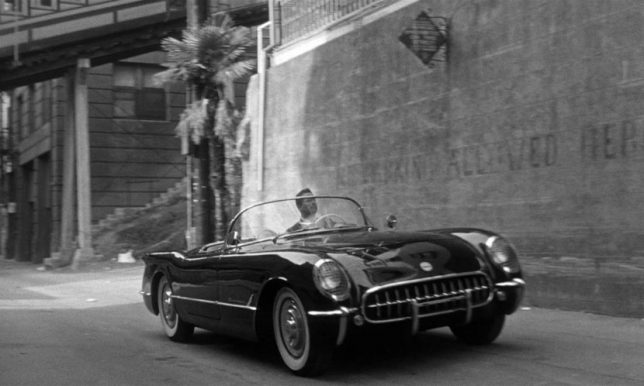
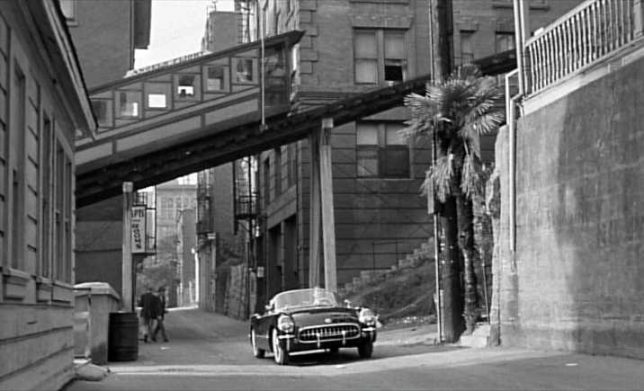
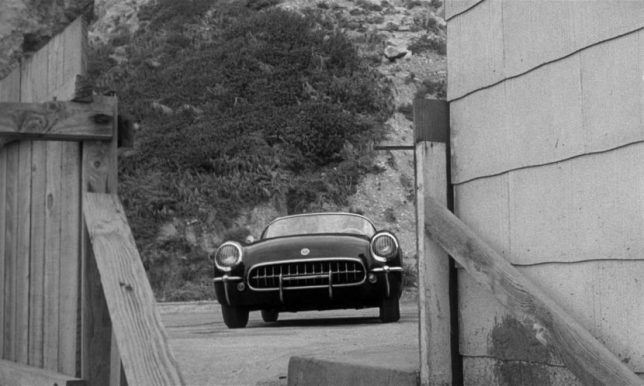
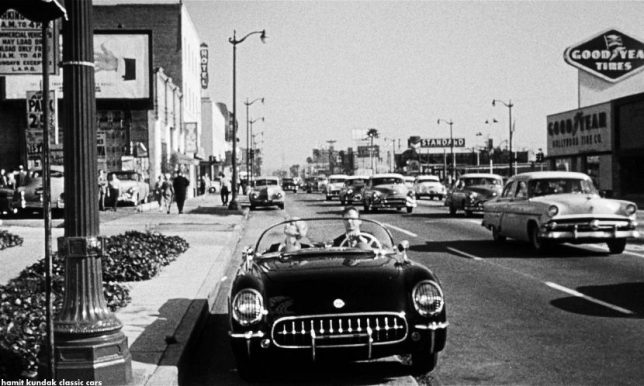
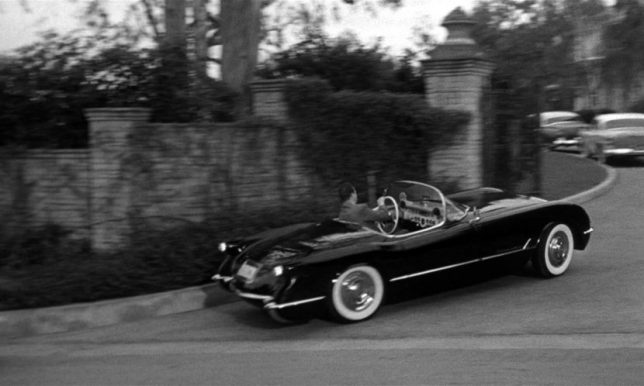
One of the Corvette‘s first film appearances was in the 1955 film noir classic Kiss Me Deadly. Directed by Robert Aldrich, the movie starred Ralph Meeker as Mickey Spillane’s hard-boiled private investigator Mike Hammer. The latter roamed the mean streets of Los Angeles in his 1954 Corvette, one of only 3,640 manufactured that year and one of only FOUR painted black.

Hammer’s black ‘vette may have looked cool but performance was anything but hot due to the pedestrian Stovebolt Six engine under its fiberglass hood. GM introduced a V8 for 1955 but limited model year production to just 700 in order to move the rest of the slow-selling ’54s. Even so, Hammer’s sleek (for the times) ride definitely added badly-needed panache to a niche model whose future was very much in doubt.

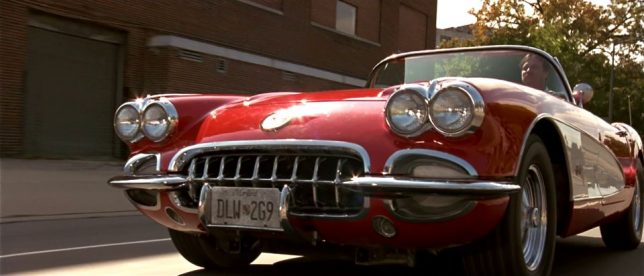
True Lies – 1959 Corvette

True Lies, a 1994 action-adventure-comedy starring Arnold Schwarzenegger, Jamie Lee Curtis, Tom Arnold, Tia Carrere, Bill Paxton, Eliza Dushku, and even Charlton Heston has aged rather well. Ditto for the red 1959 Corvette driven by Paxton (playing sleazy used car salesmen Simon) as he regales AH-nold on his time-tested seduction technique: “Let’s face it, Harry, the ‘Vette gets ’em wet.”

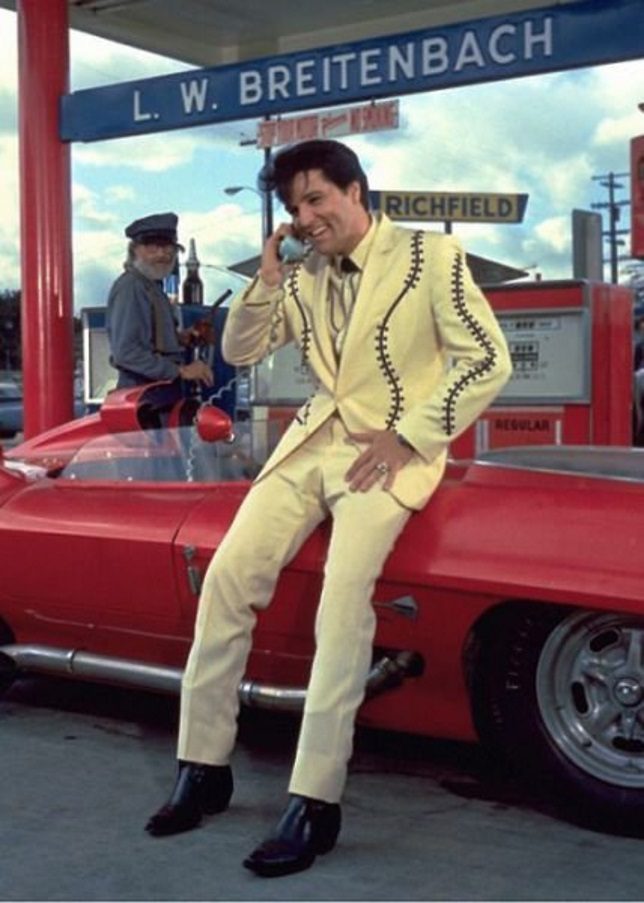
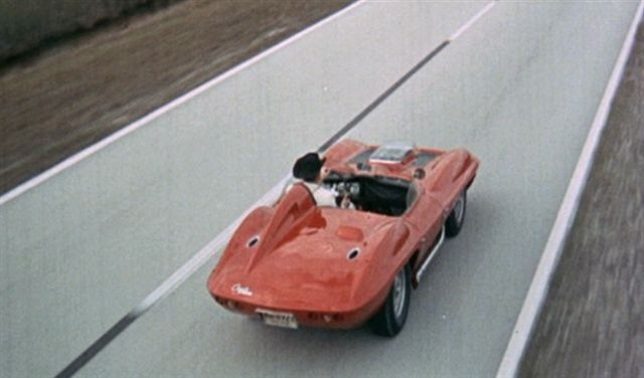
Clambake – 1959 Corvette XP-87 Stingray Racer

“Hey buddy, where’s the gas cap on this thing?” Built in 1959 “to test handling ease and performance,” the Corvette XP-87 racer won an SCCA National Championship in 1960. It was then modified with the addition of a passenger seat and made the rounds of the auto show circuit.

The XP-87 bowed out in grand style, appearing in the 1967 film Clambake as the private car of Elvis Presley’s oil tycoon character. Thank you, XP-87, thank you very much.

Heavy Metal – 1960 Corvette

“You can hedge your bet on a clean Corvette”… Heavy Metal – the 1981 animated sci-fi fantasy film produced by Ivan Reitman and inspired by the eponymous graphic magazine, featured a 1960 Corvette but if you arrived a few minutes late to the movie theater, you probably missed it.

Here’s a link to the ‘vette’s impressive entrance (dude totally sticks the landing!) in which it literally brings evil to the world in the form of the glowing green loc-nar. Mustang owners most definitely approve.

Next Page – Click Below to Read More:
Like A Rock Star 12 Iconic Movie Corvettes

Share on Facebook


[ By Steve in Culture & History & Travel. ]

[ WebUrbanist | Archives | Galleries | Privacy | TOS ]


WebUrbanist

 
Comments Off on Like A Rock Star: 12 Iconic Movie Corvettes

Posted in Creativity


These Courses WILL Make You a Better Photographer (70% Off Today)

02 Jul

We’re already halfway through our popular mid year sale and we’re really excited to offer you this deal, because we love helping people discover how to take great photos and we know this one will help do just that.

For the next 30 hours we’re offering our entire range of online photography courses at a massive 70% OFF.

Normally $ 99 each, today you can get any of our five courses for just $ 29 (USD) each. That’s incredible value!

These step-by-step courses created by talented photography experts include:

  • Night Photography by Jim Hammel – released just this year so that you can take amazing photographs at night
  • Lightroom Mastery by Mike Newton – every photographer should have a copy of this to create perfect photos!
  • Lightroom Mastery: People & Portraits by Mike Newton – will help you transform dull headshots into stunning portraits
  • Photo Nuts and Bolts by Neil Creek – the ideal course for the beginner photographer
  • Photo Nuts and Shots by Neil Creek – creative photography advice from a pro so you can get off auto

Each course is packed with series of tutorials, with demonstrations shot in high-quality video by professional photographers, and you can follow along at your own pace.

You get lifetime access to these courses, so you don’t have to rush to finish them and you can go back and review topics any time you like.

Check out all the discounted courses here on our courses page for the next 30 hours only and start improving your photography today.

The post These Courses WILL Make You a Better Photographer (70% Off Today) by Darren Rowse appeared first on Digital Photography School.


Digital Photography School

 
Comments Off on These Courses WILL Make You a Better Photographer (70% Off Today)

Posted in Photography