RSS
 

Archive for June, 2017

Bright Idea: London Street Lights Converted to Electric Vehicle Charging Points

24 Jun

[ By SA Rogers in Technology & Vehicles & Mods. ]

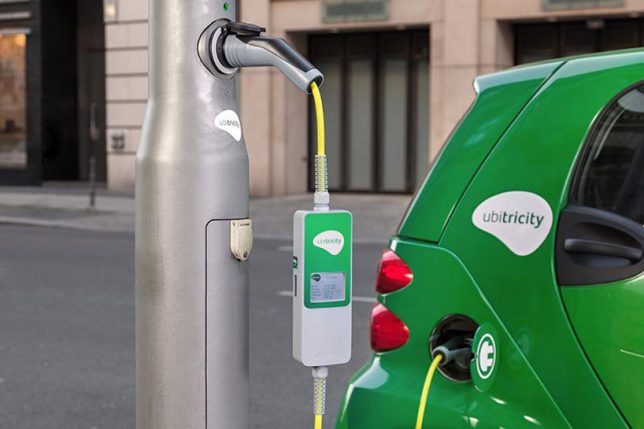
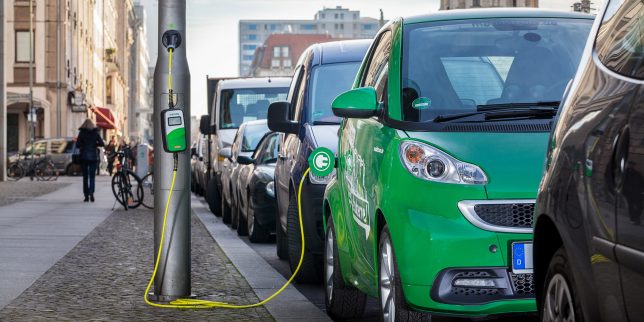
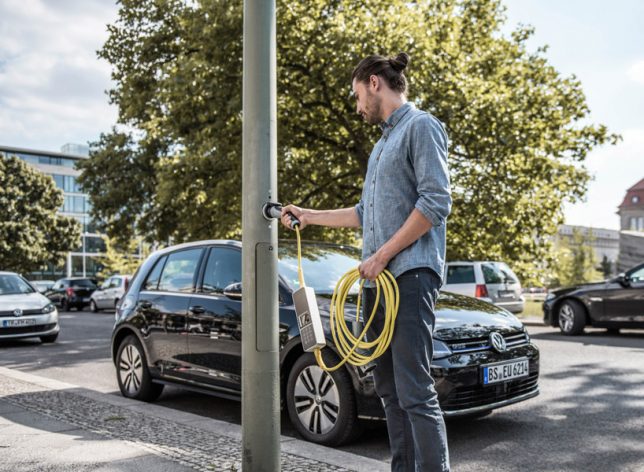
It sounded kind of far away when announced in 2013, but German renewable energy firm Ubitricity’s plan to convert street lamps to electric vehicle chargers is now underway in London, making it easy to plug in just about anywhere in the Hounslow borough of the city. Owners of electric vehicles simply order a custom charging cable featuring a built-in electricity meter so they can take advantage of the discreet power outlets built right into the lamp posts as well as standard electrical outlets.

You might be wondering what’s to stop random passersby from plugging whatever they feel like into the outlets. The answer is that little box, which communicates with the power company to activate charging from the light pole. The lights themselves were converted to LEDs to draw less power, making more available for other purposes.

The meter allows for remote billing, monitoring your usage and reimbursing the person or company the outlet belongs to, making it easier (and more polite) to juice up your vehicle whenever and wherever needed. You can keep track of how much power you’re drawing, and how much it costs, on a smartphone app. Ubitricity believes this setup will give potential electric car owners more confidence in their ability to take their vehicles on the road for longer trips.

The integration with existing city infrastructure also makes sense, especially in areas where there’s no room for permanent charging stations. The lamp posts are already there, and there’s already power running through them, so adding an outlet makes it possible to simply pull over to the side of the road to charge. Electric car owners in the area can request that outlets are added to lamp posts near their homes.

Share on Facebook


[ By SA Rogers in Technology & Vehicles & Mods. ]

[ WebUrbanist | Archives | Galleries | Privacy | TOS ]


WebUrbanist

 
Comments Off on Bright Idea: London Street Lights Converted to Electric Vehicle Charging Points

Posted in Creativity


Lucid VR begins sales of its LucidCam 3D VR camera

24 Jun

Lucid VR has announced the general availability of the LucidCam, its 3D VR camera.

The LucidCam captures a 180º field of view, less than the spherical 360º field of view found on many consumer VR cameras, however it does so with binocular vision, creating a 3D VR experience with a sense of depth. If you want to capture a full 360º view, three LucidCams can be combined to do so.

The LucidCam was developed with the help of a crowdfunding campaign in 2015, and while it’s just now becoming available, the wait appears to have had at least one side benefit: the camera’s original specs called for 1080p resolution per eye, but the final product will ship with 4K cameras instead.

In addition to 4K binocular recording, the LucidCam also supports live streaming through Facebook, YouTube, and Lucid’s own iOS and Android apps, so that you can share what you’re doing with friends in 3D VR. The camera also features stereo audio, 32GB of internal storage as well as MicroSD card support, HDMI out, and 1.5 hour battery life.

For those of you in the in the Bay Area, Lucid will be touring around San Francisco on Friday, June 23 to give people a chance to experience the LucidCam in person. The company will begin taking orders for the $ 499 camera on June 26, with shipments expected to begin in early August. As a promotion, Lucid will be offering a 15% discount to anyone who orders a camera between June 26 and July 26.

Press release:

LucidCam Launching into General Availability with Truck Tour of SF Landmarks

Lucid VR truck to tour SF landmarks on Friday, June 23 encouraging consumers to capture and share VR experiences with friends & family far away

Santa Clara, CA – June 21, 2017— Lucid VR is officially kicking off the general availability of its simple-to-use, pocket-size 3D VR camera, the LucidCam with a billboard truck touring photogenic San Francisco landmarks all day on Friday, June 23. View the itinerary here.

This launch tour aims at encouraging more consumers to tap into VR and bridge the distances to their loved ones by capturing and sharing experiences the same way they see them. Lucid CEO Han Jin’s vision–to create a technology that brings the world closer together through a true 3D VR camera, the LucidCam–started with a crowdfunding campaign two years ago and has now come to reality.

“It’s been an incredible journey to bring this product to life and to the masses, as initially all I wanted was to build one for myself which would capture and share my life with my grandmother in China,” said Jin. “LucidCam creates images and videos which let you for the first time see the world through someone else’s eyes as if you were really there. I want everyone to have such incredible superpowers.”

On tour day, the Lucid VR truck will visit top SF tourist sights. Anyone can follow the truck, take pictures and share them with #LucidCam for a chance to win a free VR camera. Complimentary VR viewers will be handed out at every stop. The Friday tour kicks off the one-month LucidCam preview sale which starts Monday, June 26, where the camera will be discounted 15 percent off the retail price and delivered as early as August 9, just two weeks after the campaign closes July 26.

LucidCam makes virtual reality content creation and livestreaming in 3D at very high resolutions easy, with a simple plug-n-play process flow. Consumers can create their own 3D VR without a computer or any additional processing requirements, making LucidCam an all-mobile experience for capturing, viewing, sharing and delivering immersive content either through Facebook/YouTube or Lucid’s iOS and Android app to anyone around the globe. With two lenses like your eyes and two microphones like your ears, LucidCam recreates a first-person experience, allowing people to feel like they are seeing the world through someone else’s eyes.

Exceeding the original specifications of the LucidCam crowdfunding campaign, the engineers at Lucid VR enhanced it and developed a robust 4K 3D VR camera with on-the-go VR content processing of pictures and videos, plus livestreaming capabilities. With the addition of Lucid’s viewing clip or phone case, you can create and view your own 3D VR anywhere with a click of a button.

The special LucidCam preview sale begins June 26, and includes a 15 percent discount off the retail price, with delivery as early as two weeks after the promotion ends. Retail availability of LucidCams begins in August, with thousands of units coming into the online and offline sales channels. For more information about LucidCam or to purchase the device, visit www.lucidcam.com.

Articles: Digital Photography Review (dpreview.com)

 
Comments Off on Lucid VR begins sales of its LucidCam 3D VR camera

Posted in Uncategorized


2017 Roundup: $1200-2000 ILCs: full-frame

23 Jun

Last updated: June 23, 2017

For those wanting to step up from entry-level to midrange ILCs, there are many things to consider, including the choice between a DSLR or mirrorless camera, what sensor size suits you best, how important video is to you, and of course the lens system.

While full-frame cameras typically offer superior low light image quality and more control over depth-of-field, crop-sensor cameras are extremely capable in their own right – and (usually) more compact and less costly.

We’ve split the $ 1200-2000 ILC marketplace into two segments – full-frame sensor cameras (discussed in this roundup) and crop-sensor (APS-C/Four Thirds) covered here.

This group of full-frame cameras is split right down the middle, with three DSLRs and three mirrorless models. Sony is, by far, the major player in the full-frame mirrorless market, with most of the other manufacturers sticking with DSLRs.

Here are the cameras we’ll cover in this enthusiast full-frame roundup:

  • Canon EOS 6D
  • Nikon D610
  • Pentax K-1
  • Sony Alpha a7
  • Sony Alpha a7 II
  • Sony Alpha a7R

Articles: Digital Photography Review (dpreview.com)

 
Comments Off on 2017 Roundup: $1200-2000 ILCs: full-frame

Posted in Uncategorized


Panasonic Leica DG Summilux 15mm F1.7 sample gallery

23 Jun

Sure, it’s been a minute since the Panasonic 15mm F1.7 was introduced. But three years later it’s still a solid option for a Micro Four Thirds shooter looking for a fast, compact, wide-angle prime. And what better time to travel light than the longest days of the year? We spent some of our long hours of sunlight with the 15mm F1.7 in hand – by land, and by sea.

See our Panasonic Leica Summilux
15mm F1.7 sample gallery

Articles: Digital Photography Review (dpreview.com)

 
Comments Off on Panasonic Leica DG Summilux 15mm F1.7 sample gallery

Posted in Uncategorized


EyeEm Selects helps you find the best images in your camera roll for posting

23 Jun

EyeEm has rolled out an update to its mobile app for Android that brings the new EyeEm Selects feature. EyeEm Selects helps you find the best photos on your phone’s storage by scanning your camera roll and then using computer vision to suggest photos to upload. Selection criteria is based on aesthetics. The algorithms picks images that are composed particularly well, have the best quality, or highest chance of selling on the EyeEm stock image platform.

EyeEm is already using advanced computer vision technology on its servers for scanning of images that have been uploaded to the service and determine their content, relevant keywords, and aesthetic quality. The app update means that some of those algorithms can now be run on your locally stored images before uploading them. Running the process locally means users save bandwidth and battery power and don’t need to worry about any third parties seeing their images if they decide to not upload them.

Selects is integrated into the image uploader component of the app. Above the camera roll you’ll now see thumbnails of the images suggested for upload. EyeEm says the feature also provides an easy way for finding hidden and long forgotten gems in the depth of your camera roll that weren’t shared right after capture. Android users can download the updated EyeEm app from Google Play now. iOS users will have to wait a few weeks longer.

Articles: Digital Photography Review (dpreview.com)

 
Comments Off on EyeEm Selects helps you find the best images in your camera roll for posting

Posted in Uncategorized


Tamron introduces ‘ultra-telephoto’ 18-400mm F3.5-6.3 zoom lens

23 Jun

$ (document).ready(function() { SampleGalleryV2({“containerId”:”embeddedSampleGallery_0293456581″,”galleryId”:”0293456581″,”isEmbeddedWidget”:true,”standalone”:false,”selectedImageIndex”:0,”startInCommentsView”:false,”isMobile”:false}) });

Tamron has introduced what it is calling the ‘world’s first ultra-telephoto all-in-one zoom lens,’ the 18-400mm F3.5-6.3 Di II VC HLD. The lens, designed for Canon and Nikon crop-sensor bodies, is equivalent to 29-640mm and 27-600mm, respectively.

Built-in Vibration Correction reduces shake by up to 2.5 stops, and the lens’ HLD focus motor promises ‘accurate and quiet’ focusing, according to Tamron. The HLD motor also keeps the overall size of the lens down: It’s 124mm/4.9in long and 79mm/3.1in in diameter. The lens has 7 circular aperture blades, a minimum subject distance of 0.45m/18in and is moisture-resistant. Nikon owners will be pleased to hear the the lens uses an electromagnetic diaphragm system.

The 18-400mm F3.5-6.3 will be available in late July for $ 649.

Press Release

INTRODUCING THE WORLD’S FIRST1 ULTRA-TELEPHOTO ALL-IN-ONE ZOOM LENS WITH AN EXTENDED RANGE THAT COVERS 18-400MM

Dramatic extended range achieved by combining cutting-edge optical design and other new breakthrough technologies including a redesigned cam structure

18-400mm F/3.5-6.3 Di II VC HLD (Model B028)

June 23, 2017, Commack, NY – Tamron, a leading manufacturer of optics for diverse applications, announces the launch of the new 18-400mm F/3.5-6.3 Di II VC HLD (Model B028), the world’s first ultra-telephoto all-in-one zoom lens for APS-C DSLR cameras, which covers a focal length range of 18-400mm. Since the 1992 launch of its AF28-200mm F/3.8-5.6 Aspherical (Model 71D), Tamron has dominated the all-in-one zoom category and has produced many lenses that cover wide-angle to telephoto zoom ranges. Tamron has now developed an ultra-telephoto all-in-one zoom that extends to 400mm (35mm equivalent of 620mm) and a 22.2x zoom ratio. Packed in a light, compact body (4.8in./24.9oz.)2 is Tamron’s accumulated knowledge and experience for all-in-one zoom lenses, including the most advanced optical and mechanical designs, an HLD (High/Low torque modulated Drive) for the AF system and the Vibration Compensation system. Photographers can now enjoy wide-angle to ultra-telephoto photography using one lens, which is ideal for travel photography and eliminates the need to carry extra lenses. The new Model B028 lens enables photographing a wide variety of ultra-telephoto images including everyday casual scenes. The 18-400mm will be available in the U.S. at the end of July at $ 649.

PRODUCT HIGHLIGHTS

  1. The world’s first3 ultra-telephoto all-in-one zoom lens to achieve 400mm telephoto

The new Model B028 is the world’s first lens for APS-C DSLR cameras that covers a focal length range of 18-400mm and achieves a zoom ratio of 22.2x. The focal length of 400mm on the telephoto end enables the capturing of ultra-telephoto pictures with the 35mm equivalent of 620mm angle of view. Now, with just this one lens, a photographer can readily enjoy the power of ultra-telephoto to bring distant subjects closer as well as the perspective-flattening effects that only extreme telephoto settings can achieve. This all-in-one zoom lens is ideal for travel and everyday shooting. It allows a photographer to switch from wide-angle to ultra-telephoto without changing lenses, making it faster and easier to capture a much wider range of subjects including travel scenes, wildlife, action sports, landscapes, cityscapes, portraits and food.

  1. Excellent image quality across the entire zoom range, from wide-angle to ultra-telephoto and macro

The optical construction of the B028 consists of 16 lens elements in 11 groups. The use of specialized glass elements such as LD (Low Dispersion) and aspherical lens elements effectively minimizes wide-ranging aberrations, including chromatic aberrations and distortion, thereby assuring outstanding image quality. Optimum power distribution among the individual lens element groups achieves both the optical performance and the compact size necessary for an ultra-telephoto all-in-one zoom lens that boasts 400mm focal length. Also, it enables tele-macro photography with a maximum magnification ratio of 1:2.9.

  1. Lightweight and compact design exhibits Tamron’s basic philosophy for all-in-one zoom lenses

Despite being an all-in-one zoom lens that achieves 400mm ultra-telephoto, Model B028 is light and compact with a total length of 4.8in. and a weight of 24.9oz.4 A new lens barrel design utilizing three-step extensions was developed to enable the necessary elongation to produce a 22.2x zoom ratio. Compared to the conventional approach, the division into a larger number of cams ensures comfortable operation and stability while zooming. Tamron’s philosophy for all-in-one zoom lenses is to allow each photographer to casually capture everyday photos with a lens of a practical size, and Model B028 fulfills this philosophy.

  1. HLD motor provides high-precision AF and enables compact lens construction

The AF drive system for Model B028 uses Tamron’s exclusive HLD (High/Low torque modulated Drive) motor. The power-saving HLD motor produces outstanding driving torque, and adjusts motor rotation from low to high speed to enable accurate and quiet focusing. The HLD motor takes up less space thanks to its small size and circular arc shape that allows the size of the lens to be reduced.

  1. Equipped with the Vibration Compensation system necessary for ultra-telephotography at 400mm

Despite its compact size, Model B028 is equipped with Tamron’s proprietary VC (Vibration Compensation) system, which effectively curbs camera shake under low light conditions (such as a dimly lit room or at dusk) and while taking ultra-telephoto pictures. This greatly expands opportunities for casual handheld shooting. The jitter-free stability of the viewfinder image allows for easier framing and enables the photographer to compose the subject quickly and comfortably.

  1. Electromagnetic diaphragm system now used also for Nikon-mount lenses

The electromagnetic diaphragm system, which has been a standard feature for Canon-mount lenses, is now employed in Nikon-mount lenses5. More precise diaphragm and aperture control is possible because the diaphragm blades are driven and controlled by a motor through electronic pulse signals.

  1. User-friendly features for everyday comfortable use

With an eye toward active outdoor photography, Model B028 features Moisture-Resistant Construction to ensure worry-free shooting as well as confidence while shooting under adverse weather conditions. Also, the Zoom Lock mechanism prevents undesired movement of the lens barrel under its own weight when the camera is angled downward while walking.

  1. Compatible with TAP-in ConsoleTM, an optional accessory product

The optional TAP-in Console provides a USB connection to a personal computer, enabling the user to easily update the lens’s firmware as well as to customize features, including fine adjustments to the AF and VC.

  1. External design placing importance on functionality and ease of use

While inheriting the design that makes use of many organic curves and the delicately polished form down to fine details that characterize the SP lens series, the new Model B028 comes with a highly sophisticated design that also places a lot of importance on the lens’s functionality and ease of use, featuring an overall form that faithfully encompasses the internal structures within, a slim Luminous Gold brand ring and the switch shape design.

[1] Among interchangeable lenses for DSLR cameras (As of May 2017; Tamron)
[2] Length and weight are based on the Nikon-mount lens
[3] Among interchangeable lenses for DSLR cameras (As of May 2017; Tamron)
[4] Length and weight are based on figures for the Nikon-mount lens.
[5] Available only with cameras compatible with the electromagnetic diaphragm (D3100, D3200, D3300, D3400, D5000, D5100, D5200, D5300, D5500, D5600, D7000, D7100, D7200, D300S, D500) (As of May, 2017; Tamron)?
Tamron 18-400mm F3.5-6.3 Di II VC HLD specifications

Principal specifications
Lens type Zoom lens
Max Format size APS-C / DX
Focal length 18–400 mm
Image stabilization Yes (Up to 2.5 stops)
Lens mount Canon EF-S, Nikon F (DX)
Aperture
Maximum aperture F3.5–6.3
Minimum aperture F22–40
Aperture ring No
Number of diaphragm blades 7
Optics
Elements 16
Groups 11
Special elements / coatings Low dispersion, aspherical, hybrid aspherical elements
Focus
Minimum focus 0.45 m (17.72)
Maximum magnification 0.34×
Autofocus Yes
Motor type Ring-type ultrasonic
Full time manual Yes
Focus method Extending front
Distance scale No
DoF scale No
Physical
Weight 710 g (1.57 lb)
Diameter 79 mm (3.11)
Length 124 mm (4.88)
Sealing Yes
Colour Black
Zoom method Rotary (extending)
Power zoom No
Zoom lock Yes
Filter thread 72.0 mm
Hood supplied Yes

Articles: Digital Photography Review (dpreview.com)

 
Comments Off on Tamron introduces ‘ultra-telephoto’ 18-400mm F3.5-6.3 zoom lens

Posted in Uncategorized


Caltech research team develops lensless camera

23 Jun
Image: Caltech

Smartphone cameras have improved considerably over the past few years but despite innovations such as image stacking and dual cameras with image fusion technology the cameras are still limited by the laws of physics. This becomes particularly evident when looking at the ‘tele’ lenses that have cropped up on some recent high-end smartphones with dual cameras, such as the iPhone 7 Plus or Xiaomi Mi6.

Due to space constraints in the slim smartphone bodies these lenses use smaller sensors and offer considerably slower apertures than their wide angle counterparts which makes them a lot less usable in lower light conditions. However, now it looks like a research team at Caltech could have found a solution to the problem. They have developed an ‘optical phased array’ chip that uses algorithms instead of a lens to focus the incoming light beam. A time delay which can be as short as a quadrillionth of a second, is added to the light captured at different locations on the chip. This allows for modifying focus without a lens.

Professor Ali Hajimiri says the system ‘can switch from a fisheye to a telephoto lens instantaneously – with just a simple adjustment in the way the array receives light.’ The existing 2D, lensless camera array consists of an 8×8 grid with 64 sensors and is capable of capturing a low resolution image of a barcode. The current image results are a long way from current smartphone cameras but at this point the system is only a proof of concept and potential commercial applications are a few years in the future. The team’s next objective is to use larger receivers that are more sensitive and capable of capturing higher-resolution images.

Articles: Digital Photography Review (dpreview.com)

 
Comments Off on Caltech research team develops lensless camera

Posted in Uncategorized


Playing a Super Mario Bros. level with Hololens is the best case for AR we’ve seen

23 Jun

Developer Abhishek Singh makes a compelling case for wearing a headset and looking silly – he created an augmented reality Super Mario Bros. level and played through it in New York’s Central Park. Oh, and he dressed as Mario for the demo video below, which is the best thing ever.

Singh tells Upload VR that he had to re-think some of the game elements to make it playable on a human scale – Mario can jump much higher than any plumber we know. Of course, there would be some obvious challenges bringing a game like this to the masses. But we’ve got our fingers crossed for a future of virtual reality includes life-size Koopas and gold coins.

Articles: Digital Photography Review (dpreview.com)

 
Comments Off on Playing a Super Mario Bros. level with Hololens is the best case for AR we’ve seen

Posted in Uncategorized


Yi announces development of 180 VR camera with Google

23 Jun

Yi, which already has VR offerings in the Halo and 360 VR cameras, is announcing the development of a new, stereo 3D camera called the 180 VR. They’re working directly with Google Daydream, and promise it will be easy to use, and easy to view.

Any real details regarding the product, including pricing and availability are still to come.

Press release:

YI Technology Announces Upcoming VR180 Camera with Google

ANAHEIM, CA – JUNE 22, 2017 – Today at VidCon 2017, the annual conference for online video fans, creators, and industry leaders, it was announced that YI is working with Daydream on an upcoming VR180 camera. Later this year YI Technology will deliver a new stereo, 3D camera, designed from the ground up for VR180. Technical details, pricing, exact availability dates, quantities and the product name remain undisclosed but together with Daydream, this camera will be as easy to use and as compact as a 2D camera. And 3D videos and livestreams will be just as easy to upload to YouTube.

This camera will just be the latest in YI Technology’s growing line of advanced yet approachable virtual reality solutions, including most recently, YI Halo, the most advanced, cinematic quality VR camera ever, and the YI 360 VR Camera, the first high-end, live-streaming VR camera for everyone.

To learn more as details are announced, and to be considered for early shipments, please visit the pre-launch website, www.yitechnology.com/180-vr-camera and to learn more about YI Technology’s other current VR offerings go to yitechnology.com/yi-360-vr-camera and yitechnology.com/yi-halo-vr-camera. To learn more about Daydream’s VR180 program go to vr.google.com/vr180.

About YI Technology:

YI is the leading provider of advanced, intelligent video, imaging and computer vision technologies. We are inspired by a singular, bold vision of a future powered by widespread, intelligent, video technology, where smart cameras everywhere will make people’s lives safer, richer and more fun.

We are passionately dedicated to, and humbled by, the mission to make even the most sophisticated, ground-breaking, complex innovations useful every day to everyone from high-end professionals to kids. We work incredibly hard toward these goals across a large and growing range of offerings. But across them all we stand by a consistent set of values and standards that combine the very best technology, the very best design, and great value.

At YI Technology we are committed to the promise that such technology will extend everyone’s reach so they can…

See Everything.

Articles: Digital Photography Review (dpreview.com)

 
Comments Off on Yi announces development of 180 VR camera with Google

Posted in Uncategorized


No, you don’t need a $100 permit to take snapshots in Laguna Beach

23 Jun
Photo by Don Graham. Licensed under CC 2.0

The city of Laguna Beach has cleared up some confusion about its photography permit policy. A broad interpretation of one of its two photography permits created a minor uproar recently, as many people took it to mean that the city was requiring a $ 100 permit for anyone taking photos. It seems now that this wasn’t the intention.

As it stands, the city has two permits for two different types of photography: commercial and ‘non-commercial’; the latter has a $ 50/hr rate with a minimum of two hours required. This meant, as the policy was interpreted, that anyone taking photos – including personal photos – in Laguna Beach were required to buy a $ 100 permit.

The non-commercial permit category’s vague description resulted in quite a bit of public complaint, and the city has chosen to rename it as a result, leaving only talk about true commercial photography on its website’s related permit page. The category was never intended to cover casual personal photography, according to a city official speaking to OC Weekly. Rather, the ‘non-commercial’ permit category was created as a cheaper alternative to the primary commercial permit, giving photographers an option for ‘less complicated photo shoots such as engagement photos.’

The city’s website still specifies two different photography permits, but one with a new name: commercial and ‘professional still photo.’ The latter carries the same $ 100/2hr minimum as the former ‘non-commercial’ category, explaining that this option is for ‘single camera shoots such as engagement photos, wedding photos, family portraits, holiday cards, etc.’ Nothing about the permit policy except the ‘non-commercial’ verbiage has changed. However, it is now clear that personal, non-compensated photography doesn’t require a permit.

Via: OC Weekly

Articles: Digital Photography Review (dpreview.com)

 
Comments Off on No, you don’t need a $100 permit to take snapshots in Laguna Beach

Posted in Uncategorized