RSS
 

Archive for March, 2017

Olympus working on 8K video for Micro Four Thirds

11 Mar

In an interview with French publication Focus Numerique senior representatives from Olympus have revealed a number of interesting insights about what consumers can expect from the Japanese manufacturer in the future, for example Micro Four Third image sensor that support 8K video. 

General Manager of Olympus Product Planning, Mr. Akira Watanabe, said: we can assure you that there is no problem in developing sensors at 33 million pixels for filming in 8K. We started the 4/3? saga with a sensor at 5 Mpx In 2003. Now the same sensor is at 20 Mpx with a much higher image quality especially for the management of electronic noise.”

In the same interview Mr. Watanabe suggests that Olympus might be working on its own version of a Bluetooth-based app, the likes of which Samsung pioneered and has recently been implemented by Nikon. He also thinks that Olympus will be able to offer a handheld high-resolution image mode in the future. It’s impossible to know how close Olympus is to bringing those new features and technologies to market but for users and fans of the brand it’s certainly reassuring to know they are in development.

Articles: Digital Photography Review (dpreview.com)

 
Comments Off on Olympus working on 8K video for Micro Four Thirds

Posted in Uncategorized


In memoriam: Olympus brings down the curtain on the Four Thirds system

11 Mar

It probably shouldn’t be a surprise but it’s still a little sad to see it in print: the latest catalogue from four-thirds.org states that production of Olympus’s Zuiko Digital line of Four Thirds lenses has been discontinued.

It’s been six and a half years since the launch of the last Four Thirds mount camera, so it’s understandable that Olympus has decided to move on, but we thought we’d look back at Four Thirds: what it meant and where it led.

The first Four Thirds camera: the Olympus E-1. Built around a 5MP Kodak CCD, the E-1 arrived around two years after Olympus first announced a collaboration with Kodak.

Where it all started

In 1999, Olympus engineer Katsuhiro Takada selected the 4/3″-type sensor as being the optimal size to allow smaller cameras capable of high quality images. Olympus developed the lens mount and communication protocols and was joined by other makers including Kodak, Fujifilm and Panasonic. The Four Thirds system website was launched fourteen years ago tomorrow.

Four Thirds was the first ILC system specifically designed for digital. This not only meant a wholly new lens system, providing the focal lengths that make sense for the sensor size (at a time when most camera companies were making do with selling film lenses mounted on smaller sensors), but also adopting a policy of making telecentric designs, which project light straight onto the sensor, rather than at increasingly challenging angles, towards the edge of the sensor.

Panasonic’s first Four Thirds camera: the still beautiful DMC-L1.

Unfortunately, the telecentric lens designs often ended up being relatively large, meaning that the system didn’t end up being significantly smaller than APS-C cameras. Unfortunately, the decision to use 4/3″-type sensors also meant that the viewfinders in most of the models were even smaller than those that still plague most low-end APS-C DSLRs.

My personal favorite. The Olympus E-620 was the Four Thirds camera that, to my mind, offered the best balance of size and capability.

While the Four Thirds system is no longer with us, it’s worth giving credit for the innovations it played host to. For a start, it was the first interchangeable lens system to offer live view. It wasn’t the slickest of implementations: seemingly unsure whether live view was supposed to offer an immediate digital preview (with phase detection still available) or provide the precision of contrast detect AF and live view magnification, the E-330 offered both. And was duly given short shrift by DPReview founder Phil Askey in his review.

It may be out of production, but the Olympus US website says the 90-250mm F2.8 is still in stock. It’ll cost you $ 5999.99

The system evolves

However, the most significant development to come out of Four Thirds, though, was its successor, Micro Four Thirds, the world’s first mirrorless interchangeable lens camera system (indeed the system for which the term was coined). Micro Four Thirds persisted with the Four Thirds type sensor but by abandoning the mirror box (and the telecentric design philosophy) was able to fully deliver on the size benefits that had originally been promised.

Without a mirror to move out of the way, live view came into its own and a whole new class of camera was born.

Lessons from the Four Thirds system led directly to the creation of the world’s first mirrorless system: Micro Four Thirds. And between Panasonic’s GH5 and Olympus’s E-M1 II, a lot of interesting things doing on, 18 years after the sensor size was chosen.

Credit should be given to Olympus for working to provide cameras (specifically the E-M1s) that were designed to continue to give good performance for those users who’d bought the highest-end Four Thirds lenses.

Long live Four Thirds

The history of photography is full of defunct systems and obsolete mounts. Even though the curtain has come down on Four Thirds, you can still buy a camera that will make good use of its lenses. The king is dead…

Articles: Digital Photography Review (dpreview.com)

 
Comments Off on In memoriam: Olympus brings down the curtain on the Four Thirds system

Posted in Uncategorized


Drone Distortions: Manipulated Landscapes Warp and Bend Upon Themselves

11 Mar

[ By SA Rogers in Art & Drawing & Digital. ]

american drone landscapes 1

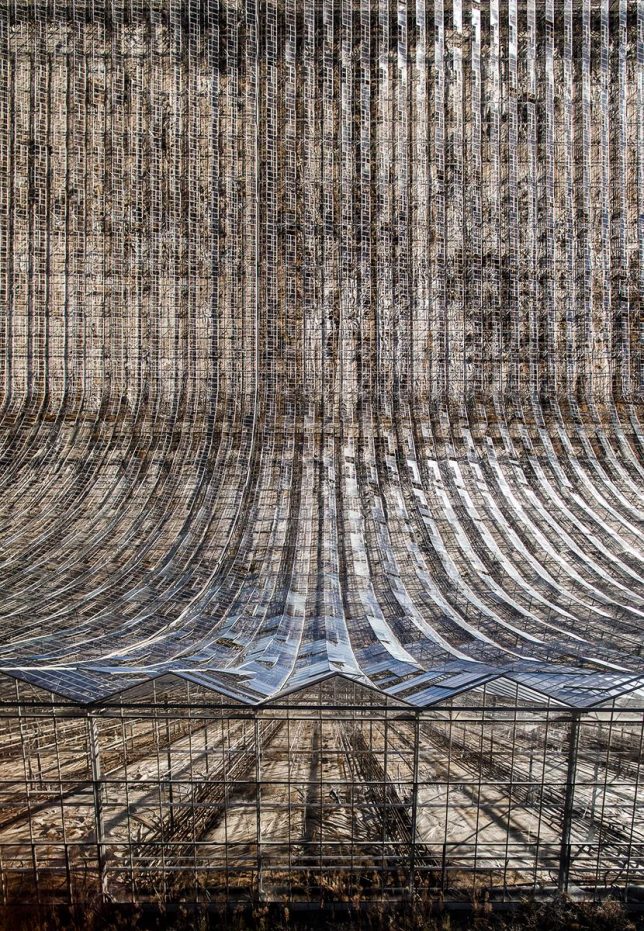
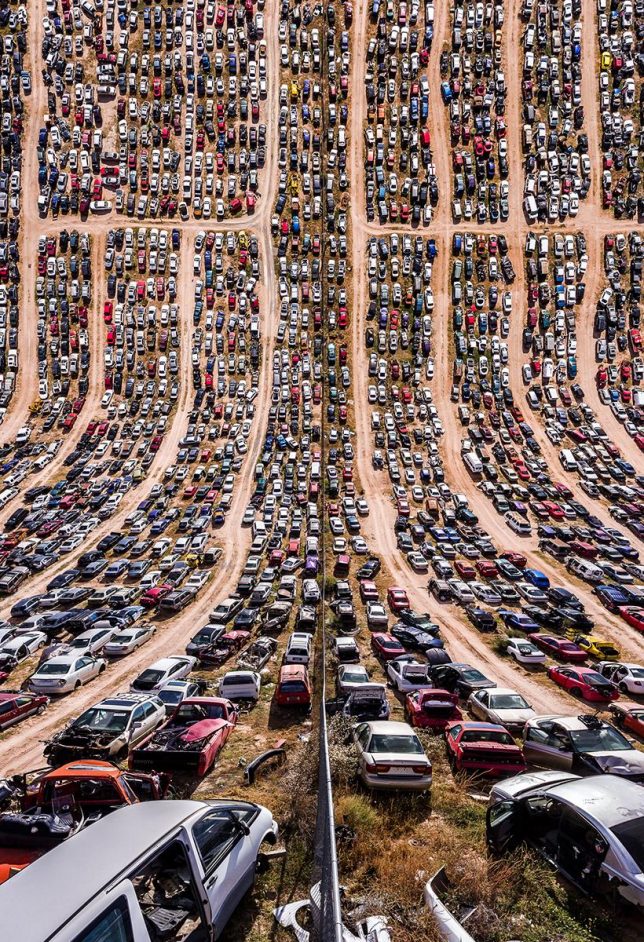
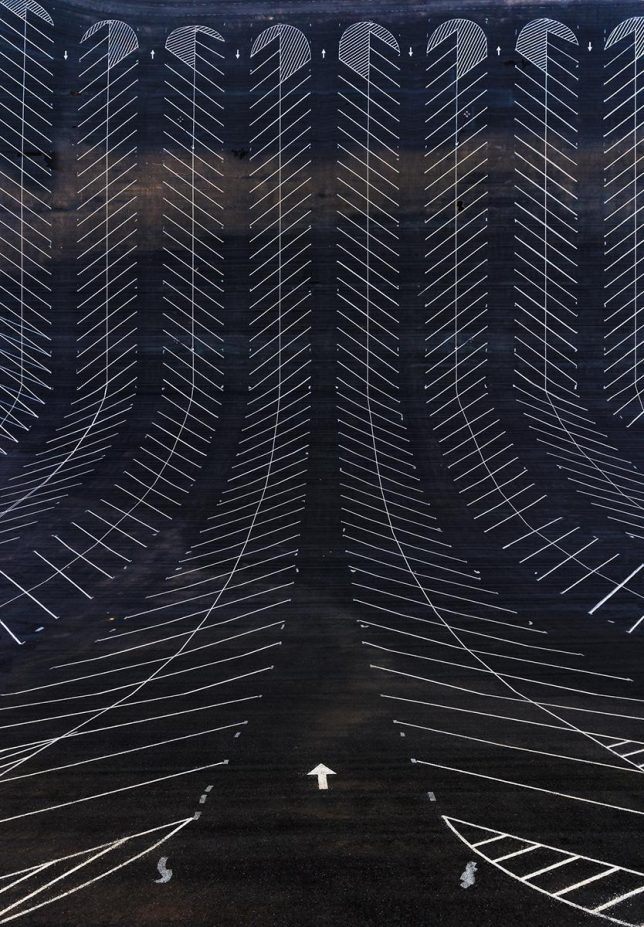
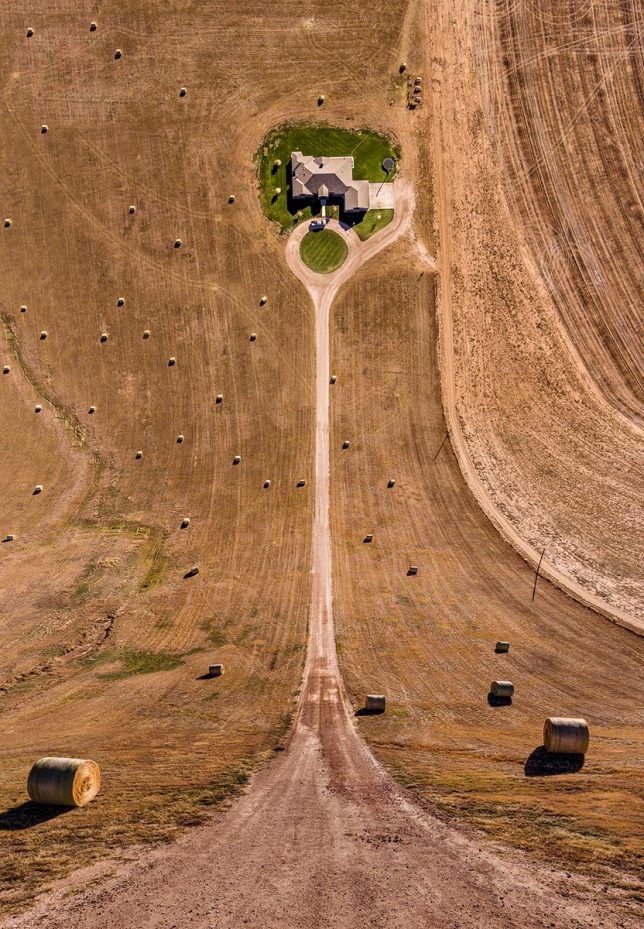
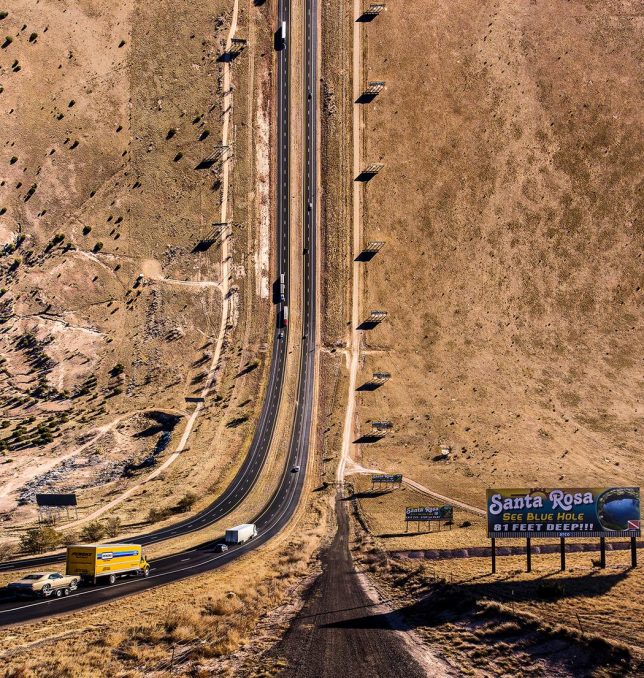
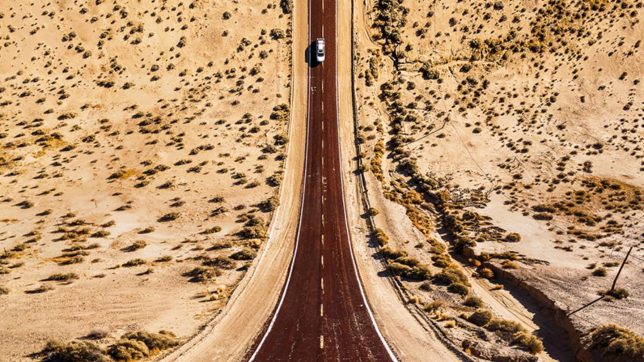
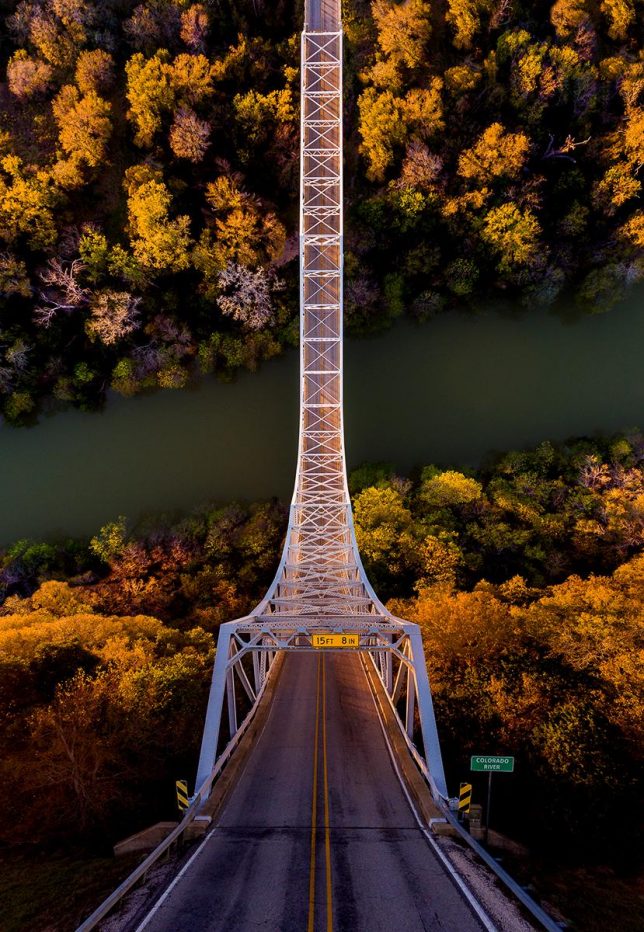
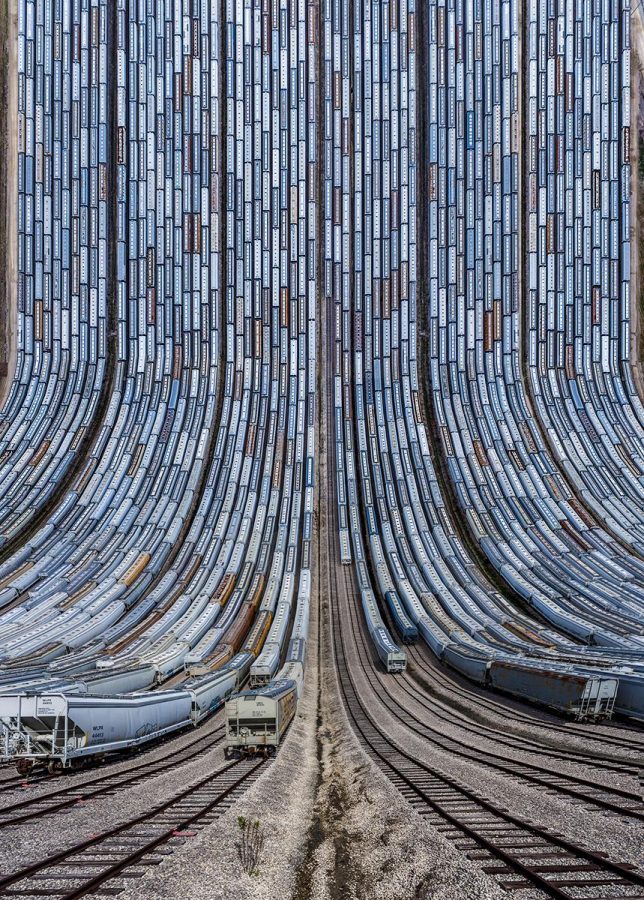
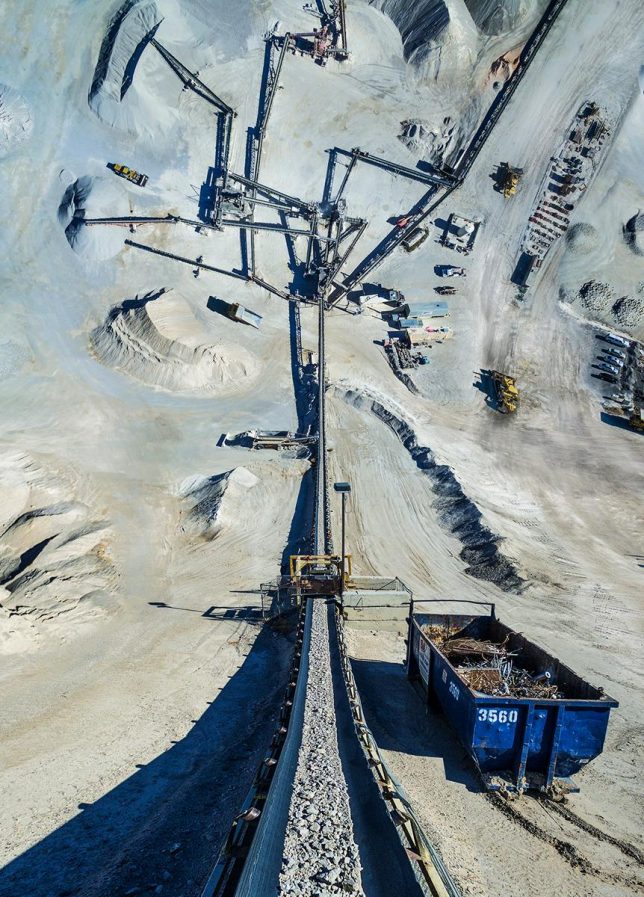
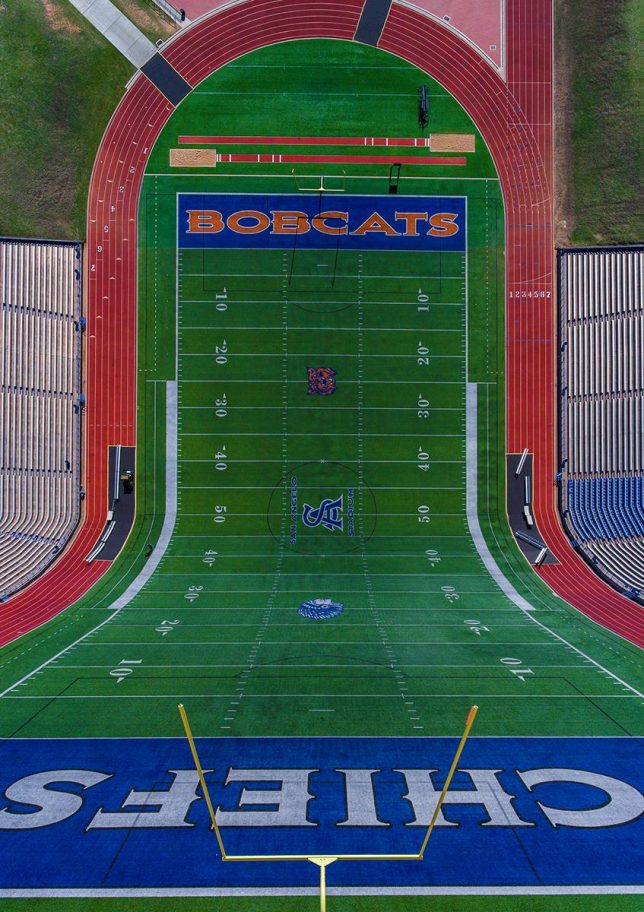
Gazing at any one of these stretched-out, gravity-defying landscape photos, you feel like you’re at the pinnacle of a rollercoaster, about to zoom down to ground level. Except instead of being elevated on an artificial track, you’re on flat ground, positioned at the high end of a nearly 90-degree angle with no care for gravity. Turkish artist Aydin Büyüktas warps American landscapes, nearly doubling them in half to show multiple perspectives at once.

american drone landscapes 5

american drone landsacpes 4

american drone landscapes 10

A continuation of the ‘Flatlands’ series, which previously saw similar manipulations of urban Turkey, the images draw on a satirical sci-fi novella by Edwin Abbot entitled ‘Flatland: A Romance of Many Dimensions.’ To create the images, Büyüktas flies drones over his chosen setting to capture aerial images and then uses 3D software to stitch the images together.

american drone landscapes 3

american drone landscapes 2

american drone landscapes 9

The scenes chosen for Flatlands II include the pits of mines, desolate desert roads, junkyards, train yards, farms, bridges and empty parking lots. Büyüktas flew his camera-equipped quadcopter total of about 10,000 miles to capture thousands of photos. The finished series required about two months of planning, a month of photography and many more months of digital composition.

american drone landscapes 6

american drone landscapes 7

american drone landscapes 8

“We live in places that most of the time don’t draw our attention, places that transform our memories, places that the artist gives another dimension; where the perceptions that generally crosses our minds will be demolished and new ones will arise,” says the artist. “These works aim to leave the viewer alone with a surprising visuality ironic as well, multidimensional romantic point of view.”

Share on Facebook


[ By SA Rogers in Art & Drawing & Digital. ]

[ WebUrbanist | Archives | Galleries | Privacy | TOS ]


WebUrbanist

 
Comments Off on Drone Distortions: Manipulated Landscapes Warp and Bend Upon Themselves

Posted in Creativity


Capturing the unseen: Sam Forencich’s Invisible Oregon

10 Mar

$ (document).ready(function() { SampleGalleryV2({“containerId”:”embeddedSampleGallery_6130176634″,”galleryId”:”6130176634″,”isEmbeddedWidget”:true,”standalone”:false,”selectedImageIndex”:0,”startInCommentsView”:false,”isMobile”:false}) });

There’s no denying it: Oregon is an incredibly beautiful place. So Portland resident Sam Forencich’s challenge isn’t finding amazing scenes to photograph – it’s finding a fresh way to do it. Experimenting with new approaches and different techniques led the veteran photojournalist and landscape photographer to infrared. He tells Resource Travel: 

‘The exciting thing about infrared is that there is no standard for what it’s supposed to look like. This grants you a wide latitude to interpret the look, and there are many directions you can go in.’

And that’s how a time-lapse was born: his recent work, Invisible Oregon, was recorded entirely with converted infrared cameras. It brings an otherworldly and eerie quality to some of the state’s familiar scenery. Check out the video below and head to Resource Travel for a full interview with Forencich, which includes a discussion of his well-known image of Dennis Rodman, named by Sports Illustrated one of the 100 best photos of all time.

Read Resource Travel’s interview with
Sam Forencich

Articles: Digital Photography Review (dpreview.com)
 
Comments Off on Capturing the unseen: Sam Forencich’s Invisible Oregon

Posted in Uncategorized


Huawei P10 scores highly in DxOMark Mobile testing

10 Mar

With an overall DxOMark Mobile Score of 87 points, Huawei’s brand new top-end smartphone P10 has secured itself a high DxoMark Mobile ranking. Only the Google Pixel, HTC 10, Sony Xperia X Performance and Samsung Galaxy S7 have performed better. During testing the P10 showed generally good exposure, even in extremely low light, good color rendering and accurate white balance. Images are among the sharpest the DxO testers have seen and show good detail and texture. Autofocus is fast and accurate. The still image results amount to an excellent sub-score of 88 points. 

In video mode the P10 offers 1080p recording at 60 frames per second or 4K video at 30 frames per second. Video footage shows good exposure and dynamic range and accurate white balance. Like the still images, video clips also contain plenty of detail. In video mode the autofocus system reacts quickly to changes of the scene and shows smooth transitions, and the P10 garners a video score of 84 points. More detail can be found on DxOMark.com. 

Articles: Digital Photography Review (dpreview.com)
 
Comments Off on Huawei P10 scores highly in DxOMark Mobile testing

Posted in Uncategorized


Meyer Optik launches Kickstarter campaign to fund third Trioplan lens – the 35+

10 Mar

German lens manufacturer Meyer Optik Gorlitz intends to produce the ‘last chapter’ of its ‘Trioplan Trilogy’ if it gets enough funding from its latest Kickstarter campaign to build the Trioplan 35+. The new lens will sit alongside the company’s 100mm F2.8 and 50mm F2.9 Trioplan ‘Soap Bubble’ lenses and will have a maximum aperture of F2.8.

As with the 100mm and 50mm models, the 35mm lens will be based on a historic optical design but will use modern coated glass from Schott and Ohara. This time though, the construction will shift away from the traditional three-elements-in-three-groups of the standard Cooke triplet and will have an additional pair of elements at the front to adapt the design for full frame sensors. The original Trioplan 1.8in lens this one is based on was designed for 8mm film and was telephoto for the format, according to the company, so some changes had to be made to alter it to be a moderate wide for 35mm-style sensors. The extra two elements account for the + in the 35+ name.

The new lens will focus to 0.3m and its 12-bladed iris will provide a minimum aperture of F22. Meyer says it intends to make the lens in a range of mounts:

  • Canon EF
  • Nikon F
  • Sony E
  • FujiX
  • Micro Four Thirds
  • M42
  • Pentax-K
  • Leica M (rangefinder not supported/focusing via live view)
  • Leica L , suitable for SL & T mirrorless cameras (strictly manual, rangefinder not supported/focusing via live view) 

The ‘soap bubble’ name comes from a characteristic of the design that renders out-of-focus highlights in dramatic style when the lens is used wide open.
At the time of writing the campaign had already passed its goal three times over, but lenses could still be ordered for $ 649 against an expected full retail price of $ 1599. For more information visit the Meyer Optik Gorlitz website or the company’s Kickstarter page.

Technical data:
Focal length: 35 mm
Aperture: 1:2,8, – 1:22
Angle: +/- 31,5°
Focussing Distance: Infinity to 0,3 m
Clip on diameter: 41 mm
Filter Diameter: M 39 x 0,75
Size: Ø 61,5 mm x 50 mm
Weight: ca. 220g
Aperture blades: 12

Manufacturer’s information:

The Trioplan 35mm is now on Kickstarter

Our new Kickstarter just launched and the mystery lens that you´ve been waiting for is the Trioplan 35mm f2.8, or as we´ve dubbed it, the Trioplan 35+.

The Trioplan 35+ is the final piece of our Trioplan Trilogy, which includes the Trioplan 100mm f2.8 and the 50mm f2.9.

Kickstarter backers will be the first in line to get this incredible addition to the Meyer-Optik lineup of hand-crafted, manual focus art lenses. The Trioplan 35+ is expected to be available at the retail price of $ 1,599 later this year but Kickstarter backers can secure the lens for a much lower investment. What backers will get is a groundbreaking lens.

Previously, it was thought too difficult to achieve the soap bubble effect in a wide angle lens. But Meyer-Optik engineers designed the new lens according to the historic Cook Triplet design but added two elements to boost the lens. The extra two lens elements is why Meyer-Optik decided to add the “+” to the name of the lens.

The Trioplan 35+ will be unrivaled in its ability to capture the spirit and emotion of the moment. Photography is not just about squeezing the most pixels into a square inch – it´s about creating art.

The Trioplan 35+ is a full-frame lens and will be available in all major mounts. Early backers will profit from a Super Early Bird pricing.

Don´t miss your chance to be one of the first in line to get this new Trioplan lens, which will join the Trioplan 100mm f2.8 and Trioplan 50mm f2.9 in the Meyer-Optik lineup of premier, hand-crafted art lenses. Of course Kickstarter backers will benefit from a groundbreaking price.

Articles: Digital Photography Review (dpreview.com)
 
Comments Off on Meyer Optik launches Kickstarter campaign to fund third Trioplan lens – the 35+

Posted in Uncategorized


Photojournalist Mannie Garcia awarded $45k settlement in police lawsuit

10 Mar

Back in June 2011, photojournalist Mannie Garcia was arrested by Montgomery County police while filming officers on a public street. He was charged with disorderly conduct, but the charge was dropped sixth month later. The following summer, Garcia filed a lawsuit against the police department alleging civil rights violations and abuse by the officers, among other things. The photographer is now being awarded a $ 45,000 settlement.

In the lawsuit, Garcia claimed his arrest was unlawful, and that the Montgomery County police officers violated his 1st, 4th, 8th, and 14th amendment rights. The lawsuit had sought $ 500,000 in damages, and posed the question of whether the public has the right to record police activities in public places.

Speaking about the settlement, Garcia recently said to the NPPA, ‘I’m extremely relieved that it’s come to fruition after five and a half years. I think this lawsuit has given attention to the fact that police departments need to pay attention in regards to an individuals’ rights.’ 

Via: National Press Photographers Association

Articles: Digital Photography Review (dpreview.com)
 
Comments Off on Photojournalist Mannie Garcia awarded $45k settlement in police lawsuit

Posted in Uncategorized


Vibrant Hybrids: Architect Inspired by Local Traditions & Transformers Movies

10 Mar

[ By WebUrbanist in Architecture & Houses & Residential. ]

extreme designs

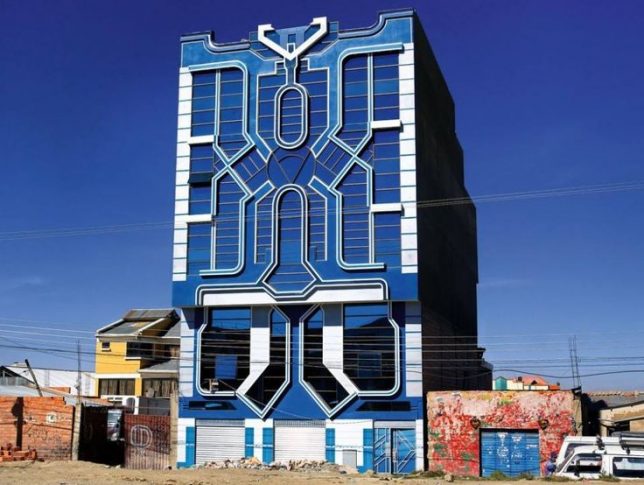
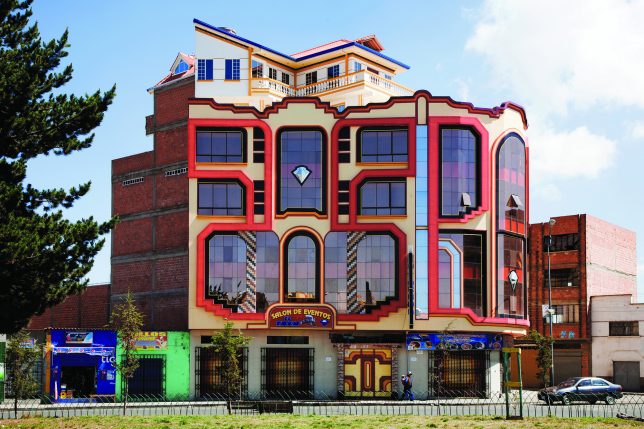
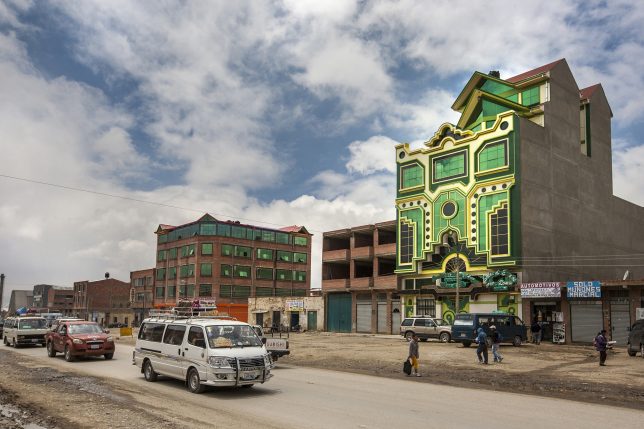
Architects around the world strive to incorporate regional design histories into contemporary work, but Bolivian designer Freddy Mamani Silvestre takes it a step further, blending pop culture inspirations into his fantastically bizarre buildings.

transformer architcture

Mamani is an Aymara, part of a people who were historically conquered and displaced by Incan and Spanish populations.He trained as an engineer, then grew into fame designing mixed-use mansions for the rich (generally: stores on the ground floor, apartments above and a penthouse for owners).

eclectic modern

“Mamani’s architecture incorporates circular motifs from Aymara weaving and ceramics and the neon colors of Aymara dress,” reports the New Yorker, “and it alludes to the staggered planes of Andean temples.” It also is inspired by cyberpunk visions and science fiction films like Transformers.

extreme design

Creative, eccentric, joyful, imaginative are all words that have been used to describe his work, though some see it extreme, superficial, garish or gaudy as well. It can be polarizing, with fans praising his audacity and critics decrying the lack of formal method to the apparent madness.

vibrant traditional

fantastic weird buildings

Silvestre works in unusual ways as well, sketching ideas onto walls or simply describing what he wants to coworkers, leaving them to execute the details. He has completed a number of projects in this way in El Alto, the highest city in the world.

Share on Facebook


[ By WebUrbanist in Architecture & Houses & Residential. ]

[ WebUrbanist | Archives | Galleries | Privacy | TOS ]


WebUrbanist

 
Comments Off on Vibrant Hybrids: Architect Inspired by Local Traditions & Transformers Movies

Posted in Creativity


How To Make a 360° Timelapse

10 Mar

Have you ever watched a sunset and thought, I wish mother nature would hurry it up, I can’t look away, but I’ve got things to do.

Have you ever tried to take in a beautiful vista and thought, this would be even BETTER if I could spin my head 360°, like an owl?

Same here.

So we’ve put together a few quick notes on how to reach your spherical time lapse dreams. Learn how to take in a scene at super speed … with a twist.

(…)
Read the rest of How To Make a 360° Timelapse (519 words)


© Meg for Photojojo, 2017. |
Permalink |
No comment |
Add to
del.icio.us

Post tags:


Photojojo

 
Comments Off on How To Make a 360° Timelapse

Posted in Equipment


Throwback Thursday: the Olympus C-2100UZ

09 Mar

Even in 2000, the Olympus C-2100UZ’s 2MP sensor was a bit behind the times. Plenty of other cameras offered 3MP sensors, but what the C-2100UZ lacked in resolution it sought to make up with a huge (at the time) 10x stabilized zoom. That 38-380mm equiv. F2.8-3.5 lens was matched with a full slate of manual exposure controls, built-in EVF and a focus assist lamp that ‘actually works’. 

The C-2100UZ shared a lot of features with the C-2020Z on which it was based, which offered a 35-105mm equiv. F2-2.8 zoom. Shared features included a 1.8″ 114k-dot rear LCD, which site founder Phil Askey noted was in sore need of an anti-reflective coating.

The lens was obviously the C-2100’s biggest selling point. At the time, the only other ‘compacts’ to offer a lens this long were Sony’s floppy disk-based Mavica cameras. There wasn’t much out there to get you to 380mm equiv. on a DSLR either, so the C-2100’s relatively compact, stabilized lens was a pretty wondrous thing. Phil Askey noted some slight chromatic aberration in images, and lamented the camera’s over aggressive sharpening algorithm.

The C-2100 cost $ 1300 at launch, but a dip in street price to $ 900 later made it much more competitive in its class. Askey revised his review in 2001 to give it a ‘Recommended’ rating reflecting its new price. Do you have fond memories of the C-2100? Let us know in the comments.

Read our Olympus C-2100UZ Review

$ (document).ready(function() { SampleGalleryV2({“containerId”:”embeddedSampleGallery_3581513376″,”galleryId”:”3581513376″,”isEmbeddedWidget”:true,”standalone”:false,”selectedImageIndex”:0,”startInCommentsView”:false,”isMobile”:false}) });

Articles: Digital Photography Review (dpreview.com)
 
Comments Off on Throwback Thursday: the Olympus C-2100UZ

Posted in Uncategorized