RSS
 

Archive for March, 2017

Fujifilm GFX 50S: on the streets of Tokyo, a shooting experience

09 Mar

Introduction

Edited to taste in Adobe Camera Raw and cropped in slightly | ISO 200 | 1/60 sec | F2.8

Japan has long been at the top of my list of places I would like to journey to. Like my coworker, Carey Rose, I enjoy traveling with a camera as a means to create a visual travel diary or log of my adventures.

This year, I was fortunate enough to cover the CP+ trade show in Yokohama, Japan for DPReview. Of course one does not simply fly all the way to Japan for work and not spend some extra time exploring. And so I delayed my flight back by three days, so that I could have some time to check out Tokyo, a city I’ve long admired from afar in the pages of street photography books and magazines.

Originally, I was going to bring my Leica M6 + 40mm F2 Rokkor  (a camera I too often neglect) to explore the streets of the World’s largest city. But when Fujifilm informed us they’d have a sample GFX 50S we could take home from the show, my plans changed.

It was weird, at first, shooting street photography on a medium-format digital camera.
Edited to taste in ACR | ISO 800 | 1/800 sec | F2.8

To be honest I never really considered the prospect of trying to shoot street photography with a digital medium-format camera. In fact, the only digital medium-format camera I’ve spent any considerable time using is the Pentax 645Z. And while capable in many situations, the 645Z is pretty cumbersome to walk around with, being 630 g/22.3 oz heavier than the Fujifilm.

I already had my heart set on shooting a single focal length in the 40mm Rokkor, so I didn’t really mind that the only lens Fujifilm could provide was the 63mm F2.8, which is equivalent to 50mm. I really enjoy limiting my focal length when traveling, it tends to give me more mental clarity into what I’m seeing and forces me to move my feet and change my perspective more.

Handling

Out of camera JPEG | ISO 100 | 1/500 sec | F2.8

In short, I love the ergonomics of this camera. The grip is extremely comfortable, it’s well-weighted (at least with the 63mm F2.8 on), and most control points can be accessed using the camera with a single hand.

Stopped for a beer at the Tokyo Sky Tree, mostly to be a tourist, but also to take this photo of the GFX 50S at 350m above the city.

In fact, I’d go as far to say that in terms of ergonomics and comfort, I’d prefer to spend the day walking around with the GFX 50S over a Nikon D810 or Canon EOS 5D SR (with similar-sized lenses) for a few reasons. For one, all three camera bodies weigh nearly the same: The 5D SR is 845 g (29.8 oz), the D810 is 879 g (31 oz) and the GFX 50S is 919 g (32.5 oz). Moreover, the grip on the Fujifilm is just so much more comfortable, especially when holding the camera for an extended period of time (believe me, I’ve spent very long days with the both the Canon and Nikon in tow).

Fujifilm colors + a high resolution sensor = Lovely files.
Edited to taste in ACR and cropped in slightly | ISO 100 | 1/400 sec | F6.4

I also love the control layout. The top plate is very similar to that of the gold award-winning Fujifilm XT-2, though the GFX has no dedicated exposure compensation dial. Both the shutter speed and ISO dial can be locked. I mostly used the camera during the day in full manual with my shutter speed held at 1/500 sec to freeze any movement I encountered. When I saw something I wanted to shoot, I simply raised the camera to my eye and adjusted my ISO and aperture accordingly. This quickly became a very effective and natural way to shoot (though I acknowledge I could have kept my ISO closer to base in some of these images. Using Auto ISO also would have helped) .

The GFX 50S gives users two ways to move one’s AF area or point: via the joystick or the touchscreen. Fujifilm could have easily skipped the touchscreen in a camera like this, but I’m glad they didn’t. While I did not use it much for AF point placement (mostly because the joystick is fabulous), I did enjoy employing the touchscreen while flipping back through images (also pinch to zoom is nice). Oh, and the screen flips out both vertically and horizontally (like on the XT-2), which is very useful. I found myself framing with the LCD probably 25% of the time.

Notes from shooting

When I framed up this image, there was no subject in it. But thanks to the sluggish AF, by the time the shutter fired, boom, I had a subject!
Edited to taste in ACR | ISO 200 | 1/1250 sec | F5.6

For the most part, my experience shooting with the GFX 50S was positive. Maybe it was all the canned coffee I was drinking, or the excitement of exploring somewhere new, but I thoroughly enjoyed myself while shooting with it. That said, I had a few frustrations:

Autofocus, as you might expect from a contrast detect system, is quite sluggish. Not only that, it’s also pretty loud. And when fully racking focus from minimum to infinity, the 63mm F2.8’s lens barrel extends considerably. The camera is also a tad slow to start up. It’s really useful that the on/off switch is located in front of the shutter (like on any Nikon DSLR), but I missed a couple decisive moments due to the combination of sluggish start up and slow autofocus.

That said, while AF is slow, it is both accurate and precise (in good light). This is the positive of a mirrorless camera using a CDAF system.

AF speeds are a bit sluggish which sometimes resulted in me missing decisive moments. Fortunately I had a lot of time to compose this image.
Edited to taste in ACR | ISO 400 | 1/1900 sec | F3.2

I only shot using the GFX 50S in AF-S, using a single point. AF coverage is excellent, extending out nearly to the edge of the frame and, as I mentioned, the joystick is an effective way to painlessly move the AF point. When I first was handed the camera, I switched it into AF-C and instantly started to feel nauseous due to the constant, very slow hunting. I quickly switched it back to AF-S.

Because I mostly shot with the GFX 50S in decent light while in Japan, once I was back in Seattle, I was curious to see how its autofocus would hold up in crummy light. The answer: poorly. Using a dimly-lit bar as my scene (settings around ISO 12800, 1/60 sec at F2.8), the GFX 50S proved largely unable to focus on anything. This is not all that surprising given its contrast-detect AF system. And I still got some shots, I simply switched the camera to manual focus and used focus peaking.

Thank God the GFX 50S is weather-sealed. This was shot moments before it started to downpour and I had no umbrella.
Edited to taste in ACR | ISO 400 | 1/800 sec | F4

Another stumbling point is the EVF experience. Although resolution is pretty high (3.7 million dots) the viewfinder image gets noticeably ‘crunchy’ when focus is initiated, and moiré and ‘shimmering’ can be very distracting in some scenes, especially cityscapes.

This didn’t bother me quite as much as it bothered my colleague, Barney. But as soon as he pointed it out to me, I couldn’t unsee it. 

That’s pretty much it for things I did not like, back to things I did: the camera is weather-sealed, and not just a little weather-sealed, but very weather-sealed. One day, while out exploring part of the Asakusa district in Northeast Tokyo, I got caught in a heavy rain storm. Now, contrary to popular belief, we don’t get heavy rain in Seattle, just drizzles, mists and spits. This is to say, I was not prepared for the rain that would fall. Fortunately, the GFX 50S was.

I was also really quite pleased with the camera’s battery life. Fujifilm introduced the new NP-T125 battery, and it’s enormous, which is awesome. I shot constantly for two and a half days without needing to charge it up once.

The images

I was able to crop this file in nearly 50% and still have a nice image thanks to the camera’s high pixel count.
Edited to taste in ACR and cropped in considerably | ISO 12,800 | 1/90 sec | F2.8

So I obviously enjoyed using the camera but what about the files? Well, you be the the judge. Adobe just updated Raw support for the camera earlier this week and boy did I have a fun time playing with these files. The above, for instance, is cropped in nearly 2x.

Raw files also seem to have excellent dynamic range. I was able to pull exposures quite far. I was also able to recover a ton of blown highlights from the Sens?-ji Temple photo at the bottom of this article (first image in the gallery). This is due to a behavior we found regarding high ISO files having extra data in the highlights. But we’ll go more in depth on that in the review. To be honest, as a former X100-series owner, using this camera reminded me just how much I love Fujifilm colors and skintones. And processing Raw files allowed me to go back and apply any one of the lovely Film Simulations in post.

I forgot how lovely Fujifilm colors are.
Edited to taste slightly in ACR | ISO 800 | 1/500 sec | F4.5

The take away

There’s something really strange/enticing about being able to shoot casually with a digital medium-format camera. And despite some sluggishness in its operation, the GFX 50S was  surprisingly good for street and travel photography.

And while the entire experience was a bit overwhelming from a cultural perspective (I speak no Japanese and spent a lot of time alone with my thoughts listening to Tom Waits) exploring Tokyo with what I believe to be one of the most exciting digital cameras in a long time, was truly remarkable. I’m already planning a return trip.

So if you’re not going to read any of this article, here’s my takeaway: the Fujifilm GFX 50S is fun and easy to use and the files look awesome. What more can I say?

$ (document).ready(function() { SampleGalleryV2({“containerId”:”embeddedSampleGallery_3627631444″,”galleryId”:”3627631444″,”isEmbeddedWidget”:true,”standalone”:false,”selectedImageIndex”:0,”startInCommentsView”:false,”isMobile”:false}) });
Articles: Digital Photography Review (dpreview.com)

 
Comments Off on Fujifilm GFX 50S: on the streets of Tokyo, a shooting experience

Posted in Uncategorized


How to Enhance your Black and White images with Infrared Photography

09 Mar

This article will give you some tips on how you can enhance your black and white images by using infrared photography.

Enhancing your Black and White images with Infrared Photography

Infrared photography for something different

Are you a fan of black and white photography? Like many, I love a good black and white image. The mood you can exude from the shadows and light always fascinates me.

When I was new to photography, I mostly avoided black and white landscapes. I used it mainly a handy way to hide the sporadically bizarre white balance my old Olympus EPL1 used to occasionally surprise me with.

Infrared photography (IR) also took a while to attract my attention. I wasn’t a huge fan of the typical false colour images, but quite liked the black and white IR photos, particularly the work of Simon Marsden. If you haven’t explored his portfolio of dark and atmospheric infrared film photography, you are missing something unique.

Anyway, after a while, I started doing more black and white landscape images, and eventually followed the urge to get into IR images purely for their unique monochrome potential.

Enhancing your Black and White images with Infrared Photography

I went down the path of buying a modified camera off Ebay. You can buy anything from a point and shoot to a full frame DSLR, and everything in between. If you have an old body you can always get it converted, but it’s worth checking the cost against buying one that’s already been modified.

I picked up an Olympus EPM1 for around AUD $ 300 ($ 230 USD). The advantage for me was being able use the same lenses and batteries I already had for the EPL1.

Why buy a modified camera rather than use IR filters?

Filters are a great and relatively inexpensive way to get into IR photography, but they have their limitations.

The main attraction of a modified camera is that you are not limited to the long exposures needed for an IR filter. You can capture sharp images in any conditions, and can be more creative with your exposures (e.g. pick the perfect shutter speed for moving water). You can shoot handheld from any point of view without being limited by a tripod.

Enhancing your Black and White images with Infrared Photography

It is also much quicker. When using filters, you need set your focus before attaching the filter which can become tiresome.

I used to take my IR camera with me for a run along the river. Without the need for a tripod, I could travel light and take quick photos whenever an interesting composition presented itself.

Enhancing your Black and White images with Infrared Photography

What can infrared photography bring do for a landscape photographer?

Perhaps the most striking characteristics of infrared photography are the typical white vegetation, black water, and dark skies. You can create punchy, high contrast images. The middle of the day works best for these type of shots. Perfect for those landscape photographers that hate early mornings!

If you like capturing the complex patterns in clouds, you’ll find that the black skies really allow the clouds to stand out.

Enhancing your Black and White images with Infrared Photography

IR also gives you clarity. Any haze visible to the eye tends to disappear in infrared photography. So you can achieve a very crisp and contrasty look.

Enhancing your Black and White images with Infrared Photography

The deciding factor for me was tone. I found the infrared monos gave me a wonderful palette of greys and blacks to work with, particularly for trees and vegetation. The balance between light and dark just seems easier to manage in infrared and really lets you produce some unique images.

Enhancing your Black and White images with Infrared Photography Enhancing your Black and White images with Infrared Photography

Processing

So what processing should you use for infrared photography? The short answer is not much really. Experiment to find out what works for you.

Myself, I don’t normally use Lightroom or Photoshop, so my workflow may be a little different than yours. But the principles will be the same.

I import my raw images into Corel’s AfterShot Pro, which is a handy little raw file editor. Here I’ll straighten the image, adjust the exposure, and maybe increase the contrast if required. My infrared raw files come into AfterShot Pro displaying blue-grey hues, which is a good starting point for me. From here I export them as TIFFs into PaintShop Pro.

PaintShop Pro has a “Black and White Film” effect that lets you apply a colour filter to your image. Changing your filter between blue, red, and green gives a different result.

From here it is a matter of personal taste adjusting the light and dark of your image, the white and black points to suite the image, and maybe applying curves as appropriate.

Enhancing your Black and White images with Infrared Photography Enhancing your Black and White images with Infrared Photography

What is the Secret Sauce?

Infrared photography is wonderfully clean and crisp. But what if you love that IR film look with a ghostly flare?
Don’t worry. PaintShop Pro has it in the bag. They have an “Infrared Film” effect that was probably created to make ordinary images look a bit infrared-ish.

But when you apply it to a proper infrared image as a starting point, you get a wonderful controlled flare effect. It doesn’t quite match the often spooky and surreal results Simon Marsden achieved with IR film, but it does get you a lot closer than anything else.

Enhancing your Black and White images with Infrared Photography

Enhancing your Black and White images with Infrared Photography

The flare can be applied to give a sense of mystery, mood, and surrealness that is hard to replicate any other way.
Enhancing your Black and White images with Infrared Photography

Are there any downsides to infrared photography?

Not really. The only big drawback you’ll find is that you cannot use your favourite filters. Standard neutral density and polarizers do not work in the IR spectrum. If you sky is very bright and your subject is dark, you’ll just have to blend a few different exposures. Shooting in RAW of course gives you more leeway, but my Olympus files are not as forgiving as my Nikon files when recovering blown highlights.

Enhancing your Black and White images with Infrared Photography

The only other thing I notice is that some people get so enamoured by the white leaves and black sky effect that they forget to put their attention on the composition. Yes, everything looks cool in IR, but don’t take pictures of everything. Aim for strong compositions and uncluttered images. IR really shines with a minimalist approach.

Enhancing your Black and White images with Infrared Photography

Many dismiss infrared photography as an oddity; a strange niche that is a bit too left of centre for them. Others just think it is too hard and expensive to get into.

But if you like creating black and white images that stand out from the crowd, I’d suggest you have a crack at it. You’ll find it a challenge but also quite rewarding.

Enhancing your Black and White images with Infrared Photography

The post How to Enhance your Black and White images with Infrared Photography by Matthew Larsen appeared first on Digital Photography School.


Digital Photography School

 
Comments Off on How to Enhance your Black and White images with Infrared Photography

Posted in Photography


dPS Writer’s Favorite Lenses: I’m Torn Between My Nifty Fifty and 70-200mm F2.8

09 Mar
My Favourite Lenses: I'm Torn Between My Nifty Fifty and 70-200mm F2.8

I use my 50mm lens almost exclusively when I’m shooting abstract images.

I won’t lie to you, I’m genuinely torn here. There are two lenses that I could probably say were my favorites. One of those lenses became my favorite out of necessity. It was the only one I owned when I first started shooting with a DSLR. The other became favorite because of its versatility and something much more personal than professional.

My Favourite Lenses: I'm Torn Between My Nifty Fifty and 70-200mm F2.8

This image was shot with my 50mm lens. It was one of my first attempts at fine art photography. It’s so sharp.

My Favourite Lenses: I'm Torn Between My Nifty Fifty and 70-200mm F2.8

The large aperture of the 50mm allowed me to shoot during low-light situations.

It all started with the 50mm lens

Let’s head back in history to 2006 when I bought my first DSLR. I found a used Canon Rebel for sale online for $ 200. It came with a 50mm prime lens. That was fantastic; it was in my budget. I didn’t have a lot of money at the time as I was raising three kids under the age of six. I struck a deal with the seller, and I was in business.

When I went to my first camera course, the instructor laughed when he saw my gear. I thought, at first he was making fun of my gear. But, I was wrong, he was excited for me. He said having just the one lens would push me to be creative and to learn and find out how to take great photos. I would have no choice but to think about my composition because of the limitations of my gear. He said he wished all of his students were as limited as I was and that relying on gadgets and a zoom lens stunted creativity. They could essentially cheat instead of learning to see the photograph and position themselves correctly. He inspired me to push myself to learn everything I could about 50mm.

My Favourite Lenses: I'm Torn Between My Nifty Fifty and 70-200mm F2.8

The 50mm lens is ideal for portraits. It’s lightweight and easy for me to move around with.

I shot landscapes, portraits, macros, and everything in between. I love my 50mm lens because it’s light-weight and affordable. But, I love my nifty 50 because my photos are tack sharp. The bokeh with it is beautiful too, and I love experimenting with the larger aperture. The lens offers photographers so many creative possibilities. Seriously, what lens could be better?

My Favourite Lenses: I'm Torn Between My Nifty Fifty and 70-200mm F2.8

This is one of the rare times that I was able to use my 50mm with my family.

My second love – the 70-200mm f/2.8

I love the bokeh in this shot. The 70-200mm f/2.8 is awesome for this feature.

Well, it’s time for my second love to make an entrance. I love my 70-200mm f/2.8. This lens was also my first big glass purchase. I scrimped and saved for months to be able to buy it. At the time it seemed like an immense sacrifice, but it was worth it.

The lens is very versatile. I can use it for portraits, indoor sports, macro shooting, and candid images on the street. Really, I can use it for anything. It’s not overly heavy so I can hand hold it for extended periods of time, which is very nice. The large aperture is helpful for low light situations or when I need a fast shutter speed. It’s tack sharp, and the bokeh is beautiful. I take it everywhere. My 70-200mm has been on canoe trips and suffered rainstorms (albeit covered with a large garbage bag). It is my workhorse.

dPS Writer's Favorite Lenses: I'm Torn Between My Nifty Fifty and 70-200mm F2.8

The focal length of the 70-200mm is perfect for so many types of shots including street shooting or silhouettes at the beach.

All the reasons I listed, however, are not why this lens is my favorite. There is one thing about this lens that makes it unique. This one thing is more personal than it is professional. Those of you who have children will totally connect with me on this element. The longer focal length of this lens means that I can capture authentic images of my family.

My kids are very much sick of their mother taking their photos. They’ve been there and done that far too much. I can never get them to cooperate when I use my 50mm. Instead, my 70-200mm allows me to capture them from a distance. I can be discreet and not invade their fun. I can catch them laughing and acting naturally. Some of my most cherished shots have come from moments like this.

I’m sure my family knows I have my camera out and pointed at them, but because I’m not right in their faces they forget about me. Or at the very least they can ignore me. It’s the one thing I can’t do with my 50mm, and for this reason, the 70-200mm wins a special place in my heart.

dPS Writer's Favorite Lenses: I'm Torn Between My Nifty Fifty and 70-200mm F2.8

I like shooting landscapes with the 70mm range on this lens.

There are emotional ties to this lens

dPS Writer's Favorite Lenses: I'm Torn Between My Nifty Fifty and 70-200mm F2.8

He was just having fun. He wasn’t aware of my presence with my camera. Yes, his face is a little soft, but this shot is emotional and personal, not professional.

Forget all the features and the specs. I’m not overly worried about chromatic aberration or vibration reduction controls. The 70-200mm holds a place in my heart because it allows me to capture the love and adoration I have for my children. I can make precious memories. My 70-200mm is an emotional favorite. It’s a very personal preference. It is a beautiful, durable, incredible lens that helps me succeed in my business – but it also helps me to capture personal memories.

dPS Writer's Favorite Lenses: I'm Torn Between My Nifty Fifty and 70-200mm F2.8

Capturing joy; I think it’s a great reason to love this lens.

dPS Writer's Favorite Lenses: I'm Torn Between My Nifty Fifty and 70-200mm F2.8

I could have zoomed in more, but I wanted to capture the environment too.

Your favorite lens

What’s your favorite lens? Share it with us in the comments below. Maybe you love your inexpensive 18-55mm kit lens. Tell us why. We want to hear your stories. Forget the specs, what kinds of joy does the lens bring to your life?

My teenager has become so jaded that my 70-200mm is the only way I can capture images of him.

The post dPS Writer’s Favorite Lenses: I’m Torn Between My Nifty Fifty and 70-200mm F2.8 by Erin Fitzgibbon appeared first on Digital Photography School.


Digital Photography School

 
Comments Off on dPS Writer’s Favorite Lenses: I’m Torn Between My Nifty Fifty and 70-200mm F2.8

Posted in Photography


The Power of a Photograph – Iconic Moments Captured as Images

09 Mar

As photographers, we have a great power. We can capture moments in time that are unique, iconic, emotional and powerful. Photography has the power to change things.

By Bronson ABbott

See some of the ways that photographs have this power:

  • We have the power to capture human moments
  • Moments of loss the desperation
  • Of Defiance
  • Moments of bravery
  • Those of love and respect
  • And moments of triumph

How do you use your photography in powerful ways? What are you favorite iconic photographs from history and why? Please share in the comments below about how you feel photography is powerful in our lives.

The post The Power of a Photograph – Iconic Moments Captured as Images by Darlene Hildebrandt appeared first on Digital Photography School.


Digital Photography School

 
Comments Off on The Power of a Photograph – Iconic Moments Captured as Images

Posted in Photography


Not So Sci-Fi: 12 Real Tech Innovations That Are Actually Pretty Creepy

09 Mar

[ By SA Rogers in Gadgets & Geekery & Technology. ]

minority report car

Not so long ago, we made horror movies about invasive technology that was theoretical at the time, like RoboCop, Christine, Demon Seed and Videodrome. The 2002 sci-fi film Minority Report seemed far-out at the time, but accurately predicted a lot of today’s tech – and its drawbacks. Yet in 2017, most of us shrug our shoulders at surveillance and data mining, because if we aren’t committing crimes, who cares about our inconsequential little lives? Technology has a lot to offer humanity – including the potential to save us from ourselves – but as each new advancement becomes mundane, what are we giving up in return? Indulge your inner conspiracy theorist, if you will, and take a moment to examine how things like insect-sized drones, robotic police and even smart beds can go wrong.

Insect Drones Bug Your Home

creepy tech bee drone

creepy tech insect drones

Theoretically, bee drones could prolong the future of humanity after we’ve killed off real bees, continuing to pollinate the crops we rely on for survival. That’s definitely a plus. This ‘Plan Bee’ design is just one of several prototypes recently proposed to deal with the problem we’ve created, detecting flowers using ultraviolet light. It’s a great – and sad – idea, but do we really want to grow accustomed to insect-sized drones buzzing around in the air? Engineers have already produced tiny robotic bugs, like these produced by the Harvard Microrobotics Lab, added cameras to them, and sold them to the government for testing. They’re small enough to fly through open windows, and it’s not too far-fetched to imagine them becoming advanced enough to pass as real insects while in flight.

Facial Recognition Smart Phone Apps

creepy tech name tag facial recognition app

A new facial recognition app called NameTag lets you surreptitiously scan your date’s face (just pretend like you’re checking a text and hold your phone between you while seated at a table) and compare it with dating and social media profiles on sites like OkCupid, Facebook and LinkedIn. The value in this is supposed to be in knowing exactly who you’re interacting with and instantly discover what you have in common. NameTag will also scan sex offender registries. It’s undeniably Black Mirror-esque (season 3, episode 1, anyone?), enabling random strangers to do the kind of background checks that employers already perform. It’s a stalker’s dream.

Real Life RoboCop

creepy tech K5 security robot 2

creepy tech K5 security robot

Imagine this five-foot-tall, 300-pound robot silently zooming toward you in a dark parking garage, fixing its camera lens eye on your face. The K5 Security Robot by Knightscope is designed to detect anomalous behavior, like someone walking through a closed building at night. This particular design uses sensors, cameras and navigation equipment to notify a remote security center of potential threats. If bots like these became widespread, how long would it be before they’re equipped with facial recognition software and even weapons like tasers? Check out the K5’s ominous website.

Smart TV Surveillance

creepy tech smart tv surveillance

Yes, your laptop camera can be hacked and remotely activated without you knowing. Wikileaks recently revealed that the CIA remotely turns on cameras and microphones on all kinds of devices to spy on citizens. It’s not just a theory, it’s happening. For example, a tool called ‘Weeping Angel’ exploits a technological loophole in Samsung Smart TVs to place the target television in ‘fake-off’ mode, recording conversations in the room and sending them to a covert CIA server via wifi. Do you really think the agency is only targeting suspected terrorists who just happen to own a Samsung? (FYI, if you own one yourself, here’s how to disable the feature that allows your TV to listen to you.)

Next Page – Click Below to Read More:
Rip Privacy 12 Tech Innovations That Are Actually Pretty Creepy

Share on Facebook


[ By SA Rogers in Gadgets & Geekery & Technology. ]

[ WebUrbanist | Archives | Galleries | Privacy | TOS ]


WebUrbanist

 
Comments Off on Not So Sci-Fi: 12 Real Tech Innovations That Are Actually Pretty Creepy

Posted in Creativity


5 Ways Patience Makes You a Better Photographer

09 Mar

It’s interesting that on websites like Digital Photography School you will find lots of articles on gear and photographic techniques, but far fewer on the mindset of the successful photographer. I’ve always believed that the key to understanding why people are successful lies in the way they think. For example, if you want to build a business that turns over a million dollars a year, then you would learn a great deal from talking with people who have already achieved that.

It’s the same with photography. One of the mindset skills that is important to cultivate is patience. It’s surprisingly difficult to do. Much has been written about our western culture of instant gratification and shortening attention spans. Many people are naturally impatient – it is natural to want results now rather than wait.

5 Ways Patience Makes You a Better Photographer

With all this in mind, let’s look at some of the ways that patience can make you a better photographer.

1. Patience gives you time to explore the scene

It’s so often tempting to find an interesting scene, take a few photos, then move on to look for something else.

But what if you waited? Maybe the right person needs to enter the frame to complete the composition. Perhaps you have to wait until somebody finishes what they are doing and moves out of the way. Maybe you just need to work the scene more, trying different angles and focal lengths and taking the time to look beyond the obvious.

Patience will help you do that.

For example, I had to sit and observe the scene below and wait for the right person to enter the frame. He finally did – and I got this photo.

5 Ways Patience Makes You a Better Photographer

2. Patience helps you build rapport with a model

Patience is a great characteristic to have in all dealings with people, but it’s especially helpful when photographing people. It takes time to gain somebody’s trust, to get to know them, and for them to open up and give you expressions that reveal character and emotion. It requires an emotional investment on your part, and it greatly helps if you are genuinely curious and interested in your model. An interesting conversation, a discovery of common experience or interest often leads to better, more revealing portraits.

You’ll get even better results if you work repeatedly with the same model. That requires the patience to build a friendship and working relationship, and the understanding that you might only start making your best portraits on the third or fourth shoot, not right away.

This is one of my favorite photos of this model, and it came on our third shoot. I would never have made it without the patience to build our working relationship.

5 Ways Patience Makes You a Better Photographer

3. Patience helps immensely with long exposure photography

Long exposure photography is different from other types of landscape photography in that the shutter may be open for as much as five or six minutes. This is a long time to wait, and it can be difficult to know what to do.

I like to use that time purposefully, when I can, by exploring different compositions and angles of view with my iPhone (whose camera has nearly the same angle of view as my Fuji 18mm lens). This way I am working on my next photo while the camera is exposing the frame.

If I am not thinking about other photos then I like to relax, breathe in the air, and contemplate the scene. It’s a chance to chill out and enjoy the view, rather than rush from one viewpoint to another.

5 Ways Patience Makes You a Better Photographer

4. Patience helps you find the best light

You’ll find the best light for most types of landscape, travel, and architectural photography at the beginning and end of the day, when the sun is low in the sky and golden light rakes across the scene. This is called the golden hour and it’s when most scenes look the most beautiful.

When you find an interesting place it takes patience to wait until the sun is lower in the sky, or discipline to wait and return when the light is better. The reward when you do so is beautiful light and more powerful images.

The light changes with the seasons as well as the time of day, and it takes patience to return to a scene at different times of year to explore it in different lighting conditions. I used to live near the beach where I took the photos below. Patience helped me build a series of images shot in different seasons and different types of light.

5 Ways Patience Makes You a Better Photographer

5 Ways Patience Makes You a Better Photographer

5 Ways Patience Makes You a Better Photographer

5. Patience helps you build a body of work over time

One of the easiest ways to improve your photography is to assign yourself projects that you can tackle over time. Projects are interesting because they focus your attention on a theme that you can explore in depth. This takes time, patience and sometimes determination. There may be times when things don’t go your way, when creativity doesn’t flow, or when people let you down. Patience helps you push through these negative events and go on to complete your project.

This photo was taken as part of a long-term project photographing circus performers.

5 Ways Patience Makes You a Better Photographer

Learn how I created this shot here: How to Create Beautiful Light Painting Images With an Illuminated Hoop

The long-term view

One thing that all these ideas have in common is taking the long-term view. It’s all about considering what you’d like to achieve in photography over the next few years and how you are going to do so.

If, for example, you decide that you would like to spend more time taking photos of people, then there is some hard work in front of you in terms of finding interesting models and arranging shoots. Patience is required, but so is the ability to look into the future and think about your photography related goals, and the body of work you are building. Thinking ahead like this helps you act purposefully and constructively. Good luck!


If you enjoyed this article and would like to learn more about the creative side of photography then please check out my ebook Mastering Photography.

The post 5 Ways Patience Makes You a Better Photographer by Andrew S. Gibson appeared first on Digital Photography School.


Digital Photography School

 
Comments Off on 5 Ways Patience Makes You a Better Photographer

Posted in Photography


5 Things That Will Instantly Improve Your Photography

09 Mar

On now until March 21st (AUS time) get Anthony Epes’ Online Light Monkeys Photo Group – Yearly Membership – 55% OFF at Snapndeals. 

Having run photo workshops for several years now, I have noticed some familiar traits that many people share with their photography. So I’ve put together some tips that I feel will help you improve your photography – straight away. These little ideas have the potential to make a huge impact on your image creation.

5 Things That Will Instantly Improve Your Photography

1. Have patience

“Genius is patience. – Isaac Newton

Patience is a skill I think many amateur photographers sorely lack. This matters because photography is often a waiting game – waiting for the subject to get into position, for the light to change, or working the elements of your photo into a perfect composition. If you are not prepared to be patient, you’re not going to get many shots you like.

Many amateur photographers are so driven by the desire to have a full memory card at the end of the day that they don’t take the time to set up or wait for a great shot.

5 Things That Will Instantly Improve Your Photography

This could involve recognizing that the light isn’t great now, but it might change in an hour. Or it might be setting up a great composition and then waiting until the right person stands in a precise spot. It could be shooting a person or a scene over and over until you get an expression or angle that reveals something unique and interesting and creates a more impactful photo.

“You get more by waiting than you do by moving. You wait for the light to come and it will change the world in front of you.” – Peter Fiore

I believe a lot of it comes down to people’s expectations. For me, getting one amazing shot in a day’s shooting is a good result. Sometimes I go out and get nothing, sometimes I get a half a dozen, sometimes I just get one.

5 Things That Will Instantly Improve Your Photography
You need to be patient and take the time to work your scene and build a fantastic composition. Forget the next spot and the next subject. If you find something that really inspires you then stop, be patient, and work the scene until you’ve made the best photo possible. Take 10, 20, even 50 photos if you need to!

“Patience is not passive; on the contrary, it is active; it is concentrated strength.”– Edward G. Bulwer-Lytton

2. Free yourself from fear

“Everything you want is on the other side of fear.” – Jack Canfield

5 Things That Will Instantly Improve Your Photography

When you are involved in a creative act, you will at some point be faced with one of the greatest forces known to man – fear. It is pervasive in our lives, and it can create havoc with your photography.

For example, most of the photographers I teach have a fear of photographing strangers; this is very common. Now, you can either give into that fear and not photograph the subjects you really yearn to – or you can deal with.

I still get fearful sometimes after twenty-odd years in the business. Sometimes I go to new places and feel self-conscious, or get intimidated to shoot someone whose look I like. It doesn’t really matter what it is, fear is always fear and it can stop you from taking action if you don’t face it.

5-things-improve-your-photos-31

I deal with fear by just recognizing that it’s there. That fear has decided to show its face, and I just let it be there, knowing that eventually, it will drift off. I don’t let it stop me, that’s the key. After all, I love photography. I love the whole process of taking photos. Although this was said by an athlete, it is so relevant to photographers, and it’s worth reminding yourself that:

“You miss 100% of the shots you don’t take.” – Wayne Gretzky

Remember – on the other side of fear is possibly an amazing image.

3. Think geometrically

5 Things That Will Instantly Improve Your Photography

“The only joy in photography is geometry. All the rest is sentiment.” – Henri Cartier-Bresson

I read recently that Henri Cartier-Bresson would choose which images to print by examining his contact sheets and work out which have the best geometric composition. By looking at them when they were printed small, he could see the shape and form of the photo, rather than the subject. He would then choose his photos based on which of them had the best geometric composition.

Of course, the subject is important, their expression, the light, etc., but I like this idea of concentrating on the geometric elements of the photo. The reason being that all elements of the photo count, and having a strong organization of the shapes and forms, which is essentially the geometric elements of the photo, will create a strong composition.

“I like form and shape and strength in pictures.” – Herb Ritts

4. Stop fixating on your subject

5 Things That Will Instantly Improve Your Photography

I have noticed that many people learning photography become totally fixated on a subject that they love, but forget to compose the other elements of their photo.

For example, you see someone you think is awesome-looking. You start photographing them, without consideration for rest of the frame. You don’t look all the way into the corners of the composition, you overlap your subject with telephones or trees coming out of their head, nor do you notice lines running randomly out of the photo drawing the eye away from the subject.

Even though the frame may feel pretty small, often people don’t look at every part of the composition to see if the whole is working together. It is always about the whole image, not just what is currently fascinating you! It takes practice and concentration folks – all of the elements in your frame need to be relevant and work well with the subject.

5 Things That Will Instantly Improve Your Photography

5. Learn to become an observer

“To me, photography is an art of observation. It’s about finding something interesting in an ordinary place… I’ve found it has little to do with the things you see and everything to do with the way you see them.” – Elliott Erwitt

This tip is important. The best state of mind in which to take photographs is one of complete creative freedom, in the creative flow, where you are undistracted by your life outside of that very moment. Where you have forgotten about your to-do list and the thousands of emails you need to answer. You are just standing in the moment, looking around, noticing everything, and empty of thoughts about what else is going on in your life.

That’s easy right?

5 Things That Will Instantly Improve Your Photography

No, not always. For many, it’s super hard because what you do in your work and rest of your life requires skills which are exactly the opposite. Holding tons of small pieces of information, remembering, doing and rushing around with the business of life.

Much as we may like to think that photography is all about technique and kit, it is actually an inner game. I don’t really much care what gear you have, even though I love a new camera as much as the next person. The best photographers I’ve come across are completely in tune with their environment. They study the world around them and don’t constantly try to be in it doing, but instead, they look and observe.

This might be something you need to cultivate – and it’s totally possible to attain, even if it doesn’t come naturally. Something in you has been drawn to photography, to the visual world and to express yourself visually. So you already have potential inside of you to become a great observer.

5 Things That Will Instantly Improve Your Photography

Conclusion

Hopefully, these ideas have helped point you in the direction of deepening, developing and improving your photography. It’s so rewarding to work on simple ideas that have a great impact on your photos.

I’d love to know what you think of these tips, please comment below.

On now until March 21st (AUS time) get Anthony Epes’ Online Light Monkeys Photo Group – Yearly Membership – 55% OFF at Snapndeals. 

The post 5 Things That Will Instantly Improve Your Photography by Anthony Epes appeared first on Digital Photography School.


Digital Photography School

 
Comments Off on 5 Things That Will Instantly Improve Your Photography

Posted in Photography


Malta’s Azure Window, a photographer favorite, collapses in storm

09 Mar
Photo by Berit Watkin. Used under CC license 2.0

The Azure Window rock formation, familiar to photographers and Game of Thrones fans, collapsed into the sea in gale force winds early Wednesday.

Authorities say that the collapse was unavoidable, and no man-made intervention could have saved it. Part of the stack supporting the formation’s ‘bridge’ collapsed in 2012, and in 2016 officials imposed a fine for walking on the arch.

The loss of the rock formation is being mourned today by both locals and visitors who had photographed it in the past.

Have you photographed the Azure Window? Do you have memories of visiting it to share? Let us know in the comments.

Articles: Digital Photography Review (dpreview.com)

 
Comments Off on Malta’s Azure Window, a photographer favorite, collapses in storm

Posted in Uncategorized


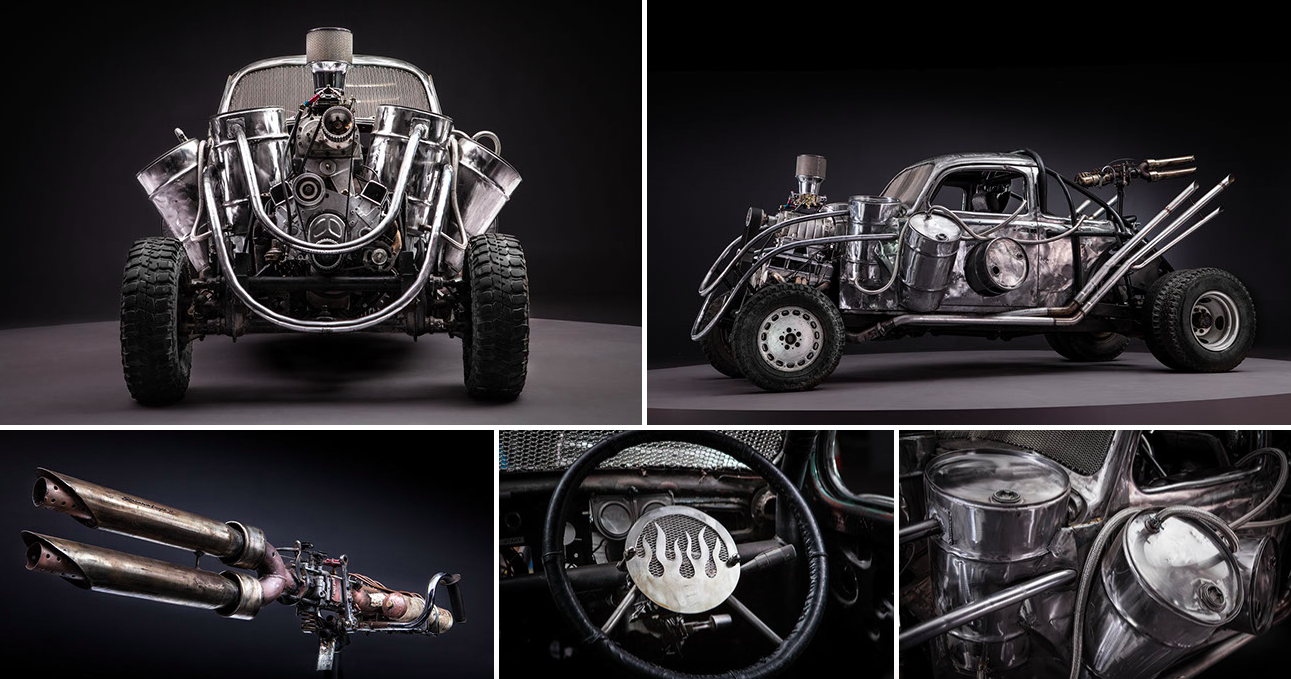
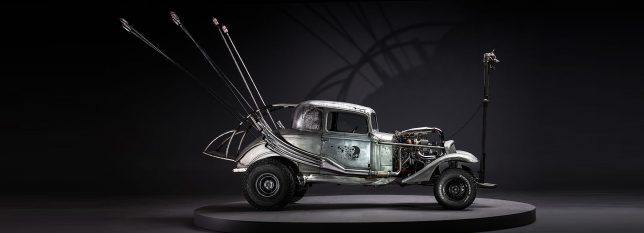
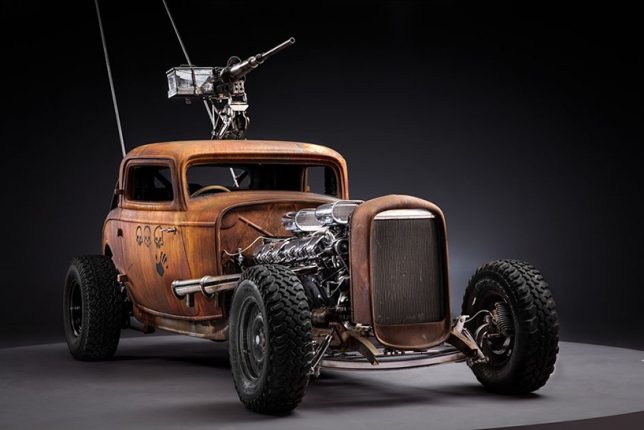
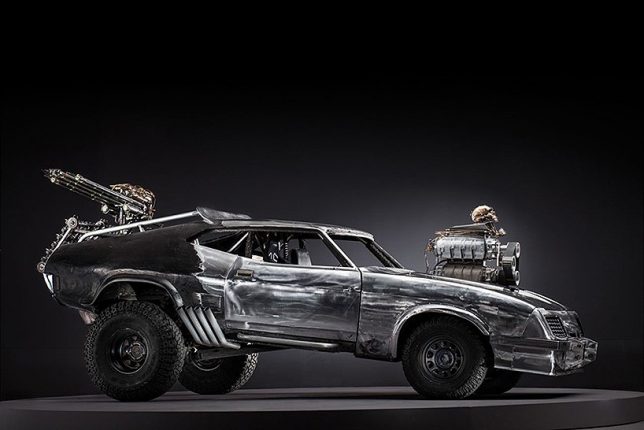
The Cars of Mad Max: Fury Road, Photographed Filth-Free Before Filming

09 Mar

[ By SA Rogers in Technology & Vehicles & Mods. ]

Screen Shot 2017-03-08 at 12.41.40 PM

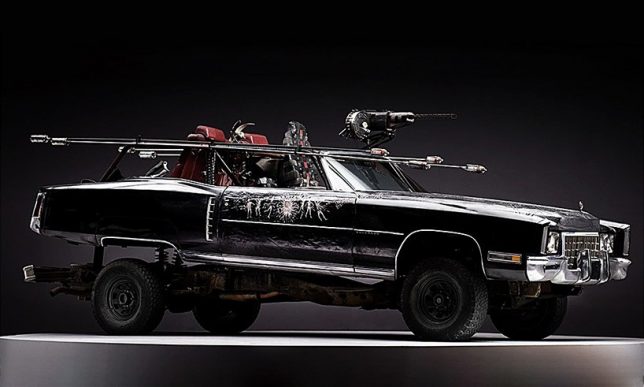
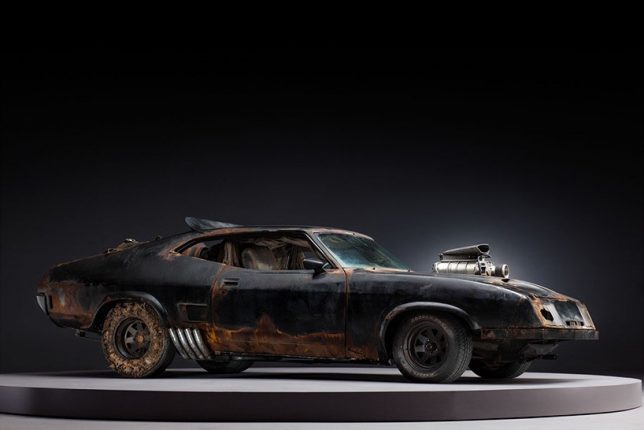
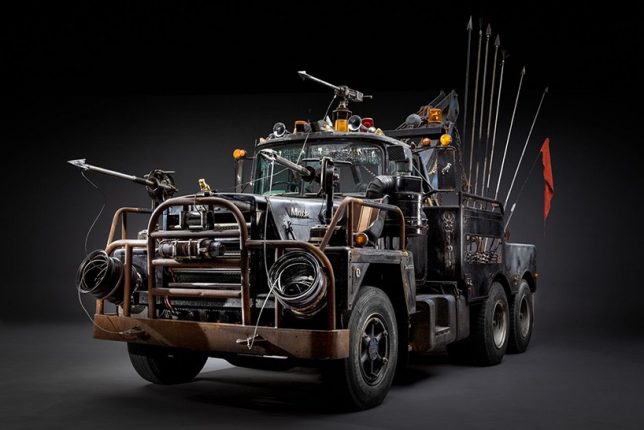
If you’ve ever wondered what the cars of Mad Max: Fury Road would look like all cleaned up, or you want some inspiration for a totally bonkers hot rod creation of your own, check out this photo series by photographer John Platt. Minute details of the vehicles can be seen in shockingly pristine states, as they were just after their creation and prior to the start of filming, giving us a good look at all the custom contraptions welded together into junkyard monsters.

mad max fury road cars 1

mad max fury road cars 2

In the movie, there’s so much desert dust kicked up by the tires of all those vehicles, we miss out on a lot of those details. The cars are appropriately filthy – and in this universe, they probably always would have been.

Screen Shot 2017-03-08 at 12.42.40 PM

mad max fury road cars 3

It’s hard to imagine anyone putting time and effort into washing and shining them up in between epic chases on the sand, and all those parts came from scrap yards anyway.

mad max fury road cars 3

mad max fury road cars 4

mad max fury road cars 5

That makes Platt’s photo series all the more satisfying. He got to photograph some of the movie’s 150 custom vehicles in his studio with proper lighting before they got dirty, and it’s a good thing, too – most of them were utterly destroyed during filming.

mad max fury road cars 6

mad max fury road cars 7

mad max fury road cars 8

Production designer Colin Gibson individually designed and sculpted each car and motorcycle according to writer and director George Miller’s vision. No wonder it took 15 years to complete pre-production. See the whole series here.

Share on Facebook


[ By SA Rogers in Technology & Vehicles & Mods. ]

[ WebUrbanist | Archives | Galleries | Privacy | TOS ]


WebUrbanist

 
Comments Off on The Cars of Mad Max: Fury Road, Photographed Filth-Free Before Filming

Posted in Creativity


Insta360 Air turns Android phones into 360-degree VR Cameras, now available in US and Europe

09 Mar

The Insta360 Air camera, which attaches to an Android smartphone via a microUSB or USB Type-C port, turns your phone into a 360-degree VR camera. It’s now available in the US and Europe. The Insta 360 Air uses, via a dedicated app, the smartphone display as a viewfinder and captures 360-degree stills and videos with its dual fisheye lenses.

The camera offers real-time image stitching and comes with integrated live-streaming to YouTube and other platforms. Content can be shared directly from the app to Facebook, Twitter, WhatsApp and other social media platforms. The app allows for viewing content on-screen or through a VR headset. 

The Insta360 Air can also be used as a 360-degree webcam on Skype and other video-chat applications after connecting to a PC’s USB 2.0 or 3.0 port. 360-degree webcam support for Mac should be provided soon via a software update. The Insta360 Air weighs only 26.5 grams and can capture 3K photos (3008 x 1504 pixels) and 2.5 K video (2560 x 1289 pixels) at 30 frames per second. The company also says real-time image stabilization will be introduced via a firmware update ‘in the coming weeks.’

The Insta360 Air is now available for $ 129 at retailers in the US. The device can also be purchased in the UK, Canada, Spain, Germany, Italy, France and Japan through Amazon. We are currently working on a review of the device, so watch this space. 

Press Release:

Insta360 Air Arrives in US and Europe, Turns Android Phones into 360° VR Cameras

Real-Time Image Stabilization on the Way
SHENZHEN, Mar. 7, 2017 – The Insta360 Air, a smartphone add-on that instantly turns Android phones into 360-degree cameras, is now on sale across the United States and Europe. 

“The Air is what we’re all about — cutting-edge technology that empowers people to capture and share experiences just the way they live them,” said J.K. Liu, CEO and co-founder of Insta360. “We can’t wait to see what the world’s Android users create.” 

Android and iOS account for more than 90 percent of the world’s smartphone users, and the release of the Air means all of them can now enjoy seamless 360-degree photography and live-streaming. The Insta360 Nano, launched last year, offers a plug-and-play 360 experience to iPhone users. 

The Insta360 Air’s simple, intuitive design makes capturing and sharing 360-degree content easier than ever. After connecting via USB Type-C or Micro-USB port, the Air uses a smartphone’s display as its viewfinder, allowing users to capture 360-degree stills and videos with the Air’s dual fisheye lenses and camera-interface app. 

With real-time image stitching and integrated live-streaming support for YouTube and other platforms, users can broadcast immersive experiences to the world or share 360-degree content to friends on a host of popular social media — including Facebook, Twitter, WhatsApp and Messenger — directly from the app interface. Users can explore content on a screen or through a VR headset for an even more immersive experience. 

The Insta360 Air experience isn’t limited to mobile. The Air also serves as a 360-degree webcam on Skype and other video-chat applications after connecting to a PC’s USB 2.0 or 3.0 port. 360-degree webcam support for Macs will also be introduced in a future update.

The Insta360 Air captures 3K photos (3008 X 1504 pixels) and 2.5 K video (2560 X 1289 pixels) at 30 frames per second. Weighing only 26.5 grams and with a diameter smaller than a ping-pong ball, the Air is also the most portable consumer 360-degree camera on the market. 

Real-time image stabilization coming soon 

Insta360 is committed to providing ongoing support to both devices and users well after purchase. Air users can expect regular updates to the Insta360 Air app and camera firmware. Among the most-exciting updates on the horizon for the Air is the planned addition of an all-new feature, real-time image stabilization. 

The advanced image-stabilization technology corrects unwanted vibrations and sudden directional changes as they happen, letting users capture smooth and steady live streams and video. 

The technology will mean a vastly improved experience for viewers using an immersive VR headset. And by reducing the variation between adjacent frames of a live-stream or video, it also offers big bandwidth savings. Real-time image stabilization is set to be released via app update in the coming weeks, and Insta360 Nano users can expect the feature as well. 

Priced at $ 129 USD, the Insta360 Air is now available via Amazon in the U.S., U.K., Canada, Spain, Germany, Italy, France and Japan. U.S. consumers can buy the Insta360 Air offline at B&H and Fry’s Electronics, with other regions also offering offline sales at select retailers.

Watch the Insta360 Blog for more updates.

Articles: Digital Photography Review (dpreview.com)

 
Comments Off on Insta360 Air turns Android phones into 360-degree VR Cameras, now available in US and Europe

Posted in Uncategorized