RSS
 

Archive for March, 2017

Grime in 1:20 Scale: Gritty Dollhouse-Sized Urban Architectural Models

14 Mar

[ By SA Rogers in Art & Sculpture & Craft. ]

urban architectural models

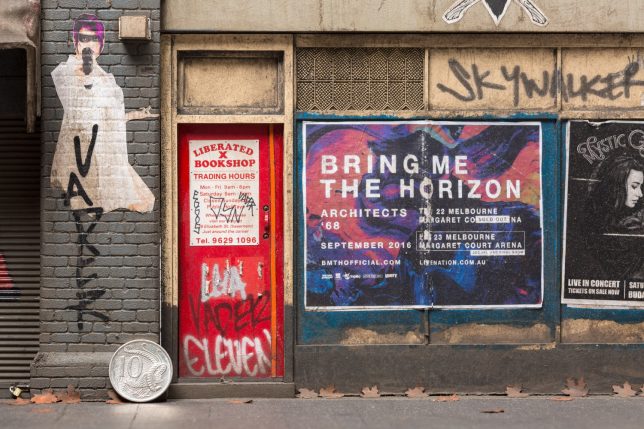
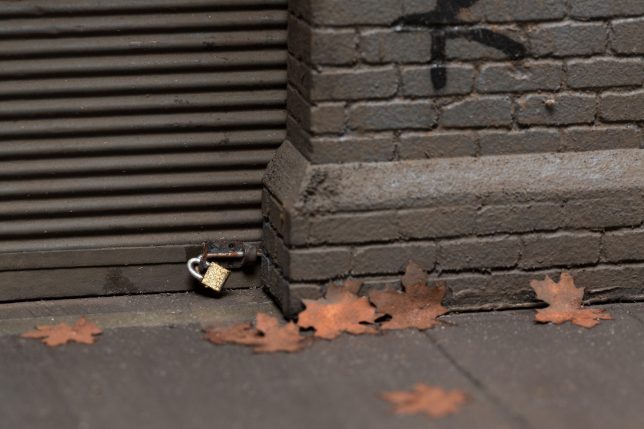
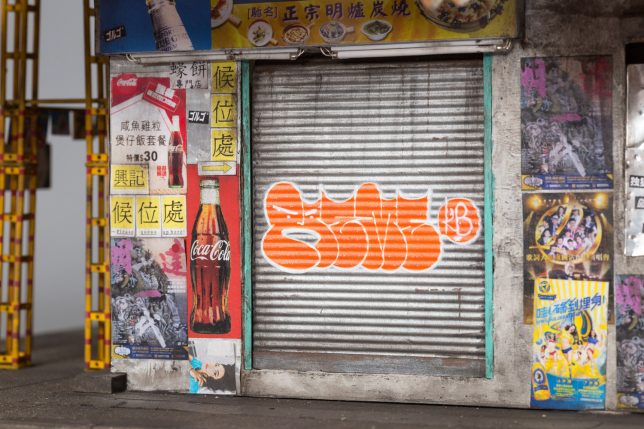
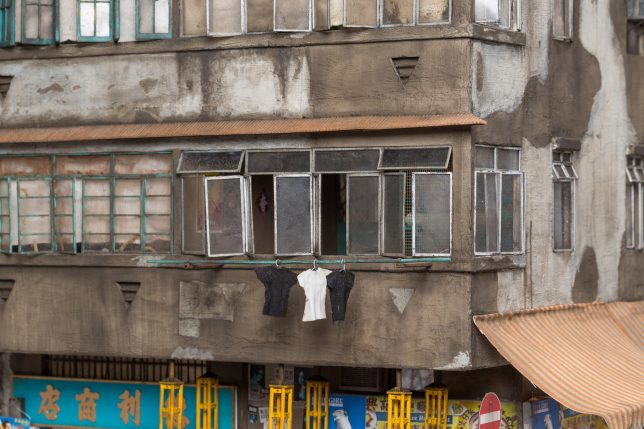
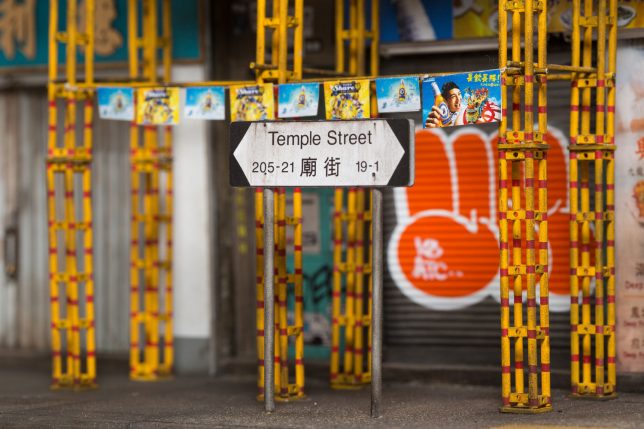
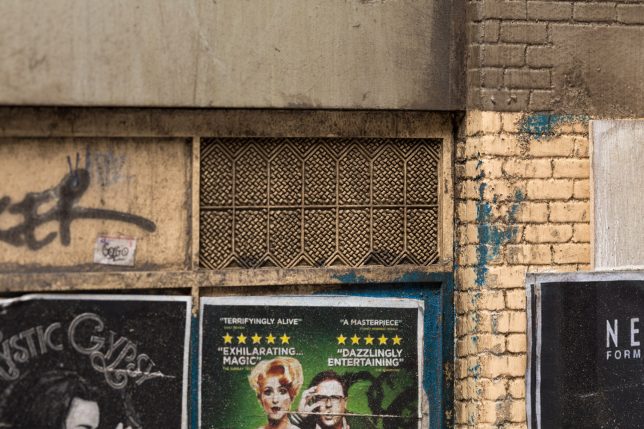
The kind of graffiti-covered, poster-plastered, weathered and visibly aging architecture that once characterized many big cities and has now largely been demolished is recreated in miniature by artist Joshua Smith. Every aspect of Smith’s tiny urban environments is crafted in loving detail, with absolutely nothing overlooked. Photographs of each miniature will make you wish you could examine them in person with a magnifying glass, appreciating the realism in every sidewalk crack, weed, pebble and fallen leaf.

urban architectural models 2

urban architectural models 9

urban architectural odels 5

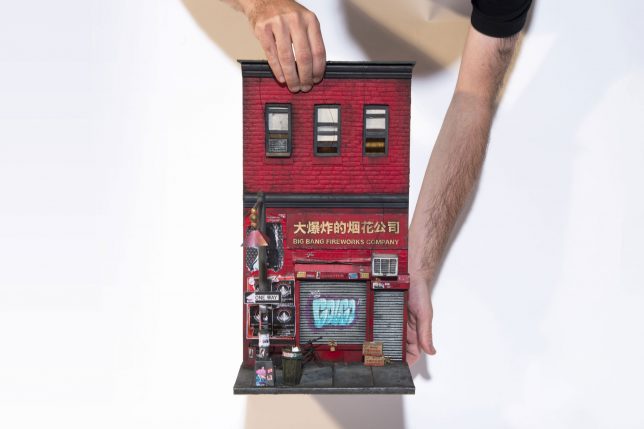
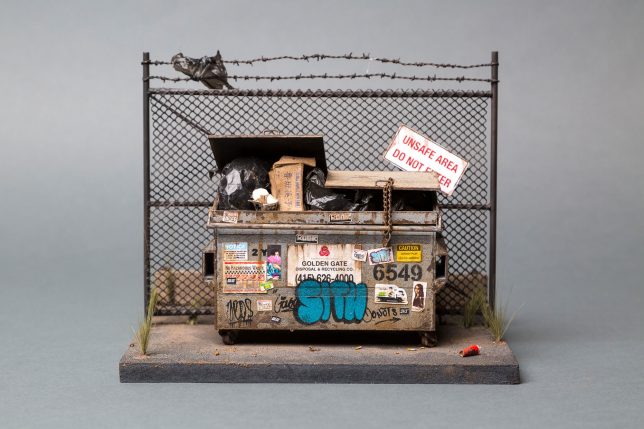
A dumpster at the Oakland Docks is packed full of tiny trash, some strewn around its base, a plastic bag fluttering on the barbed wire fence behind it. Melbourne’s Liberated X Bookshop and Shoe repairs features some fantastic Bladerunner-inspired wheat pasting, peeling plywood and the world’s tiniest padlocks. Big Bang Fireworks Company, based on 15 Pell Street in New York City’s Chinatown looks like you could slide those windows open and find a tiny family dining inside.

chinatown

dumpster

urban architectural models 9

urban architectural models 10

Based in South Australia, Smith previously worked for sixteen years as a stencil artist, and has now shifted his focus to model-making. The artist recently granted an interview to ArchDaily about his modeling process.

urban architectural models 3

urban architectural models 4

urban architectural models 7

“The longest build, which was my Kowloon Miniature, took three solid months working on average six to seven days a week and eight to sixteen hour-long days,” says Smith. “I strive to create a reality. I take as many reference photos as possible to mimic every single streak of rust, grime and chipping of stonework. I want viewers to be fooled, if I are a photo of the completed work in sunlight, to think it is the real thing.”

Take a closer look at some high-resolution images at Joshua Smith’s website.

Share on Facebook


[ By SA Rogers in Art & Sculpture & Craft. ]

[ WebUrbanist | Archives | Galleries | Privacy | TOS ]


WebUrbanist

 
Comments Off on Grime in 1:20 Scale: Gritty Dollhouse-Sized Urban Architectural Models

Posted in Creativity


Fujifilm GFX 50S added to our studio test scene

14 Mar

Our latest test scene simulates both daylight and low-light shooting. Pressing the ‘lighting’ buttons at the top of the widget switches between the two. The daylight scene is manually white balanced to give neutral grays, but the camera is left in its Auto setting for the low-light tests. Raw files are manually corrected. We offer three different viewing sizes: ‘Full’, ‘Print’, and ‘Comp’, with the latter two offering ‘normalized’ comparisons by using matched viewing sizes. The ‘Comp’ option chooses the largest-available resolution common to the cameras being compared.

$ (document).ready(function() { ImageComparisonWidget({“containerId”:”reviewImageComparisonWidget-9354923″,”widgetId”:480,”initialStateId”:null}) })

The GFX 50S’s resolution capture is, as you might expect, impressive. That said, the Canon EOS 5D SR, shot with the relatively lowly 85mm F1.8 lens is able to do a similar job. All four cameras, with good prime lenses on are exhibiting moiré$ (document).ready(function() { $ (“#icl-3455–1483316096”).click(function() { ImageComparisonWidgetLink(3455); }); }) in the finest detail in the scene.

In terms of high ISO noise$ (document).ready(function() { $ (“#icl-3448–639071291”).click(function() { ImageComparisonWidgetLink(3448); }); }), the GFX 50S performs fairly similarly to the Pentax 645Z and, as sensor size alone would lead you to expect: better than the Canon EOS 5DS R. However, because Sony’s a7R II sensor uses a more modern BSI design, it’s able to be more efficient, which means it’s able to close the gap to the bigger sensor cameras. 

The GFX 50S’s JPEGs are every bit as pleasant as they are in the company’s smaller cameras. Color response$ (document).ready(function() { $ (“#icl-3450-1730714412”).click(function() { ImageComparisonWidgetLink(3450); }); }) is bright and punchy, with both skies and skintones well represented. And, of course, the Film Simulation modes mean there are a selection of good-looking options available. Default sharpening$ (document).ready(function() { $ (“#icl-3451-1453109520”).click(function() { ImageComparisonWidgetLink(3451); }); }) is quite strong but is effective at emphasizing fine detail in the scene: taking the level of apparent detail ahead of its rivals, without adding too much in the way of haloing at high contrast edges$ (document).ready(function() { $ (“#icl-3452-1793342050”).click(function() { ImageComparisonWidgetLink(3452); }); }).

Similarly, noise reduction$ (document).ready(function() { $ (“#icl-3453-1547554799”).click(function() { ImageComparisonWidgetLink(3453); }); }) does a good job of balancing the retention of detail with the suppression of noise. We’re not sure many people are looking to buy a medium format camera to shoot JPEG but they’re very usable even at the camera’s highest setting$ (document).ready(function() { $ (“#icl-3454-1348031583”).click(function() { ImageComparisonWidgetLink(3454); }); }). Which just makes it seem more peculiar that Fujifilm limits the camera to a relatively modest ISO 12,800.

Dynamic Range

Looking at our ISO Invariance tests, we can see that an image shot at ISO 100 and pushed six stops looks noisier than one with the same exposure, shot at ISO 6400. This shows that the sensor is still contributing a little noise to its images (enough that you’ll see it, if you multiply it 64 times!). However, the 5EV push of an ISO 200 shot looks a lot like the ISO 6400 image, which suggests it’s a very good sensor.

However, the exposure latitude test, where we lift the shadows in images shot at progressively lower exposures shows that its performance is only slightly better than that of the D810, despite receiving more total light (double the exposure time and half the light per square cm, captured on a sensor with more square cm of area). Now consider the fact that the D810 has an ISO 64 mode, which would allow you to use a 2/3EV brighter exposure before the sensor clips. We expect this will give a real-world result similar to when we pitted the Pentax 645Z against the Nikon.

However, Fujifilm does claim to have increased the ‘Photic Saturation Point’ (by which we assume they mean ‘full well capacity’), by 1/3EV so we’ll need to conduct a full expose-to-the-right side-by-side test to be sure.

Articles: Digital Photography Review (dpreview.com)

 
Comments Off on Fujifilm GFX 50S added to our studio test scene

Posted in Uncategorized


Broncolor ‘How To’ site details how to replicate lighting setups and more

14 Mar

Broncolor, maker of photography lighting equipment, has launched a ‘How To’ section on its website, including some helpful diagrams detailing the lighting setups used to create a variety of sample photographs. The tutorials cover many shooting scenarios, including portraits, outdoor scenes and product photography. Both written and video guides are offered.

The how-to content on Broncolor’s website is provided free of charge. There is, for example, a 20-part video how-to series detailing lighting with topics like ‘Cutlery,’ ‘White on White,’ ‘Still Life,’ and ‘Baseball swing,’ among others. Photographers seeking details on using specific lighting products can find guides under the site’s ‘Use this Light Shaper’ section, and there’s also a two-part ‘Eye school’ section detailing types of lighting. 

The full array of how-to content can be found here.

Via: DIYPhotography

Articles: Digital Photography Review (dpreview.com)

 
Comments Off on Broncolor ‘How To’ site details how to replicate lighting setups and more

Posted in Uncategorized


Lumee Duo is an iPhone case with built-in illumination

14 Mar

The LuMee Duo is an iPhone case that, thanks to rubber edges and a solid shell, offers protection for your device. But it also comes with a feature that many mobile photographers will appreciate: Integrated LEDs on the front and back. They offer a brighter and softer illumination than the phone’s built-in LED flash, making it an interesting option for those who frequently take smartphone images in dim light conditions.

The LEDs are dimmable, and Lumee also claims they reduce the red-eye effect in flash photos. The case comes with a built-in battery that provides power for up to two hours and for 36 hours at the lowest brightness. The Lumee is available for iPhone 7, iPhone 7 Plus, iPhone 6s and iPhone 6s Plus, and comes in Black Matte, Gold Matte and Rose Matte.

The Lumee Duo launched initially in December in the USA and Canada, but is now available on Apple.com and at Apple stores in 15 additional countries, including Australia, China, Germany, Japan and the UK. Depending on phone model prices range from $ 40 to $ 70. More information is available on Lumee.com.

Press Release:

LuMee Duo iPhone Cases Featuring Double Sided Lighting Now Available In Over 15 Countries

Available Now on Apple.com and in Apple Stores in Europe, Middle East, Australia and Asia

PARK CITY, Utah, March 13, 2017 /PRNewswire/ — LuMee LLC, creator of the innovative line of patented illuminated smartphone cases, today announced that its revolutionary case for iPhone photographers – the LuMee Duo™ – is now available in select Apple stores around the world. The LuMee Duo is a first-of-its-kind smartphone case with integrated front and back LEDs, providing professional quality lighting for all photos and videos taken on an iPhone.

The LuMee Duo, initially launched in December exclusively at Apple stores, Apple.com and LuMee.com in the USA and Canada, is now available on Apple.com and at Apple stores in Australia, Belgium, China, France, Germany, Hong Kong, Italy, Japan, Macao, Netherlands, Spain, Sweden, Switzerland, United Arab Emirates and the United Kingdom. The product is available for iPhone 7, iPhone 7 Plus, iPhone 6s, and iPhone 6s Plus, and comes in Black Matte, Gold Matte and Rose Matte.

“We’re so excited for the LuMee Duo to allow consumers in these markets to create photography that illuminates the culture, aesthetics and creativity that are unique to their perspective,” said Allan Shoemake, Creative Director and inventor of the original LuMee case. “This is a must-have case for anyone who enjoys taking beautiful photographs. With the LuMee Duo, there are no limits to the amazing images you can take in virtually any situation.”

The LuMee Duo offers a sleek new design with a tough outer shell and rubber edges for increased phone protection. Its adjustable dimmer allows photographers to customize their light preference for each photo and its soft illumination eliminates redeye often caused by flash and harsh lighting.

About LuMee LLC:
LuMee® is one of the fastest-growing consumer electronics accessories and lighting companies in the world, with a line of smartphone cases that enable users to capture professional quality images and create optimal conditions for video chatting. Co-founder & partner Allan Shoemake, a professional photographer who has taken pictures of many U.S. presidents and celebrities, devised the concept as a way to improve mobile phone lighting in his own life. Now, the company is revolutionizing the way mobile photographers of all skill levels are able to shoot images on their smartphone. For more information, visit LuMee.com.

Articles: Digital Photography Review (dpreview.com)

 
Comments Off on Lumee Duo is an iPhone case with built-in illumination

Posted in Uncategorized


Green House: 17 Residential Designs Intertwined With Nature

14 Mar

[ By SA Rogers in Architecture & Houses & Residential. ]

water lily house

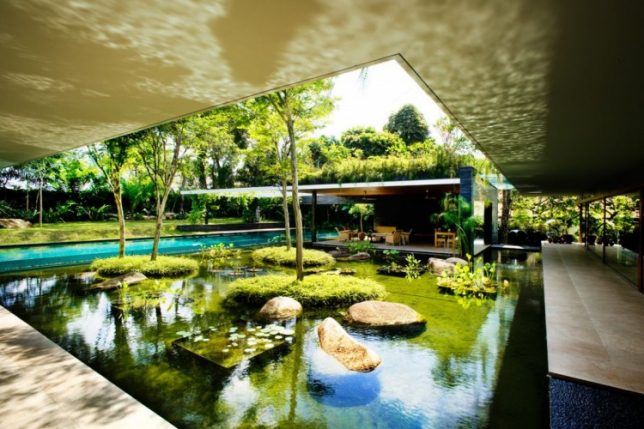
Replicating parks in the middle of largely-concrete cities or merely connecting tropical homes to the lush vegetation that’s already growing right beyond the walls, these homes integrate living plants, water features and direct access to the sky. Prioritizing a connection with nature – and all the natural daylight that comes along with it – these modern home designs are breezy and bright yet private, often placing their courtyards centrally like secret gardens or building around existing mature trees.

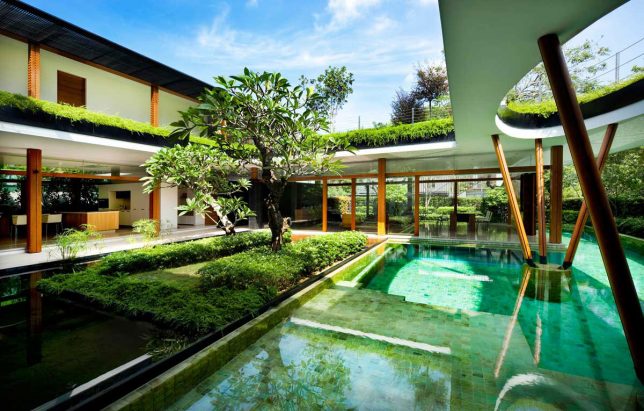
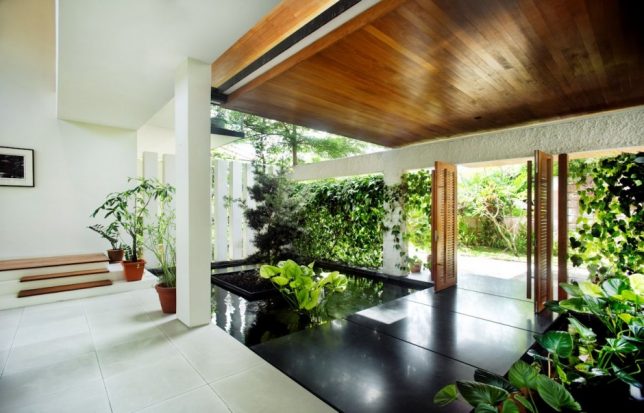
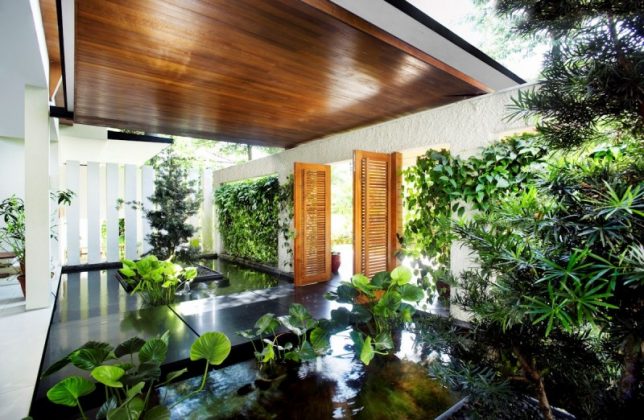
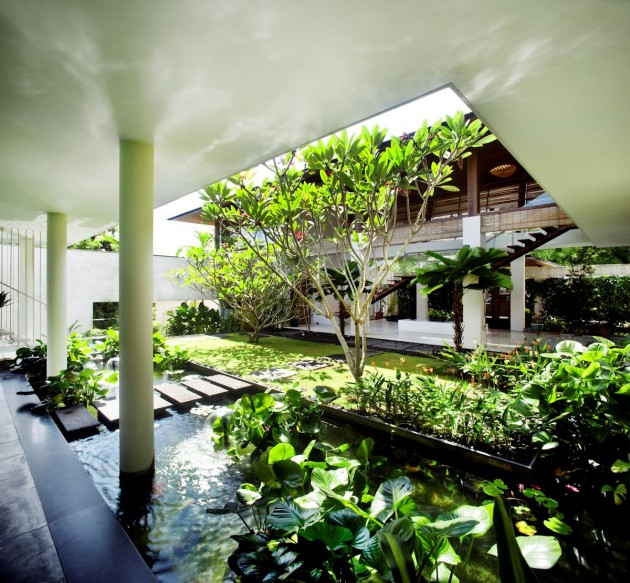
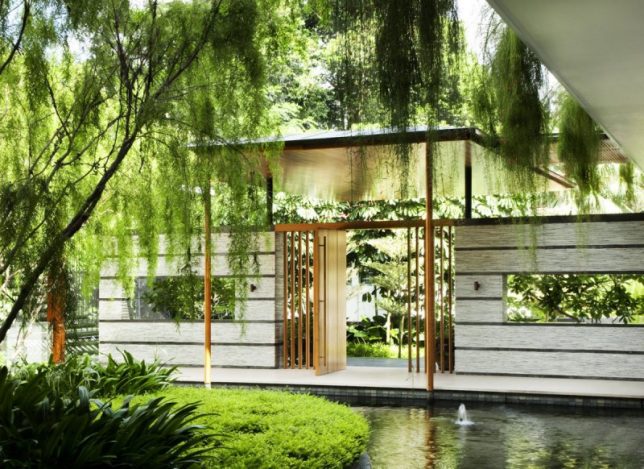
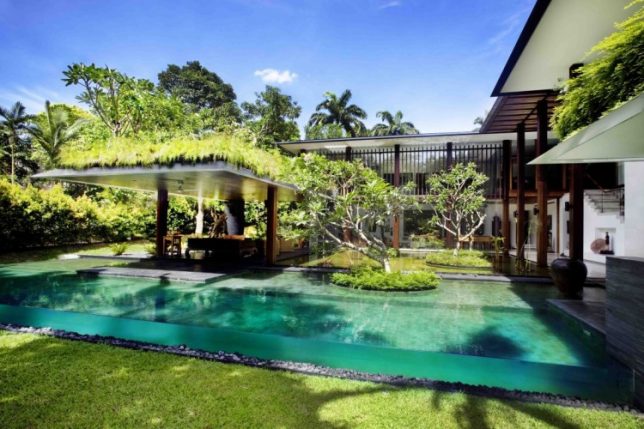
Rattan House, Sun House, Water Lily House, Willow House & Cluny House by Guz Architects

rattan house

rattan house 2

rattan house 3

cluny house

willow house

sun house

Has any architecture firm mastered the form of the nature-influenced luxury tropical home quite like Guz Architects? Working primarily in temperate climates like that of Singapore, this firm consistently produces jaw-droopingly beautiful residences full of lushly planted courtyards, green roofs, swimming pools that transition into seemingly natural decorative water features, living trees and lots of blurred lines between indoors and out. For example, the center of Cluny House is a generous fish pond filled with tiny tree-covered islands overlooking a lap pool. Willow House features a ground-level reflecting pool with glass walls to make water a more visual element of the home, with greenery dripping down from the edges of the terrace above.

Jardins House by CR2 Arquitetura

jardins house 1

jardins house 2

jardins house 3

jardins house 4

jardins house 5

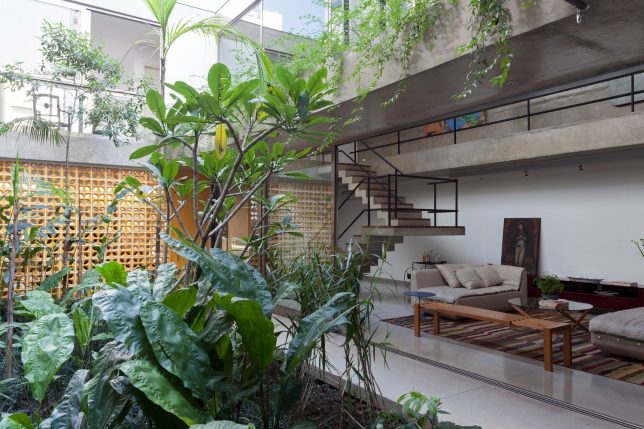
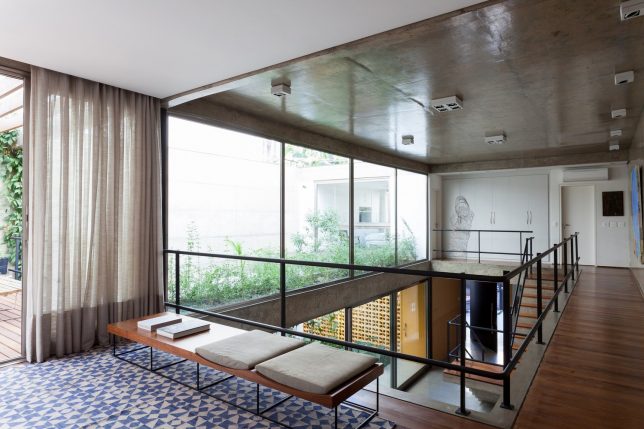
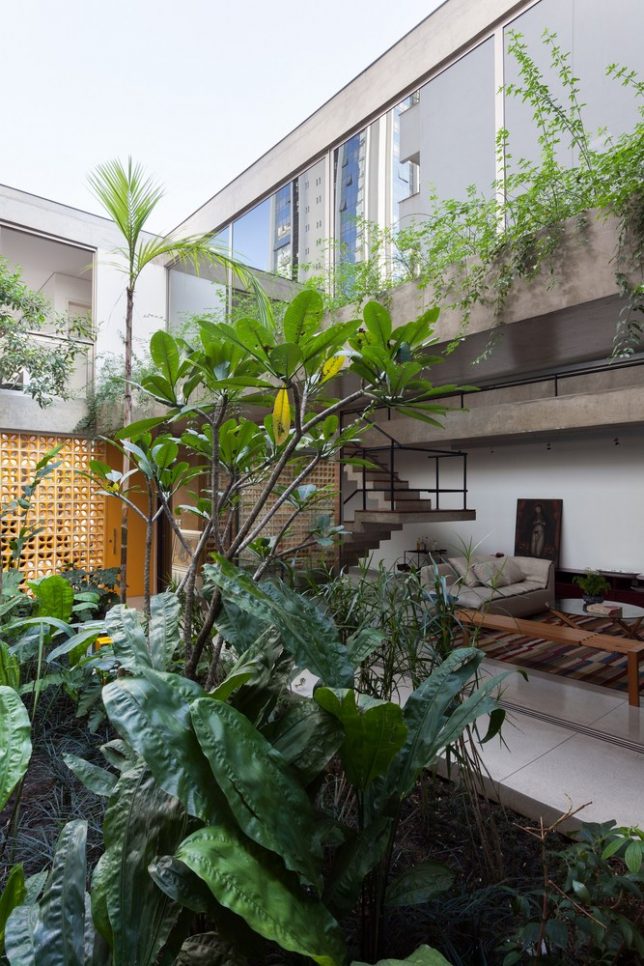
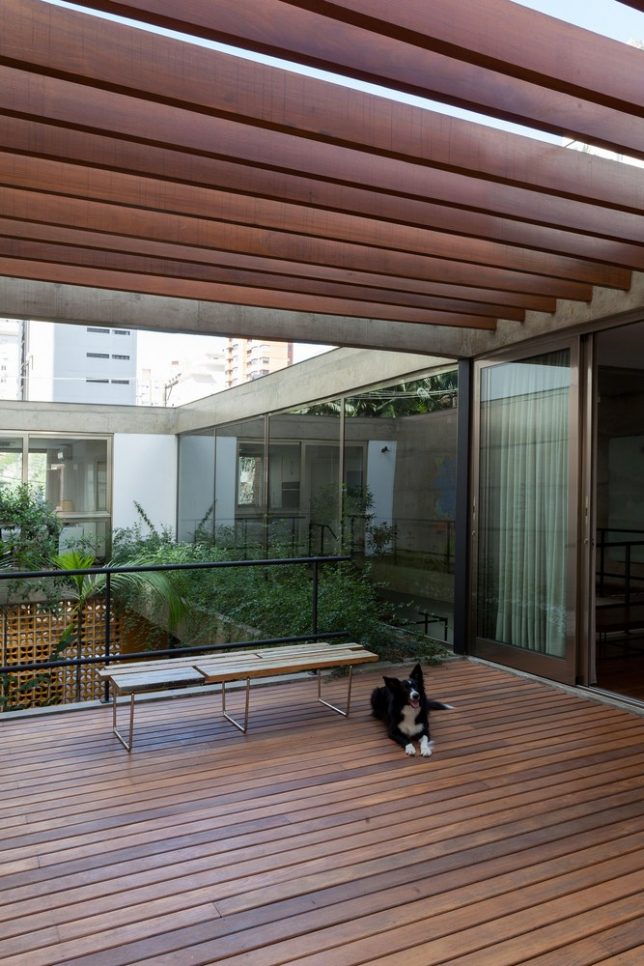
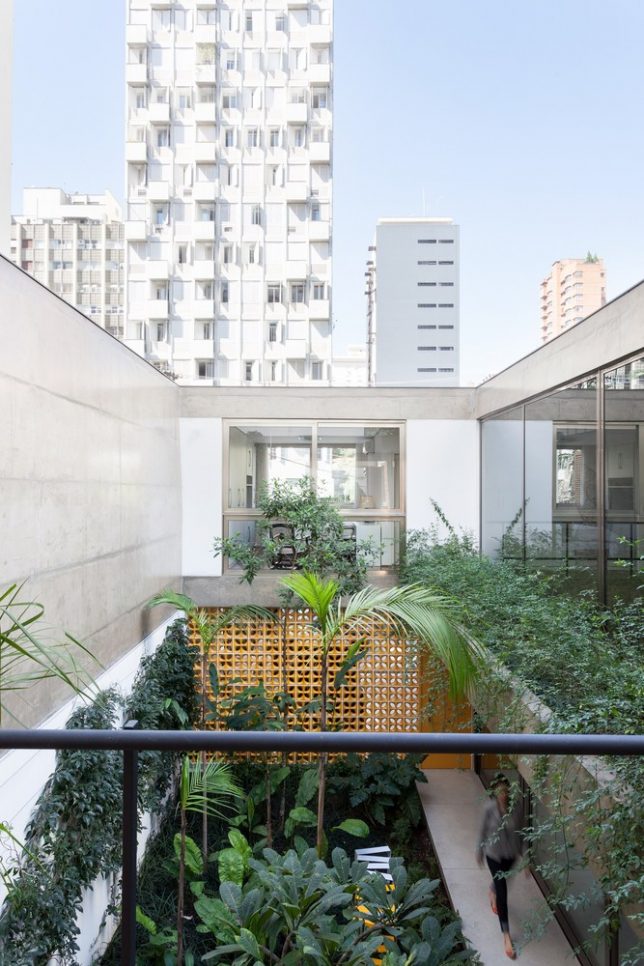
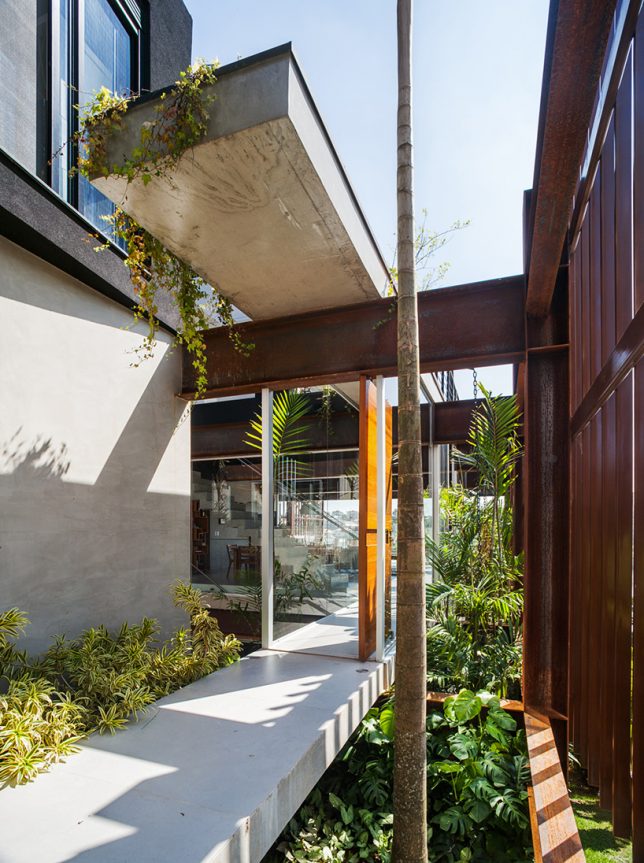
The fittingly named Jardins House by CR2 Arquitetura is an oasis in the middle of a city, replacing an industrial building. The architects created a series of voids within the structure to house gardens that would be naturally illuminated from above without compromising the privacy of the residents.

Mirante House by FGMF Arquitetos, Brazil

mirante house 1

mirante house 2

mirante house 3

mirante house 4

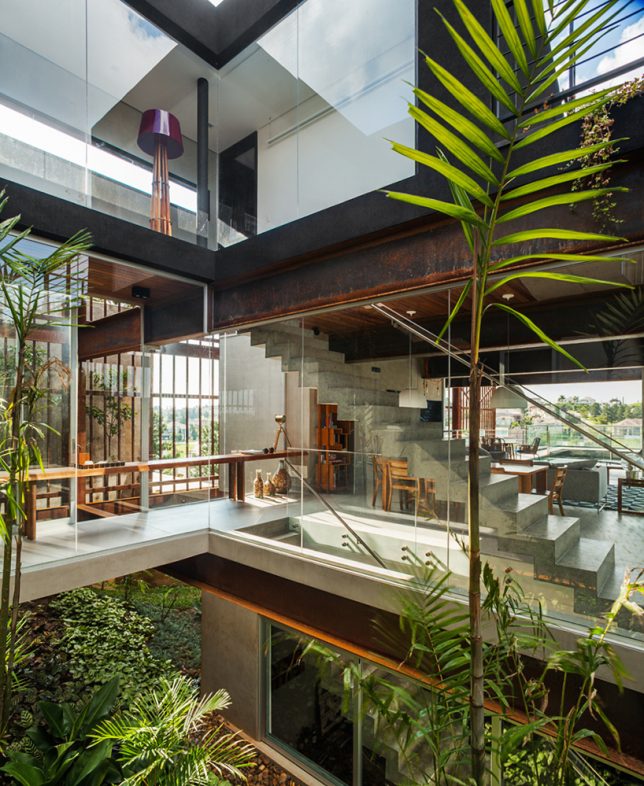
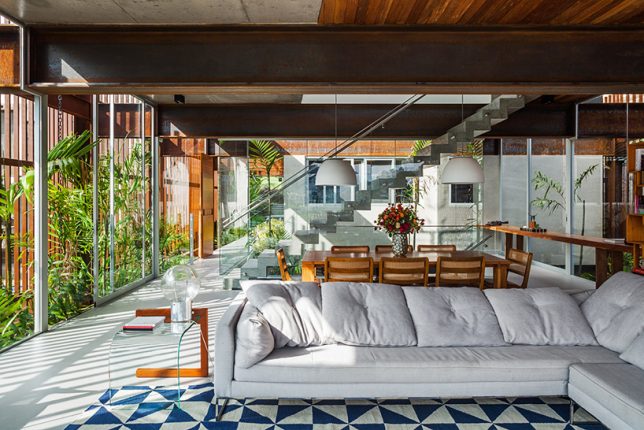
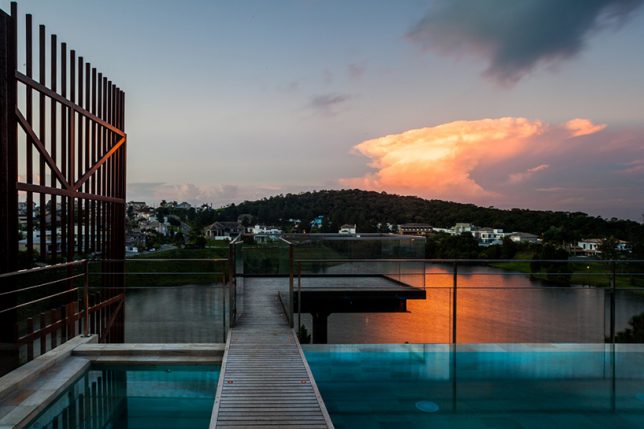
Every sightline in Mirante House by FGMF Arquitetos is directed through the glass to the valley below, with an open scheme of interior spaces divided by transparent walls. Nature seems to invade the home at every turn, with planter boxes installed in every space and most rooms looking down onto the central courtyard.

Living Garden House by KWK Promes

living garden house

living garden house 2

living garden house 3

living garden house 4

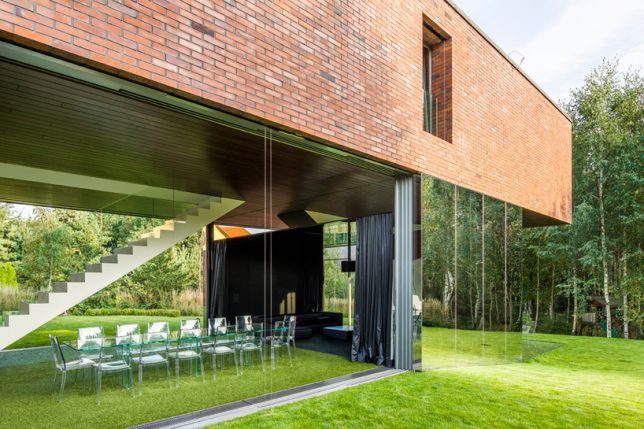
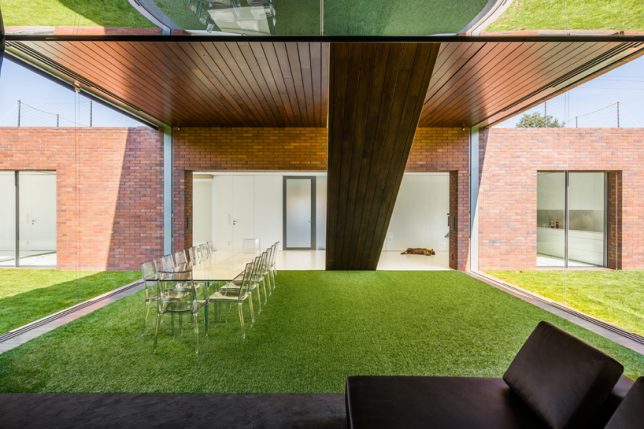
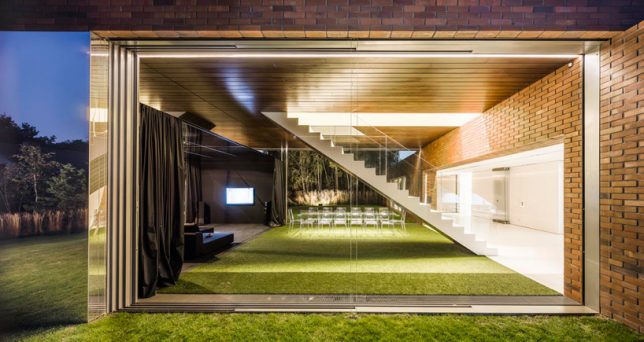
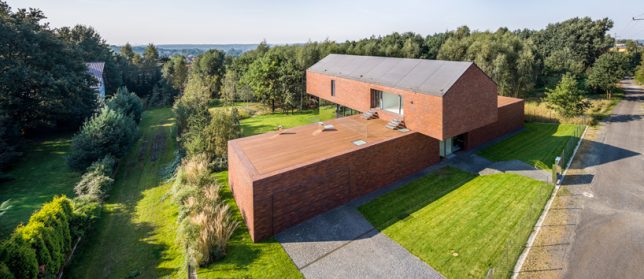
While glassed-in ground floors connected to the outdoors aren’t unusual in tropical settings, this home by KWK Promes uses the scheme a little differently. Rather than opening onto swimming pools or courtyards, the glass room at the base of the home is part of the lawn, so residents can feel like they’re still lounging in the warm grass even in the middle of winter. The glazing opens this lounge to the open air when desired. The home consists of two volumes, one essentially cantilevered over the other (supported by this glass room) while the street-facing facades are nothing but brick for privacy.

Sunken Pavilion by Act Romegialli

sunken pavilion

sunken pavilion 2

sunken pavilion 3

sunken pavilion 4

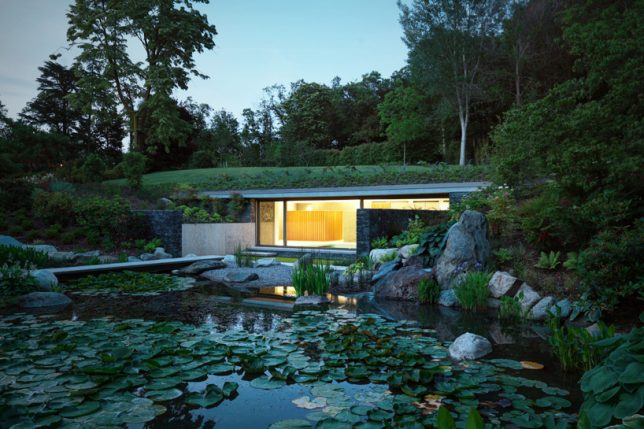
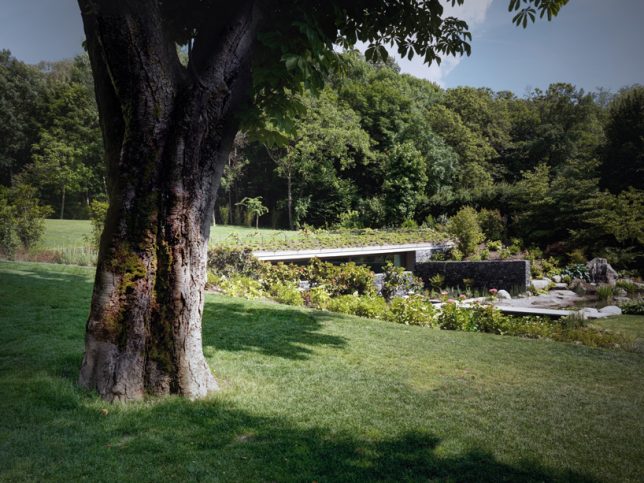
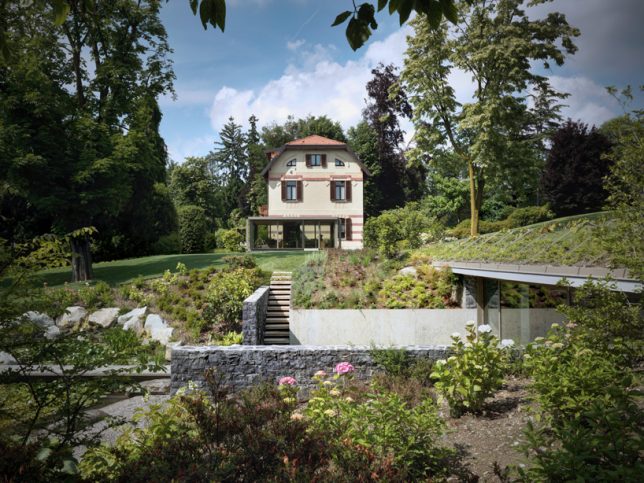
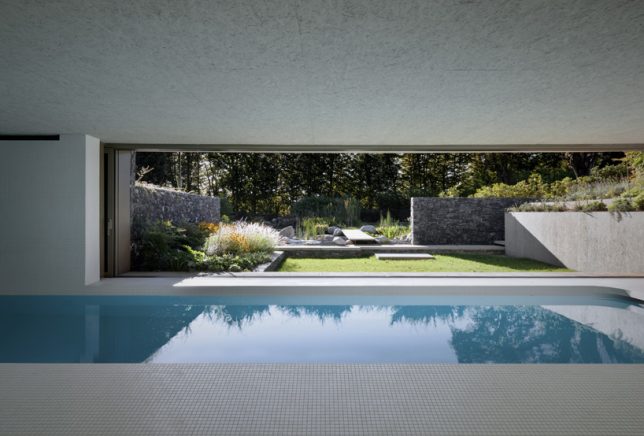
Take the steps on the lawn or navigate a subterranean tunnel to access an enclosed swimming pool and gym from the original home in this addition by Act_Romegialli. The swimming pool structure is essentially sunken into the ground with its glassed facade peeking out at an artificial pond full of water lilies. This keeps the structure naturally cool and focuses views on nature rather than neighbors.

Next Page – Click Below to Read More:
Green House 17 Residential Designs Intertwined With Nature

Share on Facebook


[ By SA Rogers in Architecture & Houses & Residential. ]

[ WebUrbanist | Archives | Galleries | Privacy | TOS ]


WebUrbanist

 
Comments Off on Green House: 17 Residential Designs Intertwined With Nature

Posted in Creativity


Boom To Busted: Abandoned British Bomb Storage Depots

13 Mar

[ By Steve in Abandoned Places & Architecture. ]

bomb-store-1a

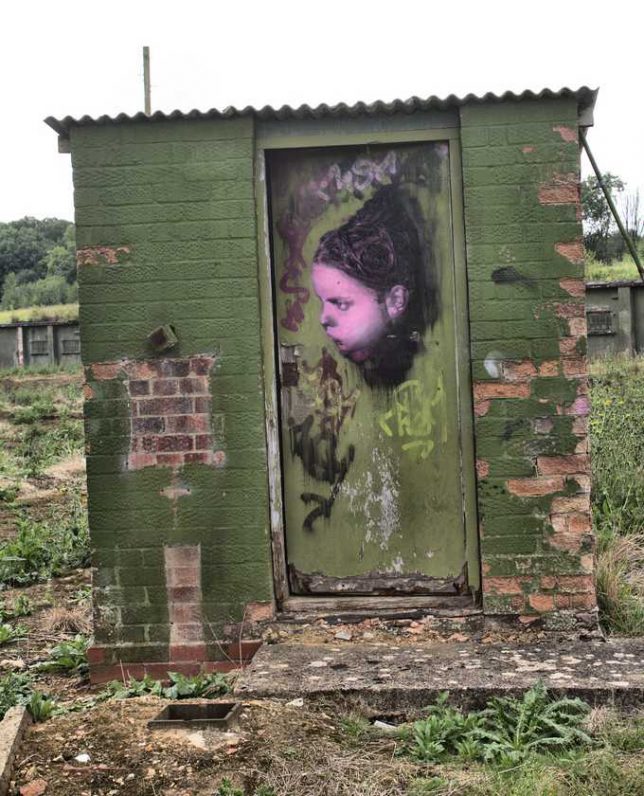
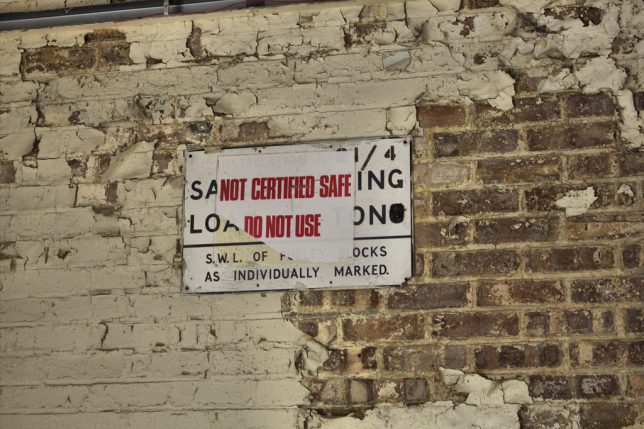
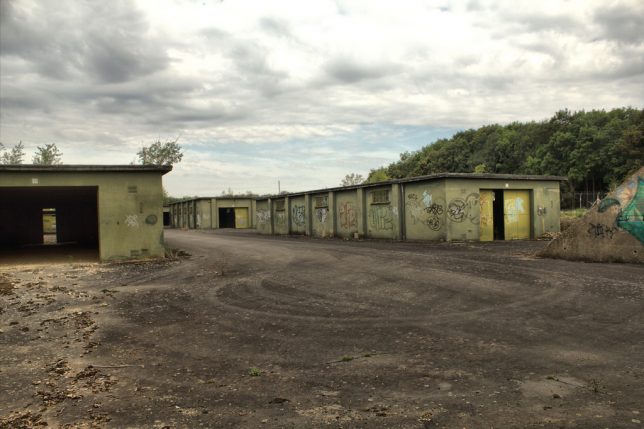
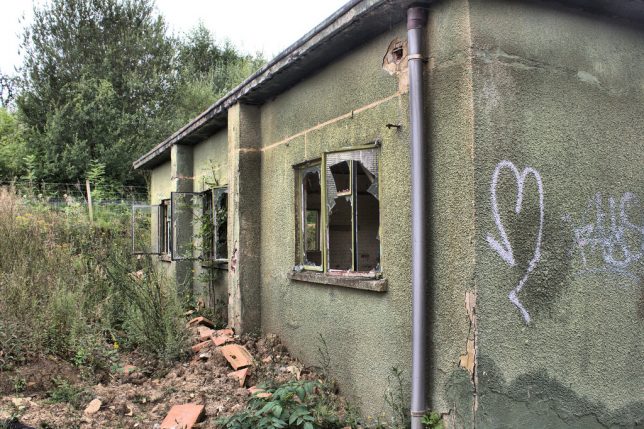
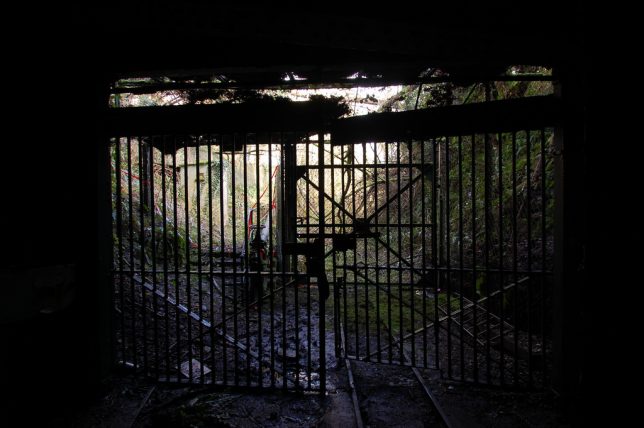
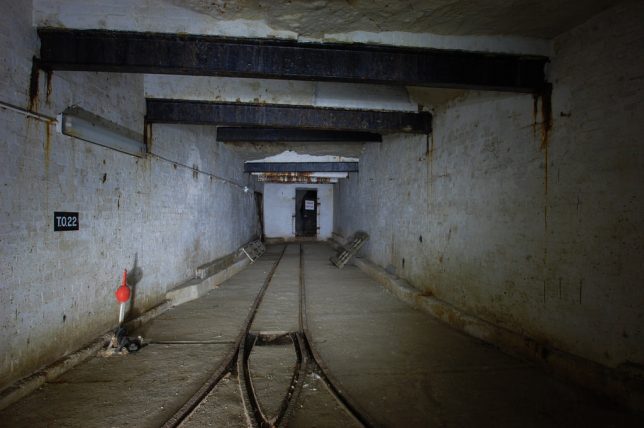
War is over so can we give peace a chance? These abandoned British bomb stores and ammo bunkers are looking peaceful indeed now that the explosives are gone.

bomb-store-1b

bomb-store-1f

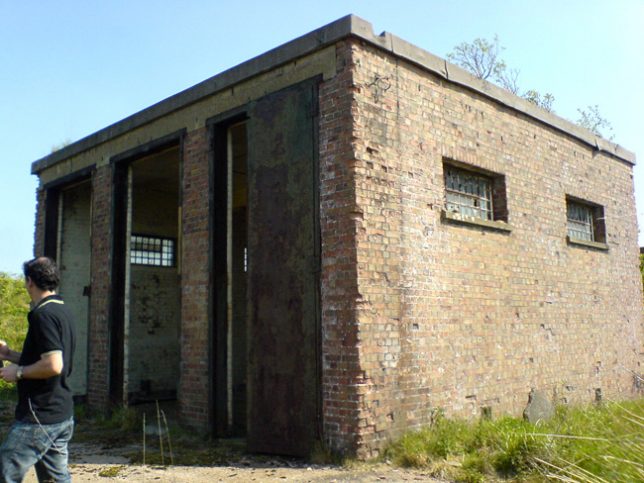
The Brits built up their military infrastructure explosively, pardon the pun, before and during the World Wars. Peacetime saw a corresponding deflation with hardened assets such as bomb stores typically abandoned instead of being dismantled.

bomb-store-1c

bomb-store-1d

One such quieted bomb store can be found at RAF Wittering near Peterborough in Cambridgeshire, England. Established in 1916 as an base for zeppelin-fighting BE2C and BE12 aircraft, the base was used by the USAAF in World War II and became the “Home of the Harrier” in the 1970s.

bomb-store-1e

After the war, the base’s bomb stores were expanded and toughened to accommodate nuclear weapons. Flickr user Graeme Hutton (graemehutton) visited the disused and derelict bomb stores at the Wittering Ammo Dump in late July of 2014 and snapped dozens of evocative photos.

RAF Chilmark

bomb-store-2a

bomb-store-2b

bomb-store-2f

RAF Chilmark in Wiltshire was built in 1936 and by 1965 it was the RAF’s only remaining ammunition supply depot. The base was shut down entirely in 1995 but it took the better part of two years to clear live ammunition from the site. Flickr user Newage2 visited the base’s bomb store in early February of 2016.

bomb-store-2c

bomb-store-2d

bomb-store-2e

RAF Chilmark also houses a civil defense bunker built in 1985 and sold to private interests in 1997. In February of 2017, a police raid revealed the bunker had been converted to a large-scale marijuana grow-op. “There are approximately 20 rooms in the building, split over two floors, each 200 feet long and 70 feet wide,” stated Detective Inspector Paul Franklin of the Wiltshire Police Dedicated Crime Team. “Almost every single room had been converted for the wholesale production of cannabis plants, and there was a large amount of evidence of previous crops. This was an enormous set up.” Up in smoke, as they say.

RAF Newton

bomb-store-3c

bomb-store-3a

bomb-store-3b

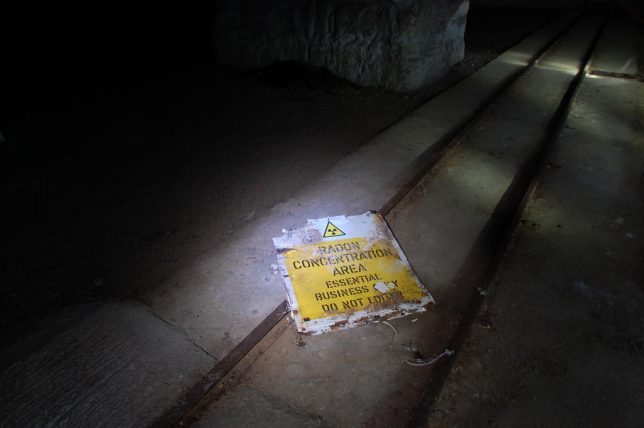
RAF Newton in Nottinghamshire was built in 1939 and closed in the year 2000. The site is gradually being converted into an industrial estate but not without controversy: radioactive contamination from Radium used to paint luminescent dials in the 1940’s has been detected. Flickr user Goldie87 visited disused parts of RAF Newton in late February of 2008.

Next Page – Click Below to Read More:
Boom To Busted Abandoned British Bomb Storage Depots

Share on Facebook


[ By Steve in Abandoned Places & Architecture. ]

[ WebUrbanist | Archives | Galleries | Privacy | TOS ]


WebUrbanist

 
Comments Off on Boom To Busted: Abandoned British Bomb Storage Depots

Posted in Creativity


Ask the staff: electronic or optical viewfinder?

12 Mar
Fujifilm’s X100 series, together with its X-Pro series, are the only models on the market to offer both an electronic and optical hybrid viewfinder. Is it the best of both worlds, or would you just rather have one over the other?

Believe it or not, as a team, we don’t all agree on everything. So at any given time, each of us thinks the rest of us are wrong about something subjective that you can’t really be wrong about (we’re all human). That takes us to the task at hand: all the great recent electronic viewfinders (Leica SL, Panasonic GH5, Fujifilm GFX 50S…well, some of us think that one’s just okay) got us on the topic of which type of viewfinder we prefer.

Optical or electronic? There’s no wrong answer. (Or is there?)

Richard Butler

For me, I’m less concerned about the technology behind a viewfinder than the quality of it. A good optical viewfinder can be a lovely thing: giving you a sense of being ‘in the scene’ that even the best EVF can’t match. A good optical viewfinder can also be excellent when shooting in very low light: its responsiveness and resolution don’t suddenly drop, for instance. However, on most cameras, you don’t get a good optical viewfinder. APS-C sensors tend to mean small, pokey little viewfinders and most focus screens for modern cameras aren’t very good for manual focus. So, if an EVF means I can have a smaller camera with a larger viewfinder, the ability to preview the effect of my settings and the ability to shoot video, then that makes up for many of the shortcomings. It’s impossible to separate the viewfinder type from the style of camera it allows and, with the quality of the latest EVFs, the style of camera I like most usually means it comes with an EVF.

Dan Bracaglia

Photo courtesy Stan Horaczek

Depending on the situation, I could go either way on the OVF versus EVF question. If forced to pick one, I’d choose OVF because I find shooting through an optical finder offers a more pleasant and rewarding experience than using an EVF. I also personally find it easier to compose images through an optical finder.

That said, EVFs make properly exposing images much easier, and in a commercial application in which getting the shot is mission critical, I could make an argument that EVFs are superior. That said, it would be cool if more cameras offered both, like on the Fujifilm X100 series.

Dale Baskin

I can’t believe I’m about to say this, but I now lean toward using EVFs. I wouldn’t have said that a couple years ago because, until recently, EVFs on still cameras basically sucked. Today’s best EVFs still won’t fool my brain into believing that I’m looking at an OVF, but in many respects they better reflect the way I tend to shoot with digital. I love the ability to overlay real-time information such as histograms, focus peaking, and zebras, as well as being able to preview exposure adjustments as they’re made. (I may be showing some of my video bias here as well.)

Are EVFs good for everything? No. I still wouldn’t choose them for photographing sports or in situations that require rapid-fire burst shooting, but I suspect EVFs will get there at some point. Of course, the best of both worlds is a hybrid OVF along the lines of those on the Fujifilm X100 series. I love having a perfect optical image overlaid with the useful tools an EVF provides. It’s kind of like the peanut butter cup of the camera world – the two just go well together!

Sam Spencer

Optical. Optical optical optical.

Don’t get me wrong, there have been some nice EVFs. The GX8, particularly, holds a soft spot in my heart.

At the end of the day, however, I prefer an optical viewfinder over any EVF. With an EVF, no matter how fast the camera is, the light has to enter the lens, hit the sensor, get processed, reduced, rendered, and THEN makes it to the eye. There has been a lot of work to make this ‘lag’ imperceptible, but it will never be completely eliminated. I find when I’m using an EVF I struggle timing candid shots properly, usually resulting in half closed eyes or an awkward expression. Also, with motorsports there is a lot of panning, which can be difficult through an EVF.

Ideally, I’d own a D750 and X100F to get the best of both worlds, especially because AF-C through the X100F’s OVF works way better than it has before…

Carey Rose

I’ve grown to love electronic viewfinders, but if I had to choose, I’d pick an optical viewfinder any day. It’s the combination of low blackout on higher-end cameras, how I’m easily able to follow subjects during bursts, and just the immediacy of seeing things as they happen that chiefly appeals to me. Whether I’m shooting sports, an event, a wedding or even just a dog playing fetch, the experience of using an optical viewfinder is just easier for me, and being able to clearly see a scene in really low light is invaluable. There’s a lot to be said for being able to preview your results with an electronic unit, but I still enjoy that brief ‘moment of discovery’ when I see an image on the back of the camera. Plus, a good optical viewfinder almost by definition goes along with a good phase-detect-only autofocus system, which I still prefer, despite the camera used in the above photo.

Wenmei Hill

I am strongly, adamantly in favor of…both. I shoot differently depending on whether I’m using an electronic or optical viewfinder. With an EVF, I let the camera control more – I’m comfortable shooting in aperture or shutter priority and using exposure comp to adjust what I see in the viewfinder. I experiment more with presets and creative modes because I can see the effects immediately, and I like an EVF with focus peaking if I’m focusing manually. With an optical viewfinder, however, I’m more hands-on with the controls. I pay attention to what I’m doing with the camera and feel connected to the scene in a way I don’t with an EVF. If I had to choose one, I’d choose an optical viewfinder because it feels more natural and immediate to me.

Allison Johnson

Electronic. I like the ‘being there’ feeling of an optical viewfinder, but almost any camera with an EVF also allows for a easily legible level gauge, which is a must for me (plus any camera that lets you put a level gauge in the EVF will also let you put a ton of other information in there as well). I have a problem where I’m drawn to shots where a level horizon is critical, but I’m also useless at nailing a level shot without that gauge. So even though I like the experience of an OVF better, I tend to get more keepers with an EVF.

What about you?

So, dear readers, what do you prefer and why? Let us know in the comments, and happy shooting.

Articles: Digital Photography Review (dpreview.com)

 
Comments Off on Ask the staff: electronic or optical viewfinder?

Posted in Uncategorized


Hasselblad Foundation awards $110,000 prize to Dutch portrait photographer

12 Mar

$ (document).ready(function() { SampleGalleryV2({“containerId”:”embeddedSampleGallery_8867908717″,”galleryId”:”8867908717″,”isEmbeddedWidget”:true,”standalone”:false,”selectedImageIndex”:0,”startInCommentsView”:false,”isMobile”:false}) });

The Hasselblad Foundation has announced that Rineke Dijkstra is the winner of its 2017 International Award in Photography and the 1,000,000 Swedish Krona (approx. $ 110,000/€100,000) prize that goes with the award. The Dutch photographer specializes in portraiture and was recognized by the jury for her concentration on human themes in her photography in a time when portraiture is being watered down in some areas.

‘At a moment when the portrait image dissipates itself in an economy of narcissism and fractal celebrity, Rineke Dijkstra reminds us of the photographic portrait’s public potential,’ said Duncan Forbes, Chair of the Jury.

Dijkstra’s long-term projects depict people going through transitions and different stages of life, and members of the jury compared it to the portraits typical of Dutch painters in the 17th century.

The prize will be awarded in October at the Hasselblad Center in Gothenburg, and the center will house an exhibition of her work.

For more information see the Hasselblad Foundation website.

Press release

Rineke Dijkstra
Hasselblad Award Winner 2017

The Hasselblad Foundation is pleased to announce that Dutch artist Rineke Dijkstra is the recipient of the 2017 Hasselblad Foundation International Award in Photography to the sum of SEK 1,000,000 (approx. EUR 100,000). The award ceremony will take place in Gothenburg, Sweden, on October 9, 2017. A symposium will be held on October 10 in honor of Rineke Dijkstra, followed by the opening of an exhibition of her work at the Hasselblad Center, as well as the launch of the book Rineke Dijkstra – Hasselblad Award 2017.

The Foundation’s citation regarding the Hasselblad Award Winner 2017, Rineke Dijkstra:

“Rineke Dijkstra is one of the most significant contemporary artists working in photographic portraiture. Her large-scale photographs focus on the thematics of identity, typically capturing her subjects at moments of transition or vulnerability. Working in series, Rineke Dijkstra’s images recall the visual acuity of seventeenth-century Dutch portraiture, offering intimate portrayals of her sitters whilst also suggesting the situated aspects of their being. Rineke Dijkstra’s investigations in portraiture also include video. Her fixed-camera video studies yield images that appear to be moving photographs, revolutionizing our understanding of the fluid boundary between the still and moving image.”

The Hasselblad Award Jury that submitted its nomination to the Hasselblad Foundation’s Board of Directors, consisted of:

Duncan Forbes, Chair
Curator and writer based in London and Los Angeles, and Visiting Research Fellow at the Institute for Modern and Contemporary Culture, University of Westminster, London

Jennifer Blessing
Senior Curator, Photography, Solomon R. Guggenheim Museum, New York

Simon Njami
Curator and Writer, Paris

Esther Ruelfs
Head of Photography and New Media Department, Museum für Kunst und Gewerbe
Hamburg

Mark Sealy
Curator and Director, Autograph ABP, London

“Rineke Dijkstra’s photographs and films speak brilliantly to the intricacy of the portrait image: its embodiment in time; its capacity to reveal history; the contingency of the act of exchange between sitter, photographer and spectator; and, ultimately, photography’s revelation of the self. At a moment when the portrait image dissipates itself in an economy of narcissism and fractal celebrity, Rineke Dijkstra reminds us of the photographic portrait’s public potential,” notes Duncan Forbes, Chair of the Jury for the Hasselblad Award 2017.

“Rineke Dijkstra has developed an impressive body of work focusing exclusively on portraiture. Her close studies of the transformation of young people into adults are captivating. Furthermore, we are proud that Rineke Dijkstra is the first Dutch recipient of the Hasselblad Award,” states Christina Backman, Managing Director of the Hasselblad Foundation.

About Rineke Dijkstra
Over the past thirty years, Rineke Dijkstra has been established as one of the most prominent and internationally acclaimed artists working within the genre of photography and video portraiture. Her large-scale photographs and films often focus on children, adolescents, and young adults, offering subtle explorations of the formation and representation of identity. Rineke Dijkstra pursues an existential photography, but one that encourages us to focus on the exchange between photographer and subject and the relationship between viewer and viewed.

Among her earliest work from the early 1990s is a series of photographs depicting mothers and their newborn children moments after the delivery, as well as portraits of bullfighters directly after leaving the ring. In these works, Rineke Dijkstra aimed at capturing contradictory emotions – exhaustion, joy, fear, relief – experienced simultaneously in extreme circumstances. In the series Beach Portraits (1992–2002), she portrayed children and teenagers on beaches in Eastern and Western Europe, and the USA. As they are standing in front of her large format camera, she poignantly reflects their vulnerability and self-awareness during a period of transition from children to adolescents.

A notable characteristic of Rineke Dijkstra’s oeuvre is her long-term projects, photographing the same people over several years, witnessing the changes as well as the distinctive traits in their personalities. The most noted and still ongoing of these projects started in 1994, when Rineke Dijkstra encountered and photographed a six-year-old Bosnian girl named Almerisa Sehric in a Dutch refugee center for asylum-seekers. She has continued to photograph Almerisa every few years, documenting her transition into a teenager, then a young adult becoming a part of Dutch culture, and eventually becoming a mother.

Portraying an individual and her personal journey from being a refugee to being part of a new society, this body of work has been highly relevant for more than twenty years. It continues to resonate in the current political climate, contrasting the way in which asylum seekers and migrants are often merely described as numbers.

The series Olivier (2000–03) visualizes another kind of physical and psychological development, namely that of a young man becoming a soldier – from his enlistment with the French Foreign Legion through his years of service. Similarly Rineke Dijkstra has photographed new initiates to the Israeli army, such as the female soldier Shany, whom she photographed on her first induction day in uniform, until after she quit the army (2002–2003).

Since the mid-1990s, Rineke Dijkstra has expanded her unique modes of portraiture to video, offering sensitive studies of young people. Video works such as The Buzz Club, Liverpool, UK/Mystery World, Zaandam, NL (1996–97), and The Krazyhouse (Megan, Simon, Nicky, Philip, Dee), Liverpool, UK (2009), show teenagers from local clubs dancing to their favorite music in multi-channel video installations. The two video works I See A Woman Crying (Weeping Woman), and Ruth Drawing Picasso, both made in 2009 at Tate Liverpool, focus on children’s attentive response to artworks. In more recent video works from 2014, Rineke Dijkstra has filmed girls rehearsing at a Russian gymnastics school or auditioning for the prestigious Vaganova Ballet Academy in St. Petersburg, portraying humanity in beauty, and perfection.

Rineke Dijkstra was born in 1959 in Sittard, the Netherlands. She lives and works in Amsterdam, where she was educated at the Gerrit Rietveld Academy. A large retrospective of Rineke Dijkstra’s work was shown at the Solomon R. Guggenheim Museum, New York and San Francisco Museum of Modern Art in 2012. She has had major solo exhibitions at the Museum für Moderne Kunst, Frankfurt am Main (2013), the Stedelijk Museum (2012), the Jeu de Paume (2004), and the Art Institute of Chicago (2001). Her works have also been shown at Tate Liverpool (2010) and Bonniers Konsthall, Stockholm (2011). Her publications include Portraits, edited by Hripsimé Visser and Urs Stahel (München: Schirmer/Mosel, 2004) and Menschenbilder, edited by Ute Eskildsen (Göttingen: Steidl, 1998). Coinciding with the exhibition at the Hasselblad Center, a retrospective of Rineke Dijkstra’s work will be held at Louisiana, Museum of Modern Art, Humlebæk, in the autumn of 2017. Both exhibitions make up the first larger presentation of Rineke Dijkstra’s work in Scandinavia.

About the Hasselblad Foundation
The Hasselblad Foundation was established in 1979 under the terms of the last will and testament of Erna and Victor Hasselblad. The purpose of the Foundation is to promote scientific education and research in photography and the natural sciences. The Foundation’s annual international award for outstanding achievements in photography, awarded in 2017 to Rineke Dijkstra, is considered one of the most prestigious photography awards worldwide.

The Foundation holds a photography collection focusing on Hasselblad Award Winners and Nordic photographers. The Hasselblad Center is the Foundation’s exhibition space, situated in the Gothenburg Museum of Art. Further stipends for studies and residencies are awarded each year, and the Foundation itself is actively engaged in the field of academic and artistic research through the publication of books, the organization of symposiums, and other public events.


Articles: Digital Photography Review (dpreview.com)

 
Comments Off on Hasselblad Foundation awards $110,000 prize to Dutch portrait photographer

Posted in Uncategorized


Leica M10 in Japan: Updated samples gallery

12 Mar

The Leica M10 is our favorite digital M-series camera yet, and we’ve been itching to get our hands on it again, ever since we had to return an early pre-production unit to Leica. Fortunately, another camera arrived just in time for a recent trip to Japan.

We spent a few days with it in Yokohama, Tokyo, Kyoto and Kanazowa, and we’ve updated our gallery of samples. A shooting experience article is on the way, but in the meantime, check out our expanded gallery, including a few shots taken with a couple of very nice vintage lenses…
View our updated Leica M10 samples gallery

Articles: Digital Photography Review (dpreview.com)

 
Comments Off on Leica M10 in Japan: Updated samples gallery

Posted in Uncategorized


Take a look at the first video cage for the Panasonic GH5

11 Mar

Polish video accessory-maker 8Sinn claims to have made the first video cage for the Panasonic GH5. For $ 550 you get the cage, top handle pro, 15mm rod clamp and a Metabones Support. To give you a quick run through all of its components and assembly, our friends at Photo Gear News have put together the above video. 
You can learn more at 8Sinn’s website.

Articles: Digital Photography Review (dpreview.com)

 
Comments Off on Take a look at the first video cage for the Panasonic GH5

Posted in Uncategorized