RSS
 

Archive for March, 2017

LEGO-Compatible Tape Lets You Build Gravity-Defying Inception-Style Models

16 Mar

[ By SA Rogers in Design & Products & Packaging. ]

Screen Shot 2017-03-15 at 3.01.43 PM

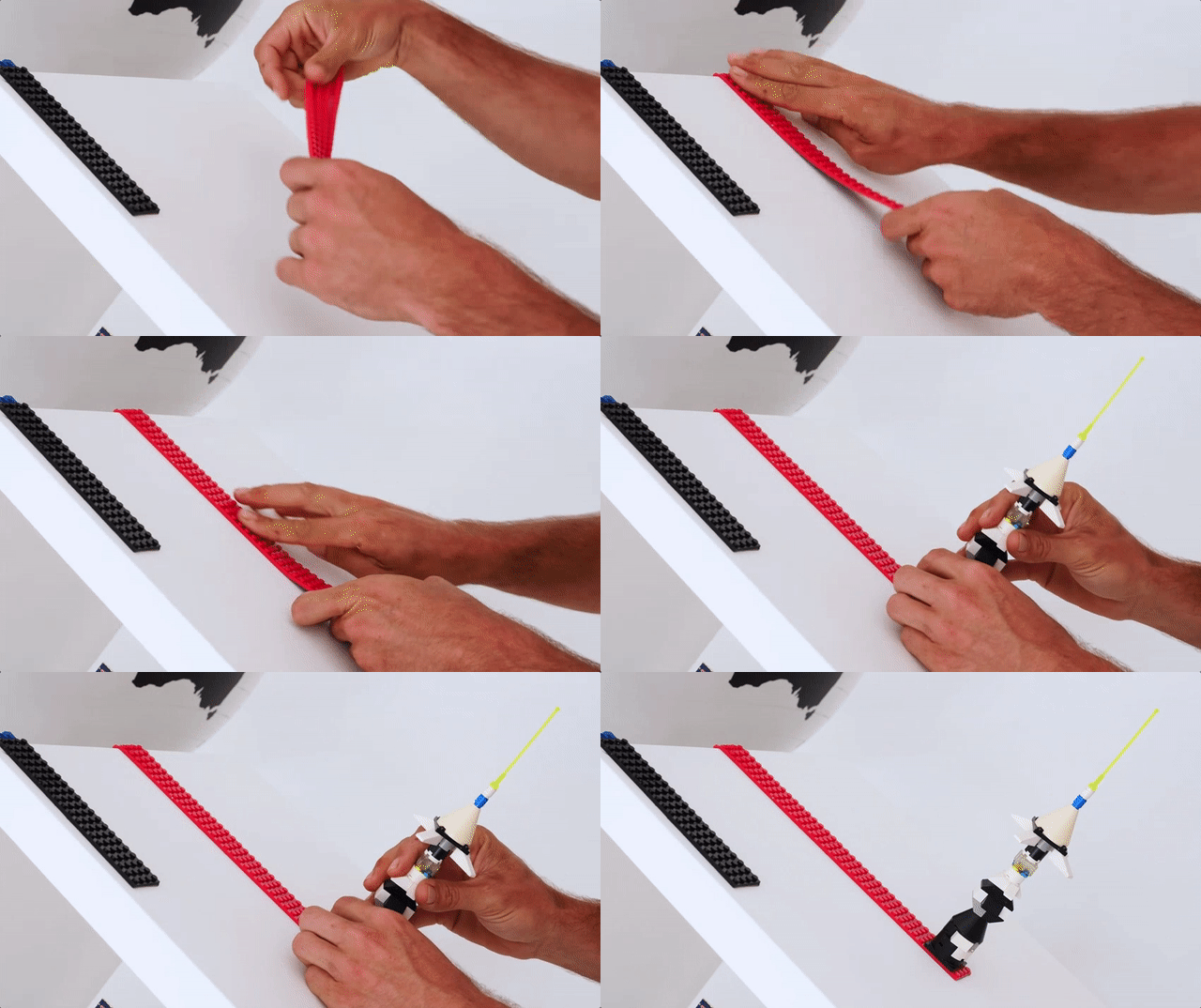
Are plain old LEGO bricks gonna be ruined for you forever now that you’ve seen this flexible, cuttable, reusable LEGO-compatible adhesive tape? ‘Nimuno Loops’ is a crowdfunded creation that comes in rolls so you can stick it onto all kinds of surfaces – including verticals and diagonals – and then use them as a base for your creations. As shown in the product’s promo video, that means you can build gravity-defying structures and cities that practically double back on themselves in the style of the movie Inception.

lego tape gif

Screen Shot 2017-03-15 at 3.02.31 PM

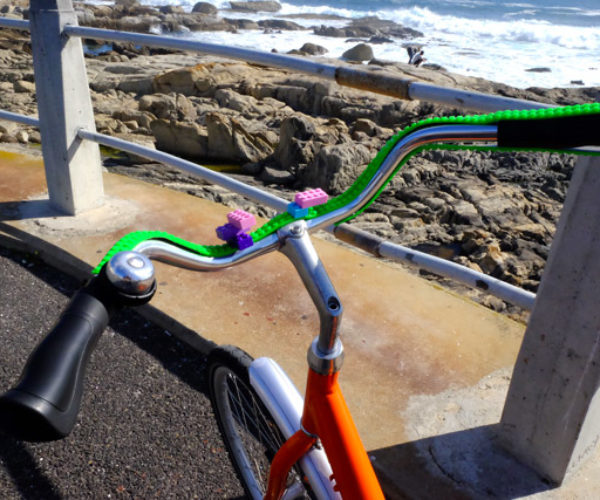
Devised by South Africa-based designers Anine Kirsten and Max Basler, Nimuno Loops starts at just $ 11 plus shipping for two rolls or $ 50 for ten rolls, and it’s available in red, blue, gray and green. Not only can you cut it to size, you can create custom shapes with it You can even stick it to your shoes, bikes, water bottles, strollers and anywhere else that might help you distract your kids for two seconds while you try to brush their hair or check your email.

lego tape 7

lego tape 2

lego tape 3

lego tape 4

People are clearly excited about this innovation, obliterating the original Indiegogo funding goal of $ 8,000 to raise $ 743,000 and counting with a full month left on the campaign. It’ll be interesting to see what LEGO artists do with this stuff. How could Nimuno Loops revolutionize your own LEGO creations?

Share on Facebook


[ By SA Rogers in Design & Products & Packaging. ]

[ WebUrbanist | Archives | Galleries | Privacy | TOS ]


WebUrbanist

 
Comments Off on LEGO-Compatible Tape Lets You Build Gravity-Defying Inception-Style Models

Posted in Creativity


How to Photograph a Real Estate Interior or Property

16 Mar

Are you or someone you know thinking of selling or renting out a property? Whether it’s a house, an apartment, a restaurant, or a hotel; the key to successfully marketing it is with captivatingly well exposed, and well-composed photographs. Here are a few tips on how to successfully photograph a clear, bright interior with visible exterior showing through the windows. Learn how to stack your bracketed photos so that your finished photographs show the outside and the inside of your rooms clearly and perfectly balanced.

The problem with interiors

Here is what it looks like when you expose for the inside or interior of a room.

How to Photograph Real Estate Interiors or Properties

This is what it looks like when you expose for the outside.

How to Photograph Real Estate Interiors or Properties

This is a big problem, right? You can very rarely get a well-balanced shot of the interior of a room without blowing out the windows. The trick is to take several bracketed exposures of each room and stack them, in order to get a clear, evenly exposed photograph.

Here is what you want your final photo to look like.

How to Photograph Real Estate Interiors or Properties

Equipment needed

This is what you will need to shoot interiors:

  • DSLR with auto bracketing feature.
  • Tripod – I like to use a tripod with a bubble level on the head to ensure straight horizontals.
  • Wide-angle lens – Depending on your camera’s sensor, use the widest angle lens that you have available.
  • Shutter release – Not essential, but quite useful to reduce camera movement (resulting in a blurry image) when pressing the shutter.

Quick and easy steps to achieve the perfectly exposed shot

Firstly, it’s recommended to do a little home staging of the rooms that you want to photograph. Having it clear of clutter and clean definitely makes for better photographs. You can arrange some flowers and some fruit bowls to warm up the interior space, and make it look inviting. Clearing the floors of clutter will also make the rooms look more spacious.

How to Photograph Real Estate Interiors or Properties

You don’t need to redecorate or go through a whole moving process, but definitely, a little planning beforehand will make your photographs look more professional. Sometimes just moving a few pieces of furniture around or putting things away in another room will suffice. Turn on all lights that you feel will give depth to the room and open all curtains and blinds. I always like to show the outside, but of course, if the view is not a very nice one, you may want to shut the blinds partly.

A wide-angle lens is best for this type of photography because you will want to get most of the room into your shot. I often find that shooting from corners of the room and getting three walls into my shot will help the viewer get a better feeling for the size of the room. Sometimes shooting from the doorway also works well if the room is very small.

You often have to squeeze and make yourself small to get behind your tripod. I sometimes find myself in some pretty strange positions in order to get the perfect shot. You may even develop some contortionist skills doing this type of photography. Move around the room to find the perfect angle that showcases the best features of the room. Also, try not to shoot directly at windows. Instead, if possible, try to shoot at an angle.

How to Photograph Real Estate Interiors or Properties

Setting up and shooting

You will want to set up your camera on a tripod and shoot at waist level, not eye level. The verticals need to be straight and by lowering your camera and shooting straight you will achieve a better-composed photo with a better angle. Look at the view from your camera and try to assure straight vertical lines when looking at cabinets or tall furniture.

Set your camera’s auto bracketing feature (AEB) to shoot several shots. Depending on the amount of light in each room, you will need to shoot between three to nine bracketed exposures at 1 to 1.5 stops between each. I prefer to use natural light as much as possible, so timing the photo shoots with the time of day is essential. Usually, the more light you have in a room, the more brackets you will need.

How to Photograph Real Estate Interiors or Properties

A shutter release will assure that the camera will not move during the bracketed shooting. You will want to shoot quickly and have the camera as steady as possible if you’re not using a shutter release.

Blending exposures

There are several different techniques to stack your photos in order to blend your bracketed exposures together. I personally use a stacking software called Photomatix Pro 5. I am satisfied with the results I can achieve with minimal adjustments and I enjoy the time-saving quality that it provides.

You can search for other HDR software and choose the one that best suits your needs and budget. You usually get a trial period or a trial version that includes watermarks. This will allow you to test with your own photos in order to see if you like it before you purchase it. Recent versions of the most popular photography software like Photoshop and Lightroom now have a HDR merge feature to perform HDR processing and tone-mapping.

How to Photograph Real Estate Interiors or Properties

Your photos are ready when you feel like the room is evenly exposed and you can see the outside view clearly through the windows.

Conclusion

Have fun experimenting with your photography and showing your friends and family what great, professional looking interior photographs you took of your property! They may even ask you to photograph their properties if ever the time comes when they are contemplating selling or renting.

Don’t hesitate to show me your photos in the comments section.

The post How to Photograph a Real Estate Interior or Property by Sandra Roussy appeared first on Digital Photography School.


Digital Photography School

 
Comments Off on How to Photograph a Real Estate Interior or Property

Posted in Photography


How to Plan and Prepare for Landscape Photography

16 Mar
How to Plan and Prepare for Landscape Photography

Autumn morning in the Alaska Range. Colors peak in late August or early September, if you are planning to catch the fall colors, plan accordingly.

The best images rarely come together on accident. Yes, I know, sometimes serendipity will place you at the perfect spot in the perfect light with all the gear you need and you are able to click away. But that is a darn rare thing. Good images, particularly landscape photography, almost always require a bit of planning. The season, times of day, weather, and your location, should all be considered before you head to the field. Though this is particularly true on multi-day trips, planning can be useful even for shoots around your local area.

Seasonality

I once got an inquiry about one of my private photo workshops from a gentleman who wanted to photograph the northern lights in the mountains of northern Alaska. This is an area I know well and a place I regularly lead photo tours, so I was eager to send along the information he requested. Until I got to his last sentence; he was planning his trip for July.

How to Plan and Prepare for Landscape Photography

A curtain of aurora over the Dalton Highway and Brooks Range of northern Alaska. If you want to see the northern lights, it’s best to not plan a visit in the summer.

In northern Alaska, far north of the Arctic Circle, the sun never sets in midsummer. The northern lights only come out at night. You can see the problem, right?

Though I laugh about it now, I have to give credit to the guy. He contacted me before making his plans, and I was able to set him straight before he bought some expensive plane tickets and ended up on a very disappointing (and likely mosquito-infested) trip to the arctic.

I realize that’s a dramatic example. It’s not as though endless daylight during the arctic summer is a well-guarded secret. That said, for every location you might visit, there are things about seasonality you should know in advance.

How to Plan and Prepare for Landscape Photography

Late autumn in the Brooks Range of northern Alaska means early September.

Research your destination

Do your research. Most parts of the world have cold, wet, dry, or hot seasons and the success of your photos could depend on the season you choose. Think of the types of shots you are hoping to make, and then find out what time of year is best suited to those images. Seasonality is pretty intuitive for most photographers. We generally have a good understanding of how spring, summer, fall and winter relate to our photography. But within those seasons things get a bit murkier.

Let’s return to my aurora borealis example from earlier. Yes, if you want to shoot the northern lights, you’ll need to make your trip to my neck of the woods during a time of year when it gets dark. But there are better and worse times between September and April. Arrive in mid-January, and you may encounter nighttime temperatures of -40 degrees; not a fun photo temp. In addition to being warmer, the times around the spring and fall equinox also coincide with the usual peak of auroral activity. And in the spring, there is less chance of cloud cover. I reiterate – do your research!

Time of Day

How to Plan and Prepare for Landscape Photography

Side light adds drama to the mountains around Haines, Alaska.

This is a big one that often goes overlooked. Most landscape photographers are happiest in the hour or two surrounding dawn and dusk. The light is low and sweet, throwing long shadows across the terrain. But those times vary based on your location.

What are the sunset/sunrise times? Depending on where you are and the time of year, that sweet light may occur late, or early (even the middle of the night here in Alaska during the summer). Long before you head out, look up these times and plan accordingly. A simple Google search will provide this information, as will many GPS devices and smartphone apps.

How to Plan and Prepare for Landscape Photography

Morning fog lifts off the forest and pastures of Chiloe Island, Chile.

How will the light fall on the landscape? If you want to capture the mountains with a certain kind of light (backlight, sidelight, front light) then you need to know not only the time of the sunrise or sunset but where it will set in relation to your subject. More than once, I’ve been shooting in the evening and found my subject draped in bland, gray shadows and wished the light was coming from the opposite direction.

Look at maps, see how your locations are situated, and keep in mind both time of year AND time of day, since both will impact how the light falls.

Weather

How to Plan and Prepare for Landscape Photography

Bad weather isn’t always bad. During a winter storm, a break in the clouds allowed this patch of sun to hit the mountains of southeast Alaska.

This is a short-term planning tool, but can help a few days out from your shoot. Honestly, I’m hesitant to include weather in this article because forecasts are occasionally wrong enough, and besides, thelandscape photography opportunities in bad weather can be amazing. Usually it’s best just to go out anyway and see what you can find.

However, by paying attention to the forecast, you may be able to moderate your expectations or plan around any undesirable weather. Trips I lead to go shoot the aurora are perfect examples of this. Clouds are bad when it comes to astral photography, but the weather isn’t uniform across a big landscape. Just because it is cloudy locally, doesn’t mean an hour away that it isn’t clear. By paying attention to weather forecasts and conditions, you can plan to adjust locations or change dates.

Location Scouting

Once on your site, it’s never a bad idea to go out for a hike, or drive and check out the good compositions before the sweet light of evening hits. Sadly time, commitments, and life in general may not allow you to get out and scout. Fortunately, there is a digital solution that can help: GoogleEarth. Using GoogleEarth you can check out the places you’d like to shoot, get driving times, and (my favorite part) use the street-view function to get an idea of how the landscape will look from the ground. Using this, I’ve actually found the exact spots and compositions for images I hoped to make.

How to Plan and Prepare for Landscape Photography

I went out for an ill-advised hike in a thunderstorm in Denali National Park, but it resulted in the brightest rainbow I’ve ever seen hanging over the tundra below.

Resources

The internet is full of information, and a few well-worded searches will get you much of what you need to know. But the internet will never be better than personal experience. Reach out to photographers familiar with the area you hope to visit. Social media is a great way to find shooters who know your destination. From there it is a simple matter of sending some questions via email or a message. It’s extremely rare that someone isn’t willing to share what they know, provide advice, and point you in the right direction. This can also be a great way to make connections, and even friendships.

Conclusion

How to Plan and Prepare for Landscape Photography

Northern lights over the mountains of the Brooks Range, Alaska.

Consider your photographic goals for the location you are planning to shoot, then do your research. Ask the right questions of the people who know, and you’ll have a much better chance of success when you hit the field. Plus you won’t feel foolish when you show up in the middle of the arctic summer to photograph the northern lights.

The post How to Plan and Prepare for Landscape Photography by David Shaw appeared first on Digital Photography School.


Digital Photography School

 
Comments Off on How to Plan and Prepare for Landscape Photography

Posted in Photography


Urban Off-Grid: 12 Creative Solutions For Self-Sustainability in the City

16 Mar

[ By SA Rogers in Architecture & Houses & Residential. ]

off grid urban main

Off-grid housing is almost always relegated to remote areas due to strict urban building codes and access to affordable land, but sometimes self-contained structures pop up in parks, on rooftops and in canals anyway – or the owners of more conventional city dwellings simply cut the cord. There are already a lot of different ways to go off-grid in the city, most explored by necessity due to poverty, others seeking a more sustainable way of life without giving up community and convenience. From rooftop structures and mobile housing to entirely new self-powered city blocks, these solutions work within cities that already exist rather than envisioning expensive futuristic eco-cities from the ground up.

The Mobiators

mobiators

mobiators 2

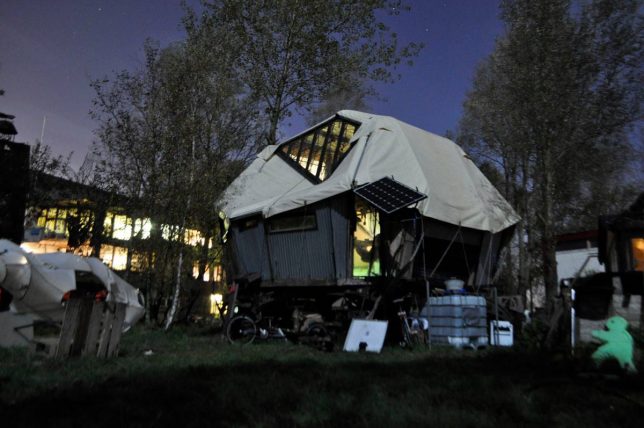
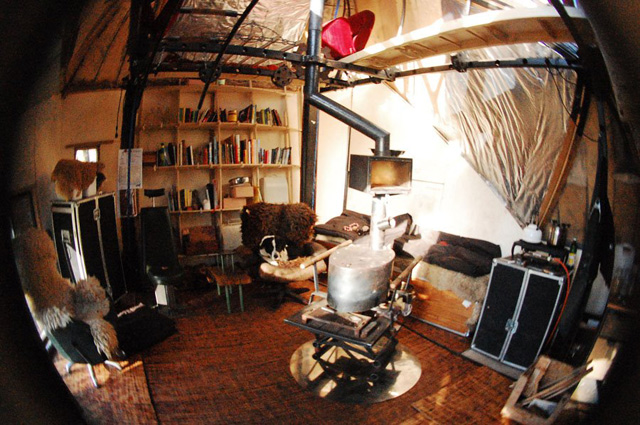
Somewhere between a DIY cabin, a tent and a mobile home, this strange structure by The Mobiation Project travels through Amsterdam, setting up in locations all over the city as a statement about the increasingly broken global economy and damage to the environment. Built by an artist/architect and a carpenter/designer, The Mobi-01 acts as an interactive, inhabitable, ‘open-house’ example of an off-grid structure that can set up virtually anywhere.

Off-Grid Rooftop Penthouse in Canada

off grid rooftop penthouse canada

off grid rooftop penthouse canada 2

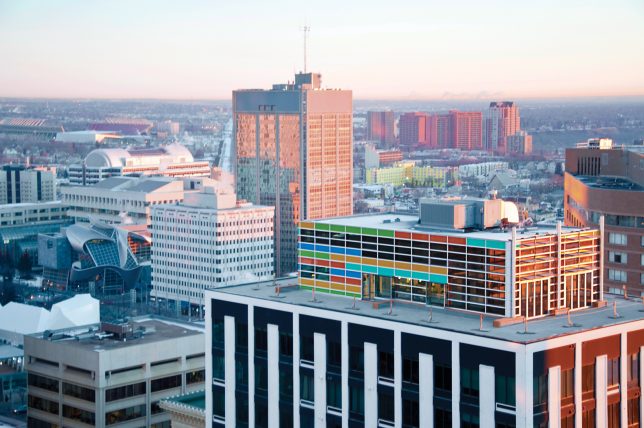
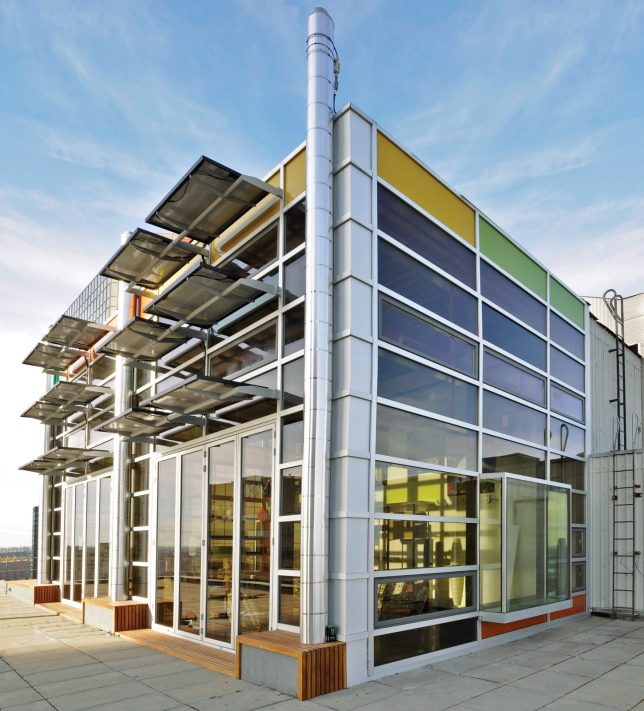
Reclaiming the rooftop space atop urban structures isn’t a new idea, but it’s rare to see them disconnected from the power grid, like this former mechanical room on a 19-floor office building in Edmonton, Canada. Architect Vivian Manasc saw potential in the structure when doing a technical evaluation of the building, and ultimately transformed it into a home for herself. The home horseshoes around an existing elevator core, which warms the space passively, and gets its power from solar panels.

Free Off Grid Camping on a NYC Rooftop

bivuoac urban camping

bivuoac urban camping 2

bivouac off grid new york cit

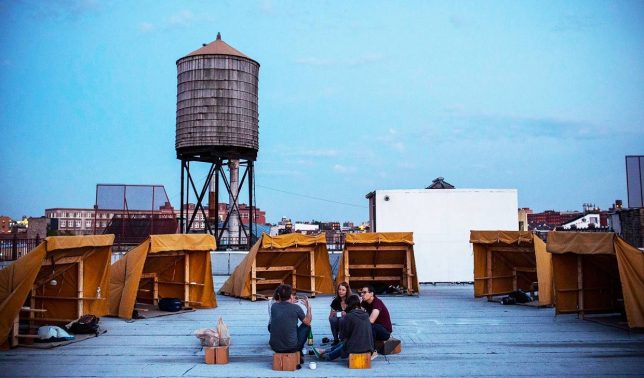
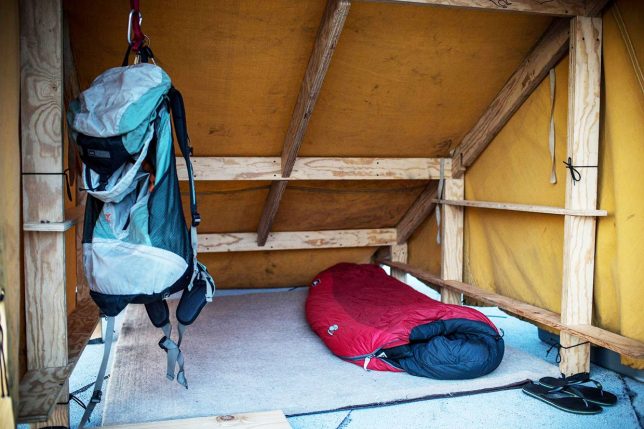
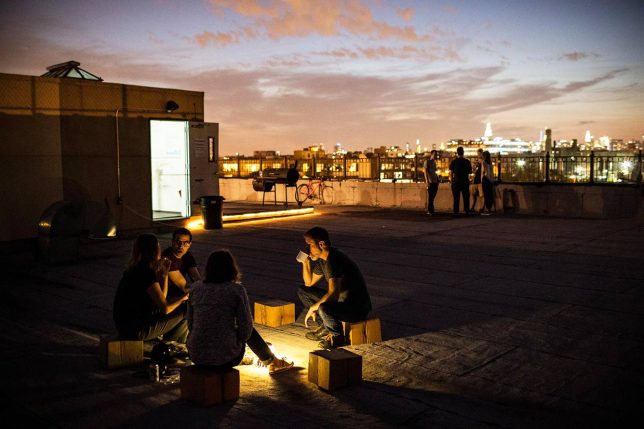
Bivouac is a pop-up campsite rotating to different rooftop spots around New York City, consisting of little more than six waterproof canvas tents with wooden frames and wool floor mats, a kitchen area with a table, and a small library. There’s no internet, electricity or showers, and you can’t have a campfire, but at least there’s access to a toilet within the building. It’s entirely free, and an interesting concept, though one wonders what this project says about accessing urban spaces when you’re well-off just for fun versus the tent cities created by homeless people who have nowhere else to go.

Off-Grid Urban Block for Dallas, Texas

forwarding dallas

forwarding dallas 2

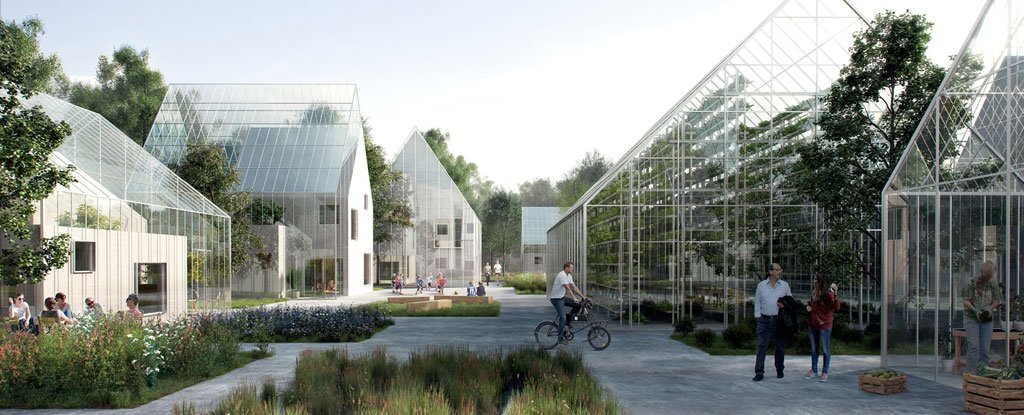
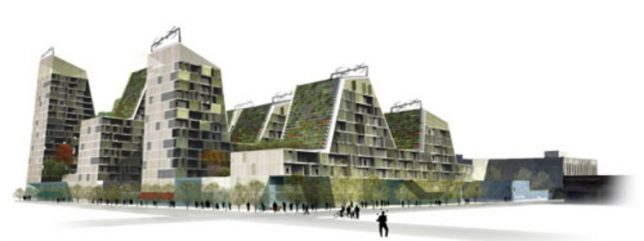
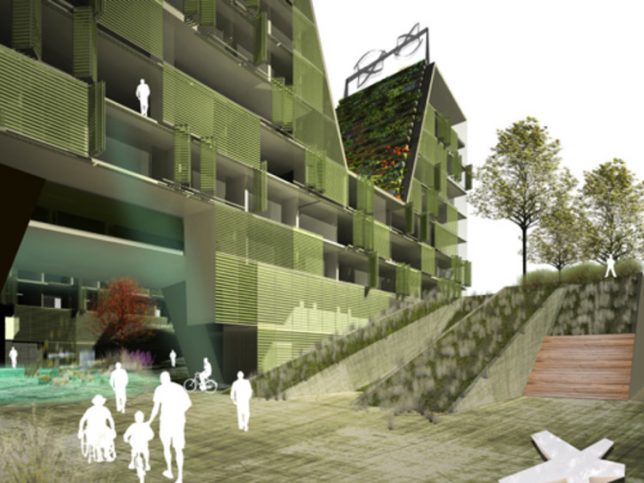
What if entire city blocks could be designed to power themselves, built in areas that were previously disused, like former industrial properties or rail yards? Winner of the Re:Vision Dallas competition, ‘Forwarding Dallas’ envisions a complex of living spaces inspired by rolling hills, with vegetation-covered roofs, solar panels, wind turbines, and passive solar louvers covering the building’s glass facades to regulate heat. The block also has its own rooftop water catchment system, a greenhouse, a swimming pool and other communal spaces. The 40,000-square-meter complex could sustainably house 854 people within the space of a typical city block.

Next Page – Click Below to Read More:
Urban Off Grid 12 Creative Solutions For Self Sustainability In The City

Share on Facebook


[ By SA Rogers in Architecture & Houses & Residential. ]

[ WebUrbanist | Archives | Galleries | Privacy | TOS ]


WebUrbanist

 
Comments Off on Urban Off-Grid: 12 Creative Solutions For Self-Sustainability in the City

Posted in Creativity


Veydra’s California headquarters robbed of 200+ lenses over weekend

15 Mar

Veydra, a California-based cinema lens maker, has reported the theft of more than 200 lenses from its headquarters. According to a post on Facebook, someone broke into the company’s California HQ on Sunday and stole 200+ lenses from the Veydra Mini Prime lenses inventory, leaving behind bare shelves and scattered recycling.

The company cautions that while it will still offer the Mini Prime lenses, it will take time to recover from the inventory loss, and so it may take a while to fill orders. In the meantime, Veydra is offering an unspecified reward for information that leads to the lenses being returned. ‘This many lenses should be noticeable,’ the company said on Facebook, ‘so if you see any crazy deals on Veydra, help us recover our stolen goods.’

Articles: Digital Photography Review (dpreview.com)

 
Comments Off on Veydra’s California headquarters robbed of 200+ lenses over weekend

Posted in Uncategorized


Photogenic Death Valley salt flats damaged by driver who abandoned van

15 Mar

An abandoned van found on Death Valley National Park’s protected salt flats has been towed away, but tracks remain – and may be there for years. The park posted photos of the van to its Facebook page and says that the vehicle went into the salt flats at Badwater Basin on Wednesday last week. It was towed out on Friday by a small track vehicle, leaving more (unavoidable) damage to the salt crust.

It’s not the first time these flats have been damaged by drivers ignoring signs to stay on roadways. According to the Las Vegas Review-Journal, the park is prosecuting three cases of vandalism. It has also applied for a grant that would fund restoration of the site. This case also calls to mind the recent vandalism of the Racetrack Playa, where someone drove a vehicle over the dry lake bed.

According to the National Park Service website, the Badwater Basin salt flats are among the largest such flats in the world. The damage isn’t irreparable, but it does require some work smoothing the tracks over and spraying them with water to encourage salt to regrow.

The delicate salt flats are a photographer favorite. Photo by Rajesh Bhattacharjee

Responding to comments on its Facebook post, a park representative said that the driver of the van has not been charged yet, but could face a fine of up to $ 5,000 and up to 6 months in jail.

Articles: Digital Photography Review (dpreview.com)

 
Comments Off on Photogenic Death Valley salt flats damaged by driver who abandoned van

Posted in Uncategorized


Movement in Fashion Photography

15 Mar

  One thing that I love to see in a photograph is movement.  Movement  makes a photograph come alive, but is also  one of the hardest things to portray.  Newer photographers have a lot to deal with, settings wise, and might not  know how to tell the models to move, and newer models have it stuck in their heads not Continue Reading

The post Movement in Fashion Photography appeared first on Photodoto.


Photodoto

 
Comments Off on Movement in Fashion Photography

Posted in Photography


Belgian wins €15,000 Zeiss Award for Faroes project

15 Mar

$ (document).ready(function() { SampleGalleryV2({“containerId”:”embeddedSampleGallery_4065689823″,”galleryId”:”4065689823″,”isEmbeddedWidget”:true,”standalone”:false,”selectedImageIndex”:0,”startInCommentsView”:false,”isMobile”:false}) });

A young photographer from Belgium has been announced as the winner of the 2017 Zeiss Photography Award for a month-long project on the inhabitants of a remote collection of islands off the north coast of Scotland. Kevin Faingnaert’s Føroyar series wins him a €3,000 cash prize as well as €12,000 worth of Zeiss lenses in the contest that was themed ‘Seeing Beyond – Meaningful Places’.

Faingbaert spent a month photographing and living among the dwindling population of the Faroe Islands – a group of islands that sit between Norway and Iceland along the border of the Norwegian Sea and the North Atlantic. His series includes pictures of the people, the landscape as well as some of the buildings of the islands, but mainly focuses on the population loss of the area, as youngsters move away to find work, and the harshness of the conditions.

Zeiss says it received over 30,000 images from 4677 photographers representing 130 countries for this year’s competition. As well as the winning series the judges selected the work of nine other photographers for a shortlist.

  • Anna Filipova, UK
  • Mario Adario, Italy
  • Christopher Roche, UK
  • Sonja Hamad, Germany
  • Ben Bond Obiri Asamoah, Ghana
  • Frederik Buyckx, Belgium
  • Nicholas White, UK
  • Fabian Muir, Australia
  • Nicky Newman, South Africa

The prizes will be presented to Faingbaert during a ceremony at the Sony World Photography Awards in London next month. For more information, and to see the full project along with the shortlisted images, visit the Zeiss Photography Award 2017 web pages.

Press Release

Announcing the Winner of the ZEISS Photography Award 2017

Kevin Faingnaert from Belgium documented life on the Faroe Islands, offering a portrait of a culture which may not exist for much longer.

The winner of the ZEISS Photography Award has been chosen: Kevin Faingnaert from Belgium impressed the international Jury with his photo series Føroyar in which he offers a portrait of life on the Faroe Islands located between Scotland and Iceland. “There is a wonderful completeness to Kevin’s series,” says Claire Richardson, Picture Editor at the Lonely Planet. “Epic landscapes mix with tenderly composed portraits, tied together by a soft muted palette, which immediately draws you in. Everyday events in these remote communities are captured by the lens, from a parishioner sitting quietly in a local church to a village football game. But look closely at this unforgiving and wild environment and you realize that these are ordinary people living in extraordinary circumstances, hanging on at the edge of the world.”

“Hundreds of people used to live here, now there are just five or ten people left”

Kevin Faingnaert lived amongst the local inhabitants on the Faroe Islands for a month, couchsurfing and hitchhiking. “The Faroese were very warm and welcoming,” he says. To show his appreciation, he made breakfast for his hosts, shoveled snow and went out to sea with the fishermen. On his trips across the islands he passed by small villages. “A few decades ago they were inhabited by hundreds of people, but now there are often just five or ten people left because the young people have moved to the cities in search of better opportunities. They don’t see any future in the places they were born in.”

The thirty-year-old is delighted by his win: “I’m incredibly honored by winning the award and that my photos get recognized in between the endless amount of other wonderful stories being told. Most importantly it gives me strength and motivation to continue my work and to take up new ideas which have been in my mind since forever.” As his prize, Faingnaert will receive camera lenses from ZEISS worth a total of 12,000 euros as well as 3,000 euros for a photo trip. The awards ceremony will take place in London on 20 April 2017.

30,000 submissions from 130 different countries

“Meaningful Places” was the theme of the ZEISS Photography Award 2017 which ZEISS conducted in collaboration with the World Photography Organisation (WPO). 4,677 photographers from more than 130 different countries submitted more than 30,000 photos. Experts from the world of photography served on the jury: in addition to Claire Richardson, Sarah Toplis from the online art dealer The Space and the photographer Jürgen Schadeberg Dr. (h.c.) judged all the entries. The following photographers made the short list:

Anna Filipova, UK

Mario Adario, Italy

Christopher Roche, UK

Sonja Hamad, Germany

Ben Bond Obiri Asamoah, Ghana

Frederik Buyckx, Belgium

Nicholas White, UK

Fabian Muir, Australia

Nicky Newman, South Africa

Faingnaert’s winning photo series as well as a selection of other images from the competition will be on display at the Sony World Photography Awards & Martin Parr – 2017 Exhibition at the landmark Somerset House, London from 21 April to 7 May 2017.

Articles: Digital Photography Review (dpreview.com)

 
Comments Off on Belgian wins €15,000 Zeiss Award for Faroes project

Posted in Uncategorized


Simplified DIY: New Tool-Free IKEA Furniture Snaps Together in Minutes

15 Mar

[ By WebUrbanist in Design & Furniture & Decor. ]

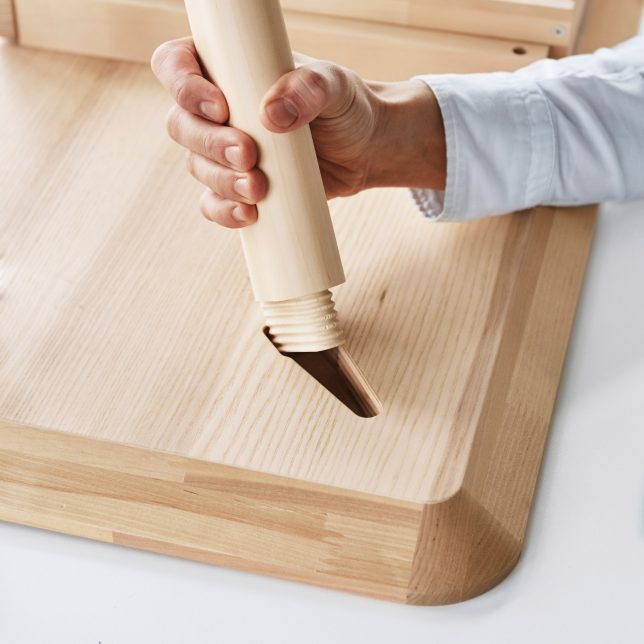
wedge joint

Buying a piece of IKEA furniture is generally a bit of a gamble in terms of potential complexity, but these clever joints are designed to radically simplify and speed up the process across the board.

The so-called “wedge dowel” makes it possible to put together wood products without bolts or screws, hex keys or screwdrivers. The ribbed connector and associated slot lets large objects remain flat-packed for shipping then fit together for long-term durability (without any glue or loss in structural integrity).

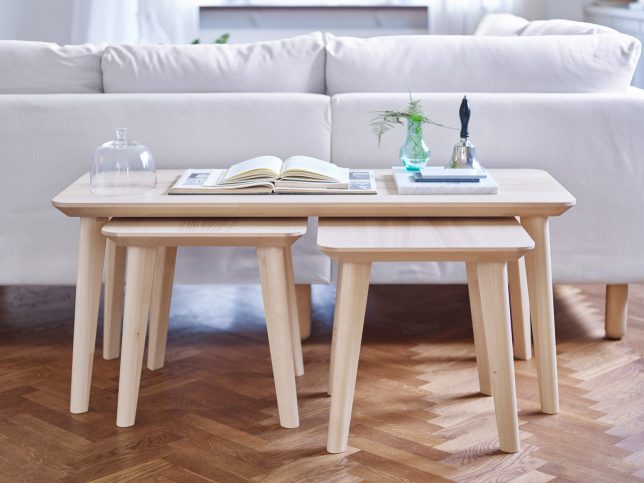
furniture set

Historically, some IKEA items have come pre-assembled but at a size that makes them hard to transport. Other smaller items can pack flat but demand a dizzying array of little parts and associated tools. This single joint is letting the company replace dozens of metal fittings for certain sizable items.

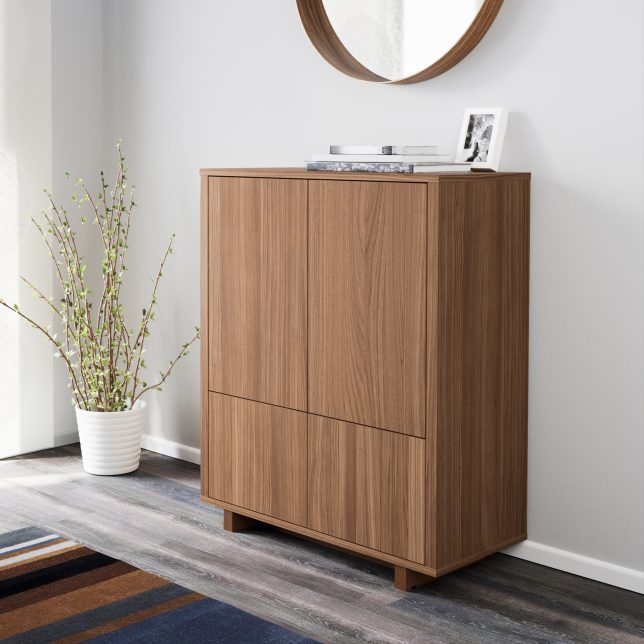
stockholm cabinet

The company first started using the dowel system in its Stockholm cabinet series (above) as a test, but now plans to roll it out across its furniture lines, moving next to the Lisabo table. What used to take a half hour can now be connected with these wedge joints in three minutes.

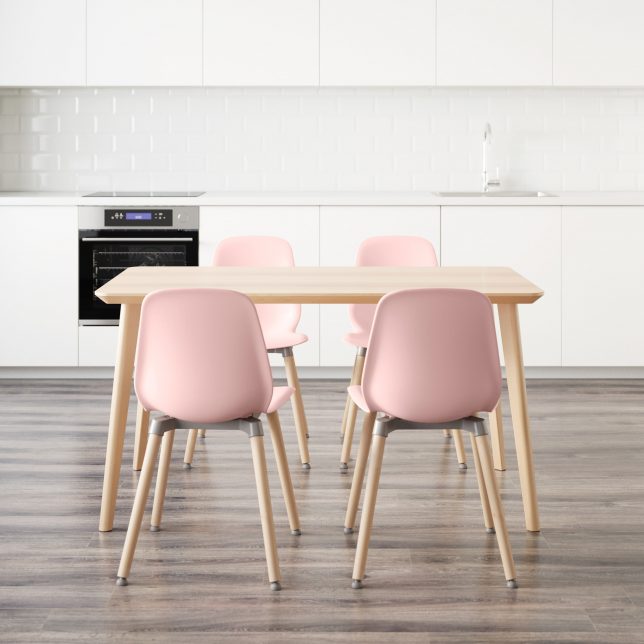
dining set

And it is not just a function of assembly: these joints make it easier to take things apart again, making them particularly useful in a day and age where people move frequently for work and other reasons. Some of their furniture lines are expected to adopt the wedge joint entirely.

Share on Facebook


[ By WebUrbanist in Design & Furniture & Decor. ]

[ WebUrbanist | Archives | Galleries | Privacy | TOS ]


WebUrbanist

 
Comments Off on Simplified DIY: New Tool-Free IKEA Furniture Snaps Together in Minutes

Posted in Creativity


Juggling with one hand: Leica M10 shooting experience

14 Mar
A slightly blurry jet-lagged elevator selfie, which – yes – I could have taken on an iPhone. At least I didn’t add a fake film rebate…

Rangefinders are weird. The idea that superimposing a small ghostly image in the middle of a tunnel-type optical viewfinder is in any way superior to focusing with an SLR, (let alone using autofocus) is frankly bizarre, in this day and age.

In the digital world, a lot of people use the word ‘rangefinder’ rather lazily, to mean anything with a viewfinder positioned on the upper left of its back, but real rangefinders are uncommon. So uncommon, in fact, that Leica (the company which arguably perfected the technology) has made only ten substantially new cameras of this type since the mid 1950s.1

Grabbed quickly on my way back to my hotel on the new 35mm Summilux, this F2 snapshot isn’t pin sharp but by the time I’d nailed focus, the dog had moved.

I’ve always had a soft spot for the M-series, but if I’m being honest, their appeal has always been at least as much romantic as practical. They’re finely constructed, some of my favorite photographers used them, and they look beautiful. More so the film models, admittedly, but the M10 still retains a lot of the same aesthetic appeal as my all-time camera crush, the M6. Maybe I’m just shallow.

I also collect vinyl. Not because I believe it sounds better than CD or MP3 (it doesn’t), but because I’ve always been a pops and crackles kind of guy, and when it comes down to it, I don’t trust music that doesn’t weigh something. If that makes me a hipster, I’ll save you the bother of leaving a snarky comment and just admit it now.2

Speaking of music, I’ve heard it said that if you write a song on a banjo, and the song works, then it’s probably a good song. The point of course being that because the banjo is so simple, and so limited an instrument compared to (say) the electric guitar, it forces the composer to focus on the essentials of structure and melody.

One of relatively few examples of successful zone focusing from my trip. I estimated subject distance at a little over 6 feet (one an a bit me’s) and shot waist-level on the 35mm Summilux at F5.6 to give a small margin for focus error. 

I can’t play the banjo, but I feel much the same way about shooting with a rangefinder, compared to (say) a modern DSLR. It’s a substantially less versatile tool, which forces me to slow down and think more about the photographs I take (and what kind of photographs I take). A day of shooting with the M10 can be very rewarding for this reason, but it can also be hugely frustrating. I’ve been spoiled by zoom lenses, autofocus and multi-zone metering for the better part of 20 years. At this point, shooting with a rangefinder, even a relatively sophisticated digital rangefinder like the M10, can feel a bit like trying to juggle with only one hand, and frequently did, on this trip.

“Who needs autofocus when you’ve got zone focusing?”

‘Who needs autofocus when you’ve got zone focusing?’ That’s a comment I just read on the Internet. Who needs autofocus, you ask? I do, apparently, judging by the miserable hit-rate I achieved during my first experiments with zone focusing. To my credit, I did get better, but accurately estimating distance by eye is tricky, and takes practice.

A less successful example of zone focus, also taken with the 35mm Summilux. I like this shot, and on film I’d probably call it acceptably sharp, but it’s not sharp enough for a DPReview sample gallery. My distance estimate was a bit off (the wall behind my subject is where the plane of focus has ended up) and it looks like a touch of camera-shake has crept in, too. 

Here’s a tip though – using their own height as a reference, most people can estimate distance roughly by imagining themselves lying down, and asking ‘How many me’s away is that person/thing?’

Try it now – it’s OK, I’ll wait.

See what I mean? Fortunately, I’m a simple, easy-to-visualize, boringly average, already-engraved-on-the-focus-ring 6ft in height, and that’s about the right distance away for a lot of candid street portraits. Shooting in this way, I’d position the focus ring at 6ft, set a conservative aperture of around F5.6-8 to account for some slop, and bingo – things would usually end up more or less in focus.

Note my use of the word ‘usually’ and the term ‘more or less’…

Nailed it. A successfully zone-focused F4 shot, taken in the same indoor market as the previous image. The small size and unobtrusive appearance of the M10 (once the ostentatious red dot has been taped over) tends not to draw much attention. 

The last time I shot with a rangefinder for any length of time I was using an M3, usually loaded with black and white film. Truly accurate focus didn’t bother me much, back then. Aside from anything else, being a 3-dimensional medium, film is very forgiving of minor focus errors. Not so the perfectly flat sensors inside digital cameras. And let me tell you, 10 years’ subsequent training as a professional pixel-peeper (try saying that when you’ve been moderating comments all day) is hard to shake. 

Working with the M10, one of the first things I had to get over was the learned fallacy that a shot is only worth keeping if the subject is exactly in focus. Maybe one day I’ll be able to judge distance and framing with 100% accuracy when shooting from the waist, but I’m certainly not there yet. Until then, and for the sake of my own sanity, I’m trying to to concentrate a little more on caring a bit less. 

Small and discreet

The M10 is small and discreet enough that often, you can snap quick moments without getting in anyone’s way or attracting too much attention. But in order to do this, you’ve got to be quick. You can’t standing there dumbly for ages like a second-rate living statue, fiddling with focus or exposure with the camera to your eye, or fretting over exact framing.

Often during my shooting, if the light was reasonably consistent I’d check accurate exposure using the built-in meter from time to time, but keep aperture, shutter speed and ISO locked. At this point, with the lens set to the hyperfocal distance for whatever aperture, taking a picture became a simple matter of raising the camera to my eye, and pressing the button. 

One thing I’ve greatly enjoyed doing with the M10 is shooting with some classic lenses. This F4 portrait of my friend and frequent tour-guide Emi was shot on my 1950s Nikon 5cm F1.4 S.C., (still my all-time best junk shop find). While it’s not in the same league as more modern optical designs, it’s lovely for portraits. Just be aware of curvature of field…

The transition to pre-setting exposure and focus wasn’t natural, (I’m a control freak, I suppose), but I found shooting like this with a 28mm Elmarit at F8, and either focusing hyperfocally or guestimating focus using the ‘how many me’s?’ method to be quite freeing. It certainly made me much more agile.

In fact, sacrilegious as this might sound to some readers, I think that the M10 is at its best when used essentially as a point and shoot camera – for street photography at any rate.  

Taken at F8 (possibly F11…) on the 28mm F2.8 Elmarit, this shot is one of a sequence of images taken at the lens’s hyperfocal distance. Used in this way, the M10 basically becomes a point-and-shoot camera. 

Speaking of 28mm, while I’m normally more of a 35mm fan, I found myself reaching into my bag for the wideangle frequently when shooting with the M10. Partly for the luxury of a bit more depth of field when shooting street scenes, and partly because I enjoyed being able to live inside the entire area of the M10’s viewfinder. Although slightly improved compared to the Typ 240, it’s still hard to see all four of the the 28mm framelines in a single glance, but given that the finder itself covers roughly a 28mm field of view, for the most part you can just ignore the framelines completely.

Another hyperfocal shot taken with the Elmarit 28mm, I waited as this group of people descended the staircase, and took a series of images. This one is my favorite. 

When the M10 is used like this, photography becomes a very immersive experience. The finder is brighter and more natural than an SLR’s ground-glass projection, and much more immediate than even the best electronic viewfinder. The 28mm F2.8 Elmarit is tiny, too, and without a hood attached, it does not occlude the finder. Even the premium 35mm F1.4 Summilux is a small lens by DSLR standards. Having that kind of quality in a compact, unobtrusive full-frame package happens to be one of the few unequivocal arguments in favor of rangefinder cameras in the 21st Century, and one that is made loudly (and justifiably) by Leica fans today.

One of the reasons I enjoyed shooting with the M10 so much when traveling is that I’m getting old, and I really don’t like having a lot of weight hanging around my neck when I’m out and about. I walked almost 70 miles in 3 days in Tokyo and Kyoto, and that would have been miserable with a full-frame DSLR and equivalent lens outfit. My back hurts enough already.


Some observations:

  1. When I was in Kyoto, the M10 got pretty soaked, repeatedly, and continued to work perfectly. Your experience may vary.
  2. Battery life is fine. It’s not something you need to worry about. You can easily get 500 shots on a single charge if you’re not using live view all the time.
  3. Connecting a Leica rangefinder to my phone to view and upload images felt very odd, somehow, but worked well enough.
  4. If nothing else, I sincerely wish the M10 had some kind of horizon level guide. I swear I have one leg longer than the other.
  5. The M10’s long startup time had less practical effect on my photography than I expected, but I did miss a few shots.
  6. Aspherics aren’t everything. The Minolta M-Rokkor 40mm F2 is a superb little lens, if you can live with the inaccurate frame-lines in the M10’s viewfinder.

Someone commented on my gallery of samples recently to the effect that ‘in Japan you can’t miss’, but I assure you, you can miss. And I know that because I did miss – a lot.

Several times I raised the M10 to my eye and tried to take a shot, forgetting the camera was turned off, and in the ~1.5 seconds it takes to power up, the scene had changed and the moment had passed. One day, it seemed as if I had the wrong lens mounted the entire day. Every time I switched lenses I’d see a shot that would have worked perfectly with the previous lens, and by the time I’d changed back, once again the moment had gone.

On a murky day in Kyoto3 I apparently forgot everything I’d ever learned about metering, and had to push each of my Raw files by at least +1EV in Lightroom to even see what it was I had tried to capture. A humbling experience, to say the least. 

Rangefinder focusing is tricky, but newer Leica lenses (like the 35mm F1.4 Summilux) have impressively little curvature of field. What this means in practical terms is that provided your subject doesn’t move, it is possible – with practise – to focus and recompose, even at wide apertures. This portrait (which I’ve cropped a little) was shot in a moving train at F2.8.

Despite offering automatic exposure, live view and all the rest, the M10 doesn’t make life easy for a photographer who’s not used to rangefinder shooting. It definitely provides the smoothest operational experience of any digital M-series I’ve used to date (although our sample does have a habit of crashing from time to time during image review) but the simple fact of the matter is that as I said in the first sentence of this article, rangefinders are weird.

“I would have come back from Japan with more in-focus, correctly-framed shots had I traveled with a DSLR”

Off-center focusing is tricky (there’s a reason why a lot of well-known shallow dof images captured on Leicas have their main subject positioned in the center of the frame) and when shooting using the optical finder, framing might charitably be described as ‘approximate’ 4. Off-the-curtain center-weighted metering takes some mastering, too.

Without question, I would have come back from Japan with more in-focus, correctly-framed shots had I traveled with a DSLR. I’m not afraid to admit it. But at the end of the day, would I have had as much fun? I doubt it – and I certainly wouldn’t have thought as much about my process. 

$ (document).ready(function() { SampleGalleryV2({“containerId”:”embeddedSampleGallery_6037658348″,”galleryId”:”6037658348″,”isEmbeddedWidget”:true,”standalone”:false,”selectedImageIndex”:0,”startInCommentsView”:false,”isMobile”:false}) });


1 I’m being pretty strict about omitting sub-variants in that total. The M6 spawned a bazillion special editions for example, most of which I can only assume still languish unused in dentists’ safes, and given that it’s essentially just a (slightly) modernised M3, I’m hesitant to call the fully-mechanical M-A a ‘substantially new camera’. An argument could be made that the Monochroms deserve their own appellation but I’ll leave that to the pedants to decide.

2 Although I would like to lobby for a general Internet policy whereby terms can only be used as insults when the thrower of the insult understands what the term means, and – ideally – when the term itself actually means something to start with. Who’s with me?

3 This article was actually called ‘The Kyoto Photo-call’ for about five minutes, before Allison made me change it.

4 Personally, I find shooting with anything longer than 50mm on a rangefinder to be very frustrating, for this reason.

Articles: Digital Photography Review (dpreview.com)

 
Comments Off on Juggling with one hand: Leica M10 shooting experience

Posted in Uncategorized