RSS
 

Archive for March, 2017

Subject tracking: Why it matters to us and why it should matter to you

19 Mar
On many cameras, subject tracking (choosing your subject and letting the camera track as you hold your composition) has gotten very, very good.
Nikon AF-S 24mm F1.8 @ F2.8 | 1/8000 | ISO 320.
Photo by Rishi Sanyal

Digital cameras, and for that matter, film cameras, have offered autofocus for a number of decades now. It’s evolved from just one point to many hundreds of points over the years, allowing for varying degrees of control. You can leave the whole focusing process up to the camera and let it choose what it thinks is your subject; you can just use a single point of your choosing; or you can dance in the middle-ground using a zone or group of points that you select and keep over your subject, while the camera attempts to compensate if your subject veers toward the outside of that zone.

Outright subject tracking, though, is something else. You select the subject you want, usually with a single point or a single zone, initiate focus, and the camera does the rest. It will attempt to identify the size, color and distance of your chosen subject and do its best to track that subject around the frame, whether your framing changes or your subject moves.

This isn’t a particularly challenging use case, but it’s a good demo of how subject tracking works on Nikon’s D5 in 3D Tracking mode. Note focus is initiated at the beginning of the run, and the camera automatically keeps an AF point over Richard while constantly refocusing; even when shooting at 12fps.

Many people don’t have trust their cameras to do this, and until the last few generations of digital cameras, we wouldn’t have recommended it; but manufacturers continue to invest in pushing this technology forward. Established professionals in particular are highly unlikely to shoot this way, because once you’ve worked one way and can reliably get results you’re happy with, why would you change?

But believe us; good subject tracking is really something special, and it’s worth your time to give it a go. Frankly, it has the potential to forever change the way you shoot, for the better.

Why does it even matter anyway?

There are cases both for and against using subject tracking. In high speed, peak action sports, an experienced photographer would likely do a fine job (or better job) by using a cluster, group or zone of autofocus points and follow the action his or herself. But for those who are less experienced, or when shooting at longer focal lengths where following the subject can be more difficult, or when just shooting really erratic and unpredictable motion, subject tracking can be a tremendous help. It got me a number of keepers at a rugby match on a Panasonic camera even though it was the first time I’d ever photographed rugby, and the Nikon D5 was great for low-light soccer.

1 2 3 4 5 6 7 8 9 10 11 12

In the above example from a Nikon D5, our tech editor Rishi Sanyal initiated focus on the kayaker, fired a short burst, kept tracking him with the shutter half-pressed, and then fired another burst that kept accurate focus despite the kayaker basically disappearing underwater for a moment. This gave Rishi an abundance of options for editing, allowing him to get just the moment he was after with that may not have been possible without the use of 3D Tracking. Click here to see the final edited photograph.

It’s true that most manufacturers, despite constantly improving their tracking algorithms with newer models, somehow still don’t recommend subject tracking for these sorts of situations; but in our experience, it still seems to work most of the time anyway.

What other sorts of situations could benefit from using subject tracking? Turns out, a lot.

Weddings are one situation in which I find subject tracking invaluable. For this shot, you could frame up your composition, initiate autofocus on the bride at the beginning of her walk down the aisle, and fire away as she moves through the scene with the camera constantly focusing. Ironically, I didn’t use tracking here because on this camera it’s a menu-dive to access that setting, and single AF is super fast; but the catch is I ended up with fewer options this way. 
Leica Q | ISO 2500 | 1/125 sec | F2
Photo by Carey Rose

Events and weddings are great use-cases for subject tracking. You can initiate focus on the bride (or groom) in a scene, and simply keep continuously focusing on them as they move around, dance, interact with guests, and so on. You don’t have to take the time to move your focus point around, which could results in missed shots, and you don’t have to focus and recompose, which can result in missed focus when shooting at really wide apertures. You can end up with a greater variety of images and more options to choose from when it comes time to edit.

Another use case is candid portraiture. When you can reliably lock focus on a subject’s face or eye and are able to move the camera around while it continues to track focus, that allows you to sample multiple compositions really quickly. It also allows you that much more creative freedom to focus on those compositions in the first place instead of constantly having to move your focus point to catch up to what you’re seeing in your head. Autofocus point placement becomes just one less thing you have to think about.

The elephant in the article – just give it a try

Now, you may have noticed that most of the examples and references in this article are from high-end Nikon cameras, and the reason is not a personal bias; we’ve consistently called out this feature for a while now on mid-to-high end Nikons because we find it to be industry-leading.

But if you’re not a Nikonian, don’t fret! Almost every major consumer camera manufacturer has subject tracking in some form. Panasonic’s tracking system works reliably well, in both rugby and in social situations. Sony’s Eye AF feature is truly amazing. Olympus’ C-AF + Tracking is fairly robust, and Canon’s Dual Pixel AF is probably the best face detection and recognition system out there.

In short, experiment a little, give it a try and happy shooting!

Articles: Digital Photography Review (dpreview.com)

 
Comments Off on Subject tracking: Why it matters to us and why it should matter to you

Posted in Uncategorized


Sony Digital Filter camera app merges parts of three images into one

19 Mar

Sony has announced the release of a new camera app called Digital Filter, giving photographers a way to merge parts from two or three different images into a single photo. It adds greater flexibility to a similar existing app called Sky HDR. Digital Filter is priced at $ 29.99 or $ 19.99 as an upgrade to Sky HDR.

Though they offer similar functionality, the biggest feature difference between Sky HDR and Digital Filter is that the new app supports merging sections of up to three different images, whereas Sky HDR only allows for two exposures. Sony merely states that, ‘The Digital Filter application offers functionality, ease of use and image quality that go beyond the features of Sky HDR.’

Digital Filter supports the following camera models:

  • Alpha a7
  • Alpha a7 II
  • Alpha a7R
  • Alpha a7R II
  • Alpha a7s
  • Alpha a7s II
  • Alpha a6000
  • Alpha a6300
  • Alpha a6500
  • RX100 III
  • RX100 IV
  • RX100 V
  • RX10 II
  • RX10 III
  • RX1R II

Sky HDR supports certain camera models Digital Filter doesn’t, including the a5100 and three NEX models.

Via: SonyAlphaRumors

Articles: Digital Photography Review (dpreview.com)
 
Comments Off on Sony Digital Filter camera app merges parts of three images into one

Posted in Uncategorized


Fearless Girl: Powerful Statue Faces Down Famous Charging Bull of Wall Street

19 Mar

[ By WebUrbanist in Art & Sculpture & Craft. ]

fearless womens day statue

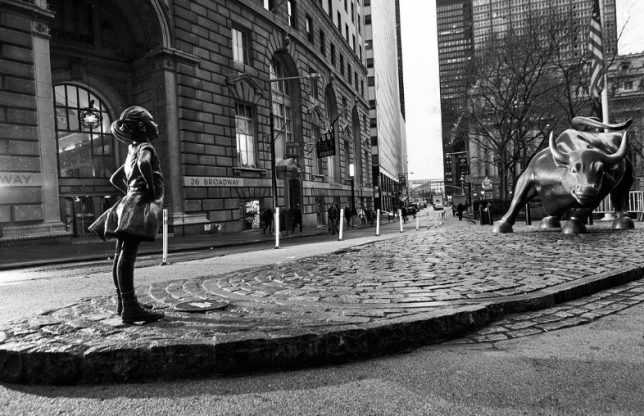
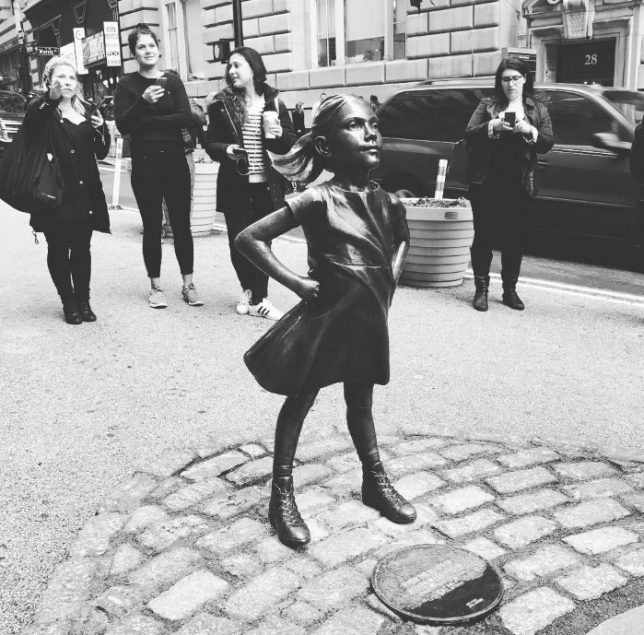
Located in the heart of the financial district in New York City, the Charging Bull statue has long been an icon of the industry, but now faces its first opponent: a young girl cast in bronze.

wall street bull

Sponsored by city officials and a local firm and crafted by sculptor Kristen Visbal, The Fearless Girl was erected in recognition of International Women’s Day. Its intended message is to encourage companies to put women on their boards, but of course it carries a series of meanings in the face of Wall Street and the political climate.

fearless girl statue

“One of the most iconic images on Wall Street is the charging bull,” explains a representative of State Street. “So the idea of having a female sort of stand against the bull or stand up to the bull just struck us as a very clever but also creative and engaging way to make that statement. Even though it’s a little girl, her stance is one of determination, forwardness, and being willing to challenge and take on the status quo.”

Whether the statue will stand the test of time remains to be seen, but its persistence would certainly not be without precedent. Per Colossal, the “Charging Bull was originally an act of guerrilla art by Arturo Di Modica, and only became permanent after its soaring popularity, leaving some to wonder if Visbal’s statue could follow the same story.”

Share on Facebook


[ By WebUrbanist in Art & Sculpture & Craft. ]

[ WebUrbanist | Archives | Galleries | Privacy | TOS ]


WebUrbanist

 
Comments Off on Fearless Girl: Powerful Statue Faces Down Famous Charging Bull of Wall Street

Posted in Creativity


Fundy Suite offers wedding photographers tiered pricing for album design and sales tools

18 Mar

Fundy Software, maker of album-building and sales tools for wedding photographers, is updating its software set with additional features and a new tiered pricing structure.

The Fundy Suite of software is now available in Lite, Pro and Studio configurations. For $ 199, Fundy Suite Lite includes basic album and wall art design tools. The $ 349 Pro Suite includes more features like larger albums, and the Studio version can be used by up to five computers for $ 499.

A set of Pro Enhancement features are available for a $ 179 yearly subscription, adding skin retouching via Athentech’s Perfectly Clear, and access to Design Proofer tool for client communication. The Pro Enhancement subscription also allows for free updates to Fundy’s software.

Fundy Designer takes a template-free approach to album creation, with an emphasis on easy and quick operation with its automatic populating feature. It’s integrated with popular printing services like Miller’s.

Do you use Fundy Designer? What do you think about this update? Let us know in the comments.

Press release

Fundy Designer Launches All-In-One Suite for Professional Wedding and Portrait Photographers

Also announces fully integrated Pro Enhancements that includes acclaimed Design Proofer, one-click retouching, and free upgrades for existing users 

Portland, OR—March 20, 2017—Fundy Software, creator of Fundy Designer,
the award-winning professional photography software company known for its design software, Album Builder and Gallery Designer, and it’s workflow and in-person sales tools, today announced its newly revamped product line offering Lite, Pro and Studio all-in-one suite licensing options starting at $ 199. For a limited time all licensing options offer a 3 month FREE subscription of Pro Enhancements.

People are rediscovering and gravitating back toward prints as a preferred way to save and share memories and tell the stories and backdrops about their lives. Fundy Designer, revered for its ease-of-use and powerful tools, is used by professional photographers worldwide to design, sell, and proof from one application. Photographers worldwide attest to reducing design time by 4x while increasing studio revenues by 3x utilizing Fundy Designer. 

“Our newly revamped product line and attractive price points reflect the rapid growth and popularity the Fundy Suite has achieved since its launch in 2008. Our new tiered pricing gives a pathway for professional photographers to add significant revenue to their business and expand their product offerings as their business grows,” said Andrew “Fundy” Funderburg, founder of Fundy Software. “Additionally, our new Pro Enhancements perfectly fits our company mission to help professional photographers design better and do more so they can get back to the moments that matter to them most to their clients,” continued Funderburg.

Using the Fundy Suite, professional photographers can easily and quickly create customized albums and beautiful wall art. Fundy is also a sales tool that enables professional photographers to conduct sales sessions with their clients either in-person or virtually from anywhere in the world.

With Pro Enhancements such as one-click skin retouching from Perfectly Clear, and the Fundy Design Proofer, professional photographers can save countless hours, drive design approvals and impress clients.

“Fundy is an invaluable sales tool because helps photographers upsell without ‘selling’. Presenting to clients within Fundy makes it easy for clients to visualize what their album or wall art will look like in their home. How can they say no when they’re seeing the photos they love most curated exactly to their home,” says Rich and Christine Yodsukar, who own The Yodsukars, a luxe LA-based wedding photography and cinematography studio.

The Fundy Suite Lite is the perfect starting point, priced at $ 199, for the emerging pro. Allowing them to design and sell the most popular album and wall art in the industry. The Fundy Suite Pro, priced at $ 349, add more professional options such as previewing custom framed prints and designing larger albums that are coveted by high-end brides. The top-tier Fundy Suite Studio, priced at $ 499, is created for the large studio, allowing up to five computers to run the Suite simultaneously.

“As a sales tool Fundy makes it easy work with clients in-person or online which is a game-changer and a huge advantage for my business. Fundy has helped me double my business since we started using the new sales tools in 2016, says Mike Allebach, named “2016 100 Best Wedding Photographer/United States and Canada” by SLR Lounge.

Fundy Designer v7, released in 2016 set a new standard for photography design software, with top wedding and portrait photographers who use it earning as much from album sales as they do from actual wedding shoots every year.

Articles: Digital Photography Review (dpreview.com)
 
Comments Off on Fundy Suite offers wedding photographers tiered pricing for album design and sales tools

Posted in Uncategorized


Erez Marom: On causality in landscape photography

18 Mar

Causality is the relationship between cause and effect – and in landscape photography, this dynamic can help you tell a story, beyond the conventional structures of composition and color.

Considering causality in a landscape image can have a number of advantages. First of all, including a visual indication of cause and effect can provide a through-line, within the composition of an image. Imagine a light source – mostly the sun or the moon in nature photography – on one side of the frame and the light or shadow it casts on the other side. This simple visual element does a great deal to connect the different sections of the image, and the different compositional elements on a higher level than just symmetry or balance.

Causality also adds interest. Images are comprised of several levels. The basic foundational structure is the composition. Beyond that, there’s brightness, color, contrast and similar traits, which bring the compositional elements to life by articulating the more delicate visual intricacies of the photographed subject/s.

Including a cause and effect dynamic can add another level in this hierarchy: not only there are interesting elements and good colors, there’s a story. Story-telling can be hard to achieve in landscape photography, but inclusion of a cause/effect dynamic can immediately introduce a different level of content. Picture an image which includes sun rays and a glacier melting into a river. Maybe it’s just a pretty picture, but maybe you’re telling a story about the threat of global warming.

The sun, reflected on the walls of this ice cave, is what caused it to form. This image tells the story of the glacial melting, and the inclusion of the cause and its effect enriches the picture’s visual appeal.

The final way that a case and effect dynamic can contribute to an image is by what might be called imagined causality: the inclusion of elements which don’t affect each other in real life, but which are placed in such a way that the viewer is encouraged to imagine they might be related.

Take for example the image of Quiver Tree Forest, Namibia at night (above). I call the image ‘Phototaxis’, which is the movement of an organism toward a source of light. Needless to say, the Milky Way isn’t what draws the quiver trees to grow upward, but composing them in this way, using the ultra-wide angle lens to cause them to tilt toward the center of the image, all together with the image’s title, encourage the viewer to imagine the trees being drawn to it.

The quiver trees are thereby humanized, and the anthropomorphism makes the viewer identify and feel a deeper emotional connection to the trees and to the image as a whole, which is turn achieves our goal as photographers: having the viewer look at the image a bit more carefully, and take meaning from it.


If you’d like to experience and shoot some of the most fascinating landscapes on earth with Erez as your guide, you’re welcome to take a look at his unique photography workshops around the world:

Land of Ice – Southern Iceland
Winter Paradise – Northern Iceland
Northern Spirits – The Lofoten Islands
Giants of the Andes and Fitz Roy Hiking Annex – Patagonia
Tales of Arctic Nights – Greenland
Saga of the Seas and The Far Reaches Annex – The Faroe Islands
Desert Storm – Namibia

Selected Articles by Erez Marom:

  • Parallelism in Landscape Photography
  • Behind the Shot: Dark Matter
  • Mountain Magic: Shooting in the Lofoten Islands
  • Behind the Shot: Nautilus
  • Behind the Shot: Lost in Space
  • Behind the Shot: Spot the Shark
  • Quick Look: The Art of the Unforeground
  • Whatever it Doesn’t Take
  • Winds of Change: Shooting changing landscapes
  • On the Importance of Naming Images

Articles: Digital Photography Review (dpreview.com)

 
Comments Off on Erez Marom: On causality in landscape photography

Posted in Uncategorized


Samsung Galaxy S8 expected to come with 1000 fps video mode

18 Mar

The launch of Samsung’s upcoming flagship smartphone Galaxy S8 is only a couple of weeks away and if the rumors are to be believed the new device’s 12MP camera will offer a 1000 fps video mode that would allow for a 33x super-slow-motion mode. 

That is more than four times slower than the 240 fps slow-motion mode in the current Galaxy S7. According to a report by SamMobile, Samsung is integrating an additional DRAM layer into the image sensor which acts as a buffer. This sounds like very similar technology to what Sony is using in the recently announced Xperia XZs and XZ Premium devices which offer a 960 fps slow-motion mode at 720p resolution. However, SamMobile’s sources claim Samsung is not using the Sony sensor in the S8. Unfortunately at this point there is no information about resolution or maximum recording duration of the mode. 

Other camera-related information includes an 8MP front camera with AF and 3.7MP additional image sensor that is used just for iris scanning. It appears Samsung will not follow the dual-cam trend with its upcoming models but the super-slow-motion mode, if well-executed, could definitely make up for a lack of dual-cam features.

Articles: Digital Photography Review (dpreview.com)

 
Comments Off on Samsung Galaxy S8 expected to come with 1000 fps video mode

Posted in Uncategorized


Sigma announces 135mm F1.8 DG will cost $1400, arrive in May

18 Mar

Sigma has revealed pricing and availability for the 135mm F1.8 DG HSM Art lens it unveiled just prior to CP+: it will ship to customers in May at a cost of $ 1400. 

Sigma says the lens is designed to meet the needs of high-resolution sensors of 50MP or higher. Offering a dust and splash-proof construction, it uses 9 aperture blades and a hypersonic (ring-type ultrasonic) focus motor. 

Take a look at our hands on with the 135mm F1.8 Art and Sigma’s other new lenses from CP+ last month.

Press release

Sigma Announces 135mm F1.8 DG HSM Art Lens Pricing and Availability

Sigma’s highly-anticipated telephoto prime lens, designed for shooting events and studio/location portraiture, begins shipping in May 2017 for a retail price of $ 1399.00USD

New York, NY – March 17, 2017 – Sigma Corporation of America, a leading DSLR lens, camera, flash and accessory manufacturer, announced today that its 135mm F1.8 DG HSM Art lens will begin shipping in May 2017 for a retail price of $ 1399.00 USD. Making its public debut at the 2017 CP+ Camera + Photo Imaging Show in Yokohama, Japan in February 2017, the 135mm F1.8 Art lens enters the market as Sigma’s new premiere mid-range telephoto prime lens, touting outstanding sharpness and great IQ from edge to edge. Ideal for events such as concerts, weddings, indoor sports, conferences and press events, the 1.8 F-stop delivers greater “shallow depth of field” and isolation of subjects. The outstanding compression effect makes it equally as powerful for up-close and full-length portraits. Its new large Hyper Sonic Motor (HSM) delivers ample torque to the focusing group for outstanding speed, ensuring exceptionally stable performance even at lower speeds and allowing for fast autofocus photography.

The all-new Sigma 135mm F1.8 DG HSM Art lens supports Canon, Nikon and Sigma mounts and works with Sigma’s MC-11 Sony E-mount converter. The Nikon mounts feature the brand new electromagnetic diaphragm for enhanced high-speed shooting.

Sigma 135mm F1.8 DG HSM Art lens Features and Benefits:

> Superior optical performance

Optimal image quality for ultra-high-megapixel DSLRs: This lens offers top performance from the center to the edges of the image thanks to the signature floating system of the lens focus mechanism. By minimizing distortion, the lens delivers impeccable image quality without the need for digital adjustment during image processing.
Ideal for portraits requiring a dramatic bokeh effect: Delivering a stunning compression effect, even when positioned fairly close to the subject, the telephoto ring allows photographers to achieve a variety of dramatic perspectives. This effect truly shines in both close-up and full-length portraits, making composition easy. The large F1.8 diameter allows for more creative control over light and paired with the nine-blade rounded diaphragm produce a desired creamy bokeh effect.

> Fast and nimble autofocus photography

The large HSM (Hyper-Sonic Motor) delivers ample torque to the focusing group for outstanding speed, ensuring exceptionally stable performance even at lower speeds. Along with the optimized AF algorithm, this feature delivers fast autofocus photography. In addition, the focus limiter makes AF highly responsive to distance from the subject for even more nimble performance.

> Fast AF with full-time manual override (the operation of full-time MF may vary based on mount type)

> Compatible with Sigma Mount Converter MC-11

> Mount with dust- and splash-proof construction

> Nikon electromagnetic diaphragm mechanism included

> Available Sigma USB Dock makes updating firmware and customization possible

> Available Mount Conversion Service allows use with another camera body

> Rounded diaphragm for desired bokeh look

> Designed to minimize flare and ghosting

> High-precision, durable brass bayonet mount

> Crafted in Aizu, Japan with each lens individually tested with Sigma’s own MTF measuring system “A1”

> Lens barrel is engraved with the year of release

Articles: Digital Photography Review (dpreview.com)

 
Comments Off on Sigma announces 135mm F1.8 DG will cost $1400, arrive in May

Posted in Uncategorized


Google Guetzli is an open source JPEG encoder that creates 35% smaller files

18 Mar
20×24 pixel zoomed areas from a picture of a cat’s eye. Uncompressed original on the left. Guetzli (on the right) shows less ringing artefacts than libjpeg (middle) without requiring a larger file size. Image and caption via Google 

Google has announced the open source release of Guetzli, a new JPEG encoder able to reduce a JPEG’s file size by up to 35%, without any significant loss of quality. Per a study detailing the algorithm, Guetzli ‘aims to produce visually indistinguishable images at a lower bit-rate than other common JPEG encoders,’ including libjpeg. However, the study goes on to caution that the compression tool is ‘currently extremely slow.’

Google announced the new encoder on Thursday, detailing it as a proof-of-concept that can be freely used by webmasters and others to reduce the size of JPEG image files. The algorithm merges ‘advanced psychovisual models with lossy compression techniques,’ according to the study, to produce high-quality compressed images. It’s a different approach than that taken by other Google projects we’ve looked at recently like RAISR. Google expresses a desire to see future compression research that is inspired by Guetzli’s own psychovisual underpinnings.

Though Google largely details Guetzli’s benefits as they pertain to webmasters (namely faster Web page loading), the algorithm is available for anyone to download and use via Github. Instructions for setting up and using the tool are provided on the Github page for multiple platforms, including Windows, macOS and Linux.

Via: Google Blog

Articles: Digital Photography Review (dpreview.com)

 
Comments Off on Google Guetzli is an open source JPEG encoder that creates 35% smaller files

Posted in Uncategorized


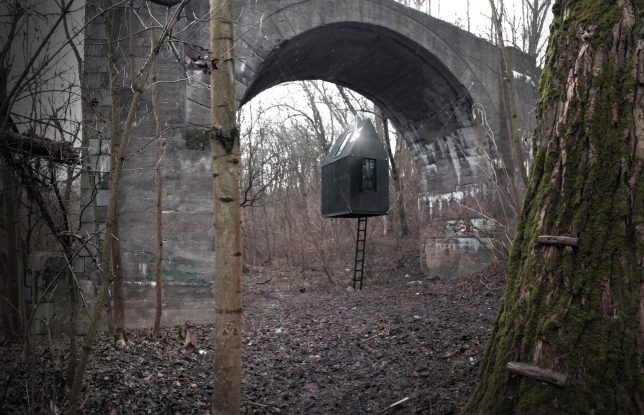
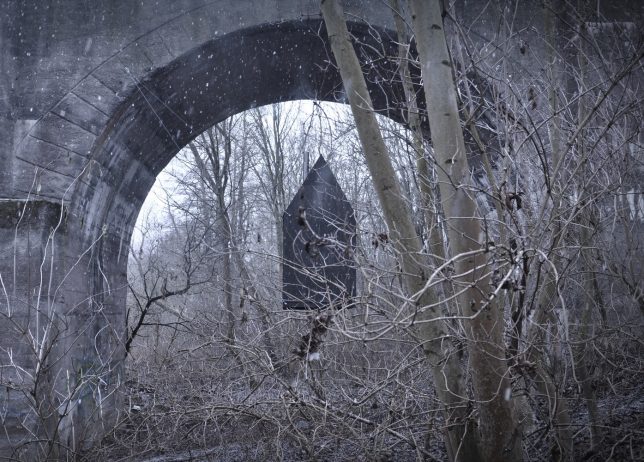
Hovering Tiny Black House Haunts the Woods Under a Railway Bridge

18 Mar

[ By SA Rogers in Art & Installation & Sound. ]

black flying house 3

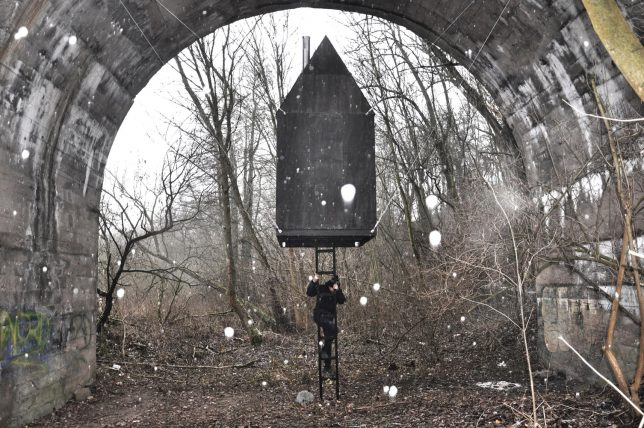
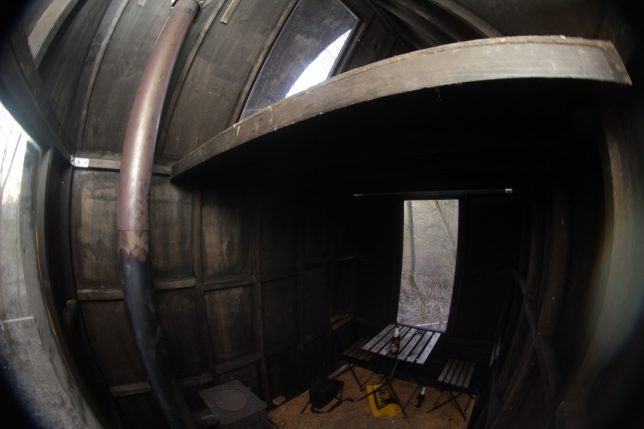
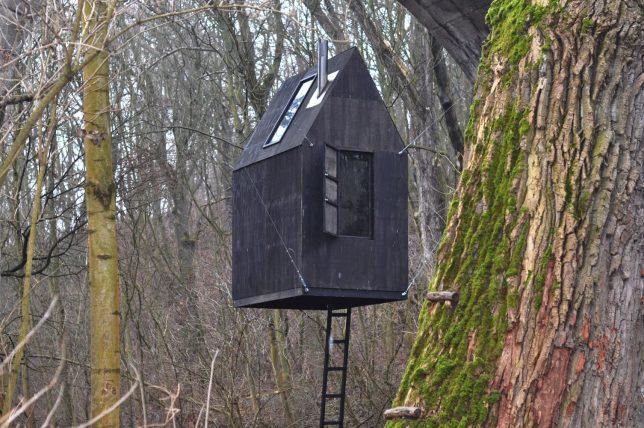
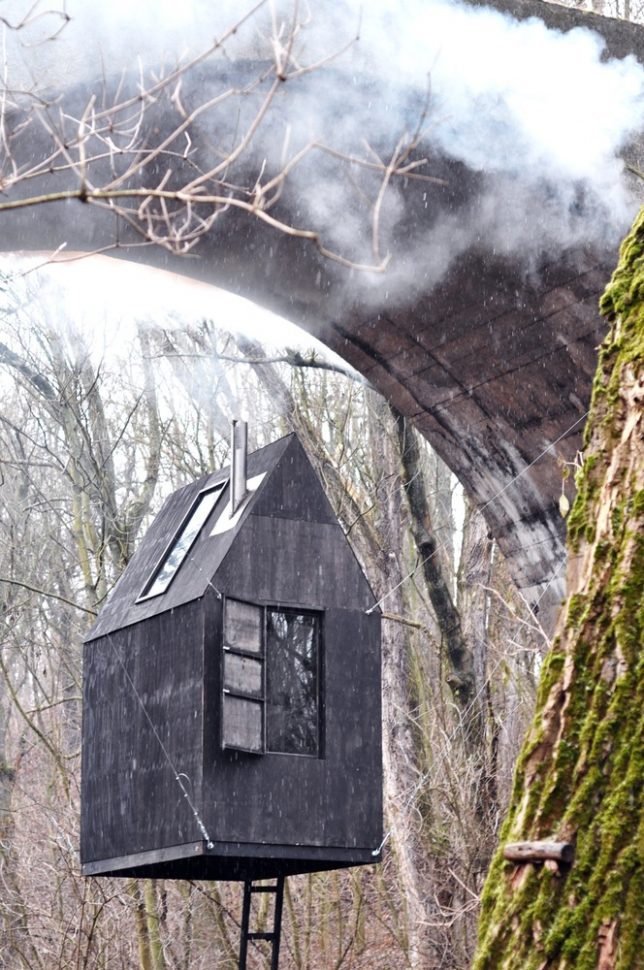
Looking like something out of a creepy fairytale, this little black house hovers in the air beneath the arch of an old railway bridge, a spindly ladder reaching down into the fallen leaves. If you weren’t expecting it to be there and happened upon it while on a walk, you might be a bit shocked to see it seemingly floating in space, its skylights glinting in the sun. From far away, you can’t see how it could possibly be supported, lending it a somewhat supernatural appearance.

black flying house 7

black flying house 1

The steel cables that support the structure become apparent as you walk up, and the ladder is usually hidden off to one side, requiring passersby to look around a bit for a way to get up.

black flying house

black flying house 8

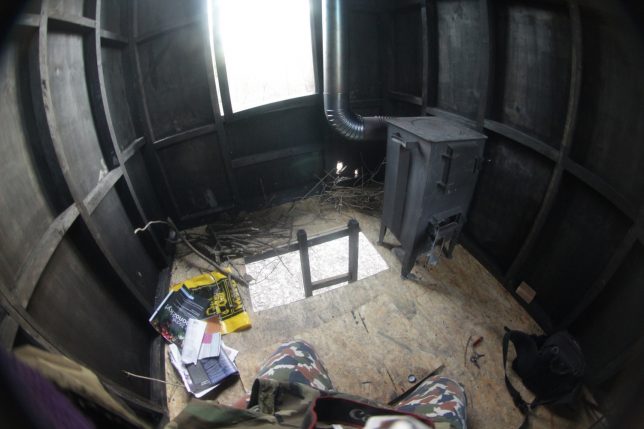
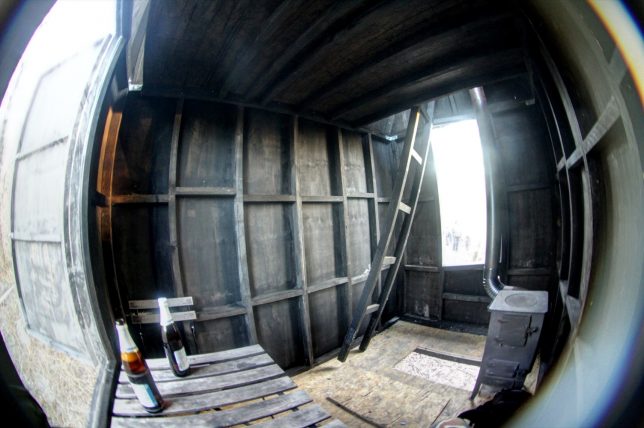
But if you did happen to be brave enough to approach it and climb the ladder, not knowing what you’d find inside, you’d be greeted with a bare-bones but cozy hut from which to survey the surrounding woods, complete with a loft and a wood stove.

black flying house 5

black flying house 4

Set in an area that’s 15 minutes walking distance fro the city center of Pardubice, Czech Republic, the installation takes advantage of stark scenery left behind by disused infrastructure, aiming for the feel of a mysterious military complex.

black flyling house 2

Created by H3T Architekti and photographed by Maritna Kubesova and Tomas Rasl, ‘Flying Black House’ is a temporary installation daring passersby to give in to their curiosity, even if it makes them feel like the foolish protagonist in a horror movie.

Share on Facebook


[ By SA Rogers in Art & Installation & Sound. ]

[ WebUrbanist | Archives | Galleries | Privacy | TOS ]


WebUrbanist

 
Comments Off on Hovering Tiny Black House Haunts the Woods Under a Railway Bridge

Posted in Creativity


Mitakon launches Mk ll Nikon to Fuji X Turbo adapter that maintains angle of view

17 Mar

Chinese optical manufacturer Zhong Yi Optics has announced availability of a new version of its Turbo adapter that allows full-frame Nikon lenses to be mounted on Fujifilm X series compact system cameras while retaining the intended field of view.

The Lens Turbo ll N/G-FX uses a lens construction that reduces the effective focal length of the mounted lens by 0.726x, which compensates for the crop factor encountered when full frame lenses are used in front of an APS-C sensor – such as those used in the Fujifilm X series bodies. The compensation doesn’t work out exactly though, as a 50mm lens will end up acting as a 55mm would (it’s a net 1.09x crop). The focal length reduction also has the side-effect of increasing the maximum aperture of the lens by one stop.

Mitakon says that the new 4-element version of the Nikon adapter, which is also available for Canon and M42 lens uses, has improved optics which bring better resolution and aberration correction in the corners of the frame. The adapter is 32mm deep, has a diameter of 63mm and weighs 165g/5.82oz, and costs ¥21,000 plus tax/$ 150. For more information see the Mitakon website.

Manufacturer information

The Fuji X Camera Lens Turbo Adapter (Ver II) from Mitakon allows lenses to be mounted to APS-C format Fuji cameras, increasing the angle of view by 0.726x and the maximum aperture of the lens by 1 f-stop.

The four optical elements of the Lens Turbo adapter condense light from the full frame lens and project it onto the camera’s sensor allowing the sensor to capture all of the transmitted light, negating the crop factor and effectively producing full-frame coverage on non-full-frame sensors. A corresponding increase in the maximum aperture of 1 f-stop makes the lens more effective in low-light situations.

This adapter features 4 optical elements including one extra-low dispersion (ED) element which reduces aberrations for better delineated images. The adapter offers a sturdy metal construction and stainless steel mounts, it attaches to both camera and lens with little play and includes a front and rear protective cap. The Lens Turbo is a manual adapter offering no electronic communication between lens and camera. It is not compatible with Blackmagic cinema cameras.

* Allows lens to be mounted to Fuji X camera
* Increases the angle of view by 0.726
* Increases maximum aperture by 1 stop
* 4 lens elements in 4 groups including 1 extra-low dispersion element

This lens turbo adaptor may not fit all lenses due to different extensions at the lens rear mount. Lenses with extension more than 3mm are not recommended to use this lens turbo adaptor. Vignetting may occur if using APS-C lenses.

Articles: Digital Photography Review (dpreview.com)

 
Comments Off on Mitakon launches Mk ll Nikon to Fuji X Turbo adapter that maintains angle of view

Posted in Uncategorized