RSS
 

Archive for February, 2017

Weekly Photography Challenge – Black and White Architecture

18 Feb

Earlier I shared some moody and dramatic images of architecture in black and white. Now it’s your turn!

Weekly Photography Challenge – Black and White Architecture

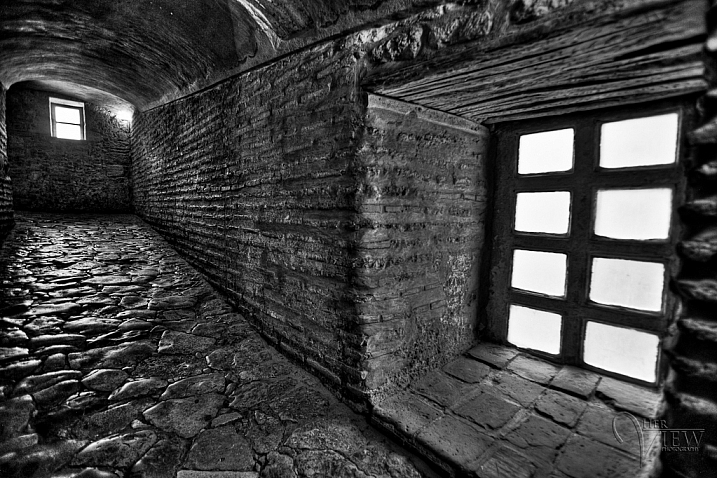
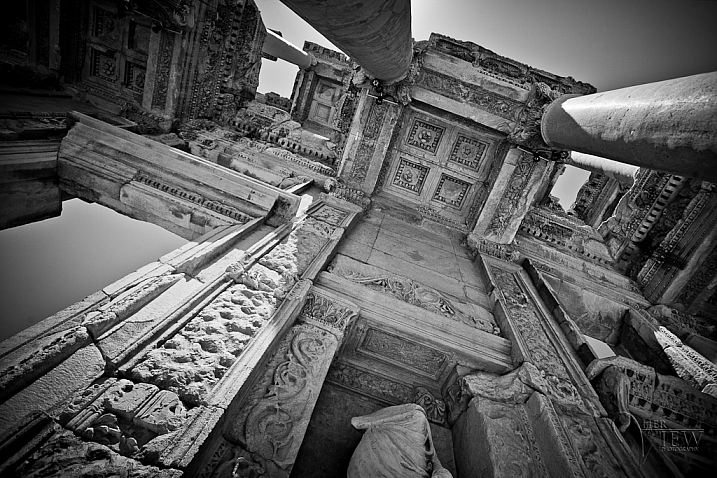
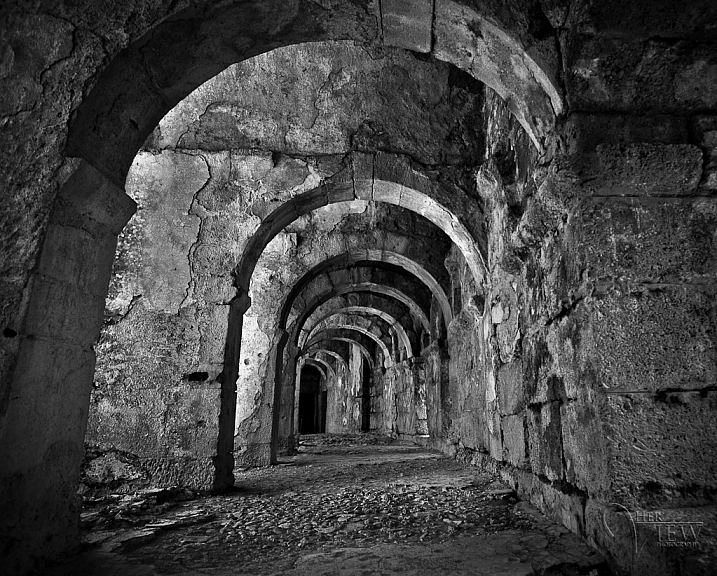
Even in harsh midday sun, you can often create stunning and dramatic images of architecture. Let’s take a look at a few black and white images of architecture. I’ll start you off with a few of my own from Turkey.

The library at Ephesus

Inside the great Haga Sofia in Istanbul.

Your challenge this week is to photograph some architecture. You can do this no matter where you live. If there are buildings, you can do this. Even a hut or shack is architecture! Use a wide-angle lens or go for details, maybe shoot at night? It’s up to you how you approach it, just get out there shooting.

If you need some tips here are a few articles to help:

  • 4 Beginner Tips for Doing Architecture Photography
  • How to Create Stunning Architecture Photography by Painting with Light
  • Tips for Different Approaches to Architecture Photography
  • 8 Quick Tips to Improve Your Photos of Architectural Details
  • 9 Architectural Photography Tips
  • A Guide to Black and White Conversion in Photoshop
  • A Guide to Black and White Conversion in Lightroom
  • 8 Reasons to Use Silver Efex Pro 2 for Your Black and White Conversions

By Pietromassimo Pasqui

By David

By Hernán Piñera

By darkday

Share your images below:

Simply upload your shot into the comment field (look for the little camera icon in the Disqus comments section) and they’ll get embedded for us all to see or if you’d prefer, upload them to your favorite photo-sharing site and leave the link to them. Show me your best images in this week’s challenge. Sometimes it takes a while for an image to appear so be patient and try not to post the same image twice.

Share in the dPS Facebook Group

You can also share your images on the dPS Facebook group as the challenge is posted there each week as well.

googletag.cmd.push(function() {
tablet_slots.push( googletag.defineSlot( “/1005424/_dPSv4_tab-all-article-bottom_(300×250)”, [300, 250], “pb-ad-78623” ).addService( googletag.pubads() ) ); } );

googletag.cmd.push(function() {
mobile_slots.push( googletag.defineSlot( “/1005424/_dPSv4_mob-all-article-bottom_(300×250)”, [300, 250], “pb-ad-78158” ).addService( googletag.pubads() ) ); } );

The post Weekly Photography Challenge – Black and White Architecture by Darlene Hildebrandt appeared first on Digital Photography School.


Digital Photography School

 
Comments Off on Weekly Photography Challenge – Black and White Architecture

Posted in Photography


The good, the bad and the ugly of aerial photography – part 4: technique

18 Feb
A glacial river in Greenland

Getting your settings right is important when shooting from the air. Due to low light and strong vibration, many images from this shoot turned out blurry.

In the previous article in this series, I talked about the equipment one might use for aerial photography. So what about technique, and especially camera settings? What should you consider when shooting from the air? 

The important thing to remember here is that you’re shooting from a moving, vibrating aircraft instead of from stable ground. This simply means that in order to keep your shots sharp, you’ll need to use a high shutter speed. Remember that the compensation mechanisms in stabilized lenses are meant to deal with human movement, not high-frequency vibration, and will thus offer little help. Same goes for your own hands’ stability: even if you’re rock solid, the aircraft is not, and you should always bear that in mind or suffer the consequences (as I unfortunately have in the past).

Depending on the angle of view, I’d recommend shooting at least 1/400th of a second to make sure the shot is sharp enough, preferably even faster, and faster still if the focal length is long. When shooting from a plane, expect to need even faster shutter speeds, as wind can often move the lens and even change the zoom settings, as it sucks the lens out of the window. To keep your shutter speed in check, don’t be afraid to use a higher ISO setting. I frequently use ISO 400, 800 and when it’s darker even 1600 and 3200. Having a bit more noise and less dynamic range is a much better alternative to having a blurred shot. You can also use relatively wide apertures, since the subject is far away and depth of field is therefore large.

Shooting at ISO 800 is a no-brainer when light is low and you’re in a Cessna.

While I talked about equipment in the last article, I left one piece of gear to this article, since I wanted to link it to exposure times: Gyroscopes. These are contraptions which use rotational inertia to counter movement and vibrations, allowing the photographer to use much lower ISO values and longer exposure times while maintaining stability and sharpness. Unfortunately, they are large, heavy and very expensive, which leave them out as an option for the casual aerial shooter such as myself and most photographers with me. I personally don’t have any practical experience with gyros, but hopefully I’ll get to try shooting with one in the future.

Another point on technique: it’s very beneficial to shoot in fast-continuous mode. Even if exposure times are high, you never know when the vibrations take their toll on camera stability. Shooting the same image 2 or 3 times will significantly increase the chances that at least one of the exposures turns out crisp.

Another reason to shoot in continuous mode is HDR. HDR is surprisingly possible in aerial photography, and I use it in cases of extreme global contrast. Take for example the image below of the Holuhraun volcanic eruption in Iceland. Taken at night, the lava was quite a few stops brighter than its black surroundings, and so I used exposure bracketing together with continuous mode to quickly shoot two shots of the same scene with different exposure times, which were later combined using Photoshop.

 With the lava many stops brighter than the surroundings, I had to use HDR to get this image.

Another surprisingly possible technical feat is panoramas. As long as all parameters are in check, there’s really no reason not to pano from the air, and one can really get interesting results that way. This is especially important due to aerial photography’s equipment limitation – when you’re stuck with one or two lenses, shooting a panorama allows you to achieve a wider angle of view.

A 2-shot panorama taken from a Cessna above the mountains of Lofoten, Arctic Norway. Due to the aircraft’s movement it was a bit of a difficult stitch, but still very possible and worthwhile.

In the next and final article in this series, I’ll survey several of my aerial shoots.


Erez Marom is a professional nature photographer, photography guide and traveler based in Israel. You can follow Erez’s work on Instagram, Facebook and 500px, and subscribe to his mailing list for updates.

If you’d like to experience and shoot some of the most fascinating landscapes on earth with Erez as your guide, you’re welcome to take a look at his unique photography workshops around the world:

Land of Ice – Southern Iceland
Winter Paradise – Northern Iceland
Northern Spirits – The Lofoten Islands
Giants of the Andes and Fitz Roy Hiking Annex – Patagonia
Tales of Arctic Nights – Greenland
Saga of the Seas and The Far Reaches Annex – The Faroe Islands
Desert Storm – Namibia

More in This Series:

  • The good, the bad and the ugly of aerial photography – Part 1: Why shoot aerials?
  • The good, the bad and the ugly of aerial photography – Part 2: Aircraft
  • The good, the bad and the ugly of aerial photography – Part 3: Equipment

Selected Articles by Erez Marom:

  • Parallelism in Landscape Photography
  • Behind the Shot: Dark Matter
  • Mountain Magic: Shooting in the Lofoten Islands
  • Behind the Shot: Nautilus
  • Behind the Shot: Lost in Space
  • Behind the Shot: Spot the Shark
  • Quick Look: The Art of the Unforeground
  • Whatever it Doesn’t Take
  • Winds of Change: Shooting changing landscapes
  • On the Importance of Naming Images

Articles: Digital Photography Review (dpreview.com)

 
Comments Off on The good, the bad and the ugly of aerial photography – part 4: technique

Posted in Uncategorized


Yongnuo YN 85mm F1.8 lens now available

18 Feb

Yongnuo has announces its full-frame 85mm F1.8 lens, for Canon and (eventually) Nikon mounts. This budget-friendly lens, which closely resembles Canon’s 85mm F1.8, first surfaced a couple of months ago. It features 9 elements in 6 groups, as well as a 0.85m minimum focusing distance, a 58mm filter diameter, and an overall weight of about 460g/16oz. It’s offered Canon EF mount now, with reports pointing to a Nikon version coming soon.

Yongnuo announced the launch on its Facebook page, where it is also giving away three lenses for testing. The lens features an AF/MF switch and according to its B&H listing, gold-plated contacts. The new lens is priced at $ 177 at B&H, but is currently backordered.

Via: PhotoRumors

Articles: Digital Photography Review (dpreview.com)

 
Comments Off on Yongnuo YN 85mm F1.8 lens now available

Posted in Uncategorized


Leica SL gallery update

18 Feb
Image taken using a Minolta M-Rokkor 40mm F2 adapted using the Leica M-Adapter T and processed to taste in Adobe Camera Raw. ISO 2000, 1/125 sec, F2. Photo by Carey Rose

As we move towards completing our full review of the Leica SL, we’ve been toting it around town just about everywhere, from the grit of Pioneer Square to…well, the grit of a dim living room rock show. Whether you want images at ISO 50 or ISO 50,000, we’ve got you covered – including an adapted Minolta M-Rokkor lens to boot. 

See our updated Leica SL sample gallery

Articles: Digital Photography Review (dpreview.com)

 
Comments Off on Leica SL gallery update

Posted in Uncategorized


Sony FE 100mm F2.8 STF bokeh demystified

18 Feb

Sony’s new STF (Smooth Trans Focus) 100mm F2.8 GM OSS uses an apodization (APD) filter to create very smooth out-of-focus regions/highlights both in front of, and behind, the focal plane.

But how exactly does it work? Sony has published a video demonstrating the principle, and the effect. Take a look:

The apodization element is a circular graduated neutral density filter that lets in more central light rays than peripheral light rays. This smooths out transitions between out-of-focus elements, leading to quite unique imagery.

The APD element is a (circular) graduated neutral density filter inserted into the optical path of the lens. Out-of-focus light rays that are either converging in front of the focal plane, or diverging behind the focal plane, have a gradual radial softening (seen as darkening of the more oblique rays in front of or behind the focal plane). This yields less interference between out-of-focus light rays and, so, less ‘busy’ and simply smoother bokeh. 

What’s the real-world impact? Have a look at the image comparison below, which compares the foreground and background bokeh with and without the APD element:

The APD element leads to smoother foreground and background bokeh. Note how out-of-focus highlights are smoothed, and this applies to everything. There’s a cost though: sometimes I like sharp, enlarged de-blurred out-of-focus highlights, which you won’t get with this lens. But what you will get is smooth, creamy bokeh.

We’ve had very little time with the lens, but our initial impressions of image quality are extremely positive. If you’d like to learn more about the lens, visit the company’s dedicated page on this lens over at Sony Alpha Universe, then take a look at the phenomenal MTF curves on Sony.com’s site. Yes, this is a sharp lens, but with beautiful bokeh. And image stabilization, to boot, which, combined with IBIS on most E-mount cameras, will allow you to use slow-ish shutter speeds to maximize light gathering, minimizing noise.

Which you’ll need, because wide open, while you have the depth-of-field of F2.8, you have the light transmission of F5.6.

Sony’s E-mount system is becoming increasingly hard to ignore for professional results. With the release of the 100mm STF GM and 85/1.8 lenses, Sony is rounding out a format that already accepts arguably the largest lens lineup in history (thanks to its short flange distance). But the importance of a native lineup cannot be over-stressed, as it is native lenses that benefit most from Sony’s AF technologies.

A note on autofocus…

Similar STF lenses tend to be manual focus or contrast detect-only, since peripheral light rays – the very ones the filter is designed to block out – are necessary for traditional phase-detect sensors to function. However, since (at least Sony’s) on-sensor PDAF sensors can still use more central light rays for focusing, focusing does still work, remarkably well in fact with the a7R II, even indoors, wide open. That’s quite an achievement, in no small part due to the excellent focusing system of the a7R II. What’s more, movement of the focus element(s) is incredibly fast, thanks to the excellent Direct Drive SSM mechanism we’ve seen in blazingly fast-to-focus lenses like the FE 35mm F1.4 and FE 24-70mm F2.8 GM.

“Unlike Sony’s recent releases, this lens focuses wide open…”

In other words, I was able to use to the 100mm STF to focus on faces, even using Eye AF, in fairly low indoor lighting, despite the T5.6 rating at a F2.8 aperture. This is in no small part due to the fact that this lens, unlike Sony’s recent releases, focuses wide open (albeit stopping down after initial acquisition in AF-C). More tests to follow, but simply the fact they got phase-detect AF working, nevermind the AF performance, is nothing short of impressive.

The FE 100mm F2.8 STF GM OSS is already shaping up to be a spectacular lens, adding to an already well-rounded, serious E-mount lens lineup.

Articles: Digital Photography Review (dpreview.com)

 
Comments Off on Sony FE 100mm F2.8 STF bokeh demystified

Posted in Uncategorized


How to Use a Speedlight at Wedding Receptions and Events

18 Feb

Using a speedlight at weddings and events take me back down memory lane to my very first paid wedding. I had the most basic digital camera, my trusty Nikon D40, the 18-55mm kit lens, a telephoto I bought separately 55-200mm f/4-5.6, and a 50mm 1.8D. What did I know about weddings? Hardly anything technical for sure but I had bags of creativity which got me hired. We have to start somewhere. But before anyone judges me at touting my wedding photography as a professional, well I wasn’t. I was recommended to someone looking for a wedding photographer. I didn’t have a portfolio, so the person who recommended me took some of my family photos to show her friend.
What did I know about weddings? Hardly anything technical for sure, but I had bags of creativity which got me hired. We have to start somewhere. But before anyone judges me at touting my wedding photography as a professional, well I wasn’t. I was recommended to someone looking for a wedding photographer. I didn’t have a portfolio, so the person who recommended me took some of my family photos to show her friend.

How to Use a Speedlight at Wedding Receptions and Events

My first speedlight

Up until then, I had only photographed friends’ weddings because I enjoyed them and they gave me some practice other than photographing my own kids as well as other families. So this was my first paid venture outside family photography. But, even as a super wedding novice, I knew I needed a speedlight (flash gun) and dared not go without one. I also borrowed a backup camera just in case.

I bought the super affordable Nikon SB-400, a nifty little speedlight that fits in your pocket with a head that can be tilted overhead (and only that) for bouncing light. It was better than not having a speedlight at all. I was ready to roll, or so I thought.
How to Use a Speedlight at Wedding Receptions and Events

Research the venue ahead of time

On realizing that the venue had a very high ceiling, totally unreachable for light to be bounced back, and with beams spanning the walls, I was stumped. There was no way I could bounce the light as my little SB-400 didn’t swivel sideways to be bounced off the walls. Fortunately, I found this out when researching the venue, not during the wedding day. I McGyvered my speedlight by strapping a white foam card behind it so it bounced the light somewhat in a forward direction. DIY yes, but it did the job, plus I have always hated direct flash anyway so for me, bouncing was the only way ahead at that time.

I McGyvered my speedlight by strapping a white foam card behind it so that it bounced the light in a somewhat forward direction. DIY yes, but it did the job. I have always hated direct flash anyway, so for me, bouncing was the only way ahead at that time.
How to Use a Speedlight at Wedding Receptions and Events

Please the clients

To cut the long story short, I shot the wedding and the newlyweds were happy with the results. There were times when the flash was not strong enough in the dark venue but I was able to improve the photos somewhat through Photoshop. Thankfully, that was many years ago. Looking back at those photos now makes me realize how much I didn’t know and how much I’ve learned. The pictures were creative definitely, but technically they were cringe-worthy! Too heavy Photoshop actions were used, too much styling like desaturation or oversaturation, missed focus, overexposure, underexposure, I could go on and on. I tried to leverage my creativity to hide the fact that I was technically weak.

The newlyweds loved them and even ordered albums and a canvas! Luckily for them, I had no idea how to price my wedding services so I sold the products to them at cost, not even charging for the time it took me to make the albums! I mean, what sane professional would do that?

So I started on a journey that would make me realize just how much technical knowledge and physical work a wedding requires and how we have to learn to price accordingly or live in a perpetual grudge against the business and face an abyss that is the loss of any self-worth.
How to Use a Speedlight at Wedding Receptions and Events

Here are three ways you can use a speedlight at events or wedding receptions

Moving on, this article is all about how I use speedlights at wedding receptions and events now, and some tips for you to do so as well. Thankfully, I now have an arsenal of professional gear that I am confident enough in using and know what to expect from. I have also stopped relying on Photoshop and instead try to get my exposures correct in camera, even with the use of external lighting, the ratio calculations of which I still find super confusing, if I’m being honest!
How to Use a Speedlight at Wedding Receptions and Events

How to Use a Speedlight at Wedding Receptions and Events

#1 – On-camera speedlight

On a wedding day, I prefer not to use a speedlight during the ceremony but at all other times, I pretty much have it sitting on my camera just in case I need a bit of fill light. I now have the Nikon SB-900 / SB-910 speedlights as well, which can be swiveled at all angles, not just upwards, therefore I can bounce the light anywhere needed.

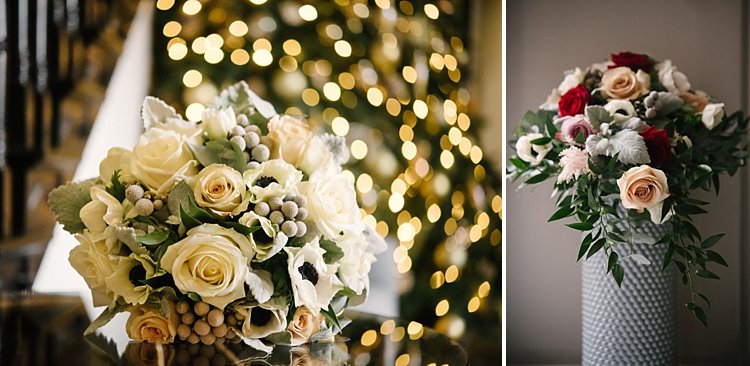
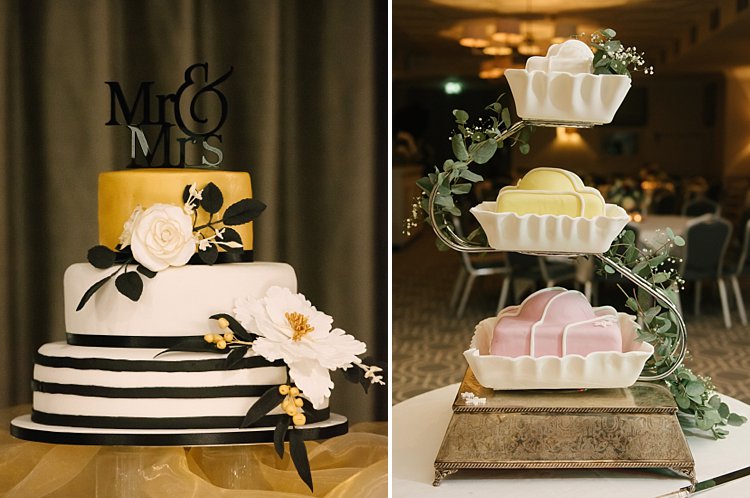
I always use an on-camera speedlight for all my group portraits as they usually happen while there is still natural light outside and I only need a fill light. After the wedding ceremony and portraits, the reception typically starts with welcome drinks and canapes awaiting the newlyweds’ arrival. It’s at this time that I photograph guests as well as details like flowers, the cake, and room decorations.
How to Use a Speedlight at Wedding Receptions and Events

Shooting candids

I always have my speedlight on for this bit as I go around the room photographing guests mingling and chatting. My flash head is always angled slightly sideways at 45 degrees to get a directional bounce. If the area is pretty dark with no light coming from windows, I may bounce the light upwards to create a more even spread of light. There is a caveat to this one, however, in that there is a greater chance of deep shadows under the eyes and chins.

If there is ample light everywhere but I still feel I need a bit of a fill for the face, I would point my flash head backward. The only time I would point my flash head straight at the face/subject is when the scene is completely backlit unless I am after a silhouette. So yes, there’s a lot of swiveling and adjusting to the flash head but it is worth the effort.

How to Use a Speedlight at Wedding Receptions and Events

using-speedlight-wedding-events-photography-flash-tutorial_0000

The only thing you really need to remember is to NOT have the flash pointing downwards. This can be done so easily and unintentionally when you change the orientation of your camera from landscape (shooting horizontal) where the flash is currently pointed at a sideways angle to portrait (vertical) where the flash head would then be pointing to the floor. That is an absolute no-no as you would get “horror lighting” in that case. You know, the suspense-thriller lighting where flashlights are pointed from under peoples’ noses and you get dark heavy shadows pointing upwards (growing by the minute waiting to devour the photographer). We don’t want that kind of lighting in wedding photography!

#2 – Off-camera speedlight

At weddings, I typically carry 3-4 speedlights with me, and 4-6 transceivers. Tranceivers or transmitters/receivers are devices that allow you to remotely trigger your flash without it being attached to your camera. It works using radio waves so that you (and your camera) can be quite far from the flash. You can even have people or a wall directly between your camera and the flash and you can still trigger it. You usually need to have two devices; a transmitter that is attached to your camera, and a receiver that is attached to the flash. Nowadays, transceivers are more popular because they can do both, transmit and receive, so it doesn’t matter which one you put on the flash or camera as these devices will do the job.
How to Use a Speedlight at Wedding Receptions and Events

There are two fantastic things about these transceivers in my opinion. First, you can trigger as many speedlights as you want as long as they each have a transceiver attached to them. The second thing, which has been a game changer for me, is the fact that I can put a transceiver on the hotshoe of my camera and then put a flashgun on top of it. That allows me to shoot with an off-camera flash to the right of my subject and if I need a fill light from the front, the speedlight sitting on my camera on top of the transceiver does the job. It’s totally awesome!
How to Use a Speedlight at Wedding Receptions and Events

Great for detail shots

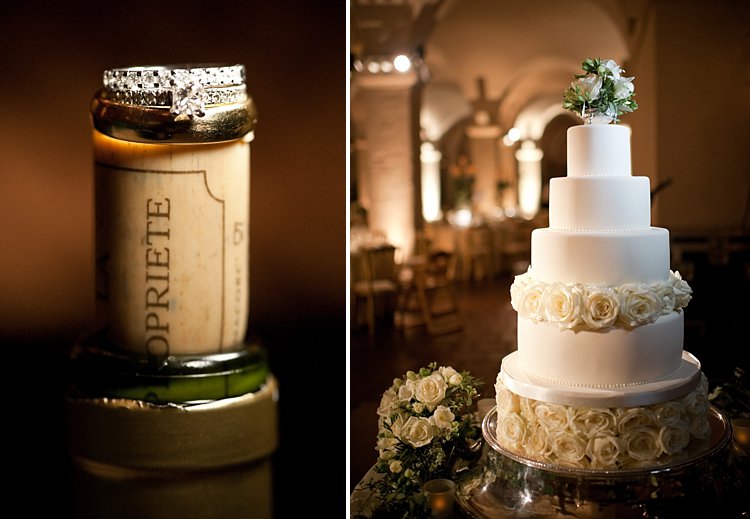
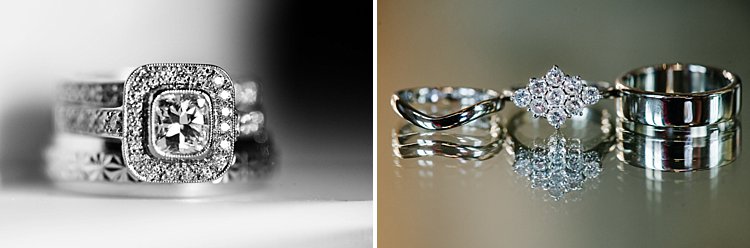
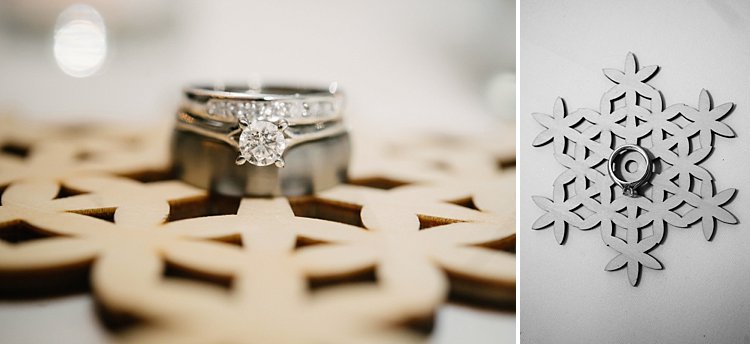
I do this a lot for details, rings shots, room shots, cakes, flowers, etc. It’s like having an assistant attached to me without having to tell them where to go and what to do. Before these transceivers, what was available was a bracket arm attached to the hot shoe of the camera and your flash sat on the end of the bracket arm. The advantage of this is that you didn’t have direct light hitting your subject, but one that was just slightly off on the side. However, with the amazing bounce capability of the flashes now, you can maneuver the light in more ways than in the past.
How to Use a Speedlight at Wedding Receptions and Events

using-speedlight-wedding-events-photography-flash-tutorial_0000

With an assistant

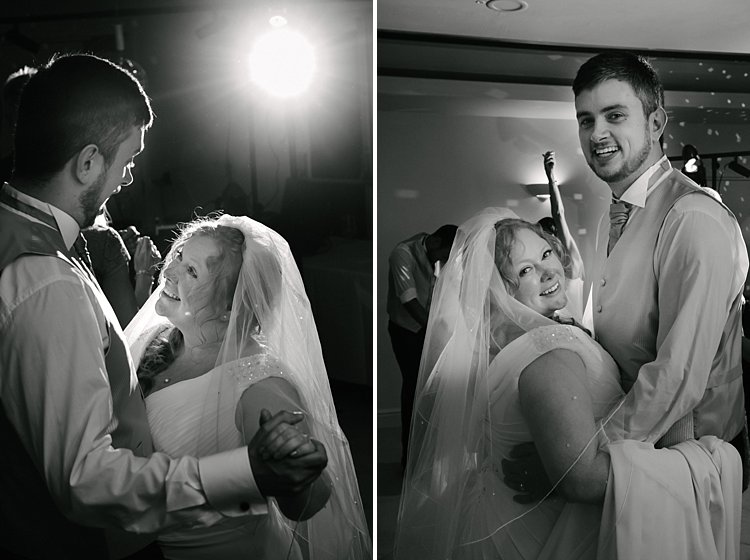
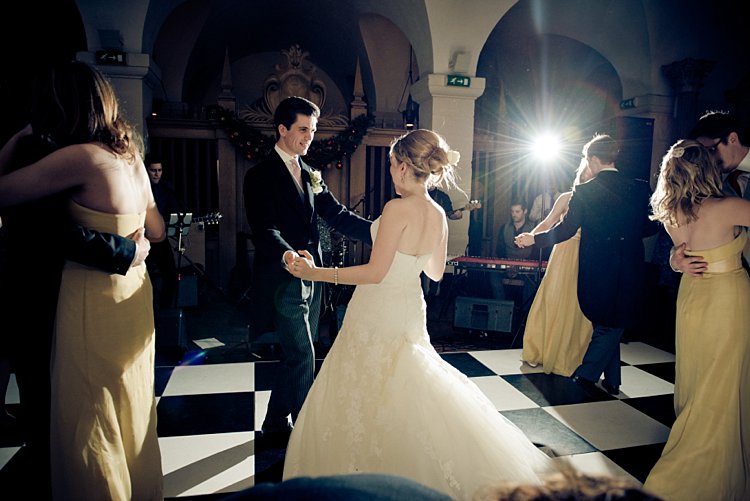
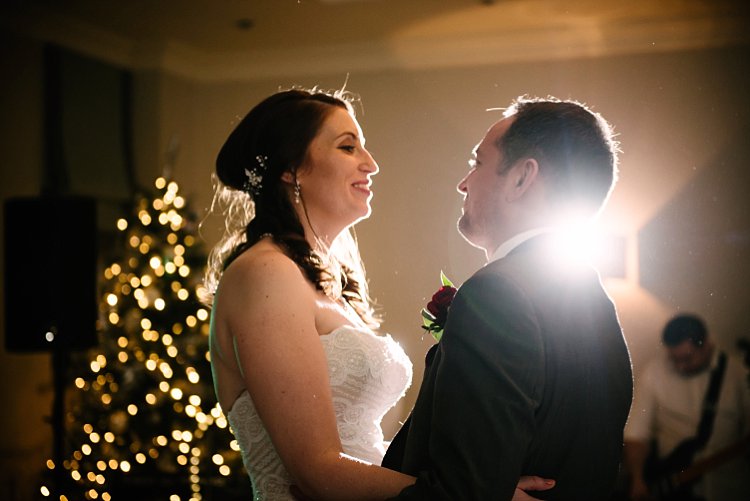
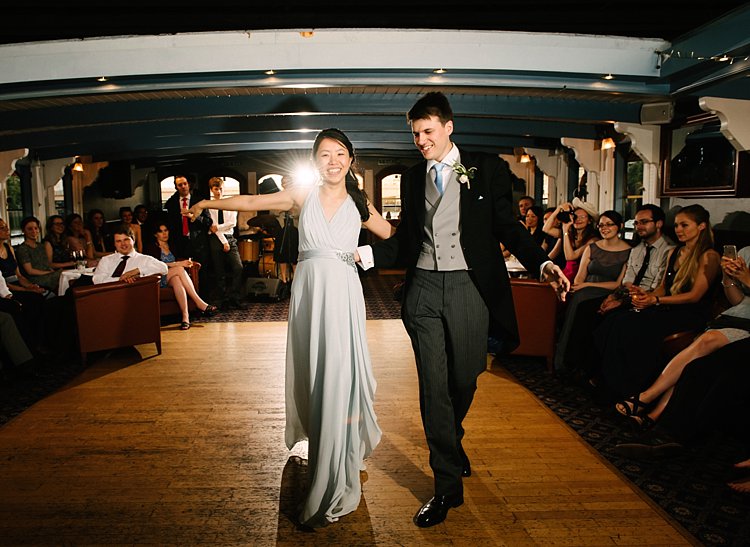
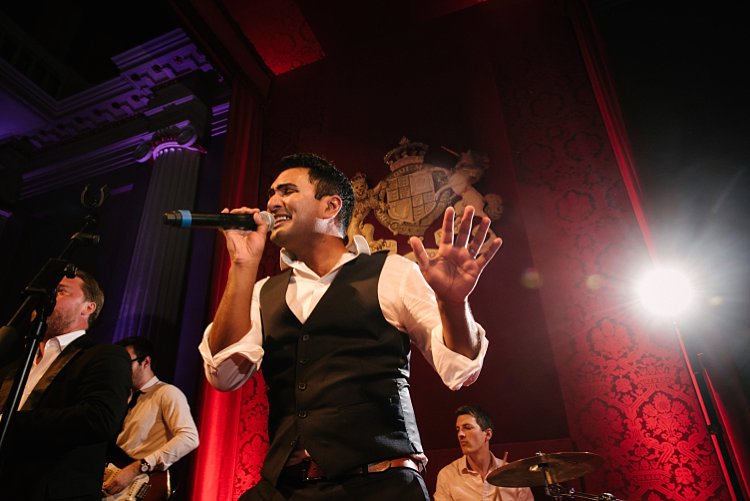
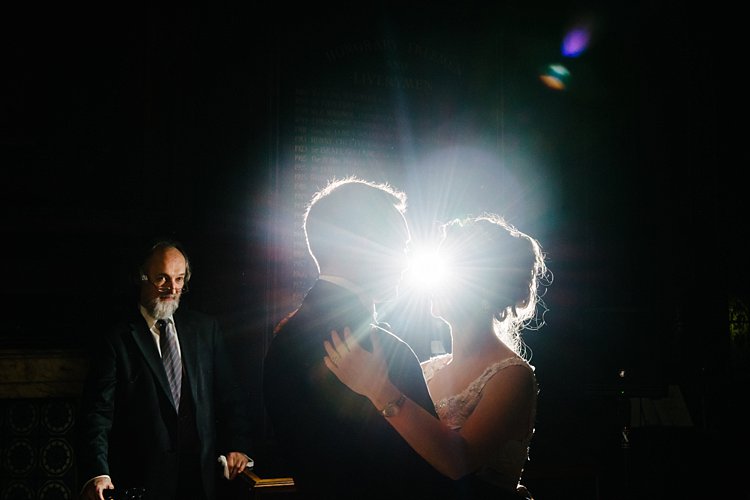
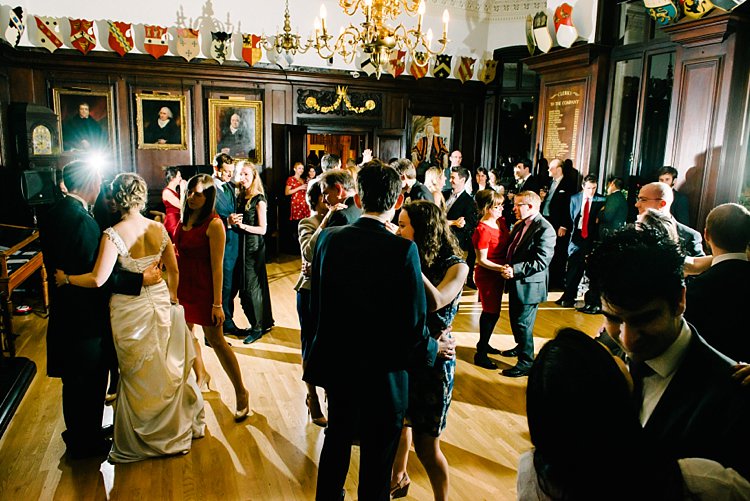
I lean towards more dramatic photos, so if I have an assistant or a second shooter, I personally prefer that they hold the second off-camera flash at an arm’s length away from me (much like the bracket arm but slightly further away) especially when I’m shooting the first dance.

I always have at least two lights, a kicker light which is bare bulb (no diffusion) pointing at a 90-degree angle at the newlyweds creating a backlight, and another light held by my assistant to the side for some directional fill. Sometimes I do away with this side light though when shooting a silhouette or if I want a dramatic rim light. I like having light and shadows in my reception pictures especially when the shadows fall in the right places.
How to Use a Speedlight at Wedding Receptions and Events

How to Use a Speedlight at Wedding Receptions and Events

How to Use a Speedlight at Wedding Receptions and Events

How to Use a Speedlight at Wedding Receptions and Events

How to Use a Speedlight at Wedding Receptions and Events

How to Use a Speedlight at Wedding Receptions and Events

Speeches

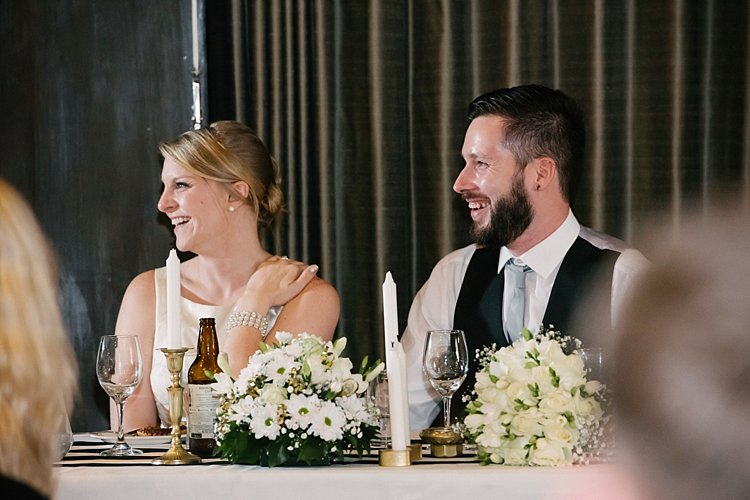
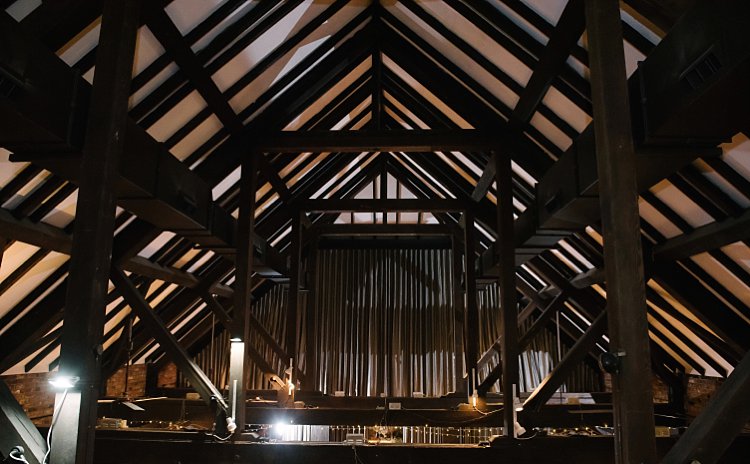
During speeches, I tend to have one off-camera light positioned on a stand somewhere at a distance, either with an umbrella or bounced, to provide directional light. I also have a speedlight on my camera for fill but only use it when I feel it’s needed, and not for all shots. However, if I have three or four speedlights at various parts of the room for off-camera lighting, I don’t usually bother with any fill light from my camera. I would just position myself in relation to the off-camera lights to get the best directional light for my subject.

The examples directly below show where I placed two speedlights on opposite sides of the room. This was because the venue had decided to put the couple at the back next to the cake where there was no light at all. You can see on the photo of the beams where the lights have been placed, one to camera-left directly in line with where the couple was sitting, and one on camera-right angled slightly at about 45 degrees towards me to light the cake and provide fill light for the couple.
How to Use a Speedlight at Wedding Receptions and Events

How to Use a Speedlight at Wedding Receptions and Events

Sparklers

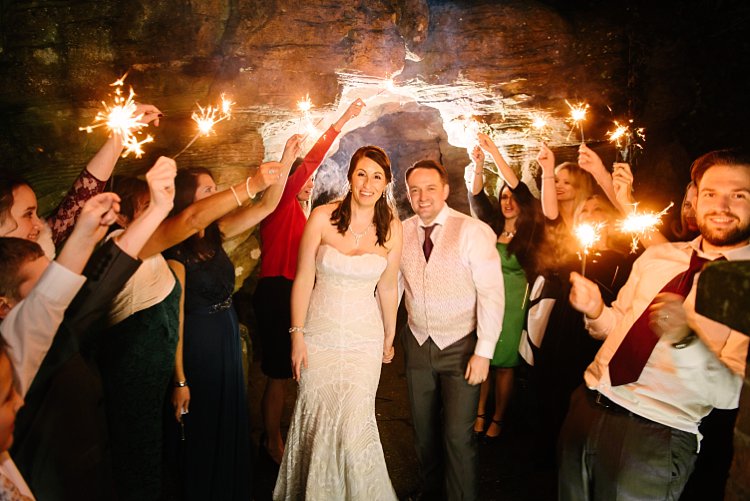
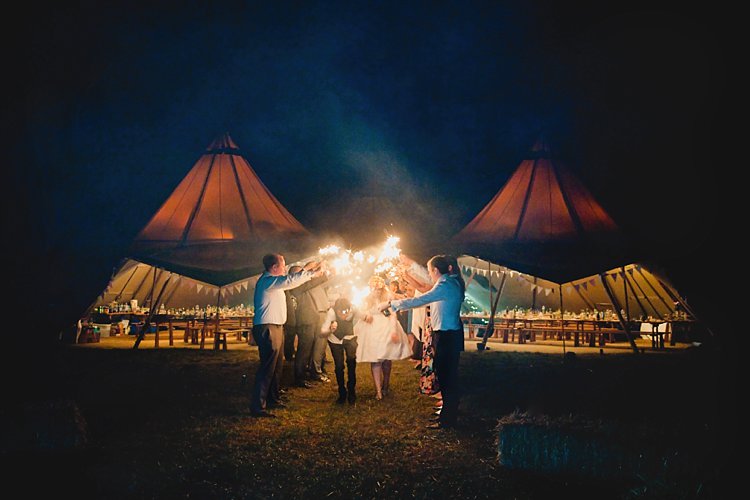
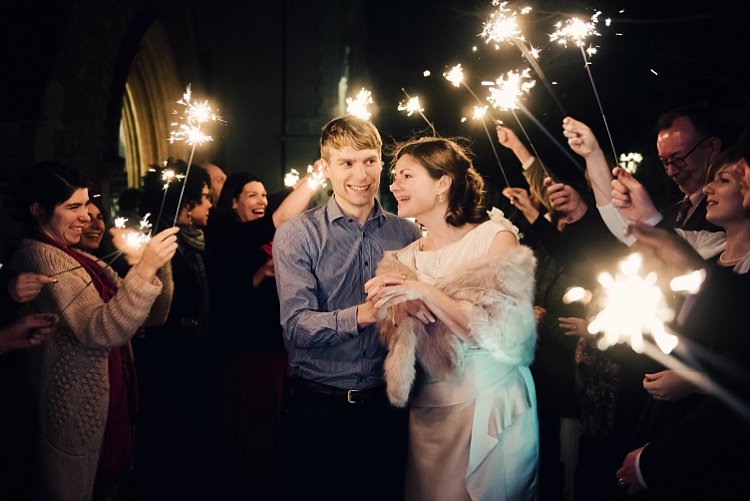
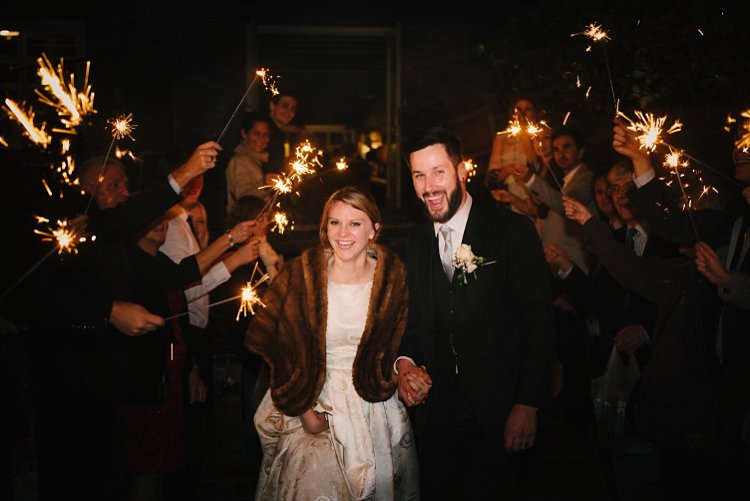
Sparkler shots are tricky as it depends on the location, space, season, and so on. I have done sparkler shots in all manners; with just a speedlight on-camera both bounced up and angled forwards, an assistant holding a light from the side, a diffused speedlight positioned at 90-degrees, a kicker light behind with a speedlight on my camera for fill, and a shot with no light at all because the flash didn’t recycle in time but it was the best photo of the couple where both looked lovely (no blinkers or funny expressions).

No matter how prepared you are, in wedding photography, you have to be ready for the unexpected. The main thing to remember, which in the speed and flurry of events I admit that I sometimes forget myself, is to keep the shutter speed at a fairly low setting to let in more ambient light. The sparks and smokey ambiance from the sparklers bring in that subtle and dreamy lighting look.
How to Use a Speedlight at Wedding Receptions and Events

How to Use a Speedlight at Wedding Receptions and Events

How to Use a Speedlight at Wedding Receptions and Events

#3  – Dragging the shutter

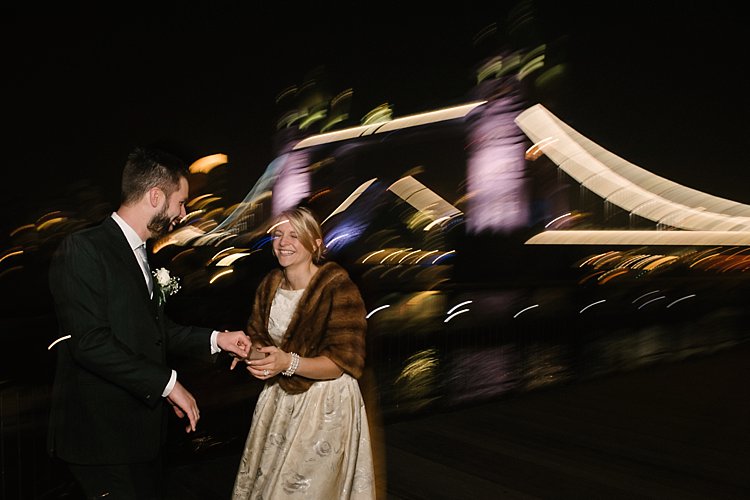
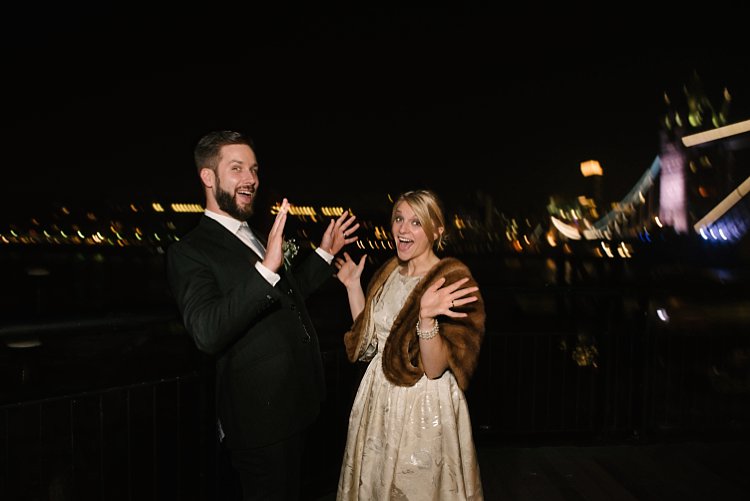
Dragging the shutter is a technique where you shoot at a very low shutter speed, say 1/10th of a second, to capture the ambient light but have your flash pointing directly at the subject to freeze their motion. While the shutter is open, you also must make exaggerated movements with the camera to get the funky motion of the lights in the background. This is especially necessary if the lights in the background aren’t moving so you have to compensate by making the motion yourself as opposed to shooting car light trails in the background where the cars are traveling at high speed and therefore the head lights trails are captured in motion.

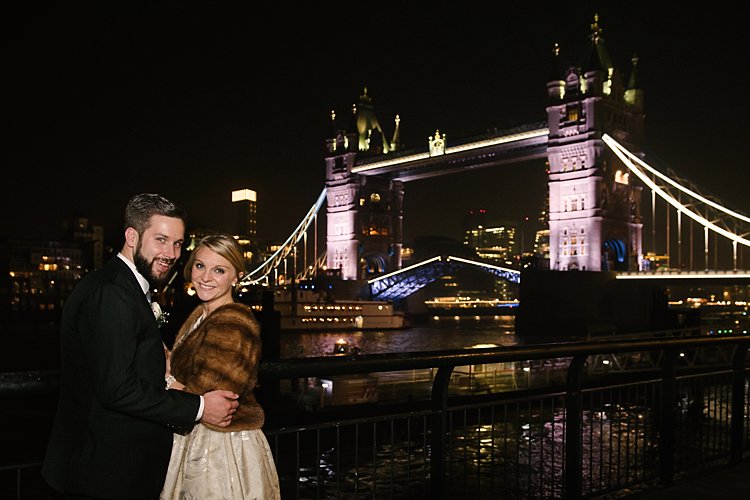
The flash firing at a single point will keep the subject sharp so you don’t need to worry about blurry faces. This works well in a very dark room or space with dramatic background lighting like fairy lights, illuminated architecture such as the Tower Bridge in London, funky DJ lighting, or disco ball reflections and suchlike.
How to Use a Speedlight at Wedding Receptions and Events

How to Use a Speedlight at Wedding Receptions and Events

Conclusion

I have shown quite a few examples above of various instances I have used on and off-camera lighting using speedlights. If you look closely, I think you would be able to tell easily what type of lighting combination I have used on each of the photos, whether that included off-camera lighting or a combination of everything, as well as the number of speedlights used.

I have also referred to my learning journey as a photographer and I know there is still so much to learn; I am only touching the tip of the iceberg. If you have more tips and examples, do share them in the comments below.
How to Use a Speedlight at Wedding Receptions and Events

googletag.cmd.push(function() {
tablet_slots.push( googletag.defineSlot( “/1005424/_dPSv4_tab-all-article-bottom_(300×250)”, [300, 250], “pb-ad-78623” ).addService( googletag.pubads() ) ); } );

googletag.cmd.push(function() {
mobile_slots.push( googletag.defineSlot( “/1005424/_dPSv4_mob-all-article-bottom_(300×250)”, [300, 250], “pb-ad-78158” ).addService( googletag.pubads() ) ); } );

The post How to Use a Speedlight at Wedding Receptions and Events by Lily Sawyer appeared first on Digital Photography School.


Digital Photography School
 
Comments Off on How to Use a Speedlight at Wedding Receptions and Events

Posted in Photography


Metropolitan Museum adds 375,000 scans of artwork to public domain

18 Feb
“[Advertisement for Sarony’s Photographic Studies]” by Napoleon Sarony (American (born Canada), Quebec 1821–1896 New York) via The Metropolitan Museum of Art is licensed under CC0 1.0

The Metropolitan Museum of Art in New York City has added 375,000 images to the public domain, each showing a scan of copyright-free artwork in the museum’s collection. Every image has a Creative Commons ‘CC0’ license, meaning they can be used for both personal and commercial purposes, and can be edited or used as parts of other projects.

This photo release follows the Museum’s Open Access of Scholarly Content initiative launched back in 2014, which made 400,000 photos available for non-commercial use. This latest photo release represents a slight change in the Museum’s policy: that all of its photos of public domain works are now accompanied by a CC0 public domain license.

Talking about this move, Creative Commons CEO Ryan Merkley said:

Today, The Met has given the world a profound gift in service of its mission: the largest encyclopedic art museum in North America has eliminated the barriers that would otherwise prohibit access to its content, and invited the world to use, remix, and share their public-domain collections widely and without restriction. This is an enormous gift to the world, and it is an act of significant leadership on the part of the institution.

The newly released public domain photos can be located using the search tool on the Creative Commons website.

Via: Metropolitan Museum of Art

Articles: Digital Photography Review (dpreview.com)

 
Comments Off on Metropolitan Museum adds 375,000 scans of artwork to public domain

Posted in Uncategorized


iPhone 8 expected to replace Touch ID with 3D facial recognition

18 Feb

Given 2017 is the tenth anniversary of the iPhone, many expect Apple to come up with a few special features for this year’s generation of its smartphones. A high-end model with 5.8″ edge-to-edge OLED display is widely rumored and according to a note from J.P. Morgan analyst Rod Hall, this top-of-the-line device could do away with the Touch ID fingerprint reader and introduce 3D-facial recognition with a front-facing laser scanner as a security feature to Apple smartphones.  

Removing the fingerprint reader would be an important step to make the edge-to-edge display possible and would also reduce user frustration in wet conditions when Touch ID doesn’t work well. Additionally, it could potentially be more secure, making it ideal for Apple Pay and other mobile commerce applications. Eventually the technology could also be used for augmented reality purposes but according to JPMorgan this is not expected to happen before 2018. 

The research note also claims that, based on economies of scale, the 3D recognition technology could also make it onto the lower level models of the 2017 iPhone line. The scanner is said to add $ 10 to $ 15 per module to the iPhone 8’s bill of materials. In combination with the OLED display, glass casing, and related increased production cost this could mean that the new top-model will cost upwards of $ 1000.

What’s your view on the new technology? Would you prefer it over a fingerprint reader, and be willing to pay a premium for it? Let us know in the comments.

Articles: Digital Photography Review (dpreview.com)

 
Comments Off on iPhone 8 expected to replace Touch ID with 3D facial recognition

Posted in Uncategorized


Announcing Two Tamron Competition Winners

18 Feb

The Winners of our recent Tamron Holiday Competition for a Tamron SP 45mm F/1.8 Di VC USD and a Tamron SP 70-300mm Di VC USD lens are…

Thanks!

A HUGE thank you to everyone who entered our recent competition to win an SP 45mm F/1.8 Di VC USD and an SP 70-300mm Di VC USD lens from our friends at Tamron. Yet again, the response was absolutely AMAZING with over 400 entries! But now…onto the winners!

Drum roll. And the winners are:

First Prize

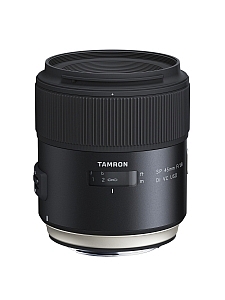
Winner of the Tamron SP 45mm F/1.8 Di VC USD lens is – Sandeep

  • Tamron SP 45mm F/1.8 Di VC USD – Value $ 599
  • Canon, Nikon or Sony-A mount.
  • No substitutions.
  • For canon, Nikon or Sony cameras.

Burk Uzzle has said “Photography is a love affair with life”. My journey with photography has been long, filled with love and labour.

I fumble-started with a twin lens camera borrowed from my uncle about 30 years back, then with a prized EXA (GERMAN film based camera), Olympus C-8080 and since last 4 years a Nikon D5200 (18-105mm VR f3.5). I also own a Yongnuo MK-IV flash, a Sony tripod, a Nikkor 35mm f1.8 prime lens, Hoya ND & CPL filters and a ML-2 remote release given my burgeoning interest to make better photos.

Many years back, I scanned all my family owned b/w photos, to create a treasure trove of memories… I love the life stories that these photos convey – my son’s dimpled smile over gentle glazed skin next to my mother’s weary eyes filled with compassion… my wife’s lingering gracious beauty over the years as she grows older… the children’s audacious poses giving way to awkward conscious stares at the camera… I get mesmerized often, lose myself for hours in these frozen golden moments.

My love for my family takes refuge in the photos I take. I am the de facto family photographer responsible for bringing alive visual expressions of many events. I think, prepare, experiment, analyze and post produce thoughtfully to make them worthy of being seen and relived many times over. “Photography takes an instant out of time, altering life by holding it still.” – famous words from the great Dorothea Lange that are, for me, a constant source of inspiration.

Of late, I have started getting deeper into photography, studied via online training courses, read about great photographers, pored over user manuals and most importantly made a conscious effort to practice long and hard, to make more photos.

Now if I had the choice to pick from the lenses on offer, I would unhesitatingly pick Tamron 45mm (about 68mm with my D5200’s cropped sensor) which suits the family portraiture I so love to indulge in. The various reviews I went through clearly suggests that Tamron 45mm lens is a winner. The Prime lens I own is good but a poor cousin to Tamron by er, a long way. Going by its looks, build quality, the tack sharp photos demonstrated some at low-light (wow!), its colour reproducibility, sharp corners, flexibility of purpose across landscape to macro — I will really look forward and love to have this one in my bag. I suffer from shaky hands so its 3-stop VC should help which my prime lens visibly lacks.

Not sure 2017 will serve surprises for me but I surely will pray. Hope is eternal.”

Congratulations Sandeep! You will also receive a copy of the new Night Photography Course by dPS.

Second Prize

Winner of the Tamron  SP 70-300mm Di VC USD lens is – Br Fla

  • Tamron SP 70-300mm Di VC USD – Value $ 449
  • Canon, Nikon or Sony-A mount.
  • No substitutions.

“As a veteran who has seen my fair share of ugliness in the world, Photography takes me to another place where I can cope with PTSD symptoms by exploring the beautiful world surrounding me.

For my first prime I was looking for a fast lens at the same focal length as human vision for street scenes, portraits, landscapes, and close photography. I wanted a fast, solid built, durable lens with high-end contrast and resolution. The Tamron SP 45mm F/1.8 Di VC USD fits my current needs and allows me to grow as a photographer finding even more beauty in the world.

When shooting with my full frame Nikon D800, a prime 45 mm lens is the just right (Goldilocks) focal length. Any wider you can have distortion, which can be really unflattering for people’s faces or create curved lines that should be strait. Any narrower you will have to stand farther back when you may not have the space and will lose some connection with the subject. You can confidently walk around with this 45mm, because with the human field of vision focal length, the beauty you see is the beauty you get.

The wide open aperture of F1.8 is very fast which will allow for shooting in low light and the circular diaphragm will create beautifully smooth bokeh that no other lens can match.

More importantly, when I can’t sleep I like to go out and shoot in the predawn hours. I would love not only the wide aperture to bring in lots of light but also 3.5 stop vibration compensation so I can capture beauty that exists in low light conditions.

Beauty also exists up close. With such a minimal distance to get sharp focus (only 11.4 inches) I can get closer into a subject without having to purchase expensive macro lenses. With the Vibration Compensation the beautiful details will remain sharp and beautiful.

Beauty can be seen in the contrasts of light. This lens maintains high contrast throughout the frame so you can get more usable images right out of the camera and not have to shoot large just to crop out the edges.

When shooting in some of the harshest conditions (as much as I enjoy the beach and salt air, it is incredibly harsh on photographic equipment) weather sealing is vital to not only durability but also keeping dust/debris out of your camera body and showing up as annoying spots in your images. The fluorine coating will also help keep spots off the front of the lens.

However, despite all the impressive specifications of this lens the true beauty is in the details. In this case the details are tack sharp. I have seen that DXOMark tested this lens to have superior sharpness to all other lenses in the class, even ones that cost significantly more. So when asked how I would use this lens it is simple – I would find beauty in this world and capture it in as sharp detail as the true-life experience provides.

The Tamron SP 70-300mm Di VC USD would be useful zoom lens allowing me to photograph the beautiful wildlife where I live and the Vibration Compensation would greatly help with such long focal lengths.”

Congratulations Br Fla, you will also receive a copy of the new Night Photography Course by dPS.

We were all thrilled with the entries. You tugged at our heartstrings, made us laugh, made us smile, but most importantly, you made us keep wanting to do more of what we are doing; providing you quality information and guidance to become a better photographer. We were so pleased to see that you came from every part of the world, young adults to grandparents, and everyone in between. Thank you all for your entries!

Now, for those of you that didn’t win, Tamron has invited ALL dPS readers download their 2015-2016 eBook Series! You can find those HERE!

The Winners will be emailed with details of how to collect their prize. Please make sure to look for our email. Thanks you again for all the wonderful submissions and to Tamron for sponsoring this competition.

For winners outside the USA, please allow 6-8 weeks for delivery.
Winner responsible for any taxes or tariffs.

Tamron Rebates!

For all of you residing in the USA, when you do purchase your next Tamron Lens, make sure to take advantage of the rebates* up to $ 200 through March 4, 2017. Find additional information HERE!

*Current rebate offers end March 4, 2017. US RESIDENTS ONLY.

About Tamron

Disclaimer: Tamron is a paid partner of dPS.

googletag.cmd.push(function() {
tablet_slots.push( googletag.defineSlot( “/1005424/_dPSv4_tab-all-article-bottom_(300×250)”, [300, 250], “pb-ad-78623” ).addService( googletag.pubads() ) ); } );

googletag.cmd.push(function() {
mobile_slots.push( googletag.defineSlot( “/1005424/_dPSv4_mob-all-article-bottom_(300×250)”, [300, 250], “pb-ad-78158” ).addService( googletag.pubads() ) ); } );

The post Announcing Two Tamron Competition Winners by Darlene Hildebrandt appeared first on Digital Photography School.


Digital Photography School
 
Comments Off on Announcing Two Tamron Competition Winners

Posted in Photography


Teamlab Jungle: Step Inside a Massive Musical Instrument Made of Light

17 Feb

[ By SA Rogers in Art & Installation & Sound. ]

teamlab jungle light vortex

Anyone who visits ‘Music Festival, TeamLab Jungle’ this summer will get to immerse themselves in a space made of light, interacting with moving beams to help produce collaborative crowd-sourced music. ‘Light Chords’ is one of three ‘4D’ light-based installations the Japanese interdisciplinary group has planned for the event, all of which represent a unique intersection of art, design, technology and nature.

teamlab jungle light chords

teamlab jungle

‘Light Chords’ aims to create the sensation of being inside a massive musical instrument, touching the ‘strings’ to produce a sound and hearing it reverberate all around you. The beams of light rise into the sky when touched and then settle back down to be activated again.

teamlab jungle day

teamlab jungle light vortex 3

The second 4D space, Light Vortex, places visitors at the center of a surreal light show that bends and stretches around the space, while ‘Light Cave’ builds complex light-based architecture over attendees’ heads.

teamlab jungle vortex

teamlab jungle light vortex 4

Known for their use of illumination as an artistic medium and for a focus on interactivity, TeamLab brings their ‘Music Festival’ to various cities and spaces each year, with different experiences to be had by day and by night. Before dark, TeamLab Jungle is designed as a music festival for families, while after dark it becomes more like a dance party with BACARDÍ-sponsored bars.

Share on Facebook


[ By SA Rogers in Art & Installation & Sound. ]

[ WebUrbanist | Archives | Galleries | Privacy | TOS ]


WebUrbanist

 
Comments Off on Teamlab Jungle: Step Inside a Massive Musical Instrument Made of Light

Posted in Creativity