RSS
 

Archive for December, 2016

Happy Holidays from DPReview

25 Dec

Happy Holidays

As we celebrate our eighteenth anniversary (the site officially launched December 25th, 1998, when some of our staff were still in elementary school) I’d like to wish each and every one of our visitors a very Merry Christmas/Happy Holidays/Season’s Greetings/Happy Hanukkah/Merry Festivus* (*delete as required).

As you can might be able to spot from the picture above, I wasn’t personally able to attend the ‘put on a festive hat and pose for a portrait’ session due to the fact that some of us have actual work to do (or to put it more accurately, some of us had already left for two weeks of eating, drinking and being merry). And besides, there were no hats left. And I really, really hate being on the other side of the camera.

And, whilst I may not be sure exactly which of the various bearded guys in the picture above is which, I can tell you that I’m incredibly proud of the work the entire team has done this year, and excited to see what they achieve in 2017. I wrote my first camera review 20 years ago (when working on the launch issue of the world’s first dedicated digital camera magazine), yet I still learn something almost every day by working with these talented, dedicated (and, yes, often bearded) people. It is their ideas (which, naturally, I steal and present as my own) and their boundless enthusiasm that keep our audience growing year on year, in the face of the continuing decline in camera sales (and the competition from viral cat videos and an unpresidented amount of twittering from high profile US political leaders.)

2016 might have been a year many of us will be glad to see the back of, but I’m genuinely excited about what we have planned for 2017 here on DPR. You’re going to see some significant changes to our homepage, with much more photographic content and faster reviews. We’ve got big plans for the mobile site, and we have some cool new features that we think you’re really going to enjoy. Actually, let’s be honest, what I should say is that we have some cool new features that we hope you don’t hate…

I can hear the mulled wine and mince pies calling, so I’ll just add my thanks to you, our loyal audience, because (as I say every year), there would be no DPReview without you. You keep us honest, you challenge us, and you often surprise and inspire us. We’re thankful that we’ve been able to continue bringing you reviews, videos, how-to’s, news coverage and much more – it’s a privilege and we’re always striving to do the best we can for our readers. We’re grateful for your contributions to our galleries, photo challenges, forums and spirited discussions, and hope that you’ve taken some photos you’re proud of this year.

Have a fantastic holiday, and raise a glass with me to a pleasant, prosperous and peaceful 2017. 

Merry Christmas!

— Simon

Happy Holidays

 “We spend our entire year shooting cameras, dissecting features, and arguing about pixels. It’s kind of the way things are at DPReview…

…But when you receive a picture of your newborn niece two days before Christmas, it reminds you of what’s really important, and why photography really does matter.

Happy holidays. I can’t wait to see what you all shoot in 2017!”

Dale Baskin, New Content Editor

Happy Holidays

“2016 introduced a lot of exciting and innovative things in photography. New gear, glass, techniques, technology, accessories, talent…

…so <ahem> why are you still sitting there? Go take some pictures!”

Wenmei Hill, Editorial Manager

Happy Holidays

Abstractly, 2016 was much like any other year. I’ve had failures, which I’ve tried to learn from. I’ve had successes, which I’ve tried to learn from. The biggest challenge for me is to avoid becoming bogged down by the former, and too comfortable with the latter. In this sense, then, I honestly hope that 2017 will provide opportunities for more of each.

Also, if it could provide me an opportunity to win the lottery so I can finally purchase a D5 and a 105mm F1.4 of my very own, that’d be great too.”

Carey Rose, some guy we found who likes taking photographs and writing about things

Happy Holidays

“Photographically this was one of the most challenging and rewarding years I’ve had in a long time. I got to photograph lava on my honeymoon, shoot the canyon lands of Utah and enjoy wildflower season at home in the PNW; it doesn’t get much better than that! I’m looking forward to see what 2017 has to offer, but it will definitely be hard to top 2016! Happy holidays everyone!” 

Chris Williams, Landscape Guru and Lens Reviewer

Happy Holidays

“Other than finally coming to terms with Windows after 12 years with Mac, I spent much of 2016 researching LED, CRI, reverse phase dimming, and redundancy in smart device operation… all to get the various technologies in my home and digital life working together in time for the birth of my first child. And you know what? A hands-free smart home makes me want a hands-free smart camera.

All in good time. In the meantime, I’ve got a diaper to change and a once-in-a-lifetime smile to capture with my [insert brand that paid me off last here] camera. Happy Holidays!”

Rishi Sanyal, Technical Editor

Happy Holidays

“Is 2016 over yet?”

Barnaby Britton, Features Editor

Happy Holidays

“2016 for me included some great cameras and an increasingly ill-advised beard. It should probably also be the year I give up on watching elections.

Still, if you’re wondering why I’m the only member of the team wearing a suit, it’s because I wanted to wish everyone a very moiré Christmas.

And to apologise for that pun.”

Richard Butler, Reviews Editor

Happy Holidays

“I think I actually shot more photos in 2016 than any other year of my life, despite the world seemingly crashing down all around us. There was also some fiiiine glass released this year, which I think was even more exciting than the big camera launches.” 

Dan Bracaglia, Camera Reviewer

Happy Holidays

“I told a friend earlier this year it would be difficult to buy the wrong camera after Photokina 2016, but then the Yi M1 came out…”

Sam Spencer, Studio Manager

Happy Holidays

“In the immortal words of Groucho Marx, ‘Time flies like an arrow. Fruit flies like a banana.'”

Allison Johnson, Homepage Editor

Happy Holidays

“As the person responsible for all of the ads on the site, I’m sorry.

Looking ahead to 2017, I’m reminded of some choice words from Prince, may he RIP:

‘Everyone has a rock bottom’

‘I have a lot of parties’ “

Scott Everett, Senior Product Manager

Happy Holidays

“We managed to go the entire year without any software-related injuries! I consider that a success.”

Josh Hays, Software Developer

Happy Holidays

“We will remember the 2016 Kumamoto earthquakes and how that impacted so many camera brands and product releases.  

We may forget how the year’s promise of Virtual Reality (VR) everywhere for everyone didn’t quite end up that way.  (maybe next year)

We will remember Pokemon Go by Niantic becoming the hottest craze and the most successful Augmented Reality (AR) game ever.

I will remember how Nintendo made way too few NES Classics. (empty handed)” 

Eugene Hsu, Geek, Product Manager Business Development

Articles: Digital Photography Review (dpreview.com)

 
Comments Off on Happy Holidays from DPReview

Posted in Uncategorized


48Hr Switch camera briefcase doubles as a backpack and messenger bag

25 Dec

$ (document).ready(function() { SampleGalleryV2({“containerId”:”embeddedSampleGallery_5106963844″,”galleryId”:”5106963844″,”isEmbeddedWidget”:true,”standalone”:false,”selectedImageIndex”:0,”startInCommentsView”:false,”isMobile”:false}) });

Kickstarter-born leather goods company Temporary Forevers has launched a campaign to fund production of its new 48Hr Switch camera bag. Like the 48Hr Classic it introduced earlier this year, the Switch is a convertible backpack/briefcase/messenger bag with padded dividers suitable for camera gear storage. The handcrafted leather bag offers room for other items like a laptop, accessories, and clothing thanks to its expandable design. In addition to the 48Hr Switch, T.Forevers also plans to launch a non-expandable 24Hr Switch model.

The bag’s camera and lens dividers are detachable, enabling owners to rearrange or remove them as necessary for storing camera bodies and lenses. In addition to those dividers, the 48Hr Switch features a padded laptop pocket, dedicated document sleeve, pockets for a phone, pens and other small items, and a 3.9in / 10cm depth expandable to 6.5in / 16.5cm.

The 48Hr Switch and non-expandable 24Hr Switch are made with full grain leather and 20oz British cotton, depending on the style. The company details multiple bag style options, including ‘Rum & Olive,’ ‘Desert & Black,’ ‘Rum Brown,’ and ‘Black.’ Buyers will be given two leather strap options: a strap that is 3.8cm in width and another that is 5cm in width.

Temporary Forevers has raised more than double its Kickstarter goal, and is offering various styles of the Switch bags in exchange for pledges that start at £149 / $ 186 USD.

Via: Kickstarter

Articles: Digital Photography Review (dpreview.com)

 
Comments Off on 48Hr Switch camera briefcase doubles as a backpack and messenger bag

Posted in Uncategorized


Angling for Warmth in Winter: 21 Ice Fishing Hut Designs

25 Dec

[ By SA Rogers in Culture & History & Travel. ]

Maine fishing hut

Not just cold comfort, these portable shacks designed to be towed out onto frozen lakes come in a variety of forms, from the practical and resourceful to the funny and artistic.  These ice fishing hut designs demonstrate how surprisingly warm and cozy the simplest of shelters can be – and prove that people who live in the world’s coldest climates (happily spending their spare time engaging in recreational outdoor activities in subzero temps) are way hardier than the rest of us.

Fishing Hut & Hot Tub Combo

fishing-huts-hot-tub

A group of local anglers in Calgary came up with a pretty brilliant way to stay warm while out on the ice: a towable hot tub, which they pull out onto frozen lakes alongside their fishing hut. It takes a couple hours to heat up, but the waiting time has got to be worthwhile once you get in. “We weren’t catching any fish, so we thought we’d do something else,” says the tub’s creator, Scott Chesterman.

Ice Fishing Hut with Frozen Walls

fishing-hut-ice-walls-1

fishing-hut-ice-walls-2

Rather than hauling a pre-made hut out onto the water, you could work with what’s already there. This mobile fisherman’s hut design by Norwegian architecture studio Gartnerfuglen is made of a wooden frame and wire mesh, used as a form for ice. Once the walls freeze into place, the inside is insulated. In the summertime, it can be used as a garden shed, with the wire supporting climbing plants.

The Art Shanty Project: 8 Creative Hut Designs
fishing-huts-art-shanty-project-1

fishing-huts-art-shanty-2

fishing-huts-art-shanty-project-2

fishing-huts-art-shanty-3

fishing-huts-art-shanty-4

fishing-huts-art-shanty-5

fishing-huts-art-shanty-6

fishing-huts-art-shanty-7

fishing-huts-art-shanty-8

Is this the polar opposite of Burning Man? Over 1,000 artists have designed and built creative ice shanties for the annual ‘Art Shanty Project’ over the last decade, covering the frozen surface of a Minnesota lake like an iced-over version of the popular desert festival. The creations include wooden stick-framed shacks, geodesic domes, tipis, sculptural structures and mobile shanties of all kinds, put on display for thousands of tourists to see for an event that’s uniquely Minnesotan.

Next Page – Click Below to Read More:
Angling For Warmth In Winter 21 Ice Fishing Hut Designs

Share on Facebook


[ By SA Rogers in Culture & History & Travel. ]

[ WebUrbanist | Archives | Galleries | Privacy | TOS ]


WebUrbanist

 
Comments Off on Angling for Warmth in Winter: 21 Ice Fishing Hut Designs

Posted in Creativity


Throwback Thursday: Stylus-toting, web-browsing Ricoh RDC-i700

25 Dec

$ (document).ready(function() { SampleGalleryV2({“containerId”:”embeddedSampleGallery_5583248119″,”galleryId”:”5583248119″,”isEmbeddedWidget”:true,”standalone”:false,”selectedImageIndex”:0,”startInCommentsView”:false,”isMobile”:false}) });

These days, we take things like touchscreen displays and Wi-Fi for-granted. But what if I told you about the existence of a camera in the year 2000 that had a huge touchscreen with a stylus, could create photo galleries and upload them to the Internet (email too) and even had a built-in web browser? This wasn’t a concept – it was the Ricoh RDC-i700.

Before we get to its communication and ‘data management’ functions, let’s talk basics. The i700, which cost $ 1200 when it was introduced, had a 3.3 megapixel CCD, 35-105mm equiv. lens, 1cm macro capability and a whopping video resolution of 320 x 240. It had a hybrid AF system consisting of ‘passive’ and TTL modes, an optical viewfinder and that monster 3.5″ LCD. Photos could be saved internally or on a CompactFlash card.

With the pen and touchscreen the i700 let you create databases to hold your photos, put them into templates that you’ve brought over from your PC (in Word or Excel format) and create galleries that you can then put on the Web. Naturally, you could also use the pen to scribble on your photos.

The RDC-i700 has more attractive menus than on some current models! Ahh, dial-up.

Now the crazy stuff. The RDC-i700 had a PCMCIA slot which could hold a compatible modem. This allowed you to e-mail photos to friends, upload galleries that you’ve created and send them to a modem-equipped PC, bypassing that silly Internet thing. If you’ve used the camera’s ‘Text Mode’ you can fax the results to your local Kinkos (gotta keep the throwback theme going here). To top it off, you could check out your GeoCities page via the i700’s built-in web browser. 

The RDC-i700 certainly wasn’t a camera for everyone, summed up nicely in Imaging Resource’s review:

If you need the communications capability the i700 offers (and have the telecommunications degree to get it all working), there’s literally nothing like the i700 on the market. Nothing. Buy it. On the other hand, if all you care about is snapping attractive high quality digital photos in an uncomplicated fashion, you can find all you need in a pure camera costing hundreds of dollars less.

Read Imaging Resource’s Ricoh RDC-i700 Review

Articles: Digital Photography Review (dpreview.com)

 
Comments Off on Throwback Thursday: Stylus-toting, web-browsing Ricoh RDC-i700

Posted in Uncategorized


LG V20 achieves 85 points in DxOMark Mobile testing

25 Dec

The V20 is a high-end smartphone from LG that has been designed with a focus on audiovisual performance. Its camera specification is very similar to the sister model G5. The dual-camera setup combines a 16MP sensor with F1.8 aperture and optical image stabilization in the main camera with an 8MP/F2.4 unstabilized wide-angle module, allowing for quick changes of field of view. 

In the DxOMark test the V20 scored 85 points and takes a joint number 12 spot, alongside the Huawei Mate 9. The DxO engineers liked the good detail in bright light, good noise reduction, bright exposures in extremely low light and the fast autofocus. On the downside, they also found some highlight clipping in high-contrast scenes, occasional focus failures and a slightly pink color cast in some outdoor images.

In video mode the testers noted the good exposure, noise reduction and stabilization but criticized visible motion blur in all lighting conditions, inconsistent sharpness and limited dynamic range in bright light. You can read the full report at DxOMark.com.

Articles: Digital Photography Review (dpreview.com)

 
Comments Off on LG V20 achieves 85 points in DxOMark Mobile testing

Posted in Uncategorized


Urban Agrihood: Detroit Produce Project Feeds 2,000 Households for Free

25 Dec

[ By WebUrbanist in Architecture & Public & Institutional. ]

mufi-initiative

The Michigan Urban Farming Initiative (MUFI) has developed a multi-acre urban agricultural campus in Detroit with gardens and an orchard designed to feed thousands of local residents.

This so-called “agrihood” reflects a different approach to neighborhood planning and growth centered around urban agriculture — it provides fresh and locally-grown produce to local households. In the case of Detroit, disused land has been repurposed to realize this farm project.

farm-aerial

“Over the last four years,” explains MUFI cofounder Tyson Gersh, “we’ve grown from an urban garden that provides fresh produce for our residents to a diverse, agricultural campus that has helped sustain the neighborhood, attracted new residents and area investment.”

The program is about more than just feeding people — it addresses food deserts but also nutritional illiteracy, teaching residents about healthy eating as well as sustainable and local agriculture.

michigan-urban-farming-initiative

MUFI is currently working to convert an old deserted building into a new Community Resource Center as part of its non-profit educational initiatives. From there, they aim to build a local healthy food cafe and other amenities for serving and connecting with the community. They are also working on a basetern project (turning basements into cisterns) to provide water for the food they grow.

“We’ve seen an overwhelming demand from people who want to live in view of our farm, says Gersh. “This is part of a larger trend occurring across the country in which people are redefining what life in the urban environment looks like. We provide a unique offering and attraction to people who want to live in interesting spaces with a mix of residential, commercial, transit, and agriculture.”

Share on Facebook


[ By WebUrbanist in Architecture & Public & Institutional. ]

[ WebUrbanist | Archives | Galleries | Privacy | TOS ]


WebUrbanist

 
Comments Off on Urban Agrihood: Detroit Produce Project Feeds 2,000 Households for Free

Posted in Creativity


Daredevil Santa: Human Flying Drone Enables Sky-High Snowboarding Tricks

24 Dec

[ By SA Rogers in Gadgets & Geekery & Technology. ]

human-flying-drone-1

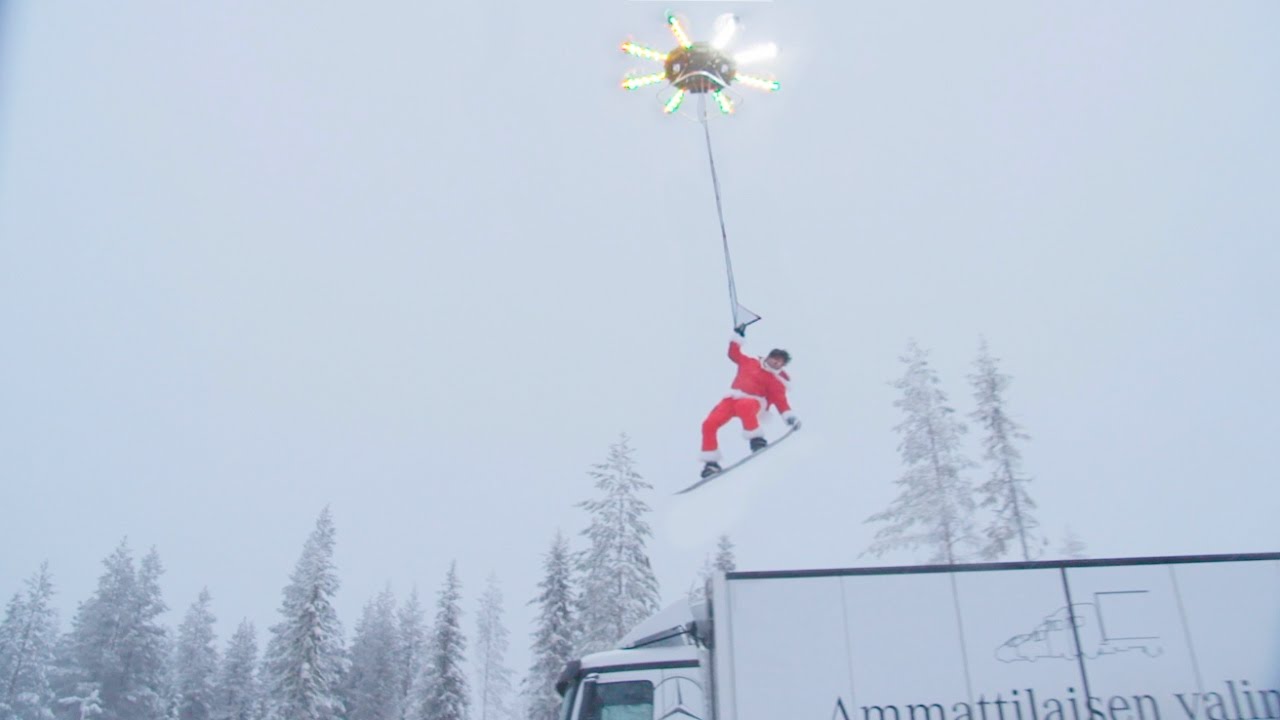
“This isn’t fake, I promise,” said filmmaker Casey Neistat as he announced the impending debut of his ‘Human Flying Drone Holiday Movie’ on Twitter with a dubious-looking graphic. Anyone who saw that tweet could be forgiven for their skepticism, especially since Neistat was teaming up with fellow YouTube star Jesse Wellens of the channel PrankvsPrank to pull off the stunt. But by all accounts, this footage of the ‘world’s largest homemade drone’ is real, and a Santa-suited Neistat is actually flying 25 feet in the air.

human-flying-drone-5

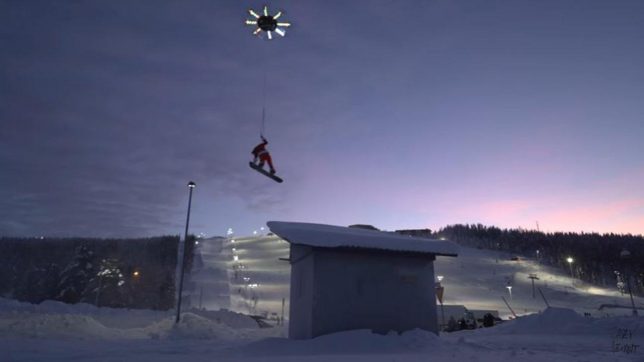
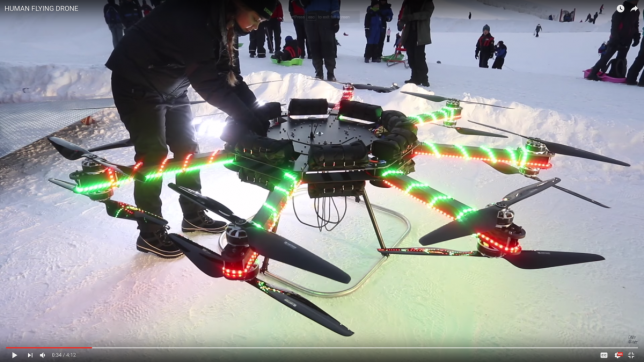
No one in the world sells a drone that can lift a human being, so Neistat and his team set out to create one. The octocopter drone, which is augmented with a Samsung Galaxy Gear 360 action camera, reportedly took over a year to build, and the video clip was shot at a ski resort in Finland over the course of four days. In it, the daredevil YouTuber zooms down a slope on a snowboard and then takes off into the sky, going higher and higher before the final jump takes him 100 feet into the air, as smoke bombs fastened to his feet emit vivid pink plumes.

human-flying-drone-2

human-flying-drone-3

One thing that’s not quite what it seems is Neistat’s single-handed grip on the handle: he’s actually securely fastened to the drone, dubbed ‘Janet,’ by a body harness. The rest of it, as far as anyone can tell, is legit. Looks like fun! Check out how it’s done in the behind-the-scenes video above.

Share on Facebook


[ By SA Rogers in Gadgets & Geekery & Technology. ]

[ WebUrbanist | Archives | Galleries | Privacy | TOS ]


WebUrbanist

 
Comments Off on Daredevil Santa: Human Flying Drone Enables Sky-High Snowboarding Tricks

Posted in Creativity


STC offers clip-on light pollution filter for full-frame Nikon DSLRs

24 Dec

Taiwan-based filter maker STC is offering an Astro-Multispectra Clip Filter for several full-frame Nikon DSLR cameras, aiding photographers in filtering light pollution during astrophotography sessions. The filter is designed to clip over the camera’s sensor, and is made with Schott B270 optical glass coated using IBAD technology, including an anti-smudge nanocoating. When used, the Clip Filter ‘significantly reduces’ artificial lighting produced by things like street lights.

The STC Astro-Multispectra Clip Filter is compatible with the Nikon D4, D4s, D800, D800E, D810, D810A, D750, D600, and D610. The item is sold by Cyclops Optics for $ 1,620 Hong Kong dollars, or about $ 209 USD. The company offers worldwide shipping.

Editor’s note: An earlier version of this article incorrectly stated that the filter was made by Cyclops Optics.

Articles: Digital Photography Review (dpreview.com)

 
Comments Off on STC offers clip-on light pollution filter for full-frame Nikon DSLRs

Posted in Uncategorized


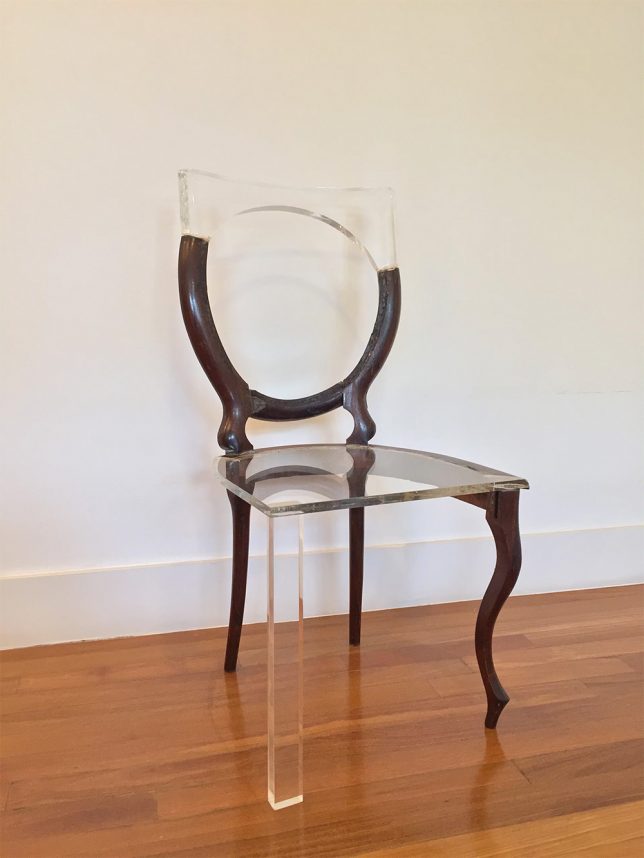
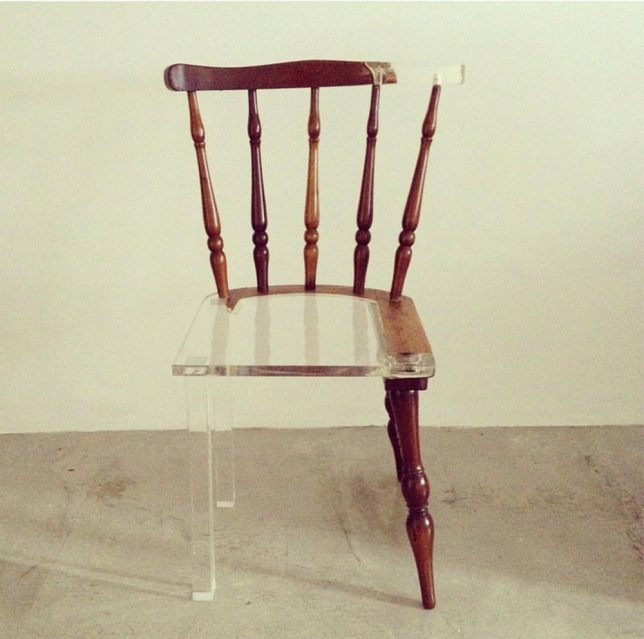
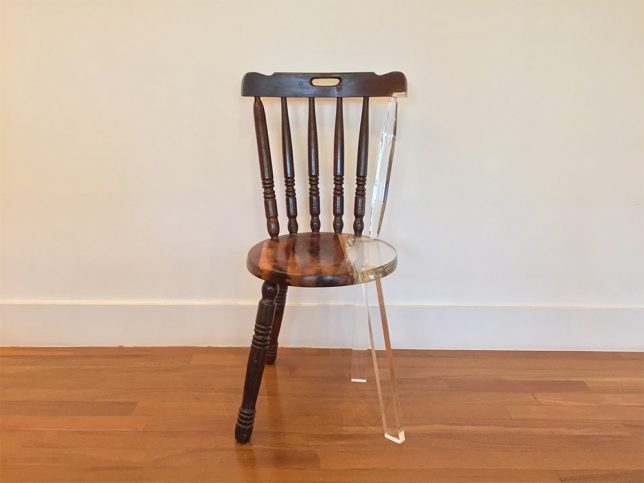
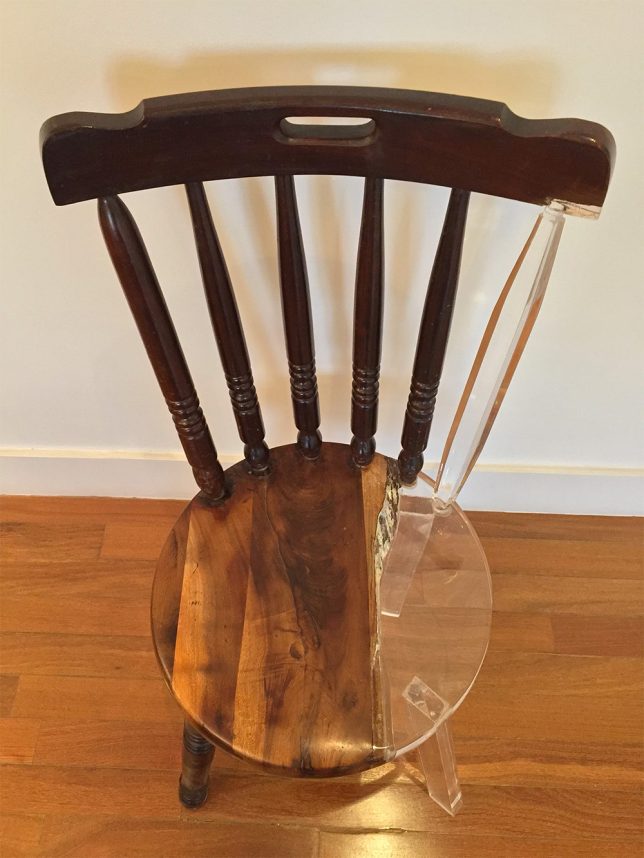
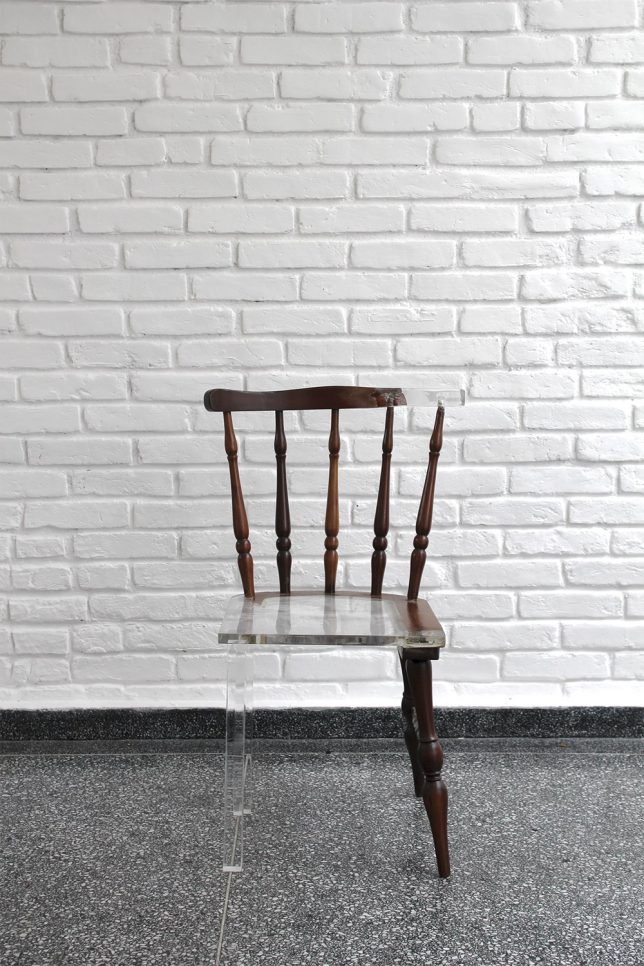
Invisible Repairs: Artist Fixes Broken Wood Furniture Using Clear Infill

24 Dec

[ By WebUrbanist in Art & Sculpture & Craft. ]

wooden-chair-replacement-art

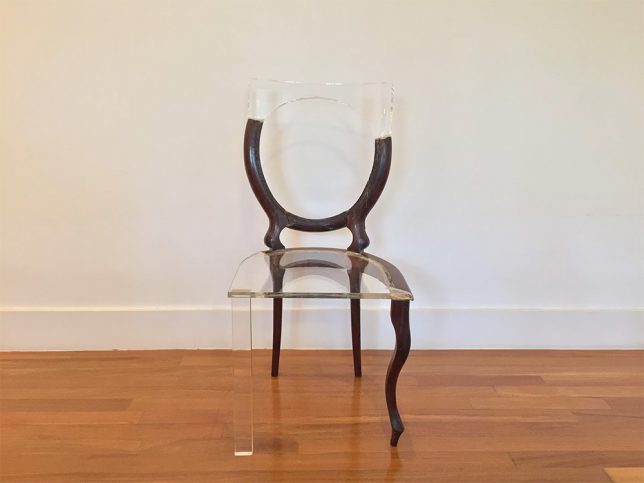
Wooden furniture remnants stand out clearly against their subtle replacement parts in this series of artistic chair and bed repairs. Translucent acrylic fills in the gaps of these pieces, parts of My New Old Chair and Dear Bed collections by artist Tatiane Freitas. Mirroring the construction methods used for the two materials, the missing lathe-spun wooden parts are replaced by simplified acrylic geometries.

wood-chair-lines

chair-repair

The approach follows a certain vein of old-versus-new expressionism also found in fields of design and architecture — added elements are clearly distinguished from existing ones in order to make the time period differences legible at a glance.

wood-acrylic-art-chairs

wood-chair-intervention

As with repair-oriented designers, there is a functional component here as well: the old chairs are able to be useful again thanks to these careful interventions.

bed-headstand-repair

wood-chair-plastic-infill

More about the artist: “In her day to day before graduating from Fashion school Tati Freitas was already looking into ways to create objects which could be both confortable and admired. Craft wood is her most common material, and that which gives her objects its forms, but she’s also been developing with more brute substances, like cement, and the sensible acrilic.”

Share on Facebook


[ By WebUrbanist in Art & Sculpture & Craft. ]

[ WebUrbanist | Archives | Galleries | Privacy | TOS ]


WebUrbanist

 
Comments Off on Invisible Repairs: Artist Fixes Broken Wood Furniture Using Clear Infill

Posted in Creativity


Greatest hits: Behind the scenes with Ben Liebenberg, lead photographer for the NFL

24 Dec

Behind the scenes at the NFL with Ben Liebenberg

NFL Senior Photo Editor and Lead Photographer Ben Liebenberg and Seattle Seahawks’ Richard Sherman ©Ric Tapia/NFL

You may see Ben Liebenberg running down the field trying to out pace the Seattle Seahawks’ Richard Sherman after a game to grab a shot (above photo) or photo bombing the annual NFL draft ceremony from backstage. As Senior Photo Editor and lead photographer for the NFL, Liebenberg’s responsibilities range from coordinating all aspects of the photo department, curating images for the NFL Network and NFL.com, as well as photographing games, events and capturing portraits of players throughout the year.

What started as a hobby in high school evolved into a degree in photojournalism once Liebenberg realized he could turn his interest in photography into a career. While in college, Liebenberg worked as an assistant to Sports Illustrator photographers. ‘SI didn’t have staffers in the Bay Area,’ Liebenberg explains, ‘so they would fly people in and I did a lot of assisting for them. That’s where my sports background came from.’

After graduating college, Liebenberg interned for a number of small newspapers, but in the early 2000’s nobody was hiring. By chance, he made some connections in the music world and began traveling internationally and in the U.S. to photograph various artists and tours. In 2005, he began working at Wire Image, handling the NFL archives, and continued there for several years until Getty—which had its own sports department—purchased Wire Image.

As Liebenberg was winding down his time a Wire Image, the NFL called him about working for the new NFL.com. He interviewed and got the job the same day in 2007. Almost ten years later, the NFL.com’s team has grown from a handful of people to a staff of hundreds in Los Angles, with additional offices in New York and, for NFL films, New Jersey.

For a fascinating glimpse behind the scenes preparing for and shooting the Super Bowl, as well as what keeps Liebenberg busy shooting and planning between games, read on.

Behind the scenes at the NFL with Ben Liebenberg

Super Bowl LI football at the famous La Carafe Bar in Houston; © Ben Liebenberg

The Super Bowl is coming up in February. How far in advance do you start preparing for the game?

The location of the Super Bowl is decided several years in advance, so we have a lot of lead time. I took the first photos for Super Bowl LI, which will be played on February 5 at NRG Stadium in Houston, back in August 2015.

This is the third year we’ve done a style guide, where I’ll photograph a football with the Super Bowl logo for that year on location in the host city. Last year, I photographed the Super Bowl 50 ball in some of San Francisco’s iconic locations like the Golden Gate Bridge. One of the locations for the Super Bowl LI style guide shoot was La Carafe—believed to be the oldest bar in Houston. The building’s on the National Register of Historic Places and has a wooden bar that’s rich with history from the carvings made by patrons. I really liked the texture the carvings provided as a background for the shot.

Behind the scenes at the NFL with Ben Liebenberg

Liebenberg scoped out the NRG Stadium in Houston to make plans for the Super Bowl months ahead of the big game. ©Ben Liebenberg

You traveled to Houston again this past September/October to make preparations for your team at the game. How did you spend your time?

I went out there to shoot a game because I’ve never been to the stadium. I looked at the lighting, the sidelines, etc.

This was the first meeting I went to, although there were several other meetings earlier in the year. But now that we know where things are happening, we can plan around it. We went to all the venues for opening night, NFL Honors, the game.

We went through a lot of logistics like where is the photo workroom going to be in the stadium, where is the media center during the week, what’s backstage like for the NFL Honors ceremony so we can plan to do a series of portraits there. We had three packed days of meetings, site surveys and walkthroughs.

Behind the scenes at the NFL with Ben Liebenberg

Shooting with a 70-200mm lens, Liebenberg captured Kevin Benjamin’s game winning touchdown against the background of a crowded stadium. ©Ben Liebenberg

What gear do you shoot with?

I have a pretty standard set of equipment that I bring. Usually three cameras (Canon EOS-1D X Mark II), 400mm, 70-200mm, 24-70mm, 50mm, 16-35mm and 15mm lenses. That’s my standard setup that I take to almost every football game—it’s what I know and what I’m comfortable with. The upcoming Super Bowl is inside and it’s going to be at night but if it was a day game, I would consider bringing a 600mm but with a little less light, I’ll probably leave that at home. I shot the Rams earlier this year in LA—it was 1:00 and sunny, so I took a 300mm and 600mm instead of the 400mm.

Canon Professional Services (CPS) will be on site and Canon’s very helpful if we need something—an extra camera or lens. They’ll also send us long lenses and extra cameras if we need them.

Behind the scenes at the NFL with Ben Liebenberg

Liebenberg captured this image of Carolina Panthers quarterback Cam Newton throwing the ball at last year’s Super Bowl 50.

How many people will you have shooting at the Super Bowl? Where will they be positioned?

My team will consist of eight photographers: six on the field and two overhead. I’ll be on the field. We have four positions on the field that are stationary—one in each corner of the end zone. Two of the field positions are roaming, one on each sideline.

We have two photographers shooting overhead for a different perspective. We generally have one in the end zone and one at the 40-50 yard line. They usually have a seat so they can get up and roam around a bit but are always sensitive to not block the fans’ view.

During the game last year, I was on the Panthers sideline. I would move back and forth along the sideline shooting action. A lot of times I was behind the line of scrimmage, which is good for capturing the quarterback throwing. Then when the team gets ready to score, I’ll go down to the goal line. We’ll have two people in the end zone at either end, so if there’s an interception and the action moves back to the other side, we’ll have people there for the touchdowns.

Before we get to game day, we’ll have a photographers’ meeting and everyone will get their game assignments. Everybody has a specific role, especially for post game. We may have the photographers shooting overhead change position, especially for half time or post game.

Behind the scenes at the NFL with Ben Liebenberg

Beyonce performs at halftime of Super Bowl XLVII between the Baltimore Ravens and the San Francisco 49ers. © Ben Liebenberg

What’s it like shooting the half-time show? Has your experience shooting music helped when covering the half-time show?

My experience was shooting in small venues and having access backstage, so shooting halftime is really different. It’s tricky since it’s a kind of a free for all and we never know where we’ll get to shoot. We always ask the artist if we can get backstage and whether we can be with them when they come out but a lot of times we get shut down. We do the best that we can to get into the best positions.

For half-time there are about 150 photographers, some of them are only credentialed to shoot half-time—you may have entertainment photographers from Getty and other agencies. It’s not a little pit—you have the whole sideline behind the bench and while it’s 100 yards long, obviously the center is going to be more crowded.

I usually shoot with a 400mm or a 70-200mm lens. I’ll always use a wide angle to get a general stadium shot to photograph what’s going on. It’s a real spectacle with things going on in the stands and the light shows, so I try to capture a bit of everything.

I carry three cameras at all times but usually have an assistant. At half-time, for example, the assistant might be holding a camera with a 400mm lens attached; the other two cameras are always attached to me with F2.8 lenses or faster. We might bring step stools to shoot the half-time show to get a better angle.

Fortunately, there are no restrictions at half-time. You can shoot as much as you want and none of the artists make you sign a contract that they own the images or anything like that.

Behind the scenes at the NFL with Ben Liebenberg

Denver Broncos quarterback Peyton Manning after the Broncos won the NFL Super Bowl 50. ©Ben Liebenberg

What kinds of images are you looking for post-game?

Everybody has specific assignments—to shoot the quarterbacks post game or shoot the coaches shaking hands. We’ll also have photographers assigned to shoot the losing team, others to photograph the general celebration. We generally have a couple of people on the winning quarterback and someone to photograph the losing quarterback. I’m usually roaming but will break off and get into position to shoot the trophy presentation.

Behind the scenes at the NFL with Ben Liebenberg

Carolina Panthers quarterback Cam Newton is under pressure from the Denver Broncos defense during Super Bowl 50. ©Ben Liebenberg

Obviously you want to get images published as quickly as possible throughout the game. Tell us a little about how image files are transmitted and edited.

I don’t do any of the photo editing at the Super Bowl. We have five editors on site and probably four editors back at the office. We try to do as much editing on site as possible and try to assign no more than two photographers to each on site editor. Even then, you could be looking at close to 10,000 photographs per editor.

We hardwire Cat 5 and fiber optics to the four stationary positions on the field (one in each corner of the end zone), so we can have two cameras connected at once. If the photographer likes the image, they press a button and the image goes to the editor in seconds. From the field to NFL.com takes about a minute or two. The only lag time is how fast the photo can be cropped and uploaded into the system. There are times when you can have something on the website before they’re done showing the replay.

The two positions on the sidelines have runners but we’re looking into ways to wirelessly transfer those photos. But when you’re talking Wi-Fi , that’s a little more difficult to work out because there’s a limited amount of bandwidth. We’re not using Wi-Fi at the Super Bowl but have been testing the technology to work towards sending images wirelessly. It’s okay but not as foolproof as being hardwired since a lot of things can go wrong.

We tested it earlier this year at several stadiums around the league and found a couple of dead zones. About 25% of the time we got no signal, which isn’t surprising if you figure there were about 50,000 people on their cell phones. We’d like to get technology that’s foolproof because you don’t want those issues at the Super Bowl.

Behind the scenes at the NFL with Ben Liebenberg

Headshot of Alabama running back Derrick Henry at the 2016 NFL Combine ©Ben Liebenberg

What are the other major events on your calendar?

Of course, the Super Bowl is our marquee event but there are plenty of other events that we cover including the Hall of Fame, the kickoff game for each season and the Draft Combine. For the Combine, I’ll shoot about 20-25 portraits in two days, along with about 350 headshots over the course of 5 days.

Last year for the portraits, we used a specially designed metallic background and varied the lighting set up a little—we’d turn one of the lights on or off. We used strip banks and Chimera collapsible beauty dishes and switched up the diffusers for variation.

For the headshots, we use a four-foot wide seamless and two softboxes to keep the images fairly consistent. The headshots are particularly important and are used for the scouting Combine app that coaches and scouts reference as sort of a fact book for all the players. They’ll also be posted on NFL.com and included in the Madden video game. It’s not a huge setup but we try to keep it simple.

Behind the scenes at the NFL with Ben Liebenberg

Denver Broncos defensive end DeMarcus Ware poses for a portrait in the NFL Studio in Culver City, California. ©Ben Liebenberg

Do you ever get any downtime?

Very little. We don’t slow down until the middle of June to the middle of July when the teams shut down until training camp. That’s when everybody takes a vacation.

Even when I’m not traveling, I’ll work in the office planning—a lot of work goes into getting ready for the season. And I do a lot of portrait work. I can do 2-3 portraits a day here [at the office] if players are coming into town. Although we don’t have a dedicated photo studio, we have two very large sound stages with various open spaces for shoots. I’ve taken portraits against a cement wall, in green rooms and we have built different flat backgrounds that we can use. I’ve shot in pretty much anyplace on the property that you can imagine. We’ve gotten pretty creative!

Articles: Digital Photography Review (dpreview.com)

 
Comments Off on Greatest hits: Behind the scenes with Ben Liebenberg, lead photographer for the NFL

Posted in Uncategorized