RSS
 

Archive for October, 2016

Nothing Shocking: Abandoned & Derelict Battery Factories

23 Oct

[ By Steve in Abandoned Places & Architecture. ]

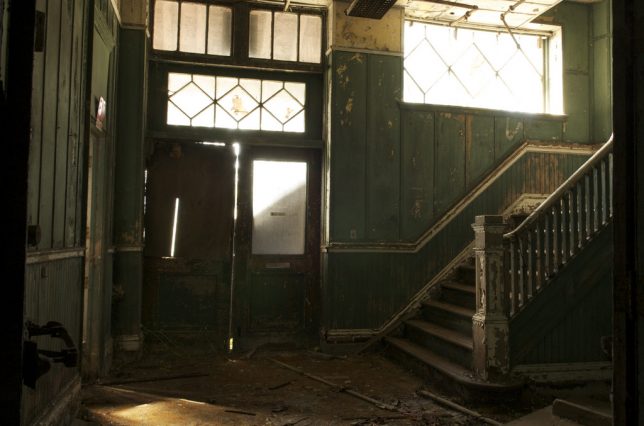
abandoned-battery-factory-2a

These former battery factories once lead, er, led the way in electrifying society; now they sit abandoned in environs rife with heavy metal contamination.

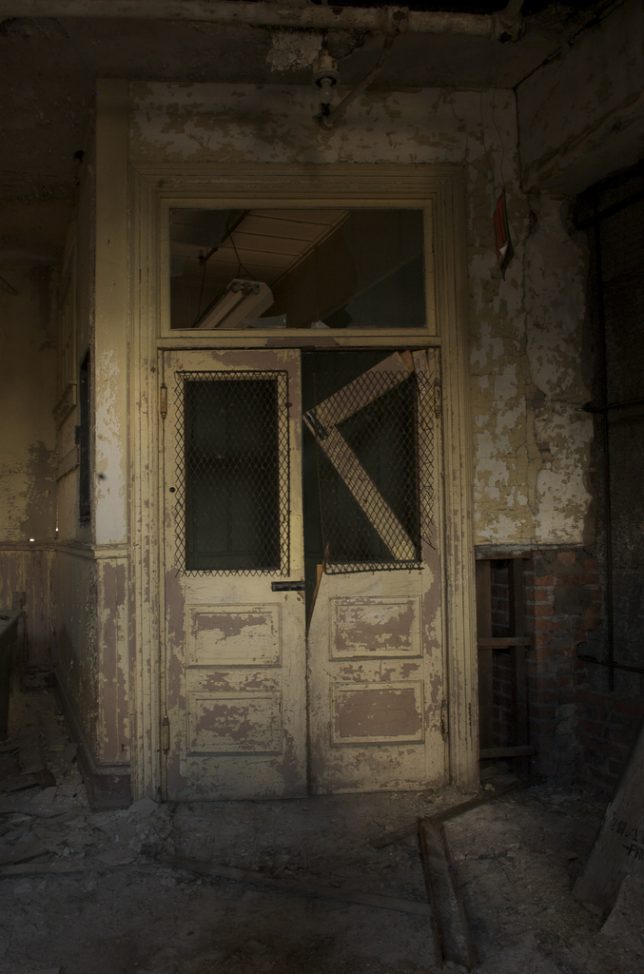
abandoned-battery-factory-2c

abandoned-battery-factory-2d

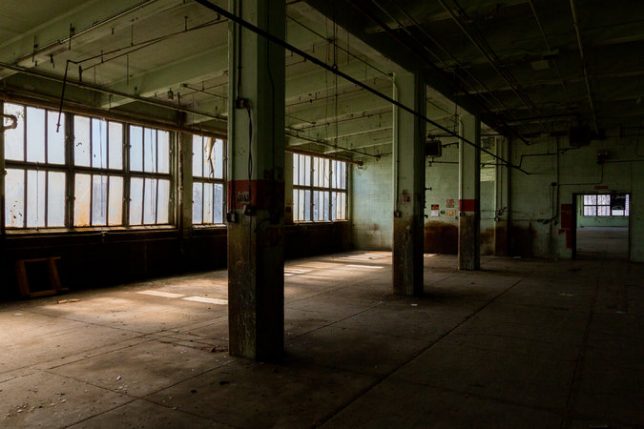
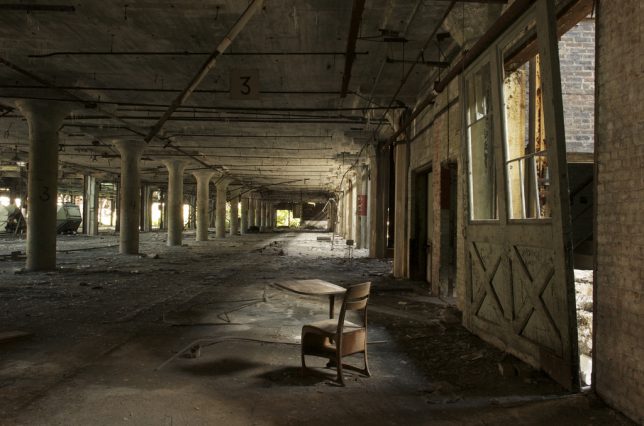
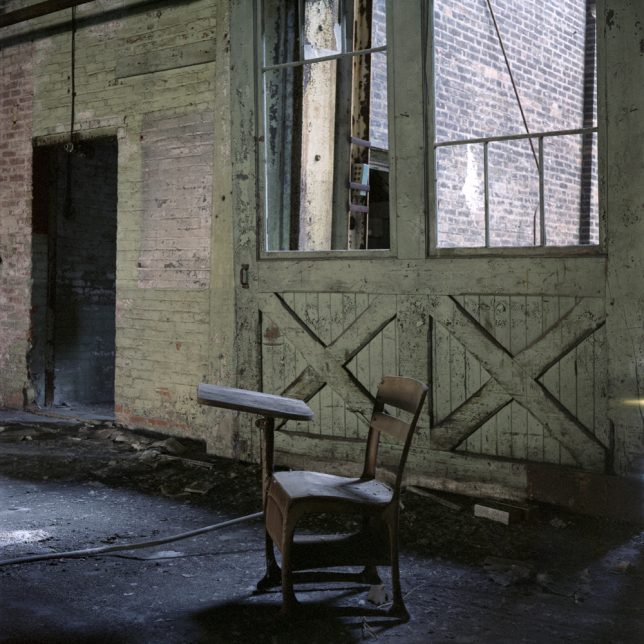
The abandoned Power City Warehouse in Niagara Falls, New York began producing batteries for automobiles and tractors back in 1910. In the early 1940s, work of a classified nature was being conducted there in support of the Manhattan Project – the top-secret initiative charged with creating the atomic bomb. By the 1960s it had been bought by the Prestolite Company, who re-tolled the factory to manufacture hard rubber battery cases and to fill lead-acid batteries with sulfuric acid. The factory was abandoned in the late 1980s.

abandoned-battery-factory-2e

abandoned-battery-factory-2b

abandoned-battery-factory-2f

The EPA conducted a survey of the site in 2001 that revealed extensive contamination with lead, semi-volatile organic compounds, PCBs, and pesticides in the soil and buildings. Radioactive slag was discovered on the property in early 2012. Flickr user Kevin McBride (Mr Kevino) visited “The Battery Factory”, as it is known colloquially by urbex’ers, in August of 2008 to snap a small selection of photos… hope he wore appropriate clothing like, say a haz-mat suit.

Edison’s Other Bright Idea

abandoned-battery-factory-7d

abandoned-battery-factory-7b

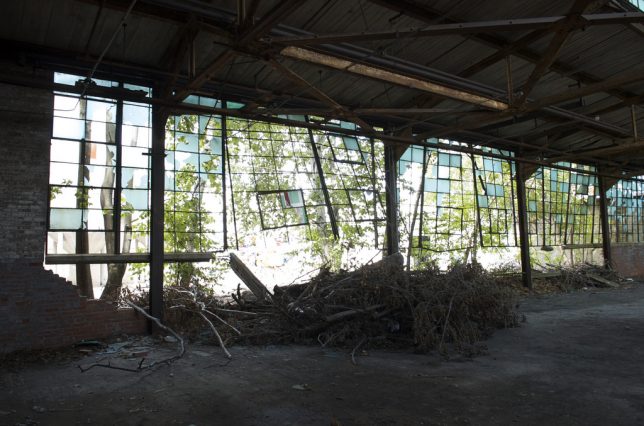
Better buy glass company stock STAT – the former Edison Storage Battery factory in West Orange, NJ is being renovated and re-purposed into Edison Village and roughly 900 windows in the circa-1914 main building are due to be replaced.

abandoned-battery-factory-7a

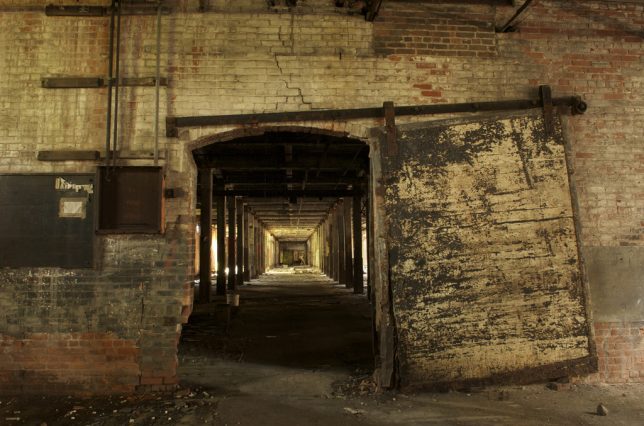
abandoned-battery-factory-7c

The factory manufactured batteries for submarines, mining lamps, railroad signals and more. The Battery Building, abandoned since 1965, was the only remaining building in Edison’s once-enormous West Orange industrial complex aside from Edison’s old laboratory, now part of the Thomas Edison National Historic Park. One reason for its longevity was the special “Edison Cement” used in its construction – wrecking balls bounced off the outer walls leaving nary a dent.

Next Page – Click Below to Read More:
Nothing Shocking Abandoned Derelict Battery Factories

Share on Facebook


[ By Steve in Abandoned Places & Architecture. ]

[ WebUrbanist | Archives | Galleries | Privacy | TOS ]


WebUrbanist

 
Comments Off on Nothing Shocking: Abandoned & Derelict Battery Factories

Posted in Creativity


Wildlife Photographer of the Year 2016 winners announced

23 Oct

Wildlife Photographer of the Year 2016 winners announced

Entwined lives. Tim Laman, USA, Winner, Wildlife Photographer of the Year 2016

When we heard that the winners of the 2016 Wildlife Photographer of the Year competition had been announced, we were all ears. The shortlisted images released not long ago were incredibly striking, so we were eager to see which ones took the top prizes. The photo above by Tim Laman is the grand title winner, captured with a GoPro HERO4 Black, is a classic case of having your camera in the right spot at the right time. Keep reading to learn more about how his image was created and see other winning images from this year’s competition. 

Wildlife Photographer of the Year is developed and produced by the Natural History Museum, London.

Wildlife Photographer of the Year 2016 winners announced

Entwined lives. Tim Laman, USA / Wildlife Photographer of the Year
Winner, Wildlife Photographer of the Year 2016

GoPro HERO4 Black; 1/30 sec at f2.8; ISO 231

A young male orangutan makes the 30-metre (100-foot) climb up the thickest root of the strangler fig that has entwined itself around a tree emerging high above the canopy. The backdrop is the rich rainforest of the Gunung Palung National Park, in West Kalimantan, one of the few protected orangutan strongholds in Indonesian Borneo. The orangutan has returned to feast on the crop of figs. He has a mental map of the likely fruiting trees in his huge range, and he has already feasted here.

Tim knew he would return and, more important, that there was no way to reach the top – no route through the canopy – other than up the tree. But he had to do three days of climbing up and down himself, by rope, to place in position several GoPro cameras that he could trigger remotely to give him a chance of not only a wide?angle view of the forest below but also a view of the orangutan’s face from above. This shot was the one he had long visualized, looking down on the orangutan within its forest home. 

Wildlife Photographer of the Year 2016 winners announced

The moon and the crow. Gideon Knight, UK / Wildlife Photographer of the Year
Winner, Young Wildlife Photographer of the Year 2016

Canon EOS 7D Mark I + 400mm f5.6 lens; 1/250 sec at f6.3; ISO 500

A crow in a tree in a park: a common enough scene. It was one that Gideon had seen many times near his home in London’s Valentines Park, which he visits regularly to take photographs. But as the blue light of dusk crept in and the full moon rose, the scene transformed. The spindly twigs of the sycamore tree silhouetted against the sky ‘made it feel almost supernatural, like something out of a fairy tale,’ says Gideon. Positioning himself on a slope opposite, he tried to capture the perfect composition. But the crow kept moving along the branch and turning its head away, and so getting a silhouette of it with the moon in the frame meant Gideon had to keep moving, too. Then, just as the light was about to fade beyond the point that photography was possible, his wish came true, and an ordinary London scene turned into something magical. 

Wildlife Photographer of the Year 2016 winners announced

Eviction attempt, Ganesh H Shankar, India / Wildlife Photographer of the Year
Winner, Birds

Nikon D810 + 200mm f2 lens; 1/500 sec at f5; ISO 400; Gitzo 5540LS tripod + Sachtler 0707 FSB-8 fluid head

These Indian rose-ringed parakeets were not happy. They had returned to their roosting and nesting hole high up in a tree in India’s Keoladeo National Park (also known as Bharatpur Bird Sanctuary) to find that a Bengal monitor lizard had taken up residence. The birds immediately set about trying to evict the squatter. They bit the monitor lizard’s tail, hanging on for a couple of seconds at a time, until it retreated into the hole. They would then harass it when it tried to come out to bask. This went on for two days. But the action only lasted a couple of seconds at a time and was fast-moving. The branch was also high up, and Ganesh had to shoot against the light. Eventually the parakeets gave up and left, presumably to try to find another place to rear their young.

These Indian birds are highly adaptable, and escaped captive parakeets have founded populations in many countries. In Europe, where they are known as ring-necked parakeets, they are accused of competing for nest holes with some native species, such as nuthatches, and even bats, but in turn, other birds such as starlings are quite capable of evicting the parakeets from their nest holes.

Wildlife Photographer of the Year 2016 winners announced

Wind composition, Valter Binotto, Italy / Wildlife Photographer of the Year
Winner, Plants and Fungi

Nikon D4 + 200mm f4 lens; 1/80 sec at f10; ISO 200; remote shutter release; Gitzo tripod + Benro head; reflector

With every gust of wind, showers of pollen were released, lit up by the winter sunshine. The hazel tree was near Valter’s home in northern Italy, and to create the dark background, he positioned himself to backlight the flowers. Hazel has both male and female flowers on the same tree, though the pollen must be transferred between trees for fertilization.

Each catkin comprises an average of 240 male flowers, while the female flower is a small bud-like structure with a red-tufted stigma. The pollen-producing catkins open early in the year, before the leaves are out, and release huge amounts of pollen to be carried away by the wind. And now recent research suggests that bees may also play a role. The catkins are an important source of pollen for early bees and have a bee?friendly structure, while the red colour of the female flowers may entice insects to land on them.

‘The hardest part was capturing the female flowers motionless while the catkins were moving,’ explains Valter. ‘I searched for flowers on a short branch that was more stable.’ Using a long exposure to capture the pollen’s flight and a reflector to highlight the catkins, he took many pictures before the wind finally delivered the composition he had in mind. 

Wildlife Photographer of the Year 2016 winners announced

Nayan Khanolkar, India / Wildlife Photographer of the Year
Winner, Urban

Nikon D7000 + 18–105mm f3.5–5.6 lens at 21mm; 1/20 sec at f7.1; three Nikon flashes; Trailmaster infrared triggers; custom-made housing

At night, in the Aarey Milk Colony in a suburb of Mumbai bordering Sanjay Gandhi National Park, leopards slip ghost-like through the maze of alleys, looking for food (especially stray dogs). The Warli people living in the area respect the big cats. Despite close encounters and occasional attacks (a particular spate coinciding with the relocation of leopards from other areas into the park), the cats are an accepted part of their lives and their culture, seen in the traditional paintings that decorate the walls of their homes. The leopard is not only the most versatile of the world’s big cats but possibly the most persecuted. With growing human-leopard conflicts elsewhere grabbing the headlines, Nayan was determined to use his pictures to show how things can be different with tolerance and planning.

Once he had convinced the Warli people of his plan, they supplied him with valuable information, as well as keeping an eye on his equipment. Positioning his flashes to mimic the alley’s usual lighting and his camera so that a passing cat would not dominate the frame, he finally – after four months – got the shot he wanted. With a fleeting look of enquiry in the direction of the camera click, a leopard went about its business alongside people’s homes. Nayan hopes that those living in Mumbai’s new high-rise developments now impinging on the park will learn from the Warli how to co?exist with the original inhabitants of the land.

Wildlife Photographer of the Year 2016 winners announced

Playing pangolin, Lance van de Vyver, New Zealand/South Africa / Wildlife Photographer of the Year
Finalist, Black & White

Canon EOS 5DS R + 500mm f4 lens; 1/1600 sec at f4; ISO 1600

Lance had tracked the pride for several hours before they stopped to rest by a waterhole, but their attention was not on drinking. The lions (in South Africa’s Tswalu Kalahari Private Game Reserve) had discovered a Temminck’s ground pangolin. This nocturnal, ant-eating mammal is armour-plated with scales made of fused hair, and it curls up into an almost impregnable ball when threatened. Pangolins usually escape unscathed from big cats (though not from humans, whose exploitation of them for the traditional medicine trade is causing their severe decline).

But these lions just wouldn’t give up. ‘They rolled it around like a soccer ball,’ says Lance. ‘Every time they lost interest, the pangolin uncurled and tried to retreat, attracting their attention again.’ Spotting a young lion holding the pangolin ball on a termite mound close to the vehicle, Lance focused in on the lion’s claws and the pangolin’s scratched scales, choosing black and white to help simplify the composition. It was14 hours before the pride finally moved off to hunt. The pangolin did not appear to be injured, but it died shortly after, probably not just from the stress of capture but also from being out in the heat all day. 

Wildlife Photographer of the Year 2016 winners announced

Snapper party, Tony Wu, USA / Wildlife Photographer of the Year
Winner, Underwater

Canon EOS 5D Mark III + 15mm f2.8 lens; 1/200 sec at f9; ISO 640; Zillion housing; Pro One optical dome port

For several days each month (in tandem with the full moon), thousands of two?spot red snappers gather to spawn around Palau in the western Pacific Ocean. The action is intense as the fish fill the water with sperm and eggs, and predators arrive to take advantage of the bounty. Having read about the drama, Tony couldn’t understand why there were so few photos of it – until he hit the water there for the first time, in 2012. The currents were unrelenting – ideal for eggs to be swept swiftly away but a struggle for him to keep up with the fast?moving fish. Also, the light was low, and the water was clouded with sperm and eggs. That first attempt failed, but he has returned every year to try to capture the event.

Noticing that the spawning ran ‘like a chain reaction up and down the mass of fish’, his success finally came when he positioned himself so that the action came to him. Rewarded with a grandstand view, he was intrigued to see that the fish rapidly changed colour during mating from their standard red to a multitude of hues and patterns. Even their characteristic two white spots, close to the dorsal fin on their back, seemed to fade and reappear. On this occasion, with perfect anticipation, he managed to capture a dynamic arc of spawning fish amid clouds of eggs in the oblique morning light. Still obsessed by the dynamics and magnitude of this natural wonder, he will be returning to Palau next April to witness once again the spectacular snapper party. 

Wildlife Photographer of the Year 2016 winners announced

The aftermath, Simon Stafford, UK / Wildlife Photographer of the Year
Winner, Mammals

Nikon D810 + 800mm f5.6 lens; 1/500 sec at f5.6; ISO 400; beanbag

Eerie silence and a mound of lifeless bodies: the contrast with the mayhem of the previous day couldn’t have been starker. And the stench was already dreadful. The day before, thousands of wildebeest on migration through Kenya’s Maasai Mara National Reserve had massed at the Mara River, nervous of the crossing ahead and of the huge Nile crocodiles lying in wait. Once one made the leap, they all surged forward and the river became a maelstrom of flailing hooves and crocodiles. In their frantic efforts to get out, they carved gullies in the riverbank, and in over an hour, as the gullies became deeper and deeper, more and more wildebeest slipped back down and died under the hooves of the ones coming out of the river.

Simon returned at first light, knowing that scavengers would gather at the site of the carnage. ‘It was a sinister scene,’ he says. ‘There must have been 50 or more carcasses, piled two or three deep.’ Spotted hyenas were already feeding, and hippos and crocodiles had gathered in the river below. As Simon watched from the other side of the wide river, one hyena left the feast and stood, as if standing sentry, at the river’s edge watching the gathering of crocodiles in the water below.

Wildlife Photographer of the Year 2016 winners announced

Wild West stand-off, Charlie Hamilton James, UK / Wildlife Photographer of the Year
Finalist, Mammals

Nikon D7100 + 10–24mm lens at 24mm; 1/2500 sec at f5.6; ISO 1600; Trailmaster TM550 passive infrared monitor

A grizzly bear charges at ravens trying to grab a piece of the feast. The bison is a road-kill that rangers have moved to a spot they use for carrion to avoid contact between predators and tourists. The location is Grand Teton National Park, part of the Greater Yellowstone ecosystem in the western US, where grizzlies still roam. ‘Approaching a bear’s lunch is a dangerous thing to do,’ says Charlie. So there were strict protocols for getting out of his vehicle every time he went to check his camera trap. Over nearly five months, he had thousands of images of ravens and vultures, but only a few of wolves or bears, and none were up to the high standards he set himself, until this one.

‘The moment I saw it, I was so excited. It had taken nearly five months to get a decent image out of the set-up. It’s rare that I like my images, but I really like this one – though I still get annoyed that the top raven is positioned right over the Grand Teton mountain.’ The Yellowstone grizzly population has been protected since the 1970s, but now that numbers are recovering, it is proposed that the population is removed from the federal list of protected species, allowing hunting outside the two parks. This has raised concerns not only about the grizzlies’ fate but also about the knock-on effect on the ecology.

Wildlife Photographer of the Year 2016 winners announced

The pangolin pit, Paul Hilton, UK/Australia / Wildlife Photographer of the Year
Winner, The Wildlife Photojournalist Award: Single image

Canon EOS 5D Mark III + 16–35mm f2.8 lens at 21mm; 1/800 sec at f8; Manfrotto tripod

Nothing prepared Paul for what he saw: some 4,000 defrosting pangolins (5 tons) from one of the largest seizures of the animals on record. They were destined for China and Vietnam for the exotic?meat trade or for traditional medicine (their scales are thought, wrongly, to treat a variety of ailments). Pangolins have become the world’s most trafficked animals, with all eight species targeted. This illegal trade, along with habitat loss and local hunting, means that the four Asian species are now endangered or critically endangered, and Africa’s four species are heading that way.

These Asian victims, mostly Sunda pangolins, were part of a huge seizure – a joint operation between Indonesia’s police and the World Conservation Society – found hidden in a shipping container behind a façade of frozen fish, ready for export from the major port of Belawan in Sumatra. Also seized were 96 live pangolins (destined to be force-fed to increase their size), along with 100 kilos (220 pounds) of pangolin scales (formed from keratin, the same substance in fingernails and rhino horn) worth some $ 1.8 million on the black market, and 24 bear paws. All had come from northern Sumatra. The dead pangolins were driven to a specially dug pit and then incinerated. The live ones were taken north and released in the rainforest. ‘Wildlife crime is big business,’ says Paul. ‘It will stop only when the demand stops.’

Articles: Digital Photography Review (dpreview.com)
 
Comments Off on Wildlife Photographer of the Year 2016 winners announced

Posted in Uncategorized


Record Breaking: Magnetic Levitating Turntable Lets Vinyl Defy Gravity

23 Oct

[ By WebUrbanist in Technology & Vintage & Retro. ]

floating-record-turntable

Cool and clever trump common sense and normal physics in this levitating record turntable, which aims to bring a vintage technology into the future.

Mag-Lev Audio wants to push audio technology in a new (vertical) direction, creating an “uplifting experience of music” in the form of the world’s first floating record player.

floating-record-player

The device, the creators claim, not just about a look, but also the ability to “maintain the incredibly precise turning of the platter with sensor regulating software. Air is the smoothest medium with least amount of friction, which further elevates this project into a truly unique listening experience.”

record-player-feet

Feet support the spinning platter when it is not in use while stored-up power can bring the system to a comfortable stop and lift the needle in case of an outage (instead of it dropping the floating disc uncontrolled).

vinyl-with-leds

The makers boast the simplicity of the system: “pick a favorite record; turn the turntable on; move the tone arm into position; and lower the cueing lever; then let the smart-record player do the rest.”

hovering-turntable

night-light

hovering-disc-vinyl

A series of LED lights and digital displays lend the entire setup an air of cyberpunk futurism as well, reinforcing the ambient aesthetic created by the floating form of the disk. Whether this approach will take off remains to be seen, but the gadget has already raised enough money on Kickstarter to make it happen.

Share on Facebook


[ By WebUrbanist in Technology & Vintage & Retro. ]

[ WebUrbanist | Archives | Galleries | Privacy | TOS ]


WebUrbanist

 
Comments Off on Record Breaking: Magnetic Levitating Turntable Lets Vinyl Defy Gravity

Posted in Creativity


Cluck Yeah! Two New Downtown San Francisco Fried Chicken Sandwiches!

22 Oct

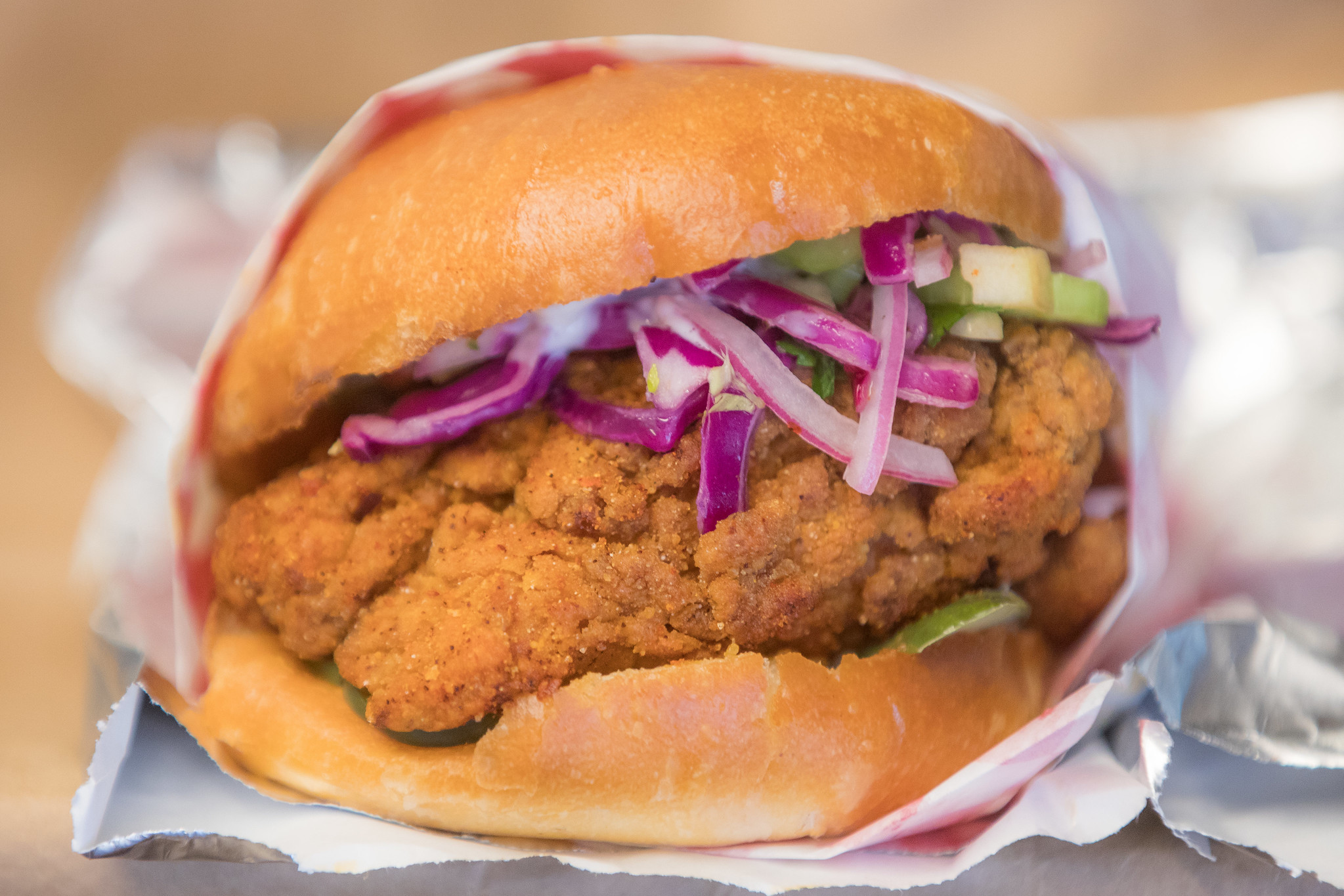
New Fried Chicken Sandwich at The Bird
The Bird’s fried chicken sandwich offers a juicy, succulent piece of fried chicken complimented by a slightly sweet apple based slaw on a brioche bun.

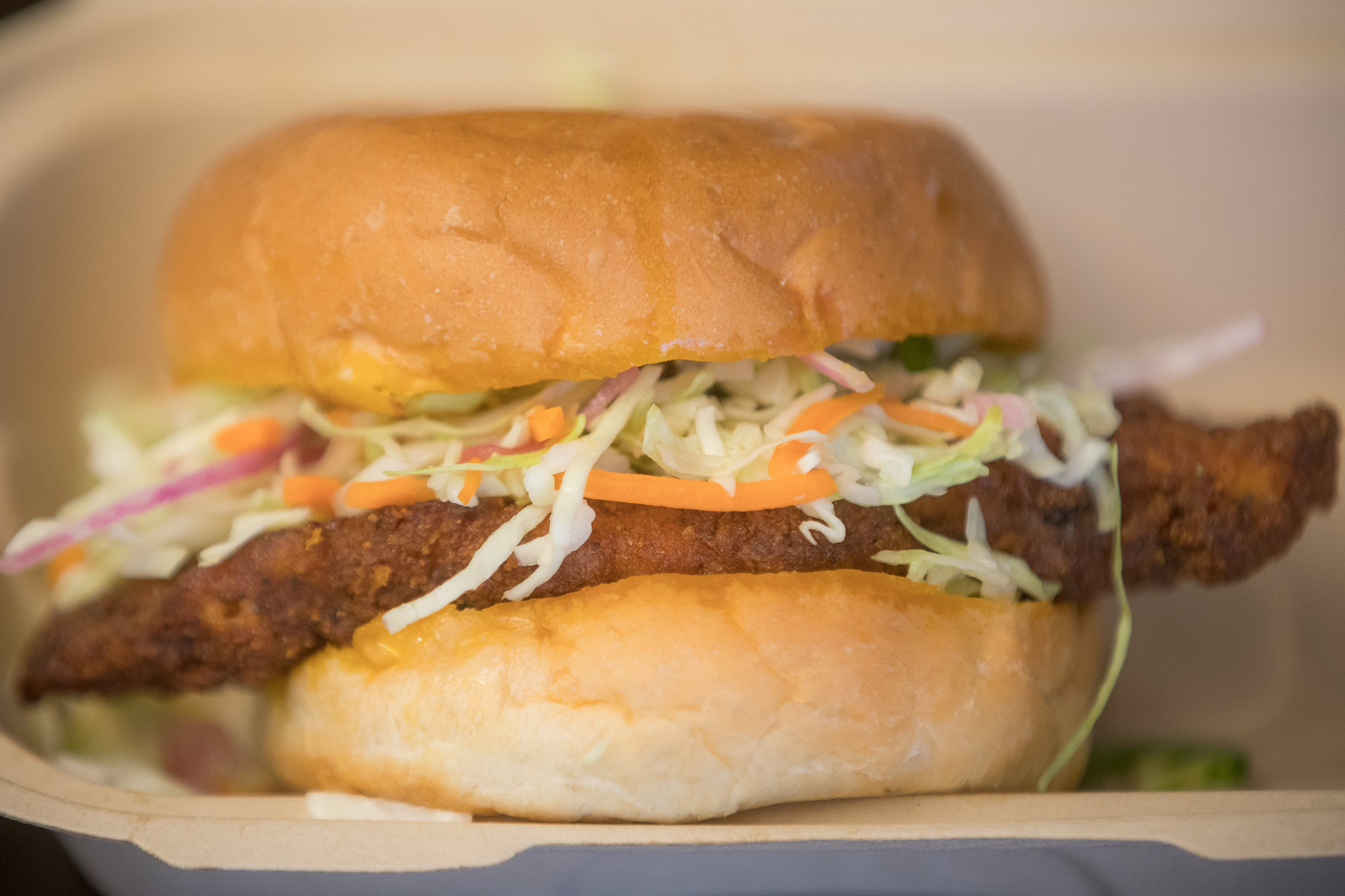
New Fried Chicken Sandwich at Organic Coup
Organic Coup’s fried chicken sandwich offers a slightly larger piece of chicken with a tangy and spicy slaw with jalapeno on an equally tasty bun.

Downtown San Franciscans were treated to not one but two new fried chicken sandwiches this week in the heart of San Francisco’s Financial District. Two new restaurants, Organic Coup and The Bird are both located a mere 2 blocks off of Market Street. Organic Coup North of Market at 224 Kearny and The Bird South of Market located at 115 Montgomery.

The Bird is open Monday through Saturday from 11am to 10pm.

Organic Coup is open 11am to 3pm Monday through Friday for lunch.

Since who the cluck doesn’t like fried chicken sandwiches, I tried both this week and thought I’d write a few thoughts on each of these fine new chicken coops. My co-worker Sam Greene joined me (because birds of feather stick together) and I’ve added his thoughts on each section of this review.

Let the great San Francisco Cluck Off begin!

Organically Cocky at the Organic Coup
Organically Cocky at the Organic Coup.

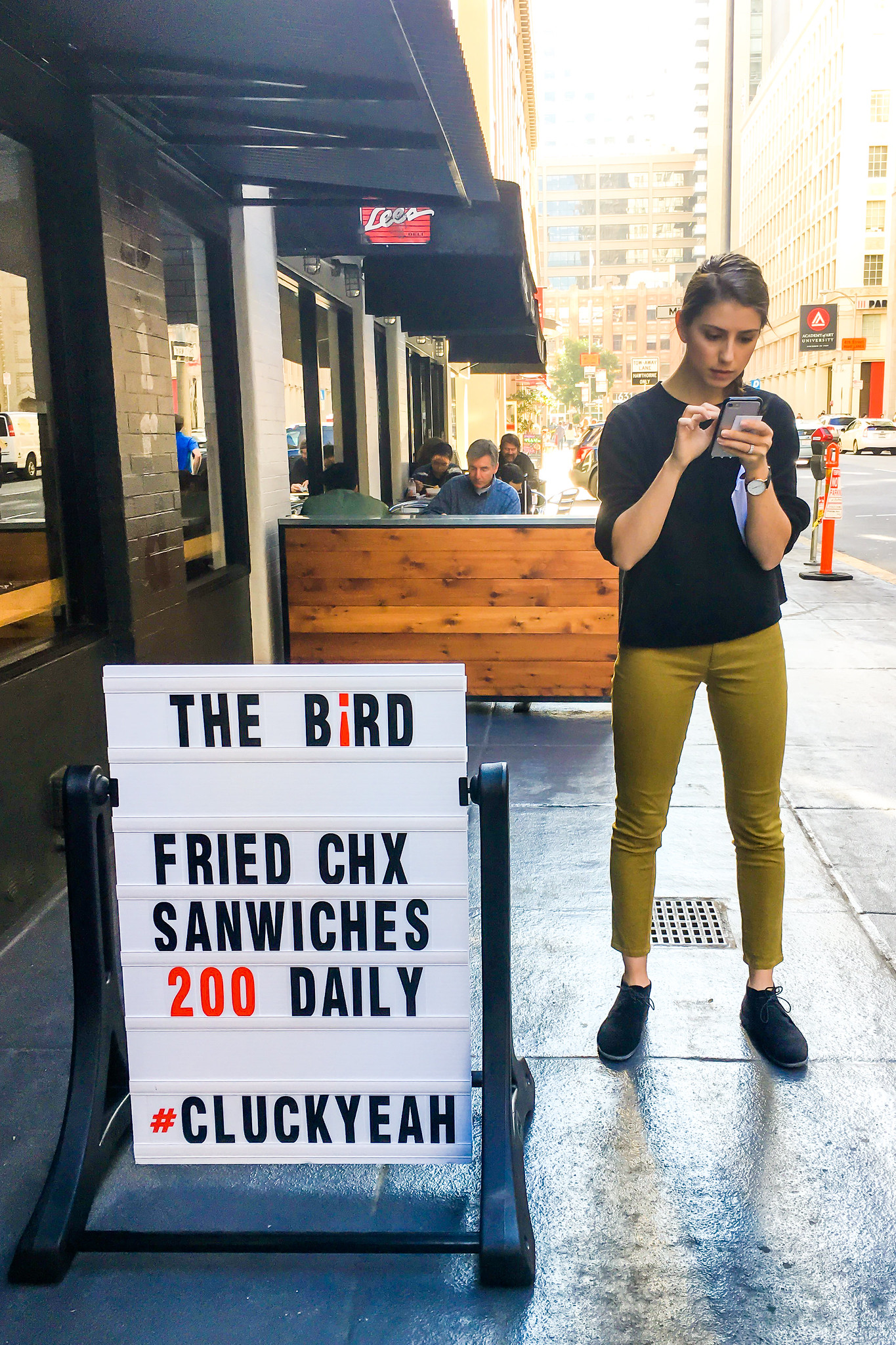
The Bird, Fried Chx Sandwiches 200 Daily, #Cluck Yeah
The Bird, Fried Chx Sandwiches, 200 Daily #CluckYeah.

Waiting for a new fried chicken sandwich at The Bird
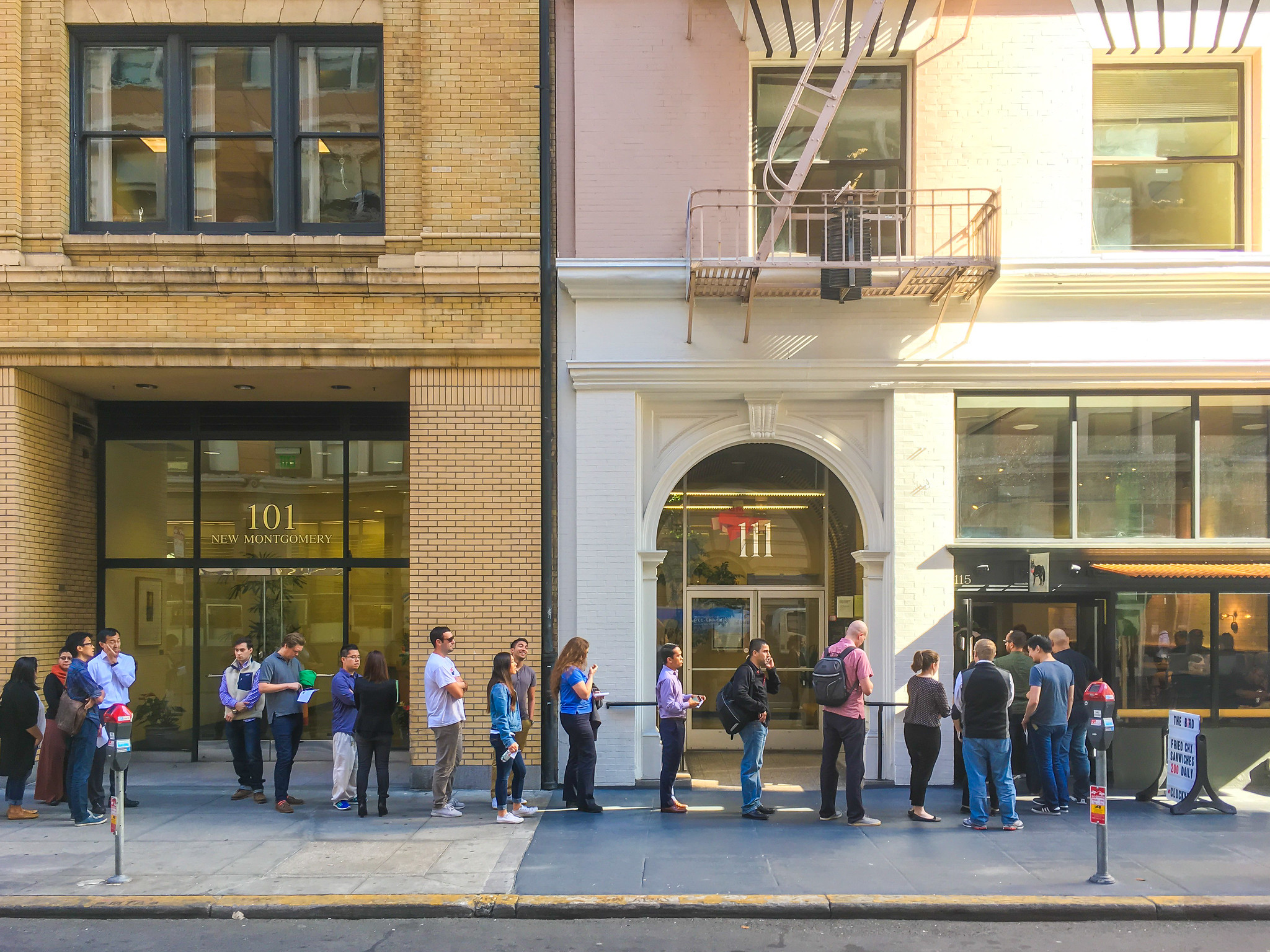
50 Deep in line at The Bird. Get there early and plan on a wait.

Ordering. (Winner: tie)

Although it’s probably not fair to compare the foot traffic at both of these restaurants on opening week, plan on spending a lot more time waiting for your chicken sandwich at The Bird than Organic Coup.

I arrived to a line already 50 deep at 11:10 am Friday at The Bird. The wait was approximately half an hour from start to finish. By contrast you get in and out of Organic Coup much faster. I went to Organic Coup on Wednesday and Thursday at 11:10am and there was no line. On Friday I went to Organic Coup after the Bird at around 11:45am and the wait still was only about 4 people for about 5 minutes.

Organic Coup had a very efficient ordering system. An order taker walks you through your order on an iPad. You make your designation side by side and then when you swipe your credit card the system automatically pulls your name and then uses your name to call you when your order is ready. The Bird offers a more formal across the counter cash register based system where they print out a receipt for you to sign. They do capture your name from your card as well though and use it to call your order.

Organic Coup has a sign up by the order taker that says no cash / no tipping. On their website they say that they are committed to paying their workers a livable wage and say that they “pay the highest wages in the industry.” With tax their sandwich is $ 11.

By contrast the Bird has you either write in or decline a tip on your credit card receipt when you sign. Their sandwich is cheaper at $ 9 with tax no tip.

I will write more on the whole tip no tip thing below, but I will say I liked the fact that Organic Coup doesn’t allow cash. Cash tends to slow things down and pretty much everybody has a credit or debit card these days.

I would clearly give the win to Organic Coup here based on the faster service, except for the fact that The Bird had a server come outside to the line and give everyone in the line a free sample of their clucking amazing ice cream sandwich, one of the best I’ve ever tried. Not only did they hand out free samples to the line, the guy handing out the samples came by afterwards to take everyone’s trash from the sample that was handed out. Such thoughtfulness and such an amazing treat made the line totally worth it. That was very smart. So the verdict here is a tie but both were pretty clucking great.

SAM’S TAKE:

Ordering (winner: Organic Coup)

I’m a big believer in the holistic evaluation process so it is hard for me to say which restaurant offers an absolutely better ordering system. I would start by saying the ordering systems are different. The Organic Coup offers a clucking-efficient iPad based self-service ordering system while The Bird offers the more traditional cash-transaction at the register system. I personally like the iPad self-service system much better for a few reasons. For starters, the pressure of having to field a barrage of questions at the counter is completely removed with the iPads. Additionally, what’s nice about ordering on the iPad is that it gives me a little more time to consider what options are available before making my selection. This way you don’t have to fumble over your words dictating your order to the cashier while you’re looking at the menu. Sure, it may be a bit awkward and anti-social to prefer the iPad system, but the reality is that ordering through the iPad is much easier and simpler for all parties involved and saves everybody a little bit of time.

However, since the fried chicken sandwich itself is a bit simpler at The Bird in that there is only a spicy and non-spicy option as opposed to an overwhelming assortment of sauces to add and choose from at the Organic Coup, I didn’t feel like the register-based system slowed down the ordering process significantly. Overall, I think the two are tied for the best ordering system. The Bird’s products don’t complicate ordering at the register, and Organic Coups iPad system nicely handles more complicated orders.

Cost (Winner: tie)

Sure the sandwich at Organic Coup is two clucks more, but the fact that there is no pressure to tip and apparently you can feel ok about not tipping because of the living wage thing, it sort of makes up for the extra cost. If you tip a buck at the Bird, the sandwich still comes in a dollar cheaper, but I’m sort of a fan of including gratuity in the price of a product which feels more like what Organic Coup is doing. It would be interesting to know how much each place pays their workers, but to me there’s not much difference between paying $ 11/no tip or $ 10 or $ 11 with manual tip.

Atmosphere (Winner: tie)

Both sandwich shops feel really nice although just a little crowded. Organic Coup feels a little more like a chain/corporate (and with multiple locations it sort of is) vs. the pop up feel of The Bird. The Bird (which is in the space that the old Melt use to use) has some seating which is nice if you want to eat your sandwich there. Seating is very limited, but at least they have some. I usually take my lunch to go though so seating didn’t matter to me. The Bird offers you a water cup which is nice. Organic Coup is more open and airy and light in my opinion — both are very nice and clean.

Both restaurants had people with menus outside greeting you. Both restaurants had friendly employees. Both restaurants were marketing with the San Francisco “Cluck Yeah” tag line sure to appeal to millennials everywhere. The Bird uses a hashtag based #CLUCKYEAH while Organic Coup chose to go with an exclamation point based CLUCK YEAH!

SAM’S TAKE:

Both shops were nice, clean and up to snuff. However, I feel like the Bird may have a slight edge in the overall atmosphere. Fist and foremost, the Bird has a larger space that is big enough to offer counters, seating, and complimentary water and bathrooms. Keep in mind though that around 11:00am when we went the place was hustling and bustling so it was difficult to find a place to stand and lean let alone sit and dine, so if you’re looking for a place to enjoy a leisurely meal I would look elsewhere. That being said, the fact that seating is available for less rushed and frenzied times during the day is a huge plus for me.

In contrast, the smaller, more cooped up space at the Organic Coup (no pun intended), did not feel large enough to adequately handle the 11:00am rush of lunch-goers who inevitably end up waiting on the sidewalk. Granted, the line at the The Bird wound around the block as well when we went — however, once all the hype dies down from the opening weeks for each location I think The Bird will be more attractive to a larger percentage of the lunch-going population since it does offer a place to sit. In light of all that, the smaller space offered by the Organic Coup is nice in that it sort of naturally moves folks along in and out of the building faster since nobody likes to stand around in claustrophobic, shoulder-to-shoulder, tight-knit spaces for long. If your intention is to grab your food and go, the Organic Coup is perfect. However, given the choice, I would rather have the option to sit and schmooze over a quick bite with a co-worker than feel rushed in and out of the place.

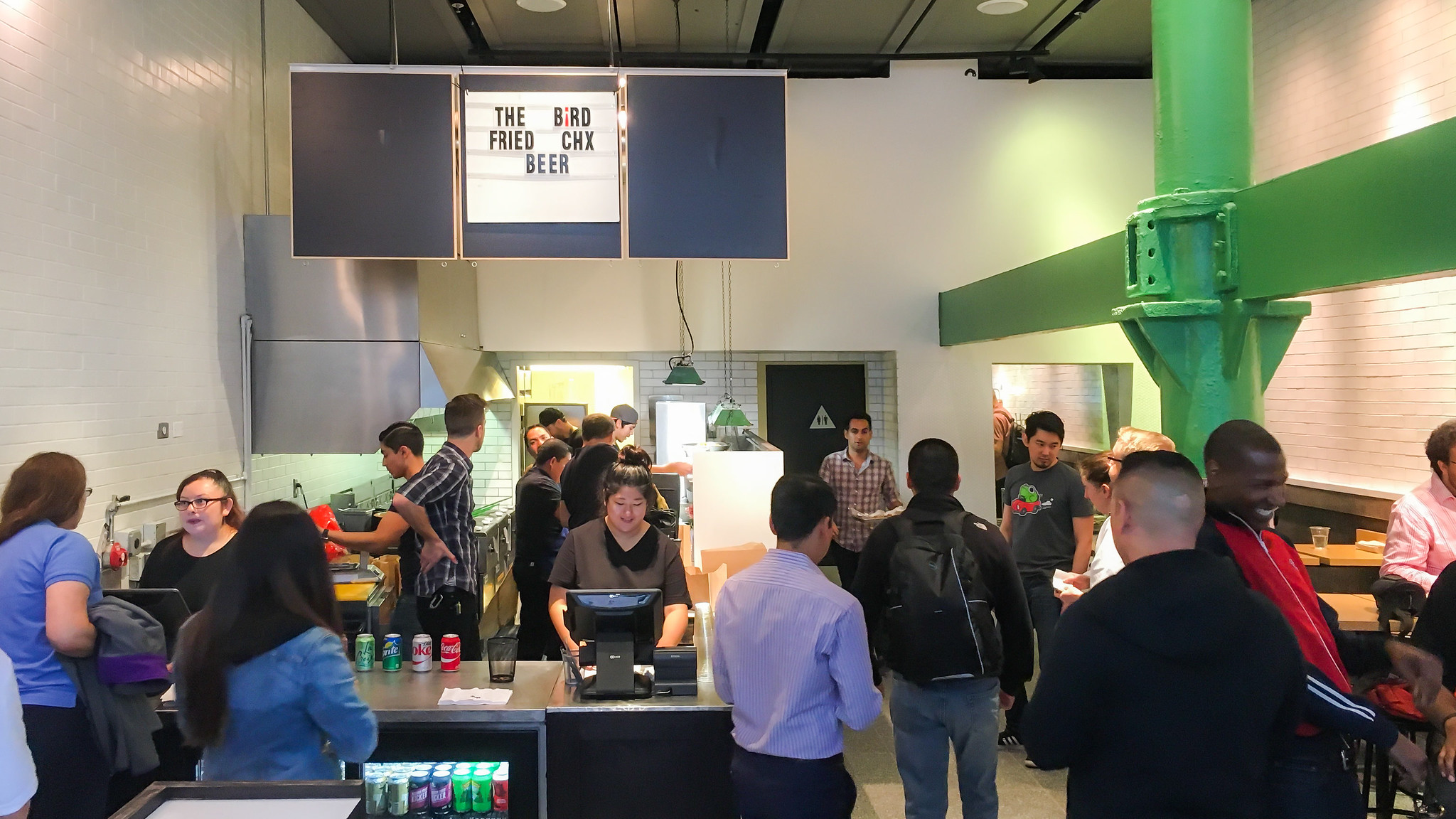
Secondly, the Bird felt like it actually had a personality. The interior design maintained what appeared to be the original look and architecture of the establishment that preceded The Bird. As a matter of personal preference, I thought it was nice that The Bird chose to maintain the integrity of style rather than give it a radical makeover to conform to the recognizable and modern look. There is an aura of traditional, classic fried chicken sandwich shop that emanates from the old-school single-letter-insert-menu hanging down from the ceiling. Overall The Bird presents itself as more of unique local, self-sufficient, one-of-a-kind joint while the Organic Coup is more of a modern and contemporary fast-food chain.

I have to hand this one to The Bird.

Nutrition (Winner: Organic Coup)

Organic Coup markets itself as America’s first USDA certified organic fast food restaurant. What’s more, they provide you with calorie nutritional information on their website. According to their website their Chicken Sandwich is 500 calories. For such a big fried sandwich I almost can not believe it is only 500 calories. They also offer a bowl, which is more like a fried chicken salad, with only 320 calories. For someone like me trying to maintain my sleek physique, those numbers are very reasonable and I appreciated that they shared them with me on their website.

The Bird does not provide nutritional information on their website. Based on the taste of their sandwich though (and the fact that it has mayo on it), I’d suspect it’s more than 500 calories.

SAM’S TAKE:

I have to agree with the Hawk here. I think it’s clucking-smart that the Organic Coup makes an effort to disclose nutritional facts on its website to its frequenters. In the age of the IoT, information is data and data is power to the consumer. As a consumer, I feel clucking-empowered by nutritional information in what I’m choosing to buy and eat, even though the information may not necessarily ultimately drive my decision. For example, I may find that the Organic Coup is less calories than The Bird, but I may still like the bird better since it has those incredible pickles. Merely the fact that Organic Coup openly shares with us the nutritional facts so transparently makes me more trusting of them as a restaurant regardless of whether or not their sandwich is any healthier, less caloric or has overall more nutritional value than The Birds. Props to Organic Coup on this one.

The Sandwich (Winner: The Bird, by a beak)

First off, I have to say I liked both sandwiches. I will definitely be back to both in the future.

Organic Coup’s sandwich reminded me very much of one of my favorite East Bay secrets, the fried chicken sandwich at Bakesale Betty’s in Oakland only on a tasty bun instead of a roll. Organic Coup uses a vinegar based slaw with jalapenos in it just like Betty does. This is also the base for the slab of fried chicken that they serve with their bowl (which is more like a fried chicken slaw salad) and it is clucking delicious. You get a choice of four sauces for your bowl/wrap/sandwich. I got my sandwich with the vegan mustard vinaigrette sauce. The sauce was good but the irony that they were marketing my choice of sauce as “vegan” when I was eating a fried chicken sandwich was not lost on me. The spicy BBQ sauce seemed the most popular.

Organic Coup’s piece of friend chicken felt a little bit bigger to me than The Bird’s and hangs out of both sides of the sandwich.

As much as I enjoyed Organic Coup’s sandwich, The Bird edged it out here by a beak. Given the mayonnaise on the sandwich it definitely made it taste a bit richer. More than the mayonnaise though the chicken itself was more tender, flavorful and succulent. The Bird’s bird was a juicy, flavorful, delicious piece of mouthwatering bliss. The Bird’s sandwich had less slaw than Organic Coup’s but the slaw itself was a cabbage-onion-apple based slaw which gave it just the slight amount of sweetness that went perfectly with the spicy flavor. It also had Super Duper pickles on it which added a nice finishing touch.

The Bird had two versions of their signature sandwich, spicy and non-spicy. I of course opted for spicy and I’m glad I did.

SAM’S TAKE:

The Sandwich (The Bird, it was beak-and-beak the whole way through)

Both places offer un-clucking-believable fried chicken sandwiches. Both offer great, high-quality sandwiches sure to satisfy any afternoon deep-fried craving San Franciscan dropping by for quick bite to eat. The Bird differentiates itself from the Organic Coup in a few notable ways. While both offer delicious crunchy deep fried gustatory experiences, The Bird seems to let their birds simmer a bit longer in the pan allowing a thicker, deeper-fried coat to form. The deeper-fried coat made it all the more delicious and rich, though perhaps slightly less healthy. Additionally, the sandwich served at the Bird championed an artfully infused African Berber spice in the batter that was a flavorful and interesting homage to the origins of the fried chicken sandwich.

The coleslaw prepared at the Organic Coup offered more intense, spicier coleslaw than The Bird though. It beautifully complimented the spicy BBQ sauce served with the sandwich that I had chosen. Additionally, the Organic Coup offered a much larger chunk of chicken than The Bird which made me feel like I was getting better value for the two extra clucks I paid.

However, although Organic Coup made an eggs-ellent final product, the bird at the The Bird was slightly more succulent and juicy than at The Organic Coup. I’m pretty sure there was an element of marketing responsible for this perception though. Since I knew in advance that the Bird only made 200 sandwiches a day for the lunch crowd I think I was primed to believe they put more TLC, attention and energy into making each sandwich perfect than the Organic Coup. Upon deeper reflection, however, I do not think the modern fast-food nature of the Organic Coup takes away from the quality of their artfully though more industrially crafted sandwiches. It was just an observation I made when writing this review. I simply think I got a bit luckier at the Bird at the time I went in regards to the juiciness factor of the chicken. All in all, The Bird stood out to me as overall slightly tastier due to the tenderness of the meat and the deliciousness of the deep-fry recipe despite its shortcoming in size compared to the Organic Coup.

The Logo (Winner: The Bird)

Very hipster San Francisco looking fox with a chicken sandwich in his mouth, would also look good on a Bon Iver album cover.

I didn’t really get into the extras beyond the fried chicken sandwiches in this review, but it is also worth pointing out that The Bird sells beer which may be a plus for some while by contrast Organic Coup offers fresh squeezed lemonade. I have a general rule that I don’t consume alcohol before 6pm so I can’t imagine having a beer at lunch, but for more thirstier friends that might be a good option to know about.

The bottom line is both of these new fried chicken sandwiches are abso-clucking-lutely delicious. So the next time you and your cluck buddy get a craving for some fried chicken sandwich for lunch try one of these two hen houses. You won’t be disappointed and you might even get a free sample of some ice cream sandwich to go with it.

Cluck Yeah!
Cluck Yeah with an exclamation mark instead of the hashtag.

No Cash, No Tips
No Cash and No Tipping at the Organic Coup.

Organic Looks Good on You
Organic Looks Good on You at the Organic Coup.

Lemonade at the Bird
Fresh Squeezed Lemonade at Organic Coup.

The Organic Coup
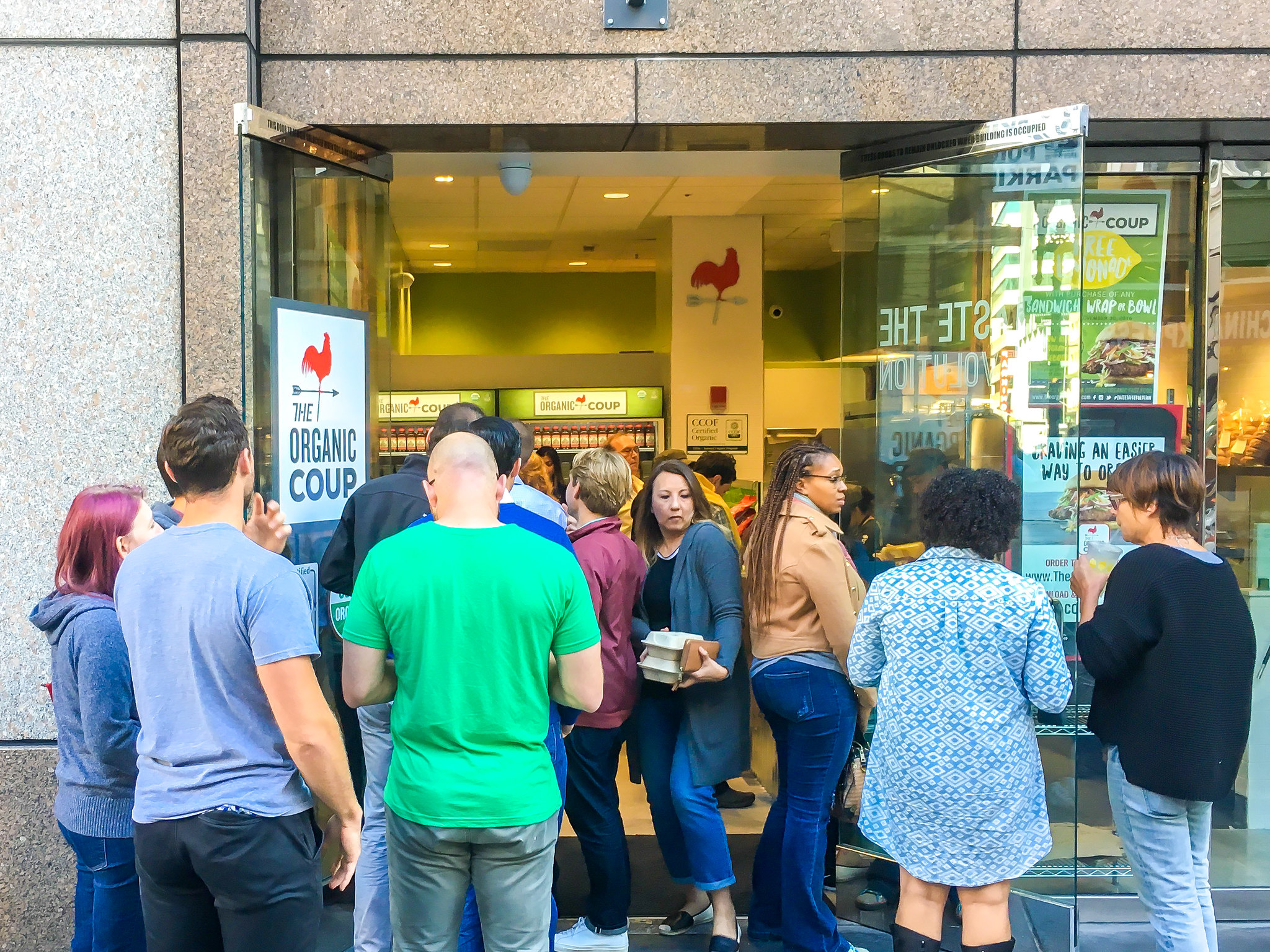
Standing outside Organic Coup on Kearny Street.

The Bird, Fried Chx, Beer
Interior shot of The Bird.


Thomas Hawk Digital Connection

 
Comments Off on Cluck Yeah! Two New Downtown San Francisco Fried Chicken Sandwiches!

Posted in Photography


The range of light: what made one of Ansel’s most famous books so special

22 Oct
 
Continuing his video series, Marc Silber of Advancing Your Photography interviews Ansel Adams’ son Michael in Ansel’s home. In this episode they discuss Ansel’s book ‘The Range of Light’ which contains some of Ansel’s most famous images from Yosemite and the Sierra Nevada. They also discuss Ansel’s thoughts on how to develop your skill set as a photographer. Michael says that Ansel would have encouraged new photographers to ‘photograph, experiment and to try new things.’ 

Articles: Digital Photography Review (dpreview.com)
 
Comments Off on The range of light: what made one of Ansel’s most famous books so special

Posted in Uncategorized


Pretty in Pink: Trump’s Border Wall as Envisioned by Mexican Architects

22 Oct

[ By SA Rogers in Architecture & Cities & Urbanism. ]

trump-border-wall-6

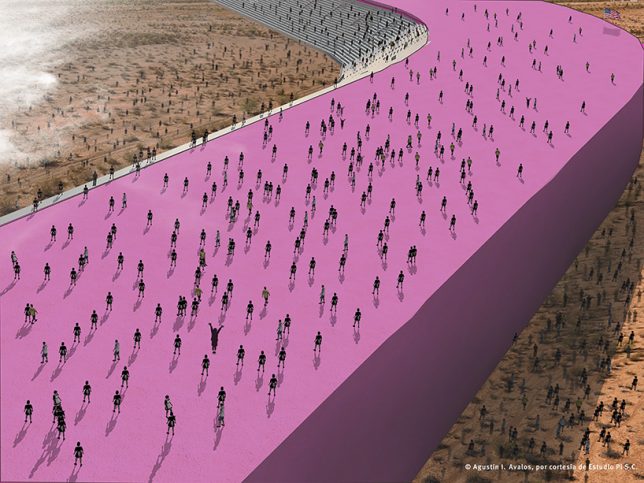
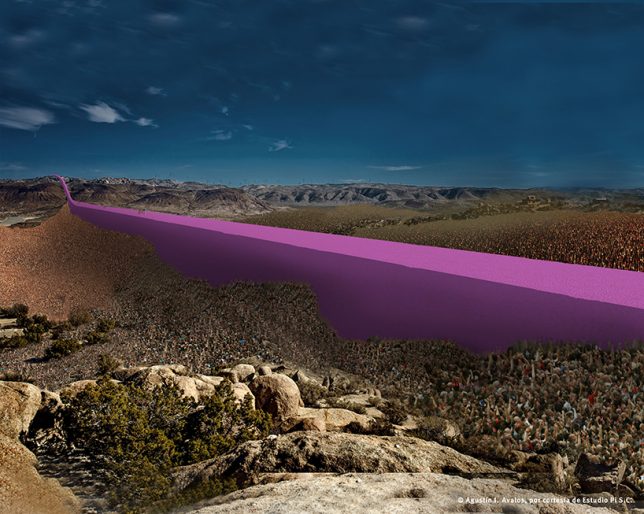
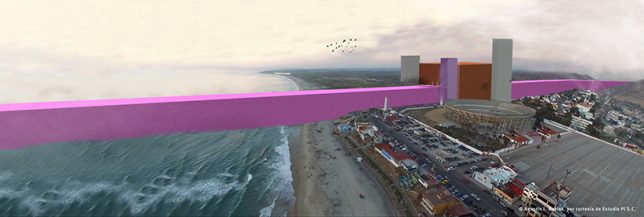
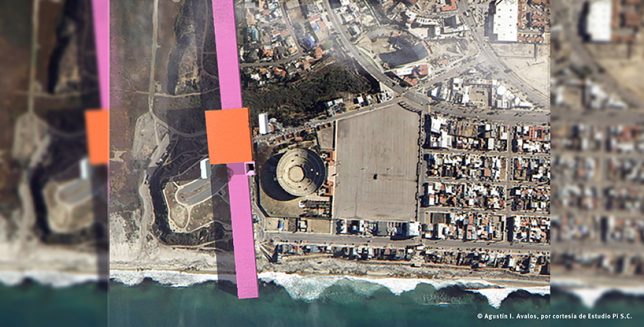
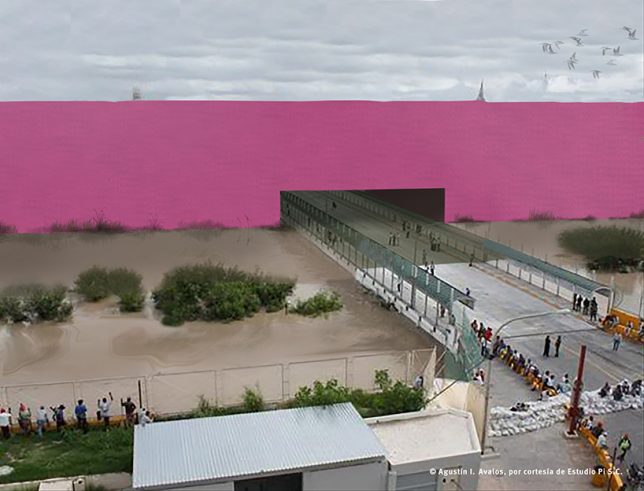
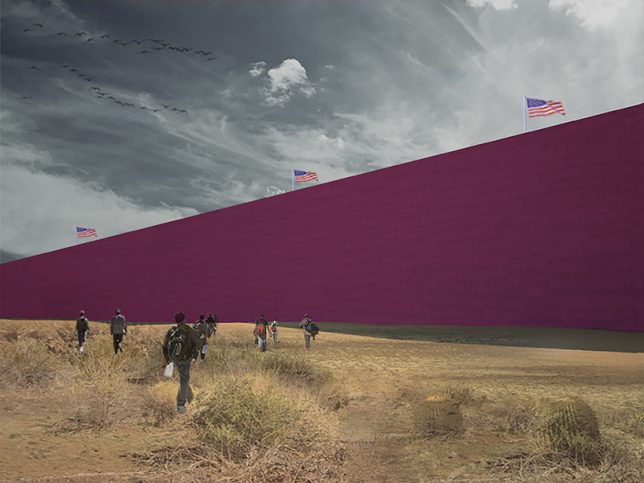
Donald Trump has promised that if he becomes President of the United States, he’ll build a “beautiful and impenetrable” wall and force Mexico to pay for it – so a group of Mexican architects have taken on the task of designing it for him, too. The firm Estudio 3.14 has envisioned the “gorgeous perversity” of the proposal in a vibrant shade of neon pink, a solid architectural ribbon running from the Pacific Ocean to the Gulf of Mexico and packed full of prisons.

trump-border-wall-1

trump-border-wall-2

“I will build a great wall – and nobody builds walls better than me, believe me – and I’ll build them very inexpensively,” Trump said during his candidacy announcement speech in June 2015. “I will build a great, great wall on our southern border, and I will make Mexico pay for that wall. Mark my words.”

trump-border-wall-7

trump-border-wall-8

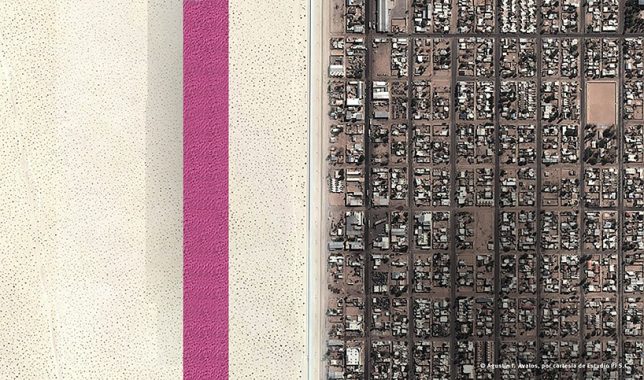
Estudio 3.14 presents a series of renderings of the structure in the various types of border landscapes one finds along that 1,954-mile stretch. The wall is painted pink in honor of Pritzker Prize-winning Mexican architect Luis Barragán. To understand exactly what the architects are getting at with this project, it’s best to hear it described in their own words.

trump-border-wall4

trump-border-wall-5

“Based on Trump’s statements, the economic, ecological and financial aspects have been called into question. However, he continues with his verbal plan. As architects and designers, we have the capacity to imagine and interpret what Trump is saying, and we are convinced that if we can make people see it, they can assess his words and the perversity in his proposal.”

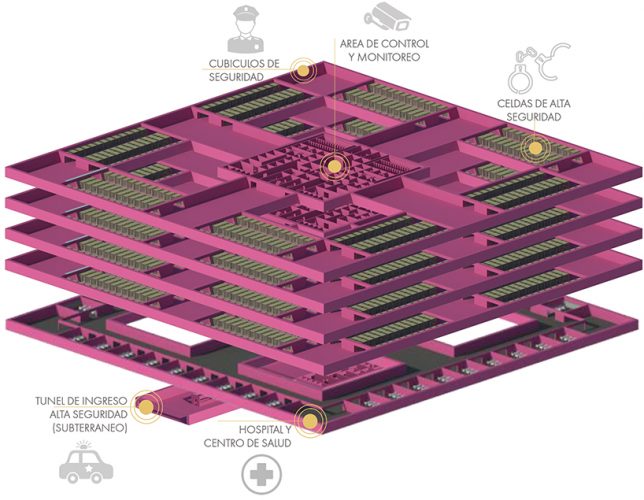
“Because the wall has to be beautiful, it has been inspired in by Luis Barragán’s pink walls that are emblematic of Mexico. It also takes advantage of the tradition in architecture of megalomaniac wall building. Moreover, the wall is not only a wall – as you can see in the hill landscape cross-section it is a prison where 11 million undocumented people will be processed, classified, indoctrinated, and/or deported.”

trump-border-wall-9

“The relation between the discipline of architecture and political perversity and/or megalomania has already been seen through previous characters such as Adolf Hitler and Benito Mussolini, who relied on the imaginative architects of their words and the creators, who materialized their macabre ideas. The proposal is made from the disciplinary field that has worked, since the existence of humanity, for the status quo and benefits from this tradition.”

Share on Facebook


[ By SA Rogers in Architecture & Cities & Urbanism. ]

[ WebUrbanist | Archives | Galleries | Privacy | TOS ]


WebUrbanist

 
Comments Off on Pretty in Pink: Trump’s Border Wall as Envisioned by Mexican Architects

Posted in Creativity


Hands-on with Nikon AF-S Nikkor 70-200mm F2.8E and PC Nikkor 19mm

22 Oct

Hands-on with Nikon AF-S Nikkor 70-200mm F2.8E and PC Nikkor 19mm

Nikon just released two new lenses – the AF-S Nikkor 70-200mm F2.8E FL ED VR and PC Nikkor 19mm F4E ED. We’re at the Photo Plus show in New York, where we got our hands on them.

Hands-on with Nikon AF-S Nikkor 70-200mm F2.8E and PC Nikkor 19mm

The AF-S Nikkor 70-200mm F2.8E FL ED VR is the third iteration of Nikon’s modern 70-200mm F2.8 telezoom. Improvements over its predecessor include a complete optical redesign and fluorine coatings on the front and rear elements.

While the new lens is only around 100g lighter than the VR II, and a mere couple of millimeters slimmer, it makes a difference. The new lens definitely feels like less of a ‘lump’ than the older version, thanks partly to a shift in the center of gravity, with more weight moved towards the mount. 

Hands-on with Nikon AF-S Nikkor 70-200mm F2.8E and PC Nikkor 19mm

The new lens construction features 22 elements, including six ED, one fluorite and one high refractive index element. As we’d expect from a lens in Nikon’s professional F2.8 lineup, the body is weather-sealed, and includes a rubber flange around the mount to prevent dust and moisture from getting into the camera body when the lens is in use. 

Hands-on with Nikon AF-S Nikkor 70-200mm F2.8E and PC Nikkor 19mm

The ‘E’ in ‘2.8E’ denotes an electronic aperture actuator. Most Nikon lenses still feature a mechanical aperture actuator, but the benefit of electrical actuation (which is slowing being phased in to Nikon’s high-end lenses) is better precision, and stepless movement. The latter feature is especially important when shooting video. Minimum focus in the new lens has been reduced compared to its predecessor, to ~1.1 meters. 

Hands-on with Nikon AF-S Nikkor 70-200mm F2.8E and PC Nikkor 19mm

As usual with high-end telezoom lenses, the AF-S Nikkor 70-200mm F2.8 E features a focus limiter, to prevent hunting when working at longer subject distances. Alongside the usual VR and AF mode switches the new lens also offers an AF-L / Off / AF-ON switch, which allows the buttons on the lens barrel to either activate or lock AF (or be deactivated).

Hands-on with Nikon AF-S Nikkor 70-200mm F2.8E and PC Nikkor 19mm

According to Nikon, the new 70-200mm F2.8E features a refined vibration reduction (VR) system, offering the equivalent of up to four stops of correction. The  AF-S NIKKOR 70-200mm f/2.8E FL ED VR will be available next month for $ 2799.99.

Hands-on with Nikon AF-S Nikkor 70-200mm F2.8E and PC Nikkor 19mm

Next up, at the opposite end of the lineup is the PC Nikkor 19mm F4E ED. Nikon’s widest PC (perspective correction) lens, the 19mm F4E should appeal to architectural and real-estate photographers who need the ability to correct for perspective optically rather than digitally, in post-processing. 

Hands-on with Nikon AF-S Nikkor 70-200mm F2.8E and PC Nikkor 19mm

The 19mm F4E offers 97° of coverage and can shift ±12mm and tilt ±7.5°. Unlike the company’s existing PC-E designs, the mechanism for tilt can be rotated independently from the mechanism for shift, allowing the tilt to be set either parallel to or perpendicular to the shift.

Hands-on with Nikon AF-S Nikkor 70-200mm F2.8E and PC Nikkor 19mm

The new lens is distinguishable by its enormous bulbous front element. Optical construction includes three ED and two aspherical elements as well as Nano Crystal Coating.

Hands-on with Nikon AF-S Nikkor 70-200mm F2.8E and PC Nikkor 19mm

Minimum focus is around 25cm, and as we’d expect from a perspective correction lens, focusing is manual, via a large and well-damped focus ring. Unlike classic Nikon PC designs, aperture is electronically controlled from the camera body.

Hands-on with Nikon AF-S Nikkor 70-200mm F2.8E and PC Nikkor 19mm

Like the new 70-200mm F2.8E, the 19mm F4E is built to a very high standard, and includes a rubber flange to keep dust and moisture out of the camera body. 

Hands-on with Nikon AF-S Nikkor 70-200mm F2.8E and PC Nikkor 19mm

The PC Nikkor 19mm F4E ED will be available next month for $ 3,399.95.

Articles: Digital Photography Review (dpreview.com)
 
Comments Off on Hands-on with Nikon AF-S Nikkor 70-200mm F2.8E and PC Nikkor 19mm

Posted in Uncategorized


Manfrotto launches new FluidTech Base and monopod kits for stills and video

22 Oct

Accessory-maker Manfrotto has introduced a new series of monopod kits called XPRO Monopod+ and a new FluidTech Base to help videographers to achieve smooth pan, tilt and swivel motions. The new Monopod+ models come in a choice of four or five sections. The legs are made of aluminum or carbon fiber and kits are available with and without heads. The actual monopods are the same as the existing XPRO models but they come with the FluidTech base included.

The new base is slightly larger than the one it replaces and offers three-way motion instead of just support for panning. The rotation can be locked off to allow only panning or unlocked to support smooth action in three directions. The base attaches and detaches by screwing it to the foot of the monopod, and while the base will hold the monopod upright on its own Manfrotto doesn’t suggest using it self-standing with a camera attached.

The new FluidTech Base will be $ 99.99/£74.95 and the kits including a monopod will start at $ 189.99/£144.95.

For more information visit the Manfrotto website.

Press release:

Introducing the new FLUIDTECH – Full Fluid Base: first of its kind 3D-movement for the smoothest video footage

  • Easy, instant locking and adjustment with the Quick Power Lock system
  • Superior stability and portability thanks to powerful lightweight aluminium & carbon fibre
  • Flexibility to switch from photo to video thanks to the accessory base

October 2016: Manfrotto, world leader in the photography, imaging equipment and accessories industry, presents a new offering featuring high-performance monopods for professional videographers and photographers: the new XPRO Monopod+ family.

When volume and weight need to be minimal, set-up speed is of primary importance, in crowded places where there’s no room for a tripod, or for creative, overhead footage – whenever a tripod is not the option, monopods are the solution. They enable users to quickly and easily move from one shooting point to another, providing stable support to video and photo equipment, ensuring incredibly smooth footage, ultra-sharp photos and creative shooting perspectives.

This exciting new generation brings image makers the ground-breaking FLUIDTECH – Full Fluid Base, making Manfrotto XPRO Monopod+ the first of its kind on the market featuring fluidity on all 3 axes to deliver ultimate smoothness in an extremely compact solution for advanced video shooting.

Articles: Digital Photography Review (dpreview.com)
 
Comments Off on Manfrotto launches new FluidTech Base and monopod kits for stills and video

Posted in Uncategorized


Camera components represent 9.5% of total iPhone 7 material cost

21 Oct
 Image: Chipworks-TechInsight

Analyst firm Chipworks-TechInsight has published its iPhone 7 reverse engineering report, which includes some interesting cost and technology information for more engineering-minded photographers. The analysts estimate the total bill of materials for the iPhone 7 with 128GB of built-in memory to be $ 275. $ 26, or approximately 9.5%, of that total sum are spent on camera and imaging components. This includes the Sony-made Exmor RS image sensors and lenses in front and rear cameras and all processing hardware.

The most expensive component in the device, that retails in the US for $ 749, is Apple’s A10 Fusion CPU at $ 40.  The display and touchscreen add $ 37 to the cost. Given how advanced smartphone camera technology has become, it is surprising that it only represents a relatively small percentage of the total cost of a device (though Apple is famous for its high margins.)

We’d expect the dual-cam in the iPhone 7 Plus to be quite a bit more expensive than the single-lens version in the standard iPhone 7. However, Chipworks has to publish its report on the larger iPhone model. For now, you can download the iPhone 7 report on Chipworks website if you’re happy to provide your contact information and email.

Articles: Digital Photography Review (dpreview.com)
 
Comments Off on Camera components represent 9.5% of total iPhone 7 material cost

Posted in Uncategorized


Keep calm and carry on: tips for safely transporting spare camera batteries

21 Oct

If you read too much news you might believe that Samsung Galaxy Note 7 smartphones are exploding all around the globe like miniature incendiary devices. You might even think that lithium-ion batteries are the work of an evil empire intent on spreading terror throughout the civilized world. Indeed, these combusting batteries have caused a good deal of concern, if not terror, and many consumers are questioning how safe the lithium-ion cells we use in our cameras are.

It is worth pointing out at this stage that of the over 2.5 million Galaxy Note 7s that were shipped before they were withdrawn only around 90 had over-heated, and fewer again had actually caught fire. A 90 in 2.5 million hit rate wouldn’t be reported if we were talking about the phone’s microphone not working, but as the potential is a pocket, handbag, house or hand actually catching fire the frequency of occurrence is obviously way too high. 

The good news is that the lower capacity batteries you pack in your camera bag are much less likely to cause a newsworthy scene than that in the Note 7, and by following some simple precautions you’ll be just fine.

What makes lithium batteries catch fire?

Smartphones need an astonishing amount of power to run the processors that control their multitasking activities, and the battery in the Samsung Galaxy Note 7 is rated at 13.48Wh. That’s a lot more powerful than most camera batteries – the EN-EL15 used to power the Nikon D810 for example is 11.8Wh.

Seen here: a Samsung Galaxy Note 7 that did not burst into flames.

The Note 7 battery is designed to be used in a device that Samsung wants to be as thin and as light as possible, so the battery has to be as thin and light as it can be made. That means we have a lot of charge in a very tight space. Lithium-ion cells are ideal for this sort of task as they are able to hold twice the charge of traditional metal cells such as nickel-cadmium and they are much lighter – lithium is the lightest metal element.

Problems arise in batteries for a number of reasons, but most center around some sort of short circuit between the positive and negative electrodes. Such short circuits allow energy to flow through the cell un-resisted which causes a build-up of heat that can lead to a fire.

In a lithium-ion cell the cathode (positive) and anode (negative) electrodes are immersed in an electrolyte conductive fluid and are kept apart by a porous barrier called a separator. During charging, and while the battery is being used, lithium-ions use the electrolyte fluid to travel between the anode and the cathode, passing through the porous separator on their way. At the same time, electrons pass between the anode and cathode via the device the cell is powering or the charger. If the separator is flawed it might allow electrons to travel between the two electrodes – a short circuit. If this happens the cell will begin to overheat.

This spiraling build-up is called ‘thermal runaway’ and the immense heat generated can make the cell and battery expand or explode

Problems can occur if the electrolyte fluid in the cell is contaminated with metal particles or if the separator is just too weak to do its job. The separator can also begin to break down when external temperatures are very high. The breakdown of the separator and the consequent unimpeded contact between negative and positive electrodes within the cell lead to a build-up of heat that can’t be dissipated, which subsequently leads to further break down within the structure of the cell. This spiraling build-up is called ‘thermal runaway’ and the immense heat generated can make the cell and battery expand or explode.

As most battery packs contain multiple cells to build voltage the breakdown in one will often overheat its neighbors and the reaction will be permeated through the entire unit.
The cell doesn’t need to have a manufacturer’s flaw to catch fire either, as any physical damage to the battery can rupture the separator or the individual chambers, allowing electrons to flow freely within the cells creating a short circuit. It only takes a tiny breach of the separator for thermal runaway to occur, as any breach will create heat that will further damage the separator and make a tiny hole bigger as the temperature rise accelerates.

How does this effect camera batteries?

Camera batteries tend not to pose such a high risk as they don’t contain as much energy as phone batteries do, but they can still be the cause of a fire if they aren’t treated correctly. Airlines allow lithium-ion batteries to be carried in carry-on luggage as if there is a fire it can be dealt with more easily in the cabin than it can in the hold. There are however restrictions on how many batteries can be carried in one place.

Some airlines recommend that the contacts are covered with electrical insulating tape to prevent them coming into contact with anything that might create a short circuit. 

Mail services tend to be most concerned about batteries rated above 100Wh. This doesn’t affect still camera batteries, which tend to be around 14Wh, but some larger video camera batteries can come into this bracket. These need special markings on the outside of the package. You might be required to pack each battery in its own plastic pouch, though taping contacts should be enough. Check with the company you are mailing or flying with for exact requirements. For an example, here are Delta airlines requirements:

Lithium Batteries
As you probably know, traveling with consumer electronic and medical devices containing lithium cells or batteries (e.g. watches, calculators, cameras, cell phones, laptops, camcorders, hearing aids, etc.) is allowed onboard as carry-on. Spare lithium batteries are allowed as carry-on only, and must be individually protected to prevent short circuits.
Tips to properly transport spare lithium batteries:
* Pack spare batteries in carry-on baggage.
* Keep spare batteries in the original retail packaging to prevent unintentional activation or short-circuiting.
* If original packaging is not available, effectively insulate battery terminals by isolating spare batteries from contact with other batteries and/or metal.
* Specifically, place each battery in its own protective case, plastic bag or package, or place tape across the battery’s contacts to isolate terminals.
* Take steps to prevent crushing, puncturing, or putting a high degree of pressure on the battery, as this can cause an internal short circuit, resulting in overheating.
Size Limits for Lithium Batteries:

Passengers are permitted to travel with lithium-ion batteries that contain a maximum of 160 watt hours per battery. Any lithium-ion battery containing more than 160 watt hours is prohibited from carriage on all passenger aircraft. lithium-ion batteries installed in a personal electronic device can be transported as checked or carry on baggage. lithium-ion batteries not installed in a device (spares) must be in carry-on baggage and no more than two (2) spares between 100 and 160 watt hours are allowed.

Keep calm and carry on (your spare batteries)

Fortunately there is no cause for alarm on the part of most photographers. We need to remember that lithium-ion batteries pose a risk if not taken care of and if we are careless about where we buy them. Chances are that if you use the battery that came with your camera and spares from the manufacturer or a well-known third party, you will never have an issue. Just be careful not to puncture the cell and to handle damaged batteries with extreme caution.

Another point worth noting is that the battery in the Galaxy Note 7 was installed in the phone and not designed to be removed, so it had a softer, less protective exterior shell. Most camera batteries are packed in hard plastic casing and are unlikely to split or rupture, or become critically damaged internally as a result of impact.

Camera batteries can catch fire like those used in the Samsung Galaxy Note 7, but you’ll have to go out of your way to make them do so. They won’t explode on their own accord and they are pretty unlikely to even overheat unless you forget to treat them with the respect they are due. 

Articles: Digital Photography Review (dpreview.com)
 
Comments Off on Keep calm and carry on: tips for safely transporting spare camera batteries

Posted in Uncategorized