RSS
 

Archive for September, 2016

The Lantern: Dementia Villages Replicate Small Towns Inside Big Boxes

13 Sep

[ By WebUrbanist in Architecture & Houses & Residential. ]

main street usa

Complete with a Main Street, a barber shop and hardware store, this town-in-a-box is designed to make elderly patients with memory loss feel at home in a surrealistic interior setting.

natural square

The Lantern operates a series of such “villages” in Ohio, each looking as much like a movie set as a walkable small town or historic suburb, complete with fake grass, cafe tables and street lamps.

main street

the village

Cute homes are accented with porches and rocking chairs while a high-tech ceiling overhead projects bird sounds and features a high-tech sky display that shifts over the course of the day (and night).

front porch

village interior

The dwellings and other buildings are draw inspiration from the 1940s – in other words: they are made to look like the same places the people living here grew up in.

dining hall

side hall

CEO Jean Makesh got his idea to develop this set of facilities while working as an occupational therapists in less-inviting facilities. His core vision involved using biophilic design to support normal and active lifestyles that would minimize habit disruption and transition anxiety for incoming residents.

It would be too easy to draw comparisons between this place and science-fictional film dystopias, but the reality is that for most residents this assisted-living facility is much homier than a stark white hospital-style complex.

no exit

dimentia town

A similar-but-outdoor complex in Holland has also been developed along the same lines, containing residents with controlled exits and disguised staff while providing the illusion of an open town through shops and streets.

Share on Facebook


[ By WebUrbanist in Architecture & Houses & Residential. ]

[ WebUrbanist | Archives | Galleries | Privacy | TOS ]


WebUrbanist

 
Comments Off on The Lantern: Dementia Villages Replicate Small Towns Inside Big Boxes

Posted in Creativity


Samyang goes Premium with MF lens range

13 Sep

Korean optical manufacturer Samyang has announced a new series of upper-class lenses called Premium MF. The company has released details of a new manual focus 14mm F2.4 wide angle lens and an upgraded version of its popular 85mm lens but with an F1.2 maximum aperture. The models have a very smart-looking redesigned exterior and are finished in aluminum with narrow focusing rings in smooth rubber and an outline reminiscent of the Zeiss Milvus range.

Samyang says that the new optical construction of the lenses produces resolution suitable for 8K video and 50MP still sensors, and new coatings and special elements reduce aberrations to enhance the clarity of the pictures they create.

The 85mm F1.2 uses 10 elements in 7 groups and features a 9-bladed iris and a filter thread of 86mm. The Canon version, which is the only one mentioned at the moment, is set to weigh 1050g. The Premium MF 14mm F2.4 will have 18 elements in 14 groups, and will also have a 9-bladed iris but no filter thread. It is quoted as being available for Canon EF, Nikon F and Sony E cameras and will weigh 791g.

The company has yet to announce prices for these lenses but has said they will go on sale this year. For more information see the Samyang website.

85mm F1.2 MTF Samyang Premium MF 85mm F1.2
14mm F2.4 MTF Samyang Premium MF 14mm F2.4

Press release

Samyang introduces new Premium Lens Line-up

September 12th, 2016, Seoul, South Korea – Photokina, Global optics brand, Samyang Optics (http://www.samyanglensglobal.com) will announce its long-awaited first premium lens line-up: 85mm F1.2 and 14mm F2.4. This launch is a cornerstone for Samyang Optics to become a ‘Total Imaging Solution’ brand along with the introduction and expansion of autofocus lenses and XEEN lenses.

Founded in 1972 in South Korea, Samyang Optics has been the representative of Korean optics industry. With over 40 years of research and development in optics, Samyang integrates the essence of history and introduces a signature lens line-up of Samyang. “We believe a lens is one of the foremost elements in photography and videography”, says Haejin Lee, the head of Samyang Research Centre. He continues, “to create a signature Samyang Lens series, we have reviewed all the meetings and talks with photographers and cinematographers from past decades. They always return to one concept, the image quality. And it’s what we are after.”

85mm F1.2 and 14mm F2.4 manual focus lenses inherit and upgrade the eminent Samyang’s image quality to the next level. The new Samyang Lenses have the unprecedented resolving power, matched with 50 megapixels photo and 8K video productions. The two lenses enable you to capture life-long memories in everlasting image quality. Bokeh, out-focusing, starburst effect creates unforgettable image. Photographers can rely on the lens under various conditions. The resolving power contains abundant pixel information, allowing photographers the freedom in post-production to create unique image of own. Also, the minimised aberration enhance the clarity of image, creating more impressive image than your eyes can see.

The F1.2 of 85mm is, by far, the brightest lens in existing full frame DSLR lenses, securing the fast shutter speed. It has ten elements in seven groups, applying one aspherical lens and two high refractive lenses. The aspherical lens minimises the aberration and unnecessary light dispersion. Two high refractive lenses effectively adjust the path of light and deliver maximum amount to the sensor for clear and vibrant image.

The 14mm F2.4 is equipped with the most advanced optical technology among Samyang Lenses. It has 18 glasses in 14 groups including four different special optics: two aspherical lenses, one hybrid aspherical lens, two extra-low dispersion lenses and one high refractive lens. This optimal performance creates impressive image quality from centre to corner of image.

Also, the design itself is the statement. Aluminium alloy metal is adopted for maximum durability. With a sleek yet unprecedented design with flowing curves, this signature line-up is a one-of-a-kind lens. The usability is maximized with considerate diameter in 93~95mm.

In pursuit of image quality itself, Samyang will continue to develop premium manual focus lenses in response to the demands of professionals and will compete with world famous optics brands in quality and design. The lenses will be globally available in 2016, with suggested retail prices announced at a later date.

Samyang Premium MF 14mm F2.4 / 85mm F1.2 specifications

  Samyang Premium MF 14mm F2.4 Samyang Premium MF 85mm F1.2
Principal specifications
Lens type Prime lens
Max Format size 35mm FF
Focal length 14 mm 85 mm
Image stabilization No
Lens mount Canon EF
Aperture
Maximum aperture F2.4 F1.2
Minimum aperture F22 F16
Aperture ring No
Number of diaphragm blades 9
Optics
Elements 18 10
Groups 14 7
Special elements / coatings 2 aspherical + 1 hybrid aspherical + 2 extra-low dispersion + 1 high refractive lens + Ultra Multi Coating 1 aspherical + 2 high refractive elements + Ultra Multi Coating
Focus
Minimum focus 0.28 m (11.02) 0.80 m (31.5)
Maximum magnification 0.08× 0.13×
Autofocus No
Full time manual Yes
Distance scale Yes
Physical
Weight 791 g (1.74 lb) 1050 g (2.31 lb)
Diameter 95 mm (3.74) 93 mm (3.66)
Length 109 mm (4.29) 98 mm (3.86)
Materials Aluminum
Sealing No
Colour Black
Hood supplied Yes

Articles: Digital Photography Review (dpreview.com)

 
Comments Off on Samyang goes Premium with MF lens range

Posted in Uncategorized


Facebook Moments app adds support for full-resolution photo storage

13 Sep

Facebook Moments, a private photo-sharing mobile app, has been updated with support for full-resolution images. Previously, Facebook Moments didn’t store the full-res version of users’ images, and makes it possible now when a user ‘favorites’ an image within 30 days of it being uploaded or shared.

In addition to adding full-res image support, Facebook also now makes it possible to share a Moments photo album with others (regardless of whether they’re on the platform) using a web link. Those who receive the link to the private album can then join it and, if they’d like, add their own images to the collection. The web link can be accessed via the album’s menu by choosing ‘Share link.’

Facebook Moments is available for both iOS and Android.

Via: TechCrunch

Articles: Digital Photography Review (dpreview.com)

 
Comments Off on Facebook Moments app adds support for full-resolution photo storage

Posted in Uncategorized


Painting with Paper: Quilled Portraits Reveal the Expressiveness of Aging

13 Sep

[ By SA Rogers in Art & Sculpture & Craft. ]

brodskaya quilled paper 4

Expanding upon a previous body of work that’s more graphic in nature, paper artist Yulia Brodskaya presents a new portrait series capturing the expressive qualities of aging faces in vibrant hues. The Russia-born artist and illustrator is known for rolling strips of paper into ‘quills’ and painstakingly gluing them together into colorful, three-dimensional designs. The new portraits are named Jade, Topaz and Amethyst, and reveal a more painterly method that tightly packs folded pieces of paper into each composition.

brodskaya quilled paper 7

brodskaya quilled paper 5

The effect mimics the look of brushstrokes, with wrinkles, folds and other sculptural details rendered in lush jewel tones for an expressionistic result. The former graphic design major discovered her love for the tactile qualities of paper art and abandoned computer programs, producing hundreds of projects and commissions over the last 7 years.

brodskaya quilled paper 8

brodskaya quilled paper 3


“The new expressive way of using the strips of paper that I discovered recently (and first time used as a primary technique in the Wimbledon artwork) is really exciting – it allows me to achieve more ‘sketchy,’ artistic look for the paper art and I’m excited to keep experimenting with it (though it’s a shame that this method is not much faster than the neat and refined way of gluing strips one by one)… Despite the slow process I enjoyed working on this portrait tremendously: the abundance and richness of colors makes me feel good,” says Brodskaya.

brodskaya 9

brodskaya 10

brodskaya 11

brodskaya 12

“I used to say that I’m ‘drawing with paper’, now I found a way of ‘painting with paper.’ These artworks are all about color and the unique tactile feel that paper strips add to it. The portrait resembles an oil/acrylic painting (especially from the distance,) but with a paper twist…”

Share on Facebook


[ By SA Rogers in Art & Sculpture & Craft. ]

[ WebUrbanist | Archives | Galleries | Privacy | TOS ]


WebUrbanist

 
Comments Off on Painting with Paper: Quilled Portraits Reveal the Expressiveness of Aging

Posted in Creativity


Sigma 30mm F1.4 DC DN Contemporary for Sony E-mount lens review

13 Sep

The Sigma 30mm F1.4 DN DC Contemporary was announced in February 2016, and sits atop Sigma’s line of DN mirrorless lenses, with a two-stop advantage over their previous 30mm F2.8 offering. It’s currently the only APS-C F1.4 autofocus lens currently available for the Sony E-mount and has an MSRP of $ 339.00.

With F1.4 and a 45mm equivalent field of view, this lens on paper appears to be a good choice for a ‘walkaround’ normal prime lens. The bright aperture will satisfy low light shooters and bokeh fanatics, and the near 50mm field of view puts it right inside the versatile ‘normal’ lens range. While it won’t replace a dedicated macro lens with its magnification ratio of 1:7, it still is able to focus down to a working distance of 30cm (less than a foot).

The relatively low price, especially for an E-mount lens, means it’s also accessible to beginners and enthusiasts alike, making it sound like an ideal prime lens that may never leave the front of the camera once it’s mounted.

Within the E-mount system this lens has one natural competitor: the Sony 35mm F1.8 OSS. Let’s look at how the two stack up on paper:

  Sony E 35mm F1.8 OSS Sigma 30mm F1.4 DC DN | C
MSRP $ 448 $ 339
Image Stabilization Yes No
Max Aperture F1.8 F1.4
Minimum Aperture F22 F16
Aperture Ring No No
Diaphragm Blades 7 9
Number of elements 8 9
Number of groups 6 7
Special elements/coatings 2 aspherical elements 1 aspherical and 1 double-sided aspherical
Minimum Focus 0.30 m (11.81?) 0.30 m (11.81?)
Maximum Magnification 0.15x 0.14x
Motor Type Stepper motor Stepper motor
Full Time Manual No No
Weight 155 g (0.34 lb) 265 g (0.58 lb)
Dimensions (DxL) 63 x 45 mm (2.5 x 1.8 in.) 65 x 73mm (2.6 x 2.9 in.)
Sealing None None
Filter Thread 49mm 52mm

In terms of just spec we see a couple of major differences. First, while the Sony is 2/3 of a stop slower than the Sigma, it does include optical image stabilization. That alone gives it a better chance at being the preferred lens for video, although when shooting 4K the slightly wider FOV of the Sigma might fare better on any body that gives an additional crop.

In stills terms, though, there’s little real-world difference between the Sigma’s 45mm equivalent view and the 52.5mm equivalent of the Sony. The difference between them doesn’t suddenly open one up to a type of photography that couldn’t be achieved with the other.

Build quality between the Sigma and the Sony is fairly similar. They both use a machined metal chassis with plastic internals. Compared to older Sigma DN lenses, the 30mm F1.4 doesn’t let its focus elements rattle about when unmounted, which is a very welcome change. The focus ring is also an improvement, and a step above the Sony. The rubber grip turns smoothly and easily with minimal effort, making the Sony feel a bit stiff. The only downfall in terms of build is the Sigma’s lens hood, which doesn’t seem to confidently click in to place, and is made of rather fragile feeling plastic.

The long barrel of the Sigma, and even longer overall dimensions do make it quite large in comparison to APS-C Sony Alpha cameras, but the weight isn’t entirely off-balance. While heavier and much bigger, it is less expensive and brighter than the Sony 35 F1.8. The question is, does the extra weight and lack of OSS keep it from topping the Sony as the ideal ‘normal’ for APS-C E-mount shooters?

Articles: Digital Photography Review (dpreview.com)

 
Comments Off on Sigma 30mm F1.4 DC DN Contemporary for Sony E-mount lens review

Posted in Uncategorized


ESPN publishes iPhone 7 Plus photos from US Open

13 Sep
 Photo by Landon Nordeman for ESPN

Last week Apple announced its new iPhone 7 models, including the dual-cam equipped iPhone 7 Plus that combines a 28mm wide angle lens with a 56mm ‘tele’ variant. In the camera app this setup allows you to zoom optically and create a simulated shallow depth-of-field.

At the launch event Apple showed off some sample images but now it has, as it usually does, given the device to a couple of sports photographers to demonstrate what the camera can do in the capable hands of professionals. ESPN photographer Landon Nordeman used the iPhone 7 Plus to shoot at the US Open in New York City.

As you can see below, some of the samples look pretty impressive, although none of them appear to make specific use of the shallow depth-of-field simulation feature. More samples from the Open are available on ESPN.com, and you can see more from Sports Illustrated photographer David E. Klutho’s coverage of an NFL game.

Photo by Landon Nordeman for ESPN

Articles: Digital Photography Review (dpreview.com)

 
Comments Off on ESPN publishes iPhone 7 Plus photos from US Open

Posted in Uncategorized


‘Dark Magic’: Recording video of the Perseid Meteor Shower with the Canon ME20F-SH

13 Sep

Ben Canales of Oregon-based Uncage the Soul video production company has a few nice things to say about the Canon ME20F-SH. ‘It’s pretty much borderline dark magic,’ he tells DPR over email. I’ve gotten in touch with him to ask about the video you see above, a short film following 20 high schoolers studying the Perseids Meteor Shower as part of a summer astronomy camp. He used the camera and a Sigma 20mm F1.4 DG Art to record the kids as they joined the annual Oregon Star Party, a camp of more than 600 astronomers.

Canales has been on a quest for several years to find the ultimate low-light tool: something that would allow him to capture video of the night sky without using stop motion or time-lapse. ‘A couple years ago I got fixated on the question of “When will we be able to record video of the stars?” I saw the continual progress of sensor quality in my long exposures, and figured it wasonly a matter of time before ISO performance gets so good the shutter speed can be taken down to video frame rates.’

Naturally, he took interest in Sony’s a7S and a7S II, using them for a few low light projects. He calls the A7S series a game changer, ‘but its usable ISO ceiling was somewhere between 50k and 100k… We were close, but not yet close enough to shooting video of the stars. We were past the stop motion look, but the video just looked… kinda crappy.’

‘Hands down – nothing can currently touch this camera’s ability to shoot in low light. Trust me. I’ve obsessively tried them all.’

Then came the Canon ME20F-SH in late July 2015. It boasts pixels measuring 19?m – 5.5X larger than what’s found on high-end DSLRs and is capable of recording video at 75 Db – equivalent to more than ISO 4 million. Canales got ahold of one and found headed away from the city lights to test it out. His review? ‘Hands down – nothing can currently touch this camera’s ability to shoot in low light. Trust me. I’ve obsessively tried them all.’

In recording the video above, Canales found he could work with up to what equates to a 350-400k equivalent ISO. He hopes that with more experimentation he can push it even further. 

So what are some of the challenges of filming in almost total darkness? For one… well, the darkness. ‘Focus is tough,’ Canales says. ‘You need the lens completely wide open to get enough light, so operating in the dark with night vision continually being destroyed by the monitor, and then trying not to fall on the things around me while moving around… it gets comical.’

You’ve also got to work against your natural sleep rhythms. ‘The sleep deprivation and working in time of day we’re normally asleep is the biggest challenge. I made many stupid mistakes simply from exhaustion. But… that’s also the part of this pursuit I enjoy.’

‘We’ve seen this image before, but only in green night vision. To see these scenes resolved in color boggles the mind.’

And then there’s an all-too-familiar problem: curious and excited fellow photographers who want to know just what the heck you’re working with. ‘This thing begs for attention around people,’ Canales learned quickly.

‘Anyone who looks over my shoulder and sees the screen has no choice but to be stunned. We’ve seen this image before, but only in green night vision. To see these scenes resolved in color boggles the mind. We don’t have a baselines for this being possible. I actually had a hard time keeping the Q&A informal interviews with the video subjects not be interrupted by “Dude! How are you doing that!?” ‘

What do you think? Does this technology open up new possibilities for astro-videography? Tell us in the comments below. You can also see more of Uncage the Soul’s work on Vimeo.

Articles: Digital Photography Review (dpreview.com)

 
Comments Off on ‘Dark Magic’: Recording video of the Perseid Meteor Shower with the Canon ME20F-SH

Posted in Uncategorized


This film camera is 100% 3D-printed, including the lens

13 Sep

3D modeler Amos Dudley has created a 35mm film camera using only 3D-printed parts, including a hand-and-machine polished resin lens. Called SLO, the finished camera is functional and can take photographs, albeit somewhat low in quality, demonstrating the successful construction of a fairly complex device using only 3D-printing technologies.

Dudley has detailed the creation process on his blog, explaining that SLO is made with some basic elements like a shutter, film cartridge, spool gears and an aperture plane among other pieces. In order to support future designs, Dudley made the lens and shutter as removable modules that can be swapped out for different ones. The camera supports 35mm film and uses a two-button shutter system that provides manual speed control based on how faster the user presses the button.

89590009

Once completed, the camera was used with Fujicolor Superia 400 film to take the photos above (click for the full set).


As expected, the lens was one of the harder elements to create, at first involving between 5 and 6 hours of hand polishing followed by polishing with a DIY motorized machine. Neither proved entirely sufficient, so Dudley dipped the resin lens in epoxy instead and cured it using UV lights.

Articles: Digital Photography Review (dpreview.com)

 
Comments Off on This film camera is 100% 3D-printed, including the lens

Posted in Uncategorized


How to Cull Your Images to Tell a Stronger Story in Your Blog or Social Media Posts

13 Sep

I have this photographer friend. This person is wildly talented, with impeccable images and an amazing eye. I love seeing what she is going to create next until she puts up a blog post. So let’s talk about how and why to cull your images.

These posts are usually a long, meandering wander through her shoots, with no thought to tell a story. Images that you swear are repeats – until you look closely and realize the model’s left pinky finger has maybe moved ever so slightly. Blurry shots that should have been culled in the first round. It boggles my dang mind to look at these posts because we as photographers should know better.
Cull-Images-top


You are better served to share your images in a way that compels viewers to keep coming back for more. While I may not be a pro-level blogger, I still think it’s an excellent way to share your images, and there are a few tricks that I always try to keep in mind as I’m putting together a blog post.

Step 1: Be Brutal

Think about this from the viewer’s perspective. They weren’t at the shoot. So how can you tell them the story in a concise way that shows off your best work? To do this, you have to be brutal. Cull like a maniac, and then cull some more.

Does it hurt to eliminate images that you love from the narrative of your post? Yep, it’s like choosing your favorite child, but you gotta shrink down the number of images you share. You must. Beyond the obvious culling— things like strange facial expressions, awkward hands, etc., there are so many photographers who feel they need to share each and every image that they love. Unfortunately, this is a good way to head straight to Boring Postville.

Do not share the same scene, and the same pose five times in a row! The viewer’s eye will get bored and start to skip over. Your goal is for each new image to draw the eye, and surprise the viewer in some way. If the images start blurring together, the surprise element is gone and you’ve lost their interest. Be brutal in editing: your posts will thank you.

culling (2 of 2)

culling (1 of 2)

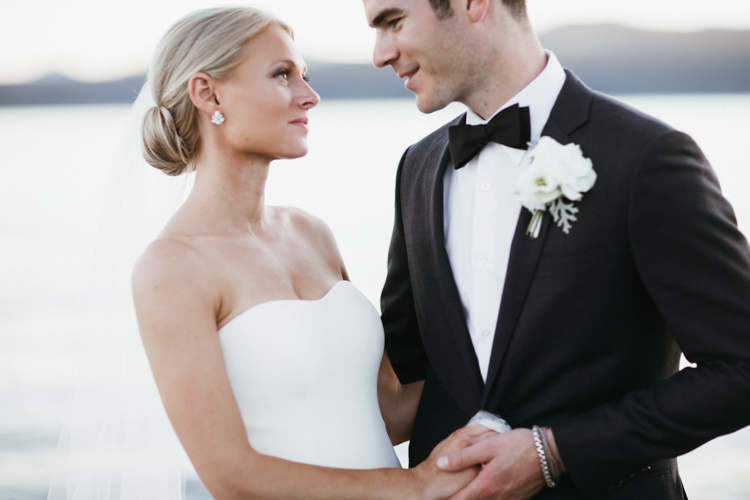
Lovely people, lovely images, but they’re so much alike and it’s killing me softly. These do not both need to be in a post together.

Step 2: Change Your Perspective

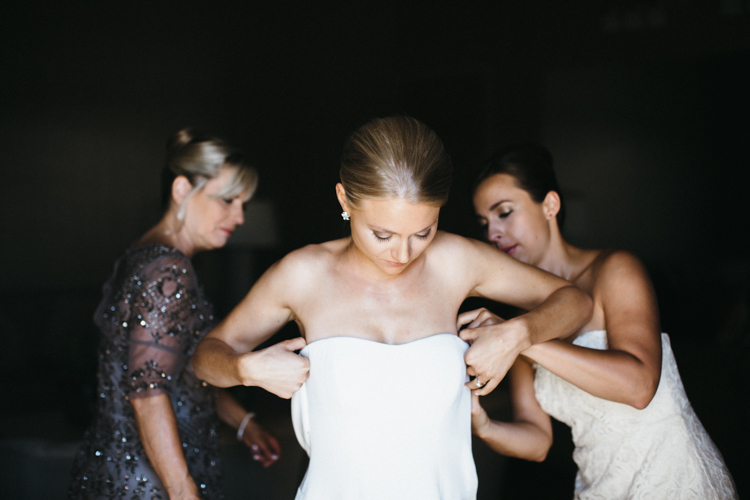
If you were an invisible spy at the photo shoot, how would you absorb all the information of the day? You’d start far away and move in closer. Too many posts start with the super-tight ring shot, or the close up of the hand on the face, and the viewer is left wondering subconsciously, “How did we get here?”

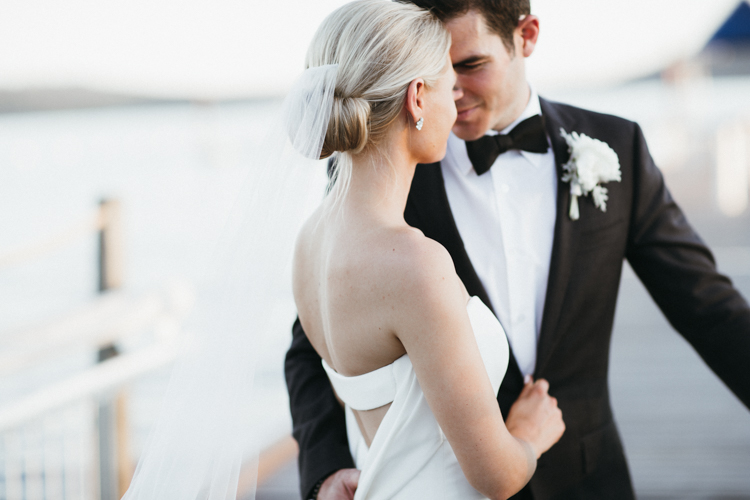
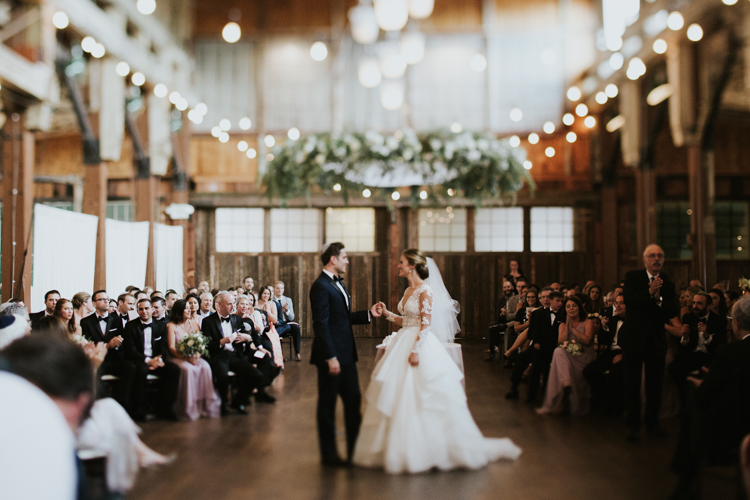
So aim to tell your story from the perspective of someone who was peeking over your shoulder. A great example is a wedding day. You don’t start a wedding day with the big dramatic first kiss, right? Set your scene. Show the viewer your location. Introduce them to the setup, then move in close to get the detail shots. It’s a much closer proximation to the reality of the day, and it helps our brains understand what’s going on when we’re viewing it on a computer after the fact.

Start broad.
Start broad.

Then move in for more detail...

Then move in for more detail…

... and then even more detail.

… and then, even more detail.

From there, remember to include varying visual perspectives. If you’ve already shared a couple’s full-body portraits, don’t overdo it with the same angle. Move into a closeup of their faces, or a detail of their outfits. Or share a different detail from the day altogether. But for the love of Richard Avedon, please don’t share a dozen nearly-identical photos! Find a new perspective, and make it memorable.

culling (4 of 1)

Far away!

culling (3 of 1)

Close up! And it’s unique enough of a perspective, that including this shot rounds out the story of the previous one.

Step 3: Tell the Truth – Kind of

My favorite Emily Dickenson line is, “tell all the truth but tell it slant.” This is advice straight from a poet to a photographer, so use it wisely. Friends, there is no grand blog court that has ruled that you must share every image, from every scene, in every shoot. YOU are the artist, and YOU get to decide how you’re going to tell the truth! Let’s not squander that freedom! You’re an artist, and you can unfold a story in the most artistic way you deem worthy. Here’s what you do NOT have to do:

  • Share images in the precise order you shot them.
  • Share images from the scenes or poses that you wanted to try but didn’t quite work (and hey, good job trying new stuff!).
  • Share images the client asked you to take that don’t totally represent your vision or your brand.
  • Share images that don’t progress the story you want to tell.

The science of photography is that you always get to tell the truth. The art of photography is that you can tell it slant. Play that line because you can.
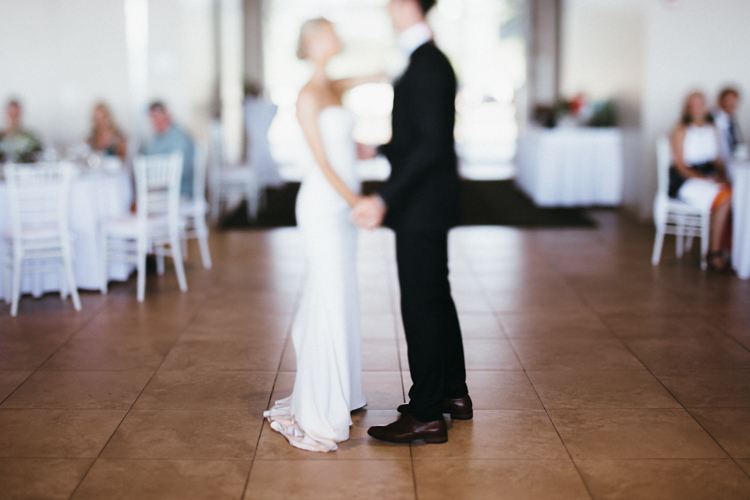
culling (5 of 1)

Step 4: Stay in the Flow

So, now that you’ve culled only the very best of your images, laid them out in a compelling story, shared your artistic skill with the world, and put together a bomb post, make sure the little details aren’t subtly throwing shade onto your creation.

Step away from your computer, go for a walk, have a glass of wine, do you… and then come back to review what you’ve written, shared, and how it all comes together. Try to have fresh eyes.

Is anything too repetitive? Do your shots flow together? Do your black and white images land in places throughout the post that make sense? If you include captions, do they add or detract from the overall effect of your story? These little details can take a post from good to truly excellent, so make sure you give your post another look before you click “Publish.”
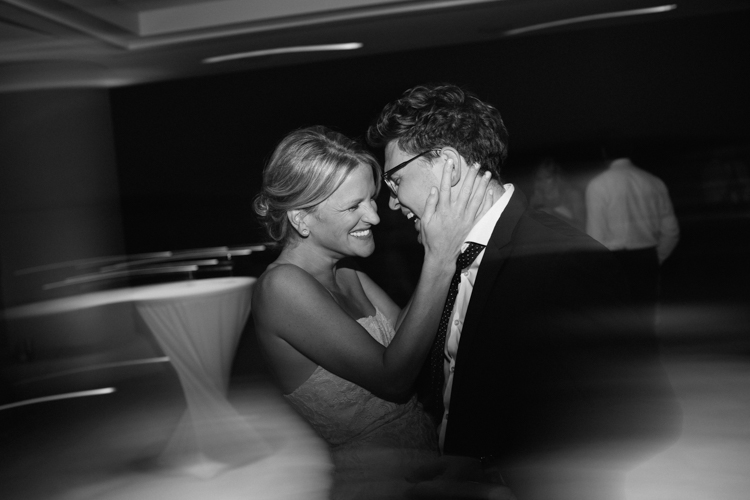
culling (6 of 1)

What are your tips for culling photos for a great social media or blog post? What are your big no noes? I’d love to hear them.

googletag.cmd.push(function() {
tablet_slots.push( googletag.defineSlot( “/1005424/_dPSv4_tab-all-article-bottom_(300×250)”, [300, 250], “pb-ad-78623” ).addService( googletag.pubads() ) ); } );

googletag.cmd.push(function() {
mobile_slots.push( googletag.defineSlot( “/1005424/_dPSv4_mob-all-article-bottom_(300×250)”, [300, 250], “pb-ad-78158” ).addService( googletag.pubads() ) ); } );

The post How to Cull Your Images to Tell a Stronger Story in Your Blog or Social Media Posts by Laura Sullivan appeared first on Digital Photography School.


Digital Photography School

 
Comments Off on How to Cull Your Images to Tell a Stronger Story in Your Blog or Social Media Posts

Posted in Photography


12 City Slides Turning Urban Settings Into Playgrounds for Adults

13 Sep

[ By SA Rogers in Destinations & Sights & Travel. ]

urban slide LA 2

Slides actually make a lot of practical sense in urban environments, potentially zooming over busy streets and transferring pedestrians from high ground to low ground faster than an escalator or set of stairs. That is, as long as people use them in an efficient manner and don’t clog them up. A mainstay on playgrounds around the world, slides can add a sense of fun to urban settings for adults, too. These examples of slides integrated into architecture, temporarily installed in city streets and doubling as public sculptures offer some exciting inspiration (take the hint, architects and city planners!)

Skyslide Los Angeles

skyslide

Zoom from the 70th floor of Los Angeles’ U.S. Bank Tower to the 69th in a fully transparent, 45-foot-long glass slide with thrilling (or terrifying, depending on your feelings about heights) views of the city below. The Skyslide opened this year on the West Coast’s tallest building, and though the glass is only 1 1/4 inches thick, the slide is said to be earthquake- and hurricane-proof.

Giant Water Slide in Bristol by Luke Jerram

city slides luke jerram 2

city slides luke jerram 3

city slides luke jerram 4

‘Park and Slide’ by UK-based artist Luke Jerram temporarily turned Bristol’s Park Street into a waterpark, drawing in 65,000 visitors to watch 360 lucky lottery winners ranging in age from 5 to 73 slide from one end of the street to the next. “This massive urban slide transforms the street and asked people to take a fresh look at the potential of their city and the possibilities for transformation,” says Jerram. “Imagine if there were permanent slides right across cities?”

Transfer Accelerator Slide for Commuters

city slides transfer accelerator

city slides transfera ccelerator 2

Designed as part of the Overvecht train station’s redevelopment, the Transfer Accelerator slide in Utrecht makes leaving the train station a little bit faster, and a lot more fun. The slide was integrated into the stairs outside the station as part of a push to encourage more commuters to take the train instead of driving.

Cliveden House Slide

city slides cliveden house

city slides cliveden house 2

This four-lane stainless steel slide at Cliveden House in Buckinghamshire, former home to Waldorf and Nancy Astoria, distracts visitors from ongoing restoration work and offers an alternative way to get back to lawn level rather than the scaffolding-covered stairs. It’s not often that you see a theme-park-worthy slide attached to a regal old manor house – it’s too bad it’s not a permanent feature.

Next Page – Click Below to Read More:
12 City Slides Turning Urban Settings Into Playgrounds For Adults

Share on Facebook


[ By SA Rogers in Destinations & Sights & Travel. ]

[ WebUrbanist | Archives | Galleries | Privacy | TOS ]


WebUrbanist

 
Comments Off on 12 City Slides Turning Urban Settings Into Playgrounds for Adults

Posted in Creativity