RSS
 

Archive for August, 2016

The good, the bad and the ugly of aerial photography – part 2: aircraft

19 Aug
My favorite image from the Holuhraun volcanic eruption, Iceland. Not only did I shoot multiple versions, I also asked the pilot to fly as slowly as possible and to return to this angle repeatedly so I could make sure I have the composition just right. This was easily done with the helicopter.

In the previous article I talked about some of the advantages of aerial photography. Now we’ll talk about some logistics, starting with the aircraft. There are two main options here: a light airplane or a helicopter. Yes, you can shoot from a hot air balloon but that’s not really an option in most places, plus it’s far less maneuverable, so I’ll gently disregard it. Also, while drones are taking the world of aerial photography by storm, the considerations discussed in this series don’t really relate to them, and so I won’t be talking about them at all.

It will probably come as no surprise when I say that a helicopter is the better way to go, by far. It might cost a bit (or a lot) more, but the advantages it offers make for a very different, vastly superior experience. 

Perhaps the greatest advantage is that some helicopters allow the doors to be opened or even completely removed for the flight

A helicopter is a flexible craft: it can fly slower than a plane or even hover in place, which gives you much more time to shoot a desired composition. But that’s not all: perhaps the greatest advantage is that some helicopters allow the doors to be opened or even completely removed for the flight. Once the door is off, you have a huge field of view, and wide-angle shooting is possible. You need to be careful not to have the rotor in the shot, but that can generally be avoided when pointing the camera downward.

The huge field of view also means that you have the option to try the same shot more than once should the first try fail, and you can shoot different angles of the same subject even after you’ve moved ahead. That’s a critical advantage which can make the difference between getting a shot and losing it.

Huge icebergs finally released from Kangia Fjord after floating there for years. Can you spot the (fairly large) boat?

Disko Bay, Greenland.

The most common helicopter for aerial photography is the Robinson R44. It’s a small helicopter fit for a pilot plus three passengers, and you can take both doors off in a minute, which is crucially important for getting crisp images without reflections or aberrations (if the pilot refuses to take the door off don’t even bother). Its small size also makes it relatively cheap to fly and maintain (emphasis on relatively).

What’s considered cheap? Well, one of my R44 flights cost me $ 850 (around €760) an hour, the other €1500 (around $ 1670) an hour. It really depends on where you fly, and costs worldwide can vary even more than that in both directions, but primarily upward. In places where a small, cheap helicopter isn’t available, costs can rise quite ludicrously. For example, I’ve recently gotten a quote of $ 4200 an hour for a larger heli in a place whose name I won’t mention. That’s $ 70 a minute. Yes, my reaction was similar to yours.

In the image below you can see a wide-angle shot of the dunes of Sossusvlei, Namibia, taken from an R44 helicopter with the doors taken off. It’s quite striking to see these intricate dunes from this angle, and the helicopter allowed me to take a very wide shot and include the entire dune, which is a huge advantage.

Shooting from a light plane is different. You usually shoot from an open window, and that’s in the best case scenario: about a year ago I did a photography flight in Greenland in which I had the dubious pleasure of shooting through a 15cm hatch in the front window. This means that shooting-angle selection was extremely limited (forget about ultra-wide lenses), and that once you pass a good shooting angle, the shot is gone unless you circle back. This disadvantage is emphasized by the faster movement speed, which frankly gives you a feeling of anxiety to be ready and shoot before it’s all gone.

To sum it up, though cheaper than a helicopter, a light plane with a small hatch (as opposed to a large window) is very limited in shooting angles, supplies less opportunities to get the right shot, and as a result yields much less keepers when the flight is done. I’d seriously reconsider before ever doing it again.

A Cessna with a large window you can open is a very different story. Shooting is much more comfortable and angle choice much less limiting. If you lean back (careful not to push against the poor pilot! I know I did that a few times…), no wind interferes with your lens and stability is quite good. I shot from such a Cessna in the Lofoten Islands and the experience was wonderful. 

Kjerkfjord, surrounded by mountains struck by beautiful pink light. Shot from a Cessna during sunset on my Lofoten Islands workshop this January.

In the next article I’ll discuss technicalities and parameter selection for aerial photography.


Erez Marom is a professional nature photographer, photography guide and traveler based in Israel. You can follow Erez’s work on Instagram, Facebook and 500px, and subscribe to his mailing list for updates.

If you’d like to experience and shoot some of the most fascinating landscapes on earth with Erez as your guide, you’re welcome to take a look at his unique photography workshops around the world:

Land of Ice – Southern Iceland
Winter Paradise – Northern Iceland
Northern Spirits – The Lofoten Islands
Giants of the Andes and Fitz Roy Hiking Annex – Patagonia
Tales of Arctic Nights – Greenland

More in This Series:

The good, the bad and the ugly of aerial photography – Part 1: Why shoot aerials?

Selected articles by Erez Marom:

  • Behind the Shot: Dark Matter
  • Mountain Magic: Shooting in the Lofoten Islands
  • Behind the Shot: Nautilus
  • Behind the Shot: Lost in Space
  • Behind the Shot: Spot the Shark
  • Quick Look: The Art of the Unforeground
  • Whatever it Doesn’t Take
  • Winds of Change: Shooting changing landscapes
  • On the Importance of Naming Images
  • Parallelism in Landscape Photography

Articles: Digital Photography Review (dpreview.com)

 
Comments Off on The good, the bad and the ugly of aerial photography – part 2: aircraft

Posted in Uncategorized


Fujifilm X-E2S: What you need to know

19 Aug

Introduction

The Fujifilm X-E2S is essentially a Fujifilm X-E2 with firmware updates and some very minor tweaks. That doesn’t mean it’s a bad camera, or that people shouldn’t consider it. Over the course of doing a thorough review (one that focused on its use and its appeal to different users, given how well-known the camera’s performance is), I came away with some observations – some of which you’d miss if you were just skimming the review, or reading through the key specifications.

So in case you missed it, let’s take a quick look back at some of our findings with the Fujifilm X-E2S.

The fun factor

I don’t always want to bring cameras I review to my friends’ barbecues. But I did want to bring the X-E2S. Fujifilm XF 27mm F2.8. ISO 200, 1/250 sec, F2.8.

The most important thing to note about the Fujifilm X-E2S is that it’s a camera that you’ll want to pick up and just go shooting with. Its retro styling isn’t to everyone’s taste, but most people that see it will think it looks ‘cool.’ The buttons have great feedback, and to for the photographer with some experience, the old-school shutter speed, aperture and exposure compensation dials are a natural and easy way to take control of the camera. As for the newbie who just grabbed it because of the new, lower MSRP, the ‘Auto’ button on the back will ensure he or she can enjoy shooting right away, while all those other controls make for an excellent camera to grow in to. Although the menus are a bit laggy, the abundant customizable controls will limit the time you’ll need to spend in them. 

In the end, this camera is just fun to use, which means you’ll want to take it with you more often, which means you’re going to end up taking more photographs. That’s never a bad thing.

The JPEGs

Straight-out-of-camera JPEG using the Classic Chrome film simulation. Fujifilm XF 27mm F2.8 lens. ISO 2500, 1/125 sec, F2.8.

Take a Google stroll across the World Wide Web, and you’ll see heaps of both praise and disdain being hurled at Fujifilm’s JPEG engine. As for us? We’re big fans. Not only do you get lots of adjustment parameters, you can get quick access to them to boot using the custom-settings banks (although these also save your ISO parameters, which we’re not such big fans of). At the core of its appeal is Fujifilm’s selection of film simulations. Don’t be fooled, they won’t necessarily give you transparent, true-to-life colors (Classic Chrome used above is a good example), but they have a certain richness and personality to them that we find oddly addictive. Some people will still struggle with waxy skin tones at higher ISO values, but for the most part, we found we could get away without shooting Raws on the X-E2S by dialing down the noise reduction.

The convenience 

When you pop the XF 27mm F2.8 pancake lens on the Fujifilm X-E2S, you’ll have a combination that’s only slightly bigger than its fixed-lens sibling, the X100T. Sure, you get a slower maximum aperture with the pancake, but you also get a different field of view – and the 27mm is excellent wide-open. It’s a combination that’s unobtrusive and will let you get the X-E2S into venues where cameras with detachable lenses are generally not allowed, and your images will stand out from the masses and their smartphone snaps.

And speaking of smartphones, the built-in Wi-Fi on the X-E2S will allow you to share your images almost as quickly as if you were one of the masses shooting with a smartphone. The size and Wi-Fi implementation alone make the X-E2S a convenient companion that still feels like a real camera.

The great kit lens 

Out-of-camera JPEG using the Provia preset. Fujifilm XF 18-55mm F2.8-4 @ 55mm. ISO 200, 1/1500 sec, F4.

The Fujifilm X-E2S can be had with an XF 18-55mm F2.8-4 kit zoom lens, and although the price premium is higher than other manufacturers’ kit bundles, there’s a few clear reasons why. This kit lens is all metal, optically stabilized and has a solid feel to it without feeling heavy. The zoom, focus ring and aperture rings are all good-sized and well-damped. Lastly and most importantly, its maximum aperture varies from 2/3 of a stop to a full stop faster than most competitors’. Not only will this allow you to keep your ISO values that much lower in challenging lighting conditions, but it also contributes to an increased amount of background blur, and it must be said, the out-of-focus characteristics of this lens are very good. For people who aren’t able or don’t want to swap lenses or invest in a collection, this is a kit lens that could be their only lens without regret.

The whole package

Processed to taste in Adobe Camera Raw using the Pro Neg Hi preset. Fujifilm XF 90mm F2. ISO 1600, 1/200 sec, F8.

There are certainly some aspects of the Fujifilm X-E2S that are starting to show their age – but they may not matter to everyone. The 16MP X-Trans sensor has less resolution than many competitors, but it still offers up good color and noise performance. The autofocus system isn’t great for fast-moving subjects, but for casual shooting, most users will find it’s good enough. The only feature that is really unforgivably bad is its video quality, which actually made me chuckle out loud when I looked at it for the review. But this camera is also very obviously not geared toward video shooters.

So the X-E2S isn’t the most exciting camera that Fujifilm has released recently – the X-T2 and X-Pro2 have both brought some stirring innovations to the Fujifilm ecosystem – but that doesn’t make the X-E2S any less solid. As a decidedly midrange experience being sold at something approaching a more entry-level price, the Fujifilm X-E2S deserves a look.

Articles: Digital Photography Review (dpreview.com)

 
Comments Off on Fujifilm X-E2S: What you need to know

Posted in Uncategorized


Throwback Thursday: The Olympus Stylus Epic and my love for clamshell cameras

19 Aug

Bring back the clamshell!

From left to right: The Olympus Stylus Epic, The Olympus [mju :] II, The Olympus XA. The first two are the same camera (different names for different markets), the latter started my love for clamshell cameras.

My love affair with the clamshell camera design started with the Olympus XA and ultimately lead me to the Olympus Stylus Epic, also know as the Olympus [mju:] II in the Japanese market (pronounced mew two, like the Pokémon). It’s a funky plastic 90’s style camera that to the untrained eye, looks a little like a piece of junk.

Both the Olympus XA, released in 1979, and the Stylus Epic, released in 1997, feature excellent fixed 35mm F2.8 lenses and Olympus’ brilliant clamshell design. The XA is an aperture priority-only rangefinder, while the Stylus Epic is a fully automatic camera with a three spot autofocus system and built-in flash.

Open/On Closed/Off

Due to its ease-of-use, small size and sharp lens, the Stylus Epic is my go anywhere camera (the XA I use mainly for street photography and travel). I’ve long searched for the perfect camera to slide in my back pocket every time I leave the house and this soap-shaped oddball is the one for me. It’s not as cool looking as a Ricoh R1 (which I also shoot with occasionally), but I’ve found it to be much more reliable.

If you haven’t figured it out by now, I’m a huge camera nerd and a big supporter of shooting analog. Film photography offers a nice balance to my daily concentration on digital photography for DPReview (my analog site is PopularAmerican.club). It also helps me to slow down and practice decisiveness. Of course the Stylus Epic, being a fully automatic camera, isn’t exactly encouraging me to work on fundamentals, but it does free me up to be more in the moment and act on instinct.

While these cameras are mostly fully automatic, they feature good metering.

The major selling points of the Olympus Stylus Epic are as follows: it is a full-frame, 35mm camera with an excellent (and reasonably fast) lens in my favorite focal length, it weighs a mere 5.1 oz and is no larger than a Sony RX100 series camera (which weighs nearly double). It’s also weather-sealed and built extremely tough, despite its plastic appearance. Lastly, its strange curved design makes it easy to slide in and out of a pocket.

The Olympus Stylus Epic is about the same size as a Sony RX100-series camera and about half the weight.

But hands down my favorite feature of the Epic is its clamshell. There’s no on/off switch – simply slide it open and it’s ready to shoot. It’s essentially a lens cap that doubles as a power switch, and it’s brilliant.

“It’s essentially a lens cap that doubles as a power switch, and it’s brilliant.”

Of course, Olympus didn’t abandon the clamshell design when it moved to digital around the turn of the century. There were plenty of tiny sensor compacts that featured clamshells. But at some point, they were no more. I haven’t pinpointed when the last one was released (if you know, shout it out in the comments,) but it seems by around 2007, the clamshell had been phased out entirely.

But why? Perhaps aesthetically, the design was too dated-looking. Or perhaps due to the decline in sales of compacts, Olympus moved in a different direction. Whatever the reason, I implore you, Olympus, bring back the clamshell!

There are, of course, several excellent large sensor fixed lens digital compacts on the market, though only the Ricoh GR and Nikon A can really be considered pocketable (the Fujifilm X70 is just slightly too big IMHO.)

These cameras are cool, but they suffer from one flaw. Most of them extend their lens when turned on, a design execution made to keep the overall package compact. But what happens when the camera is accidentally turned on in your bag or pocket and the lens attempts to extend with nowhere to go? The point is, I like a lot of the digital fixed lens compacts on the market, but ultimately I find them to be somewhat fragile, an undesirable quality for a take-anywhere camera. Furthermore, none of the pocketable ones are weather-sealed and only the Leica Q and Sony RX1R offer a full-frame sensor to match that of my Stylus Epic. Both are also large (un-pocketable) and expensive.

The Stylus Epic extends its lens only to focus when the shutter is pressed.

So is it possible to make a modern camera as small as the Stylus Epic, without an extending lens, while retaining a relatively large sensor? We’ve been following along with Sony’s development of a curved sensor for a while now, and reading back through our coverage got me thinking: perhaps this technology is the key a digital reincarnation of my beloved Stylus Epic.

Available settings include: flash on, flash off, red eye reduction, slow synchro (night scene flash), slow synchro plus red eye and spot mode (which requires pressing both back buttons simultaneously to engage). I mostly keep it on the default setting. Unfortunately the only mode the camera retains after being turned off and back on is red eye reduction. I’ve read a lot of complaints that the Epic doesn’t recall the “flash off” setting once turned off, which I tend to agree is very annoying.

As far as designing a 90’s throwback, manufacturers are obviously very comfortable tapping into classic design styles; take the Olympus PEN-F and pretty much every recent Fujifilm X-camera, for instance. But up until now, these throwback designs have all come from cameras released in the 50’s, 60’s and 70’s. I think its about time we had some throwback designs from the 80’s and 90’s and a reincarnation of the Epic seems like the perfect place to start!

To be fair, the Olympus Stylus Epic does extend the lens barrel, but not until the shutter has been fully pressed. This leads to a very slight shutter delay, but it is hardly noticeable.

I’m not even asking for a full-framer, but even a 1″-type sensor, fixed lens compact with a fast 35mm-equivalent lens would do it for me. Just make sure it’s pocketable, has a good flash, is weather sealed and is built like a tank. So Olympus, if you’re reading this, please consider a reboot of my dear Stylus Epic. Just don’t forget the clamshell!

Curvy beauty.

Is there a classic film camera you’d like to see a a digital reincarnation of? Let us know in the comments!

*A previous version of this article incorrectly stated the Epic uses a curved film plane.

Articles: Digital Photography Review (dpreview.com)

 
Comments Off on Throwback Thursday: The Olympus Stylus Epic and my love for clamshell cameras

Posted in Uncategorized


Instagram profiles reveal user depression in new machine learning study

19 Aug

A team of researchers with the University of Vermont and Harvard have published a new study detailing Instagram profiles and the hidden clues they may hold about the photographer’s mental state. Using machine learning, the team was able to identify signs of depression based off an Instagram profile’s photos, metadata, and things like facial recognition. The study looked at 43,950 photographs from 166 individual Instagram users, and had a 70-percent accuracy rate when identifying users with clinical depression.

The artificial intelligence system ultimately proved more capable of detecting depression than general practitioners, which have been found to have somewhere around a 42% accuracy rate. Hints about the photographer’s mental state lie in many things the researchers refer to as ‘markers’: the type of lighting used in the photographs, for example, and the colors of filters applied to photos. 

Dark and gray colors are often signs of depression, as well as gap in posting frequency which may indicate a depressed mental state. The number of times a photo is ‘liked’ and commented on, as well as the number of faces detected in the photos, are also notable markers. Interestingly enough, the study found that depressed Instagram users are less likely to use any photo filter, but if they do, they tend to go with ‘Inkwell.’

Via: Digital Trends

Articles: Digital Photography Review (dpreview.com)

 
Comments Off on Instagram profiles reveal user depression in new machine learning study

Posted in Uncategorized


How to Bump Your Photography up a Level by Using Film Style Limitations

19 Aug

Get 50% off Tom’s ebook Ang’s World – A Life in Photography eBook, now only until July 26 at Snapndeals.

One of the most important skills in photography is pre-visualization. The idea is that before you capture an image in the camera, you have a clear idea in your mind of what it’s going to look like. You preview the image before you shoot it. Colour or black-and-white in rendering? Rich in tones or pale and soft? Misty-blurry in feel or so tack-sharp you might cut your eyes on it? What – exactly – will your image look like?

One of the early objections to digital photography was that it wasn’t really photography because there was no negative; no sense of what kind of picture you’re making. In fact, with digital, there’s not much at all, apart from data in the form of a very, very long row of zeroes and ones. You know what kind of image you have only when you use that data to drive a screen (on camera or at computer) or a printer. And before you get there, you have to process the image. If you feel feel isolated from the process of creating the image, it’s no wonder.

01 DSC3714
The most basic in-camera processing setting is your exposure. For this nature shot in my back-garden (above), I over-exposed by two stops. This pales out the colours, fills the shadows nicely to get the effect I envisaged, all suffused with light.

If you feel a bit disjointed from your images or from your camera, one way back is to try some old-school photography. If you feel your photography is getting a bit jaded, you can re-discover its joys by committing to a treatment or filter effect at the time you take the photograph.

You simply think, feel and shoot as if you’re using film.

I love this way of working. There are two simple steps. You choose an in-camera processing or filter effect (which, of course, produces JPEG files), and you do not use the screen to review your images (it’s good practice anyway). So, let’s set to the Toy Camera option – this vignettes the image heavily (darkens the corners), under-exposes, and adds strong saturation. And off we go:

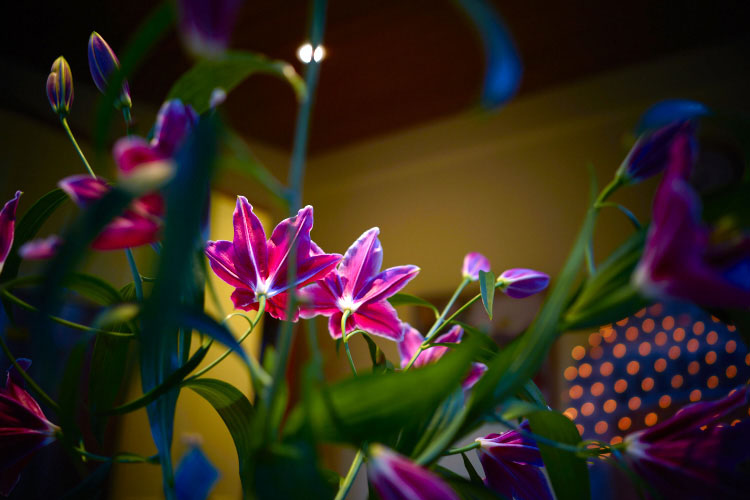
02 DSC43152013
This indoor scene on our dining table (above) is rich in a surreal way, because the strong colours in the centre and heavy vignetting forces the viewer’s attention to the centre. The very shallow depth of field – from using a f/2 aperture – also helps make the space tensioned.

One reason some photographers have returned to work with film, is that the process of envisioning how the image will look before clicking the shutter, creates a sense of connection with the subject. You feel more involved with the process, and that’s an important part of the fun of photography.

03 DSC6410 2014

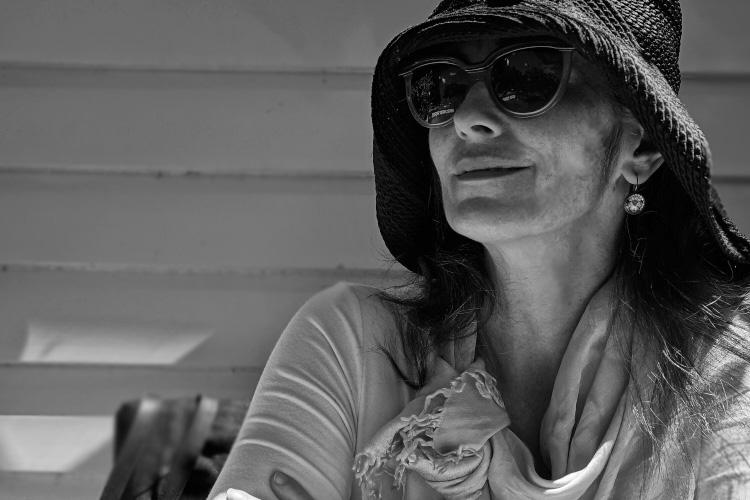
This portrait is a rich-toned black-and-white: it takes a shocking amount of processing in-camera, but comes out with deep, sharp tones that is surprisingly flattering. It works well in mixed hard and soft lighting.

There’s another advantage to camera processing – if you work this way, you often don’t need to touch the image before being able to use it. When I photograph for my books, I produce thousands of images, and have to submit as many as 1,500 images to the art department. You won’t find me messing about with the images more than I need to, I have a book to write! So images that pop straight out of the can into the book are what I aim for, like this one.

04 DSC9708 2

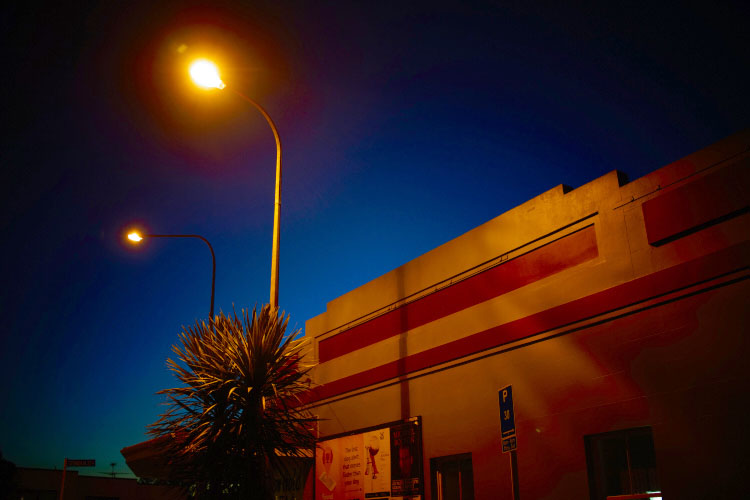
This late evening scene in Auckland, New Zealand comes straight out of the camera as rendered by the Toy Camera effect. I did try out some adjustments, but quickly decided it was best left as shot.

04A DSC14092014

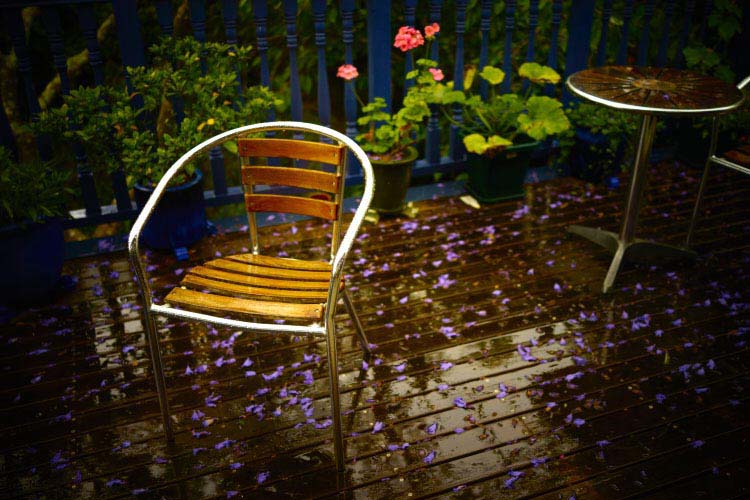
Garden furniture left in the rain came out glowing with the Toy Camera filter, which often brings out a mood that is slightly world-forsaken. I like using the filter with the lens wide open, to leave as much as possible softly blurred.

So the question is; do you know what your image will look like before you capture it? If commitment scares you, one approach is to at least think ahead to the post-processing that you’ll do. Instead of blundering around trying one effect or adjustment after another, you will go straight to the effects that you want. Saves a LOT of time.

Or you can do as I’m showing here, and bravely go for it. More jeopardy equals more fun! And that’s exactly what you’d have done with film. You load the camera with film – say slow black-and-white for fine grain, or fast colour for low-light work. 24 or 36 exposures, and you’re stuck with it until the last frame reels off, come rain or shine, action or still-life. Many photographers have found fun in photography again by embracing the risks of film-like limitations.

05 IMG 1367

I’ve used the Hipstamatic app on my iPhone since the beginning, as I enjoy the commitment to the image coming out according to the film and lens combination you pick. This is one of my favourite combinations – the Libatique lens – and the Dream Canvas film.

Just like learning to work with a fixed focal length, what looks like an imposition and inhibiting feature, can actually free you artistically. For example, knowing that I’ve chosen a filter that gives a particular soft focus but richly coloured look, means that everyday scenes become mysterious washes of colour and tone. Without that effect, I might not have thought of making this shot.

06 IMG 1446

This is a Hipstamatic shot using D-Type Plate film with the Jane lens, processed for increased saturation.

A mundane scene like the mess on a chopping board just looks ordinary in colour. But in black-and-white, with a bit of fake Tintype effects, and the image moves into another arena.

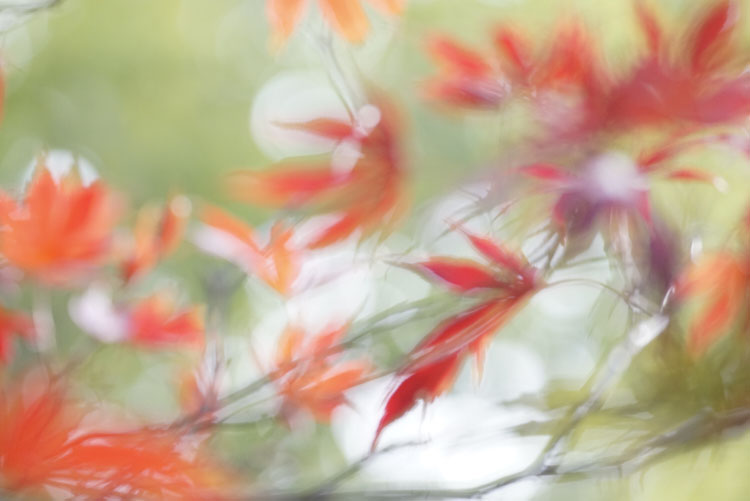
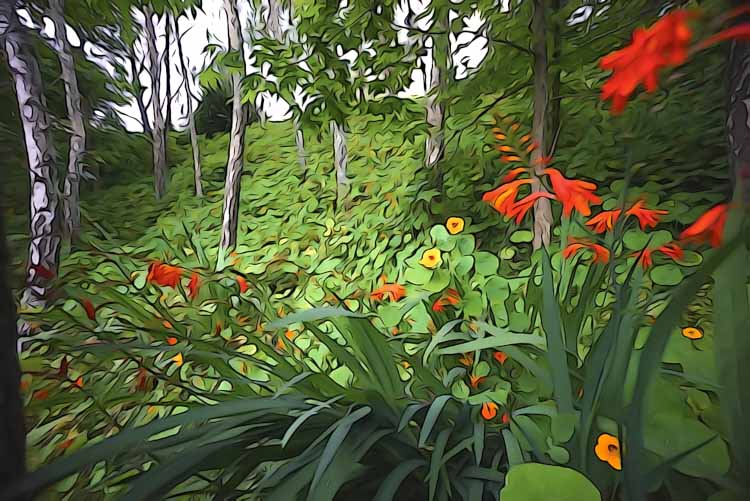
Committing to a treatment challenges you, and changes the way you look at things. Some photographers say they can see compositions only in black-and-white. If you set your camera to shoot black-and-white, you will find that you photograph different things from your usual subjects. You’ll probably shoot them in a different way too. If you’re feeling especially brave, you can set your camera to apply an art filter. I like using the Illustration filter, which pumps up colours and draws a line on sharp edges. It works neatly with nature.

07A__DSC2691A
A moderate wide-angle view of a nature reserve. (Looks pretty but actually it’s over-run with invasive foreign species.) In the soft light, I thought the image would come out flat and lacking in contrast. So I decided to add some filter fizz.

07B DSC02690 2014

With the illustration filter applied, all the important features have been brought out; the trees, the slope of the hill, the bright lilies, and lily leaves. This image came straight out of the camera, with no post-processing at all.

You don’t have to be so drastic though. One useful in-camera effect available in several models, is built-in HDR (High Dynamic Range). In fact, what the effect does should be called tone-mapping. It makes three or more rapid-fire shots of the subject, at different exposure values. Then, in camera, it combines them so that the image is predominantly filled with mid-tones. Now if you try this on a moving subject, you get weird double-fringed effects. More in-camera fun!

08 DSC27672014
Three separate exposures of trees waving in the wind, even when shot at a high rate of fire, will create blurred or fringed images. Then tone-mapping them – processing to bring out mid-tones – gives a half-photographic, half-graphic effect. (Post-processed to reduce brightness and increase saturation.)

All this works, because pre-visualization makes you see in a different way. What happen is that the camera actually reprograms the way you see. That makes a lot of sense, if you think about learning new skills. Let’s take martial arts, for example. Before you start classes, you just see people punching, kicking. Once you learn more about it, you start to get your eye in – you see when someone’s leaning too far forward, or that there’s no power in a strike. It’s exactly the same moves as before, but your now-tutored eyes see more; they see differently.

In photography, you may start to see relationships, not objects. You pick out shapes and aren’t distracted by textures. Or you may see small details which before you’d overlook. In short, committing to one look for your images can invigorate your seeing, which will inspire your photography to greater, new levels.

09 IMG 4425 2015
An extravagant flower display at a hotel reception looks charming when given a look of aged film, complete with old-world border given by Hipstamatic Libatique lens with Ina’s 1969 film options.

Get 50% off Tom’s ebook Ang’s World – A Life in Photography eBook, now only until July 26 at Snapndeals.

googletag.cmd.push(function() {
tablet_slots.push( googletag.defineSlot( “/1005424/_dPSv4_tab-all-article-bottom_(300×250)”, [300, 250], “pb-ad-78623” ).addService( googletag.pubads() ) ); } );

googletag.cmd.push(function() {
mobile_slots.push( googletag.defineSlot( “/1005424/_dPSv4_mob-all-article-bottom_(300×250)”, [300, 250], “pb-ad-78158” ).addService( googletag.pubads() ) ); } );

The post How to Bump Your Photography up a Level by Using Film Style Limitations by Tom Ang appeared first on Digital Photography School.


Digital Photography School

 
Comments Off on How to Bump Your Photography up a Level by Using Film Style Limitations

Posted in Photography


Firmware update for Sony a7R II improves stability, adds support for radio controlled flashes

19 Aug

Sony has released a firmware update for its a7R II full-frame mirrorless camera which improves camera stability while adding support for the company’s new radio controlled lighting system.

The official list of improvements in version 3.30 include:

  • Support for Radio Controlled Lighting System
  • Improved stability in picture shooting mode (by optimizing temperature control)
  • Allows for HDMI output while using Remote Camera Control software
  • Improves overall stability and operability of the camera

The firmware is now available and can be downloaded right here.

Articles: Digital Photography Review (dpreview.com)

 
Comments Off on Firmware update for Sony a7R II improves stability, adds support for radio controlled flashes

Posted in Uncategorized


LEGO-Like Architecture: $5,000 Homes from Recycled Plastic Blocks

18 Aug

[ By WebUrbanist in Architecture & Houses & Residential. ]

block house

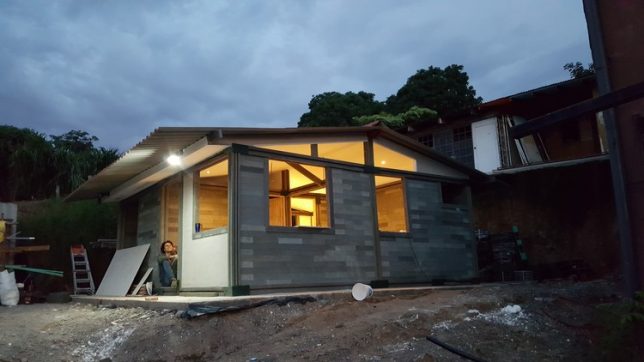
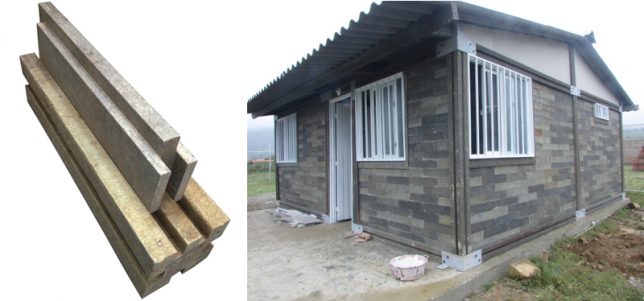
A Columbian company is tackling plastic waste issues and affordable housing with a single ingenious solution: interlocking LEGO-like bricks that can be used to build houses for a few thousand dollars per structure. Walls are formed using a slim slotted brick then framed using a thicker module used for beams and columns, locking the smaller units into place and providing rigid vertical and lateral support.

durable plastic lego blocks

Conceptos Plásticos is addressing their technology to rising populations of urban poor, families with the time but not financial means or materials to construct their own dwellings. The company works with locals to source plastic and create all kinds of spaces, including emergency shelters, community and educational buildings.

modular stacked block houses

The upcycled plastic blocks are easy to use and require no construction experience. They are durable, fire- and earthquake-resistant and much cheaper than other available materials. The company estimates the lifespan of the blocks at 500 years.

plastic block homes

“We hope to create a movement where more and more people get involved,” say the company founders. “We want to develop new products that make better use of the thousands and thousands of tons of plastic that is discarded.”

“There will soon be more plastic in the sea than fish, so we really need to do something big.” Recent projects using this novel material include a hostel for displaced victims of violence in the Columbian countryside.

Share on Facebook


[ By WebUrbanist in Architecture & Houses & Residential. ]

[ WebUrbanist | Archives | Galleries | Privacy | TOS ]


WebUrbanist

 
Comments Off on LEGO-Like Architecture: $5,000 Homes from Recycled Plastic Blocks

Posted in Creativity


Photography: One Hobby to Rule them All

18 Aug

Fellow photographers, let’s reflect for a moment on our mutual passion for this amazing art form, and maybe even do a little bragging about it. Photography is an incredibly rewarding hobby; in fact, it’s so rewarding that I believe it to be the best hobby one could enjoy. Here are five reasons why.

IMG 1636 dps

1. Photography complements many other hobbies

If your other hobby involves any physical thing, well then, you’re able to take beautiful photos of it! Whether it’s gardening, cars, or cooking, being able to skillfully photograph the things you spend your free time doing, only enhances the pleasure you take in those activities.

IMG 6922 dps

This principle extends beyond the photographer too. My mom spends all of her free time in the summer taking care of her numerous gardens (about five different flower gardens, a vegetable garden, an herb garden, and two shade gardens). She loves to see photos of the many plants that she puts so much time and energy into cultivating (and of course I love taking them; the photo below is of a daffodil that was grown by my mom this spring).

IMG 5299 dps

2. Photographers get to beautifully capture their loved ones

Anybody with a camera tends to take a billion photos of their kids, especially while they’re so little and cute – it’s pretty much impossible not to. But only photographers are knowledgeable about window lighting, reflectors, bouncing a flash, or using fast glass to make the best photos in poor lighting situations. Especially for an active little one, it takes a photographer who knows how to take control of the camera settings to get a shot that’s not blurry.

IMG 8438 dps

Aside from the kids, folks are always grateful for the photographer in the family who takes photos during holiday gatherings and special occasions. Unless the photographer corrals everybody into a group shot, it usually doesn’t get taken. There is also the candid photos of genuine moments while families enjoy each other’s company. While selfies and food photos abound, a true photographer is more focused on the meaningful moments.

All of those everyday moments matter, especially when it comes to one’s immediate family. I’m 30 years old, but I still spend Sunday evenings over at my parent’s house for family dinner. None of my immediate family particularly likes getting photographed – but every now and then I sneak in some candids. The older I get, the more these kinds of photos are cherished.

26045993031 0e0648589a o dps

3. Photographers get to relive their magic of vacation all over again

All of the wonders that we spend our hard-earned money to see make the trip back home, packed up into a few tiny memory cards.

IMG 9719 dps

There’s no doubt that anybody with a smart phone is snapping away their entire vacation. But it takes some specialized gear to really capture the most amazing travel photographs. It also takes some post-processing knowledge to make those photos wall-worthy.

For example, wide angle lenses are crucial in capturing the majesty of a stunning landscape, or perhaps some ancient architecture. Just the right amount of HDR will really bring out a landscape, or an intense black and white conversion might be the perfect touch for an architectural shot. Photographers know how to work their digital toolkit to really make the most of those beautiful vacation memories.

9233878664 aef785d3a7 o dps

4. Photographers get to see the world from a different perspective

Photography often propels us forward into new territory, that we otherwise wouldn’t experience. If there’s any beauty to be captured, we’re willing to accept the uncomfortableness that might go along with it.

Getting up before dawn on a weekend isn’t most people’s idea of a great way to start the day, but capturing a sunrise photo makes it all worth it. Dirty hands and knees are often required for getting the perfect floral or insect shot.

IMG 9521 dps

Photography connects us with nature in ways that wouldn’t exist without our cameras. I truly believe that the heart of a photographer is just a little more wild, a little more adventurous.

6573220145 6bf98a9bf7 o dps

5. Photographers are a part of one big, awesome, online community

Whether it’s Flickr, 500px, your favorite online photography forum, or maybe even your local photography club -photographers support each other. For the most part, we are ready and willing to help, to share our process, and to share what the conditions, settings and equipment were for those really amazing shots.

IMG 5622 dps

When you go looking, there is an almost never-ending source of support and encouragement for your photography. It is one of the few creative realms where we’re able to teach one another, even if we’re separated by half the planet. And that, my fellow photographers, is quite the blessing!

Does anybody have any other perks that they love about being a photographer? I’d love to hear some more reasons why photography rocks in the comments below.

googletag.cmd.push(function() {
tablet_slots.push( googletag.defineSlot( “/1005424/_dPSv4_tab-all-article-bottom_(300×250)”, [300, 250], “pb-ad-78623” ).addService( googletag.pubads() ) ); } );

googletag.cmd.push(function() {
mobile_slots.push( googletag.defineSlot( “/1005424/_dPSv4_mob-all-article-bottom_(300×250)”, [300, 250], “pb-ad-78158” ).addService( googletag.pubads() ) ); } );

The post Photography: One Hobby to Rule them All by Matt Robinson appeared first on Digital Photography School.


Digital Photography School

 
Comments Off on Photography: One Hobby to Rule them All

Posted in Photography


Throwback Thursday: The Olympus Stylus Epic and my love for clamshell cameras

18 Aug

Bring back the clamshell!

From left to right: The Olympus Stylus Epic, The Olympus [mju :] II, The Olympus XA. The first two are the same camera (different names for different markets), the latter started my love for clamshell cameras.

My love affair with the clamshell camera design started with the Olympus XA and ultimately lead me to the Olympus Stylus Epic, also know as the Olympus [mju:] II in the Japanese market (pronounced mew two, like the Pokémon). It’s a funky plastic 90’s style camera that to the untrained eye, looks a little like a piece of junk.

Both the Olympus XA, released in 1979, and the Stylus Epic, released in 1997, feature excellent fixed 35mm F2.8 lenses and Olympus’ brilliant clamshell design. The XA is an aperture priority-only rangefinder, while the Stylus Epic is a fully automatic camera with a three spot autofocus system and built-in flash.

Open/On Closed/Off

Due to its ease-of-use, small size and sharp lens, the Stylus Epic is my go anywhere camera (the XA I use mainly for street photography and travel). I’ve long searched for the perfect camera to slide in my back pocket every time I leave the house and this soap-shaped oddball is the one for me. It’s not as cool looking as a Ricoh R1 (which I also shoot with occasionally), but I’ve found it to be much more reliable.

If you haven’t figured it out by now, I’m a huge camera nerd and a big supporter of shooting analog. Film photography offers a nice balance to my daily concentration on digital photography for DPReview (my analog site is PopularAmerican.club). It also helps me to slow down and practice decisiveness. Of course the Stylus Epic, being a fully automatic camera, isn’t exactly encouraging me to work on fundamentals, but it does free me up to be more in the moment and act on instinct.

While these cameras are mostly fully automatic, they feature outstanding metering.

The major selling points of the Olympus Stylus Epic are as follows: it is a full-frame, 35mm camera with an excellent (and reasonably fast) lens in my favorite focal length, it weighs a mere 5.1 oz and is no larger than a Sony RX100 series camera (which weighs nearly double). It’s also weather-sealed and built extremely tough, despite its plastic appearance. Lastly, it’s strange curved design makes it easy to slide in and out of a pocket.

The Olympus Stylus Epic is about the same size as a Sony RX100-series camera and about half the weight.

But hands down my favorite feature of the Epic is its clamshell. There’s no on/off switch – simply slide it open and it’s ready to shoot. It’s essentially a lens cap that doubles as a power switch, and it’s brilliant.

“It’s essentially a lens cap that doubles as a power switch, and it’s brilliant.”

Of course, Olympus didn’t abandon the clamshell design when its moved to digital around the turn of the century. There were plenty of tiny sensor compacts that featured clamshells. But at some point, they were no more. I haven’t pinpointed when the last one was released (if you know, shout it out in the comments,) but it seems by around 2007, the clamshell had been phased out entirely.

But why? Perhaps aesthetically, the design was too dated-looking. Or perhaps due to the decline in sales of compacts, Olympus moved in a different direction. Whatever the reason, I implore you, Olympus, bring back the clamshell!

There are, of course, several excellent large sensor fixed lens digital compacts on the market, though only the Ricoh GR and Nikon A can really be considered pocketable (the Fujifilm X70 is just slightly too big IMHO.)

These cameras are cool, but my biggest beef with them is their design, or rather the weak point of their design. Most of them extend their lens when turned on, a design execution made to keep the overall package compact. But what happens when the camera is accidentally turned on in your bag or pocket and the lens attempts to extend with nowhere to go? The point is, these cameras are great, but ultimately I find them to be a bit fragile, an undesirable quality for a take-anywhere camera. Furthermore, none of the pocketable ones are weather-sealed and only the Leica Q and Sony RX1R offer a full-frame sensor to match that of my Stylus Epic. Both are also large (un-pocketable) and expensive.

So how then does the Stylus Epic retain its incredibly small size, despite its full-frame ‘sensor?’  By utilizing a curved film plane, of course! This not only helps keep things shrunken, but the curvature of the film plane matches that of the lens. This is also a major reason that the Epic is so darn sharp.

Available settings include: flash on, flash off, red eye reduction, slow synchro (night scene flash), slow synchro plus red eye and spot mode (which requires pressing both back buttons simultaneously to engage). I mostly keep it on the default setting. Unfortunately the only mode the camera retains after being turned off and back on is red eye reduction. I’ve read a lot of complaints that the Epic doesn’t recall the “flash off” setting once turned off, which I tend to agree is very annoying.

We’ve been following along with Sony’s development of a curved sensor for a while now, and reading back through our coverage got me thinking: could this new sensor technology make it possible to create a digital reincarnation of my beloved Stylus Epic? Totally. Do I think Olympus should make it happen? Oh, hell yes.

Camera companies are obviously very comfortable tapping into classic design styles; take the Olympus PEN-F and pretty much every recent Fujifilm X-camera, for instance. But up until now, these throwback designs have all come from cameras released in the 50’s, 60’s and 70’s. I think its about time we had some throwback designs from the 80’s and 90’s and a reincarnation of the Epic seems like the perfect place to start!

To be fair, the Olympus Stylus Epic does extend the lens barrel, but not until the shutter has been fully pressed. This leads to a very slight shutter delay, but it is hardly noticeable.

I’m not asking for a full-framer, but even a 1″-type sensor, fixed lens compact with a fast 35mm-equivalent lens would do it for me. Just don’t forget to make sure it’s pocketable, has a good flash, is weather sealed and built like a tank (no extending the lens when turned on). So Olympus, if you’re reading this, please consider a reboot of my dear Stylus Epic. Just don’t forget the clamshell!

Curvy beauty.

Is there a classic film camera you’d like to see a a digital reincarnation of? Let us know in the comments!

Articles: Digital Photography Review (dpreview.com)

 
Comments Off on Throwback Thursday: The Olympus Stylus Epic and my love for clamshell cameras

Posted in Uncategorized


8 Steps to Getting Your Photography Business Noticed

18 Aug

Photographers, photographers everywhere! It seems in this social media age, new digital photographers flood the industry every day. These “professionals” boast low prices and high quality. There’s nothing wrong with that, but how do you get your work to stand out from the pack? What makes your images different than Johnny Photographer who was given a DSLR for Christmas along Continue Reading

The post 8 Steps to Getting Your Photography Business Noticed appeared first on Photodoto.


Photodoto

 
Comments Off on 8 Steps to Getting Your Photography Business Noticed

Posted in Photography