RSS
 

Archive for July, 2016

Weekly Photography Challenge – Birds

23 Jul

Don’t we all wish we could be a free and fly away like a bird? Well we can’t, but we can photograph them!

See: 24 Fantastic Photos of our Fine Feathered Friends – Birds

Dennis Skley

By Dennis Skley

Weekly Photography Challenge – Birds

Whether in flight or on the ground, your challenge this week is to get out and photograph a bird or some birds. Here are some articles to help you:

  • 10 Surefire Tips for Photographing Birds in Flight
  • 8 Tips For Photographing Birds
  • How to Take Better Wildlife Photos: Be a Naturalist First
  • 10 Common Bird Photography Mistakes and Their Solutions
  • Bird Photography Tips for Beginners
  • Bird Photography Tips – How to Make Your Bird Photographs Stand Out
Matthew Paulson

By Matthew Paulson

Bill Gracey

By Bill Gracey

Howard Ignatius

By Howard Ignatius

Tjarko Busink

By Tjarko Busink

Vi Neves

By Vi Neves

Eyesplash - Summer Was A Blast, For 6 Million View

By Eyesplash – Summer was a blast, for 6 million view

Share your images below:

Simply upload your shot into the comment field (look for the little camera icon in the Disqus comments section) and they’ll get embedded for us all to see or if you’d prefer upload them to your favourite photo sharing site and leave the link to them. Show me your best images in this week’s challenge. Sometimes it takes a while for an image to appear so be patient and try not to post the same image twice.

Steven

By Steven

googletag.cmd.push(function() {
tablet_slots.push( googletag.defineSlot( “/1005424/_dPSv4_tab-all-article-bottom_(300×250)”, [300, 250], “pb-ad-78623” ).addService( googletag.pubads() ) ); } );

googletag.cmd.push(function() {
mobile_slots.push( googletag.defineSlot( “/1005424/_dPSv4_mob-all-article-bottom_(300×250)”, [300, 250], “pb-ad-78158” ).addService( googletag.pubads() ) ); } );

The post Weekly Photography Challenge – Birds by Darlene Hildebrandt appeared first on Digital Photography School.


Digital Photography School

 
Comments Off on Weekly Photography Challenge – Birds

Posted in Photography


Bentley creates a 53 billion pixel car commercial

21 Jul
There’s a car in this picture somewhere – zooming in to the full 53 billion pixel image allows you to find it.

As part of its latest marketing campaign, car manufacturer Bentley has created a 53 billion pixel image, made up of more than 700 individual photographs. The extreme resolution allows viewers to zoom so far into the picture (above) that the needlework of Bentley’s logo on the seat cover of a car passing over the bridge can be seen – from 700 meters / 2297 feet away.

When the whole image is viewed it isn’t obvious there’s a car in the frame at all, as the panorama shows the whole 1.2 mile span of the bridge and a good length of coastline as well, but as the zoom function is activated the image magnifies dramatically.

The picture, which Bentley is calling the world’s most extraordinary car photograph, was shot by British photographer Simon Stock, using several Nikon D810 cameras fitted with lenses of between 300mm and 1500mm. The cameras were mounted on robotic heads that scanned the area in steps shooting a series of high-resolution long-lens pictures that were stitched together in post-production to create the final image.

Simon explained some of the process to DPR:

‘The challenge was to create an image in which the viewer could experience the journey from an epic wide panorama of the Golden Gate Bridge and zoom through the image to the intricate stitching on the car’s seat in order to highlight the craftsmanship and obsessive attention to detail that makes Bentley cars so unique.

To capture the giga-pixel image we used multiple robotic heads based on the NASA technology developed for photographing the surface of Mars. This breaks down the overall view into a large number of individual captures which we then stitch together to create the final image.’

‘I spent quite a bit of time testing all the various systems, cameras and lens combinations to get to the final result as no one had attempted this level of zoom before. One of the main issues working this way is that you can’t see the final result until you’re back in the studio and have stitched all the images together. This makes the testing quite a lengthy process.

The final image was made up of approximately. 700 hi-res images and ended up at 53 billion pixels in size. To give you an idea of scale, if this image was printed it would be the size of a football pitch.’

‘The time it took to capture the entire image varied between 2 and 4 hours depending on the focal length of the lens being used – the longer the focal length the more captures were required to make up the final wide view.

One unforeseen problem was the fact the Golden Gate Bridge can move up to 26ft in either direction when it is windy ! This made stitching the captures together quite complicated.

Mustard Post, who worked on the post-production, had to find new ways of working on such a large image as no one had tried to retouch on this scale before.

The post-production on such a large image was a real challenge because just opening and saving the file could take a couple of hours, even though we were using the most powerful Apple Mac Pro available.’

To see the full, zoomable image, visit the Bentley Motors website. The Bentley Mulsanne Extended Wheel Base that features in the picture starts at £275,000/$ 400,900.

Articles: Digital Photography Review (dpreview.com)

 
Comments Off on Bentley creates a 53 billion pixel car commercial

Posted in Uncategorized


5 Tips for Avoiding Boring Photos of Mountains

21 Jul

Jagged peaks, precipitous drops, deep and sweeping valleys: mountainous landscapes are unquestionably some of the most photogenic places on the planet. It shows too – take a look at any photo magazine or website, and you are likely to find not just one or two, but dozens of images of mountains.
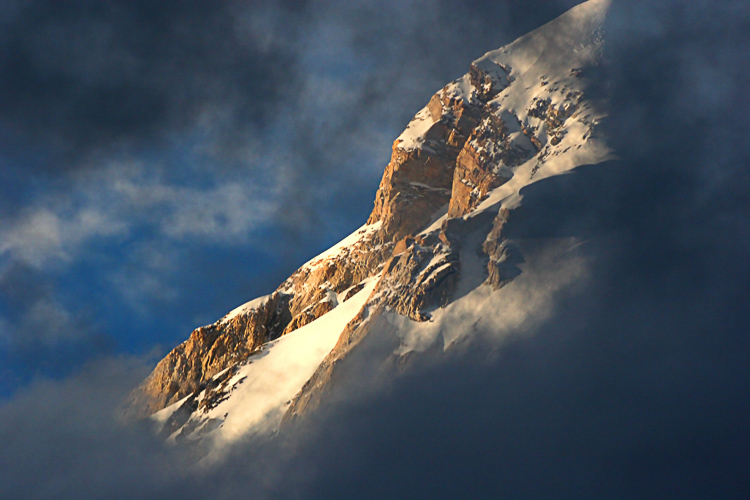
Bhutan-Jhomolhari-02

Mountains are a landscape torn apart by the steady pressure of plate tectonics and erosion, and in that drama is the potential for spectacular photography. Why then are so many images of mountains boring? Because landscape drama does not always translate well into photographic drama, without the right combination of factors. Though there are really too many of these to name, I think five are particularly important: foreground, light, color (or lack of it), juxtaposition, and perspective.

Before we dive in, I want to make it very clear that there are as many different methods for making successful images of mountains as there are mountains themselves. Not every image has to have a compelling foreground, nor does of every image have to contain dramatic color or light. These five points are suggestions and starting places, not a formula. That noted, let’s get started:

1. Foreground

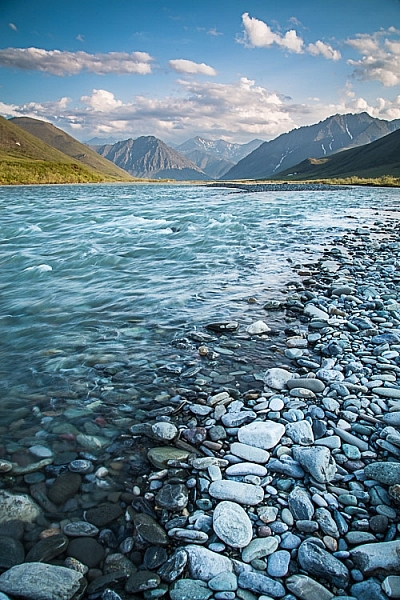
Foreground serves a number of purposes in a landscape; among these are depth and scale, setting details, and to provide a starting point for the path through the image. Foregrounds are tricky, done wrong they can make an image confusing, misleading, or unbalanced.

I’m a sucker for a good foreground. I love the way a well placed element can echo and balance features in the background, provide detail to a larger scene, and lead the viewer’s eye neatly into the photograph.
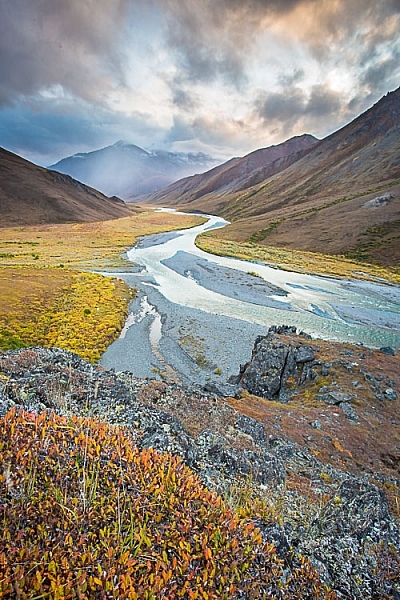
The autumn colors in the close foreground provide a good starting place for this image, guiding the eye to the winding river and then onto the stormy mountains beyond.
The autumn colors in the close foreground provide a good starting place for this image, guiding the eye to the winding river and then onto the stormy mountains beyond.

Yukon-Kluane-lake-123074-32

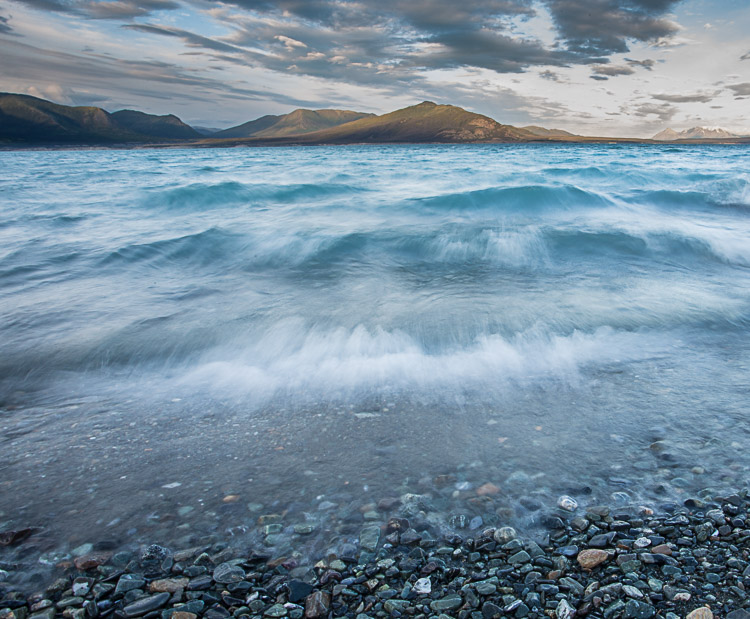
Water is a great foreground subject, and in this image of a wind-tossed lake, the water plays double duty, providing color and interest, while the texture is reminiscent of the mountains in the background.
AK-ANWR-Kongakut-WhaleMtn-1063-101

2. Light

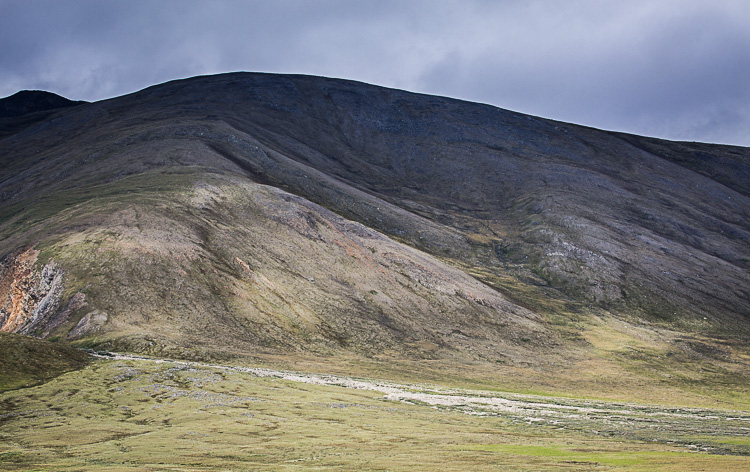
Lighting may be the single most important aspect of a successful image. While backlight, and front light can work under some circumstances, mountains thrive in side-light. Light from the side brings out the shadows, and detail in the ridges, cliffs, and rolling slopes. It provides contrast and drama.

Images of big landscapes, like mountains, rely on natural light to for illumination, so you are really at the whim of the weather. Cloudy days can flatten the light, while midday sun will drown out shadows and turn pleasing contrast into an eye-squinting mass off whites and blacks. Successful images can arise from these challenging scenarios, but low-angle side-light makes our lives as photographers so much easier.
AK-ANWR-Jago-106274-35

This detail shot of a mountainside in Alaska’s Brooks Range, despite being front-lit, retains some drama thanks to the patchy sunlight.
AK-ANWR-Kongakut-WhaleMtn-1063-274

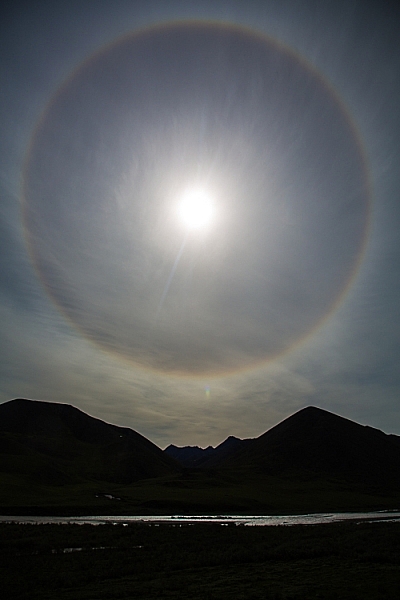
A case where backlight worked to my advantage was when the mountains, darkened to silhouette, appeared to cradle this ring around the sun (caused by high elevation clouds).
AK-DenaliNP-June2008-95

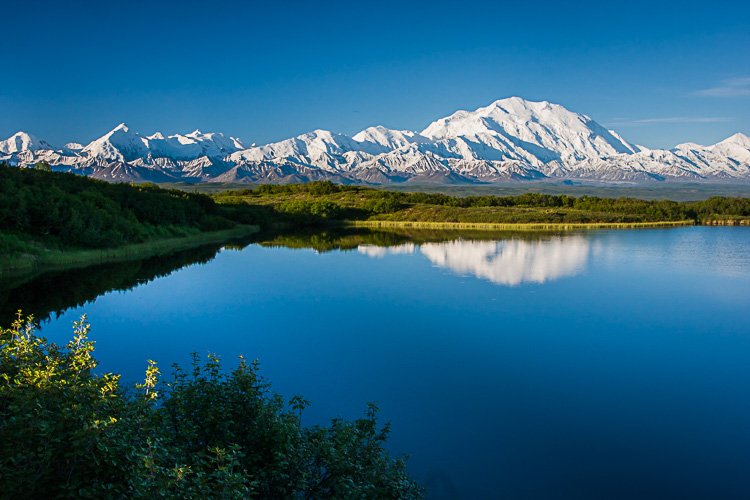
Classic side light on Denali peaks of the Alaska Range, from Reflection Pond in Denali National Park, Alaska.

3. Color (or lack of it)

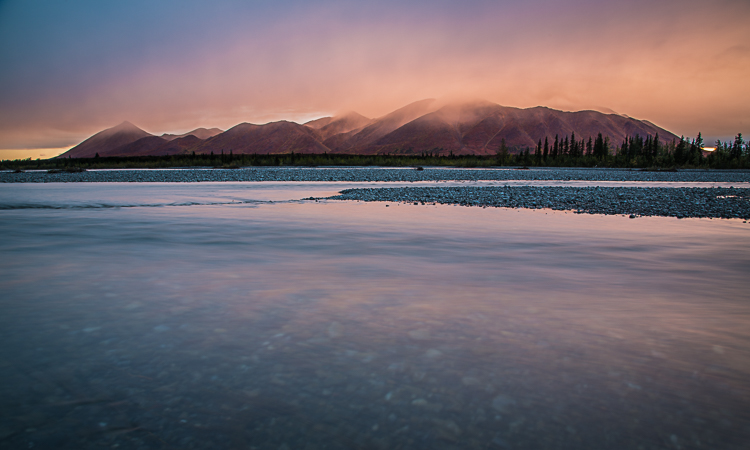
Bright colors (not artificially saturated) attract the eye. This is particularly true in images of mountains. Sunset and sunrise, colorful foregrounds, and bright blue alpine skies, will help catch and hold the gaze of a viewer.
AK-NoatakPreserve-KellyRiver-1083-320

As I think about it, this goes very tidily with #2 (Light). Good light very often equates to good color. The better the light quality, the more vivid the colors of the scene become. Get one, and you often get the other.

None of this is to say that an image has to have bright colors to be successful. Low-saturation images can be moody and brooding. Storms and winter images are two examples where colors may not be rich, but do not hurt the final image. These photos thrive on the drama of the scene, rather than their colors.
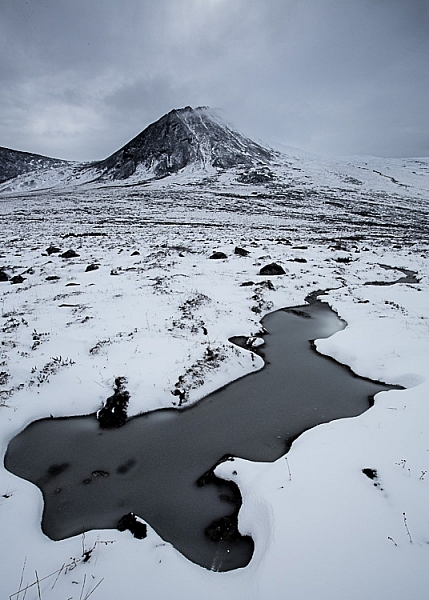
AK-ColleentoKongBP-1066-105

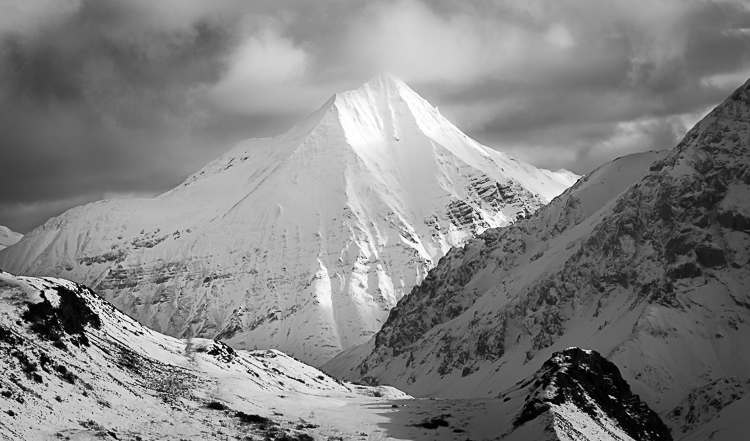
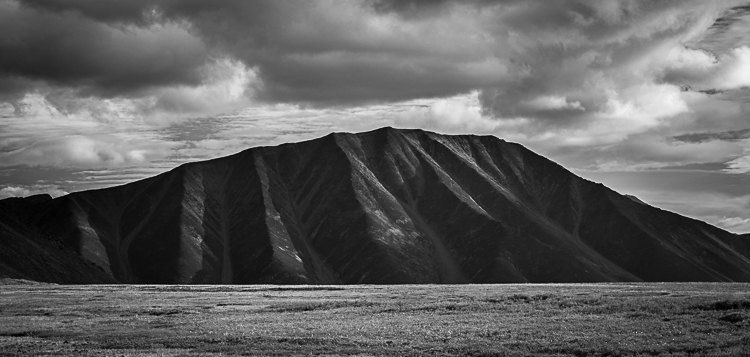
In black and white images, color is absent, and yet can result in a rich portrayal of the mountains. In such images, contrast and mood play an even more important role.

A note on Black and White: when factors like light and color are not in your favor, a black and white conversion can often be a great tool. I’ve made numerous images on flat-light days that converted well to black and white, when a true-color image would have been dull and muted.
AK-DNP-17Sep07-46

AK-GAAR-AIR-1073-1012

Bolivia-Altiplano-Feb2008-555

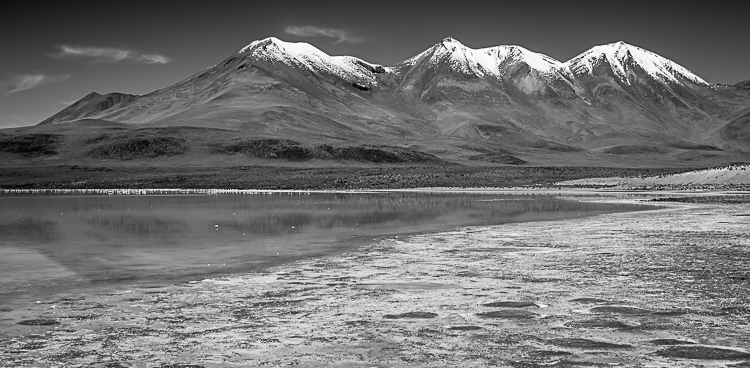
I made this image of peaks in the Bolivian Altiplano at mid-morning when the near-equitorial sunlight was hot and bright. It doesn’t look particularly good in color.
Bolivia-Altiplano-Feb2008-554

Convert the above image to black and white, however, and the photo comes alive in a way it wouldn’t otherwise be able.

4. Juxtaposition

Juxtaposition is defined as: “two things placed together with contrasting effect”. In photography, that contrast can be literal; light versus dark contrast, colors (bright versus subtle), tonality (hot or cool), or, perhaps most effectively, the subject matter.

All of these are important parts of mountain photography. Contrast, I noted earlier in this article, but tonality and subject matter both warrant some attention.

Juxtaposed color tones combine in interesting ways. Mountain scenes, particularly from places like the Rockies, Cascades, or Alaska, tend to be dominated by cool tones; blue skies, green tundra and forest, glacial streams, or clear blue lakes. These cool-colored scenes often benefit when warm tones, like yellow, red, or pink, are integrated into the scene. Often that warm tone is best presented as a flash of color, a setting sun, a wildflower, the bright jacket of a hiker, rather than as an equal to the cool tones. When the two are equivalent, your brain has a hard time sorting out which to pay attention to, and the pleasing juxtaposition becomes a tangle of clashing color.
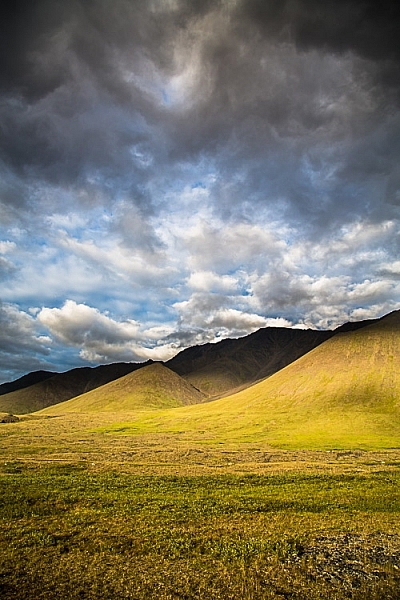
AK-GAAR-AIR-1073-1028

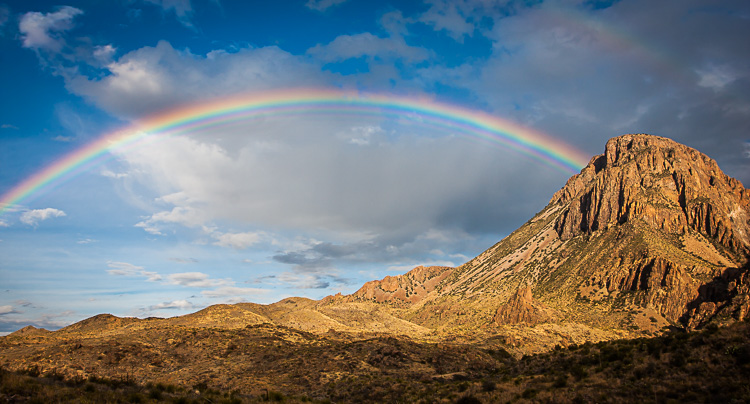
Subject juxtaposition is where a landscape images comes alive. When it comes to mountains, the potential for such contrasts are many. So many in fact, that it’s hard to mention just a few. Some, like the image below of the rainbow over the desert mountains of Big Bend National Park, have obvious subject juxtaposition (rain and dry desert rock). But the same image also has contrasts in shapes and texture (the jagged rocks and and smooth curve of the rainbow for example). All of these combine nicely to provide interest.
TX-BigBendNP-Jan2009-735

AK-CanningMarshFork-1066-49

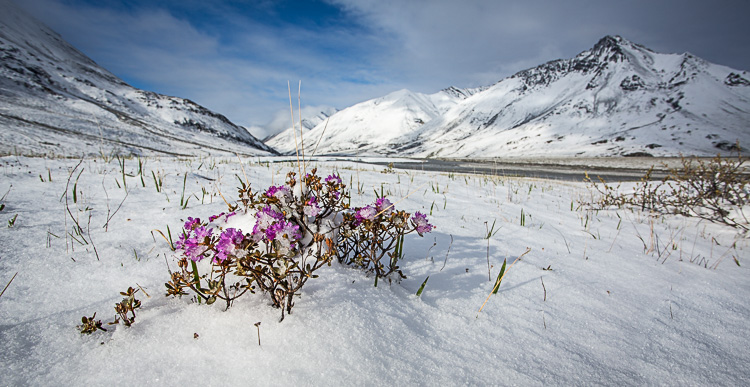
Snow and flowers is an obvious juxtaposition in this image of the aftermath of a June snowstorm in the Arctic National Wildlife Refuge, Alaska.

5. Perspective

The final aspect of mountain photography I want to discuss is perspective. Which is to say, the perspective from which you make the image. For simplicity sake, I’ll break this down into three divisions: bottom, middle, and top. Each of these greatly impacts not just the appearance of the final image, but also its mood and feel.

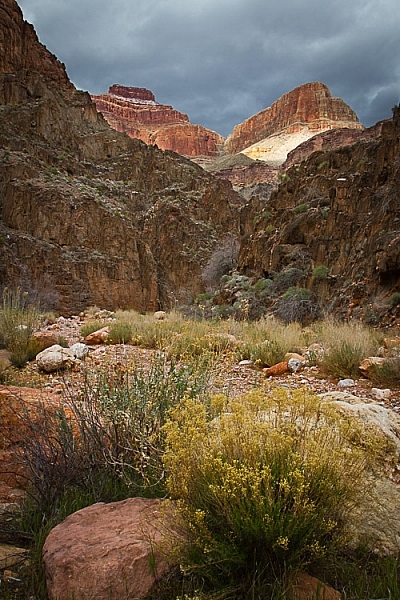
Photographs of mountains made from a valley bottom looking up, make the mountains appear large and imposing. These low shots provide space for an interesting foreground, and many classic landscapes have been made from this perspective. Though effective, there are drawbacks to shooting from the valley bottom. The low perspective means that the view is limited; there are no seas of mountain peaks spreading to the horizon. Light too is often difficult. The bottom of the valley is the last place to gain sunlight in the morning, and the first to lose it in the evening, so balancing light makes exposure tricky, and by the time the landscape is evenly lit, the sweet light of dawn or dusk is long past.
AZ-GCNP-FebMar12-160

Exposure was tricky as I tried to capture the storm light on the Red Wall of the Grand Canyon high above my camp along the Colorado River.

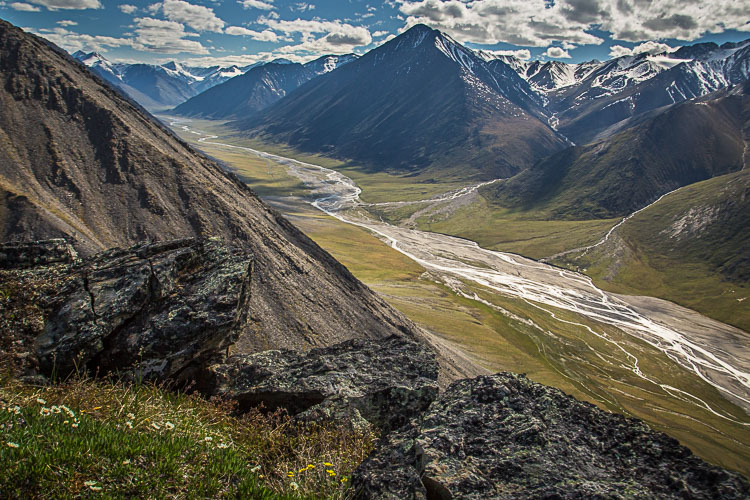
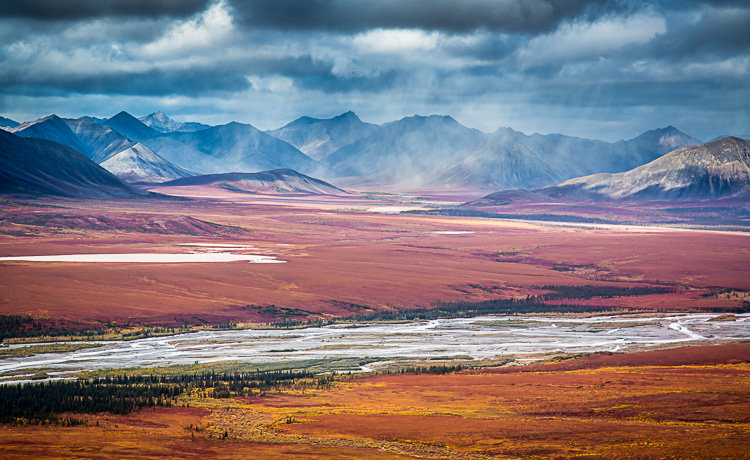
Mid-mountain shots can be spectacular, providing views both below and above. This perspective is one of my favorites, allowing for a lot of depth in the landscape, while maintaining the size and drama of the mountains.
AK-ANWR-Jago-106244-14

AK-NoatakPreserve-KellyRiver-1083-469

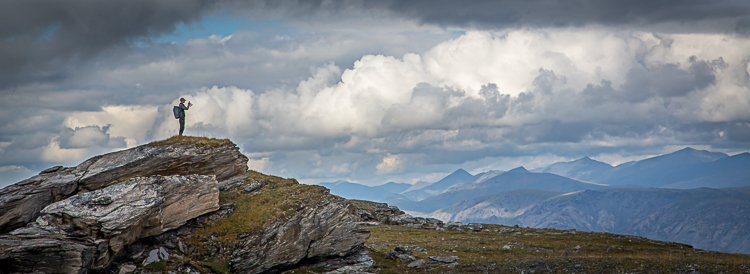
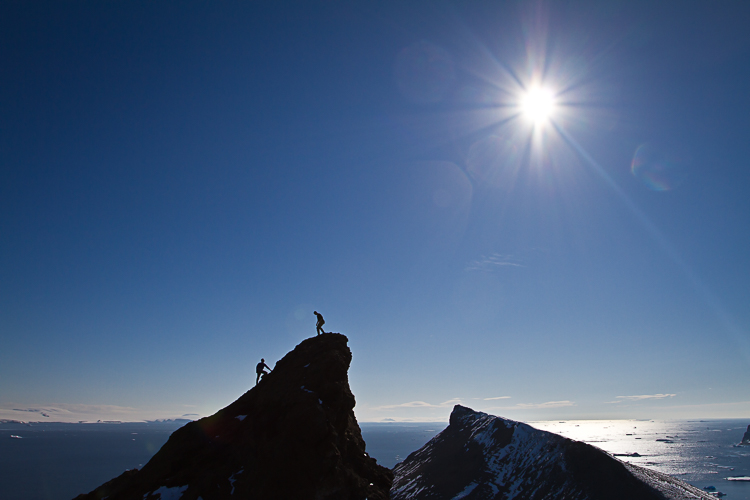
Mountaintops are tricky. Images made from the summit of peaks tend to make the surrounding landscape look small. I’ve taken photographs from peaks in which all the mountains look like rocky waves, rather than the towering summits they are. You can make up for this by adding a human to the shot, which provides scale. You remove the focus from the mountains, and place it on the human experience within them. It changes the image, making it less of a landscape, and more of a portrait or action shot, but the results can be effective.
AK-GAAR-Alatna-Noatak-1083-347

A hiker atop a mountaintop in Gates of the Arctic National Park, Alaska becomes the subject in this image.
ANT-16Jan10-DevilsIsl-11

Without the climbers nearing the top of this peak in Antarctica, there wouldn’t be much to look at in this image.

Conclusion

One of the great joys of photographing mountains, is simply being in the mountains. A camera is great excuse to go for a hike, or float a mountain river. But, the camera can also be a tool for experiencing the place more deeply. It can make you appreciate how the mountains look in various light and seasons, and from different angles. In turn that appreciation can lead to better images. Now go out and explore.

This week we are doing a series of articles to help you do better nature photography. See previous articles here:

  • 3 Habits Every Outdoor Photographer Should Develop to Avoid Missing Shots
  • 5 Tips for Better Nature Photography
  • 27 Serene Images of the Natural World
  • Weekly Photography Challenge – Nature
  • 10 Ideas for Photographing Nature in your Backyard
  • 6 Tips for Capturing Character and Personality in Wildlife Photography
  • 5 Tips for Setting the Focus in Your Landscape Photography
  • 7 Tips for Better Marine Wildlife Photography
  • Tips for Processing Landscape Photos – from Basic Edits to Artistic Interpretation

googletag.cmd.push(function() {
tablet_slots.push( googletag.defineSlot( “/1005424/_dPSv4_tab-all-article-bottom_(300×250)”, [300, 250], “pb-ad-78623” ).addService( googletag.pubads() ) ); } );

googletag.cmd.push(function() {
mobile_slots.push( googletag.defineSlot( “/1005424/_dPSv4_mob-all-article-bottom_(300×250)”, [300, 250], “pb-ad-78158” ).addService( googletag.pubads() ) ); } );

The post 5 Tips for Avoiding Boring Photos of Mountains by David Shaw appeared first on Digital Photography School.


Digital Photography School

 
Comments Off on 5 Tips for Avoiding Boring Photos of Mountains

Posted in Photography


Street Photography in Tokyo with Dave Powell

21 Jul

Today we came across this great little video of a photographer that we’ve admired for some time (and who has even written a post for us here at dPS). It was produced by SmugMug and features Dave Powell of the Shoot Tokyo photo blog.

In it Dave shares a little of how he got into photography, why he loves doing it in Tokyo, but also gives a glimpse into how he sets up his shots.

Check out Dave’s guest post on dPS which has some great advice in it too – 10 Things I Learnt from Daily Shooting.

googletag.cmd.push(function() {
tablet_slots.push( googletag.defineSlot( “/1005424/_dPSv4_tab-all-article-bottom_(300×250)”, [300, 250], “pb-ad-78623” ).addService( googletag.pubads() ) ); } );

googletag.cmd.push(function() {
mobile_slots.push( googletag.defineSlot( “/1005424/_dPSv4_mob-all-article-bottom_(300×250)”, [300, 250], “pb-ad-78158” ).addService( googletag.pubads() ) ); } );

The post Street Photography in Tokyo with Dave Powell by Darren Rowse appeared first on Digital Photography School.


Digital Photography School

 
Comments Off on Street Photography in Tokyo with Dave Powell

Posted in Photography


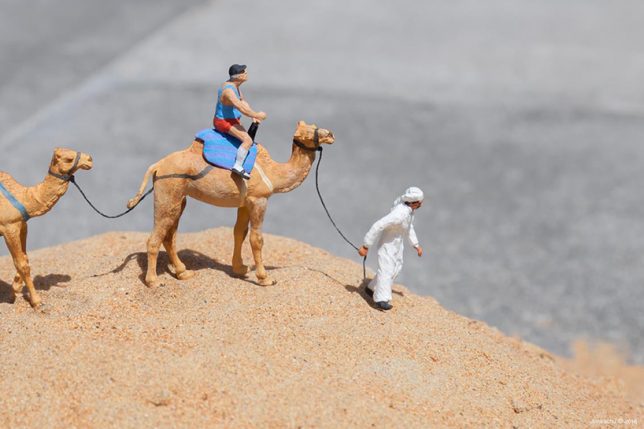
Tiny in Dubai: New Miniature Art Installations by Slinkachu

21 Jul

[ By SA Rogers in Art & Installation & Sound. ]

slinkachu 7

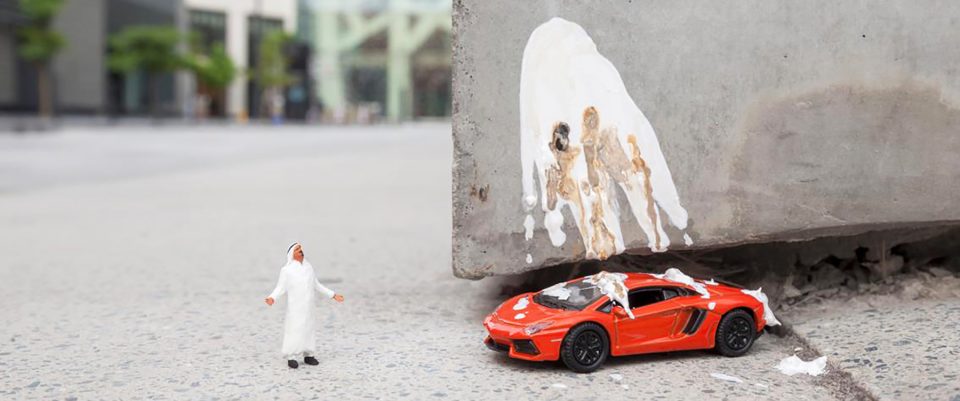
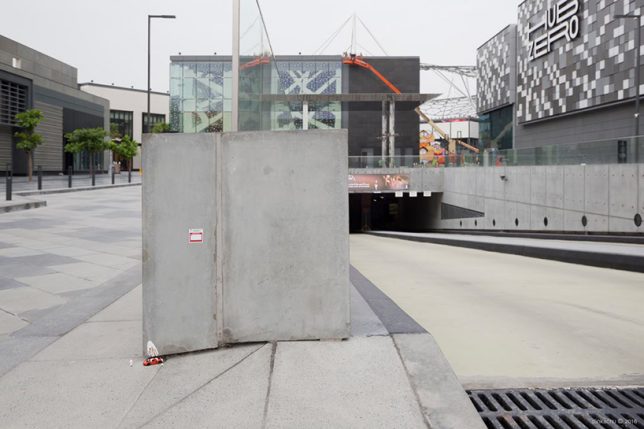
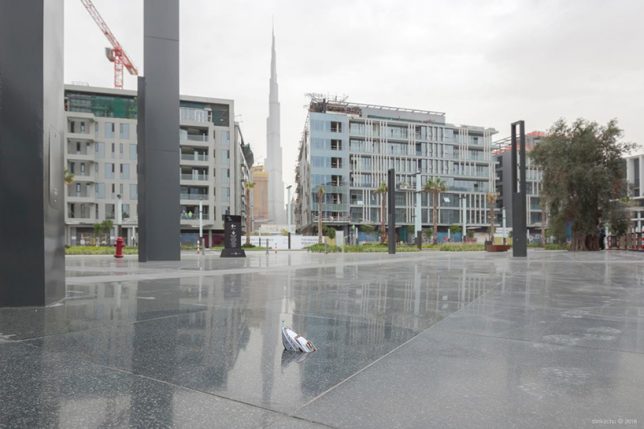
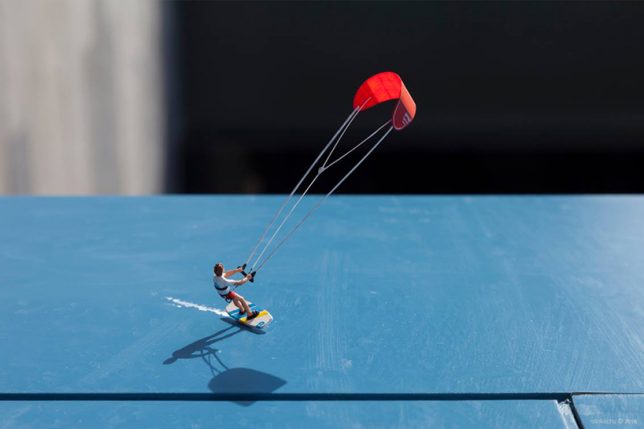
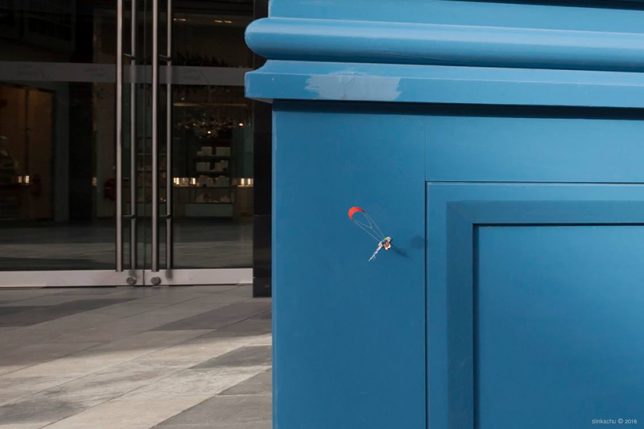
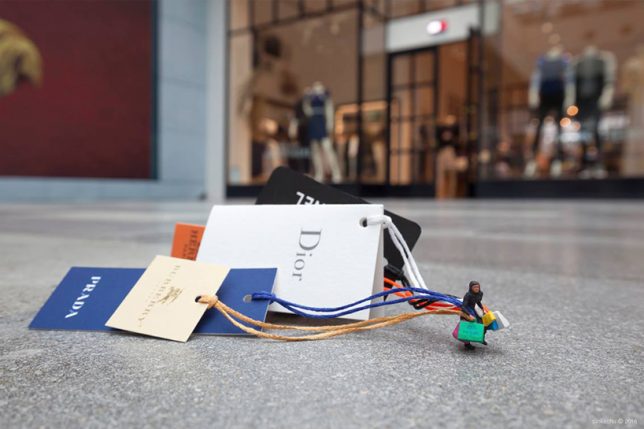
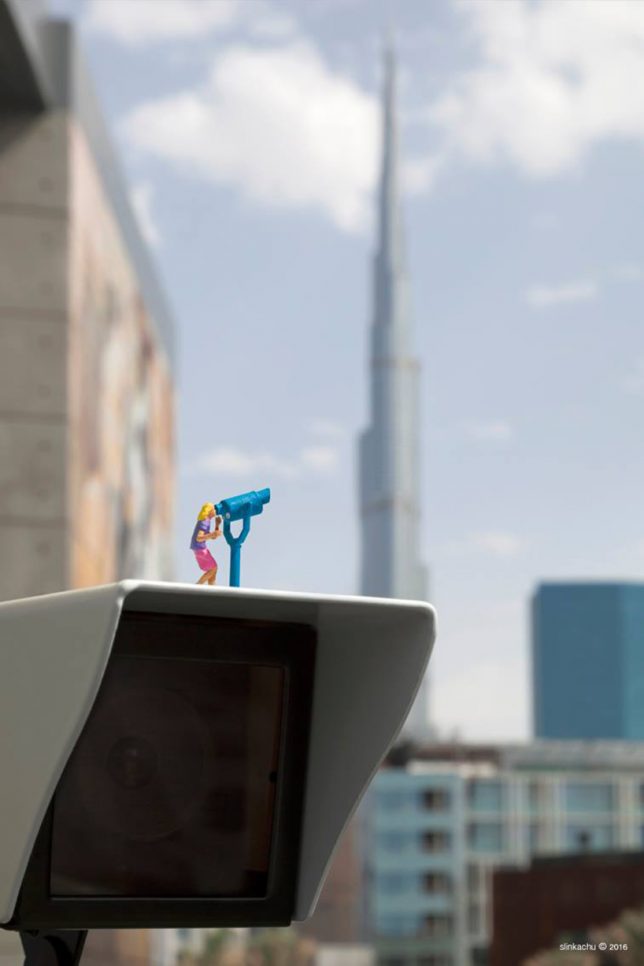
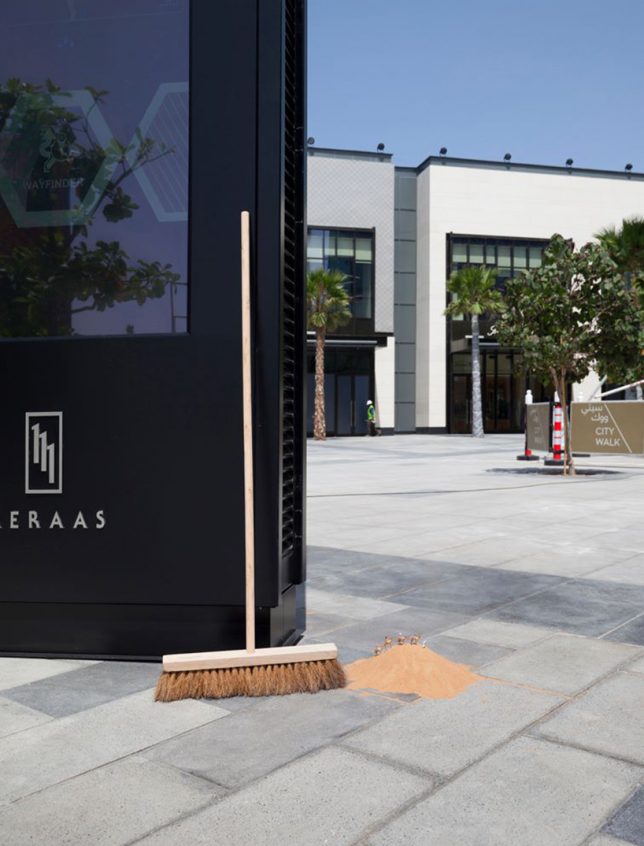
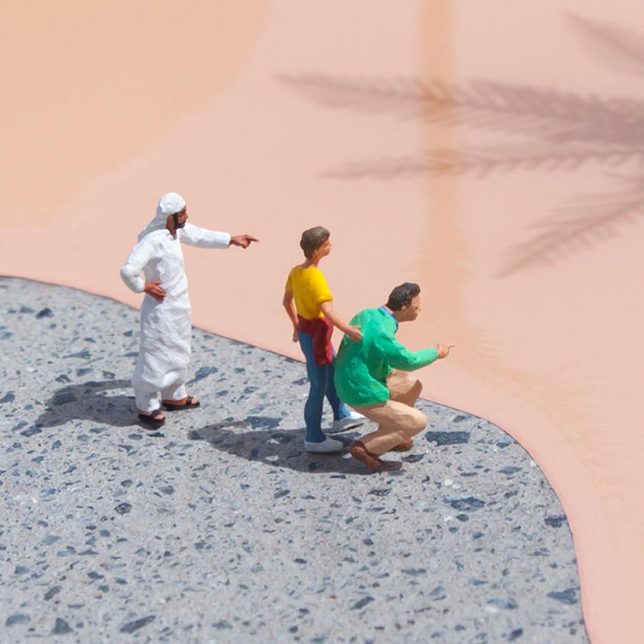
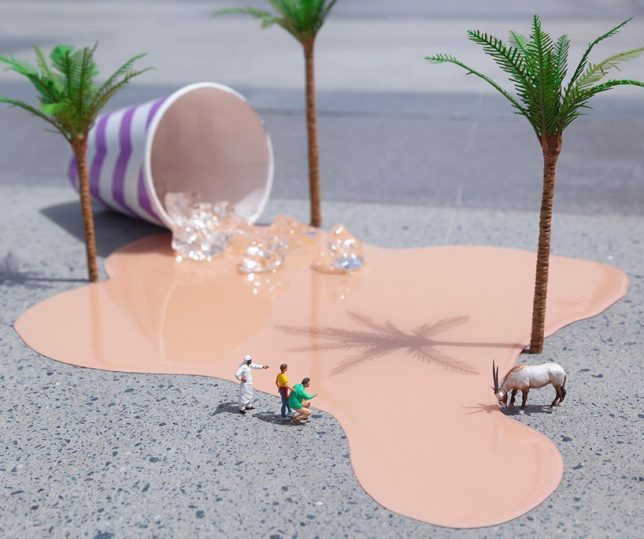
Last time we caught up with miniaturist Slinkachu, the UK-based artist had placed his little people on the streets of Paris, and now he’s brought his signature blink-and-you’ll-miss-them scenes to the United Arab Emirates. Tailoring each tiny tableau to the setting, Slinkachu has captured a series of humorous moments full of ostentatious wealth, surveillance, camels, tourists doing stupid things and other elements that are quintessentially Dubai.

slinkachu 8

slinkachu 1

slinkachu 2

The new series of 10 miniature installations appeared on the streets as part of Dubai Walls, the first outdoor urban art show in the UAE. Slinkachu, “abandoning little people in the streets since 2006,” is one of sixteen artists participating in the event, which also features Etam Cru, ROA and Eine.

slinkachu 3

slinkachu 4

slinkachu 5

Slinkachu customizes miniature figurines, hand-paints them and then creates little scenes in public places, often right on the sidewalk in plain view of passersby. They end up becoming temporary art, often swept up almost immediately and thrown away, or taken by people who want to keep them for themselves. Since these were created specifically for an art fair, they likely had a longer run in the streets than usual.

slinkachu 6

slinkachu 9

slinkachu 10

“The ‘Little People Project’ started in 2006,” says the artist. “It involves the remodeling and painting of miniature model train set characters, which I then place, photograph and leave on the street. It is both a street art installation project and a photography project. The street-based side of my work plays with the notion of surprise and I am to encourage city-dwellers to be more aware of their surroundings.”

slinkachu 11

slinkachu 12

slinkachu 13

“The scenes I set up, more evident through the photography and the titles I give these scenes, aim to reflect the loneliness and melancholy of living in a big city, almost being lost and overwhelmed. But underneath this, there is always some humor. I want people to be able to sympathize with the tiny people in my works.”

Share on Facebook


[ By SA Rogers in Art & Installation & Sound. ]

[ WebUrbanist | Archives | Galleries | Privacy | TOS ]


WebUrbanist

 
Comments Off on Tiny in Dubai: New Miniature Art Installations by Slinkachu

Posted in Creativity


Slow motion video shows glass shattering at 343,000 fps

21 Jul

YouTube channel ‘The Slow Mo Guys’ has posted a new video showcasing its fastest frame rate content to date: 343,915 fps, to be precise. The duo behind the channel, Dan and Gav, used a Phantom v2511 camera to record glass Pyrex dishes shattering with speeds starting at 28,546fps. At its fastest frame rate, the camera captured the glass shattering at a rate 13,756 times slower than real time.

At the fastest frame rate, the Phantom camera recorded for a duration of 5.1 seconds and during that time captured 19.5 hours’ worth of video footage. 

If you’re having trouble sleeping, you can check out the full 19+ hour slow-motion shatter video here. 

Via: Bokeh

Articles: Digital Photography Review (dpreview.com)

 
Comments Off on Slow motion video shows glass shattering at 343,000 fps

Posted in Uncategorized


SmugMug Films: Point, Click, ShootTokyo

21 Jul
SmugMug’s latest film features street photographer Dave Powell, the man behind the popular blog ‘Shoot Tokyo’. In the video, Powell takes us on a tour through the streets of one of the most visually distinctive cities on earth. In an accompanying interview, Powell explains why he moved to Tokyo, and what it is about the city that keeps him inspired as a photographer. 

Check out the latest video above and subscribe to the SmugMug Films YouTube channel to get first access to each new episode!

Articles: Digital Photography Review (dpreview.com)

 
Comments Off on SmugMug Films: Point, Click, ShootTokyo

Posted in Uncategorized


SLIK introduces SLIK LITE tripod line

21 Jul

Tripod maker SLIK has introduced its new LITE series. The new models feature a ball head and come in a variety of sizes. Both aluminum and carbon fiber versions are available. All models feature a detachable LED flashlight in the bottom of the center column which should make it easier to find and setup your equipment in the dark.

The Rapid Flip Mechanism (RFM) comes with a newly designed lever which makes locking and unlocking of the tripod legs faster and easier than on previous models. It also allows for flipping of the legs by 180 degrees, offering easier storage and improved portability.

“We are extremely excited about the design of the LITE series […] SLIK’s long history allows it to spot trends in camera support and improve on those trends, bringing better designed tripods to photographers. The new easier to use Rapid Flip Mechanism and LED Flashlight in the center column make the LITE series the best travel tripods available.”

Michael Burnham – SLIK Marketing Manager.

The SLIK LITE tripods are available now at slikusa.com and at photographic retailers. Pricing ranges from $ 99.95 for the 40-inch aluminum model LITE-AL-420S to $ 329.95 for the 70-inch carbon fiber model LITE CF-422.

SLIK USA Introduces New Tripod Line: The SLIK LITE Series

HUNTINGTON BEACH, Calif., July 20, 2016 /PRNewswire/ — SLIK USA, manufacturer of tripods for various uses, is launching its latest line of tripods for photographers: The SLIK LITE Series. This new line of tripods, which is available now at slikusa.com and other retailers, brings to the table a variety of innovations,

The LITE Series features a detachable LED light, which is an industry first. It was designed to help photographers find their gear in darker settings. No more fumbling around for a flashlight or your iPhone. The Rapid Flip Mechanism (RFM)

SLIK USA, Inc. is a leading manufacturer of high performance tripods for all levels of photographers. SLIK Tripods was founded in Japan in 1948 and for the past 68 years has been an industry leader in camera support innovation. Over that time, SLIK products have received numerous design awards. The USA imprint of SLIK has brought this technology to the US and begun to expand its brand.

Articles: Digital Photography Review (dpreview.com)

 
Comments Off on SLIK introduces SLIK LITE tripod line

Posted in Uncategorized


We’re Giving Away a Photo Drone!

21 Jul

It’s time to take your photography to new heights, cuz we’re giving away a drone!

Yup, a Phantom 2 Vision+ Drone with a built-in 14MP, HD, wide-angle camera.

We’ve got five ways to enter. So, enter! Five times.

(…)
Read the rest of We’re Giving Away a Photo Drone! (10 words)


© laurel for Photojojo, 2016. |
Permalink |
No comment |
Add to
del.icio.us

Post tags:


Photojojo

 
Comments Off on We’re Giving Away a Photo Drone!

Posted in Equipment


8 Quick Tips to Produce Better Forest Photography

21 Jul

As my nation (USA) celebrates 100 years of the National Park Service, renewed interest in our untouched landscapes is growing, and that’s a great thing. Even with the selfie-crazed tourists crowding our parks and national monuments, it’s a positive point that more of us are getting out into the great outdoors and connecting with this land of ours.

A side benefit of this movement is a renewed interest in nature and the outdoors in general. Even 58 national parks in the U.S., it may not be possible for all of us to get to them as often as we’d like. Luckily, we can enjoy nature in our own backyards, as there are state parks, forests, and trails for us to explore almost everywhere you turn in America (and likely wherever you live also).

040916_-2

As with any environment, forest photography brings its own unique challenges to the table, but at the same time offers an almost unlimited array of subject matter, due to the variety of flora and fauna in these locations. Add in the side benefits of experiencing the fresh air and sunlight of the outdoors (which our bodies were built for), and you have all the reasons you need to snap some photos in the woods!

Let’s cover a few tips and recommendations when heading for the trails, then get out there and enjoy!

1 – Safety first

As with any outdoor photography project, you need to consider the environment you’re going into. Be sure to bring a camera bag or backpack to store items in, and to keep your extra gear and accessories out of the weather. Items to bring could include snacks, a compass, a map (a topographical map is always best if available), sunscreen, bug spray and a dry towel or rag to remove moisture, dirt, or rain from any exposed gear.

2 – Gear up

As always with shooting landscapes, a tripod is a must. Both wide-angle and narrower primes lenses, such as a 50mm can come in handy. I personally use a 24mm prime lens to capture wider forest shots, to get many trees in the frame at once, but then switch to my 50mm to get closeups of things like leaves, insects, or flowers.

HauntedWoods

Though there are cases for and against using them, a clear ultraviolet (UV) filter can be useful to keep dirt and grime off of your lens element. I don’t use them myself, and find if I’m careful with my lenses I can keep them clean without needing a protective filter. Always use a microfiber cloth for cleaning your lenses, not rags or towels of any type, especially if you take one for other purposes while you’re out in the forest.

Finally, a polarizing filter can come in handy, as it will help cut reflections in any body of water such as a river or stream, and also deepen and enhance colors in the scene. Keep in mind that you’ll be reducing the amount of light coming into your camera when using a filter like this, so plan accordingly (just bring your tripod).

3 – When to get out there

As outdoor or natural light photographers, we know that the best times to shoot are early mornings or late evenings, and to do our napping at noon. But forest environments are one of those places that can still work well during bright, more direct sunlight.

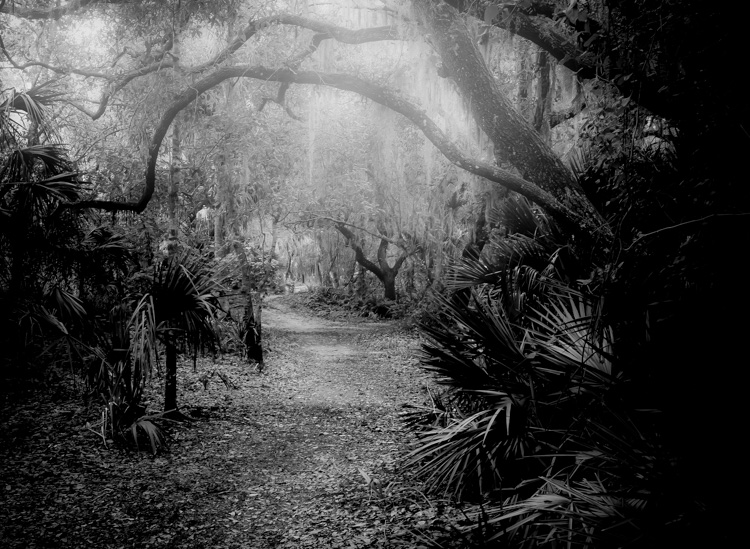
This is due to the canopy above that you’ll usually have, which filters out some of the harsh light, and gives you more of a lighting situation you’d expect to find at the edges of the day. As in many situations, if you can’t avoid the light from directly overhead, you can always switch over to black and white, and take advantage of the sharper shadow edges, and higher contrast.

062814_

With that being said, your subject will almost always be more magical if you head out during the early hours of the morning, or late in the evening. If you’re near water, you may experience some ground fog, which can add serious mood to your images, and the sunlight will be dramatically cooler or warmer than in the middle of the day, depending on what time you decide to go.

In short, plan your excursion for the first two or three hours after sunrise, or before sunset, for the best results.

4 – Try vertical orientation

Primeval

Landscape shooters are used to primarily using horizontal or landscape orientation for the majority of their images, but when you’re in the forest, portrait orientation can sometimes work better. Since you’re dealing with tall trees as your primary environment, wide-angle shots can capture more of a scene when shooting vertically, and give the image a sense of grandiose scale and height.

5 – Color contrast is key

One drawback to shooting in a forest environment (unless you’re in the northeast United States during the fall, or any area where foliage changes near the end of the year) is the lack of color contrast. The majority of your environment will most likely be composed of green leaves and brown tree trunks.

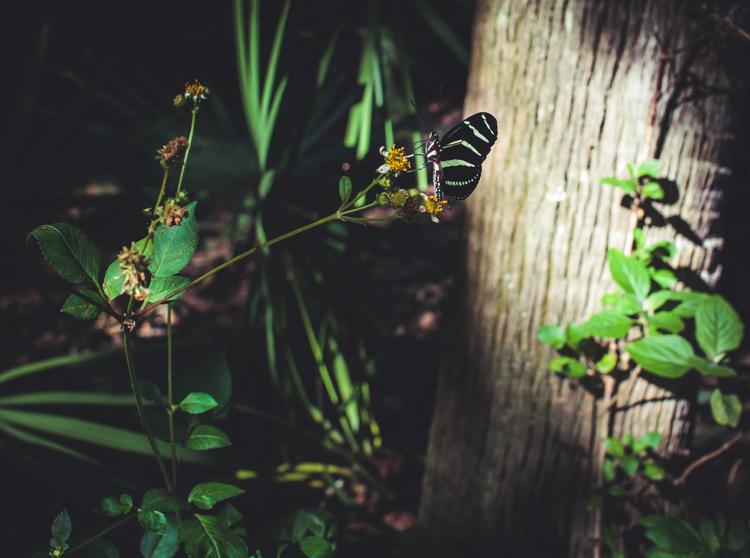
Flora can help break up the monotony by adding color to the scene. Look for patches of brightly colored flowers of yellow or red; even white flowers can change the contrast profile within the frame.

040916_

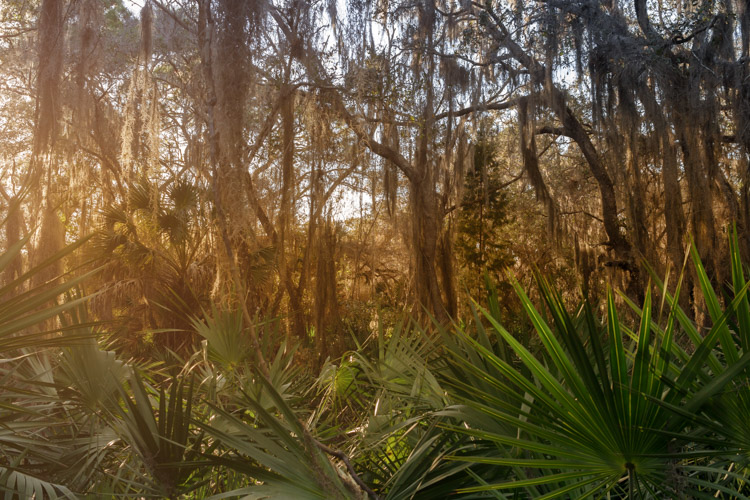
Playing the sun off of the environment can also add color, without needing a physical object. Golden-hour light and sun glare placed in your photo by composition, can inject the warmth of oranges and reds, and give your image a more vibrant look.

6 – Use Black and White

Sometimes when you’re shooting, nothing seems right. The light isn’t hitting the way you’d like, colors are off, or you just don’t get a sense of drama from your photo. This can happen in a forest environment, sometimes due to the general consistency of color from scene to scene; a lot of greens and browns can make it hard to highlight a subject.

Shooting in black and white (or processing the images later as monochrome) can let you concentrate on what the light is doing in your scene, by removing the element of color that can sometimes distract you from how varying levels of light affect the image.

Forest

If you’re going to shoot the photo itself in black and white in-camera, be sure to switch over to RAW + JPEG in your camera settings, that way you’ll have an unprocessed RAW file and a black and white JPEG for each frame you take. Or simply shoot in RAW mode so you’ll still have the full range of color data, in case you’re not happy with the results. But you’re shooting in RAW anyway right?

7 – Post-Processing the results

Photos taken in wooded areas benefit from many of the same post-processing workflow you’d normally do with other images, but there are some additional things you can do to give these images a bit more pop.

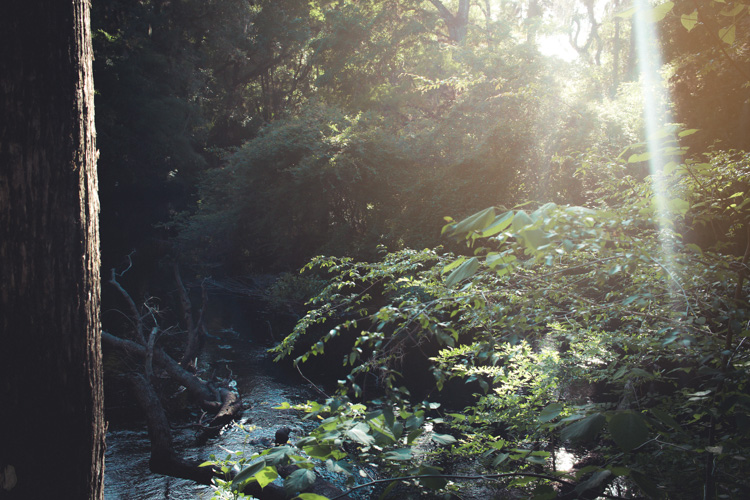
Lighting tends to be a little more dramatic in the forest, since you usually have a canopy of trees to filter some of the sun, and can result in gorgeous rays hitting the forest floor, or leaves and plants highlighted by shafts of light. You can enhance these by using a bit of contrast, specifically on these areas. You can also add a bit of vibrance to the image overall, and play around with the hue/saturation of the individual colors of green and brown, to bring out the natural feel of the shot.

040916_-3

For my own images, I like to soften the image overall via the Clarity slider in Lightroom (to give it a dreamy or magical feel), and then target the subject or other important areas of the photo and add clarity and sharpness back in with a local adjustment (+Clarity plus -Clarity balances out, for example:  -30 Clarity plus +50 Clarity equals net +20 Clarity on the area targeted, use the Adjustment brush tool to apply this).

8 – Leave the forest as you found it

I love the planet we’re on, and it angers me to no end when I see evidence of people not caring about the effect they have on the natural surroundings. Beer can rings and cigarette butts at beaches, plastic bags on roads near the forest, and the list goes on.

We should consider it a privilege to document this incredible world we live in, and the most important thing we can do is also the simplest; leave the area as you found it. This means many things including; not littering the woods or forest with any traces of man-made products such as trash, as well as not interfering with nature by getting too close to wildlife, or disturbing sensitive plants or trees.

030616_

Little things like this may seem trivial, but if we all participate in this practice, we could have a positive effect on our natural world and keep it a little more serene for generations to come. As photographers, we have an even greater responsibility to be conscious about what impact our actions might have on our environment.

Conclusion

Most of us have access to forest areas, fortunately, so it’s easy to try out this kind of photography. While this type of nature photography presents a few challenges, as long as you’re prepared with the right gear and a little knowledge, it can be an enjoyable experience, will help connect you with our natural world, and maybe even enlighten you a bit.

Do you have any stories or images of your adventures in the wild woods or forest that you’d like to share? Engage with us by commenting below, and get out there and have fun!

This week we are doing a series of articles to help you do better nature photography. See previous articles here:

  • 3 Habits Every Outdoor Photographer Should Develop to Avoid Missing Shots
  • 5 Tips for Better Nature Photography
  • 27 Serene Images of the Natural World
  • Weekly Photography Challenge – Nature
  • 10 Ideas for Photographing Nature in your Backyard
  • 6 Tips for Capturing Character and Personality in Wildlife Photography
  • 5 Tips for Setting the Focus in Your Landscape Photography
  • 7 Tips for Better Marine Wildlife Photography
  • Tips for Processing Landscape Photos – from Basic Edits to Artistic Interpretation
  • 5 Tips for Avoiding Boring Photos of Mountains

googletag.cmd.push(function() {
tablet_slots.push( googletag.defineSlot( “/1005424/_dPSv4_tab-all-article-bottom_(300×250)”, [300, 250], “pb-ad-78623” ).addService( googletag.pubads() ) ); } );

googletag.cmd.push(function() {
mobile_slots.push( googletag.defineSlot( “/1005424/_dPSv4_mob-all-article-bottom_(300×250)”, [300, 250], “pb-ad-78158” ).addService( googletag.pubads() ) ); } );

The post 8 Quick Tips to Produce Better Forest Photography by Tim Gilbreath appeared first on Digital Photography School.


Digital Photography School

 
Comments Off on 8 Quick Tips to Produce Better Forest Photography

Posted in Photography