RSS
 

Archive for July, 2016

DEAL: Save 71% on our Complete Portraits Pack of eBooks

08 Jul

July is here, and do you know what that means?

It’s time for our dPS Summer Sale where for the next 7 days we’re going to be sharing 7 amazing deals on training resources for photographers!

While it may not be summer for all of us right now, we can guarantee the 7 deals we have lined up for you over the next 7 days are HOT.

Deal #1: 71% Off The Complete Portraits Pack

Photography deal portraits pack

If you want to transform your dull and lifeless portraits into works of art… whether you’re a beginner, enthusiast, or pro – this deals for you.

dSP favourite and world class photographer, Gina Milicia shares everything and more about portrait photography in 5 in-depth ebooks.

Get this ultra comprehensive Portraits pack for $ 29.

For just $ 29 (a staggering 71% off the regular price) you’ll learn how to take portraits with soul.

Here’s what you’ll get from one of the best in the biz with these exclusive dSP guides:

  • Portraits: Making the Shot – 84 pages of practical tips for bringing your portraits to life
  • Portraits: Lighting the Shot – 130 pages of the secrets to beautiful portrait lighting
  • Portraits: Striking the Pose – 119 pages and your go-to guide of natural posing positions
  • Portraits: After the Shot – 139 pages on master portrait post production and workflow
  • Fast FLASH For Portrait Perfection – 125 pages of Flash techniques & lighting set ups

These ebooks regularly sell for $ 19.99 each (dPS readers rave about them!) but when you buy today you’ll only pay $ 7 per ebook!

But here’s the deal – The Complete Portraits Pack only lasts for 24 hours.

So if you’ve ever been disappointed that your portraits didn’t capture the true spirit of your subject… or lacks the WOW factor… don’t miss out on this incredible deal.

Get your 5 ebooks today – they’re crammed with practical, easy to follow, step-by-step instructions, tips and tricks of portrait photography.

Not only is Gina Milicia one of the best photographers in the business – she’s one of the best teachers!

Subscribe to Get All 7 Deals the Moment they are Released

If you’re looking for more photography training deals you can subscribe over on our Summer Sale page here to get notified the moment all of the next 6 days of deals go live. There are some great ones still to come!

googletag.cmd.push(function() {
tablet_slots.push( googletag.defineSlot( “/1005424/_dPSv4_tab-all-article-bottom_(300×250)”, [300, 250], “pb-ad-78623” ).addService( googletag.pubads() ) ); } );

googletag.cmd.push(function() {
mobile_slots.push( googletag.defineSlot( “/1005424/_dPSv4_mob-all-article-bottom_(300×250)”, [300, 250], “pb-ad-78158” ).addService( googletag.pubads() ) ); } );

The post DEAL: Save 71% on our Complete Portraits Pack of eBooks by Darren Rowse appeared first on Digital Photography School.


Digital Photography School

 
Comments Off on DEAL: Save 71% on our Complete Portraits Pack of eBooks

Posted in Photography


3 Quick Photoshop Edits You Need to Know

08 Jul

For many photographers, spending time behind a computer editing images, can be annoying. I personally enjoy the editing process, but I often hear photographers saying that they wish they didn’t have to spend time editing images. Of course, the image editing process has become the photographer’s responsibility since the advent of digital photography. In the past, the editing process was the domain of the lab that developed and printed your roll of film.

If you are one of the photographers that does not like the idea of spending hours editing your images, then this article might help you get out of the editing blues.
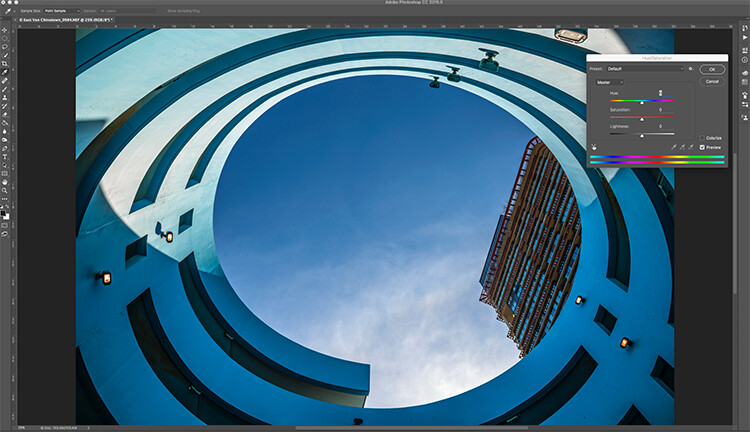
Image open in Photoshop with the Hue and Saturation tool open

Image open in Photoshop with the Hue and Saturation tool open

Of course, you will always need to spend some time editing, but you don’t want to be spend hours trying to make an image  look good. There is a quick way to get some good results from your images in Photoshop. But, before we talk about that, first there are some things that you need to do in-camera, which will save you time in post-production.

  1. Make sure your lenses are clean, you don’t want to spend time cleaning up dust spots on your images.
  2. Make sure your sensor is clean, get your sensor cleaned when you start to notice sensor spots on your images.
  3. Use a tripod, straightening images in Photoshop or Lightroom wastes your time.
  4. Make sure your image is in focus and sharp. Zoom in on your LCD screen to be sure, if not, retake the shot.

From there, you can be sure that your images are coming out of your camera in an edit-ready state. You don’t want to spend your time fixing photography mistakes made in-camera. The main goal with image editing is to take your good images, and make them look spectacular. So, here are some very quick edits you can do to your images (assuming the image is in good shape) in Photoshop, and in turn, spend more time behind the camera.

Quick Edit #1 – Levels or Curves?

This is something of an ongoing debate among photographers. Some have a preference for one or the other, the reality is that they are very different tools, and you can (and should) use both.
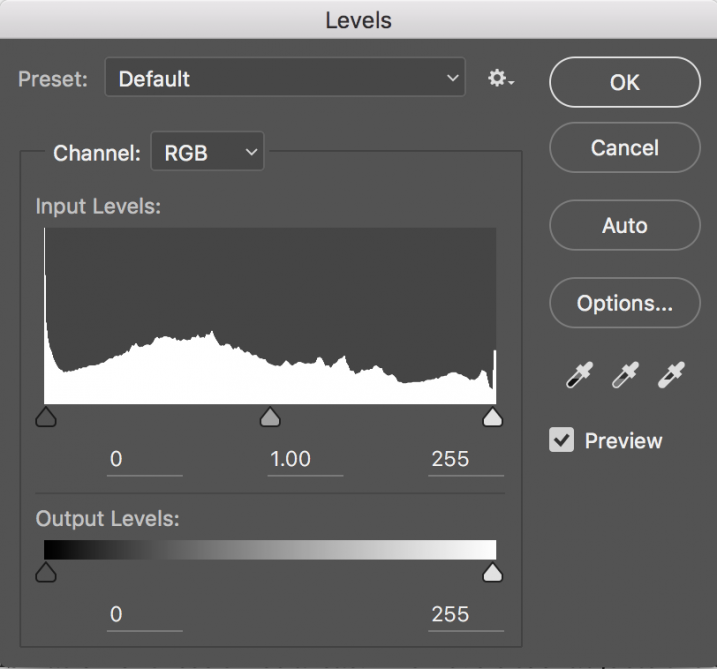
Screen Shot 2016-06-30 at 3.52.50 PMLevels is a great tool to quickly make exposure adjustments to your image. Curves gives you the same ability, but in much more detail. It also has some very powerful abilities in terms of specific adjustments. For a quick edit though, Levels is your tool of choice: IMAGE > ADJUSTMENTS > LEVELS, the keyboard shortcut is CMD>L on a Mac and CTRL>L on a PC, OR add it as an adjustment layer for non-destructive editing.

Levels can really make a difference to your image. Take a look at this article to help you with levels: 5 Photoshop Tools to Take Your Images from Good to Great, as well as some of the other tools available. The levels tool looks deceptively simple, but it has some really powerful functionality. It is best to adjust your image using Levels first, as this tool affects exposure on three areas of your image: the highlights, shadows and midtones.

All images are made up of a combination of these three areas. The Levels tool adjusts the exposure in each of them separately. The reason why this is important, is because exposure affects colour. For example, if you make your exposure in a scene darker, your colours will become more saturated, if you brighten the exposure, your colours will desaturate. So, making levels adjustments first, will also help your image’s colour.

Image straight out of camera, no adjustments

Image straight out of camera, no adjustments.

The same image after adjustments in Levels

The same image after Levels adjustments

Quick Edit #2 – Hue and Saturation
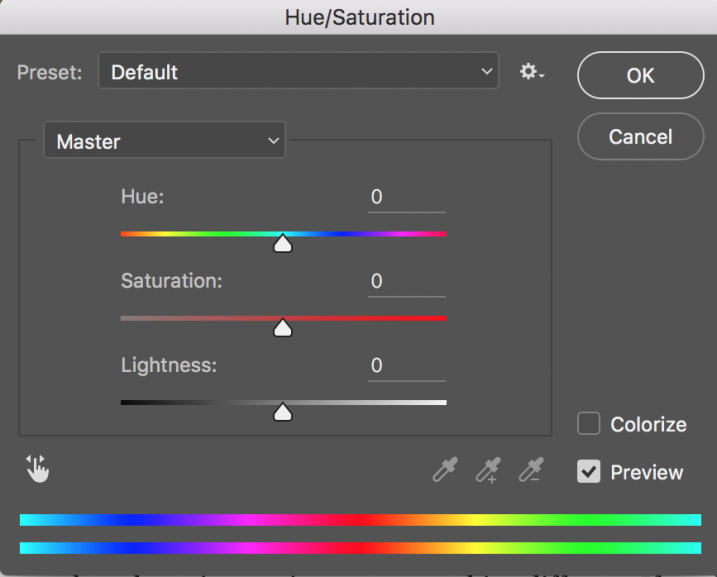
Screen Shot 2016-06-30 at 3.54.30 PMThis tool is the next one in order. Start off with Levels and then move onto Hue and Saturation  (IMAGE > ADJUSTMENTS > HUE AND SATURATION or the keyboard shortcut is CMD>U on a Mac or CTRL>U ON A pc). This also looks like a simple tool on the surface, but there is a lot more depth to it.

First of all, you will see three sliders, the top one is Hue, the middle one is Saturation, and the bottom one Lightness. You will also notice a pull-down box above the three sliders, it is set to Master as the default.
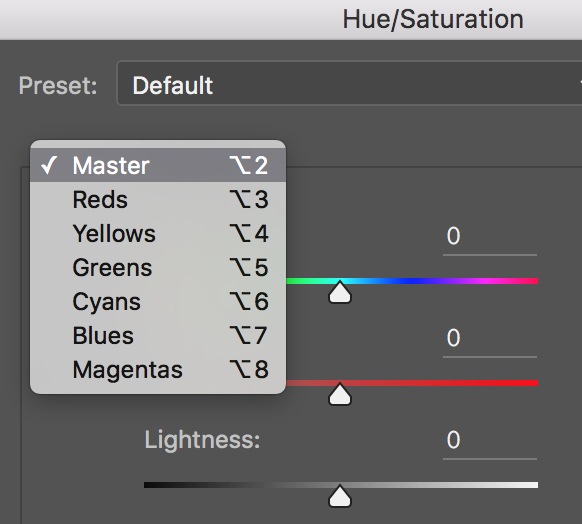
Screen Shot 2016-06-30 at 4.02.56 PMThe Hue slider is used if you want to change the colours in your image to something different. If you leave the box at the top on Master and adjust the Hue slider, all the colours in the image will change, making your image look a little funky and weird, but this could be fun too! The real power of the Hue slide comes into play when you select a colour channel from the drop down box. If you click on the arrow next to Master, all the colour channels will drop down (see screenshot left). This is really useful if you want all the reds to look a little more orange in your scene. Bear in mind, this is a universal adjustment, it will select all the reds in your image and make an adjustment to them all.
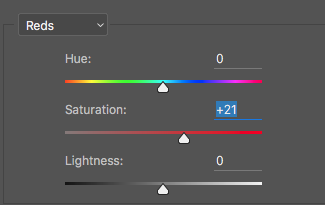
Screen Shot 2016-06-30 at 4.06.31 PMThe second slider is Saturation which affects how rich your colours are in your image. If the reds in your image seem to be light or weak, you can select Reds from the list, and simply move the Saturation slider up (see screenshot right). Also, if some of your colours seem too bold, you can select the appropriate colour channel and move the Saturation slider to the left. You can select each colour individually and make the necessary adjustments.

The last slider is Lightness. I have almost never used this one. If you have done a good job on your levels adjustment, there is really no reason to use the Lightness slider, so I would recommend not using it.

Image after Hue and Saturation adjustments have been made

Image after Hue and Saturation adjustments have been made

Quick Edit #3 – Brightness and Contrast

Once you have made your colour adjustments using Hue and Saturation, you might need to boost the brightness a little. The Brightness and Contrast tool (IMAGE > ADJUSTMENTS > BRIGHTNESS AND CONTRAST, there is no keyboard shortcut to this one) should be used sparingly, do not make big adjustments using it.

You can simply nudge the Brightness slider to the right and give some pop to the image, then do the same for the Contrast slider. If you don’t feel that you need to use this tool, then don’t, it is only necessary if your image looks a little dark after your colour adjustments.

Note: if you’ve done each of these as an adjustment layer you can go back and tweak your levels again, after doing the others.

Final quick edits made in Brightness and Contrast

Final quick edits made in Brightness and Contrast

That’s it, you are done, in a manner of speaking. These quick edits may be good enough for you to get your image to a satisfactory point. If you are happy with your image, then great – you have not spent too much time editing it.

You can do these three quick Photoshop edits on images that you think might be printed. Then if you see that the edits give them the boost you want, you can then spend more time on each image. This cannot replace a good workflow and a good understanding of what is possible in Photoshop, but these three tools will give you the ability to quickly edit your images and get them into a print-ready state really quickly.

If you need to do some further edits, then take a look at this article about more detailed post production techniques or check out all the articles dPS has on image editing in Photoshop. 

googletag.cmd.push(function() {
tablet_slots.push( googletag.defineSlot( “/1005424/_dPSv4_tab-all-article-bottom_(300×250)”, [300, 250], “pb-ad-78623” ).addService( googletag.pubads() ) ); } );

googletag.cmd.push(function() {
mobile_slots.push( googletag.defineSlot( “/1005424/_dPSv4_mob-all-article-bottom_(300×250)”, [300, 250], “pb-ad-78158” ).addService( googletag.pubads() ) ); } );

The post 3 Quick Photoshop Edits You Need to Know by Barry J Brady appeared first on Digital Photography School.


Digital Photography School

 
Comments Off on 3 Quick Photoshop Edits You Need to Know

Posted in Photography


Under pressure: Canon vs. Nikon in a hydraulic press

08 Jul

It’s a question photographers have been asking since time immemorial – or since the 1970s, at any rate: which is best? Canon or Nikon? The brave souls over at the Hydraulic Press Channel are committed to finding out. And they’re going to do so in the only way they know how – by using a hydraulic press. In the yellow corner: a Nikon FA. In the red corner: a Canon AE-1. 

We don’t want to ruin the outcome of this unconventional two-way test before you’ve watched the video (apart from anything else, we’re far from clear on the criteria of the contest) but we dare you to only watch it once.

Articles: Digital Photography Review (dpreview.com)

 
Comments Off on Under pressure: Canon vs. Nikon in a hydraulic press

Posted in Uncategorized


Tips for How to Make the Most of Rainy Days

08 Jul

It isn’t always possible to get great weather when are out photographing. If you’re on a once in a lifetime vacation and you encounter rainy weather, then you have a couple of choices. You can pack away your camera and forget about shooting until the weather improves, or you can find a creative approach to make the most of the inclement weather. I suggest you attempt the latter, and when you encounter wet weather, look for opportunities to create great photos notwithstanding the rain.

In fact, if you compare a day with dull gray skies to one where there is plenty of rain, you might actually find that the rainy day is preferable, as there are more things of interest happening.

Melbourne Australia in the rain

There are, however, some things to consider when shooting in the rain. You will want to protect your gear from getting too wet, and you will want to know a bit about using your camera so that you can take great shots. Here are some tips for shooting on rainy days.

Preparing for rain

Invariably, at some time you will encounter rainy weather when you are out photographing. If you have a set of “go to” creative options that you have practiced, and you are familiar with, you can swing immediately into the mindset of taking advantage of the wet weather and capture some great shots. I’ll give you some ideas about what you can shoot.

You’ll also need to prepare yourself and your camera so you can stay as dry as possible. Wet weather shooting should still be fun, and staying dry is an important part of that.

What to shoot

When you encounter rainy weather you can try to minimize the appearance of the rain or capture it. If you try to avoid the rain you’ll often capture dull and uninteresting images. Whereas if you capture the rain in your photographs, you’ll likely achieve more creative and interesting images.

Shoot through windows

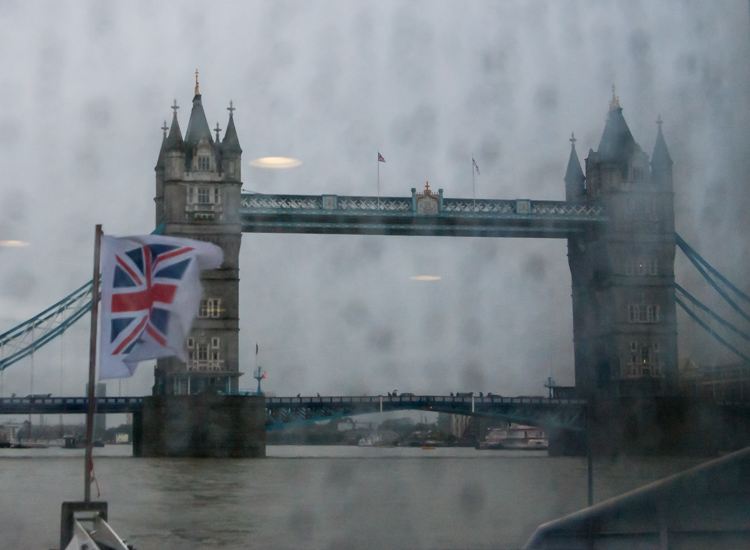
Here are two shots of Tower Bridge in London shot from a ferry on the Thames. For the first image I shot through a rain-splattered window and focused on the Tower Bridge. The result is, quite frankly, embarrassingly awful.

Tower Bridge London in the rain

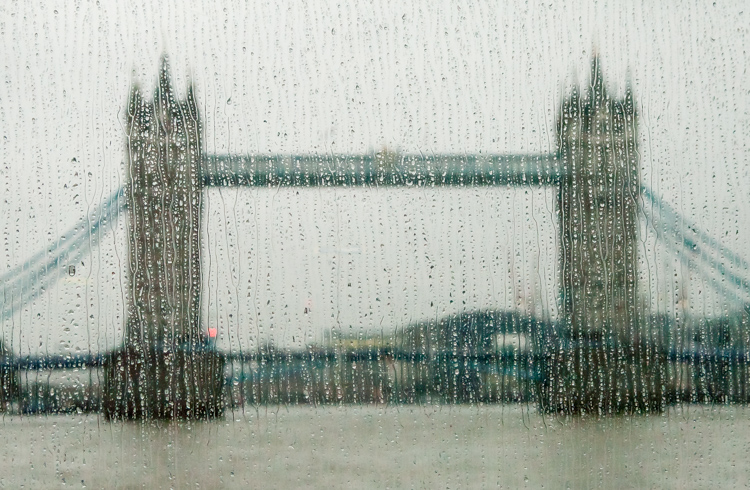
This second image is shot from the same ferry, through the same window, but this time I focused on the raindrops instead of the bridge. The Tower Bridge is still recognizable, and the overall image is much more creative and pleasing. When you next get a chance, try focusing on the raindrops on a window, and not what you see through it.

Tower Bridge London in the rain

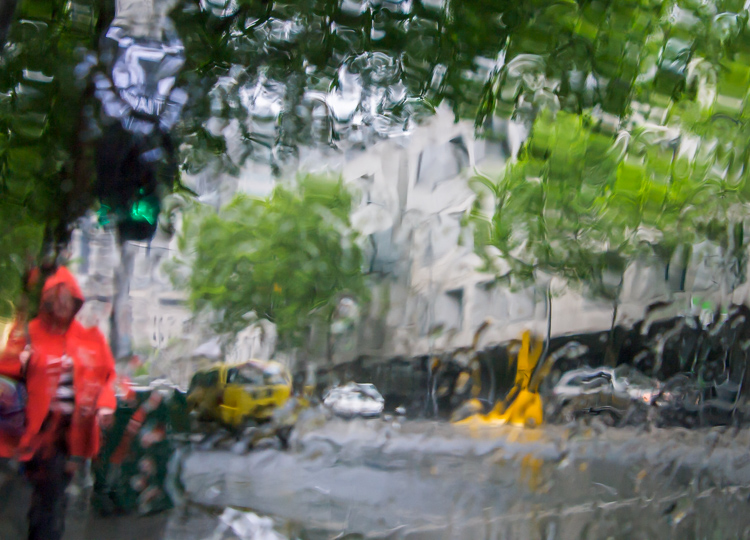
In this shot below , captured through a taxi window as it sped through Melbourne in a sudden downpour, the focus has landed somewhere between the window and the bike, and the result is a painterly image.

Tower Bridge London in the rain

Shoot puddles

Where there is rain, there are generally puddles. These puddles will reflect anything (and everything) from car taillights to buildings, and from people to trees. Look out for interesting objects reflected in puddles.

Rome - reflection of building in a puddle

Shoot water droplets

For a time after it has rained, raindrops will still cling to plants and other surfaces. Look for interesting objects dotted with raindrops.

raindrops on yellow flowers

Shoot the clouds

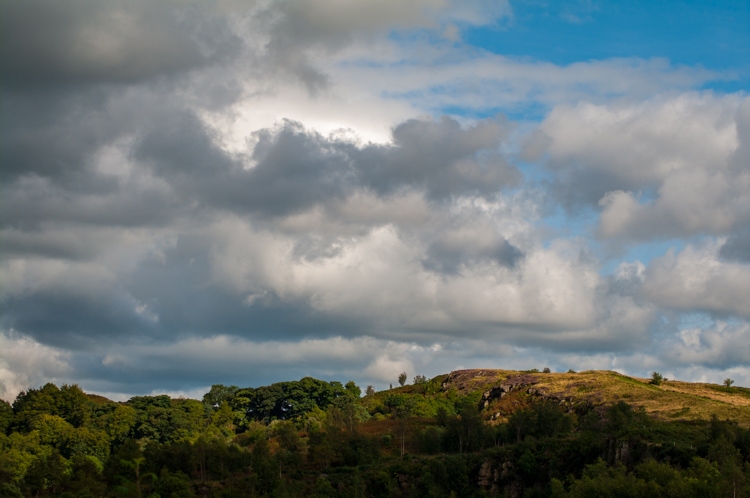
Before it rains you will typically see interesting formations of rain clouds. Sometimes they will enhance an otherwise spectacular landscape, and sometimes they are the subject a photo in and of themselves.

thunderous clouds

When there are gaps between rain clouds, you will often see shafts of sunlight piercing the clouds and highlighting small areas of a landscape or cityscape. This light is truly magical and it will give a sense of drama a scene. Keep an eye out for this light and shoot it quickly when you see it – because the clouds are moving, light that is there one minute, will be gone the next.

St Paul’s lit by shard of light

Camera settings

Some creative photography will require skills beyond using the automatic settings on your camera. For example when you opt to capture the raindrops on a window rather than what you see through the window you will need to experiment to find the best distance to stand from the window. Moving one or two steps closer or further from the window can totally change the image.

You will also probably need to manually focus your camera so you need to know how to set it to Manual focus mode. The reason for this is that most cameras in autofocus mode will try to focus on the distant building, and won’t focus on the raindrops on the window. Using manual focus will allow you to determine exactly what is in focus in your shot.

To capture raindrops on plants and other surfaces, you can use Aperture Priority mode and vary the aperture to achieve different results. A very large aperture (f/ 2.0 – f/5.6) will give you a shallow depth of field with only a small part of the scene in focus. A small aperture (f/8- f/13) will result in a much deeper depth of field, where more of the scene is in focus. It is up to you to decide how much of the image you want to be in focus – just be sure you know how to set your camera in Aperture Priority mode, what range of apertures are available for the lens you are using, and how to change the aperture setting.

Caring for you and your camera

When shooting in the rain you’ll want to keep your camera and yourself as dry as possible. I find it preferable to wear a raincoat with a hood because I find it impossible to juggle an umbrella and a camera at the same time. Whatever you choose, carry only what you need to have with you, so you have a better chance of keeping everything dry. It’s best to avoid changing lenses in wet weather, so stick with just one lens. Take care when moving from a cold, rainy situation into a warmer building. The heat combined with the damp will increase the humidity and you run the risk of condensation forming inside your camera lens.

Even if your camera has good weather seals, take care to protect it as best you can. There are plenty of good rain covers that you can purchase for your camera, or in a pinch, cover the camera and lens with a plastic bag, and cut a small opening for the lens. Duct tape or elastic bands will hold the bag securely on the camera.

Make sure to pack some clean, dry towels that you can use to wipe off your camera, but don’t use them on your lens – only use a lens cleaning cloth on the lens glass.

If your camera gets wet, dry it off as carefully as you can, and leave the lens open at full zoom until it’s thoroughly dry. A camera will dry best in a cool dry place, and you can use silica gel (an absorbent material sold in packets) in your camera bag to help avoid condensation forming.

Conclusion

Giving some thought as to creative options for capturing great photos in the rain, with some advanced preparation so that you and your camera stay dry, may turn the prospect of shooting on a rainy day from a sorry disappointment, into an exciting challenge.

googletag.cmd.push(function() {
tablet_slots.push( googletag.defineSlot( “/1005424/_dPSv4_tab-all-article-bottom_(300×250)”, [300, 250], “pb-ad-78623” ).addService( googletag.pubads() ) ); } );

googletag.cmd.push(function() {
mobile_slots.push( googletag.defineSlot( “/1005424/_dPSv4_mob-all-article-bottom_(300×250)”, [300, 250], “pb-ad-78158” ).addService( googletag.pubads() ) ); } );

The post Tips for How to Make the Most of Rainy Days by Helen Bradley appeared first on Digital Photography School.


Digital Photography School
 
Comments Off on Tips for How to Make the Most of Rainy Days

Posted in Photography


FLM CP-Travel tripod aims for ultimate in portability and versatility

08 Jul

$ (document).ready(function() { SampleGalleryV2({“containerId”:”embeddedSampleGallery_4816728746″,”galleryId”:”4816728746″,”isEmbeddedWidget”:true,”standalone”:false,”selectedImageIndex”:0,”startInCommentsView”:false,”isMobile”:false}) });

German photo accessory manufacturer FLM is launching a new travel tripod on indiegogo. The CP-Travel will be made of ten layers of carbon fiber and will be able to support up to 10kg/22lb of gear. When fully collapsed, the tripod will fit in a carry-on suitcase, with a maximum height of 142cm/55.9in when completely extended.

The CP-Travel offers interchangeable rubber and spiked feet, using a revamped changing system that the company calls more secure and better able to dampen vibrations. Seeking funding to send the CP-Travel tripod into production, FLM is offering early bird discounts to its first backers. The company anticipates a final $ 635 MSRP when it becomes available in October.

Articles: Digital Photography Review (dpreview.com)

 
Comments Off on FLM CP-Travel tripod aims for ultimate in portability and versatility

Posted in Uncategorized


Light raises $30M and provides update on L16 multi-lens camera

08 Jul

Light, the startup that is developing the L16 multi-lens computational camera, has raised $ 30M in venture capital in a series C round of funding led by GV (formerly Google Ventures). The company says it will use the additional funds to scale its global supply chain in order to deal with customer demand.

The company has also announced some changes to the L16’s specification after listening to feedback from its pre-order customers. Many voiced a preference for a wider angle of view at the short end of the zoom range, and the L16 will now provide a 28-150mm optical zoom equivalent instead of the initially announced 35-150mm.

Additionally, the camera will ship with 256GB of built-in memory instead of the 128GB listed in the original specifications. You can see the fully updated L16 specifications here and watch the video below to see how the prototype cameras are being manufactured.


Articles: Digital Photography Review (dpreview.com)

 
Comments Off on Light raises $30M and provides update on L16 multi-lens camera

Posted in Uncategorized


Floating Greenhouse: Mobile Barge to Grow Food & Cruise Danube

08 Jul

[ By WebUrbanist in Architecture & Cities & Urbanism. ]

eco barge

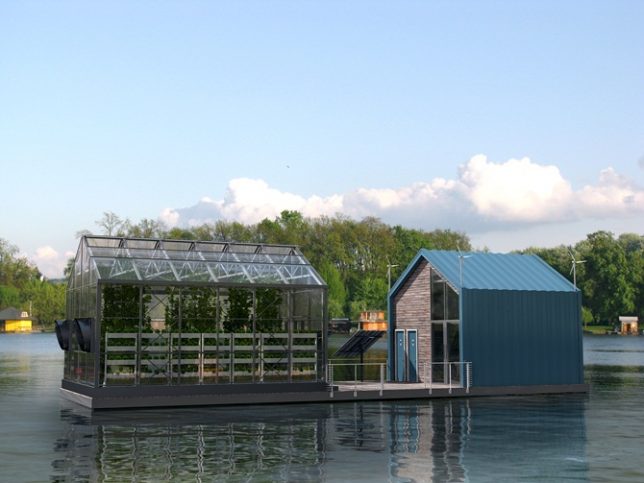
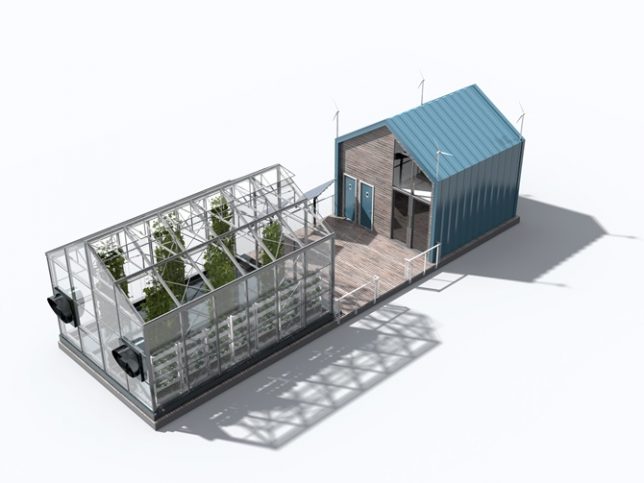
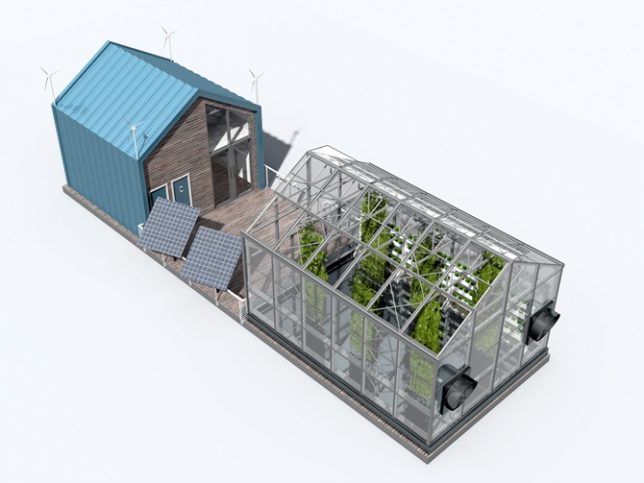
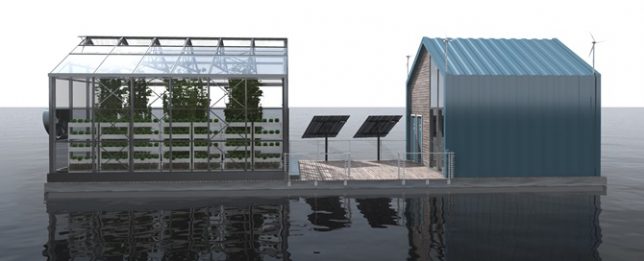
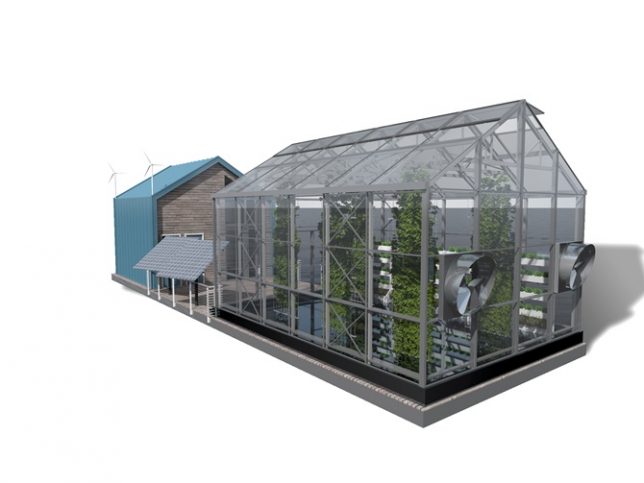
Designed to float down the Danube river in Europe, the Eco Barge is a solar-powered floating greenhouse illustrating the possibilities of offshoring urban food production.

floating eco barge concept

floating greenhouse model

In addition to growing usable organic produce on the water, the barge has educational components, aiming to host presentations and workshops for citizens of European cities along the river, starting in Belgrade. Growing on the water allows food production to remain local without taking up valuable urban land.

floating solar greenhouse

floating greenhouse design

An indoor office and presentation space brackets one end of the barge while the greenhouse is situated at the other, an open space with solar panels sitting in between. Sun and wind power systems generate renewable energy used to power the vessel as well as its on-board irrigation system.

floating hotel concept

floatel

Salt & Water, the architectural and yacht design firm behind the Eco Barge, are known for their floating projects, including a floating hotel concept made up of private yachts. These independent boats share common docks and community spaces, but can detach for explorations as well.

Share on Facebook


[ By WebUrbanist in Architecture & Cities & Urbanism. ]

[ WebUrbanist | Archives | Galleries | Privacy | TOS ]


WebUrbanist

 
Comments Off on Floating Greenhouse: Mobile Barge to Grow Food & Cruise Danube

Posted in Creativity


Fujifilm to update X-Pro2 firmware, releases new lens roadmap

07 Jul

Fujifilm has announced new firmware for its X-Pro2 mirrorless camera which, most notably, updates the autofocus algorithm to be in-line with the just-announced X-T2. The company promises better AF speed and accuracy, but notes that the use case-based system on the X-T2 will not be available on the X-Pro2.

The firmware update also improves parallax correction when using the OVF and adds support for the new EF-X500 external flash. 

X-Pro2 owners will be able to get their hands on the new firmware this October.

Along with the new firmware, Fuji has also refreshed its X-mount lens roadmap (shown below), adding three new XF lenses: 23mm F2 R WR, 50mm F2 R WR and 80mm F2.8 R LM OIS WR Macro. The 23mm will be shipping this year, while the other two will arrive in 2017.

One lens that was removed is the 120mm F2.8 R Macro, which has been replaced with the aforementioned 80mm Macro. Fuji states that this is ‘to meet the market demand for compact and lightweight lenses.’

Press release:

FUJIFILM ANNOUNCES NEW FIRMWARE UPDATE FOR THE X-PRO2 AND UPDATED XF LENS ROADMAP

Valhalla, N.Y., July 7, 2016 – As a leader in advanced digital camera technology and outstanding image quality, FUJIFILM North America Corporation today announced a new Firmware Update Version 2.0 for the FUJIFILM X-Pro2 that includes improvements to the autofocus system, compatibility with the new FUJIFILM EF-X500 flash, new power management options and a more accurate and easier-to-use Optical Viewfinder.

Firmware Update V.2.0 Key Features:

  1. The new autofocus algorithm* (found in the new FUJIFILM X-T2) produces faster and more accurate autofocus.
    * Excludes the new AF-C Custom Settings functions.
  1. Compatibility with the new hot-shoe mount FUJIFILM EF-X500 flash. The camera will now support high-speed flash sync and multi-flash lighting.
  2. AUTO POWER OFF will now have 15 second, 30 second, and 1 minute options, allowing more customizable power management.
  3. The parallax correction function will be improved to provide a more accurate and easier-to-use Optical Viewfinder.

Availability

The new firmware will be available for download in October 2016. 

Updated XF Lens Roadmap

Also announced is an updated roadmap for developing interchangeable lenses for the X Series line of mirrorless digital cameras. The latest roadmap adds three new lenses: the compact, lightweight and stylish semi-wide angle lens XF23mmF2 R WR, the compact mid-telephoto lens XF50mmF2 R WR and the mid-telephoto 1:1 macro lens XF80mmF2.8 R LM OIS WR Macro. The expanded 25-lens lineup covers extensive angles of view from ultra-wide angle to ultra-telephoto, and will now expand the macro category to further enhance photographic versatility.

Changes from the previous roadmap released in February 2015

The XF120mmF2.8 R Macro lens, listed in the previous roadmap, has been replaced with the XF80mmF2.8 R LM OIS WR to meet the market demand for compact and lightweight lenses. To support our customers who were expecting a telephoto macro lens, this new lens is compatible with the existing teleconverters to extend its reach into the telephoto range.

Articles: Digital Photography Review (dpreview.com)

 
Comments Off on Fujifilm to update X-Pro2 firmware, releases new lens roadmap

Posted in Uncategorized


Now with 4K: Fujifilm X-T2 offers 24MP, improved AF and video specs

07 Jul

$ (document).ready(function() { SampleGalleryV2({“containerId”:”embeddedSampleGallery_6056057871″,”galleryId”:”6056057871″,”isEmbeddedWidget”:true,”standalone”:false,”selectedImageIndex”:0,”startInCommentsView”:false,”isMobile”:false}) });

Fujifilm has updated its premium SLR-style X-series lineup with the X-T2, bringing 4K video capture to its lineup for the first time.

The camera uses the 24.3MP X-Trans CMOS III APS-C sensor first seen in the X-Pro2 and also includes an upgraded hybrid AF system with more focus points, as well as an AF-point selection joystick a la the X-Pro2. There’s also a faster top mechanical shutter speed of 1/8000 sec (1/32,000 sec with the electronic electronic), an improved AF-C algorithm and an overall boost in response times when using the camera. Like the X-T1, this camera is weather-sealed.

The X-T2 offers an unchanged 2.36 million-dot OLED EVF carried over from its predecessor, but the 1.04 million-dot 3″ LCD has an additional hinge for waist-level portrait-orientation shooting. An optional ‘Vertical Power Booster Grip’ is offered. The grip houses two batteries and lives up to its name by ‘boosting’ mechanical shutter burst shooting to 11 fps (from 8 fps), reducing shutter lag and blackout time slightly and allowing for 30 minutes of 4K capture (as opposed to 10). 

An EF-X500 hot shoe flash is also introduced for the system, offering a guide number of 50 with a tilting flash head.

The Fujifilm X-T2 will be available in September for $ 1,599.95 body-only, or bundled with the XF18-55mm for $ 1,899.95. The EF-XF500 flash will also be available in September for $ 449.99.


Press release:

Fujifilm Unveils the New X-T2, the Ultimate Mirrorless Camera with New Autofocus System and 4K Video Shooting

X-T2 gives users cutting-edge performance that delivers premium imaging quality in a classic design that is a joy to use; New FUJIFILM EF-X500 flash arrives

Valhalla, N.Y., July 7, 2016 – As a leader in advanced digital camera technology and outstanding image quality, FUJIFILM North America Corporation today announced the new FUJIFILM X-T2, a splash-resistant premium interchangeable lens camera with a large OLED electronic viewfinder (EVF). The X-T2 houses the latest generation 24.3MP X-Trans CMOS III with an APS-C sensor with no low-pass filter, boasting the highest performance in the history of X Series. The new X-T2 produces crisp image resolution comparable to that of cameras equipped with larger sensors and higher pixel counts, all in a more compact and classically-designed body.

And for the first time, the new FUJIFILM X-T2 now supports 4K video recording that can use each available Film Simulation mode, including ACROS, to easily produce premium-quality footage that is as unique as the photographer behind the viewfinder.

Dramatic improvement to auto focus system The FUJIFILM X-T2 receives a dramatically improved auto focus system (AF) that increases the overall single AF points to 325, and the number of Zone focusing points to 91 (expanded from 49 in previous models). Approximately 40% of the imaging area (center area containing 49 focusing points) is covered with phase detection auto focus pixels to form a fast and precise phase detection auto focus area that can be used in a variety of scenes.

With the high-speed X-Processor Pro and the use of improved algorithms, the X-T2 now refocuses more frequently, enabling predictive AF of advanced accuracy.

The X-T2 also has an enhanced ability to autofocus on small points of light, low-contrast objects and subjects with fine and delicate textures such as bird feathers and animal fur.

The X-T2’s performance of contrast detection AF, enabled for approximately 65% of the imaging area, has also been improved. The data read speed has been doubled compared to previous models to achieve AF performance of higher speed and precision. Photographers will enjoy accurate focusing is all shooting situations, even in low light with a -3EV.

Another area of improvement is the AF-C algorithm that has been significantly enhanced for even higher accuracy when focus-tracking moving subjects in the AF-C mode. According to the type of movement, users can choose individual settings for Subject Retention Characteristic, Acceleration / Deceleration Tracking Characteristic and Focus Zone Characteristic, or select one of five presets or customize specific settings for these three elements.

Image Quality
Fujifilm’s commitment to superior image quality remains a guiding principle, and the FUJIFILM X-T2 is the latest effort to deliver outstanding picture resolution, all from a compact and sophisticated body that is both weather-sealed and easy to travel with in any location. With Fujifilm’s proprietary image design technology, produced through the development of photographic films, the X-T2 reproduces warm skin tones, bright blue skies and rich green foliage in beautiful colors, just as you remember seeing in real life. The X-T2 includes the ACROS Film Simulation for smooth gradation, deep blacks and beautiful textures to create monochrome images that far outperform even the most demanding expectations.

The X-T2 also has the Grain Effect function for reproducing distinctive graininess seen in photographs taken with film cameras. The function is available in Strong and Weak options, and can be combined with any of the Film Simulation modes. You can easily obtain the effect of film-based photos, notable especially when the image is printed out.

Speedy throughout
Basic response specifications, such as startup time, shooting interval and shutter release time lag, have all been improved to the extreme in pursuit of a camera that operates exactly as the photographer demands. The high-speed processing power and the use of improved algorithms have significantly improved the basic autofocus performance, and X-T2 now gives users AF-C Custom Settings for even higher accuracy in focus-tracking moving subjects.

The X-T2’s electronic viewfinder, which is used to continuously track a moving subject, is capable of displaying up to 100 frames per second, while also maintaining the magnification ratio of 0.77x and the display time lag of 0.005 seconds. The duration of the viewfinder blackout, in which the evf blacks out temporarily while the camera reads picture data, has been reduced by more than half, enabling continuous shooting to ensure tracking subject movements.

Body and grip offer ultimate stability
The X-T2’s body is fully made of magnesium alloy making it not only compact and lightweight, but also solid and highly durable. The X-T2 body has weather-proofing at 63 points to achieve a high level of resistance to dust and moisture, and coupled with its ability to operate in temperatures down to 14°F, is ready for full-fledged field photography. Similar ruggedness is applied to the new Vertical Power Booster Grip.

The Vertical Power Booster Grip (optional VPB-XT2) is a dust-resistant grip, rugged and capable of operating at temperatures as low as 14°F that maximizes the performance of the X-T2 beyond expectations. It fits two batteries, bringing the total number of batteries the X-T2 can use to three, including the one in-camera, to increase the maximum number of frames that can be taken per charge to approximately 1,000 (Normal mode). In the Boost mode, multiple batteries can operate at the same time to give a boost to camera performance in continuous shooting, shooting interval, shutter release time lag and blackout time, while also extending the duration of 4K video recording to approximately 30 minutes.

The Vertical Power Booster Grip also features a shutter release button, focus thumbstick, AE-L button, AF-L button, command dials, Q button and Fn button and headphone jack to enable audio monitoring during video recording to provide the same level of excellent operability in vertical shooting as you get in horizontal operation. The grip itself has battery-charging functionality where by using the AC adapter supplied (AC-9VS), users can fully charge two batteries at the same time in about two hours.

FUJIFILM EF-X500 Flash
The new high-end multi-function external FUJIFILM EF-X500 Flash is now official for the lineup of accessories for the X Series of digital cameras. The EF-X500 is a hot-shoe mount flash with a maximum guide number of approximately 50, and includes support for the FP mode (high-speed flash sync) so that the flash can be fired at any shutter speed. Photographers can now concentrate on shooting when a faster shutter speed is required, for example, in order to use a near-maximum aperture to produce beautiful bokeh.

The EF-X500 also supports multi-flash lighting. Users can set up multiple flashes to freely control light on a subject and background for a creative result. Through-the-lens (TTL) lighting control is available with single flash and also in the multi-flash setup, so that users can start shooting without having to make cumbersome adjustments to light output.

EF-X500 Flash key features: 

  • Maximum guide number of approximately 50 (ISO100?m) / 164 (ISO100·ft) • Zooming the illumination angle for the focal lengths of 24mm – 105mm, and covering the illumination angle of approximately 20mm when the wide panel is used
  • Flash head that can be tilted up by 90° degrees, down by 10° degrees, to the left by 135° degrees and to the right by 180° degrees for bouncing light
  • Equipped with LED video light that can also be used as AF assist light and catch light
  • Registers up to ten combinations of various setting to suit specific shooting conditions in advance for quick activation when needed

FUJIFILM X-T2 key features:

  • 24.3MP X-Trans CMOS III Sensor
  • Dust and moisture-resistant body with approximately 63 points of weather sealing; Freeze resistance to 14°F
  • X-Processor Pro
    – Fast AF of 0.06 seconds
    – Startup time of 0.3 seconds
    – Shutter time lag of 0.045 seconds
    – Shooting interval of 0.17 seconds
    – Phase detection AF and motion predictive AF for continuous shooting up to 8 frames per second (fps)
    – Up to 11fps using Booster Grip
  • High-precision 0.48-inch, 2.36 million dot OLED viewfinder
    – Viewfinder magnification for digital cameras of 0.77x
    – Wide viewing angle (diagonal 38° and horizontal 31°)
    – Ultra-fast Real Time Viewfinder with a lag-time of 0.005sec (less than 1/10 of existing models)
    – Automatic Brightness Adjustment function
    – EVF refreshes at a rate of 60fps, or as high as 100fps in the Boost mode
    – Continuous shooting of 5fps in Live View
  • Full 4K 3840×2160 30P/25P/24P shooting (Using a card with the UHS Speed Class 3 or higher)
    – Continuous recording: up to approximately 10 minutes
    – Full HD 1920×1080 60P/50P/30P/25P/24P, Continuous recording: up to approximately 15 minutes
    – HD 1280×720 60P/50P/30P/25P/24P, Continuous recording: up to approximately 29 minutes
  • Four different display modes: Full, Normal, Dual and Vertical
    – Full mode: Displays shooting information at the top and bottom of the screen to avoid obstruction of the view
    – Dual mode: Adds a small second screen for checking focus point with Focus Peak Highlight or Digital Split Image
    – Normal mode: Lets you concentrate on framing the shot in Auto Focus mode while keeping you aware of how the shooting conditions are changing, making it the perfect setting for sports and action photography
    – Portrait mode: When in Full or Normal modes, it rotates the shooting information interface when the camera is turned vertically
  • Tempered glass 1.04 million dot high-precision 3” tilting LCD monitor
  • Digital Split Image and Focus Highlight Peaking
  • Wi-Fi and remote camera operation
  • ISO200 – 6400, extended ISO 100, 12800, 25600, Auto(maximum ISO setting from ISO 400 – ISO6400 available) with High ISO 51200 setting
  • Lens Modulation Optimizer technology maximizes each lens’ performance
  • In-camera RAW converter
  • Die-cast magnesium body provides a sturdy and durable, while compact and lightweight design
  • Two command dials and six Function buttons for instant control and customization
  • Interval timer shooting for Time Lapse photography is available with intervals of 1 second to 24 hours and up to “?” frames
  • Advanced filters and Film Simulations, including ACROS

FUJIFILM X-T2 Accessories:

  • Vertical Power Booster Grip (optional VPB-XT2) New
  • X-T2 Metal Hand Grip (MHG-XT2) New
  • X-T2 Bottom Leather Case (BLC-XT2) New
  • X-T2 Cover Kit (CVR-XT2) New
  • NP-W126S Rechargeable Battery New
  • Five dedicated flash models to choose from depending on requirements (EF-X500 New, EF-X8, EF-X20, EF-20, EF-42)
  • Battery Pack EF-BP1, compatible with EF-X500 New
  • Protective Filters (PRF-39, PRF-52, PRF-58, PRF-62 and PRF-72)
  • M Mount Adapter for additional lens compatibility
  • Remote Release (RR-90)
  • Stereo Microphone (MIC-ST1)

Availability and Pricing
The new FUJIFILM X-T2 (body only) will be available in September 2016 in the U.S. for USD $ 1,599.95. The X-T2 and XF18-55mm (27-84mm) kit will be available in September 2016 in the U.S. for USD $ 1,899.95.

The FUJIFILM EF-X500 Flash will be available in September 2016 in the U.S. for USD $ 449.99.

Fujifilm X-T2 specifications

Price
MSRP $ 1599 (body only), $ 1899 (w/18-55mm)
Body type
Body type SLR-style mirrorless
Body material Magnesium alloy
Sensor
Max resolution 6000 x 4000
Other resolutions 3:2 (4240 x 2832, 3008 x 2000), 16:9 (6000 x 3376, 4240 x 2384, 3008 x 1688), 1:1 (4000 x 4000, 2832 x 2832, 2000 x 2000)
Image ratio w:h 1:1, 3:2, 16:9
Effective pixels 24 megapixels
Sensor size APS-C (23.6 x 15.6 mm)
Sensor type CMOS
Color space sRGB, Adobe RGB
Color filter array X-Trans
Image
ISO Auto, 200 -12800 (expands to 100-51200)
Boosted ISO (minimum) 100
Boosted ISO (maximum) 51200
White balance presets 7
Custom white balance Yes (3 slots)
Image stabilization No
Image stabilization notes Lens only
Uncompressed format RAW
JPEG quality levels Fine, normal
File format
  • JPEG (Exif v2.3)
  • Raw (Fujifilm RAF, 14-bit)
Optics & Focus
Autofocus
  • Contrast Detect (sensor)
  • Phase Detect
  • Multi-area
  • Center
  • Selective single-point
  • Tracking
  • Single
  • Continuous
  • Face Detection
  • Live View
Autofocus assist lamp Yes
Manual focus Yes
Number of focus points 325
Lens mount Fujifilm X
Focal length multiplier 1.5×
Screen / viewfinder
Articulated LCD Tilting
Screen size 3
Screen dots 104,000
Touch screen No
Live view Yes
Viewfinder type Electronic
Viewfinder coverage 100%
Viewfinder magnification 0.77×
Viewfinder resolution 2,360,000
Photography features
Minimum shutter speed 30 sec
Maximum shutter speed 1/8000 sec
Maximum shutter speed (electronic) 1/32000 sec
Exposure modes
  • Program
  • Shutter priority
  • Aperture priority
  • Manual
Built-in flash No (Small external flash included)
External flash Yes
Flash modes Auto, standard, slow sync, manual, commander
Flash X sync speed 1/250 sec
Continuous drive 14.0 fps
Self-timer Yes (2 or 10 secs)
Metering modes
  • Multi
  • Center-weighted
  • Spot
Exposure compensation ±5 (at 1/3 EV steps)
AE Bracketing ±2 (3 frames at 1/3 EV, 1/2 EV, 2/3 EV, 1 EV, 2 EV steps)
WB Bracketing Yes
Videography features
Resolutions 3840 x 2160 (29.97p, 25p, 24p, 23.98p), 1920 x 1080 (59.94p, 50p, 29.97p, 25p, 24p, 23.98p), 1280 x 720 (60p, 50p, 30p, 25p, 24p)
Format MPEG-4, H.264
Microphone Stereo
Speaker Mono
Storage
Storage types Dual SD/SDHC/SDXC UHS II
Connectivity
USB USB 3.0 (5 GBit/sec)
HDMI Yes (micro-HDMI)
Microphone port Yes
Headphone port No
Wireless Built-In
Wireless notes 802.11b/g/n
Remote control Yes (via smartphone or wired remote)
Physical
Environmentally sealed Yes
Battery Battery Pack
Battery description NP-W126S lithium-ion battery & charger
Battery Life (CIPA) 340
Dimensions 133 x 92 x 49 mm (5.24 x 3.62 x 1.93)
Other features
Orientation sensor Yes
Timelapse recording Yes
GPS None

Articles: Digital Photography Review (dpreview.com)

 
Comments Off on Now with 4K: Fujifilm X-T2 offers 24MP, improved AF and video specs

Posted in Uncategorized


Faster flagship: Hands-on with the Fujifilm X-T2

07 Jul

Faster flagship: Hands-on with Fujifilm X-T2

When the X-Pro2 was announced earlier this year, it seemed only a matter of time before Fujifilm unveiled a replacement to its ‘other’ flagship, the X-T1. The just-announced X-T2 boasts the company’s newest 24MP sensor, an AF joystick and a significant speed boost.

Faster flagship: Hands-on with Fujifilm X-T2

Externally, the X-T2 looks virtually identical to the older X-T1, which is no bad thing. Fujifilm got a lot right in the X-T1, and its replacement doesn’t change the basic recipe. The new camera is about 70g heavier, but side-by-side, you’d be hard pushed to tell it apart from its predecessor.

Faster flagship: Hands-on with Fujifilm X-T2

The traditional Fujifilm top-plate, with its array of dials. From left: ISO > Shutter speed > exposure compensation.

One of the very few ergonomic differences between the X-T2 and its predecessor is the omission of a movie recording button from the upper-right of the top plate. This is made up for (sort of) by the addition of a movie recording position on the main exposure mode dial, but we’re not sure why Fujifilm would remove this button completely. 

Since we’re looking at the hot shoe, it’s worth mentioning that the camera can sync with flashes at 1/250 sec. The overall shutter speed range on the X-T2 is 30 – 1/8000 sec with the mechanical shutter, with a top speed of 1/32000 when you switch to the e-Shutter.

Faster flagship: Hands-on with Fujifilm X-T2

Keen eyes will spot the new movie recording position on the mode dial (upper left in this image). The X-T2 offers by far the most advanced movie recording specification of any Fujifilm camera, including 4K (3840 x 2160) video, which to be honest, was a major surprise when we first saw the camera’s spec sheet.

Traditionally a major weak point of Fujifilm’s X-series it seems like the company is really stepping up its efforts when it comes to video.

The X-T2’s electronic viewfinder appears to be unchanged from the excellent 2.36 million-dot, 0.5″ OLED found in the original X-T1, which is absolutely fine by us. 

Faster flagship: Hands-on with Fujifilm X-T2

A predictable – but very welcome – addition to the X-T2 is a dedicated AF joystick (shown here just beneath the ‘Q’ button). Inherited from the X-Pro2, this joystick makes placing the AF point extremely fast and easy – something that could definitely not be said of previous X-series cameras (and many mirrorless cameras in general). 

A less obvious change to the X-T2’s rear controls is a slightly longer travel and more positive tactile response from the buttons surrounding ‘Menu/OK’. These controls on the X-T1 were disconcertingly mushy. On the X-T2, when you push a button, you know it.

Speaking of autofocus, the Hybrid AF system on the X-T2 has 325 points in total, 169 of which are phase-detect. Fujifilm says that the data readout speed has been doubled compared to previous (undisclosed) models and that all focus points are sensitive to -3EV.

Faster flagship: Hands-on with Fujifilm X-T2

Speaking of tactile feedback, we were really hoping that the X-T2 would feature a touchscreen, like its baby brother the X70. No such luck. But at least it’s partially articulating – unlike the X-Pro2’s LCD. 

Faster flagship: Hands-on with Fujifilm X-T2

As well as tilting straight out, the rear screen can also be folded out to 45 degrees….

Faster flagship: Hands-on with Fujifilm X-T2

…and hinged sideways!

Faster flagship: Hands-on with Fujifilm X-T2

The major benefit of this kind of articulation is that it makes waist-level shooting easy even in the vertical orientation. 

Faster flagship: Hands-on with Fujifilm X-T2

Twin card slots can be found under a sprung door located on the X-T2’s grip. A rubber gasket seals the slots against dust and moisture incursion. 

Faster flagship: Hands-on with Fujifilm X-T2

The X-T2’s NP-W126S battery can be found nestled inside the grip, accessible from a door on the base of the camera. According to Fujifilm, a single battery should be expected to last for approximately 340 images. Not great, but typical for a mirrorless interchangeable lens camera.

You can’t quite see in this shot, but one deceptively major change in the X-T2 compared to its predecessor is that the tripod socket on the camera’s base has been centered to the lens axis, meaning that on most tripods, you won’t need to unscrew the camera from the tripod plate before you can access the battery compartment – a point of occasional frustration with the X-T1. 

Faster flagship: Hands-on with Fujifilm X-T2

If you need greater endurance (or you just have big hands) you might be interested in the optional VPB-XT2 grip. This grip takes two additional batteries, making three in total, extending the camera’s total battery life to more than 1000 shots.

There’s a ‘boost mode’ on the camera which uses the grip, increasing burst shooting from 8 to 11 fps (with the mechanical shutter), reducing shutter lag and blackout times and permitting up to 30 minutes of 4K video capture. Do note that if you want continuous autofocus, you’ll need to drop the frame rate down to 5 fps.

Faster flagship: Hands-on with Fujifilm X-T2

The two additional batteries slot into a neat little tray which fits into the grip like so. Here you can also see a plug that accepts a 9V power adapter, so the grip can be charged separate from the camera.

Faster flagship: Hands-on with Fujifilm X-T2

Any self-respecting battery grip offers duplicated vertical controls, and the VPB-XT2 is no different. Here you can see the duplicated shutter button, rear control dial (there’s another one on the front) and secondary AF positioning joystick. 

Faster flagship: Hands-on with Fujifilm X-T2

The X-T2 ships with a dedicated compact flashgun, the EF-X8. This can be used to command a group of external flashguns wirelessly – always a welcome feature on high-end cameras.

A new high-end flash – the EF-X500 – will also be available when the X-T2 launches. It has a guide number of 50m at ISO 100, supports high speed sync, includes a video lamp and covers a range of 24-105mm (or down to 20mm with the included wide panel). It’ll be priced at $ 449 when it ships in September.

Faster flagship: Hands-on with Fujifilm X-T2

The Fujifilm X-T2 will retail for $ 1599 body-only or with an 18-55mm F2.8-4.0 lens for $ 1899, and will be available in September. We’re headed to New York soon to interview senior Fujifilm executives – what should we ask them? Let us know in the comments. 

Articles: Digital Photography Review (dpreview.com)

 
Comments Off on Faster flagship: Hands-on with the Fujifilm X-T2

Posted in Uncategorized