RSS
 

Archive for July, 2016

DEAL: How to Get Your Camera Out of Auto Mode

11 Jul

It is Day 5 of our 7 day Summer Sale.

Today only, you can buy our two popular Photo Nuts courses together for just $ 35.

Pnbvideo

Normally you’d pay $ 118 to get them both. But today you’ll save 70% when you purchase them in a bundle.

Grab them here.

In these two courses, Neil Creek goes through all the basics of photography and explains tech concepts in a way anyone can understand.

This 2 course bundle includes:

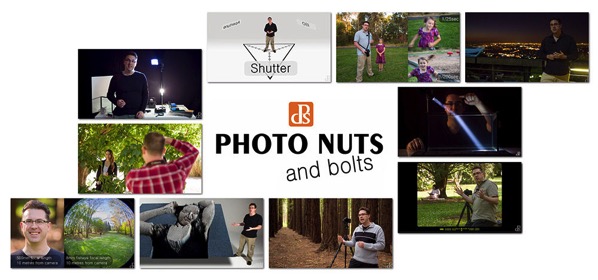
  1. Photo Nuts and Bolts – Over 2 hours of practical online video lessons that teaches you all about your camera and gets you out of “auto” mode.
  2. Photo Nuts and Shots – 2.5 hours of online video lessons, that teach you the craft of photography – so you can take photos that truly connect with people and reflect your creative vision.

Only want the one course? Then pick up either for just $ 19 for today only. Usually $ 59, you’ll save 68%.

Remember, these deals only last for 24hrs so grab this offer while you can.

Note: As with all dPS products these come with a 60 day money back guarantee so there’s no risk. If you don’t find them useful simply let our team know and we’ll arrange a refund.

googletag.cmd.push(function() {
tablet_slots.push( googletag.defineSlot( “/1005424/_dPSv4_tab-all-article-bottom_(300×250)”, [300, 250], “pb-ad-78623” ).addService( googletag.pubads() ) ); } );

googletag.cmd.push(function() {
mobile_slots.push( googletag.defineSlot( “/1005424/_dPSv4_mob-all-article-bottom_(300×250)”, [300, 250], “pb-ad-78158” ).addService( googletag.pubads() ) ); } );

The post DEAL: How to Get Your Camera Out of Auto Mode by Darren Rowse appeared first on Digital Photography School.


Digital Photography School

 
Comments Off on DEAL: How to Get Your Camera Out of Auto Mode

Posted in Photography


How to Use Portrait Angles More Creatively: A Visual Guide

11 Jul

When it comes to creating a successful portrait, there are a lot of moving parts! We talk often about finding the light, composition, and camera gear when it comes to portraits. While all three of those things are important in creating your final image, they aren’t the only variables at play.

Another important aspect in capturing portraits is angles. Understanding and making good use of angles in portrait photography, allows you to capture images of your subjects in the most flattering way, unique to each person you’re photographing.

portrait-angles1

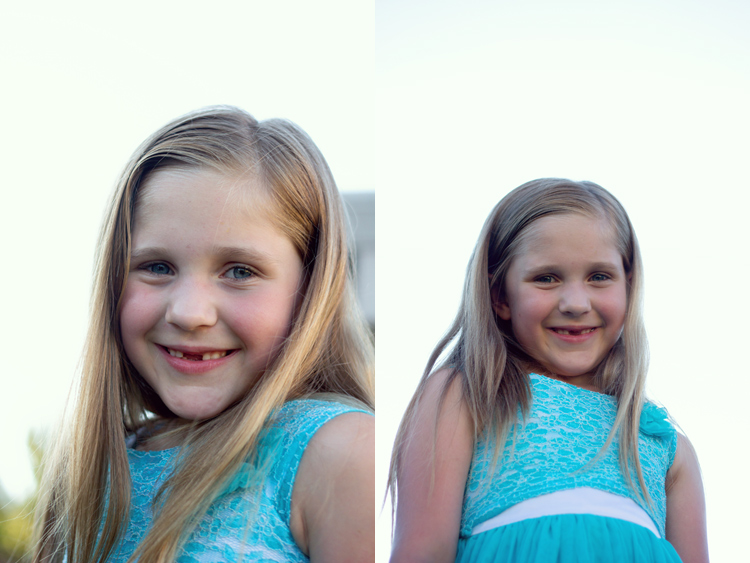
Under the umbrella of “angles” are two different aspects – facial view, and camera angle. Facial view simply refers to how much of a person’s face is visible in the photograph. Whether or not you recognize the term facial view, you probably understand that there’s a visual difference between a photograph of someone looking directly into the camera, and a photograph of them in profile. These are examples of both ends of the facial view spectrum. In addition to facial view, you’ll also want to learn to utilize camera angle in portraiture. Camera angle refers to whether you’re holding the camera at eye level, or above or below the eye level of your subject.

The concepts themselves are pretty simple, right? However, the difficult part is learning how each of these variables interact with each other, and your subject. Let’s walk through some visual examples of different facial views and camera angles using the same gear, subject, location, and same time of day, while observing how different angles change the look and the feel of each image.

Camera Angles

portrait-angles2

Eye Level

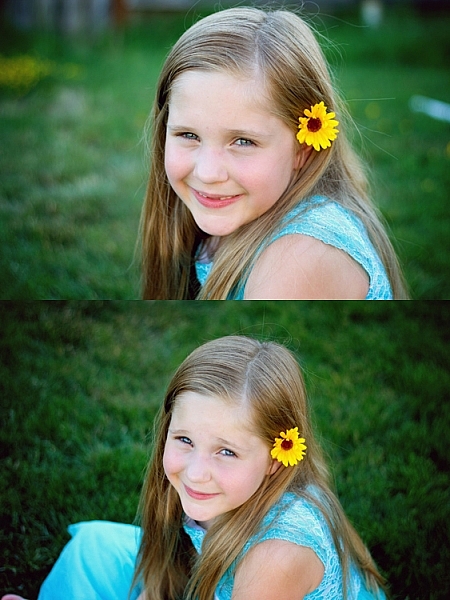
One of the most common camera angles for portraits is to place the camera at the subject’s eye level. This camera angle results in a final image that is balanced, and proportionate between head and body. It also allows for the subject to look directly into the lens, which tends to create the feeling of connection in a portrait. This is a flattering camera angle for most people.

portrait-angles3

High Camera Angle – Above Eye Level

Shooting from a high camera angle (with the camera above the subject’s eye level) is another great option to try in your portrait photography. With this angle, the focus is on the face rather than the body and can be a very slimming angle for adults. I’m not at all concerned with making children seem slimmer than they really are, but find that I use this angle a lot when photographing children because I like the way that it emphasizes the childlike qualities of kiddos. I find that parents tend to really enjoy photographs of their children taken from a high camera angle, and I believe that’s because parents see their children from this angle quite often in their day-to-day life, so it feels very natural and candid.

As a bonus, shooting from a high angle makes it really easy to achieve good catch lights in their eyes, and can also help to camouflage a less than desirable background. On the other hand, this camera angle may not be to your advantage in some situations; if your subject is very thin, shooting from above can sometimes make your subject look like a bobble-head, which is very rarely flattering.

portrait-angles4

Low Camera Angle – Below Eye Level

Shooting from a low camera angle (with the camera placed below the subject’s eyes and tilted up) can make people seem tall and authoritative, but can also tend to make people (their body in particular) look larger than they really are, which is not very flattering for most people.

This is particularly important to keep in mind if you’re photographing someone who is taller than you. If you’re 5’2″, and the person you’re photographing is 6’4″, you may need to be creative to make sure that you’re not photographing the whole session from a low camera angle. Have your subject sit, crouch, or find something that you can climb on to create a more even plane, for at least some of the photos – it really will make a difference.

I’ve used this camera angle a handful of times with newly walking babies, and could envision using it with a wider angle lens (to capture more of the body) if I were photographing a politician, a football player, or someone who wished to appear particularly powerful. Overall though, this is usually not the most flattering angle for portraits.

portrait-angles7

Don’t be afraid to experiment. Try capturing the same image from two different camera angles. The image above demonstrates how the same subject and pose appears from eye level, as well as from a high camera angle. If you did a poll, I bet you’d find that some people prefer the eye level shot, and some prefer the high camera angle. This is largely a matter of taste and preferred aesthetic, so I frequently make a point to include both sorts of angles in my portrait sessions.

Facial Views

portrait-angles6

Photographing a subject full-face means that their face is pointing directly towards the camera lens – you can see both ears, and both sides of the face in equal amounts. Full-face portraits often convey a sense of confidence and assertiveness, especially when the person being photographed is looking directly into the camera with their eyes also.

portrait-angles8

Other facial views include 3/4 view, 2/3 view, and profile view. With 3/4 view, the subject has turned just enough so that one of their ears is no longer visible to the camera. With 2/3 view, the subject has continued to turn so that their nose is just about to break the plane of their back cheek. For a true profile portrait, the subject’s face is turned 90 degrees, and is perpendicular to the camera.

Shooting with the subject’s face turned to 2/3 view or 3/4 view tends to convey a more casual, and less assertive portrait. Images shot with a 3/4 facial view, and the subject looking just off camera, are often the most successful candid images, because the facial expressions are still easily visible to the viewer. Similarly, shooting in profile allows for portraits that feel unposed, while also being graceful and demure (particularly when shot in silhouette).

portrait-angles5

The best way to begin to learn, and really understand angles, is to grab a friend and go experiment. Take photos from every camera angle you can think of, including non-traditional angles like a bird’s eye or worm’s eye view. Then, take a photo with every facial view – full face, 3/4 view, 2/3 and profile. If you’re really feeling ambitious, try combining facial views and camera angles – does the feel of the portrait change if you shoot full-face from eye-level versus from a high camera angle?

Chime in below, do you find that you gravitate towards images with a particular facial view and/or camera angle? What tends to be your preference and why?

googletag.cmd.push(function() {
tablet_slots.push( googletag.defineSlot( “/1005424/_dPSv4_tab-all-article-bottom_(300×250)”, [300, 250], “pb-ad-78623” ).addService( googletag.pubads() ) ); } );

googletag.cmd.push(function() {
mobile_slots.push( googletag.defineSlot( “/1005424/_dPSv4_mob-all-article-bottom_(300×250)”, [300, 250], “pb-ad-78158” ).addService( googletag.pubads() ) ); } );

The post How to Use Portrait Angles More Creatively: A Visual Guide by Meredith Clark appeared first on Digital Photography School.


Digital Photography School

 
Comments Off on How to Use Portrait Angles More Creatively: A Visual Guide

Posted in Photography


Noah’s Ark: Creationist Theme Park Opens Amidst Regional Flooding

11 Jul

[ By WebUrbanist in Destinations & Sights & Travel. ]

great ark

A biblical theme park contained within a huge ark (the largest timber-framed structure in the world) has opened in Kentucky, just as the region was hit hard by heavy rains and flash floods. Expecting an initial rush of visitors, the ark will have extended hours of operation for 40 days and 40 nights, coinciding with duration of the biblical fable of the great flood.

ark opening

Built by Amish carpenters to dimensions described in the Bible, the main Ark Encounter structure is close to 500 feet long, 100 feet wide and a 50 feet tall. It was created by Answers in Genesis, a fundamentalist Christian organization, close to their existing Creation Museum. The megastructure is meant to serve as an education center as well as adventure playground.

ark interior

ark base

The original ark, as the story goes, was designed to save Noah, his family and pairs of animals from a great flood that swept the world clean of sinners. “In a world that is becoming increasingly secularised and biased, it’s time for Christians to do something of this size and this magnitude,” said Answers in Genesis chief executive Ken Ham. The new version employs somewhat more contemporary materials and construction techniques, connecting large timber logs with steel braces.

ark dinosaurs

The modern-day complex is designed to be accessible to all Americans, located less than a day’s drive from most of the country. In addition to scenes of dinosaurs living on the ark alongside humans, it features zip lines, petting zoos and camel rides.

arkitecture

ark grounds

Controversially, the $ 100,000,000 project was made possible in part through sales tax incentives, a fact that does not sit well with all residents of the state. Alas, anyone seeking to survive the next great global purge will find that the ark itself does not float, though it may provide some high ground in a storm.

Share on Facebook


[ By WebUrbanist in Destinations & Sights & Travel. ]

[ WebUrbanist | Archives | Galleries | Privacy | TOS ]


WebUrbanist

 
Comments Off on Noah’s Ark: Creationist Theme Park Opens Amidst Regional Flooding

Posted in Creativity


Interview: “The best image as fast as possible” – Motorola’s approach to smartphone imaging

11 Jul

Modern smartphones are essentially pocket-sized mini-computers, capable of dealing with many tasks that not very long ago would have been processed on desktop or laptop computers. The camera module is just one component of many, but more and more consumers are carefully considering camera performance in their buying decision.

Manufacturers have been well aware for quite some time and are investing heavily to make sure the cameras on their devices can compete with the best. The device division of mobile communication pioneer Motorola for example, which was taken over by Chinese PC makers Lenovo in 2014, first assembled a dedicated camera and imaging team in 2013 when it was still part of Google.

Since then the brand has launched a number of new devices in its Moto range with a clear focus on imaging performance and features. Most recently the Moto G Plus and the Moto Z and Moto Z Force were the first new models to be officially launched under the Lenovo name. In our first impressions review we were pleasantly surprised by the image output of the mid-range Moto G Plus. Both high-end models, the Moto Z and its sister model Moto Z Force, come with advanced smartphone camera features such as optical image stabilization, on-sensor phase detection autofocus and manual control.

Val Marchevsky and Kathy Mahoney in the Motorola image testing lab Peter Matsimanis

We had a chance to speak to some key members of the Motorola imaging team – Kathy Mahoney, Senior Director of Imaging Experiences at Motorola, Val Marchevsky, Senior Director of Engineering – Head of Camera Team, and Peter Matsimanis, Senior Development Manager Imaging – to find out more about the company’s approach to imaging and camera development. Read on to find out what they had to tell us.


How would you describe Motorola’s strengths and weaknesses in the area of smartphone imaging?

One of our core strengths is our dedicated camera and imaging team. Motorola has rapidly enhanced our imaging expertise over the past few years thanks to our internal team which has grown to include software and hardware engineers with diverse backgrounds (color science, optics, computer vision and beyond), in addition to external camera/imaging veterans. This team has reimagined the company’s approach and attitude toward camera technologies, ultimately delivering some of Motorola’s best imaging solutions to date, including our very own intellectual property, like Temporal Frame Stacking and PDAF (phase detect autofocus), which continues to drive major improvements and stands out within the industry.

As for a weakness, I’d say not forming this non-traditional team sooner! Since building our team in 2013, we’ve re-emerged as an industry leader and key player. A lot has changed – for the better – and we look forward to continuing to create industry leading technology that delivers on consumers’ demands for more affordable, thinner smartphones and faster, higher quality cameras. 

Is there any knowledge exchange happening between the imaging team at Lenovo/Motorola and the manufacturers of “traditional” cameras?

In recent years, we’ve added top imaging talent to our team from traditional camera manufacturers like Kodak and HP. We also work closely with suppliers that have great knowledge of traditional cameras, as well as being ODMs for those traditional camera manufacturers. We have also been able to transfer a significant number of top engineering talent from within Motorola to our imaging team, in order to capitalize on their system integration expertise and to also provide cutting edge solutions to enhance the user experience.

Leveraging 80+ years of embedded systems development, we’ve designed cameras that are truly best-in-class. Our plan for the future is to create common imaging experiences across all our products that will universally delight consumers around the world.

What are consumers most looking for in terms of image quality and how is Motorola currently meeting these needs and/or innovating behind them for the future?

Consumers are looking for great image quality in all conditions – low light, bright light, landscapes, selfies, sporting events and more. At Motorola, we’re constantly evaluating imaging solutions to identify those that will deliver under all of these conditions and ultimately provide consumers with a higher quality experience that enhances the memories captured with their smartphone cameras. This includes improving image detail, color accuracy and white balance for all of our devices.

What camera and imaging features are most important to consumers? And how is Motorola working to improve these features in future devices?

We feel what consumers are looking for and what’s important to them go hand-in-hand. Ultimately, what most people really want – and deserve – is a camera that automatically delivers amazing photos and videos that capture the full essence of their experience. We’re focused on continuing to develop enhanced hardware and intelligent algorithms that deliver unbelievable quality and simplicity, but also enable creative freedom.

In which areas can we expect smartphone cameras to make the biggest improvements in the short and long term?

In the short term, we’ll see strides towards improved performance to deliver bright, detail-rich, noise-free photos and videos in low light environments. Many smartphones on the market take low light pictures that are bright, but lack detail due to over-cleaning. We know that to achieve high-quality low light performance, you need to capture more light with bigger pixels and faster apertures. We see this trend continuing. We also expect to see this capability across all price tiers, and we feel Moto G Plus is paving the way.

In the longer term, at Motorola, we continue to address areas of concern for hardware with lasers, better lenses and lower megapixels with large pixels to enhance low light image quality. We also continue to hone in on smart camera experiences, utilizing computer vision and artificial intelligence to provide users the best image, as fast as possible.

Intelligent software not only maximizes the capabilities of hardware, but also leverages the depth of information available from the device. By using device sensors to detect the environment (light, motion, location, etc.), the software is able to deliver better quality images and richer experiences. It turns your camera into an access point for instant information that can help quickly analyze and identify your surroundings.

The Moto 4G offers impressive camera specs for a mid-range device, including a 1/2.4″ sensor and an AF system that uses both on-chip phase detection and a laser to measure subject distance.

The Moto G Plus is, in most respects, a mid-range device, but comes with a high-end camera specification. What was the decision process behind this design and specification?

Consumers depend on great imaging performance each and every day for all of their communication needs, and it was a priority for us when designing Moto G Plus to offer excellent camera systems. Moto G Plus has a 16MP camera, fast apertures, laser and PDAF focus technologies and a wide-angle front camera lens, rivaling some of the best premium smartphone cameras on the market. Putting this technology in the hands of a diverse global consumer audience is a unique opportunity, and we find it particularly rewarding to help them capture life’s most important moments.

The Moto G Plus comes with three focus methods: contrast detect, phase detection and laser. How difficult is it to combine those and what are the benefits of this combination? 

Moto G Plus has an extremely responsive focus system that delivers crystal-clear photography under all conditions; low light to bright light, subjects close-by and distant landscapes. To do this effectively requires multiple focus technologies and the real-time intelligence to know which is best for current conditions. Picking just one or two is simply not good enough. Our philosophy is to maximize output from each focus system and use modern computational methods to calculate the ideal lens position.

Phase Detect Autofocus does a great job quickly finding focus in bright light settings and when the object of interest is farther away, like in landscapes and at sporting events. Laser focus, sometimes referred to as “time-of-flight,” picks up in low light environments and when subjects are close-by, like restaurants and nightclubs. Contrast focus augments each of these technologies to ensure precise focus across a range of light and subjects.

Getting all three to work synergistically is not an easy task, which is why most competitors pick either PDAF or laser (not both), and then augment with contrast. We believe every picture can and should be the best it can, which is why we’ve included all three technologies in Moto G Plus. We’ve also invested in a tremendous amount of simulation tools, deep learning and advanced statistic engines to ensure Moto G Plus covers the endless range of photos and videos consumers want to capture. We will continue to drive advancements in these multi-focus technologies to advance the speed and accuracy of Moto smartphone cameras going forward.

Are manual camera controls, like the Professional mode on Moto G Plus, a niche feature or something that more users will be expecting in a device in the future?

Consumer needs are extremely diverse, especially on a global scale. Most people simply want a great camera – just point and shoot in any condition, but there are others who are more avid photographers and want more out of their mobile imaging experience. We’ve heard from this particular group of photographic aficionados through blogs, the Google Play store, and even directly, that they want features like the professional mode on Moto G Plus that provides greater control and options to create a specific look without a point-and-shoot or DSLR. We’re making great progress towards addressing even more of these needs, and are providing a wider variety of options for more amateur photographers as well to capture every moment exactly how they want to capture it.

The latest generation of Moto devices, including the Moto Z pictured above and the Moto G Plus, all feature manual control over essential shooting parameters, such as shutter speed, ISO and white balance.

Kathy, you have many years of experience at digital imaging pioneers Kodak. How have you leveraged your past experience in your current role at Motorola?

Kathy: I was fortunate enough to be a part of the start of digital imaging with Kodak, working alongside many talented and intelligent imaging engineers. That experience gave me a solid foundation of understanding around what it takes to deliver truly high-quality imaging systems.

Fundamentally, delivering great imaging is so much more than ‘counting megapixels.’ Cameras are complex and require many technologies to deliver great photography. For example, strong low-light performance demands systems that can capture more light, including big pixels and fast apertures, while attaining fast accurate focus requires multiple focus technologies and the smarts to know which one to use under the current conditions.

My past experiences also helped me realize how important photography really is to consumers’ daily lives, as well as the impact (and consequences) of poor quality. Imaging is how we communicate, relive and memorize our life experiences. I am passionate about ensuring Motorola’s camera technology continues to deliver amazing experiences that consumers can count on to be there when they need it.

What lessons have you learned throughout your career in imaging and photography? What words of wisdom would you give to someone just starting in the field?

Kathy: Throughout my career I have learned how important it is to follow your dreams and choose opportunities that you are passionate about. With passion, you’ll always achieve incredible results. Having worked on some of the first commercial digital cameras, the first photo kiosk, digital minilabs, thermal printers, retail printing systems and online photo services, I have spent my career helping people capture, share and relive their lives.

Articles: Digital Photography Review (dpreview.com)

 
Comments Off on Interview: “The best image as fast as possible” – Motorola’s approach to smartphone imaging

Posted in Uncategorized


Quacked Up: Cleveland’s Legendary “Duck Factory”

11 Jul

[ By Steve in Abandoned Places & Architecture. ]

duck-factory-0a

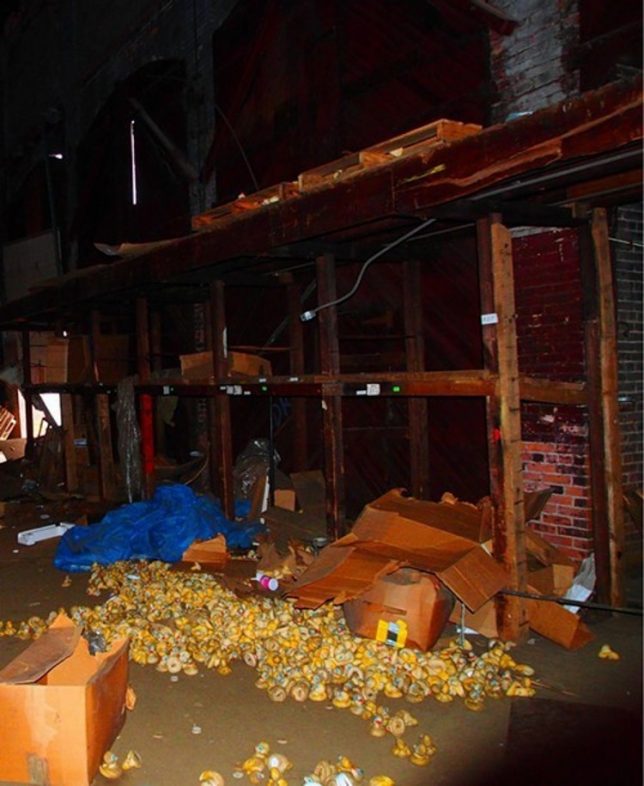
The “Duck Factory”, a century-old abandoned warehouse in Cleveland’s Little Italy home to hundreds of toy rubber ducks, has finally kicked the bucket.

duck-factory-0

duck-factory-1a

Urbex explorers – not to mention Sesame Street’s Ernie – have suffered a grievous blow with the sudden loss of the former Woodhill Supply, Inc. warehouse in Cleveland’s University Circle neighborhood. Not that the east-side eyesore was on an irresistible descent into decay and deterioration, mind you: real estate developer Visconsi Companies, Ltd. had already received approval to tear down the old warehouse and replace it with 200 luxury apartments.

Unchained Mallardy

duck-factory-2a

duck-factory-2b

A devastating fire early on Sunday, September 27th of 2015 put the first part of that plan on the fast track – the smoldering remains of the brick building located at the corner of East 120th Street and Coltman Avenue were demolished later on that very afternoon. The origin of the blaze is yet to be determined but authorities suspect (ahem) fowl play.

Ducks Redux

duck-factory-3b

duck-factory-3a

Though it may be gone, Cleveland’s “Duck Factory” lives on thanks to the relative permanence of physical and virtual media; not to mention the efforts of uncounted urbex explorers who have documented the otherwise unremarkable icon for many years.

duck-factory-11b

duck-factory-11a

duck-factory-11c

By “otherwise unremarkable”, we mean that without those signature rubber ducks this abandoned factory would be forgotten as easily as any number of other rotting relics of the American rust belt.

Next Page – Click Below to Read More:
Quacked Up Clevelands Legendary Duck Factory

Share on Facebook


[ By Steve in Abandoned Places & Architecture. ]

[ WebUrbanist | Archives | Galleries | Privacy | TOS ]


WebUrbanist

 
Comments Off on Quacked Up: Cleveland’s Legendary “Duck Factory”

Posted in Creativity


Put a stamp on it: The astrophotography of Matt Dieterich

10 Jul

The Astrophotography of Matt Dieterich

Star trails and aurora over Mount Rainier from Reflection Lakes. This photograph was selected by the United States Postal Service for a new ‘Forever Stamp’ celebrating the National Park Service 2016 centennial.

The year 2016 is the centennial anniversary of the U.S. National Park Service, which manages over 400 parks, monuments, and historical places across the United States. To observe this anniversary, the U.S. Postal Service recently issued a special series of stamps celebrating the National Parks, featuring images from 16 parks across the country.

One of those images was taken by astrophotographer Matt Dieterich of Morgantown, WV, whose image of star trails over Mt. Rainier was selected by the Postal Service for this historic series of stamps. The opportunity couldn’t have happened to a better person: not only is Matt an accomplished photographer, he’s an enthusiastic supporter of the National Parks, and even spent a summer working at Mt. Rainier National Park in Washington state. On the following pages, Matt gives us some insight into his photography, how his image ended up on a postage stamp, and why the National Parks are such an important resource.

If you would like to own a part of history, Matt is offering a limited-edition series of prints featuring the image of Mt. Rainier that appears on the stamp. Head over to his website for more information.

The Astrophotography of Matt Dieterich

This large Milky Way panorama was created from 14 individual images.

How did you discover astronomy, and at what point did your interest in astronomy translate into astrophotography?

“When I was about 10 years old my godparents gave me a telescope. Then, when I was about 16 I got another one for Christmas. It was just a little one, but it had a computer on it and you could tell it where to go. I could have it point to Jupiter, the Orion Nebula, or anything I wanted. It was really cool, but I wanted to show people what I was seeing, because being outside by the telescope all by yourself wasn’t as much fun. The only way I could do that was to connect a camera to the telescope.”

“I originally bought a film SLR, but the images turned out horrible. Later that year my parents helped me buy a DSLR, and from then on it was history because I could get instant results from the digital camera. That’s what I needed to learn quickly with astrophotography – it’s trial and error and experimentation. Going through high school it helped spur my interest in science; there’s an experimental thought process and you never give up on trying to figure out what’s wrong when you take a photo, and how to improve it.”

The Astrophotography of Matt Dieterich

The Milky Way, with light pollution from Portland, Oregon, captured from Mt. Rainier National Park.

Was your experience in astronomy, and astrophotography in particular, part of what inspired you to study sciences in college and graduate school?

“It was. The reason I went into geology and environmental science was because I love being outside. I like understanding why the earth looks the way it does. Why am I seeing what I’m seeing? To me, it’s motivation to learn more about what’s around us as humans. The night sky is something that we don’t all get to experience a lot. Everyone’s usually asleep, and many people don’t fully understand what’s above our heads because of the city lights.”

“My background and interest in photography definitely pushed me towards a career that would give me the time and opportunity to take photographs.”

The Astrophotography of Matt Dieterich

The Milky Way as seen from Zion National Park in Utah. Matt took this photo from his campground and remembers how much it inspired the other campers to look at his photos of the night sky.

Your portfolio has amazing images from lots of places, but something that really jumps out are all the photos of the night sky in National Parks. What’s special about the National Parks that makes them such a great place for your photography?

“The National Parks serve as islands – islands of protected resources. Just like the meadows and the trees and the animals, the parks serve to protect the night sky. That’s the purpose of National Parks in general. They’re regions that are to remain unchanged by man, and the night skies across National Parks are phenomenal, especially out west where the elevation is high and where climates are dry. Southern Utah, Death Valley, and other regions like that are pretty inhospitable to humans, and as a result you’re going to get some pretty amazing landscapes and night skies.”

The Astrophotography of Matt Dieterich

Matt decided to have a little fun with this image captured in Badlands National Park in South Dakota, and pointed his flashlight toward the galactic arm stretching across the sky.

Are you hoping to inspire other people to discover astronomy, or to go to the National Parks and have their own park experiences?

“Oh, without a doubt. The goal of my photography is to get everyone, but especially kids, involved in astronomy. All it took for me was a photograph, looking at an astronomy magazine, or a book about space, when I was a kid. It gets the hamster wheel in your head turning and your imagination going. It really gets you thinking. You never know what a kid will dream about just from a simple photograph of say, the Milky Way, or Earth from space. Also, I want to inspire people to get out and enjoy the National Parks that we have, because they belong to all of us. They’re amazing to experience in person and they can really humble you.”

The Astrophotography of Matt Dieterich

Matt Dieterich, appearing at an event to support Washington’s National Park Fund, posing with the photo that now appears on a special-issue postage stamp honoring the U.S. National Park Service.

It’s often said that luck is what happens when preparation meets opportunity; it seems that this was true in your case. Can you share the story of how your photo of Mt. Rainier was selected for a postage stamp?

“It’s a fun story. A year ago I was working at Mt. Rainier. I had finished grad school and wanted to work as a night sky ranger. I’ve always dreamed about going on a road trip and just taking photos. I drove 3,500 miles form Pittsburg to Mt. Rainier and stopped at parks along the way. When I was working there I used every free chance to go outside at night, to roam the park and capture the night sky. By August, I had a handful of great photos taken in the park.”

“One day my boss emailed me and said that someone in Washington, DC, was looking for photos of people looking through a telescope. I sent them what I had, but they couldn’t use it because I didn’t have a model release. So I just sent them the rest of my gallery of Mt. Rainier, and within an hour or two they responded in all caps, just loving the photo of Mt. Rainier with the star trails and aurora. Within a day they got back to me and said ‘Hey, this is going to be a stamp. But you can’t say anything about it until it gets released.’”

“The person at the Postal Service told me they had been working on this for years, and all of a sudden – rush, rush, rush – they needed a photo of the night sky. It’s kind of amazing when I think about it, but I’m just very humbled by the fact that they liked my photograph so much.”

The Astrophotography of Matt Dieterich

The Milky Way with green airglow over Glacier National Park in Montana.

Having your image on a postage stamp is a rare, and likely once-in-a-lifetime, opportunity. What is it like knowing that one of your photos is part of this history? Does it have special meaning given your relationship with the National Parks?

“It’s very humbling. I’m kind of at a loss for words. It’s an honor to be able to represent the Park Service and also promote the night skies. As a person trying to get my name out there for my photography… I never expected it to happen in this manner. The irony is that when I started working at Mt. Rainier they went around the room of interpretive rangers asking what our goal was for the summer. I’ll never forget; I said that if I could take one good photograph, I would be happy. Looking back now, it hits me hard knowing that this is something people are going to enjoy for the rest of time. It’s pretty remarkable.”

The Astrophotography of Matt Dieterich

Matt captured this Milky Way photo over a muddy pond in Arches National Park, in Utah, after hiking up to Delicate Arch. He liked the mud in the foreground, and the standing water made for a great Milky Way reflection.

Does an image on a postage stamp have the power to connect people you’ve never met to the National Parks? Can it inspire them to visit one?

“Sure. I definitely think so. When I gave my thank-you speech in New York City [at the official unveiling of the stamp series] I had this gentleman come up to me afterward. He was crying, saying how much it was a remarkable photo. He had some emotional connection to it, because I don’t think I gave an amazing speech that would bring someone to tears. But there was something about this photo… He had some emotional experience with the mountain and that photo was really meaningful.”

“It’s not the experience I expected when I went out to take the photo, but if that photo gets people to go outside, to look up, then that’s all I wanted to do. I want them to experience it. To me, the night sky is very emotional. It’s a human connection that I want everyone to experience. Maybe some people won’t feel it, but for many people it could really be life changing. What I’ve seen through my work, shooting the night sky, is that people are blown away because it’s not what they’re able to see every day. It’s very powerful, and the fact that a photograph could do that is astonishing.”

The Astrophotography of Matt Dieterich

Matt shot this Milky Way panorama with northern lights from Mt. Rainier National Park in Washington.

What type of equipment do you use for your work?

“Oh, I just use a disposable camera. No – I’m kidding. I use a Nikon D750. It’s a great full frame, low-noise camera for night sky photography, and is great for capturing wide views of the sky. I also use a Rokinon 24mm F1.4 lens, an Induro tripod with a ball head, and a shutter release intervolameter cable.”

“The Rokinon is great, but it definitely has a lot of coma, because I shoot wide open. I shoot F1.4 because my goal is to collect as much light as I can. When I’m doing a time-lapse I need to take as many frames as I can, and it takes 30 images to make a one second time-lapse video. I also have the Nikon 14-24mm F2.8 which is amazing as well, and it has practically no coma wide open. It’s pretty amazing, but you get what you pay for at $ 2,000. I have a D800 as well. I’ll use the D750 for a time-lapse while roaming around taking other photos with my D800.”

The Astrophotography of Matt Dieterich

Milky Way over Haystack Rock on Cannon Beach in Oregon.

How much post-processing is involved in your work? Is it a matter of just exposing correctly, or are there techniques that are important?

“After doing this for many years I’ve gone through different periods, and I guess, as an artist, that’s the way you change. In the beginning, I would process things very heavily because you have do do that when shooting through a telescope. You stretch the data. You physically stretch the histogram, but you have to make sure that everything is in that window of available dynamic range to avoid blowing the highlights or clipping the blacks. Working through the telescope you have to take calibration frames. You have to take not just one photo of the Orion Nebula, you’re taking a hundred. The more photos, the better, because you’re going to stack them like a sandwich, and it reduces the long exposure noise that cameras produce.”

“Then I transitioned to night sky work with just a camera and tripod. You see a lot of artistic images now and it’s possible to change the way an image looks, but I try to keep it natural. However, by stretching the data you’re already taking it beyond anything you’re physically going to see with the naked eye.”

“It’s tough to replicate exactly what you’re seeing, but I try to be natural and be gentle with the images. It’s what I want to do more of now. For example, in my Cannon Beach shot, I’m standing there on the beach with the Milky Way. I tried to process that very gingerly, bringing up the Milky Way just a little bit, and darkening the sides of the sky to make the Milky Way stand out just a little bit more. Folks fell in love with that. That’s my most liked Instagram photo and I think it’s because it looks real.”

The Astrophotography of Matt Dieterich

The Milky Way and Perseid meteor shower over Mt. Rainier.

A lot of photographers use apps that help see what’s in the night sky, or to plan their shoot. Are there any particular apps that you recommend?

“I know a lot of photographers, including night sky photographers, who swear by some of these apps on their phone. But when I was living at Mt. Rainier I was under the night sky every night, so I learned where things were going to be and how to frame and set things up. My general rule of thumb was ‘Okay, the sun rises in the East and sets in the West,’ and knowing the constellations as well. If folks just get a star map or star chart to learn the constellations, that’s important during meteor showers to know where the meteors are coming from.”

“Once you can point out a few objects in the night sky then you know them. You’ll know them for the rest of your life. No matter where you go – as long as you stay in the same hemisphere – the sky is going to be the same. It might change a little as you move from Mt. Rainier to Big Bend in Texas, where you get closer to the southern horizon, but other than that it’s a matter of learning some basics and getting out there. I haven’t used any apps for planning shoots, but I know a lot of people swear by them, and maybe one day I’ll try to find a benefit for using them.”

The Astrophotography of Matt Dieterich

The Milky Way appearing to erupt out of the summit of Mt. Rainier, a dormant volcano.

What other National Parks are high on your list of places to shoot?

“Oh, goodness… Let’s see… I was only at Yellowstone for one night and I didn’t get to pull out my camera because the clouds came in. So I think Yellowstone, because the night skies are amazing there. Big Bend National Park is on my list too because they have some of the darkest skies in the U.S., and I haven’t been there yet. I’d go back to one of the parks in Utah again, probably Bryce Canyon. I haven’t been to the Grand Canyon, either, but I’ve seen photos from there and the skies are remarkable. So there’s a lot. There’s a long list, but those are a few that I’d try to go to.”

The Astrophotography of Matt Dieterich

Matt created this panorama from 16 frames and shows the Milky Way right before dawn in Glacier National Park in Montana. He was able to use the soft light of dawn to illuminate the foreground stream.

What are your long term goals as a photographer? What do you hope to accomplish?

“I want to use my images to keep advocating, to use those images to inspire people, as well as doing public speaking and writing. People can relate to an image. It grabs them, and it’s another way we can connect them to protecting natural resources like the night sky. It’s something we can reclaim, but it’s something we’ve lost touch with, especially from city lights.”

“We’re at a point in time that we can really have an impact and can improve the night sky, but it’s only going to come through educating people and bringing them out into the night sky, bringing them to the resource. Photography does that. You can bring it right to their desk, but my goal is to get them outside because that way we can get them emotionally connected to it.”

“If we don’t get people emotionally connected to a resource, what’s the likelihood they will want to protect it? Whether it’s bison in Yellowstone, or elk in Rocky Mountain National Park, it’s the emotional connection that drives people wanting to do something, and that’s the real goal of my photography.”

For more information on Matt’s photography, or to purchase a print of the photo that appears on the postage stamp, you can visit his website. You can also follow him on Instagram.

Articles: Digital Photography Review (dpreview.com)
 
Comments Off on Put a stamp on it: The astrophotography of Matt Dieterich

Posted in Uncategorized


Review of The MIOPS Smart Trigger

10 Jul

The MIOPS Smart Trigger is many things you’d want in a photography accessory; small, rugged, and multipurpose. It may not be the perfect answer to any solution, but its range of modes and really cool connectivity options, make it a very useful and intriguing tool nonetheless.

At the time of this writing, the MIOPS Smart Trigger is available for $ 199.99 at Amazon (for the standard versions), which makes it a bit pricey for its size, but a great value when you consider the depth of its functionality. The trigger features seven different modes of operation, all available with various sensitivity settings, they include:

  1. Lightning mode
  2. Sound trigger mode
  3. Time lapse mode
  4. Laser mode
  5. HDR mode
  6. DIY mode (experts only)
  7. Scenario or custom mode

MIOPS Camera Trigger

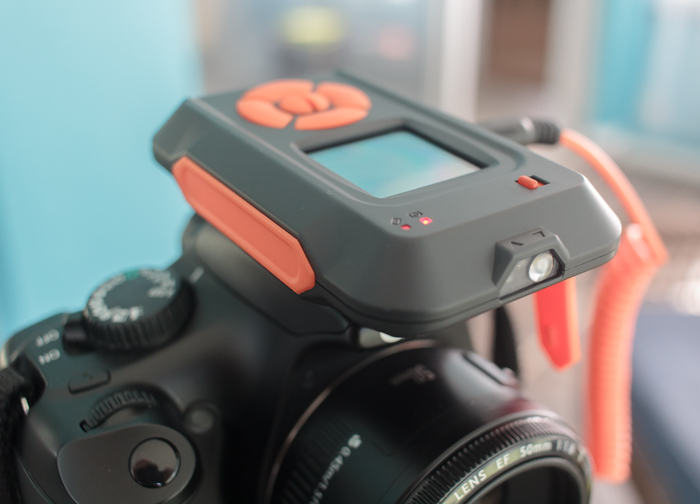
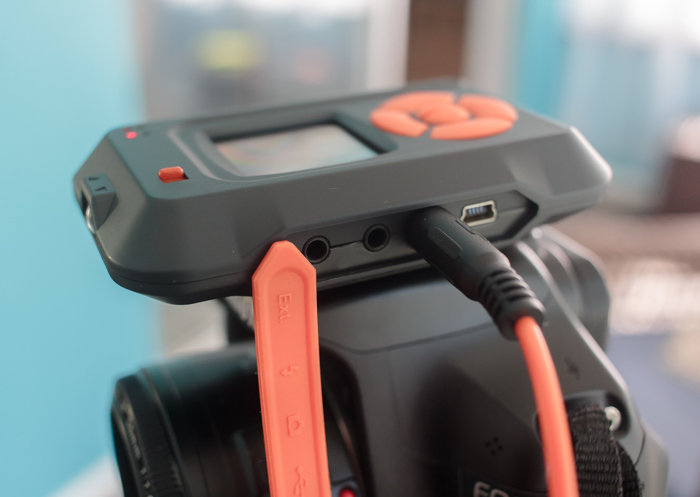
The exterior of the unit is very rugged and appears it would be extremely durable. You definitely get a feeling of solidness when holding it. A 128×128 pixel, full color display, is mounted just above the large buttons, used for operation and selecting menu options on the front of the trigger.

The device is powered by a 3.7 volt/1020 mAh lithium ion battery, which is rechargeable via the provided USB cable. It is also possible to provide power through the USB connection, with no battery in place.

This new trigger kit from MIOPS is an evolution (and apparent replacement) to the Nero Trigger previously available from the company. The newer version was reworked, inside and out, to be a more rugged and competent accessory. Versions of the kit are available for Canon, Nikon, and Sony camera systems, as well as other brands including Olympus, and certain smartphones.

MIOPS7

The various camera connection cables mean that one unit can operate with many different camera makes and models, and extends the usefulness of the accessory.

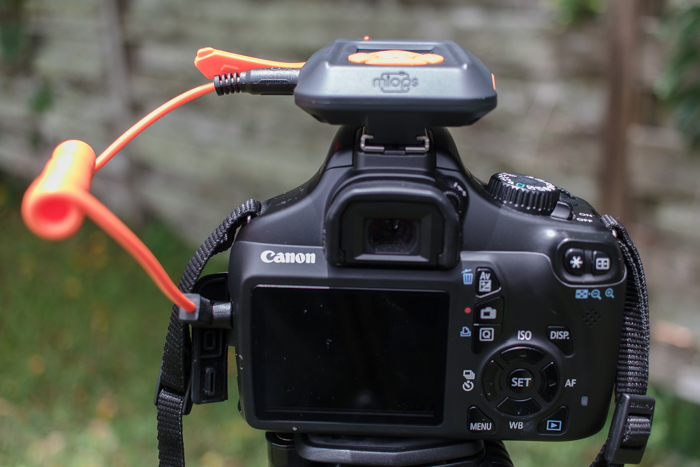
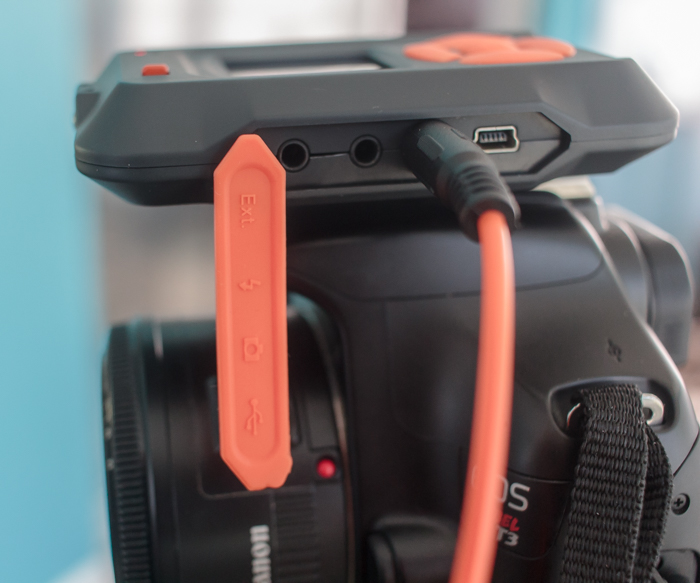
The trigger unit itself is connected in one of two ways, either to an external flash unit, or to the camera itself. Cables for each are included with each unit. This allows the trigger to sync and fire, either the flash system, or the camera shutter itself. Flash units are connected via the PC sync jack, and cameras are connected through the remote shutter release jack, meaning any camera or flash unit with these common connectors can be potentially be paired with the MIOPS trigger.

The MIOPS trigger can either mount on your DSLR’s hotshoe connector, or on your tripod via a standard screw-in connection.

The MIOPS trigger can either mount on your DSLR’s hotshoe connector, or on your tripod or light stand, via a standard screw-in connection.

The unit can be connected for charging via a micro-USB cable, which basically means most smartphone charging cables, which are readily available. The trigger housing is rugged plastic, with raised, easy to press controls and features a large color screen for displaying information, a microphone, and a light sensor that is used for the Lightning and Laser modes. Lastly, an additional port is available for connecting various external sensors in DIY Mode.

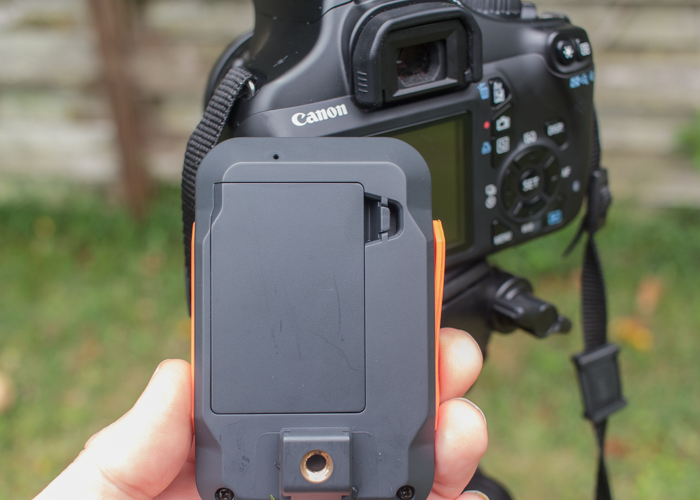
The trigger slides on a standard camera hot shoe, but also has a screw mount for placement on a separate tripod or light stand.

The trigger will accept a standard screw-in type connection for mounting on a tripod.

The trigger will accept a standard screw-in type connection for mounting on a tripod.

To me, one of the best features of the unit is its available remote connectivity via the MIOPS smartphone app. The app is free (available for Apple and Android phones), and allows you to access and control all modes offered by the trigger. After downloading the app, I found it connected to the unit without issue, and I was able to access all modes and modify the settings quickly, without having to even look at the unit mounted on top of my camera.

The accompanying MIOPS smartphone app is a highlight of the system, and allows you to control everything remotely.

The accompanying MIOPS smartphone app is a highlight of the system, and allows you to control everything remotely.

1 – Lightning Mode

Lightning mode is intended to allow you to capture flashes of lightning with your camera, without having to run series of long exposures or using bulb mode. You can set the sensitivity from 1 to 99, and start the sensor to capture the event. This mode is also sensitive to other types of light, such as fireworks, sparks, as well as artificial light, widening the gamut of possibilities. I didn’t get an opportunity to test the unit in a lightning storm, but I did attempt to trigger the MIOPS with a burst from a flashlight, and found that it picked up the light immediately and accurately.

As with several modes on the product, you’ll need to have your camera’s lens in manual focus in order for it to work.

2 – Sound Mode

Although this is the mode you’d expect to be the most useful, (and the biggest draw to the device) I found this one less intriguing due to the way it works. Without using the device, I’d expect it to allow me to trigger the shutter (cables are included to hook the MIOPS unit up to either your camera shutter, or an external flash unit), and capture the image, such as a balloon being popped, for example. This isn’t possible however, due to a slight lag, and the ridiculous shutter speeds necessary.

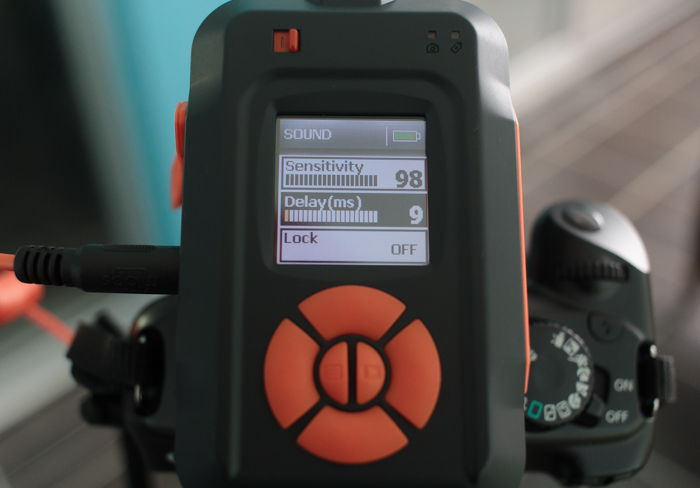
Each mode features several customizable parameters, each adjustable on the unit itself as well as the smartphone app.

Each mode features several customizable parameters, each adjustable on the unit itself as well as the smartphone app.

Instead, you have to perform any captures of this type in total darkness, a pretty big drawback in my book. The idea is to leave your camera shutter open (which is why darkness is needed), and use the MIOPS unit to trigger a separate flash and capture the action.

As a natural light landscape photographer, I don’t have external speedlites available to me. The one I was finally able to get ahold of ended up not being a TTL enabled flash, and didn’t have the connection port I needed to use it.

In the end, I became frustrated and gave up. But of course, this isn’t the trigger’s only feature, and there were plenty of other modes to keep me busy and satisfied.

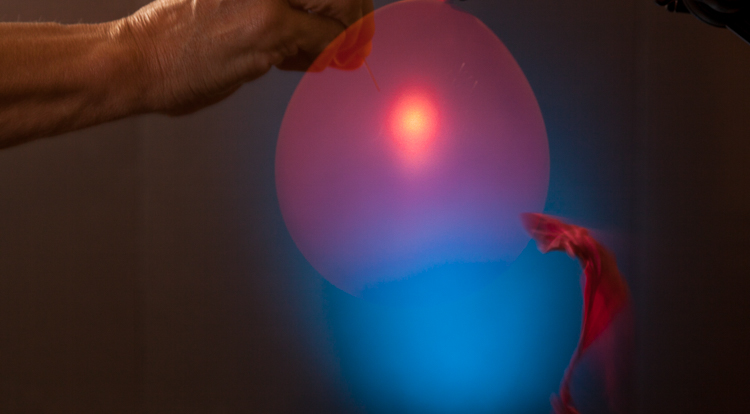
Editor’s note: I actually had a chance to try out the Miops trigger as well and was playing with sound mode. My friend and I had the same issues – we realized we had to fire the flash with it, in total darkness and somehow pop the balloon. We tried it on a balloon and smashing a light bulb. This is all we managed to get:

miops-sound-750px-01

Not exactly frozen or what we were hoping for. We learned later that by turning down the power on the flash the duration is shorter and more freezing occurs. Would have been good for more helpful instructions to come with the unit. We struggled to make this work.

miops-sound-750px-02

The best bulb smash we got after many attempts. Be careful if you try this at home! – Darlene

3 – Time Lapse Mode

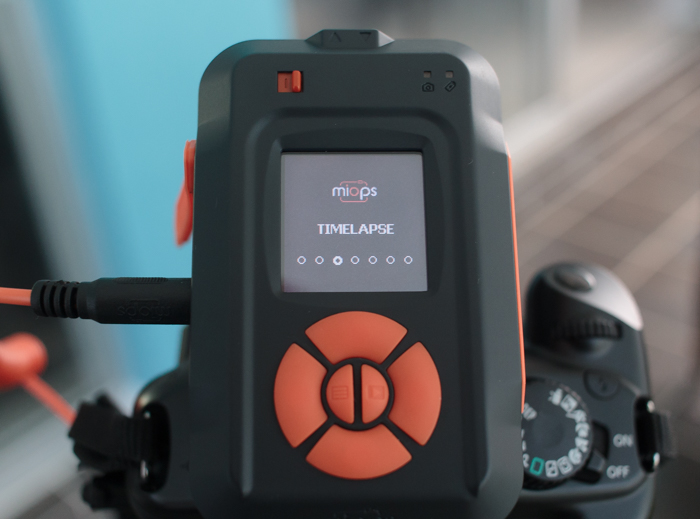
Another extremely useful mode is the time lapse feature. With this mode you’re able to set a few parameters, to produce a set of images showing changes to a scene over a period of time. With this feature, you must set your camera to bulb mode so that the trigger can override your camera’s settings.

MIOPS5

After switching to time lapse mode on the unit, you can set the interval (how often the camera takes a shot), the exposure (this is why your camera must be in bulb mode), as well as the total number of images that will be shot before the process completes.

In my testing, I found it very easy to set these parameters, and after a couple of trials, was pleased to find all of the functionality of this mode worked perfectly, without any issues.

4 – Laser Mode

This is another mode that I was unable to try out, but based on the accuracy of the sensor, I believe it would perform well. This mode requires a constant laser beam to be fed into the front sensor, and will trigger the camera when this beam is broken.

The laser doesn’t have to be a particular type or color, meaning a $ 10 pen laser pointer from an electronics store will do just fine. The hardest part of the operation will probably be mounting the laser on a stable surface and preventing the beam from being broken prematurely. After you’ve setup the laser, you can adjust the delay on the unit up to 999 milliseconds. A final setting allows you to designate a set number of frames to capture in this mode before the trigger stops.

This mode could be used to capture animals moving into the frame (could be tricky to setup) or something falling or moving like pouring shots or freezing water droplets.

10

Image by dPS author Ivo Guimaraes

5 – HDR Mode

HDR is a familiar term for most photographers; it is a technique where two or more images of varying levels of exposure are combined in post-production to capture a higher dynamic range, more equivalent to what the human eye sees. The MIOPS trigger allows you to set these parameters on the unit itself, including the center value (the middle value in the range of exposure levels to be captured), the difference in exposure value from one frame to the next (such as 1 stop between, or 1 1/2 stops between), and the total number of frames to expose, up to 7.

A 3 shot HDR composite from the MIOPS trigger.

A 3 shot HDR composite from the MIOPS trigger.

While this feature definitely extends the functionality and usefulness of the device, it must be said that it doesn’t really offer anything that most DSLR’s can’t do already, and I would almost always prefer to just set this up in-camera.

6 – DIY Mode

DIY mode is one of the modes that really makes the MIOPS unit shine, as it adds functionality not standard on most cameras. The trigger has a 3.5mm stereo jack on the side of the housing, and this allows you to connect a multitude of external sensors, adjust the threshold (percentage of change from the sensor), the delay of the trigger event in milliseconds, and mode, which lets you set what type of event detected from the external (add-on) sensor will trigger the unit, such as change, increase, or decrease.

This mode is advanced, and requires multiple connections in most cases, but the possibilities are almost endless. Sensors that measure changes in temperature, pressure, humidity, or motion can all be used to trigger the camera’s shutter.

7 – Scenario Mode

Scenario mode basically allows the user to program the unit by stringing together a series of functions, and having them execute based on a unique situation. Up to 5 steps can be saved for each custom scenario, and a total of 3 scenarios can be stored on the trigger. This entire function can then be executed via the Miops unit itself, or remotely via the smartphone app.

For example, let’s say a thunderstorm is approaching and you want to capture different types of shots during the event. You could program Lightning Mode as the first step, capturing a set number of stills of the lightning, and then immediately activating Time Lapse Mode in the second step, capturing photos at 5 second intervals to assemble later.

For each step, all of the usual parameters for each mode are available.

I didn’t get the chance to try this scenario out during an actual thunderstorm, but I did attempt to string together a couple of functions and execute them, and the results were excellent. Once the first step was completed (a 5 shot HDR photo), the trigger immediately went into Sound Mode, and stopped after it detected a loud sound (the clap of my hands from a few feet away).

I’d definitely chalk this mode up as one of the most useful features of this unit.

Remote Release

To me, this is one of the most useful features of the MIOPS trigger. I can connect the unit via bluetooth, fire up the accompanying app, and control my shutter from several feet away, wirelessly.

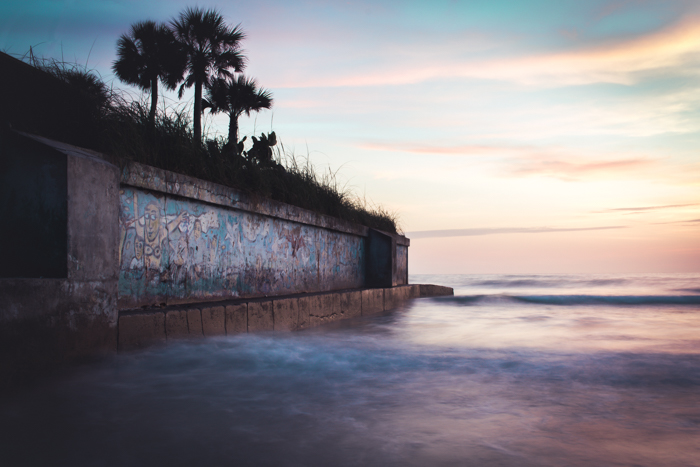
I tried this in a normal scenario I often find myself in, which is my tripod lowered to a short height, legs planted into the surf of a local beach, taking low angle, long exposure shots.

MIOPS_LowAngleBeach

I was able to snap off many perfectly-timed images, without ever having to worry about holding on to my usual corded cable release, keep the camera as still as possible, while avoiding the high winds blowing the cord around and smacking my camera.

I will use this, all the time!

Conclusion

The MIOPS Camera Trigger is a sturdy, rugged little unit that was easy to set up and use (note: this device is more aimed at intermediate to advanced photographers and could easily be confusing for beginners). It has a couple of features that almost make it worth the price of admission in my book, but a few issues linger that keep it from being the perfect tool, including a highly-touted Sound Mode. It promises high-speed photography but requires total darkness and a flash setup to accomplish, as well as a couple of modes that feel a bit tacked on, and not anything you couldn’t do already with existing camera settings (HDR and time lapse).

MIOPS6

Still, the MIOPS is a fun tool to use, the Remote Release mode, DIY mode, and smartphone connectivity are extremely useful, and if you’ve got $ 200 bucks burning a hole in your pocket for a new gadget, this might be one to pick up.

Have you had any experience with the MIOPS Camera Trigger, or triggers in general? Sound off below and let us know what you think, and show us some of the work you’ve accomplished!

googletag.cmd.push(function() {
tablet_slots.push( googletag.defineSlot( “/1005424/_dPSv4_tab-all-article-bottom_(300×250)”, [300, 250], “pb-ad-78623” ).addService( googletag.pubads() ) ); } );

googletag.cmd.push(function() {
mobile_slots.push( googletag.defineSlot( “/1005424/_dPSv4_mob-all-article-bottom_(300×250)”, [300, 250], “pb-ad-78158” ).addService( googletag.pubads() ) ); } );

The post Review of The MIOPS Smart Trigger by Tim Gilbreath appeared first on Digital Photography School.


Digital Photography School

 
Comments Off on Review of The MIOPS Smart Trigger

Posted in Photography


DEAL: Learn How to Take Beautiful Black and White Photos for just $6

10 Jul

NewImageToday is deal 4 of our mid year sale and you’re sure to love this one…

Our Essential Guide to Black & White Photography ebook – just $ 6!

We’ve never offered this best selling eBook at this price – so save 70% today only.

Grab your copy using this link: http://resources.digital-photography-school.com/summer/day4

Not only do black and white images have undeniable beauty, they can also bring added emotion, passion and drama to your photography portfolio. So if you’re looking to ramp up any of these things in your work, then this is definitely the deal for you.

Remember, each deal this week is open for 24 hours only. So get in early or risk missing out on this exceptional $ 6 price!

Snap it up here before it’s gone.

Note: as with all our eBooks this one comes with a money back guarantee. If you don’t find it suits your needs simply contact our support team within 60 days and we’ll refund your money – no questions asked.

googletag.cmd.push(function() {
tablet_slots.push( googletag.defineSlot( “/1005424/_dPSv4_tab-all-article-bottom_(300×250)”, [300, 250], “pb-ad-78623” ).addService( googletag.pubads() ) ); } );

googletag.cmd.push(function() {
mobile_slots.push( googletag.defineSlot( “/1005424/_dPSv4_mob-all-article-bottom_(300×250)”, [300, 250], “pb-ad-78158” ).addService( googletag.pubads() ) ); } );

The post DEAL: Learn How to Take Beautiful Black and White Photos for just $ 6 by Darren Rowse appeared first on Digital Photography School.


Digital Photography School

 
Comments Off on DEAL: Learn How to Take Beautiful Black and White Photos for just $6

Posted in Photography


Deal 3: Save $401 on The Complete Landscape Photography Pack

10 Jul

It’s Day 3 of our Summer Sale and if you’re interested in the art of landscape photography – this offer is for you!

Day 03 fb ad
InFocus Deals are offering dPS subscribers their Complete Landscape Photography Pack with a massive 89% discount!

For US$ 49 you’ll get US$ 450 worth of learning materials in The Complete Landscape Photography Pack – a mammoth savings of US$ 401!

Take a look at what’s in this amazing Landscape Photography pack:

Get full details of the bundle over at the InFocus Deals Page

This bundle is huge and will help you improve your Landscape Photography for sure!

But of course, as with all our deals this week, an offer this fantastic can’t last forever.

So, don’t miss out. Lock in the unbeatable savings of US$ 401 today.

googletag.cmd.push(function() {
tablet_slots.push( googletag.defineSlot( “/1005424/_dPSv4_tab-all-article-bottom_(300×250)”, [300, 250], “pb-ad-78623” ).addService( googletag.pubads() ) ); } );

googletag.cmd.push(function() {
mobile_slots.push( googletag.defineSlot( “/1005424/_dPSv4_mob-all-article-bottom_(300×250)”, [300, 250], “pb-ad-78158” ).addService( googletag.pubads() ) ); } );

The post Deal 3: Save $ 401 on The Complete Landscape Photography Pack by Darren Rowse appeared first on Digital Photography School.


Digital Photography School

 
Comments Off on Deal 3: Save $401 on The Complete Landscape Photography Pack

Posted in Photography


4 Tips for Better Child Photography by a Mom

10 Jul

Elena Shumilova and her family moved to the country and she started photographing her two sons. Then she put her images online and something magical happened – the world loved them! She has over 50 million views of her images and counting.

In the first video below you can see how she captures the natural moments of her children’s lives in such a way as to captivate the world. Then watch the second to get four tips you can use to do the same and do better child photography of your own kids, grandkids or neighbors.

Mom Captures Childhood of Her Sons

4 Expert Tips for Child Photography

You can see more of Elena’s images of childhood here.

Are you inspired? Go take some photos of the children in your life and share them below!

googletag.cmd.push(function() {
tablet_slots.push( googletag.defineSlot( “/1005424/_dPSv4_tab-all-article-bottom_(300×250)”, [300, 250], “pb-ad-78623” ).addService( googletag.pubads() ) ); } );

googletag.cmd.push(function() {
mobile_slots.push( googletag.defineSlot( “/1005424/_dPSv4_mob-all-article-bottom_(300×250)”, [300, 250], “pb-ad-78158” ).addService( googletag.pubads() ) ); } );

The post 4 Tips for Better Child Photography by a Mom by Darlene Hildebrandt appeared first on Digital Photography School.


Digital Photography School

 
Comments Off on 4 Tips for Better Child Photography by a Mom

Posted in Photography