RSS
 

Archive for July, 2016

Nikon D500 firmware update adds workaround for SD card errors

13 Jul

Nikon has released a firmware update for the D500, correcting the card error issue we discussed in our D500 review. The error — which happened once in our office and has been reported by many camera owners — manifests when some UHS-II SD cards are used (Lexar cards seem to be particularly affected). According to Nikon, these card errors are resulting from the cards themselves, not the camera.

The update takes the D500’s firmware from version 1.01 to 1.02, and only corrects the card error. Per Nikon’s changelog, the new firmware does the following:

Articles: Digital Photography Review (dpreview.com)

 
Comments Off on Nikon D500 firmware update adds workaround for SD card errors

Posted in Uncategorized


Wireless tethering on a budget: control your camera from your phone or tablet for $40

13 Jul

Wireless tethering is nothing new, but it’s not exactly a cheap proposition. Well, that’s changed, as Seattle-based photographer Alan Lawrence shows on his blog. For around $ 40, you can wirelessly control and transfer images from your camera to your phone or tablet.

In short, this DIY wireless tethering requires a TP-Link MR3040 Battery Powered 3G Wireless Router, some software, a USB cable, and some time. Lawrence says the router is similar-looking to the CamRanger, a device that offers tethering functionality out-of-the-box, but the router retails for under $ 30 compared to the CamRanger’s $ 299 MSRP.

Once you’ve got your hands on the router (and he does say you need a specific version, which is the one linked above), you’ll need a $ 9 app called DSLR Dashboard for Android, or QDSLR Dashboard for iOS. The last thing you’ll need is a compatible USB cable, and you’re almost in business.

The DSLR Dashboard website has a link to download new firmware for the router, and once you’ve updated that, all you have to do is connect to the wireless network you’ve set up and launch the app. You can control your camera from your device and download files instantly after you’ve taken them.

You can read all the nitty gritty details over on Alan Lawrence’s blog.

Articles: Digital Photography Review (dpreview.com)

 
Comments Off on Wireless tethering on a budget: control your camera from your phone or tablet for $40

Posted in Uncategorized


DIY: $10 Custom Wooden Backdrop Mount

13 Jul

Do you have painted canvas backdrop, or other textile, that you use for portraits?

Why clamp it up to a crossbar (and crop the top) every time you use it, when for about $ 10 you can build a permanent wooden mounting bar that begs to be included in the frame?

Such was this morning's project.Read more »
Strobist

 
Comments Off on DIY: $10 Custom Wooden Backdrop Mount

Posted in Photography


Hasselblad and DJI announce 50MP medium-format drone kit

13 Jul

The first product of the collaboration between Chinese drone maker DJI and Swedish medium-format camera manufacturer Hasselblad will be a long range drone fitted with the same 50MP CMOS sensor that is used in a number of current medium-format cameras, including the new X1D mirrorless camera.

What the companies are calling a ‘fully integrated aerial photography platform’ will combine DJI’s industrial Matrice 600 drone with Hasselblad’s recent A5D aerial camera. The camera, which has no moving parts of its own, will come with an adapted HC 50mm F3.5 lens that has its focus set to infinity. When used with the 50c sensor the lens offers a view similar to that which we would expect from a 42mm lens on a 35mm system camera.

DJI’s M600 can carry a maximum of 6kg/13.2lb which the company says means it can carry the Hasselblad A5D and a Ronin-MX gimbal ‘with ease’ – together the camera, lens and gimbal will weigh just over 4kg/8.95lb.

As both products are already on sale the bundle deal is available now priced $ 25,999/€24,400/¥189,999 (Chinese yuan) – all before tax. The UK price has yet to be announced. For more information see the Hasselblad and the DJI websites – below are a couple of official samples from Hasselblad.

ISO 100, F6.3, 1/500sec
ISO 100, F4.5, 1/800sec

Press release:

DJI and Hasselblad introduce first joint aerial photography package

First fully integrated aerial photography platform combines DJI’s M600 with Hasselblad’s A5D.

DJI and Hasselblad today announced a fully integrated high-end aerial camera-platform bundle made up of Hasselblad’s aerial medium format camera A5D and DJI’s professional flying platform M600.

The A5D-M600 bundle is the first joint product following DJI’s recent investment in Hasselblad. The combination of the M600 and the A5D provides users with today’s most advanced aerial optics and sensors integrated with one of the world’s most reliable aerial platforms. In addition, the two companies are looking at additional joint products for the future.

‘Combining best-in-class aerial optics with the world’s most powerful aerial platform is a natural development for DJI and Hasselblad. We are delighted to provide this unique bundle to professional photographers, surveyors and mappers’, said Perry Oosting, CEO of Hasselblad.’

DJI’s M600 is designed for maximum performance and smart flight safety. The M600 is fully compatible with DJI’s advanced gimbal system the Ronin-MX. It comes fully equipped with 6 intelligent batteries, A3 flight controller, Lightbridge 2 Professional HD transmission system, a dust-proof propulsion system and powerful app control.

Hasselblad’s A5D camera combines the world’s best optics and sensors with a modern, compact design. The sensors are almost twice the size of those used in today’s best 35 mm DSLR cameras and the A5D lens comes in 50 mm.

Hasselblad’s Natural Colour Solution (HNCS) comes standard and helps optimize difficult color gradations straight out of the box. The A5D has a strong seal on the camera body and sensor unit preventing dust in the optical system.

Articles: Digital Photography Review (dpreview.com)

 
Comments Off on Hasselblad and DJI announce 50MP medium-format drone kit

Posted in Uncategorized


Largest Mural in Paris: 15,000 Origami Birds Adorn Condemned Building

13 Jul

[ By WebUrbanist in Art & Street Art & Graffiti. ]

lunar building

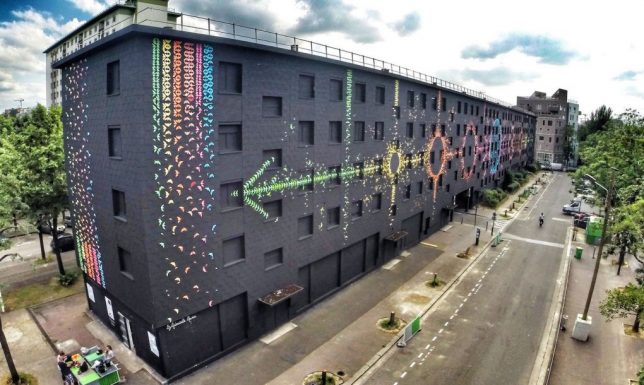
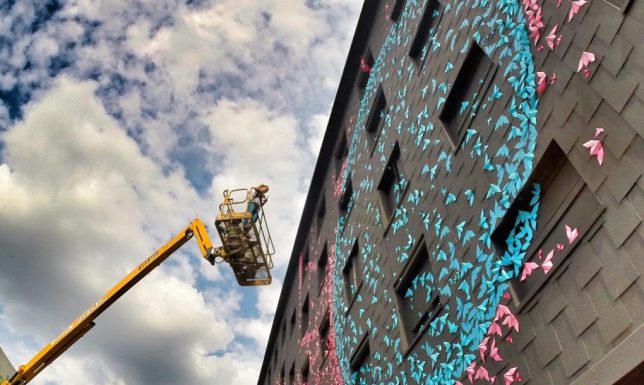
Lunar Cycles is a massive site-specific installation featuring 15,000 paper-crafted birds in the 13th arrondissement of France’s capital city, requiring (non-paper) cranes to hang the elaborate avian collage.

bird art crane

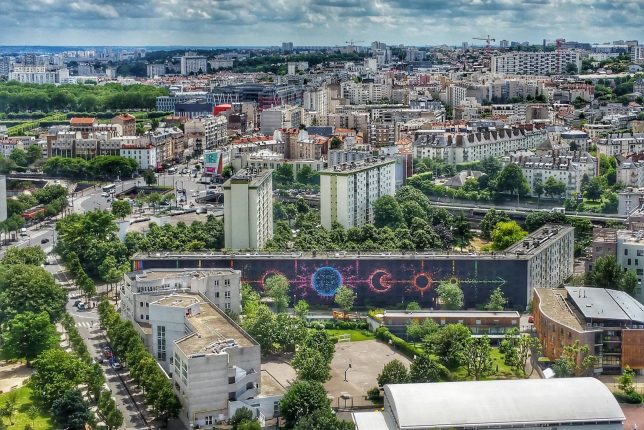
Created by French street artist Mademoiselle Maurice in collaboration with Mathgoth Gallery, the work represents the biggest mural Paris has ever seen, a massive flight of birds landing on a 20,000-square-foot wall.

lunar art bird origami

birds on cranes

The artwork was installed on a condemned building, allowing the artist to first apply a layer of black paint as a backdrop for the colorful array of geometric paper birds added to the wall. She also painted on a series of two-dimensional origamic patterns to bridge between the physical papers and flat surface.

painted bird art

bird crane aerial view

The artist notes that the neighborhood contributed to the design, including those most impacted but the upcoming demolition of this long-standing structural pillar of the community. Previous projects from Maurice have featured similar themes in other settings, from birds and other geometric origami shapes gracing the walls of city streets and ancient castles alike. This work will be up through August.

Share on Facebook


[ By WebUrbanist in Art & Street Art & Graffiti. ]

[ WebUrbanist | Archives | Galleries | Privacy | TOS ]


WebUrbanist

 
Comments Off on Largest Mural in Paris: 15,000 Origami Birds Adorn Condemned Building

Posted in Creativity


Huawei’s Honor 8 comes with dual cam, no Leica branding

13 Jul

Huawei has today announced the latest high-end model of its sub-brand Honor. The Honor 8 is in many ways a smaller version of the phablet-device Honor V8 and also has a lot in common with Huawei’s current flagship P9. Like the P9, it comes with a 5.2-inch 1080p IPS display and a dual-camera setup. The main imaging module combines the images of two 12MP sensors with F2.2 aperture but has to make to without the P9’s Leica Summarit branding.

In terms of memory the device offers up to 4GB of RAM and 64GB of expandable storage. Android 6 and Huawei’s EMUI 4.1 are powered by the Chinese manufacturer’s in-house chipset Kirin 950 and like on the P9 there is a fingerprint sensor on the back for increased security. The 3,000 mAh battery is charged via a USB Type-C port.

The Honor will become available in China on July 19th. The base model with 3GB of RAM and 32GB of storage will cost approximately $ 298, the top-end version with 4GB RAM and 64GB storage will set you back approximately $ 335. No information on international availability has been revealed yet but it can be assumed the Honor 8 will be available to purchase in other regions soon. 

Articles: Digital Photography Review (dpreview.com)

 
Comments Off on Huawei’s Honor 8 comes with dual cam, no Leica branding

Posted in Uncategorized


New infrared image of Orion Nebula surprises ESO researchers

12 Jul

ESO/H. Drass et al. Music: Johan B. Monell (www.johanmonell.com)

A new image from the European Southern Observatory in Chile is making researchers reconsider what they thought they knew about the Orion Nebula. The image comes courtesy of the Very Large Telescope’s HAWK-I infrared imager, and provides the deepest view of the nebula ever recorded. According to ESO, the imagery ‘reveals many more very faint planetary-mass objects than expected.’

Multiple infrared exposures were layered to get this new look into the nebula, and you can see a comparison of how the infrared images compare to visible light. ESO has made the videos available for download in resolutions up to 4K.

Articles: Digital Photography Review (dpreview.com)

 
Comments Off on New infrared image of Orion Nebula surprises ESO researchers

Posted in Uncategorized


6 Reasons to Love Ultra-Wide Lenses

12 Jul

Get 50% off Tom’s ebook Ang’s World – A Life in Photography eBook, now only until July 26 at Snapndeals.

Right now is the best time in the history of photography to get into ultra wide-angle lenses. In the last few years, lens designers have given us quality that is far better than ever – in fact, far better than we ever thought possible. Yet you may have been warned against using ultra wide-angles. Tutors tell you they’re really tricky to use, that you’ll produce ugly effects. Even that these lenses teach you bad habits.

Well, I’ve used ultra-wides for well over 30 years and they haven’t harmed my career. In fact, my last two exhibitions were shot entirely with them.

01 DSC0565

When you need to get everything into a single image – as in this hotel in Manila, Philippines – and you have no room to manoeuvre, an ultra wide-angle focal length of 11mm is your best friend.

If wide-angle lenses take in more of the view than normal, ultra wide-angles take in a huge amount more. The field of view of these lenses is enormous. Compared to around 47º of normal lenses, they can be nearly two-and-a-half times wider, about 130º. There’s one proviso: straight lines in the view remain fairly straight. This contrasts with fish-eye lenses that freely bend straight lines.

Going by 35mm equivalent focal length (comparing focal length to a standard 35mm film or full frame format), focal lengths shorter than the normal 50mm are called wide-angle. The range from 24-35mm can be said to be wide-angle. Shorter than that, to around 18mm is very wide. Any focal length shorter than 18mm we call ultra or extreme wide-angle. Best-known of these lenses is the Sigma 12mm-24mm zoom, challenged by the mighty, and costly, Canon 11mm-24mm f/4. This dwarfs the neat, new Voigtländer 10mm.
02 DSC1518 28mm

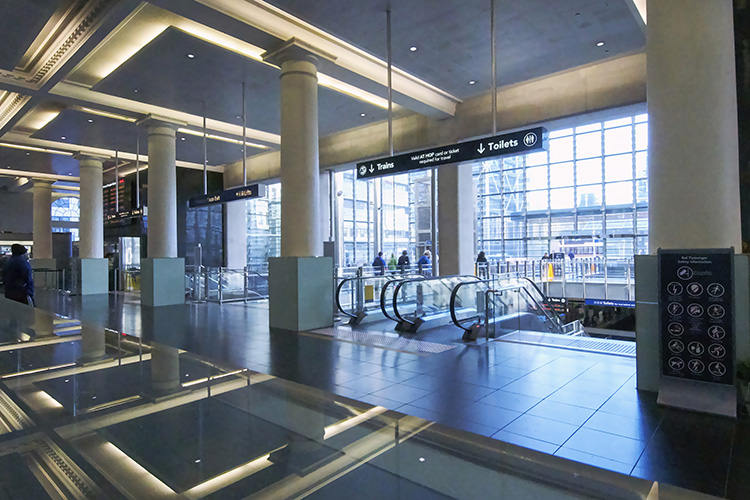
This image covers about 28mm – the widest angle that you’ll commonly see because it’s the widest often found in zoom lenses on compact cameras.
03 DSC1518 11mm

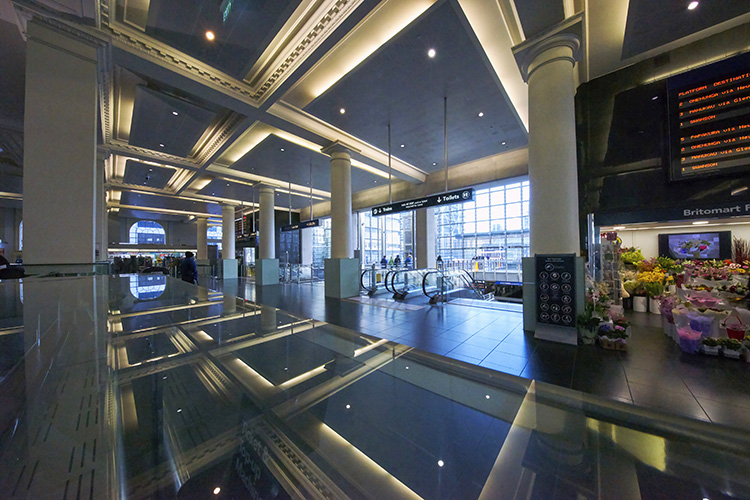
Compare the same view shot at 11mm: almost the widest straight-line shot you can obtain on any format. When you get used to ultra wide-angles, normal focal lengths look telephoto.

Let me share the reasons why I love using ultra wide-angle lenses.

#1 – THEY IMMERSE YOU

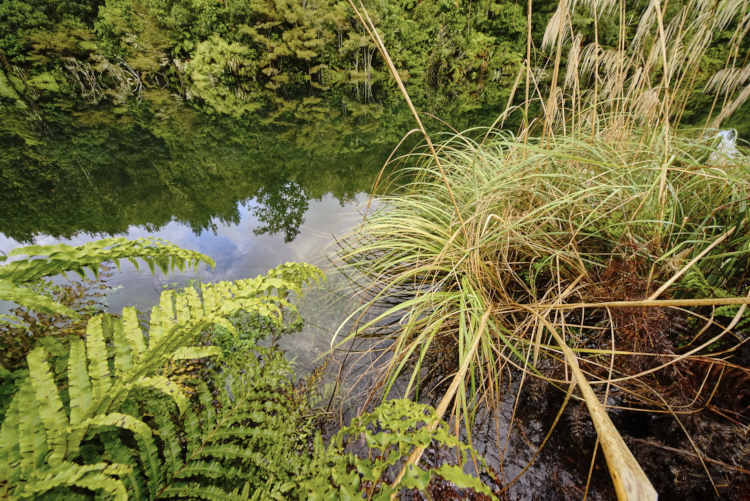
The first one, above all, is that they immerse you in the scene. They take you into the situation. They draw you in. The reason is simple; you, as the photographer, must get close to your subject to capture it effectively. The lens draws you into the action, often well into personal space, and it draws you into the undergrowth.

04 asleep at prayers

With my wide-angle zoom set to 16mm I had to get within touching distance of this mother and her sleeping child. Watching from the outer perimeter just wasn’t an option.
05 DSC2794

You can reach close into nature, the nearest leaves almost touching the lens, yet still capture the wider vista of the trees beyond as well as their reflections in the lake.

#2 – THEY HELP YOU SEE STRAIGHT

You know what it’s like; you’re close to some elegant building like a cathedral and you want to get it all into the shot. But when you point the camera up, the building leans backwards in a thoroughly inelegant way. If you use an ultra wide-angle lens, there’s a good chance you can get the whole building into shot without having to point upwards. Keep the camera pointed at the horizon, and all the verticals stay vertical, so the cathedral won’t look like it’s leaning back.
You’ll get lots of foreground, but that’s easily cropped off.

Here’s a bonus benefit: with ultra wides, you usually don’t have to back that far away from the building to get it all in.

06 DSC0587A

The soaring steeple of this church in New Zealand is not improved by being exaggerated – which would have happened if the camera had been pointing upwards more.

6A DSC0587A crop

The ultra wide-angle view of 12mm took in too much of the foreground fence, so cropping it off benefits the whole image.

#3 – THEY REVERSE SCALE

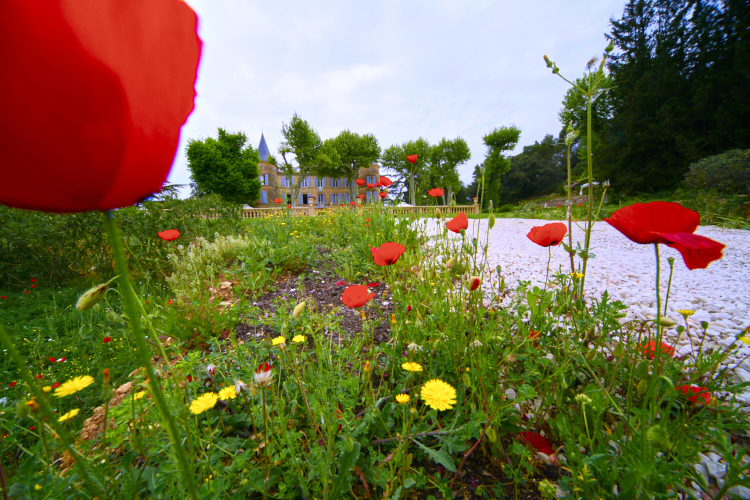
This effect is perhaps the best-known of ultra-wide lenses: they make things close to the lens look enormous, while objects further away look tiny. You may see this called perspective distortion or extreme perspective. In practical terms, what you can exploit is that small things can be made to look huge, and big things made to look very small. The wider the lens, the greater the effect.
07 MG 8638A

With the poppy nearly touching my ultra wide-angle zoom lens set to 12mm, the chateau becomes a tiny, model-like building.
07B DSC8791 1 A

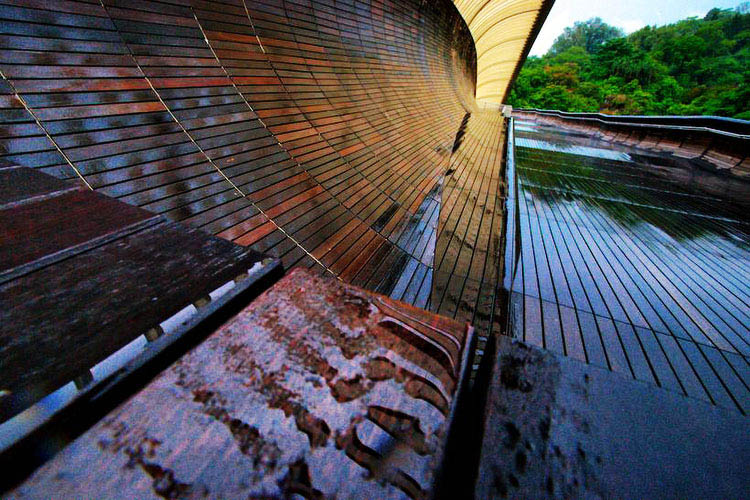
It follows from their strong effect on foreground-background difference that converging lines are very strongly rendered, making for dramatic receding effects as in this wooden walkway in Singapore.

#4 – THEY HAVE BUILT-IN PANORAMA FUNCTIONALITY

Thanks to their ability to capture a huge amount of scenic real estate, ultra-wides are perfect for creating pseudo-panoramas. You simply slice chunks from the top and bottom, and you can create an image that would otherwise need the stitching together of two or more shots. To make the most of this, it helps to ensure the camera is aimed horizontally, as a crop tends to emphasize any leaning of objects.

08 valley of gods ANG2981A

A view of the Valley of the Gods in USA at 12mm can lose the sky and the foreground, so taking your attention to the relation between the flowers in the foreground and the distant landmarks.
09 DSC0940A

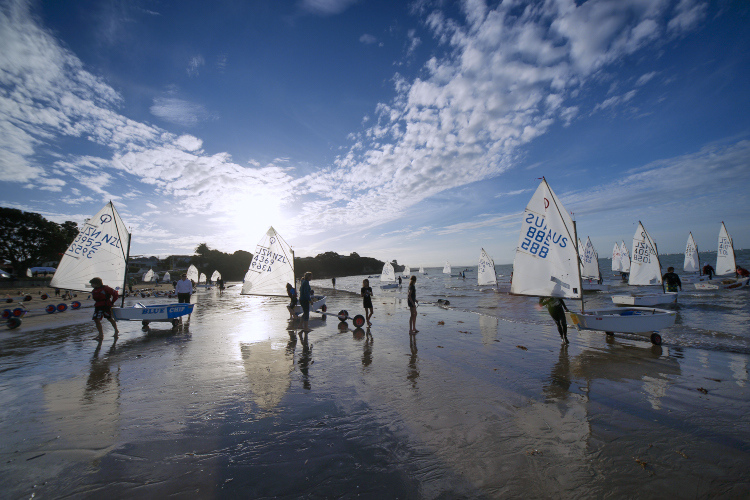
A 12mm focal length shot of sailing in Auckland, New Zealand, was attractive with the sky and sand in view.

09B DSC0940A cropped

But it’s much stronger cropped to panorama, as the emphasis is clearly on the repeated triangles of the sails and busy activity.

#5 – THEY GIVE GLORIOUS REFLECTIONS

If you love working with reflections (who doesn’t?) the wider your field of view, the more reflection you can dig out, and you can’t have too much of that magic. The secret to making the most of reflections is to get as close to the reflecting surface as possible. I’ve been known to dip the camera nearly in the water in my attempt to get to the mirror surface.

10 Travel 154A
This image, at 12mm setting, was the easiest possible capture, if not best for looking after equipment. After a heavy downpour in Venice, I placed the camera on the ground and pressed the shutter button. The camera got wet, but the ground steadied it for the long exposure needed.

#6 – THEY ARE SIMPLY MAGIC!

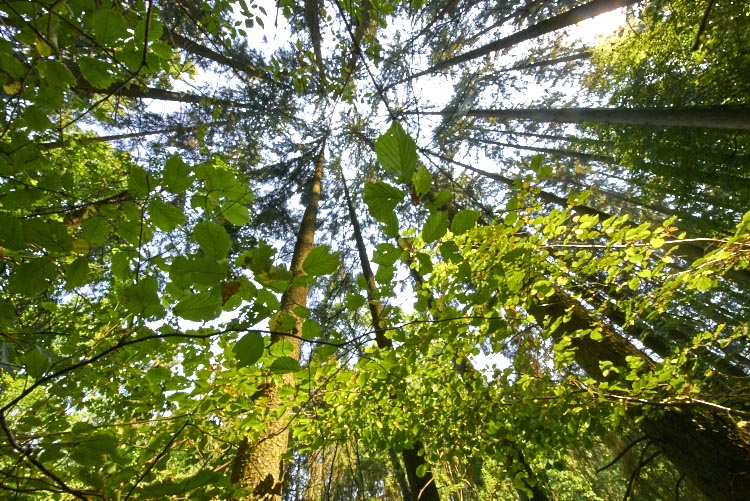
To be sure, many views such as landscape vistas may look like you should capture as much as possible, when selective views often work more effectively. But here’s the thing – where you absolutely need the widest view, an ultra wide-angle can’t be beaten. Where views and treatments simply call for the widest possible view, then the wider you can get it, the better. This is particularly true of ceilings, (e.g., painted ceilings of great houses), and also natural ceilings such as a leafy canopy.
11 DSC2282
If this view were shot at 16mm or 18mm it might look pretty similar. But a wide-angle freak wants more! Made at 11mm focal length, the extra field coverage draws in nearby detail such as criss-crossing branches and sun-lit leaves that smaller views miss out.

In the end, the best reason for using any lens is that it makes magic. Ultra wide-angles do that for me, which is why it’s my most used lens. Do you have any wide-angle images or thoughts you’d like to share? Please do so in the comments below.


Get 50% off Tom’s ebook Ang’s World – A Life in Photography eBook, now only until July 26 at Snapndeals.

googletag.cmd.push(function() {
tablet_slots.push( googletag.defineSlot( “/1005424/_dPSv4_tab-all-article-bottom_(300×250)”, [300, 250], “pb-ad-78623” ).addService( googletag.pubads() ) ); } );

googletag.cmd.push(function() {
mobile_slots.push( googletag.defineSlot( “/1005424/_dPSv4_mob-all-article-bottom_(300×250)”, [300, 250], “pb-ad-78158” ).addService( googletag.pubads() ) ); } );

The post 6 Reasons to Love Ultra-Wide Lenses by Tom Ang appeared first on Digital Photography School.


Digital Photography School

 
Comments Off on 6 Reasons to Love Ultra-Wide Lenses

Posted in Photography


DEAL: How to Take Your Landscape Photography to the Next Level

12 Jul

It’s Day 6 of our 7 Day Mid Year Sale, and for the next 24 hours you can grab a copy of The Complete Photography Tutorial Ebook by Richard Schneider at 61% off.

NewImage

Richard’s guide normally sells for US$ 99. But he’s made it available to the dPS community for just US$ 39, today only.

At over 250 pages, this may be the most in-depth ebook on how to capture amazing photography anywhere whether it be countryside landscapes or cityscapes!

It also comes with bonus Lightroom Presets to help you make your photos pop.

Richard has worked as a photography educator for over 10 years, as well as a pro landscape photographer.

He wrote The Complete Photography Tutorial Ebook to help people learn the core concepts of photography quickly and avoid the same mistakes he made.

Now you can learn everything you need to get started and capture your own stunning photos.

Grab your copy today for just US$ 39 – 61% off.

But remember this offer only lasts for 24 hours.

googletag.cmd.push(function() {
tablet_slots.push( googletag.defineSlot( “/1005424/_dPSv4_tab-all-article-bottom_(300×250)”, [300, 250], “pb-ad-78623” ).addService( googletag.pubads() ) ); } );

googletag.cmd.push(function() {
mobile_slots.push( googletag.defineSlot( “/1005424/_dPSv4_mob-all-article-bottom_(300×250)”, [300, 250], “pb-ad-78158” ).addService( googletag.pubads() ) ); } );

The post DEAL: How to Take Your Landscape Photography to the Next Level by Darren Rowse appeared first on Digital Photography School.


Digital Photography School

 
Comments Off on DEAL: How to Take Your Landscape Photography to the Next Level

Posted in Photography


Sony prices 70-200mm F2.8 GM OSS G Master at $2600

12 Jul

Sony’s premium telezoom for full-frame will cost $ 2600 when it reaches US consumers in July. The 1.4x and 2.0x teleconverters designed for the 70-200 will each cost $ 550 and are also expected to ship in July.

A recent announcement from Sony Japan indicated that the 70-200 would be delayed until September, but according to Sony US, the lens will indeed be available to customers in North America this month. The September release date still stands for Japan.


Press release:

Pricing and Availability – New FE 70-200mm f/2.8 GM OSS G Master lens. Teleconverters and Wireless Lighting Control System

Today, Sony has also released pricing and ship timing for the FE 70-200mm f/2.8 GM OSS G Master lens, 1.4x and 2.0x teleconverters plus their new wireless lighting control system. All products were introduced earlier this year.

One of the most eagerly anticipated lenses of the year, the Sony FE 70-200mm f/2.8 GM OSS G Master lens takes its place as the flagship telephoto zoom in the Sony lens lineup. Featuring built in Optical Stead Shot (OSS) and a fast f/2.8 maximum aperture across the zoom range, the lens will be an ideal fit for nature, sports, travel, fashion, beauty and wedding photographers. This lens will ship this July for a retail price of $ 2,600 US and $ 3,300 CA.

Designed exclusively to fit the 70-200mm F2.8 G Master lens, the new 1.4x and 2.0x teleconverters (models SEL14TC and SEL20TC) will both be sold for the same retail price of about $ 550 US and $ 700 CA, and will ship this July.

The versatile new wireless flash and control system – comprised of the FA-WRC1M wireless radio commander and the FA-WRR1 wireless radio receiver – was designed to meet the growing demands of professional Sony photographers. With a maximum range of 30m (approx.. 98 feet) and the ability to control a maximum of 15 separate flash units in 5 different groups, it offers a flexible wireless flash shooting experience with exceptional performance.

The FA-WRC1M commander will be sold for about $ 350 US and $ 480 CA. The FA-WRR1 receiver will be sold for about $ 200 US and $ 280 CA. Both products will ship this August.

The new lenses, teleconverters and wireless lighting system will be sold at a variety of Sony authorized dealers throughout North America.

A variety of exclusive stories and exciting new content shot with the new lenses, accessories and other Sony ? products can be found at www.alphauniverse.com, Sony’s new community site built to educate, inspire and showcase all fans and customers of the Sony ? brand.

Articles: Digital Photography Review (dpreview.com)

 
Comments Off on Sony prices 70-200mm F2.8 GM OSS G Master at $2600

Posted in Uncategorized