RSS
 

Archive for July, 2016

Weekly Photography Challenge – Nature

16 Jul

This week we are doing a series of articles to help you do better nature photography. See previous articles here:

  • 3 Habits Every Outdoor Photographer Should Develop to Avoid Missing Shots
  • 5 Tips for Better Nature Photography
  • 27 Serene Images of the Natural World
Rodney Campbell

By Rodney Campbell

Weekly Photography Challenge – Nature

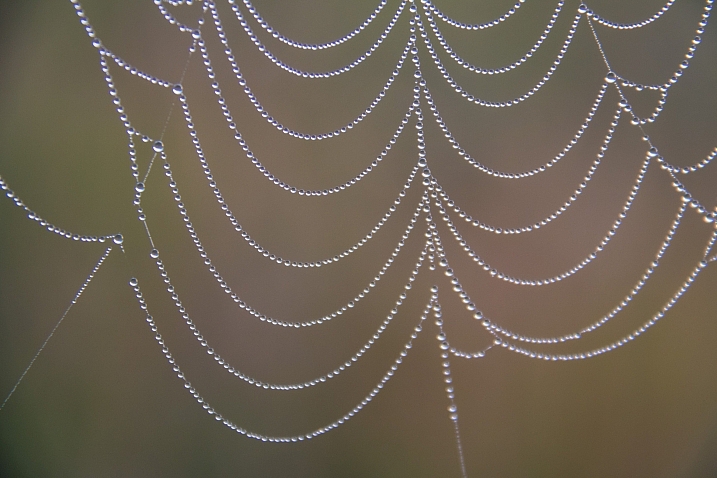
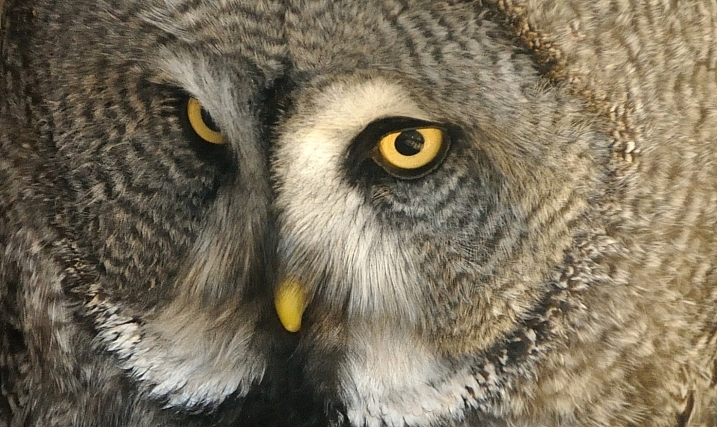
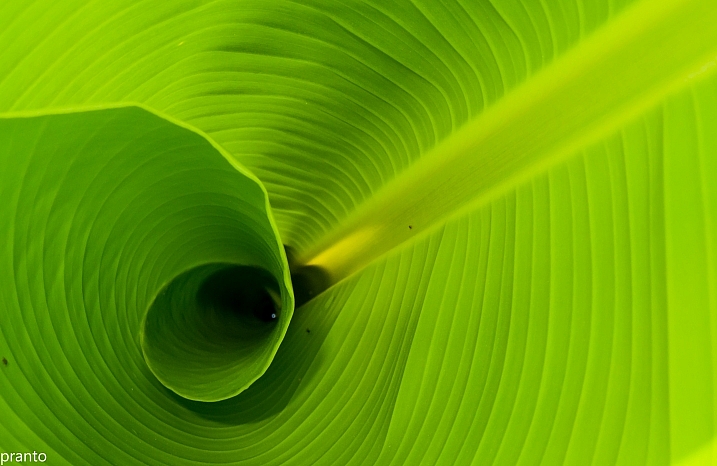
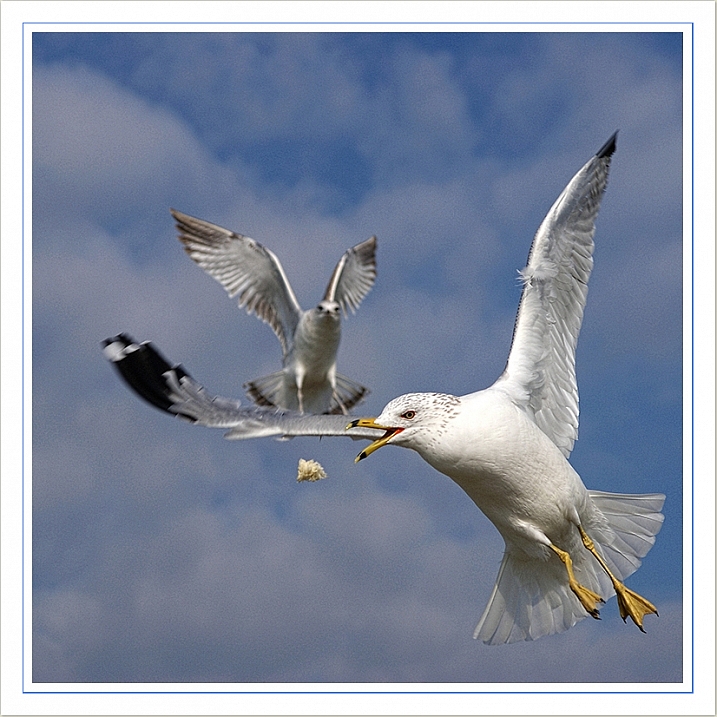
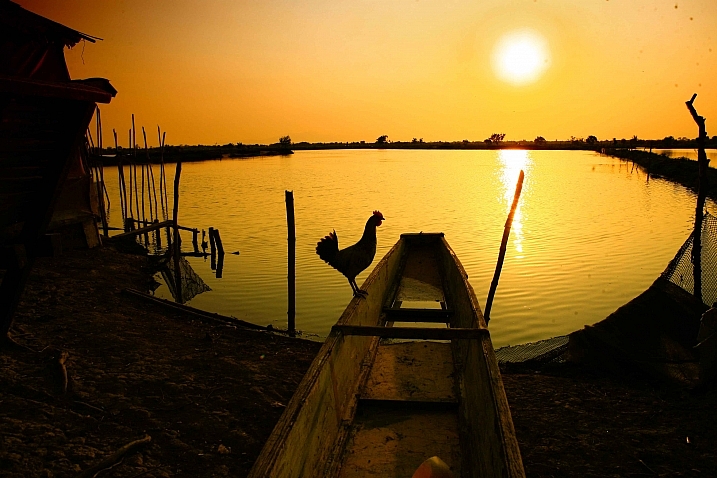
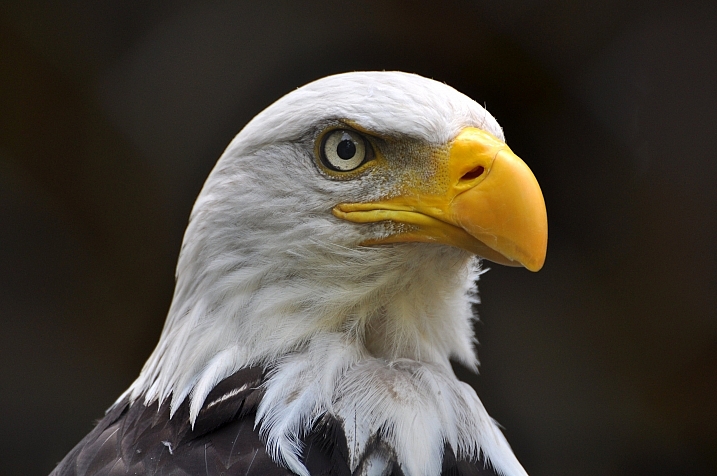
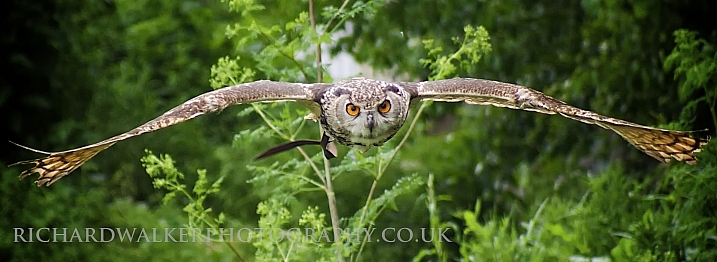
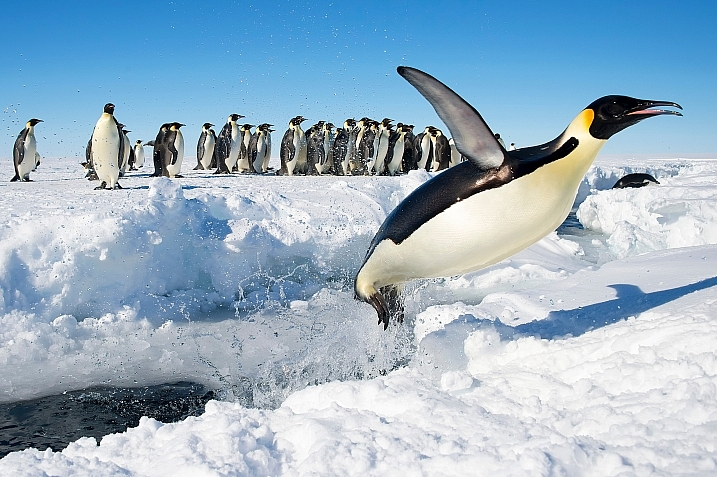
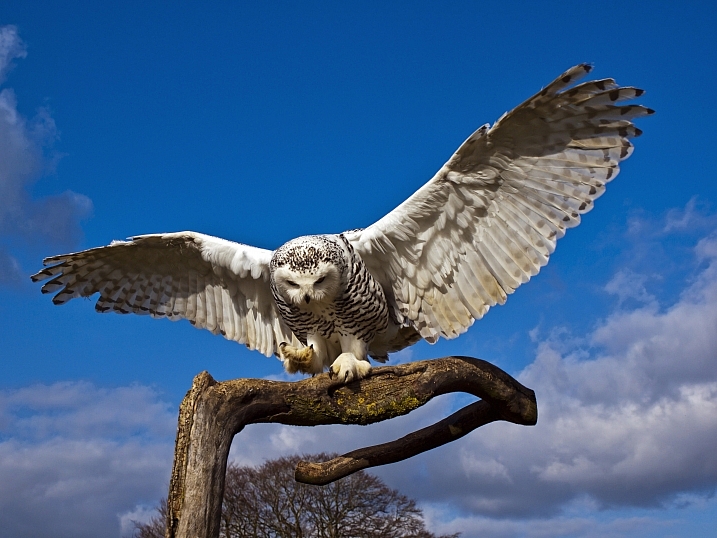
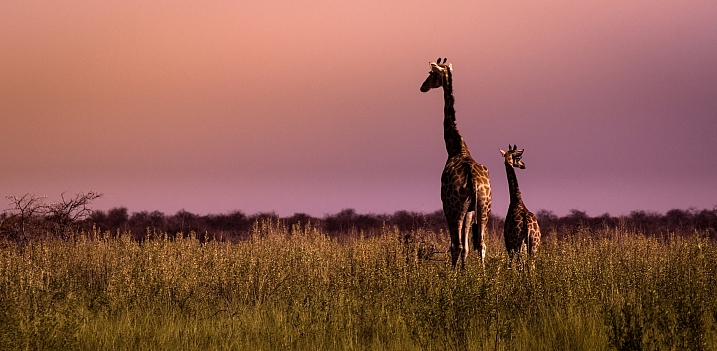
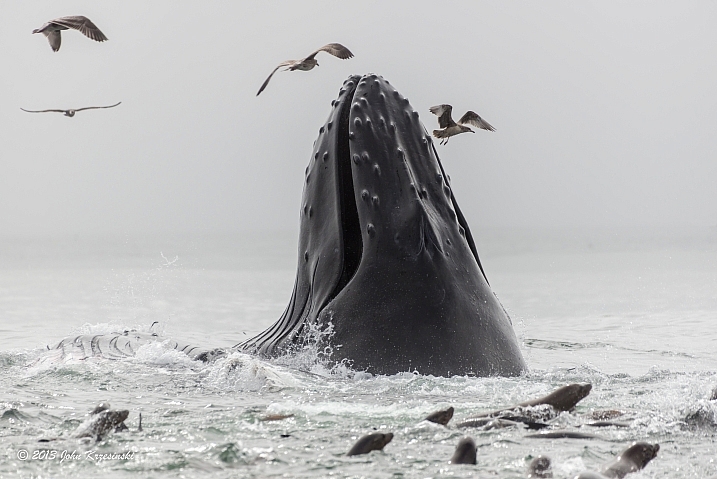
This one is pretty straight forward. Go find some nature and take photos of it. It could be as exotic as an iceberg in Antarctica or an elephant on a safari in Kenya – or as everyday as the squirrell or little bird in your backyard, or a walk in your local park with your dog.

Remember, more nature articles every day this week – so keep reading!

Christopher Michel

By Christopher Michel

Matt Biddulph

By Matt Biddulph

Mark Moschell

By Mark Moschell

Stan Lupo

By Stan Lupo

Share your images below:

Simply upload your shot into the comment field (look for the little camera icon in the Disqus comments section) and they’ll get embedded for us all to see or if you’d prefer upload them to your favourite photo sharing site and leave the link to them. Show me your best images in this week’s challenge. Sometimes it takes a while for an image to appear so be patient and try not to post the same image twice.

googletag.cmd.push(function() {
tablet_slots.push( googletag.defineSlot( “/1005424/_dPSv4_tab-all-article-bottom_(300×250)”, [300, 250], “pb-ad-78623” ).addService( googletag.pubads() ) ); } );

googletag.cmd.push(function() {
mobile_slots.push( googletag.defineSlot( “/1005424/_dPSv4_mob-all-article-bottom_(300×250)”, [300, 250], “pb-ad-78158” ).addService( googletag.pubads() ) ); } );

The post Weekly Photography Challenge – Nature by Darlene Hildebrandt appeared first on Digital Photography School.


Digital Photography School

 
Comments Off on Weekly Photography Challenge – Nature

Posted in Photography


Samyang teases ‘summer blockbuster’ lens announcements

16 Jul

Korean lens manufacturer Samyang has announced that it intends to enjoy a summer of new lenses in what it is calling a ‘Samyang Blockbuster’, starting on Monday 18th July and running until 15th August.

The ‘5 NEW Samyang Lenses will be released on every Monday for the next five weeks’ promotion was placed on the company Facebook page with no clues about what those lenses will be. There is some ambiguity, too, around whether Samyang intends to release five lenses a week for five weeks – making 25 in total – or (probably more likely given the accompanying graphic, above) one lens per week, for five weeks. 

Samyang makes lenses for still and movie photographers, with a relatively new ‘Xeen’ range of dedicated large-scale cine lenses. Autofocus is also quite new for Samyang lenses, with only one lens (AF 50/1.4 FE) available and one more in the pipeline (AF 14/2.8 FE) – both of which are designed for the Sony fully frame FE mount.

For more information see the Samyang website, and the promotion on the company’s Facebook page.

Articles: Digital Photography Review (dpreview.com)

 
Comments Off on Samyang teases ‘summer blockbuster’ lens announcements

Posted in Uncategorized


Nemesis Machine: Cybernetic Cityscape Visualizes Surveillance Data

15 Jul

[ By SA Rogers in Art & Sculpture & Craft. ]

Screen Shot 2016-07-15 at 9.41.23 AM


Activated by unspecified data transmissions, spinners whir and lights blink atop skyscrapers of computer parts arranged like a miniature city, visualizing information in real time as it’s collected – including your own movements as an observer. Your own face blinks back at you from a video monitor as you gaze at the many electronic parts cobbled together into a strange dystopian vision of a modern metropolis. ‘The Nemesis Machine’ by Stanza makes use of data that’s already being collected in London, including environmental monitoring and security-based technologies, representing “the complexities of the real time city as a shifting morphing complex system.”

Screen Shot 2016-07-15 at 9.40.32 AM

nemesis machine 2

In that way, the machine becomes a sort of physical avatar of the city, reflecting its activity even when it’s assembled in another country altogether. The viewer becomes almost like a drone hovering over the miniature cityscape, observing all of those beeps, blinks, clicks and movements as they’re sent from the sensors in London, including temperature, humidity and motion. The installation asks the question, what will future cities look like as we move even further into the era of constant surveillance?

nemesis gif

Screen Shot 2016-07-15 at 9.38.24 AM

nemesis machine 3

“The Nemesis Machine is a mini, mechanical metropolis that monitors the behaviors,a activities, and changing information, of the world around us using networked devices and electronically transmitted information across the internet. The artwork reforms this information and data creating parallel realities. At the heart of this work lies an interest in the urban environment, the network of cameras and sensors to be found there, and the associated issue of privacy and alienation.”

Screen Shot 2016-07-15 at 9.38.53 AM

Screen Shot 2016-07-15 at 9.39.27 AM

“The installation poses the question of who owns the data and speculates that virtual borders will soon create more systems of control. What I’m doing, which is sort of new ground, is that I’m hacking access to a network and re-appropriating the data and information, and I’m re-contextualizing it to give it a wider meaning. I want to show that you can do something positive with this data. And as I say data is the medium of the age. The real world is made virtual and then real again.”


Share on Facebook


[ By SA Rogers in Art & Sculpture & Craft. ]

[ WebUrbanist | Archives | Galleries | Privacy | TOS ]


WebUrbanist

 
Comments Off on Nemesis Machine: Cybernetic Cityscape Visualizes Surveillance Data

Posted in Creativity


Sony 35mm FE lens firmware update improves manual focus reliability

15 Jul

Sony has issued firmware updates for its 35mm full-frame primes which claim to improve focus point reliability when using manual focus for long periods of time. The new firmware is offered for the FE 35mm F1.4 ZA and FE 35mm F2.8 ZA Zeiss-branded lenses.

Articles: Digital Photography Review (dpreview.com)

 
Comments Off on Sony 35mm FE lens firmware update improves manual focus reliability

Posted in Uncategorized


27 Serene Images of the Natural World

15 Jul

This week we are doing a series of articles to help you do better nature photography. See previous articles here:

  • 3 Habits Every Outdoor Photographer Should Develop to Avoid Missing Shots
  • 5 Tips for Better Nature Photography

So here are some examples of some shots of nature to give you some ideas, or just to make you feel refreshed like a walk in the woods.

Nutmeg66

By nutmeg66

Matoff

By Matoff

Dave Edens

By Dave Edens

Anderson Mancini

By Anderson Mancini

Moyan Brenn

By Moyan Brenn

Daniel Sallai

By Daniel Sallai

Moyan Brenn

By Moyan Brenn

Susanne Nilsson

By Susanne Nilsson

M.shattock

By m.shattock

Md. Al Amin

By Md. Al Amin

Chris Gin

By Chris Gin

ELKayPics / Lutz Koch

By eLKayPics / Lutz Koch

Jack Haskell

By Jack Haskell

Hehaden

By hehaden

W. Visser

By W. Visser

Jeff Power

By Jeff Power

U.S. Department Of The Interior

By U.S. Department of the Interior

Richard Walker

By Richard Walker

Christopher Michel

By Christopher Michel

Shutter Fotos

By Shutter Fotos

Neil Howard

By Neil Howard

Jason Carpenter

By Jason Carpenter

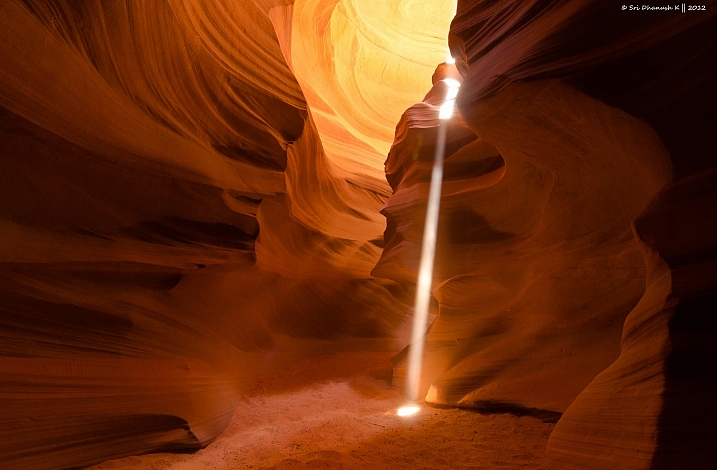
Sri Dhanush K

By Sri Dhanush K

Massmo Relsig

By Massmo Relsig

Images By John 'K'

By Images by John ‘K’

Ravas51

By ravas51

Lenny K Photography

By Lenny K Photography

googletag.cmd.push(function() {
tablet_slots.push( googletag.defineSlot( “/1005424/_dPSv4_tab-all-article-bottom_(300×250)”, [300, 250], “pb-ad-78623” ).addService( googletag.pubads() ) ); } );

googletag.cmd.push(function() {
mobile_slots.push( googletag.defineSlot( “/1005424/_dPSv4_mob-all-article-bottom_(300×250)”, [300, 250], “pb-ad-78158” ).addService( googletag.pubads() ) ); } );

The post 27 Serene Images of the Natural World by Darlene Hildebrandt appeared first on Digital Photography School.


Digital Photography School

 
Comments Off on 27 Serene Images of the Natural World

Posted in Photography


Concept To Creation: Editorial Versus Campaign

15 Jul

Editorial vs. Campaign


Hey FashionPhotographyBlog.com readers.


Thanks for joining us on our “Concept to Creation” series where we walk you through the process of taking an idea into an image. If you were here with us last time, we investigated examples of how working fashion photographers in the industry turn their inspirations into a concepts.


Concept – crucial to binding your images together. You’ll find that any high end magazine only published editorials that has a concept holding the story together so today we are going discuss the difference between editorial and campaign images and how these can affect the concept for your shoots.


There’s a bit of a formula to it all. A set of rules that can, and are, broken.. But for the most part hold true to all editorials and campaigns you see.



Campaigns


Typical, successful campaigns do a few things. Obviously, they showcase the clothing. If you can’t see the clothing, you’re not getting paid. In fashion, clothing is king. It comes before all else.


You’ll notice that campaigns shot on location tend to stick to one area. If you’re on a sofa in a house- you’re on that sofa, in that house, for all of the images. A lot of campaign images tend to look the same. That’s a job well done! It’s this repetition that makes you remember “Oh, the girl on the blue couch with a million men is that Brian Atwood campaign.” So every time you see a girl on a blue couch with a million men, what do you think? That’s right! Subconsciously you recall Brian Atwood’s name!


Brian Atwood’s Fall 2012 Campaign by Mert & Marcus:


Notice all the images have the same general perspective, are in the same place, and are essentially the same image (with variations).

brian-atwood-fall-2012-campaign-by-mert-and-marcusbrian-atwood-fall-2012-campaign-by-mert-and-marcusbrian-atwood-fall-2012-campaign-by-mert-and-marcus


Louis Vuitton Spring 2012 by Steven Meisel

Notice a pattern?
louis-vuitton-2012-by-steven-meisellouis-vuitton-2012-by-steven-meisel

EDITORIALS


With an editorial, you have more freedom! You’re not glued to one location, you can play with lighting (it should be relatively consistent but doesn’t necessarily have to be exactly the same in every shot), you can play with angles, etc.


As long as all the images are tied together via concept, have some fun with it. Editorials do showcase clothing however you can be a bit more liberal and artistic with how it’s shown. And one day, if you have enough power in the fashion world like Steven Meisel or Steven Klein, you can sometimes get away with having the dress you’re supposed to feature laying on the floor or hardly showing. (This only applies to the big players in the fashion photography industry.. don’t get any ideas!)


Steven Klein for Interview Magazine


Observe that there is a definite concept. However, unlike a campaign, there is more variation between the shots.

steven-klein-for-interview-magazinesteven-klein-for-interview-magazinesteven-klein-for-interview-magazinesteven-klein-for-interview-magazine 

Tim Walker (& Tim Burton!) for Harper’s Bazaar


tim-walker-and-tim-burton-for-harpers-bazaartim-walker-and-tim-burton-for-harpers-bazaartim-walker-and-tim-burton-for-harpers-bazaartim-walker-and-tim-burton-for-harpers-bazaar

I hope you all enjoyed discovering the difference between editorial and campaign images. It’s definitely something you want to keep in mind when you’re translating your inspirations into concepts. With a better understanding of the concept to creation process, you’ll be able to turn your shoot ideas into reality.

As always, if you have any questions, feel free to shoot over an email!


Alana


IMAGE SOURCE:

Feature image & images 1-3: Mert & Marcus for Brian Atwood’s Fall 2012 Campaign

Images 4 & 5: Steven Meisel for Louis Vuitton Spring 2012 by Steven Meisel

Images 6-9: Steven Klein for Interview Magazine

Images 10-13: Tim Walker (& Tim Burton!) for Harper’s Bazaar


Fashion Photography Blog

 
Comments Off on Concept To Creation: Editorial Versus Campaign

Posted in Uncategorized


Concept To Creation: How Professional Photographers Do It

15 Jul

Examples of Concept to Creation from Working Fashion Photographers


Hey FashionPhotographyBlog.com readers.


Thanks for joining us on our “Concept to Creation” series where we walk you through the process of taking an idea into an image. If you were with us last time, we discussed how to turn your inspiration into a concept. Today, we’re going to dive a little further. I’ll help you out with some examples of how working fashion editorial photographers pull their inspiration and translating them into concepts.


Miles Aldridge for Vogue Italia:

Sure, there is a concept in the styling: spring time flowy dresses. There’s continuity between the images because of the bold use of color. But anyone that knows Miles Aldridge’s work knows that’s his style. What ties all these images together? Cats! Without the cats, none of the images would appear to be from the same editorial.

miles-aldridge-vogue-italia-cat-story

miles-aldridge-vogue-italia-cat-story

miles-aldridge-vogue-italia-cat-story

Mert & Marcus for W Magazine:

All the images are shot in the same room. A room that has been flooded. Bingo! There’s your concept.

Mert-&-Marcus-for-W-Magazine

Mert-&-Marcus-for-W-Magazine

Knowing that these guys often pull inspiration from artwork, I wouldn’t be surprised if they were inspired by Pre-Raphaeliate “Ophelia” paintings. I especially wouldn’t be surprised if a big piece of their inspiration came from photographer Gregory Crewdson’s interpretation of these Ophelia images.

ophelia-by-john-everett-millais

Ophelia by John Everett Millais

Ophelia-by-Gregory-Crewdson

Ophelia by Gregory Crewdson


Granted, these examples are more on the extreme end of the spectrum. However, I think it drives the idea across. These images aren’t united because of what the model is wearing. They’re not united because of a dominant color (although, it helps). They’re united because of an idea which brings them together. It takes them out of the real world and brings them into a fantasy land.


This is extremely hard to do on a limited budget. That’s okay! No one is expecting someone with no budget to pull off a shoot like the ones pictured above. Just because you don’t have funds doesn’t mean you cant create a concept on a low/no budget that ties everything together.


Melissa Rodwell for Kurv Magazine:


Not something that would require an extravagant budget like the images pictured above. However, they’re all united in their lighting, clothing, hair, makeup, location and way in which they’re shot. Melissa brings you into this whimsical, etherial world with a simple concept. White.


I know, I know, I’ve said it shouldn’t just be a color that holds your images together. But In these images, it works! Melissa brings you beyond the color white and creates a fantasy world out of it.


melissa-rodwell-kurv-magazinemelissa-rodwell-kurv-magazine

Concept – crucial to binding your images together. You’ll find that any high end magazine only published editorials that has a concept holding the story together.


Hope you all enjoyed the examples of working fashion photographers and their thought processes behind turning inspiration into concepts. Stay tuned because next time, we’ll be discussing the difference between editorial and campaign shoots and how these relate to your shoot concepts.

Until then –


Alana


IMAGE SOURCE:


Feature image: Mert & Marcus for W Magazine

Images 1-3: Miles Aldridge for Vogue Italia

Images 4 & 5: Mert & Marcus for W Magazine

Image 6: John Everett Millais

Image 7: Gregory Crewdson

Images 8-10: Melissa Rodwell for Kurv Magazine


Fashion Photography Blog

 
Comments Off on Concept To Creation: How Professional Photographers Do It

Posted in Uncategorized


Concept To Creation: Finding Inspiration

15 Jul

Hey FashionPhotographyBlog.com readers.


This time around, we’re going to look at something a bit more conceptual. I can give advice and guide you, but ultimately it’s your job to really dig in and put it all together. That being said.. This post we’re going to briefly explore “Concept to Creation.” How to take an idea and turn it into an editorial or, if you’re lucky enough, an advertising campaign. Granted this post (hell- this whole blog) is geared more toward fashion photography, but the same principles apply for all walks of photography.


One of the biggest things I didn’t understand when first starting out was what an editorial really is. Sure, it’s a “story.” It’s a group of images that go together. Easy enough. So what was I doing wrong that I couldn’t get any of my “stories” published? They were good pictures but I lacked concept and intrigue.


When planning a shoot, there is no precise way to tell you how to get from initial inspiration to final image. However, we can look at developing an idea and the unwritten rules behind the images we see.


Inspiration


Let’s start at the beginning. First off, find some inspiration.


Many people ask where to find inspiration. There’s no right or wrong answer. For some people it’s reading a book, watching a movie or going to a museum. For others it’s found walking around town or listening to new music. Everyone gets inspired differently. The hardest part is finding out how you’re inspired and taking it from there. Are you stimulated visually? Auditorily?


The best piece of advice I could give you is to NOT look at fashion photographers work when trying to get inspired. Sounds silly, I know. Look at fashion photographers work all the time! Knock yourself out. But when it comes to initially conceiving an idea and you’re looking at the work of other fashion photographers, you’ll run into a few problems.


1) You’re most likely going to steal a bit of their idea/image subconsciously

2) If you’re looking at the work of masters such as Guy Bourdin or Steven Meisel, you’ll drive yourself mad! There is no way your work can stack up against these guys.


Let your ideas come organically. Bounce ideas off friends. Watch a movie. Go to the Met. (Can’t get to NYC? No sweat! The Met has their collections catalogued online, so does the MoMA


Browsing online and see something you like? Create an inspiration folder on your desktop to keep images for later reference.


francis-bacon-pope

Francis Bacon’s work often focuses on how the face distorts as one screams. I used this as inspiration for some personal images I shot.


alana-tyler-slutsky-personal-work-lighting

Image I shot studying how the face can be manipulated through distortion and lighting. As you can see, Bacon’s work was a big inspiration for this set of images.


We’ll dive a little further into turning inspiration into concept next time.

Until then –


Alana


IMAGE SOURCE:


Image 1: Francis Bacon

Image 2: Alana Tyler Slutsky


Fashion Photography Blog

 
Comments Off on Concept To Creation: Finding Inspiration

Posted in Uncategorized


Concept To Creation: Turn Inspiration Into Concept

15 Jul


Turning Inspiration Into A Concept

miles-aldridge-vogue-italia-cat-story

Hey FashionPhotographyBlog.com readers.


Thanks for joining us on our Concept to Creation series where we walk you through the process of taking an idea into an image. If you were with us last time, we talked about talked about how to find inspiration for your shoots. On today’s we’re going to jump into discussing how to turn your inspiration into a concept.


Now, this right here is the most important step. You have an idea, great. How do you turn that idea into a set of images? Can it be turned into a picture narrative/story? Now that you have your base idea, it’s time to do some research! Doing an editorial based on the color red? What does the color red evoke? How have people pulled off red editorials in the past? While researching, plan your shoot. Is it in studio? Is it on location? One model or two? Blonde, brunette or redhead? Take this laundry list of ideas and findings and start turning it into a picture in your head.


For some people, it helps to sketch things out. For others, it helps to collage. I tend to collect images while I sit on an idea and then go straight into creating a moodboard.


Look at an editorial or a campaign, you’ll see that there is one main thing that binds all the images together – a concept. When flipping through the pages of a magazine, you can determine when one story ends and another beings purely based on the concept behind the images. You won’t find an editorial that consists of different girls wearing different types of clothing in locations that aren’t relevant to each other. That’s just not how it works.


A concept is what will bind your story together. And the way in which you handle it shows a bit of your voice. A concept goes further than “my model is wearing red in all the images”. That’s purely a way of styling the model. Put some imagination into it.


Hope you all enjoyed this dive into the thought process behind translating an inspiration into a concept. To help explain the points raised in this post further, the next article I’m posting, we’ll dive a little further by showing you some examples of how working fashion editorial photographers pull their inspiration and translating them into concepts.


Until then –

Alana


IMAGE SOURCE:

Feature image & image 1: Miles Aldridge for Vogue Italia


Fashion Photography Blog

 
Comments Off on Concept To Creation: Turn Inspiration Into Concept

Posted in Uncategorized


Junk Joinery: Heated Plastic Scraps Connect Notched Wooden Furniture

15 Jul

[ By WebUrbanist in Design & Furniture & Decor. ]

wood plastic furniture

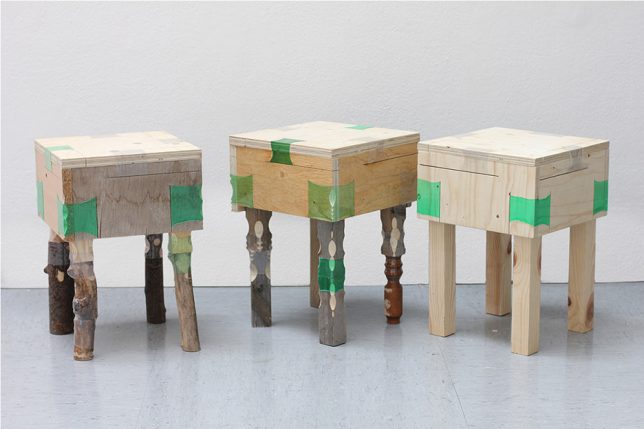
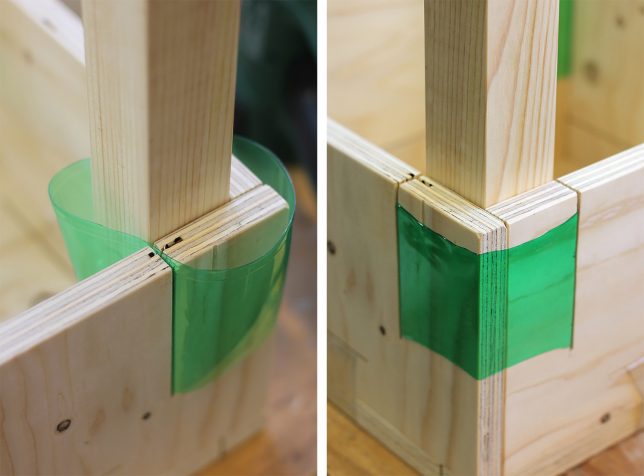
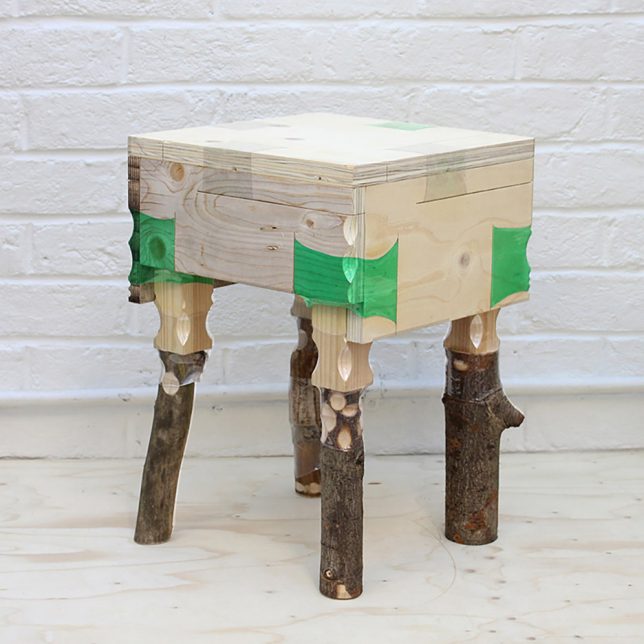
Using scraps from start to finish, this shrink-wrap approach to furniture is not only greener but faster and leaner, requiring less by way of specialized skills or tools and allowing people to build easier do-it-yourself objects. A project of Micaella Pedros for the Royal College of Art, the Joining Bottles project uses heat to shrink plastic around wood joints, collected from around London, locking them together.

wood plastic wrap

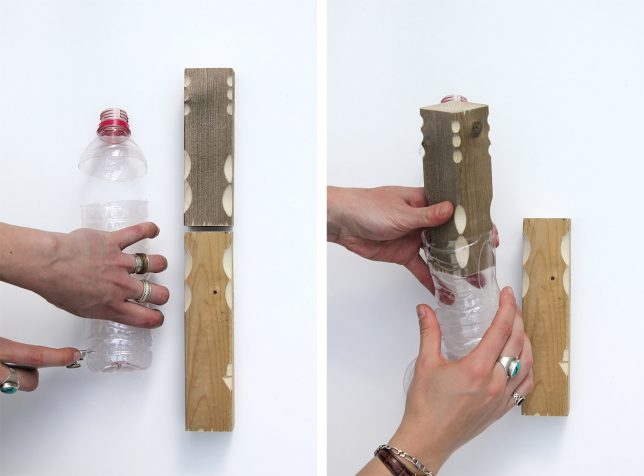
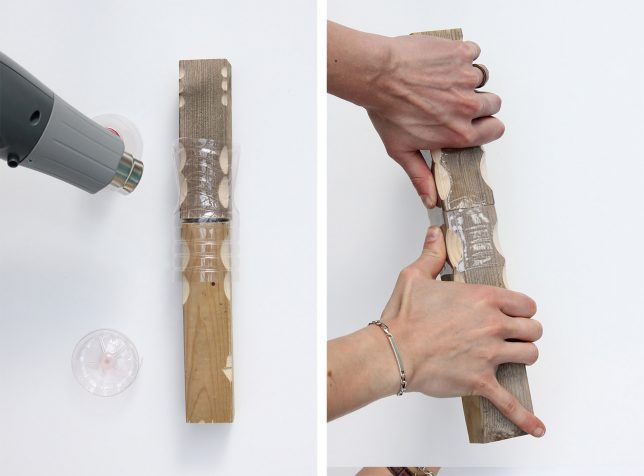
“The idea is about taking a plastic bottle, cutting it, and then putting it around two pieces of wood., Pedros explains. “Then I heat it so it shrinks and creates a joint.” The key part of the process is the notching of the wood, which gives the plastic a way to grip the disparate pieces and lock them firmly into place.

wood joinery plastic

Traditionally, joinery is the most complex, time-consuming and often high-tech part of the furniture-making process, making this innovative approach a welcome alternative for those without the time and resources to spend months building custom pieces.

wood hair heat dryer

On the flip side, cutting and notching tools are commonplace and able to be improvised, meaning: a would-be Joining Bottles-type builder would not need access to a sophisticated wood shop. Scissors, a hair dryer or other heating element and simple carving tools will suffice. They key is in making the connections follow common sense: flat-to-flat helps, and complex angles may fail.

shrink wrap scrap furniture copy

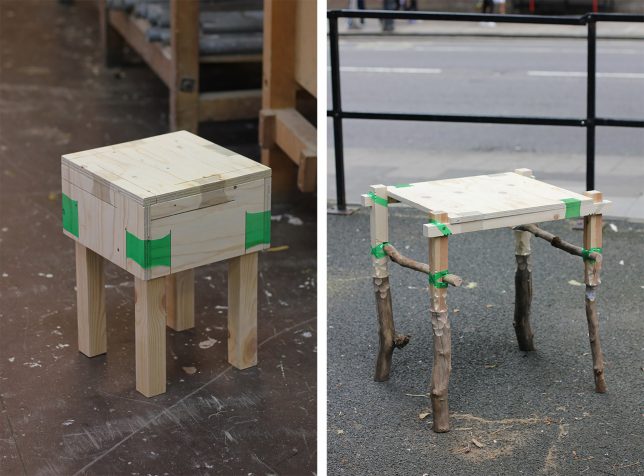
This is not about marketing a new line of garbage chic furniture, but about sharing knowledge about easier ways for ordinary people to upcycle everyday trash. “The core idea of the project is not to sell the products I’m building but more about sharing the principle and sharing the technique.” She is running workshops to show people how to follow her lead, enabling them to walk in with junk and walk out with furniture.

wood joined furniture table

The idea hinges on the global similarity of plastic bottles amid a sea of different types of wood. Basically, anyone in any place can find the same plastics and use them to connect whatever woods are locally available. The aesthetic results are up to the end user (or maker): there are many ways one could refine the look and feel of this general design approach.

Share on Facebook


[ By WebUrbanist in Design & Furniture & Decor. ]

[ WebUrbanist | Archives | Galleries | Privacy | TOS ]


WebUrbanist

 
Comments Off on Junk Joinery: Heated Plastic Scraps Connect Notched Wooden Furniture

Posted in Creativity