RSS
 

Archive for July, 2016

Nico360 to be ‘world’s smallest’ 360-degree camera

19 Jul

A Hong Kong-based startup is looking to fund production of Nico360, a waterproof 360-degree camera. Claiming it will be the ‘world’s smallest’ at 46 x 46 x 28mm, Nicocam says its camera will include two 16MP Sony sensors capable of 25MP still images and 2560 x 1440/30fps video. As with many other 360-degree cameras, Nico360 will be able to produce content for stereoscopic VR headsets. A 1/4″ mount will be used, and the camera will accept microSD cards.

Users will be offered four video recording options: Flat Mode, Sphere Mode, Planet Mode, and VR Mode. Spherical panoramas will be created via in-camera stitching; Nico360 will also offer live video streaming using either via Bluetooth 4.0 or WiFi 5Ghz/ac. Finally, Nico360 will feature an integrated stereo microphone, stabilization and 32GB of internal storage. 

Nicocam plans to sell Nico360 for $ 199. A $ 99 pledge will reserve backers a ‘super early bird’ version on Indiegogo, and the camera is estimated to ship to supporters in October 2016. The funding campaign also offers a ‘full accessories pack’ for $ 89 and a 5000mAh Battery Selfie Stick for $ 39.

Via: Indiegogo

Articles: Digital Photography Review (dpreview.com)

 
Comments Off on Nico360 to be ‘world’s smallest’ 360-degree camera

Posted in Uncategorized


7 Tips for Better Marine Wildlife Photography

19 Jul

I’m an ocean girl. To me, there is no better way to spend a summer day than to get out on the water and explore the mystery that is the deep blue sea, and hopefully experience some of the majestic creatures that live in it and on it.

Whether you are photographing on shore or from a boat, there are a few tips that will help you improve your marine wildlife photography. Underwater photography, though, is an entirely different thing, with a different set of techniques, that are not covered in this article.
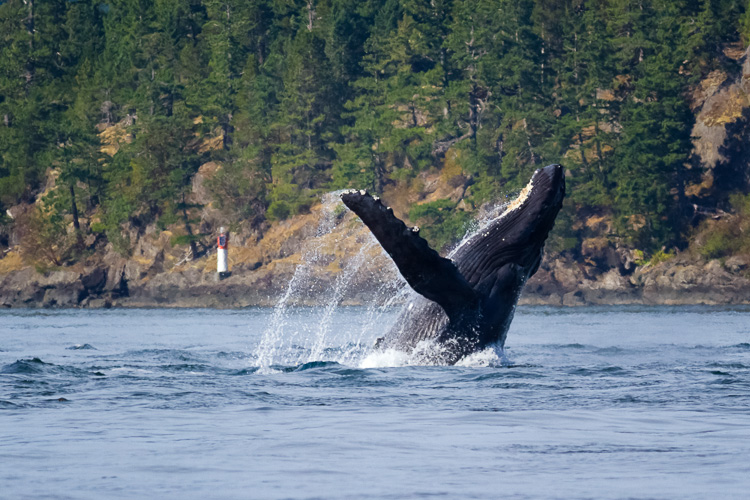
Humpback whale breaching near Campbell River, British Columbia

Humpback whale breaching near Campbell River, British Columbia

The photos in this article were all made in the cool waters off the west coast of North America, but the same tips apply to marine photography all over the world.

1 – Explore the Shore

Let’s start with the shore where you’ll find all sorts of sea creatures. Check the tide tables, and if you can find a rocky beach at low tide. You’ll discover all the animals that live in the shallow tide pools such as urchins, sea anemones, starfish, mollusks and crabs.
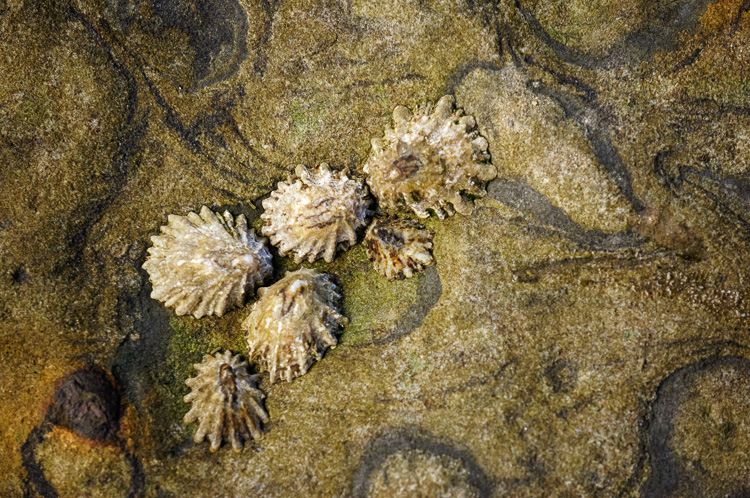
Mollusks in a Tide Pool in Big Sur, California

Mollusks in a Tide Pool in Big Sur, California

Except for the crabs, they don’t seem to mind your presence one bit, so you can get some practice photographing the creatures that don’t notice you. Crabs sometimes pay attention, but if you don’t get too close, you may find they come out of the tide pools, and out from under rocks, and sometimes put on a bit of a show. I photographed this crab in Big Sur, California, where it came out from a crack in the rocks, and proceeded to make all sorts of bubbles as it began molting.
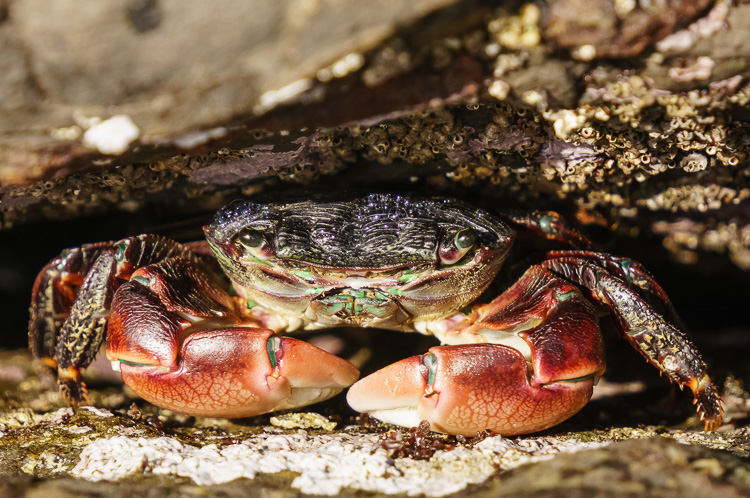
Crab at Big Sur, California

Crab at Big Sur, California

Close to shore, you may also be able to photograph sea otters and river otters (which are also found in salt water). Like other animals, given enough space and time to get used to you, they will go about their daily tasks in your presence, even looking directly at you (and your camera) allowing you to make images that feel intimate.
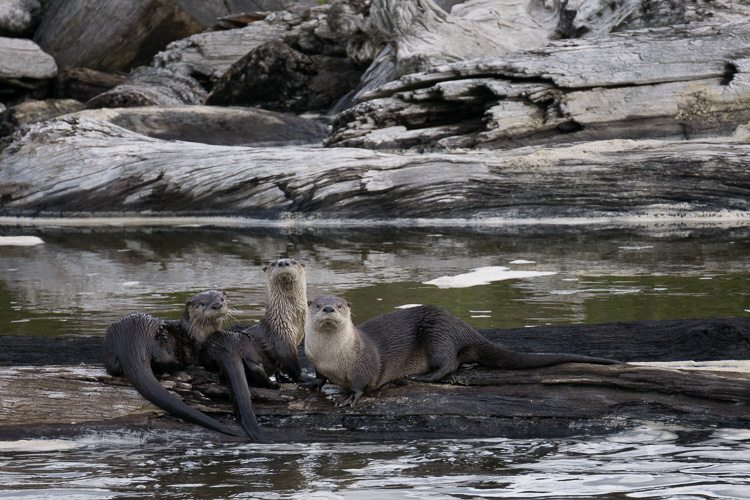
River Otters, Redwood National Park, California

River Otters, Redwood National Park, California

You’ll also find all kinds of sea birds to photograph such as gulls, geese, ducks, cormorants, and eagles.

2 – Get Out in the Deep

My favourite way to photograph marine wildlife is to get out in a boat. Whether you kayak, row, paddle, sail or use a power boat, there’s nothing like the freedom a boat gives you when it comes to exploring the ocean and finding wildlife. If you don’t have access to a boat, consider renting one. Or, try a whale watching tour, which are well worth the money for the photo opportunities they provide including whales, dolphins, seals, and sea lions.
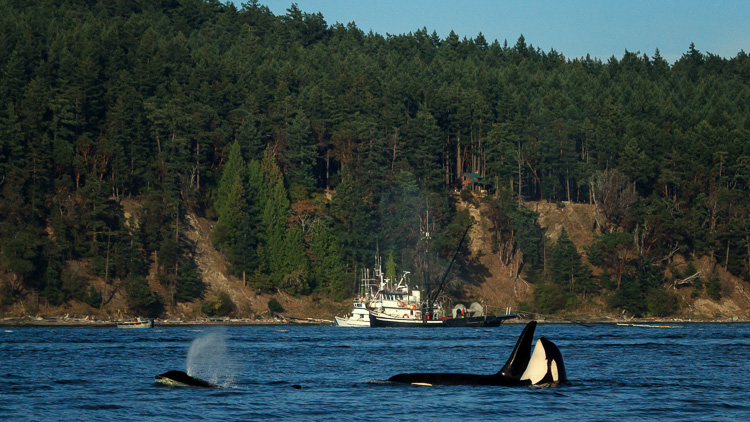
Orcas and commercial fishing boats near San Juan Island, Washington.

Orcas and commercial fishing boats near San Juan Island, Washington.

Weather makes all the difference between an enjoyable day on the water, and those days that make you feel a little on the green side. Check the weather forecast before choosing your day, and once you are out there, keep an eye on changing conditions to stay safe.

If you are driving the boat yourself, and you expect some choppy seas, you should keep your camera safe and dry while underway. I store mine in a Pelican case, which is shockproof and waterproof, so I don’t have to worry about my camera while driving the boat. When shooting, try not to get splashed because salt water can do a lot of damage to your camera.
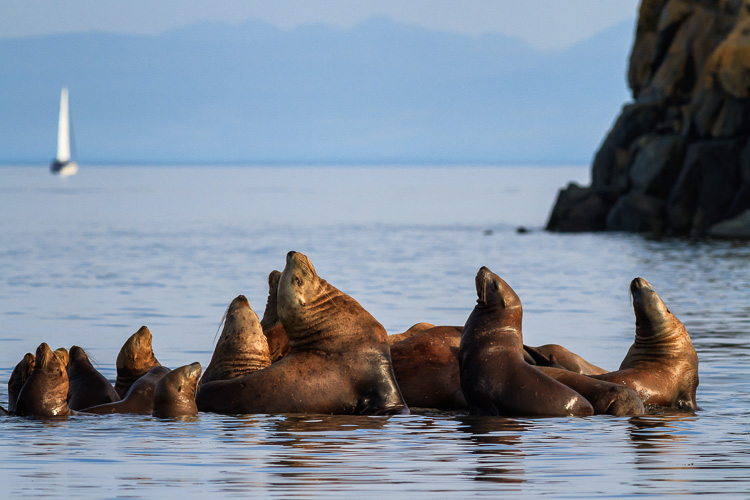
Sea lions basking on rocks near Vancouver Island, British Columbia.

Sea lions basking on rocks near Vancouver Island, British Columbia.

3 – Shoot Handheld

For marine wildlife photography, shooting handheld gives you the freedom to move quickly, as the animals do. Unless you are photographing animals that don’t move very much in the tide pools, a tripod or monopod can slow you down and you’ll likely miss the shot. They are also not very practical on boats.

Instead, use a high ISO, a fast shutter speed, and shoot handheld. Remember to turn your image stabilization on to prevent any camera shake blur. I usually start out with ISO 400 and a shutter speed of 1/1,000th of a second, then make changes based on lighting conditions and the speed the animals are moving. For dolphins and whales, an even faster shutter speed may be required.
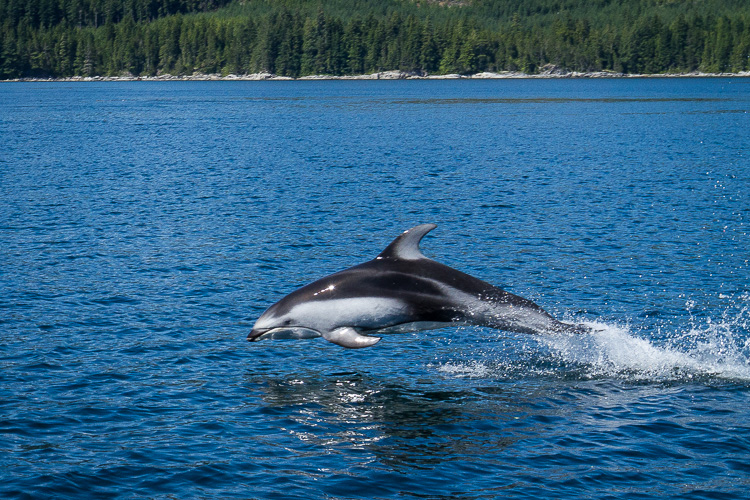
Pacific White Sided Dolphin in Johnstone Strait, British Columbia

Pacific White Sided Dolphin in Johnstone Strait, British Columbia

4 – To Polarize or Not?

When shooting in tide pools, a polarizing filter can be helpful to cut through the glare of light reflecting off the surface of the water, and allow you to see through to the creatures that are underwater. Aside from that however, I don’t generally use a polarizing filter because the cost of doing so is about one stop of light. If I’m not trying to see through the water, I would rather have that stop of light for a faster shutter speed, or a lower ISO for better image quality.

5 – Lenses

You’ll need a variety of lenses for shooting marine wildlife. If you are shooting birds and whales, you’ll need a long telephoto lens to get you close enough to make an image with impact. I like to use a 70-300mm zoom lens or a 400mm prime lens for most of my marine wildlife photography.

Dolphins, on the other hand, will require a wide angle lens because they tend to get very close to the boat. My favourite lens for dolphins is my 11-35mm. So bring a variety of lenses along, and just make there is no salt water spraying around when you switch lenses.
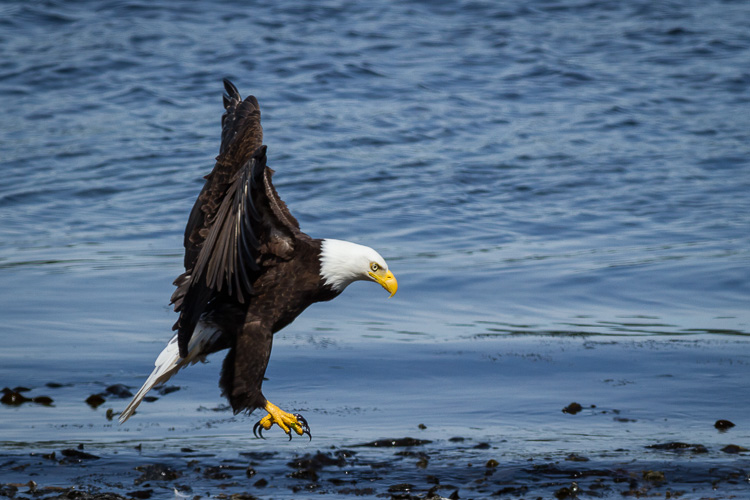
Bald Eagle in Campbell River, British Columbia.

Bald Eagle in Campbell River, British Columbia.

6 – Focus Modes

When photographing the creatures that don’t move too much, one shot auto focus or even manual focus is fine. But when shooting animals that move fast, you’re better off using continuous autofocus mode because it locks on to your subject and tracks its movement, increasing your chances of getting a sharp image. It’s not easy though. Getting focus fast enough to capture the moment is probably the biggest challenge in this type of photography.

7 – Respect the Animals

When you are so close that your presence changes the animal’s behaviour, you are too close. Respect their space by using a longer lens, instead of getting too close. Don’t forget, in most areas there are rules about how close you can get to marine wildlife, especially whales. Usually it is around 100 meters or 100 yards, so check the rules (laws) in your area before heading out.
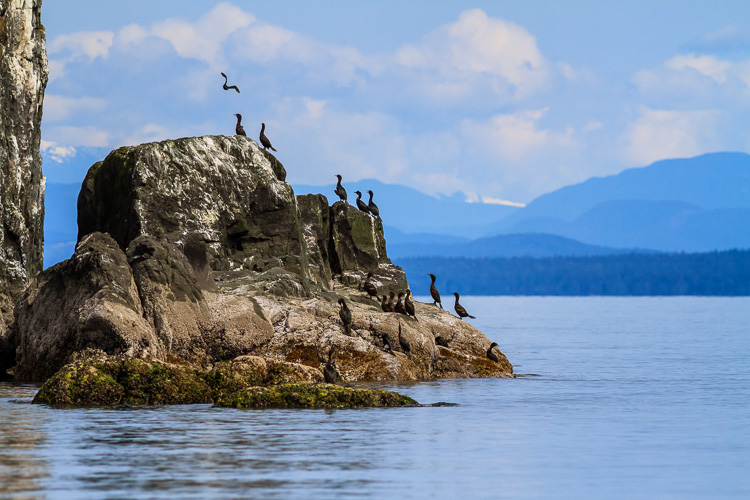
Cormorants on Middlenatch Island, British Columbia.

Cormorants on Middlenatch Island, British Columbia.

I hope these tips help you capture the sometimes elusive, but majestic creatures of the sea, the next time you explore the shoreline or go on a boating adventure.

This week we are doing a series of articles to help you do better nature photography. See previous articles here:

  • 3 Habits Every Outdoor Photographer Should Develop to Avoid Missing Shots
  • 5 Tips for Better Nature Photography
  • 27 Serene Images of the Natural World
  • Weekly Photography Challenge – Nature
  • 10 Ideas for Photographing Nature in your Backyard
  • 6 Tips for Capturing Character and Personality in Wildlife Photography
  • 5 Tips for Setting the Focus in Your Landscape Photography

googletag.cmd.push(function() {
tablet_slots.push( googletag.defineSlot( “/1005424/_dPSv4_tab-all-article-bottom_(300×250)”, [300, 250], “pb-ad-78623” ).addService( googletag.pubads() ) ); } );

googletag.cmd.push(function() {
mobile_slots.push( googletag.defineSlot( “/1005424/_dPSv4_mob-all-article-bottom_(300×250)”, [300, 250], “pb-ad-78158” ).addService( googletag.pubads() ) ); } );

The post 7 Tips for Better Marine Wildlife Photography by Anne McKinnell appeared first on Digital Photography School.


Digital Photography School

 
Comments Off on 7 Tips for Better Marine Wildlife Photography

Posted in Photography


Abandoned Architecture as Art: 13 Radical Reclamation Projects

19 Jul

[ By SA Rogers in Art & Installation & Sound. ]

abandoned art jellyfish 1

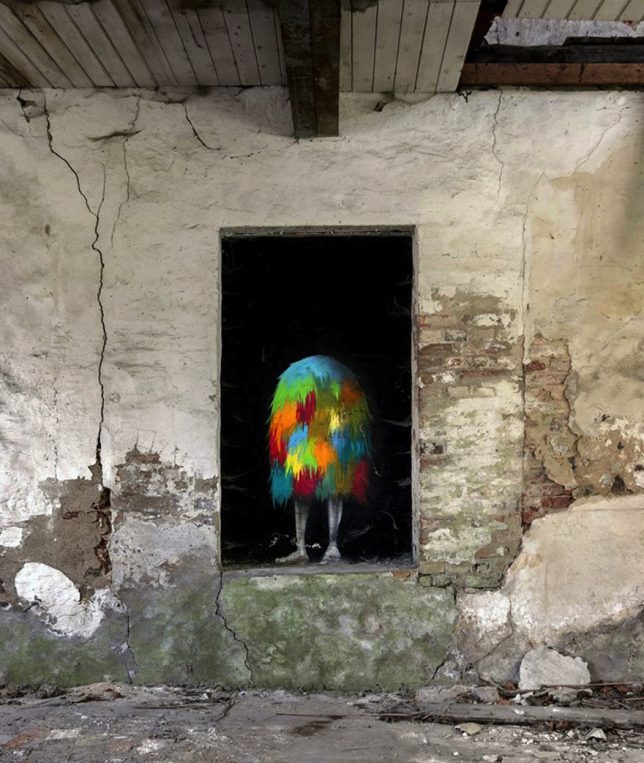
When an abandoned structure can’t be rehabbed in the traditional sense, whether due to practical constraints or simply becoming obsolete, it can be transformed for another purpose with paint, tape, lights and sculptural installations. Artists transform derelict buildings into public art, sometimes visible to lots of passersby and sometimes only to the urban explorers who might be curious enough to climb through a broken window.

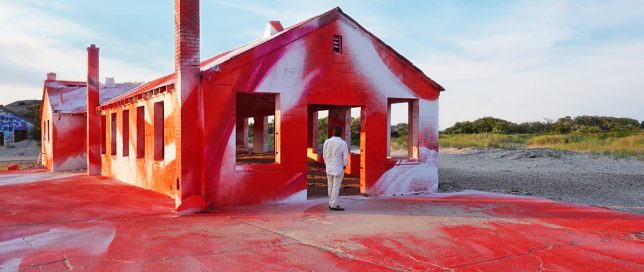
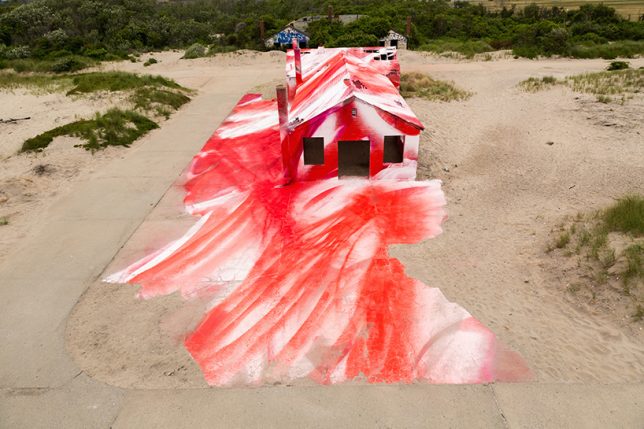
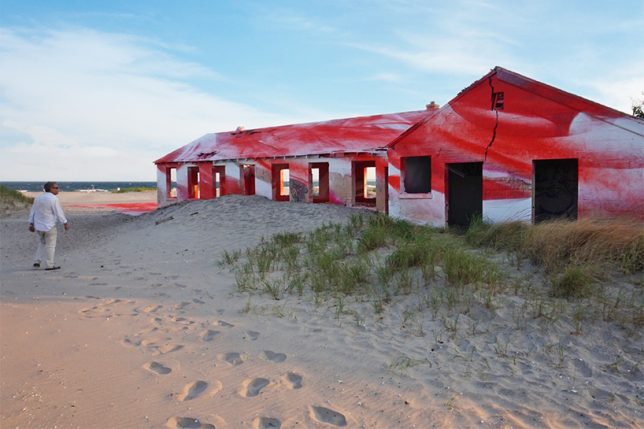
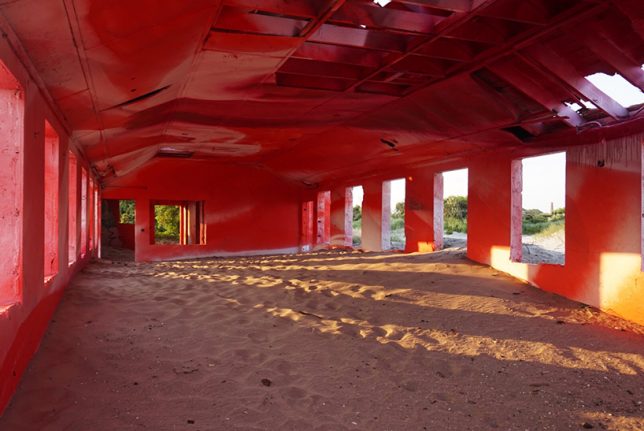
Aquatics Building by Katharina Grosse

abandoned art aquatics 1

abandoned art aquatics 2

abandoned art aquatics 3

abandoned art aquatics 5

One of many abandoned military buildings making up Fort Tilden on the Rockaway Peninsula in Queens now spills red onto the surrounding sand in a site-specific installation by artist Katharina Grosse. The former aquatics building is highlighted inside and out in abstract crimson strokes meant to mimic the effect of a sunset in the Rockaways. The structure is set to be demolished in late 2016.

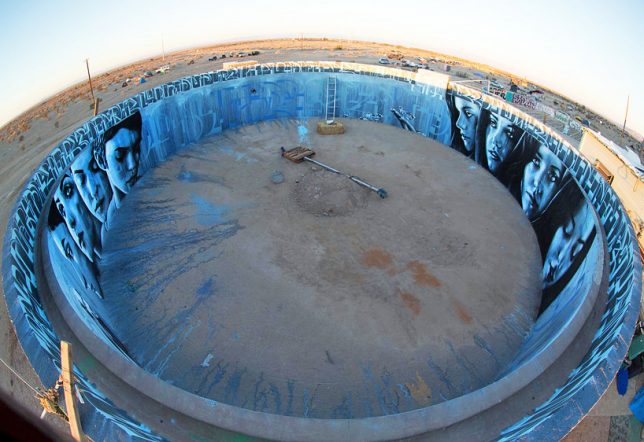
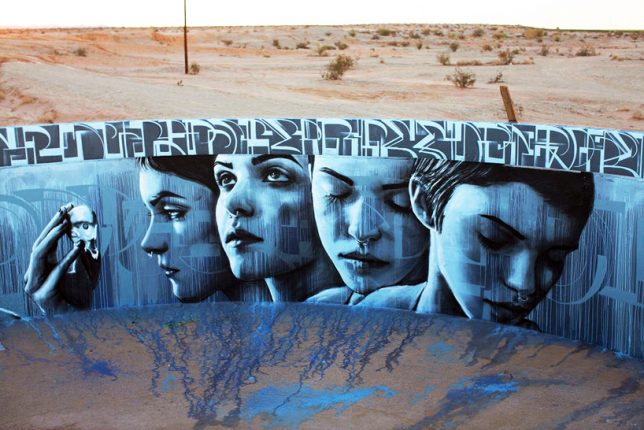
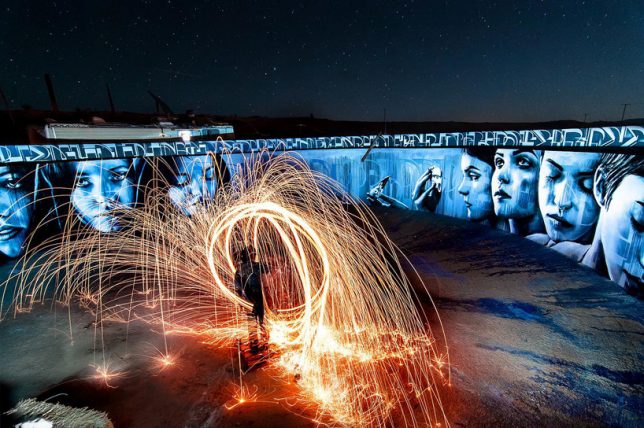
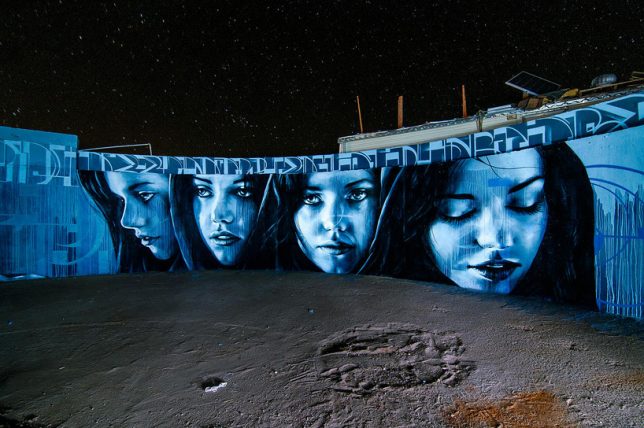
Circular Mural Inside Water Tank by Christina Angelina & Ease One

abandoned art water tank

abandoned art water tank 2

abandoned art water tank 4

abandoned art water tank 5

Only urban explorers curious enough to gain access to this abandoned water tank in Slab City, California will ever see this somber circular mural in person, climbing a staircase to the top of the tank to gaze inside. Artists Christina Angelina and Ease One create a starkly emotional contrast to the red and beige tones of the desert beyond the tank’s walls.

Flower House in Detroit by Lisa Waud

abandoned art flower house

abandoned art flower house 2

abandoned art flower house 3

abandoned art flower house 4

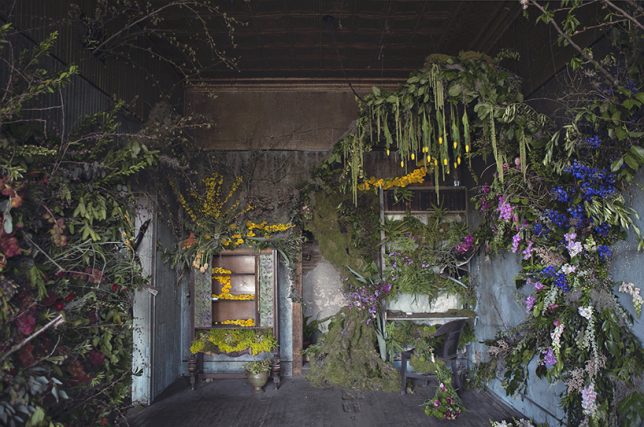
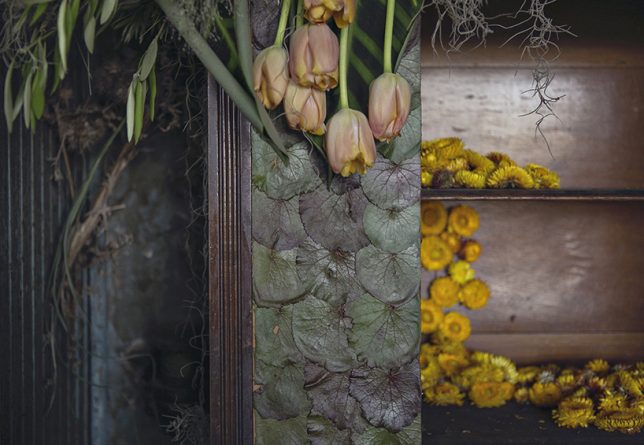
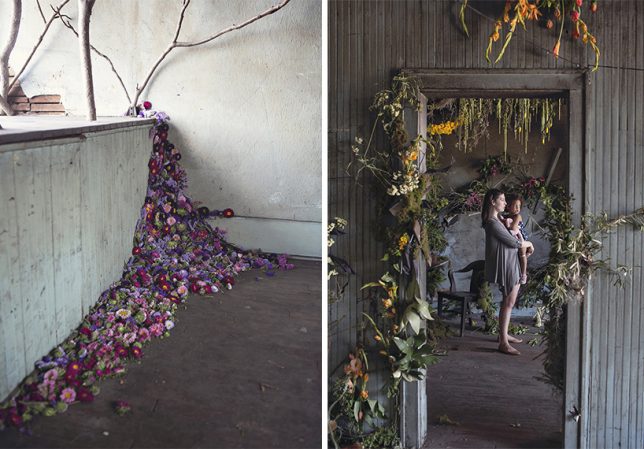
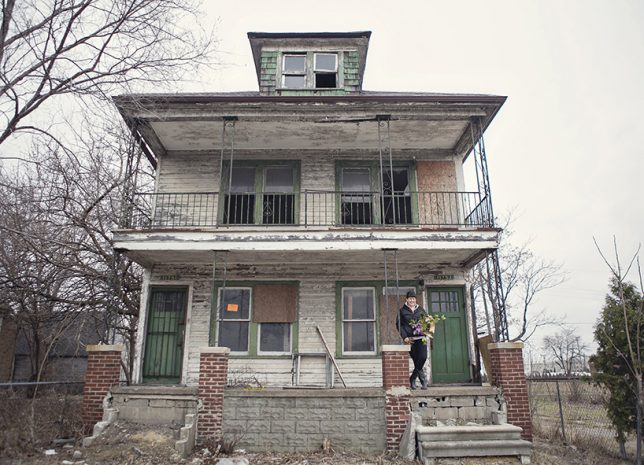
‘Flower House Detroit,’ conceived by Lisa Waud and realized with the help of florists from across the country, may be a temporary reclamation of an abandoned place, but it’s among the most striking installations for its contrast of life and decay. Each room had a different designer creating artful compositions of flowers, trees and even weeds, beautifying the space before it was deconstructed and repurposed. The land the neglected house stood on will be converted into a flower farm for Waud’s design business.

Monsters by Kim Köster

abandoned art monsters 21

abandoned art monsters 2

abandoned art monsters 3

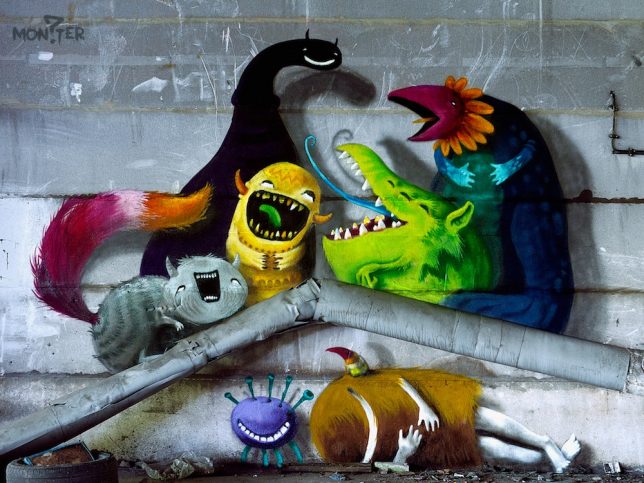
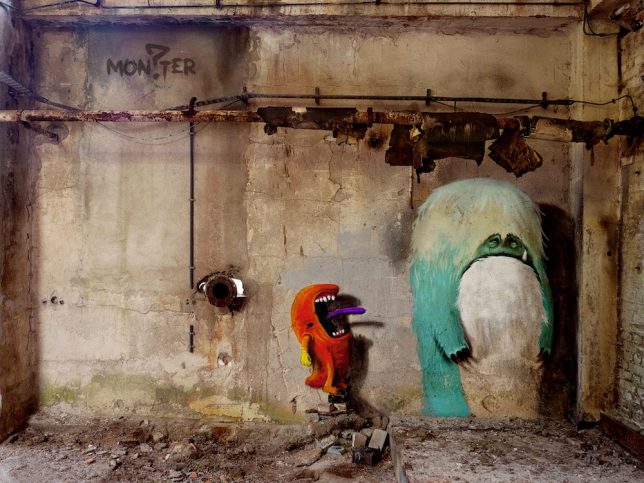
The idea of pairing monsters and abandoned buildings may sound like a nightmare, but German street artist Kim Köster makes both seem less scary with a series of fun paintings in Berlin. Choosing easily accessible public spaces as his canvas, the artist not only takes some of the fear out of dark derelict rooms in a physical sense, but also brings the to a much wider audience thanks to an interactive children’s picture book called Monzster.

Next Page – Click Below to Read More:
Abandoned Architecture As Art 13 Radical Reclamations

Share on Facebook


[ By SA Rogers in Art & Installation & Sound. ]

[ WebUrbanist | Archives | Galleries | Privacy | TOS ]


WebUrbanist

 
Comments Off on Abandoned Architecture as Art: 13 Radical Reclamation Projects

Posted in Creativity


New resolution: how much progress has the Fujifilm X-T2 made for video?

18 Jul

4K video capability was one of the big surprises in the X-T2’s specification. We’ve taken a closer look at how the camera operates in movie mode and added a sample video to our First Impressions Review.

Only beta firmware exists at present, so there’s no F-Log mode available yet, and the operation may yet change, so we explain where the X-T2 has improved and how it could be made still better.

As well as our (beta) video sample, we’ve also expanded our still image sample gallery.

Articles: Digital Photography Review (dpreview.com)

 
Comments Off on New resolution: how much progress has the Fujifilm X-T2 made for video?

Posted in Uncategorized


Planning A Shoot With A Creative Team

18 Jul

Plan a shoot!


Hey FashionPhotographyBlog.com readers,

Last time we discussed what is a creative team and how to find one. Once you have assembled your creative team, it’s time to plan a shoot together. I’ll be using the experience from one of my previous shoots to talk about this process. 


I’m going to walk you through some of the planning behind my editorial for Kenton Magazine, “Surrealia,” however, the same basic principles apply to planning a test.


Get Inspired! 


Come up with a concept and do your research. The idea behind this shoot started when talking to an illustrator, and good friend, Matt Tedford. (Check out his work, he’s awesome!) We wanted to collaborate on an editorial so took some time to sit down and look at other editorials which incorporate illustration.


These were our two favorites:


– Defragmentation of Beauty by Marcin Tyszka for 25 Magazine

– Abbey Lee Kershaw by Greg Kadel for Numero


One thing we planned on doing was to use seamless and have a simple background. This way nothing detracts from the illustration. This idea of a non-distracting background was apparent in both the editorials we favored and reaffirmed our initial plan.


By dissecting what we saw in our two favorite stories, together we decided on a general direction for where the illustrations should go. From Greg Kadel’s images, we loved the use of bright pops of color and cutouts around the model. From Marcin Tyszka’s shoot, we loved the organic, free feeling the illustrations had and the use of line. I left a lot of the illustration to Matt, without too much guidance, because I trust his aesthetic. Good thing too, it turned out amazing!


marcin-tyszka-25-magazine Marcin Tyszka


abbey_lee_kershaw-numero-magazine-shot-by-greg-kadelGreg Kadel


Find your team


After deciding on what type of style we want for illustration, we decided to keep the clothing simple as to not distract or fight with the artwork to be added later. Being a bit inspired by Givenchy’s Spring 2012 collection and current trends, we decided on high contrast clothing and the use of the peplum. Simple, classic and chic. Hair was to be simple, down with beautiful curls and body. Makeup was decided to be pretty natural with a light smokey eye to define the face a bit, in order to compliment the hair and clothing.


We had our idea, now we had to find our team. Be sure to look for creatives that will compliment your concept. If a hairstylist is fantastic at big, beautiful waves but doesn’t favor doing up-dos (which is what you’re planning on doing), perhaps keep them on hold until you have a shoot that requires that big, beautiful wavy hair that they excel at. If someone is enjoying what they’re doing, it will show.


Styling was easy. Jocelyne, a stylist and all around awesome person that I’ve worked with before was the obvious choice. Her style matched exactly what we were looking for. She is great at keeping it simple and classy without over styling with accessories or trying to do too much at once (which is quite common, especially among stylists just starting out.) Fashion doesn’t have to be about excess! Often, less is more.


For hair and makeup we got lucky and were able to find one artist that is excellent at both! I had seen Mayela’s work around and loved her portfolio. I contacted her with details about our shoot and next thing we knew, she said yes and it was time to shoot!


So now that you have planned your shoot, got inspired and found your team it’s time to get ready to shoot. However, with a team of people on board. How do you communicate your photographic vision effectively with your team. Stay tuned, because next time we will be discussing how to communicate your ideas clearly using mood boards.


IMAGE SOURCE:


Feature image: Defragmentation of Beauty by Marcin Tyszka for 25 Magazine (left) & Abbey Lee Kershaw by Greg Kadel for Numero (right)

Image 1: Defragmentation of Beauty by Marcin Tyszka for 25 Magazine

Image 2: Abbey Lee Kershaw by Greg Kadel for Numero


Fashion Photography Blog

 
Comments Off on Planning A Shoot With A Creative Team

Posted in Uncategorized


5 Tips for Setting the Focus in Your Landscape Photography

18 Jul

In many types of photography the question of where you should set your focus is pretty simple. For example, in portrait photography, there is one simple rule: focus on the eyes. When the eyes aren’t on the same plane of focus, focus on the near eye. End of story.

It is pretty simple with other types of photography as well. In wildlife photography you focus on the animal. In fact, in any type of photography where there is a clear subject, you always focus on that subject. That’s not to say it is always easy, but at least it isn’t difficult to figure out.

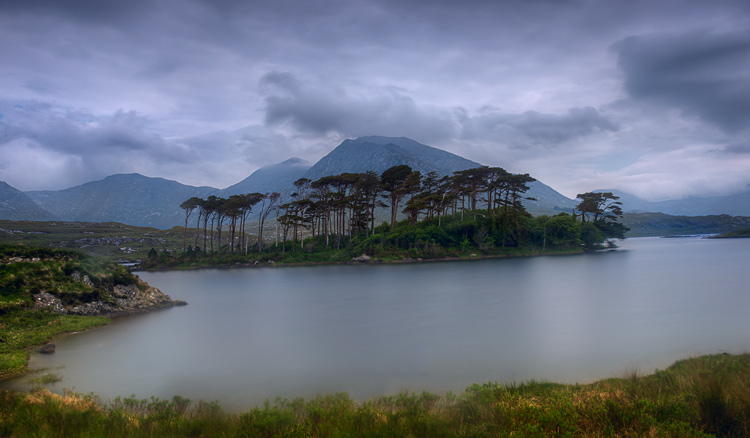
Mullaghmore

Foreground sharpness is paramount in many landscape photos.

But what about landscape photography where you are generally capturing more of a scene than a solitary subject? Where do you focus to ensure that everything in the scene is as sharp as possible? The answer isn’t always so clear. Therefore, in this article, we’ll cover some tips for helping you know where to set the focus.

Tip 1: Don’t Just Set the Focus at Infinity

Again, oftentimes in landscape photography, you are trying to capture a scene rather than a solitary thing. Many times, the scene you are trying to capture is far away from you. Most lenses have a range of focus values, and once you get beyond a certain distance (often 20-30 feet, or 8-10 meters) the focus is set at infinity. Everything beyond that point will just be infinity. Therefore, if you are taking a picture where most things in the frame are far away, it might seem that you should just set the focus at infinity. If you are using autofocus (and most of us are), you might be inclined to set the focus using something that is very far away from you.

If everything in the frame is truly at infinity, then setting the focus at its maximum distance is not a horrible idea. If there is nothing close to you, then there is just no need to do anything else, you don’t need to overly complicate things. But more commonly there are aspects of the scene that are closer to you than infinity. Where do you set the focus then?

Derryclare

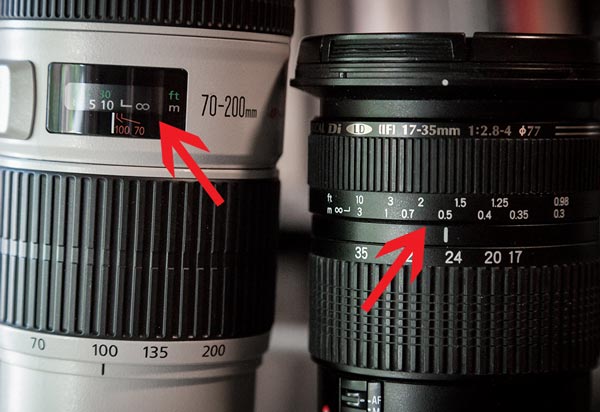
You can get into hyperfocal distance (we’ll talk more about that in a minute) and make this as technical as you want. But often your time is precious when you’re out shooting. The light is changing and things are moving. You can get a pretty good sense of things without resorting to calculations. As a result, consider this rule of thumb: set the focus at infinity and then just turn it back a little bit. The obvious question is what is, how do you define a little bit, and I’m afraid I don’t have a good answer for you. It will vary from lens to lens, but will usually be about a 5-10° turn or just to the highest distance number printed on the lens (if your lens has these numbers).

focus-ring-distance-600px

Why would you want to do that? Because of the depth of field that will be in your picture (more on depth of field below). Since you are taking an outdoor photo, you will probably not be shooting wide open, or even with a large aperture. So, there will likely be some depth depth of field involved. It doesn’t necessarily have to be a large depth of field, but the point is that it gives you some leeway. By pulling the focus forward, that leeway will still get everything out to infinity in focus. It will also get things a little closer in focus as well.

Tip 2: Try Focusing a Third of the Way into the Picture

Many pictures are ruined because the foreground is not sharp. It happens all the time. Therefore, if you have something in your scene that is close to the camera, focus on it. If the ground is prominent in your picture, set your focus close to you. Make sure that foreground is in focus. Often you will set the focus only a few feet in front of you.

But wait a second, you might ask, what about my background? Won’t it be out of focus or blurry? Probably not. If you’re using your wide-angle lens (and if you are taking a outdoor photo that has a discrete foreground, then you probably are) you will have a wide depth of field, even at moderate to large apertures.

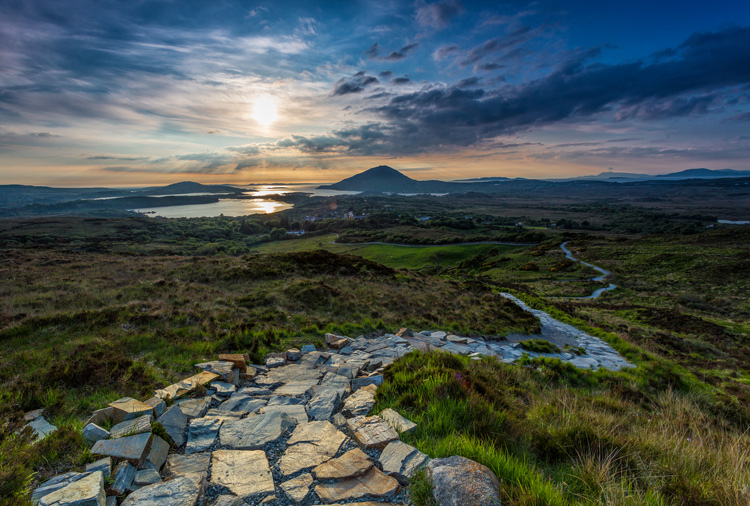
Connemara

A sharp foregound focus furthers the viewer’s sense that they can walk into the picture.

Tip 3: Focus on the Subject Matter

Let’s not lose sight of the obvious though. When you have a definite subject or center of interest in your photo, just focus on that. It is the most important part of your picture and you absolutely need it in focus. Don’t worry about your foreground, don’t worry about your background. Just make sure the subject is in focus. Frankly, if there is a little fall-off in sharpness from your subject, that will probably not be such a bad thing.

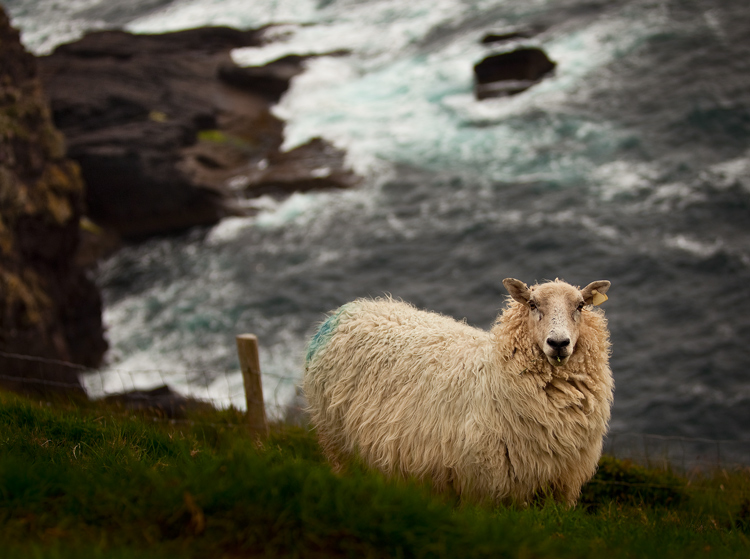
Dingle-Sheep

Sometimes you just want a definite subject in focus, and having the background start to blur out is just fine, as in this image of a sheep.

Tip 4: Watch the Aperture

There are no free lunches in photography. You probably already know that by using a smaller aperture to get a larger depth of field, it will cost you light. The smaller aperture lets in less light so you will have to use a longer shutter speed (risking blur if you aren’t using a tripod) or raise the ISO (risking digital noise in your picture). But the smaller aperture will also lead to something called diffraction, particularly in cameras with smaller digital sensors. Therefore, just using the smallest aperture possible isn’t always the answer. You cannot just set your focus anywhere and rely on a super-wide depth of field to save you.

There are two ways around this issue though, which we’ll talk about next.

Kinbane-Head

With everything in the shot at a distance of infinity (30 feet or more), I did not need a wide depth of field to keep everything in focus.

Tip 5: Know Your Hyperfocal Distance

Hyperfocal distance is just a fancy name for determining how close you can set your focus, and still keep your background acceptably sharp. There are apps and calculators that will tell you this distance depending on your aperture, sensor size, and focal length. For a full explanation of hyperfocal distance along with some charts and links to apps that will calculate it for you, check out How to Find and Use Hyperfocal Distance for Sharp Backgrounds .

An example will illustrate the point made above about backgrounds tending to remain sharp when you are using wide angle lenses. If you’re using a 16mm lens on a full frame camera, and shooting at f/11, your hyperfocal distance is only 2.5 feet. That means you can set the focus on a point just in front of you, and keep everything behind that point sharp.

Knowing the hyperfocal distance will often liberate you to set the focus point quite close, in order to maintain sharp foregrounds in your picture. It also means you often don’t need to use the smallest aperture your lens offers, so you can avoid the effects of diffraction.

Ballintoy-Arch

Tip 6: Consider Focus Stacking

When the methods above won’t work for you, or you just need to make sure absolutely everything in the photo from front to back is tack sharp, you may want to consider focus stacking. Here you take multiple pictures of the same scene using different focus points.

Start by setting the aperture of your lens where it is sharpest (also called the sweet spot – if you don’t know, that is usually in the range of f/5.6 – f/8). Take a shot with the focus set close to you, then repeat the process, gradually setting the focus point farther and farther away with each shot. Later you blend your pictures in Photoshop (for more about how to do that check out Maximizing Depth of Field Without Diffraction).

This method is not a cure-all. It obviously won’t work with moving subject matter. In addition, it can be tedious, and you risk slightly moving the camera since you have to twist the focus ring between shots. Still it can be a powerful tool for maintaining focus and sharpness throughout your entire picture.

Setting the Focus Summary

No rule is going to cover every situation when it comes to focus. As with many aspects of photography, you’ll just have to use your own judgment in the field. Hopefully, as you do so, these tips will help you nail the focus and keep the picture tack sharp where it matters.

This week we are doing a series of articles to help you do better nature photography. See previous articles here:

  • 3 Habits Every Outdoor Photographer Should Develop to Avoid Missing Shots
  • 5 Tips for Better Nature Photography
  • 27 Serene Images of the Natural World
  • Weekly Photography Challenge – Nature
  • 10 Ideas for Photographing Nature in your Backyard
  • 6 Tips for Capturing Character and Personality in Wildlife Photography

googletag.cmd.push(function() {
tablet_slots.push( googletag.defineSlot( “/1005424/_dPSv4_tab-all-article-bottom_(300×250)”, [300, 250], “pb-ad-78623” ).addService( googletag.pubads() ) ); } );

googletag.cmd.push(function() {
mobile_slots.push( googletag.defineSlot( “/1005424/_dPSv4_mob-all-article-bottom_(300×250)”, [300, 250], “pb-ad-78158” ).addService( googletag.pubads() ) ); } );

The post 5 Tips for Setting the Focus in Your Landscape Photography by Jim Hamel appeared first on Digital Photography School.


Digital Photography School
 
Comments Off on 5 Tips for Setting the Focus in Your Landscape Photography

Posted in Photography


Mood Boards: Communicate Your Ideas To Your Creative Team

18 Jul

Communicate Your Ideas Clearly With Your Team Using Mood Boards


Hey FashionPhotographyBlog.com readers,

Last time we discussed planning a shoot, getting inspired and finding your creative team. Today we’re going through how to effectively communicate your photography vision for the shoot with your team members and get the most out of them in terms of collaboration.


This is the time to hear out others opinions (if you’re open to them, which it’s always good to be) and really hammer down the details. When reaching out to your team, it’s standard protocol to provide them with a mood board.


What is a mood board? Essentially, it’s a collection of images to serve as inspiration and direction for how the shoot is to be pulled together. Typically, it’s a page (can be more) that compiles images and ideas which allows everyone to be on the same wavelength. Often it’s a good idea to include keywords and color references. If you’re not the kind to make a mood board, you can also compile images into a folder to send to your team but it’s the norm to compile it all on a single board.


On a mood board I tend to include inspiration for hair, makeup and styling along with an idea of how I want the image to look in the end. Sometimes this last bit will be a drawing or an image that has the same type of color scheme I’ll end up applying. Anything it takes to get your idea across. Don’t overcomplicate it.


The mood board is then followed up with emails (meetings or phone calls) to clarify any questions, hear out any suggestions and really communicate the idea to be portrayed. Jocelyne and I spent the next week exchanging numerous emails, deciding exactly which clothing to use, which trends to reference, what type of accessories to incorporate, etc. She would show me clothing which I would sort through and show images to Matt. Together we all made decisions which clothing to work with and which to forget about. No stone was left unturned.


*** It’s important to be involved with choosing which clothing you’re going to shoot. Especially if you are working with a new stylist or one that is just starting out in the field. Often times people will listen to what you say but pull clothing that suits their vision, not yours. There have been several times that I’ve showed up to a shoot to find awful clothing that was not at all what was described in the mood board. Sometimes you just have to learn the hard way. Being hands on is the only way to guarantee results that perfectly match your vision.


On the day of the shoot, make sure when your team gets there they have a clear idea of what is to happen for the day. I always take ideas and advice from my creative team but ultimately it comes down to the final concept and what is going to work best. If someone is giving you trouble on set and trying to override your ideas, pull them aside and speak with them. Don’t make it an awkward thing. “I respect your ideas but I don’t necessarily see it working with the overall concept for this shoot,” is all it takes.


Pardon for the quickly thrown together mood board – I couldn’t find the original.

Mood board


So that’s how you can get the most out of your creative team using mood boards. I hope that helps. If you have any suggestions you would like to share on how you use mood boards, please feel free to leave it in the comment section below. We’d love to see it!


Now that everyone on your creative team is onboard with your photography vision it’s now time to shoot it & wrap it up in post production. Stay tuned, because next time I will be sharing with you my tips for making the time during the shoot and after the shoot in post production run smoothly.


Until then – 

Alana


IMAGE SOURCE:

Feature image & image 1: courtesy of Alana Tyler Slutsky


Fashion Photography Blog

 
Comments Off on Mood Boards: Communicate Your Ideas To Your Creative Team

Posted in Uncategorized


Shooting With Your Creative Team & Post Production

18 Jul

Make It happen & Post-Production


Hi FashionPhotographyBlog.com readers,

Last time we talked about how to communicate with your creative team clearly using mood boards, today we are talking about how to make the process of shooting with your team and taking the shots into post-production run smoothly. So here we go…


Once everyone on the creative team and everything for the shoot is confirmed, I’ll reach out to agencies and find a girl that suits the idea. This isn’t always the case. Oftentimes you’ll see a model and be inspired by their look. 


Be sure to send out a call sheet the day before your shoot. This serves as a reminder for everyone as to the time and location of the shoot as well as provides everyone with the contact information for all involved. This is a standard protocol on any professional shoot.


fashion-photoshoot-run-sheet-example

 Then… Shoot! If you keep everything organized and set yourself a bit of a time table to stick to, you’ll be on track for a successful shoot. For “Surrealia,” we managed to shoot two models with several looks in just a few hours.


Remember, make it fun! If everyone is enjoying what they’re doing, it will show. Put on some music – ask the model what their favorite band is or put on something that sets the mood to help convey the feeling in the images.


Post-Production


I know, this is the least fun part of any shoot. The edit. Jocelyne and I decided to pick our final images together and made sure our selects portrayed the model and clothing nicely.


As with any good retouch.. It took forever. Well worth it though! After retouching the images and converting to black and white, it was time to send them off to Matt for illustration.


The process I went through with Matt is basically the same as the process you go through when sending images off to a retoucher:


1) Send over the images and let them do their thing (of course, with a general sense of guidance from you.)

2) You’ll receive a “first round” which you can mark up anything you dislike or don’t see fit and send it back for revisions.

3) Repeat the process of markups and revisions until the image is complete. Don’t forget to be conscious of budget when working with a retoucher.


Working with Matt was fantastic. There was bright color, organic shape, line; all the elements we had like in the editorials we found when doing our research. Except they suited us! Matt did an excellent job of taking those elements we liked and translating them to suit his vision and compliment my photographs.


The result? A batch of images I’m proud to have my name on and remain some of my favorites to this day.


The best thing you can do when planning a shoot is be meticulous. Leave no leaf unturned. Be sure to think of every detail and put your stamp on it. The same type of work goes into planning a test, however you don’t need as extensive a concept. It can be as simple as just shooting a portrait.


Hope you liked my posts about finding, planning and working with a creative team. As always, if you have any questions, feel free to leave a comment below or shoot me an email.


Until next time.. See ya!

Alana


IMAGE SOURCE:

Feature image: Ophelia by Gregory Crewdson

Image 1: courtesy of Alana Tyler Slutsky


Fashion Photography Blog

 
Comments Off on Shooting With Your Creative Team & Post Production

Posted in Uncategorized


Photographers Need To Stop Taking Pictures

18 Jul

stop-taking-pictures

Stop taking pictures – OK – I assume that that headline grabbed your attention – and that was what it was designed for.  (I have to say that I’m only half-joking about this – I’ll explain…)   Recently I realized that – that for me as a photographer – one of the most effective and valuable things I could do with my time is NOT taking pictures!  I have to admit it was a bit of a shock when the reality of this started to sink in but now it makes absolute sense to me.


What, you might say – You’re a photographer. What’s going on here?


I’ll explain…  Since you only have a limited amount of time each day you need to prioritise and figure out what actions brings you the “biggest bang for your buck” or the highest lifetime value (you can use the term ROI [Return On Investment] as well).


In our every day we are juggling a lot of roles and I dare to say that most of us are running around “putting out fires” as they flame up instead of working on the really important stuff. The really important stuff are the things that will bring us a lot of value for a limited effort. I’m sure you’ve heard about the 80/20 rule (the Pareto Principle) – this is it!


Photographers – Stop taking pictures #photography #GettingThingsDone
Click To Tweet


Surprisingly taking pictures does NOT bring me the highest life-time value.  Building processes and workflows for my photography brings me the highest lifetime value because once they are in place they run on auto-pilot, automatically.  You spend some time on it but after that the process will just run and run and run…   See what i mean?   Taking pictures gives you some money – but you have to repeat it – over and over again…

productivity-pyramid

And here is the beauty of the whole thing – When you start putting processes and effective workflows in place for your photography you will increase the ROI on your work because the new processes will add  value to what you do – automatically!


IMAGE SOURCE:

Feature image & image 1: courtesy of Per Zennstrom


Fashion Photography Blog

 
Comments Off on Photographers Need To Stop Taking Pictures

Posted in Uncategorized


Concept To Creation: Editorial Versus Campaign

18 Jul

Editorial vs. Campaign


Hey FashionPhotographyBlog.com readers.


Thanks for joining us on our “Concept to Creation” series where we walk you through the process of taking an idea into an image. If you were here with us last time, we investigated examples of how working fashion photographers in the industry turn their inspirations into a concepts.


Concept – crucial to binding your images together. You’ll find that any high end magazine only published editorials that has a concept holding the story together so today we are going discuss the difference between editorial and campaign images and how these can affect the concept for your shoots.


There’s a bit of a formula to it all. A set of rules that can, and are, broken.. But for the most part hold true to all editorials and campaigns you see.


Campaigns


Typical, successful campaigns do a few things. Obviously, they showcase the clothing. If you can’t see the clothing, you’re not getting paid. In fashion, clothing is king. It comes before all else.


You’ll notice that campaigns shot on location tend to stick to one area. If you’re on a sofa in a house- you’re on that sofa, in that house, for all of the images. A lot of campaign images tend to look the same. That’s a job well done! It’s this repetition that makes you remember “Oh, the girl on the blue couch with a million men is that Brian Atwood campaign.” So every time you see a girl on a blue couch with a million men, what do you think? That’s right! Subconsciously you recall Brian Atwood’s name!


Brian Atwood’s Fall 2012 Campaign by Mert & Marcus:


Notice all the images have the same general perspective, are in the same place, and are essentially the same image (with variations).

brian-atwood-fall-2012-campaign-by-mert-and-marcusbrian-atwood-fall-2012-campaign-by-mert-and-marcusbrian-atwood-fall-2012-campaign-by-mert-and-marcus


Louis Vuitton Spring 2012 by Steven Meisel

Notice a pattern?louis-vuitton-2012-by-steven-meisellouis-vuitton-2012-by-steven-meisel

EDITORIALS


With an editorial, you have more freedom! You’re not glued to one location, you can play with lighting (it should be relatively consistent but doesn’t necessarily have to be exactly the same in every shot), you can play with angles, etc.


As long as all the images are tied together via concept, have some fun with it. Editorials do showcase clothing however you can be a bit more liberal and artistic with how it’s shown. And one day, if you have enough power in the fashion world like Steven Meisel or Steven Klein, you can sometimes get away with having the dress you’re supposed to feature laying on the floor or hardly showing. (This only applies to the big players in the fashion photography industry.. don’t get any ideas!)


Steven Klein for Interview Magazine


Observe that there is a definite concept. However, unlike a campaign, there is more variation between the shots.

steven-klein-for-interview-magazinesteven-klein-for-interview-magazinesteven-klein-for-interview-magazinesteven-klein-for-interview-magazine 

Tim Walker (& Tim Burton!) for Harper’s Bazaar


tim-walker-and-tim-burton-for-harpers-bazaartim-walker-and-tim-burton-for-harpers-bazaartim-walker-and-tim-burton-for-harpers-bazaartim-walker-and-tim-burton-for-harpers-bazaar

I hope you all enjoyed discovering the difference between editorial and campaign images. It’s definitely something you want to keep in mind when you’re translating your inspirations into concepts. With a better understanding of the concept to creation process, you’ll be able to turn your shoot ideas into reality.

As always, if you have any questions, feel free to shoot over an email!


Alana


IMAGE SOURCE:

Feature image & images 1-3: Mert & Marcus for Brian Atwood’s Fall 2012 Campaign

Images 4 & 5: Steven Meisel for Louis Vuitton Spring 2012 by Steven Meisel

Images 6-9: Steven Klein for Interview Magazine

Images 10-13: Tim Walker (& Tim Burton!) for Harper’s Bazaar


Fashion Photography Blog

 
Comments Off on Concept To Creation: Editorial Versus Campaign

Posted in Uncategorized