RSS
 

Archive for May, 2016

Back in Stock, and Better than Ever

27 May

These gizmos were too popular for their own good, and they ran right out.

Whelp, they’re back, for now, so order ‘em up quick before they fly off our (internet) shelves.

Turn your phone into a light meter, create a photo print masterpiece, eat your favorite camera and more. There’s a reason these gadgets are so well-loved.

(…)
Read the rest of Back in Stock, and Better than Ever (0 words)


© laurel for Photojojo, 2016. |
Permalink |
No comment |
Add to
del.icio.us

Post tags:


Photojojo

 
Comments Off on Back in Stock, and Better than Ever

Posted in Equipment


Unfade for iOS scans and restores old prints

27 May

The team behind the document scanning app Scanbot has used its smartphone scanning expertise to create Unfade, a new app for the iPhone that lets you scan old photos and restore their color using automated filters.

The app has been designed with ease-of-use in mind and works almost fully automatically. You simply need to hold your smartphone camera over a photo print and it will be scanned. The app then detects faded colors and presents the option to restore them using a filter function. Once images have been digitized and restored they can be sorted into albums. On the Unfade website the team also says that a range of new features are currently in the development pipeline, including editing features, image presentation options and sharing tools. 

Unfade requires iOS 9 or later and is compatible with the iPhone 5s and newer models in addition to a number of recent iPad models. The app is currently available at a 40% launch discount but will still set you back $ 4.99 in the Apple App Store.

Articles: Digital Photography Review (dpreview.com)

 
Comments Off on Unfade for iOS scans and restores old prints

Posted in Uncategorized


How Two Weeks in the Wilderness with One Prime Lens Restored My Love for Photography

27 May

If you have read a few of my previous pieces here on the Digital Photography School like “5 Uncomfortable Truths about Photography“, or “How Making Horrible Photos Will Lead to More Keepers“, you’ll know that I have a much greater respect for learning, effort, and practice than I have for the latest and greatest gear. Good photography does not rely on equipment or rules.

But what happens if you lose your will to produce? What happens when the desire to make images simply slips away?

It happened to me last year, I just stopped wanting to make images. For most of the summer, my busiest and usually most productive season, I had no desire to shoot. Out of habit I still carried a camera on the wilderness trips I guide, and on personal trips across Alaska, but the images I made were few and lackluster. Now, a year later, I cringe to look through those, at the missed opportunities.

I broke out of the funk, but not the way I expected. Tired of carrying along gear I wasn’t using, for the final trip of my summer season, a 17 day pack-rafting trip in the Arctic National Wildlife Refuge, I carried only a camera body and one single 24mm f/2.8 prime lens.
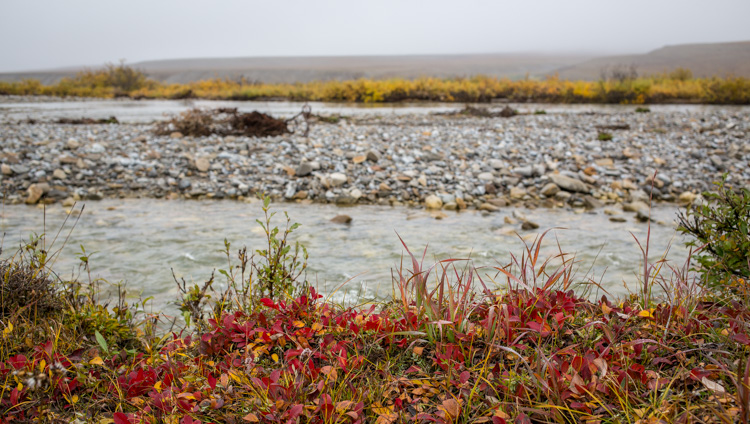
AK-ANWR-Katakturuk-Canning-Packraft-1085-88

It wasn’t a creative decision, I took that combo because it was the best way to make my kit as light possible and still get the quality I wanted, and the lens and camera fit easily in a small holster style case that I carried, attached to the chest straps of my pack.

Toward the end of August my two clients and I flew from Fairbanks, Alaska north toward the Arctic National Wildlife Refuge. We passed little ranges of mountains in the interior, above the Yukon Flats, and over the rugged high peaks of the Brooks Range. Just to the north of the mountains on the arctic coastal plain of the refuge, the pilot descended, picked the unmarked strip out of the landscape, and settled the oversize wheels of the bush plane down onto the autumn tundra.

Within a few minutes of landing, we’d unloaded our heavy packs and the pilot was rocketing down the grass and into the air. He was the last person we’d see for more than two weeks.

The first 10 days of the trip were dedicating to hiking, though the mileage was such that we could take a day or two off periodically, which was good, because when the first snow storms of autumn hit a week into the trip, we were in no mood to walk.
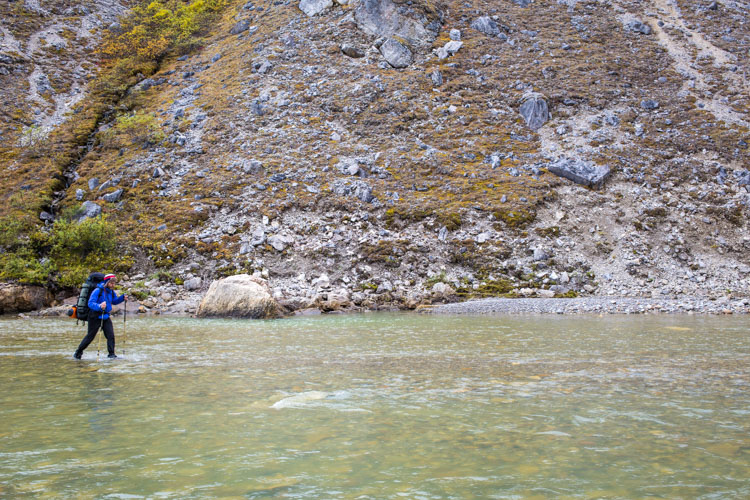
AK-ANWR-Katakturuk-Canning-Packraft-1085-102

The route carried us through a narrow gap in the mountains cut by a small river. We walked through that gap on a cold, windy day when low clouds obscured the tops of the mountains. We had to criss-cross the river, and our feet were constantly soggy. But the willows along the creek and the small patches of tundra were bright with autumn colors, and a much-needed distraction from the cold.

Once on that first day, just once, I was stopped in my tracks by a scene that had to be photographed. I’d made photos earlier in the trip, but they’d been snapshots. This was a scene that inspired me; a rare thing.

The simple camera and lens setup removed much of the tedious decision making. There was no easy compositional escape in the form of a zoom lens, rather I had to move about to make the scene come together. I worked within the restraints of the lens (which were numerous), and it was utterly liberating.
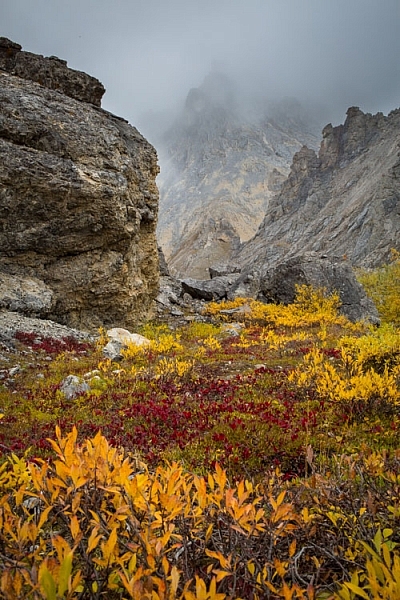
AK-ANWR-Katakturuk-Canning-Packraft-1085-135

I gave the image five whole minutes before the chill forced us on, and for the first time all summer, five minutes wasn’t enough.

The following day, we woke to clouds, shredded by the previous day’s winds, and big patches of blue shone through, bright and optimistic. We hiked over a low pass, and watched a Grizzly sow and two young cubs graze in a sedge meadow a quarter mile and two hundred vertical feet below. My little lens didn’t have a prayer of making anything more than a token image of the brown specks on the tundra below. Instead I peered down through binoculars as the bears dug up sedges and combed berries from the bushes with their teeth.
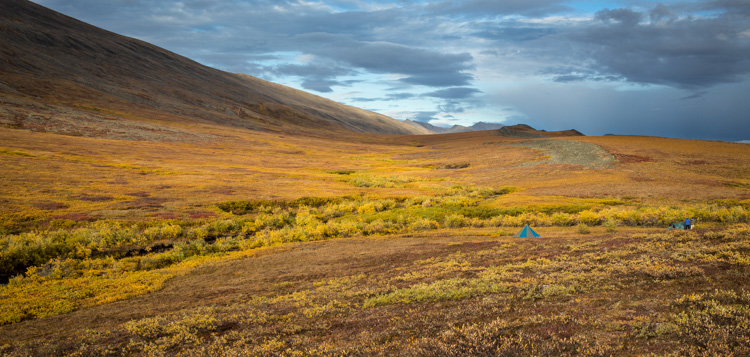
AK-ANWR-Katakturuk-Canning-Packraft-1085-277

On the sixth day, the storm hit. We were camped on a meadow of soft, dry tundra above a small creek when the winds shifted from a pleasing breeze from the east, to a howling gale from the west. It happened in moments, the speed of the weather change taking me completely by surprise. Rain, then pelletized snow arrived, followed by a genuine snow storm in the night. For two solid days we were battered by the strongest winds and most intense storm I’ve ever experienced in the Brooks Range. Just keeping our tents standing was a constant battle.
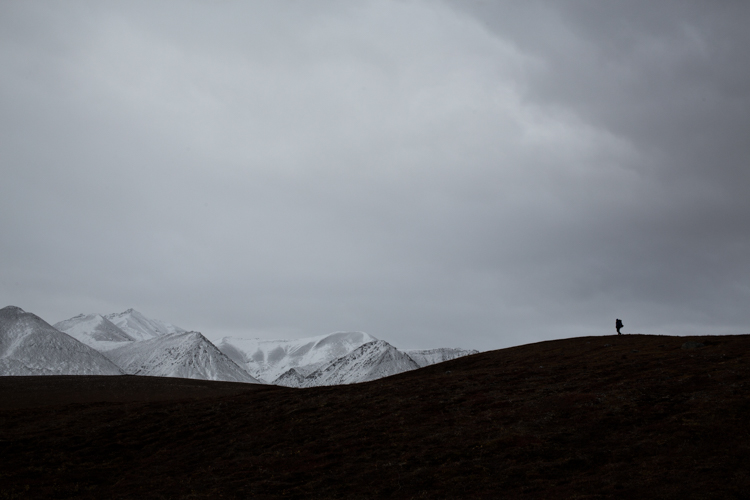
AK-ANWR-Katakturuk-Canning-Packraft-1085-582

Yet in that time, my clients and I managed a few excursions away from camp. We climbed up to a low ridge where the full brunt of the west wind hit us hard. There, we leaned into the gale and watched the falling snow tear across the tundra.

It wasn’t a photogenic scene, at least not by traditional standards, and yet I made images because I wanted to. Creativity, quite suddenly, brightened up like a cartoon bulb over my head.
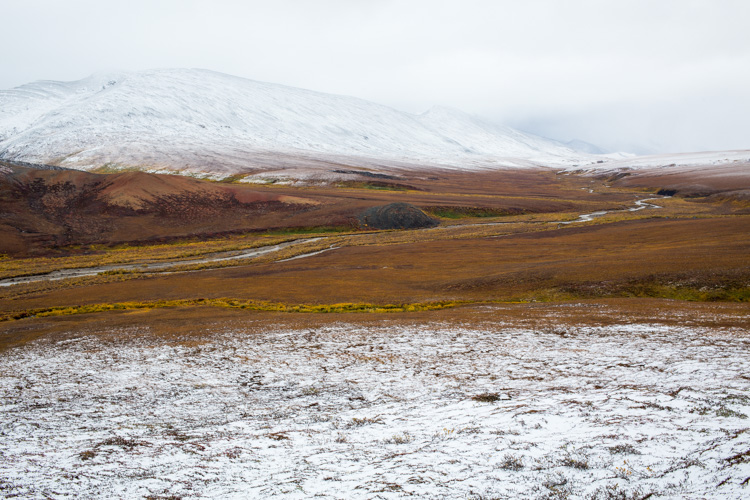
AK-ANWR-Katakturuk-Canning-Packraft-1085-504

On the third morning, before I even opened my eyes, I knew the storm had passed. My tent wasn’t shuddering in the wind, and when I did lift my eyelids, I could see the day was too bright to be dominated by clouds.

Emerging from my tent, I saw that fresh snow cloaked the mountains and dusted the tundra around our camp, but blue dominated the sky above. I went for my camera and spent a happy hour making images as the drenched tents and rain gear steamed in the rising sun.
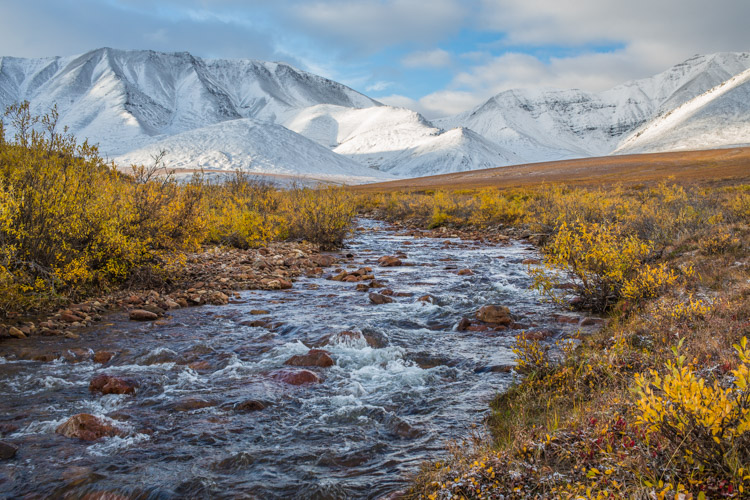
AK-ANWR-Katakturuk-Canning-Packraft-1085-556

Two days later we reached the river and our cache of food and boating gear that had been waiting for us. In those two final days before we traded in our hiking boots for pack-rafts, I think I made more images than I had in the previous three months combined. I couldn’t get enough of it.
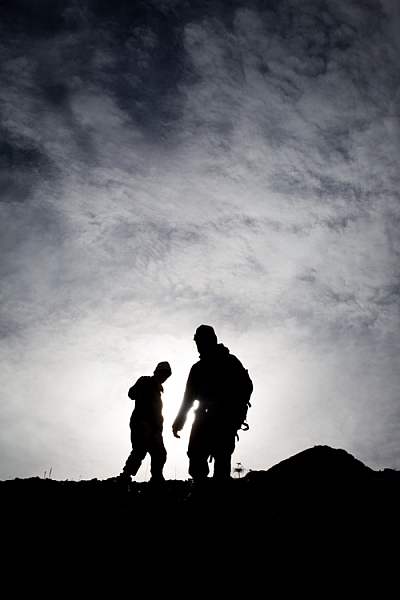
AK-ANWR-Katakturuk-Canning-Packraft-1085-384

The 50 miles of paddling stole some of my photographic productivity. (It’s hard to paddle a small bouncing raft through swift, splashing water while taking photos). Nonetheless, as we descended the river out of the mountains and onto the coastal plain, my renewed love for photography stuck with me. Even when another storm hit and we were pinned down for two more days, even when the snow fell in heavy wet flakes, and when the wind tore the autumn colors from the vegetation and shifted the landscape from red and yellow to brown.
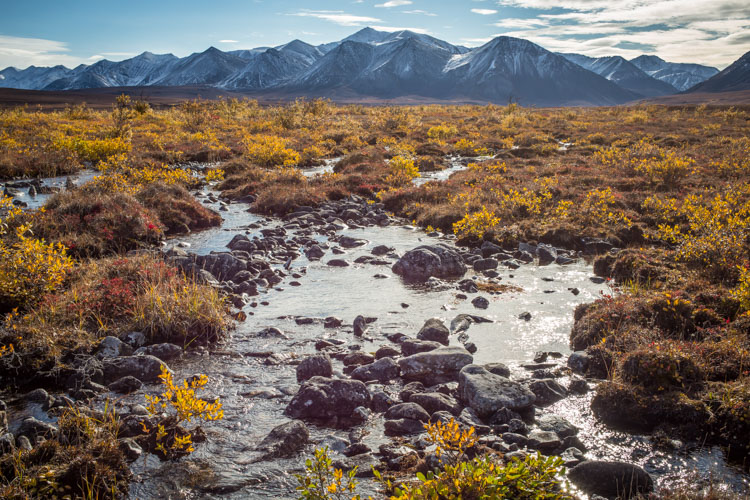
AK-ANWR-Katakturuk-Canning-Packraft-1085-643

Our final camp lay where the river met its coastal delta. Caribou criss-crossed the plain in small bands, and migrant birds were congregating in the many lakes. My little lens was no match for the distant wildlife, but it didn’t matter. I’d rediscovered photography, which meant that I was more aware of my surroundings, and the images that lay in it, than I had been for some time. Even if I didn’t have the right equipment to capture some of the photos I found, I recorded them mentally in sharp detail. As it turns out, those mental images are just as rewarding as the ones glowing on my computer screen.

Paging through the images from the trip, I see an interesting evolution. The first images are mostly snapshots, but as time passed, and my inspiration picked up steam, the images become more purposeful, more composed… better, even.

Conclusion

Purposefully restricting yourself can be a great tool to boost creativity. It’s a little like playing charades: using limited tools to effectively get your message across. It can be fun, and a bit frustrating. It forces your mind outside its comfortable box, and into a place where creativity is far more important than gear. When, and if, you return to your diverse array of lenses and cameras, you will no longer take all those compositional possibilities for granted.

If you are stuck in a rut, or just want to try something new, give up your zooms for a couple of weeks, only shoot black and white, use your camera exclusively in manual mode, or shoot some film. After, share your experiences in the comments below, I’d love to hear what happens.

googletag.cmd.push(function() {
tablet_slots.push( googletag.defineSlot( “/1005424/_dPSv4_tab-all-article-bottom_(300×250)”, [300, 250], “pb-ad-78623” ).addService( googletag.pubads() ) ); } );

googletag.cmd.push(function() {
mobile_slots.push( googletag.defineSlot( “/1005424/_dPSv4_mob-all-article-bottom_(300×250)”, [300, 250], “pb-ad-78158” ).addService( googletag.pubads() ) ); } );

The post How Two Weeks in the Wilderness with One Prime Lens Restored My Love for Photography by David Shaw appeared first on Digital Photography School.


Digital Photography School

 
Comments Off on How Two Weeks in the Wilderness with One Prime Lens Restored My Love for Photography

Posted in Photography


ZTE Axon 7 features 20MP Samsung ISOCELL sensor

26 May

Chinese smartphone maker ZTE has announced its latest high-end device, the Axon 7. It comes with an impressive camera specification that includes a 20MP Samsung ISOCELL sensor, fast F1.8 aperture, a sapphire glass lens front element, optical image stabilization and on-sensor phase detection autofocus. A dual-LED flash helps with illumination in dim conditions, and in video mode the camera is capable of recording footage with 4K resolution. The front camera comes with an 8MP sensor. 

The other components of the device match the camera’s high-end specifications. The Axon’s aluminum unibody houses a 5.5-inch AMOLED panel with 2560 x 1440 Quad-HD resolution that is covered by 2.5D curved Gorilla Glass 4 and the Android OS is powered by a Qualcomm Snapdragon 820 chipset. In terms of memory consumers get to choose between a version with 4GB RAM and 64GB storage or a 6GB/128GB premium model. There is also a microSD-slot for expansion. A hearty 3140 mAh battery supports the Quick-charge 3.0 standard. There are also a dedicated audio chip, dual speakers, a fingerprint reader and a USB Type-C connector.

The Axon 7 will be launched in China first in July and make its way to international markets at a later stage. Official pricing will be revealed closer to launch, but is expected to be below $ 500 which sounds like an interesting offer for such a well-specified device.

Articles: Digital Photography Review (dpreview.com)

 
Comments Off on ZTE Axon 7 features 20MP Samsung ISOCELL sensor

Posted in Uncategorized


Lens shootout: Sony RX10 III destroys the competition

26 May

When the RX10 III was revealed as the ‘top secret’ Sony product launch in San Francisco earlier this year, I felt a bit cynical. ‘Another RX10, Sony? Really?’ I cried, along with a few bored commenters. ‘The last one is hardly a year old!’

Then I saw some telephoto sample images and was immediately impressed, wondering if I had been underestimating the 1″ bridge camera segment. Then Barney described the RX10 III to me as ‘magic’, which is high praise indeed and warranted further investigation. Which is exactly what we’ve done, below. Note that our results here are only indicative of the one copy of each camera we have on hand, some of which appear to be slightly decentered.

The Shootout

Starting at the wide end, which is around 25mm for all the cameras tested, we see in the center of the image (where our RX10 II appears to perform as expected) improvements over the RX10 II aren’t incredibly pronounced. Other areas$ (document).ready(function() { $ (“#imageComparisonLink2506”).click(function() { ImageComparisonWidgetLink(2506); }); }) of the scene show the advantage of the RX10 III, especially when it is stopped down from its maximum aperture of F2.4 to F2.8$ (document).ready(function() { $ (“#imageComparisonLink2507”).click(function() { ImageComparisonWidgetLink(2507); }); }). Its performance is definitely a step up from the Panasonic FZ1000$ (document).ready(function() { $ (“#imageComparisonLink2510”).click(function() { ImageComparisonWidgetLink(2510); }); }), and is miles ahead of the Canon G3 X$ (document).ready(function() { $ (“#imageComparisonLink2511”).click(function() { ImageComparisonWidgetLink(2511); }); }).

Where crazy zoom lenses like these typically struggle is in the extremes$ (document).ready(function() { $ (“#imageComparisonLink2513”).click(function() { ImageComparisonWidgetLink(2513); }); }) of the frame, with neither the RX10 III or the FZ1000 being an exception. The sharpness fall-off is less severe$ (document).ready(function() { $ (“#imageComparisonLink2515”).click(function() { ImageComparisonWidgetLink(2515); }); }) with the RX10 III, though, and all in all, the RX10 III is the best performer on the wide end.

$ (document).ready(function() { ImageComparisonWidget({“containerId”:”reviewImageComparisonWidget-45535897″,”widgetId”:359,”initialStateId”:null}) })

Moving on to 400mm$ (document).ready(function() { $ (“#imageComparisonLink2517”).click(function() { ImageComparisonWidgetLink(2517); }); }), the maximum focal length for the Panasonic FZ1000, we see a similar amount of detail between the Panasonic and Sony near the center of the image. Sharpness and resolution change for both throughout the frame, with the Sony showing a slightly iffy left side$ (document).ready(function() { $ (“#imageComparisonLink2523”).click(function() { ImageComparisonWidgetLink(2523); }); }), and a better right side$ (document).ready(function() { $ (“#imageComparisonLink2524”).click(function() { ImageComparisonWidgetLink(2524); }); }). Through most of the scene the two are practically neck and neck, with the G3 X turning in comparable performance as well, but let’s not forget the Sony and Canon still have more zoom range to go. 

The RX10 III’s 24-600mm lens isn’t only useful for distant details.

The real reason people consider bridge cameras is for the reach, and Sony extended the RX10 III’s reach by a full 400mm over the RX10 II. That means it now offers the same amount of reach as the G3 X’s 600mm$ (document).ready(function() { $ (“#imageComparisonLink2516″).click(function() { ImageComparisonWidgetLink(2516); }); }) equivalent maximum focal length. The RX10 III’s lens is clearly sharper, but it has another thing going for it: its faster maximum aperture helps it combat diffraction. Remember that F4 and F5.6 on 1”-type cameras are equivalent to F11 and F15, respectively. Both cameras are limited by atmospheric distortion at these focal lengths (hence the drop to ‘print’ resolution in the previous comparison link), but it’s clear that the RX10 III exceeds the G3 X’s performance, while offering just as much zoom versatility. The Canon PowerShot G3 X’s trump card has been trumped.

Even at 600mm (equiv), the Sony Cyber-shot RX10 III’s lens delivers sharp results.

In all, it seems the RX10 III does offer a bit more than similar 1″ bridge cameras from other manufacturers. It exceeds, or at least matches, the competition with respect to zoom range, while offering sharper images, and brighter apertures than all but Sony’s own RX10 II. Importantly, sharpness performance appears to be maintained throughout the zoom range, from wide to tele, which cannot be said for any of the other cameras in this test. Feel free to explore through these images and post your own findings below.

Things to Consider

As you look at the comparison widget, bear in mind that It appears our copy of the RX10 II appears to be slightly decentered$ (document).ready(function() { $ (“#imageComparisonLink2509”).click(function() { ImageComparisonWidgetLink(2509); }); }). This isn’t really noticeable in normal shooting but it’s obvious in a controlled test like this. 

The second caveat to these results is the weather. Light varied over the course of the test, and had darkened so much that the Panasonic, the final camera tested, needed 2/3rds more exposure to produce a comparable image. All the exposures were processed in ACR with default sharpness and the ‘Adobe Standard’ profile used across the board.

We’ll be adding the RX10 III to our standard database of studio test images very soon – watch this space!

Articles: Digital Photography Review (dpreview.com)

 
Comments Off on Lens shootout: Sony RX10 III destroys the competition

Posted in Uncategorized


The Changing Face Of Photopreneurialism

26 May

For a while at least, photography enthusiasts who wanted to make a little money from their photos, had it easy. Or at least they had it easier than they used to have it. Not only had the prices of professional-quality digital cameras fallen to an affordable level but at the same time, photo-sharing sites made showing those images easy, websites created a whole new demand and microstock sites popped up to deliver those images to buyers. Suddenly anyone who knew their aperture from their elbow had an opportunity to shoot pictures that made money. But Flickr is now nearly ten years old and iStock, the first microstock site, will soon enter its fifteenth year. Both are now owned by large parent companies and the ease with which either could be used to make money has fallen significantly. While there is still demand for images, the methods used to sell them and promote them has changed—and they continue to change.

For most microstock contributors, sales and profits are harder to come by. Once, contributors like Shutterstock founder Jon Oringer could get away with images as poor and as cheap to produce as these. Today, they’re more likely to be professionally shot in a studio, using paid models and high expenses. But they’re also less likely to win the sales necessary to cover the costs of producing them. With nearly 80,000 contributors on iStockPhoto and just under half that number on Shutterstock, keywords are saturated and the number of sales generated by each image has fallen. Even Yuri Arcurs, the market’s leading producer, has now signed an exclusive deal with iStockPhoto ensuring that he receives the higher rates offered by exclusivity—and the premium he would have negotiated.

That’s likely to continue. While top contributors take up exclusivity, more occasional shooters can expect to see falling revenues that only produce profits if they disregard costs.

Single-Use Licenses For Microstock

But there may be an alternative route for contributors. One of the big stories of 2013 was Getty’s decision to ban Sean Locke for criticizing the company’s decision to license images for free use on Google Drive. Canva, a new graphic design tool that now employs Lee Torrens of Microstock Diaries, takes a similar approach but with a significant difference. Like Google, Canva allows producers—in this case designers—to access microstock imagery at the point of use. But while Google has paid a small amount in advance for the images so that users can access them for free, Canva charges a fee for each use.

Users of Canva pay a dollar to use the image once and Canva pays the photographer a commission of 35 percent. While those are still small amounts, they’re higher than the commissions received by many microstock photographers for a much less restricted license.

It’s possible that as WYSIWYG editors like Wix for website owners increase, we’ll see a rise in single-use licenses bought at point of use. Canva launched with a million photos. Whether that will mean better deals for part-time photographers looking for sales remains to be seen.

While microstock battles to stay relevant to small producers, other opportunities are rising. The growth of social media initially meant better marketing for event photographers on Facebook and better networking with other photographers on Twitter. Instagram, though, has changed all that. Build up a large following on the mobile photo-sharing site and photographers can find that they’re being approached by brands who want to put pictures of their products in their timelines.

Klouts Perks have brought the same opportunities to users of Twitter and Facebook. Companies can identify key influencers based on their Klout score and expertise, and offer them benefits in return for their ability to reach large numbers of followers. Perks have included a shooting trip to Vail and two new Sony cameras.

It’s not something you can depend on. But for photographers who are active on social media and who manage to build up large followings, the chances that they’ll receive attention and rewards from large firms has increased.

Chances Go Mobile

And photographers who like to shoot on their mobile phones have also seen new opportunities. When Bruce Livingstone launched iStockPhoto, smartphones with strong lenses were still a glint in Steve Jobs’ eye. The iPhone didn’t launch until 2007 and even then it only had a 2 megapixel camera set to f/2.8. Now apps like Scoopshot send announcements of wanted images directly to phones and sell shots of news, accidents and extreme weather uploaded by its users. Those sorts of photos might not be the artistic, beautiful photography enthusiasts like to produce but they still require some photographic skill—and they’re opportunities that weren’t available previously.

And for photographers who are more artistic, an old opportunity may be returning, doubled. Flickr has been refurbished and still has an agreement with Getty which provides an easy way for buyers to license the images they find on the site. Its younger rival 500px pushes fine art photography prints—with help from the photographers who produce it.

For both the sites, the number of contributors have grown as well as the number of images they offer but because Facebook has siphoned off many of the social images which use to crowd Flickr (and for which the site was originally intended) the quality of the images left behind has also improved.

The bottom line for photography enthusiasts trying to sell images today is that the market continues to change. Microstock has got tighter but may open up again in new and different ways. Social media now offers a way to reward popularity directly as well as market and network. Mobile technology has opened markets for occasional photojournalists, and photo-sharing platforms that specialize in fine art photography continue to grow and develop.

The photography business has always changed, and it will continue to do so. The opportunities available five years ago are not the same as the opportunities available now. But if you can take great photos and are willing to put the effort into matching them to buyers, opportunities are still there.


Photopreneur – Make Money Selling Your Photos

 
Comments Off on The Changing Face Of Photopreneurialism

Posted in Equipment


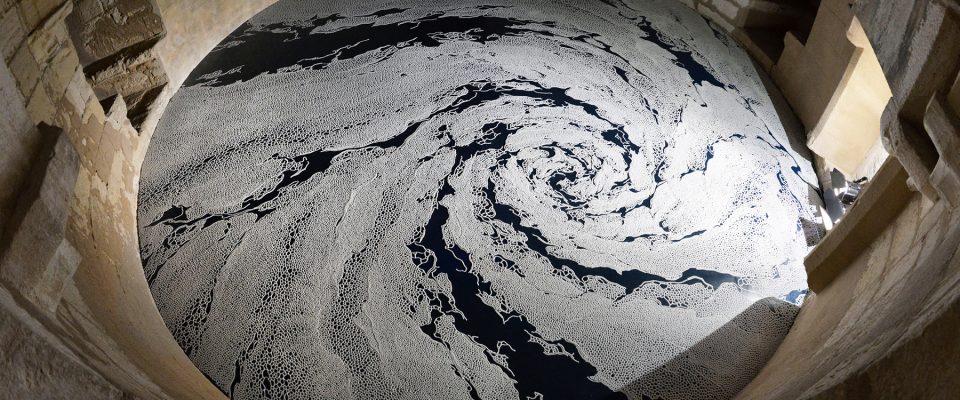
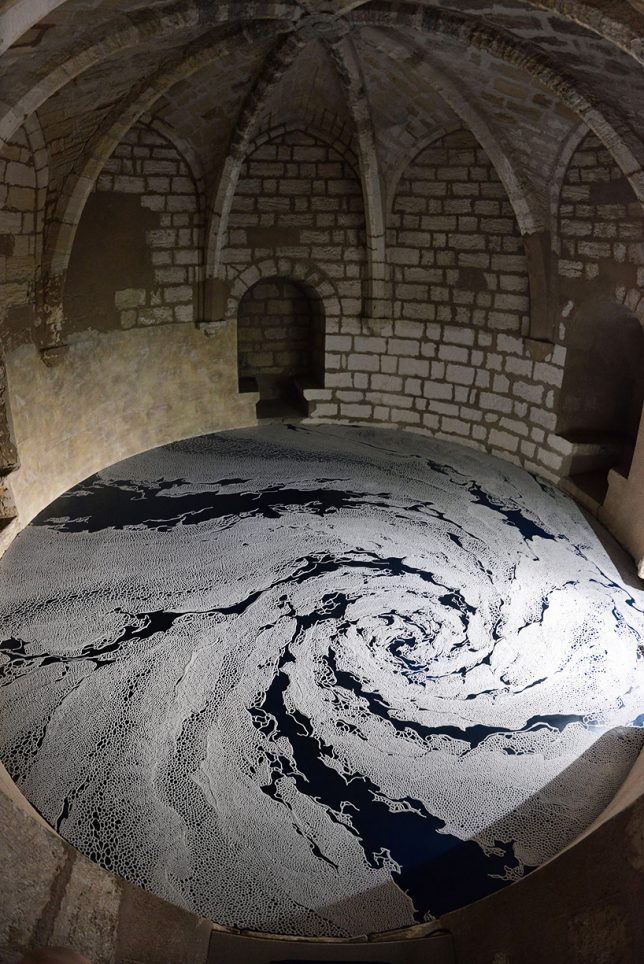
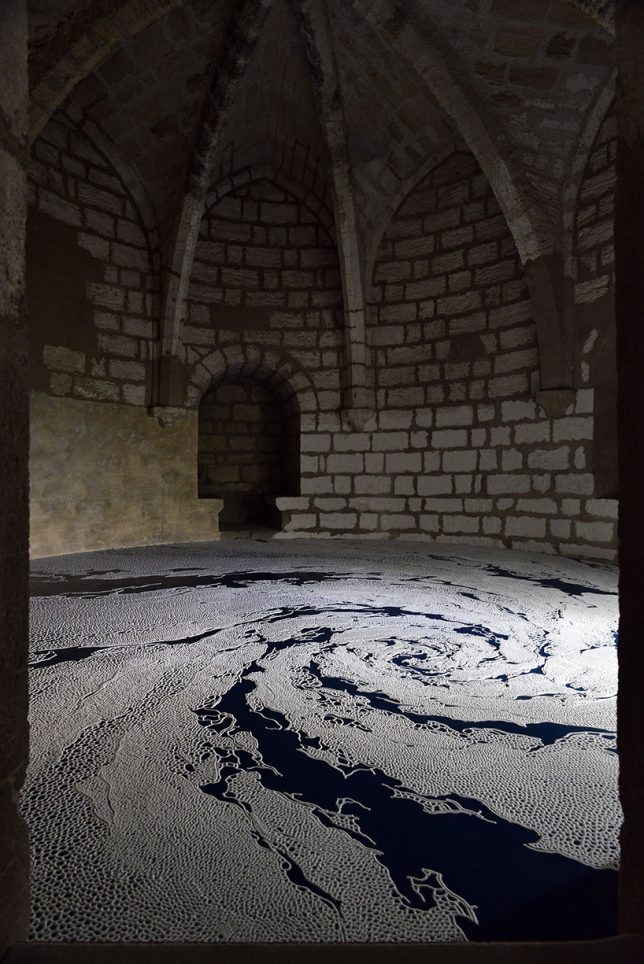
Univers-Sel: Salt Labyrinths Swirl Inside 13th Century French Castle

26 May

salt labyrinth 1

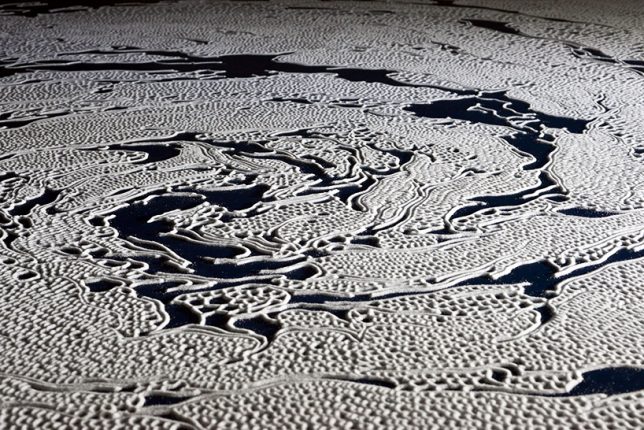
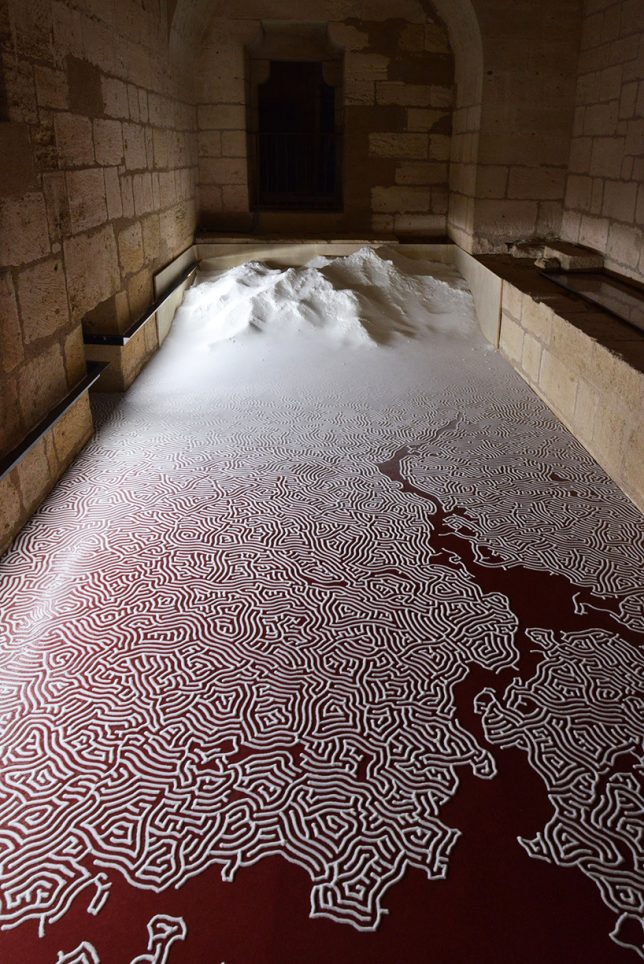
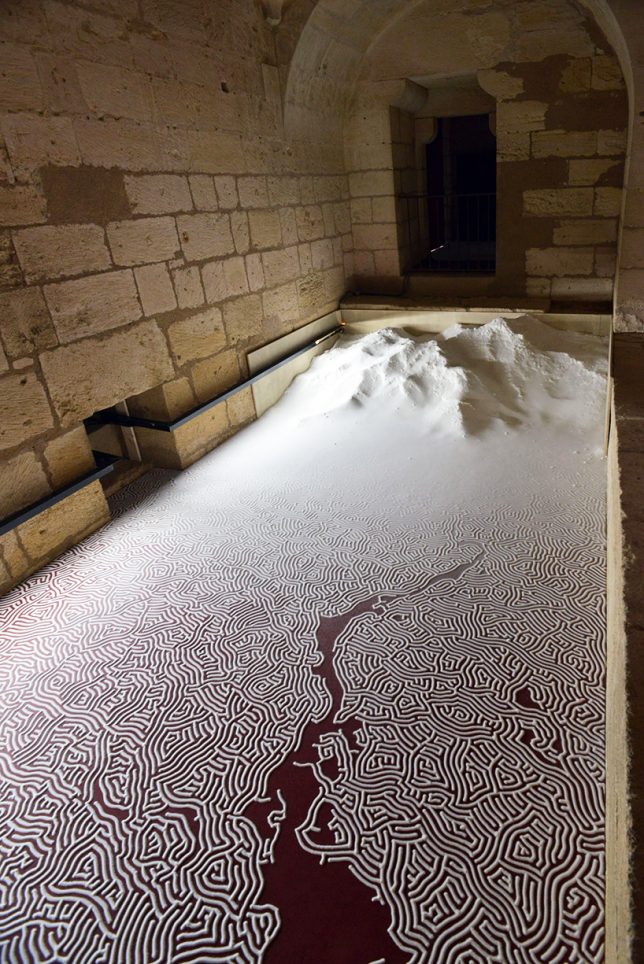
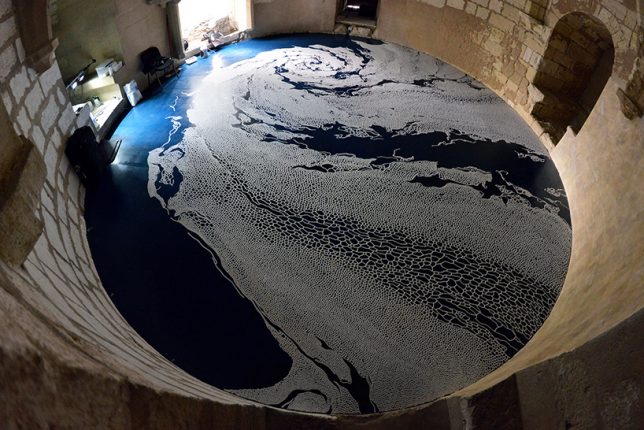
Gazing down at foamy-looking swirls of white on black from a niche in an ancient castle, you almost feel as if you’re an astronaut watching a hurricane form above the ocean on the distant Earth. These cellular arrangements form tentacular appendages of varying opacity, meeting in the center to create a vortex effect. They are, in fact, made of salt, with each grain symbolizing a memory or a moment in time. Artist Motoi Yamamoto installed ‘Floating Garden’ and ‘Labyrinth’  within the castle tower at Aigues-Mortes in Southern France for an exhibition called ‘Univers’ Sel,’ on display through the end of November.

salt labyrinth 2

The hurricane-like swirl of ‘Floating Garden’ is a motif commonly used to represent life, death, resurrection and rebirth in East Asia. To create it, Yamamoto started in the center of the black-floored space, shaking a container of salt in a calculated rhythm to produce just the right pattern, working for 45 hours over 5 days.

salt labyrinth 3

salt labyrinth 4

Within the ramparts, a labyrinth unfolds. Would you be able to wind your way from the outer edges of the pattern to the piles of salt that lie at the end? You’ll never find out, because to attempt it would mean destroying the work, with its intricately placed salt lines sensitive to the slightest movement. Like the sand mandalas of Tibetan monks, these salt sculptures are meant to exist temporarily, as vulnerable and ephemeral as human bodies moving through the hazardous world.

salt labyrinth 6

salt labyrinth 7

salt labyrinth 8

Both pieces are a continuation of series of the same names. The artist began working with salt as a medium after the loss of his sister to brain cancer at 24 years old, in rumination on time, transcendence and the notion of death. The salt structures act as an interstitial medium between our time and space within our physical world and whatever mysteries lie beyond.

salt labyrinth 5

“Drawing a labyrinth with salt is like following a trace of my memory,” says Yamamoto. “Memories seem to change and vanish as time goes by. However, what I seek is the way in which I can touch a precious moment in my memories that cannot be attained through pictures or writings. I always silently follow the trace, that is controlled as well as uncontrolled from the start point after I have completed it.”


WebUrbanist

 
Comments Off on Univers-Sel: Salt Labyrinths Swirl Inside 13th Century French Castle

Posted in Creativity


Small Space Shape Shifters: 13 Transforming Furniture Designs

26 May

Bed-Up Space-Saving Furniture


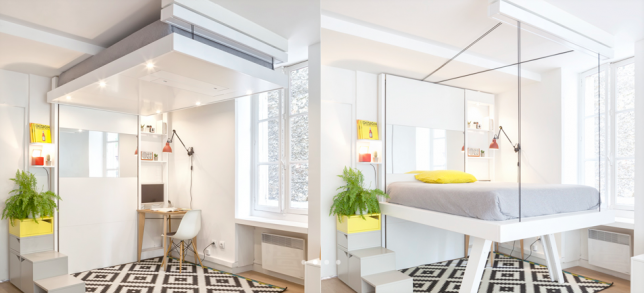
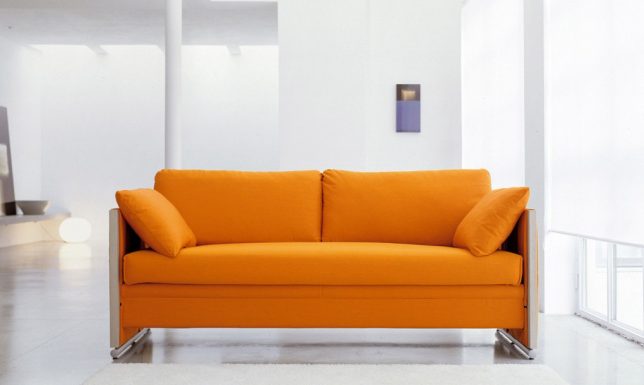
Almost no space is too small to live in when you’ve got furniture that lowers from the ceiling, pulls out of the walls, transforms for multiple functions or even folds up flat to hang in the closet like clothing. These smart space-saving furniture designs cram maximum use into the most compact packages, often with beautiful, modern results. You’ll never look at a metal storage trunk the same way again.

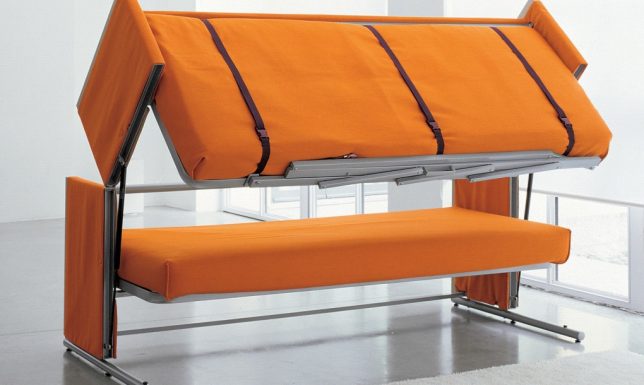
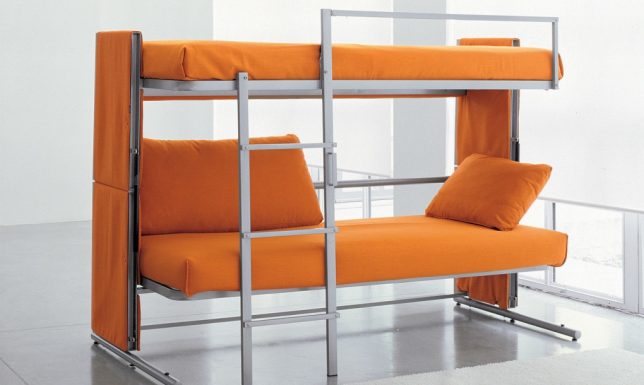
Bunk Bed Sofa

space saving bunk bed sofa 1

space saving bunk bed sofa 3

space saving bunk bed sofa 2


This is more than just a sofa bed – there are actually two beds hiding within its sleek contours thanks to a brilliant folding design. The Doc is a sofa by day, bunk bed by night, creating sleeping space for two guests in seconds.

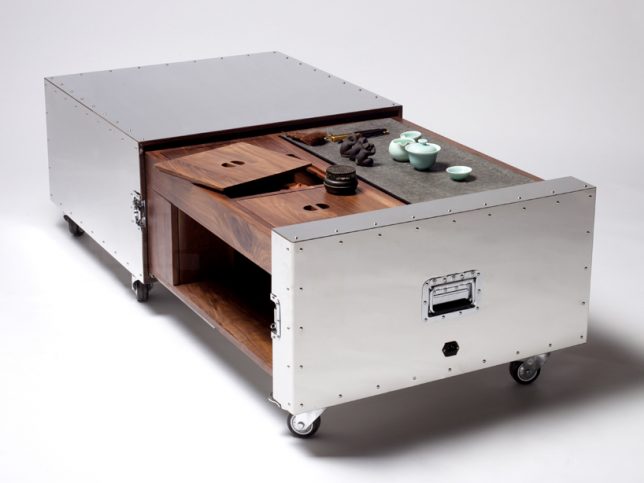
Furniture Functions Hidden in Metal Crates

transforming furniture metal crates

transforming furniture metal crates 2

transforming furniture metal crates 3

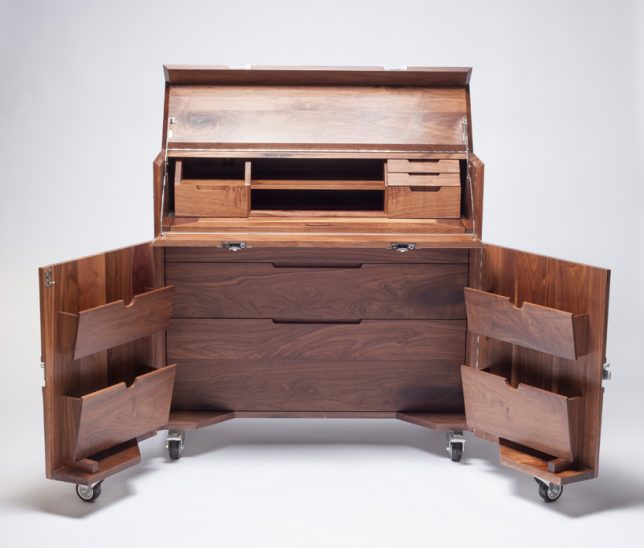
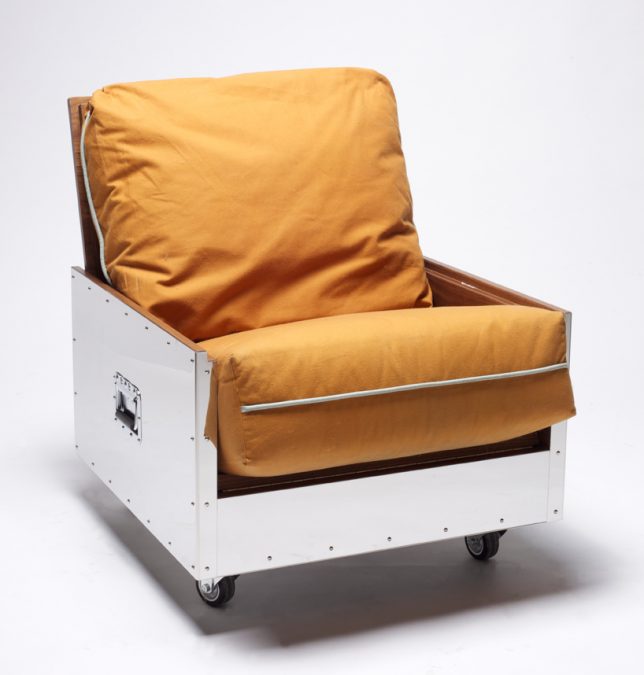
Traveling artists and other restless types can tote an entire studio apartment full of furniture with them quickly and easily with these mobile objects that transform into rugged metal crates on wheels. Designer Naihan Lee, an artist who has had to move often while living in Beijing, created the ‘Crates’ series to ensure that she would have beautiful, high quality furniture no matter where she ends up. The portable units include a bookshelf, single sofa, tea table, mobile bar, entertainment center, kitchen unit and writing desk.

Shape-Shifting Chair

space saving exocet chair

space saving exocet chair 2

space saving exocet chair 3

space saving exocet chair 4

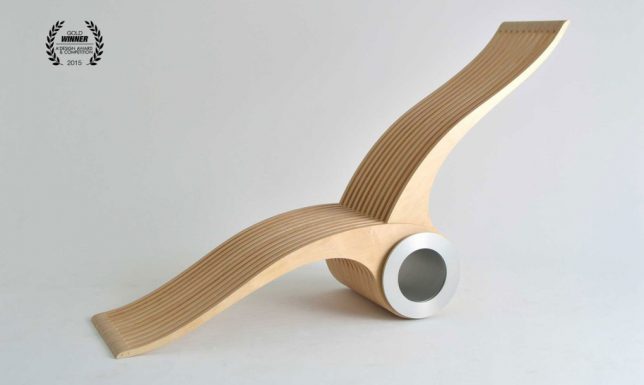
Better at conforming to the human body in any single position than the traditionally-shaped chairs humans have been using for thousands of years, the Exocet features two wooden ‘wings’ on a rotating steel axis that interlace to create virtually limitless sitting and lounging possibilities. Use it as a stool, a lounge chair, a high-back chair, a floor mat, a recliner, a seat for two or whatever else you can come up with.

Bed Hidden in a Desk

space saving bed in a desk

space saving bed in a desk 2

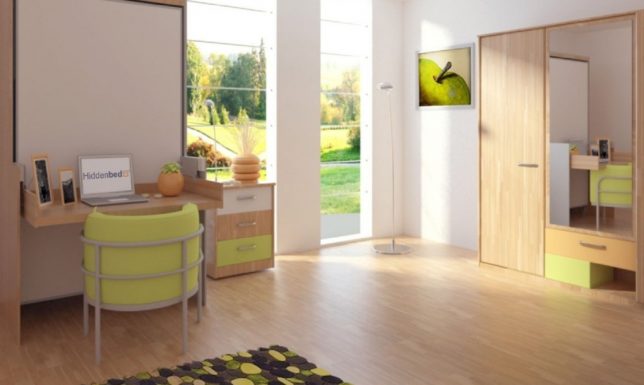
Even once you learned that this desk isn’t what it appears, you might imagine that it would be a pain to remove everything from its surfaces before transforming it into a bed. But the Hiddenbed system unfolds in a way that rests the desk surface on the floor beneath the mattress, leaving everything intact, including power cords. When you decide you want to lay down, it takes just a few seconds to pull out a couple pins and unfold it. Pillows even stay in place when you put the bed back up.

Transforming Tiny Apartment

space saving tiny apartment 1

space saving tiny apartment 2

space saving tiny apartment 3

space saving tiny apartment 4

space saving tiny apartment 5

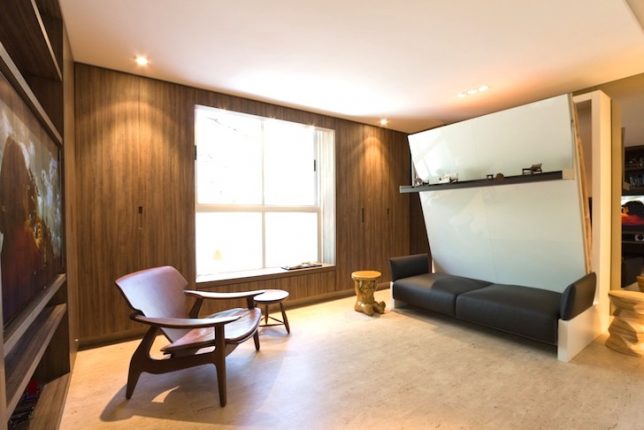
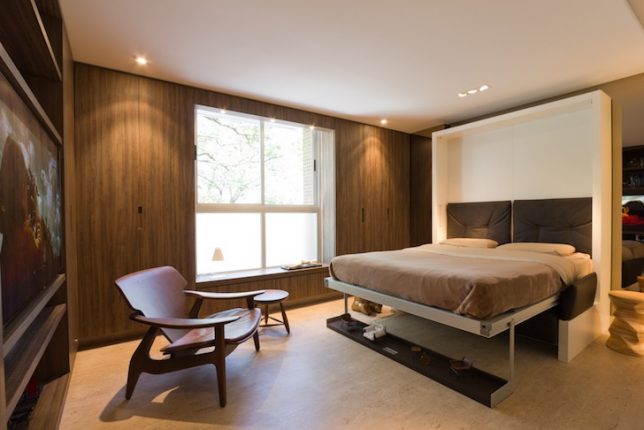
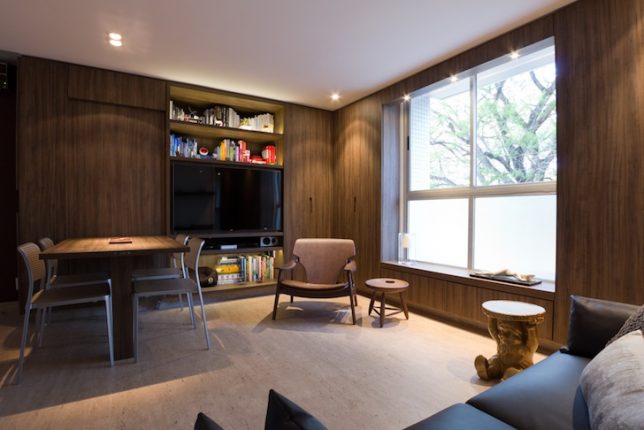
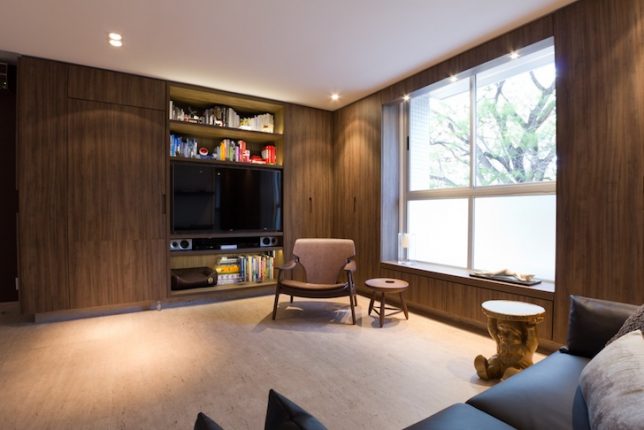
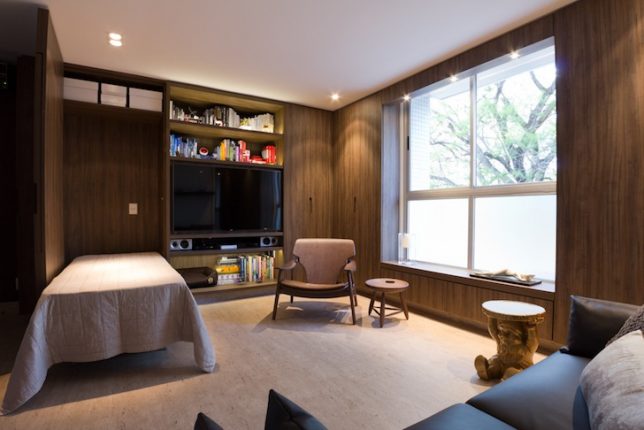
All sorts of tricks hide behind the surfaces of this 290-square-foot apartment in Brazil, custom-made by architect Fabio Cherman for his own use. Features include a compact sofa bed that uses a wall shelf as support (again, leaving your displayed objects intact), and on the other side of the room, there’s a wall panel that folds down to become a tabletop or a guest bed.


WebUrbanist

 
Comments Off on Small Space Shape Shifters: 13 Transforming Furniture Designs

Posted in Creativity


Vuze VR 3D 360 camera targets consumers with $799 price

26 May

At the Cannes Film Festival, HumanEyes Technologies unveiled the Vuze VR, a consumer-grade 360-degree camera for VR applications. The camera was used to record the recently screened 3D VR short movie Summertime, and is now available to pre-order for $ 799 USD. In addition to capturing 3D stereoscopic content for VR platforms, Vuze VR can record 360 degree 2D video.

Vuze VR is equipped with eight cameras capable of recording full stereophonic audio and 360-degree Full HD video in both 2D and 3D. Each camera is fitted with lenses that capture a 120 degree FOV horizontally and 180 degree FOV vertically. When the videos are stitched together, the resulting video has a 4K resolution.

The camera is small at 12 x 12 x 3cm (4.7 x 4.7 x 1 in.), and features what HumanEyes calls ‘near real time processing,’ with each minute of footage requiring one minute of processing. The camera supports both PCs and Macs, and can be remotely controlled using related iOS and Android apps. 

The Vuze VR camera can be pre-ordered now for $ 799 from the product’s website. Shipping to buyers is estimated to start in October 2016.

Via: PRNewswire

Articles: Digital Photography Review (dpreview.com)

 
Comments Off on Vuze VR 3D 360 camera targets consumers with $799 price

Posted in Uncategorized


Broncolor launches range of softbox edge masks for rim light effect

26 May

$ (document).ready(function() { SampleGalleryV2({“containerId”:”embeddedSampleGallery_2696643628″,”galleryId”:”2696643628″,”isEmbeddedWidget”:true,”standalone”:false,”selectedImageIndex”:0,”startInCommentsView”:false,”isMobile”:false}) });

Swiss lighting brand broncolor has announced a range of diffuser panels for its softboxes that help to create a rim light effect when the subject is positioned in front of the softbox. The Edge Masks feature a large black panel in the center of the diffuser that prevents light from passing, but leaves strips all the way around the panel for the flash to pass through. The idea is that people posed in front of the panel will appear on a black background but highlighted with a rim of light all around them.

The panels are designed to replace the usual white diffuser of the softbox, which is removed when the Edge Mask is in place. The effect is relatively easy to achieve using any softbox and a panel of black material, but these are a bit more convenient and look more professional.

The company has also launched a 110cm parabolic umbrella that can be used to vary the focus of the reflected light. The umbrella has a particularly long arm that allows the light source to be placed at a range of distances from the reflective material.

The Edge Masks come in a range of sizes and are available now, as is the Focus 110 umbrella. The Edge Masks are priced from £42/$ 54 to £84/$ 113, while the umbrella costs £150/$ 210.

For more information visit the broncolor website.


Press release:

New Light Shaping Tools – Edge Masks & Focus 110

Hot on the heels of the new Siros L battery powered studio monobloc, broncolor have also released two brand new lights shaping tools – the Edge Mask diffuser and Focus 110 umbrella.

Edge Masks
Using the broncolor range of softboxes just became even more creative and flexible. The new Edge Mask helps turn the rectangular sizes of the softboxes in to a rim light, allowing for subjects to be photographed in-front of and against the softbox, with the light wrapping around the subject from behind. This is a popular technique previously only created by flagging off the softbox with a board, but the Edge Mask provides a professional, easy and uniform method for creating the effect. Simply attach the Edge Mask to your existing softbox as you would an external diffuser.

Focus 110
The new parabolic Focus 110 umbrella (110cm diameter) provides a quick an easy way of producing a focusable parabolic light effect. Simply pop it up and use the lamp heads umbrella holder to slide and focus the shaper.

Pricing and availability
The new Edge Masks and Focus 110 are ready and available to ship now!

33.612.00 – Edge Mask for Softbox 35 x 60 – £35 ex. VAT
33.613.00 – Edge Mask for Softbox 60 x 100 – £40 ex. VAT
33.614.00 – Edge Mask for Softbox 90 x 120 – £50 ex. VAT
33.615.00 – Edge Mask for Softbox 120 x 180 – £70 ex. VAT

33.576.00 – Focus 110 – £125 + VAT

Articles: Digital Photography Review (dpreview.com)

 
Comments Off on Broncolor launches range of softbox edge masks for rim light effect

Posted in Uncategorized