RSS
 

Archive for January, 2016

Is it Time to go Full Frame? Weight These Pros and Cons Before You Decide

24 Jan

Has anyone ever said to you, “That’s a nice photo, you must have an expensive camera!”?

According to photography legend Ansel Adams, “The single most important component of a camera is the twelve inches behind it!”  

Your camera is simply a tool, that you use to create your vision of the scene in front of you. A camera can only do what you tell it, so it’s not going to capture that “nice photo” all by itself. But, what if the camera doesn’t perform up to your expectations? Then, it may be time for an upgrade.
 

Captured at ISO 6400 this image shows great tonal range with very acceptable noise levels.

Captured at ISO 6400 on a Nikon D750 full frame, this image shows great tonal range with very acceptable noise levels.

I recently made the jump from a cropped-sensor camera to a full frame body (a Nikon D750, used in all the images below). For the purpose of this article I am not going to get into a technical discussion about the differences between a crop sensor (APS-C), and full frame camera (the main one being is that the full frame has a larger sensor, the size of a frame of 35mm film).

But how do you know if, and when, upgrading to a full frame camera is desirable? What follows are some points to consider if you’re on the fence.

Advantages of full frame

  • Improved low light performance: Because of the larger sensor size, a full frame camera is able to capture more light, which allows it to attain focus in darker environments.
  • Higher ISO performance: The larger sensor of a full frame has larger pixels, which creates less digital noise at higher ISOs. In most cases you will get a one or two stop improvement in high ISO noise, over crop sensor cameras, though many new models of APS-C models have a much improved performance in noise reduction.
  • More control over depth of field: This is a commonly misunderstood benefit of full frame, because the larger sensor does not really affect the depth of field of an image. However, with the larger sensor of a full frame, you can move closer to the subject which causes the depth of field to become smaller. This, in turn, creates a smoother bokeh.
  • Improved dynamic range and color depth:  A full frame sensor can record more tonal range within shadows and highlights. Detail and color are much improved at both ends of the spectrum.

Disadvantages of full frame
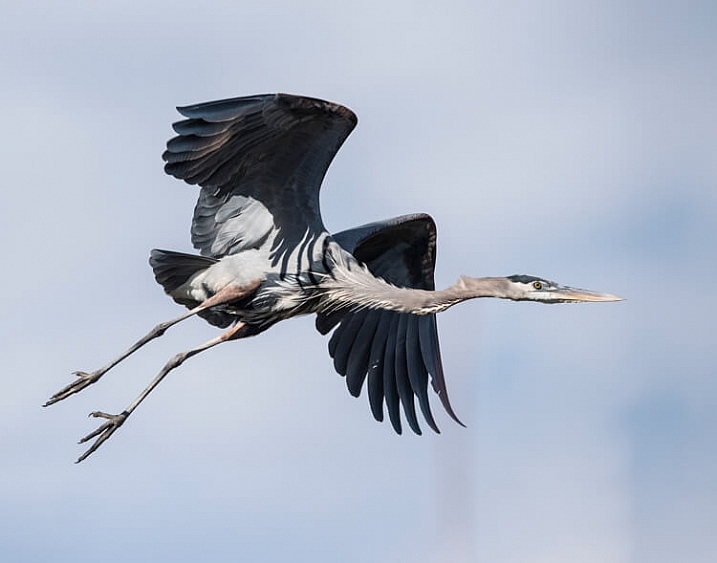
Bird in fight was captured here at high ISO to achieve fast shutter speed to capture a very sharp image.

This heron in flight was captured at high ISO to achieve the fast shutter speed needed to get a sharp wildlife image.

  • Expense: Not only is the cost of the full frame DSLR higher than a crop sensor, you will most likely need to make additional investment in compatible lenses.
  • Size and weight: Not only are the sensors larger in a full frame DSLR, the overall size and weight are as well. Also, the lenses have more glass elements, and are also larger and heavier. This may not matter to many photographers, but when carrying gear for long distances it could be a factor to consider.
  • No crop factor: The telephoto reach of a full frame DSLR is lessened by not having a crop sensor. For example: a 200mm lens on full frame doesn’t have the reach of the approximate focal length on a cropped sensor  camera (about 300mm).
  • Slow frame rate in burst mode: Because a full frame DSLR has a larger sensor, there is more information to record to the memory card. Therefore, it will take longer to save images to the card, resulting in fewer frames per second when you are shooting in burst mode.

So, how do you know if you are ready to make the jump to a full frame camera? Ask yourself these questions:

How much will it cost?

As mentioned above, the cost of buying a full frame camera is significantly more expensive than a crop sensor one, plus new lenses will most likely need to be purchased. There isn’t much use in changing to full frame if you are not going use high quantity lenses designed for full frame cameras. If you plan to make the jump to full frame, you may want to begin by upgrading lenses to those compatible with full frame DSLRs.
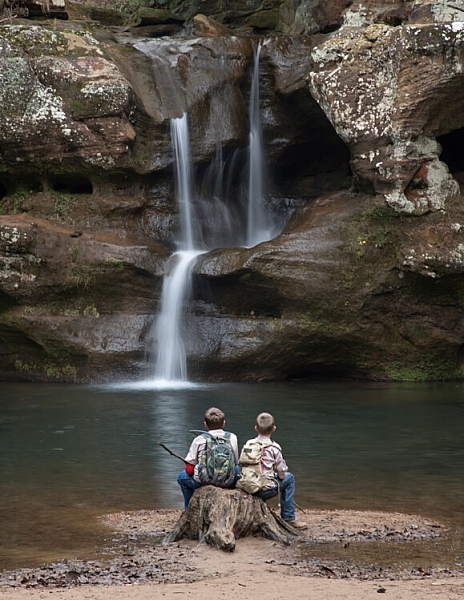
Choosing a smaller aperture of f/22 gave enough depth of field to keep both the boys and the waterfalls in focus.

Choosing a smaller aperture of f/22 produced enough depth of field to keep both the boys and the waterfalls in focus using a full frame Nikon D750.

What type of photography do you enjoy shooting?

Full frames have advantages and disadvantages for different types of photography.

  • Landscape: Low light performance, more detail and improved ISO performance are all great advantages of full frame for landscape photography. The only possible drawback here is the effectively shallower depth of field, but this can be compensated for by using a smaller f-stop.
  • Portraits: The larger sensor size of a full frame will result in a shallower depth of field. For portraiture this means the backgrounds can feature more blur and make the subjects stand out better.
  • Wildlife: A full frame camera loses the telephoto reach that a crop sensor has. Nevertheless, a lot of wildlife photography is shot in low light situations, where a full frame gives a much improved advantage.
  • Sports: As in wildlife photography, limited reach and low light factors apply to sports photography. Shooting with a full frame, the improved focusing in low light is a helpful benefit for sports. However, the slower frame rates of a full frame can be a drawback in photographing a fast moving sport.

If you are a portrait or landscape shooter, there are many benefits that might convince you to make the switch to full frame.
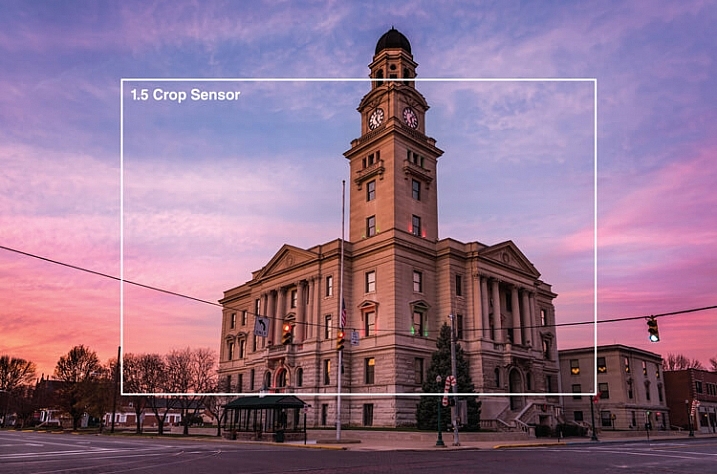
This scene was captured with at 24mm on full frame Nikon D750. The white line shows how much of this image would be captured on a crop sensor from the same location.

This scene was captured at 24mm on a full frame Nikon D750. The white line shows how much of this image would be captured on a crop sensor from the same shooting location.
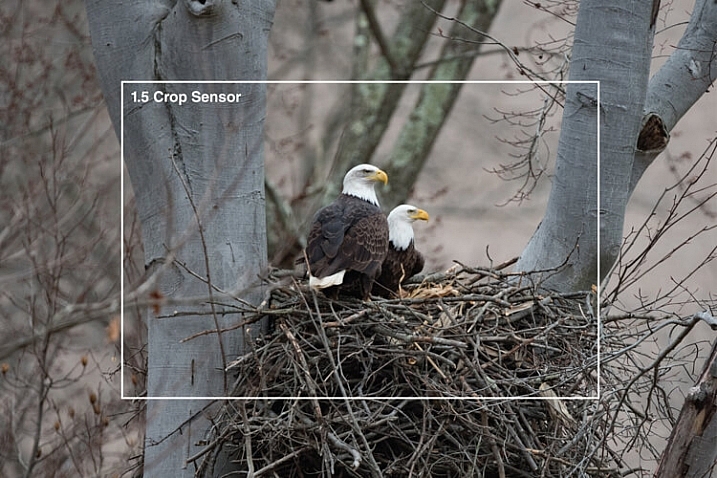
This image was captured at 600mm with a Nikon D750. The white line shows the extra reach that a crop sensor camera would give you. This image was also captured in low light conditions with ISO of 2000 with very acceptable noise level.

This image was captured at 600mm with a full frame. The white line shows the extra reach advantage that a crop sensor camera would provide. Still, capturing this image in low light conditions with an ISO of 2000 results in a desirable noise level.

Is your current camera holding you back?

Every camera has a limited number of shutter releases, so if your camera is nearing the end of its life cycle, it might be time to consider an upgrade. If your older crop sensor DSLR is limiting your results in low light, and you are constantly frustrated by high levels of noise, you might benefit from an upgrade to full frame.

Keep in mind that it’s convenient to blame a camera for taking poor images, but it may not be the camera holding you back. Many times photographers don’t get the results they expect by underutilizing high-end equipment. No matter what type of camera you shoot with, get to know it, and how all of its features work, before moving on to a different one.
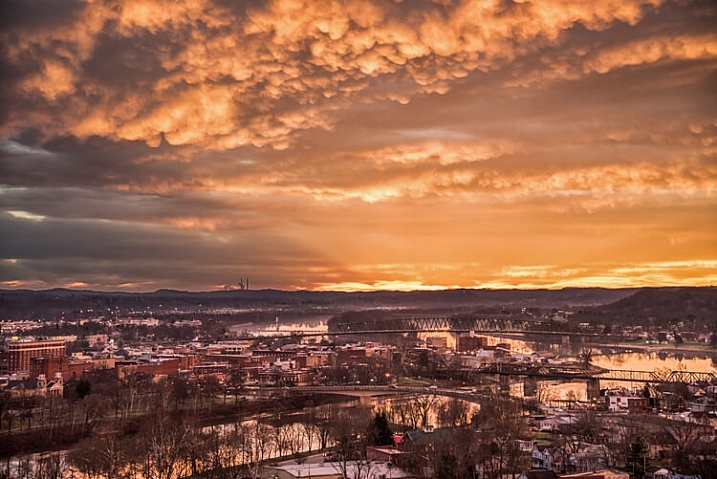
shooting here in low light, this shot was able to be captured in low light by increasing the ISO without adding digital noise to the image.

This cityscape was captured with a full frame in low light by increasing the ISO, without adding digital noise.

What is your level of photography experience?

A full frame camera is probably not the best one to use as a beginner. Start shooting with a more entry level DSLR, and work up to a full frame model. If you are looking for a camera to take photos of family and friends, a crop sensor DSLR is a very satisfactory choice. Having a good handle on the exposure triangle (aperture, shutter speed and ISO) and how they work together is a must if you’re going to take advantage of all the benefits of full frame. You must be comfortable with shooting in manual mode. If you earn any part of your income from photography, you may benefit from switching to a full frame camera.

Do you make large prints?

A full frame sensor has a larger pixel size, which will capture more light and detail, which results in sharper images that are conducive to making large prints. If you never make any prints larger than 8×10″, then a full frame DSLR may not be of benefit to you.
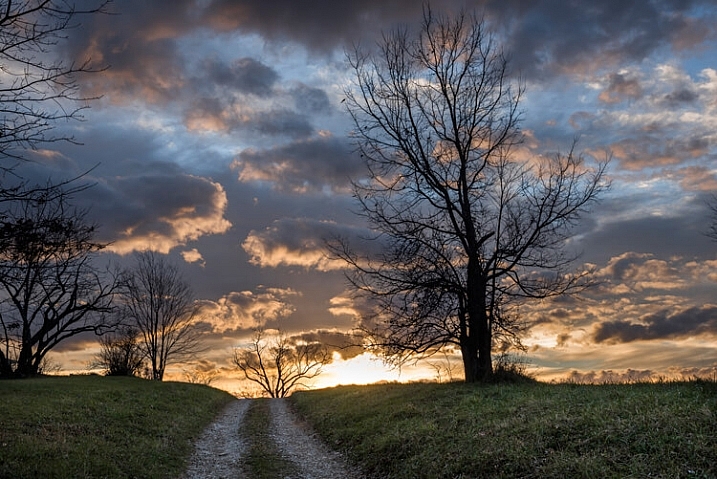
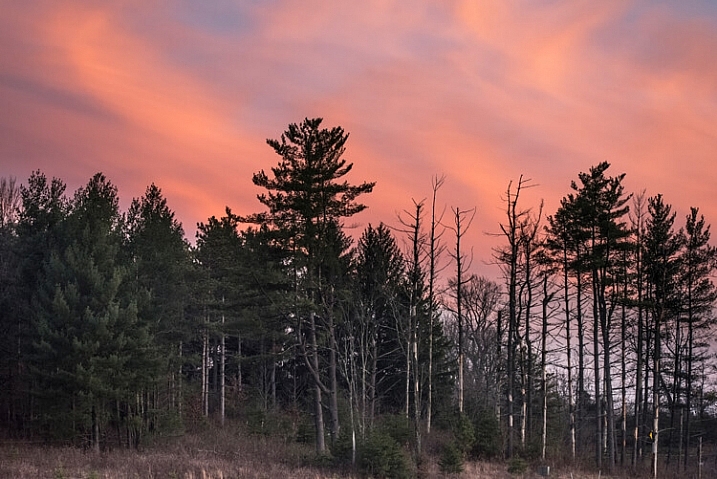
Here this sunrise shot has a nice range of tones without any noise in the shadows that you might get with some crop sensor cameras.

Captured with full frame Nikon D750, this sunrise image reveals a nice range of tones, without any of the digital noise in the shadows likely to be present with some crop sensor cameras.

Will purchasing a full frame make you a better photographer?

You may have heard this quote, “Skill in photography is acquired by practice, not by purchase.”

Do you need a full frame camera to capture great images? No, of course not! Most new crop sensor cameras on the market today are engineered to take beautiful images! But if you are an experienced photographer who makes money with your camera, you may gain an advantage by switching to full frame.

The bottom line

If you are thinking of upgrading from a crop sensor camera, be sure to consider the price, lens compatibility, and type of photography you do, before you make the change to full frame. Jumping to full frame can be quite a leap! But if you are ready for that big step, the results can be rewarding.

Are you ready to go full frame? Please leave your comments below.

googletag.cmd.push(function() {
tablet_slots.push( googletag.defineSlot( “/1005424/_dPSv4_tab-all-article-bottom_(300×250)”, [300, 250], “pb-ad-78623” ).addService( googletag.pubads() ) ); } );

googletag.cmd.push(function() {
mobile_slots.push( googletag.defineSlot( “/1005424/_dPSv4_mob-all-article-bottom_(300×250)”, [300, 250], “pb-ad-78158” ).addService( googletag.pubads() ) ); } );

The post Is it Time to go Full Frame? Weight These Pros and Cons Before You Decide by Bruce Wunderlich appeared first on Digital Photography School.


Digital Photography School

 
Comments Off on Is it Time to go Full Frame? Weight These Pros and Cons Before You Decide

Posted in Photography


Shooting with a point of view: Anna Mia Davidson in Cuba

24 Jan

In 1999, Anna Mia Davidson packed up 100 rolls of Tri-X film, an old Leica M4-P, two lenses and headed to Cuba to photograph the grittier reality of Cuban life that lurked beneath its colorful surface. Davidson expresses the importance of having a unique point of view to guide her as she made multiple trips over several years, documenting the island nation through some of its most turbulent times.

In this PIX 2015 talk, Davidson’s photos guide you through a Cuba you’ve not likely seen. She purposely eschewed the temptation of color film to ‘focus on finding the essence of the culture in quiet moments; the emotions unimpaired by the appeal of color.’ Davidson’s work spans the entirety of the culture, from the homes, families and streets of Havana to the fields, valleys and farmers of the countryside. Woven in amongst her photographs are hints to the looming presence of the Castro regime and the stark contrasts of Cuban and American culture.

Watch the talk and visit Davidson’s website to see more of her work in Cuba and beyond.

Articles: Digital Photography Review (dpreview.com)

 
Comments Off on Shooting with a point of view: Anna Mia Davidson in Cuba

Posted in Uncategorized


On Assignment: Mum for Fuji

24 Jan

For the last couple of years, I have been involved in the planning process for the Fuji X-Pro 2. I've been using a pre-production unit since October. One of the photos I did for them (the only one where I used flash, actually) is the miniature chrysanthemum seen above.

Up for a quick game of Guess the Light? Then take a moment before reading on. And I'll give you this much: it's done with a single speedlight.Read more »
Strobist

 
Comments Off on On Assignment: Mum for Fuji

Posted in Photography


Trail Blazing: ‘Freezeway’ Path for Ice Skaters Opens in Canada

24 Jan

[ By WebUrbanist in Architecture & Cities & Urbanism. ]

freezeway opening canada edmonton

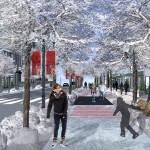
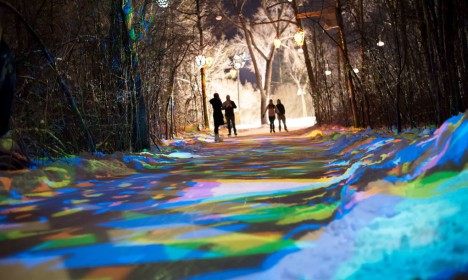
The new Freezeway pilot project now live in Edmonton aims to draw residents out of hibernation, encouraging them to skate along an iced trail system slated to double as a seven-mile commuting corridor.

freezeway frozen pathway

What started as a landscape architecture student’s conceptual project has already become a 1,300-foot ice pathway in winter that also serves as a bike route during the summer.

freezeway pilot program

The vision is well-adapted to the conditions of the city, which faces below-freezing temperatures for up to five months out of the year, and has been nicknamed Deadmonton for its lack of wintertime outdoor activity.

freezeway concept

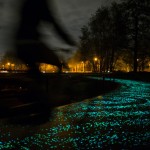
The opening of the first stretch of Freezeway has been accompanied by a disco-style light show of rainbow colors projected onto the frozen path.

From the designer: “This project is not meant to be a tax payer’s burden. The Freezeway is meant upgrade city infrastructure for a multitude of uses, potentially doing wonders for the redeveloping City’s core, our international reputation, as well as attract investment into the City. The proposed route exists entirely on existing City infrastructure; the land is already secured. The numerous character areas along the route could be developed in phases, lending themselves well to private funding/sponsorship, like Calgary’s GlobalFest, or Vancouver’s Festival of Light fireworks shows, funded by donations of over 1 million dollars annually.”

Share on Facebook


[ By WebUrbanist in Architecture & Cities & Urbanism. ]

[ WebUrbanist | Archives | Galleries | Privacy | TOS ]


WebUrbanist

 
Comments Off on Trail Blazing: ‘Freezeway’ Path for Ice Skaters Opens in Canada

Posted in Creativity


How to Use Anchor Colours to Challenge Your Photographic Eye

24 Jan

It is a good thing to break from the norm once in a while, and do something different to challenge your personal photography. Limiting yourself to a few rules could help with this and encourages you to learn something new.

One new thing to try, is to use anchor colours in your photography. An anchor colour could be any colour that does one or more of the following:

  • Dominates the picture
  • Makes the picture interesting
  • Draws the viewer to explore elements in your picture in more depth
  • Emphasizes the subject of your picture

Set yourself a challenge. Perhaps on a family day out, ask your kids to choose a colour each, and get them to point out things with their colour choice for you to take photos of. This gets them involved in the activity, and at the same time challenges you to come up with a creative way to photograph the subject matter.

0dominantcolour

You can always decide on the colours yourself too, or ask a couple of friends to choose the colour for you, so it becomes more of a challenge, and there is no initial bias on your part. This will stretch your imagination and push you to look out for things you would otherwise not notice immediately.

You can limit yourself to one or two colours, and do a series on each colour, or you can choose many colours. However, make sure each picture you take only has one anchor colour in it.

It is important however, to add some limitations to this challenge, such as time, or location, or both. Take one day, or a few hours, to really focus your mind on anchor colours for this exercise, so there are boundaries and limitations to your options, which will force you to think and see more creatively than usual. The photos on this article were taken on a single day within a three or four hour span.

1fillframe1

Fill the frame

It is easy enough to find an object of the colour choice and snap a picture of it. But that doesn’t mean your picture comes out creative, or any better than the average snapshot. To further hone your photographic eye, make it your aim to capture interesting images, and use your anchor colour to enhance your image within this context.

Here are some tips on how to use anchor colour in an interesting way. With your anchor colour firmly in mind.

1 – Symmetry

Use symmetry, or asymmetry, be that with patterns, or arrangement of objects, to draw focus to your subject. Better yet break the rules and fill the frame with the subject matter.

6symmetry

Symmetry in action

5assymetry

Assymmetry in play

2fillframe3

Fill the frame

2 Rule of thirds

Use compositional elements like the rule of thirds, centred, and off-centred subjects. Adhering to the rule of thirds often gives a sense of balance to the picture, and is a very widely used composition practice. Centred compositions give an imposing and authoritative feeling to the picture. Sometimes it can take away any mystery from the image. Off-centred composition adds tension and can sometimes make for an unnerving image.

7ruleofthirds

9ruleofthirds2

3 – Crop creatively

Cropping creatively is a really fun tool that helps you engage with the viewer, or elicit some kind of a response from them. The main thing to remember when cropping an image of a person, is not to crop at the joints. Other than that use your visual and creative instinct.

10creativecrop1

11creativecrop2

4 – Leading lines and perspective

Even when the picture is full of colours, if you compose your picture so that the lines lead to the main colour you want to emphasize, or frame your picture so that the anchor colour is on the converging lines of the rule of thirds, then they will draw the eye and dominate the image.

13leadinglines1

14perspective

5 – Framing

Looking through an object so there is a foreground element to your picture – having a foreground frames your subject matter and directs focus to it. The foreground is closer to the camera, and therefore often appears blurry. This also creates a feeling that you are an indirect observer and evokes mystery, like you have just uncovered something new.

Finding a good foreground is as easy as standing behind an object, so that the object stands between you and the subject matter, or hold something up in front of the edges of your lens. I use this technique a lot when shooting portraits. You can use a leaf, a magazine, a piece of fabric – anything that you can hold just ever so slightly within your lens’ view to add a sense of looking through something.

15lookingthru

A really good thing to use is a prism or plastic jewel because that reflects light or flare onto the lens so you get a light effect too.

Have you used anchor colours in your images? Share them here in the comments below.

googletag.cmd.push(function() {
tablet_slots.push( googletag.defineSlot( “/1005424/_dPSv4_tab-all-article-bottom_(300×250)”, [300, 250], “pb-ad-78623” ).addService( googletag.pubads() ) ); } );

googletag.cmd.push(function() {
mobile_slots.push( googletag.defineSlot( “/1005424/_dPSv4_mob-all-article-bottom_(300×250)”, [300, 250], “pb-ad-78158” ).addService( googletag.pubads() ) ); } );

The post How to Use Anchor Colours to Challenge Your Photographic Eye by Lily Sawyer appeared first on Digital Photography School.


Digital Photography School

 
Comments Off on How to Use Anchor Colours to Challenge Your Photographic Eye

Posted in Photography


Out of the shadows: Aaron Draper discusses ‘Underexposed’

23 Jan

We introduced Aaron Draper’s project ‘Underexposed’ a little while back. In case you missed it, Draper has made a project of taking stylized portraits of individuals experiencing homelessness, aiming to help others literally see them in a new light. Filmmaker Eric Becker sat down with him at PIX 2015 to talk in depth about the project – how it came about, what the critical reaction has been to it and how Draper earns the trust of his subjects. Find out how the project came together.

Articles: Digital Photography Review (dpreview.com)

 
Comments Off on Out of the shadows: Aaron Draper discusses ‘Underexposed’

Posted in Uncategorized


Hell on Earth: Shooting in the Danakil Depression

23 Jan

Hell on earth. It sounds like hyperboly, but the Danakil Depression is exactly that. In late 2013 I spent 1.5 months traveling extensively in Ethiopia, and I visited the Danakil to scout locations for my ‘Earth, Wind and Fire’ workshop. It is, by my own experience, one of the most inhospitable environments you can actually visit. Scorching heat, no roads, no running water, not to mention hotels or any other modern convenience. But it is exactly these qualities which make the Danakil Depression one of the most fascinating places to visit on the planet.

Located in the north of the Afar Triangle, a geological depression formed by tectonic plates that are slowly ripping the earth apart, the Danakil Depression is very low in altitude (about 100 meters below sea level), dry (rain is extremely rare) and hot – so hot that it’s famous for being the hottest place on earth in terms of year round average temperatures. Moreover, reaching it requires a day long drive through the desert, which is both expensive and exhaustingly uncomfortable. But it’s worth the effort, because this area holds invaluable treasures for the avid photographer.

Our journey to the Danakil. Temperatures soared up to 48 degrees Centigrade, and the dust made it quite hard to shoot.

Upon reaching the Danakil after a long drive, one is immediately struck by the vastness of this wasteland. apart of the odd tree and tribal village, there isn’t much else around. This makes sense, since little could survive here, but the few humans that do are quite special.

Arid, seemingly Martian red hills, dry, cracked rock formations, wide salt lakes, fluorescent green pools of sulfuric acid, and of course, the mighty Erta Ale volcano are the main photographic attractions in the Danakil Depression. In this article, I will try to survey them from a photographic point of view, and perhaps make you think differently about Ethiopia and its natural treasures.

A young Afar tribesman. Life is incredibly hard in the Danakil Depression, and the Afar are a hardy folk, farming, mining salt and herding goats for a living. Their appealing appearance and feisty temper, together with the environment they live in, make them unique photographic subjects. 
Canon 5D Mark III, Tamron 24-70mm F2.8 VC

The primary means of interaction between the Afar region and the rest of Ethiopia (and the world) is the endless salt caravans, consisting mainly of camels and donkeys, loaded with heavy bricks of salt – the main natural resource in this area. The caravans are very photogenic, both for their sheer size (the most common response I get to my shots is “surely you’ve duplicated the camels in Photoshop!”) and the landscape they march across.

This was just a part of a longer salt caravan on its way back to the Afar region.
Canon 5D Mark III, Canon 70-300mm F4-5.6L IS

After a night’s sleep under the stars, we started the journey to Erta Ale volcano. I was extremely excited to visit Erta Ale after seeing a few shots from there. The 3-hour hike up the volcano was a bit strenuous, but since it was done at night, it wasn’t too demanding for any of the hikers. Nearing the top, I started sensing faint odors and noises. When I reached the campsite, the bright smoke was clearly visible. I couldn’t resist taking an image of the distant smoking pit and the clear, starry sky.

Erta Ale volcano crater as seen from the campsite.
Canon 5D Mark III, Tamron 24-70mm F2.8 VC

Rising 613 meters, Erta Ale hosts one of only a handful of permanent lava lakes in the world. The name “Erta Ale” means “smoking mountain” in the local Afar language, and it fits this name quite well. It is also notable for being the longest-existing lava lake, present since the early years of the twentieth century.

I knew visiting and shooting this unique place would be very special, but I couldn’t quite foresee the level of excitement I would reach upon getting close to it. In my travels I’ve seen some wonderful natural wonders, but seeing a huge crater, full of red hot, bubbling, exploding lava was one of the most powerful experiences I’ve had so far.

It wasn’t easy shooting the pit itself. The lava is searingly hot and its brightness changes constantly, and the foreground is much darker, requiring HDR technique to reveal its details. Moreover, the pit is very large, and even with a 14mm lens I found it hard to include all of it. If I had tried to step back a bit, I’d have to lose detail in the lava area, since I’d be looking at it from further away.

Erta Ale Volcano up close. Canon 5D Mark III, Samyang 14mm F2.8, manual HDR from 2 images

After several trials, I reached a position I was comfortable with, and shot the lava pool together with the serrated volcanic rock surrounding it. The red glow defined the contour of the pit’s edges, contributing even further to the hellish look. It can’t be conveyed here, but believe me – the smell matched the appearance of the pit perfectly.

After spending the night in the campsite near the volcano, we began our descent to the jeeps. Within an hour’s drive, we reached another spectacular location: the sulfur lake. Colors unlike I’d ever seen before, mineral nozzles spewing hot water, crisp red earth and a feeling of another planet are all offered by the second of the two top locations in the Danakil Depression. What’s left to do is put on a polarizing filter and, well, start the photo-party. The formations and colors are endless.

I especially enjoyed shooting the pools of sulfuric acid, with their surreal bright green color against the red earth.

There is much more to see in the Danakil Depression. From tranquil, shallow salt lakes to red, Martian-like hills and rock fields, this region is home to some of the most unique topography on our planet. Hard to reach and inhospitable as it is, I wouldn’t visit Ethiopia without stopping there to appreciate and photograph a true hell on earth, but a most beautiful and majestic one.


Erez Marom is a professional nature photographer, photography guide and traveler based in Israel. You can follow Erez’s work on Instagram, Facebook and 500px, and subscribe to his mailing list for updates.

If you’d like to experience and shoot some of the most fascinating landscapes on earth with Erez as your guide, you’re welcome to take a look at his unique photography workshops around the world:

Land of Ice – Southern Iceland
Winter Paradise – Northern Iceland
Northern Spirits – The Lofoten Islands
Giants of the Andes and Fitz Roy Annex – Patagonia
Tales of Arctic Nights, Part I and Part II – Greenland
Earth, Wind and Fire – Ethiopia

Selected articles by Erez Marom:

  • Behind the Shot: Dark Matter
  • Mountain Magic: Shooting in the Lofoten Islands
  • Behind the Shot: Nautilus
  • Behind the Shot: Lost in Space
  • Behind the Shot: Spot the Shark
  • Quick Look: The Art of the Unforeground
  • Behind the Shot: Watery Grave
  • Whatever it Doesn’t Take
  • Winds of Change: Shooting changing landscapes
  • Behind the Shot: Prince of the Night

Articles: Digital Photography Review (dpreview.com)

 
Comments Off on Hell on Earth: Shooting in the Danakil Depression

Posted in Uncategorized


Tips for How to Find Lost or Missing Photos in Lightroom

23 Jan

Lightroom is a popular choice for post-processing software for many photographers. There are many common mistakes newbies make when using it – and losing some of their photos is one of those.

In this video Phil Steele will show you how to find lost or missing photos and prevent it from happening again:

If you enjoyed that and want to learn even more about Lightroom you can check out Phil’s Lightroom course here.

googletag.cmd.push(function() {
tablet_slots.push( googletag.defineSlot( “/1005424/_dPSv4_tab-all-article-bottom_(300×250)”, [300, 250], “pb-ad-78623” ).addService( googletag.pubads() ) ); } );

googletag.cmd.push(function() {
mobile_slots.push( googletag.defineSlot( “/1005424/_dPSv4_mob-all-article-bottom_(300×250)”, [300, 250], “pb-ad-78158” ).addService( googletag.pubads() ) ); } );

The post Tips for How to Find Lost or Missing Photos in Lightroom by Darlene Hildebrandt appeared first on Digital Photography School.


Digital Photography School

 
Comments Off on Tips for How to Find Lost or Missing Photos in Lightroom

Posted in Photography


To the point: LensRentals shows how to use Autofocus Fine Tune

23 Jan

DSLR autofocus has been the Gold standard for decades but the higher accuracy and precision offered by some mirrorless cameras risks tarnishing this image. However, many modern DSLRs include an option to fine-tune the autofocus behavior to help optimize their performance. Guest writer Joey Miller has written a short guide to how to make use of this feature, over on the LensRentals blog.

You don’t necessarily need any specialist equipment to fine tune your lenses. But if you’re going to go to all this effort, it might be worth it. Photo: Joey Miller

The article builds on the work Roger Cicala has already done, looking at the reasons that fine tuning is needed, with one of the main reasons being to cancel-out the effect of the combined tolerances of your camera body interacting with the combined tolerances of the specific copy of the lens you’re using.

As we reach higher pixel counts, this imprecision is being highlighted in ever more detail (it was always there, but your camera wasn’t letting you examine the problem in such fine detail).

Miller uses a Canon setup as an example, with up to two corrections per lens being possible (a ‘Wide’ and ‘Tele’ value being available for zoom lenses). But even this is a rather blunt instrument when it comes to achieving perfect accuracy. Given the variation we encounter using off-center focus points, a more complete solution would require something more like the Olympus system for Four Thirds lenses, which allowed two values per lens, per focus point. The best correction value can also change with subject distance, which is why Sigma’s USB dock offers the ability to set four different values for four different subject distances.

Even if such control over calibration were possible for the end-user, it would be so arduous as to be nearly impossible. Products such as Reikan FoCal can help, but it’s still fairly involved, and the situation-to-situation, day-to-day variability we’ve noted with some systems means even these don’t completely solve the problem. Thankfully, the process looks as if it’s about to be made simpler, with Nikon’s D5 and D500 gaining something we’ve been proposing for several years now: an automated fine tune system that checks the results of its contrast-detect AF in live view mode to calculate the corrections needed to fine tune its secondary sensor phase-detection system. It’s rather rudimentary in that only one value can be entered for any lens and body combination, but it’s certainly a step in the right direction. 

Articles: Digital Photography Review (dpreview.com)

 
Comments Off on To the point: LensRentals shows how to use Autofocus Fine Tune

Posted in Uncategorized


Tamrac launches Hoodoo series with two camera bags

23 Jan

Tamrac has introduced two camera bags as part of its new Hoodoo product lineup. The Hoodoo 18 and Hoodoo 20 packs are described as being ‘minimal and lightweight’ with features including a water-resistant waxed canvas exterior, PU coated ripstop fabrics, and selective padding for comfort.

These two new Tamrac bags are designed for use in the great outdoors, and come in two different sizes, with the Hoodoo 18 bag being the smaller of the two. The Hoodoo 18 bag can carry a mirrorless camera or DSLR as well as one or two lenses and a 13-inch laptop. The camera compartment is separate from the bag’s main compartment.

The Hoodoo 20, meanwhile, is described as ‘three packs in one,’ able to serve as a camera shoulder bag, day pack, or protective camera backpack, depending on the need. Customizable interior dividers can be adjusted to accommodate a mirrorless system or DSLR, while the upper portion includes space for personal gear and a 15-inch laptop.

Both bags are available now in ‘ocean,’ ‘kiwi,’ and ‘pumpkin’ colors. The Hoodoo 18 is priced at $ 89.95 USD, and the Hoodoo 20 at $ 129.95 USD.

Articles: Digital Photography Review (dpreview.com)

 
Comments Off on Tamrac launches Hoodoo series with two camera bags

Posted in Uncategorized