RSS
 

Archive for January, 2016

Manfrotto introduces next generation of on-camera LED panels

19 Jan
Left: CROMA2, Right: MICROPRO2

Italian accessory manufacturer Manfrotto has introduced three improved LED panels that are designed to be used by professional and serious enthusiasts in the hot shoes of their cameras. The new panels, which are powered by Litepanels, are the CROMA2, MICROPRO2 and the SPECTRA2. Each of the new models features surface-mounted LEDs, with new lenses that improve the intensity of illumination in the light path thus delivering better efficiency and less fall-off. The company also says the new technology benefits the accuracy of color rendition. 

The CROMA2 and MICROPRO2 panels are very similar, except that the CROMA2 offers variable color temperature so that it can work in both tungsten and daylight situations – as well as those in between. Using a mixture of daylight and tungsten LEDs, the dominance of colors can be controlled via a continuous dial between 3100K to 5600K. The CROMA2 has a maximum output of 900lux, while the MICROPRO2 can manage 940lux. 

The SPECTRA2

The SPECTRA2 is a smaller panel with a maximum output of 650lux, and is daylight only. A dimmer switch allows its power to be reduced to 50%. 

There is a range of diffusers and colored filters available for each of the panels, and they all run from 6 AA type cells, an AC adapter or an L-Type Li-ion battery. They all have a ball and socket tripod head included, and the larger panels come with AC adapters and a bracket for an L-Type battery. For the SPECTRA2 these are optional extras.

The SPECTRA2 costs $ 219.99/£154.95, the MICROPRO2 $ 349.99/£259.95 and the CROMA2 is $ 418.99/£329.95. 

For more information visit the Manfrotto website.


Press release: 

Manfrotto, world leader in the photography, imaging equipment and accessories industry, announces the new generation compact LED lights for professional and advanced hobbyist videographers and photographers. 

CROMA2, MICROPRO2 and SPECTRA2 offer the latest LED technology available (SMT – Surface Mount Technology) in a portable size, which guarantees images with perfect color rendition and improved optical efficiency.

These on-camera LED panels, powered by Litepanels, are part of the new ready to use Manfrotto LED lights. 

CROMA2 AND MICROPRO2: COMPACT NEW LED TECHNOLOGY

A new range with the same design, the SMT LED panels embed innovative lenses, which have been specifically created for high efficiency and CRI (Colour Rendering Index).

The intensity of the LED devices can be controlled by the user – CROMA2 up to 900lux and MICROPRO2 up to 940lux. The colour temperature in CROMA2 can be regulated from 3100K to 5600K, which makes this device the perfect versatile LED panel to match the existing ambient lighting. MICROPRO2 is Daylight 5600K and permits the colour correction thanks to the diffuser and gel filter included in the pack.

CROMA2 and MICROPRO2 operate on six AA standard batteries, from mains through the included AC adaptor or on L-Type Li-ion batteries through the included battery adaptor.

Compact and powerful, thanks to the included ball head they can be used for both on camera as well as off camera use.

SPECTRA2: MINI BUT POWERFUL

The most compact LED Panel in the professional range – high efficiency in the palm of your hand. SPECTRA2 features the state-of-the-art LED SMT technology, which guarantees images with perfect colour rendition and flicker-free functionality.

SPECTRA2 is perfect for on camera use with the included new ball-head, as well as for off camera use.

The LED device is dimmable, capable of emitting 650lux, and provides a further increase in the light output thanks to the boost mode (+50%). The colour temperature of the LED Panel is Daylight 5600K but it can be changed thanks to diffusers and filter gels.

SPECTRA2 can operate on six AA standard batteries and offers, as optional, AC or L-Type Li-ion batteries adaptors.

These new powerful and compact Manfrotto LED lights guarantee best performance with a high quality light. CROMA2, MICROPRO2 and SPECTRA2 represent the top range of on-camera units.

Articles: Digital Photography Review (dpreview.com)

 
Comments Off on Manfrotto introduces next generation of on-camera LED panels

Posted in Uncategorized


MaxCurve curve editing tool for iOS connects with Photoshop on a desktop

19 Jan

MaxCurve is an app for iPhone and iPad that, as the name suggests, relies predominantly on curves for image editing. Overall, there are 20 curve adjustments available which are grouped into so-called kits. Another key feature of MaxCurve is its ability to connect, via Wi-Fi, to a desktop version of Photoshop that is running on a Windows PC or Mac. Read more

Articles: Digital Photography Review (dpreview.com)

 
Comments Off on MaxCurve curve editing tool for iOS connects with Photoshop on a desktop

Posted in Uncategorized


How To Photograph With Meaning

19 Jan

DSCF0798web dps

There comes a point, or a plateau, as in every photographer’s career (whether you are an intermediate or professional photographer) where you hit a wall. It’s a crisis of self that you are faced with when you have reached a certain point of technical proficiency. Well, basically you hit a plateau because you already know all the elements of photography from composition, to technical skills, to editing images, but somehow something is missing — substance, meaning, emotional connection, and finding your own style.

So I invite you to forget what you know for a second, and take a look at your photography in a different light. Composition and technical prowess are certainly important factors in creating good photographs, but how do you create great photographs with meaning?

To realize that there is more behind a photograph than just a visual representation of time, place, and subject, and it can be much more rewarding when you challenge yourself to find your voice, your perspective, and create an emotional connection for the viewer.

Your photographs show your viewpoint and perspective of how you see the world. For example, if you put six photographers in a room and asked them to create a unique image, each photograph would turn out different. You already photograph with meaning, you just haven’t realized how much your subconscious adds your perspective onto your images.

Meaning in action

DSCF0867 dps

Now that you’ve realized that photography is more than a GAS (Gear Acquisition Syndrome) stage, where you’re buying up the latest and greatest cameras, lenses, software, and miscellaneous items for photography, it’s time to evolve into a better photographer — one with purpose.

“The real question is not what you look at but what you see.” – Henry David Thoreau

So how do you separate yourself from the technical nature of photography? The skills you have inherited through tutorials, articles, classes, workshops, online videos, etc., are still there in the back of your mind. You are finally comfortable shooting in different lighting, setting up different lighting schemes, knowing your way around your camera, and all this will come in handy when you are cooking up your own voice or style of shooting.

By setting those aside, you need to learn a new way of photographing, and that will take dedication and hard work, but ultimately it will be the most rewarding endeavor, especially if this is what you want to do for a living.

Mimicry is the greatest form of flattery
DSCF0966 dps

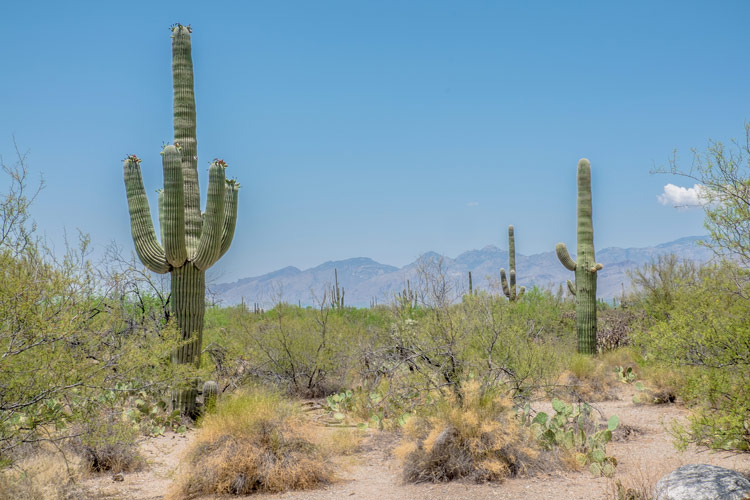
Step one is to try to shoot in the style of your favorite photographer. By learning how they craft their images, you will be clued into their vision, which will inspire your own creative insights. You don’t have to exactly recreate an image perfectly like them, but just try to understand what they are doing, then try to recreate it.

Step two is to take photo challenges. A photo challenge or assignment is a way to test out your technical, and artistic sides, combined to create a homework assignment that others will judge. Being peer reviewed by other photographers will not only give you helpful advice, but provide you with thick skin for future critique of your work.

You may have a certain style of shooting that you are drawn to, like landscapes or street photography. But what if someone challenges you to do some macro shots, architectural, portraits, or anything different from what you’re used to? It takes you out of your comfort zone, and challenges your knowledge as a photographer, while also providing you with ideas to incorporate into your own work.

20150315 DSCF0491 dps

You are now using all your technical photography education, and putting it into practice. It finally makes sense that you need to know these technical skills to create something with more meaning. It’s just like a doctor fresh out their residency, learning how to become a surgeon. Would you trust this person to cut you open without learning from other, more experienced surgeons? It’s the same with photography, it’s on the job training.

You need to learn it all, test it all, and learn different styles. Then, you can start to see your style peeping through, because you’ve slowly learned how to create your own vision, by studying those whose work you have a connection.

Meditative composition

I realized early on, my method was to find a subject, compose, take in the atmosphere, and wait patiently. While waiting, I absorbed all the things going on around me, without any sort of preconceived notions, but instead, just letting the world happen around me without trying to control it. It was a meditative state, where I had set up my easel (camera on a tripod) and waited for the decisive moment to shoot (putting the brush to the canvas).

DSCF0902 dps

I was in the White Sands National Monument near Alamogordo, New Mexico this past summer, sitting on a white sand hill, watching the sky turn from a deep hue of blue, to a dark sky, forming into a lightning storm. The winds began to pick up and the white sands began blowing. In my frame I saw the sky change into this deep magenta, and the sands moving almost in a tornado like swirl. I knew at the moment I must click the shutter, and was able to capture a special moment by composing and waiting.

“But there is more to a fine photograph than information. We are also seeking to present an image that arouses the curiosity of the viewer or that, best of all, provokes the viewer to think – to ask a question or simply to gaze in thoughtful wonder. We know that photographs inform people. We also know that photographs move people. The photograph that does both is the one we want to see and make. It is the kind of picture that makes you want to pick up your own camera again and go to work.” – Sam Abell

Equivalence
DSCF2084 dps

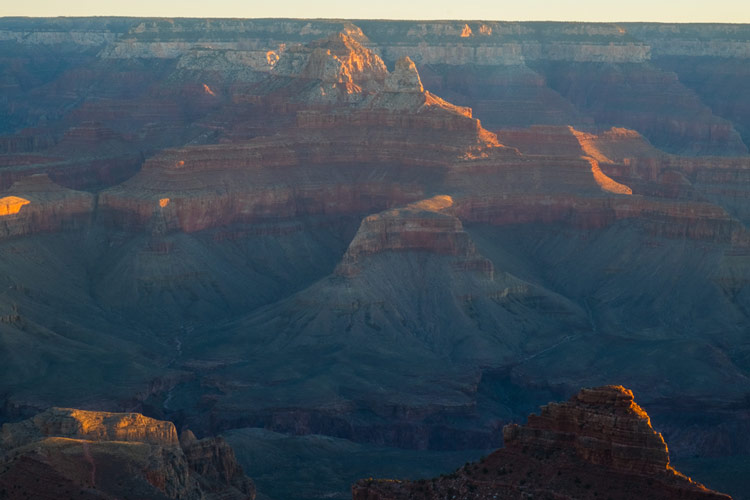
Equivalence is a term that has been used since Alfred Stieglitz first started expressing his work as more than just a capture of reality, but instead the things he captured were emotionally connected to him, whether they were geometric patterns, people, etc.

The term equivalence comes from the abstract painter, Wassily Kandinsky. His mission was to create more emotion with his painting, so that the audience who viewed his work could find, and feel, an emotional connection to his work. It was Stieglitz, who during a time where photography was simply documentation, incorporated the idea of equivalence into his photographic process. Boiled down to its simplest form, equivalence is the belief that colors, shapes, and geometric lines reflect one’s inner emotions. By studying Kandinsky he found meaning in his own work.

So what does that mean for you, a photographer trying to create photographs with meaning? Photographic meaning isn’t a literal translation of an image. Instead, it is a way in which you use your voice or perspective, to create a work that doesn’t need to be explained, which also evokes something/anything in the viewer.

This equivalence is what many great photographers have found, and when we see Dorothea Lange’s “Migrant Mother” or Robert Capa’s “The Falling Soldier” photographs we are instantly affected by them, and we don’t have to understand what is going on. We see the horror of war, and the look of uncertainty in a mother’s eyes as she holds her children.

Connect the dots

Bigsur dps

The beauty of photography is that a single image can tell an entire story, or a photographic essay can piece together an important narrative. A story worth telling, is the same as photographing with meaning. Photographs are your way of showing your point-of-view, or that of your subjects, to an audience.

We capture the human experience, whether that be a genocide, or the coming home of soldiers from war. It can be pain, beauty, grace, disgust, but photographs are visual storytellers, and those who understand how to make a story with their images become the most successful.

“As far as I am concerned, taking photographs is a means of understanding which cannot be separated from other means of visual expression. It is a way of shouting, of freeing oneself, not of proving or asserting one’s own originality. It is a way of life.” — Henri Cartier-Bresson

Each great photographer’s work was influenced by those who came before them. Some of us have a natural eye for composition and great timing, but does that mean that hard work won’t help those who lack these skills, to gain them?

To photograph with meaning, there is a literal route to find this discovery. To hurry up that process it takes hard work, dedication, and humility. You need to burn up your memory cards, and take a look at each of your frames to see what works and doesn’t. You need to look at photo books of the masters to see their vision, to help cultivate your own, by recreating their works.

DSCF2117 dps

You need to be patient, reflective, and willing to subject yourself into uncomfortable, and sometimes even dangerous situations, to really push yourself toward to becoming a better photographer.

Creating an emotional connection with your work is finding the equivalence that will speak volumes to your audience, without you even having to explain yourself. So, to make it clear, to find meaning in your photographs you must be willing to study, try, fail, and explore other genres of photography to find your place, your vision, and to take a deeper look inside yourself and the work you intend to create.

By studying the forefathers of photography you can create something new that was influenced by powerful, meaningful photographs. It’s not plagiarism to combine techniques or processes of others. Besides that would be like telling someone who never read a book, and doesn’t understand plot, to write the great American novel.

You must learn to walk before you can run.

googletag.cmd.push(function() {
tablet_slots.push( googletag.defineSlot( “/1005424/_dPSv4_tab-all-article-bottom_(300×250)”, [300, 250], “pb-ad-78623” ).addService( googletag.pubads() ) ); } );

googletag.cmd.push(function() {
mobile_slots.push( googletag.defineSlot( “/1005424/_dPSv4_mob-all-article-bottom_(300×250)”, [300, 250], “pb-ad-78158” ).addService( googletag.pubads() ) ); } );

The post How To Photograph With Meaning by Adam T Crawford appeared first on Digital Photography School.


Digital Photography School

 
Comments Off on How To Photograph With Meaning

Posted in Photography


5 Steps to Creative Storytelling in Pictures with Your Kids

19 Jan

image

Creative storytelling in pictures need not be daunting nor time-consuming. You can easily set up something really simple at home to take pictures of and at the same time make new memories with your kids.

The actual shoot must be kept really short, so as not to exasperate your kids too much, especially if they are very young, and therefore have relatively short attention spans. The real work is in the planning and thinking ahead.

image

The first rule to telling a good short story in pictures, is to keep it simple. Think of a singular plot: beginning, middle, and end. You can then fill in the gaps with interesting takes and angles. The biggest, and best, tip I give to anyone before taking on any creative project, is to imagine the emotion and feeling you want to evoke at the end of the project. Then work your way backward.

Start planning and decide on a theme. Take for example a simple back to school theme.

image

Step 1. Plan ahead

Think through the story you want to tell; decide on the details, picture the sequences in your head, and feel the story. Think through the items and characters that play a major role in the shoot. Half the battle is won by good meticulous planning, even if it’s just in your head.

What is the overarching emotion, look, feel, and colour of the shoot that you want to achieve? Pare everything back that doesn’t fit in with that look and feel. This shoot below had three requirements: golden, sentimental, and rich in bokeh (background blur). So I planned everything to achieve those three specific requirements.

image

To get rich bokeh, you need to shoot with a wide aperture, between f/1.2 to f/3.2, if you have normal shorter focal length lenses. For longer lenses like 85mm upwards, you can stop down a bit more, as the longer the lens, the more compression there is in the background. Using a 200mm lens, for example, would still give you nice background bokeh even at f/5.6.

To get golden images, use a gold reflector, and wait for the golden hour when you can get soft diffused yellow light. Golden hour usually happens about 1-2 hours after sunrise and before sunset depending on where you are in the world.

image

Step 2. Coordinate colours and props

Reign in the colour palette, go for a family of colours like blues and greens, or reds and purples, or warm yellows and oranges. You can add a splash of contrasting colour for focus. But it is always good to reign in the colour palette keeping it to 3 or 4 colours maximum.

Props need not be bought, or expensive. Use what you have at home; fruit, books, toys, cushions, quilts, etc. Just make sure they are colours that complement your chosen theme.

image

Step 3. Don’t be over ambitious

Keep goals simple when it comes to photographing kids, especially if they are your own. It’s one of the most difficult things to do. Keep it short and sweet by focusing on one or two actions or scenarios, and make them super easy like reading a book, hugging, or laughing at a silly joke.

A plot is not always necessary, you can even just aim for capturing some interactions between your kids. The props are to create some new context for them, hold their attention for a few short minutes, and keep them engaged during that time.

image

Step 4: Plan a beginning and end shot

The beginning and the end are crucial to a story because they bring the theme together. Make sure you have an establishing first shot, and a feel good last shot. Details are always a good idea for a contextual or establishing shot. They not only enrich emotion, and reinforce a story, but also strengthen memories. Interesting close-ups, and expressions or unusual crops are also good for closing shots, and stay in the viewer’s memory for a second longer.

image

image

Step 5: Edit your images with a plan

If you edit your photos, edit them according to your vision. there is no one else to please but yourself. The photoshoot you planned is for you and your family, so be true to your original vision and be brave, then sit back and enjoy your creative story in pictures.

image

Have you taken images that tell a creative story of your kids at home or more tips to add? Share them in the comments below.

googletag.cmd.push(function() {
tablet_slots.push( googletag.defineSlot( “/1005424/_dPSv4_tab-all-article-bottom_(300×250)”, [300, 250], “pb-ad-78623” ).addService( googletag.pubads() ) ); } );

googletag.cmd.push(function() {
mobile_slots.push( googletag.defineSlot( “/1005424/_dPSv4_mob-all-article-bottom_(300×250)”, [300, 250], “pb-ad-78158” ).addService( googletag.pubads() ) ); } );

The post 5 Steps to Creative Storytelling in Pictures with Your Kids by Lily Sawyer appeared first on Digital Photography School.


Digital Photography School

 
Comments Off on 5 Steps to Creative Storytelling in Pictures with Your Kids

Posted in Photography


Architecture as Art: 13 Unusually Sculptural Buildings

19 Jan

[ By Steph in Architecture & Public & Institutional. ]

artistic architecture alpine hotel 1

When fine art and architecture intersect, especially in our modern era of parametric modeling and 3D printing, the results can be strikingly different from the structures that surround them, in some instances seeming like sculptures were given growth serum and expanded to mind-boggling proportions. Eschewing the ordinary, these buildings feel like a chance for architects to flex their creativity and bring some interesting colors and proportions to their settings.

Melbourne Theater Company
artistic architecture melbourne 1

artistic architecture melbourne 2

artistic architecture melbourne 3

artistic architecture melbourne 4

Abstract shapes glow against a solid black mass on the exterior of this striking complex by Ashton Raggat McDougall, making the Melbourne Recital Centre and MTC Theater some of the most visually unique buildings in the city. The black and white color palette is accented by a vibrant red, with the geometric pattern continuing into the interior, looking three-dimensional when viewed from certain angles.

Tschuggen Grand Hotel
artistic architecture alpine hotel 2

artistic architecture alpine hotel 3

artistic architecture alpine hotel 4

Rising from the Swiss mountainside like shards of ice, architect Mario Botta’s Berg Oase is a sculptural extension of the Tschuggen Grand Hotel. Serving as a wellness center and spa, the arrangement of towering glass wedges bring light streaming into the interior spaces and almost seem like natural structures themselves among the trees and rocks when viewed from afar.

Cloud House
artistic architecture cloud house 1

artistic architecture cloud house 2

artistic architecture cloud house 3

A house shaped like a cloud? Why not? It may look like the occupants would be severely lacking in privacy, considering the two glazed facades, but this building by Australian firm McBride Charles Ryan is actually an extension to a more conventional street-facing home, and is shielded from neighbors’ views by the curved cloud-mimicking sides.

Suzhou Science & Cultural Arts Centre Facade
artistic architecture suzhou 2

artistic architecture suzhou 3

artistic architecture suzhou 1

One way to give a building a dramatic makeover (or just ensure that it stand out from the very start) is to add a parametric facade, like the intricate screen covering the massive Suzhou Science and Cultural Arts Centre in China. Developed by Studio 505, the curving screen is shaped like a parabolic moon crescent and consists of a weatherproofing layer and an outer ornamental mesh screen that provides shading.

Palais Bulles
artistic architecture palais bulles

artistic architecture palais bulles 2

artistic architecture palais bulles 3

artistic architecture palais bulles 4

A classic example of sculptural housing with an aesthetic that’s so outside the norm, it’s almost alien, is Palais Bulles (“Palace of Bubbles.”) Created by architect Antti Lovag in 1989, the curvilinear house is set into a rocky hillside overlooking the Mediterranean Sea in Cannes, France. It’s often used for film festival parties and fashion editorials.

Next Page – Click Below to Read More:
Architecture As Art 13 Unusually Sculptural Buildings

Share on Facebook


[ By Steph in Architecture & Public & Institutional. ]

[ WebUrbanist | Archives | Galleries | Privacy | TOS ]


WebUrbanist

 
Comments Off on Architecture as Art: 13 Unusually Sculptural Buildings

Posted in Creativity


Two views on the X-Pro2: Hitting the streets with Fujifilm’s flagship

18 Jan

You probably know all about the X-Pro2’s specs by now, but what’s it like to shoot with? Sam and Richard hit the streets of Georgetown, Seattle with the camera to see how it handles different types of shooting. What did they like? What came up short? Follow them and find out…

For the specs and more detail about the camera, read our Fujifilm X-Pro2 First Impressions Review.

Articles: Digital Photography Review (dpreview.com)

 
Comments Off on Two views on the X-Pro2: Hitting the streets with Fujifilm’s flagship

Posted in Uncategorized


Fujifilm’s budget FinePix XP90 rugged camera makes a splash

18 Jan

$ (document).ready(function() { SampleGalleryV2({“targetContainerClass”:”sampleGalleryImageViewerContainer”,”galleryId”:”1687256184″,”isEmbeddedWidget”:true,”selectedImageIndex”:0,”startInCommentsView”:false,”isMobile”:false}) });

Fujifilm has released the FinePix XP90, a relatively minor update to last year’s XP80 rugged camera. As with its predecessor, the XP90 is waterproof to 15m/50ft, shockproof from 1.8m/5.8ft, freezeproof and dustproof. The only major new feature is the LCD, which received a bump in both size and resolution (3″ vs 2.7″ and 920k vs 460k-dot).

It sports a 16MP BSI CMOS sensor and F3.9-4.9, 28-140mm equivalent lens with image stabilization. The camera has numerous special effects modes and can take HDR and panoramic photos. Video can be captured at 1080/60p or at frame rates of up to 480 fps (at lower resolutions). Naturally, Wi-Fi is also built in.

The XP90 can also serve as an action cam, with support for standard mounts and a dedicated mode which turns off the LCD for extended battery life. An optional 18mm equivalent wide-angle conversion lens is also available.

The FinePix XP90 will available in yellow, blue, orange and green for $ 229.95.

FUJIFILM ANNOUNCES NEW ADDITIONS TO THE X-SERIES LINE OF CAMERAS AND LENSES

X-Pro2, X-E2S, X70 and XF100-400mmF4.5-5.6 R LM OIS WR join the X-Series; all-weather FinePix XP90 gets the shot from sand to slopes

Valhalla, N.Y., January 14, 2016 FUJIFILM North America Corporation, a leader in digital imaging, today announced new additions to the award-winning X-Series line of premium fixed and mirrorless cameras, and ultra-high quality lenses, including: the FUJIFILM X-Pro2, FUJIFILM X-E2S, FUJIFILM X70 and FUJINON XF100-400mmF4.5-5.6 R LM OIS WR.  Fujifilm also introduced the new rugged and waterproof FinePix XP90, perfect for capturing amazing images everywhere, from underwater to mountain tops.

FUJIFILM X-Pro2

The FUJIFILM X-Pro2 is the new flagship range-finder style camera in the award-winning X-Series line. The X-Pro2 is the pinnacle of X-Series photography, and gives professional photographers an innovative Advanced Hybrid Multi Viewfinder capable of instantly switching between optical and electronic finders, a new 24.3MP X-Trans CMOS III sensor for truly remarkable image resolution, and a new X-Processor Pro that delivers dramatically improved response times for unmatched performance.

By combining these features with the ultra-high image quality of FUJINON X-Mount lenses and the world-renowned color reproduction technology refined over more than 80 years as a photographic film leader, the FUJIFILM X-Pro2 delivers the best ever results from an X-Series camera.

FUJIFILM X-Pro2 key features:

  • World’s first Advanced Hybrid Multi Viewfinder with 2.36 million dots and maximum speed of 85 frames per second
    • Diopter correction mechanism with an eye point of 16mm and a telephoto bright frame with enlarged focal length of 140mm
  • 24.3MP APS-C X-Trans CMOS III Sensor
    • Fast AF of up to 0.08 seconds
    • Phase detection AF and motion predictive AF for continuous shooting up to 8 frames per second
    • Start-up time of 0.4 seconds
    • Shutter time lag of 0.05 seconds
    • Shooting interval of 0.25 seconds
    • Focal plane shutter top speed of 1/8000 second
    • Flash sync speed up to 1/250 second
  • Dust and splash-resistant body with more than 61 points of weather sealing and freeze resistance to 14°F
  • High-precision 3” rear display with 1.62 million dots
  • Dual memory card slots (Slot 1 compatible with UHS-II Standards)
  • New monochrome  ACROS film simulation for smooth tones, deep blacks and rich textures
  • New Grain Effect mode for images reminiscent of old film photos, especially when printed
  • Maximum ISO performance up to 12800 sensitivity; Extended ISO ISO100, 25600, 51200
  • Improved electric charge transfer rate for ultra-fast readout speeds
  • Interval timer for shooting time-lapse sequences of one second to 24 hours, up to 999 frames
  • Free FUJIFILM Camera Remote application and Wireless Communication function allows users to remotely shoot images from smartphones and tablets via WiFi
  • Photos can be sent to the INSTAX Share Printer using the free INSTAX Share App (iOS and Android) SHARE Smartphone Printer
  • Full HD video 1080p at 60fps; bit rate of 36Mbps for clear capture of delicate movements; frame rates of 60 fps, 50fps, 30fps, 25fps and 24fps, supporting worldwide motion picture formats
  • Advanced creative filters
  • Optional accessories:
    • Hand Grip MHG-Xpro2 – improves grip and retains access to battery and SD card, and compatible with an Arca Swiss plate
    • Leather Case BLC-XPRO2 – genuine leather bottom case elegantly shows off the X-Pro2’s classic design while protecting the camera body with battery access


FinePix XP90

The new FinePix XP90 rugged digital camera is waterproof to 50ft./15m, shockproof from 5.8ft./1.75m., freezeproof to 14°F/-10°C and dustproof*,**. It features a 16.4MP CMOS sensor with a 28-140mm 5x optical zoom lens, Wi-Fi® connectivity for one touch transfers to smartphones and tablets, and captures full HD movies at 1080p, even underwater.

FinePix XP90 key features:

  • 16.4MP 1/2.3” CMOS sensor
  • Waterproof to 50ft./15m, Shockproof from 5.8ft./1.75m, Freezeproof to 14°F/-10°C and Dustproof
  • Complies with IP68 standards
  • 5x optical zoom with 28mm wide-angle setting
  • 3” LCD with anti-reflection coating
  • Wireless connectivity for instant image and movie sharing
  • Action Camera mode
  • Optical Image Stabilization
  • Full HD movie capture at up to 60 frames per second
  • Interval Timer Shooting and Time-Lapse Movie function
  • 480 frames per second slow motion mode
  • 11 Advanced Creative Filters
  • High Dynamic Range (HDR) capture
  • Motion Panorama 360°
  • Available in Blue, Yellow, Graphite with green, and Graphite with orange

The FinePix XP90 will be available in February 2016 for USD $ 229.95 \ CAD $ 239.99.

* Waterproof and dustproof protection standards of products, stipulated by IEC (International Electrotechnical Commission)

** Measurement method of MIL-Standard 810F Method5 16.5-Shock of the “MIL Standard”, a standard stipulating the durability of supplies procured by the American military, set by the United States Department of Defense

FinePix XP90 specifications

Price
MSRP $ 229
Body type
Body type Compact
Body material Metal, composite
Sensor
Max resolution 4608 x 3456
Other resolutions 4:3 (3264 x 2448, 2048 x 1536), 3:2 (4608 x 3072, 3264 x 2176, 2304 x 1536), 16:9 (4608 x 2592, 3264 x 1840, 1920 x 1080), 1:1 (3456 x 3546, 2432 x 2432, 1728 x 1728)
Image ratio w:h 1:1, 4:3, 3:2, 16:9
Effective pixels 16 megapixels
Sensor photo detectors 17 megapixels
Sensor size 1/2.3" (6.17 x 4.55 mm)
Sensor type BSI-CMOS
Color space sRGB
Color filter array Primary color filter
Image
ISO Auto, 100-3200, 6400 available at lower resolutions
White balance presets 7
Custom white balance No
Image stabilization Sensor-shift
Uncompressed format No
File format
  • JPEG (Exif v2.3)
Optics & Focus
Focal length (equiv.) 28–140 mm
Optical zoom 5×
Maximum aperture F3.9 – F4.9
Autofocus
  • Contrast Detect (sensor)
  • Multi-area
  • Center
  • Tracking
  • Single
  • Continuous
  • Face Detection
  • Live View
Autofocus assist lamp Yes
Digital zoom Yes (2X)
Manual focus No
Normal focus range 60 cm (23.62)
Macro focus range 9 cm (3.54)
Screen / viewfinder
Articulated LCD Fixed
Screen size 3
Screen dots 920,000
Touch screen No
Screen type TFT LCD
Live view Yes
Viewfinder type None
Photography features
Minimum shutter speed 4 sec
Maximum shutter speed 1/2000 sec
Exposure modes
  • SR Auto
  • Program
Scene modes
  • Portrait
  • Landscape
  • Sport
  • Night
  • Night (Tripod)
  • Sunset
  • Snow
  • Beach
  • Underwater
  • Underwater (Macro)
  • Party
  • Flower
  • Text
Built-in flash Yes
Flash range 4.40 m (with Auto ISO)
External flash No
Flash modes Auto, flash on, flash off, slow synchro
Drive modes
  • Single
  • Continuous Top
  • Continuous Last
  • Self-timer
Continuous drive 10.0 fps
Self-timer Yes (2 or 10 sec, group)
Metering modes
  • Multi
Exposure compensation ±2 (at 1/3 EV steps)
WB Bracketing No
Videography features
Resolutions 1920 x 1080 (60p, 30p), 1280 x 720 (60p), 640 x 480 (30p)
Format MPEG-4, H.264
Microphone Mono
Speaker Mono
Storage
Storage types SD/SDHC/SDXC, Internal
Storage included 96MB
Connectivity
USB USB 2.0 (480 Mbit/sec)
HDMI Yes (micro-HDMI)
Microphone port No
Headphone port No
Wireless Built-In
Wireless notes 802.11/b/g/n
Remote control Yes (via smartphone)
Physical
Environmentally sealed Yes (waterproof to 15m/50ft, shockproof to 1.8m/5.8ft, freezeproof to -10C/+14F, dustproof)
Battery Battery Pack
Battery description NP-45S lithium-ion battery & charger
Battery Life (CIPA) 210
Weight (inc. batteries) 203 g (0.45 lb / 7.16 oz)
Dimensions 110 x 71 x 28 mm (4.33 x 2.8 x 1.1)
Other features
Orientation sensor Yes
GPS None

Articles: Digital Photography Review (dpreview.com)

 
Comments Off on Fujifilm’s budget FinePix XP90 rugged camera makes a splash

Posted in Uncategorized


Pavement Bowie: 20 Street Art Tributes to David Bowie

18 Jan

[ By Steve in Art & Street Art & Graffiti. ]

bowie-street-art-1a
Ashes to ashes, Stardust to dust: having left life’s stage, cultural icon David Bowie also leaves behind a global imprint through street art and graffiti.

bowie-street-art-2a

David Bowie was a multidimensional performer – “Sound and Vision” succinctly sums up his ability to impress in a range of senses. Though primarily a musician, the late Londoner’s enormous impact is discernible even when presented silently as street art and/or graffiti in locations as culturally diverse as Iceland and Brazil.

Aladdin Seen

bowie-street-art-3a

That’s gonna leave a mark. This small stenciled image on Ghent, Belgium’s Werregarenstraat (Graffiti Street) stands out amongst the more complex and colorful works all around. Flickr user Oriol Salvador zoomed right in on March 23rd of 2014.

Face The Change

bowie-street-art-20

Adding some non-local color to a Tel Aviv, Israel side street, these stenciled faces of Bowie aka Ziggy Stardust were snapped on November 24th, 2011 by Flickr user Fatemeh. One would hope the homeowner (a) approves of the art and (b) resists the urge to remove it.

Sticker Shock

bowie-street-art-16

Captured by Flickr user Openhammer on June 11th of 2008, this sticker references the cover photo from RCA Records’ 1972 worldwide release of Bowie’s 1970 album, “The Man Who Sold the World”. Due to their inherent fragility, it’s unknown whether the sticker has survived to date – one would have to scour Winn Street in Brisbane, Australia to know for certain.

They’re Jammin’

bowie-street-art-4aa

bowie-street-art-4b

bowie-street-art-4c

David Bowie and Bob Marley share space in a Toronto, Canada alleyway in this image from Flickr user Aviva West (letsgoeverywhere) taken on April 29th, 2011. Could this be love?

Londrina Calling

Londrina, Brazil was named for London, England so the above street art image of London-born David Bowie is right at home. Flickr user Marco Gomes snapped this sharp-edged stencil from the southern Brazilian city on March 3rd, 2008.

Next Page – Click Below to Read More:
Pavement Bowie 20 Street Art Tributes To David Bowie

Share on Facebook


[ By Steve in Art & Street Art & Graffiti. ]

[ WebUrbanist | Archives | Galleries | Privacy | TOS ]


WebUrbanist

 
Comments Off on Pavement Bowie: 20 Street Art Tributes to David Bowie

Posted in Creativity


Fujifilm XF 100-400mm F4.5-5.6 OIS WR lens moves from roadmap to reality

18 Jan

Fujifilm has officially announced its Fujinon XF 100-400mm F4.5-5.6 R LM OIS WR lens, which has been on the company’s roadmap since early 2015.

This weather-sealed lens, equivalent to 152-609mm (F6.8-8.4 equivalent) when mounted on an X-series body, has nine rounded aperture blades, 5 ED and 1 Super ED elements, and a fluorine coating. It also features a 5-stop image stabilization system and twin linear motors for fast, responsive focusing performance.

The lens is compatible with Fujifilm’s 1.4X teleconverter, giving users an equivalent focal length of 213-853mm.

You’ll be able to pick up the 100-400mm F4.5-5.6 lens in February for $ 1899.95.

FUJIFILM ANNOUNCES NEW ADDITIONS TO THE X-SERIES LINE OF CAMERAS AND LENSES

X-Pro2, X-E2S, X70 and XF100-400mmF4.5-5.6 R LM OIS WR join the X-Series; all-weather FinePix XP90 gets the shot from sand to slopes

Valhalla, N.Y., January 14, 2016 FUJIFILM North America Corporation, a leader in digital imaging, today announced new additions to the award-winning X-Series line of premium fixed and mirrorless cameras, and ultra-high quality lenses, including: the FUJIFILM X-Pro2, FUJIFILM X-E2S, FUJIFILM X70 and FUJINON XF100-400mmF4.5-5.6 R LM OIS WR.  Fujifilm also introduced the new rugged and waterproof FinePix XP90, perfect for capturing amazing images everywhere, from underwater to mountain tops.

FUJINON XF100-400mmF4.5-5.6 R LM OIS WR

The new FUJINON XF100-400mmF4.5-5.6 R LM OIS WR is a weather-sealed, superior telephoto lens that gives photographers exceptionally sharp images with a 152mm-609mm equivalent in 35mm format. The high-performance XF100-400mmF4.5-5.6 R LM OIS WR has an optical construction of 21 elements in 14 groups, and includes five ED lenses and one Super ED lens to help reduce chromatic aberration that often occurs in telephoto lenses. As a result, it delivers the highest image quality in its class.

The XF100-400mmF4.5-5.6 R LM OIS WR has been designed for handheld shooting with a 5.0-stop image stabilization system and twin linear motors for speedy autofocus that makes it perfect for shooting fast-moving subjects. The lens is also water and dust resistant and can operate in temperatures as low as 14°F, making it suitable for use in a wide range of outdoor shooting conditions. A fluorine coating has also been applied to the front lens element to repel water and dirt, further improving the toughness and functionality of the lens.

FUJINON XF100-400mmF4.5-5.6 R LM OIS WR key features:

  • Uses  21 elements in 14 groups, and 5 extra-low dispersion elements and 1 super extra low dispersion elements
    • Rounded 9 blade aperture
    • 1/3 EV (15 steps)
    • Water-repellent fluorine coating
  • Weather-sealed with 13 water and dust resistant seals at 12 points
  • Included lens hoods features a sliding window for accessing a polarizing filter and locking mechanism
  • Compatible the XF1.4X TC WR teleconverter (140-560mm F6.3-8 or 213-853mm in 35mm equivalent)
  •  Compatible with optional lens plate (MLP-75XF) and optional ARCA SWISS tripods


The FUJINON XF100-400mmF4.5-5.6 R LM OIS WR will be available in February 2016 for USD $ 1,899.95 and CAD $ 2,149.99.

FinePix XF 100-400mm F4.5-5.6 R LM OIS WR lens specifications

Principal specifications
Lens type Zoom lens
Max Format size APS-C / DX
Focal length 100–400 mm
Image stabilisation Yes (5 stops)
Lens mount Fujifilm X
Aperture
Maximum aperture F4.5 – F5.6
Aperture ring No
Number of diaphragm blades 9
Optics
Elements 21
Groups 14
Special elements / coatings Five ED and 1 Super ED element + fluorine coating
Focus
Minimum focus 1.75 m (68.9)
Maximum magnification 0.19×
Autofocus Yes
Motor type Linear Motor
Full time manual Yes
Focus method Extending front
Distance scale No
DoF scale No
Focus distance limiter Yes
Physical
Weight 1375 g (3.03 lb)
Diameter 95 mm (3.73)
Length 211 mm (8.29)
Sealing Yes
Zoom method Rotary (extending)
Power zoom No
Zoom lock Yes
Filter thread 82.0 mm
Hood supplied Yes
Tripod collar Yes

Articles: Digital Photography Review (dpreview.com)

 
Comments Off on Fujifilm XF 100-400mm F4.5-5.6 OIS WR lens moves from roadmap to reality

Posted in Uncategorized


Fujifilm X-E2S improves upon predecessor’s AF system and ergonomics, adds electronic shutter

18 Jan

$ (document).ready(function() { SampleGalleryV2({“targetContainerClass”:”sampleGalleryImageViewerContainer”,”galleryId”:”5541354515″,”isEmbeddedWidget”:true,”selectedImageIndex”:0,”startInCommentsView”:false,”isMobile”:false}) });

The Fujifilm X-E2S is an update to the company’s premium rangefinder-style mirrorless camera, the gold award-winning X-E2, which was introduced way back in 2013.

Probably the most significant feature is an improved Hybrid AF system (similar to that of the X-T10), which adds 77-point zone and wide/tracking modes to go along with the 49 points that were already available on the X-E2. Object tracking during autofocus is an area where Fujifilm digital cameras have traditionally lagged, so it’s encouraging to see efforts made to modernize the system: ‘wide/tracking’ was specifically introduced to track subjects around the frame in continuous AF. Fujifilm is also claiming improvements in single-point focus acquisition, with ‘best-case’ focus speeds of 0.06 sec on the X-E2S, compared with 0.08 sec on the X-E2.

Another ‘big deal’ is the addition of an electronic shutter. This allows for shutter speeds as high as 1/32000 sec as well as totally silent shooting, though rolling shutter is the main tradeoff when using a fully electronic shutter.

Three other features of note include a new top ISO of 51200, a refined grip, and a new user interface for the menu system.

What hasn’t changed is the 16.3MP X-Trans CMOS Sensor II, large and high-res electronic viewfinder, 3″ LCD display, and Wi-Fi support. The X-E2S can still capture 1080/60p video and offers the latest set of Film Simulation Modes, including Classic Chrome. 

Fujifilm X-E2 owners can take heart – a firmware update will be offered in early February bringing AF system updates, performance improvements and the new graphical interface introduced in the X-E2S.

Something that caught our eye was the difference in price between the X-E2S and its predecessor. Back in 2013 the X-E2 launched at a price of $ 999 body only, where the X-E2S will be priced at just $ 699 (and $ 999 when paired with the 18-55mm F2.8-4 lens). The X-E2S doesn’t have the most cutting-edge technology, but at that price it seems like a pretty good deal.

Is the X-E2S a sensible upgrade to its predecessor? We’d love to hear what you think in the comments below.

FUJIFILM ANNOUNCES NEW ADDITIONS TO THE X-SERIES LINE OF CAMERAS AND LENSES

X-Pro2, X-E2S, X70 and XF100-400mmF4.5-5.6 R LM OIS WR join the X-Series; all-weather FinePix XP90 gets the shot from sand to slopes

Valhalla, N.Y., January 14, 2016 FUJIFILM North America Corporation, a leader in digital imaging, today announced new additions to the award-winning X-Series line of premium fixed and mirrorless cameras, and ultra-high quality lenses, including: the FUJIFILM X-Pro2, FUJIFILM X-E2S, FUJIFILM X70 and FUJINON XF100-400mmF4.5-5.6 R LM OIS WR.  Fujifilm also introduced the new rugged and waterproof FinePix XP90, perfect for capturing amazing images everywhere, from underwater to mountain tops.

FUJIFILM X-E2S

The new FUJIFILM X-E2S, a premium rangefinder-style mirrorless camera, has a durable and compact body and features a Real-Time Viewfinder with a large magnification of 0.62X and an electronic viewfinder with the world’s short display lag time of just 0.005 seconds. The X-E2S also gives users an enhanced autofocus system, an improved grip, an electronic shutter, and a new, easy-to-use graphical user interface design allowing faster access to essential settings.

New firmware for the original FUJIFILM X-E2
Fujifilm will release a new firmware update for the original FUJIFILM X-E2 that will give it the same software improvements as the new FUJIFILM X-E2S. The firmware will include the updated autofocus system, improved performance and the new graphical user interface, along with several functional enhancements. For a complete list of new features, visit new firmware update. The new firmware will be available in early February 2016.

FUJIFILM X-E2S key features:

  • 16.3MP APS-C X-Trans CMOS II Sensor
    • Fast AF of up to 0.06 seconds
    • Start-up time of 0.5 seconds
    • Shutter time lag of 0.05 seconds
    • Shooting interval of 0.5 seconds
  • Scratch-resistant, high-definition 3” LCD display with 1,040K dots
  • New  AF system offers the 49-point Single Point mode for fast, precise focusing, and a  new Zone and Wide/Tracking modes with a 77-point area to capture moving subjects
  • Maximum ISO performance up to 51200 sensitivity
  • Completely silent electronic shutter capable of exposures up to 1/32,000 second
  • Latest CLASSIC CHROME Film Simulation mode that delivers muted tones and deep colors
  • Interval timer for shooting time-lapse sequences of one second to 24 hours, up to 999 frames
  • Two command dials and seven customizable function buttons
  • Auto Mode Switch for instantly changing to an advanced auto mode with optimized settings
  • Super Intelligent pop-up flash
  • Free FUJIFILM Camera Remote application and Wireless Communication function allows users to remotely shoot images from smartphones and tablets via WiFi
  • Photos can be sent to the INSTAX Share Printer using the free INSTAX Share App (iOS and Android) SHARE Smartphone Printer
  • Full HD video 1080p at 60fps; bit rate of 36Mbps for clear capture of delicate movements; frame rates of 60 fps, 50fps, 30fps, 25fps and 24fps, supporting worldwide motion picture formats
  • Advanced creative filters
  • Optional accessories:
    • Hand Grip

The FUJIFILM X-E2S (body only) will be available in February 2016 for USD $ 699.95 and CAD $ 899.99. The FUJIFILM X-E2S kit (with FUJINON LENS XF18-55mmF2.8-4 R LM OIS) will be available for USD $ 999.95 and CAD $ 1,249.99.

FinePix X-E2S specifications

Price
MSRP $ 699/£549.00 (body only), $ 999/£749.00 (w/18-55 F2.8-4 lens)
Body type
Body type Rangefinder-style mirrorless
Sensor
Max resolution 4896 x 3264
Other resolutions 3:2 (3456 x 2304, 2496 x 1664), 16:9 (4896 x 2760, 2304 x 2304), 1:1 (3264 x 3264, 2304 x 2304, 1664 x 1664)
Image ratio w:h 1:1, 3:2, 16:9
Effective pixels 16 megapixels
Sensor photo detectors 17 megapixels
Sensor size APS-C (23.6 x 15.6 mm)
Sensor type CMOS
Processor EXR Processor II
Color space sRGB, AdobeRGB
Color filter array X-Trans
Image
ISO Auto, 200-6400 (expandable to 100-51200)
Boosted ISO (minimum) 100
Boosted ISO (maximum) 51200
White balance presets 7
Custom white balance Yes
Image stabilization No
Uncompressed format RAW
JPEG quality levels Fine, Normal
File format
  • JPEG (Exif 2.3),
  • RAW (RAF format)
Optics & Focus
Autofocus
  • Contrast Detect (sensor)
  • Phase Detect
  • Multi-area
  • Center
  • Selective single-point
  • Tracking
  • Single
  • Continuous
  • Face Detection
  • Live View
Autofocus assist lamp Yes
Manual focus Yes
Number of focus points 77
Lens mount Fujifilm X
Focal length multiplier 1.5×
Screen / viewfinder
Articulated LCD Fixed
Screen size 3
Screen dots 1,040,000
Touch screen No
Screen type TFT LCD
Live view Yes
Viewfinder type Electronic
Viewfinder coverage 100%
Viewfinder resolution 2,360,000
Photography features
Minimum shutter speed 30 sec
Maximum shutter speed 1/32000 sec
Exposure modes
  • Program AE
  • Shutter priority
  • Aperture priority
  • Manual exposure
Built-in flash Yes (Pop-up)
Flash range 7.00 m (@ ISO 200)
External flash Yes (via hot-shoe)
Flash modes Auto, On, Off, Red-Eye, Slow Sync, Rear-curtain, Commander
Flash X sync speed 1/180 sec
Drive modes
  • Single
  • Continuous
  • Self-timer
  • Interval
Continuous drive 7.0 fps
Self-timer Yes (2 or 10 sec, custom)
Metering modes
  • Multi
  • Average
  • Spot
Exposure compensation ±3 (at 1/3 EV steps)
AE Bracketing ±3 (at 1/3 EV, 2/3 EV, 1 EV steps)
WB Bracketing Yes
Videography features
Resolutions 1920 x 1080 (60p, 30p), 1280 x 720 (60p, 30p)
Format MPEG-4, H.264
Microphone Stereo
Speaker Mono
Storage
Storage types SD/SDHC/SDXC
Connectivity
USB USB 2.0 (480 Mbit/sec)
HDMI Yes (mini-HDMI)
Microphone port No
Headphone port No
Wireless Built-In
Wireless notes 802.11b/g/n
Remote control Yes (Wired or via smartphone)
Physical
Environmentally sealed No
Battery Battery Pack
Battery description Lithium-Ion NP-W126 rechargeable battery & charger
Battery Life (CIPA) 350
Weight (inc. batteries) 350 g (0.77 lb / 12.35 oz)
Dimensions 129 x 75 x 37 mm (5.08 x 2.95 x 1.46)
Other features
Orientation sensor Yes
Timelapse recording Yes
GPS None

Articles: Digital Photography Review (dpreview.com)

 
Comments Off on Fujifilm X-E2S improves upon predecessor’s AF system and ergonomics, adds electronic shutter

Posted in Uncategorized