RSS
 

Archive for September, 2015

Blurring Boundaries: 14 Modern Houses That Open to the Air

15 Sep

[ By Steph in Architecture & Houses & Residential. ]

willow house singapore 2

Ceilings retract and glazed walls swing open to connect intimate indoor spaces with courtyards, terraces and gardens in these modern residences blurring the lines between indoors and out. Located everywhere from Colorado to Kuala Lumpur, these open-air homes take advantage of mild climates and spectacular views, with alternatives to conventional walls enabling natural ventilation and a sense of being connected to nature.

Kloof House, Johannesburg, South Africa
open air house kloof 5

open air house kloof 4

open air house kloof 3

open air house kloof 2

open air house kloof 1

Every room in the sculptural Kloof House by Nico van der Meulen Architects opens directly to the outdoors via gigantic sliding glass walls. The kitchen, living room, dining room and bedrooms can all be fully connected to various outdoor spaces like courtyards, balconies and gardens. The swimming pool becomes part of the living room area, and one bedroom connects to a cantilevered koi pond.

The Fish House, Singapore
open air house fish 4

open air house fish 3

open air house fish 2

open air house fish 1

This modern tropical residence in Singapore seamlessly integrates courtyard spaces into the interiors on every level for natural ventilation and nearly uninterrupted views of the ocean. A glass-walled lounge cantilevers out over the swimming pool, and residents can walk up onto the green roof, which is partially shaded with solar panels.

Loft 24-7, Sao Paulo, Brazil
open air houses loft 4

open air houses loft 3

open air houses loft 2

open air houses loft 1

Decks and terraces connect the various freestanding volumes that make up Loft 24-7 by Fernanda Marques Arquitetos Associados, with the effect continued indoors using glazed walls and ceilings. “Being inside feeling like one is outside. I believe that to be a key issue in understanding the interior design being produced today,” says the architect. “In times when environmental awareness is growing, and, of course, also the desire to be close to nature.”

Casa P, Sao Paulo, Brazil
open air house casa p 4

open air house casa p 3

open air house casa p 2

open air house casa p 1

The ground floor of Casa P by Studio MK27 is enclosed with a slatted wooden ‘freijó’ wall, which acts as a privacy screen and offers natural ventilation. These oversized shutters can be opened completely to connect the interiors to the courtyard. Two more concrete volumes are stacked on top of the first, with the topmost one boasting all-glass walls for optimal views.

Willow House, Singapore
willow house singapore 5

willow house singapore 4

willow house singapore 3

willow house singapore 1

Greenery from the planted roof drips down into a living space via an open oculus, living spaces overlook swimming pools and reflecting pools, and trees grow indoors in this boundary-blurring house by Guz Architects. Taking advantage of Singapore’s warm, humid climate, the tropical residence blends traditional Singaporean architectural typologies with modern aesthetics.

Next Page – Click Below to Read More:
Blurring Boundaries 14 Modern Houses That Open To The Air

Share on Facebook


[ By Steph in Architecture & Houses & Residential. ]

[ WebUrbanist | Archives | Galleries | Privacy | TOS ]


WebUrbanist

 
Comments Off on Blurring Boundaries: 14 Modern Houses That Open to the Air

Posted in Creativity


14. September 2015

15 Sep

Das Bild des Tages von: Matthias Koch

Ein Kind steht vor einem Haus.

Im Ausblick: Nackt sein, Fragen zum Fotojournalismus und ein Schiffswrack.
kwerfeldein – Fotografie Magazin | Fotocommunity

 
Comments Off on 14. September 2015

Posted in Equipment


SmugMug Films: Renee Robyn’s digital domain

14 Sep

The latest of SmugMug’s series of feature videos profiles photographer and digital artist Renee Robyn. While recovering from a serious motorcycle accident, she fell in love with an art form that was within her physical capabilities at the time – making digital composite images. Read more

Articles: Digital Photography Review (dpreview.com)

 
Comments Off on SmugMug Films: Renee Robyn’s digital domain

Posted in Uncategorized


Maximizing Depth of Field Without Diffraction

14 Sep

So you are out shooting and you want to capture the full scene in front of you – all the way from what is directly in front of you to the background way off in the distance. You know you need a really large depth of field, and you know what you need to do to get it.

You reach for the camera’s aperture control and crank it down all the way to f/22 (or f/32 if your lens allows). That will maximize your depth of field and have your picture looking sharp from front to back.

Or will it?

What is Diffraction?

There is a phenomena in photography called diffraction that has an adverse effect on your pictures, and sets in when you use smaller apertures. What is diffraction? Let me explain.

As you are probably aware, the aperture of a lens is the opening in the rear part of the lens that lets light into the camera. The body of the lens consists of optical elements that direct light toward the rear of the lens. When you use a large aperture, light freely moves through the optical elements and then through the aperture. When the aperture is very small, however, essentially the light has to bend to make its way through the aperture. That bending of light causes the waves to interfere with each other. The following graphic illustrates how this works:
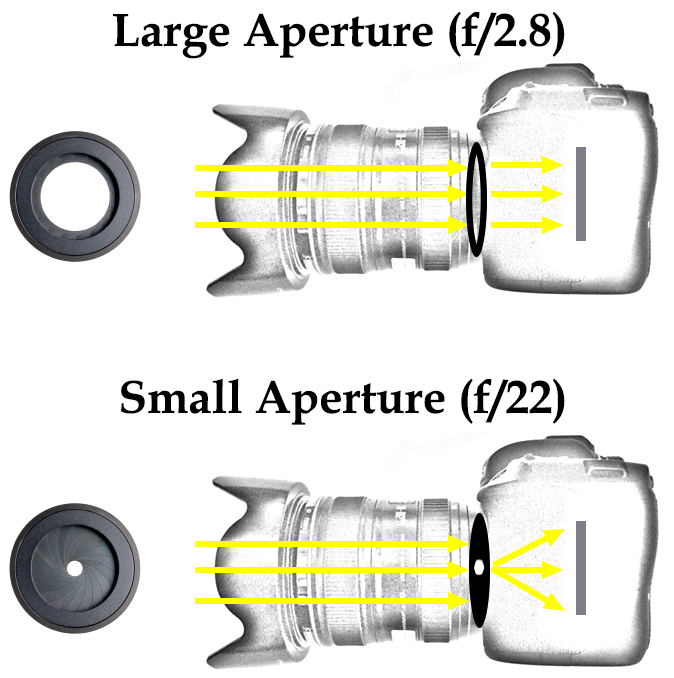
Diagram showing how light enters the camera through the lens and results in diffraction at small aperture settings

What’s the result of this to your photography? In a word: softness.

A picture shot at f/22 will not be quite as sharp as one shot with an aperture that is a bit larger. Here is an example of detail from two photos, which are identical except that one was shot at f/8 and the other at f/22:
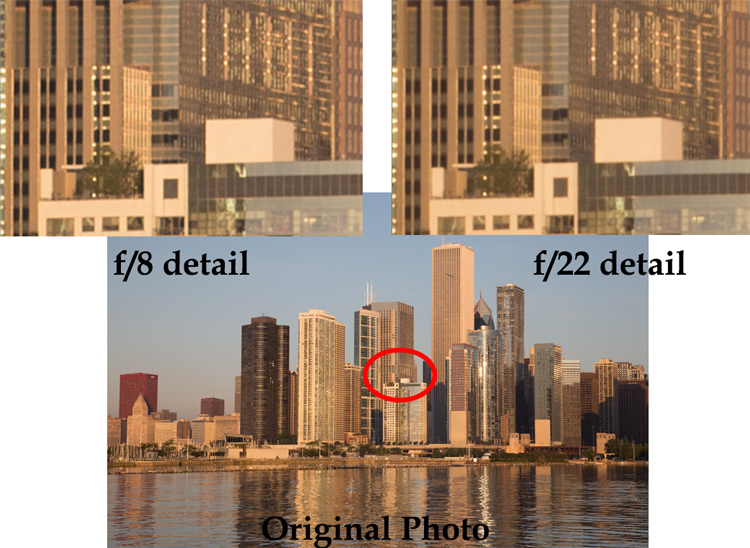
Example of photos taken with large and small apertures to show the effect of diffraction when using a small aperture on your lens

You can probably see that the f/8 detail is sharper than the f/22 detail.

The example above was shot outdoors with a 24-105 mm f/4 lens (my favorite). To see this application in other contexts, I also created another example, this time shooting indoors with a 70-200 mm f/2.8 lens with a minimum aperture of f/32.
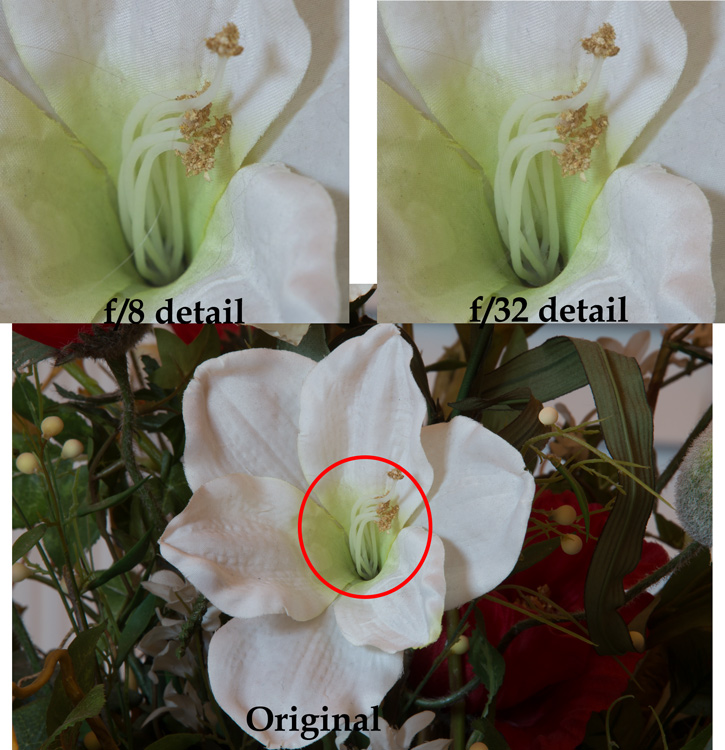
Example of photos taken with large and small apertures to show the effect of diffraction when using a small aperture on your lens

Again, the f/8 detail is sharper than that shot with the smallest aperture.

By looking at these examples, you can see that diffraction is not just theory, it has real affect on your photos.

Using the Sharpest Aperture

Okay, so now you see that diffraction is a real phenomenon, and you want to avoid it. What is the smallest aperture you should use? And what is the best aperture setting? Unfortunately, there is no one perfect answer. It depends on the lens. As a result, you should test your lens(es) to determine the aperture (or range of apertures) at which they work best (also known as the lens’ sweet spot).

To do so, just take the exact same picture at each aperture setting (in 1-stop increments). Be sure to use a tripod so your picture is exactly the same. In addition, make sure you are increasing (making longer) your shutter speed by an equal amount every time you change your aperture so that your exposure stays the same. After you have taken the pictures, load them onto your computer, zoom-in on each, and compare.

If you don’t want to test your lens and just want a quick rule of thumb for avoiding the effects of diffraction, generally avoid using an aperture smaller than f/11 or f/16. Most experts consider this range something of a maximum. In addition, the sharpest aperture on most lenses will be about f/5.6 – f/8, or about 1-2 stops smaller than its wide open aperture setting. When possible, default to using an aperture in this range.

Maximizing Depth of Field with Larger Apertures

You may find yourself wondering how to get a large depth of field without using a very small aperture. Keep in mind that you don’t always need to use the smallest aperture that your lens offers, to get a sufficient depth of field. If you are shooting outdoors, which is generally where you will want a small aperture and maximum depth of field, you should become acquainted with the subject of hyperfocal distance.

Despite its complex-sounding name, hyperfocal distance is just a measure of how close you can focus and still keep the background of your image acceptably sharp. You don’t necessarily need to use the smallest aperture possible, particularly when you are shooting wide-angle. For example, if you are using a full-frame camera with a 20mm lens, even using an aperture of f/8 will keep everything sharp from 5.5 feet in front of you, all the way to infinity!

This shows that you don’t always need to use an aperture like f/22. Get acquainted with hyperfocal distance (or keep a hyperfocal distance chart handy) to see how large you can make your aperture, yet still maximize depth of field.

Focus Stacking

Sometimes, however, you need to break out the heavy artillery and make sure everything – from what is right in front of you all the way to infinity – is in focus. To do that, use a technique called focus stacking.

To focus stack what you do is, take multiple pictures of the exact same thing at your lens’s sharpest aperture setting. Again, you should test your lenses to see what the sharpest setting is for each lens, but if you don’t know it will usually be in the range of f/5.6 – f/8.0. Set your lens to manual focus, and set the focus point on the closest part of the image (nearest part you want in sharp focus). Take the first shot, then repeat the process, gradually setting the focus point further and further away with each shot, until you are focused at infinity. Usually 3-5 shots will cover the entire range of the scene.

When you get your photos in your computer, you will combine the photos in Photoshop to create one file using the sharpest parts of each picture. There are a few different ways to do this:

  • Automatic: Use the Photomerge function to load your photos into Photoshop (File > Automate > Photomerge) and combine the images, making sure that the box to “blend images together” is checked. Photoshop will combine the images into one file and (usually) use the sharpest portions of each image.
  • Partial: You can also load the images as separate layers to one file in Photoshop, align your layers (Edit > Auto-Align Layers), and then have Photoshop automatically blend the layers (Edit > Auto-Blend).
  • Manually: Finally, you can do the process manually if you want complete control over it. Load the images as layers to the same file align the layers. To blend the photos, add a layer mask to the top layer (Layer > Layer Mask > Reveal All) and use a black brush to mask away everything except the sharpest point of that picture. Then merge down that layer (Layer > Merge Down) and repeat the process for each layer. This method will obviously take more time than the first two options above.

At the end of this process, you will have combined the layers such that the sharpest portion of each one is showing. The photo will be 100% sharp from front to back – with no effects of diffraction.

Application to Your Photography

You should be aware of diffraction, but don’t let it scare you away from using the aperture that you need. In particular, there is still a place for shooting with very small apertures. The effects of diffraction – while real – are not that great, and keep in mind that the examples set forth above showing the effects of diffraction were zoomed way in. If we look at the original pictures, can you tell which one was shot at the smaller aperture?

Full photos showing limited effect of diffraction

Can you see any diffraction here? In the top row, the picture to the left was shot at f/22 and the one to the right was shot at f/8. In the bottom row, the picture to the left was shot at f/8 and the one to the right was shot at f/32.

Can you see the diffraction in the images above? I can’t.

Worrying about diffraction should be reserved for those times you are dead set on absolute maximum image quality, or you know you are going to display a large version of the picture. Otherwise, you can still shoot with small apertures and you will likely not notice the difference. In other words, there is still a place for f/22 in this world.

However, on those occasions where it does matter, use a slightly larger aperture. Know your lens’ sweet spot and use that setting. Be familiar with the hyperfocal distance involved and see if you can keep the entire picture sharp at the larger aperture. Where you cannot, use focus stacking, this will ensure the sharpest pictures possible.

googletag.cmd.push(function() {
tablet_slots.push( googletag.defineSlot( “/1005424/_dPSv4_tab-all-article-bottom_(300×250)”, [300, 250], “pb-ad-78623” ).addService( googletag.pubads() ) ); } );

googletag.cmd.push(function() {
mobile_slots.push( googletag.defineSlot( “/1005424/_dPSv4_mob-all-article-bottom_(300×250)”, [300, 250], “pb-ad-78158” ).addService( googletag.pubads() ) ); } );

The post Maximizing Depth of Field Without Diffraction by Jim Hamel appeared first on Digital Photography School.


Digital Photography School

 
Comments Off on Maximizing Depth of Field Without Diffraction

Posted in Photography


The Ultimate NYC Photo Adventure

14 Sep

Packing photo gear for a trip can be a daunting endeavor. You’ll want to return with perfect photos, but just how do you make that happen?

Our pal, Brandon, braved the crowds and dodged NYC traffic to photograph some of New York City’s most iconic spots. He returned with amazing photos! So we asked him – Just how did he do it?

Find out what gear he brought along on his jam packed day to make his photo-heavy trip effortless, unique and to make the memories last a lifetime.

(…)
Read the rest of The Ultimate NYC Photo Adventure (405 words)


© Erin for Photojojo, 2015. |
Permalink |
No comment |
Add to
del.icio.us

Post tags:


Photojojo

 
Comments Off on The Ultimate NYC Photo Adventure

Posted in Equipment


Sepp Werkmeister: Ein Portrait

14 Sep

© Sepp Werkmeister

Das Erste, was auffällt, wenn man Sepp Werkmeister begegnet, sind diese hellen, sehr wachen Augen, denen nichts zu entgehen scheint, die ihr Gegenüber mit freundlichem Interesse mustern. Zusammen mit meiner Frau bin ich heute bei Sepp Werkmeister, um ihn zu seinem fotografischen Schaffen zu befragen, speziell auch zu seiner Straßenfotografie, die in einer Ausstellung derzeit im Münchner Stadtmuseum zu sehen ist.
kwerfeldein – Fotografie Magazin | Fotocommunity

 
Comments Off on Sepp Werkmeister: Ein Portrait

Posted in Equipment


13 Useful Tips You Need To Shoot Stress-Free Fashion Events

14 Sep

13 Useful Tips You Need To Shoot Stress-Free Fashion Events

Hi there FashionPhotographyBlog.com readers, today we have a Peter Werner on our site. He has been a long time follower of FPBlog for many years and took time out of his day to write us a response to an article we posted before titled on how to shoot fashion shows. We at FPBlog thought that his reply had great insights and brought another viewpoint to our previous post, that we want to share it with you, because we know it will be useful to photographers currently shooting at fashion events, or thinking about doing it soon. 


We have invited Peter Werner to share with our community, his tips for shooting at fashion events so photographers can get a sneak peak into what to expect as well as how to prepare themselves so they don’t miss great photo moments in the middle of all the commotion at fashion events.


Just a word of warning before we dive into Peter’s tips – fashion shows and fashion events may not be suited for everyone. There are lots of people running around at these fashion events; triggers are going off everywhere, peak noise levels and you are constantly on your feet lugging around your photography gear. Then again, you could be an adventure seeker and live for the adrenaline rush. We just want you to be wary so you can be on point, focused on the shooting great photos and not getting distracted by all the commotion all around you. The stage is now all yours, Peter!


Fashion Events: How To Shoot Without The Stress


Thanks for the post (great stuff as usual)! I haven’t shot a fashion show yet, but I have shot several other types of fashion events so far. I absolutely hate it, too, but I think it is very good training for problem-solving when you have to move fast on a regular photo shoot. Here are a few things I have learned the hard way:


1. Don’t use the biggest memory card you have. If it dies or gets stolen, all your photos will be lost, and that’s a great way to destroy all the reputation you have built. Instead, use smaller ones.


2. If one memory card is full, continue shooting with your other camera body until you have time to change cards, don’t trade important moments for a card change.


3. Keep the full memory cards and the empty ones in separate pockets so you don’t lose time by re-inserting a full one by accident.


4. Use the two-pocket system for your flash batteries.


5. Don’t waste time deleting failures. You are very likely to miss your second chance to get it right.


6. Only check your images occasionally to make sure nothing is wrong (like a leftover exposure compensation or something like that). But don’t look at every single image you take right away.


7. Do take multiple shots of the same subject. The auto focus system sometimes focuses on the background, people have their eyes closed etc. So you want to have a backup in such a situation, plus you get to choose the best one of the set when you’re doing your editing. I usually take two or three shots per subject, depending on how much time there is, but you definitely need more for groups.


8. Always shoot RAW (even if you usually don’t), especially if you are using bounce flash a lot. Lighting often changes very quickly and people sometimes move in unexpected ways, so it is hard to get the exposure perfect every time. By shooting RAW, you can compensate for problems to a certain degree. Plus, you get between 12 and 16 bits of color depth instead of 8 with JPEG. Don’t rely on RAW’s ability to save you, though, you still need to expose as well as you can.


9. Get ear plugs. Not only can music be annoying, it can also be very loud. This is probably more relevant to concerts, but ear plugs also allow you to position yourself right in front of the speakers, where usually nobody is standing (or not for long), not even photographers, even if it gives you a perfect view on what’s happening.


10. Use a fast lens. Both Nikon and Canon make very sharp very fast zoom lenses. That way you can use more of the available light and thus get better recycle times on your flashFast lenses also enable you to use a shallow depth of field if you have to deal with a very busy background and but don’t have a chance to move.


The fast zooms are usually the more professional ones and, therefore, tend to give you sharper images, and they maintain their minimum aperture throughout the whole zoom range. And you can take non-shaky pictures at greater focal lengths if flash is not permitted or your flash does not reach far enough.


Even if you don’t use the aperture wide open, fast lenses are stopped down more at identical apertures, thus you are more likely to photograph on the lens’ sweet spot if you use an f2.8 lens at f4.5 than an f4.5 lens at f4.5. The Nikon VR system is great for low light, too.


11. If you know an important shot is coming up, make sure you don’t press the shutter release a few seconds before because your flash may not be ready again in time.


12, If you don’t own a good lens, you can always rent one, it’s worth it.


13. Also, be sure to get all the info you can in advance. If you know how the lighting is going to change, what the durations of individual segments are etc., you can plan in advance and for instance use a fresh card if you know you won’t have time to swap in the next 20 minutes. If you know that very shiny dresses are coming up, you can switch to spot metering and so on. Knowledge is power.


All those things can not only help in getting the pictures you want, they also help differentiate your images from those of the seven other guys right next to you with the exact same equipment as you have. I hope this is helpful for those of my fellow readers who are doing fashion events. Thanks again for this awesome blog, it is really an invaluable resource for the “secret” stuff that can’t be found anywhere else on the internet. Keep up the great work!


Peter Werner 


Did you find Peter’s tips for fashion events helpful? Please share this post on social media if you did. If you have tips of your own that were not covered in Peter’s list, please write them down for us in the comments box. below We would love to hear your tips!


Lastly, if you would like to be featured as a guest writer like Peter Werner, do send us a message and get in touch with us. We’d love to hear from you! For more details on how to contribute to FashionPhotographyBlog.com click here –> CONTRIBUTE TO FPBLOG HERE


Fashion Photography Blog

 
Comments Off on 13 Useful Tips You Need To Shoot Stress-Free Fashion Events

Posted in Uncategorized


Vegan Antlers: Mount Wall Trophy Plants Instead of Animals

14 Sep

[ By WebUrbanist in Design & Fixtures & Interiors. ]

wall mounted deer

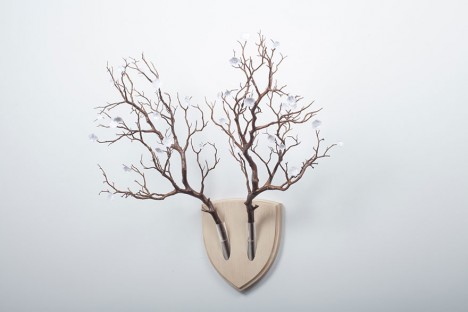
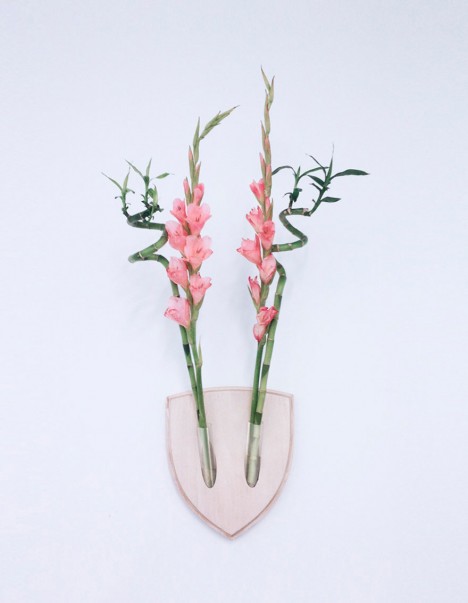
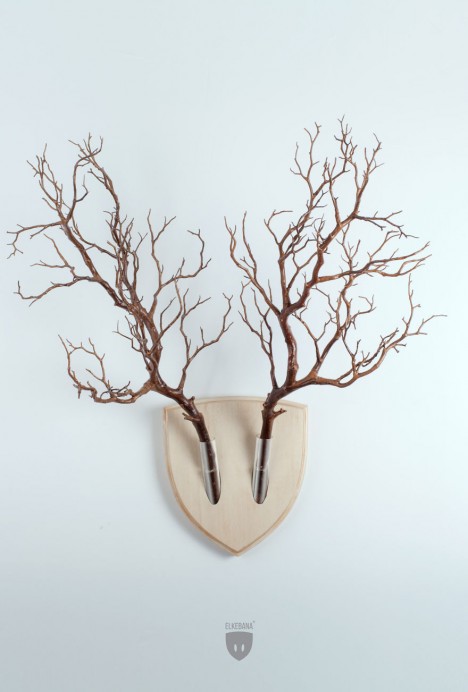
Combining a Japanese floral arrangement tradition (ikebana) with the hunting convention of mounted trophies, these plant holders allow for clever, colorful and ever-changing organic displays.

wall mounted flower pink

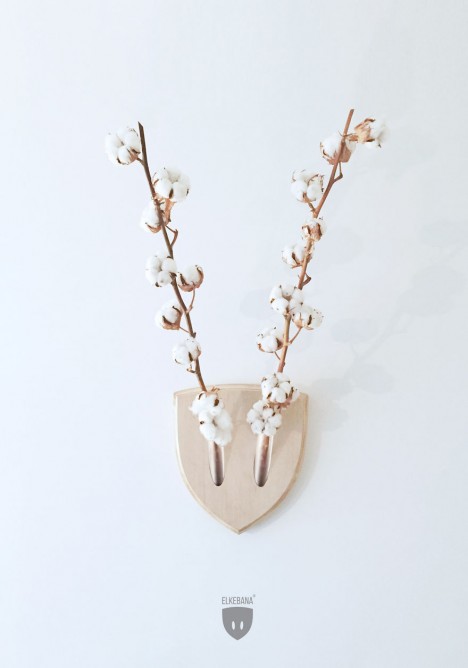
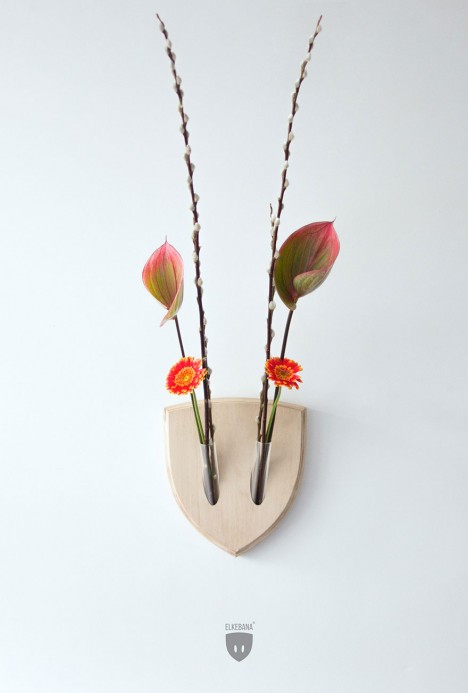
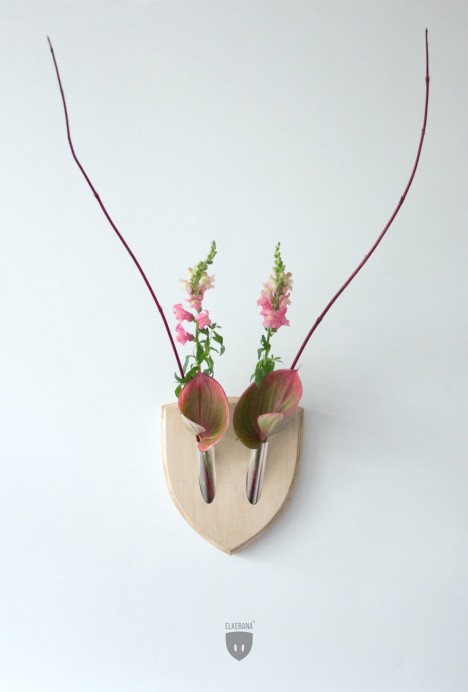
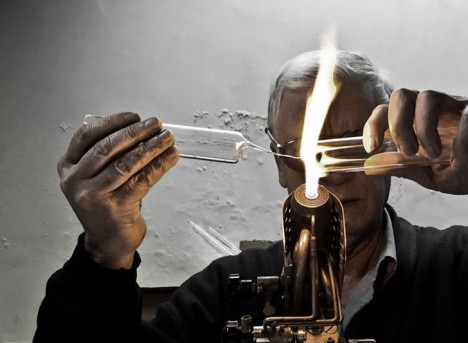
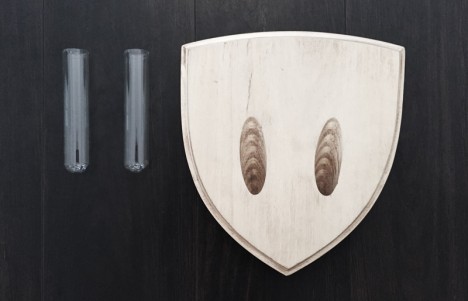
The Elkebana consists of a pair of glass flower holders set into a familiar wooden wall plaque, designed by Fabio Milito & Paula Studio and hand-crafted in Italy.

wall flower horns design

Its creators have had quite a bit of fun naming some of their experimental arrangements, including Nora the Angora, Girgenta the Goat, Jason the Aries, Isidoro the Oryx and Frank the Buck.

wall mounted creative flowers

Unlike the more morbid mounts that inspired this creation, there is also a greater degree of flexibility – change the flowers or their organization and you change the piece.

wall mounted plant antlers

And unlike traditional tabletop vessels for botanical displays, this one works well for small living spaces where surface area cannot be sacrificed.

wall mount maker

wall mount glass wood

Made of high quality birch plywood, solid walnut, solid oak or cork shield, the wall mounts hold your botanical arrangements in the two hand-blown glass vases.

wall mount branches spoof

From its makers: “The ‘ikebana is the ancient Japanese art of arranging floral elements in harmonious compositions. Elkebana brings the ancient art of ikebana to the wall, in order to transform the wall trophy idea into a continuously mutating, colourful creature.”

Share on Facebook


[ By WebUrbanist in Design & Fixtures & Interiors. ]

[ WebUrbanist | Archives | Galleries | Privacy | TOS ]


WebUrbanist

 
Comments Off on Vegan Antlers: Mount Wall Trophy Plants Instead of Animals

Posted in Creativity


7 Tips for Better Commercial Food Photography

14 Sep

Earlier this summer, I was awarded a dream photo shoot to photograph chocolate chip cookies for my local grocery store. What sounded like a simple job at first, ended up being more challenging than expected, and in this article, I’ll walk through the process of approaching a commercial food photo shoot for a real client, with seven key tips to keep in mind.

Select your gear

One of your best friends in food photography is a macro lens, as it lets you zoom-in and capture small details and perspectives, that your client’s camera phone can’t. In a day where just about everyone has the ability to take pretty good food photos with their cell phone, it’s important to always create photos that your client couldn’t easily capture themselves using low level gear. Personally, I always photograph food with two camera bodies (a Canon 5D Mark III and Canon 6D) and two lenses (24-70mm f/2.8 and a 100mm f/2.8 macro lens).

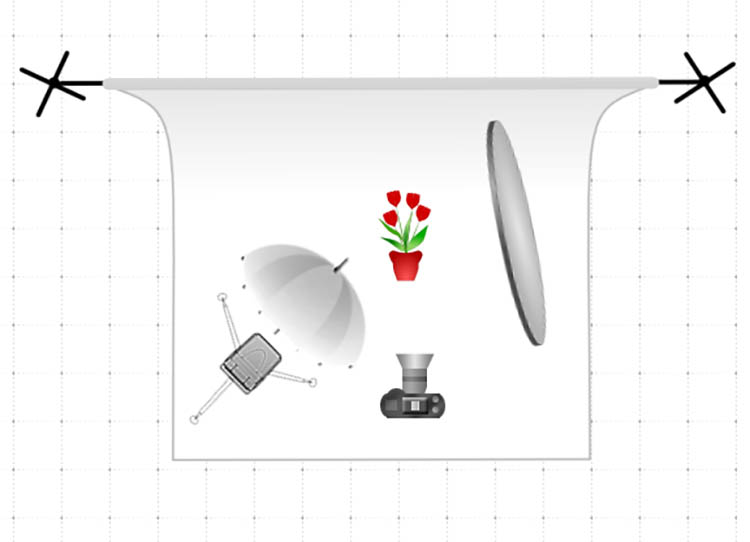
Lighting-wise, you can easily use reflectors and natural lighting if it’s at your disposal, but I prefer a simple and cheap off-camera flash setup consisting of a Canon 580 EXII Speedlight flash, Yongnuo wireless flash triggers, a simple lighting stand, and a shoot through umbrella. My lighting setup is in the diagram below.

Food photography tips

Depending on what kind of food photography quality you’re aiming for, it may also be wise to invest in a food stylist. In this case, I did not use one, but started to wish I did at certain key moments, which I’ll address later.

Set up the shot

Generally speaking, food photography can be done just about anywhere, but you should always check with your client to see if they have a preference of shooting on site in a particular location, or if they want you to conduct the shoot in your space. In this case, the latter scenario applied. Since the photo style we were going for would be pretty cropped and zoomed in, I didn’t need a fancy kitchen or dining room setup. But I would need a variety of surfaces and props to enhance those heavily cropped images.

Tip #1: Understand the client’s photo needs

There tend to be two main scenarios when it comes to food photography. Sometimes the client will have a menu of dishes prepared and you need to shoot as many as possible in a given time frame, OR the client has one particular dish or menu item that they want highlighted. This assignment falls into the latter category, as the whole point was to take images of one particular item: an extraordinary large chocolate chip cookie, dubbed “The Cookie.”

My local grocery store had spent a year experimenting in the kitchen to come up with a recipe for a gigantic chocolate chip cookie, and they needed photos of the product to help with promotional marketing. These photos in particular had a very specific purpose of being blown up into large decals and posters, that would be plastered on walls and windows throughout the store, so the highest resolution photos would be needed.

Food photography tips

Tip #2: Research with Pinterest

After understanding the client’s basic photo needs, I always conduct research on Pinterest to get inspired and visually identify patterns among other similar photo shoots. While many clients encourage photographers to add their own twist or dose of creativity, it’s also a good idea to have a sense of traditional ways that others have executed similar photo shoots, in case your client ends up wanting a more traditional image. A quick search for “chocolate chip cookies” on Pinterest gave me a slew of ideas on different ideas to effectively photograph, “The Cookie.”

Tip #3: Use a variety of surfaces

Per the researched examples that I had found, plus my personal approach to food photography, I set out to shoot these cookies using three main surfaces: a ceramic plate on a granite countertop, a wooden cutting board, and the white paper napkins and packaging that came with each cookie. The purpose was to offer the client a variety of surfaces and textures to choose from, in addition to a variety of implied settings in which “The Cookie” might be consumed.

Food photography tips

Tip #4: Incorporate people and action into the scene

The next photographic approach I took involved having a human model interact with my photo subject. Incorporating a human element, either by simply including a body part such as a hand holding the cookie, or a partially eaten cookie, gives the photo subject a sense of purpose and utility that the client might find helpful. It also adds a sense of scale – important to show the size of “The Cookie”.

Food photography tips

Tip #5: Use ingredients and pairings

Pretty much every food has a logical pairing, such as white wine and fish, beer and burgers, and milk and cookies. Instead of just focusing on one component, why not set the scene by introducing a natural pairing to the photo subject? This not only sets the scene, but it can also help provide scale, in this case showing how large “The Cookie” is compared to a glass of milk.

Food photography tips

Tip #6: Be open to feedback and further collaboration

After going through the above scenarios, and putting together a first batch of photos for client feedback, I was a bit surprised when they replied saying, “These are great, but not quite fitting our ideal vision.” Luckily, I asked for feedback early in the shoot and was able to collaborate further with the client to hone in on what they were actually looking for, which were photos more to the tune of this:

Food photography tips

While the client’s initial instructions were to produce a variety of photos of the cookie, like the ones I first delivered, it took an extra conversation with them to realize that there were two main points they really wanted to illustrate:

  1. Size mattered: Since “The Cookie” was truly large, similar in size to that of a DVD, we really needed to emphasize its huge size.
  2. Have to see the goo: The selling point of “The Cookie” is the super gooey melted chocolate center of each cookie.

With these two points really emphasized, the resulting images ended up being purely macro shots, but the challenge was capturing the gooey melted chocolate centers. This is when a food stylist probably would have come in handy, but through trial and error, I was able to use my oven and microwave to re-create the melted chocolate look in my own kitchen.

Tip #7: Find the finished product and document it!

Whenever you perform photography services for a client, make every effort to get your hands on the final product that has your photo(s) in use. Having proof of your published photos is excellent for building your portfolio and credibility as a photographer, not to mention it just feels really good to see your images blown up on the side of a building.

Food photography tips

The final product: my photos used in decals on the side of a building.

Conclusion

Do you have any other tips or approaches for tackling commercial food photography jobs? Let me know in the comments below!

googletag.cmd.push(function() {
tablet_slots.push( googletag.defineSlot( “/1005424/_dPSv4_tab-all-article-bottom_(300×250)”, [300, 250], “pb-ad-78623” ).addService( googletag.pubads() ) ); } );

googletag.cmd.push(function() {
mobile_slots.push( googletag.defineSlot( “/1005424/_dPSv4_mob-all-article-bottom_(300×250)”, [300, 250], “pb-ad-78158” ).addService( googletag.pubads() ) ); } );

The post 7 Tips for Better Commercial Food Photography by Suzi Pratt appeared first on Digital Photography School.


Digital Photography School

 
Comments Off on 7 Tips for Better Commercial Food Photography

Posted in Photography


How to Clean Your Camera Sensor and Lenses

14 Sep

It’s important to take good care of your camera gear and an occasional cleaning is in order. You want to make sure you are using the right tools for the job and proceed gently.

In this first video see how to clean your lens elements to make sure you have nice sharp images:

In this second one see some techniques for remove dust from inside your camera and on the sensor.

For more information if you do want to use the kits to clean your sensor, read: How to Clean Your Camera Sensor in 3 Easy Steps

googletag.cmd.push(function() {
tablet_slots.push( googletag.defineSlot( “/1005424/_dPSv4_tab-all-article-bottom_(300×250)”, [300, 250], “pb-ad-78623” ).addService( googletag.pubads() ) ); } );

googletag.cmd.push(function() {
mobile_slots.push( googletag.defineSlot( “/1005424/_dPSv4_mob-all-article-bottom_(300×250)”, [300, 250], “pb-ad-78158” ).addService( googletag.pubads() ) ); } );

The post How to Clean Your Camera Sensor and Lenses by Darlene Hildebrandt appeared first on Digital Photography School.


Digital Photography School

 
Comments Off on How to Clean Your Camera Sensor and Lenses

Posted in Photography