RSS
 

Archive for September, 2015

Sony brings uncompressed Raw to a7S II, a7R II and…

15 Sep

Sony has announced an uncompressed Raw option for its forthcoming a7S II model and will offer firmware updates for some existing models, starting with the a7R II. Up to now, Sony’s cameras have only recorded compressed Raw files which can have a visual impact on some images. The company says the move comes in response to feedback from its users.

Articles: Digital Photography Review (dpreview.com)

 
Comments Off on Sony brings uncompressed Raw to a7S II, a7R II and…

Posted in Uncategorized


How to Prevent and Solve a Photography Gear Disaster?

15 Sep

What could possibly go wrong?

Let me be your fall guy here. I’ve been shooting for 25 years, and I’m completely human. I’m also not the most careful person.

I’ve left a SLR in a drybag that unfortunately collected water, then sat soaking for a week. I’ve had a camera slide off the top of a car (like a coffee cup – but much, much worse) then go bouncing across three lanes of traffic. Miraculously, the camera and its lens survived! I’ve opened my car door and had my DSLR fall only 1.5 feet and break off the lens at the mount. My main 28-300mm L lens has gone into the shop twice as the fabric in the locking collar has worn out. I left a lens behind during a hike, and it was gone when I went back for it. I’ve had camera errors while shooting a wedding, and my main desktop computer has been stolen.
Marcus_jb1973

By marcus_jb1973

Bad things happen sometimes. Sometimes it’s your fault, sometimes it’s not.

In this article I want to help you prepare for the the worst case scenarios for camera and lens care. I want to get you thinking about disasters before they happen and also give some advice on what to do when things go awry. Then at the end I’d love to hear your own tales, especially if they are helpful to other photographers.

We will cover cameras and lens mishaps, such as:

  • Theft
  • Lost or missing gear
  • Dropped
  • Moisture incursion
  • Corrupted/error message

What to do before things go wrong

There are steps you can take just in case things go wrong.

Insure it

Pictures Of Money

By Pictures of Money

Whether it’s for business or pleasure, if your camera gear is valuable to you, consider insuring it. For professional photographers this should be a no-brainer, but often those in the freelance realm aren’t bringing in huge paychecks, so they skimp by and avoid insurance. Don’t!

For non-professionals, check with your renter’s or homeowner’s insurance to see if your gear is covered. You might find there is a limit for electronics, but you can always pony up a few extra dollars to ensure all your gear is insured. Also check your auto policy to see if gear left inside a car is covered (while remembering to always lock your gear in your trunk!), it often is not.

Register it

GotCredit

By GotCredit

This is another part of the process many skip. Registering your gear with the manufacturer helps them update you if something should be found wrong with your equipment. We hear about food recalls on the nightly news because they have huge impacts. But did you hear about the Canon Powershot eyecup recall (14,000 units) in 2014 or the Nikon 1 NIKKOR VR 10-30mm recall in 2015?

These kind of recalls don’t make big news and often don’t even make the photo blogs.

Claim it

LensTag is a free service you should consider using to track your gear. The online service allows you to enter camera gear to their database, verify it with a photo of the serial number and search for stolen gear before you buy. We have an article here on dPS that explains the service in more detail Lenstag: a World Without Camera Theft.

In the UK there is a service called Immobilise.com which works in a similar fashion; log your items on the site before they are stolen, alert the service when something goes missing, cross your fingers. This service seems more robust and is checked by police in the UK. You can register more than cameras here as well.

Tag it

Tagging your equipment with contact information is helpful for having your goods returned when they go missing accidentally. I accidentally left a camera on a log on a trail many decades ago and the next day someone had turned it in to the park ranger’s office. Good people do exist! Give them a hand.

Avery, the label company, has a number of options for inkjet and laser printer. For instance, their 6570 label is meant to stay on permanently and can be cut to a useful size. This is a good option, though not perfect, for inkjet printers while the 6576 labels work better on a laserjet printer. You might want to write your information in permanent marker, but know that it will fade and need replacing.

Write it down

Ana C.

By Ana C.

This tip is the most common sense, but I feel it needs repeating. Grab a piece of paper and an old fashioned pencil and simply write down the serial numbers for your gear. Then store it in a safe place. Saving this info online is also handy, via services like Dropbox or Evernote, or email it to yourself, so it can be retrieved from any computer if you are away from home.

What to do after things go wrong

Theft

When I realized my Mac had been stolen during a break-in to my house, my stomach churned to the point of almost throwing up. Luckily, my camera was with me at the time. If it was stolen, I was prepared in a way I wasn’t for my computer. I have my camera serial numbers written down and in electronic form that I can retrieve from anywhere online (while noting it’s pretty easy for astute thieves to scrap off serial numbers).

The first step after a theft is to report it. Whether it is a break-in at home or a snatch and run in a foreign city, any insurance company will typically desire a police report with higher value items.

If you are keen on recovering your gear, don’t trust to the police alone to find it; start looking! In the US places liked Craigslist or eBay are popular choices for thieves looking to offload gear. Pawn shops are another option, but searching them all, depending on where you live, can be time consuming.

You might also want to try services like StolenCameraFinder.com or CameraTrace.com. I have not used either service so I can not vouch for them, but they both have the ability to search for your camera’s serial number (see section about writing down this info). CameraTrace also sells those permanent stickers I talked about earlier to make a reunion with your gear easier.

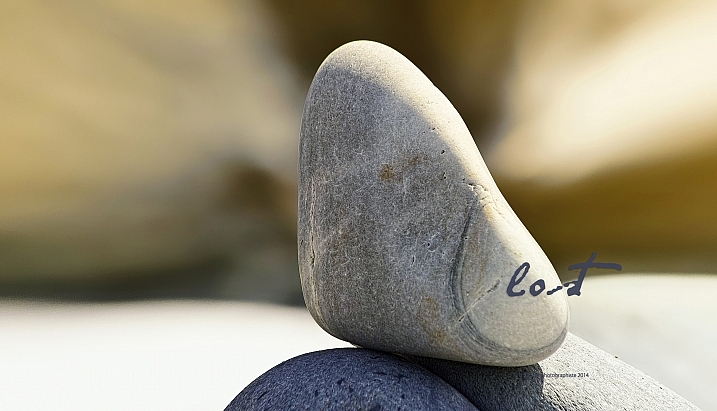
Missing

Sometime we are our own worst enemy and we misplace things, expensive things. If you never do, then you can skip this section.
Patrice-photographiste

By patrice-photographiste

For everyone else, the obvious thing to do is to retrace your steps. Believe that there are good Samaritans out there (there are!) who want to get you back together with your camera or lens.

If you visited shops, ask the employees if they have seen a camera. The best way for you to get back together with your gear is to let others know you are looking. Leave a card with your contact information everywhere you might have left your gear.

You can also try other online services like CameraFound.com, which will warm your heart when you see how many people are actually trying to help others retrieve their camera or phone equipment. It lists over 1000 found cameras even in far flung locations like Oman and Kazakhstan.

Breaks

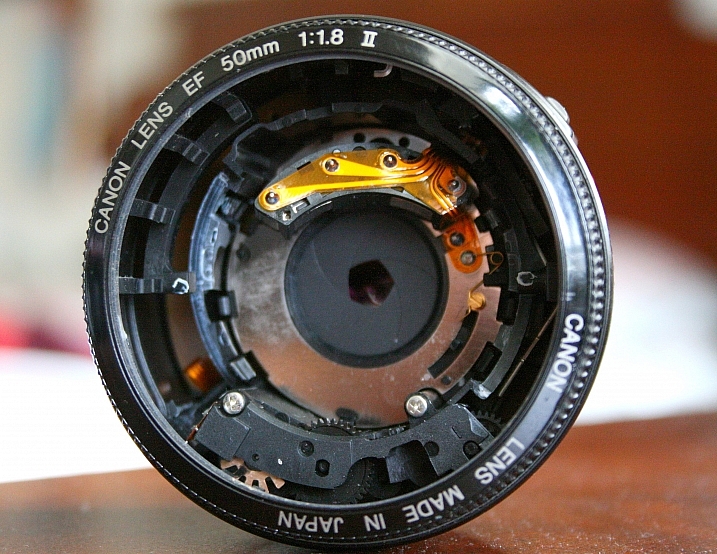
Watching my camera fall out the passenger door, in slow motion, had me cringing before it hit the cement floor of my garage. I had reached over to open the door for someone and didn’t see the camera precariously wedged between the seat and the door.

This was a Canon L series lens and I thought I was out $ 1200 to buy a replacement. With a break this bad (the lens snapped off the mounting ring that holds it to the camera body) and no experience with repair shops, I thought I was out of luck.
Richard Masoner / Cyclelicious

By Richard Masoner / Cyclelicious

Many major manufacturers provide free estimates for repairs but you will be on the hook for shipping costs. Ask around at local camera clubs as well to see if there is a trusted local repair shop in your area. They can often save you some money, but make sure they are authorized by your manufacturer. My point is to not despair; get a quote first.

I was happy that the repair for my lens was only $ 200. Spending $ 200 still sucked, but it meant I was back in business, and didn’t need to drop $ 1200 on a new lens because of my own stupidity.

You might want to ask around to see if there is a reputable local repair shop other owners use. I know in Seattle there is such a store, and they can tell you the moment you walk in if your camera is salvageable or a goner. They can often be cheaper than a repair from your manufacturer.

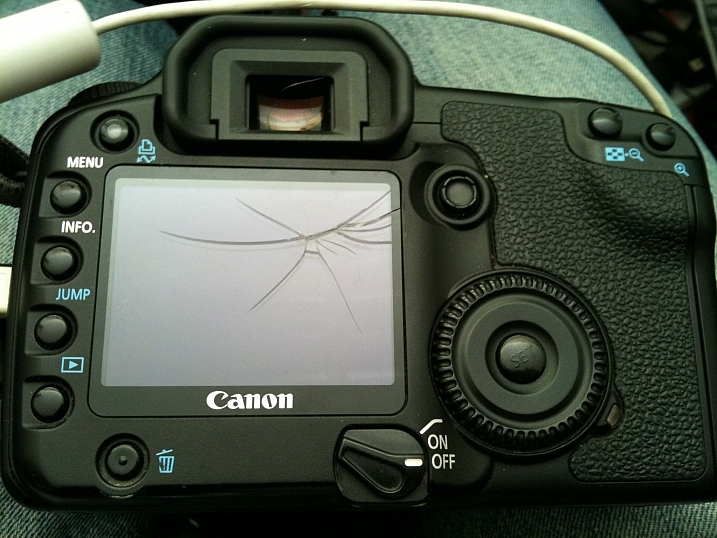
Also, things like cracked LCD covers can be replaced for relatively little money. If the LCD itself is broken, giving you weird colors and streaks, then it’s time to get it repaired. Adventurous photographers have replaced their own LCDs with success, but if you have any doubt, pay a pro to do it.

Moisture incursion

It’s no joke that moisture and electronics make horrible friends. The electronics always get the worst of it, but there are some things you can do to possibly limit or stop damage.

First, shut everything off! Take out the batteries too. Damage to electronics from water happens when the water acts as a connector between two items inside your camera, which normally won’t share power. The power from one circuit uses the water as an excellent conduit to move wherever the water touches. This is the classic short circuit that we think of that smells of melting wires and plastic. In worst cases, things can catch fire.

Limit those chances by shutting everything down, and taking out the batteries, until you are 100% sure the inside of your components are bone dry. This can takes days or sometimes weeks.
Kevin Baird

By Kevin Baird

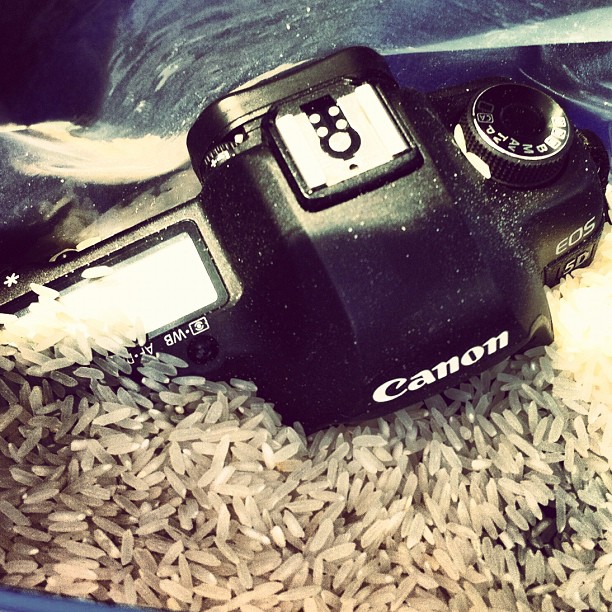
To dry out equipment on your own, go for a slow fix. Using a hair dryer may work for something like a memory card, but not for a whole DSLR. A time tested method is to use something that naturally absorbs water, like rice or the desiccant packs that come with new shoes. You want to make the new host hungry for the water inside the camera instead of just from the atmosphere itself, so put your camera, and soaked parts, together with the rice or absorbent items inside a ziplock bag large enough to hold them all.

Lenses can be tricky as water might leave a film behind on elements inside as they dry. If after a thorough drying, the quality seems affected, it’s time for the lens to get a professional cleaning.

My personal advice with salt water is to not mess around with home fixes and get the camera in to a reputable repair shop or manufacturer as soon as possible. When salt water dries it leaves behind the salt, and that can corrode your camera’s innards a year from now without you realizing it.

Corruption or error messages

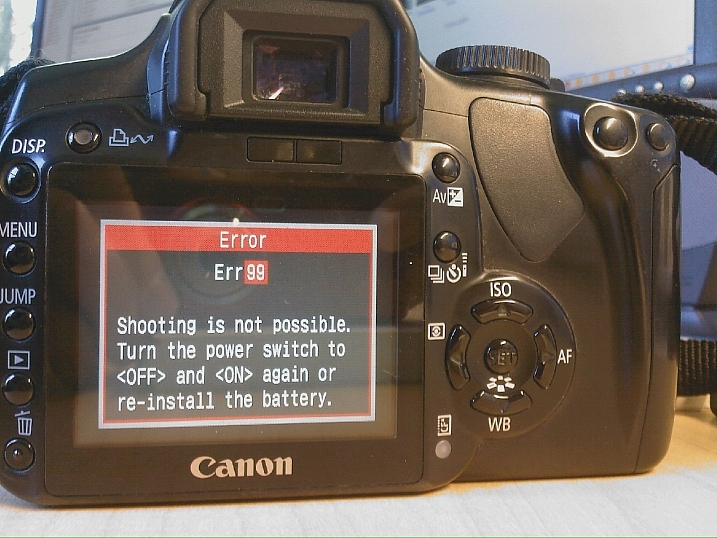
“Err 99” pops up on your camera. What do you do? Freaking out seems like a good option. But better than that these days, is simply googling the error.
Kate Sumbler

By Kate Sumbler

I can’t cover all the errors for all cameras, but I have run into these situations about four times in my 14 years of owning digital cameras. They are nerve-wracking  to say the least.

The first steps are always, 1) Breathe slowly. 2) Power off the camera if it appears any image writing activity is done. 3) Remove the battery (ies) and wait a minute before putting them back in.

Some errors dictate sending your camera in to the manufacturer. Some are cleared by the steps above when your camera simply stumbles over its own circuitry. Google is your friend and will list many remedies. Read forum threads to get a feel if certain suggestions cured other people’s similar issues.

Conclusion

I hope the tips here have helped you start thinking about disasters before they happen in order to lessen their impact. And if things do go south in a hurry, take action as soon as you can to get your gear back in working shape.

Most importantly, I’ve seen a lot of camera and lens gear mishaps, but I haven’t seen them all. I’d like to hear about problems you have had, and what you did to fix them if you think the information might help other readers.

googletag.cmd.push(function() {
tablet_slots.push( googletag.defineSlot( “/1005424/_dPSv4_tab-all-article-bottom_(300×250)”, [300, 250], “pb-ad-78623” ).addService( googletag.pubads() ) ); } );

googletag.cmd.push(function() {
mobile_slots.push( googletag.defineSlot( “/1005424/_dPSv4_mob-all-article-bottom_(300×250)”, [300, 250], “pb-ad-78158” ).addService( googletag.pubads() ) ); } );

The post How to Prevent and Solve a Photography Gear Disaster? by Peter West Carey appeared first on Digital Photography School.


Digital Photography School

 
Comments Off on How to Prevent and Solve a Photography Gear Disaster?

Posted in Photography


Mindful Photography

15 Sep

Being behind a camera is definitely one of the best places to be, but channeling all that creativity can sometimes take you away from appreciating your surroundings.

Get your Zen on with this article by Aaron Eisenberg. He lays out some excellent tips on being mindful of the moment, while still capturing it.

We plucked out a few of our favorites here:

  • Rather than going into a place and snapping away, take time to look around and find the best shot or two. This saves digital storage, creates better photos and gathers greater memories!
  • Spend a day taking notes rather than snapping photos. This can spark conversations and provide you with more depth to your documentation.
  • Forget about likes and favorites while you’re on vacation. Wait to post your photos on social media until after you’re home again.

Photo by Aaron Eisenberg


© Erin for Photojojo, 2015. |
Permalink |
No comment |
Add to
del.icio.us

Post tags:


Photojojo

 
Comments Off on Mindful Photography

Posted in Equipment


Long and short of it: Tamron 16-300mm F3.5-6.3 Di II VC PZD Macro review

15 Sep

Tamron’s 16-300mm F3.5-6.3 takes the superzoom concept it made famous a few steps forward. It offers a significant increase in telephoto range, and also goes wider to bring real wide-angle capability to the superzoom category for the first time. It’s also earned a ‘Macro’ designation with its close focusing ability. Is it truly a super zoom? Take a look at our analysis. Read more 

Articles: Digital Photography Review (dpreview.com)

 
Comments Off on Long and short of it: Tamron 16-300mm F3.5-6.3 Di II VC PZD Macro review

Posted in Uncategorized


National Portrait Gallery announces shortlist for Taylor Wessing Portrait Prize

15 Sep

The four images in the running for the £12,000 Taylor Wessing Photographic Portrait Prize have been revealed by Great Britain’s National Portrait Gallery. The often-controversial award is again set to spark some debate as one of the shortlisted images features a naked boy that many media outlets will have to think twice about reproducing. Read more


Articles: Digital Photography Review (dpreview.com)

 
Comments Off on National Portrait Gallery announces shortlist for Taylor Wessing Portrait Prize

Posted in Uncategorized


Zu Zweit

15 Sep

© Alexa Vachon

„Zu Zweit“ ist ein Projekt über enge Beziehungen von Menschen in Berlin, in denen sich mindestens eine Person als queer identifiziert. Dazu gehören Verwandte, Liebende oder Freunde, die traditionellere Familienformen in Frage stellen. In ihrem Projekt versucht die Fotografin Alexa Vachon zu ergründen, inwieweit die Moderne alternative Definitionen von Familie schafft. Wir stellen die Serie exklusiv vor.
kwerfeldein – Fotografie Magazin | Fotocommunity

 
Comments Off on Zu Zweit

Posted in Equipment


Dark Water: Take a Boat Ride Through a Flooded Museum

15 Sep

[ By Steph in Art & Installation & Sound. ]

boat ride art installation 1

In order to take in the new, dimly lit installation at Palais de Tokyo by artist Céleste Boursier-Mougenot, you’ll have to pilot a small boat through dark waters inside the flooded museum. Taking its name from the annual flooding event that sees the water levels in Venice rise so high that walkways disappear, the ACQUAALTA exhibition envisions the concrete interiors of the Palais as they would be if the forces of nature were similarly unleashed upon Paris.

boat ride art installation 4

boat ride art installation 6

Visitors sit or stand within their rowboats, using oars to paddle themselves around the nearly pitch-black space and disembarking to explore jagged foam landscapes.The hallucinatory voyage is reminiscent of souls crossing over to the underworld via the River Styx, with the ferryman Charon to guide them.

boat ride art installation 2

boat ride art installation 3

As they take in the subtle figurative silhouettes projected onto the black walls, the guests themselves become part of the exhibition, like actors in a play. As they navigate the waters, they are filmed, their movements projected onto one of the walls. The foam ‘island’ is a place of refuge, allowing deeper immersion into the work without fear of drifting.

boat ride art installation 5

boat ride art installation 7

Boursier-Mougenot believes that creating an atmosphere is integral to art, so that the work is not just disconnected imagery hanging on a wall, but rather an interactive experience that envelops onlookers and makes them active participants. The hope is that as a viewer, you temporarily forget who you are, falling headfirst into a dreamworld via an artificially constructed series of hypnotic images, movements and sounds.

Share on Facebook


[ By Steph in Art & Installation & Sound. ]

[ WebUrbanist | Archives | Galleries | Privacy | TOS ]


WebUrbanist

 
Comments Off on Dark Water: Take a Boat Ride Through a Flooded Museum

Posted in Creativity


Recipients of Getty Images Instagram Grant announced

15 Sep

Three winners were announced for the inaugural grant, meant to to reward photographers who use Instagram as a means to document stories from underrepresented communities around the world. Read more


Articles: Digital Photography Review (dpreview.com)

 
Comments Off on Recipients of Getty Images Instagram Grant announced

Posted in Uncategorized


Could the future of photo viewing be virtual reality? Flickr thinks so

15 Sep

This past weekend Flickr demonstrated an early preview of a ‘virtual reality experience’ designed for viewing 360-degree panoramic photos. The demonstration used the Oculus DK 2 headset connected to a computer, and allowed wearers to completely immerse themselves within the panorama. Read more

Articles: Digital Photography Review (dpreview.com)

 
Comments Off on Could the future of photo viewing be virtual reality? Flickr thinks so

Posted in Uncategorized


5 Tips to Take Your Landscape Photography from Good to Great

15 Sep
The beauty of the scenery in Antarctica

The beauty of the scenery in Antarctica

Landscape photography is one of the most favoured genres of photography. It also happens to be the one genre that is not easy to master. The reason is simple, to become really good at landscape photography, you need to spend hours trying to master it. Most photographers are not able to dedicate that amount of time, so it becomes frustrating. Many photographers end up being disappointed with their images, but there are few things that you can do to make sure you get better results, in a short space of time.

1. Foreground interest

This is a common tip, but one that makes a lot of sense. Having a subject in the foreground, anchors the image. It tells the viewer where to look first and once they have looked at that, their eye will explore the rest of the image.

You can place your foreground subject anywhere in the lower third of your image, but it might be a good idea to put it more to the left side of the frame. This is not a rule (I really don’t believe there are any rules in photography), but rather a suggestion. We read text from left to right, so if your foreground interest is on the left hand side, it makes it feel easy for the viewer to interact with the image. The foreground interest could be anything, a piece of driftwood, a rock, a tree, anything that works for the scene.

Foreground interest anchors a scene

Foreground interest anchors a scene

2. Color in your scene

Your image will have inherent color based on the time of day and subject you are shooting. If you are shooting a forest, your scene might be predominantly green, if you are doing a seascape, there may be lots of blue because of the colour of the water.

Be aware of the colour in your scene and work with the opposite colors on the visual colour wheel. As an example, there are three primary colors that your camera sees, they are: Red, Green and Blue. The additive colors (opposite colors) are Cyan, Magenta and Yellow. To be clear, Cyan is the opposite color to Red, Magenta is the opposite to Green and Yellow is the opposite to blue. These opposing colors can work well in a scene, particularly yellow and blue.

Look at the colors in your scene and decide what you want to emphasize. To make sure you have great colours to work with, you will want to shoot during the golden hours and emphasize the warm colors.

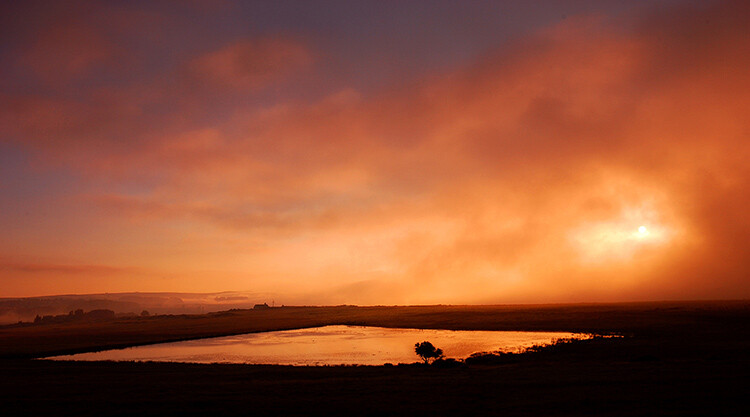
Rich colours will enhance the drama in your image

Rich colors will enhance the drama in your image

3. White Balance

When you are shooting landscapes, you will want to be shooting at golden hour, or the blue hour. These are the times of day when the light works really well for dramatic landscape shots. In the golden hours, the light will be warm tones of yellow, orange, or red. Check your white balance setting when you are shooting at this time. If your camera is set to Auto White Balance, it will cancel out much of the warm tones in your image as it tries to neutralize any color casts you may have in your scene.

If the golden hour light is really strong in your scene, Auto White Balance will make the scene look really bland and colorless. Try and shoot on Daylight White Balance instead. That way, the camera will be capturing the light as it truly is in the scene. You could even turn your white balance to cloudy or shade to enhance the warm tones even more. Use this settings as a creative tool, it can really make a good impact on your image.

Use white balance creatively, this image was shot using shade white balance

Use white balance creatively, this image was shot using the Shade preset.

4. Movement

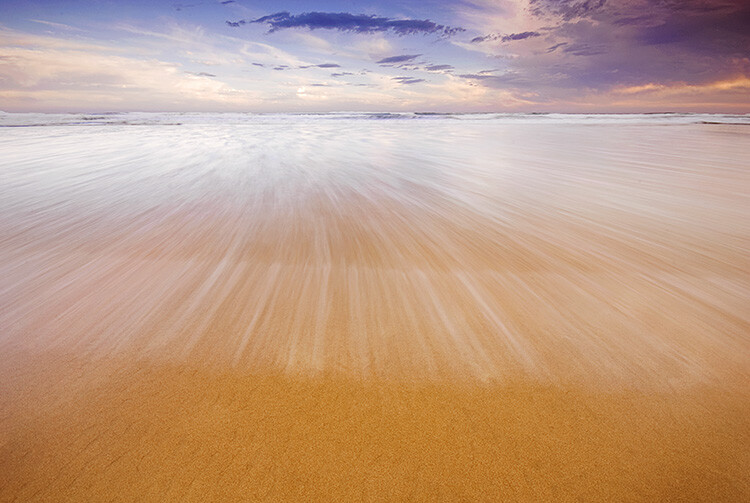
Some of the best landscape images have some form of movement in them. The movement can be caused by water, wind, or both. Subjects that work well with movement are rivers, waterfalls, seascapes and even stars. A long exposure image of the sea with water looking all silky and wispy is ethereal, and adds drama to the image. We don’t see this smooth silky water naturally with our eyes, it is only possible with the camera. The results are often very appealing, and it gives a serenity to the scene that is almost magical. You will need a tripod to get this right, you will also need to use a longer exposure of a few seconds. Timing is also important, particularly with seascapes. You may have to time the shot for when the water comes rushing over the rocks, or up the beach. That way, the image will be filled with silky streaks of water and it will look amazing.

Movement in water can make a scene look dramatic

5. Less is more

Landscape images become more dramatic if there is a very clear subject in them. If you are unsure about what should be included in your scene, ask yourself this question as you look around the scene, “Does that rock, tree, river, etc., add to the scene or not?” If you think it is not adding to your scene, remove it. Even if you are unsure, remove it and take a shot to see how the image looks. In many images, less is more. If you have less items in your scene, there is less to distract the eye, there is less that can make the scene confusing, so give it a try. Set up a shot, take a photo and then start minimizing the distracting elements.

Sometimes, less is more

Try these five tips and share your results in the comments below. Do you have any other tips to add?

googletag.cmd.push(function() {
tablet_slots.push( googletag.defineSlot( “/1005424/_dPSv4_tab-all-article-bottom_(300×250)”, [300, 250], “pb-ad-78623” ).addService( googletag.pubads() ) ); } );

googletag.cmd.push(function() {
mobile_slots.push( googletag.defineSlot( “/1005424/_dPSv4_mob-all-article-bottom_(300×250)”, [300, 250], “pb-ad-78158” ).addService( googletag.pubads() ) ); } );

The post 5 Tips to Take Your Landscape Photography from Good to Great by Barry J Brady appeared first on Digital Photography School.


Digital Photography School

 
Comments Off on 5 Tips to Take Your Landscape Photography from Good to Great

Posted in Photography