RSS
 

Archive for June, 2015

6 Tips Using Visual Weight to Improve Your Composition

19 Jun

Andrew’s newest ebook Mastering Composition is now on special for a limited time only at Snapndeals.

Visual weight (also called visual mass) is the principle that some elements of the photo pull the eye more than others.

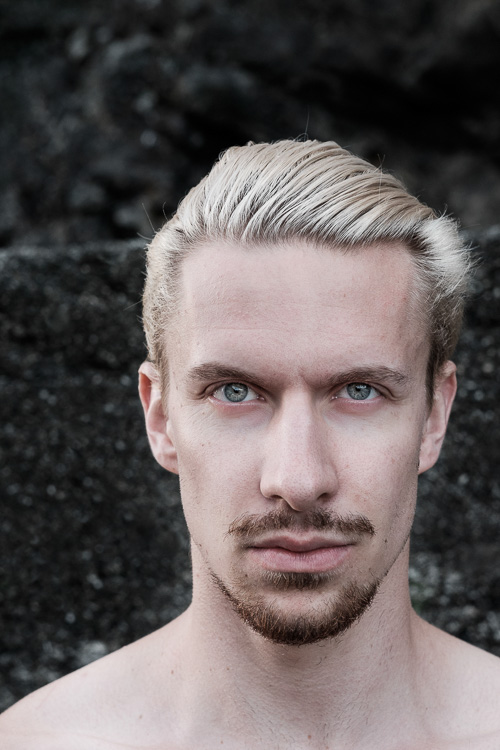
Take a look at the portrait below. Where does your eye go? It should go straight to the eyes, because they have the most visual weight. They are the element exerting the greatest pull.
Visual weight and composition

Notice that the model’s eyes are not positioned on the traditional intersection points created by the rule of thirds. That doesn’t stop them from pulling the eye, although it could be argued that their visual weight would be strengthened by placing them on a third.

Let’s look at the principles of visual weight (or visual mass) that you can use to improve the composition of your photos.

1. Light tones

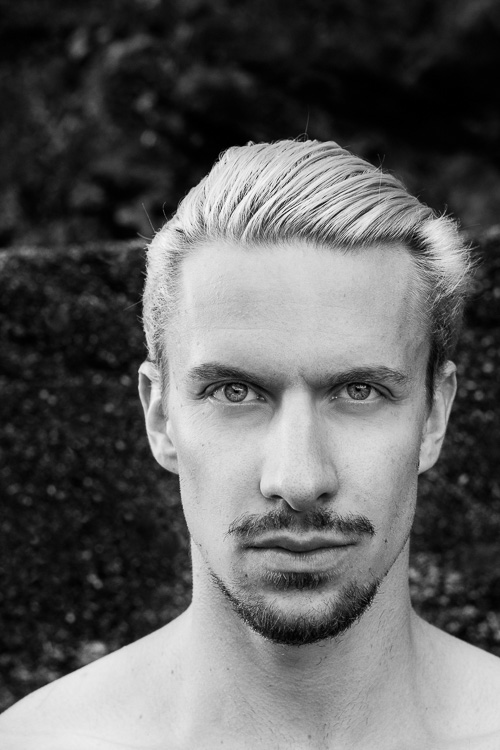
Light tones and highlights pull the eye more than dark ones (the basis of tonal contrast). There is a strong contrast in the portrait above between the model’s skin and hair, and the dark background. It is easier to see in a black and white version of the same photo.
Visual weight and composition

2. People

Curiosity about other people is part of the human condition. Our eye goes straight to any human figure that is present in a photo. Recognixable faces exert a stronger pull, while the eyes (the window to the soul) have the strongest visual weight of all.

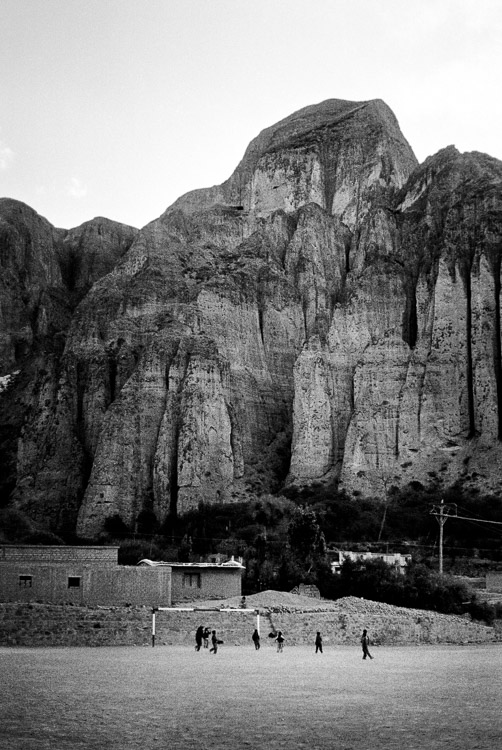
This explains why you can use people, small in the frame, to give scale and context. It works because our eyes go straight to those figures, as long as they stand out from the background (gestalt theory in action).

The people in the photo below are small, yet the eye goes straight to them. The inclusion of the human figures helps give the scene scale, and emphasizes the size of the mountain behind them.
Visual weight and composition

3. Visual weight and size

The larger the element of a photo, the more it pulls the viewer’s eye. This principle works in harmony with the others discussed in this section. A small human figure, for example, can have much more pull than a large, inanimate object. A small splash of red can also pull the eye very strongly. But for objects of similar texture and colour, the larger one has the stronger pull.

For example, the dials in this photo are virtually identical in terms of shape and design. The one on the right has the most visual weight because it is the largest of the two.

Visual weight and composition

4. Sharp or recognizable elements

Objects that are sharp or easy to recognize pull the eye more than ones that aren’t. According to gestalt theory, the mind looks for patterns and shapes that helps it make sense of chaotic scenes. Once something is identified, it gains significance in the frame compared to those that aren’t.

The most obvious example of this is a portrait taken against a strongly blurred background. The visual weight of the background is reduced because it is no longer sharp, and no longer recognizable. The use of negative space also comes into play.

Visual weight and composition

5. High contrast

High contrast subjects have more visual weight than low contrast ones. This is a good principle to apply in post-processing as well as the photo taking stage. Instead of increasing contrast universally across the image, try increasing it more in the areas where you want the viewer’s eye to travel. Lightroom’s Clarity slider is an excellent tool for this.

In this example I used the Clarity slider to emphasise the texture of the old car and help draw the eye to it.

Visual weight and composition

6. Visual weight and colour

Bright, saturated colours draw the eye. But not all colours are equal. Warm hues have more visual weight than cool ones. Red is the strongest colour of all.

Simplifying the composition makes the relationship between the colours in the photo easier to see. A technique you can use, if your subject is brightly coloured, is to position it against a background comprised subdued, less powerful hues like grey, green and brown.

Simplifying works for all aspects of visual weight. Eliminate everything that isn’t necessary. Keep the background as simple as you can. Once you’ve done this, look at the remaining elements and think about how the eye will move around between them, according to the principles of visual weight. The relationships between them become clearer as the composition is simplified.

The red figurine in the centre of the photo below has the most visual weight. I emphasised this in post-processing by using the Clarity slider to increase its contrast and adding a vignette to darken the background.

Visual weight and composition


Mastering CompositionMastering Composition

My new ebook Mastering Composition will help you learn to see and compose photos better. It takes you on a journey beyond the rule of thirds, exploring the principles of composition you need to understand in order to make beautiful images. It’s on special for a limited time only at Snapndeals.

googletag.cmd.push(function() {
tablet_slots.push( googletag.defineSlot( “/1005424/_dPSv4_tab-all-article-bottom_(300×250)”, [300, 250], “pb-ad-78623” ).addService( googletag.pubads() ) ); } );

googletag.cmd.push(function() {
mobile_slots.push( googletag.defineSlot( “/1005424/_dPSv4_mob-all-article-bottom_(300×250)”, [300, 250], “pb-ad-78158” ).addService( googletag.pubads() ) ); } );

The post 6 Tips Using Visual Weight to Improve Your Composition by Andrew S. Gibson appeared first on Digital Photography School.
Digital Photography School

 
Comments Off on 6 Tips Using Visual Weight to Improve Your Composition

Posted in Photography


Sigma announces 24-35mm F2 DG HSM Art for full frame camera

19 Jun

Sigma has announced the 24-35mm F2 DG HSM Art, a constant wide-aperture, wide-angle zoom for full frame cameras. Part of the company’s high-end ‘Art’ range, Sigma suggests the lens can play the same role as a 24, 28 and 35mm set of prime lenses. The lens has a minimum focusing distance of 28cm, giving a maximum magnification ratio of 1:4.4. It will be available in Canon, Nikon and Sigma mounts. No details of pricing or availability have yet been given.

Articles: Digital Photography Review (dpreview.com)

 
Comments Off on Sigma announces 24-35mm F2 DG HSM Art for full frame camera

Posted in Uncategorized


3 Secrets for Creating Beautiful Nature Photos

19 Jun

Secret #1 Start with you

What elements of nature do you particularly like? You may already be clear on this; but even if you are, write it down, as something magical happens when you get things out of your head and living in front of you on paper.

00 Copyright Beth Jennings Photography Digital Photography School Nature 2423

Are you a flowers person? Do you like trees? How about specific elements of nature, for example, mushrooms on forest floors? No answer is a silly answer – just write them all down, no-one is screening what you say.

You have your own take on the world and you need to work out what it is. Then you’ll make nature photos that have a little piece of you in them.

Secret #2 How close is too close?

You can go as far away, or as close as you like when photographing nature. Just so long as the element of nature is clear within the photograph.

Let’s break it down a bit:

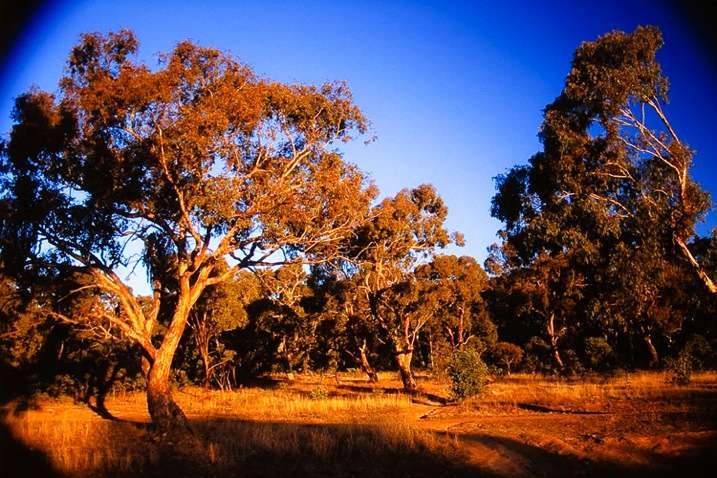
You can get a fair distance from your nature subject and allow it to dominate your frame. These trees were captured in late afternoon light with a polarizing filter to make the blue sky really intense. The light is pouring through – totally natural. Would you believe this was shot on transparency film – no post-production, ha! However, that means I can’t give you the camera settings. (slaps forehead).

Have a guess, what do you think the settings may have been?

Either ISO 100 or 400 because that’s what was available at the time! Handheld – 1/125th of a second or faster. F/? something large to keep the depth of field, maybe, f/11.

01 Copyright Beth Jennings Photography Digital Photography School Nature transparency

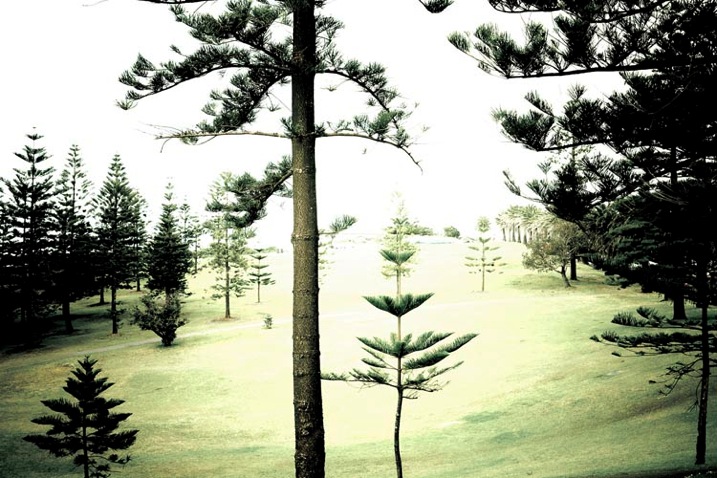
Take a few steps in toward your trees and your composition changes. The trees run right to the edges and now we are so close that some are cropped off. See how the meaning of this picture changes, just by moving in closer? (Yes, it’s a different scene, but work with me here!)

Where the previous picture was about the vast form of the trees, and the setting sun, this one is about the delicate nature of the branches and pine needles. It was taken about 11am on a bright, overcast day. The deep green needles contrast against the light, bright background.

See the careful placement of all the trees in the composition? Look all the way to the edges, then through all the grassy areas. Notice the care in the spatial placement of the trees and the green grass? Take your time, and really see where the elements are falling in the composition.

03 Copyright Beth Jennings Photography Digital Photography School Nature Photography 4348

ISO 400, f/10, 1/160th

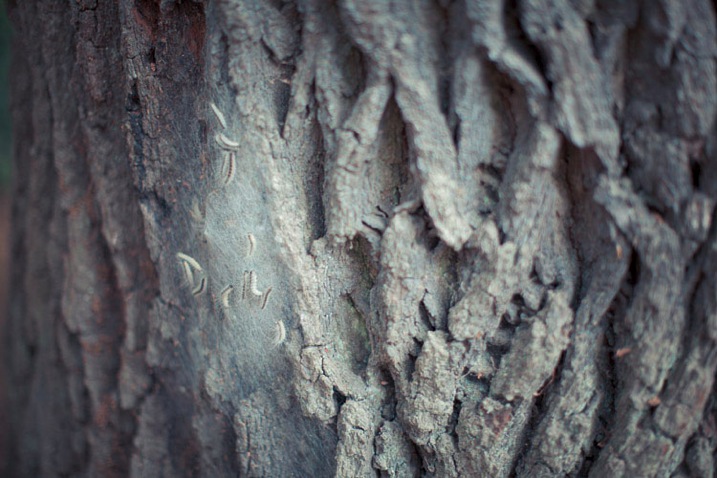
Take a few more steps in on one tree, right up close on the detail. You have a choice now about rendering most of the capture out of focus, or creating lots of depth with the f-stop. This one has a shallow depth of field, to keep the focus on the tiny caterpillars. You can see parts of the texture of the tree to give a little hint as to the environment they live in.

It was late afternoon with dappled, soft light coming through trees. The little creatures were spotted in their web in a soft, spot-lit area.

04 Copyright Beth Jennings Photography Digital Photography School nature 2229

ISO 320, f/1.2, 1/1600th

Secret #3 Move your feet

When you come to photographing nature, it pays not to be too fixated on how you want to photograph your subject in terms of distance to subject, camera angle, and technical settings. Do have ideas in mind, but be open to the possibility that you may see something else (possibly better) on the day.

05 Copyright Beth Jennings Photography Digital Photography School Nature 0332

Walking and looking does wonders. Relax and enjoy your surroundings first. The beautiful things will come to you as long as you don’t force it.

When something catches your eye, go up closer to it, study it, and figure out what element in particular it is that interests you. There is spontaneity in capturing nature in its living, untouched state. The key is being open to the most beautiful, particular and unique elements, and finding your composition, lighting and camera settings to suit.

06 Copyright Beth Jennings Photography Digital Photography School Nature Photography 2 5

It does sound a little new-age, but give this method a try, and hey, it costs nothing but your time to walk around and breathe it in.

So there you have it – three secrets revealed as to how you can create pretty nature images, without it costing you a cent!

What’s your secret to getting better nature photographs? Drop it in the comments area below.

googletag.cmd.push(function() {
tablet_slots.push( googletag.defineSlot( “/1005424/_dPSv4_tab-all-article-bottom_(300×250)”, [300, 250], “pb-ad-78623” ).addService( googletag.pubads() ) ); } );

googletag.cmd.push(function() {
mobile_slots.push( googletag.defineSlot( “/1005424/_dPSv4_mob-all-article-bottom_(300×250)”, [300, 250], “pb-ad-78158” ).addService( googletag.pubads() ) ); } );

The post 3 Secrets for Creating Beautiful Nature Photos by Beth Jennings appeared first on Digital Photography School.

Digital Photography School

 
Comments Off on 3 Secrets for Creating Beautiful Nature Photos

Posted in Photography


Are you in Seattle? Come and ask us questions this Saturday!

19 Jun

If you’re in the Seattle area, don’t miss an opportunity to sit down on Saturday with DPReview editors Barney and Rishi. We’ll be participating in a panel discussion at Glazer’s Camera in Seattle at 4pm (PT) entitled ‘What Happens Next?’ Hosted by photographer and tutor John Greengo, we’ll be taking questions on video and stills convergence, and the decreasing performance gap between DSLRs and mirrorless cameras. Even if you can’t make it in person, you can still submit questions. Click through for more information

Articles: Digital Photography Review (dpreview.com)

 
Comments Off on Are you in Seattle? Come and ask us questions this Saturday!

Posted in Uncategorized


Video Overview: Leica Q

19 Jun

We had the chance recently to spend some time shooting with the Leica Q. The Q is a rangefinder-style camera that sports a 28mm F1.7 fixed lens and a 24MP full-frame CMOS sensor. We were quite enamored with the Q, both in a practical sense, as well as aesthetically. As such, we decided to share some of our first impressions, while also taking a closer look at what makes the Q so appealing. See video

Articles: Digital Photography Review (dpreview.com)

 
Comments Off on Video Overview: Leica Q

Posted in Uncategorized


Retired Buses to Become Mobile Homeless Shelters & Showers

19 Jun

[ By WebUrbanist in Architecture & Cities & Urbanism. ]

converted mobile homeless shelter

A fleet of still-functional city buses in Hawaii sits idle simply because the vehicles have too many miles for continued use in their current capacity, creating a unique opportunity to redeploy them toward helping the homeless. Thanks to a group with a vision and starting this summer, these retired transit vehicles will begin to be turned into mobile spaces and service centers for local populations in need of a place to stay and other basic necessities.

converted bus interior space

Developed by volunteer architects and Honolulu-based Group 70 International, the idea is simple: each of the dozens of buses will be converted to a single new purpose, providing bedroom spaces in some cases but also places to get cleaned up, accept and deploy donations (warm meals, fresh produce and clean clothes) and much more.

converted bus diagram design

From bathrooms and showers to sleeping quarters, each conversion can be done with tools and materials from the local hardware shop and be completed with unskilled volunteer labor. These relatively low-cost retrofits are designed to be donation-driven, providing all of the amenities of traditional homeless shelters with added flexibility and portability.

converted bus homeless shelter

converted buses hawaii

The resulting fleet will be versatile, able to split up and move in sections depending on need and travel to various locations to serve target groups where they are found. Existing seating inside the buses will be stripped and removed then replaced with remodeled elements suited to each vehicle’s new use. The first two conversions are to be completed by the end of this summer, ready for test deployments.

Share on Facebook


[ By WebUrbanist in Architecture & Cities & Urbanism. ]

[ WebUrbanist | Archives | Galleries | Privacy | TOS ]


WebUrbanist

 
Comments Off on Retired Buses to Become Mobile Homeless Shelters & Showers

Posted in Creativity


GPP Pop-Up Seattle: Why Go, and What to Expect

19 Jun

Several folks have asked for more specifics on the Seattle GPP Pop-Up. So here’s the long version.

Gulf Photo Plus is widely regarded as one of the best photo weeks… well, anywhere. And deservedly so. Every year, people attend from dozens of countries all over the world.

The problem is that GPP is held in Dubai, which is an awful long way for most westerners to travel.

But each year Gulf Photo Plus holds a Pop-Up event somewhere other than Dubai. In 2013 they were in London, and in 2014 it was Singapore. This year, for the first time, a GPP Pop-Up is being held in the US. It’s scheduled for Sept 19th and 20th in Seattle, Washington.

If there is any way you can get there, you want to be there.
__________

What to Expect

Unlike the full GPP event in Dubai, GPP Pop-Ups are self-contained within a weekend. They are designed to be accessible without burning up your vacation time. Over two days, there are four sessions, and you’ll attend each one. The presenters this year are Joe McNally (location work and lighting) Zack Arias (building a photo business) Greg Heisler (understanding a creating evocative light) and yours truly (more on my session below).

This is the same group we had in London in 2013, and they will each approach the weekend from totally different directions. As for London, it was obvious by the end of the weekend that the people who came left ot only with new-found knowledge but also a serious set of recharged batteries.

Joe, literally a firehose of experience and information, teaches a lot. But generally he teaches alone rather than in combination with other instructors. Zack teaches not so often these days, more recently pouring himself into his busy, Atlanta-based photo career.

Greg, on the other hand, is much more difficult to access. Having accomplished pretty much everything that one can accomplish as a photographer, he has since transitioned into a life as a professor at Syracuse University. That’s great (okay, fantastic) for Syracuse students, but a loss for the rest of us.

I have spent a lot of time with Greg over the past few years. Still, I will sit and listen to him any time I get the chance. It’s hard to explain, but I have really come to believe that he thinks and works on a completely different level than most human photographers.

Even more important, he is generous and gracious with sharing what he has learned through his decades of work. (And so many of the things that for him seem somehow genetically intuitive or something. It’s not even fair.)

Fortunately, he is able to distill his knowledge and articulate it in a way that is easy to understand and makes perfect sense—in retrospect. Which is all the more impressive.

Suffice to say that it can be humbling, if not downright intimidating, to share a stage with these guys. But I’ll happily do so any time I have the chance. As much time as I have spent with them, one thing I have learned is that you really never know where they are gonna go with it. So I am happy to be there to learn from them.
__________

We’re Headed to The Vista

If I don’t know where the other guys are going with their sessions, I do know where I am going with mine. And I want to talk a little about that.

As neat as a week of days at GPP in Dubai are, the nights are for me even better. And that was especially the case for the first few years I attended because of a place called The Vista. It’s a bar, and that’s it pictured above.

All day we’d be teaching (and/or attending) our classes and workshops. And as the evening came and the desert air cooled we’d head up to the Vista, a rooftop bar at a nearby hotel. And we’d drink. And talk. And drink some more. And talk some more.

Often, we’d close the place. And that might mean 3am, on a day when you were due on location for the next day’s shoot just a few hours later. I mean, how could you leave when people like Heisler and David Alan Harvey and David Burnett and a table full of others were sharing experiences and comparing notes with you?

If the days were about F/stops and shutter speeds and lenses and flashes and general photo talk, the nights were reserved for what was arguably much more impotant stuff. It always tended to morph into the 50,000-foot view stuff:

• Given everybody pretty much gets the F/stops, how do you possibly differentiate yourself?

• What are the things that they don’t tell you about in photo books/courses that are (arguably much more) important to growing as a shooter?

How the #!&$ did you talk yourself into the Ayatollah’s office in 1979 to hang out and make photos during the revolution? (That would be Burnett — no kidding.)

In ny 35 years as a serious photographer, I hold few experiences to be more valuable than the nights spent at The Vista in deep conversation with other photographers. So for Sunday morning, that is where we are going—even if only metaphorically.

We won’t have the alcohol (or whatever—I am not checking your coffee travel mug.) But we’ll be at The Vista in spirit. If the rest of the weekend is spent looking in towards photography, our session will be spent looking out from photography.

Specifically, what is it about you—the “not photography” part—that you can tap to change your approach, your thought process, your opportunities, your career?

We all share a love for, and a specialty in, photography. Which is both great and a curse. In that sense we are all competing with one another, and some days the pond seems really crowded.

For most of us, that’s a problem. Especially if you are a mediocre photographer. And straight up: as far as I am concerned, I am a mediocre photographer.

My pictures won’t move you to tears. They surely won’t cure cancer. So if I am just thinking as a photographer, I’m screwed in the long term.

Fortunately, if I am a middling photographer, there is something else that I am good at. I can step outside of a box and look at a problem from another perspective. I can connect dots. I can see the way that things work together—and more important, new ways they can work together.

You’ll probably never be able to compose with a 35mm lens the way David Alan Harvey can. But you can learn to arrange things that are not necessarily visual, and turn photo-related hurdles into new opportunities.

Sure, you have expertise in photography. But that’s an overcrowded boat on a choppy sea. Where are your other areas of expertise? Where could new areas be? How could you combine those knowledge centers to create new opportunities?

How much more powerful is your photography when it is only a component of another thing you are doing? Some other thing that can be far more unique to your interests or skill set?

Those points of intersection are where I live. They are far less crowded, with far more opportunity, and thay are for more uniquely suited to who I am.

Finding—and leveraging—those intersections, that’s where we are going Sunday morning. And it is especially cool because we can explore that space together without fear of saturation or competition. Because everyone’s collection of interests and expertises is unique.

So while I can’t speak in detail for the rest of the weekend, that is where we are really going on Sunday morning. And after lunch, I’ll be parking my butt in a seat (probably with a notebook) to take in whatever Heisler is serving.
__________

GPP Pop-Up 2015: Seattle

More info/tickets: GPP Pop_UP website
Twitter hashtag: #GPPSeattle


Strobist

 
Comments Off on GPP Pop-Up Seattle: Why Go, and What to Expect

Posted in Photography


Free Little Libraries: 25 Contextual Designs & Creative Reuses

19 Jun

[ By Delana in Architecture & Public & Institutional. ]

antique style little free library

Little Free Libraries have been popping up all over the U.S. – and in other countries as well – since 2009. The movement began in Wisconsin, where Todd Bol built a tiny replica of a schoolhouse and put it on a post in his front yard. The sign on the box read “Free Books,” and anyone passing by was welcome to take a book and leave a book. Above: a library in Toronto.

brown house little free library

green roofed little free library

Over the years, the movement grew. The Little Free Library boxes started popping up all over. The original was made from recycled materials, and Bol eventually teamed up with an Amish carpenter to start making the tiny libraries. You can now buy your own Little Free Library or, like a lot of people have done, get creative with your very own design.

triangular little free library

red cabinet little free library

green parrot little free library

Each official Little Free Library gets its own registration number. In January of 2015, LFL estimated that there were about 25,000 of the tiny lending boxes around the world, with thousands more being built every year. As word of mouth spreads and people get more interested in sharing books with their communities, the libraries continue to pop up everywhere.

Next Page – Click Below to Read More:
Free Little Libraries 25 Contextual Designs Creative Reuses

Share on Facebook


[ By Delana in Architecture & Public & Institutional. ]

[ WebUrbanist | Archives | Galleries | Privacy | TOS ]


WebUrbanist

 
Comments Off on Free Little Libraries: 25 Contextual Designs & Creative Reuses

Posted in Creativity


Going solo: DxO introduces 20MP ‘ONE’ connected camera

18 Jun

DxO has unveiled its first image capture device, called simply DxO ONE. Designed to be used in tandem with an iPhone, the ONE features a 1″-type 20.2MP CMOS sensor, integrated lightning connector and 32mm equivalent F1.8 lens. It relies on a connected iPhone or iPad to provide a viewfinder and control interface by way of a free app. Read more

Articles: Digital Photography Review (dpreview.com)

 
Comments Off on Going solo: DxO introduces 20MP ‘ONE’ connected camera

Posted in Uncategorized


18. Juni 2015

18 Jun

Das Bild des Tages von: Qimago

Welcome-to-the-sunshine-State-©-Qimago-16989116884

Im Ausblick: Ein Tipp für junge Fotografen, ein Buchtipp und Fashion.
kwerfeldein – Fotografie Magazin | Fotocommunity

 
Comments Off on 18. Juni 2015

Posted in Equipment