Das Bild des Tages von: Kalbsroulade

Im Ausblick: Streetart, erste Patienten der Gehirnchirurgie und Portraits mit Asche.
kwerfeldein – Fotografie Magazin | Fotocommunity
Das Bild des Tages von: Kalbsroulade
Im Ausblick: Streetart, erste Patienten der Gehirnchirurgie und Portraits mit Asche.
kwerfeldein – Fotografie Magazin | Fotocommunity
[ By Steph in Design & Furniture & Decor. ]

Turn your home into a gallery with functional furnishings that double as sculpture, like cabinets in the form of human torsos and beds shaped like roller coasters. These 18 designs blur the lines between furniture and art, blending gallery-worthy aesthetics with practical purposes.


Artist Joseph Walsh strips wood into thin layers to create incredibly delicate-looking sculptural forms that also function as an array of practical objects. “Using free form design allows the material to dictate the composition,” reads Walsh’s artist statement. “Tables, chairs, entire walls that don’t just straddle the universes of art, architecture and function but unify them into a beautiful equation.”


The shape of this communal bed and lounging area by artist duo ‘Los Carpinteros’ echoes that of a rollercoaster, the pink padded surfaces rising and falling in a reference to “the cycles of life, rest, dreaming, sexuality, birth and death.”


The nude human form becomes more than just a visual to admire in the hands of woodworker Peter Rolfe, who has created a series of figurative sculptures that are also cabinets. Drawers pull out of some unexpected places, the seams sometimes hidden so you have to paw around a bit to find them.

Multifunctional and convertible furniture solutions from Resource Furniture unfold and expand in unexpected ways, fitting lots of function into tiny rooms.
Click Here to Read More »»
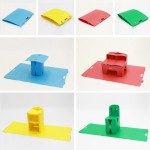
It is not unusual to see art and design students walking around with portfolios under their arms, but few open up to reveal such creative results as these. …
Click Here to Read More »»
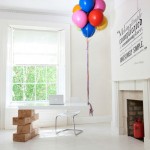
We sit on it during the day, sleep on it at night, eat off it and even look at our reflection in it – but how much thought do we really give our furniture?
Click Here to Read More »»


[ By Steph in Design & Furniture & Decor. ]
[ WebUrbanist | Archives | Galleries | Privacy | TOS ]
Photobooks are gradually replacing traditional albums as the photo-viewer’s medium of choice. These digitally printed albums offer a host of advantages, one of which is a greater flexibility of design and layout. But when you’re faced with lots of blank pages to fill, where do you start? In principal it’s easy to click and drag digital photos onto a virtual Continue Reading
The post Photobook Albums: How to Get the Best Design from Your Photos appeared first on Photodoto.
Panasonic’s Lumix DMC-CM1 smartphone goes above and beyond the typical mobile device camera specs with a 20MP 1″-type sensor, F2.8 lens and 4K video capture. With its impressive camera specification and unusual design it’s the closest thing to a true hybrid device we’ve seen yet in the current marketplace. Read on to find out how it performs in our full review. Read more

Ein Beitrag von: Pascal Triponez
Durchsuchte man früher das Internet nach Männerportraits, landete man unwillkürlich bei klischeebehafteten Bildern wie zum Beispiel dem erfolgreichen Geschäftsmann im Nadelstreifenanzug, der mit verschränkten Armen in die Kamera lächelt. Oder dem ölverschmierten Muskelkerl, der in der Garage an seinem Motorrad rumschraubt.
kwerfeldein – Fotografie Magazin | Fotocommunity
When Sony launched its new Xperia Z4 flagship a few weeks back it was a Japan-only release. Today the Japanese manufacturer has announced the Xperia Z3+, which is essentially identical to the Z4 but will be available globally. It includes a 1/2.3-inch 20.7MP Sony Exmor sensor coupled with an F2.0 lens offering an equivalent focal length of 25mm. Read more
[ By WebUrbanist in Art & Installation & Sound. ]
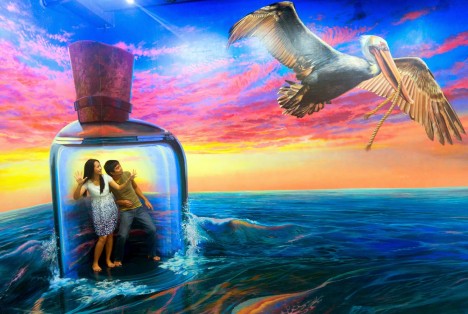
Making art accessible like never before, this interactive gallery encourages people to play around, with and even inside its artworks, extending the frame to include visitors.


Located in a converted bus station in the Philippines, this unconventional museum dubbed Art In Island is packed with art that spills off the canvas and onto adjacent walls, floors and ceilings, breaking down the barrier between gallery and art as well as artist and viewer.


A series of famous regional artists were commissioned and flown in to create the series of 50 pieces that populate the place. Unlike most places, however, guests of this gallery are in turn encouraged to take pictures of themselves and their friends playing with this art. In some places, visitors can climb right into the frame of a painting or occupy a piece of it that pushes out and becomes three-dimensional in the space surrounding the work.


The idea is in part to make the experience of art a more accessible everyday activity, and to reconsider our relationship to those ‘do not touch’ signs found in most museums. There is also an element of the times (and places) involved – according to the CEO of the project, Filipinos are famous for taking selfies, and in the age of social media are also inclined to share those pictures online.

In a world of mobile devices, share icons and popup alerts, fine art is interrupted by signs and symbols of our times, adding a jarring layer of technology to …
Click Here to Read More »»
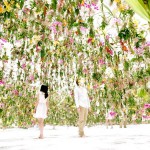
Responding to the movements of visitors passing through the space, this immersive work of installation art puts you in a private bubble in the midst of dense …
Click Here to Read More »»
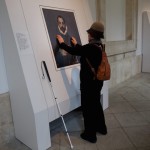
Enabling the visually impaired to quite literally put their hands on priceless artworks, this unique exhibition allows blind people to experience works like …
Click Here to Read More »»
[ By WebUrbanist in Art & Installation & Sound. ]
[ WebUrbanist | Archives | Galleries | Privacy | TOS ]
Das Bild des Tages von: Isabel Hümpfner

Im Ausblick: Verwundete Soldaten, Nordlichter und ein 365-Gigapixel-Panorama.
kwerfeldein – Fotografie Magazin | Fotocommunity
Editor’s Note: This is the first article in a series on macro photography this week. Look for a new one each day for the next 7 days. The next newsletter will have them all if you miss any!
In the world of macro photography, most of discussions seem to surround the technical aspects of this photographic art form. Amongst my colleagues, lens choice comes up a lot, along with the use of a flash, extension rings, and bellows.
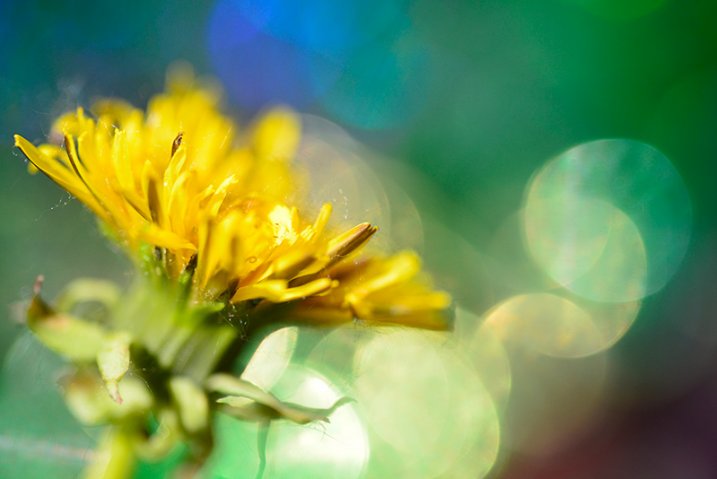
Dynamic and creative macro photographs.
I’d like to switch gears away from the technical, and share some of my tricks to help you creatively enhance your macro shots for added impact and emotive value. If you’re a photographic purist, (not that there is anything wrong with that!) you may not want to keep reading. These tricks provide definite enhancements to the natural environment – so if real is what are shooting for, this article may not be for you.
However, if you are looking to inject more creativity into your macro images, you may appreciate these easy, but high-impact, techniques and tricks.
Most macro shots seem to be of natural subjects, such as; flowers, plants, insects, webs, etc., that live under the blue sky of planet Earth. To enhance the point of view for these kinds of shots, try a using an old blue J-Cloth (it must have been washed many times to work well) as a background. You can drape it across nearby branches or rocks to provide a soft blue background that will make your flowers and spiderwebs pop.
Use a shallow depth of field (f/2.8 or less, depending on your lens) and keep the background at least 12 inches from your subject for best results. I use a Sigma 105mm for my macro work, and these settings work well for this lens. You may need to experiment a bit with your lens and subject.
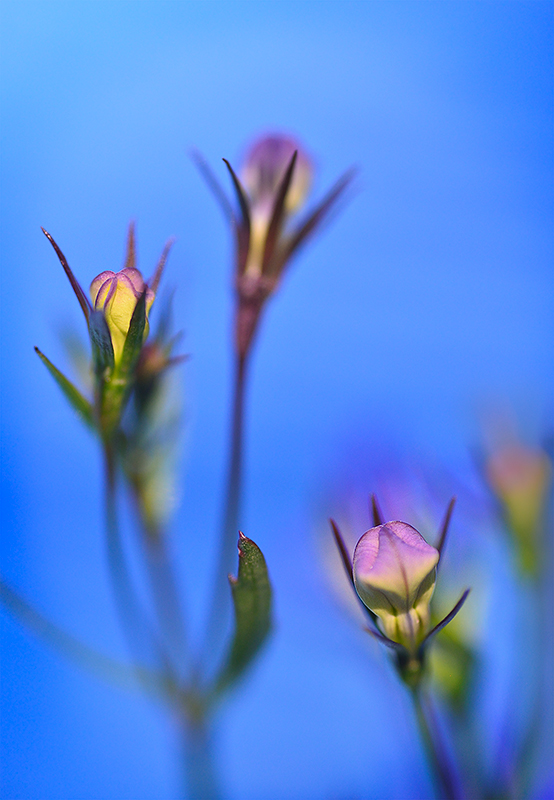
A macro background made from an old well-washed J-Cloth.
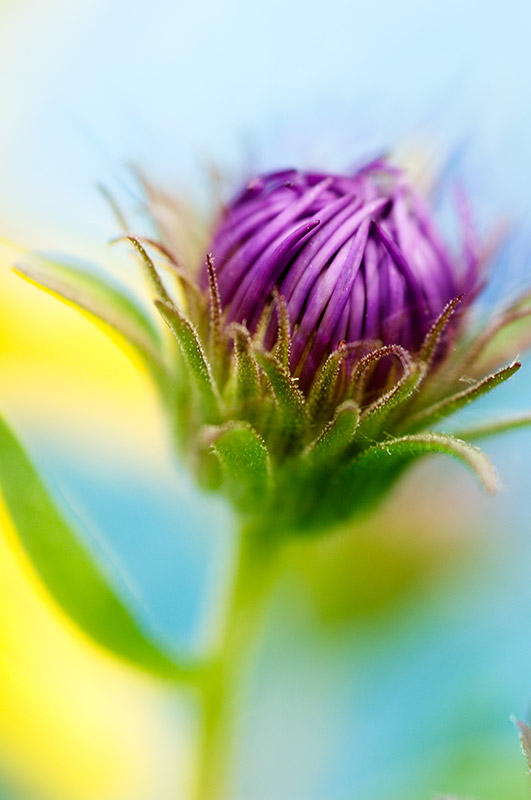
Creatively draped J-Cloth background.
I like J-Cloths because I always have one handy at home, to grab and put in my pocket when I go on spontaneous photo walks and drives, and it fits easily in my camera bag or my pocket. An old well-washed J-Cloth is the perfect shade of blue for my type of macro art. Newer ones that are out of the box, or that haven’t been used, are okay too but I find the blue is a little too dark. But try one for yourself and see which you prefer.
If you really want to get really creative, go for big bokeh, those soft round(ish) blurred shapes in the background. I like the following technique because it emulates tiny light sources and adds a bit of mystery to your photos. Using this technique, you can create ethereal micro landscapes that look like they are from another planet!
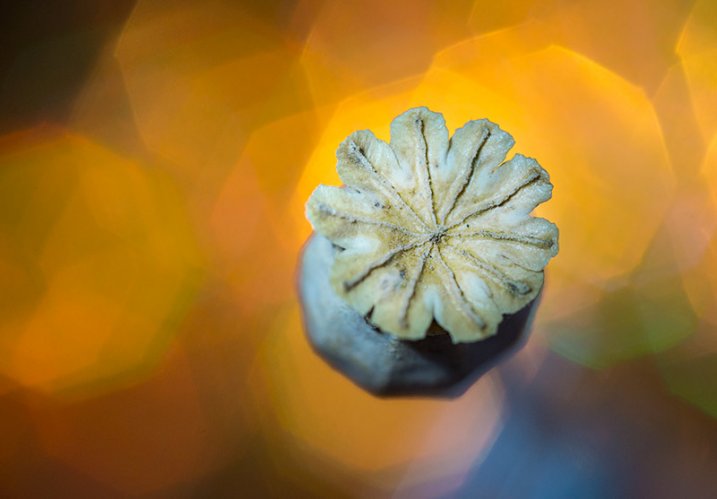
Mysterious Macro
Again this involves using a background material, in this case holiday wrapping paper. Look for plastic foil with a metallic coating. It costs a bit more than paper but it works great for creating macro bokeh, and you’ll have lots left over for actually wrapping gifts (of your amazing macro photos).
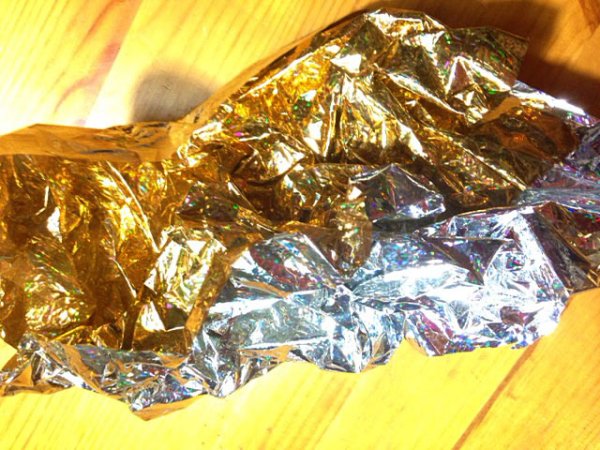
Crinkled metallic gift wrap.
First crinkle the wrapping paper – scrunch it into a ball. If it’s the plastic type it will instantly “un-ball” itself, and you’ll have a wrinkled many faceted metallic backdrop. With this set up, you may also need a light source to bounce off the reflective metallic wrap, depending on where the sun is when you’re shooting. If I need light I usually use my iPhone flashlight, but if you have any other flashlight in your gadget bag it will work just as well. Just aim your light at about a 45 degree angle to the background, out of view of your subject, compose, use Live View if you have it, and your preview button to check the depth of field and bokeh effect. Adjust as needed. Make sure you have no big hot spots of light. Try using different colors of wrap as well. I always keep this gold colored stuff in my bag because I also use it as a reflector – which brings me to trick number three.
Just as in regular photography, there are times when you’ll need some additional brightness to light up parts of your macro subject. Once you’re up close and personal, you’ll often find shadows you didn’t see from your higher vantage point. In macro photography you may find a flash is often too much light, and the close quarters between your camera and the subject make soft lighting tricky. So try using a reflector.
I often use the gold side of the wrapping paper to reflect sunlight into shadows or dark spaces in my subject. I also have (but seem to have misplaced) a 12″ square of copper foil sheeting (you can find this in craft shops or stained glass shops). It’s thicker than aluminum foil so it stands up on its own, and can be bent into angles to suit your needs each time. The copper color gives a nice warm tone to your subject, and again it’s light weight, cheap, and tucks nicely into your bag. I duct taped the edges to avoid getting cut – copper edges are sharp!
Nature photographers either love or hate these last two tricks.
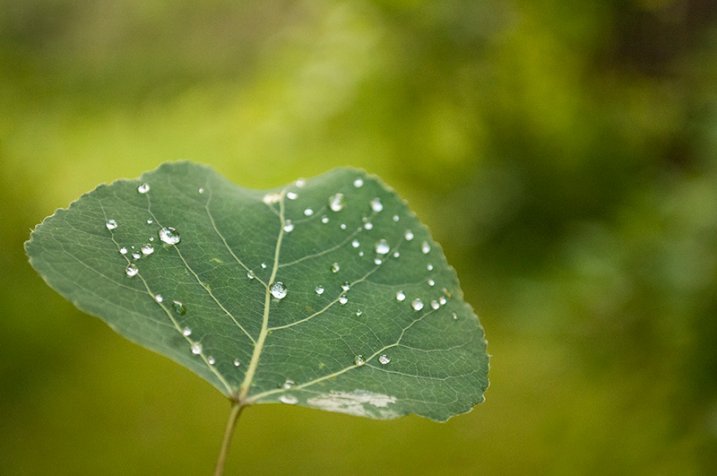
There’s nothing more crushing than getting up at 4:30 am in the summer to capture the sunrise and the morning dew, only to arrive at your destination to find things dry as a bone. Fear not Grasshopper. With your handy spray bottle of water, you can create dew drops for spiderwebs, leaves, flowers, and everything else you choose to photograph.
With a good soaking of water from your bottle, colors become more rich and saturated (is this where the term came from?), making for more vibrant and rich-looking photos.
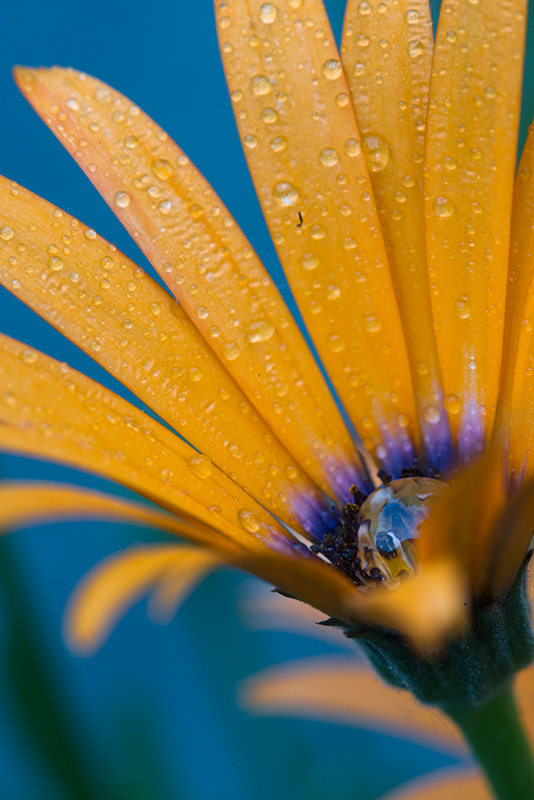
Water drops add interest, and a sense of a moment.
Finally, if you need large drops, drips, or tears, nothing beats glycerine and an eye dropper.
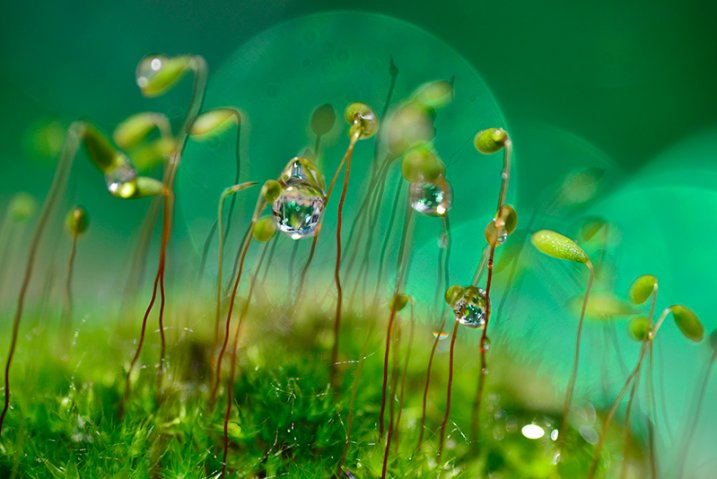
Micro macro landscapes with bokeh and glycerine drops
Glycerine is thick and viscous, and stays on your leaves and petals giving you a longer time to compose and shoot. The drips are syrupy and seem to stretch slower, so again you have more time to shoot. I don’t use glycerine in the natural environment though, only in my indoor macro studio. If you need thick drops for work in nature use white corn syrup, and use it sparingly. It’s super sweet and you don’t want the critters getting addicted.
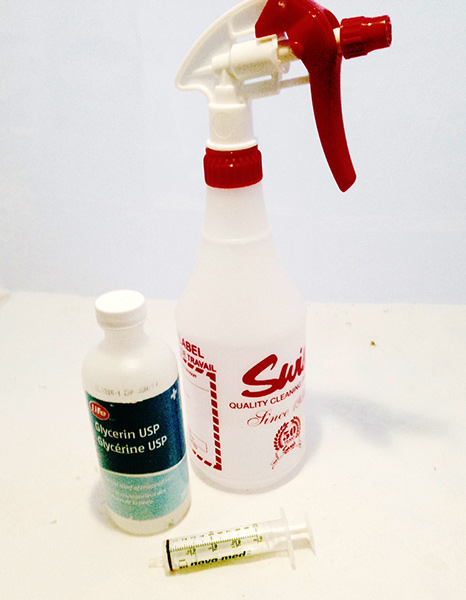
The creative macro photographer’s tool kit.
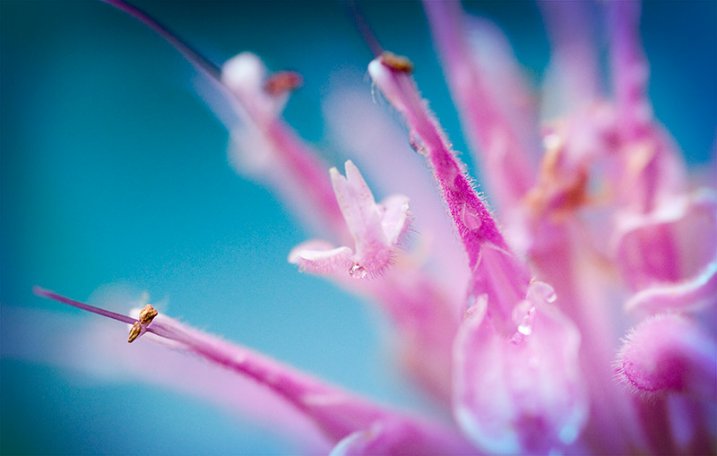
Color contrast with a creative background and a spray of water.
To keep in your bag for your macro photography:
I’d love to know what other creative macro shots you can take using some or all of these tools and techniques. How do you feel about enhancing the environment for your macro shots?
 Want to learn more about macro photography? Check out Ed Versosky’s Introduction to Close-Up & Macro Photography ebook – just $ 10 (over 30% off) this week with coupon code: DPS. You will need to enter the code to apply the discount.
googletag.cmd.push(function() {
tablet_slots.push( googletag.defineSlot( “/1005424/_dPSv4_tab-all-article-bottom_(300×250)”, [300, 250], “pb-ad-78623” ).addService( googletag.pubads() ) ); } );
googletag.cmd.push(function() {
mobile_slots.push( googletag.defineSlot( “/1005424/_dPSv4_mob-all-article-bottom_(300×250)”, [300, 250], “pb-ad-78158” ).addService( googletag.pubads() ) ); } );
The post 5 Macro Photography Tricks to Make Your Images Stand Out by Alex Morrison appeared first on Digital Photography School.