RSS
 

Archive for May, 2015

How to See the Light for Portraits: A Quick Tip for Beginners

05 May

Light1_2

As a beginning photographer, one of the easiest ways to move from taking average snapshots to more professional looking portraits is to develop a good understanding of light. Harsh and uneven lighting can often be distracting and make the photograph look amateur, whereas even lighting allows the viewer to focus solely on the subject and is more visually appealing.

Spending some time learning about the exposure triangle, the quality and direction of light is a great first step, something that I highly recommend to everyone. That said, even if you understand the theoretical aspects of light, it can still be difficult to walk into a park with your children, or clients, and know intuitively where to situate your subject for the best possible portrait lighting. So, I’d like to share one quick and easy trick that you can use to help you “see” the best light if you’re unsure of where to begin:

The Circle Trick

Step One:

Have your subject stand facing you, at the appropriate distance for whatever focal length you’re using. Think of the two of you being like a clock, with you in the center tether position and your subject as the clock’s hour arm in the 12 o’clock position. Take a photo.

In this instance, I was photographing my daughter in our backyard at about 6:30pm. My starting (12 o’clock) position was with the sun behind her.

Step Two:

Have your subject move to the three o’clock position. Pivot with them so that you continue to face each other. Take another photo.

Now, I’ve moved her into the 3 o’clock position. You can see that if you’re looking at her, the sun is predominantly on the left side of the image.

Step Three:

Have your subject move to the 6 o’clock position. Again, pivot with them. Take another photo.

Now, she’s moved into the six o’clock position, and is looking into the sun. You can see that’s going super well.

Step Four:

Have your subject move to the nine o’clock position. Continue to pivot with them, and take another photo.

Finally we’ve moved into the nine o’clock position. As you’re looking at her, the light is primarily on the right side of her face.

Step Five:

Review the four photos that you’ve just taken, and decide which one offers the most appropriate lighting for the look you’re trying to achieve.

Unless you’re shooting at high noon with the sun directly above you, you’ll probably notice that the lighting will vary dramatically between each of the four photos, with some being much more visually appealing than others. This gives you a great starting point to be able to visually “see” the light and quickly determine which direction you’d like your subject to be facing for your portraits (or in a large park, which general direction you may want to head for your session).

Bonus Tip:

If you notice pretty severe backlighting as in the photo for the 12 o’clock position above, and that is not the look you’re trying to achieve, try having your subject sit down!

This image was taken in the exact same location as the “12 o’clock” image above, only with my daughter sitting on the ground instead of standing.

Keep in mind that the circle trick works in the reverse as well, with your subject standing in the same location and you walking around them as the positions of the clock. Sometimes it’s easier for the photographer to do the bulk of the moving around rather than the subject. On the other hand, I spend a lot of time photographing elementary age children, and find that they really enjoy getting to be a special helper at the beginning of a photo shoot. Getting them engaged early on is a good way to help them to feel comfortable with me. In fact, even though I don’t actually need to use the circle trick anymore to be able to see the light, sometimes I still use it as a quick ice breaker at the beginning of sessions with younger children, showing them the four different photos at the end.

For many people, understanding the quality and direction of light is something that’s learned practically – the more you practice, the more you’ll eventually begin to be able to “see” the light intuitively. This is one really simple (and quick!) way to begin to train your eye to begin to see light – so if lighting for portraits is something that you tend to struggle with, grab a friend and give it a try!

googletag.cmd.push(function() {
tablet_slots.push( googletag.defineSlot( “/1005424/_dPSv4_tab-all-article-bottom_(300×250)”, [300, 250], “pb-ad-78623” ).addService( googletag.pubads() ) ); } );

googletag.cmd.push(function() {
mobile_slots.push( googletag.defineSlot( “/1005424/_dPSv4_mob-all-article-bottom_(300×250)”, [300, 250], “pb-ad-78158” ).addService( googletag.pubads() ) ); } );

The post How to See the Light for Portraits: A Quick Tip for Beginners by Meredith Clark appeared first on Digital Photography School.
Digital Photography School

 
Comments Off on How to See the Light for Portraits: A Quick Tip for Beginners

Posted in Photography


Street Art Lives: 13 Installations Interact with Nature

04 May

[ By Steph in Art & Street Art & Graffiti. ]

nature street art just cobe

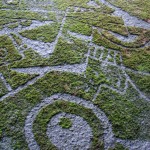
In cities where greenery can be scarce, these art installations call attention to everything from wall-climbing ivy to weeds growing out of sidewalk cracks, turning bushes into luscious manes or tree hollows into canvases for oil paintings. Moss graffiti enlivens urban surfaces without damaging them, grass carpets unfurl across stone streets and mini greenhouses protect even the most modest of plants.

Floral Sideshow Bob by OakOak

nature street art sideshow bob

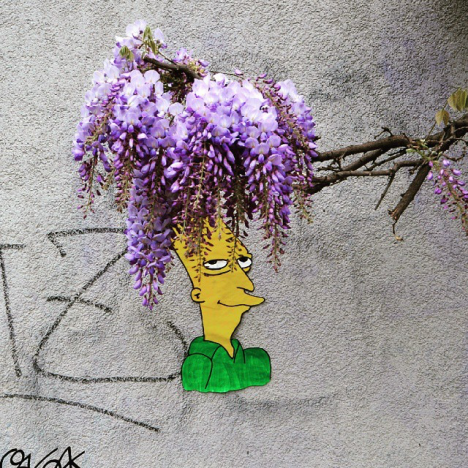
When French street artist OakOak saw these flowing purple flowers in his hometown of Saint-Etienne, he instantly pictured it as the untamable hair of Simpsons character Sideshow Bob. Careful placement of a paste-up on the wall just beyond the flowers creates a 3D street art effect.

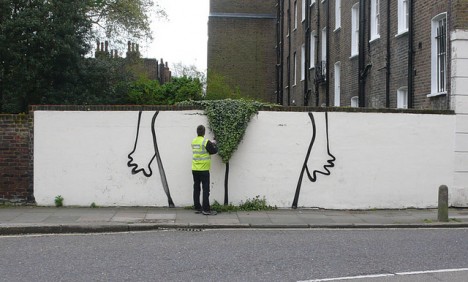
Bush Trimming by Banksy

7513216598_81555a6c1d_z

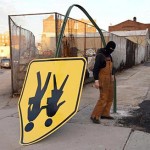
Ivy draped over the edge of a wall in England gets a ‘bikini wax’ from a worker in this interactive piece by famed street artist Banksy, captured by photographer Duncan Hull.

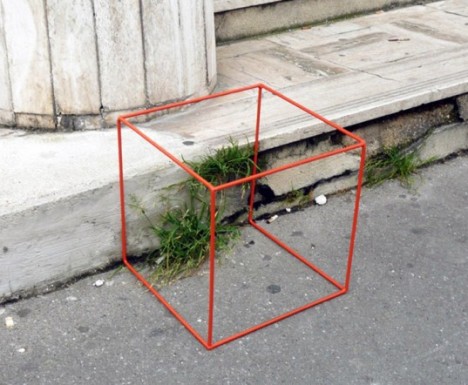
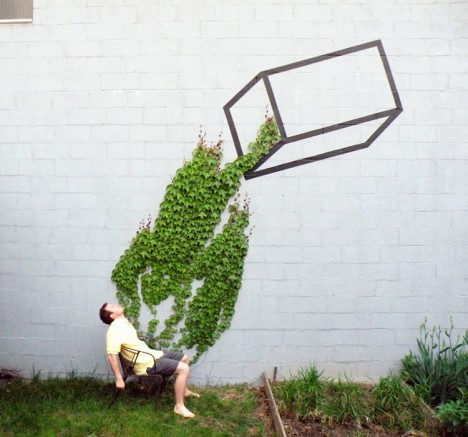
Where the Red Fern Flows by Aakash Nihalani

nature street art aakash

Aakash Nihalani is known for perspective-shifting geometric street art , typically made of cardboard and neon tape. The graphics are placed around New York “to highlight the unexpected contours and elegant geometry of the city.” This piece, entitled ‘Where the Red Fern Flows,’ enhances some wall-clinging ivy in Brooklyn.

Mini Greenhouses for Sidewalk Weeds

nature street art greenouses 1

Scraggly weeds poking out of sidewalk cracks may not be much to look at, but sometimes their very existence in a concrete urban environment can seem miraculous. A group of art students in France developed simple ‘urban greenhouses’ that highlight the plants and protect them from being stepped on.

JustCobe in Freiburg, Germany

nature street art just cobe

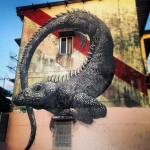
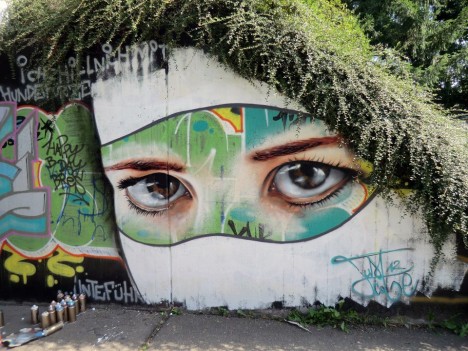
Hyper-realistic eyes make this illusion even more effective as German artist JustCobe puts a curving wall edged with greenery to use in the city of Freiburg.

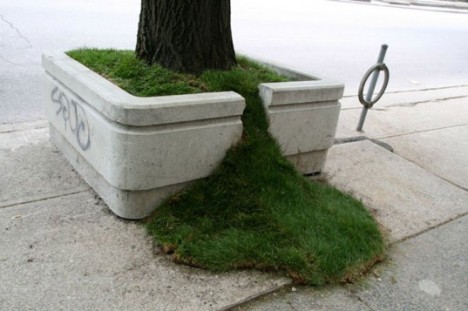
Tree Planter Art for Toronto

nature street art planters toronto

Grass pours out of a cracked concrete planter in Toronto as part of the ‘Outside the Planter’ project, calling attention to the neglected state of these containers around the city and engaging with passersby in a playful way. Dozens of artists participated; this one is by Sean Martindale.

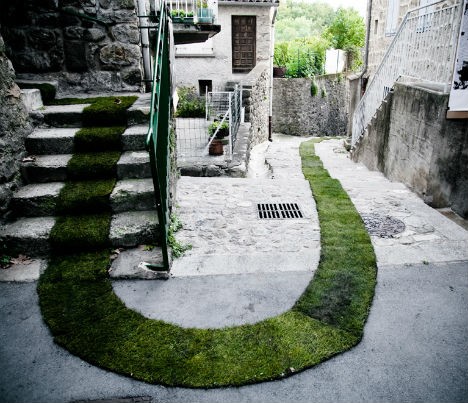
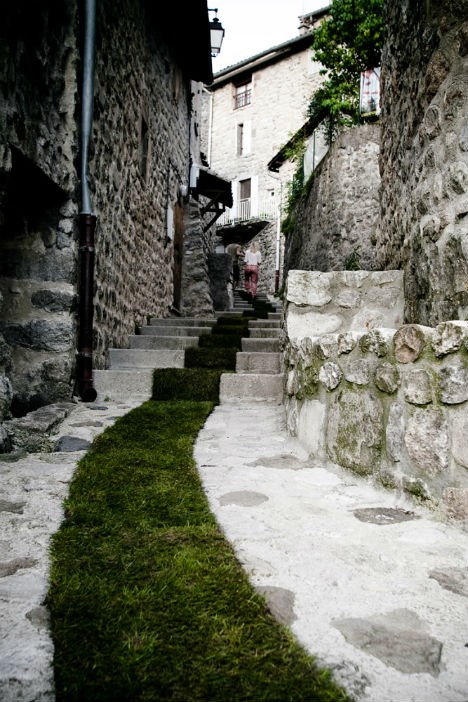
Grass Carpet

nature street art grass carpet 1

nature street art grass carpet 2

A green carpet weaves through the stone streets of the picturesque French city of Jaujac, traveling up and down stairs, meandering over bridges and traversing a park. Public artists Gaëlle Villedary used 3.5 tons of living turf for the 1400-foot installation, connecting the heart of the village and its inhabitants with the nearby valley.

Next Page – Click Below to Read More:
Urban Art Interacts With Nature

Share on Facebook


[ By Steph in Art & Street Art & Graffiti. ]

[ WebUrbanist | Archives | Galleries | Privacy | TOS ]


WebUrbanist

 
Comments Off on Street Art Lives: 13 Installations Interact with Nature

Posted in Creativity


4. Mai 2015

04 May

Das Bild des Tages von: Thomas Bechtle

Zeugs auf dem Tisch

Im Ausblick: Berlin 1945 und heute, ein Matriarchad und Supermodels.
kwerfeldein – Fotografie Magazin | Fotocommunity

 
Comments Off on 4. Mai 2015

Posted in Equipment


Wedding Couture: How to Shoot Brides

04 May

Ok, I must admit, I’ve been shooting weddings for the past 22 years, but I can’t say that they’re my favourite thing to shoot. It’s a lot of pressure, there are a lot of emotions, my feet hurt at the end of the day, and I shoot pretty heavily, so it means a lot of work after the shoot, but Continue Reading

The post Wedding Couture: How to Shoot Brides appeared first on Photodoto.


Photodoto

 
Comments Off on Wedding Couture: How to Shoot Brides

Posted in Photography


Meet PJ:Suman Edition

04 May

Welcome to a Special Edition of Meet Photojojo. In honor of Mother’s Day … Meet Suman!

Not only is she the mom of our founder, Amit, she’s been working in the Photojojo Shop since day 1. Her garage was our original warehouse! She’s become everyone’s very favorite work mom, always there to help you out and a real joy to work with. :]

Name: Suman “Mom-in-Chief” Gupta

What Do You Do Here? I take care of the inventory, place orders with vendors. Make sure we have enough stock on hand & that we don’t run out before we get the next shipment.

Favorite Camera: Of course, it is my iPhone 6.

Learn Even More About Suman
(…)
Read the rest of Meet PJ:
Suman Edition (214 words)


© laurel for Photojojo, 2015. |
Permalink |
No comment |
Add to
Suman Edition”>del.icio.us

Post tags:


Photojojo

 
Comments Off on Meet PJ:Suman Edition

Posted in Equipment


Get Mom an Engineer Print Kit (She’ll love it!)

04 May

Fun fact: Your mom adores photos. The more the better … and the bigger the better!

Today only (5/4) we’ve discounted our Engineer Print Kits by 10 smackeroos, so you can snag one on the cheap. Mom always did give prudent financial advice.

As her favorite child, she’ll obviously print a life-size photo of you with her Engineer Print gift card. Then, she’ll hang it will the mounting goodies that come in the kit. It’ll be like you’re always there, making monkey faces. Thanks, mom.

Order today and we’ll get it to you (or straight to her) in time for Mom’s Day!

Go BIG for Mom
(…)
Read the rest of Get Mom an
Engineer Print Kit
(She’ll love it!) (0 words)


© Erin for Photojojo, 2015. |
Permalink |
No comment |
Add to
Engineer Print Kit
(She’ll love it!)”>del.icio.us

Post tags:


Photojojo

 
Comments Off on Get Mom an Engineer Print Kit (She’ll love it!)

Posted in Equipment


Spyder 5 – Ein Monitor-Kalibrierer unter der Lupe

04 May

Monitor-Kalibrier auf Holztisch

In diesem Artikel geht es um ein unter Fotografen selten besprochenes, aber wichtiges Thema: Monitor-Kalibrierung. Wem jetzt erst einmal ein großes „Hä?“ oder „Was’n das?“ entgleitet, der darf an dieser Stelle gern weiterlesen. An alle anderen: Es geht um sinnvolle neue Technik, die auch für Euch interessant sein könnte.
kwerfeldein – Fotografie Magazin | Fotocommunity

 
Comments Off on Spyder 5 – Ein Monitor-Kalibrierer unter der Lupe

Posted in Equipment


Hands Down the Best Gifts For Your Mom

04 May

After a full year of note-taking and IG stalking, we have conclusively determined the best gifts for your photo-loving mom.

Also, we may have called her. Maybe.

Check out our roundup of goodies guaranteed to make her smile … for the camera! Snag yours today and we’ll even gift wrap ‘em for free.

Grab the perfect gift for Mom
(…)
Read the rest of Hands Down the Best Gifts For Your Mom (0 words)


© Erin for Photojojo, 2015. |
Permalink |
No comment |
Add to
del.icio.us

Post tags:


Photojojo

 
Comments Off on Hands Down the Best Gifts For Your Mom

Posted in Equipment


Fifth Wall: Artist Uses Aerial Urban Voids as Blank Backdrops

04 May

[ By WebUrbanist in Art & Street Art & Graffiti. ]

dky art new york'

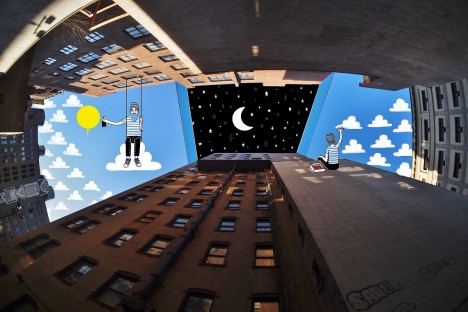
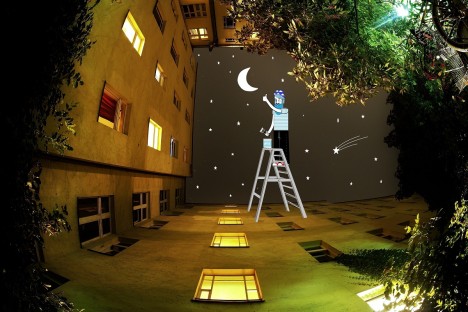
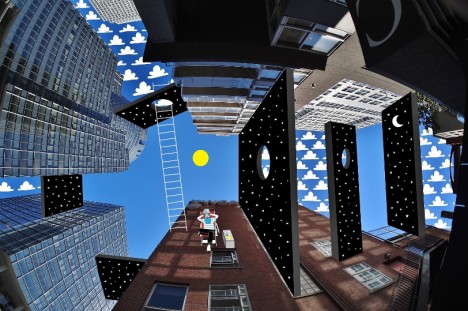
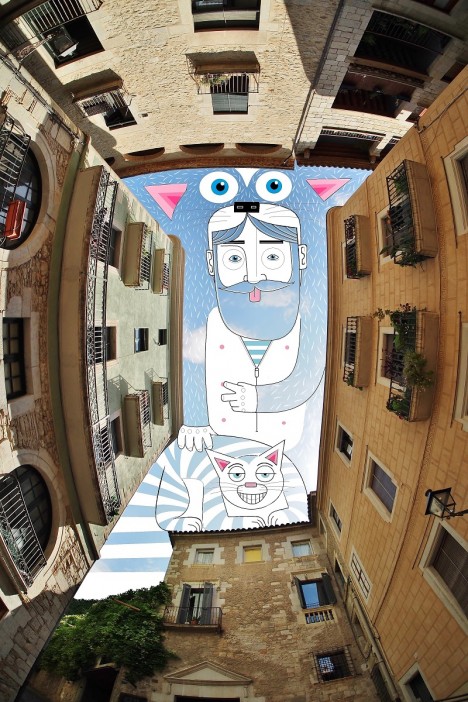
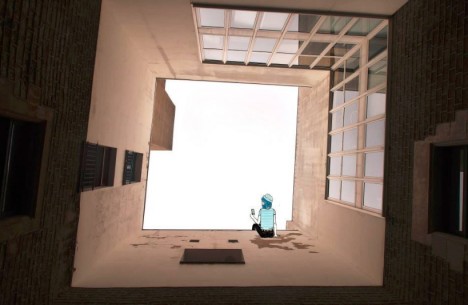
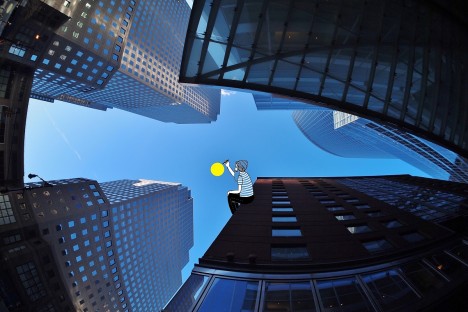
In theater, the ‘fourth wall’ refers to the imaginary barrier between performers and their audience – the work of this illustrator evokes a kind of ‘fifth wall’, treating the sky above as invisible canvass for drawing upon.

sky ladder at night

skydesign

sky people frame sun

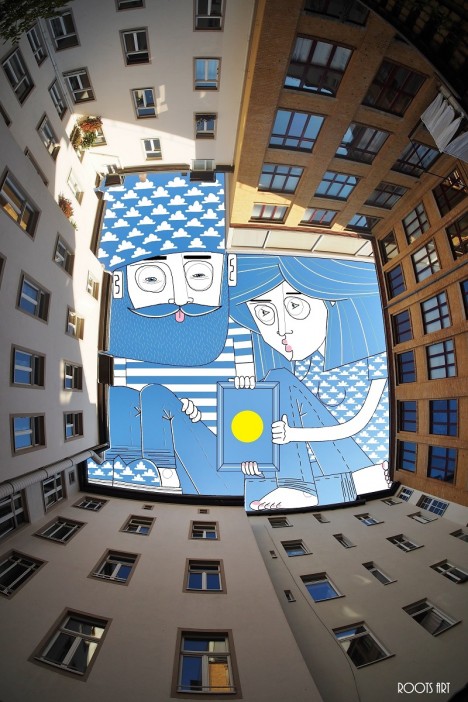
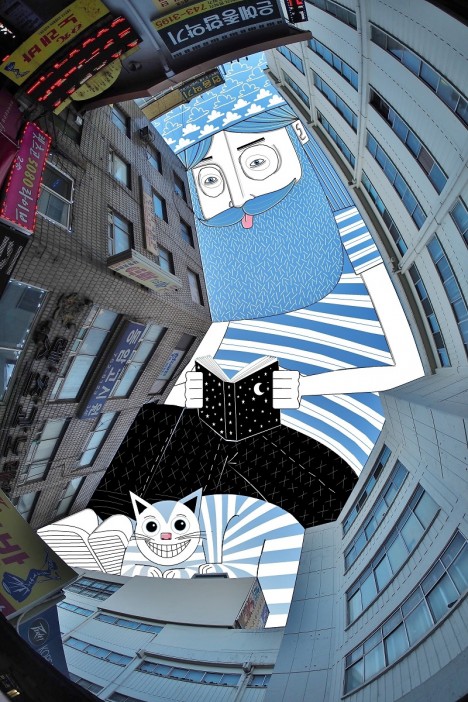
Featured previously, French artist Thomas Lamadieu is back with new sets (SkyDesign and SkyFace) as well as fresh work in his SkyArt series from around the world, with illustrated shots taken and drawn from South Asia and Europe to the United States.

sky art cat cartoon

sky art man cat

His recognizable style is pushed in new directions as he explores difference spaces and ways of filling them in, including some cartoons that breach the sky barrier and start interacting with infrastructure and spatial elements beyond the central area of focus.

sky faces art pair

skydesign edge sitting

spacespace design series

sky art drawing sun

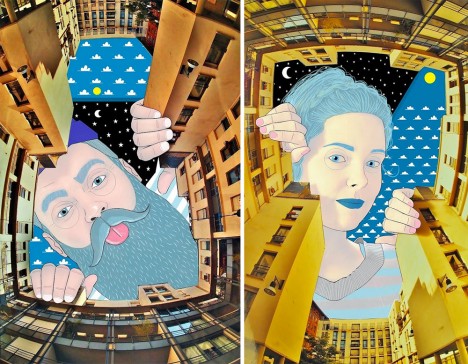
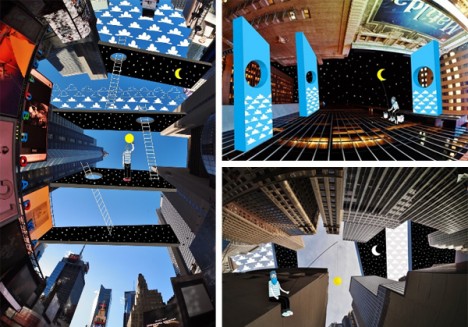
In SkyFace, his portraits seem to push out from their frames, filling up their allotted space and then some, pulling back buildings to be revealed. In SkyDesign, his creations begin building out their own aerial infrastructure, crafting fanciful structures in the sky and manipulating the sun, moon, stars and other celestial elements seemingly at their fingertips.

Share on Facebook


[ By WebUrbanist in Art & Street Art & Graffiti. ]

[ WebUrbanist | Archives | Galleries | Privacy | TOS ]


WebUrbanist

 
Comments Off on Fifth Wall: Artist Uses Aerial Urban Voids as Blank Backdrops

Posted in Creativity


5 Reasons a Pro Photographer Sometimes Regrets That Decision

04 May

Following your dream is not always easy. Actually, it’s never easy.

To be frank, I think the only way you can achieve a dream goal is to leave yourself no other choice. You can’t say, for instance, “I’ll try this for a while and see how it goes.” because you’ll always find a reason (often a pretty good one) to give up and do something else. You have to be fully committed. That makes it easier decision-wise, because you literally leave yourself no other choice but to keep going forward. But the process itself is still very hard.

dps4

So, that’s what I did and now I take pictures for a living. I also write for magazines and for newspapers. Sometimes, I sell my images by themselves, but my articles I always sell with my photos. I’ve been doing it for a long time now, and I can’t imagine any other way to make a living. But that doesn’t mean it hasn’t been a struggle. Sometimes, when everything seems to be going against me, I have regrets about choosing photography for a career. Here they are, in no particular order.

#1. Low Pay

Photographers work hard, whether they shoot weddings, war zones or wallabies. But the pay is generally not great, which is just a polite way of saying it sucks. There are exceptions, of course, but they are, well, exceptions. So you work hard and are good at what you do, but you don’t make a lot of money. Your friends earn a lot more than you do, which is fine, but after a while it gives a numerical significance to how much you’ve sacrificed to be a photographer.


Of course it’s possible to make a lot of money at photography, as Peter Lik will tell you, but if making money is a priority in your life, you’re far better off choosing a different career.

Now, I know what you’re thinking. You’ve heard that before, and it’s not going to be a problem, you’re ready to live frugally. You say that now, but will you feel the same way in ten years?

dps5

#2. Inspiration

While it’s definitely true that you should try to work at something you love, it has its consequences. The most obvious is that what you love becomes work. I have friends who shoot images just because they enjoy it and sometimes I think, “hmm, they seem to be having more fun at this than I am!”

The truth is, taking pictures with the aim of selling them is different, most of the time, from taking pictures for the pure joy if it. A lot of people confuse the two things.

It’s not that I love it any less, I don’t think, but sometimes it’s hard to keep up with the enthusiasm I see in amateur photographers. As much as I enjoy taking pictures — hey, I’m the one who decided to make a living out of it — I also like doing other things as well. I guess this is a way of saying that when you do the thing that you love for a living, you choose something else for a hobby.

#3. Work Never Ends

One of the great things about being a self-employed entrepreneur of sorts, is that if Monday the weather is great and a friend calls up and suggests a long lunch on a patio somewhere, at that moment you get to say, “Sure, sounds great!” Or perhaps, if you’re more disciplined than I am, you say, “Maybe next time, I really have to get some work done.” But the point is, you have the option. Freedom is pretty great.

dps2

Of course, it comes at a cost, because depending on how you look at it, you’re never truly free. You can draw the line between work and play wherever you like, yes, but that’s both a good thing and a bad thing. Because you’re never not working. I sometimes envy my friends who have regular Monday-to-Friday jobs because when I see them on the weekend, they’re truly off work. Not me.

Also, vacations? Pretty much never. I go to a lot of great places, don’t get me wrong, but mostly on my own. I know this sounds like the stuff of dreams, but believe me, it’s still work. You go on an assignment somewhere and tell your friends you went to such-and-such destination, and all they think is “Ah, vacation.” But being in a vacation spot and actually being on vacation are two very different things. I get it, because vacations are awesome – I wish I could take one.

#4. Loss of Creative Input

Depending on the kind of photography you do, it can be hard to maintain a personal vision, or any creative input at all, really. I was once at the studio of a friend of mine, a commercial photographer who pulls in many big-time clients. I wasn’t involved in the shoot in any way, he just invited me over so I hung out and watched, scarfing down the free sushi when nobody was looking.

The shoot was of a young couple who had found their dream home. It was going to be a full-page advertisement in magazines and newspapers. The art director was there, and he knew exactly what he wanted. He had a clipping of a photo taken by somebody else, gave it to my friend and essentially said, “Copy this. This is what we want exactly.”

dps3

This is an extreme example, but the point is, if you want to make money taking pictures, you shoot what other people want. At the very least, you shoot what other people want but in your style, and that’s the best-case scenario.

That’s why a lot of photographers take lower-paying jobs that allow them more creative control. If not, there are times when you’re just a robot putting the camera where other people want it and pushing the button when they say so. Unless, that is, you’re a superstar commercial photographer, but if that’s the case, you’ve already paid your dues, I’m sure.

I don’t usually have an art director over my shoulder telling me what to do, but I still submit my images to photo editors and designers, and they get to choose which ones get used, not me.

#5. The Myth of Being Your Own Boss

Some people who have regular jobs, whatever those are, tell me, “You are so lucky, you’re your own boss.”

dps1

Well I suppose I am, in a way, my own boss. But that depends on how you look at it. From my perspective, I have it a lot worse because I don’t have just one boss, I have many. Every one of my clients is my boss.

I’ve been lucky in finding many great people to work with (for?) but I’ve had my share of nightmare clients, as well. Some of those people pay quite well, and although I’d sorely like to tell them to do something to themselves which is unprintable here, well, you know how it goes. Sometimes I have the courage to fire a well-paying client, and sometimes I don’t. But if you think that being a freelancer allows you to escape the unpleasantness of having to deal with certain bosses, think again.

Thinking about turning pro? Here’s another good read on the topic from a different pro photographer’s perspective: 6 Things to Consider Before Becoming a Professional Photographer

Mike Randolph has been a professional writer and photographer for more than 20 years. His photos have appeared in National Geographic publications as well as hundreds of others. For photo tips, techniques and gear talk, check out his travel photography blog.

googletag.cmd.push(function() {
tablet_slots.push( googletag.defineSlot( “/1005424/_dPSv4_tab-all-article-bottom_(300×250)”, [300, 250], “pb-ad-78623” ).addService( googletag.pubads() ) ); } );

googletag.cmd.push(function() {
mobile_slots.push( googletag.defineSlot( “/1005424/_dPSv4_mob-all-article-bottom_(300×250)”, [300, 250], “pb-ad-78158” ).addService( googletag.pubads() ) ); } );

The post 5 Reasons a Pro Photographer Sometimes Regrets That Decision by Mike Randolph appeared first on Digital Photography School.

Digital Photography School

 
Comments Off on 5 Reasons a Pro Photographer Sometimes Regrets That Decision

Posted in Photography