RSS
 

Archive for May, 2015

High-Tech Hobos: Train-Hopping Vagabonds of the Digital Age

06 May

[ By WebUrbanist in Culture & History & Travel. ]

hobo train top travel

Traveling light takes on new meaning when jumping trains, as does the limited battery life of mobile devices – just like the rest of us, hitchhikers and train hoppers these days increasingly see the web as as invaluable resource. The underlying story of nomadic life on the rails is surprisingly consistent in some ways: people, generally young, using the nation’s railways to travel the country. The details are, however, revealingly different – analog hobo codes have given way to digital hobo coders.

hobo travel train hopo

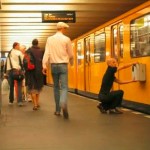
Like many 30-somethings, Huck has experienced life with and without a pervasive internet that answers all questions. This transitional generation knows to rely on conventional knowledge and hard research as much as spoon-fed answers. In the extended interview below, this reddit user (/u/huckstah) and long-time /r/vagabond participant shares stories from his nomadic lifestyle. Images here by Molly Steele illustrate some of the everyday wonders of illicit train travel as well. Per Hobos of Instagram , these travelers are trading their flip phones for iPhones, starting Instagram accounts … and bringing an age-old tradition of trainhopping and tramping into the Information Age.”

Online resources provide help in all kinds of ways, including some websites dedicated to helping the (often intentionally) homeless and misfit travelers as they hitchhike or dumpster dive. At the same time, there are many ways to also turn ordinary resources toward new ends, like using Google Maps to scout the layouts of train yards for security gaps and best access points.

Beyond transit, maps are also helpful for finding public restrooms, camp grounds, power outlets, showers and other essentials. Kindles (or other devices using less power than phones) are critical to stretching battery life, too. Ultimately, the information flows both ways: travelers turn around and share their adventures on Instagram, Vine, Facebook and other social media sites.

hobo sleeping rail car

Those on the road more often than not find themselves looking for remote digital work or seasonal employment, again aided in part by websites like Craigslist and otherwise. YouTube videos help guide people through various processes of actually getting on and off trains, as well as finding the best boxcars on (or in) which to travel. Of course, none of these reduce the real, physical-world risks and dangers associated with train hopping, including but not limited to injury and arrest. Some naturally worry that the spread of this form of transit to the internet will increasingly lure people who are not equipped for the lifestyle to try things better off watched on Vimeo or read on reddit.

Share on Facebook


[ By WebUrbanist in Culture & History & Travel. ]

[ WebUrbanist | Archives | Galleries | Privacy | TOS ]


WebUrbanist

 
Comments Off on High-Tech Hobos: Train-Hopping Vagabonds of the Digital Age

Posted in Creativity


How to Isolate Your Subject in Lightroom

06 May

One of my favourite portrait techniques is to isolate the model by using a short telephoto lens and a wide aperture. The idea is to throw the background out of focus and keep the subject sharp, so there is a clear distinction between the two. This creates beautiful bokeh and the illusion of depth.

Isolating the subject in Lightroom

Another way to isolate the model is to place them in the light, against a dark background that is in the shade. The opening photo (above) used this technique. I asked the model to pose in a doorway, and she is separated from the background because there’s no light illuminating the interior of the building.

These techniques are very effective but sometimes the results won’t match what you visualized. It may be that the background isn’t quite as dark as you would like, or not out of focus enough. It may contain distracting colours or highlights. In these situations you can use Lightroom to give you a helping hand.

Take the following photo as an example. The model is an artist who creates artwork from scrap metal. He is lit by daylight coming through open doors to camera left. I originally visualized the scene with the background going dark. Here’s what I was hoping for (the final result, after editing in Lightroom):

Isolating the subject in Lightroom

In the event however, that didn’t happen. The workshop was illuminated by lighting coming through skylights and a window at the rear. The blurred area on the left is the door to the workshop – included to add a sense of depth and to hide a white metal tank in the background. The door is outside, so it came out very bright compared to the interior.

This is the photo, more or less straight out of the camera.

Isolating the subject in Lightroom

Quite a difference! Let’s look at some of the techniques I used to isolate the subject in Lightroom, and complete my original vision of the photo.

  • I added a Radial Filter and moved the Exposure slider left to darken the area around the subject. The Radial Filter is a very flexible tool as you can adjust the size and shape to match your subject.

    Isolating the subject in Lightroom

  • I used a Graduated Filter to darken the out of focus door. Now it doesn’t pull any attention away from the artist, who is the focal point of the photo. You can use Graduated Filters to darken any part of the background in the same way.

    Isolating the subject in Lightroom

  • Next I used the Adjustment Brush to darken some areas that weren’t covered by the Radial Filter. I painted in the area I wanted to adjust (shown by the red mask, below) and moved the Highlights and Shadows sliders left to make it darker. The Adjustment Brush tool is extremely useful for making local adjustments in areas that the Radial and Graduated Filters are unsuitable for.

    Isolating the subject in Lightroom

  • Finally I created another Adjustment Brush, painted over the model and moved the Clarity slider right. This made him look sharper by emphasizing the texture. It’s a technique that works better with men than with women as it affects skin texture, emphasizing wrinkles and other marks. A subtle touch is best. Here, increasing Clarity made the model’s skin brighter, so I moved the Highlights slider left to compensate.

    Isolating the subject in Lightroom

Here’s a before and after comparison so you can see the difference that those four simple adjustments made.

Isolating the subject in Lightroom

I’ve also created a YouTube video that shows how I processed this photo in depth.

You can also experiment with using the Adjustment Brush to select the background and making it softer by moving the Clarity slider left or desaturating it with the Saturation slider. Care is required with both techniques as they are easy to overdo – once again a subtle touch is best. They may come in useful when there are bright highlights or distracting colours in the background.

Isolating the subject in Lightroom

What techniques do you use to isolate the subject in Lightroom? Please let us know in the comments.


The Mastering Lightroom Collection

Mastering Lightroom ebooksMy Mastering Lightroom ebooks will help you get the most out of Lightroom 4 and Lightroom 5. They cover every aspect of the software from the Library module through to creating beautiful images in the Develop module. Click the link to learn more or buy.

googletag.cmd.push(function() {
tablet_slots.push( googletag.defineSlot( “/1005424/_dPSv4_tab-all-article-bottom_(300×250)”, [300, 250], “pb-ad-78623” ).addService( googletag.pubads() ) ); } );

googletag.cmd.push(function() {
mobile_slots.push( googletag.defineSlot( “/1005424/_dPSv4_mob-all-article-bottom_(300×250)”, [300, 250], “pb-ad-78158” ).addService( googletag.pubads() ) ); } );

The post How to Isolate Your Subject in Lightroom by Andrew S. Gibson appeared first on Digital Photography School.


Digital Photography School

 
Comments Off on How to Isolate Your Subject in Lightroom

Posted in Photography


Last Chance Mother’s Day Ideas

05 May

Mother’s Day is less than a week away, and we’re compiling every idea we have for your perfect gift.

We know our own shop is stuffed full of fun goodies for Mom and we’ve already handpicked the best handmade gifts for her too.

But we’re so pumped about Mother’s Day this year that we decided to scour the ‘net for juuuust a couple more awesome gifts.

  • This Wood Block Cleat from Artifact Uprising is our favorite way to show off their signature prints.
  • These personalized Stickers are super affordable, unique and ripe with possibilities.
  • Personalize this Spa Box to showcase your favorite mom-time photo while also giving her a way to enjoy spa-time.
  • Who doesn’t love cookies? Gift Mom a Cookie Box Subscription … and, uh, grab us one too while you’re at it. Mmmmm….cooookies.

Sometimes the best gift is time. Take her out to dinner, a movie or both! Spend some silly time taking instant portraits or making a photo recipe book. You’ll have a great time and create something to remember.

Mom rocks, and you do too! Make this Mother’s Day a blast for you both.

Photo by Artifact Uprising


© Erin for Photojojo, 2015. |
Permalink |
No comment |
Add to
Mother’s Day Ideas”>del.icio.us

Post tags:


Photojojo

 
Comments Off on Last Chance Mother’s Day Ideas

Posted in Equipment


5. Mai 2015

05 May

Das Bild des Tages von: Marc Schlueter

© Marc Schlueter

Im Ausblick: ein stählener Riese, der Mond und Doppelbelichtungen.
kwerfeldein – Fotografie Magazin | Fotocommunity

 
Comments Off on 5. Mai 2015

Posted in Equipment


Contest – Win a Tamron 16-300mm Di II VC PZD Macro All-In-One Zoom Lens

05 May

ContestOver the last few years here at dPS, we’ve run very some very popular competitions with our partners to give away some of their great photographic products to lucky dPS readers.

We are lucky enough to be able to do it again this week.

For this contest, Tamron is giving away a Macro All-In-One Zoom Lens

Tamron 16 300mm Di II VC PZD Macro 750

Tamron 16-300mm Di II VC PZD Macro

This prize is designed to help every level of photographer create BETTER pictures. Tamron is the world’s most awarded photographic lens line. Here’s what you, our dPS reader, could win:

Tamron 16-300mm Di II VC PZD Macro – Retail Value $ 629
For canon, Nikon or Sony small-sensor cameras.

Learn a little more about Tamron here.

How to Win

To win this contest you need to:

  • Visit the lens information pages and learn more about the lens and its core use.
  • Leave a comment below and tell us WHY you’d like to win and HOW you would you utilize the lens. Please note: there is a limit of ONE entry per person.
  • Do this in the next 14 days and after May 20th, 2015, the team at dPS will choose the best answer and we will announce the winners in the following days.

The deadline to enter is May 19, 2015, Midnight PDT. Comments left after that date and time will not be considered.

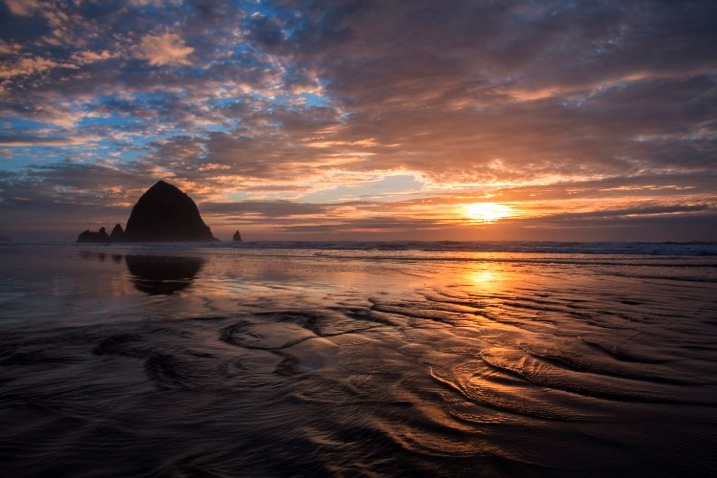
Canon-Beach_ken-hubbard-resized.jpg

Photo by Ken Hubbad

By “best” – we’re looking for people who have an understanding of the lenses and how they will best suit their needs. So you’ll need to check out the product pages to put yourself in the best position to win.

There’s no need to write essay length comments to win – but we’re looking to hear what you like about the lens and how it would help your development as a photographer.

This competition is open to everyone, no matter where you live – but there is only one entry per person. To enter – simply leave your comment below.

tamron-logo.jpg

About Tamron

Disclaimer: Tamron is a paid partner of dPS.

googletag.cmd.push(function() {
tablet_slots.push( googletag.defineSlot( “/1005424/_dPSv4_tab-all-article-bottom_(300×250)”, [300, 250], “pb-ad-78623” ).addService( googletag.pubads() ) ); } );

googletag.cmd.push(function() {
mobile_slots.push( googletag.defineSlot( “/1005424/_dPSv4_mob-all-article-bottom_(300×250)”, [300, 250], “pb-ad-78158” ).addService( googletag.pubads() ) ); } );

The post Contest – Win a Tamron 16-300mm Di II VC PZD Macro All-In-One Zoom Lens by Darlene Hildebrandt appeared first on Digital Photography School.


Digital Photography School

 
Comments Off on Contest – Win a Tamron 16-300mm Di II VC PZD Macro All-In-One Zoom Lens

Posted in Photography


Eine naive Reise nach Island

05 May

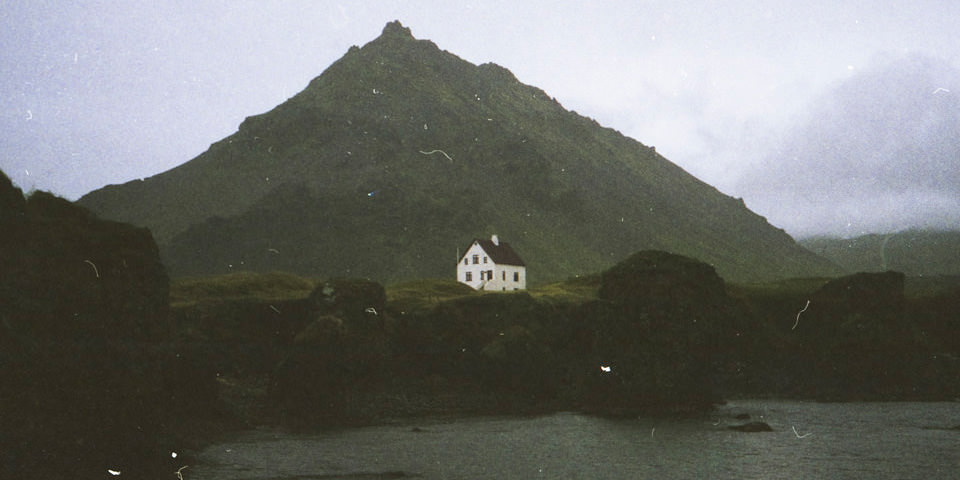
Ein Haus an der Küste Islands

Ein Beitrag von: Brenning Hughes

Fotografie und Island sind gleichermaßen wichtig für mich und untrennbar mit meinem Leben verbunden. Aber das war nicht immer so. Während unseres letzten Jahres an der High School entschieden ein Freund und ich uns dazu, nach Abschluss der Prüfungen etwas zu unternehmen. Zuerst alberten wir herum, planten, Raumfahrer zu werden, uns nach Nordkorea zu schleusen oder Blauwale zu reiten. Das Übliche eben. Schließlich schlug ich vor, Island zu besuchen.
kwerfeldein – Fotografie Magazin | Fotocommunity

 
Comments Off on Eine naive Reise nach Island

Posted in Equipment


Pure Gold: 24-Karat Art Center Highlights ‘Haunted House’

05 May

[ By Steph in Drawing & Digital. ]

gold art center 1

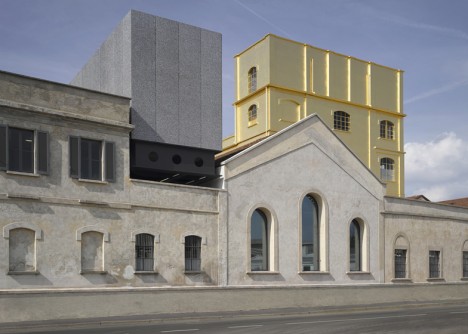
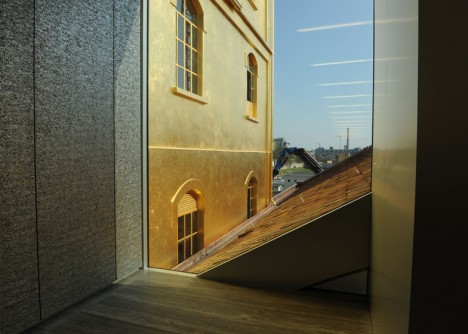
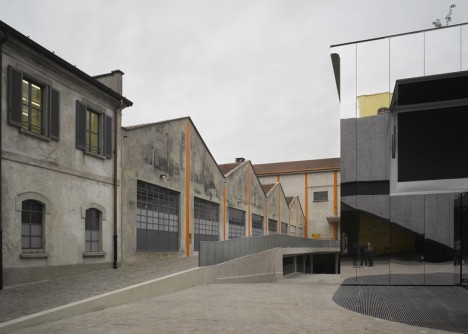
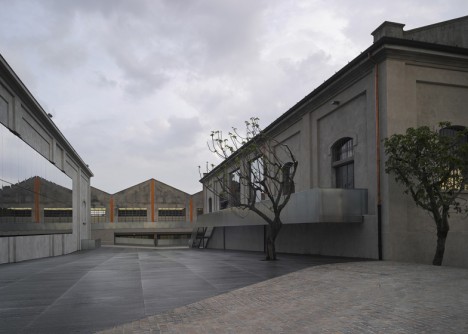
Part of a century-old distillery, a structure known as the ‘Haunted House’ now glimmers in the faintest of light thanks to its real 24 karat gold coating. Dutch architecture firm OMA adapted a complex of seven buildings in Milan for Fondazione Prada’s new arts center and added three new buildings, blending them all together with the goal of making it hard to tell which are historic and which aren’t.

art center 2

The coat of gold paint makes the old factory building look like it could be as new as the glazed Podium building that was constructed around it, which will host temporary exhibitions. This striking detail was actually a last-minute decision, as lead architect Rem Koolhaas sought a way to “give value to a seemingly mundane and simple element.”

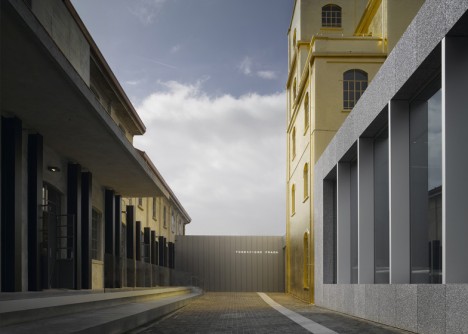
art center 4

When the sun is shining bright, gold-tinted light reflects off that structure onto the rest of the complex, which also includes a cinema camouflaged by mirrors. OMA upgraded the historic structures with modern finish materials and carried an industrial aesthetic throughout the new buildings for a cohesive result. It’s not clear exactly how this could be possible, but according to Koolhaas, “gold is actually a cheap cladding material compared to traditional claddings like marble and even paint.”

art center 5 art center 6

Established by the Italian fashion house, Fondazione Prada aims to provide exhibition space for more diverse art than you’d normally see in a modern museum. The new complex, which is still under construction, will be its first permanent exhibition space.

Share on Facebook


[ By Steph in Drawing & Digital. ]

[ WebUrbanist | Archives | Galleries | Privacy | TOS ]


WebUrbanist

 
Comments Off on Pure Gold: 24-Karat Art Center Highlights ‘Haunted House’

Posted in Creativity


Apple Digital Camera Raw 6.04 extends support to Canon EOS 5DS / 5DS R and Panasonic CM1

05 May

Apple has extended system-wide Raw support for 14 additional cameras, including Canon’s newest flagship DSLRs. Digital Camera Raw 6.04 also brings Raw support to OS X Yosemite for the Panasonic Lumix DMC-CM1 smartphone, Nikon D7200 and Olympus OM-D E-M5 Mark II among others. Read more

Articles: Digital Photography Review (dpreview.com)

 
Comments Off on Apple Digital Camera Raw 6.04 extends support to Canon EOS 5DS / 5DS R and Panasonic CM1

Posted in Uncategorized


Sony owns an estimated 40.2 percent share of the image sensor market

05 May

According to market research estimates, in 2014 Sony made 40.2 percent of all image sensors, leaving its rivals in the sector far behind. There’s no doubt that a lucrative Apple contract has helped put Sony ahead of the competition, as it earns approximately $ 20 for each iPhone sold. Read more

Articles: Digital Photography Review (dpreview.com)

 
Comments Off on Sony owns an estimated 40.2 percent share of the image sensor market

Posted in Uncategorized


Composition and Learning to See

05 May

How many times have you captured the perfect picture, only to download it and discover a rogue tree branch jutting into your frame from the side, or a random person’s head sneaking into your foreground? At one time or another, maybe even often, it’s happened to all of us – and it’s a bad habit that’s easy to repeat if we allow it. Let’s call this photo ailment of ours blind excitement; letting the excitement of our subject blind us to all other elements that are in our frame. Is there a cure? Absolutely.
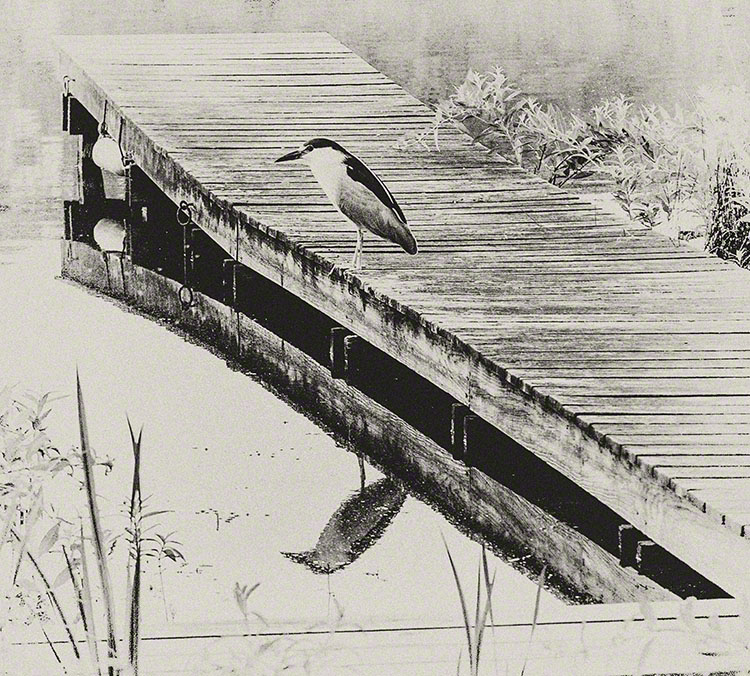
“On The Dock” – There was a lot going on here, much to see and evaluate before pressing the shutter. Other birds, kayakers on the lake, and windblown reeds all played a role in my “seeing” this image the way I wanted to capture it.

“On The Dock” – There was a lot going on here, much to see and evaluate before pressing the shutter. Other birds, kayakers on the lake, and windblown reeds all played a role in my “seeing” this image the way I wanted to capture it.

Blind Excitement

You know the feeling of looking through your viewfinder at that beautiful, rare subject that you have been waiting to capture, that’s all you see. Blind excitement, or being overcome by your subject, has kept you from seeing the other elements in your viewfinder; elements that very well may ruin your treasured image to be. You know that feeling, don’t you?

One of the best tips that I ever received on creating artistic photography came years ago from a mentor helping me to hone my photographic skills. Keep it simple; eliminate all unnecessary elements in the image, take your time, and be sure to really see what you are shooting before pressing the shutter. That’s the tip. Simple, right? Sounds like a no brainer doesn’t it? Keep reading!
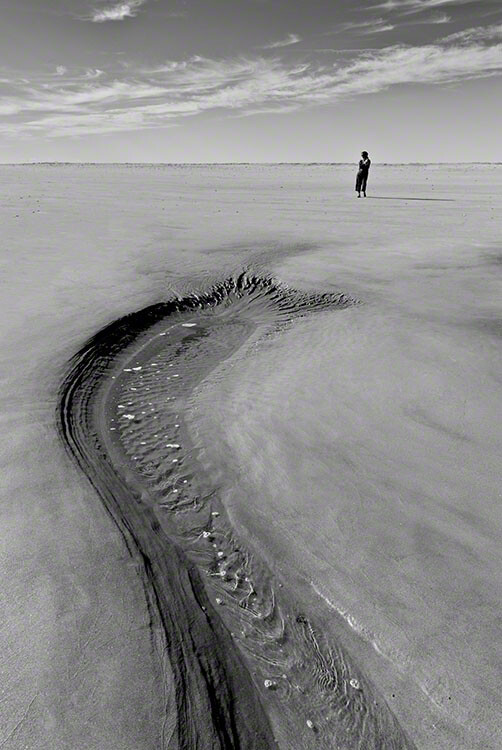
 “Beware The Serpent” – an example of being able to quickly and accurately see the whole frame and capture. The illusion of a “sea serpent “reaching for a female in background lasted but a moment.

“Beware The Serpent” – an example of being able to quickly and accurately see the whole frame and capture. The illusion of a sea serpent reaching for a female in background lasted but a moment.

Seeing…and Believing!

It does takes some work learning to slow down, breaking the ol’ trigger finger on the shutter habit for you to truly see what’s in the frame – but with that tip my photography really did start to become art. I looked through the viewfinder and began to see things that I never noticed before; things that had added no value to my image, things that only served to detract from the intended message of my work. I slowed down and LOOKED through the viewfinder before pressing the shutter, I mean REALLY looked. I walked around and found better angles, lower and higher to shoot from that eliminated photo clutter. I was no longer blinded by the main subject of my frame, but now saw everything within it.

It’s amazing what appears when you take the time to see! I had made a conscience decision to actually compose my photograph BEFORE pressing the shutter. Yes, I know…I, too, thought I was doing that all along, but surprise, surprise – I learned differently.

A Boat or Two

Baker Ashore Antigua 1

Take a look at these two images taken in Antigua. The day was amazing, the sun, the surf, music, and colors of the Caribbean all filling my head and eyes – with blind excitement. The whole idea was to capture some island flavor for a client with the colorful boat sail, the sand, and the beautiful blue water of the Caribbean. I looked and pressed the shutter, but I didn’t see! I didn’t see the second boat sneaking in behind my subject – you see it now, don’t you? Image #2 is free of this distraction and makes a much better photograph; keep it simple and clean. When the full sail came around with all that color, my blind excitement pressed the shutter and that’s all I saw. Fortunately I had other opportunities this time, and got the shot – but that won’t always be the case!

Baker Ashore Antigua 2

On Second Thought

I then began to review some of my older work scrutinizing each for the importance of the things in my images. “Wow, how could I have missed that?” was the phrase I found myself uttering more often than I care to admit. I couldn’t believe how many things I discovered stuck into my image from the edge, or lurking without value in the background. I was truly amazed at what I was now seeing. Why didn’t I see that in my frame before I took the shot? Answer: Because I didn’t know how to see.

It’s always a great exercise to take some time and look at your work from a year ago, from three years ago, etc., and compare to your latest. I am always working at my photography. To see the difference in my work from several years ago is rewarding and it also acts to confirm that compared with today, I was flying half blind back then.

See below, one of my photographs that garnered considerable attention and won multiple awards, including Best Seascape in a national exhibit. I think this is a good example of eliminating all unneeded elements in capturing the desired mood – calmness. Read what the gallery director wrote of my work Morning Calm:

BobbyBaker Morning Calm

The exhibition is showing four of Baker’s pieces, but my favorite is Morning Calm. This photograph shows how little is needed to create a beautiful and amazing image; and, while there is very little in this photograph, one can also say that there is so much in this photograph. There are so few physical elements…the horizon, a hill, a boat and its shadow. There is, of course, a lack of color. There is even a lack of shades of gray, being basically a black boat, a light gray backdrop, and a medium gray horizon and hill. But the photograph says so much with so little. The photograph has tremendous spirit and depth. It speaks…with silence. It surely says different things to different people, but, without question, this photograph speaks. A beautiful and amazing image.

While there is so little in this photograph, one can say that there is so much in this photography. Exactly! What do you want your image to say? What are the elements in your frame acting to say in your desired overall message? If you don’t know, or they are sending the wrong message, something is amiss. It’s time to recompose, time to slow down and actually SEE what you are shooting.

While Morning Calm leans towards the extreme of minimalism, you could say that I succeeded in capturing a message of calmness. That early, quiet, spectacular morning on Cape Cod when I captured this shot, I knew it would be special. I was excited looking at the subject, but I took my time, I looked at everything in my viewfinder, and positioned myself to be sure that none of the other boats would be in my frame. I waited to be sure no birds were flying in the space, absolutely still water, nothing but what I wanted my audience to see – and feel – when viewing Morning Calm. Click. I breathed and smiled, as I knew that I had learned to see and got the shot that I wanted. Knowing that you got the shot is such a great feeling, isn’t it?

BobbyBaker AloneTogether

In my image, Alone Together there are more elements in the frame than in Morning Calm; you have an angry sky, rocks and water sculpted sand. Here all the elements work together in supporting the subject (a person in thought contemplating a lone tree); they do not detract from the main subject, but add to the mood that will evoke thought and emotion from the viewer. One of the keys to creating this shot was to see, before pressing the shutter, that I needed a space between the subject’s head and the land; without this space the shot would have been ruined.

To this day, I can still recall that cold February day on Cape Cod knowing that I needed to be sure the person’s head was clear of the land and adjusting my shooting angle to be certain I had that needed space. A couple of years earlier, I know that in my blind excitement to capture the shot (believe it or not, this was not posed) I would have just gone ahead and pressed the shutter only to be disappointed later when viewing in my studio and realizing the person was attached to the land at her head. Years of practicing how to see before pressing the shutter allowed me to act quickly in surveying what was in my frame, and keying on a most important must have compositional item, the space above the subject’s head – before the subject moved and/or learned I had arrived behind them.
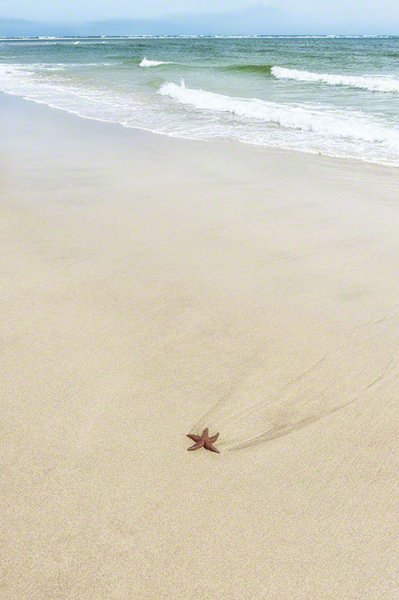
BobbyBaker_Shooting Star

“Shooting Star” – most of my work is coastal. Not only do you need to be aware of intrusions into the frame (people, birds, etc.) you must also consider the potential of intruding on beach goers privacy by placing them in your frame unwanted! Also, parents are understandably super sensitive to anyone near their child with a camera. Don’t put yourself in that position by not seeing everything!

Are you excited? Now look, and SEE!

Take a good look at your work. Look at all the elements in your image. The next time you are out shooting, pause and REALLY look before pressing the shutter. Set yourself apart from the glut of shutter-happy shooters with well thought out, well seen, well composed photography. Trust me, this exercise of making yourself pause, look, and see, will make a BIG difference in your photography and with practice will become your way of composing before shooting.

Now go make some art!

All images in this article are © Bobby Baker Photography
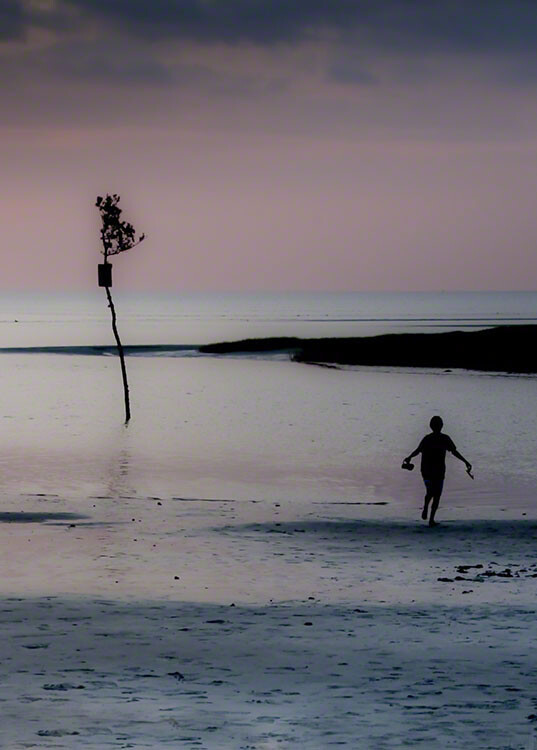
BobbyBaker_Rock Harbor Romp

“Rock Harbor Romp” – The isolated, silhouetted person was not created by cropping, rather by moving my camera to the left while framing the image. The girl’s friends are to the right side of the frame, and I was able to see that they would create clutter in the image if captured. The lone tree and lone girl act to balance each other in this image.

googletag.cmd.push(function() {
tablet_slots.push( googletag.defineSlot( “/1005424/_dPSv4_tab-all-article-bottom_(300×250)”, [300, 250], “pb-ad-78623” ).addService( googletag.pubads() ) ); } );

googletag.cmd.push(function() {
mobile_slots.push( googletag.defineSlot( “/1005424/_dPSv4_mob-all-article-bottom_(300×250)”, [300, 250], “pb-ad-78158” ).addService( googletag.pubads() ) ); } );

The post Composition and Learning to See by Bobby Baker appeared first on Digital Photography School.


Digital Photography School

 
Comments Off on Composition and Learning to See

Posted in Photography