RSS
 

Archive for May, 2015

Seeing in Depth of Field: A Simple Understanding of Aperture

18 May

Photography can be simply defined as: painting with light.

When you are painting with light, you are creating a story in a split second. That’s what photography is all about. Technically, your camera is measuring the light in the scene, and you are telling it how much of that light you want to use to create a properly exposed image. This becomes your story.

There are three main settings used to control that light; Shutter Speed, ISO and my favorite, Aperture. Each of these settings has its own individual way of measuring light. When all three are balanced correctly, you create a proper exposure.

1 Aperture Range 3265

Though each of these three settings measures light, they also have unique characteristics that create artistic qualities in your photographs. By understanding them, you have control over the full story you want to tell.

Shutter speed captures movement or freezes it. ISO helps control how sensitive your camera is to the available light in a scene. Finally, the aperture creates depth of field. This is where the real story comes from; it is with aperture that you control what is in focus, and what is out of focus.

As a photographer, how do you decide what you want your viewer to focus on? How do you create a story? That’s what aperture is all about, and that’s why I love it.

WHERE IS IT AND WHAT DOES IT DO?

Aperture is located in your lens, not in the camera body. The lens opening expands and contracts to control light. By selecting a specific aperture size, you are telling the lens how much light you want to hit, and register on, the sensor.

It is very similar to how the human eye works. Your pupils expand and contract based on the available light in the scene. Like when you first walk into a dark movie theater. At first you can’t see, then your eyes adjust. Your pupils expand, allowing your eyes to see as much light as possible in the dark room.

Again, when you go outside on a sunny day, at first it’s too bright to see. Your pupils adjust by contracting, letting in less light. Your lens aperture works the same way. Changing aperture settings is like your pupils dilating or contracting.

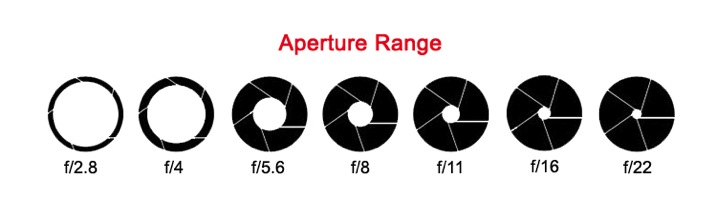
The size of a lens aperture is measured in what we call f-stops (fractional stops). Just like all settings on a camera, there is a general range.
2 aperture range2

The numbers aren’t necessarily important to memorize. What’s important is to see the range in the settings. Here is the trick; the smaller the f-stop number (like f/1.8), the larger the aperture opening. This means more light will enter through your lens at once, and vice versa. The larger the f-stop number (e.g. f/22), the smaller the aperture opening, and less light will enter your lens.

Think of these f-stops as fractions. Just replace the F with the number one. 1/4 of a pie is much more than 1/16 of a pie.

A quick note: Not all lenses are built the same. Different lenses have different apertures. Some lenses have a wider range and some have less. Standard lens will range from F3.5–F22. Specialty lenses go as low as F1.2 or more. See: What the Numbers on your Lens Mean for more on this.

SEEING IN DEPTH OF FIELD

Here is where it gets fun. While measuring light, when the lens expands and contracts, it also measures depth of field. Again, your eyes do the same thing!

As you look at the screen to read this, these words are mostly in focus to your eyes. In your peripherals, you can see other things, but they aren’t in focus.

Notice, your hands on the keyboard, they are in the foreground, and perhaps a bookshelf is in background. You can see them but they are not in focus. You are seeing in depth of field.

A great photograph does just that. It captures a foreground, a mid-ground and background. By setting your aperture you are controlling which of these areas is in focus. It is all based on your intention, your story.

DEFINING DEPTH OF FIELD

With your camera’s focal point (that little square in the middle of your viewfinder), you focus on a particular part of the scene. This point becomes the sharpest part of your image. There is an area in front of that point in focus, and an area behind it in focus as well. The distance from front to back that is acceptable focus is considered your depth of field. You decide what is acceptable by choosing a specific aperture size.

3-Uluwatu-Monkey-8427

This is a story about a monkey on a cliff. The bushes in the foreground and the temple on the cliff in the background are out of focus. They are out of the depth of field. This brings your attention to the focal point; the monkey in the middle (no pun intended).

Remember, the lower the f-stop number, the bigger the opening, the more light comes through the lens. This means less of your scene is in focus and you have a shallow depth of field. The opposite is also true. The larger the f-stop number, the smaller the opening, the less light comes through the lens. In this case, more of your scene is in focus and you have a greater depth of field.

Simply put, the larger the f-stop number, the more will be in focus. The smaller the f-stop number, the less well be in focus.

A DEEPER LOOK AT DEPTH OF FIELD

As you lock your camera’s focal point on a specific spot, that spot creates a focal plane. Everything that is the same distance away from the lens is on the same focal plane, and will be in focus.

4 focal plane explained

At a shallow depth of field (low number), the focal plane is very thin. As your depth of field becomes greater (high number), the focal plane becomes deeper.

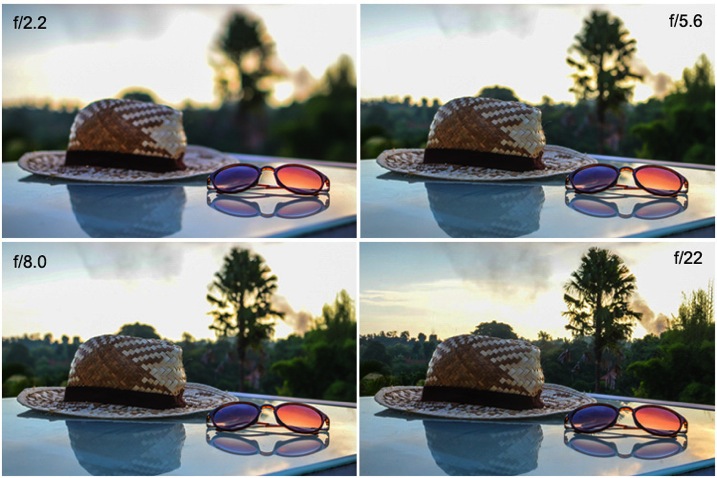
Here is the same scene photographed with different aperture settings. Notice that the depth of field changes how much of the image is in focus.
5 aperture example

At f/2.2 only the sunglasses are in focus. At f/5.6 the hat is also in focus. By using f/8.0 you can start to make out the trees in the background. Finally, at f/22 everything in the image is in focus.

Which one tells the best story? You as the photographer, get to decide.

PRACTICE TIPS AND TRICKS

Now that you’ve got a good grasp on the basics, it’s time to play! Here are some great tips to start your practice.

Set your camera to Aperture Priority mode. You will have full control of the aperture, without having to worry about proper exposure. This way you can just focus on depth of field. It’s a great way to fully understand what your lens is doing as you change your aperture settings.

Pick a subject or scene, and stick with it. Photograph your scene from many different angles. Choose different parts of the scene to focus on using the full range of aperture settings.

Use these guidelines to capturing depth of field in different scenarios:

6 Aperture Range 9748

When shooting single subjects, like a portrait of a child, it is best to use a lower f-stop like f/1.2-f/2.8. Creating a shallower depth of field brings attention to the subject’s face, which is always most important in a portrait.

7 Aperture Range 2145

When shooting a small group of people (2-5), choose an aperture of f/4-f/8. This, being a slightly deeper depth of field, guarantees that everyone in the group will be in focus.

8 Aperture Range 6150

Any time you have a wide-open scene, for instance a landscape, and you want all of that landscape in focus, choose a setting above f/10.

These are just guidelines. Photography is a form of art. Be creative, and remember, it’s all about telling a story.

What story do you want to tell? Share your images here and show how you’ve used depth of field to create a great story.

All Images in this article are © 2015 Danielle Werner and DEW Imagery & Design

Bio

Danielle Werner is a free-spirited photographer, designer and retoucher, on an endless journey around the world. She is also a passionate writer and educator who teaches photography workshops wherever she goes. Read Danielle’s inspirational travel stories at LiveWonderful.com, and check out more of her adventure and lifestyle photography at DEW Imagery & Design. You can also connect with her via:

https://twitter.com/ImageryDEW

https://www.facebook.com/livewonderfulblog

googletag.cmd.push(function() {
tablet_slots.push( googletag.defineSlot( “/1005424/_dPSv4_tab-all-article-bottom_(300×250)”, [300, 250], “pb-ad-78623” ).addService( googletag.pubads() ) ); } );

googletag.cmd.push(function() {
mobile_slots.push( googletag.defineSlot( “/1005424/_dPSv4_mob-all-article-bottom_(300×250)”, [300, 250], “pb-ad-78158” ).addService( googletag.pubads() ) ); } );

The post Seeing in Depth of Field: A Simple Understanding of Aperture by Danielle Werner appeared first on Digital Photography School.


Digital Photography School

 
Comments Off on Seeing in Depth of Field: A Simple Understanding of Aperture

Posted in Photography


Panasonic Lumix DMC-G7 offers 4K video

18 May

Panasonic has announced the Lumix DMC-G7, updating its mid-range mirrorless line with 4K (30p/24p) video and still recording and some slight spec upgrades across the board. It offers a built-in 2,360k-dot OLED viewfinder, fully articulated 3″ 1,040k-dot LCD, improved autofocus speeds, 8 fps burst shooting (6 fps with continuous AF) as well as Wi-Fi connectivity. Read more

Articles: Digital Photography Review (dpreview.com)

 
Comments Off on Panasonic Lumix DMC-G7 offers 4K video

Posted in Uncategorized


Hands-on with the Panasonic Lumix DMC-G7

18 May

The Panasonic Lumix DMC-G7 improves on its predecessor the G6 with a newer sensor, 2.36 million-dot electronic viewfinder and improved autofocus – plus this year’s must-have feature: 4K video. Panasonic came to see us recently and dropped off a working pre-production sample for us to look at. Click through for our first impressions. 

Articles: Digital Photography Review (dpreview.com)

 
Comments Off on Hands-on with the Panasonic Lumix DMC-G7

Posted in Uncategorized


The Sun Is Your Friend: Tips for Summer Photography

18 May

Summer is just around the corner, folks. As the sun decides to become a more active member of our daily lives, we — especially those of us with nice cameras and itchy shutter-release fingers — feel an increasing compulsion to awaken from our lazy autumn habits and venture outside. And if you’re going to be outside, you might as well Continue Reading

The post The Sun Is Your Friend: Tips for Summer Photography appeared first on Photodoto.


Photodoto

 
Comments Off on The Sun Is Your Friend: Tips for Summer Photography

Posted in Photography


Your Light Problems, Illuminated at Last

18 May

We’ve gathered up your most pressing light issues and found the perfect solutions for them. Dare we say we shed light on the situation? Oh yeah, we totally dare.

Check out all the products you’ll ever need for light perfection and our best tutorials for shooting in tricksy light. You’ve got the ‘light’ stuff now baby!

Choose the “Light”!
(…)
Read the rest of Your Light Problems, Illuminated at Last (291 words)


© Erin for Photojojo, 2015. |
Permalink |
No comment |
Add to
del.icio.us

Post tags:


Photojojo

 
Comments Off on Your Light Problems, Illuminated at Last

Posted in Equipment


Palm-sized: Hands-on with new Fujifilm X-T10

18 May

The latest in Fujifilm’s X-series lineup, the X-T10, offers most of the core specifications as its big brother the X-T1 but wraps them in a smaller, less-costly body. We’ve been using a pre-production X-T10 for a few days, and as well as real-world and studio samples we’ve also prepared some first impressions of its handling and performance. Click through for more

Articles: Digital Photography Review (dpreview.com)

 
Comments Off on Palm-sized: Hands-on with new Fujifilm X-T10

Posted in Uncategorized


Fujifilm X-T10 First Impressions & Image Samples

18 May

The Fujifilm X-T10 shares a similar relationship to the X-T1 that the OM-D E-M10 shares with its siblings – advanced features borrowed from a higher-spec model in a compact body. The X-T10 uses the X-T1’s 16MP APS-C X-Trans sensor but offers slightly downgraded hardware and lacks weather-sealing. We’ve had the X-T10 in our hands long enough to get familiar with it and put together some first impressions. Read more

Articles: Digital Photography Review (dpreview.com)

 
Comments Off on Fujifilm X-T10 First Impressions & Image Samples

Posted in Uncategorized


Rezension: Alec Soth – Songbook

18 May

SongbookBack

Ich habe an dieser Stelle schon das eine oder andere Buch besprochen. Tatsächlich sind Fotobücher für mich zu einer Leidenschaft geworden. Die Leidenschaft ist zugegebenermaßen noch in den Kinderschuhen und sie wuchs anfangs langsam in mir heran.
kwerfeldein – Fotografie Magazin | Fotocommunity

 
Comments Off on Rezension: Alec Soth – Songbook

Posted in Equipment


VRchitecture: Interactive Virtual Reality House Feels 90% Real

18 May

[ By WebUrbanist in Conceptual & Futuristic & Technology. ]

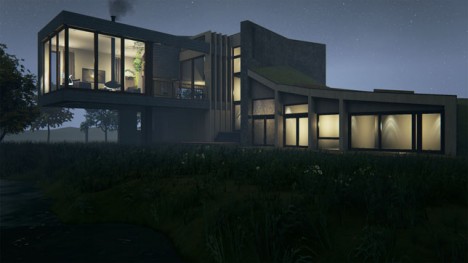
vr house

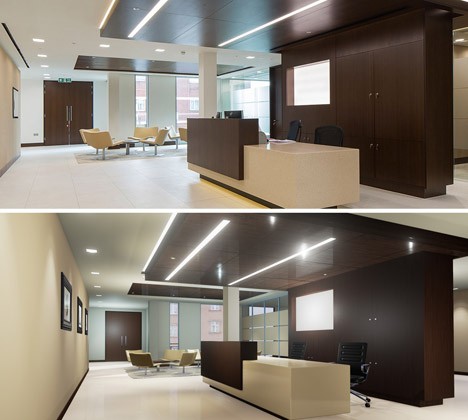
No matter how many drawings and models a client is shown, there is still a leap of imagination needed for someone to understand how a building design will really look and feel when it is realized. The gap, however, is rapidly closing between representation and reality, with digital models that can be experienced and interacted with in realtime.

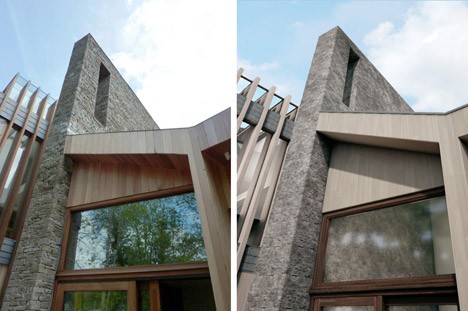
virtual right real left

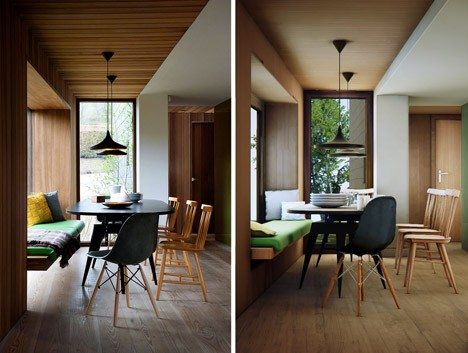
Olivier Demangel of London 3D imaging company IVR NATION modeled the home shown above using images found online, and as impressive as the walk-through video above may be, it does not compare to the experience of the space via an 3D Oculus Rift headset.

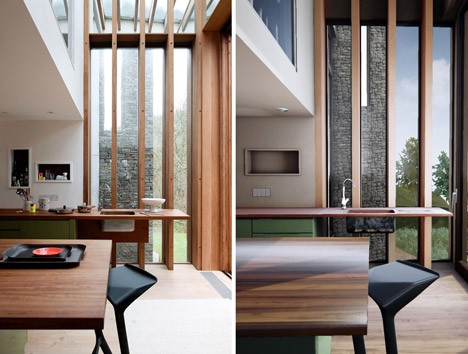
virtual real comparison

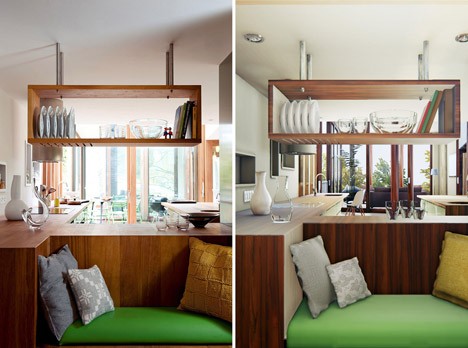
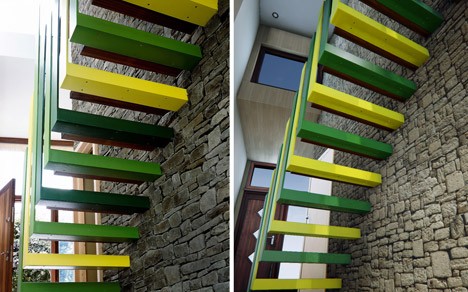
The model’s creator expects full 100% realism to be a reality in just 5 years. In some of the side-by-side images above and below, it is already hard to tell the real from the virtual.

virtual and real

In an interview with Dezeen, Demangel explains the interactivity built into the model, letting you open “doors and turn on the lights” as well as “instantly change materials for the walls, the floor, the position of lights. [Y]ou can experiment with a lot of different options — design, materials, lighting, weather — very quickly.”

virtual real room

The real power lies partly in being able to show designs to clients, but also in the ability to see how every detail of a design works together (or falls apart) from a first-person perspective, essentially a 1:1 scale model complete with every view available, each time of day easy to simulate.

virtual versus real


virtual and real house

Will this window really show what the designer intended? Will that patio really get the daylight promised? Individually-rendered scenes and perspectives used to take hours to days to compute, sometimes using multiple machines – now the same can be done in seconds.

Meanwhile, the ‘simulation singularity‘ may be approaching – a day when we will no longer be able to distinguish between virtual and real: “The technological singularity is a hypothetical moment in the future when artificial intelligence becomes indistinguishable from human intelligence—and capable of creating smarter iterations of itself. Apply the same general idea to simulations and you get the simulation singularity: when a simulated world is indistinguishable from reality.”

Share on Facebook


[ By WebUrbanist in Conceptual & Futuristic & Technology. ]

[ WebUrbanist | Archives | Galleries | Privacy | TOS ]


WebUrbanist

 
Comments Off on VRchitecture: Interactive Virtual Reality House Feels 90% Real

Posted in Creativity


Fashion Photography – Tips for Making Something out of Nothing

18 May

Recently, I found myself in a conversation with a mentoring client who was feeling creatively stunted. I asked her where she wanted her portfolio to go and she said, “I want images like yours! But you live in California, and everything is pretty there!” I literally laughed out loud when she said that because California, while pretty, is filled with more urban yuck, specifically Los Angeles, than one can even imagine. I only wish I had infinity pools available to me, palm trees for as far as the eye can see, and no traffic to have to clone out! Even a green lawn, would be nice. But, alas, I’m not a Kardashian.

fashion-01

Beauty or fashion photography – not all glamorous

The honest truth is like anywhere else, locations are always troublesome to find. In Los Angeles County, to shoot on the street, beach or outside a structure, you need a permit. It’s a serious business. Applying for a permit can take a substantial financial cost, and if for some reason the weather is bad on the day of the permit, you’re out of luck. Because of this, I’ve learned to be more open-minded, and have found ways to “make it work”. You can too! Stop preventing yourself from making amazing images because you don’t have the right spot.

First, Don’t laugh at me. Nobody knows the magic behind the scenes, so keep that in mind. At the end of the day, the final image is all that matters! Trust me when I lead you down this liberating path of cheap backdrops, dirty backyards, and grocery store finds.

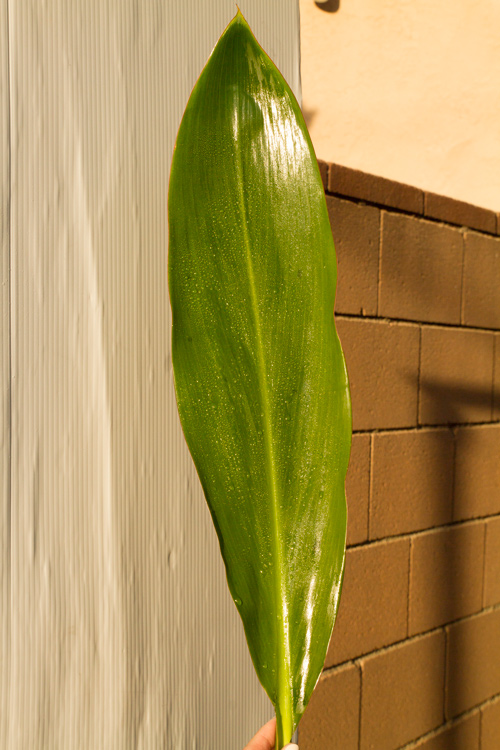
Reference #1: Create a backdrop from leaves

I shot a beauty story for Cosmopolitan magazine. I knew I wanted a lush tropical backdrop, and pops of color throughout. I called everyone I knew to see if anyone had bird of paradise, or other tropical looking greenery, in their back yards. Nobody had pretty backyards that were a good fit. So I decided to order some leaves from my local florist and make the backdrop I wanted. I decided my TINY backyard was the best place for me to shoot this story. So I will show you the final product first.

This is the image that went to Cosmopolitan.

Image 1b

Before we got started I set up a big piece of white plastic board I had in my garage. Why plastic board you ask? Because, I was out of white paper and it was there. I just needed a white background.

Using natural sunlight, I took photos of the leaves, cleaned and misted against the white backdrop for samples.

Image 2b

Then I took the photo against the white backdrop. Using midday sun. YES, 2 o’clock burn our your retinas, sunlight. Don’t be afraid of sunlight. Once you conquer it, you can shoot anything!

Image 3b

My assistant is simply holding the leaf up behind the model. Pretty, but missing something right? By adding the leaf samples (duplicating them) in post-production, it gives it such an exotic feel. You CAN do this. You have poster board, correct? You have nature around you, right? Use it!

Reference #2: Improvise

A cosmetic commercial client wanted a summer themed campaign, with the tagline, Summer in High Def. I pitched the idea of a pool shoot with bold aquas and colorful pops of color. She told me she had no location budget, I told her, “No problem.”

I took a quick stroll to my local grocery store chain. Luckily, it was May so they had lots of summer goodies in stock. I found an inflatable pool for $ 5. SCORE! Once again, at the end of the day, nobody knows what your set looks like.

Image 4b

The model barely fit in the five inch deep, kiddy pool. It was quite funny. The client LOVED the shots and couldn’t believe I pulled it off. I never had any doubts. This setup is my most requested one. Clients ask for it all the time. I simply say, “Oh yeah, it’s in my trunk”. They look at me oddly, and confused.

Image 5b

You can shoot at a mansion or in your own front yard, NOBODY KNOWS. Stop getting in your head that you need more. That’s what makes our business so beautiful. It’s really not about how big your studio is or how you have amazing locations. At the end of the day, all that matters is your final image.

Do you have any other make-shift background or location tricks? Please share in the comments below.

fashion-02

googletag.cmd.push(function() {
tablet_slots.push( googletag.defineSlot( “/1005424/_dPSv4_tab-all-article-bottom_(300×250)”, [300, 250], “pb-ad-78623” ).addService( googletag.pubads() ) ); } );

googletag.cmd.push(function() {
mobile_slots.push( googletag.defineSlot( “/1005424/_dPSv4_mob-all-article-bottom_(300×250)”, [300, 250], “pb-ad-78158” ).addService( googletag.pubads() ) ); } );

The post Fashion Photography – Tips for Making Something out of Nothing by Courtney Dailey appeared first on Digital Photography School.

Digital Photography School

 
Comments Off on Fashion Photography – Tips for Making Something out of Nothing

Posted in Photography