Das Bild des Tages von: Hühmi

Im Ausblick: Analogfilme im Vergleich, 7 Jahre durch die USA und Rolling-Stones-Fans
kwerfeldein – Fotografie Magazin | Fotocommunity
Das Bild des Tages von: Hühmi
Im Ausblick: Analogfilme im Vergleich, 7 Jahre durch die USA und Rolling-Stones-Fans
kwerfeldein – Fotografie Magazin | Fotocommunity
As a freelance stock photographer, I have to admit I am insulted when I see articles written about how horrible the market is for stock photography. Has the bar been lowered so far that we are forcing consumers to seek out photographs that simply “don’t suck”? I don’t think so. Some people feel that the proliferation of digital cameras and Continue Reading
The post Stock Photos That Don’t “Suck”: the Basics of Stock Photography appeared first on Photodoto.

Ein Beitrag von: Marc Mennigmann
Ich habe das ungeheure Glück, dass ich mir aussuchen kann, welche Band ich fotografiere und welche nicht. Und weil das so ist, suche ich mir natürlich nur die Bands aus, mit deren Musik ich auch etwas anfangen kann. Denn bestenfalls ist der Konzertfotograf während des Konzerts ein Teil der Band, was nur geht, wenn er sich auf das einlässt, was auf der Bühne passiert.
kwerfeldein – Fotografie Magazin | Fotocommunity
[ By WebUrbanist in Architecture & Cities & Urbanism. ]

One of the biggest challenges to building with concrete is the material’s propensity to crack both while it dries and in the years that follow, making this self-fixing solution an incredibly powerful application of bacterial biotechnology.

Developed by Dutch scientists Eric Schlangen and Henk Jonkers, this new biocement has been in development for years but is now first the first time a critical part of a real work of architecture and the results are extremely promising. As reported by CNN, one can already witness the self-healing process in action on the side of this lifeguard station, a test structure subject to highly varied sunlight and weather conditions.

Concrete is generally created with portland cement, aggregate and admixtures – this just adds one more key ingredient to the list: a mixture of bacteria and capsules of calcium lactate. Activated by water when cracks form, the former ingests the latter to produce calcite that in turn fills in gaps. Unlike algae-fueled bio-architecture that needs to remain alive and active, these bacteria can lay dormant for years without water or oxygen, lying in wait until called upon for an unpredictable future repair job.

Architects have long had to work around this critical limitation in concrete, creating separations between spans and avoiding sharp corners that crack and break. This technology could open up new possibilities for infrastructure as well as building designs, impacting everything from parking structures and sidewalks to skyscraper foundations and walls. Similar solutions are also in development, including a variant in development by MIT that uses sunlight as the activation mechanism rather than moisture, but this is the first full-scale application of such a self-healing material. Between these developments, concrete-printing and concrete-deconstructing robots, the future looks bright for this traditionally gray material.

Whether the building is a bare-bones warehouse or five-star hotel, demolition is an equally messy business – but perhaps it does not have to be. What if …
Click Here to Read More »»

Future buildings could be made of artificial human bone, hemp, bacterial byproducts or concrete that absorbs greenhouse gas emissions and lasts thousands of …
Click Here to Read More »»

Featuring 100,000 square feet of smog-filtering surface area, this structural facade will break down harmful oxides in sunlight to improve air quality all …
Click Here to Read More »»


[ By WebUrbanist in Architecture & Cities & Urbanism. ]
[ WebUrbanist | Archives | Galleries | Privacy | TOS ]
Sigma UK has said that the company’s latest compact camera from the Quattro line will cost £899.99 and will be available from the end of June. First announced at the CP+ show in February this year, the dp0 Quattro is the fourth of the unusually designed Quattro range and features a 14mm F4 lens. With the 23.5×15.7mm Foveon image sensor this focal length delivers a similar angle of view as a 21mm lens would on a full frame system. Read more
One of the most crucial factors of making any photograph is the selection of the shutter speed. It is not always an easy task to decide what shutter speed you should select, to correspond to the aperture or ISO setting you have chosen. It can be a little overwhelming, and sometimes discouraging, to learn how to select the proper shutter speed to produce whatever your desired photo may be. You might still be shooting in full auto just because you can’t seem to have any luck with manually selecting your exposures. Luckily, once you understand the basic concept of shutter speed in relation to photography, this aspect will become much easier and almost intuitive.
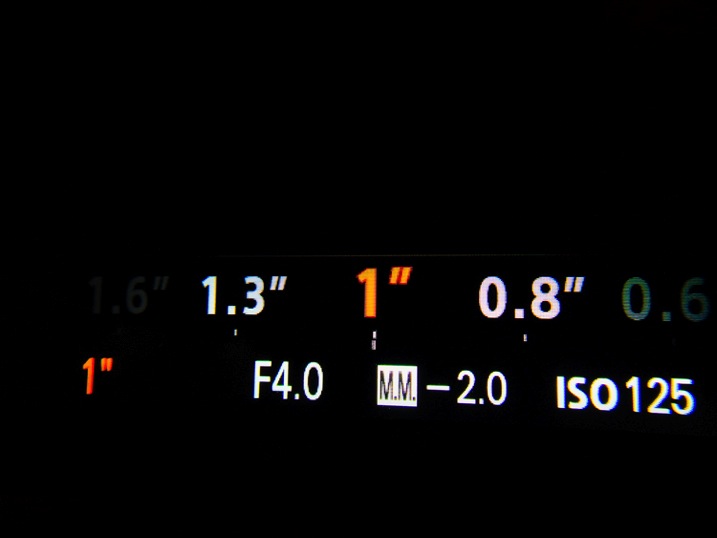
Let’s take a look at what shutter speed really is, and how to better understand it, so you can begin to have more control over your photography.
First things first, what exactly do photographers mean when they say “shutter speed”? This refers to the amount of time that the shutter of the camera is open. Shutter speed can be easily compared to blinking. Close your eyes, then open them for about one second. Now close them again. You have just performed a one second exposure with your eyes. Though very simplified, the exact same thing happens inside your camera when you press the shutter release button. The shutter opens, and remains open, for whatever duration you have set your camera to expose. This lets in light through the lens which interacts with whatever receptor you’re using (film or digital sensor), in order to produce a photograph. In reality, it might help you to refer to shutter speed as shutter time.
As I have said, shutter speed is one of the biggest assets you can control in order to produce the type of photograph you want. Now, the shutter is not to be confused with aperture. Aperture has nothing to do with the amount of time that light is allowed to enter your camera. Aperture simply refers to the size of the opening through which the light passes when the shutter opens. The larger the opening is, the more light that enters your camera. The shutter speed, on the other hand, controls how long light is allowed to linger in order to make the photograph. Got it? Good.
So since shutter speed is related to time, it naturally means that it will directly affect how motion is recorded by your camera. This is where an infinite amount of creativity can be applied to your photographs. You may have heard a photographer say, “I used a really fast shutter speed to freeze the motion.” What they means here is that he or she used a shutter speed that was much faster than whatever motion was happening in the scene. The faster the motion, the faster the shutter speed will need to be, in order to arrest the movement. This is the very reason beginner photographers can become frustrated when photographing sports, children, or pets. They simply don’t understand that the shutter speed must be set in relation to the subjects motion to produce a desired outcome.
Take a look at this quarter that I froze mid-roll by using a fast shutter speed of 1/1250th of a second.

The flipside of the shutter speed coin comes into play when you want to impart a sense of motion, or to intentionally use blur within your composition. There is no better illustration of this than when working with moving water and waterfalls. Photographers will often use a long shutter time in relation to the speed of the water in order to produce that smooth, almost fog-like appearance that many of us love (or hate) to see. This again, comes down to relativity. A longer shutter time will be needed to blur a slow moving subject. A faster moving subject will not require as long of a shutter time in order to produce the same effect.
Here’s that same quarter shot at 1/50th of a second.

As with virtually everything else that has to do with photographic technique, there are not absolutes when it comes to how you choose to manipulate your shutter speed. It always comes down to whatever it is you are trying to express through your photograph. However, this doesn’t mean that there aren’t other things that you should know which are related to shutter speed. Two of the most important things you need to know is how aperture and ISO interact with shutter speed.
Aperture is the best friend, and worst enemy of your shutter. As you have already learned, aperture controls the size of the opening in your lens and is measured in “stops”. Stops are indicated by the usage of f-numbers. Understanding how aperture is measured is the most difficult aspect of the subject. It is actually somewhat counter intuitive and that is why it becomes so confusing. Basically, the larger the f-number, the SMALLER the physical opening becomes. It might help to think of aperture as a window in your home. The larger the window the more light can come through. When shooting at larger apertures (smaller f-numbers like f/2.8, etc.) you have a lot of light coming into your camera so your shutter time doesn’t have to be as long in order to reach the desired exposure. The opposite is also true. When you are shooting at smaller apertures (bigger f-number like f/22) a longer shutter time will be required to produce the same exposure that was achieved at the larger aperture.
Here you can clearly see why less light can come through a smaller aperture.

Let’s say a certain shutter time at a certain aperture gives you a properly exposed image. You then switch to a higher f-number. If you don’t increase your shutter time, this image will be underexposed compared to the previous one because you have essentially made the window into your camera smaller. The take-away point here is that a change in aperture must also be accompanied by a change in shutter speed if you wish for the overall exposure to remain the same.
It should also be noted that aperture plays a key role in the perceived depth of field of a photograph…but that’s another article.
ISO is a measurement of light sensitivity. It is fairly straight forward to understand. The higher the ISO number, the more sensitive the camera sensor, or film, is to the light coming in through the lens. Although most modern cameras are capable of selecting ISO in smaller increments, when first learning about how ISO relates to shutter time it might be easier to use increments in powers of two; meaning ISO 100, 200, 400, 800, 1600, etc. Each time the ISO number doubles, the sensitivity to light also doubles. So ISO 200 is twice as sensitive as ISO 100.
We can then easily relate ISO to shutter speed using a one second exposure to simplify the math. Let’s say we find that a proper exposure of a scene requires ISO 100 and a one second exposure time. If we increase the ISO to 200 then we have doubled the sensitivity so we can now get the same exposure using half a second instead of one second. If we further increase the ISO to 400 then we can get the same results from a ¼ second exposure. As you have probably already deduced, increasing your ISO is an easy way to allow for an increase in shutter speed to compensate for subject movement, or for low light.
Take a look at these three images. I was able to get virtually identical results each time even though I decreased the exposure from 1 second to ¼ of a second just by increasing my ISO.


Be aware though, increasing your ISO will add grain (noise) to your final image to some extent depending on your camera and equipment. Still, it is almost always more acceptable to live with a little increased grain in an image, than to underexpose or miss the shot completely.
Understanding what shutter speed means to your images doesn’t have to be a complicated issue at all. Shutter speed, or more accurately shutter time, is simply a measure of how long you choose for light to enter your camera to make an image. Learning how shutter time relates to other aspects of photography is slightly more complex. That doesn’t mean that it should discourage you from experimenting and seeing first hand how ISO, aperture, and shutter time come together to produce different types of images.
Have more questions about shutter speed? Post them in the comments below.
googletag.cmd.push(function() {
tablet_slots.push( googletag.defineSlot( “/1005424/_dPSv4_tab-all-article-bottom_(300×250)”, [300, 250], “pb-ad-78623” ).addService( googletag.pubads() ) ); } );
googletag.cmd.push(function() {
mobile_slots.push( googletag.defineSlot( “/1005424/_dPSv4_mob-all-article-bottom_(300×250)”, [300, 250], “pb-ad-78158” ).addService( googletag.pubads() ) ); } );
The post Demystifying Shutter Speed by Adam Welch appeared first on Digital Photography School.
[ By WebUrbanist in Travel & Urban Exploration. ]

Shipping containers pass by us daily on trucks, trains and ships, carrying 90% of the world’s non-bulk cargo with them, but if you have ever wondered what the mysterious colors and brands really mean, you will want to keep a copy of The Container Guide by your side. A publication of the Infrastructure Observatory, this volume contains a wealth of information on virtually all of the major companies that together own and ship the planet’s 20 million containers back and forth across the globe.

Produced by Tim Hwang and Craig Cannon of the American Container Society, this waterproof, pocket-sized book contains maps, photos, logos, guides and tips to spotting cargo containers on (or off) ships around the world, handily searchable by region, color and brand. Part of the inspiration for this publication was the relative anonymity with which so many of these semi-mysterious companies seem to operate despite their size (a mere 100 companies control 9 out of 10 containers).
Like Networks of New York, a recently-published field guide to internet infrastructure, this guide draws both conceptual and design “inspiration from classic Audubon birding guides, is a practical field guide to identifying containers and the corporations that own them. Inside you’ll find virtually every major shipping concern brought to life in full-color on durable, tear- and water-resistant paper.” More than just a resource or reference, the guide taps into our deeper shared urge to understand everyday systems and those unnoticed elements of daily life in a globalizing world.

The book also features introductions covering the history of containerized shipping, the rise of refrigerated modules and an introduction to using cargo containers as homes. The first of these three contributors recalls the instigator of this shipping revolution, Malcolm McLean “a trucker by trade, who saw that a multimodal unit that could be seamlessly shifted from ship to truck to train would do to shipping what Henry T. Ford’s production line did for the automobile manufacturer.” Indeed, the use of standard modules has revolutionized the way we ship and helped ships become the dominant form of transportation for goods around the world.

Author and researcher Tim Hwang has more than a passing interest in large systems. A initial failed attempt to gain visitor access to a power plant led him to create the Infrastructure Observatory, a more official outfit to allow him and his fellows to check out everything from factories and roadways to global ports and waste water treatment plants. Last year, the group’s efforts culminated in a fantastic event (hopefully to be soon repeated) called MacroCity. This conference featured a series of panel discussions, presentations and a set of field trips around the Bay Area, including all kinds of professionals from landscape architects and dam engineers to topical authors and niche academics.

Born in San Francisco, the BAIO has now expanded to include a New York chapter that recently took a trip to the Global Containers Terminal in New Jersey. Upcoming plans include a series of tours surrounding the birthday of Victor Gruen, founder of the modern shopping mall. Longer term, Hwang hopes to see Infrastructure Observatory chapters grow in cities around the world. Meanwhile, he wears many other hats as well, as co-founder of the Awesome Society, Director of Strategic Partnerships at Imgur and Director of the Intelligence & Autonomy Project at the Data & Society Research Institute among other past and ongoing pursuits.

Shipping container homes are the perfect blend of modern architecture and sensible green building. Buy your own used cargo container on sale and start building …
Click Here to Read More »»

We tend to think of the internet as something akin to aether, present all around us in the void – or perhaps something traveling down a series of tubes …
Click Here to Read More »»

Shipping container shelters combine the appeal of ultimate portability with rugged durability, but these structures add another dimension lacking in the …
Click Here to Read More »»
[ By WebUrbanist in Travel & Urban Exploration. ]
[ WebUrbanist | Archives | Galleries | Privacy | TOS ]
The Fujifilm XF 16mm f/1.4 R WR is a weather-sealed prime, equivalent to a 24mm field of view on Fujifiilm’s X-mount cameras. With a close focus distance of just 0.15m/6in. and a fast F1.4 aperture, this lens is super versatile. In our sample testing we found it to be sharp, and to offer pleasing bokeh. See our sample gallery
Das Bild des Tages von: Michael Schuh

Im Ausblick: Tipps für Selbstständige, Kamerawünsche und Zeitraffer.
kwerfeldein – Fotografie Magazin | Fotocommunity
Canon announced the EOS Rebel T6s and T6i (760D/750D) near-twins in February, and they’ve garnered plenty of attention since then. They share the same 24.2MP APS-C CMOS sensor, 19-point AF system, and a new 7560 pixel RGB + IR metering sensor, while their differences are mainly in the user experience. With a couple of final-production models we headed into the great outdoors with them. See galleries