Das Bild des Tages von: Jenny Theobald

Im Ausblick: Ein federleichtes Portrait.
kwerfeldein – Fotografie Magazin | Fotocommunity
Das Bild des Tages von: Jenny Theobald
Im Ausblick: Ein federleichtes Portrait.
kwerfeldein – Fotografie Magazin | Fotocommunity
 |
|||
You’ve got prints, prints everywhere. Well, not everywhere … mostly in shoe boxes.
They need to be free! It’s time.
We’ve rounded up the most fun, and stylish, ways to get your prints out into the fresh air. Let those beauties breathe.
Check Out Our Display Roundup
p.s. Not enough prints in your life? Try our Disposable Camera app!
(…)
Read the rest of Photo Display Roundup (15 words)
© Erin for Photojojo, 2015. |
Permalink |
No comment |
Add to
del.icio.us
Post tags:
Olympus has announced a new flagship rugged compact, the Stylus Tough TG-4. It offers modest improvements over its TG-3 predecessor, namely Raw shooting capability. It offers the same 16MP BSI CMOS sensor as the previous model, a 25-100mm equivalent f/2.0-4.9 zoom lens, Wi-Fi, and a built-in GPS. Read more
Olympus has announced the Stylus 1s in the US, a camera it had previously announced in Japan last year. This enthusiast compact features much of the same hardware as its predecessor, the Olympus Stylus 1, including a 12MP 1/1.7″ BSI CMOS sensor, 28-300mm equivalent F2.8 lens, and integrated Wi-Fi. Added features include a redesigned grip, higher-capacity BLS-50 battery, Small AF target mode, and Step Zoom with nine preset zoom positions. Read more

Es war ein verregneter Sommertag und ich 15 Jahre alt. Da mir wie immer die Lust fehlte, Hausaufgaben zu machen, büxte ich spontan aus, schwang mich aufs Rad und fuhr von meinem Heimatdorf Sinzheim in die nächstgelegene Stadt: Baden-Baden. Nach einer halben Stunde Fahrt und ein paar fiesen Mückenstichen entdeckte ich in der Nähe des Hauptbahnhofes neu aufgestellte Baracken, vor denen einige Afrikaner standen.
kwerfeldein – Fotografie Magazin | Fotocommunity
[ By WebUrbanist in Design & Guerilla Ads & Marketing. ]

Combining a novel form of wayfinding with a nod to the upcoming 2020 Olympic Games in Tokyo, this new airport terminal trades moving walkways for a color-coded circuit of racetrack paths.


The airport extension to Narita International anticipates the additional capacity needed in a few years for the upcoming event but also reflects a limited budget for expansion, together driving a design that needs no illuminated signs and skips people-moving devices.


Blue leads to departures and red takes people to arrivals – a simple scheme but easily visible when set against the more monotone surrounding interiors. The collaborative project featured contributions by PARTY with consultants from Nikken (photography by Kenta Hasegawa).


Of course, we all know the experience of being late for takeoff – beyond its aesthetics, it could indeed prove quite useful to have fast and slow lanes during busy times and for those whose commutes demand they make their plane in time.

London could get a new floating airport in the Thames River with underwater tunnels connecting passengers to European rail service, in this proposal by Gensler.
Click Here to Read More »»

Designed to mimic the natural shape of a manta ray (but also clearly reminiscent of an airplane), the new expansion of the Shenzen Bao’an International …
Click Here to Read More »»

Urban photography doesn’t have to mean perfectly framed parks and stoic skyscrapers. Some of the best urban photos feature wonderful abandonments.
Click Here to Read More »»


[ By WebUrbanist in Design & Guerilla Ads & Marketing. ]
[ WebUrbanist | Archives | Galleries | Privacy | TOS ]

So you bit the bullet and spent ~$ 100 for the stuff needed to turn your hot shoe flash into a mini portable studio lighting system. What do you with the box of stuff the UPS guy just dropped onto your dorstep? Where do you start?
That is exactly the gap we explore whenever I teach a beginner's lighting class. So today we are going to walk through a "first steps" exercise.
Read more »
Strobist
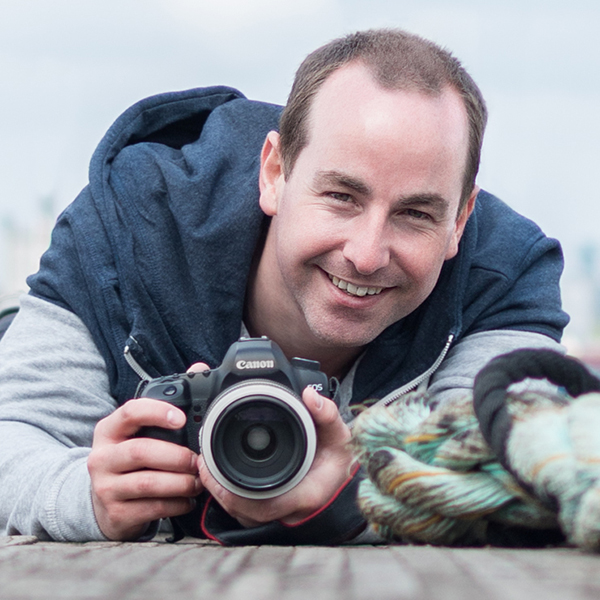
Kjell – camera club leader
A camera club is a great way to keep your passion for photography going, meet new people with similar interests, share your photos, and get inspiration from other photographers. Here are a few tips on how to get your own local camera club up and running. Before getting started, check if there already is a local camera club were you live. If so, join them! See how you can take part and contribute to their existing community. It is better to have one large community, than several smaller ones. As a team, you and your new team members can help each other. Local partners will be more interested in participating and sponsoring your events.
The membership of your camera club doesn’t have to be all photographers only. They can also be photography enthusiasts interested in seeing and discussing photography. Social online networks like MeetUp.com are popular places to find and start a camera club. It relieves you from much of the administrative work like; keeping track of who’s joining your meetings, sends reminders, limits RSVPs and generate waiting lists for full events.
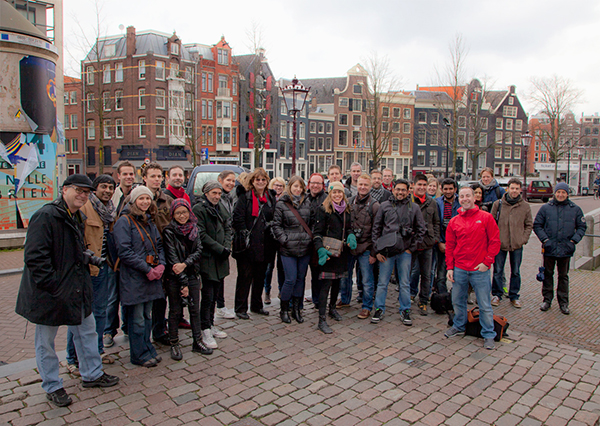
Photo walk
Photographers are usually down to earth people. They don’t need a fancy hotel conference center to meet. Try approaching local high schools and photography related shops, galleries and museums. Perhaps the local library, book shop or municipality. See if they are willing to sponsor use of their venue for free. If not, see which event venues can be rented. You can charge your members a small fee to cover the costs. Ask if they give discounts for not-for-profit initiatives. Check where other local clubs meet and approach those venues.
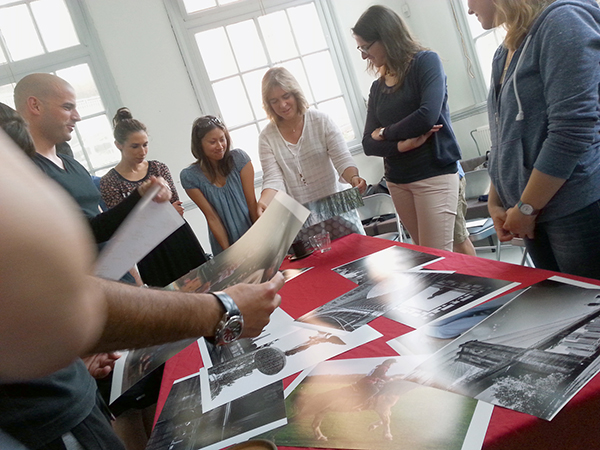
Portfolio review
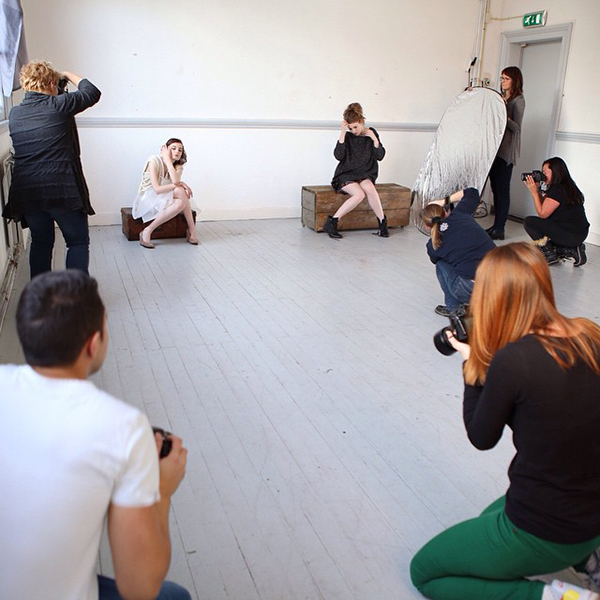
Model workshop
A camera club can have several different kinds of events such as; portfolio reviews where members bring their photos, share, learn and get inspired by each other; photo walks were you meet up and walk together taking photos. Expect the participation numbers to be low at first. Remember you are in the early stages of building your network. If your events are good, word will spread and your camera club will grow at an accelerated speed. Other types of events to keep in mind; visits to local galleries, workshops by hired instructors, and lectures by local professionals.
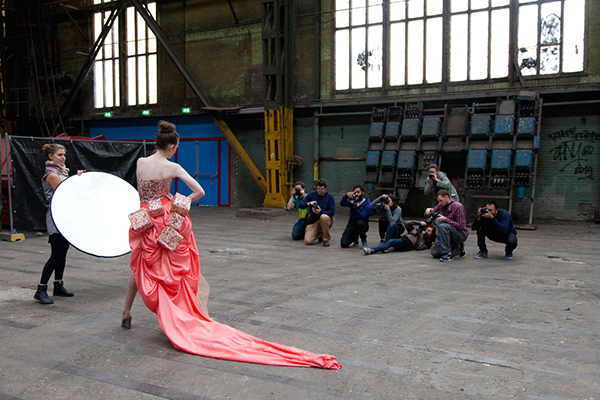
Model workshop
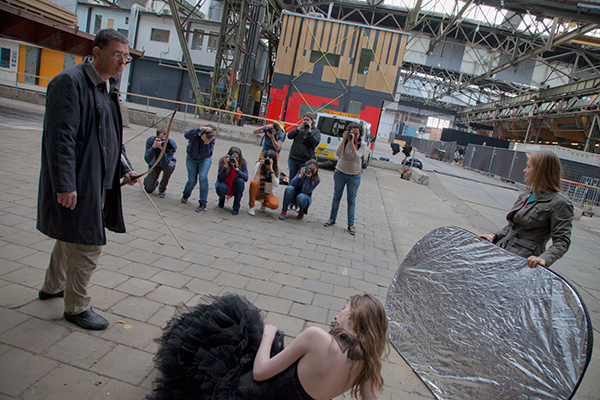
Model workshop
Be very clear in the communication with your members, and specify events in detail. It is important that participants have a very clear picture of what the event will be like. That way you increase your chances the event will meet expectations and become a great success. Decide early on if you want your camera club to charge a membership fee, or if it will be free. Keeping it free will mean more members. You can always charge per event to cover costs.
A camera club should have a website where people wanting to join can find basic information. It’s also a great way to feature member’s photos and advertise upcoming events. Facebook, Twitter and Flickr accounts would be natural add-ons.
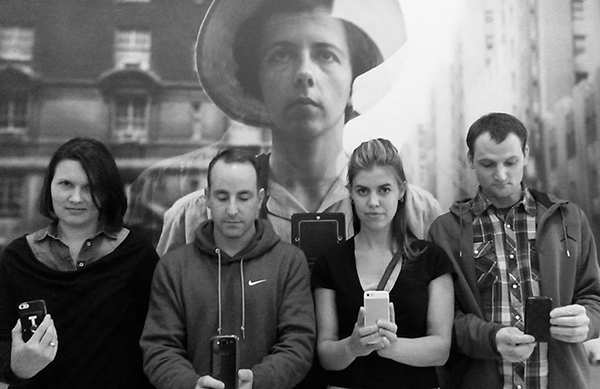
Selfies with Vivian Maier at a gallery visit
As your camera club grows, pay attention to the most active members. Invite them to help run the camera club. Together, your initiative can become a great success. Make a written partnership agreement. It doesn’t have to be in formal legal jargon. It just needs to be a simple outline; who is responsible for what, how events should be run, and what should happen with the camera club’s common assets should the partnership not work out. Make sure people you take on don’t have conflicting goals about what the camera club should become, or what you want to get out of it in the end.
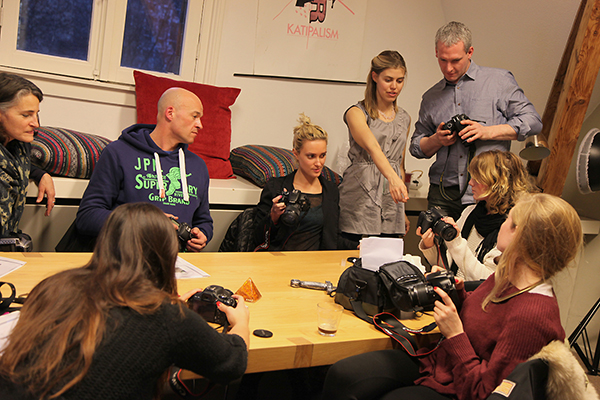
Photo course for beginners
It is better to have a small camera club with good quality events, than a large camera club with little or no activity. Spend time developing events you think other photographers would love to participate in, this way, your camera club will grow at a comfortable rate with good quality events.
googletag.cmd.push(function() {
tablet_slots.push( googletag.defineSlot( “/1005424/_dPSv4_tab-all-article-bottom_(300×250)”, [300, 250], “pb-ad-78623” ).addService( googletag.pubads() ) ); } );
googletag.cmd.push(function() {
mobile_slots.push( googletag.defineSlot( “/1005424/_dPSv4_mob-all-article-bottom_(300×250)”, [300, 250], “pb-ad-78158” ).addService( googletag.pubads() ) ); } );
The post How to Start Your Own Camera Club by Kjell Leknes appeared first on Digital Photography School.
[ By Steve in Architecture & Cities & Urbanism. ]
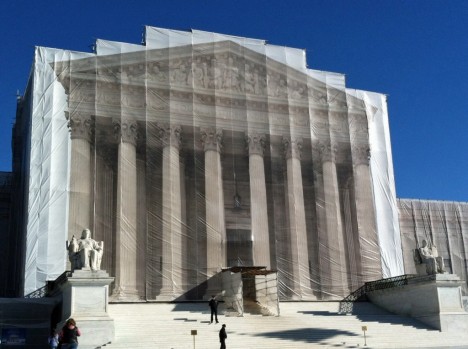
These artistic wraps, scrims and scaffolds creatively conceal the ugly truth of building construction, remediation and restoration.

Illusion of justice? OK, that was too easy but restoring the United States Supreme Court Building was anything but. Designed by Cass Gilbert, the building’s classical marble facade has fronted the inner workings of the SCOTUS since 1935. The white Vermont Imperial Danby marble has aged gracefully for the most part but after 75 years of Washington weathering, a comprehensive restoration of the columned West Facade was deemed necessary… and it was going to get messy. What to do?


The solution employed by Rockville-based Forrester Construction Co. was a clever combination of inner rigid scaffolding wrapped in a decorative scrim depicting a photo of the facade in its forecasted finished state. Derived from practices commonly used in Europe, the scrim kept the dirty work of cleaning and restoring the facade under an attractive cover for the better part of two years, being removed upon the project’s completion in late 2013.
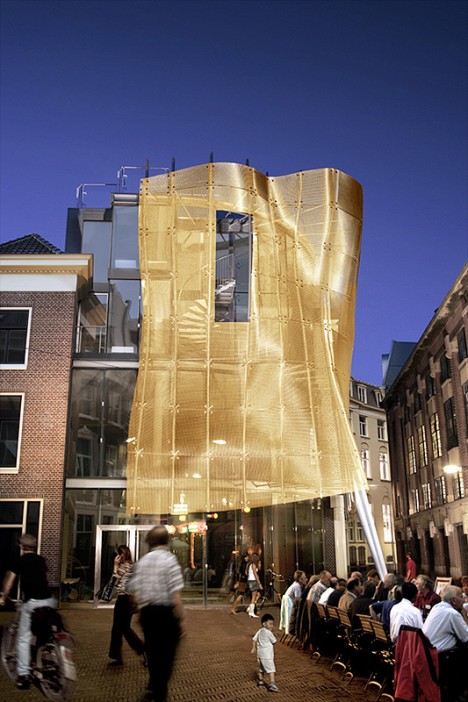
Sometimes less is more and conversely, more may seem like less. That was the case on Kettingstraat in The Hague, when Dutch architecture office Archipelontwerpers installed a Gehry-esque golden scrim to camouflage restoration and renovation work. Who’s going to notice the construction with a shimmering curtain of gold to distract their eyes?
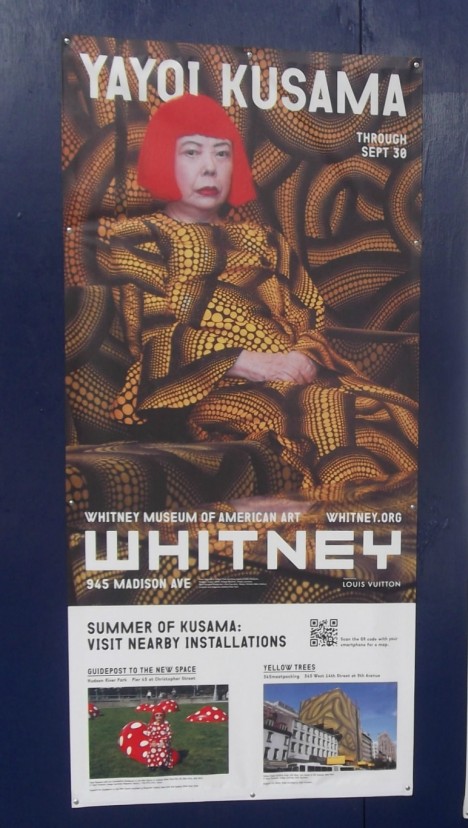
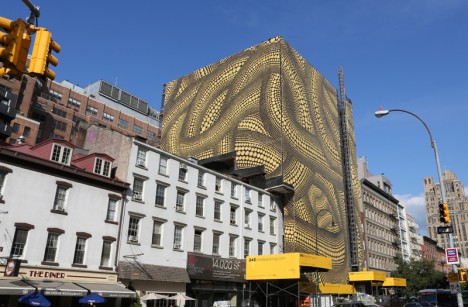
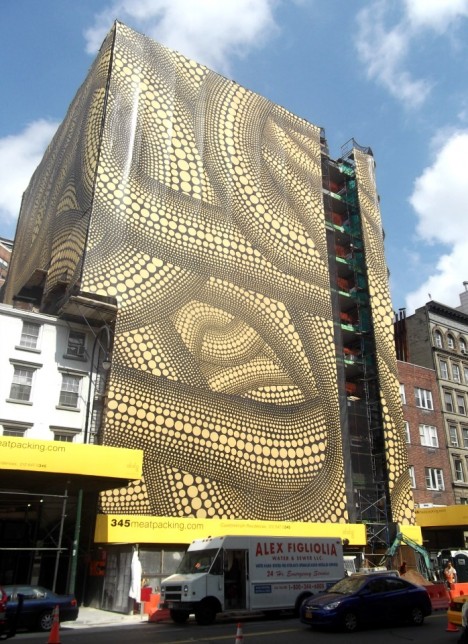
In 2012 when the Whitney Museum of American Art dedicated a retrospective to 83-year-old Japanese artist Yayoi Kusama, they decided to promote it in a big way. Take “Yellow Trees”, a building-sized art installation doubling as a practical scaffolding scrim on West 14th Street at 9th Avenue, near the Whitney‘s new location in NYC’s trendy Meatpacking District.
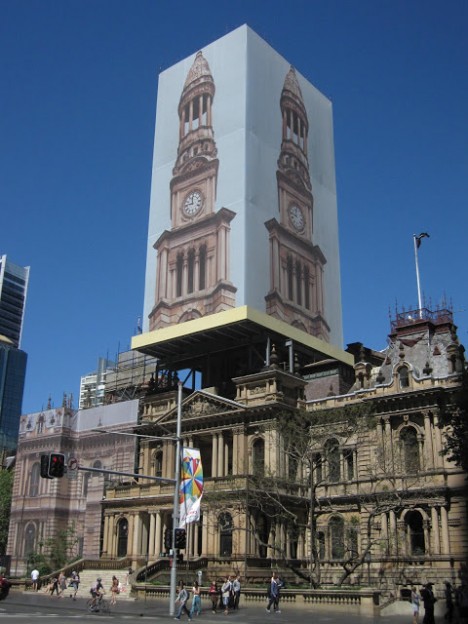
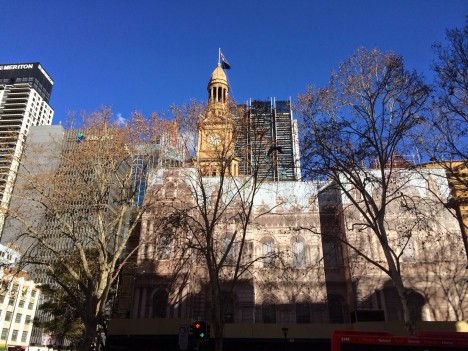
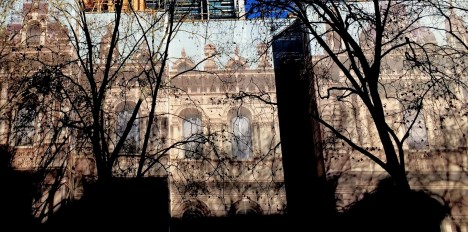
Sydney Town Hall was an Australian showpiece when it opened in 1889 but over a century’s worth of grime can’t be removed in a day or for a dollar. It took $ 33 million and quite a few days, in fact, and the use of a custom 30m (66ft) tall scrim for the clock tower and 20m (44ft) tall screens for the front facade helped preserve the old gal’s dignity while her cosmetics were being applied.

An old port in Amsterdam will be transformed into the Alphabet Building, an unusual collection of offices for creative companies with letter-shaped windows.
Click Here to Read More »»
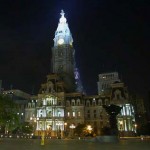
Did you know that brick or stone-clad buildings you see today almost invariably hide a steel support structure that does the actual work?
Click Here to Read More »»
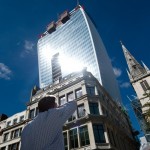
A nearly-complete London tower is being investigated thanks to reflected daylight that is dazzling (and sizzling) the neighborhood in extreme, surprising and …
Click Here to Read More »»
[ By Steve in Architecture & Cities & Urbanism. ]
[ WebUrbanist | Archives | Galleries | Privacy | TOS ]
Phil Steele is a well-known and respected photography educator. In this video tutorial he walks you through exactly how he works through the post-processing of an event he has just shot.
Learn tips on importing, rating, culling, organizing in Collections, exporting, and delivering the photos as Phil goes through his entire event photography workflow step by step.
If you enjoyed that and want more you can check out Phil’s courses here:
googletag.cmd.push(function() {
tablet_slots.push( googletag.defineSlot( “/1005424/_dPSv4_tab-all-article-bottom_(300×250)”, [300, 250], “pb-ad-78623” ).addService( googletag.pubads() ) ); } );
googletag.cmd.push(function() {
mobile_slots.push( googletag.defineSlot( “/1005424/_dPSv4_mob-all-article-bottom_(300×250)”, [300, 250], “pb-ad-78158” ).addService( googletag.pubads() ) ); } );
The post Lightroom Walk Through – Event Photography Workflow with Phil Steele by Darlene Hildebrandt appeared first on Digital Photography School.
