RSS
 

Archive for January, 2015

27. Januar 2015

28 Jan

Das Bild des Tages von: Maite Pepper

Blumen im Mund eines Models

Fotolinks des Tages

1. Unbekümmerte Rast

Eine beinahe beruhigende Wirkung haben die Aufnahmen der Fotografin Ryann Ford, die in den USA verlassene Rastplätze dokumentiert. Ford liebt Road Trips, fährt gerne auf Nebenstraßen und kam so auf die Idee, Orte des gemeinsamen Ausruhens zu fotografieren – deren Gestaltung sie sehr beeindruckten. Spiegel Online hat die Fotografin zu den unaufgeregt wohltuenden Bildern interviewt. → ansehen

2. Frische und unerschrockene Konzeptfotografie

Sprechen wir über konzeptionelle Fotografie: Der junge Maximilian Mundt sorgt derzeit immer wieder für Furore, gerade weil der Herr mit seinen 18 Jahren frisch und unerschrocken daherkommt. Seine ausgeklügelten und atmosphärischen Portraits werden einigen Profis schwere Kopfschmerzen bereiten. Die Aufnahmen laden zum Träumen ein und wir sind gespannt was wir in Zukunft noch von ihm sehen werden. → ansehen

” target=”_blank” title=”Link zum Artikel auf New York Times” >3. Von Zukunft und einer schrecklichen Vergangenheit

Daniel Owen, Fotojournalist aus Ohio, kam per Zufall nach Oradea in Rumänien und wurde dort auf die jüdische Gemeinde vor Ort aufmerksam. Langsam tastete er sich an die Mitglieder und Familien heran, unter denen auch Holocaust-Überlebebende waren. Dabei kam es zu unerwarteten Gesprächen und bewegenden Begegnungen. Die New York Times stellt nun eine Auswahl der Fotos vor, welche im Februar 2013 entstanden – Owen wird das Projekt noch weiter vertiefen. Unbedingt reinsehen.
” target=”_blank” title=”Link zum Artikel auf New York Times” >→ ansehen

+ Falls der Artikel Euer Interesse geweckt hat: Auf der Webseite des Fotografen ist die komplette Serie in groß zu sehen.


kwerfeldein – Fotografie Magazin | Fotocommunity

 
Comments Off on 27. Januar 2015

Posted in Equipment


Recycled Skylines: 8 Green Urban Tower Typologies for 2050

28 Jan

[ By WebUrbanist in Conceptual & Futuristic & Technology. ]

panoramic green city view

Exploring eco-friendly strategies for cities, this series of conceptual ‘Smart Tower’ skyscrapers and mid-rise structures incorporates design elements to reduce pollution, create renewable energy and yet also integrate with existing built environments.

green path smart towers

Designed by Vincent Callebaut Architectures, each of these typologies is set in Paris – many draw on local elements in practice, but in theory all are conceived of as having broader potential applications in urban contexts around the world. The idea, in essence, is to work with what is already in place, tapping underutilized elements for structural support or to provide a basis for further development.

green addition rooftop architecture

The proposals, named and detailed below, vary in their realism but are intended to provoke discussion and brainstorm possibilities, helping planners consider new ways to adapt existing buildings and infrastructure for cleaner and greener use in the near future.

green mountain tower additions

Mountain Towers: supported by the unused chimneys of existing buildings below, these power-generating additions draw solar energy and use a reversible hydro-electrical pumped storage system to pull up and send down hot water.

green antismog bike path

Antismog Towers: set along disused rail lines, this piece of the project combines cycling paths and urban gardens with cyclonic towers to clean the air and wind turbines to generate electricity.

green photosynthesis towers

Photosynthesis Towers: incorporating green algae bioreactors into existing tall buildings (a particular extant set deemed visually unfit by city officials), this conversion project turns adjacent open space into a phyto-purification lagoon for graywater runoff but also transforms an eyesore into an eye-catching hybrid of landscape and architecture.

green future bridge architecture

green bridge from above

Bridge Towers: connecting across urban waterways, these river-spanning structures provide a combination of water power, bridge infrastructure and living space, organically morphing between energy-generating apparatus and livable buildings.

Next Page – Click Below to Read More:
Recycled Skylines 8 Green Urban Tower Typologies For 2050

Share on Facebook


[ By WebUrbanist in Conceptual & Futuristic & Technology. ]

[ WebUrbanist | Archives | Galleries | Privacy | TOS ]


WebUrbanist

 
Comments Off on Recycled Skylines: 8 Green Urban Tower Typologies for 2050

Posted in Creativity


Google Nexus 6 camera review

28 Jan

The latest in Google’s line of showcase devices – the Nexus 6 – was designed and built in cooperation with US company Motorola. The Nexus 6 comes with the same dual-LED ring flash as the Motorola Moto X and a 13MP imaging sensor. However, at F2.0 its aperture is a touch faster and it comes with an optical image stabilization system which should make for improved low light performance. Click through to read our detailed review of its camera’s performance

Articles: Digital Photography Review (dpreview.com)

 
Comments Off on Google Nexus 6 camera review

Posted in Uncategorized


Learn From The Masters: Muybridge To Witkin

28 Jan

The Masters


Hey FashionPhotographyBlog.com readers! 

Alana Tyler Slutsky is back on FashionPhotographyBlog.com, after sharing some of the inspiring works of the great photography masters, to reveal the works of some more masters who have pioneered the photographic craft. We are all ready Alana!


Need some more inspiration? Look no further! Here are some more Masters of Photography. Tried and tested, these photographers have withstood the test of time. Am still a firm believer that you can’t really call yourself a photographer unless you study the history of the photographic medium and have an understanding of the masters – who they are and what they did that sets them apart from the rest. In my opinion, this applies to all areas of life, so here’s more names to add on the cheat sheet of names of those commonly referred to as “The Masters”;  who they are, what they did and why they’re still so awesome (names have been sorted alphabetically for your convenience).


Eadweard Muybridge


Muybridge used multiple cameras to stop and study motion. A popular debated question, whether or not all four of a horses feet leave the ground as it gallops, was answered with Muybridge’s studies – proving that all four feet did indeed leave the ground.  Muybridge managed to take over 100,000 images capturing the motion of animals and humans.

The work of Eadweard Muybridge featured on Fashion Photography Blog (FashionPhotographyBlog.com)

Helmut Newton


Newton is one of the most famous fashion photographers to date.  His works are often vert provocative and erotic in nature. Newton’s images are a reflection of the sexual revolution occurring during his time. There is much to be said about Newton, but even more to be learned by viewing his images. Take a peek, they’re sure to not disappoint! “If a photographer says he is not a voyeur, he is an idiot,” Newton once said.

The work of Helmut Newton featured on Fashion Photography Blog (FashionPhotographyBlog.com) The work of Helmut Newton featured on Fashion Photography Blog (FashionPhotographyBlog.com)

 Irving Penn


Irving Penn is another one of those prolific fashion photographers. He is one of the first photographers to photograph a subject against a stark grey or white background. His prints are known for deep contrast and a crisp feeling.  He’s also known for shooting interesting still life images composed of trash found on the street and cigarette butts. Penn is known for his immaculate control and attention to detail.

The work of Irving Penn featured on Fashion Photography Blog (FashionPhotographyBlog.com) The work of Irving Penn featured on Fashion Photography Blog (FashionPhotographyBlog.com)

Stephen Shore


Shore is the other big pioneer of color photography. Shore went on a series of road trips and documented his way across America and Canada. Initially what started as photography on a little 35mm Mickey Mouse camera transformed into a new way of seeing when he eventually changed over to a large format camera (first 4″x5″ then 8″x10″). Shooting with an 8″x10″ camera completely changes the way one sees and composes an image, this is greatly reflected in Shore’s work.  Shore is known for his dead-pan shooting style which often depicts interiors and landscapes with no people in them, almost as if they’re a Hollywood set that has emptied out for the day.


The work of Stephen Shore featured on Fashion Photography Blog (FashionPhotographyBlog.com) The work of Stephen Shore featured on Fashion Photography Blog (FashionPhotographyBlog.com)

Edward Weston


Another member of Group f/64 (along with Ansel Adams), Weston is known for his close ups of natural forms, landscapes and nudes.

The work of Edward Weston featured on Fashion Photography Blog (FashionPhotographyBlog.com) The work of Edward Weston featured on Fashion Photography Blog (FashionPhotographyBlog.com)

Now, these next two may not formally be considered “Masters,” but they are in my book! Two of my favorite fine art photographers, these guys are quite the intellects.


Joel-Peter Witkin


Witkin creates tableaux often relating to the idea of death.  Often Witkin uses corpses and often incorporates dwarfs, transvestites, hermaphrodites and the physically deformed into his work.  It’s dark, it’s twisted, pretty creepy stuff.  In fact, it’s the things that nightmares are made of.  But at the same time, it’s downright awesome!

The work of Joel-Peter Witkin featured on Fashion Photography Blog (FashionPhotographyBlog.com) The work of Joel-Peter Witkin featured on Fashion Photography Blog (FashionPhotographyBlog.com)

Hiroshi Sugimoto


Sugimoto views his work as “time capsules” of an event or series of events. This is most evident in his “Theatres” series, my personal favorite, where Sugimoto will leave the shutter of his camera open during the screening of a movie and allow the light that emanates from the screen to fill the room and in turn illuminate his image. There is a beautiful simplicity to his work. Both Sugimoto’s theatres and seascapes are absolutely stunning.  If anyone is looking to buy me a holiday gift, I wouldn’t refuse a Sugimoto print, or original, *hint hint*)


The work of Hiroshi Sugimoto featured on Fashion Photography Blog (FashionPhotographyBlog.com) The work of Hiroshi Sugimoto featured on Fashion Photography Blog (FashionPhotographyBlog.com)

Take notice that majority of the Masters shoot with large format 8″x10″ cameras. This causes them to slow down and really look at their image, see what they’re composing. Unlike photographers now-a-days, shooting large format and film causes a photographer to shoot much slower, causing them to be more precise. This also means less shots taken. Next time you want to take 300 images of one look, slow it down, think of the Masters and try to really think through your shot. A quick description really doesn’t do these guys justice.  Take some time, Google them, get inspired. Hey, maybe you’ll learn a thing or two!


– Alana


Did you find Alana’s post about the Masters of Photography interesting? Do you agree with the selection? Is there any that you would add that we have missed out that we should include? Please leave your comments below in the comment section. We would like to know what you thought about this article. If you enjoyed this post and interested in learning about the Photography Masters, check our post on Fashion Photography Blog titled “Learn From The Masters: Adams To Meatyard“.


IMAGE SOURCE: 

Feature image & images 1-13: courtesy of Alana Tyler Slutsky.


Fashion Photography Blog

 
Comments Off on Learn From The Masters: Muybridge To Witkin

Posted in Uncategorized


How to Choose Which Version of Lightroom to Buy

27 Jan

Lightroom creative cloud

Buying Lightroom used to be simple. All you had to do was buy the full version of the program, and upgrade (if you wished) every time a new version came out. But ever since Adobe announced the Creative Cloud subscription service, photographers have been faced with two choices. You can still go for the standalone version, or you can buy Lightroom as part of a Creative Cloud monthly membership. But how do you know which is the best option for you? Read on to find out.

Creative Cloud is announced

Adobe’s initial announcement of the Creative Cloud licensing concept was somewhat controversial as the price for a subscription to Photoshop ran at $ 20 a month (all prices in this article are in US dollars). For photographers who had already purchased the full version of Photoshop this represented a significant price increase. Not only was subscribing more expensive in the long run, compared to upgrading Photoshop regularly, but the license to use the software expired once monthly payments stopped.

There’s little doubt this was a raw deal, but Adobe listened and introduced a new package for photographers – a subscription to both Lightroom and Photoshop CC for $ 9.99 a month (or $ 119.88 per year).

Lightroom creative cloud

Read about this on forums and photography websites and you will still come across a lot of negativity towards the Creative Cloud subscription model, especially from Photoshop users upset at the loss of a perpetual licence. But today, I aim to cut through this negativity and take an objective look at the differences between the two options.

Two types of Lightroom users

To start, we have to acknowledge that there are two types of Lightroom users.

The first uses Lightroom in conjunction with Photoshop and wants access to both programs. For this user, the Creative Cloud option is the only choice if you want the latest version of Photoshop CC. Alternatively, if you own a version of Photoshop CS and are not bothered about upgrading to Photoshop CC, you can buy the standalone version of Lightroom and use them together.

The second type of user carries out the bulk of their image processing in Lightroom. For tasks Lightroom can’t handle, they may use an older version of Photoshop, a less powerful program like Photoshop Elements, or a plug-in such as the Nik Collection or Perfect Photo Suite 9. These users may be wondering whether to continue using the standalone version of the software or to subscribe.

Financial considerations

If you are on a budget, and don’t need Photoshop CC, then it is definitely less expensive to buy the standalone version of Lightroom. At the moment a new version of Lightroom comes out approximately every 18 months. At $ 9.99 a month, the subscription service would cost you $ 179.82 over that period. If you are new to Lightroom, the full version (priced at $ 149 from the Adobe website) saves you money, and if you already own Lightroom, then the upgrade (priced at $ 79) is even less, saving you a little over $ 100 over the same time period.

As a standalone version user you get free upgrades until a full new version comes out. So, if you upgraded to Lightroom 5.0 when it first came out, you can upgrade to the latest version (5.7) for free, taking advantage of new features introduced since then. But when Lightroom 6 comes out, you will need to pay the upgrade fee to use it. Upgrading isn’t compulsory, and you can continue to use your earlier version of Lightroom as long as you want.

Adobe have stressed their commitment to continuing the standalone version of Lightroom for the foreseeable future.

Note: The standalone version of Lightroom is a little hard to find on Adobe’s website. You can get there by going to Adobe’s home page and clicking the Menu option at the top. Click the All Products button at the bottom, scroll down to Lightroom and click Buy. Or you can also find it here on Amazon. 

Lightroom creative cloud

What the Creative Cloud subscription gives you

The Creative Cloud subscription is more expensive, so what do you get for that extra money? The two headline features are Photoshop CC, a powerful image editing program that you are likely familiar with, plus access to Lightroom Mobile, a mobile version of Lightroom that works with iPads and iPhones (but not currently with devices using the Android or Windows operating systems).

There are several additional features that may interest some people, such as 2GB of online storage space, access to Lightroom Web and the ability to use Photoshop CC and Lightroom on multiple machines (although not at the same time).

What happens when the Creative Cloud license ends?

If you stop paying your subscription fee you no longer have the right to use the full versions of Photoshop CC and Lightroom. Photoshop will stop working completely (or at least until you renew the subscription).

But Lightroom is different. Bear in mind that with Lightroom your Raw files are untouched. The edits you make are stored in the Catalog. If you lose access to the Catalog, you lose access to all the edits you have made to your images, including all post-processing.

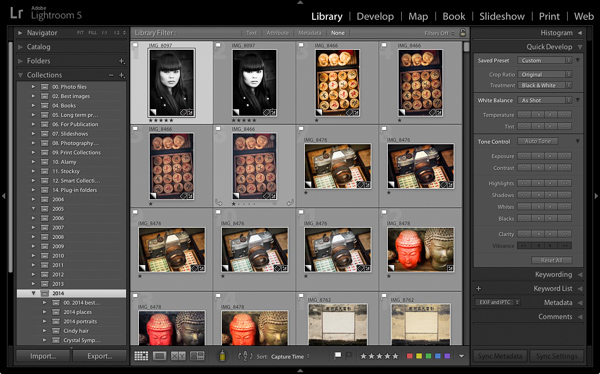
Adobe doesn’t want that to happen, so it gives you partial access to Lightroom even if you cancel your Creative Cloud subscription. You have full access to the Library, Book, Print, Slideshow and Web modules. The Develop module is severely restricted (you can’t make any adjustments using the right-hand panels) and there is no access to the Map module.

Lightroom creative cloud

Your Catalog remains intact, including any Collections you’re created and any changes to metadata, including ratings and keywords. So does your post-processing, and the ability to make basic edits to photo files using the Quick Develop panel. You can also export your photos any time you want.

You need to have Lightroom Version 5.5 or later installed for this to work.

Conclusion

Hopefully you are now clearer about how the two ways of buying Lightroom differ, and which is best for you. If you want to use the most up to date version of Photoshop CC, or Lightroom Mobile, then the Creative Cloud subscription service is the choice for you.

However, if you don’t require the latest version of Photoshop CC, or Lightroom Mobile, then buying the standalone version is the least expensive way to go.

What do you think? Have Adobe got it right with the price and services offered for the Creative Cloud Photography plan? Do you use the Creative Cloud version of Lightroom or the standalone version? Please let us know in the comments.


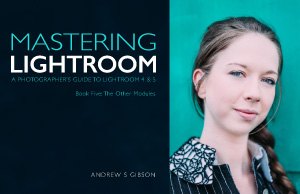
Mastering Lightroom: Book Five – The Other Modules ebook coverMastering Lightroom: Book Five – The Other Modules

My new ebook Mastering Lightroom: Book Five – The Other Modules shows you how to use Lightroom’s powerful features to create fun and interesting projects using the Map, Book, Slide show, Print and Web modules. Whether it’s geotagging, putting together a photo book, printing your best photos or creating web galleries all the information (and inspiration) you require is right here.

googletag.cmd.push(function() {
tablet_slots.push( googletag.defineSlot( “/1005424/_dPSv4_tab-all-article-bottom_(300×250)”, [300, 250], “pb-ad-78623” ).addService( googletag.pubads() ) ); } );

googletag.cmd.push(function() {
mobile_slots.push( googletag.defineSlot( “/1005424/_dPSv4_mob-all-article-bottom_(300×250)”, [300, 250], “pb-ad-78158” ).addService( googletag.pubads() ) ); } );

The post How to Choose Which Version of Lightroom to Buy by Andrew S. Gibson appeared first on Digital Photography School.


Digital Photography School

 
Comments Off on How to Choose Which Version of Lightroom to Buy

Posted in Photography


Review: Zenelli Carbon Fiber Gimbal Tripod Head

27 Jan

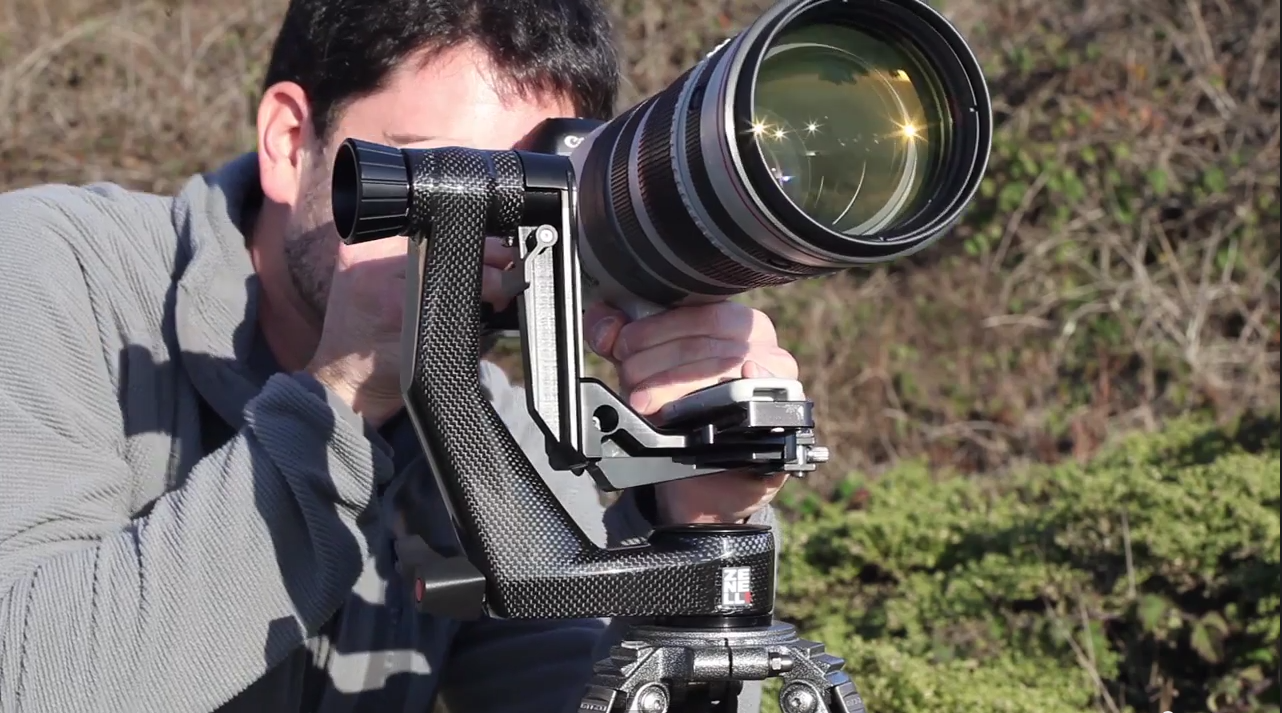
One of the more impressive pieces of gear that I’ve been using as of late is the Zenelli CARBONZX Carbon Fiber Gimbal Head. I can’t say I’d have ever thought of myself being excited over a tripod head, but Zenelli has made one of the sexiest pieces of equipment I’ve seen and used. As you’d imagine any product that is Carbon Fiber is going to come with a hefty price tag and this gimbal head is no exception, but for those in need of cutting the weight of their gear for remote trips this could be worth the spend. It’s important to note that the fact this gimbal head is carbon fiber is not the only reason to consider it. The engineers at Zenelli have come up with very innovative features to protect high value super telephoto lenses with the Save Lens Lever®, Pin Save Tablet® and SaveLook® lever.  The Save Lens Lever ensures the lens remains balanced and does not fall when changing gear or leaving your gear unattended. The Pin Save Tablet is a mechanism that ensures the arm of the gimbal head cannot uncouple accidentally.  The Save Look lever ensures that the gimbals quick release can’t be accidentally released allowing your camera and/or lens to fall plus it allows for preset tightening of your Arca-type lens plates. I was also impressed the manufacturer thought to support panoramic photography by engineering the head so the lens plate mount is perfectly centered atop the rotational axis of the tripod head base. I demonstrate all of these features in my review video and with out a doubt the Zenelli CARBONZX Carbon Fiber Gimbal Head  gets my highest rating.

Order your Zenelli CARBONZX Carbon Fiber Gimbal Head at B&H

Key Specifications

Height: 9.25″ (23.5 cm)

Width: 3.58″ (9.1cm)

Depth: 9.33″ (23.7 cm)

Weight: 2.6 lb

Distance from Center of Lens to Vertical Arm: 3″ (7.6 cm)

Arca-Type Compatible

360° Pan & Tilt Ranges

Quick-Release Lever

Save Lenses Lever (Home Bar)

Bubble Level

(optional) Camouflage Cover

Copyright Jim M. Goldstein, All Rights Reserved

Review: Zenelli Carbon Fiber Gimbal Tripod Head

The post Review: Zenelli Carbon Fiber Gimbal Tripod Head appeared first on JMG-Galleries – Landscape, Nature & Travel Photography.


Related Stories

  • Review: Zenelli Carbon Fiber Gimbal Tripod Head – Enclosure
  • Review: Landscapes in Lightroom 5 eBook
  • Review: Landscapes in Lightroom 5 eBook – Enclosure
Feed Ads by FeedBlitz
powered by ad choices


JMG-Galleries

 
Comments Off on Review: Zenelli Carbon Fiber Gimbal Tripod Head

Posted in Equipment


Der Schatten und das Selbst von Gabriel Isak

27 Jan

Zwei Menschen stehen verbunden nebeneinander.

Einen Menschen seinem Schatten gegenzuüberstellen, heißt, ihm auch sein Licht zu zeigen. Wenn man einige Male erlebt, wie es ist, zwischen beiden Gegensätzen zu stehen, beginnt man, zu verstehen, wer man ist. Wer zugleich seine Schatten und sein Licht wahrnimmt, sieht sich von zwei Seiten und damit kommt er in die Mitte.

Carl Gustav Jung –

Carl Gustav Jung war der Mystiker unter den Vätern (und Müttern) der Psychoanalyse. Während Sigmund Freud sich vorwiegend mit dem Sexualtrieb beschäftigte, erkundete Jung die Psyche des Menschen unter Berücksichtigung eines „kollektiven Unbewussten“. Das kollektive Unbewusste beherbergt psychische Inhalte, die alle Menschen teilen.

Innerhalb der heutigen akademischen Psychologie wird Jung, wie andere psychoanalytische Theoretiker, überwiegend unter historischen Gesichtspunkten behandelt. Ein Hauptgrund, weswegen die Psychoanalyse heute nur noch am Rande an Universitäten gelehrt wird, ist die Tatsache, dass sich einige Annahmen einer empirischen Prüfung entziehen.

Ein Mensch ist gefesselt

Wer sich mit den Schriften von Jung auseinandersetzt, wird zudem schnell bemerken, dass einige Begriffe unscharf definiert sind und teilweise widersprüchlich verwendet werden. Trotzdem ist die Auseinandersetzung mit Jung als einem bedeutsamen Wegbereiter der heutigen Psychologie wichtig.

Solch eine Auseinandersetzung wagt der junge schwedische Künstler Gabriel Isak (Jahrgang 1990), der sich in seiner Serie „der Schatten und das Selbst“ auf die theoretischen Überlegungen von Jung zum Schatten bezieht. Doch was hat es mit dem Schatten auf sich? Um Euch die Serie von Gabriel Isak näherzubringen, möchte ich ein wenig auf den Gedankenpfaden von Meister Jung wandeln.

Ein Mensch blickt einen anderen an.

Der Schatten ist einer der wichtigsten Archetypen in der Analytischen Psychologie nach Jung. Unter dem Begriff Archetyp versteht Jung Urbilder, die dem kollektiven Gedächtnis entspringen und das Erleben sowie Verhalten eines Menschen unbewusst beeinflussen. Unter „kollektiv“ kann man hier verstehen, dass alle Menschen bestimmte Persönlichkeitszüge in unterschiedlicher Ausprägung teilen.

Der Archetyp des Schattens steht in Jungs Werken für unerwünschte Persönlichkeitsanteile, die ins Unbewusste abgeschoben werden. Zu diesen unerwünschten Persönlichkeitsanteilen können Erwartungen von Anderen, soziale Regeln, sich aufdrängende Wünsche oder äußere Anforderungen an das Selbst zählen. „Der Schatten ist alles das, was du auch bist, aber auf keinen Fall sein willst“, so Jung.

Ein Mensch steht im Schatten und im Licht.

Dem Schatten steht die „Persona“ und die „Seele“ gegenüber. Laut Jung stellt die Persona jenen Teil der Persönlichkeit dar, die normatives, sozial verträgliches Verhalten steuert. Solche sozial verträglichen Verhaltensweisen werden von Menschen über den Verlauf ihrer Entwicklung erworben.

Ein Mensch kann nach Jung nur dann authentisch sein, wenn sich die Persona mit der „Seele“, die nach Jung den Kern der Individualität ausmacht, im Gleichgewicht hält. Übersetzt heißt das in etwa, dass man sich nicht nur nach externen Vorgaben (z.B. gesellschaftlichen Regeln) richten, sondern auch erkunden sollte, wer man unabhängig von Anderen ist.

Ein Mensch hängt am seidenen Faden.

Eine bedeutsame Frage ist nun, welchen Ausweg es aus Spannungen zwischen der der Persona und der Seele gibt. Der Schatten spielt in dieser Auseinandersetzung eine besondere Rolle. Die Kenner unter Euch werden der Schatten, die Persona und die Seele an Freuds Es, Über-Ich und Ich erinnern. Zur Lösung der Spannung zwischen den drei psychischen Teilen macht Jung ähnliche (aber im Detail nicht identische) Vorschläge wie Freud.

Um innerpsychische Spannungen im Zaum zu halten, können nach Jung Abwehrmechanismen greifen. Unangenehme Persönlichkeitsanteile werden vom Schatten aufgenommen und unter Verschluß gehalten. Nicht immer gelingt dies vollständig, so dass andere, unreifere Abwehrmechanismen wirksam werden können.

Zwei Menschen stehen verbunden.

Jung spricht beispielsweise davon, dass die Inhalte des Schattens auf andere Personen projiziert werden können. Das heißt, man nimmt eigene unangenehme Impulse an Anderen verstärkt wahr. Solche und andere Abwehrmechnismen dienen zwar der psychischen Stabilisierung, können aber zwischenmenschliche Beziehungen belasten.

Abwehrmechanismen können daher unter bestimmten Umständen zu psychischen Leidensdruck führen. Für eine Reifung eines jeden Menschen ist nach Jung daher die bewusste Auseinandersetzung mit dem eigenen Schatten bedeutsam. Das heißt, es gilt, den eigenen Schatten (unbewusste Aspekte des Selbst) zu erkennen, zu akzeptieren und in die eigene Persönlichkeit (Seele) zu integrieren.

Ein Mensch und sein Schatten

Der Zugang zu Inhalten des Schattens ist nach Jung über Träume möglich. Der Archetyp des Schattens, so führt Jung aus, tauche manchmal in Form eines bedrohlichen Widersachers oder eines Feindes auf. Die Auseinandersetzung mit dem Schatten (also mit unbewussten Persönlichkeitsanteilen) kann dazu führen, dass Menschen diese in ihre Gesamtpersönlichkeit integrieren. Dadurch werden sie für neue Erlebens- und Handlungsmöglichkeiten offen.

Bedrohlich wirkt die Konsequenz, die Jung dem zuschreibt, der sich nicht seinem Schatten stellen kann: „Wenn eine innere Situation nicht bewusst gemacht wird, erscheint sie im Außen als Schicksal.“ Wenn Anteile des Schattens ungenügend in die Gesamtpersönlichkeit integriert sind, so resultieren negative Gedanken und Gefühle.

Ein Mensch hält dem anderen die Augen zu.

Unter diesen eben genannten inhaltlichen Aspekten ist die Serie „der Schatten und das Selbst“ von Gabriel Isak spannend. Isak nutzt die Fotografie als Mittel, um surreale Szenen zu erschaffen, die die Interaktion zwischen bewussten und unbewussten Persönlichkeitsanteilen visualisieren.

Bezugnehmend auf Jungs mythologische Abhandlungen zum Selbst verwendet Isak vorwiegend Grautöne, Schwarz und ein leichtes Blau, um eine düstere Stimmung zu erzeugen.

Ein Mensch tippt einen anderen Menschen an.

Gabriel Isak schafft verschiedene Bilder, die verdeutlichen, wie der eigene Schatten die Seele beeinflussen kann. Besonders interessant ist das Mittel der grafischen Verfremdung, um eine höhere Abstraktion zu erreichen.

Dadurch wirken die Arbeiten von Gabriel Isak, auch ohne intensives Studium von C. G. Jungs Schriften, wahrscheinlich genau so wie es Jung gewollt hätte: Auf der Ebene eines kollektiven Gedächtnisses versteht man die Bilder und setzt sie zu eigenen Erlebens- und Verhaltensweisen in Bezug.

Ein Mensch reicht dem anderen die Hand.

Über ein visuelles Medium, die künstlerische Fotografie, kann also eine Auseinandersetzung mit dem eigenen Schatten ermöglicht werden. Ich bin mir nicht ganz sicher, will aber mutmaßen, dass C. G. Jung Gabriel Isak gern auf die Schulter geklopft hätte.

Ich schüttele ihm dazu noch die Hand und freue mich, dass ein junger Fotograf nicht nur eine ästhetische, sondern auch inhaltlich interessante Arbeit geschaffen hat. Von Gabriel Isak werden wir sicher noch einiges hören.

Gabriel Isak studiert derzeit in San Francisco Fotografie an der Academy of Art University. Seine Arbeiten kann man auf seiner Webseite besichtigen.


kwerfeldein – Fotografie Magazin | Fotocommunity

 
Comments Off on Der Schatten und das Selbst von Gabriel Isak

Posted in Equipment


Monterey Bay Aquarium uses GoPro to create new open source research camera

27 Jan

The Monterey Bay Aquarium Research Institute has created an open source camera system for use underwater to aid in research projects. The rig is composed of a GoPro camera and other easily sourced components, and is cheaper than commercially available oceanographic camera systems. Learn more

Articles: Digital Photography Review (dpreview.com)

 
Comments Off on Monterey Bay Aquarium uses GoPro to create new open source research camera

Posted in Uncategorized


26. Januar 2015

27 Jan

Das Bild des Tages von: Rainbow tsai

© Rainbow tsai

Fotolinks des Tages

1. Öl und Fotografie werden ein Paar

Wenn talentierte Leute eine zündende Idee haben, kann das eigentlich nur gut werden. Dies ist auch der Fall beim Fine Art Fotografen Bill Gekas, der keine Lust auf normale Portraits von seinem Kind hatte. Gekas ging dem Gedanken nach, seine Tochter im Stile alter Ölgemälde zu inszenieren. Dabei herausgekommen sind Aufnahmen, die ihm so schnell niemand nachmachen wird. Großartiges Projekt. → ansehen

2. Ein Straßenfotograf lässt nicht locker

„Endlich, endlich!“ So manche Straßenfotografen und Kritiker werden sich den folgenden Fall wohl jahrelang herbeigewünscht haben, nun ist er eingetroffen. Fotograf Espen Eichhöfer machte ein Bild von einer Frau im öffentlichen Raum und stellt dieses in der C/O Berlin ausgestellt. Die Frau war damit jedoch nicht einverstanden und klagte auf Schmerzensgeld. Der Fotograf will den Fall aber austragen und gibt nicht nach. Auch, wenn er dafür vor das Bundesverfassungsgericht ziehen muss. Die Kosten für für den möglichen Gang durch die Instanzen sammelt er über Crowdfunding. Ein Präzedenzfall mit Folgen. → ansehen

+ Wollt Ihr Espen Eichhöfer finanziell unterstützen? Hier entlang.

3. Die Zukunft der Digitalkameras

Einen Blick in die Kristallkugel wagt Fotointern.ch und beschreibt die wahrscheinlichen Zukunftsperspektiven von Digitalkameras. Von der Verschmelzung von Fotokameras und Camcordern über die Verbesserung von Multi-Shot-Techniken, bis hin zu Experimenten, um unvollständige Aufnahmen von bekannten Baudenkmälern zu komplettieren, berichtet der Artikel. Wir sind gespannt, was davon dieses Jahr noch weiterentwickelt wird. → ansehen


kwerfeldein – Fotografie Magazin | Fotocommunity

 
Comments Off on 26. Januar 2015

Posted in Equipment


Dream Rooms: 14 Unreal-Feeling Art Gallery Transformations

27 Jan

[ By Steph in Art & Installation & Sound. ]

surreal art flat side 1

You might have to pinch yourself to ensure that you’re still awake as you walk into surreal dreamscapes of billowing clouds, seemingly endless fields of stars and rooms that appear to bend and shift in physically impossible ways. These installations completely transform gallery spaces into strange new environments that feel disconnected from the waking world. See 15 more surreal art spaces.

Cloudscape Made of Soap Bubbles

surreal art cloudscape 1

surreal art cloudscape 2

Eight pumps around the room in a Japanese gallery continuously alter a surreal cloudscape entitled ‘Foam.’ The installation, by artist Kohei Nawa, is made up of a pliable combination of glycerin, detergent and water that holds its shape and isn’t affected by gravity. The mixture billows gently, making it seem as if visitors are really in the sky.

Spatial Confusion by Sarah Oppenheimer

surreal art oppenheimer 1

surreal art oppenheimer 2

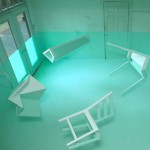
Doorways bend, walls lift up their corners to provide glimpses into adjacent rooms and skewed apertures make it seem as if people walking in nearby spaces are upside-down. Sarah Oppenheimer’s work seems to distort physical spaces, changing the gallery itself to create confusion.

The Flat Side of the Knife by Samara Goldstein

surreal art flat side 2

flat side 2

Do you ever dream about spaces that make no physical sense, with platforms seeming to hover in midair and staircases leading to apparently endless new rooms? With ‘Flat Side of the Knife,’ artist Samara Golden manages to capture that feeling in physical form with a combination of objects made of reflective foam insulation and live video projection. The installation spanned the entire floor-to-ceiling space of MoMA PS1’s first-floor duplex gallery, the various levels representing ‘layers of consciousness.’

Crawling from the Wreckage by Simon Birch

Student visitors pose from inside an installation titled "Crawling from the Wreckage" as part of Simon Birch's solo art exhibition in Hong Kong

surreal art crawling 2

You’ll feel like you stepped inside a 1980s video game with Simon Birch’s ‘Crawling from the Wreckage,’ a highly convincing three-dimensional replication of a computer-generated model. The effect is achieved using glow-in-the-dark paint on gridded furniture within a gridded ‘cell.’

Next Page – Click Below to Read More:
Dream Rooms 14 Unreal Feeling Art Gallery Transformations

Share on Facebook


[ By Steph in Art & Installation & Sound. ]

[ WebUrbanist | Archives | Galleries | Privacy | TOS ]


WebUrbanist

 
Comments Off on Dream Rooms: 14 Unreal-Feeling Art Gallery Transformations

Posted in Creativity